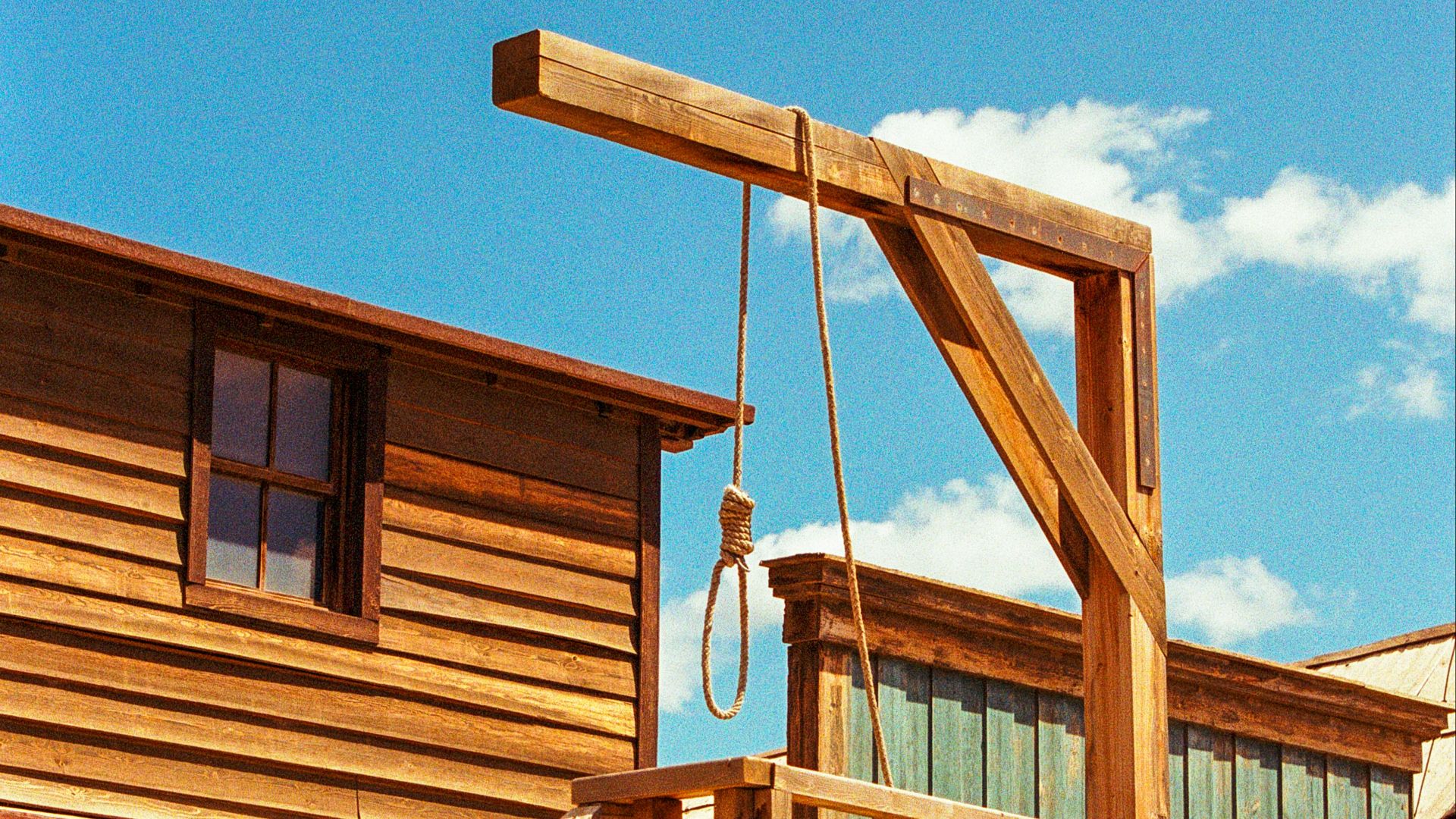
Public hangings in eighteenth century Scotland were treated as a kind of civic theater, complete with crowds, vendors selling food along the route, and a hangman who was expected to do his job cleanly. Executions did not always go as planned, and every so often the person on the rope turned out to be harder to kill than the law intended. Margaret Dickson, known to history as Half-Hangit Maggie, became the most famous case of exactly that kind of failure, and her survival turned into one of the strangest legal footnotes in Scottish history.
Her story starts not in Edinburgh, where she was executed, but in Musselburgh, where she was born, and later in Kelso, where a set of hard circumstances eventually put a rope around her neck.
A Charge Built On Desperation
Dickson's husband left her, and with no income and few options, she took work at an inn in Kelso, where she became pregnant by the innkeeper's son. Concealing an illegitimate pregnancy in early eighteenth century Scotland was not just shameful, it was criminal. Under the Concealment of Pregnancy Act of 1690, a woman who hid a pregnancy and whose infant was later found dead could be presumed guilty of murder, regardless of whether the child had died of natural causes.
Dickson's baby was born prematurely and did not survive. Rather than report the death, she hid the body along the banks of the River Tweed, where it was later discovered. That discovery, combined with the fact that she had told no one about the pregnancy, was enough under Scots law to convict her, even without direct evidence that she had killed the infant. She was tried in Edinburgh and sentenced to hang.
The law she was convicted under existed largely because concealment itself was treated as evidence of guilt. Women in her position, poor, unmarried in practice if not on paper, and without family support nearby, had very little room to argue otherwise in court. Her execution was scheduled for the Grassmarket, the same square where Edinburgh had carried out public hangings for generations.
Something Moved Inside The Coffin
Dickson was hanged in the Grassmarket in September of 1724, in front of the usual crowd that such events drew. She was left on the rope for the standard period, cut down, and pronounced dead by those in attendance, as was customary before a body was released to family. Her coffin was loaded onto a cart bound for Musselburgh, where she was to be buried.
Somewhere along the road, the cart stopped, as carts making that journey often did, for the drivers to rest or have a drink at a wayside inn. It was during that stop that someone noticed movement, or sound, coming from inside the coffin. When the lid was opened, Dickson was found alive and breathing. What exactly saved her is not fully settled, though later accounts point to a poorly tied knot and a hanging that may not have snapped her neck cleanly, leaving her unconscious rather than dead when she was cut down.
News of a woman surviving her own execution spread quickly, and by the time she had recovered enough to speak, the story was already being retold across the city. Officials were left with an unusual problem, since the sentence had technically already been carried out.
Half Hangit And Living On
Under Scots law, a death sentence that had been executed could not simply be repeated once it had failed. Dickson had been hanged, declared dead, and legally processed as such, and reopening that verdict to hang her a second time was not something the law clearly allowed for. Rather than force the issue, authorities let the matter stand, and Dickson was allowed to live.
She went on to live for decades afterward, earning the nickname Half-Hangit Maggie around Edinburgh and the surrounding area. Some accounts describe her remarrying the husband who had left her, on the reasoning that their original marriage had technically ended with her legal death. Whether or not that detail holds up exactly as told, her survival itself is well documented, and her case is still referenced in discussions of Scottish criminal law from the period.
Her name has outlived the details of the case by a wide margin. A pub in the Grassmarket, close to where she was hanged, still carries her name today, serving as a strange kind of monument to a hanging that did not take.
KEEP ON READING