

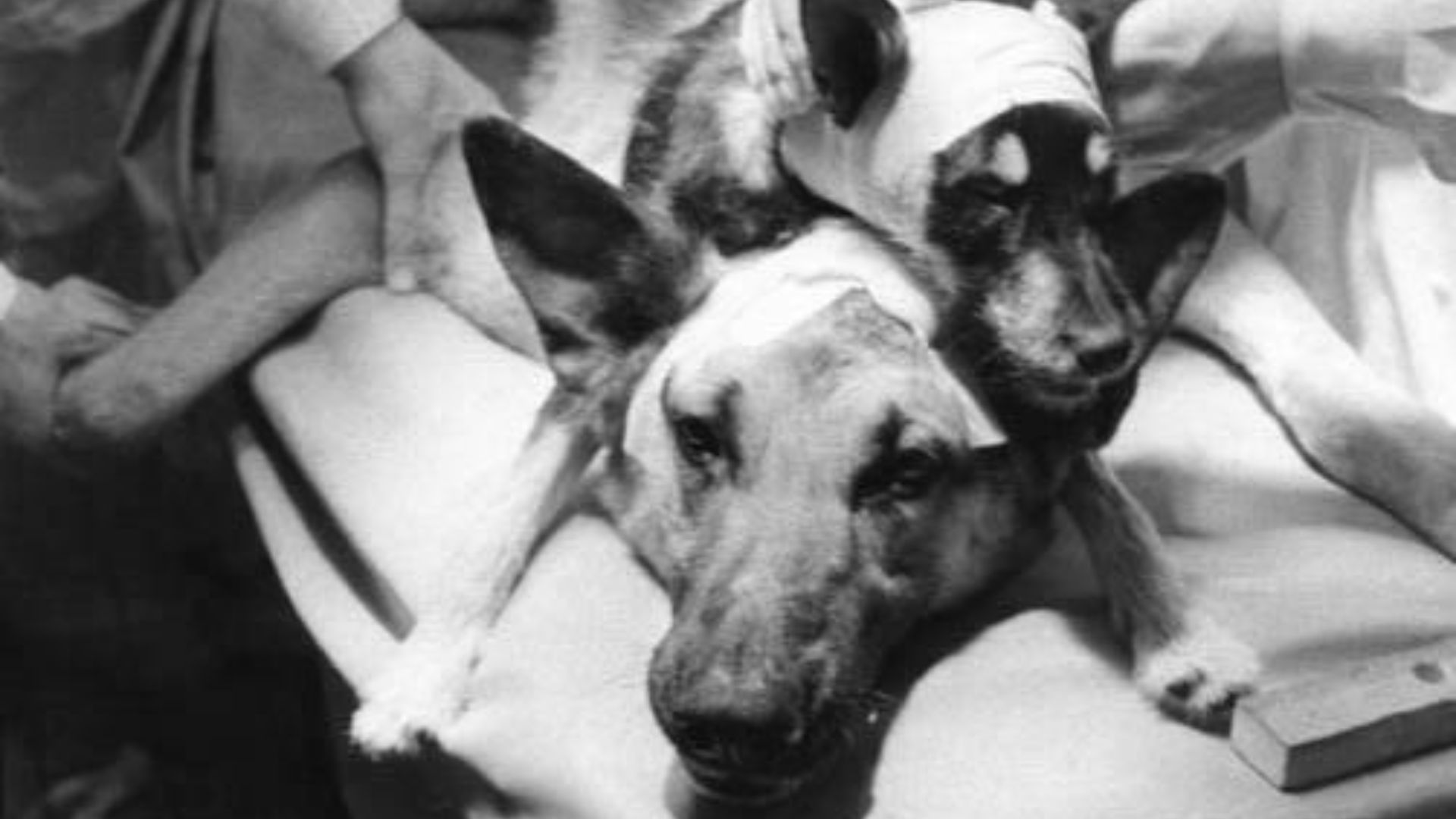
There is a photograph from 1954 that still manages to stop people cold. A large dog stands in a Soviet laboratory, and grafted onto its neck is the head, shoulders, and forelegs of a second, smaller dog. Both heads are alive. Both can drink milk independently. The image looks like a Cold War hoax, the kind of thing you'd expect to find captioned with propaganda or circus advertising. It was neither.
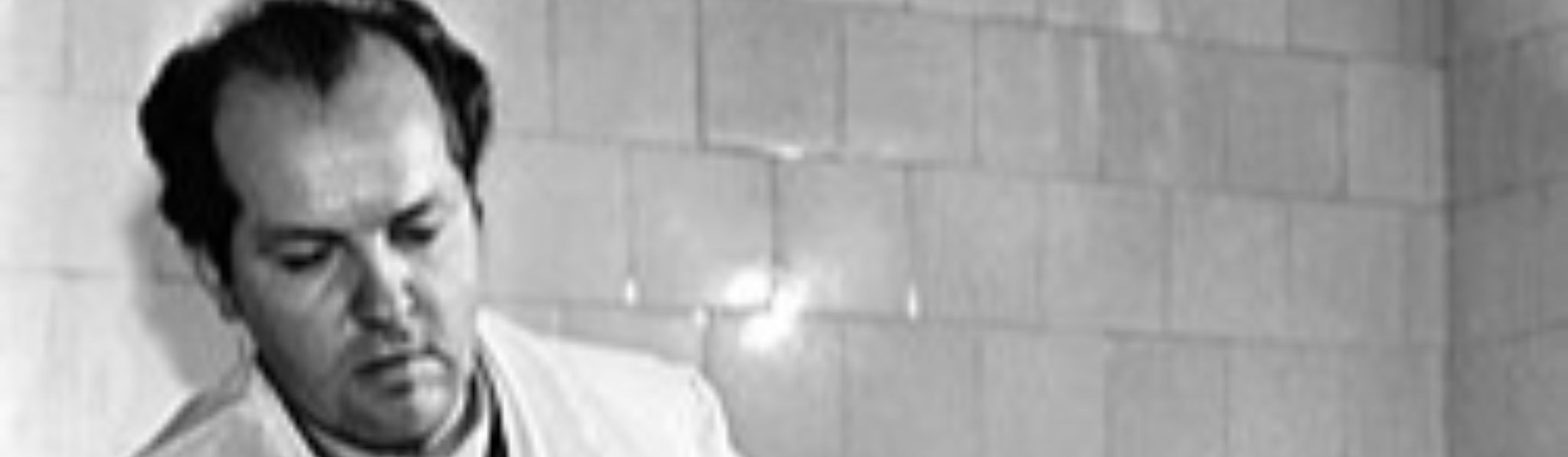
The man responsible was Vladimir Demikhov, a Soviet surgeon who spent decades operating at the extreme edge of what biology would allow. His experiments were not random acts of grotesquerie. They were, in the context of their time, a form of methodical scientific ambition that helped lay the groundwork for modern transplant surgery. That context doesn't make the photographs easier to look at, but it does change what you see in them.
The Experiments and What Drove Them
Demikhov was born in 1916 in a small village in the Volgograd region of Russia. By the time he was a student at Moscow State University in the late 1930s, he had already built a mechanical heart pump and implanted it in a dog, one of the earliest known experiments of its kind. His preoccupations were consistent throughout his career: he wanted to understand whether vital organs could survive outside their original body, be transplanted, and continue to function. The two-headed dog experiments were, in his framing, a way to test whether a transplanted cardiovascular system could sustain a living organism.
Between 1954 and the early 1960s, Demikhov created approximately 20 two-headed dogs using a surgical grafting procedure he refined over many iterations. The operation involved connecting the smaller dog's circulatory system to the larger host dog's jugular vein and carotid artery, allowing the graft to be sustained by the host's blood supply. The procedure was extraordinarily difficult, and most of the animals survived only days before dying of immune rejection, an obstacle that would not have real solutions for decades. The longest any of the grafted animals survived was 29 days.
Soviet state media publicized the experiments, partly because Demikhov's work aligned with a broader Soviet interest in demonstrating scientific capability during the Cold War.
That coverage made him famous inside the USSR while his actual scientific contributions remained largely obscure in the West, at least for a while.
The Transplant Pioneer Nobody Talked About
The direct line from Demikhov's laboratory to modern cardiac surgery is not speculative. Christiaan Barnard, the South African surgeon who performed the first successful human heart transplant in December 1967, visited Demikhov's lab in Moscow twice, in 1960 and again in 1963. Barnard later described Demikhov as his teacher and said that without Demikhov's earlier work on transplantation in dogs, he would not have had the conceptual or technical foundation to attempt what he did at Groote Schuur Hospital.
Demikhov had actually performed the world's first successful coronary artery bypass surgery on a dog in 1953, more than a decade before the procedure was adapted for human patients. He also conducted the first successful transplantation of a heart and lungs together in a dog in 1946. These achievements were published in his 1960 book, "Experimental Transplantation of Vital Organs," which was subsequently translated into English, German, and French and circulated among the surgical community internationally.
Despite this, Demikhov received minimal formal recognition during his lifetime. He was never awarded a Nobel Prize, was passed over for major Soviet scientific honors for years, and spent much of his later career in relative obscurity.
He was eventually granted the title of professor in 1998, the same year he died, at the age of 82.
Why the Two-Headed Dog Still Unsettles Us
The discomfort the experiments produce is worth sitting with rather than dismissing. Part of what makes Demikhov's work so difficult to categorize morally is that it didn't come from cruelty for its own sake. He was trying to solve real problems, organ rejection, circulatory compatibility, the mechanics of keeping tissue alive after surgical transfer, that continue to matter enormously. The methods he used would not pass any modern ethics review, and the suffering involved was real and well documented. Both things are true at once.
Animal experimentation in medicine has always carried this weight. The history of what we now consider routine surgical procedures, kidney transplants, open-heart surgery, bypass grafts, runs through laboratories where animals were subjects without consent. Demikhov's work sits at a particularly stark end of that spectrum, which is probably why the photographs retain their power.
What you are looking at in that 1954 image is not a monster's hobby. You are looking at the early, ugly, necessary work of figuring out whether the human body could be repaired in ways it had never been repaired before. The answer, it turned out, was yes.
KEEP ON READING
20 Times Nature Wiped Entire Communities Off the Map
When the Ground, Sea, & Sky Changed Everything. History is…
By Emilie Richardson-Dupuis May 8, 2026
20 Fossils Scientists Got Completely Wrong, And What It Took…
One Bone Doesn’t Show The Whole Picture. Paleontology has always…
By Elizabeth Graham May 8, 2026
20 Most Manipulative Historical Figures
Masters of the Long Con. History isn't just full of…
By Sara Springsteen May 8, 2026
10 Technological Advances That Saved Lives & 10 That Took…
Innovation Has Always Had Two Sides. Technology has improved human…
By Rob Shapiro May 8, 2026
20 Radicals History Couldn’t Ignore
They Moved The Line. Every age has people who are…
By Cameron Dick May 8, 2026
20 Animal Species From History That Disappeared Because of Humans
The Creatures We Didn’t Leave Enough Room For. Extinction can…
By Emilie Richardson-Dupuis May 7, 2026