

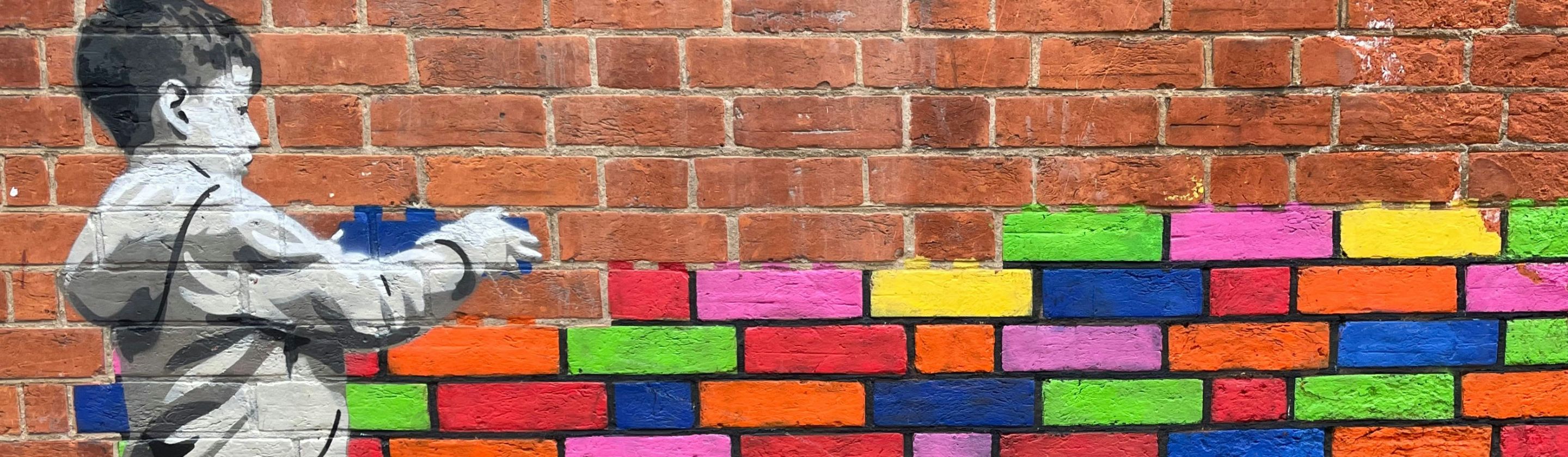
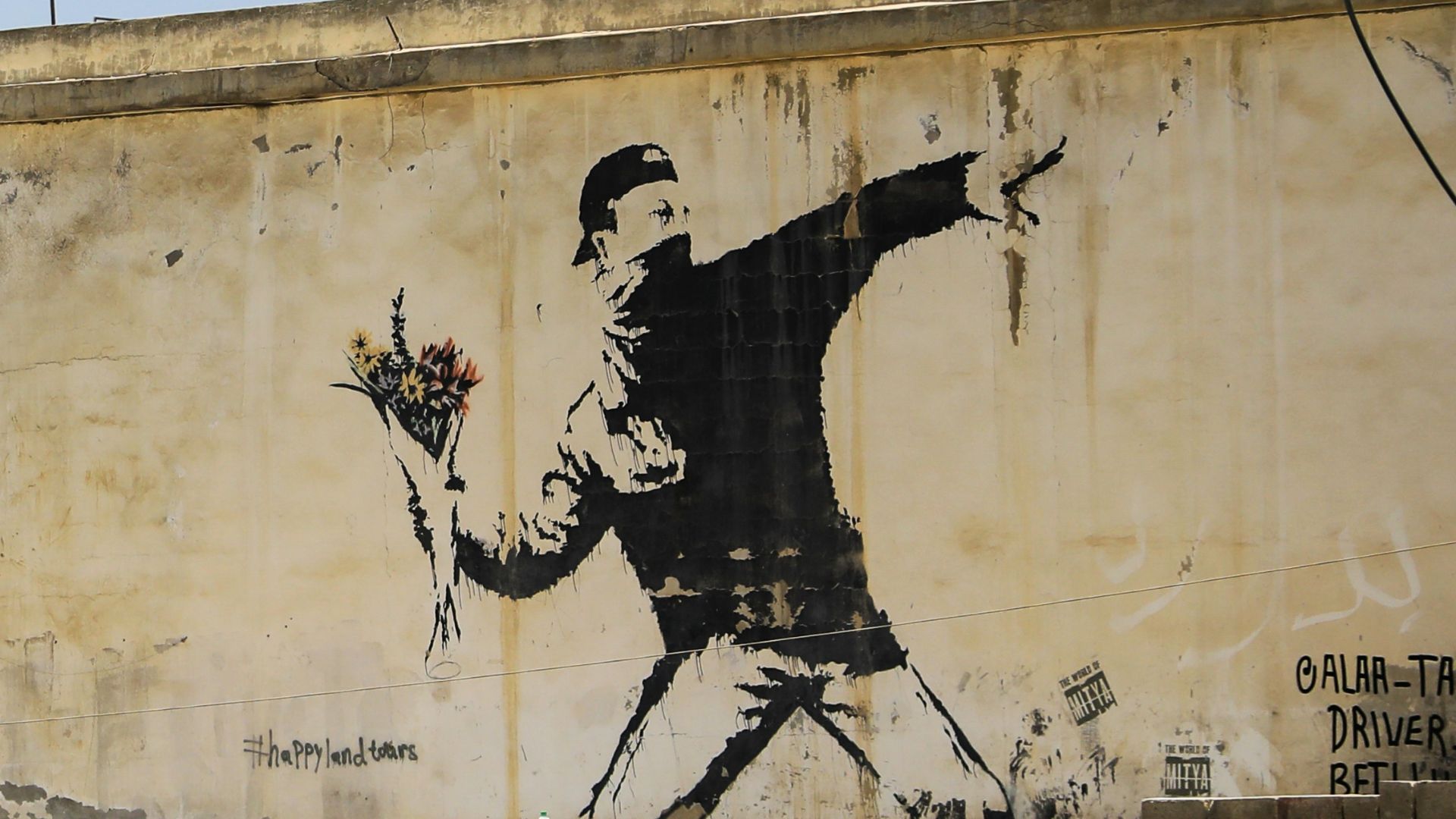
You’ve probably seen his work on a crumbling city wall or scrolling through your social media feed, yet the man behind the stencil remains a total ghost. Banksy has managed to become one of the most famous artists on the planet while keeping his true identity a complete secret for over three decades. It is a pretty impressive feat in our world of constant surveillance and smartphone cameras, but his anonymity is actually a huge part of the message he is trying to send. By staying in the shadows, he ensures that the focus stays on his bold political statements rather than on his personal life or celebrity status.
If you are wondering how one person can pull off such massive stunts without getting caught, you are not alone in your curiosity. From Bristol’s underground graffiti scene to the prestigious auction houses of London, Banksy's journey is a masterclass in subversion and creative mischief. He has turned the art world upside down by proving that you do not need a face or a formal gallery to change the way people think about society. Whether he is painting rats with megaphones or shredding a million-dollar canvas in front of a live audience, he always keeps us guessing about his next move.
The Man Behind the Mask
Over the years, a few prime suspects have surfaced as potential candidates. Most suspect Banksy is actually Robin Gunningham, a man from Bristol whose background checks appear to line up with Banksy’s known history. In fact, geographic profiling, which is typically used to track down criminals—has linked Gunningham’s addresses as Banksy’s probable MO base for his early graffiti. Many journalists believe this to be true.
There have also been rumors that Banksy is actually Robert Del Naja, founding member of trip-hop group Massive Attack. Fans have picked up on the fact that new Banksy murals regularly appear in cities where Massive Attack will be performing during their world tours months later. Del Naja is also a visual artist and was once considered part of the Bristol graffiti movement that spawned Banksy in the early 1990s. Although he has publicly dismissed the claims in interviews, people continue to create entire Reddit threads based on correlations between his music and Banksy’s work.
Then there are those who believe Banksy is actually a crew of artists operating under one collective identity. How else could someone continuously get away with doing so much all over the world? Take note of the effort it took to pull off Dismaland.
Some also suggest Banksy being a group led by a woman, which is sometimes used to explain how the artist can be “everywhere at once”. Regardless of the truth, the artist’s “handling service,” known as Pest Control, ensures that every piece is officially authenticated without ever revealing a face.
Stencils and Social Commentary
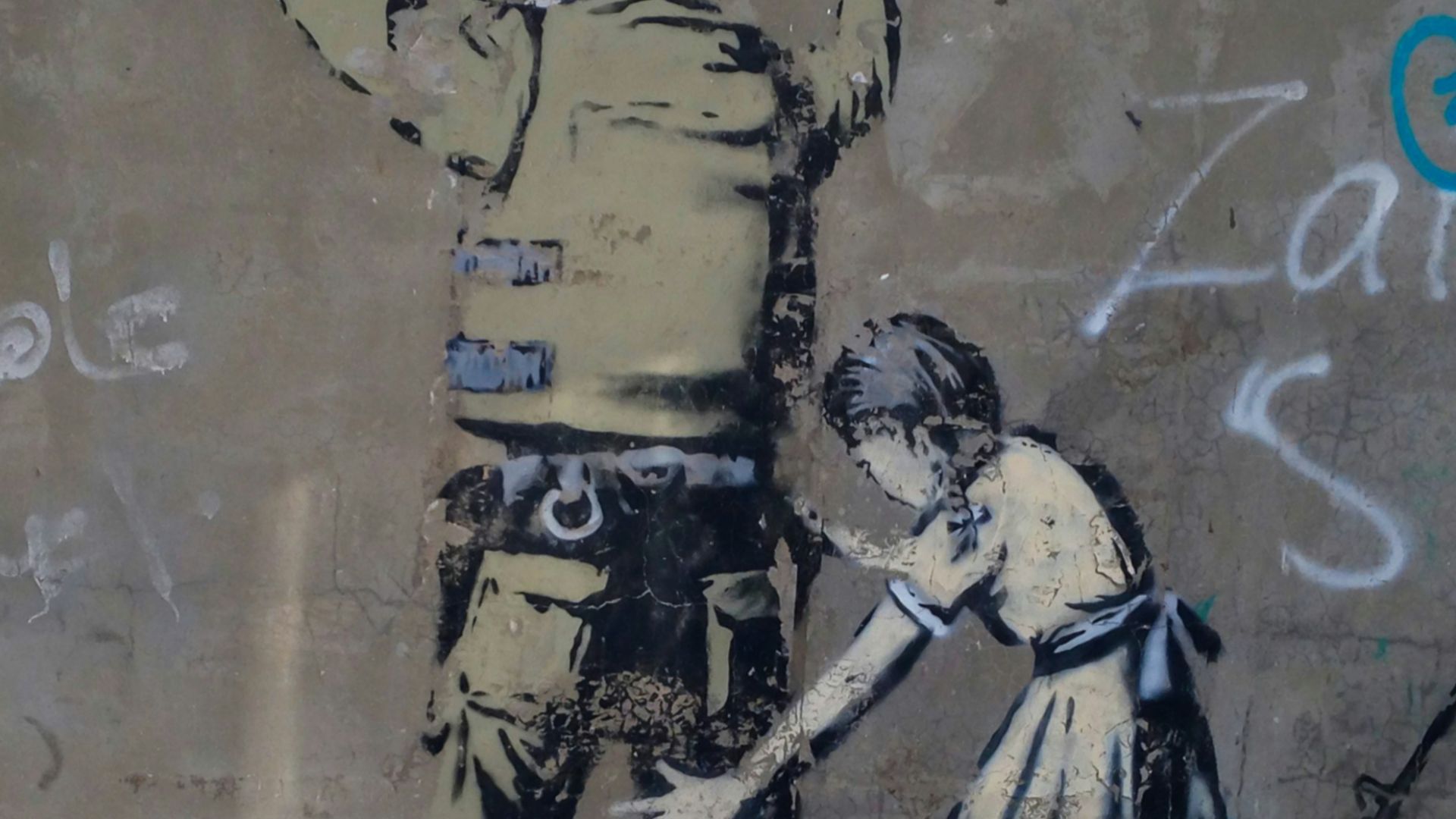
You have likely noticed that Banksy’s style is very distinct, using black-and-white stencils often paired with a single splash of vibrant color. He did not start out this way, but he reportedly switched to stencils because they allowed him to finish his work much faster and avoid getting caught by the police. This choice turned out to be a stroke of genius, as it created a recognizable “brand” that anyone can spot from across the street. It is a simple yet powerful aesthetic that makes his complex political messages accessible to everyone, not just art critics.
The subjects of his work are almost always satirical and aimed at challenging the powers that be in modern society. You will frequently see rats, which Banksy views as symbols of the “lowly” citizens who can still bring down a system if they work together. He also uses images of children, soldiers, and even the Queen to highlight issues like war, consumerism, and the erosion of privacy.
By placing these provocative images in public spaces, he forces viewers to confront uncomfortable truths while walking to work or grabbing a coffee.
One of his most iconic pieces, “Girl with Balloon,” represents a sense of fleeting hope that resonates with almost everyone who sees it. The heart-shaped balloon can be interpreted as a dream that is slipping away or something precious that should be protected at all costs. This image became even more famous when a version of it was sold at an auction, only to self-destruct through a hidden shredder in the frame. It was a classic Banksy move that mocked the high-priced art market and turned a static painting into a piece of performance art.
The mystery of Banksy will likely continue for as long as he decides to keep his identity hidden from the public eye. One could argue that the world is a more interesting place when there are not all the answers and attention remains on the art itself. As long as there are blank walls and social injustices, a new stencil may appear overnight to remind viewers to question everything. He has shown that one person, or perhaps a group of people, can make a lasting mark on history without ever needing to take a bow.
KEEP ON READING
The Brutal Realities Of Gladiator Life Beyond the Arena
David Cruz asenjo on PexelsWhen most people think of gladiators,…
By Rob Shapiro Mar 31, 2026
The Volcano Winter That Nearly Toppled Europe
Collin Ross on UnsplashMost people, if asked to name a…
By Cameron Dick Mar 31, 2026
From School Plays To Starting A Cult: 20 Of The…
The Books That Made Us. Many people will tell you…
By Farva Ivkovic Jan 31, 2025
20 Facts About Jane Grey, The Forgotten Queen Of England
A Quick, Messy, and Tragic Reign. Lady Jane Grey never…
By Maria Cruz Jan 31, 2025
20 Priceless Historical Art Pieces Rescued By The Monuments Men
Protecting Human History. While the soldiers on the front lines…
By Sara Springsteen Mar 31, 2026
Almost Every Ancient Statue Has a Missing Nose, And It's…
Gary Todd from Xinzheng, China on WikimediaWalk through the classical…
By Elizabeth Graham Mar 31, 2026