


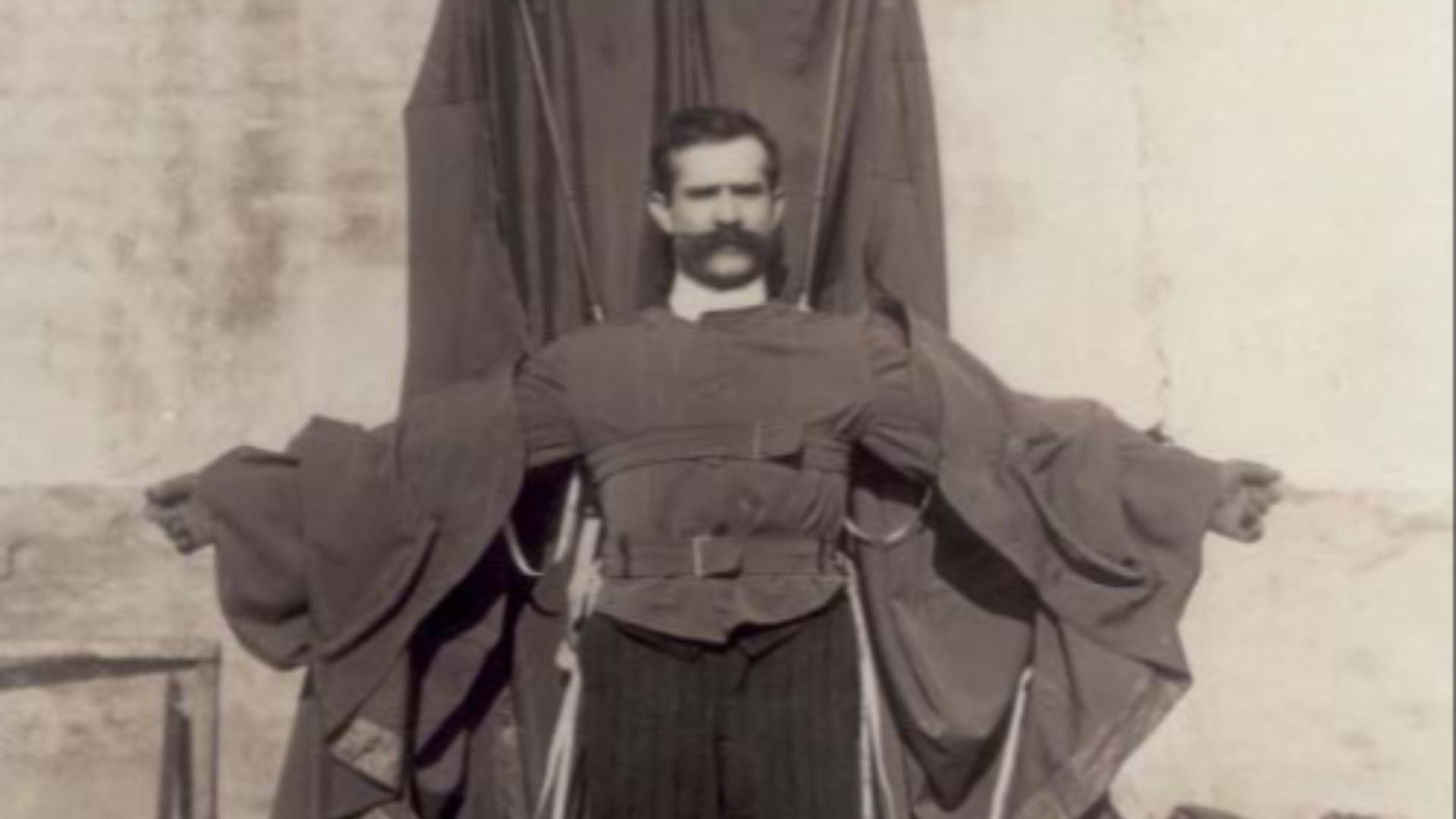
 Unknown authorUnknown author on Wikimedia
History is full of eccentric inventors who were completely convinced that their wacky creations would change the world forever. While many of these passionate dreamers achieved legendary status through their brilliant breakthroughs, others unfortunately let their stubborn optimism get the absolute best of them. Franz Reichelt, an enthusiastic Austrian-born tailor living in Paris during the early twentieth century, falls squarely into the latter category. He mistakenly believed he could conquer the skies with nothing more than a sewing machine, some heavy fabric, and an abundance of sheer confidence.
You might think that pioneering aviation safety would require a deep background in advanced engineering or physics, but Reichelt relied purely on his skills as a dressmaker. He became utterly obsessed with developing a functional parachute suit that pilots could comfortably wear while operating those early, notoriously unstable airplanes. His relentless pursuit of this lofty goal would eventually lead him to the most iconic monument in France for a fateful public demonstration. It is a classic cautionary tale of how blinding pride and a total lack of scientific testing can completely backfire on a well-meaning inventor.
The Tailor with a Vision
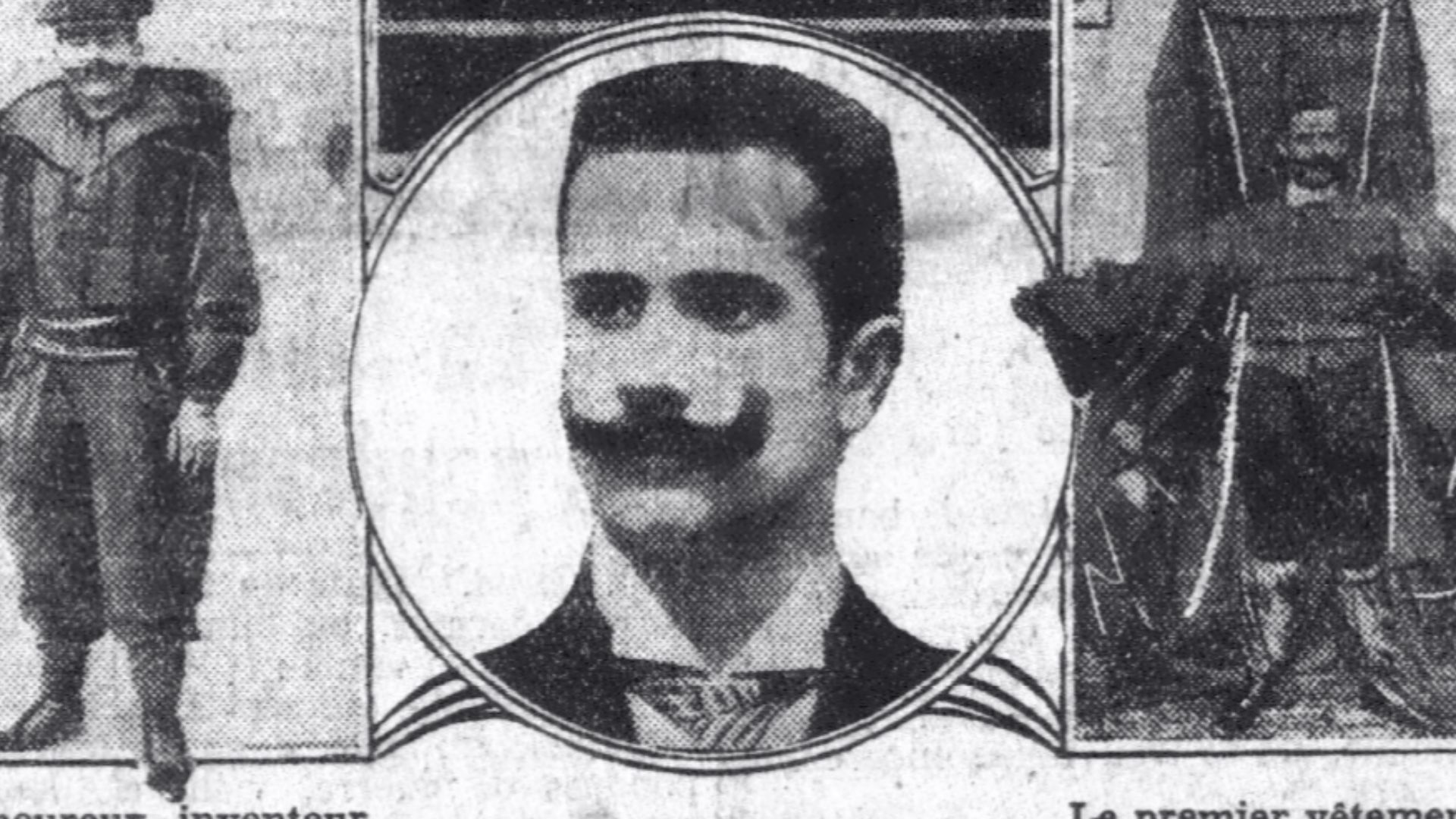 Unknown authorUnknown author on Wikimedia
During the opening decade of the 1900s, the aviation world was expanding at a breakneck pace, but safety measures were lagging way behind the technology. Reichelt watched these brave pilots risk their lives daily and decided that his tailoring expertise could provide the ultimate life-saving solution. He began spending all his spare time draping, cutting, and stitching various prototypes of a wearable parachute garment in his Parisian workshop. His early designs utilized massive amounts of silk, rubber, and internal rods that were supposed to deploy mid-air to catch the wind.
Initial testing of these bulky suits involved tossing weighted dummies out of his apartment windows with very mixed results. While a few of the trials showed a tiny bit of promise, the heavier dummies routinely plummeted straight to the courtyard floor with a terrifying thud. You would think these dramatic failures would prompt a sensible designer to completely overhaul the basic aerodynamic math. Instead, Reichelt remained entirely convinced that the real issue wasn't his tailoring design, but rather the lack of sufficient height during the drops.
The stubborn inventor eventually tested a modified version of the suit on himself by leaping off a safety platform that was about twenty-six feet high. This bold experiment resulted in a fractured leg and a stern warning from local authorities, but his enthusiasm remained completely unbroken.
He blamed the painful landing on the cramped testing conditions and the stagnant air currents surrounding the building. In his mind, he just needed a grander stage with plenty of open space to truly prove his genius to the skeptical scientific community.
Demanding the Grandest Stage
To achieve the altitude he desperately desired, Reichelt set his sights on the tallest structure in the world at the time, the magnificent Eiffel Tower. He spent months relentlessly lobbying the Parisian police department for official permission to conduct an aviation safety experiment from the monument's first platform. The authorities were initially very hesitant to grant such a bizarre request due to the obvious safety hazards involved. However, they finally relented under the strict impression that the tailor would be using a standard dummy passenger for the test.
When the crisp morning of February 4, 1912, finally arrived, a large crowd of journalists, photographers, and curious onlookers gathered at the base of the tower. To everyone's utter astonishment, Reichelt turned up at the venue wearing the cumbersome parachute suit himself instead of bringing a practice mannequin. His closest friends were instantly horrified and spent a long time trying to talk him out of making the dangerous leap. You can only imagine the tension in the air as he repeatedly brushed off their frantic warnings with a confident, cheerful smile.
The inventor was so incredibly certain of his success that he had even hired a professional cinematography crew to record the entire event for posterity. He proudly showcased the complex mechanism of his suit to the flashing cameras, explaining how the fabric would effortlessly blossom into a majestic canopy. Representatives from the aviation club warned him that the suit required much more time to deploy than the tower's height allowed. Reichelt simply ignored their expert mathematical calculations, completely driven by the intoxicating dream of international fame and a hefty cash prize.
Climbing up the cold stairs to the first platform of the Eiffel Tower, which stood roughly one hundred and eighty feet above the frozen ground, the tailor showed no signs of turning back. He stepped out onto a table that had been positioned right next to the safety railing to give him a clear path downward. The chilly winter wind was biting, and witnesses noted that he seemed to hesitate for a few long, tense minutes before making his final move. He looked down at the icy lawn below, adjusted his heavy apparatus one last time, and prepared to make aviation history.
KEEP ON READING
The story of Ching Shih, the Woman Who Became the…
Unknown author on WikimediaFew figures in history are as feared…
By Emilie Richardson-Dupuis Dec 29, 2025
Einstein's Violin Just Sold At An Auction—And It Earned More…
A Visionary's Violin. Wanda von Debschitz-Kunowski on WikimediaWhen you hear…
By Ashley Bast Nov 3, 2025
This Infamous Ancient Greek Burned Down An Ancient Wonder Just…
History remembers kings and conquerors, but sometimes, it also remembers…
By David Davidovic Nov 12, 2025
The Mysterious "Sea People" Who Collapsed Civilization
3,200 years ago, Bronze Age civilization in the Mediterranean suddenly…
By Robbie Woods Mar 18, 2025
20 Greatest Ancient Athletes In History
Ancient Olympics. Long before modern stadiums and multimillion-dollar endorsements, athletes…
By Sara Springsteen May 1, 2026
20 Soldiers Who Defied Expectations
Changing the Rules of the Battlefield. You’ve probably heard plenty…
By Annie Byrd Feb 10, 2026