
Why the Pilgrims Wouldn't Recognize the Thanksgiving Dinner Americans Eat Today
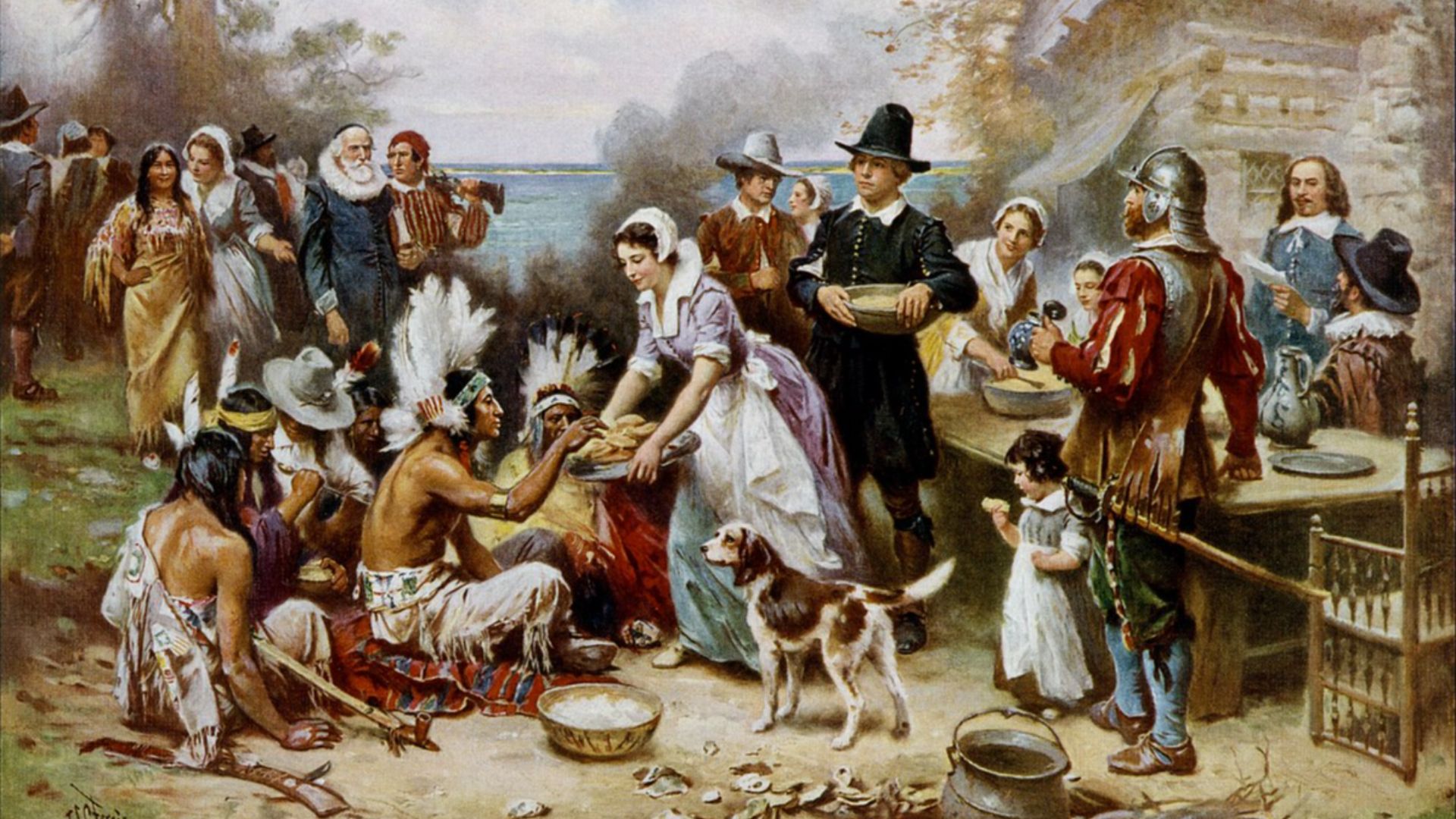 Jean Leon Gerome Ferris on Wikimedia
For many Americans, Thanksgiving wouldn't be complete without a roasted turkey, buttery mashed potatoes, cranberry sauce, and a generous slice of pumpkin pie (or two). Although these dishes have become synonymous with the holiday, surprisingly few of them would've been served when the Pilgrims and the Wampanoag people gathered for their famous harvest celebration in 1621. In fact, the original feast looked quite different from what most Americans would consider a traditional Thanksgiving dinner.
Over the past four centuries, changes in agriculture, cooking methods, ingredient availability, and American culinary preferences have transformed the holiday menu. Several of the dishes that families have been preparing for generations wouldn't have been possible to make in Plymouth at the time. Even some of the ingredients the Pilgrims would've recognized were prepared in ways that might seem unfamiliar to modern dinner guests.
Turkey Probably Wasn't the Star of the Show
Given how closely Americans associate Thanksgiving with turkey, it's surprising that historians can't definitively confirm whether it was even served at the 1621 celebration. English colonist Edward Winslow documented that several men went hunting for wild birds in preparation for the gathering, although he didn't specify which species they brought back. Ducks and geese could've been just as prominent on the menu as wild turkeys, which were plentiful in the region at the time.
One meat that we know was served, however, was venison. The Wampanoag brought five deer to the gathering, providing plenty of food for a celebration that lasted three days. Although venison was a familiar food in England, access to deer was heavily restricted, meaning many ordinary English people would've considered it a real treat.
Seafood was also an important part of the diet in coastal New England and may have made an appearance during the festivities. Lobster, mussels, clams, and various types of fish were available in the surrounding waters, making them much easier to come by than many domesticated meats. While serving lobster alongside Thanksgiving turkey might raise a few eyebrows today, seafood would've been a perfectly natural addition to a celebratory meal in Plymouth.
Most of Our Favorite Side Dishes Didn't Exist
Considering how much effort Americans put into perfecting their mashed potato recipes, it's funny to think that the Pilgrims likely celebrated without a single potato. Although potatoes originated in South America and had already made their way to Europe by 1621, they hadn't become a staple of the English diet. Sweet potatoes were similarly uncommon, meaning neither buttery mashed potatoes nor marshmallow-covered sweet potato casseroles would've been on the table.
Cranberries, on the other hand, were native to the region and would've been familiar to the Wampanoag. However, the amount of sugar needed to turn these naturally tart berries into the sweet cranberry sauce Americans enjoy today would've made preparing it rather difficult. Sugar wasn't readily available to the colonists, and recognizable recipes for sweetened cranberry preparations wouldn't appear in print until several decades later.
Corn would've been one of the more recognizable ingredients, although it probably wasn't served the way most Americans would expect. Rather than eating tender, butter-covered kernels, the people attending the harvest celebration likely ate corn that had been ground into meal and used to make porridge or bread. Pumpkins, beans, and other locally grown vegetables may have also been served, though their preparation would've been much simpler than that of today's elaborate Thanksgiving casseroles.
The Modern Thanksgiving Menu Is a Relatively Recent Invention
Perhaps the most disappointing revelation for anyone with a sweet tooth is that the original celebration almost certainly didn't include pumpkin pie. Although pumpkins were available, the colonists lacked reliable supplies of wheat flour and other ingredients needed to make the pastry-based dessert we're familiar with. Cooking or stewing pumpkins would've been a much more practical option, and the apple pie that frequently accompanies pumpkin pie at modern gatherings would've been absent as well.
Many of the dishes Americans now consider essential to Thanksgiving became established during the nineteenth century. Sarah Josepha Hale, a magazine editor who spent years campaigning for a national Thanksgiving holiday, helped popularize recipes featuring roasted turkey, cranberries, and pumpkin pie through her publications. By the time President Abraham Lincoln proclaimed a national Thanksgiving observance in 1863, these foods were already becoming closely associated with the occasion.
The twentieth century brought even more changes to the holiday menu, particularly as food manufacturers began promoting recipes that incorporated their products. Green bean casserole, for instance, was developed in 1955 by Campbell's employee Dorcas Reilly and called for canned cream of mushroom soup, something the Pilgrims couldn't possibly have imagined. As traditional as our Thanksgiving dinner might feel today, it's really the result of centuries of changing tastes, new ingredients, and beloved family recipes rather than an accurate recreation of what was eaten in Plymouth in 1621.