
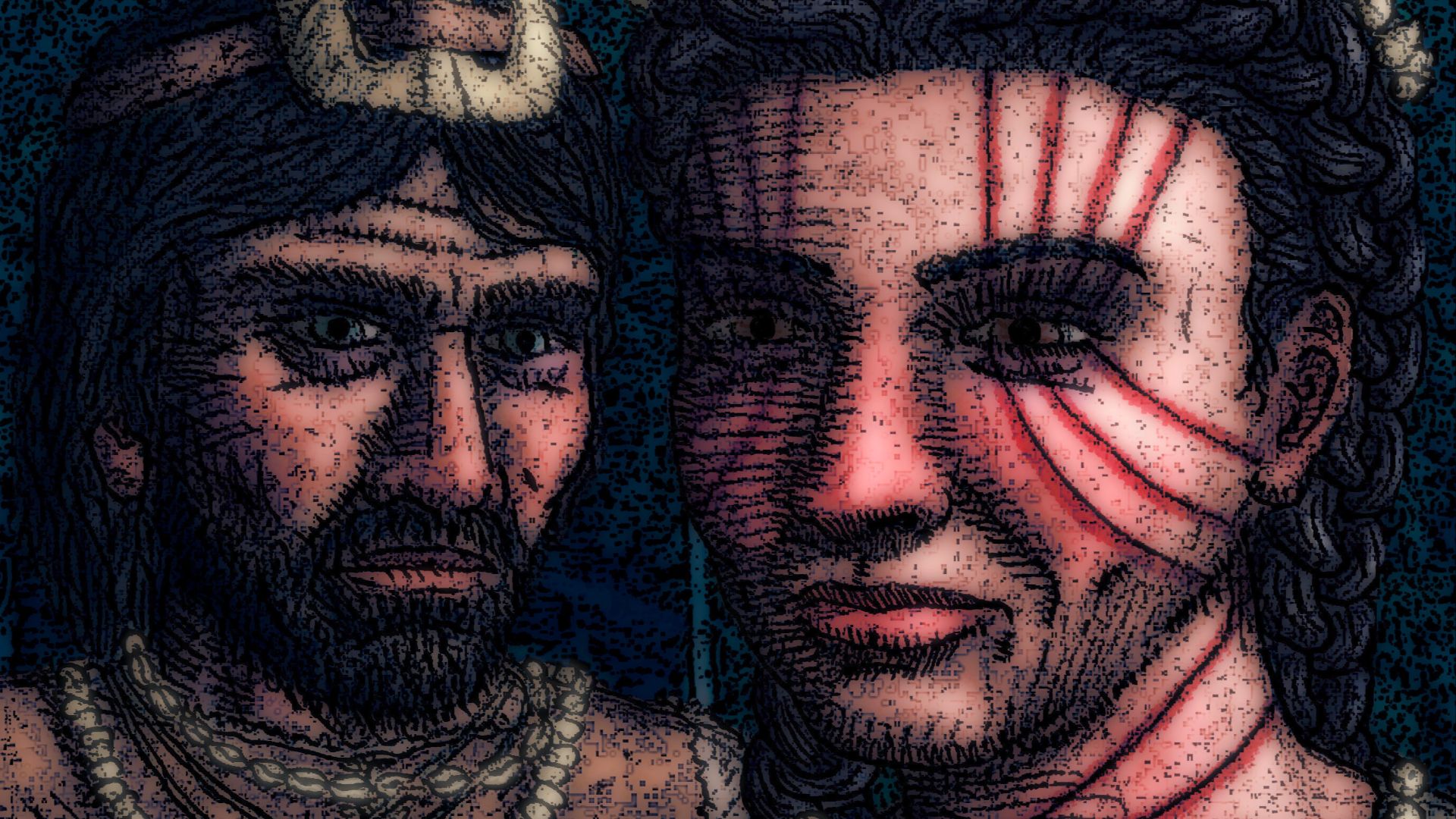
If you ask the question in purely medical terms, the modern world wins, and the conversation ends quickly. But if you mean the best time to be alive in a deeper human sense, the hunter-gatherer era has the strongest claim. Marshall Sahlins’s famous argument about the “original affluent society” pushed exactly in that direction, suggesting that affluence can mean not endless production, but needs that are modest and regularly met. That shifts the whole standard.
Taken that way, the hunter-gatherer world starts to look less like a grim prelude to civilisation and more like a mode of life unusually well suited to human beings. Richard B. Lee’s work on the Ju/’hoansi, Jared Diamond’s attack on the mythology of agricultural progress, and Mark Nathan Cohen’s research on declining health after the shift to farming all point in the same broad direction. None of them argued that foraging life was risk-free or medically ideal. What they did argue, in different ways, is that agriculture and settlement brought trade-offs modern people often pretend were automatic improvements.
A life with enough, rather than a life built on endless desire
Sahlins’s central insight is still the cleanest place to begin. He argued that a society can become affluent in two ways: by producing a great deal, or by wanting relatively little and meeting those wants reliably. In The Original Affluent Society, he described hunter-gatherers as people whose material wants were often “finite and few,” and whose techniques were adequate to satisfy them. That is a far more radical idea than it first sounds, because it suggests that freedom may come from sufficiency rather than accumulation.
That claim was not just philosophical mood music. Sahlins built it partly on ethnographic data, especially work by Richard B. Lee, and he concluded that many hunter-gatherers were not trapped in nonstop toil but often spent only three to five hours per adult worker per day in food production. He also emphasised that this labor was intermittent rather than industrial in rhythm, meaning foraging life didn't necessarily consume every waking hour.
A society that secures food without turning life into permanent overwork leaves more room for social life, ritual, storytelling, childcare, visiting, and simple rest. Lee’s broader work has also stressed that sharing and cooperation, not constant competition, were central to human success. If you define the best time to be alive as the period that left the most space for being a person rather than a labor unit, the hunter-gatherer era looks pretty strong.
Agriculture brought gains, but it also brought losses
Jared Diamond’s famous essay called agriculture “the worst mistake in the history of the human race." He argued that surviving hunter-gatherers often had more leisure, more varied diets, and, in some cases, better nutritional balance than early farmers, with archaeological evidence suggesting that the move to agriculture often came with declining stature and health. His broader warning was that more food per acre didn't automatically mean a better human life.
Mark Nathan Cohen made a related argument in a more clinical register. In his later reflections on the origins of agriculture, he wrote that skeletal markers, ethnographic studies, and epidemiological patterns all support the view that health and nutritional quality commonly declined as hunter-gatherers moved toward agriculture, while stress, infection, disease, and exposure to parasites increased with sedentism and larger communities.
Diamond also pressed on another point that's easy to miss: hunter-gatherers, because they lived without large stores of food and concentrated wealth, had far less room for entrenched elites, rigid class divisions, and the kind of parasitic hierarchy that settled agriculture made possible. More recent summaries of hunter-gatherer life continue to describe immediate-return foragers as notably egalitarian, with strong resistance to hierarchy and a preference for individual autonomy. If the best era is the one least likely to trap most people beneath a small privileged class, the foraging world ranks at the top.
Mobility, equality, & human scale may have fit us better
Britannica’s overview of hunter-gatherers makes an important practical point that often gets treated as a weakness when it may actually be part of the strength. Most foraging groups were small, mobile, and linked through kinship and reciprocity, with possessions limited by what could be carried and camps moving when local resources thinned out. That kind of life did not allow much hoarding, overbuilding, or permanent domination. It also kept society close to a human scale, where the individual was less likely to disappear into a giant, anonymous system.
That mobility was not just about survival technique. Sahlins treated it as one of the reasons affluence was possible, because moderation in possessions and movement across the landscape kept people’s ends within reach of their means. Cohen later argued that mobility, broad dietary variety, and effective sharing were actually better buffers against risk than storage-heavy sedentary systems. In other words, the hunter-gatherer world may have been resilient not despite its lightness, but because of it.
If the standard is human flourishing rather than medical safety alone, the hunter-gatherer era is the best candidate for the greatest time to be alive. It seems to have offered a powerful mix of enough leisure, enough food diversity, relatively low material obsession, strong social interdependence, and fewer hardened inequalities than the agricultural and industrial worlds that followed. Life may have been poorer in goods, yet richer in the things that make life feel properly lived.
KEEP ON READING