


On April 14, 1561, residents of Nuremberg, Germany, reportedly witnessed something extraordinary above their city. Strange shapes appeared around the sun, and the movements themselves were rather erratic. Witnesses claimed the shapes were colliding; others said they were hurtling towards the ground, but all of them swear they saw something that day.
However, there's a difference between what people reported seeing and what actually happened that morning. More than 460 years later, the incident remains one of history's most fascinating alleged UFO sightings. An illustrated account from the period has fueled theories about alien visitors, but historians have offered far more earthly explanations. So, did 16th-century Germans really witness an alien battle, or was something else responsible for the spectacle?
A Strange Battle Above Nuremberg
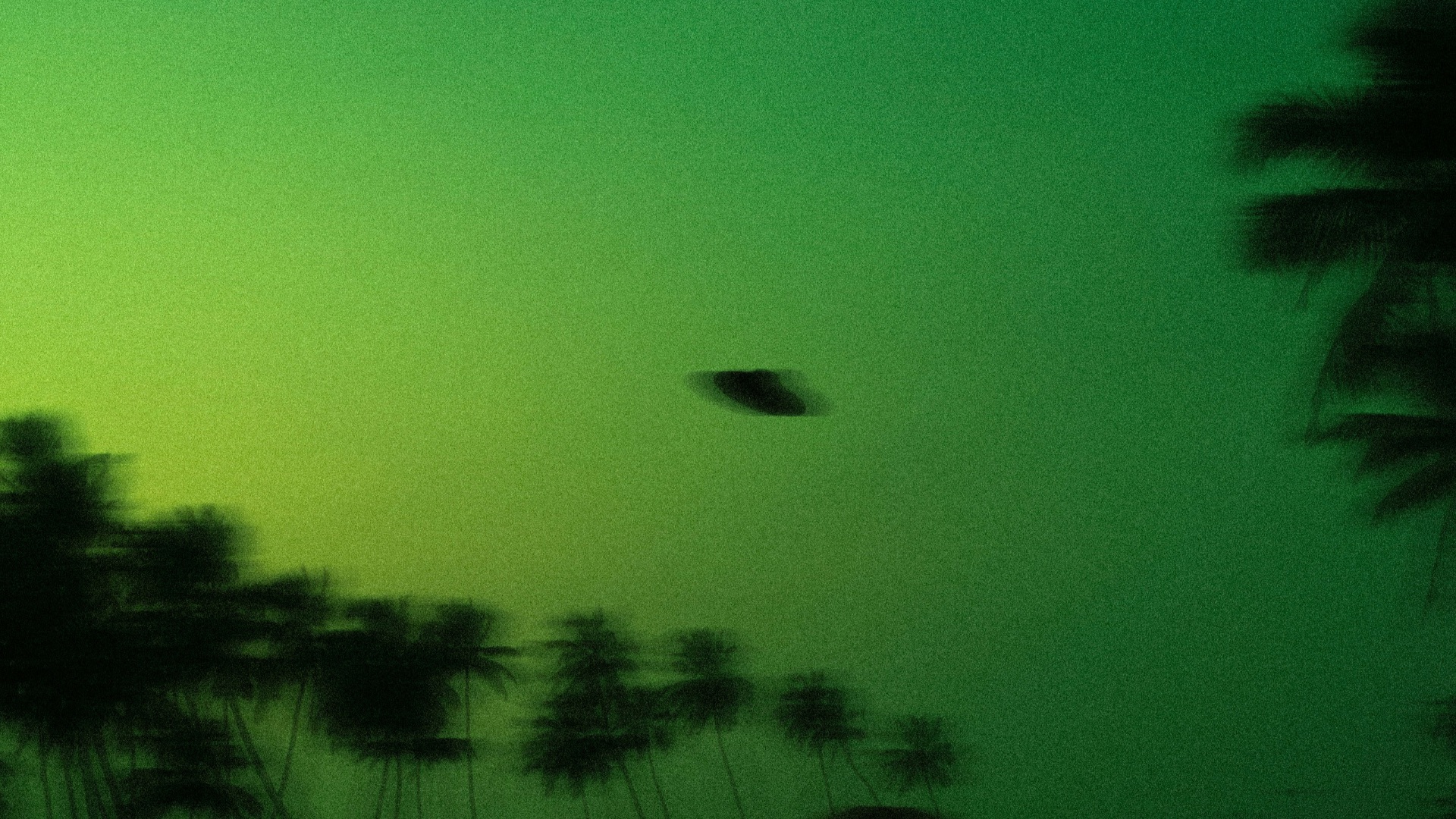
The story begins shortly after sunrise on April 14, 1561. It didn’t take long before residents reportedly noticed unusual formations around the sun. According to local artist Hans Glaser’s published account, several red and black spheres alongside crosses as well, which was unlike anything the townspeople had seen before. It didn’t help that the shapes seemingly had a mind of their own, either; some seemed arranged in rows, while others were scattered across the sky.
The unusual display attracted both inside Nuremberg and in the surrounding countryside. The objects supposedly then moved toward one another, creating what appeared to be a violent confrontation. Some emerged from elongated shapes, and others did a dance across the sun. They didn’t even vanish into thin air—the apparent struggle reportedly continued for more than an hour.
Eventually, the objects supposedly plummeted toward the ground, where they landed in flames and smoke. A large object resembling a spear reportedly appeared afterward, with its point directed westward. As outlandish as it sounds, the story didn’t win people over immediately, however. Even then, the description sounded a little nutty, and there's no independently verified evidence that physical objects actually crashed outside Nuremberg.
The Famous Illustration That Started the Debate
Glaser's account might have disappeared into obscurity if he hadn't accompanied his description with a remarkable illustration. His colorful woodcut depicts dozens of mysterious shapes surrounding a sun with a human face. Below the spectacle, Nuremberg's buildings appear alongside what look like objects falling into the countryside. The original broadsheet survives today as well, providing a glimpse into how the incident was presented.
However, he wasn’t trying to document an alien encounter in the modern sense. His text described the spectacle as a warning from God, urging readers to repent. That was all it took to spark further religious interpretations, leading people to believe that the illustration reveals as much about contemporary beliefs as it does about whatever appeared in the sky.
Centuries later, people took a much closer look at the artwork, and they did it through an entirely different perspective, too. Swiss psychiatrist Carl Jung discussed the Nuremberg incident in his 1958 book Flying Saucers: A Modern Myth of Things Seen in the Skies. The mysterious spheres and elongated forms subsequently became popular subjects of speculation among UFO enthusiasts.
What Could Explain the Mysterious Sighting?
But what did the people really witness that day? One explanation involves an atmospheric phenomenon known as sundogs, or parhelia. Long story short, these happen when sunlight passes through ice crystals suspended high in the atmosphere, producing bright spots that can appear on either side of the sun. You might have even experienced them yourself! According to the National Weather Service, these displays are especially noticeable when the sun sits low on the horizon, too.
That’s some of the best evidence modern historians have, especially when you consider that the Nuremberg incident reportedly occurred around sunrise. Multiple atmospheric effects appearing together could have created a confusing display for observers unfamiliar with their causes. But even so, the sundog explanation doesn't account neatly for every detail in Glaser's illustration, particularly the apparent movement and falling objects. And without reliable weather observations from that morning, nobody can actually reconstruct the conditions responsible for the spectacle.
There's also the question of how accurately the original account represented what witnesses actually saw. Glaser's broadsheet wasn't a modern scientific report, and its dramatic imagery served a religious message as well as a commercial purpose. We don't have a collection of independently verified eyewitness testimonies that would allow historians to compare individual observations. Consequently, it's difficult to determine how much of the supposed aerial battle reflects actual visual phenomena and how much represents interpretation or artistic embellishment.
Ultimately, the Nuremberg incident remains one of the longest-lasting historical curiosities we have. Something weird may well have appeared above the city, but the surviving account just can’t establish that spacecraft were involved. The most plausible explanations still raise eyebrows to this day, and it’s not like UFO enthusiasts are convinced. Perhaps the greatest mystery isn't what appeared in the sky, but how one remarkable illustration managed to keep the debate alive for centuries.
KEEP ON READING