

 Internet Archive Book Images on Wikimedia
Most people know that part of the reason why the first Thanksgiving was celebrated because the first winter in Plymouth did a number on the Pilgrims. Fewer know how close the Pilgrims came to repeating history. The story of the Starving Time at Jamestown makes the first winter in Plymouth look like a walk in the park.
Jamestown was the first permanent English settlement in North America. The settlement was established in 1607 near modern-day Williamsburg by approximately 105 colonists. England was eager to establish a foothold in the New World as exploration had been dominated by the Spanish up to that point.
England had a lot riding on Jamestown. Previous settlement attempts such as the one at Roanoke ended in disaster. Virginia's terrain was like nothing they'd ever experienced.
Doomed From The Start
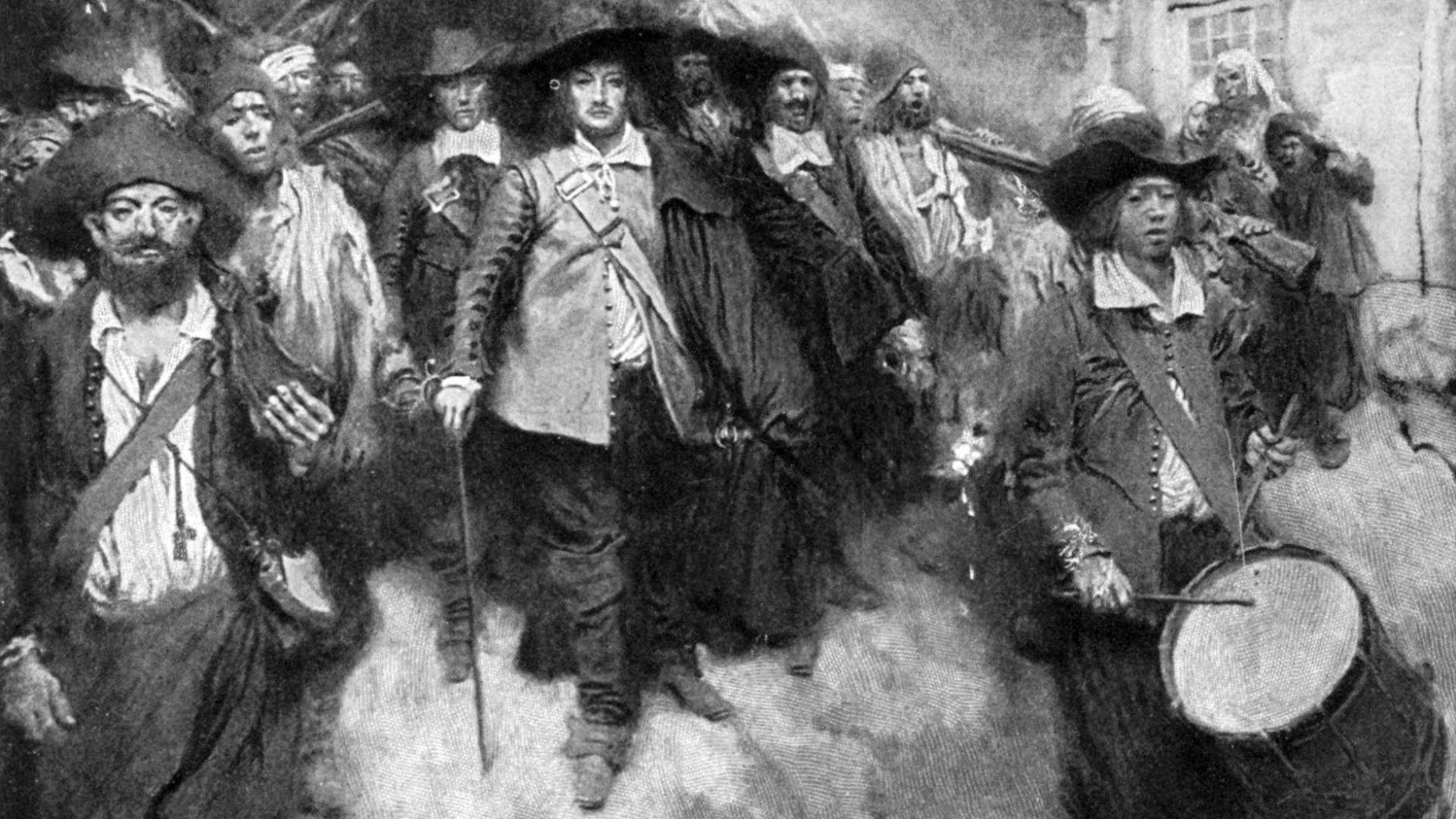
On paper, Jamestown seemed ideal. The river channel allowed ships to sail right up to the settlement and unload. Joined to the mainland by a thin strip of land, it was easy to attempt should the nearby Powhatan attack.
The Jamestown colonists didn't arrive with intents of waging war on their new neighbors. Rather, they were depending on their kindness to help get the settlement started. The majority of the colonists were gentlemen and their servants, neither group was well-prepared for the manual labor involved in establishing and protecting a settlement.
Jamestown was unoccupied for a reason. The site was ill-suited for agriculture or community with brackish water and mosquito-filled wetlands. Not only was it too late in the season to start planting with the colonists arrived, but Virginia was experiencing its worst drought in 700 years!
Needless to say, things were doomed from the start.
However, the colonists weren't about to sail back to England. They quickly built a fort, hunted what little game could be found, and hunkered down for the winter. Two-thirds of the colonists died that first year—but not from starvation, from disease.
The worst was yet to come.
From Bad To Worse
 Signed A.W. in lower left on Wikimedia
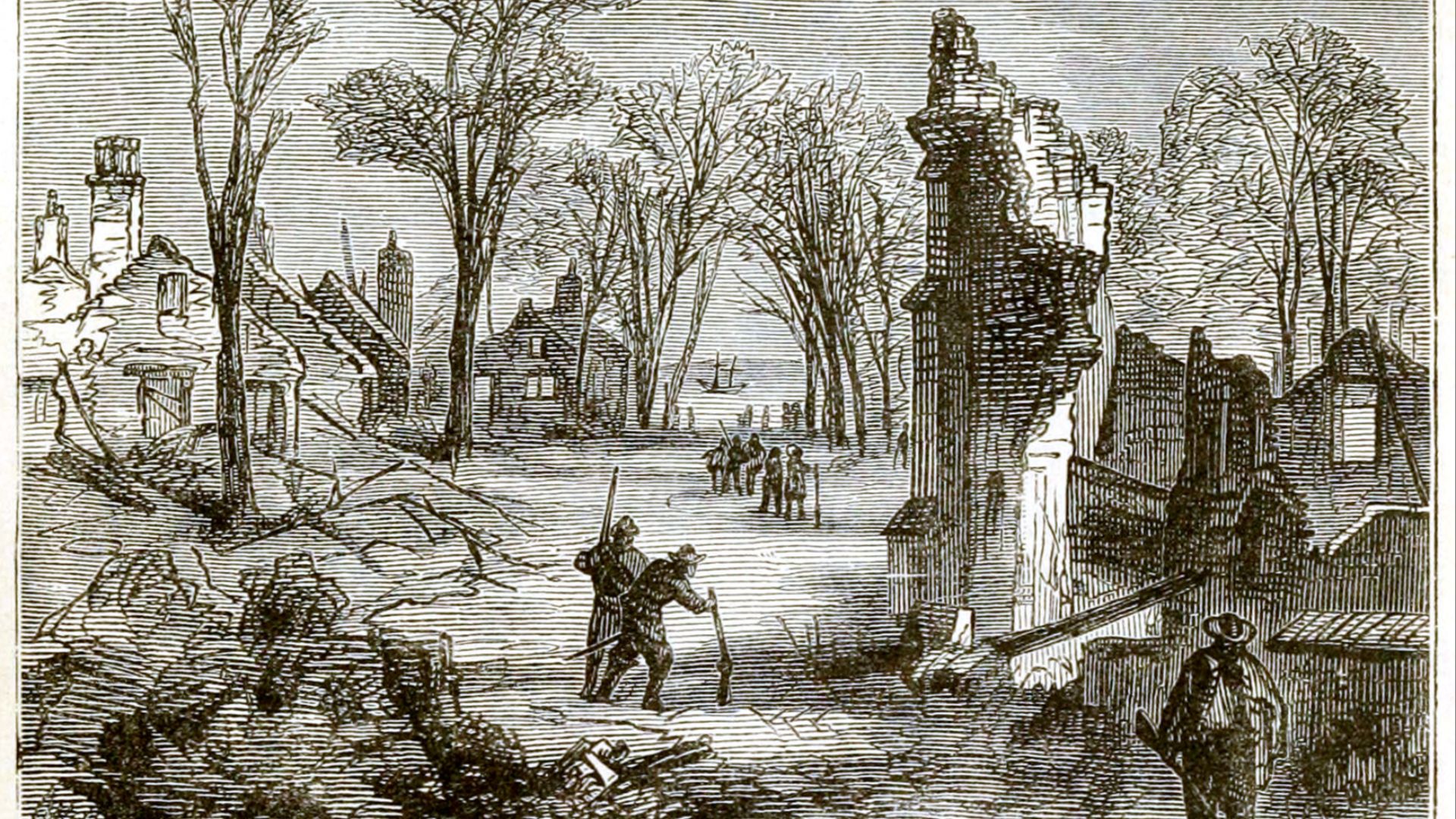
Over the next few years, more colonists arrived at Jamestown than the fort could handle. It accidentally burned down in 1608, leaving them dependent on the Powhatan for food, as well as sporadic supply ships. Any hope of friendly cooperation was quickly extinguished after skirmishes with the Powhatan turned violent.
1609, the Powhatan had had enough of the English on their land and decided to lay siege to Jamestown. All trade was stopped and any settler found outside the fort was killed. Colonists who'd never planned to grow their own food were now dependent on their dwindling stores.
Few written records of the winter of 1609-1610 survive, but this is what historians have pieced together from archaeological evidence. The troubles started when a supply ship was blown off course and wrecked on Bermuda. While the passengers were all okay, the boat was totaled and its supplies wouldn't reach Jamestown for nearly a year.
Unable to supplement their meager grain stores by hunting for fear of being killed, the colonists ate whatever they could. Their corn-based diet resulted in deadly vitamin deficiencies such as pellagra and scurvy. When the corn ran out, they resorted to eating laundry starch.
There were at least 300 more colonists than the fort could handle, both in terms of food and scale. People began using their own houses for firewood and boiled down the leather from their shoes. They butchered horses, dogs, rats, and even poisonous snakes.
When those food sources ran out, the colonists turned to the only one they had left.
Survival And Salvation
Among a pit of animal bones, cracked open to suck out the marrow, were the remains of a different animal. The partial specimen was an English girl of about 14 who'd only recently arrived in the colony. With no clues as to her identity, archaeologists dubbed her "Jane".
Jane's skull and leg bones were found thrown in an underground trash depot among the remains of horses and dogs. Based on forensic evidence of her diet—what little there was—she was likely a maidservant to a gentlewoman. While cannibalism had long been suspected at Jamestown, Jane's remains confirmed it.
We don't know how Jane died, whether she succumbed to disease or starvation, or whether she was killed. However, after her death, she received several blows to the head in an attempt to get at her brain. When that failed, her the meat was carved from her shins.
There had been 500 Jamestown colonists before winter set in. When the relief ship finally arrived in 1610, there were only 60 survivors, sick and starved. Even with the supplies from Bermuda, there was not enough to feed everyone.
A decision was made to abandon the colony and return to England with the survivors. They got new further than 12 miles south when they were met by Jamestown's new governor, 150 more colonists, and three ships full of food. They were forced to return to the the fort.
KEEP ON READING
The story of Ching Shih, the Woman Who Became the…
Unknown author on WikimediaFew figures in history are as feared…
By Emilie Richardson-Dupuis Dec 29, 2025
Einstein's Violin Just Sold At An Auction—And It Earned More…
A Visionary's Violin. Wanda von Debschitz-Kunowski on WikimediaWhen you hear…
By Ashley Bast Nov 3, 2025
This Infamous Ancient Greek Burned Down An Ancient Wonder Just…
History remembers kings and conquerors, but sometimes, it also remembers…
By David Davidovic Nov 12, 2025
The Mysterious "Sea People" Who Collapsed Civilization
3,200 years ago, Bronze Age civilization in the Mediterranean suddenly…
By Robbie Woods Mar 18, 2025
20 Bizarre Archaeological Finds That Mainstream History Refuses to Explain
Digging Up the UnexplainedStandard history textbooks like to present our…
By Sara Springsteen Jun 24, 2026
20 Soldiers Who Defied Expectations
Changing the Rules of the Battlefield. You’ve probably heard plenty…
By Annie Byrd Feb 10, 2026