

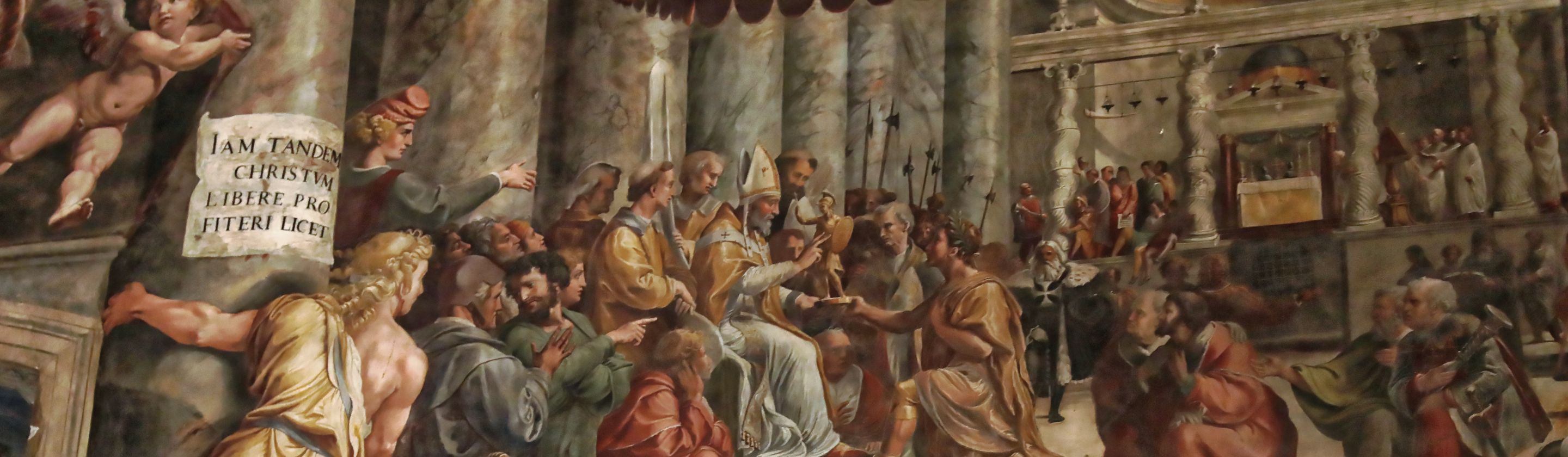
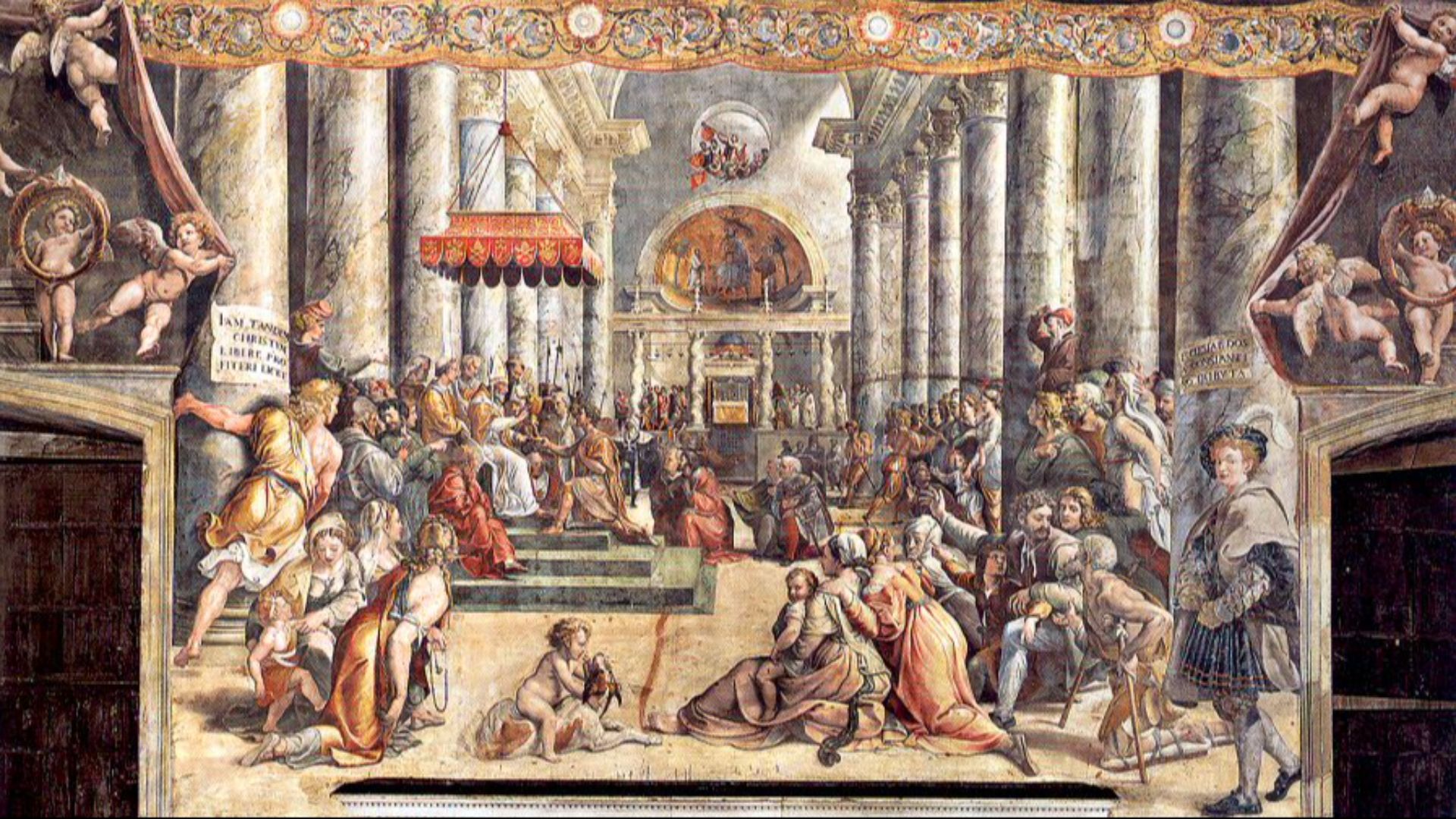
 School of Raphael on Wikimedia
Most forgeries get exposed and forgotten. The fraudster is disgraced, the document is shelved in an archive somewhere, and history moves on without it. The Donation of Constantine did not follow that arc. For roughly seven centuries, this single fabricated document shaped the political landscape of Europe, gave the papacy the legal basis for temporal power over vast territories, and helped determine the outcome of wars, coronations, and diplomatic negotiations too numerous to count.
The forgery was eventually exposed in 1440 by the Italian humanist Lorenzo Valla, who used philological analysis to demonstrate that the Latin in the document was inconsistent with fourth-century usage. By then, it had already done its work. The Donation is one of history's most instructive examples of how a lie, believed long enough and by enough of the right people, becomes functionally indistinguishable from truth.
What the Document Claimed
The Donation of Constantine purported to be a fourth-century imperial decree in which the Emperor Constantine the Great, in gratitude for his baptism and miraculous cure from leprosy by Pope Sylvester I, transferred authority over Rome, Italy, and the entire Western Roman Empire to the papacy. It also supposedly granted the pope supremacy over all Christian bishops, the right to wear imperial regalia, and dominion over the Lateran Palace in Rome. As a legal document, it was extraordinarily generous. As a historical artifact, it was entirely invented.
The document most likely originated in the papal chancery sometime in the eighth century, with most scholars now placing its composition between 750 and 800 CE. The timing is not incidental. The papacy was in the middle of a complicated political negotiation with the Frankish king Pepin the Short, who had helped defend Rome against the Lombards and whose military protection the popes badly needed. The Donation provided retroactive imperial legitimacy for the Church's claim to central Italian territories that would become the Papal States, a claim that required some kind of legal foundation that actual history had not supplied.
The document drew on real events and real names, which is what gave it plausibility. Constantine was a genuinely transformative figure for Christianity; his conversion was historical, his relationship with the early Church was documented, and his prominence in both Eastern and Western historical memory made him the perfect anchor for a manufactured legal fiction.
Attaching his name to a grant of temporal power was, in forger's terms, excellent casting.
How It Held Power for Centuries
The Donation was accepted as genuine by popes, kings, and canonists throughout the medieval period, and it entered into the formal legal framework of the Church. It appeared in the Decretum of Gratian around 1150, the most influential compilation of canon law in the medieval West, which effectively canonized it as an authoritative source. Once a document is embedded in a legal tradition that powerful institutions depend on, the incentive to question it largely disappears.
That dynamic explains a great deal about why the forgery survived so long. The people with the most access to primary sources and the most expertise to evaluate them were, by and large, operating within institutions that had a vested interest in the document's authenticity. The German emperor Otto III expressed doubts about it as early as the year 1001, and other medieval scholars raised occasional objections. These concerns were not pursued with any urgency, because urgency would have been institutionally inconvenient.
The Donation also shaped real events in compounding ways. When Pope Leo III crowned Charlemagne as Holy Roman Emperor on Christmas Day in 800 CE, the political logic of that act was partly rooted in the idea that the papacy had the imperial authority to confer.
When medieval popes clashed with Holy Roman Emperors in the long series of conflicts known as the Investiture Controversy, the Donation was part of the background legal architecture. Lands were transferred, wars were fought, and alliances were drawn along lines that the forgery had helped establish. The document's influence was not abstract; it was embedded in geography and institutions.
What Valla's Exposure Actually Changed
Lorenzo Valla's 1440 treatise, written while he was in the service of Alfonso V of Aragon, who had his own political disputes with the papacy, was a methodical dismantling. Valla demonstrated that the Latin vocabulary and grammatical constructions in the Donation were anachronistic, that they reflected usages from centuries after Constantine's reign. He also pointed out internal contradictions, factual errors about Roman customs, and historical impossibilities in the document's framing. It was rigorous humanist scholarship turned into a political instrument, and it worked.
The exposure did not, however, immediately dissolve the structures the forgery had built. The Papal States continued to exist until Italian unification in the nineteenth century. The Catholic Church did not formally acknowledge the document's fraudulent origins in a comprehensive way for centuries after Valla's work. Institutions protect themselves, and the Donation had become load-bearing architecture for claims that the Church had no interest in abandoning simply because their documentary foundation had collapsed.
What Valla's work did change, more durably, was intellectual culture. His methods helped establish philology and source criticism as serious disciplines, tools that historians and scholars still use. The lesson that documents must be tested against linguistic, material, and historical context, rather than accepted on the basis of their claimed authority, became a foundational principle of modern historical scholarship. The Donation of Constantine, then, has two legacies: the world it shaped while it was believed, and the scholarly methods that emerged from proving it was a lie.
KEEP ON READING
The Love Story Behind the Taj Mahal Was Also a…
Koushik Chowdavarapu on UnsplashThe Taj Mahal is often introduced as…
By Emilie Richardson-Dupuis Apr 2, 2026
JFK's Last Meal Is A Testament To His Character
Walt Cisco, Dallas Morning News on WikimediaHistory often focuses on…
By Sara Springsteen Apr 2, 2026
Public Executions Were Once the Most Attended Events in Town…
Georg Heinrich Sieveking on WikimediaFor centuries, a public execution could…
By Breanna Schnurr Apr 2, 2026
20 Old Hollywood Feuds That Went Beyond The Studio Lot
When The Smiles Stopped. Old Hollywood sold a polished fantasy,…
By Breanna Schnurr Apr 2, 2026
The Coup Triggered by a Pop Song
Matheus Ferrero on UnsplashMost political upheavals have a trigger that…
By Cameron Dick Apr 2, 2026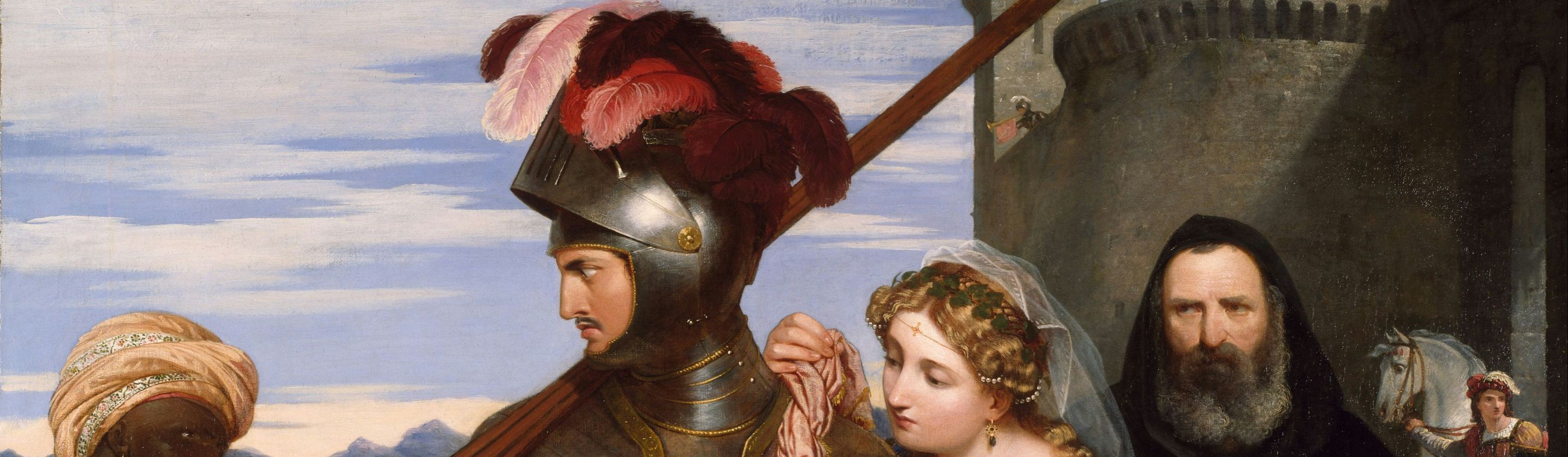
How The Black Death Spurred the Renaissance
Art Institute of Chicago on UnsplashThe Black Death, which swept…
By Rob Shapiro Apr 2, 2026