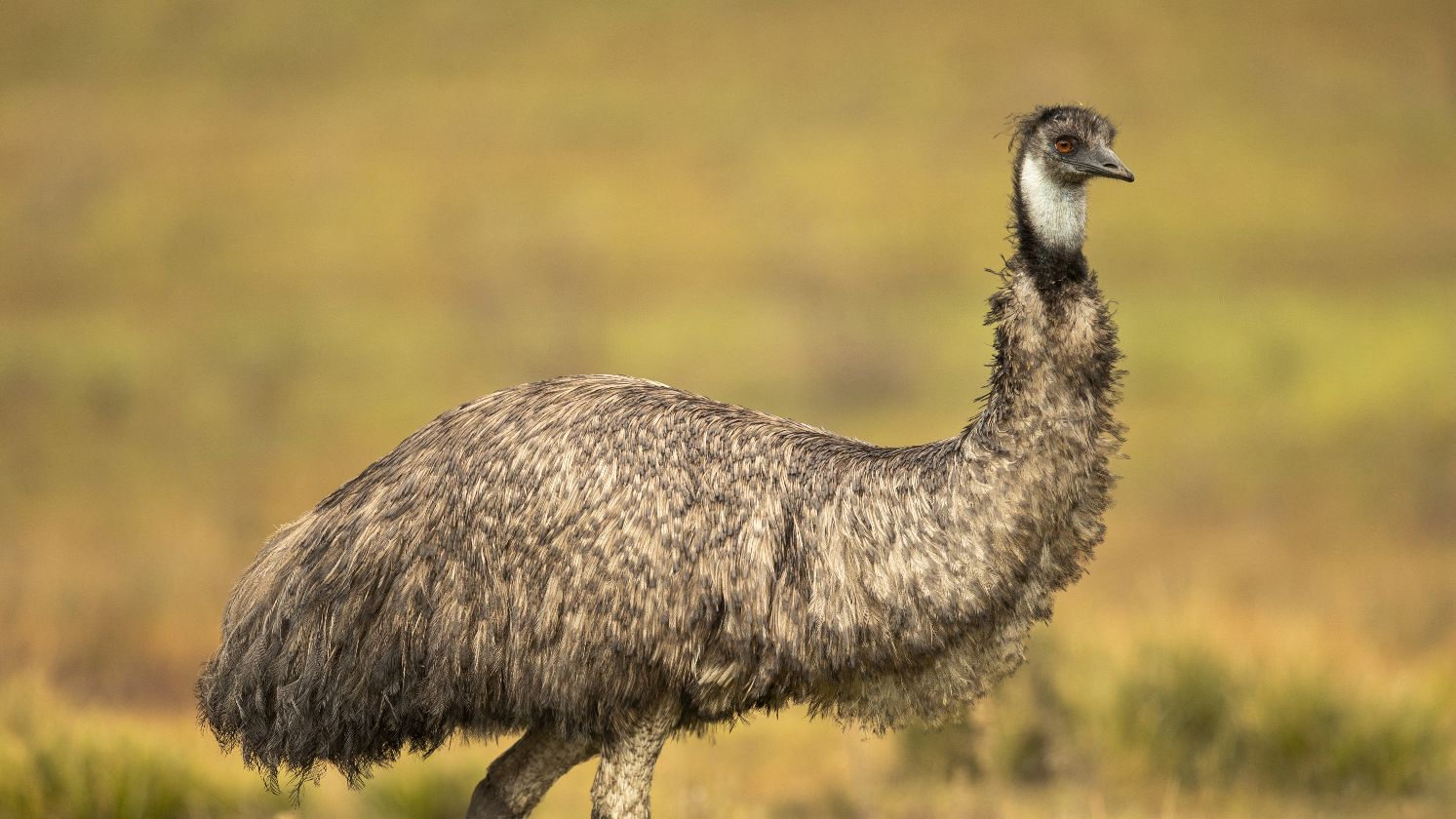
In 1932, the Australian military went to war armed with machine guns and 10,000 rounds of ammunition. They lost. Their opponents weren't a foreign army or rebel forces—they were emus, large flightless birds with a talent for survival and an apparent immunity to embarrassment.
Well, this wasn't some minor skirmish either; it was a coordinated military operation that became one of the most humiliating defeats in Australia's history, proving that sometimes the enemy doesn't need wings to win.
When Farming Met Feathers
After World War I, Australian veterans were given farmland in Western Australia as part of a soldier settlement scheme. These farmers worked hard to establish wheat crops in the Campion and Walgoolan areas, but they hadn't counted on the massive emu migration that occurred each year. Around 20,000 emus descended on the farmland after their breeding season, trampling through fences and devouring crops with devastating efficiency.
The timing couldn't have been worse as Australia was deep in the Great Depression, wheat prices had crashed, and these farmers were already struggling. The emus weren't just eating the crops; they were creating gaps in fences that let rabbits in to finish whatever the birds left behind. The farmers pleaded with the government for help, and surprisingly, the Minister of Defence agreed to send in the military.
Operation Emu
In November 1932, the Australian Army dispatched soldiers armed with two Lewis guns and 10,000 rounds of ammunition. Major G.P.W. Meredith led the operation, confident that trained soldiers with machine guns could handle some oversized birds. He was spectacularly wrong. The emus proved to be tactical geniuses by accident.
They scattered into small groups when attacked, making them nearly impossible to target effectively. Their thick feathers acted like armor, and they could run at speeds up to 50 kilometers per hour. One ornithologist observing the operation noted that the emus employed guerrilla tactics, with scouts keeping watch while others fed. The soldiers managed to kill only a handful of birds despite firing thousands of rounds.
After several days of humiliation, the military withdrew. The press had a field day, with one politician sarcastically suggesting that medals should be issued to the emus for their evasive maneuvers.
Aftermath And Legacy
The military attempted a second operation in December with slightly better results—claiming around 100 emus per week—but it remained an embarrassing exercise in futility. Eventually, the government abandoned the military approach entirely and instead implemented a bounty system, which proved far more effective.
Farmers were given ammunition subsidies, and over the following years, thousands of emus were culled by civilian shooters who understood the local terrain. The Great Emu War became an international punchline.
Today, it stands as a reminder that sometimes nature simply cannot be conquered by force, and that emus—those tall, flightless, surprisingly resilient birds—earned their place in military history as the only enemy to ever defeat the Australian Army on home soil.