

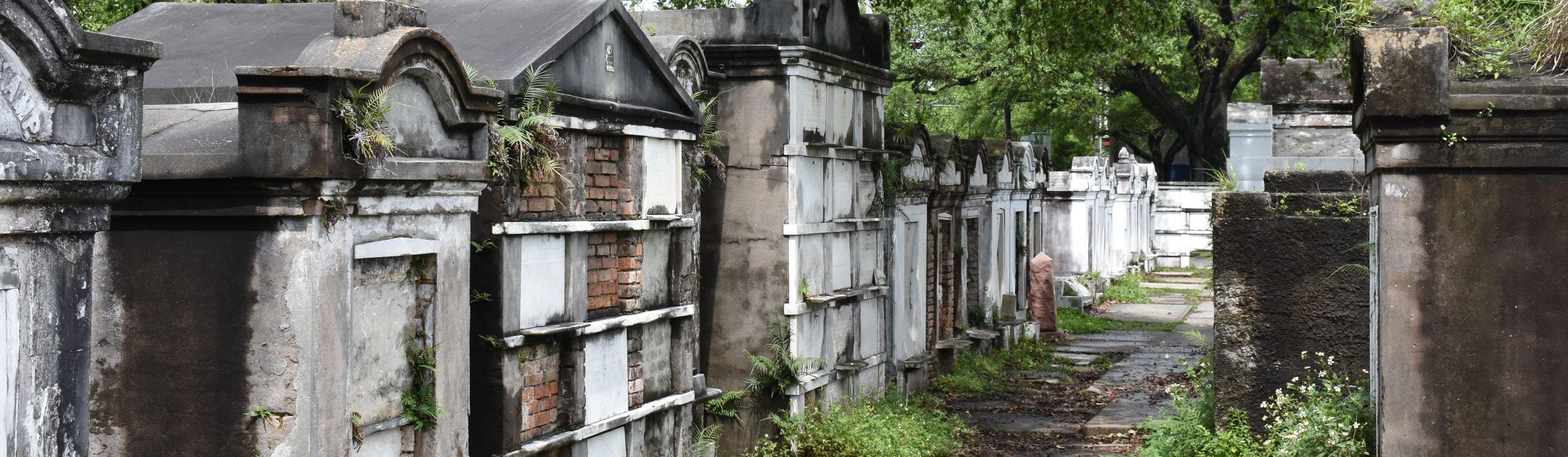
 Daniele La Rosa Messina on Unsplash
You've said it. Your friends have said it. Maybe your grandmother said it about the weird guy down the street. "I wouldn't touch him with a ten-foot pole" rolls off the tongue so naturally, we rarely stop to wonder why we're imagining ourselves wielding an absurdly long stick. But this phrase might have a darker origin than you'd think, one that involves dead bodies in New Orleans.
Most etymologists point to the mid-1700s, when the expression went "I wouldn't touch that with a barge pole." Barge poles were long wooden implements used to push canal boats along and fend off docks. Before that came "not to be handled with a pair of tongs," appearing in print as far back as 1639. The imagery makes sense: if something's so objectionable you need the longest tool available to maintain maximum distance, you're making your point clear. But that's the sanitized version.
The Macabre New Orleans Connection
Enter the above-ground cemeteries of New Orleans, those eerie "cities of the dead" that draw curious tourists. These weren't built for atmosphere—they were practical solutions to a very real problem. New Orleans sits below sea level with a high water table, meaning traditional burials often resulted in coffins floating to the surface during floods. Starting in the 18th century, influenced by Spanish and French colonial practices, New Orleanians built elaborate above-ground tombs.
Here's where it gets grim. These tombs weren't single-occupancy. Families needed to reuse the same vault repeatedly. The system worked like this: after burial, the deceased was sealed inside. Louisiana's oppressive heat turned these tombs into natural ovens; interior temperatures could soar above 300 degrees during summer. After exactly one year and one day, the tomb could be reopened. By then, the heat had reduced the previous occupant to ash and bone fragments.
Enter The Ten Foot Pole
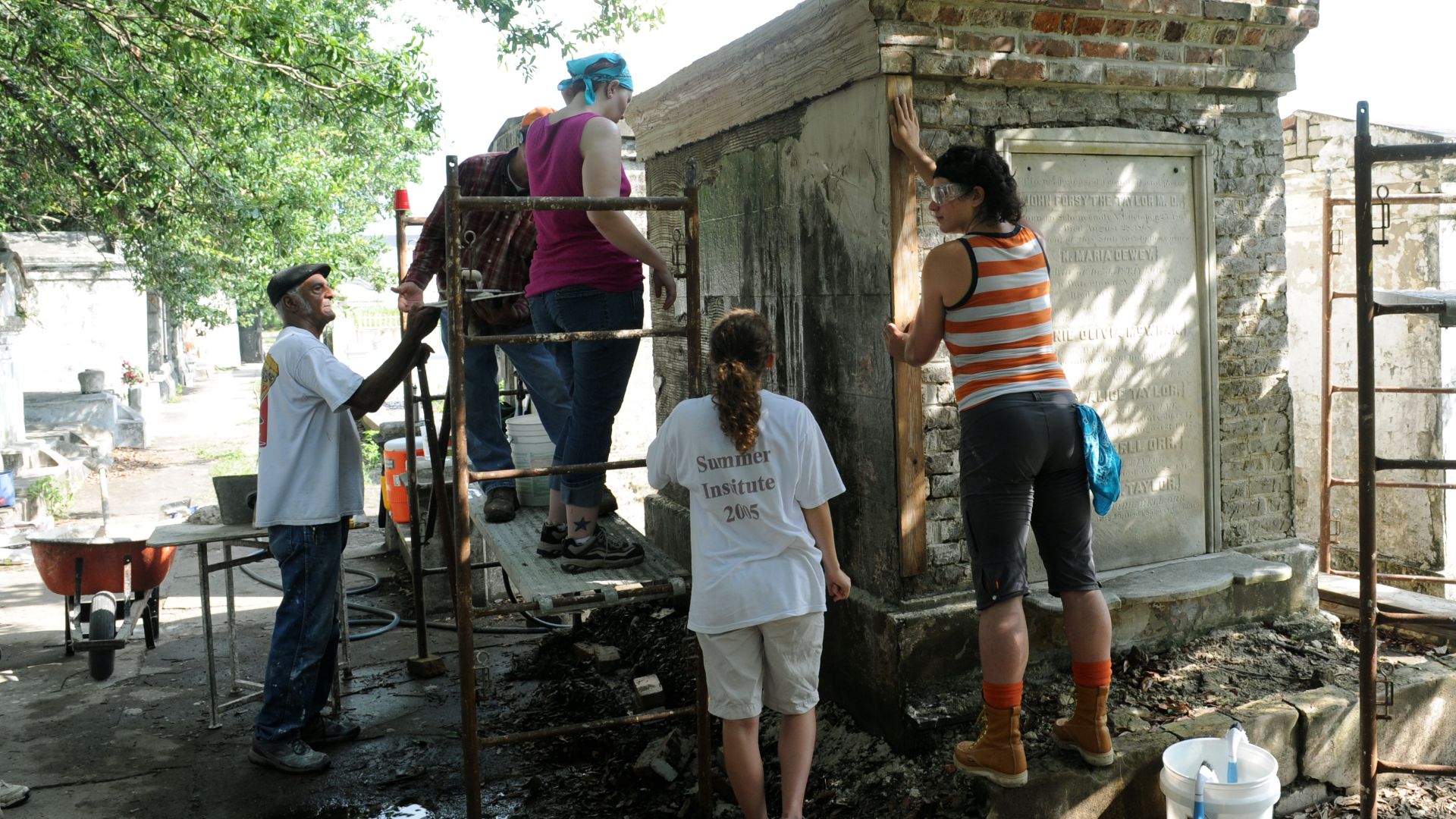 Tulane Public Relations on Wikimedia
Cemetery workers had the unpleasant job of making room for the next family member. They'd use a ten-foot pole to push remains toward the back of the vault, raking ashes and bones into a bag stored at the tomb's rear. Then the next coffin could slide in, and the cycle would repeat.
It's not difficult to imagine cemetery workers using the phrase during these grim tasks. "I wouldn't touch those remains with a ten-foot pole" could have entered local parlance and spread from there. While scholars debate whether this New Orleans practice actually spawned the national idiom or simply reinforced it, the phrase gained a very literal meaning in those sweltering Louisiana cemeteries. Cemetery operations manager Alan McCoy, who's spent 22 years working among the tombs, still performs these duties today.
The phrase appeared in print by the 1830s and became widespread by the late 1800s. Whether it originated from bargemen, river boatmen, utility workers with their safety poles, or cemetery workers in the Crescent City, keeping distance from the undesirable became part of the American vernacular.
KEEP ON READING

10 Greatest Quarterbacks Of All Time & 10 That Are…
Do You Disagree?. Few topics in sports generate as much…
By Farva Ivkovic Dec 2, 2025
The story of Ching Shih, the Woman Who Became the…
Unknown author on WikimediaFew figures in history are as feared…
By Emilie Richardson-Dupuis Dec 29, 2025
20 Shakespearean Words, Translated For A Modern Audience
What’s In A Word?. Shakespeare was a wordsmith of the…
By Breanna Schnurr Dec 17, 2025
20 Inspiring Stories From Native American History
Incredible Stories Of Resilience And Endurance. Many of us didn't…
By Ashley Bast Dec 17, 2025
You Think You Have Problems? These Royal Families Were Cursed
Boasson and Eggler St. Petersburg Nevsky 24. on WikimediaHeavy is…
By Ashley Bast Dec 5, 2025
MH370: The Plane That Can't Be Found
Anna Zvereva from Tallinn, Estonia on WikimediaEleven years after Malaysia…
By Christy Chan Dec 10, 2025