

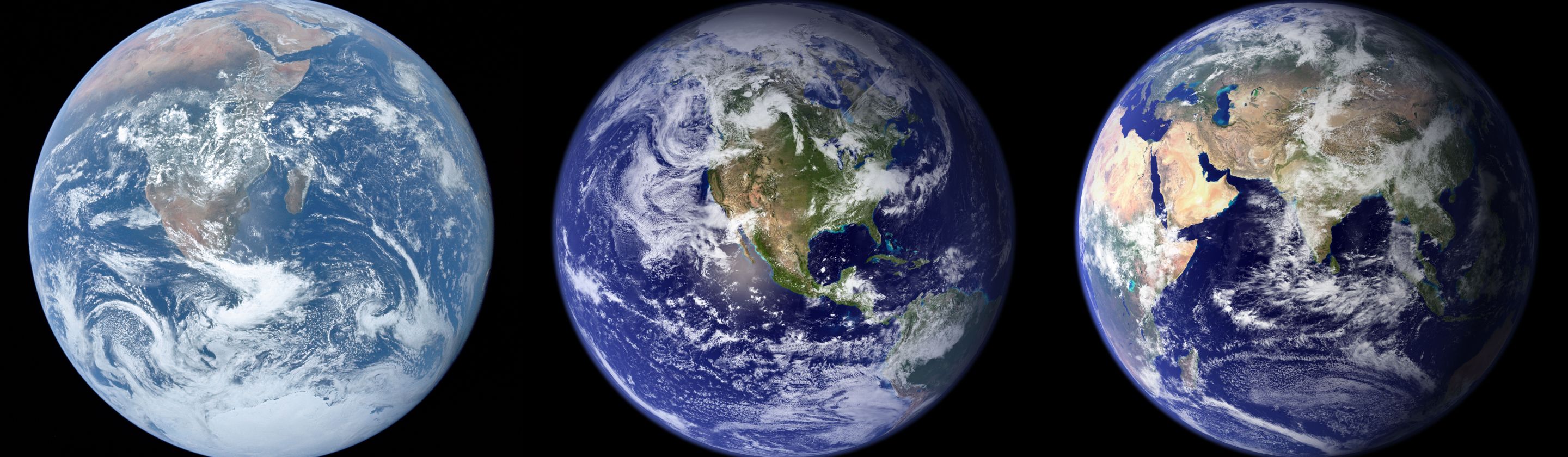
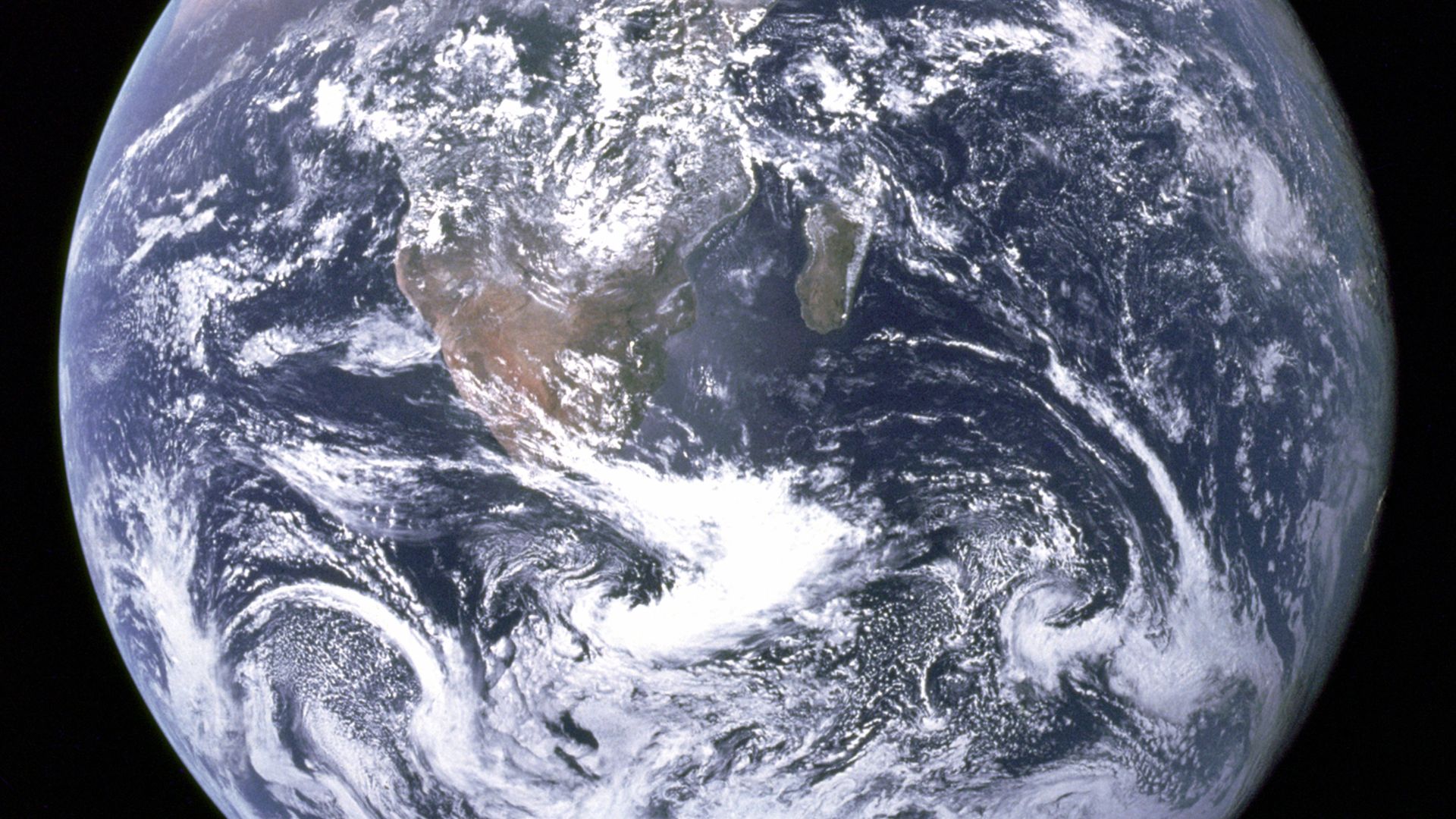
 NASA/Apollo 17 crew; taken by either Harrison Schmitt or Ron Evans on Wikimedia
Have you ever looked at a picture of Earth from space and felt a sudden wave of awe wash over you? That’s exactly what happened to millions of people when they first saw the iconic image called the Blue Marble. It’s the most famous space photo in history, and it has a story that’s as interesting as the view itself.
If you’ve always wondered why that single snapshot continues to inspire generations and stands out in the annals of space exploration, then this story is for you.
A Picture That Changed Everything
The Blue Marble was taken on December 7, 1972, during the Apollo 17 mission, which was the last lunar mission carried out by NASA's Apollo program. As astronauts Eugene Cernan, Harrison Schmitt, and Ronald Evans floated through space, they captured a breathtaking image of Earth.
It shows our planet as a tiny, beautiful sphere, suspended in the black void of space. What made this photo so powerful was not just the technical perfection, but the fact that it was a complete, full view of Earth. Up until then, most images of Earth were just fragments or maps—flat, two-dimensional depictions. This photo gave humanity a fresh, almost cosmic perspective.
The photo became even more remarkable because it was captured with a simple Hasselblad camera, handheld by astronauts inside Apollo 17. No satellites or automated systems were involved—just a human perspective. That authenticity gave the photo a raw, relatable quality.
The Power Of Seeing The Whole
Seeing the Earth in its entirety sparked something deep inside us. The Blue Marble’s image revealed how fragile and precious our planet truly is. The picture seemed to forge an unspoken bond among viewers, uniting them through the perception of a shared home. It was a reminder that no matter where we come from or where we’re headed, we all inhabit this single, beautiful sphere.
A Shift In Awareness

That’s when the “overview effect” was born—the emotional shift astronauts feel when they see Earth from space. Many describe it as an awakening, a moment when the thin blue line of atmosphere becomes a symbol of the interconnectedness that exists among all life forms.
It became a rallying cry for environmental conservation and a global consciousness about the importance of preserving Earth for future generations.
Why The Image Still Resonates
Even after almost 50 years, the Blue Marble remains one of the most reproduced and recognized images worldwide. It appears in textbooks, museum exhibits, and space exploration presentations around the globe.
The photograph sparked a shift in how humanity views itself—not as separate nations but as inhabitants of a single planet floating in darkness. That perspective continues to shape environmental movements and scientific endeavors. For many people, seeing Earth from that distance for the first time changed everything about how they understood their place in the universe.
KEEP ON READING

This Iconic Historical Figure Was Considered A Failure In His…
Ferdinand Schmutzer on WikimediaHistory is full of people whose achievements…
By Sara Springsteen Feb 21, 2026
20 of History's Most Famous Rivalries
When History Turned Into a Long-Term Feud. History isn’t only…
By Emilie Richardson-Dupuis Mar 2, 2026
20 Cocktails With Surprisingly Dark Backstories
Classic Drinks, Messy Origins. Cocktail menus are full of cheerful…
By Elizabeth Graham Mar 2, 2026
10 Presidents Who Defied Expectation & 10 Who Fell Short
The Presidency Reveals Character Under Pressure. The presidency has a…
By Rob Shapiro Feb 12, 2026
Margaret Thatcher’s Controversial Career Was All But Destroyed By Her…
An Impressive Rise Marked By Scandals. Love her or hate…
By Annie Byrd Nov 4, 2024
10 Weirdly Incompetent Dictators & 10 Who Were Terrifyingly Efficient
Power, With Two Very Different Results. Dictatorships don’t fail because…
By Cameron Dick Mar 2, 2026