

She Rewrote My Work to Make Me Look Incompetent—Until I Found One Detail She Couldn't Erase
She Rewrote My Work to Make Me Look Incompetent—Until I Found One Detail She Couldn't Erase
The First Correction
Claire had been on the team for less than two weeks when she made her first edit to my work. I'd left a document open while I grabbed coffee—just a standard project brief I'd drafted the night before—and when I got back, she was leaning over my desk with this small, apologetic smile. 'I hope you don't mind,' she said, gesturing at my screen. 'I noticed a couple things that could be tightened up.' I pulled my chair closer and scanned what she'd changed. The edits were minor. A reworded sentence here, a restructured bullet point there. Nothing that seemed worth making a thing about. She explained each change with this careful, measured tone that made her sound more senior than she was. 'It just flows better this way,' she said, and I nodded because, honestly, it did sound fine. Maybe even a little better. But here's what stuck with me: when I mentioned it casually to Raj later that afternoon, he said Claire had already helped him with something too. Same apologetic smile, same confident tweaks. I told myself it wasn't worth pushing back over minor edits—but something about how quickly others started listening to her made me wonder if I was missing something.
 Image by RM AI
Quiet Certainty
The corrections kept coming, always small, always delivered with that same careful politeness that made it hard to object. Claire would catch me in the hallway or ping me on Slack with a suggestion that was technically within her purview but felt like it crossed some invisible line I couldn't quite articulate. When I asked where the feedback was coming from—whether Daniel had mentioned something or if a client had noted concerns—she'd give me answers that sounded reasonable but explained nothing. 'Just thinking about consistency,' she'd say, or 'It's more about the tone.' The word 'clarity' came up a lot. I started keeping the phrases in my head, turning them over during my commute, trying to figure out why they bothered me. They weren't criticisms, exactly. They were observations delivered with such quiet certainty that questioning them felt like I'd be the one making things awkward. Once, I asked her directly what standard she was working from, what style guide or previous example. She tilted her head slightly, gave me that same small smile, and said, 'Just clarity, you know? Making sure everything lands right.' When I asked what feedback she was working off, she smiled and said 'Clarity'—like the boundary itself didn't matter.
 Image by RM AI
Access Without Permission
I realized Claire had stopped asking permission the day I opened a final draft I'd already sent to Daniel and found paragraphs rewritten. Not commented on—rewritten. Entire sections restructured without a single Track Changes notification, just her edits baked into the document like they'd always been there. My chest tightened when I saw it. This wasn't a suggestion. This was her deciding my finished work wasn't good enough and fixing it without telling me. I pulled up the document history and confirmed what I already knew: she'd accessed it after I'd marked it complete. When I brought it up to Daniel in our one-on-one, I tried to keep my tone level, professional. 'Claire's been making changes to finalized documents,' I said. 'I think we need clearer boundaries around editing protocols.' He nodded slowly, but I could see his expression shifting into that look managers get when they think you're overreacting. 'She's just being proactive,' he said. 'Eager to contribute. That's not a bad thing.' I wanted to push back, to explain why it felt different than collaboration, but I didn't have concrete evidence of harm. Just this nagging sense that something was off. I brought it up to Daniel in our one-on-one, and he said she was just being proactive—but the word felt wrong for what was happening.
 Image by RM AI
The Weight of Words
The shift in how people listened to Claire happened so gradually I almost didn't notice it at first. We'd be in a meeting, discussing a project I'd been leading for months, and I'd offer an approach or a solution. Daniel would nod politely, maybe ask a follow-up question. Then Claire would speak—adding what she'd call a 'refinement' or a 'consideration'—and suddenly everyone's posture would change. They'd lean in. Take notes. Daniel would say things like 'That's a good point' with an emphasis that felt different than how he responded to me. I started watching for it, this subtle deference that didn't match her tenure or expertise. It showed up in how people phrased their questions, in who they looked at when they wanted clarification. She'd only been there six weeks, and somehow she'd positioned herself as someone whose opinion carried weight. I found myself second-guessing my own ideas before I spoke them aloud, running through potential weaknesses Claire might point out. It was exhausting. And the worst part? I couldn't tell if I was imagining the whole thing or if something was genuinely shifting beneath the surface. It wasn't aggressive or obvious—but her input carried weight in a way mine suddenly didn't.
 Image by RM AI
Strategic Positioning
I wasn't meant to hear the conversation. I'd come back to grab my laptop from the conference room after lunch, and Sophie and Claire were standing just outside in the hallway. Their voices carried through the half-open door. Claire was talking about the quarterly report I'd drafted, the one that was supposed to go out that week. 'I think Maya's instincts are solid,' she was saying, and I froze with my hand on my laptop bag. 'But some of the framing could use refinement. I've been tightening things up where I can.' Sophie made some agreeable sound, and Claire continued in that same measured tone. 'It's just about making sure everything's as strong as possible before it goes to leadership, you know?' I stood there for a beat too long, feeling my pulse in my throat. She wasn't saying anything directly critical. She wasn't undermining me in any obvious way. But she was positioning herself as the person who refined my work, who made it ready for leadership consumption. The implication was clear even if the words were careful. I picked up my laptop and left through the other door, not wanting them to know I'd heard. She wasn't saying anything directly critical—just positioning herself as someone who could 'tighten things up.'
The Subjective Argument
That night, I sat at my kitchen table with my laptop open, trying to draft an email to HR. I'd type a sentence, delete it, try again. 'Claire has been editing my work without permission' sounded petty. 'There's a pattern of boundary violations' sounded paranoid. The problem was that everything she'd done could be reframed as helpful. Proactive. Collaborative. I had no proof of malicious intent, no concrete damage I could point to. Just this growing sense that I was being maneuvered into a corner, and the shape of it was too subtle to capture in a formal complaint. I thought about the edits, the conversations, the way people's attention had shifted. If I escalated this to Daniel again or went to HR, what would I even say? That someone was being too helpful? That her confidence made me uncomfortable? I'd look defensive, insecure, threatened by a capable junior colleague. The workplace culture rewarded people like Claire—assertive, polished, willing to take initiative. And it punished people like me for pointing out when that initiative crossed a line. From the outside, it would look like I was reacting to someone being proactive, and without something concrete, I had nothing.
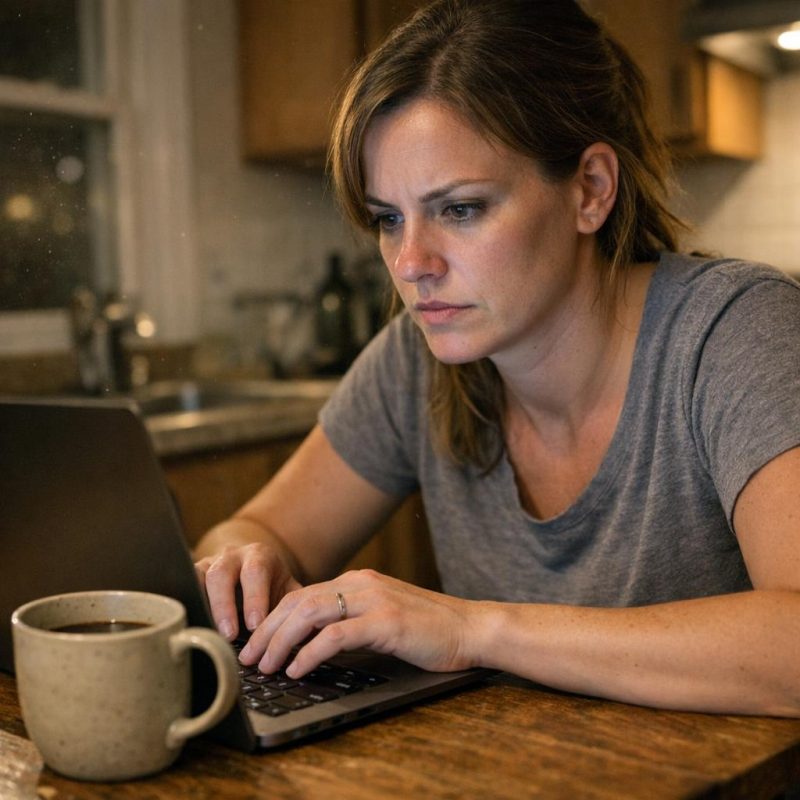 Image by RM AI
The Meeting Invitation
The meeting invitation appeared in my calendar on a Thursday afternoon. 'Project Alignment Session,' it said, scheduled for the following Tuesday. Claire had sent it. I clicked through to see the attendee list, expecting the usual core team—me, Claire, Daniel, maybe Raj. Instead, I found eight names. Sophie was there. Two directors from adjacent departments. Someone from leadership I'd only met once. My stomach dropped as I scrolled through the list, that cold, prickling sensation spreading across my shoulders. This wasn't a standard update. This wasn't a working session. The composition of attendees was wrong for routine project work but perfectly calibrated for something else. Something performative. I forwarded the invitation to Raj with a single question mark, and he replied within minutes: 'Not sure why I'm included—I've barely touched this project. Seems like overkill?' That's when I knew. Claire had built an audience. I just didn't know yet what she planned to perform. When I saw who she'd invited, I felt my stomach drop—these weren't people who needed to be there for a standard update.
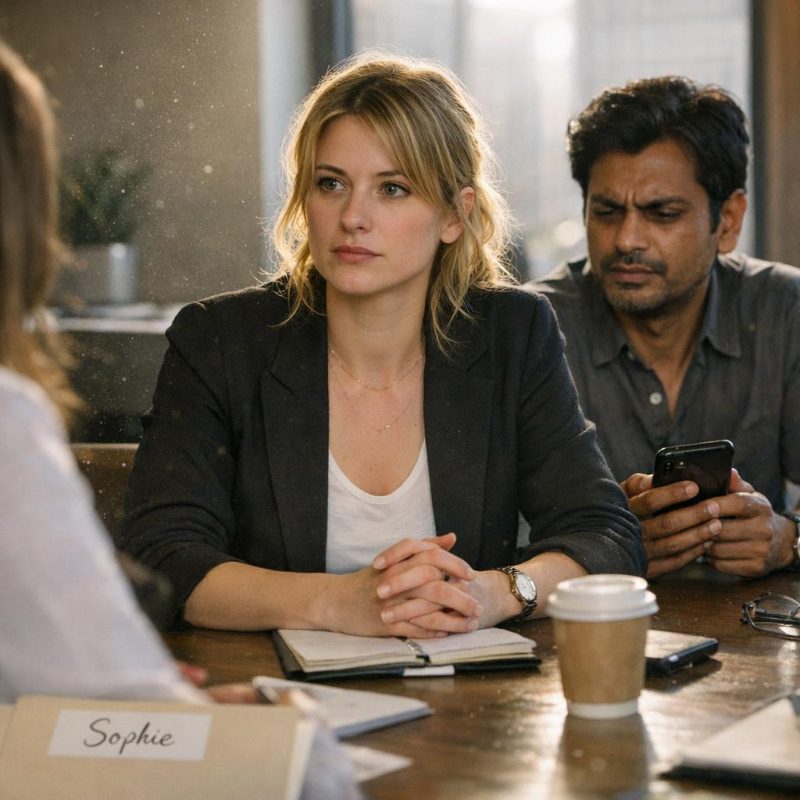 Image by RM AI
The Document
The meeting started normally enough. Claire thanked everyone for attending, mentioned wanting to ensure alignment before we moved forward. Then she shared her screen. The document that appeared was formatted like a formal analysis—headers, bullet points, highlighted sections. The title read 'Project Documentation: Quality Assurance Review.' My hands went cold. She started scrolling, and I watched my work appear on screen, excerpted and annotated. Red text marked 'inconsistencies.' Yellow highlights flagged 'unclear messaging.' Margin comments noted 'requires clarification' next to paragraphs I'd written months ago. She'd pulled examples from a dozen different documents, arranged them to create a narrative I didn't recognize. 'I wanted to bring these patterns to everyone's attention,' Claire said, her voice calm and professional. 'Not as criticism, but as an opportunity to establish clearer standards going forward.' Sophie was taking notes. Daniel's camera was on, his expression unreadable. I couldn't speak. My throat had closed around words that wouldn't come. As she started scrolling, I realized what I was looking at—this wasn't a presentation, it was a case file.
The Room Shifts
Claire moved through each example with the kind of confidence I'd normally admire. Her voice stayed level, almost gentle, as she explained each 'concern.' She highlighted a paragraph where I'd referenced Q3 data—'This creates confusion about timeline,' she noted. Then a sentence structure in a brief I'd written—'The passive voice here obscures accountability.' She had screenshots from Slack threads, excerpts from shared documents, even a few email chains where I'd asked clarifying questions. Each one had been trimmed, annotated, color-coded. The presentation wasn't rushed. It felt rehearsed. I watched Sophie lean forward, squinting at something in the margin notes. Raj had stopped multitasking, his full attention now on the screen. Daniel hadn't said anything yet, but I could see him scrolling through something on his other monitor—probably opening the original files to check. The room had shifted. People leaned in, started reading more carefully, and nobody was challenging her—not because they agreed, but because the format made it hard to.
 Image by RM AI
Curated Evidence
The thing is, none of it was technically wrong. That paragraph about Q3 data? I had referenced it, but only because the project brief explicitly asked for quarterly comparisons. The passive voice she flagged? That was house style for that particular client, something Daniel had specifically requested I use. Each example she showed had context—conversations, approvals, guidelines I'd followed. But she'd stripped all that away. What remained looked sloppy, inconsistent, like I'd been making things up as I went along. I could feel my pulse in my throat, the urge to interrupt and explain. But how do you defend yourself against something that looks factually accurate but feels completely dishonest? She moved to another slide, this one comparing my work to 'industry standard examples.' The standards she chose just happened to contradict the internal guidelines we actually used. Each example looked questionable on its own—but I knew the full scope, and this was curated to tell a specific story.
 Image by RM AI
The Prepared Performance
I started doing the math in my head. The earliest example she showed was from a document I'd created in late January. That was four months ago. Another was from March. She had screenshots from April, annotations referencing conversations from February. This wasn't something she'd noticed last week and decided to address. This was methodical. Systematic. She'd been collecting evidence for months, waiting until she had enough to make it look like a pattern. I thought about all those times she'd asked to 'review' my work before it went to Daniel, how she'd volunteer to proofread things I hadn't asked for help with. Those weren't offers to collaborate. They were reconnaissance. She'd been building this presentation while smiling at me in meetings, while asking about my weekend, while offering to grab coffee. The whole time, she'd been documenting, cataloging, preparing. She hadn't just noticed these things recently; she'd been collecting them, documenting them, waiting for this exact moment.
 Image by RM AI
Original Versus Corrected
Claire advanced to a new section: 'Quality Comparison Analysis.' The slide showed two columns—'Original Version' on the left, 'Corrected Version' on the right. She started with an email I'd sent to a client back in March. The left column showed my version with several phrases highlighted in red. The right column showed her 'improvements'—cleaner, more direct, objectively better. 'I think we can all see the difference in clarity,' she said, her tone carefully neutral. She moved to the next comparison. A project summary I'd written in February. Again, two versions side by side. Again, hers looked more polished. I stared at the screen, trying to remember these specific documents, these exact phrasings. Something felt off about the March email—not just the framing, but something in the actual text. A word choice I didn't recognize. A sentence structure that didn't sound like me. I leaned closer to my monitor, scanning the 'original' version she was displaying. And that's where something felt off—not just in the framing, but in the details themselves.
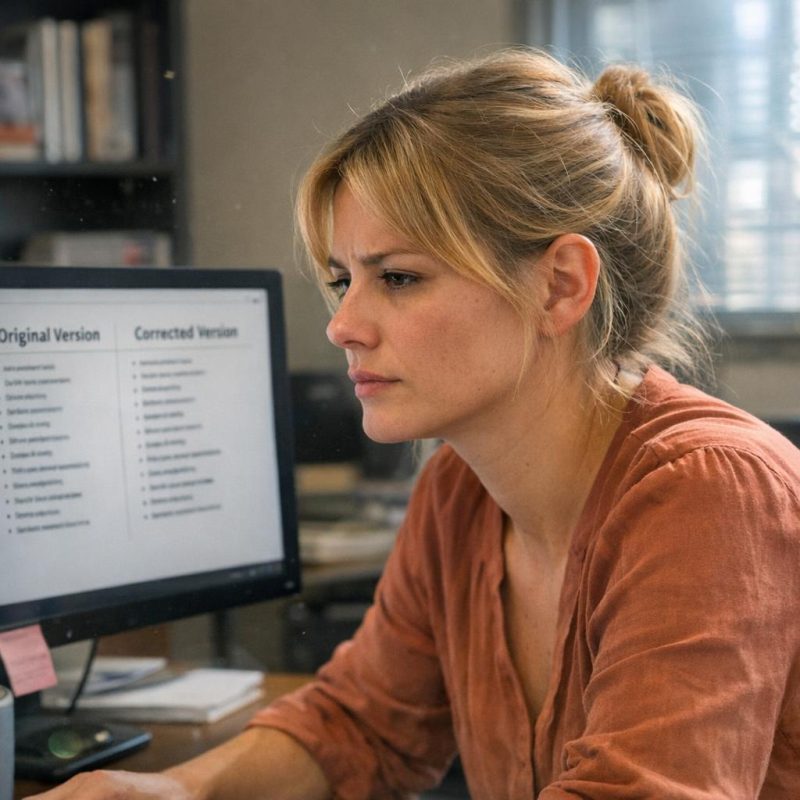 Image by RM AI
The Wrong Version
The February project summary. I remembered writing that one clearly because I'd worked on it during a weekend when the heat in my apartment had broken. I'd sat at a coffee shop for six hours, drinking too much espresso, getting every word exactly right. The version Claire was showing as 'mine' included a paragraph about stakeholder engagement that I absolutely had not written. I knew this because the stakeholder section had been cut from the final version at Daniel's request—he'd said it was redundant with another document. But here it was, back in what Claire was calling my 'original,' except the writing was clunky, full of jargon I specifically avoid. I felt my hands go cold again, but this time it wasn't panic. It was recognition. She hadn't just taken things out of context. She'd changed them. Slightly, carefully, just enough to make them look worse while maintaining plausible deniability. This wasn't just selective framing—some of it had been altered, and I was the only one who knew.
 Image by RM AI
The Question
I unmuted myself. 'Claire,' I said, keeping my voice level, 'can you scroll back up to that February summary?' She paused mid-sentence. 'Sorry?' 'The project summary. From February. Can you show that comparison again?' I watched her cursor hover uncertainly before she scrolled back up. There it was—the two-column comparison, my 'original' and her correction. 'This stakeholder paragraph,' I said, pointing even though she couldn't see my gesture. 'In the version you're showing as mine.' 'Yes?' Her tone had shifted, just slightly. More guarded. 'Can you show the version history for that file?' I asked, and the room went completely still.
 Image by RM AI
Version History
Claire's cursor moved across the screen, slower than before. 'The version history?' 'Yes. It should be in the file properties. Just right-click and select document details.' I kept my voice calm, almost helpful. She clicked. The version history panel opened on the right side of the screen. I watched everyone's cameras, saw Sophie lean forward, saw Daniel's expression change. The timeline showed clearly: my original upload on February 15th. Then three revisions. All three made by Claire. The first on March 3rd. The second on March 10th. The third just two days ago. 'These edits,' I said carefully, 'were made after I submitted the document. After Daniel approved it. After the project was already completed.' Claire's face had gone very still. 'I was just... formatting things for the presentation—' 'But you labeled this as my original version,' I interrupted. 'Not a formatted copy. My original.' There it was—a timeline showing edits made by her, after the version she was calling mine.
The Assumption Breaks
I watched the realization ripple through the meeting. Raj had opened his mouth, then closed it. Sophie was scrolling through something on her screen—probably checking other documents Claire had referenced. Daniel's camera had gone dark, but I could see the 'typing' indicator appear and disappear in the chat box. Claire was still talking, trying to explain about formatting and presentation clarity, but her voice had lost that assured rhythm. The thing about a really good lie is that it only works if no one looks too closely. She'd built this entire presentation on the assumption that the format—the professional layout, the careful annotations, the authoritative tone—would be enough. That we'd all look at the polished comparison slides and accept her narrative without checking the metadata, the timestamps, the actual source files. She'd been right about almost everyone. Her whole narrative depended on one thing—that no one would check the details closely enough to see what had been changed.
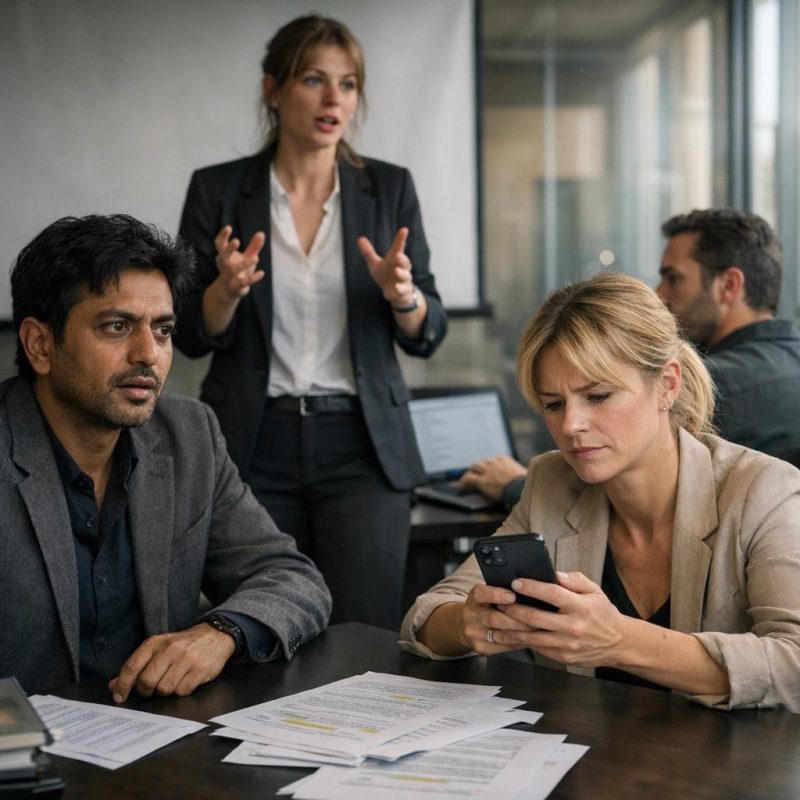 Image by RM AI
After the Meeting
The meeting ended without any real conclusion. Daniel said something about 'processing this information' and 'following up individually,' and then people just started logging off. Sophie's camera went dark first, then Raj's. Claire mumbled something about another call and disappeared before anyone could respond. I sat there staring at my own face in the self-view window, watching myself exist in this weird limbo where I'd just proven I was right but somehow felt like I'd lost anyway. The chat box stayed silent—no one typing, no one acknowledging what had just happened. I could see Daniel was still on the call, his camera off, his status showing 'active.' I waited, thinking maybe he'd say something to me privately, maybe acknowledge that Claire had literally fabricated evidence against me. But he just sat there in digital silence for what felt like forever, and then his status changed to 'away.' When I finally closed the meeting window, my hands were shaking. Daniel said we'd reconvene later, but I could see the calculation in his eyes—he was trying to figure out how to contain this.
 Image by RM AI
The Silence
I went back to my desk and tried to work, but I couldn't focus on anything. Every few minutes I'd refresh my email, expecting something—a message from Daniel, a meeting invitation, some kind of acknowledgment that what happened in that conference room actually mattered. Nothing came. The office had this weird energy, like everyone knew something had happened but no one wanted to talk about it. People walked past my desk without making eye contact. The usual afternoon chatter in the break room was subdued, almost careful. I checked the team chat to see if anyone had said anything—just normal work stuff, a few project updates, someone asking about a deadline. It was like the meeting had never happened. Claire's desk was empty, her monitor dark. I didn't know if she'd left for the day or was just avoiding the area. Probably the latter. I kept working, or pretending to work, watching the clock and waiting for someone to do something. Hours passed, and the silence felt heavier than any conversation could have been.
 Image by RM AI
Sophie's Visit
Around four o'clock, Sophie stopped by my desk. She had that uncomfortable look people get when they know they should say something supportive but don't actually want to get involved. 'Hey,' she said, leaning against my cubicle wall but not quite coming in. 'How are you holding up?' I told her I was fine, which was obviously not true, but what else do you say? She nodded like she understood, but her body language was already angling away, ready to leave. 'I'm sure Daniel will sort everything out,' she said. 'He's really fair about these things.' Fair. As if this was a difference of opinion and not documented evidence of someone sabotaging my work. I asked her if she'd noticed anything off about Claire's behavior before, and Sophie got even more uncomfortable. 'I mean, I try not to get involved in office politics,' she said, which was such a cop-out I almost laughed. She made some excuse about a deadline and left before I could respond. 'That was intense,' she said, like it was a weather event and not a deliberate attack on my credibility.
Raj's Perspective
Raj caught me at the coffee machine near the end of the day. He looked around to make sure no one was nearby, then leaned in close. 'Can I talk to you for a second?' He seemed genuinely uncomfortable, like he'd been carrying something around and finally decided to put it down. We went to an empty conference room, and he closed the door. 'Look, I should have said something earlier,' he started. 'About Claire.' I waited, and he took a breath. 'I've seen her at your desk when you're not there. A few times, actually. Once I walked by and she was on your computer—said she was just checking something you'd asked about, but you weren't in that day.' My stomach dropped. He continued, looking miserable. 'And I've noticed documents changing. Things you'd presented one way would show up different in team folders. I thought maybe I was misremembering, or that you'd updated them.' He rubbed his face. 'I saw her changing your files,' he said quietly, 'but I didn't know how to bring it up without sounding paranoid.'
 Image by RM AI
Documentation
That night, I stayed late and went through everything systematically. Every document I'd created in the past three months, every version, every timestamp. I pulled the original files from my local backups and compared them to what was in the shared drives. The differences were everywhere once I knew to look for them. A recommendation I'd made would be subtly reworded to sound less confident. Data I'd presented clearly would be reformatted into confusing layouts. Conclusions I'd drawn would be hedged with qualifiers that made them seem uncertain. I created a new folder on my personal drive and started documenting everything. Screenshots of the version histories, exports of the metadata, side-by-side comparisons with notes about what had changed and when. Some of the alterations were so small I'd never have noticed them if I wasn't specifically looking—a word here, a formatting choice there. But together, they created a pattern. A systematic undermining of everything I produced. I worked until almost midnight, building the case that apparently no one else was going to build. If the company wasn't going to take this seriously, I needed to be ready to prove it happened—again and again.
 Image by RM AI
HR Summons
The meeting invitation showed up in my inbox the next morning. From Amanda in HR, subject line: 'Discussion - Team Dynamics.' No other details, just a calendar block for that afternoon and a Zoom link. My stomach immediately knotted. The email was professionally worded and carefully neutral—'Hi Maya, I'd like to touch base with you regarding some recent situations on your team. Please let me know if this time works for you.' It had that HR tone that sounds friendly but is actually completely devoid of emotion or position. I checked the time it was sent—7:43 AM. Amanda had been in early to set this up, which meant it was a priority. Which meant someone had gotten to HR before me. I clicked through to Amanda's calendar to see if she had other meetings blocked—there was another one scheduled for tomorrow morning with no attendee listed. Could be Claire, could be Daniel. Could be anyone. I confirmed the meeting time and tried to focus on work, but my hands were shaking again. The subject line was professional and neutral, but I knew what it really meant—someone had complained first.
The HR Meeting
Amanda's video backdrop was one of those generic professional ones—soft gray, completely impersonal. She smiled warmly when I joined the call, which somehow made it worse. 'Thanks for making time, Maya,' she said. 'I wanted to check in about the team dynamics lately. I understand there was a challenging meeting yesterday.' I started to explain what had happened—that Claire had been altering my work, that I had proof, that this wasn't just a disagreement. Amanda nodded along, taking notes, asking gentle questions. But something felt off about the way she was framing everything. She kept using phrases like 'communication breakdown' and 'different working styles' and 'perception gaps.' When I showed her my documentation folder, she glanced through it quickly but didn't seem particularly concerned. 'What we're seeing here might be a case where both people have valid perspectives,' she said. 'Sometimes in collaborative environments, the lines around ownership can get blurry.' I felt my face getting hot. This wasn't blurry lines—this was deliberate falsification. 'We want to make sure everyone feels heard,' Amanda said, and I realized they were treating this like a disagreement instead of what it actually was.
 Image by RM AI
Claire's Version
Amanda pulled up her own notes, scrolling to something she'd written earlier. 'I do want to mention,' she said carefully, 'that Claire reached out yesterday afternoon. She's expressed some concerns as well.' My heart started pounding. Amanda continued in that same measured tone. 'She's feeling quite distressed about the meeting. She mentioned feeling targeted and singled out in front of the team. She used the word 'hostile,' actually, to describe the work environment lately.' I just stared at her. Hostile. Claire—who had been systematically sabotaging my work for months—was claiming I'd created a hostile environment. 'She mentioned that the confrontation in the meeting felt like an ambush,' Amanda went on. 'That she wasn't given a chance to explain her process or perspective. She's feeling quite unwelcome on the team right now and is concerned about her ability to work effectively.' I could feel my whole body going rigid. This was unbelievable. She'd literally falsified evidence to make me look incompetent, and now she was filing a complaint about me? Claire had already reframed the entire thing—now she was the victim, and I was the aggressor.
The Evidence Folder
I'd brought everything. My laptop, my backups, the screenshots, the metadata comparisons—all of it organized in a folder I'd labeled 'Project Documentation Discrepancies.' Amanda asked me to walk her through it, so I did. I showed her the original files with my version timestamps, then the altered versions that had appeared in the shared drive. I showed her the side-by-side comparisons where entire sections had been rewritten to include errors I'd never made. She nodded, took notes, asked clarifying questions about dates and file locations. She was thorough, I'll give her that. But as we went through it all, I started noticing something in her body language. The way she kept glancing at her computer screen, like she was mentally drafting emails. The way she asked about who else had access to the files, about whether I'd raised concerns earlier, about documentation of my 'feedback process' with Claire. She was building a case, sure—but not the case I'd expected. Amanda looked through it carefully, but I could tell she was more worried about liability than truth.
 Image by RM AI
Mediation Scheduled
Amanda closed her notebook and gave me what I'm sure she thought was a reassuring smile. 'This is definitely something we need to address,' she said. 'The next step is going to be a mediated conversation between you and Claire.' I must have looked as frustrated as I felt because she immediately added, 'I know this might seem like just talking it out, but mediation gives both parties a chance to express their perspectives in a structured environment.' Both parties. Like we were equally responsible for what had happened. I tried to explain again—this wasn't a miscommunication or a personality conflict. This was documented sabotage. But Amanda was already moving forward with the process, explaining how the mediation would work, when it would be scheduled, what the expectations were. It was like watching a machine operate. She had her protocol, and she was following it, regardless of what I'd just shown her. The evidence didn't seem to matter as much as managing the situation according to the handbook. I left the office knowing they were going to handle this like a misunderstanding instead of misconduct.
 Image by RM AI
Claire's Absence
Claire stopped coming in the next day. Just like that—suddenly she was 'working remotely while the mediation process was being arranged.' That's what Michael mentioned in the team standup, casual as anything, like it was a perfectly normal accommodation. No explanation, no timeline. Meanwhile, I was still showing up every day, sitting in the same office where everyone had watched that meeting go down, feeling the weird tension every time someone walked past my desk. Raj mentioned it to me by the coffee machine. 'Seems convenient,' he said quietly, 'that she gets to disappear while you're still here facing everyone.' He was right. The office felt strange without her there—like we were all supposed to just keep working while this thing hung over everything. But nobody talked about it directly. People just exchanged glances, kept conversations surface-level. And the whole time, I kept thinking about how Claire had time now. Time to craft her version, time to work on Amanda, time to let the sharp edges of what happened blur in everyone's memory. Her absence felt strategic, like she was giving everyone time to forget the details while she controlled the narrative from a distance.
Director's Check-In
Michael called me into his office three days later. 'Just wanted to check in,' he said, gesturing for me to sit. 'This has been a difficult situation for the whole team. How are you doing?' There it was—that question. How was I doing. Not 'what happened,' not 'can you walk me through the timeline,' not 'let's look at the evidence together.' Just how was I handling it. Like the problem was my emotional state rather than the fact that someone on his team had been systematically sabotaging my work for months. I gave him the professional answer, said I was fine, said I'd provided all my documentation to HR. He nodded sympathetically. 'Good, good. Amanda's handling it, so you're in good hands. These things are always tough, personality conflicts in close teams.' Personality conflicts. I wanted to pull out my laptop right there, show him everything I'd shown Amanda. But I could see it in his face—he didn't want to know. He wanted this handled quietly, processed through the proper channels, resolved without him having to actually get involved. He didn't ask what happened—he asked how I was handling it, like the problem was my reaction rather than her actions.
 Image by RM AI
The Rumor Mill
I heard them in the break room. Sophie and two people from the sales team, voices low but not quite low enough. 'I heard they got into it during a meeting,' one of them was saying. 'Something about project work, Maya called her out in front of everyone.' Sophie made a noncommittal sound. 'There's always been tension between them. Creative differences, I think.' Creative differences. I stood frozen outside the door, listening to my reality get rewritten in real-time. No mention of altered files, of documentation, of evidence. Just two colleagues who couldn't get along, and one of them—me, apparently—who'd made a scene. 'Claire's pretty shaken up about it,' the sales guy added. 'Working from home until they sort it out.' The way he said it made it sound like I'd done something to her. Like she was the one who needed protecting. I walked away before they could see me. The story had already been simplified, sanitized, turned into office gossip instead of documented sabotage.
 Image by RM AI
Searching for Patterns
That night I couldn't sleep, so I started searching. 'Workplace sabotage tactics.' 'Covert undermining colleagues.' 'Professional gaslighting.' The articles that came up were unsettling—not because they were dramatic, but because they were so precise. They described exactly what had happened to me. The subtle alterations, the discrediting, the way the victim looks paranoid or aggressive when they finally speak up. One article talked about how sophisticated workplace manipulators often target competent colleagues, not weak ones—because the contrast makes the sabotage more effective and the eventual breakdown more dramatic. Another discussed how these patterns rarely happen in isolation. People who do this have usually refined their approach over time, learning what works and what doesn't. I sat there in my apartment at one in the morning, laptop screen glowing, reading case study after case study. Some were academic, some were just forums where people shared their experiences. But they all described the same thing—a playbook, almost. A methodology. Every article I read described the same patterns—and I started wondering if Claire had done this before.
 Image by RM AI
The LinkedIn Search
I pulled up LinkedIn the next morning before work. I'd connected with Claire months ago, the way you do with colleagues, so her profile was easy to find. I'd never really looked at it carefully before. Now I studied it. Marketing Coordinator at a tech startup—eight months. Communications Specialist at a nonprofit—six months. Associate Marketing Manager at a consulting firm—seven months. The tenures were all short, but that wasn't necessarily unusual in marketing. People moved around. But the descriptions were weirdly vague. 'Developed strategic communications initiatives.' 'Collaborated with cross-functional teams.' Nothing specific, nothing measurable. And each position just... ended. No 'promoted to' or 'transitioned to new opportunity.' Just gaps. I clicked through to her recommendations—only three, all from people who seemed to have worked above her, not alongside her. No peer recommendations at all. Maybe that was normal. Maybe I was reading into nothing. But I kept staring at that timeline, those short stays, those careful descriptions. Six months here, eight months there—each position ending without explanation, and I couldn't tell if that meant something or nothing.
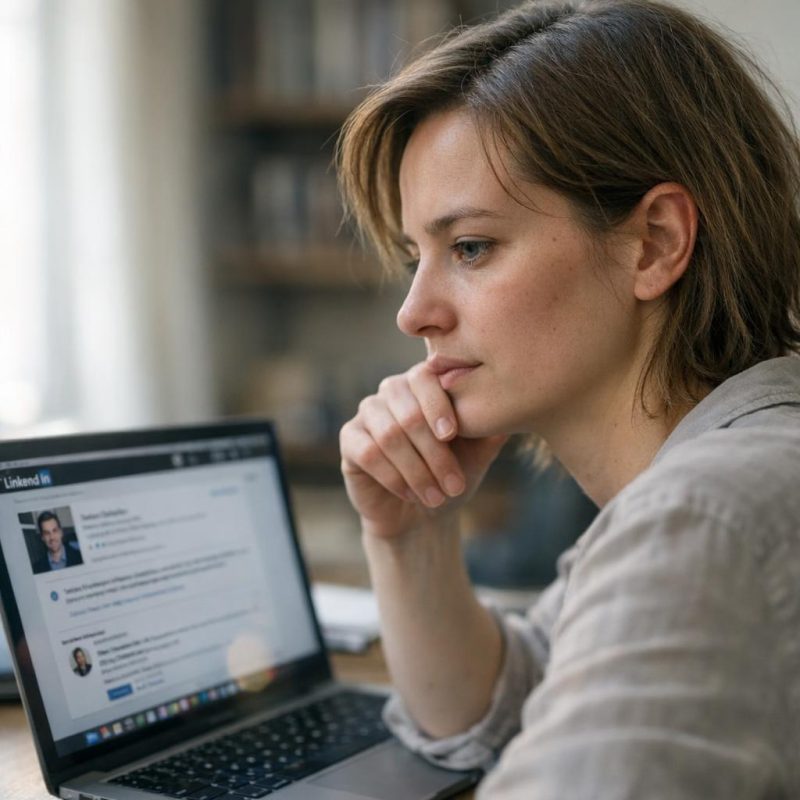 Image by RM AI
Reaching Out
There was one name that caught my attention. Jennifer Huang, who'd been Claire's manager at the consulting firm—her second-to-last job before ours. Jennifer had moved on to director level at a different company now. We had one mutual connection, someone I'd worked with briefly at a conference years ago. I stared at Jennifer's profile for a long time, drafting and deleting messages in my head. What would I even say? 'Hey, did your former employee sabotage people?' That sounded unhinged. But I needed to know. Finally, I kept it simple and professional: 'Hi Jennifer—I noticed we both worked with Claire Mitchell. I'm currently working with her and would appreciate any insights about collaborating effectively with her. Would you be open to a brief conversation?' I read it over five times. It was vague enough to be innocent, specific enough to get a real answer if there was one to give. My cursor hovered over the send button. This felt like crossing a line—investigating a colleague behind their back, reaching out to strangers. But what choice did I have? I hit send before I could second-guess myself, knowing I might never get a response—or I might get an answer I wasn't ready for.
 Image by RM AI
The Mediation Day
The mediation room was smaller than I'd expected—just a conference room on the second floor with institutional gray walls and a table that seated six. Amanda was already there when I arrived, arranging printouts and notes with the careful precision of someone who'd done this many times before. She smiled warmly and gestured for me to sit. I chose the chair facing the door because I wanted to see Claire when she came in. My evidence folder sat in front of me, version histories printed and highlighted. I'd rehearsed what I'd say, how I'd present the facts calmly and clearly. Amanda made small talk about the weather while we waited, her voice steady and professional. I tried to match her tone, but my hands were shaking slightly. Then I heard footsteps in the hallway. The door opened, and Claire walked in looking composed and professional, wearing a navy blazer I'd never seen before, her hair pulled back in a neat bun, her expression open and almost sad. She nodded politely at both of us, sat down across from me, and folded her hands on the table like she was there to solve a problem rather than answer for one. I realized she'd been preparing for this moment while I'd been spiraling.
Claire's Performance
Amanda opened with the standard mediation framework—this was a safe space, both perspectives were valid, we were here to find understanding. Then she turned to Claire and asked her to share her experience of the situation. Claire took a breath, looked down at her hands, then back up with these genuinely confused eyes. 'I don't really know where things went wrong,' she started, her voice soft. 'I thought Maya and I were building a good working relationship. When I saw some areas in her work that could be stronger, I tried to help—maybe I overstepped, I don't know. I was just trying to support her the way I wish someone had supported me when I was learning.' She paused, shaking her head slightly. 'But instead of talking to me about it, she went straight to HR with these accusations, and honestly, that really hurt. I feel like I'm being punished for trying to help.' Her voice cracked just slightly on the last word. Amanda was nodding, writing something down. Claire wasn't denying anything—she was reframing it as kindness misunderstood, as my overreaction to normal collaboration. She spoke with just the right amount of vulnerability, and I watched Amanda nod sympathetically like this was a genuine misunderstanding.
 Image by RM AI
Maya's Response
When it was my turn, I kept my voice steady and opened my folder. I walked through the version history, pointing to the timestamps, showing exactly when Claire had accessed my files and what she'd changed. I explained how the alterations made my work look incompetent—inconsistent data, contradictory conclusions, basic errors I hadn't made. Amanda listened attentively, glancing between the documents and Claire. I thought the facts would speak for themselves. But when I finished, Claire didn't get defensive or flustered. She just nodded slowly, like she'd been expecting this. 'I did make those edits,' she admitted freely. 'I should have been clearer about what I was doing. I thought I was bringing Maya's work up to the standards Michael expects—things I've learned about his preferences that maybe weren't communicated to her.' She looked at Amanda, then at me. 'I was trying to save her from getting feedback like I got when I first started. I can see now that I should have explained that instead of just fixing things.' She made it sound reasonable, almost thoughtful. Claire didn't deny the edits—she reframed them as trying to help me meet standards I wasn't aware of, and suddenly the facts didn't seem to matter as much as the interpretation.
The Outcome
Amanda spent another twenty minutes guiding us through 'communication strategies' and 'boundary setting.' She acknowledged that yes, Claire should have been more transparent about her edits, but also suggested that perhaps I could have approached Claire directly before escalating to HR. She used phrases like 'different communication styles' and 'learning opportunity for both of you.' The resolution she proposed was painfully vague: we'd both commit to clearer communication going forward, Claire would check in before making significant changes, and I'd feel comfortable raising concerns directly with her first. Claire nodded earnestly at everything Amanda said, agreeing to all the suggestions with appropriate contrition. I signed the mediation agreement because what else could I do? As we stood to leave, Claire actually reached out like she wanted to shake my hand, her expression hopeful. I kept mine at my side. Amanda walked us both to the door, thanking us for our willingness to engage in the process. It was handled like we'd both contributed equally to the problem, and I walked out knowing nothing had actually been resolved.
 Image by RM AI
The LinkedIn Response
I checked my LinkedIn messages obsessively for three days after the mediation, refreshing the page every few hours. On the fourth day, there was a notification. Jennifer Huang had responded—just two sentences: 'I'd prefer to discuss this by phone rather than in writing. Would Tuesday at 3pm work for you?' That was it. No pleasantries, no context, no reassurance that she had anything useful to say. Just a request to talk off the record. I read those two sentences probably ten times, analyzing every word choice. The fact that she'd responded at all meant something. The fact that she didn't want to write it down meant even more. People put things in writing when they're comfortable with the information becoming permanent, when they don't mind if it gets forwarded or screenshotted. When they refuse to write it, it's because what they have to say is either sensitive, damaging, or both. I immediately replied confirming Tuesday at 3pm and included my cell number. Then I sat back and stared at my screen, my heart pounding. The message was short and careful, and the fact that she didn't want to write it down told me everything I needed to know.
 Image by RM AI
The Phone Call
Tuesday at 3pm, my phone rang. I'd been sitting at my desk pretending to work for the past hour, my notes ready. Jennifer's voice was professional but guarded. After brief introductions, I explained that I was working with Claire and had encountered some concerning situations around work being altered. There was a pause—long enough that I thought the call might have dropped. Then Jennifer sighed. 'I was wondering when this would happen,' she said quietly. 'Look, I can't give you anything official. We didn't document it properly, which I still think was a mistake, but that wasn't my call.' My pulse quickened. 'Document what?' I asked. Jennifer hesitated again. 'Claire worked in my department for about six months. Talented on paper, but there were issues with a junior analyst—someone kept changing her work in the system, making her look incompetent in front of clients. We eventually tracked it back to Claire.' I gripped my pen so hard it almost snapped. 'What happened to her?' 'She left,' Jennifer said flatly. 'The company asked her to resign quietly rather than deal with the mess. She did the exact same thing to someone on our team,' Jennifer said, 'and when it came out, the company just asked her to leave quietly.'
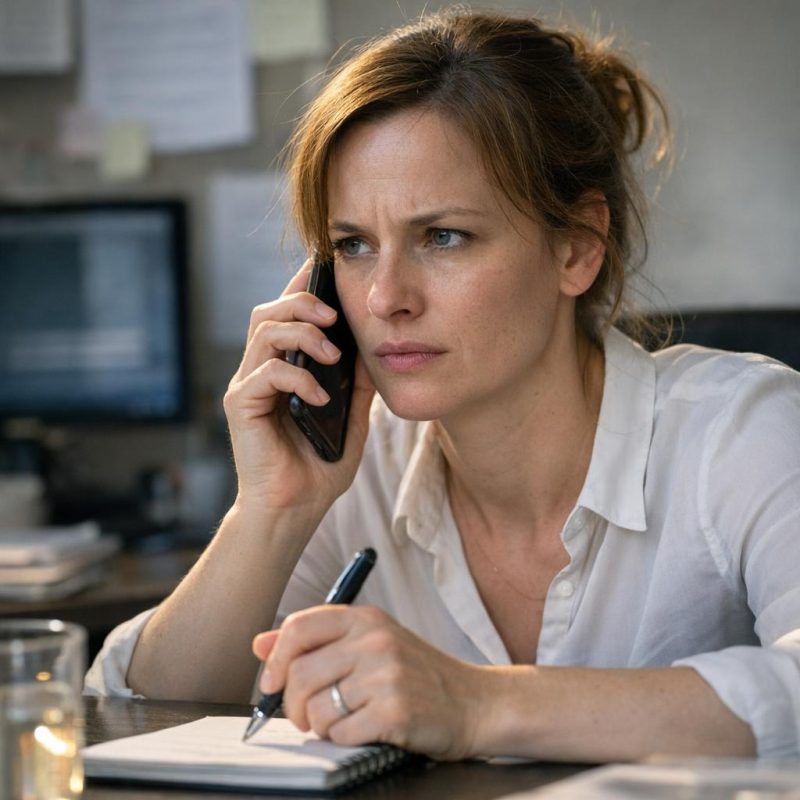 Image by RM AI
The Quiet Exit
I asked Jennifer why they hadn't fired Claire outright, why there was no formal documentation. She laughed, but there was no humor in it. 'That was above my pay grade. HR and the director decided it was cleaner to offer her a severance package and a neutral reference in exchange for leaving without a fight. They were worried about wrongful termination claims, about reputational damage if it became public.' My stomach turned. 'So she just got to leave and do it again somewhere else?' Jennifer's voice hardened. 'I argued for documentation. I said we had a responsibility to future employers. But the company lawyer said we could be sued for defamation if we couldn't prove intent, and proving intent is nearly impossible. So they paid her to go away quietly.' She paused. 'I'm sorry you're dealing with this. I've wondered over the years if she'd resurface somewhere. They were more worried about a lawsuit than stopping her from doing it again,' Jennifer said, and I felt my blood go cold.
 Image by RM AI
Connecting the Dots
After the call ended, I pulled up Claire's LinkedIn profile again and this time looked at her employment history with new eyes. There were gaps—not huge ones, but noticeable. Three to four months between jobs, sometimes six. Her tenure at each company was remarkably similar: never more than eighteen months, usually closer to a year. And she'd worked at four companies in the past six years, which for someone at her level seemed like a lot of movement. I started taking notes, mapping the timeline. Each gap could have been a 'quiet exit' like Jennifer described—negotiated departures that left no paper trail, no warnings for the next company. She'd refined this, I realized. She knew exactly how long she could operate before the pattern became undeniable, knew how to leave before formal action could be taken. Companies kept choosing the path of least resistance, paying her to disappear rather than documenting the behavior and risking legal complications. And each time, she landed somewhere new with a clean record, ready to start over. She hadn't been fired—she'd been paid to disappear, again and again, moving on to the next company before anyone could warn them.
 Image by RM AI
The Reference Question
The question hit me around two in the morning when I couldn't sleep: how did she get hired in the first place? Companies don't just bring people on without checking references, especially for senior positions. Someone had called her previous employers. Someone had asked questions. And either those previous companies had lied, protecting themselves by passing the problem along, or our HR team had missed something critical. I kept thinking about Jennifer's description of the 'quiet exit'—the negotiated departures that left no documentation, no warnings. But reference checks still happen. Even with a settlement agreement, someone at those companies would have been contacted. Maybe they'd been deliberately vague, maybe they'd stuck to the bare minimum: dates of employment, job title, eligible for rehire. Corporate CYA at its finest. But there had to be some record of those conversations. HR keeps notes on everything—interview evaluations, background checks, reference calls. It's all documented and filed away, usually in shared folders that managers can access for their own hiring purposes. I'd looked at those files before when we were bringing on my previous team member. Someone in HR would have called her previous employers—and I needed to know what they were told.
 Image by RM AI
After Hours
I stayed late on Thursday, waiting until most people had cleared out. The office gets this particular quality of silence after six—the hum of ventilation, the occasional cleaning crew, nothing else. I logged into the shared HR drive using my manager credentials, the same access I'd used for legitimate hiring purposes before. Technically, I probably shouldn't be looking at someone else's personnel file. Technically, this was a gray area at best. But I was way past caring about technicalities at this point. I navigated through the folder structure: Personnel Files, then sorted by last name. There it was: Claire_Mendez_Hiring. I clicked it open. Background check, clear. Degree verification, confirmed. Employment verification for previous positions, all dated and documented. Interview evaluation from Michael, glowing. And then, near the bottom, a file labeled 'Reference_Notes_Final.' I opened it. Two references listed, both from her most recent company. The first was brief, professional, almost template-like. But there was a second document, dated a week later, with a subject line that made my stomach drop: 'Follow-up_Reference_Concern.' I found the folder with her background check, reference notes, and interview evaluations—and then I saw the flag.
 Image by RM AI
The Flag
The note was from Amanda in HR, dated about a week into Claire's interview process. It summarized a callback conversation with one of her references—a former colleague, not the manager they'd initially spoken with. This person had apparently reached out proactively after hearing HR had called for a reference. The language was careful but clear: 'Expressed concerns regarding candidate's approach to team dynamics and collaborative projects. Referenced multiple instances where working relationships became strained. Suggested these situations created challenges for team morale.' I read it twice, my heart pounding. Someone had tried to warn us. Someone who'd worked with Claire had gone out of their way to make sure we knew what we were getting into. And below that, in a different font, was Amanda's addendum: 'Discussed concern with hiring manager M. Chen. HM assessment: concern noted but not relevant to role scope. Candidate's technical qualifications and strategic vision align with department needs. Proceeding with offer.' I actually laughed—this sharp, bitter sound in the empty office. The concern was documented—and then explicitly dismissed as 'not relevant to the role.' They knew, and they hired her anyway.
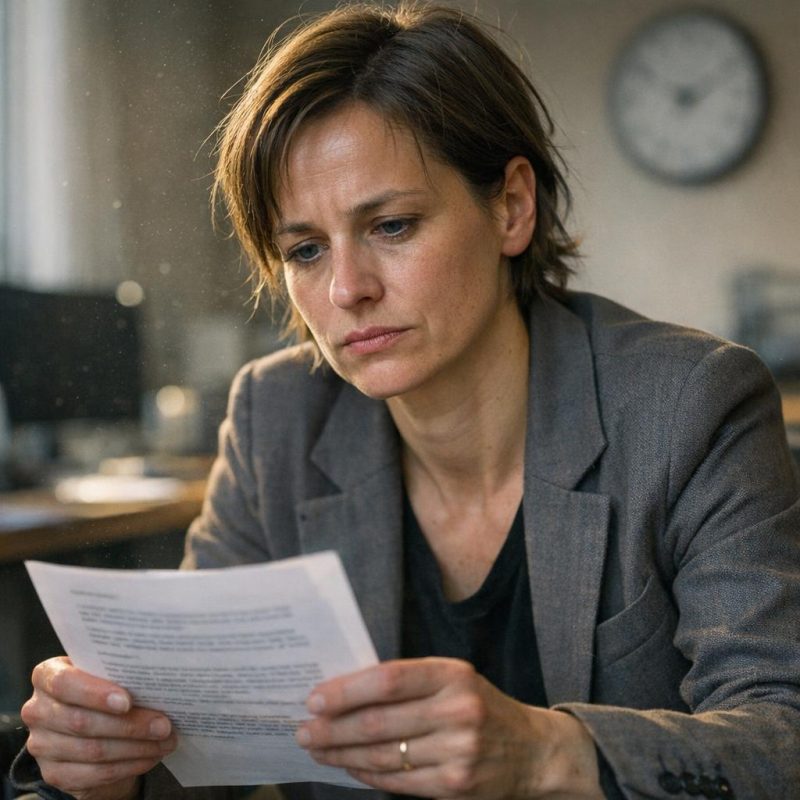 Image by RM AI
The Hiring Manager
I scrolled down to the signature line on the approval document. There it was: Michael Chen, Department Director. The date matched—he'd signed off on proceeding with the offer less than forty-eight hours after that concern was raised. Michael, who'd been avoiding eye contact with me for weeks. Michael, who'd suggested I 'find a way to work with Claire' and 'be more flexible.' Michael, who'd acted like my concerns about her were a personality conflict, something I needed to manage better. He'd known from the beginning that she had a history. Someone had specifically warned him about her impact on team dynamics, and he'd decided it didn't matter. Or worse—maybe he'd thought he could manage it, contain it somehow. Maybe he'd believed the technical skills were worth the risk. Or maybe, and this thought made my jaw clench, he'd just wanted to fill the position and didn't want to start the search over. The signature on the approval was his, and suddenly his avoidance of the whole situation made perfect sense.
 Image by RM AI
Second Reference
I kept reading. Below the first reference concern was another note, this one from a second callback Amanda had made—apparently she'd been thorough, reaching out to someone else listed as a project collaborator on Claire's resume. This reference had been even more direct. The notes read: 'When asked about candidate's collaboration style, reference paused for extended period. Eventually stated: "I want to be fair, but I also want to be honest. There were concerns about how she represented other people's work. There was a pattern of situations where credit became unclear." Reference mentioned previous incidents (plural) involving project attribution and team conflict. Reference stated they would not personally choose to work with candidate again.' I actually had to stand up and walk away from the computer for a minute. Multiple people had tried to warn us. Multiple people had used words like 'pattern' and 'previous incidents.' And we'd hired her anyway. The second reference had used words like 'concern' and 'pattern' and 'previous incidents'—and still, they hired her.
 Image by RM AI
The Paper Trail
I pulled out my phone and started photographing everything. The reference notes. The concerns. Michael's approval overriding them. Amanda's careful documentation of the warnings that had been ignored. My hands were shaking slightly as I held the phone steady, making sure each image was clear and readable. This was evidence—not just of Claire's pattern, but of the company's negligence. They'd been warned, explicitly and specifically, and they'd chosen to ignore it. Click. The first reference concern. Click. The second reference's statement about the pattern. Click. Michael's signature dismissing it all. I took photos of the dates, too, creating a timeline. If this ever went legal, if I needed to prove that the company had known what they were bringing in, I had it now. I transferred the photos to my personal cloud storage immediately, then deleted them from my phone's camera roll. Paranoid? Maybe. But I'd learned the hard way that documentation disappears when it becomes inconvenient for the people in power. If they thought this would stay buried, they didn't know me well enough—and they'd underestimated how far I was willing to go.
 Image by RM AI
Reaching Out Again
The next morning, I called Jenna again. She picked up on the second ring this time, like maybe she'd been expecting me. 'I have a question,' I said, skipping the pleasantries. 'And it's a big ask, so feel free to say no.' There was a pause. 'Okay.' 'Would you be willing to provide a written statement about what happened at your company? About Claire's behavior, the pattern you saw, how it ended?' The silence stretched longer this time. I could hear her breathing, thinking it through. 'You're really going after this,' she said finally. It wasn't a question. 'I have to,' I said. 'Because if I don't, she's going to do this to someone else. She already has—multiple times, apparently. And companies keep letting her move on and start over because it's easier than dealing with it.' Another pause. Then: 'What would you need?' We talked through the details—nothing that would violate her settlement agreement, just the observable facts of what had happened, the timeline, the behavior patterns. 'I'll do it,' Jenna said after a long pause, 'because someone needs to stop this from happening again.'
 Image by RM AI
The Pattern
Jenna's statement arrived three days later, a carefully worded two-page document that laid out everything. The timeline of her working relationship with Claire. The gradual escalation of credit-taking and document alterations. The gaslighting when she'd raised concerns. But it was the final section that made me actually gasp out loud. Jenna had done her own research after leaving—reached out to people in her network, connected dots I hadn't even known existed. 'Based on subsequent conversations with former colleagues from Ms. Mendez's previous positions,' the statement read, 'I have learned that similar patterns of behavior were documented at three prior companies between 2018 and 2023. In each instance, the situation was resolved through private settlement agreements that included non-disclosure provisions. Each departure was structured to appear voluntary and included financial consideration in exchange for mutual non-disparagement.' Three previous companies. The one Jennifer had mentioned, plus two more. This wasn't her second time—it was her fourth, and every company had chosen to pay her out quietly rather than document what she'd done.
 Image by RM AI
The Full Picture
I spread everything out on my dining room table that night—my documentation on one side, Jenna's statement on the other. I started mapping the timeline, and that's when I actually saw it. The pattern wasn't just similar. It was identical. Claire had started with small corrections to Jenna's work too, building credibility before escalating to full rewrites. She'd positioned herself as helpful, as mentoring, creating that same foundation of plausible deniability. The gaslighting language Jenna described—'I thought we discussed this,' 'You seemed to agree in our conversation'—I'd heard those exact phrases. Even the timing matched. Three months to establish the pattern, another two to make the target doubt themselves, then the final push to either force them out or discredit them completely. I grabbed a highlighter and started marking the parallels. Initial corrections. Relationship building. Escalation to major changes. Isolation from allies. Reversal and blame. It was there in Jenna's experience. In Jennifer's partial account. And in the pattern across three previous companies. Every move she'd made—the early corrections, the relationship building, the documentation, the reversal—had been practiced, refined, and repeated.
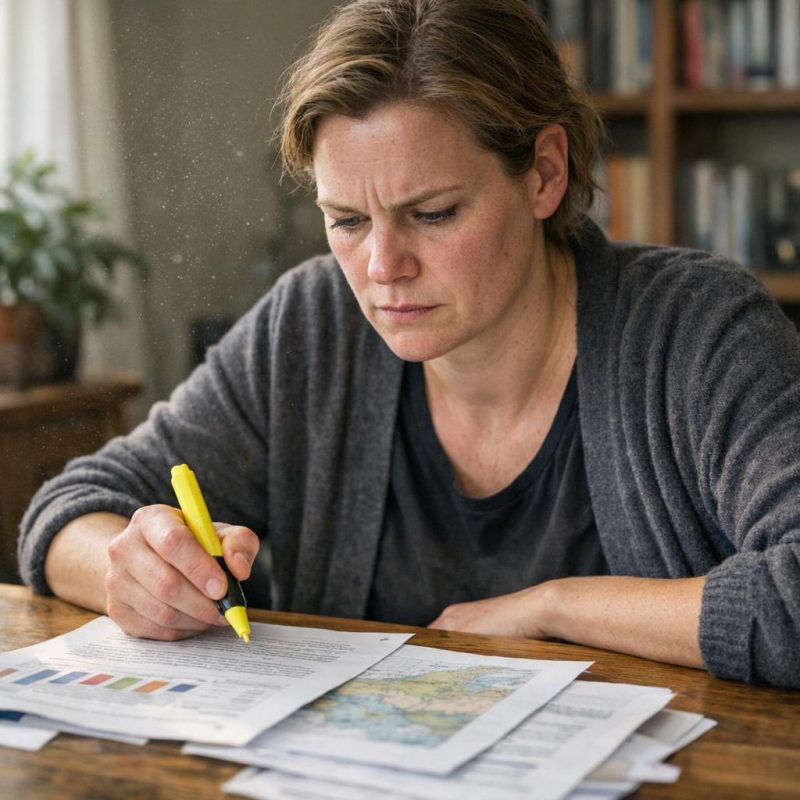 Image by RM AI
Decision Point
I sat there staring at that timeline until past midnight, and the weight of what I had to decide actually made my chest hurt. I could see three paths forward, and none of them were easy. Option one: go public. Take everything I had to industry publications, professional networks, maybe even the press. Expose the pattern completely and make sure Claire could never do this again. But that meant burning bridges with the company, probably ending my own career in the process, becoming 'that person' who aired dirty laundry publicly. Option two: work within the system. Present my evidence to HR and senior leadership, demand they actually handle it this time, trust that accountability could happen internally. Less nuclear, but also less certain—companies protect themselves, not whistleblowers. Option three: do what Jenna and Jennifer and God knows who else had done. Take whatever settlement they'd offer, sign the NDA, walk away clean and let Claire move on to her next target. Let someone else become victim number five. I looked at Jenna's statement again, at her careful documentation of manipulation and harm. I could expose this and risk everything, or I could take a settlement and let her move on to the next person—and I knew which choice I had to make.
 Image by RM AI
The Meeting Request
I drafted the meeting request three times before I sent it. Too aggressive and they'd get defensive before I even walked in the room. Too vague and they wouldn't take it seriously. Finally, I settled on direct but professional: 'I need to meet with you regarding new information about Claire Mendez's employment history and conduct. This involves documentation from multiple sources and requires senior leadership attention. Please advise your availability this week.' I sent it to Michael and copied Amanda as VP of HR. Then I sat there staring at my inbox like I was sixteen again waiting for a text back. The response came faster than I expected—forty-seven minutes later. Michael's assistant, not Michael himself: 'Mr. Patterson and Amanda Chen are available tomorrow at 2 PM. Conference Room C. Please confirm attendance.' The speed of it made my stomach flip. They knew something was coming. Maybe they'd been waiting for this since the day they'd agreed to investigate the hiring documents. Maybe they'd known all along that paying Claire to go away quietly wouldn't work this time. Michael's assistant confirmed the meeting within an hour, and I could feel the panic in how quickly they responded.
 Image by RM AI
The Presentation
I arrived ten minutes early with three copies of everything in labeled folders. The conference room was cold—they always kept it too cold—and Michael and Amanda were already there, sitting on the same side of the table like they were presenting a united front. I didn't give them time for small talk. 'Thank you for meeting with me,' I said, distributing the folders. 'I'm going to walk you through what I've found, and I think you'll understand why this needed to happen quickly.' I started with my own documentation—the altered files, the metadata showing Claire's changes, the pattern of escalation. Then Jenna's statement, highlighting the identical methodology. Then the real bomb: the hiring documents Michael had requested, with the reference concerns clearly flagged, and the notation about similar issues at her previous company. 'This section here,' I said, pointing to the reference warning. 'Someone saw this during the hiring process. Someone knew there were red flags and hired her anyway.' Michael's face went carefully blank, and I flipped to the approval signature page. His name. Right there in his handwriting. I watched Michael's face as he realized I knew he'd ignored the warnings, and the room temperature seemed to drop ten degrees.
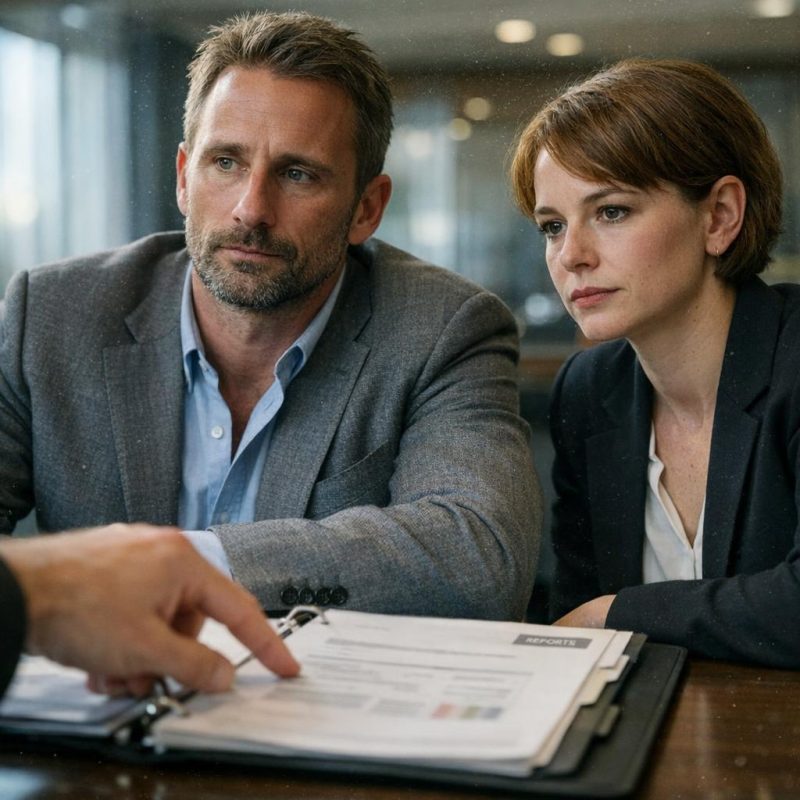 Image by RM AI
The Denial
Michael cleared his throat, and I could actually see him shifting into damage control mode. 'I appreciate you bringing this forward, Maya,' he said slowly. 'But I have to be honest—I don't recall seeing these specific reference concerns. The hiring process for that position involved multiple stakeholders, and HR typically handles the detailed reference checks.' He glanced at Amanda like he was passing her the ball. 'I may have signed off on the final hire, but the due diligence would have been conducted by Amanda's team.' I didn't move. Just let the silence sit there for a beat. Then I opened the folder again and slid the signature page across the table. 'This is your signature, though. On a document that explicitly mentions concern about Claire's conduct at her previous company. May fifteenth of last year.' Amanda was looking down at her own copy, and her face had gone completely neutral. She wasn't jumping in to correct him. Wasn't offering to pull the HR files to verify the process. Just sitting there, silent, while Michael tried to pretend he hadn't personally approved hiring someone with documented red flags. He was lying—his signature was on the document—but Amanda sat silent, and I realized they were going to try to close ranks.
 Image by RM AI
The Ultimatum
I took a breath and decided to stop playing nice. 'Here's what I know,' I said, keeping my voice level. 'Claire Mendez has a documented pattern of workplace manipulation spanning at least four companies, including this one. She was hired despite reference concerns that were flagged in writing. She has since engaged in the exact same conduct here that led to settlements at three previous employers. I have copies of all of this evidence—the metadata, the statements, the hiring documents, everything—stored in multiple secure locations.' I looked directly at Michael. 'And I'm giving you the opportunity to handle this properly before I take it further.' Amanda's pen stopped moving. Michael's jaw actually tightened. 'Maya, I don't think threats are—' he started, but I cut him off. 'It's not a threat. It's a clear statement of my options. You can handle this internally, conduct a real investigation, and hold people accountable for what happened. Or I can go to the board of directors. Or the EEOC. Or I can make sure every industry publication knows this company hired someone with a documented history of this behavior and ignored the warnings.' I paused. 'You can handle this internally,' I said, 'or I can make sure everyone knows the company hired someone with a documented history and ignored the warnings.'
The Investigation
Amanda spoke for the first time in five minutes, and her voice had that HR-professional calm that probably took years to perfect. 'We take these allegations very seriously, Maya. Based on what you've presented, I'm prepared to initiate a formal investigation into both Claire's conduct and our hiring processes. Effective immediately.' She was already making notes. 'The investigation will be conducted by an external firm to ensure objectivity. Claire will be placed on administrative leave pending the outcome. And we'll be reviewing the circumstances of her hiring, including who had access to what information and when.' Michael nodded, but he looked like he'd swallowed something bitter. 'I want to be clear that we value your diligence in bringing this forward,' he said, and it sounded so scripted I almost laughed. 'The company's priority is maintaining a professional workplace for everyone.' They were agreeing to everything I'd demanded. External investigation, administrative leave, review of the hiring process. It was exactly what I'd come in here to get. But the speed of their agreement, the way Amanda already had her talking points ready, the careful phrasing about 'reviewing circumstances'—it all felt too smooth. It was what I'd demanded, but the speed of their agreement made me wonder what they were really trying to protect.
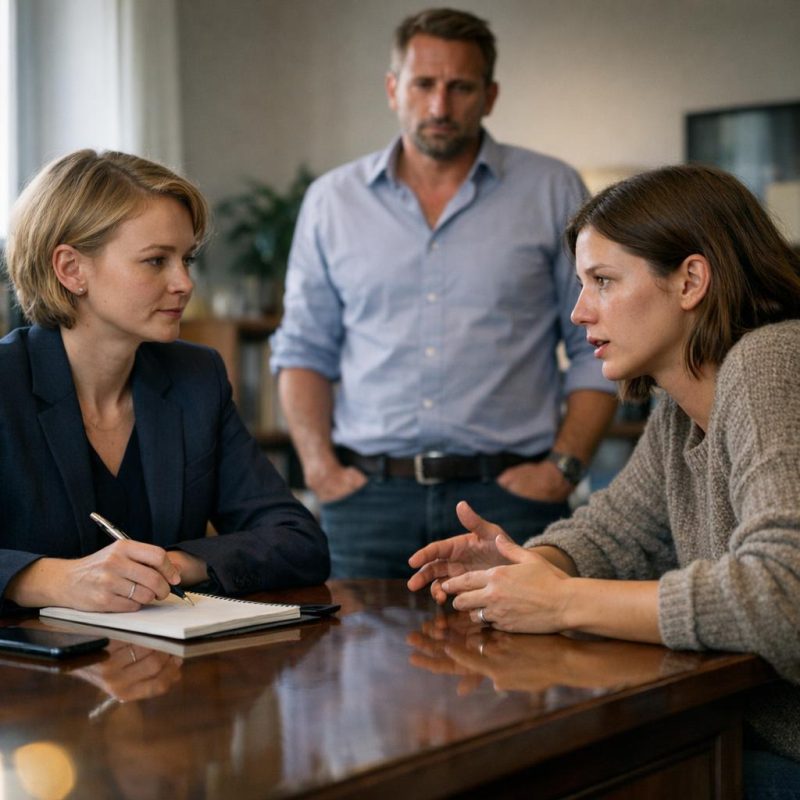 Image by RM AI
Claire's Exit
Amanda called me the next afternoon with an update. Claire had been informed of her administrative leave that morning and had been escorted from the building by 10 AM. 'I want you to know she's been instructed to have no contact with you or any other employees during the investigation,' Amanda said. 'And Maya—she's retained legal counsel. Her attorney contacted us this afternoon.' Something about the way she said it made me pause. 'That was fast,' I said. 'She had a lawyer ready to go within four hours of being put on leave?' There was a brief silence on Amanda's end. 'Her attorney indicated they've been working together for some time,' Amanda said carefully. 'I can't share details, but it appears she engaged counsel proactively.' Proactively. That was one word for it. Another word was 'predictably.' Claire had a lawyer on speed dial because she'd needed lawyers before. Because this wasn't new territory for her—getting caught, getting investigated, negotiating her way out. The difference was that the other companies had moved quickly to settle. Had paid her to go away before anyone looked too closely at the pattern. Of course she had a lawyer ready—this wasn't her first time being caught, just the first time someone had refused to let it go quietly.
The Settlement
Amanda scheduled a call for the following Monday, and I knew before she spoke what she was about to offer. The company had completed their investigation—they'd found enough evidence to terminate Claire effective immediately—and now they wanted to close the book. 'We're prepared to offer you a settlement package,' Amanda said, her voice calm and professional. 'Three months' severance pay in addition to what you're already entitled to, a written apology from executive leadership, and a guarantee that Claire will never be rehired in any capacity.' I waited. There was always a 'but' with these things. 'In exchange, we would need you to sign a non-disclosure agreement,' she continued. 'You wouldn't be able to discuss the details of the investigation or Claire's termination with anyone outside the company.' There it was. They'd fire her, pay me to feel better about it, and then seal the whole thing up so nobody else would ever know what she'd done. The next company that called for a reference would get some carefully worded response about 'not being the right fit,' and Claire would slide into another position where she could do this all over again to someone else. They wanted to solve this with money and silence, and I had to decide if that was enough—or if I needed to make sure her next victim would know.
The Choice
I took two days to think about it, and then I called Amanda back with a counteroffer. 'I don't want the severance package,' I said. 'I want Claire's termination documented as for-cause, and I want HR to give honest references when future employers call. Not vague corporate speak—actual information about why she was let go.' There was a long pause. 'That's... unconventional,' Amanda said carefully. 'Most employees in your position would prefer the financial compensation.' 'Most employees haven't spent six months documenting a sabotage campaign,' I replied. 'I want accountability, not hush money. I want the next person who hires her to be able to make an informed decision.' Amanda said she'd have to take it to legal, and I waited another three days before she called back. They'd agreed—with some modifications. They couldn't promise specific language in reference checks, but they would confirm the termination was for misconduct related to falsification of documents and workplace sabotage if directly asked. It would go in her permanent file. It would follow her. I left money on the table, but I made sure the next person who checked her references would actually know what they were hiring.
 Image by RM AI
Moving Forward
Walking back into the office the following Monday felt surreal. Claire's desk had already been cleared, her nameplate removed, like she'd never existed at all. Sophie caught my eye across the room and gave me a small, sad smile. She came by my desk later that morning. 'I should have said something earlier,' she told me quietly. 'I saw some things that didn't add up, but I convinced myself I was reading too much into it.' I appreciated the acknowledgment, even if it came late. Raj stopped by too, admitting he'd noticed Claire always seemed to have a story ready whenever something went wrong with my projects. Daniel called a team meeting where he addressed 'recent personnel changes' without naming Claire directly, but everyone knew. Some people met my eyes; others looked away. A few colleagues never said anything at all, and I realized they probably never would—they'd been uncomfortable with what they'd seen but not uncomfortable enough to speak up. It wasn't perfect, and some people never apologized for their silence—but at least it was over, and I'd made sure it would be harder for her to do this again.
 Image by RM AI
The One Detail
Looking back now, it's almost funny how the whole thing unraveled. Claire had been so meticulous, so practiced at this. She knew exactly how to rewrite reports, when to raise concerns, how to position herself as the helpful colleague while slowly dismantling my credibility. She'd probably done it before, maybe multiple times, and gotten away with it because nobody had thought to look beyond her polished explanations. But she missed one thing. One tiny detail that didn't seem important until suddenly it was everything: version history doesn't lie. Every edit, every timestamp, every deleted paragraph—it was all still there, waiting for someone to ask the right question. And once I had that proof, once I gave people permission to voice their doubts instead of dismissing them, the whole carefully constructed narrative fell apart. She'd spent months building this elaborate scheme, and it collapsed because she didn't realize that Google Docs keeps receipts. That digital trail was something she couldn't charm her way around or reframe or explain away. She'd been so careful, so practiced—but in the end, all it took was one question, one timestamp, and the courage to ask for proof instead of accepting her story.
 Image by RM AI
KEEP ON READING

The 10 Youngest Monarchs In History & The 10 Oldest
Age Is Just A Number. Imagine being crowned king or…
By Chase Wexler Mar 11, 2025
You Think You Have Problems? These Royal Families Were Cursed
Boasson and Eggler St. Petersburg Nevsky 24. on WikimediaHeavy is…
By Ashley Bast Dec 5, 2025
You Can Thank This Greek-Canadian For Creating Pineapple On Pizza…
Love it or hate it, pineapple on pizza sparks debate…
By David Davidovic Dec 1, 2025
Yes, Female Gladiators Existed, And Here's Everything You Need To…
History of Women in Combat. Most people picture gladiators as…
By David Davidovic Jan 17, 2026
Yes, Australians Once Lost A Battle Against Flightless Birds
David Clode on UnsplashIn 1932, the Australian military went to…
By David Davidovic Nov 24, 2025
The Y2K Bug: Why Did Everyone Think Year 2000 Was…
Alan W on UnsplashOn December 31, 1999, people all over…
By Christy Chan Dec 22, 2025