

The Impossible Number
I opened the envelope from the water company on a Tuesday afternoon, expecting the same $47 I'd been paying for the past seventeen years. Instead, I stared at a number that made absolutely no sense: $163.42. My first thought was that they'd accidentally sent me someone else's bill, but no—there was my address, my account number, everything correct. I read the usage summary three times, each time hoping the numbers would somehow rearrange themselves into something reasonable. They didn't. The bill showed I'd used 240% more water than my average monthly consumption. Two hundred and forty percent. I live alone in a small house. I take one shower a day. I run the dishwasher maybe twice a week. I don't water my lawn because I don't have one—just some gravel and a few drought-resistant plants my dad helped me put in years ago. Nothing in my routine had changed. Not a single thing. I set the bill down on my kitchen counter and picked it up again, as if the physical act of handling it differently might reveal some explanation I'd missed. I stared at the number again—240%—and felt the first flutter of something wrong in my chest.
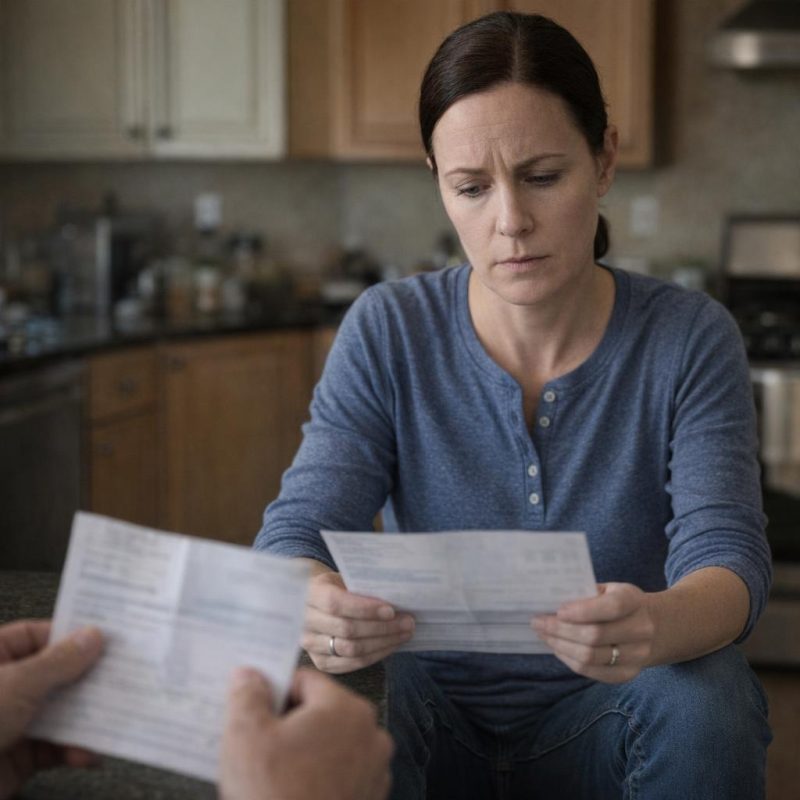 Image by RM AI
The 2AM Pattern
I flipped the bill over, looking for some kind of explanation or error notice, and that's when I found the detailed usage chart on the back page. The water company had started including hourly breakdowns with their smart meter system, and mine showed consumption patterns across the entire billing cycle. Most hours showed the tiny baseline usage I'd expect—a toilet flush here, washing my hands there, the occasional load of laundry. But then there were these massive spikes, like someone had been filling a swimming pool in my backyard. Except I don't have a pool. And every single spike occurred between 2:00 and 4:00 in the morning. I traced my finger along the graph, counting. Seven spikes over the past month, each one showing thousands of gallons being used in those two-hour windows. I'm a heavy sleeper—always have been. I take melatonin most nights and I'm out cold from about 10 p.m. until my alarm goes off at six. There was no way I was using water during those hours. No way I was even conscious. Every spike fell between 2:00 and 4:00 a.m., and the pattern was consistent across multiple weeks.
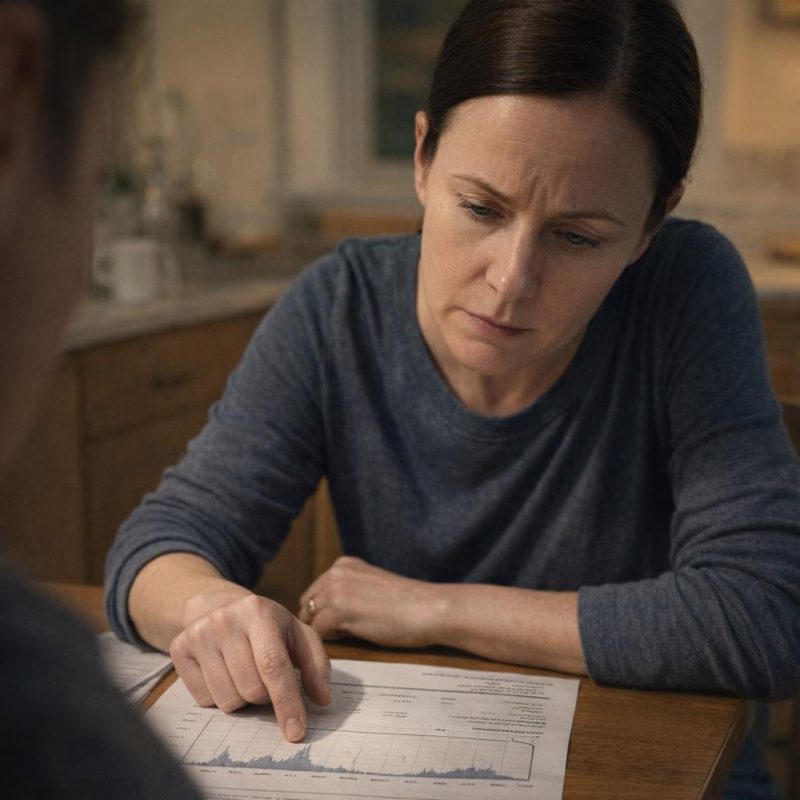 Image by RM AI
The Amateur Plumber Detective
I spent the next two hours going through my house like some amateur plumber detective, checking every possible source of water usage. I started in the main bathroom, running my hands along the base of the toilet, checking for moisture. Nothing. I remembered my dad teaching me the food coloring trick when I was a kid, so I put a few drops of blue dye in the tank and waited fifteen minutes to see if it would seep into the bowl. It didn't. I moved to the guest bathroom and repeated the process. Bone dry. In the kitchen, I got down on my hands and knees to inspect the connections under the sink, the dishwasher line, the refrigerator's ice maker hose. Everything was tight and dry. I walked the perimeter of my house looking for wet spots in the yard, which seemed ridiculous because we hadn't had rain in over a week and the ground was hard as concrete. I checked the washing machine hoses in the laundry closet, examined the water heater in the garage, tested every outdoor spigot to make sure they were shutting off completely. My house is seventy years old—if there was a leak, I should have found some evidence of it. By sunset, I stood in my garage completely stumped—everything was bone dry and silent.
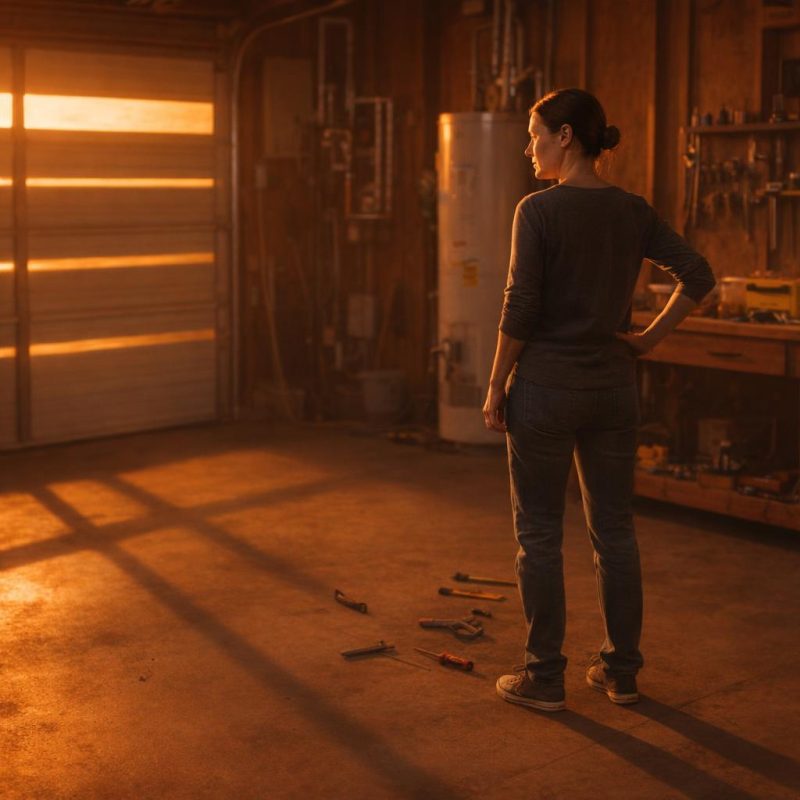 Image by RM AI
The Meter Never Lies
I called the water company first thing Thursday morning, as soon as their customer service line opened at eight. A woman named Linda answered, and I explained the whole situation—the 240% increase, the 2:00 a.m. spikes, my complete inability to find any leaks anywhere in my house. She put me on hold for what felt like forever, and I could hear the faint clicking of keyboard keys in the background when she came back. She told me my meter was one of the newer digital smart meters, the kind that records real-time usage and transmits the data directly to their system. I asked if there was any chance the meter itself was malfunctioning, maybe sending false readings. Linda's voice stayed polite but firm—she said these meters were extremely accurate, independently tested, and had built-in diagnostics that would flag any errors. She checked and confirmed mine had passed its most recent diagnostic test just two weeks ago. I pressed her, asking if phantom usage readings were even possible. She paused, and I could hear her typing again before she responded. If the meter says the water is being used, she told me, then the water is definitely being used.
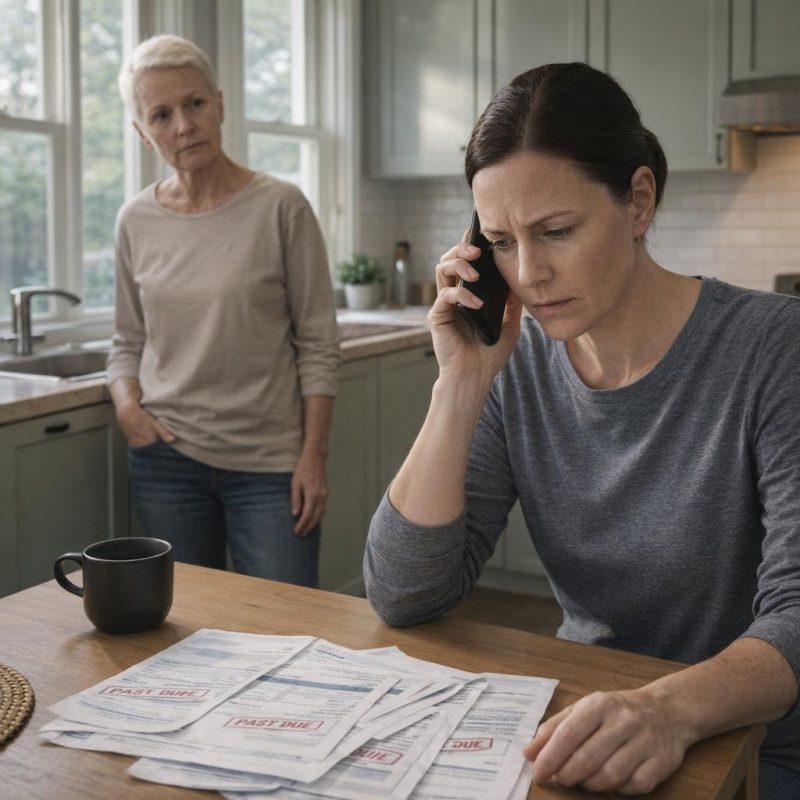 Image by RM AI
Three Days After
Before I let Linda go, I asked her one more question: when exactly did these unusual spikes start showing up in the system? She put me on hold again, and when she came back, she gave me a specific date and time—September 18th, around 2:30 in the morning. I wrote it down on the back of the bill in blue ink: Sept 18, 2:30am. After we hung up, I stood there in my kitchen staring at those numbers, and something nagged at the edge of my memory. I walked over to the calendar hanging by my refrigerator, the one where I write down trash days and dentist appointments and other things I need to remember. There, on September 15th, I'd written in my own handwriting: New neighbor moving in. I remembered that Saturday clearly now—the big moving truck parked in the driveway next door, the parade of furniture and boxes being carried inside, me waving to the movers from my porch but never actually introducing myself. Three days. September 15th to September 18th. Exactly three days between my new neighbor moving in and the first massive water spike appearing on my meter. The timing felt too precise to ignore, but I knew I couldn't jump to conclusions without proof.
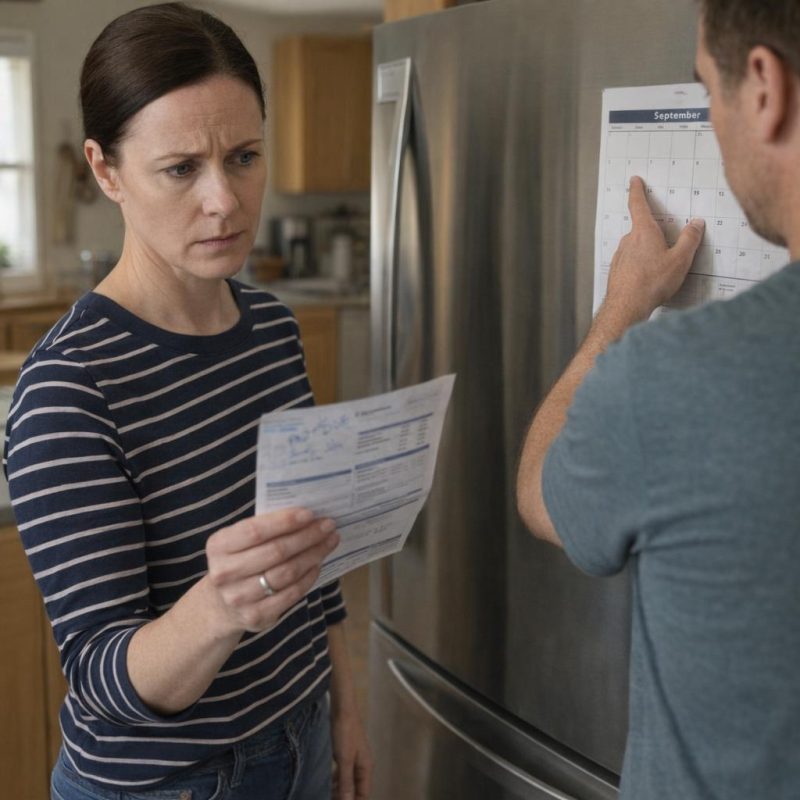 Image by RM AI
The Stakeout Decision
By Friday night, I'd made my decision. If something was happening between 2:00 and 4:00 in the morning, I needed to stay awake and see it for myself. I'm not usually the type to lose sleep over anything—I'm religious about my 10 p.m. to 6 a.m. schedule, have been for years—but this felt important enough to break my routine. Around 11:30 p.m., I made a pot of strong coffee, the kind that tastes like burnt rubber but keeps you wired for hours. I carried a mug into my living room and positioned my armchair so I had a clear view through the window that faces my side yard and the fence line I share with my neighbor. I kept all the lights off, not wanting to be visible from outside if someone happened to look toward my house. The neighborhood was completely quiet at that hour—no traffic, no voices, just the occasional distant sound of a dog barking a few streets over. I settled into the chair with my phone nearby so I could check the time without moving too much. I made a pot of strong coffee around 11:30 p.m. and positioned myself in the dark living room with a view of the fence line.
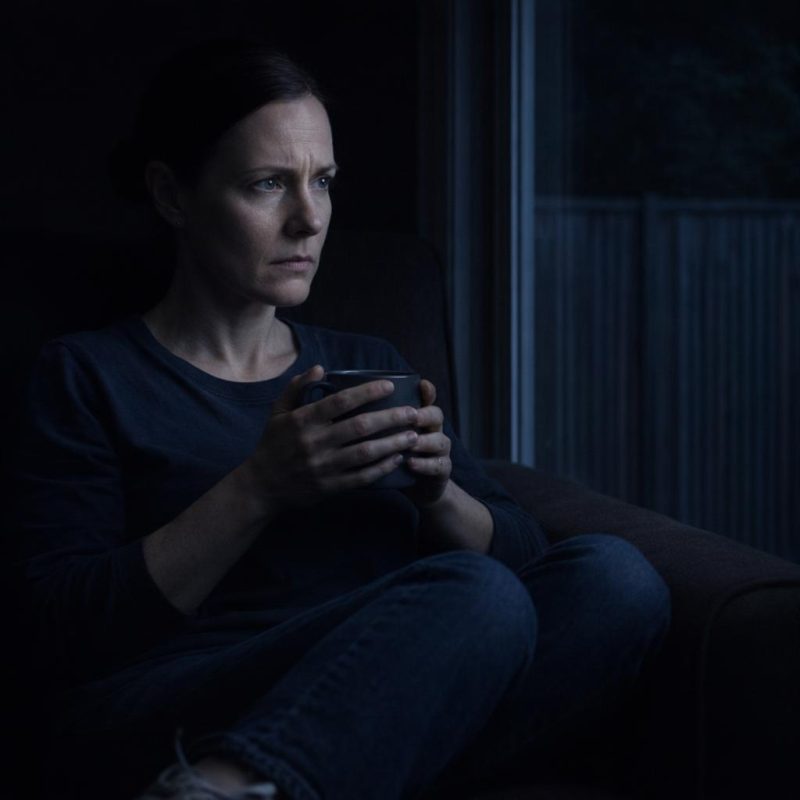 Image by RM AI
The Waiting Hours
I sat perfectly still in that armchair as midnight came and went, then 12:30, then 1:00 a.m., my eyes fixed on the window and the dark outline of the fence beyond. The only light in my house came from the green glow of the microwave clock in the kitchen, casting just enough illumination that I could see the shapes of my furniture but nothing more. The neighborhood stayed silent—no cars passing, no doors closing, nothing but that same distant dog barking every twenty minutes or so. I kept checking my phone, watching the minutes crawl forward with agonizing slowness. The coffee was doing its job, keeping me alert but also making me jittery, my leg bouncing slightly even though I was trying to stay motionless. At 1:15, I checked the time again. At 1:30, again. At 1:45, I realized I was holding my breath without meaning to. As the clock on my phone ticked closer to 2:00 a.m., I felt my heart rate pick up and my breath go shallow.
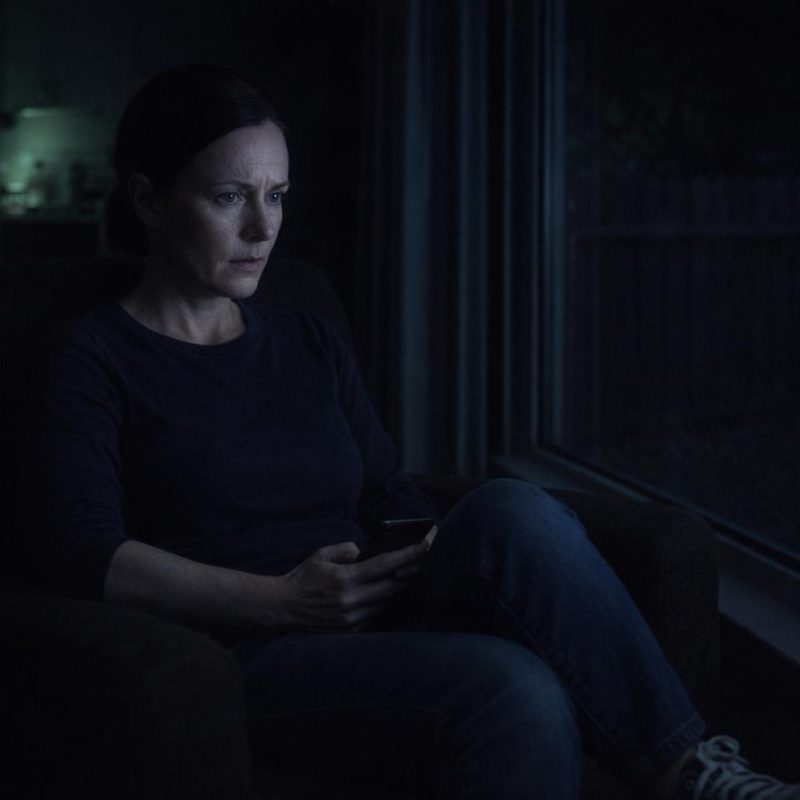 Image by RM AI
Shadow at the Fence
At 2:15 a.m., I saw movement near the fence line. At first, I thought it was an animal—maybe a raccoon or a stray cat—just a low dark shape moving along the ground. But then the shape stood up, and I realized with a jolt that it was a person. A person dressed entirely in dark clothing, head to toe, too far from the nearest streetlight for me to make out any features or details. They moved along the fence without hesitation, not stumbling or fumbling like someone unfamiliar with the terrain, and they weren't using a flashlight despite the darkness. I pressed myself back in the chair, afraid any movement might give away my position at the window. The figure crouched down near the ground, and my brain made the connection immediately—that was exactly where my water meter sat, tucked against the foundation of my house near the property line. I put my hand against the wall to steady myself, my breath catching in my throat as I watched. The figure moved with purpose along the fence, not stumbling or using a flashlight, heading directly toward where my water meter was located.
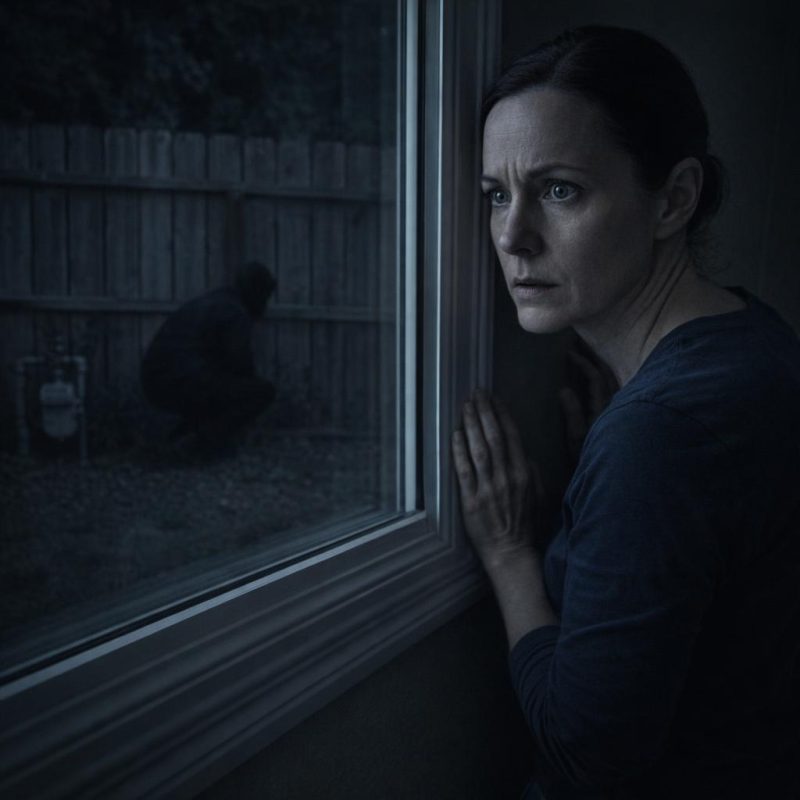 Image by RM AI
The Sound of Theft
The sound hit me before I could process what I was seeing—a sharp metallic click that echoed in the quiet night air, followed immediately by the unmistakable rush of pressurized water. It wasn't the gentle flow of a garden hose or a sprinkler turning on. This was the aggressive hiss of high-volume water moving through pipes under serious pressure, the kind of sound you hear when someone opens a fire hydrant or connects to a main line. My hand pressed harder against the wall as I strained to hear, and there was no mistaking it—the sound was coming from outside, not from any fixture inside my house. It originated from exactly where that dark figure crouched by my fence line, exactly where my water meter sat in its concrete box. The rushing continued, steady and loud enough that I could hear it clearly through the closed window. My mind raced through the implications, connecting dots I'd been trying to ignore for weeks. Part of me wanted to flip on every light, storm outside, and demand to know what the hell was happening. But the larger, more rational part of me recognized that confronting a stranger dressed in all black at two in the morning was dangerous, possibly stupid. I remained frozen in my chair, barely allowing myself to breathe. Someone had just turned on my water, and I was watching it happen in real time.
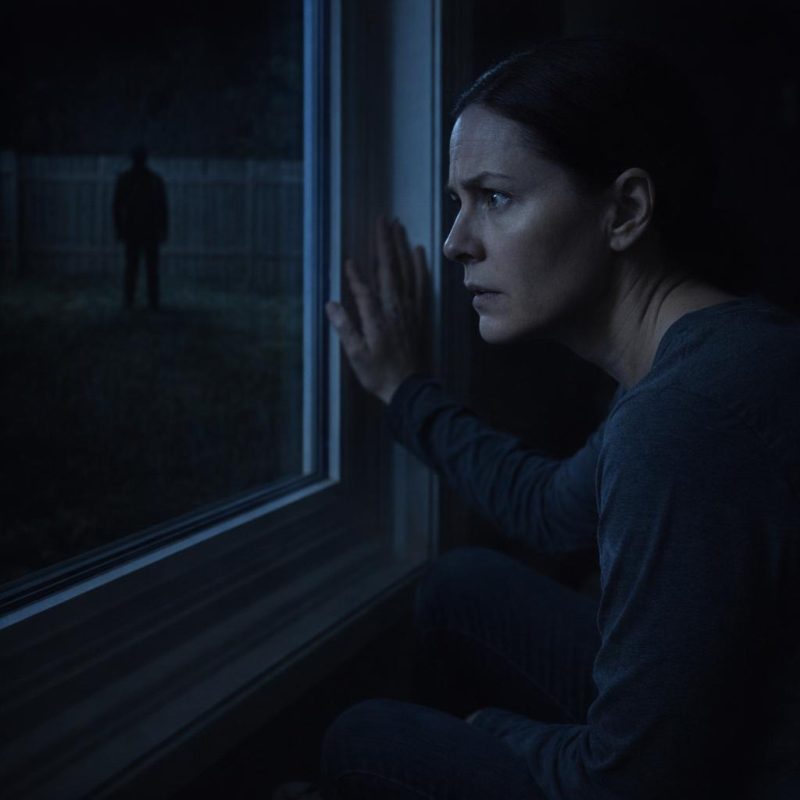 Image by RM AI
Fifteen Minutes in the Dark
The figure stayed crouched by my meter, and I stayed frozen in my chair, listening to my water run while the minutes crawled past. I tried to estimate how long they remained there—maybe fifteen minutes, though it felt like an hour. My pulse hammered in my ears the entire time, so loud I was afraid somehow they'd hear it through the window and the darkness. The water kept flowing with that same steady, pressurized rush, and I didn't move an inch from my position. I barely allowed myself to breathe, taking tiny shallow breaths through my nose while my coffee went cold on the side table. My legs started to cramp from sitting so still, but I didn't dare shift position. Finally, after what felt like forever, I heard another metallic click cut through the night. The water flow stopped immediately, the sudden silence almost as jarring as the initial sound had been. The figure stood up slowly, straightening to full height, then looked around briefly as if checking for witnesses. My heart stopped completely during those few seconds. Then they turned and moved back the way they'd come, slipping into the darkness between my house and the neighboring property. Even after the figure disappeared completely, I remained frozen in place, afraid to move, afraid to believe what I'd just witnessed.
 Image by RM AI
Dawn Discovery
I barely slept the rest of that night, lying in bed staring at the ceiling and replaying what I'd seen. As soon as there was enough morning light to see clearly, I grabbed my coffee and went outside, still wearing my pajamas under a jacket. The water meter sat in its small concrete box near the fence line, exactly where I'd watched that figure crouch hours earlier. At first glance, everything looked normal—just the standard setup I'd seen a hundred times before. But I methodically followed the main water line from the meter toward my house, examining every inch, and about six feet from the meter I noticed something unfamiliar partially hidden by overgrown shrubs that desperately needed trimming. I knelt on the damp grass for a closer look, setting my coffee cup down carefully. There was a small T-connector I'd never seen before, with a valve attached to a flexible dark gray pipe. The metal was shinier than the rest of my weathered plumbing system, the threading clean and the connection professionally tight. This wasn't amateur work—whoever installed this knew exactly what they were doing. I followed the pipe with my fingers along the ground until it disappeared under the fence, running directly toward the neighboring property. The valve was partially open, confirming it was actively being used.
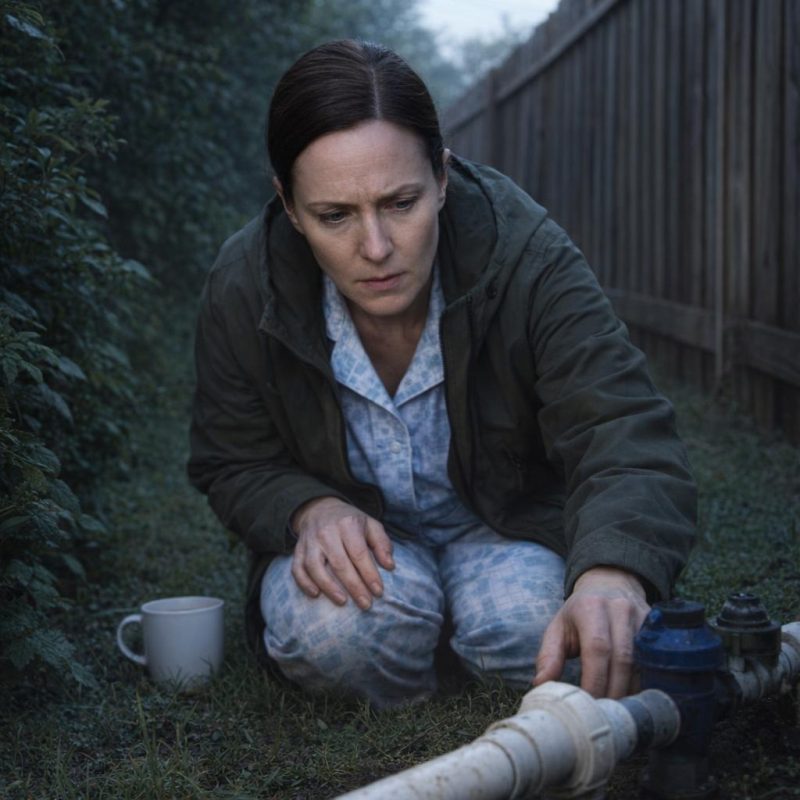 Image by RM AI
Professional Confirmation
I went back inside and grabbed my phone, then returned to take dozens of photos from every possible angle. I documented the T-connector, the valve position, how the pipe ran along the ground and disappeared under the fence. I took close-ups of the threading and the professional-grade connection, making sure I had clear evidence of everything I was seeing. Then I scrolled through my contacts and called Mike Torres, the plumber I'd used twice before for legitimate repairs. I explained what I'd found and asked if he could come examine it right away. Mike agreed to come within the hour, and he actually arrived in less than two, pulling up in his work van with his toolbox. I showed him the T-connector and the buried pipe, watching as he crouched down to examine the connection closely. He ran his fingers over the threading, checked the valve, and followed the pipe to where it went under the fence. "This installation is recent," he said, pointing to the metal. "See how there's no weathering or corrosion? And this connection is professional grade work, not something a homeowner would typically do." He looked up at me seriously. "This tap is completely illegal without your permission. Nobody has the right to connect to your water line like this." He even noted how the soil above the pipe showed recent disturbance.
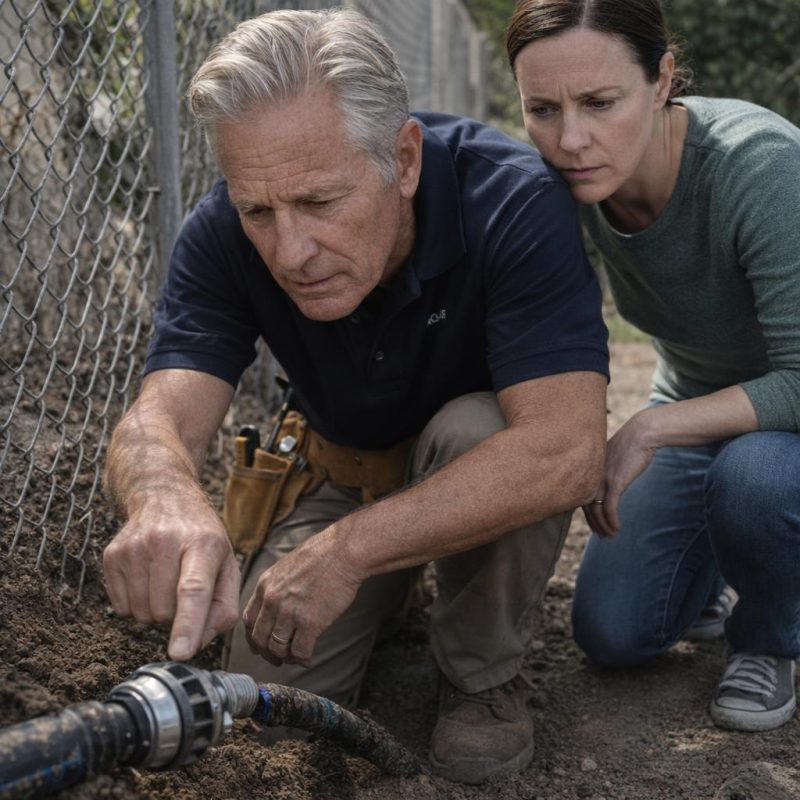 Image by RM AI
Calculating the Theft
Mike pulled out a small notebook and started doing calculations based on the pipe diameter and valve size. He examined my water bills, looking at the usage spikes I'd been tracking, then estimated the flow rate this type of connection would produce. "Based on this setup and your pattern of usage between two and four a.m.," he said, writing numbers down, "you're looking at hundreds of gallons over multiple weeks." He multiplied the nightly usage across the timeline, factoring in the volume this professional-grade connection could handle. When he arrived at the total dollar amount, he let out a low whistle. "This isn't pocket change. You've been robbed of hundreds of dollars in water." He tore the page from his notebook and handed it to me, his written estimate in blue ink. "You need to document everything," he said firmly. "Take photos every day if you can. This is serious theft, not just a neighbor borrowing a cup of sugar." He suggested I consider filing a police report and mentioned that small claims court might be an option for recovering the money. "Keep records of everything going forward," he added. "Dates, times, amounts. Build your case." As I looked at his written calculations, anger rose in my chest alongside a growing determination. This was real, documented, and I had proof.
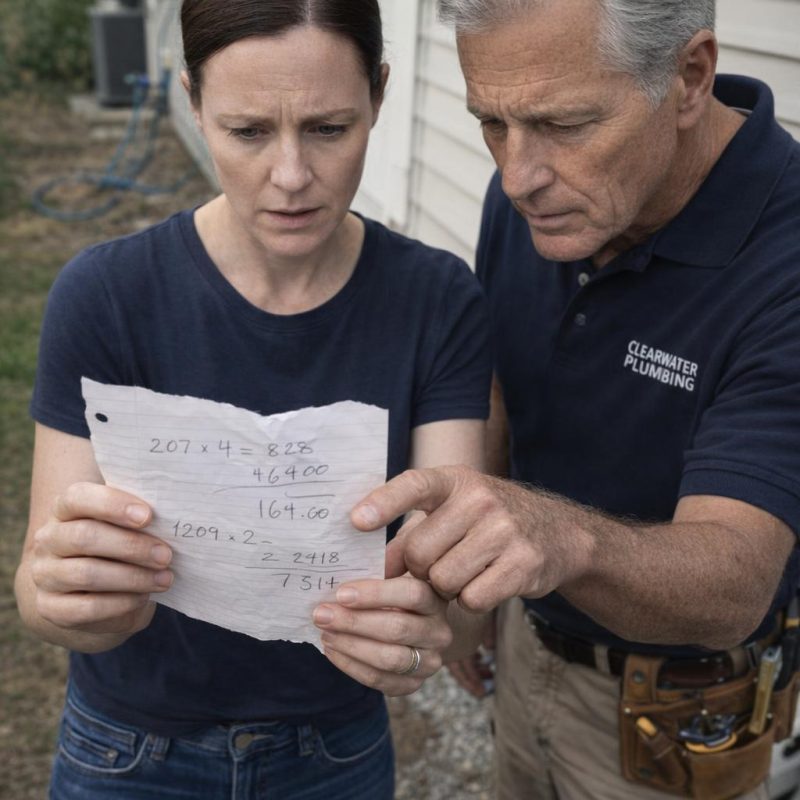 Image by RM AI
Legal Research
I spent the entire weekend at my laptop, barely leaving my desk except for coffee refills and bathroom breaks. Saturday morning I started searching for utility theft laws specific to my state, then moved on to property rights and trespass statutes. I found precedents for similar water theft cases, reading through court documents and legal summaries until my eyes burned. Sunday I focused on small claims court procedures, learning about filing requirements and damage limits. I took detailed notes in a spiral notebook, filling page after page with citations, case numbers, and relevant statutes. I learned about burden of proof in civil cases and discovered that property owners have strong legal protections against this kind of theft. The research showed I could potentially recover not just the actual costs but also damages for the violation and emotional harm. By Sunday night, I had a comprehensive understanding of my options and a notebook full of documentation to back it up. I felt confident I had a solid, documentable case if I chose to pursue it. The question wasn't whether I could win—the evidence was clear. The question was whether I wanted to go straight to legal action or try one more direct confrontation with my neighbor first. I still hadn't decided which path to take.
 Image by RM AI
Rehearsing the Confrontation
I decided to try confronting her directly one more time before involving the authorities. Standing in my bathroom, I looked at my reflection in the mirror and practiced what I would say. "I found an illegal connection to my water line" sounded too aggressive. "I noticed some unusual plumbing" sounded too weak. I tried different tones and approaches, working on staying firm but not hostile. I rehearsed keeping my voice calm if she denied everything, practiced presenting the facts without letting emotion take over. I must have run through a dozen different opening statements, trying various word choices and inflections. The key was not to accuse directly but to state what I'd found and give her a chance to explain. After an hour of practice, I gathered all my documentation into a manila folder—photos of the T-connector from multiple angles, Mike's written estimate and calculations, my water bills showing the 240% increase, and the usage charts highlighting those consistent 2-4 a.m. spikes. I walked to my front door with the folder clutched in my hands, my heart already starting to race. I stood there for a long moment, taking a deep breath, knowing that once I walked across that yard and knocked on her door, there was no going back.
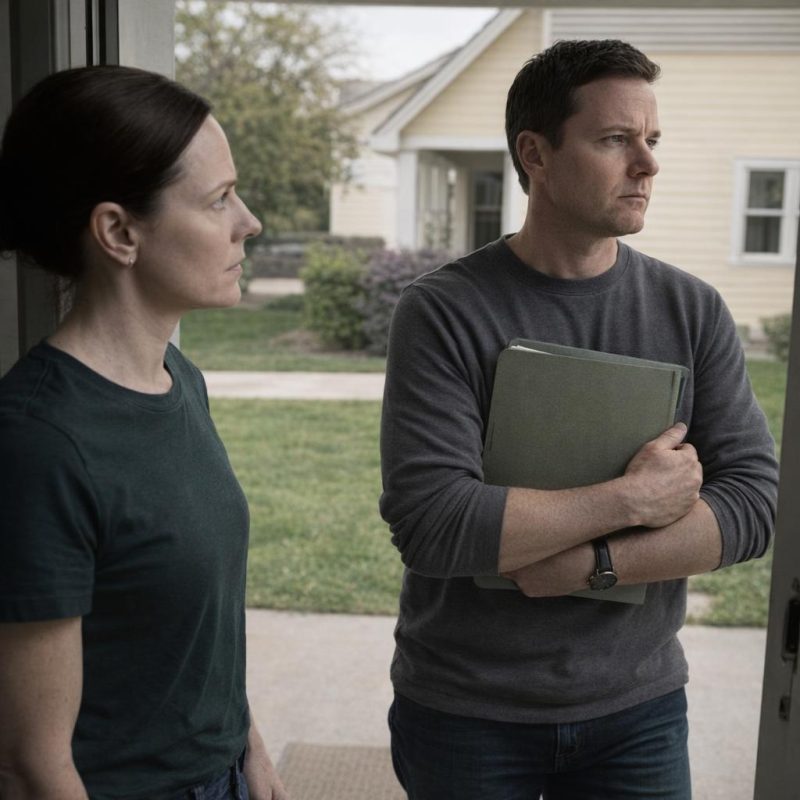 Image by RM AI
Knocking on Her Door
I stepped outside and walked across the yard, the morning sun already warm on my shoulders. My neighbor's house looked quiet, curtains drawn in most windows, no signs of activity. I climbed the three steps to her front porch and knocked firmly three times, then waited with my folder of evidence pressed against my chest. My heart pounded so hard I could feel it in my throat. Several moments passed before I heard footsteps inside, then the door opened and I found myself face-to-face with the woman I'd only waved to from a distance over the past year. She appeared to be in her late thirties, with dark hair pulled back tightly from her face. The first thing I noticed were the circles under her eyes—deep, dark shadows that spoke of exhaustion and too many sleepless nights. She wore professional but casual clothing, like she might be working from home, but everything about her body language was guarded. "Can I help you?" she asked, and her tone wasn't warm or welcoming. It was the voice of someone who wanted this conversation to be brief. I realized with a strange jolt that this was our first actual conversation, despite living next door to each other for over a year. "Hi, I'm Alex," I said, trying to keep my voice steady. "I'm your neighbor, and I need to talk to you about something important." Rachel—I'd finally learned her name from the mailbox—looked tired and wary as she waited for me to continue.
 Image by RM AI
Flat Denial
I pulled out my folder and opened it right there on her porch, showing her the photos of the T-connector first. "This is attached to my water meter," I explained, keeping my voice as steady as I could manage. "And this pipe runs under the fence toward your property." I showed her Mike's estimate next, pointing to where he'd calculated hundreds of dollars in theft. Rachel took the folder from my hands and examined each photo carefully, her expression completely neutral. She looked at the images for what felt like a full minute, then handed the folder back to me. "I don't know what you're talking about," she said, and her tone wasn't defensive or angry—it was genuinely puzzled, like I'd just shown her pictures of someone else's property entirely. "I have no idea what this is or why you think it has anything to do with me." She met my eyes directly, and there wasn't a flicker of guilt or recognition there. For a moment, standing on her porch with my evidence folder suddenly feeling flimsy in my hands, I wondered if I'd made a terrible mistake. Then I remembered the shadowy figure I'd seen with my own eyes at 2:15 in the morning, and the sound of water rushing through that pipe, and I knew I wasn't wrong.
 Image by RM AI
Filing the Report
I drove straight to the police station after leaving Rachel's house, my hands still shaking slightly on the steering wheel. Inside, I asked to file a report about utility theft, and they directed me to Detective Carmen Martinez, a woman in her forties with short dark hair and a practical blazer. I sat across from her desk and presented everything—the photos, the water bills, Mike's professional assessment, my account of the figure I'd witnessed at 2:15 a.m. Martinez took notes throughout, her pen moving steadily across her notepad, but I could see the skepticism in her expression. When I finished, she set down her pen and looked at me directly. "Theft cases require proof of intent," she explained. "Utility disputes usually fall under civil law, not criminal. Without clear evidence of breaking and entering, police involvement is unlikely." She suggested I document any ongoing theft and consider small claims court instead. I tried to argue that I had photos and a professional assessment, but Martinez was firm—this was a matter for civil court, not the police department. I left the station feeling dismissed and frustrated, realizing I'd need to pursue this completely differently than I'd hoped.
 Image by RM AI
Civil Matter
Detective Martinez called me back that same afternoon, and I grabbed the phone hoping she'd changed her mind about pursuing charges. Instead, she reiterated the department's position even more firmly than before. "Your neighbor denies any involvement, which complicates building a criminal case," she explained. "Without catching someone in the act, it's difficult to pursue charges. You should consult with an attorney about a civil suit." I argued that I had photos and Mike's professional assessment, that I'd seen someone at my meter with my own eyes. Martinez remained professional but unmoved. "This is a civil matter between property owners," she repeated. "Document any future incidents thoroughly, but the police department doesn't handle utility disputes." When the call ended, I sat at my kitchen table staring at my evidence folder, feeling completely alone. I had photographs, I had witness testimony from a licensed plumber, I had my own account of what I'd seen at two in the morning. I wondered how much more proof anyone could possibly need before someone would take this seriously. Apparently, what I had wasn't enough.
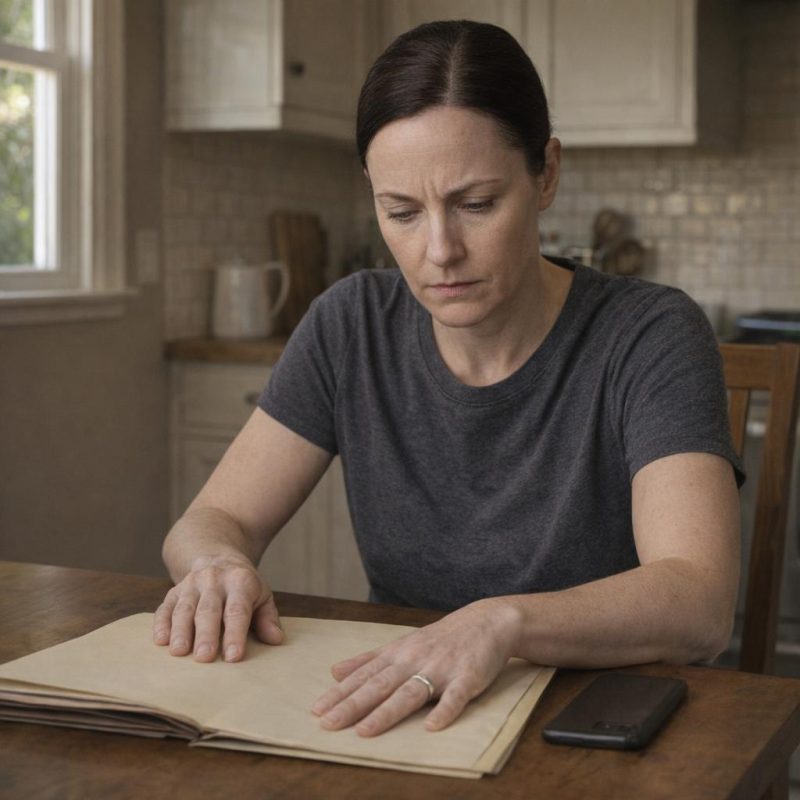 Image by RM AI
Better Evidence
I decided I needed better documentation, so I prepared for a second overnight stakeout with my camera ready. This time I brought equipment with a better zoom capability and positioned myself in the living room again at 11:30 p.m., lights off, waiting in the darkness. The hours crawled past midnight, then past one o'clock, and I was starting to wonder if anything would happen when I detected movement at the fence line at 2:20 a.m. The figure appeared in dark clothing just like before, moving with that same purposeful gait toward my water meter. I started taking photos immediately, using the zoom to capture closer images as the person crouched at the meter location. I couldn't get a clear face because of the darkness and angle, but I documented everything—the figure working at the T-connector, hands manipulating the valve, the positioning near the pipe connection. The build and movement patterns matched exactly what I'd seen during my first stakeout. I heard the water begin flowing again and kept shooting photos throughout the entire fifteen-minute duration. When the figure finally left, heading back toward the neighboring property, I reviewed my photos feeling vindicated. The images showed someone in dark clothing working at my meter, and though the face was still obscured, I now had stronger evidence than before.
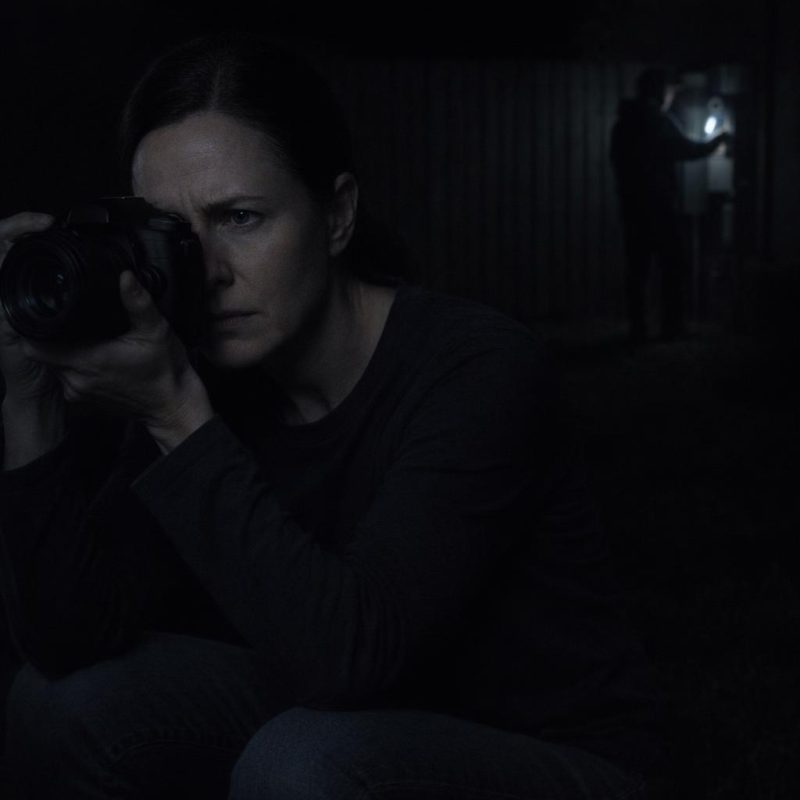 Image by RM AI
Hostile Reception
I returned to Rachel's door the next morning with my new photos and Mike's written assessment, determined to try again. When she answered, her expression showed visible annoyance before I even spoke. I started showing her the clearer photos from my second stakeout, pointing out the figure at the meter, but Rachel's entire demeanor had shifted from our previous conversation. "You need to stop harassing me with these baseless accusations," she said, her voice sharp and angry. "I already told you I have nothing to do with this." I tried to show her the additional evidence, but she refused to even look at the photos. "Leave me alone," she said firmly, and before I could respond, she slammed the door in my face. I stood there on her porch holding my folder of evidence, feeling humiliated and completely confused. If she was innocent, why the sudden hostility? If she had nothing to hide, why refuse to even look at what I was showing her? I walked back to my own house uncertain of what to do next, the sound of that slammed door still echoing in my ears.
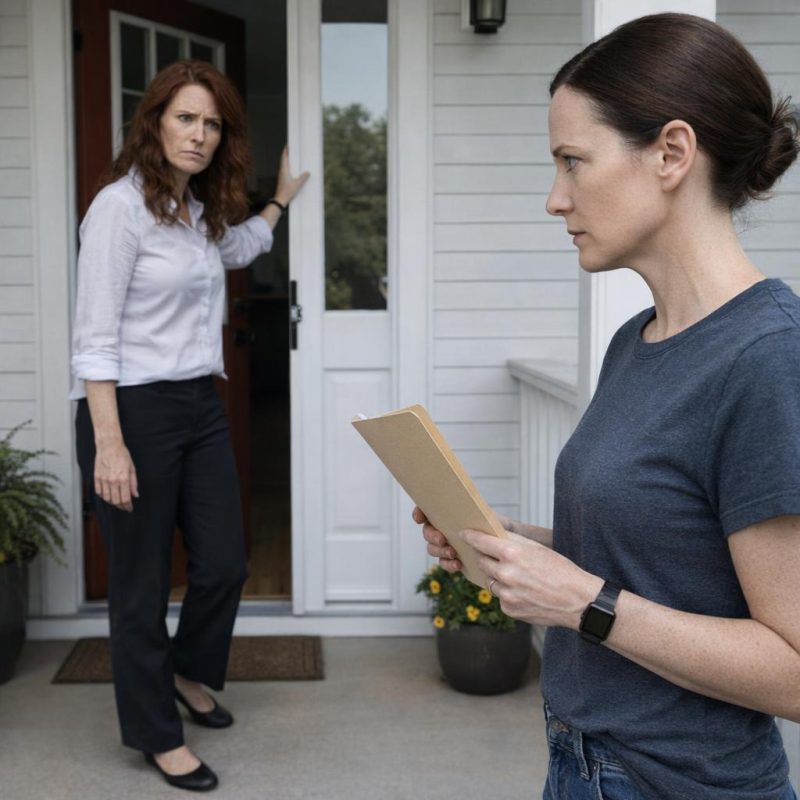 Image by RM AI
The Attorney's Office
I scheduled a consultation with James Whitmore, a property attorney whose office was in a professional building downtown. His office was polished and expensive-looking, all mahogany furniture and leather chairs, and James himself was a man in his mid-fifties wearing a suit that probably cost more than my monthly mortgage. I presented all my evidence—the photos, the bills, Mike's assessment—and he reviewed everything carefully, taking detailed notes and asking questions about the timeline and my attempts to resolve this. "This is a clear case of utility theft and property trespass," he said finally. "Civil court is the appropriate venue for resolution." He explained the process, discussing damages and timelines, mentioning the case could take six to twelve months. Then he quoted his hourly billing rate, and I felt my stomach drop. He slid a retainer agreement across his mahogany desk toward me, and I stared at the number at the bottom. Five thousand dollars just to begin representation. I sat there trying to process the cost, realizing that pursuing this legally might end up costing me more than the actual theft itself.
 Image by RM AI
The Price of Justice
James walked me through every step of the legal process in detail, and with each explanation, the timeline stretched longer and the costs climbed higher. The theft amount exceeded small claims limits, requiring a full civil filing. There would be a discovery phase with document requests and depositions—Rachel would need to be deposed, her records possibly subpoenaed. Motion hearings could cause delays, and defendants could file continuances extending everything further. Six months minimum, he said, but possibly twelve or more. Then he broke down the costs beyond that five-thousand-dollar retainer. Discovery work billed at his hourly rate. Court reporter fees for depositions. Expert witness testimony from Mike would cost additional money. Court filing fees and administrative costs that added up quickly. If Rachel contested the judgment, there could be an appeal process. Even with a judgment in my favor, he emphasized, collection could be difficult. I did the math in my head and realized the total could easily reach ten thousand dollars or more. I took the unsigned retainer agreement, telling him I needed to think about it. Driving home, I felt the weight of an impossible choice—I could afford to fight this, or I could afford to live, but maybe not both.
 Image by RM AI
Neighborhood Silence
I decided to seek support from other neighbors on the street, thinking surely someone would be willing to help or at least provide a statement. I approached the neighbor two houses down first, summarizing the situation as clearly as I could. They listened politely but said they preferred not to get involved, suggesting Rachel and I work it out between ourselves. I tried the elderly couple across the street next. They expressed sympathy but stated firmly they didn't want trouble—they needed to live here peacefully with everyone, they said. The third neighbor cut the conversation short right at their front door, saying neighbor disputes were complicated and uncomfortable, then politely but firmly declined to be a witness or provide any statement. Each conversation followed the same pattern—initial sympathy, then careful withdrawal. No one wanted to take sides publicly. I realized people feared the social consequences of getting involved, that neighborhood dynamics favored staying neutral no matter what. Walking back to my house after the third rejection, I understood that no one wanted to take sides in a dispute between neighbors, even when one was clearly being robbed.
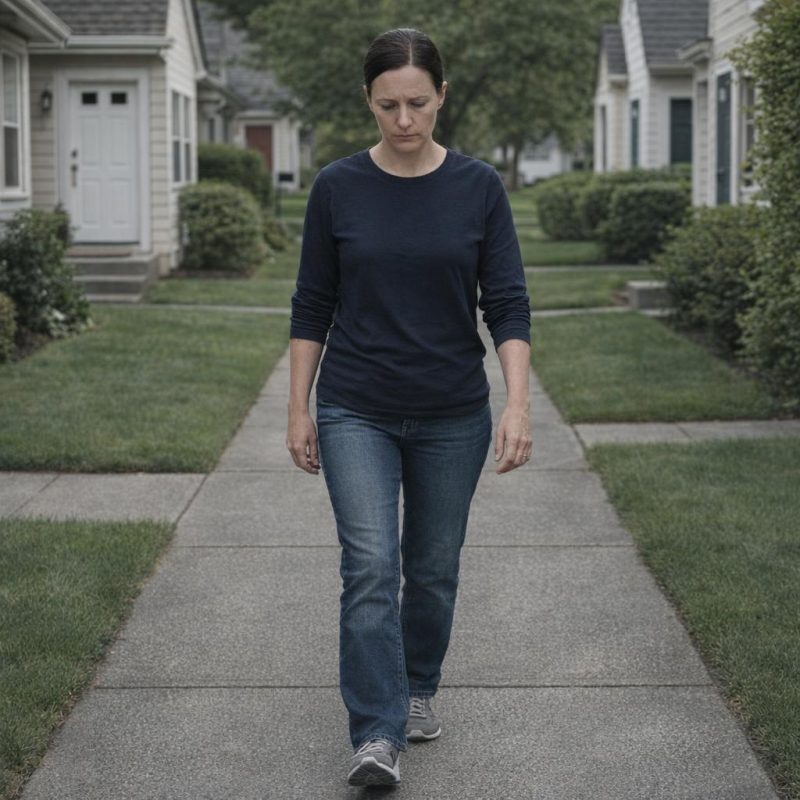 Image by RM AI
Another Bill Arrives
The next water bill arrived on a Tuesday afternoon, and I stood at my mailbox staring at the envelope for a full minute before opening it. My hands shook as I tore the seal and pulled out the statement. The usage chart looked exactly like the previous one—identical spikes between 2:00 and 4:00 a.m., every single night for two more weeks. Nothing had changed. Not after the confrontations, not after the police report, not after all my documentation. I spread the bill on my kitchen table next to the previous ones and traced the pattern with my finger. Rachel had simply continued stealing as if I'd done nothing at all. The spikes represented hundreds more dollars added to what she'd already taken. I calculated the dates—this covered the period right after I'd caught her, after I'd shown her the photos, after the officer had explained it was theft. She hadn't stopped for even one night. That evening I lay in bed past midnight, staring at the ceiling and listening to every sound outside my window. Every creak of the house, every rustle of wind made me strain to hear water running somewhere in the darkness. I barely slept that night, lying awake listening to every sound outside and wondering how long I could afford to let this continue.
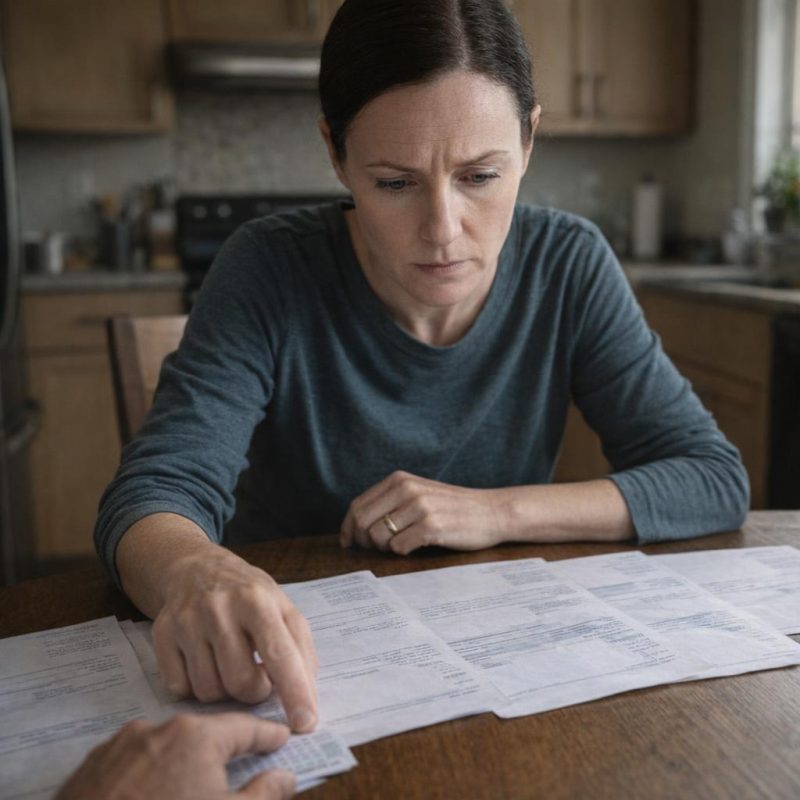 Image by RM AI
Eight Hundred Dollars
I spread all three water bills across my kitchen table the next morning, along with Mike's calculations from his initial inspection. My coffee went cold as I worked through the numbers with a calculator, comparing each bill to my historical average usage. The first bill had shown roughly three hundred dollars in excess charges. The second added another two hundred fifty. This newest one brought another three hundred. I wrote the total on a notepad and stared at the figure—over eight hundred dollars stolen over approximately two months. My hands started shaking. Eight hundred dollars was more than my monthly mortgage payment. It represented a significant chunk of my carefully managed budget. I thought about James's retainer fee and understood with sinking clarity why it had seemed so overwhelming. Fighting this legally might actually cost more than what had been stolen. I was trapped between accepting the loss or spending even more money trying to recover it. The calculator sat there on the table next to the bills, and I kept looking at that number I'd written down. Eight hundred dollars. Not a minor inconvenience or a small annoyance. I stared at the number I'd written down and realized this had crossed from annoying to devastating.
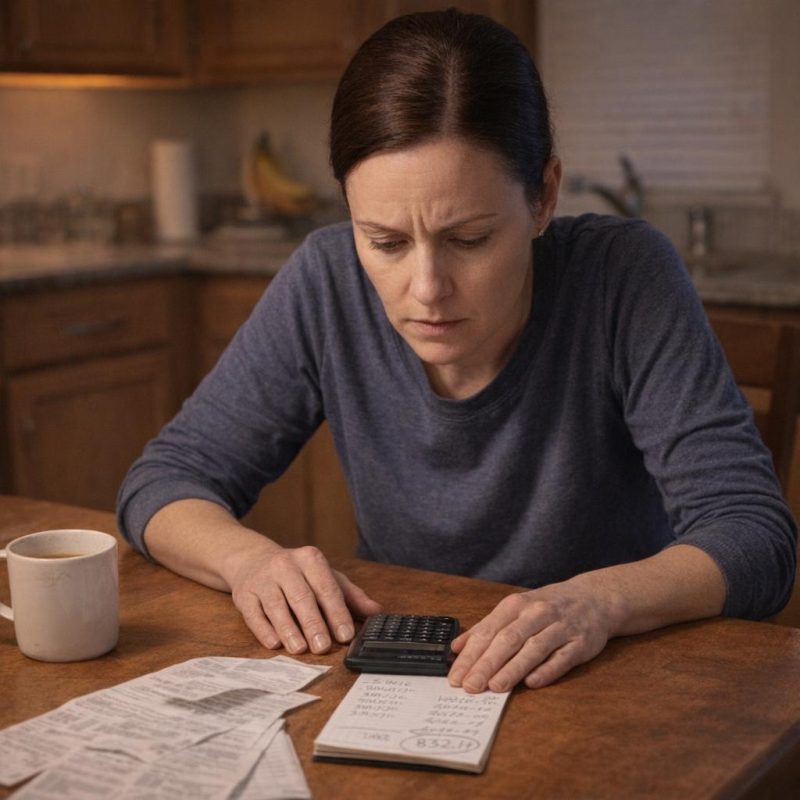 Image by RM AI
The HOA Meeting
The monthly HOA meeting was held at the community center on Thursday evening. About fifteen residents filled the small meeting room as Susan Park, who'd been HOA president for eight years, worked through the standard agenda items. I sat in the back row, my folder of evidence growing damp in my nervous hands. When she opened the floor for community concerns, I raised my hand and stood. My voice shook slightly as I summarized the situation—the water theft, the illegal connection, the financial impact. I passed around copies of my water bills and photos of the T-connector. Several neighbors leaned in to look, murmuring to each other. I explained the total had exceeded eight hundred dollars, that the police had categorized it as civil, and asked if the HOA had any authority to intervene in property disputes between neighbors. Susan listened with a professionally sympathetic expression, her clipboard held against her chest. She thanked me for bringing this forward and agreed water theft was concerning for the community. However, she explained, HOA bylaws didn't cover utility disputes between individual property owners. This was a matter for the courts, she said. She suggested I continue pursuing appropriate legal channels, thanked me for my time, and moved to the next agenda item. Susan Park, the HOA president, thanked me for sharing my concerns and moved on to the next agenda item without taking any action.
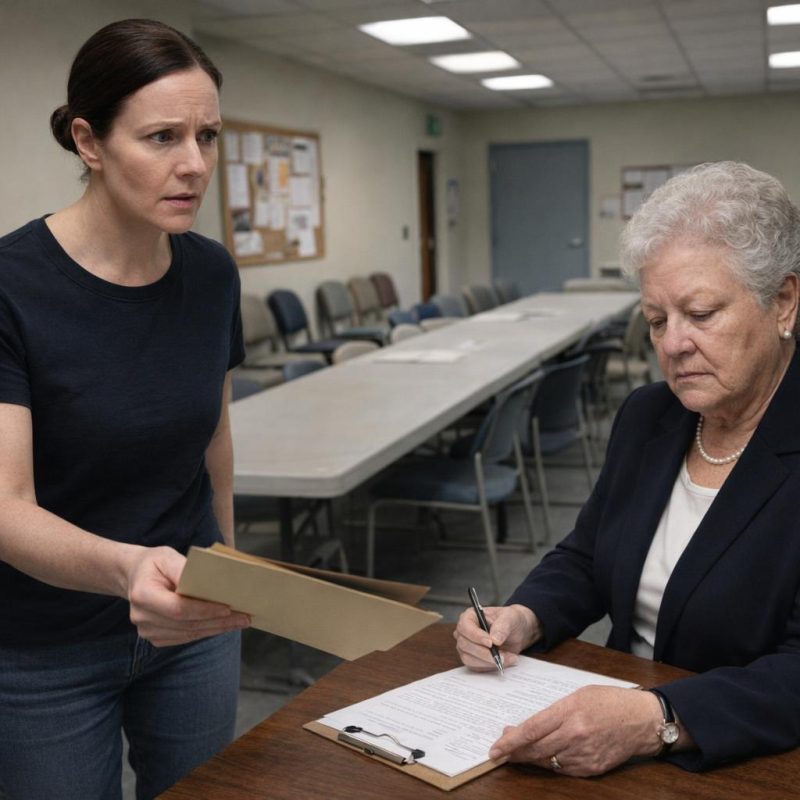 Image by RM AI
Concern Without Action
Susan caught up with me in the parking lot as I reached my car. The other residents had already dispersed, and she spoke in a lower voice now that we were alone. She expressed personal sympathy for my situation—she understood how frustrating this must be, she said. However, she reiterated the board's position. The HOA feared setting a precedent by intervening in private disputes. They could be sued if they took sides between neighbors, she explained. Neighborhood harmony was the primary concern, and property values depended on maintaining a peaceful community. She gently suggested I might consider settling privately with Rachel, stating that sometimes it was better to compromise than fight. She hoped I would resolve this quietly without continued disruption. She patted my shoulder in a gesture meant to be comforting, then walked toward her own car, ending the conversation. I stood alone under the parking lot lights, watching the taillights of other residents' cars disappear down the street. No one had stopped to talk to me after the meeting. The police wouldn't help. An attorney was too expensive. The HOA wouldn't intervene. Every official channel had failed me. She told me she hoped I would resolve this quietly and walked away, leaving me standing alone under the parking lot lights.
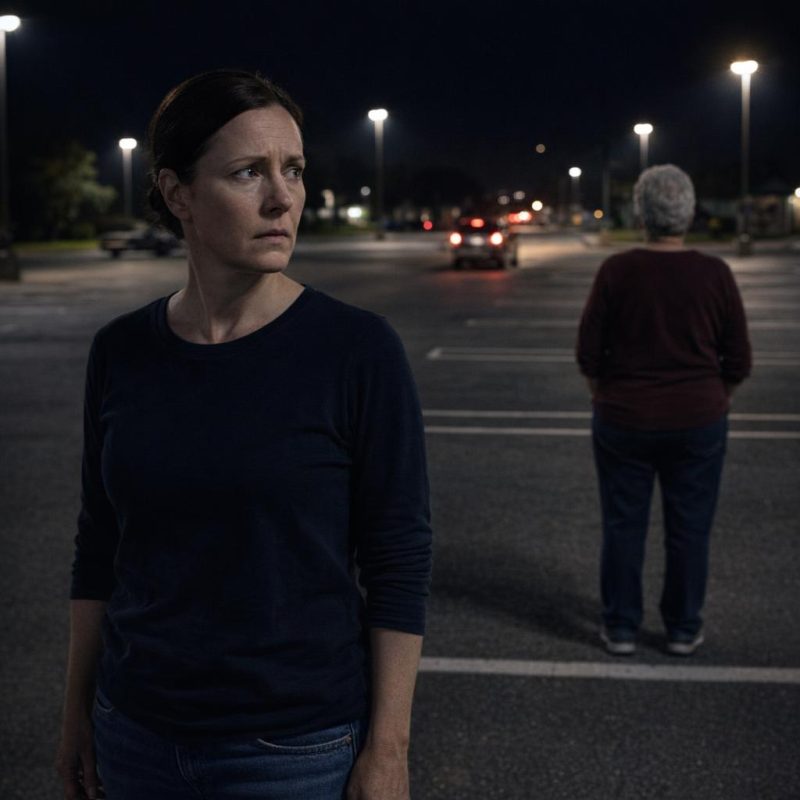 Image by RM AI
The Counter-Narrative
A neighbor who'd attended the HOA meeting called me three days later. She mentioned, somewhat awkwardly, that she'd been hearing a different version of the situation around the neighborhood. Rachel had been talking to other residents, describing me as unreasonable and aggressive. According to what this neighbor had heard, Rachel claimed I was harassing her over a simple misunderstanding, that I'd been trespassing and taking photos of her property without permission. Rachel was apparently portraying herself as the victim of an obsessive neighbor with possible mental health issues causing paranoia. I thanked the neighbor for telling me and hung up feeling sick. I checked the neighborhood social media group and found vague posts I hadn't noticed before—references to harassment and difficult neighbor situations without naming names. Some were clearly about me from Rachel's perspective. At the grocery store that afternoon, a neighbor who usually said hello turned away when she saw me. Another crossed to a different aisle. I could feel the shift in how people looked at me, or more accurately, how they avoided looking at me. I started questioning whether my documentation and late-night stakeouts seemed obsessive from the outside, whether I'd become unreasonable in my pursuit of this. By the end of the week, I could feel the shift in how people looked at me, and I wondered if anyone still believed my version of events.
 Image by RM AI
Social Consequences
I took my usual evening walk around the neighborhood two days later, needing to clear my head. A neighbor I normally greeted was checking her mailbox as I approached. She suddenly became very interested in her phone, walking past without making eye contact or saying hello. Further down the street, a different neighbor saw me coming and crossed to the other side, pretending to check his mailbox as an excuse. The avoidance was deliberate and obvious. I passed a house where I'd previously stopped to chat with the resident about gardening. She was visible through her front window but didn't wave. The normally friendly interaction was completely absent. Back home, I stood in my front yard pretending to check my plants while watching neighbors interact normally with each other across the street. They laughed and talked, completely at ease. I checked the social media group again and found more posts about drama and people taking sides, with comments expressing desire to stay out of conflict. Some suggested the person causing problems should just let it go. I realized with cold clarity that I'd become a pariah in my own neighborhood. The social cost of pursuing this was becoming as significant as the financial one. I stood in my yard watching normal neighborhood life continue around me while I became increasingly invisible.
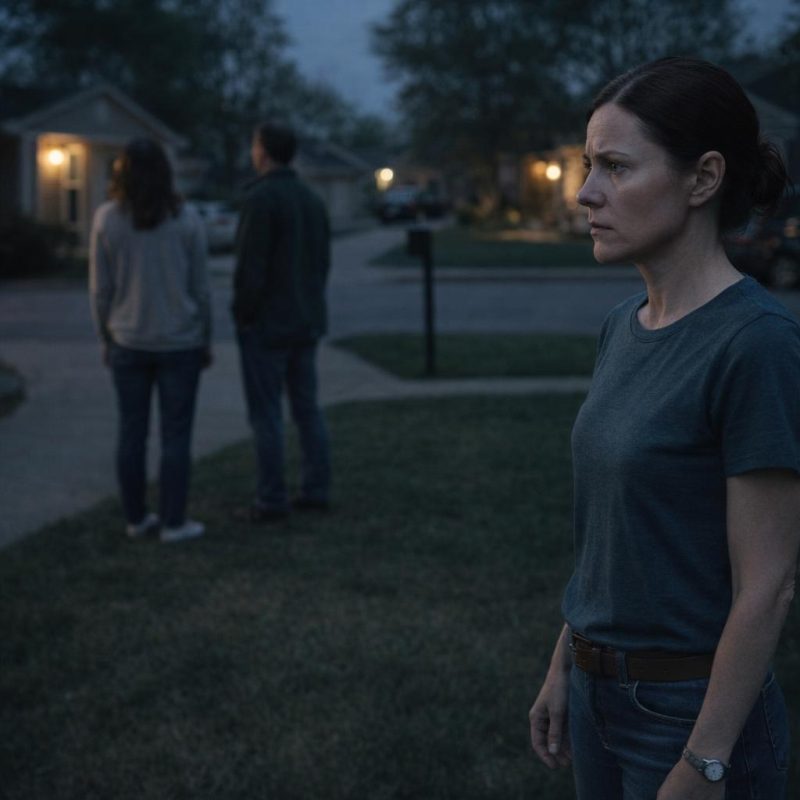 Image by RM AI
Defensive Measures
That night I spent hours researching water meter security options online. I found multiple products designed specifically to prevent meter tampering—heavy-duty padlocks rated for outdoor use, meter box locks that secured the entire cover, commercial-grade options used by businesses. I read reviews from other property owners who'd used locks to prevent utility theft similar to my situation. I compared different security levels and price points, finally settling on the most secure option I could find—a commercial-grade hardened steel lock that cost over one hundred dollars but had the highest security rating. According to the specifications, it couldn't be cut with standard bolt cutters and would require specialized equipment to break. I placed the order with expedited shipping, then called Mike to schedule an installation appointment. I explained I wanted to physically secure my meter area to prevent any further access. He agreed to come install it properly once the lock arrived. For the first time in weeks, I felt a small surge of hope. Legal channels had failed me, the community had abandoned me, but maybe a physical barrier would finally work. At least it would make the theft significantly more difficult. I ordered the most secure lock I could find and scheduled Mike to install it, determined to physically stop what legal channels couldn't.
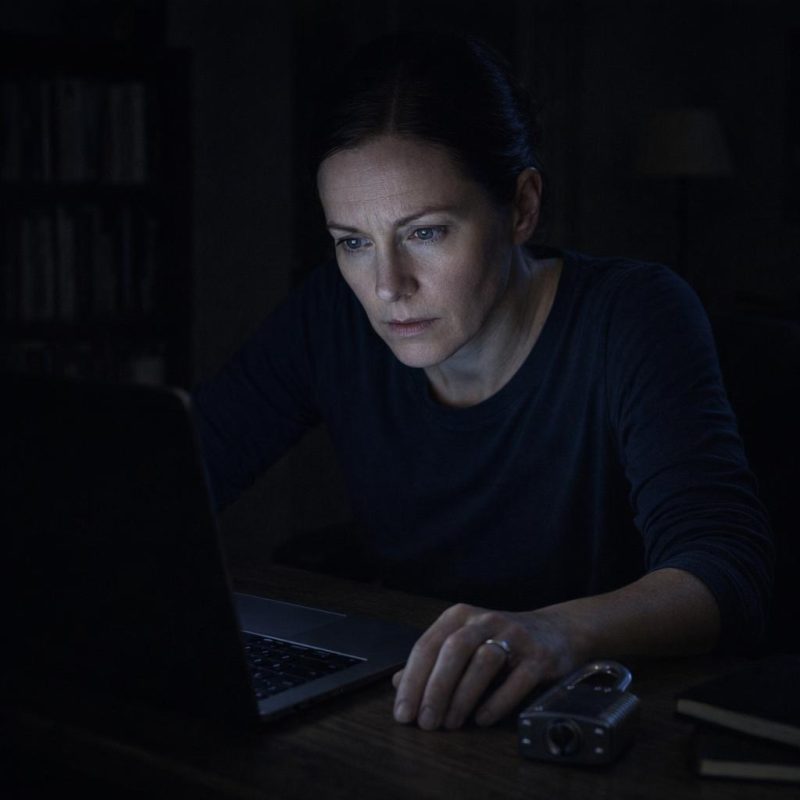 Image by RM AI
Securing the Meter
Mike arrived the following Tuesday with his toolbox and the security hardware I'd ordered. He examined my current meter box setup and explained his installation plan—reinforced mounting brackets, a commercial-grade lock mechanism, and a secondary padlock on the T-connector valve itself. He used a drill to attach the brackets, then installed the heavy-duty lock on the meter box cover. The lock used hardened steel that couldn't be cut with standard bolt cutters—it would require an angle grinder or similar power tools to defeat, he explained. He secured all access points to prevent anyone from bypassing the lock entirely. The secondary padlock went directly on the valve, making it impossible to turn without removing the lock first. The entire installation took about an hour. Mike tested the lock multiple times, demonstrating how to lock and unlock it, then handed me both sets of keys. He told me I now had the same security as commercial properties use. After he drove away, I stood looking at the secured meter box, testing the lock myself. It was solid, immovable, completely secure. For the first time since this nightmare began, I had physical control over my own water supply. Nobody was getting in there without serious equipment and a lot of noise. He tested the lock three times and assured me no one was getting in without serious equipment, then drove away leaving me feeling like I'd finally won something.
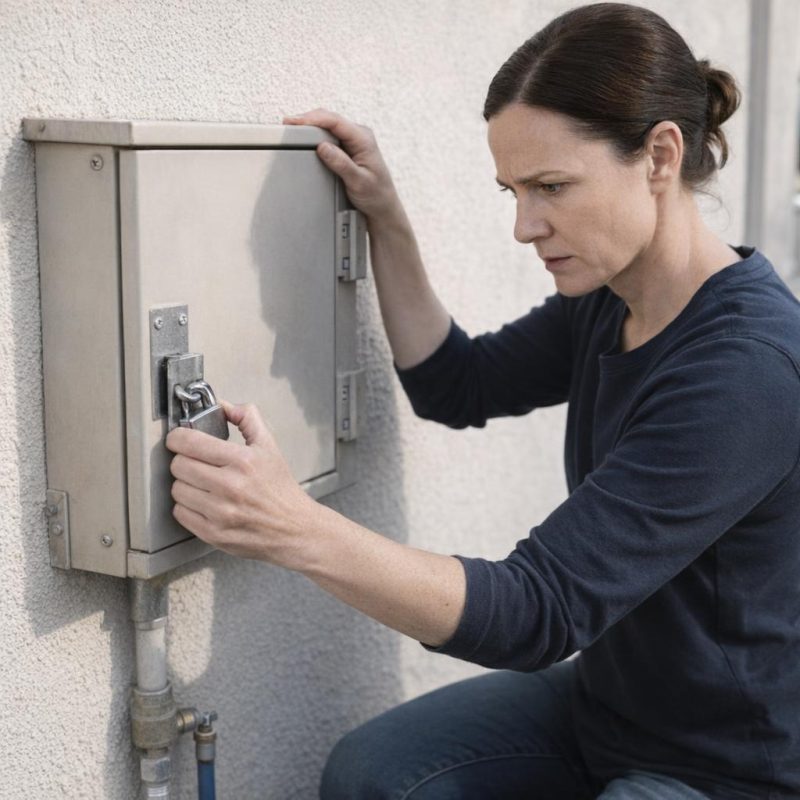 Image by RM AI
Three Quiet Nights
The first night after Mike installed those locks, I positioned myself in the dark living room at 1:45 a.m., watching the fence line like I'd done so many times before. The clock ticked past 2:00, then 2:15, then 2:30. Nothing. No movement at the fence, no sound of rushing water, no shadow crossing the yard. I sat there until 4:00 a.m., listening to the silence, feeling cautious hope building in my chest. The second night I did the same thing, forcing myself to stay awake through those hours, and again—complete silence. No theft activity, no suspicious movement, nothing. By the third night, I actually let myself believe the security measures had worked. I went to bed at my normal time feeling genuinely secure for the first time in weeks. Those locks had finally stopped her. Then on the fourth night, I woke suddenly around 2:30 a.m. to the unmistakable sound of rushing water outside. My pulse spiked as I recognized that familiar sound, the one that had haunted me for weeks. I ran to the living room window in darkness, grabbed my flashlight, and rushed to the back door. The water was definitely flowing somewhere out there, but I couldn't immediately determine the source. All that relief from the previous three nights evaporated in an instant, replaced by the sickening realization that Rachel had somehow found a way around my security measures.
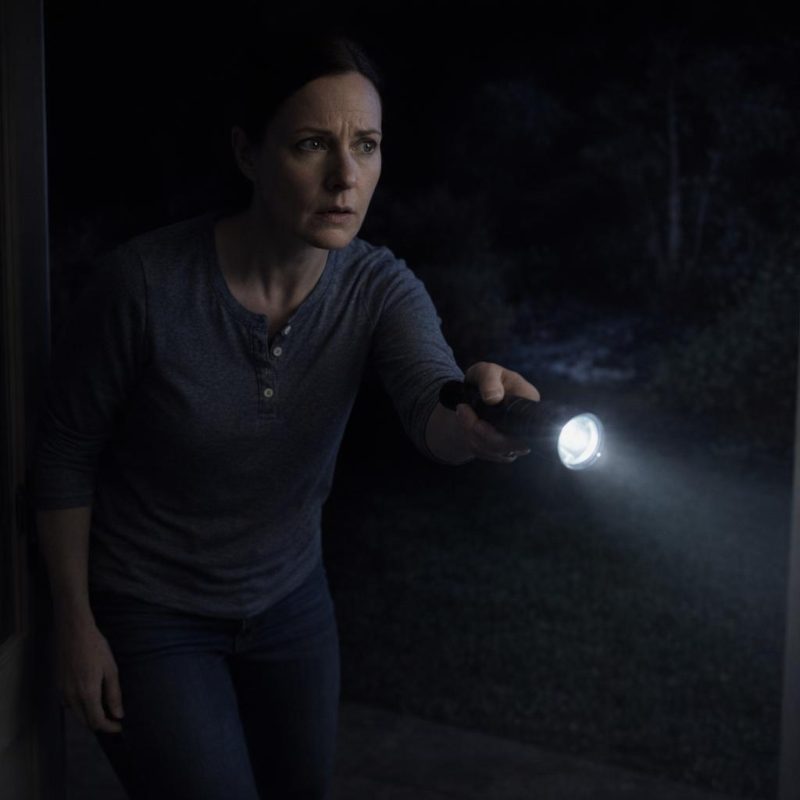 Image by RM AI
Defeated Security
I went outside at first light, my stomach tight with dread. The meter box locks were still intact—no tampering, no damage to Mike's installation. The original T-connector valve was still locked too. Everything we'd secured remained secure. I followed the water line backward from the meter toward the street connection, trying to understand how water could be flowing when everything was locked. About fifteen feet before the meter, I found it. A second tap, a brand new T-connector installed directly on the main line itself. The installation was professional and clean, just like the first one—shiny metal showing recent work. This new tap was positioned very close to the property line, at the extreme edge of my lot where it would be nearly impossible for me to access easily. The pipe from this tap ran under the fence just like the original setup. I knelt in the damp grass, staring at the connection, and felt something break inside me. While I'd been focused on securing the meter, Rachel had simply installed a backup tap further up the line. It was a calculated move to circumvent everything I'd done. All the time, all the money, all the effort I'd put into those security measures—completely wasted. She'd just adapted and found a new way to steal, and I was right back where I started, except now I was exhausted and nearly broke.
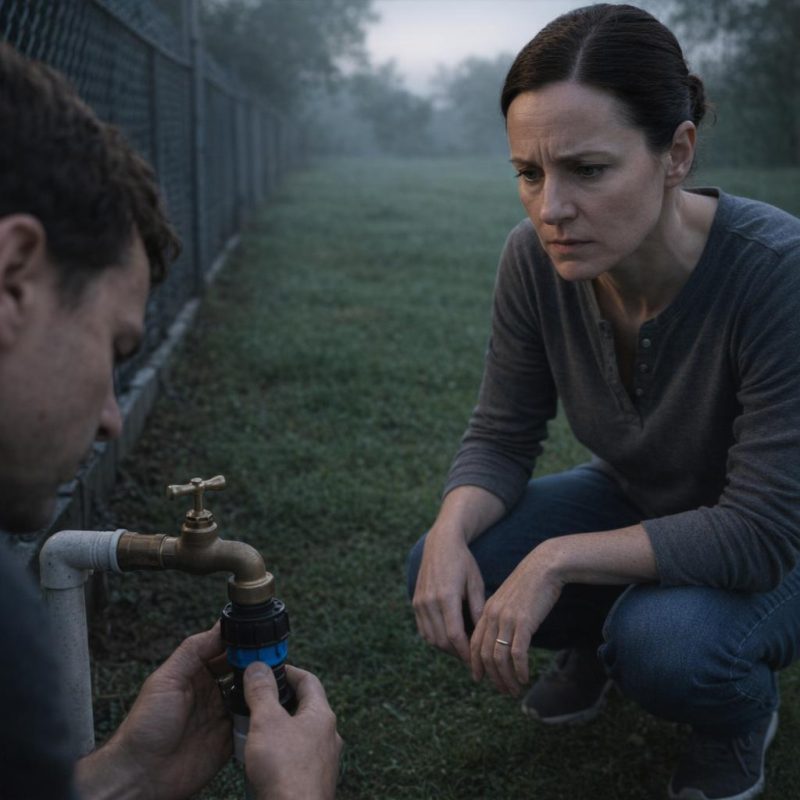 Image by RM AI
Obsessive Surveillance
I decided to document everything this time. That first night, I positioned myself in the living room again with my camera, making extra strong coffee to stay alert. I watched the fence line from 11:30 p.m. through 4:00 a.m., and the activity occurred right on schedule around 2:15. I took multiple time-stamped photos—the figure approaching, working at the new location, water flowing. I stayed awake the entire night without sleeping. The second night I forced myself to continue, already exhausted from the previous sleepless night. I drank more coffee, but my hands started trembling as I held the camera. The activity repeated, and I took more photos, but the clock felt like it was moving backwards. My vision began to blur from fatigue. By the third night, I'd been awake for over sixty hours. The coffee wasn't helping anymore. I took photos when the activity happened again, but I had trouble holding the camera steady. I dropped my phone twice because my hands were shaking so badly. By 4:00 a.m., I could barely keep my eyes open. I watched the sun rise feeling completely hollowed out, like I'd been scraped empty from the inside. I had dozens of time-stamped photos across three nights showing the pattern continued without interruption, but I felt like I was falling apart.
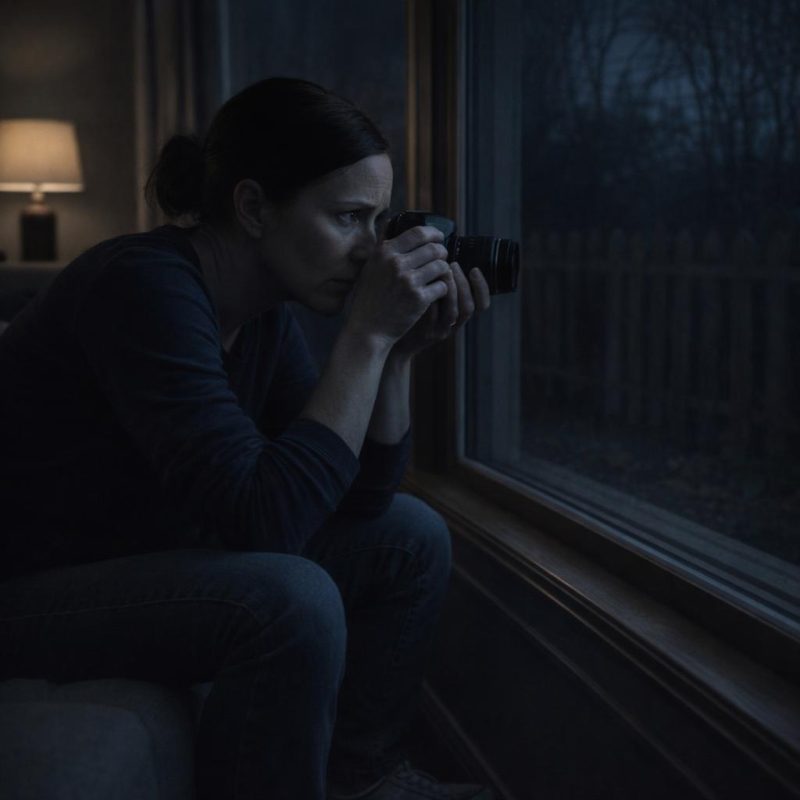 Image by RM AI
Unraveling
I arrived at work the next day struggling to focus on my computer screen. I realized I'd missed a project deadline the day before—something that had never happened to me before. During an afternoon meeting, I sat in the conference room as my colleagues discussed updates, but their voices seemed to come from far away. I found myself nodding off, my head dropping forward, and I jerked awake to find a coworker staring at me with concern. After the meeting, my supervisor asked to speak with me privately. In her office, she asked gently if everything was alright. She mentioned the missed deadline and noted that I'd fallen asleep during the meeting, which was concerning. I heard myself begin explaining the water theft situation—words tumbling out about surveillance and documentation, staying up multiple nights gathering evidence, legal battles and neighborhood conflict. I described the whole nightmare in detail while she listened. I watched her expression change as I talked. The initial concern on her face shifted to something closer to alarm, like she was watching me have a breakdown right in front of her. She gently suggested I might benefit from taking some time off and recommended speaking with the employee assistance program. That's when I realized how I must sound and look to other people—like someone who was completely unraveling.
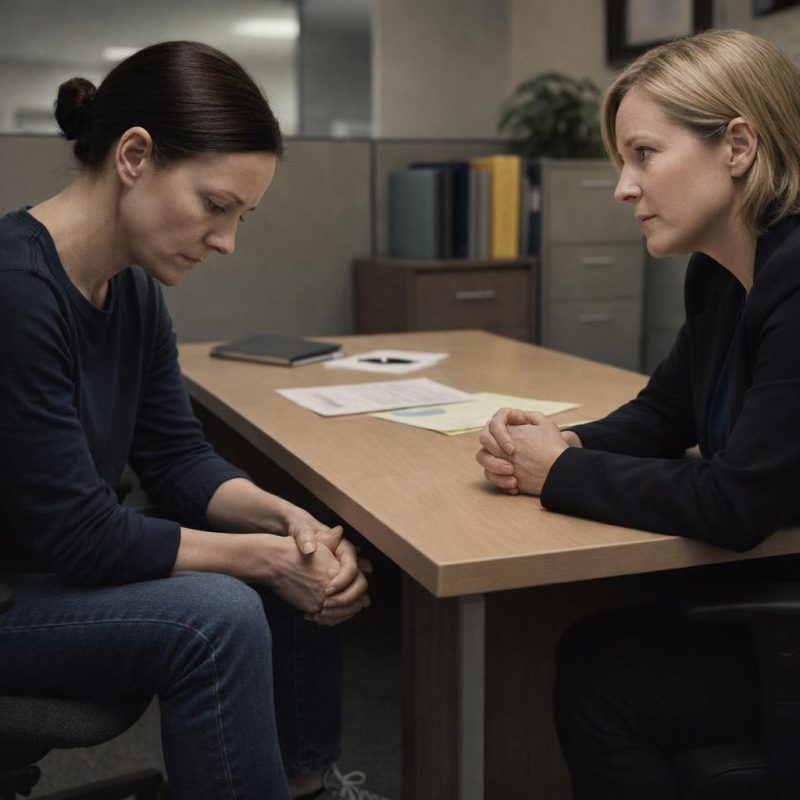 Image by RM AI
The Financial Tally
That evening I sat at my kitchen table and pulled out all the receipts and bills related to this situation. I needed to see the actual numbers. James Whitmore's initial consultation had cost three hundred dollars. The retainer agreement I didn't sign would have been five thousand. Mike's first assessment visit was one hundred fifty dollars. The security lock and installation had been another three hundred. His second assessment for the new tap was another hundred fifty. Then there were the water bills—over eight hundred dollars in stolen water across multiple months. I added everything I'd spent trying to fight this situation. The total approached fifteen hundred dollars in direct costs. If I'd hired James, it would have been over six thousand. I wrote the final number on a piece of paper and stared at it. The stolen water itself was eight hundred dollars. Fighting it had cost me almost double that already, and continuing would cost much more. I pushed the calculator away, feeling sick. I was spending more money fighting this than Rachel had ever stolen from me. The financial futility of pursuing this any further was staring me right in the face. Maybe I should just accept the loss and move on, let her win, and try to salvage what was left of my sanity and savings.
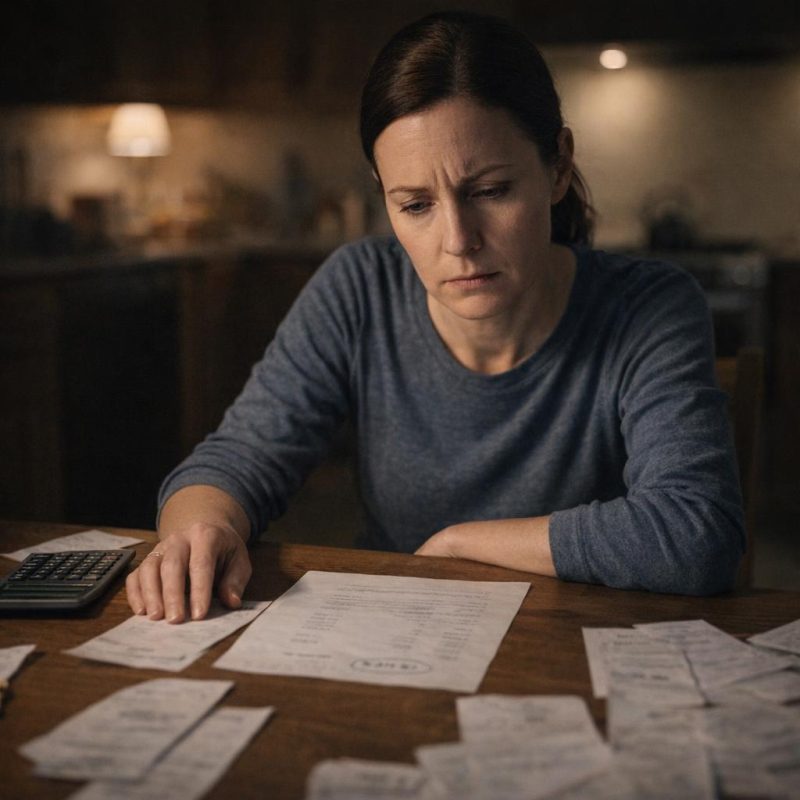 Image by RM AI
Strange Lights
I couldn't sleep again that night and found myself at the living room window past midnight, not specifically watching for theft activity—just restless and staring out at the dark neighborhood. That's when I noticed lights in Rachel's house that I'd never paid attention to before. A back window on the second floor showed a bluish glow, not regular yellow lamp light but something different. The light flickered in a steady, pulsing pattern that repeated consistently. I watched it for several minutes, mesmerized by the rhythm. The color was unusual—bluish white rather than the warm glow of normal lighting. The pulsing felt mechanical somehow, and it reminded me vaguely of a hospital or medical setting, though I couldn't say exactly why. I wondered what kind of equipment would produce that specific light pattern. I realized I'd never looked carefully at the upper floor of Rachel's house before. I'd been so focused on the fence line and meter area, on documenting the theft activity, that I'd never paid attention to what was happening in those windows. The light continued its steady pulse as I stood there watching, unable to determine the source through the glass. I found myself wondering what Rachel was doing in that room during the hours when everyone else slept, and what new mystery had just revealed itself.
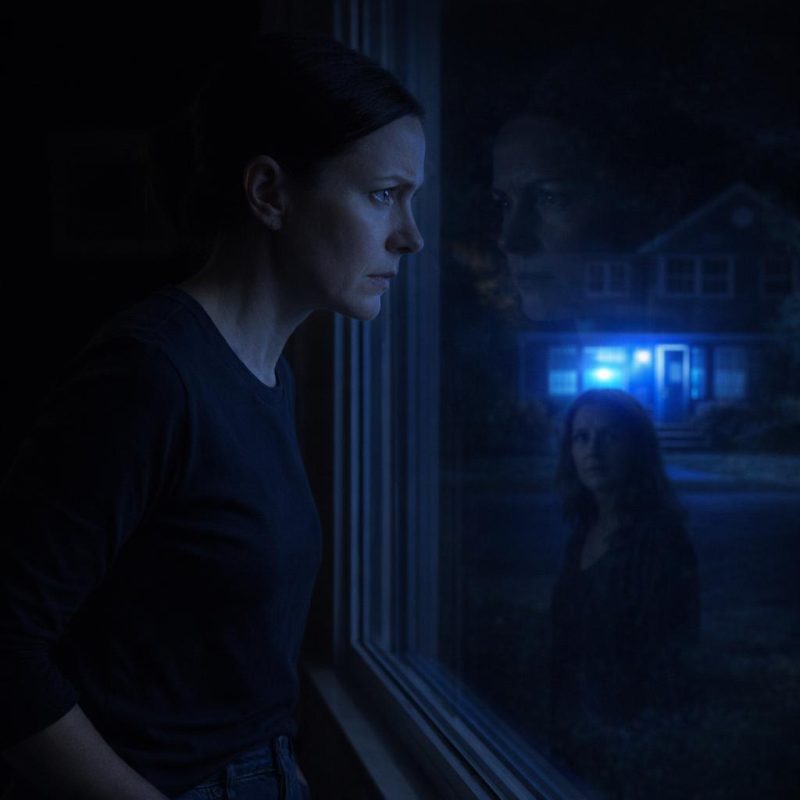 Image by RM AI
The Delivery
I was getting my mail late the next afternoon when a white van pulled up in front of Rachel's house. The side had a medical supply company logo—not a regular package delivery like UPS or Amazon. Two workers in professional uniforms got out and opened the rear doors, revealing multiple large boxes. The boxes were marked with medical supply labels, and some had red biohazard symbols printed on the sides. I stood at my mailbox, trying to appear casual as I watched them use a hand truck to move the heavier boxes. Rachel opened her front door and signed paperwork on a clipboard. The workers made multiple trips, carrying at least six large boxes inside. The whole delivery took about fifteen minutes, and I couldn't stop watching. The medical supply company name was clearly visible on the van's side. After they finally left, I walked back toward my house with the mail still unopened in my hands, my mind racing. What medical situation required supplies marked with biohazard symbols? What was Rachel dealing with that needed professional medical deliveries? I thought about the strange bluish lights I'd seen pulsing in her window the night before, and suddenly everything felt connected somehow. I stood frozen with envelopes in my hand, watching them carry the last boxes inside while my mind raced with new questions about what was really happening next door.
 Image by RM AI
The Other Voice
I was taking out the trash after dark that evening when I heard voices coming from Rachel's direction. The night was warm and many windows were open in the neighborhood. I paused on the sidewalk, trying to locate the source of the sound. It was coming from a first-floor window on Rachel's house facing the side yard. One voice was definitely Rachel's—I recognized it now after all our confrontations. But the second voice was different. Older, female, speaking more softly than Rachel. I couldn't make out specific words from where I stood, but the tone sounded tired or strained somehow. Rachel's voice responded with a gentle quality I'd never heard from her before, completely different from the hostile tone she'd used with me. I moved slightly closer, pretending to adjust my trash can, and caught fragments of their conversation—something about bedtime and medication. The older voice mentioned being tired. Rachel said something reassuring in response. I realized someone else was living in Rachel's house, someone I'd never seen enter or leave. Rachel had claimed to live alone when she first moved in. I stood in the shadows processing this new information, wondering who this other person was and why they'd been hidden. Was this connected to the medical supplies and those strange pulsing lights? I stood frozen, listening to the low conversation, catching just enough words to know someone else was living in that house.
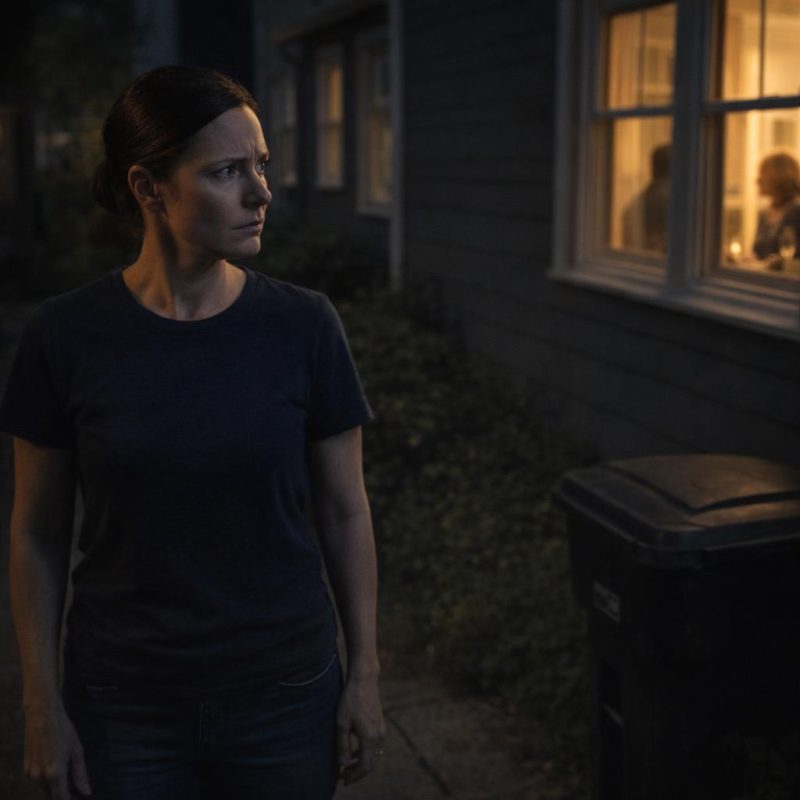 Image by RM AI
The Water Question
I couldn't sleep that night. I kept thinking about that older voice coming from Rachel's window, the gentle way Rachel had spoken to whoever was in there. Around midnight I gave up on rest and opened my laptop at the kitchen table. I started searching for medical equipment that uses large amounts of water. The results were overwhelming at first—industrial sterilizers, hydrotherapy equipment, various laboratory devices. None of it seemed to fit a residential setting. I refined my search, adding terms like home medical equipment and daily water consumption. I scrolled through pages about humidifiers and nebulizers, but those used minimal water. Then I found articles about home healthcare devices that required significant water supplies. I read about wound care systems and specialized bathing equipment. Nothing matched the volumes Mike had calculated from my bills. I was about to give up when I clicked on a medical supply website discussing home dialysis options. The page loaded and I started reading about treatment requirements. One search result caught my attention: home dialysis machines required between fifty and one hundred gallons of purified water per treatment session.
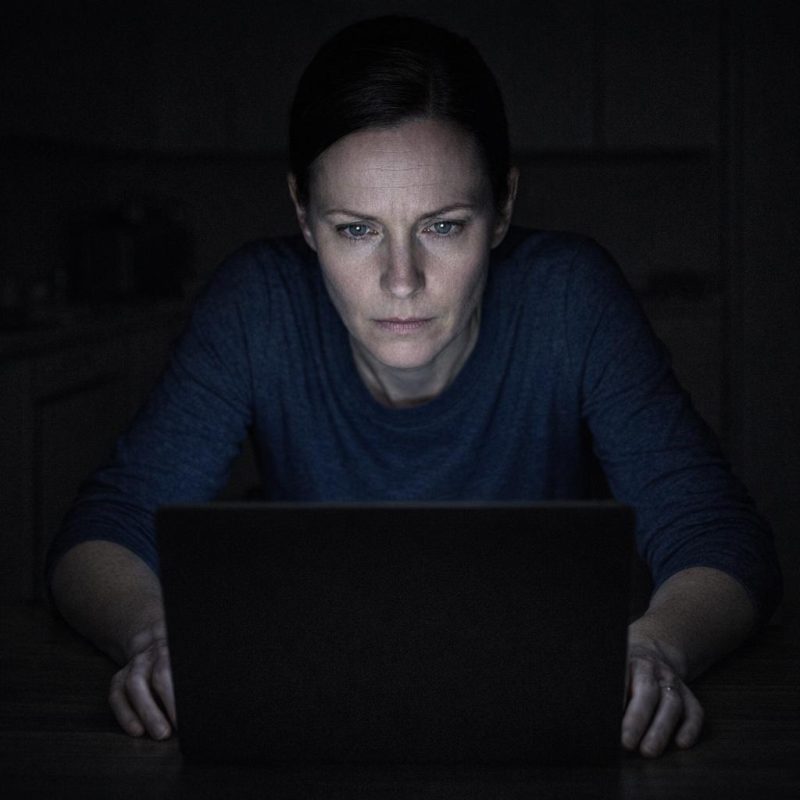 Image by RM AI
Following the Numbers
I went straight to the drawer where I'd been keeping all my water bills. I spread them across the kitchen table again, pulling out Mike's calculations with the flow rate estimates and volume projections. My hands were shaking slightly as I wrote out the numbers. According to Mike's measurements, Rachel was taking approximately sixty to eighty gallons during each two-hour window. I pulled up the dialysis information on my laptop again and compared the figures. Daily home dialysis typically required between fifty and one hundred gallons of purified water per session. The treatment duration averaged two to four hours depending on the patient's needs. I stared at the numbers on my notepad, then back at the screen, then at the bills. The pattern was consistent—every single night, the same two-hour window, the same approximate volume. I calculated the average across all the bills. Seventy-two gallons per night. Right in the middle of the dialysis range. The numbers aligned almost exactly—if someone was receiving daily home dialysis treatments during those two-hour windows, this was precisely how much water they would need.
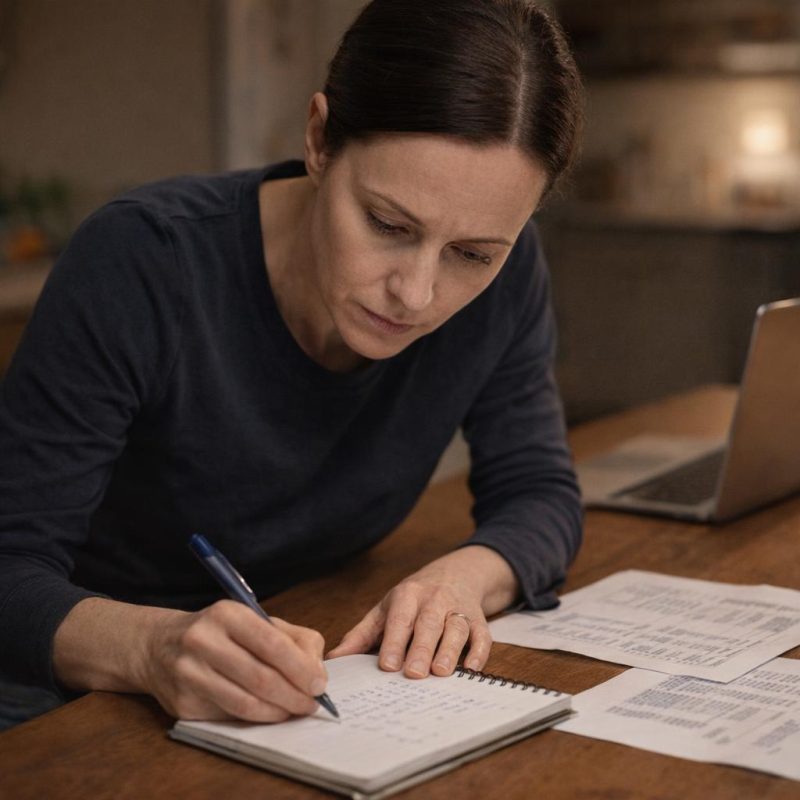 Image by RM AI
A Different Picture
I sat there surrounded by papers and calculations, feeling everything shift in my mind. The medical supply delivery with the biohazard symbols. The strange blue pulsing lights I'd seen through Rachel's window at night—probably monitors or the dialysis machine itself. The older voice I'd heard, tired and strained. Rachel's desperate defensiveness every time I'd confronted her. It all fit together differently now. Someone sick was living in that house. Someone who needed regular treatments to survive. I thought about Rachel's face during our confrontations, the way she'd looked almost panicked rather than guilty. Maybe it wasn't guilt at all. Maybe it was fear. Fear of being discovered, fear of losing whatever arrangement she had. I wondered why she would hide someone who needed medical care. Legal issues? Housing restrictions? I had no idea. But the water theft suddenly looked less like simple stealing and more like something desperate. Something necessary. The possibility changed everything I thought I knew about my neighbor, but I still had no way to confirm what was really happening behind her closed doors.
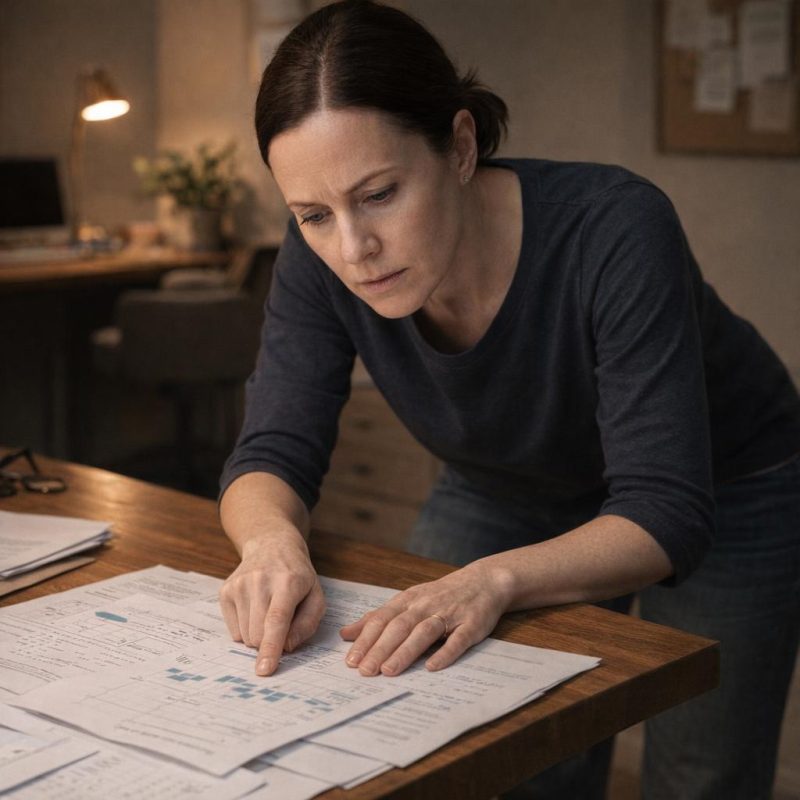 Image by RM AI
The Face in the Window
I was checking my mail the next afternoon, still turning everything over in my mind. It was around four o'clock, warm enough that I'd left my jacket inside. I pulled the stack of envelopes from my mailbox and glanced toward Rachel's house out of habit. That's when I saw movement in the upstairs window. A face appeared at the glass, just for a moment. An elderly woman with silver hair pulled back, her face pale and drawn. She looked tired in a way that went beyond simple exhaustion—the kind of weariness that comes from illness. Our eyes met for just a second before a hand reached from inside the room and quickly pulled the curtain closed. The entire sighting lasted maybe three seconds. I stood frozen on the sidewalk, mail clutched in my hand, staring at that closed curtain. My heart was pounding. I'd seen her. The hidden person Rachel had been protecting. An elderly woman who looked sick and fragile. The face had been pale and tired, framed by silver hair, and I knew with sudden certainty that I had glimpsed whoever Rachel had been hiding all along.
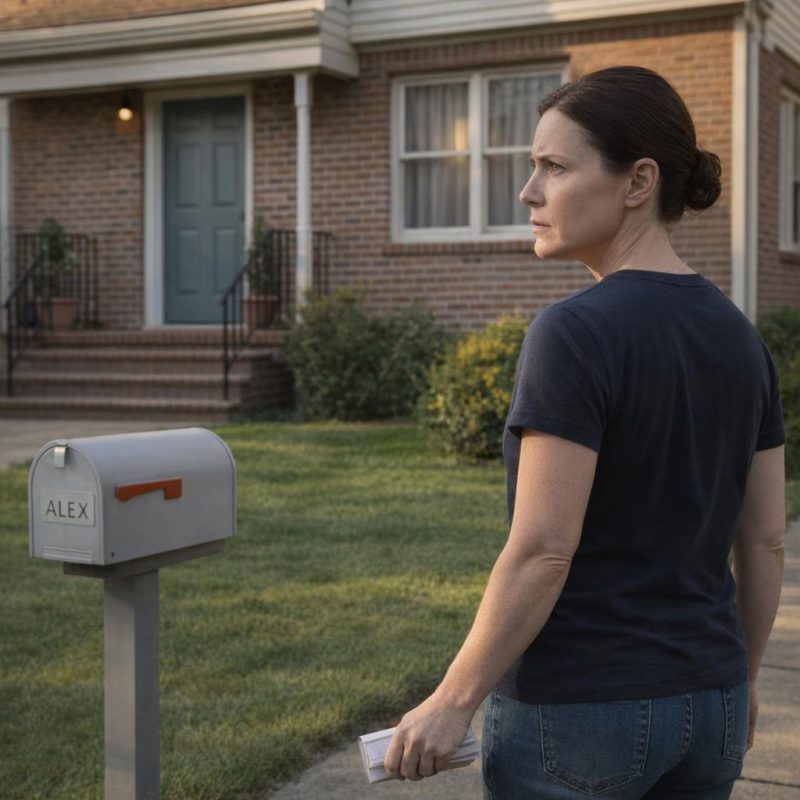 Image by RM AI
The Truth Behind the Theft
I walked straight to Rachel's front door. My hand was shaking when I knocked, but I knocked firmly anyway. Rachel answered after a long moment, looking exhausted. Dark circles under her eyes, hair pulled back in a messy ponytail. "I saw her," I said. "The elderly woman in your upstairs window. I saw her." Rachel's face went completely pale. She stared at me for what felt like forever, and I watched her resistance just crumble. "Come inside," she said quietly. I followed her into the living room. She sat down heavily on the couch and put her face in her hands. Then she started talking. Her mother Margaret lived with her. Margaret had end-stage kidney disease and needed daily home dialysis treatments to stay alive. The treatments required enormous amounts of water—exactly what I'd calculated. Rachel couldn't afford medical facility care, which cost thousands every month. But here's the thing that made everything make sense: her lease specifically prohibited additional occupants. If her landlord discovered Margaret living there, they'd both be evicted immediately. Rachel broke down crying as she explained it all. Everything I had believed about my neighbor—the scheming thief, the calculating criminal—dissolved as Rachel explained she had been stealing my water to keep her dying mother alive.
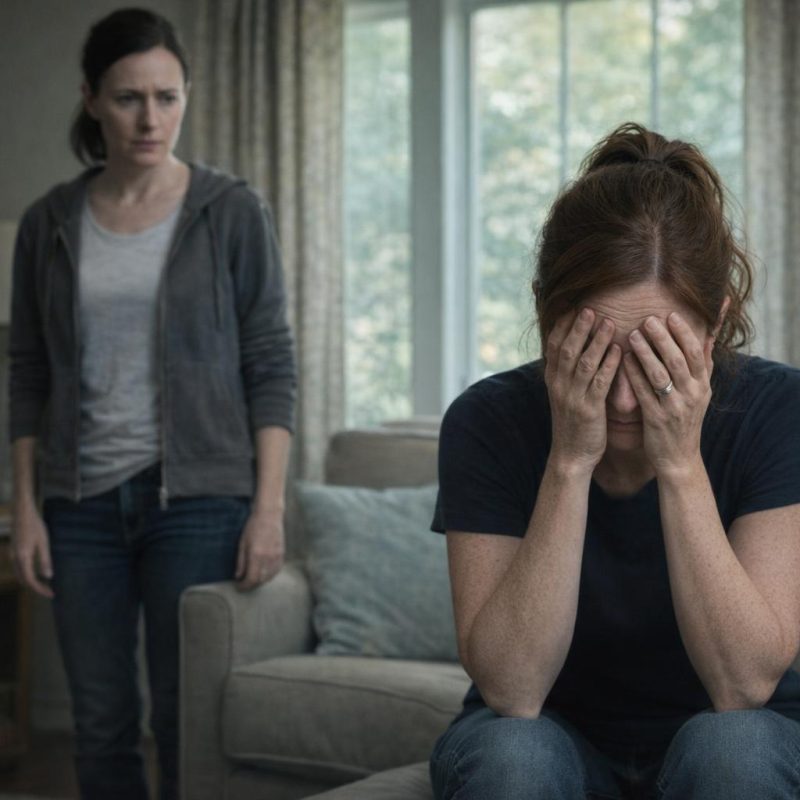 Image by RM AI
Meeting Margaret
Rachel wiped her eyes and looked at me. "Do you want to meet her?" she asked. I nodded, not trusting my voice. She led me upstairs to a small bedroom at the back of the house. The room was filled with medical equipment. A home dialysis machine took up significant space near the bed, tubes and monitors attached to it. Boxes of medical supplies were stacked against the walls. IV poles stood beside a hospital-style bed. In a recliner next to the window sat an elderly woman connected to the dialysis machine by tubes. She looked up when we entered. Silver hair framed a pale, thin face. Her eyes were tired but held a quiet dignity. "I'm so sorry," Margaret said immediately, her voice weak. "I never wanted to cause problems for you. I just wanted to stay with my daughter." I stood there looking at this frail woman, at the machine quietly humming as it processed her blood, at the reality of her illness filling every corner of the room. I looked at the medical equipment filling the room and understood that Rachel had been fighting an impossible battle just to keep her mother breathing.
 Image by RM AI
An Impossible Situation
Rachel and I sat across from each other at her kitchen table. She explained everything. Margaret's kidneys had failed eighteen months ago. Medicare covered dialysis but not transportation or the facility copays. The nearest dialysis center was forty minutes away, and Margaret would need to go three times weekly. Rachel worked full time and couldn't provide that transportation. Home dialysis was the only option that allowed Rachel to keep working. Moving in with Rachel was the only way Margaret could receive care. But the lease explicitly prohibited additional occupants. The landlord conducted quarterly inspections. Rachel had been hiding Margaret during those inspection days, terrified each time. The water company would report unusual usage spikes to the landlord as part of the lease monitoring. Stealing from my line was the only way to avoid detection on Rachel's bill. "I know it was wrong," Rachel said, her voice breaking. "I felt sick every time I did it. But the alternative was either getting evicted or letting my mother die." I sat there silently. She told me she knew stealing my water was wrong, but the alternative was watching her mother die, and I had no response to that.
 Image by RM AI
Medical Confirmation
Rachel arranged for me to speak with Margaret's physician. I met Dr. Patel at her medical office two days later, with Rachel's written consent for the discussion. Dr. Patel was a warm woman with a gentle demeanor, but her words were sobering. She confirmed everything Rachel had told me. Margaret had end-stage renal disease. Without dialysis, her kidneys couldn't filter her blood at all. Toxins would build up in her system causing death within one to two weeks. The home dialysis equipment Rachel had was standard for supervised home treatment. The water requirements were exactly what I'd calculated—fifty to one hundred gallons per session. Dr. Patel explained the costs of alternative care. In-center dialysis with copays and transportation would exceed two thousand dollars monthly. "I see this constantly," Dr. Patel said, her voice careful but tired. "Families facing impossible financial choices. The healthcare system fails people like Margaret every single day." She looked at me with measured compassion. "I hope you and Rachel can find a resolution." The doctor looked at me with tired eyes and said she had seen too many families destroyed by the cost of staying alive in this country.
 Image by RM AI
Withdrawing the Claim
I picked up my phone and called James Whitmore's office that afternoon. His assistant put me through within the hour, and I could hear the surprise in his voice when I told him I was dropping all legal action against Rachel. He reminded me we had a strong case—documentation, evidence, everything lined up perfectly. I said circumstances had changed significantly and left it at that. He noted I could refile if I changed my mind, and I thanked him for his time before ending the call. Then I sat alone in my kitchen thinking about the past weeks. I had been so certain about my righteousness, documenting everything so carefully as evidence of theft. I never considered there might be an explanation beyond greed or entitlement. What would justice have meant in this case? Winning the lawsuit would have been legally correct but morally devastating—it might have killed Margaret. My victimhood was real, but it was an incomplete picture of what was actually happening. I spent that evening wrestling with feelings I couldn't quite name, understanding that law and morality don't always align. I had been so certain I was the victim, but now I questioned whether pursuing my rights would have made me the villain.
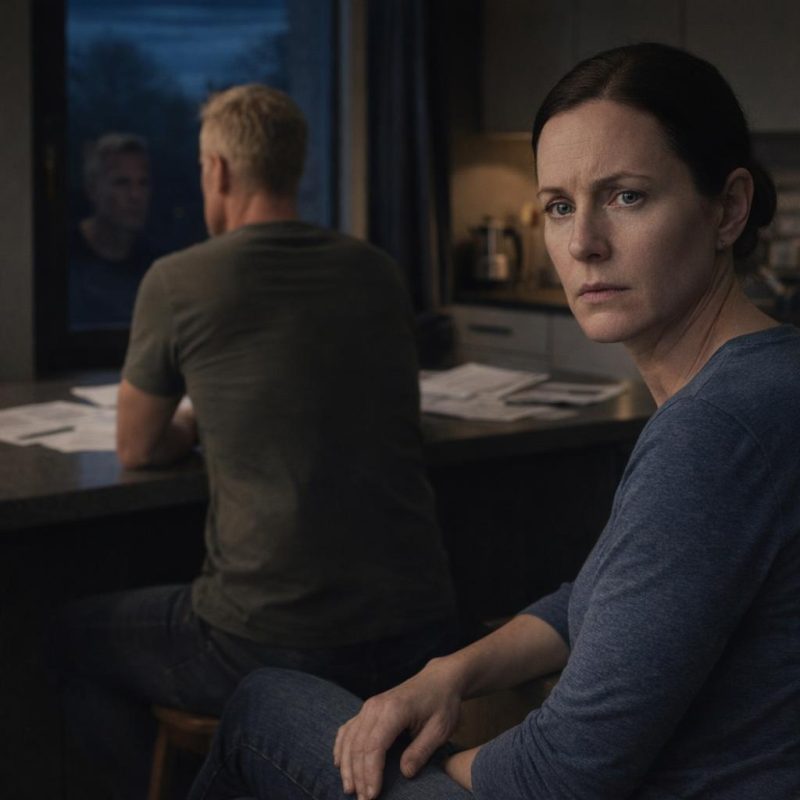 Image by RM AI
Finding Options
I committed to finding legitimate solutions for Rachel's situation. I opened my laptop and began systematic research, applying the same methodical energy I'd used to investigate the theft. I looked up Medicaid eligibility requirements for elderly dependents and found information about expedited applications for urgent medical needs. I researched fair housing laws regarding disability accommodations and discovered ADA provisions that might override lease restrictions. I looked into local nonprofit organizations offering assistance and found social services agencies with elderly care programs. I researched sliding-scale dialysis payment programs and discovered patient assistance funds from medical equipment companies. I took detailed notes on each program and its requirements, compiling application procedures and documentation needed. I spent three consecutive evenings on this research, creating an organized folder of possibilities and contacts. The process felt purposeful in a way the anger never had. My skills at documentation could help find solutions instead of building a case for punishment. I felt something shift inside me—not quite hope yet, but maybe the beginning of it. I found a folder's worth of possibilities, and for the first time since this all began, I felt like I might be able to help rather than just fight.
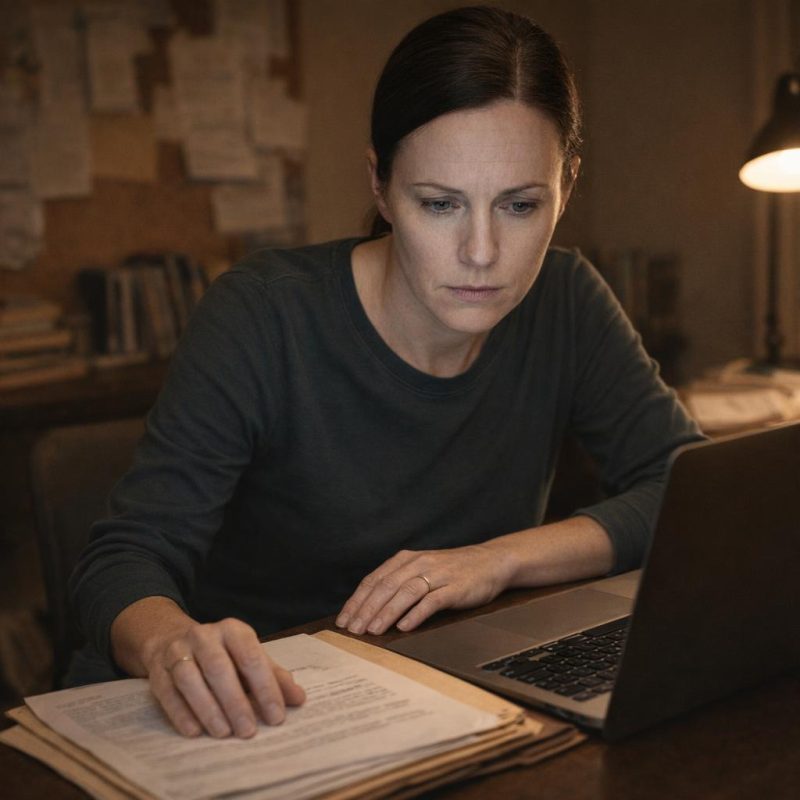 Image by RM AI
An Offer
I called Rachel and asked to meet in person. I went to her house with my folder of research and sat at her kitchen table across from her. I explained I'd spent days researching options and showed her information about Medicaid applications, housing accommodation requirements, and assistance programs. Then I made my offer. I would cover her water costs going forward if she would let me help her access the legitimate assistance programs that could protect Margaret permanently. I offered to help with paperwork and documentation, to accompany her to meetings if that would be helpful. Rachel listened with a guarded expression throughout, seeming unsure how to respond to this unexpected offer. I emphasized this wasn't charity but problem-solving—I would rather help than sue, and Margaret's life mattered more than water bills. I waited for her response, watching gratitude and pride and uncertainty all play across her face. The conversation paused as she processed what I was proposing. Rachel stared at me with an expression I couldn't read, and I waited to see if she would accept help from the neighbor she had been stealing from for months.
 Image by RM AI
Too Proud
Rachel finally responded after a long pause. She said she appreciated what I was trying to do, but she couldn't accept help from someone she had robbed. She stated she had pride even if her actions were wrong, that she needed to solve her own problems. She'd spent her life taking care of herself and her mother alone—she couldn't suddenly become someone who took handouts. She felt too much guilt about what she'd put me through. Rachel pushed the folder of research back across the table and said she would figure something out on her own. I tried to explain this wasn't charity, but Rachel interrupted saying she knew what it was. She stood up, indicating the conversation was over. She thanked me for not pursuing legal action and said that was enough generosity—she couldn't ask for more. I recognized the defensive posture from our earlier confrontations, but now I understood it as protection rather than hostility. I left her house feeling frustrated but not angry, realizing that changing someone's mind requires patience. I watched her walls go back up and realized that helping someone who didn't want to be helped might be harder than fighting someone who had wronged me.
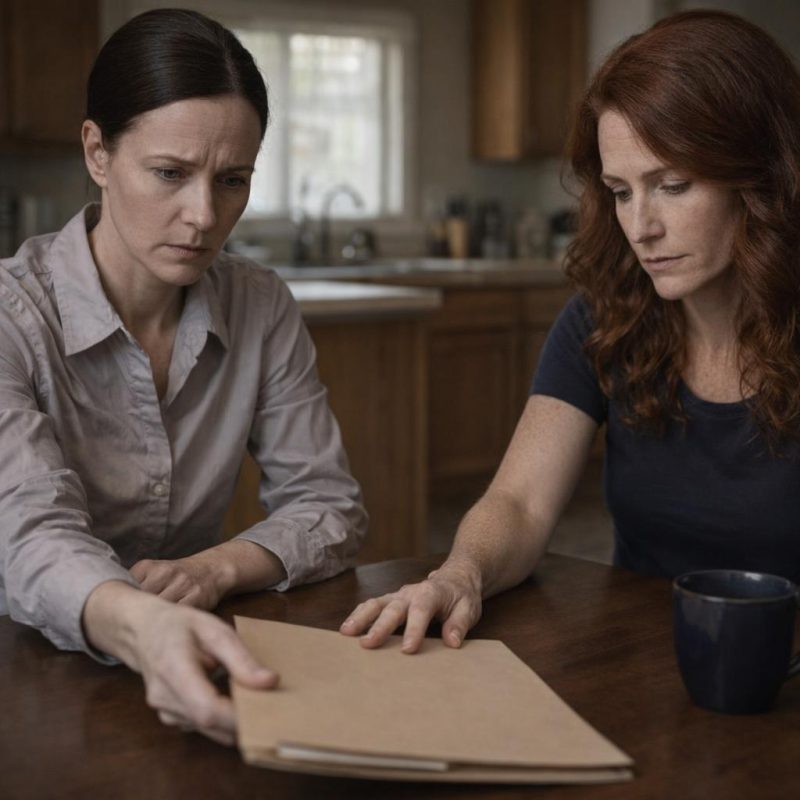 Image by RM AI
Finding Middle Ground
I spent that evening thinking about Rachel's objections and realized the problem was how I'd framed the help. I created a new proposal that addressed her pride concerns and returned to her house the following afternoon. I presented a modified plan as a business arrangement, not charity. I would cover water costs as a temporary loan that Rachel would repay over time once her situation stabilized, with reasonable monthly payments she could afford. I also proposed working together on assistance applications, framing it as a partnership rather than a rescue mission. Rachel would be doing the work herself—I was just providing information and support. I showed her a written document outlining the proposed terms, including a timeline and repayment schedule. The agreement treated us as equals with mutual obligations. Rachel read through the proposal carefully and asked clarifying questions about the terms. Her face showed the internal struggle with accepting. Finally, she gave a slow, reluctant nod of acceptance. She said she could agree to this arrangement. We both signed the informal agreement, marking a turning point in our relationship. Rachel studied the proposed agreement I had written out, and slowly, reluctantly, she nodded.
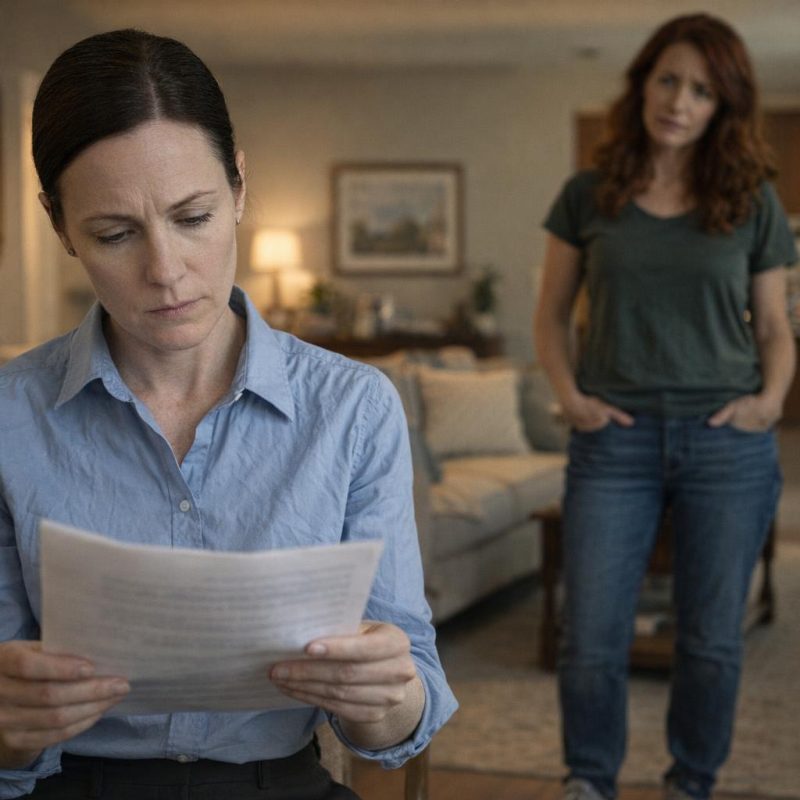 Image by RM AI
Navigating the System
I returned to Rachel's house with my laptop and printer, and we set up a work station at her kitchen table. We began with the Medicaid application for Margaret, gathering required documentation including medical records. I helped Rachel understand eligibility requirements and we completed the expedited application citing urgent medical need. We moved to the fair housing accommodation request, drafting a letter citing ADA protections for disabled residents and documenting Margaret's medical necessity for living with her caregiver. We prepared correspondence for Rachel's landlord with legal citations. We filled out applications for patient assistance funds and contacted dialysis supply companies about payment programs. I made phone calls to schedule social services appointments while Rachel provided information and I organized the paperwork. The process took multiple evenings over the week, and the dynamic between us shifted from adversaries to collaborators. We were both exhausted but encouraged by the progress we were making. By the end of the week, we had submitted applications to six different programs and scheduled three appointments with social services.
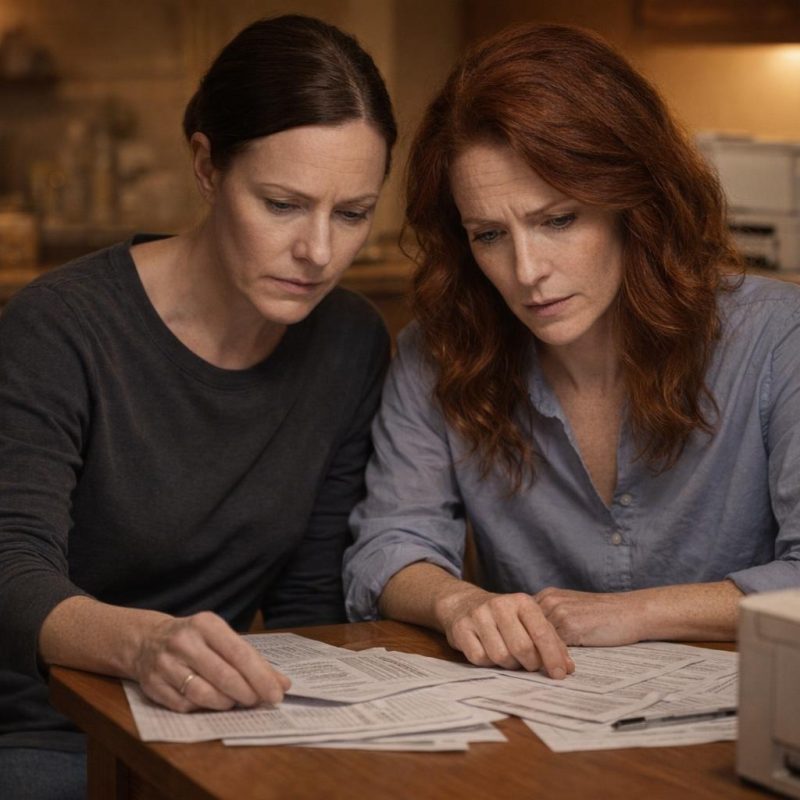 Image by RM AI
Facing the Board
The HOA board met for a special session to hear Margaret's case. Rachel and I arrived together as a united front, signed in, and waited for our agenda item. When we were called forward, we presented to the board of seven members with Susan Park presiding from the center seat as president. Rachel spoke first, explaining her mother's medical condition and care needs. She admitted to violating her lease by having an additional occupant and explained why hiding had been necessary given the lease terms. Then I spoke in support of Rachel, describing how I'd discovered the situation and my initial anger and legal pursuit. I shared how learning the truth had changed my perspective and advocated for community compassion over rigid rules. I presented documentation of Margaret's medical necessity and showed the applications we'd already submitted for assistance. Other board members asked clarifying questions while Susan remained largely silent during our presentation. Her expression gave nothing away about her position. The board thanked us and said they would deliberate. Susan's face was unreadable as she listened, and I couldn't tell if we had any chance of winning over the woman who valued rules above everything else.
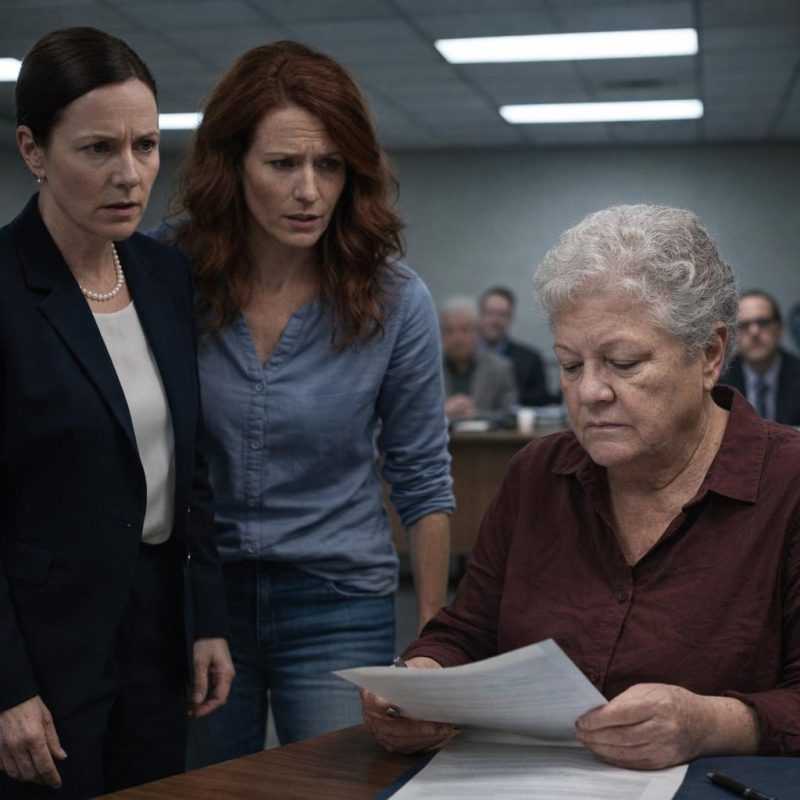 Image by RM AI
The Vote
The board reconvened after a brief private deliberation, and Rachel and I returned to hear their decision. Susan spoke first, outlining the board's concerns about setting precedent for rule violations and noting that lease violations affect property values and standards. She stated her personal opposition to the accommodation request and recommended the board deny it and report Rachel to her landlord. Another board member spoke in response, citing community values of compassion and family and noting that exceptional circumstances require exceptional response. Discussion continued between board members until Susan called for a formal vote. Members voted one by one around the table. Susan voted no as expected. Three other members voted yes, one abstained citing a conflict, and two remaining members voted yes. The final count was four in favor, one opposed, one abstain. The motion passed to support the accommodation request, and the board would provide a letter supporting Margaret's residency. Susan announced the result with visible displeasure while Rachel's eyes filled with tears of relief. I squeezed her hand under the table. Susan's tight expression showed her displeasure, but the decision stood—Margaret could stay, and Rachel would not be reported to her landlord.
 Image by RM AI
Making It Legitimate
Mike showed up at eight in the morning with his truck full of equipment, and I felt this weird sense of relief seeing him again after all these weeks. He'd brought everything we needed—proper junction fittings, a sub-meter, lockable valves, the whole professional setup. Rachel came over around nine, and the three of us stood in my yard while Mike explained exactly how the new system would work. He'd install a legitimate shared connection from my main supply line, with a separate meter tracking Rachel's usage so she could pay me directly for what she actually used. The arrangement would be completely legal, properly documented, everything above board. I watched him start by removing that illegal T-connector, the hidden tap that had started this entire nightmare, and felt something loosen in my chest. The installation took most of the afternoon. Rachel and I sat on my back steps at one point, watching Mike work, and she said something about how strange it was that we were allies now. I agreed, because it really was surreal. When Mike finally finished and tested the system, water flowing properly through legitimate pipes, he handed us an invoice split exactly fifty-fifty. We both paid our shares without hesitation, and as I wrote that check, I realized the problem that had consumed months of my life finally had a real solution—one built on honesty instead of desperation.
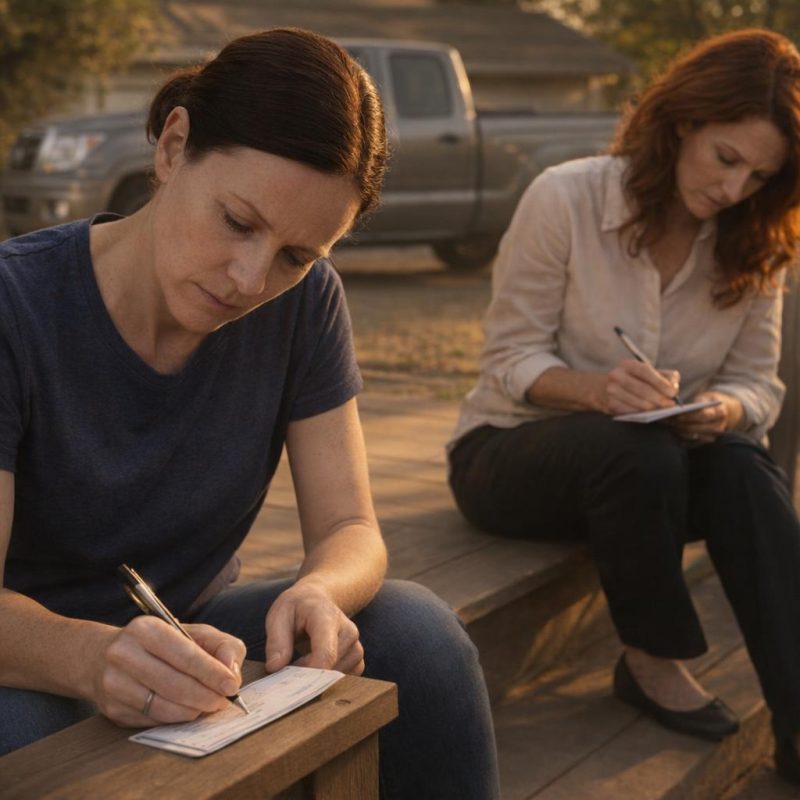 Image by RM AI
Cautious Trust
The weeks after the installation brought something I hadn't expected—actual friendship. Rachel started dropping by with her portion of the water payment, and those brief exchanges at the mailbox gradually became longer conversations. I'd share updates on the Medicaid application progress, and she'd report on responses from various assistance programs. When the first Medicaid approval letter finally arrived for Margaret, Rachel texted me immediately, and I found myself genuinely happy for them instead of just relieved the crisis was ending. Our casual waves evolved into stopping to chat about normal neighbor things—weather, local news, the ongoing drama with Susan and the HOA. Rachel mentioned that Margaret kept asking about her kind neighbor, which made me feel both pleased and a little guilty about how long I'd judged them. Over time, I learned more about Rachel's background, discovered she'd given up her apartment in the city specifically to move closer and care for her mother. We both cautiously shared more personal details, testing the waters of this unexpected connection. Then one evening Rachel invited me over for dinner, saying Margaret wanted to thank me properly. I agreed, feeling the weight of what that invitation meant. We'd become something neither of us expected—neighbors who actually knew each other.
 Image by RM AI
Stable Ground
The months that followed brought visible transformation. Margaret's Medicaid coverage kicked in fully, patient assistance programs started covering her dialysis supply costs, and a home health aide began visiting three times weekly. Rachel no longer carried the entire burden of caregiving alone, and the difference showed in both of them. Margaret's health improved noticeably with consistent support—the dark circles and exhausted appearance faded, color returned to her cheeks with stable treatment. On good weather days, she could sit outside in Rachel's garden, and I'd see her there enjoying the afternoon sunshine. I started visiting regularly, bringing groceries occasionally when I was shopping for myself anyway. One afternoon I stood at the fence watching Margaret in her chair, a soft cardigan around her shoulders, and remembered the frail woman I'd first glimpsed through Rachel's window months ago. The transformation was remarkable given where we'd started. Rachel seemed different too—less stressed, less defensive, the burden of secret caregiving finally lifted. I found myself reflecting on how my own perspective had changed through all of this. I'd lived in this neighborhood seventeen years thinking I understood what community meant, but I'd been wrong. Community wasn't just proximity—it was actually knowing the people around you, understanding their struggles, choosing to help when you could.
 Image by RM AI
What the Water Taught Me
I stood at my kitchen window one evening watching the sun set over the neighborhood, the same view I'd had for seventeen years but seeing it completely differently now. Everything had started with that water bill, the one I'd almost thrown away thinking it was a mistake. I remembered my initial confusion turning to methodical investigation, the anger and violation I'd felt discovering the theft, how certain I'd been of my righteousness. I thought about finding Rachel in that parking lot, learning the truth about Margaret, realizing how close I'd come to destroying someone's life over rules and assumptions. The journey had taught me things I hadn't known I needed to learn—that theft could be desperation instead of greed, that neighbors could become genuine friends, that rules sometimes failed to capture the reality of people's lives. Justice was more complex than law, and judgment required understanding the full story first. I felt grateful for the perspective I'd gained, even though the path to get here had been hard. My eyes drifted to the water meter visible through the window, still sitting in its concrete box by the fence where this all began. But now when I looked at it, I saw something different—not a record of theft, but a reminder that everyone's story is more complicated than it first appears.
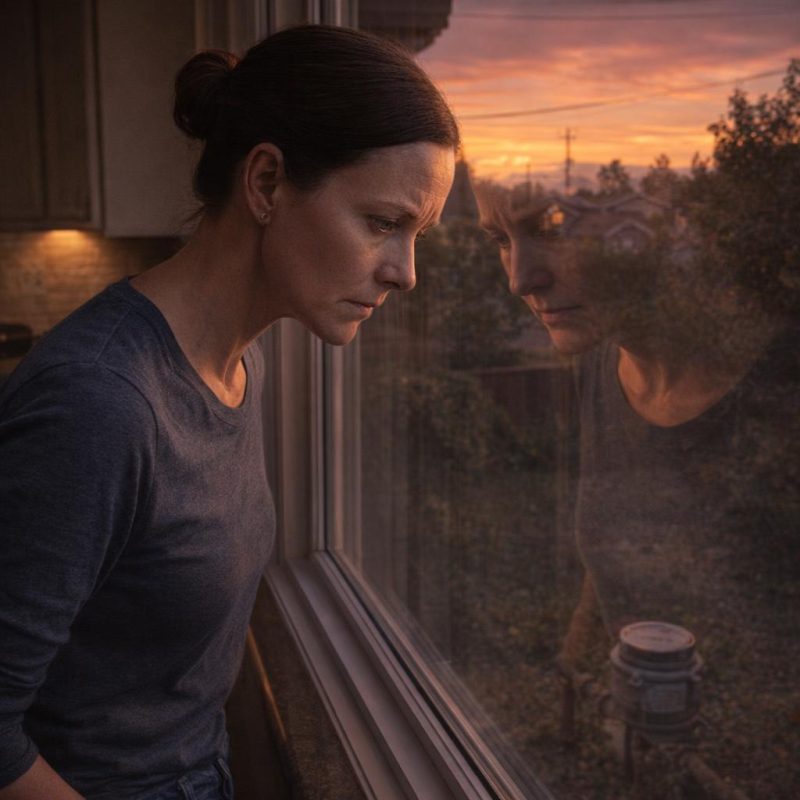 Image by RM AI
KEEP ON READING

The 10 Youngest Monarchs In History & The 10 Oldest
Age Is Just A Number. Imagine being crowned king or…
By Chase Wexler Mar 11, 2025
You Think You Have Problems? These Royal Families Were Cursed
Boasson and Eggler St. Petersburg Nevsky 24. on WikimediaHeavy is…
By Ashley Bast Dec 5, 2025
You Can Thank This Greek-Canadian For Creating Pineapple On Pizza…
Love it or hate it, pineapple on pizza sparks debate…
By David Davidovic Dec 1, 2025
Yes, Female Gladiators Existed, And Here's Everything You Need To…
History of Women in Combat. Most people picture gladiators as…
By David Davidovic Jan 17, 2026
Yes, Australians Once Lost A Battle Against Flightless Birds
David Clode on UnsplashIn 1932, the Australian military went to…
By David Davidovic Nov 24, 2025
The Y2K Bug: Why Did Everyone Think Year 2000 Was…
Alan W on UnsplashOn December 31, 1999, people all over…
By Christy Chan Dec 22, 2025