

My Husband Vanished for Two Days Without a Word—What I Found at That Motel Changed Everything I Thought I Knew About Him
My Husband Vanished for Two Days Without a Word—What I Found at That Motel Changed Everything I Thought I Knew About Him
The Motel Room
I found his car in the parking lot of the Sunset Motel at 11:47 PM on a Tuesday, and honestly, I'd been preparing myself for the worst. Two days of silence. Two days of calls going straight to voicemail. Two days of imagining him with someone else, somewhere I'd never been invited. My hands were shaking when I knocked on room 114, and when Mark opened the door, the look on his face wasn't guilt—it was panic mixed with something that looked almost like relief. The room behind him was a mess of packed bags and scattered papers, nothing like the romantic hideaway I'd been dreading. Financial documents covered the cheap motel table. Legal notices. Warning letters with red stamps. He just stood there in the doorway, looking exhausted and terrified, and said, "You weren't supposed to find me here." I pushed past him into the room, my eyes scanning everything, trying to make sense of it. No perfume. No evidence of another woman. Just my husband surrounded by what looked like the aftermath of a financial explosion. He handed me a stack of papers with trembling hands, and I started reading words like "default" and "collections" and "final notice." The documents in his hands told a story I wasn't prepared to hear—and the look on his face said this was only the beginning.
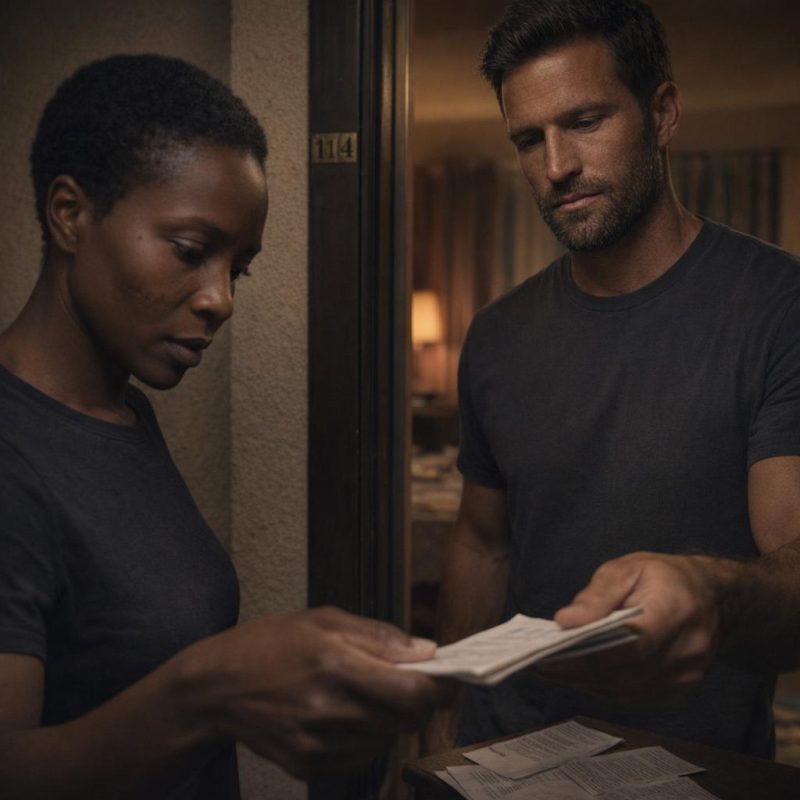 Image by RM AI
Bad Investments
Mark sat on the edge of the bed and started talking, his voice flat and defeated in a way I'd never heard before. He described investments that had gone wrong over the past year—business ventures with partners who'd disappeared, opportunities that turned out to be traps, money that just evaporated. He'd been trying to fix it all himself, he said, trying to protect me from the stress and shame of it. The numbers he mentioned made my stomach drop—we were talking about debts that would take years to climb out of, but they seemed manageable if we faced them together. "This motel," he gestured around the dingy room, "this is where I've been sorting through options, trying to figure out how to tell you." He apologized for shutting me out, promised we'd handle everything together from now on, and for a moment I felt this wave of relief that we could actually get through this. Then his phone buzzed on the nightstand. The sound cut through the room like an alarm, and I watched the color drain from his face as he glanced at the screen. He didn't answer it. Didn't explain who it was. Just stared at it until it stopped buzzing, his jaw clenched tight. "We should go home," I said quietly, watching him. "We can review everything properly there." He nodded, but his explanation covered the paperwork in front of me—it didn't explain why his hands shook when his phone buzzed on the nightstand.
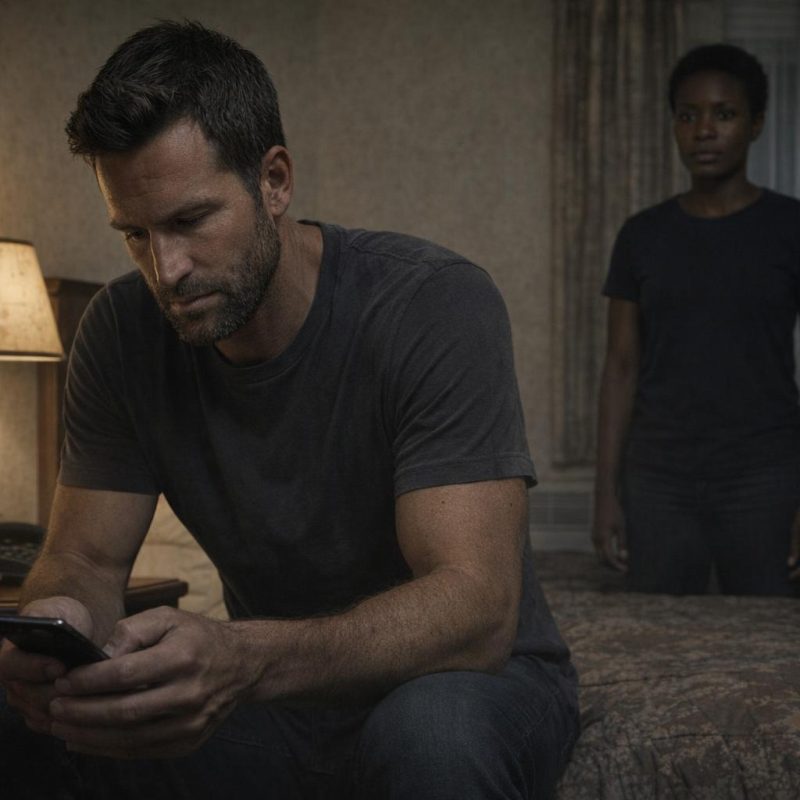 Image by RM AI
Calling for Help
The next morning, I called Rachel from our kitchen while Mark was in the shower. I needed someone who wouldn't judge, someone who'd just help me think clearly, and Rachel had been my person since college. She came over that afternoon with coffee and her no-nonsense attitude, and we spread everything across the dining room table—bank statements, credit card bills, loan documents, all of it. Mark joined us, but he seemed distracted, checking his phone every few minutes and providing vague answers when Rachel asked specific questions. She's always been good with details, and she started pointing out entries that didn't quite line up with what Mark had told me at the motel. A payment here that seemed too early. An expense there that didn't match the timeline. I tried to focus on being helpful rather than suspicious, telling myself we were all on the same team here. But then I found it—a large payment to something called Meridian Solutions LLC, dated three months before Mark said any of the trouble started. "What's this?" I asked, sliding the statement toward him. He glanced at it, his expression flickering with something I couldn't read. "That was... that must've been the first investment," he said, but his eyes were back on his phone. The numbers on the screen blurred together as exhaustion hit, but one figure jumped out—a payment to a company I'd never heard of, dated three months before Mark said the trouble started.
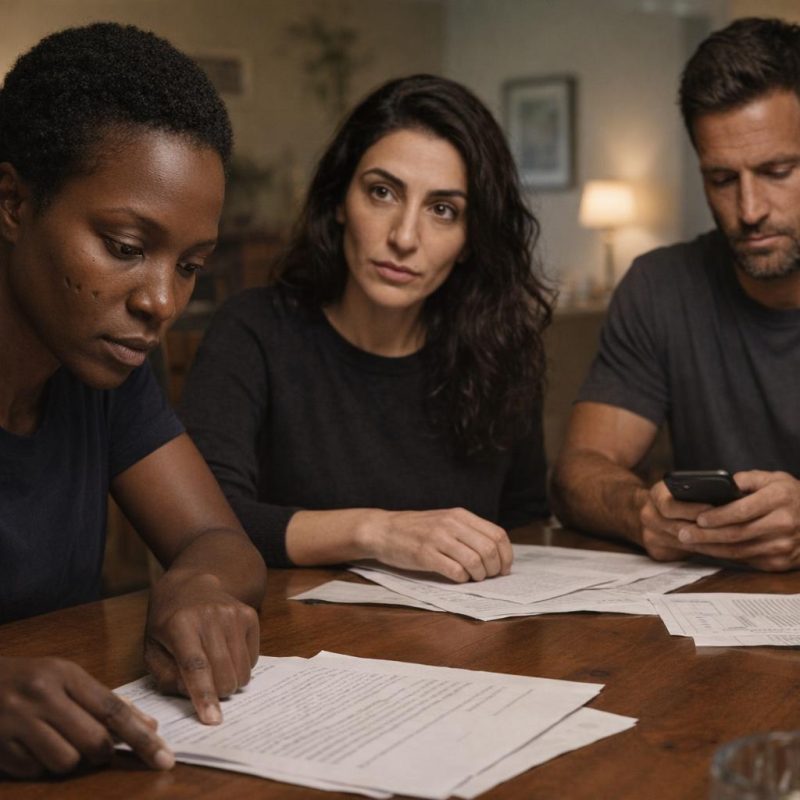 Image by RM AI
Numbers That Don't Add Up
I couldn't sleep that night, so I stayed up mapping everything out on a legal pad, drawing timelines and connecting dates. The more I looked, the less Mark's story held together. Expenses appeared in February that he'd attributed to problems that supposedly started in May. Payments went to entities I couldn't identify through simple Google searches—names that sounded legitimate but had no real web presence. And the total debt, when I actually added everything up, seemed significantly larger than what Mark had initially indicated. Around 2 AM, I woke him up. I didn't mean to be confrontational, but I needed answers. "The timeline doesn't work," I said, showing him my notes. "These payments started way before you said things went wrong." He sat up, rubbing his face, and claimed it was memory errors, that the stress had confused him about when everything happened. But I've known Mark for eight years, and he's never been the kind of person who gets dates wrong. His body language was all wrong too—shoulders hunched, eyes darting away from mine, this discomfort that went way beyond embarrassment about mixing up a few months. "I'm trying to help you," I said. "But I need the truth." He nodded, promised he'd go through everything again in the morning, but when I asked him about the three-month gap, he went quiet for too long, then said he must have remembered it wrong—but his eyes wouldn't meet mine.
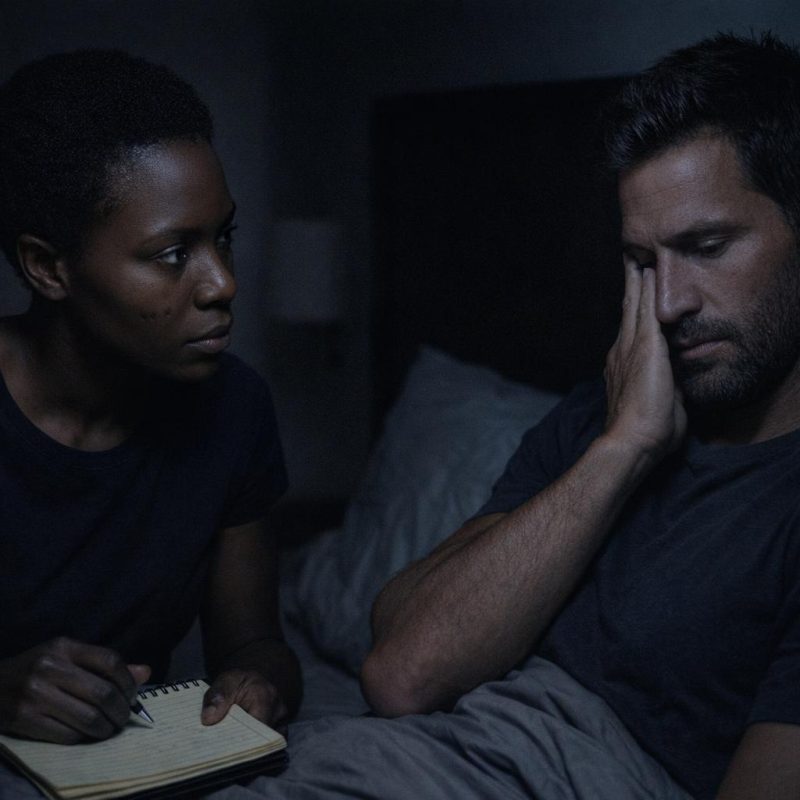 Image by RM AI
Professional Eyes
Rachel suggested I talk to David, her husband who works in corporate law, and honestly I was desperate enough to take any help I could get. I met him at his office downtown, bringing copies of everything I'd found. David's usually pretty laid-back, but watching him review the documents, I saw his expression shift from casual interest to serious concern. He started pointing out things I'd missed—shell company structures, payment patterns that suggested money was being moved around to hide something, irregular transfers that didn't match any normal business activity. "Sarah, this doesn't look like simple bad investments," he said carefully. "These payment patterns... they're consistent with money laundering or deliberate concealment." The words hit me like cold water. David explained that the debt levels didn't actually match the investment story Mark had given me, that the numbers suggested something else entirely was going on. He recommended I consult a forensic accountant, maybe even contact federal authorities depending on what we found. Rachel squeezed my hand across David's desk, and I could see the worry in both their faces. They urged me to protect myself legally, to consider that I might not know the full story. I left feeling like the ground had shifted under my feet, realizing the situation was far more serious than Mark had admitted. David closed the folder and looked at me with an expression I'd never seen from him before—concern mixed with something that looked almost like fear.
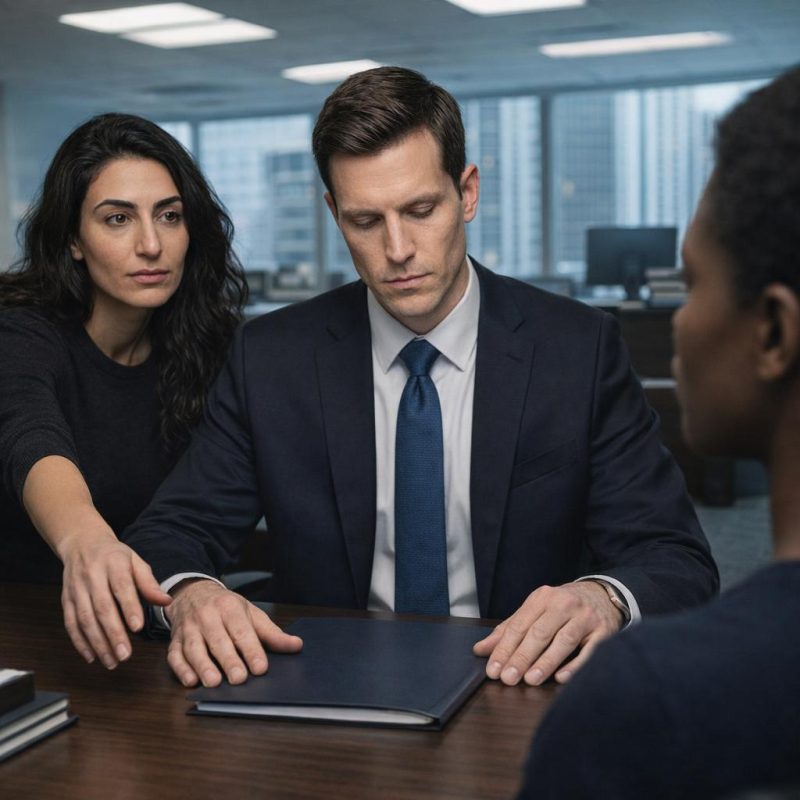 Image by RM AI
The Phone Call
We were having dinner two nights later, trying to pretend things were normal, when Mark's phone rang. I watched his face change the instant he saw the caller ID—all the color just drained away, and his hand froze halfway to the phone. He answered it but immediately stood up and walked toward the hallway, his voice dropping to a harsh whisper I could barely hear. I caught fragments: "I told you I need more time" and "that's not possible" and something that sounded like "you don't understand." When he came back to the table, I asked him directly who it was. He said it was related to the debt situation, nothing I needed to worry about, but he wouldn't give me a name or any real details. "Mark, we agreed—no more secrets," I said. He just shook his head, insisted he needed to handle this part alone, that involving me would only make things worse. Then the phone rang again, and this time he didn't even pretend to stay inside. He grabbed his jacket and walked out to the driveway, pacing back and forth under the streetlight while he argued with whoever was on the other end. I stood at the kitchen window watching him, seeing the tension in his shoulders, the aggressive gestures, the way he kept running his hand through his hair. After he walked outside to continue the conversation where I couldn't hear, I stood at the window watching him pace the driveway, wondering when my husband had become someone I didn't recognize.
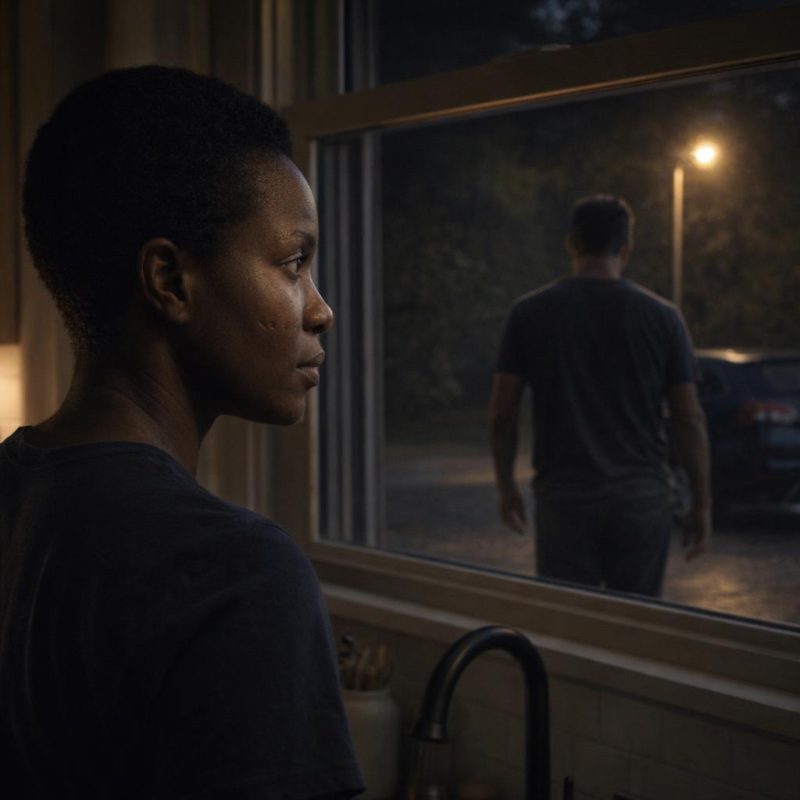 Image by RM AI
Hidden Phone
My car battery died three days later in the grocery store parking lot, and I remembered Mark kept jumper cables in his trunk. He was at work—or at least that's where he said he was going these days—so I used my spare key to pop the trunk of his car in our driveway. I moved aside the emergency kit and the reusable shopping bags, looking for the cables I knew were somewhere under the spare tire. That's when I felt it—a hard rectangular shape wrapped in an old t-shirt, hidden in the wheel well. I pulled it out and found myself holding a cheap burner phone, the kind you buy at gas stations with prepaid minutes. My hands were shaking as I turned it on. The call history went back weeks—dozens of calls to and from numbers that weren't saved with names, just listed as unknown. The text messages were worse: vague, threatening language about deadlines and consequences. Most contacts were saved as single letters or initials: "K," "DM," "R." I scrolled through the call logs and realized some of these calls happened during times Mark had told me he was at the office. I took photos of everything with my own phone, my heart pounding so hard I could hear it. Then I wrapped the burner phone back up exactly how I'd found it and put everything back in place. I didn't confront him when he got home. I just watched him, wondering what else he was hiding. The most recent text message was just four words: "Time is running out."
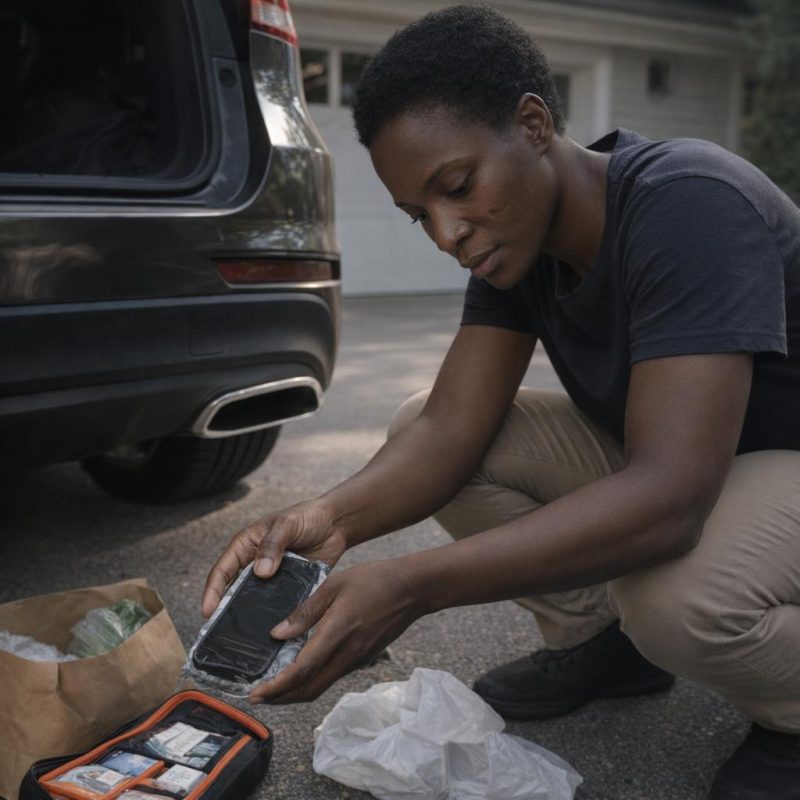 Image by RM AI
Federal Interest
The knock on the door came at 10 AM on a Thursday, and I wasn't expecting anyone. The woman on my porch was maybe fifty, with short gray-streaked hair and sharp eyes that seemed to assess everything about me in two seconds. She held up a badge and introduced herself as Agent Katherine Collins, federal law enforcement. My first thought was that this was about the debts, that Mark had done something illegal with the money, but the questions she asked were stranger than that. She wanted to know about Mark's recent behavior, where he'd been, who he'd been in contact with. She asked if he'd seemed nervous or if anyone unusual had contacted us. I told her about the motel, about the financial trouble, trying to be helpful, but she just nodded like she already knew all of that. "Mrs. Chen, there's an active federal interest in your husband," she said carefully. "I can't discuss the details of our investigation, but I need you to understand that this situation is more serious than you might think." I asked her what that meant, what Mark had done, but she wouldn't tell me anything specific. She just handed me her card and said if Mark contacted me, he needed to call her immediately. Then she added something that made my blood run cold. Agent Collins handed me her card and said if Mark contacted me, he needed to call her immediately—then added that I should be careful about who I trusted, even if I thought I knew them.
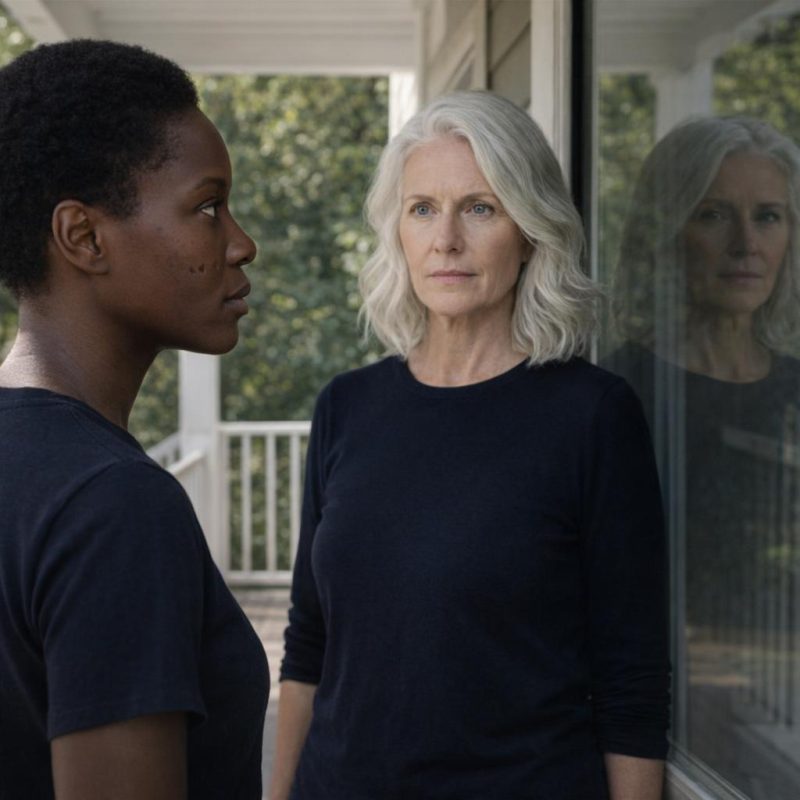 Image by RM AI
Warnings Without Answers
Agent Collins showed up again the next morning, and this time she didn't bother with pleasantries. She asked if we could talk inside, and something about the way she said it made me realize this wasn't optional. We sat at my kitchen table—the same table where Mark and I had eaten breakfast just hours before—and she pulled out a folder I hadn't seen during her first visit. "Mrs. Chen, I need you to understand the seriousness of this situation," she said, her voice flat and professional. "There's an active federal investigation, and your husband is involved." I asked her what he'd done, what he was accused of, but she just shook her head. "I can't discuss specifics. What I can tell you is that your cooperation would be in your best interest." I demanded real answers—was Mark a suspect, a witness, what?—but every question hit a wall. She asked about his childhood, his family, details about our wedding, things that seemed irrelevant to whatever crime she was investigating. When I pushed back, she leaned forward and said something that made my stomach drop. "You might be in danger if you're not careful about what you share and who you trust." I told her I trusted my husband, and she just looked at me with something like pity. As Collins drove away, I saw her watching my house in the rearview mirror, and I wondered if she was protecting me or monitoring me.
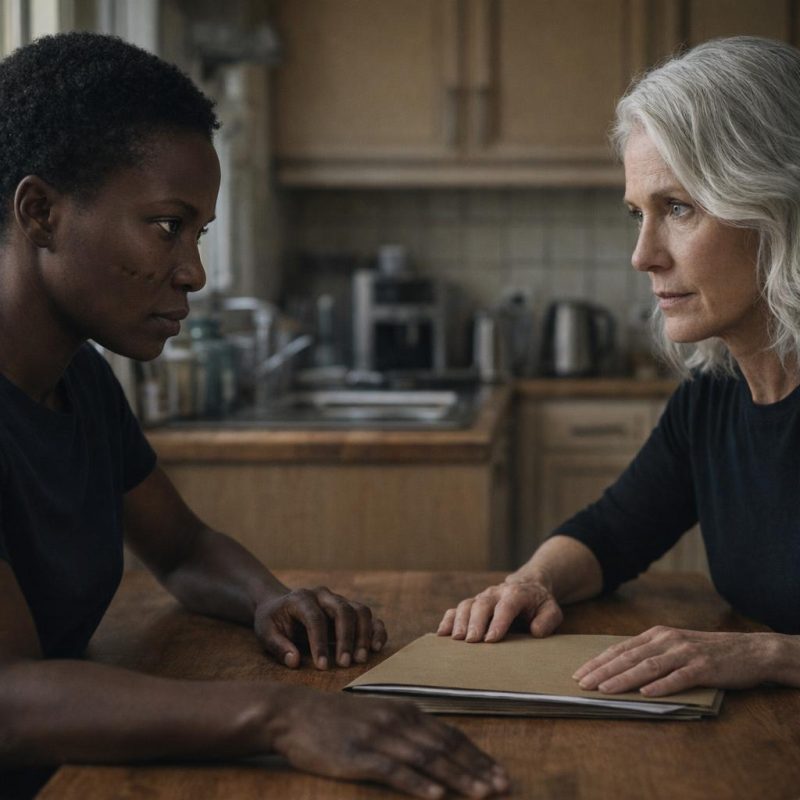 Image by RM AI
Routine Interview
When Mark came home that evening, I was waiting. I told him Agent Collins had been back, that she'd said things that scared me, and I needed him to explain what was happening. He sat down heavily, rubbing his face with both hands, and for a long moment he didn't say anything. Then he admitted the FBI had contacted him weeks ago—before any of this started. "It's about a guy I used to work with," he said, meeting my eyes for the first time. "Someone from my old job in Chicago. He got caught up in some financial crimes, wire fraud or something, and they're interviewing everyone who knew him." The explanation sounded reasonable. He said he'd answered their questions, told them he didn't know anything about illegal activity, and thought it was over. "I didn't want to worry you about something that was nothing," he said, reaching for my hand. I wanted to believe him. God, I wanted to believe him so badly. But Collins had made it sound like more than routine questions, and she'd acted like Mark was hiding something significant. I agreed to accept his explanation, told him I understood, but my mind kept circling back to that burner phone in his trunk. His story sounded reasonable until I remembered the burner phone in his trunk and the way Agent Collins had looked at me when she said I might not know him at all.
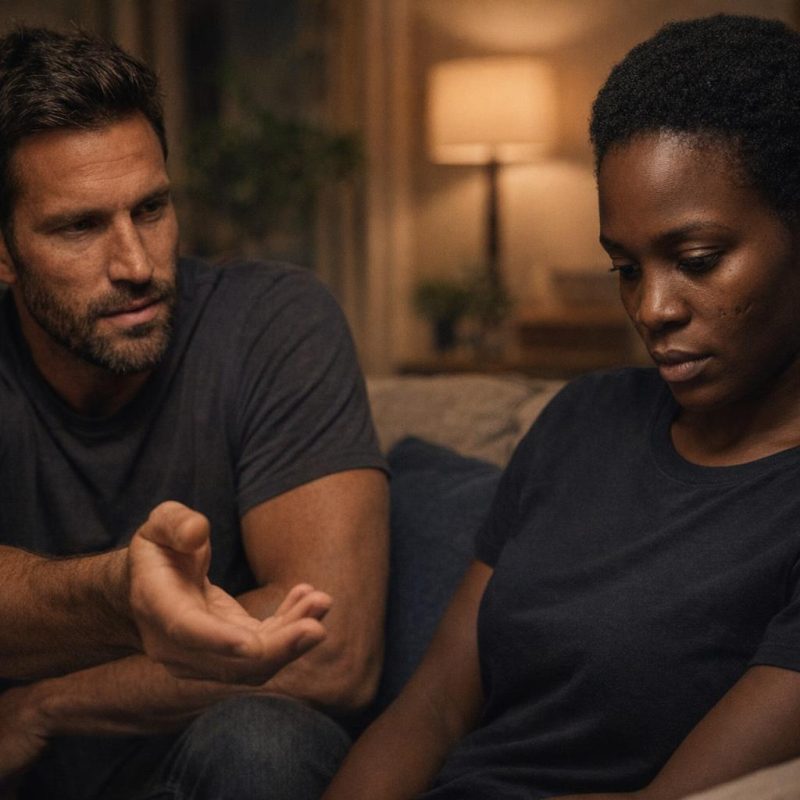 Image by RM AI
The Wrong Name
I couldn't stop thinking about what Collins had implied—that I didn't really know Mark. So the next day, while he was at work, I went looking through the storage boxes in our garage. Mark had always said we lost a bunch of stuff in our last move, photos and documents from before we met, but I'd never actually seen him look for them. I found the boxes pushed way back behind the Christmas decorations, covered in dust like they hadn't been touched in years. Inside were photographs I'd never seen before—Mark younger, maybe mid-twenties, with people I didn't recognize. Different cities, different clothes, a different version of him. I flipped through them, my hands shaking slightly, until I turned one over and saw handwriting on the back. The ink was faded but legible: "Michael Brennan, summer 2008." I stared at it, trying to make sense of what I was seeing. Michael. Not Mark. I went through the other photos and found two more with writing—same name, different dates. The timeline matched the years Mark claimed to have lived in Chicago, the years he said he'd been working in finance. I took pictures of everything with my phone before carefully putting the boxes back exactly as I'd found them. I stared at the faded ink spelling "Michael Brennan" and tried to convince myself there was an innocent explanation, but my hands were shaking too hard to hold the photo steady.
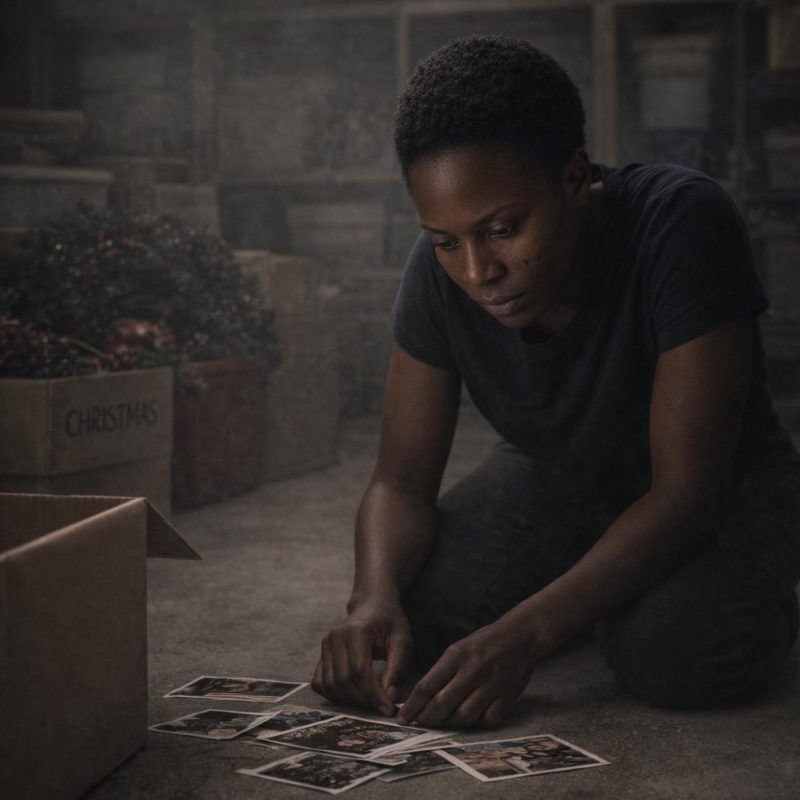 Image by RM AI
Followed
I first noticed the dark sedan when I left the grocery store on Thursday afternoon. It was just a car in my peripheral vision, nothing special, but it stayed three cars back as I drove toward home. I told myself I was being paranoid, that Collins had gotten into my head, but when I turned onto a side street I never normally used, the sedan turned too. My heart started pounding. I made another turn, then another, taking a deliberately random route through residential streets. The car followed every time. This wasn't coincidence. Someone was following me, and they weren't even trying to hide it. Instead of going home, I drove straight to the police station and pulled into the parking lot. The sedan drove past slowly but didn't stop. Inside, I asked for Detective Morris, the officer who'd taken my missing person report. He listened to my story, taking notes, but his expression didn't show surprise. "Has your husband mentioned anyone who might want to keep tabs on him?" he asked. "Anyone from his past, business associates, people he might owe money to?" The questions felt too specific, like he already knew context I didn't. He told me to vary my routines, be aware of my surroundings, and call immediately if I saw the car again. Detective Morris took down the information but seemed unsurprised, and when he asked if my husband had enemies, the question didn't sound hypothetical.
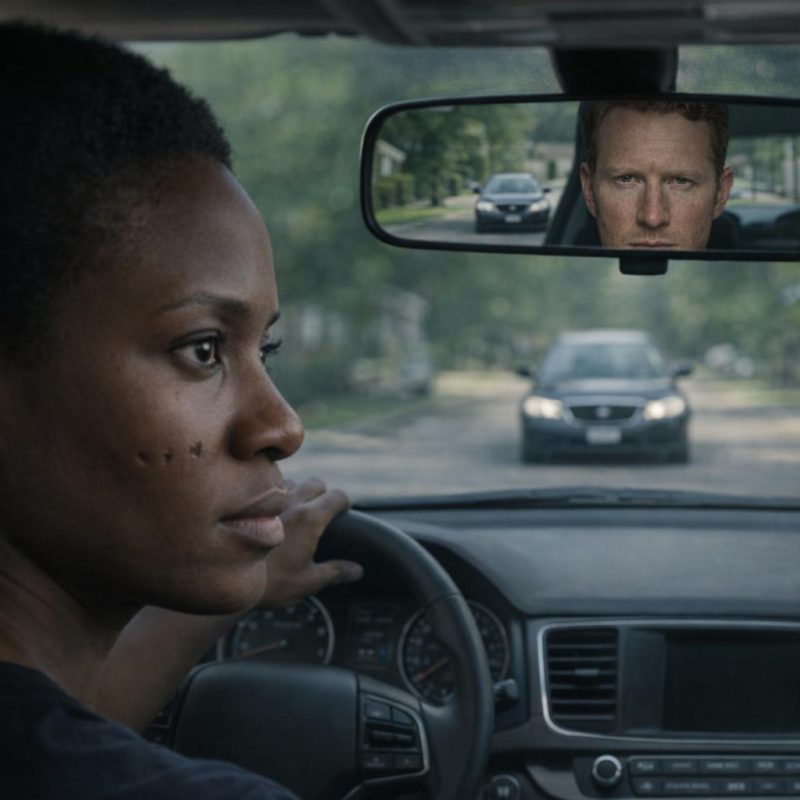 Image by RM AI
Run
Mark came home in the middle of the afternoon on Friday, and I knew immediately something was wrong. He looked wild, his hair disheveled, his shirt untucked. "We need to leave," he said, heading straight for our bedroom. "Right now. Pack a bag." I followed him, watching as he pulled our suitcase from the closet and started throwing clothes into it. "Mark, what are you talking about? Leave where?" He didn't answer, just kept packing, moving to the bathroom to grab toiletries. I grabbed his arm, forcing him to look at me. "Tell me what's happening." He pulled away and went to the window, peering through the blinds like he expected to see something out there. "We're not safe here," he said. "I can't explain right now, but we need to go. Today." His fear was real—I could see it in the tension of his shoulders, the way his hands shook slightly as he checked the window again. I demanded answers, told him I wasn't going anywhere until he explained, but he just kept saying it was dangerous to stay. He moved through the house checking locks, avoiding standing where he could be seen from outside. When I asked him directly if someone was trying to hurt us, he froze with a shirt halfway into the suitcase. He was throwing clothes into a suitcase when I asked him point-blank if someone was trying to hurt us, and the way he froze told me everything his silence didn't.
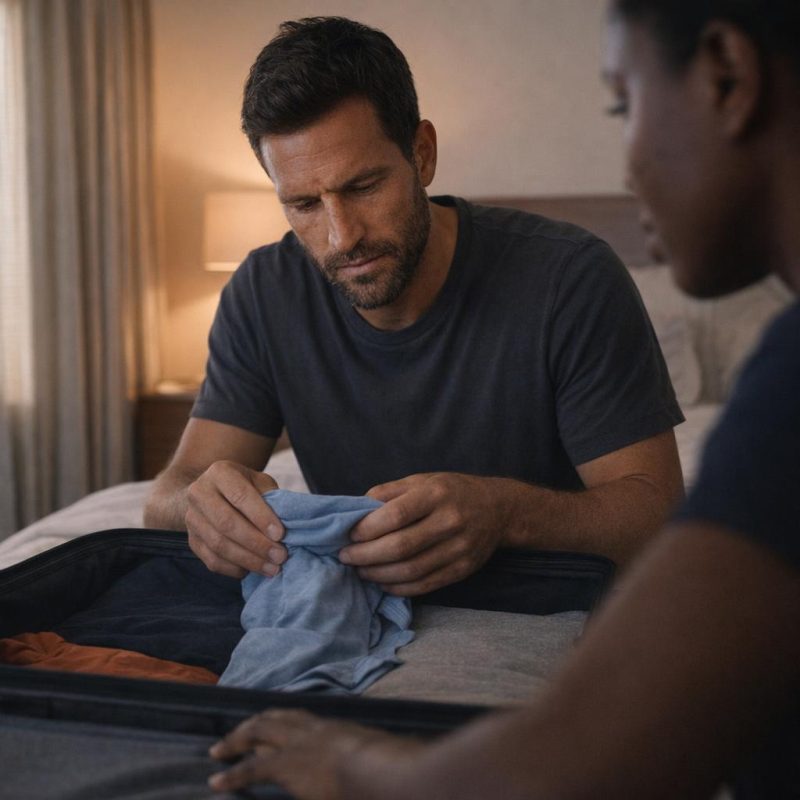 Image by RM AI
Standing Ground
I planted myself between Mark and the suitcase. "I'm not running blindly," I said. "If we're in danger, I deserve to know why. I deserve the truth." He tried to move past me, but I didn't budge. The argument escalated fast—him insisting we had to leave immediately, me refusing to go anywhere without answers. "You don't understand," he kept saying, his voice rising. "There's no time to explain." I pulled out my phone. "Then I'm calling Agent Collins. She'll tell me what's going on." Mark's face went white. "Don't," he said, but I was already pulling up her number. I'd had enough of secrets and half-truths and being treated like I couldn't handle reality. My finger hovered over the call button when Mark lunged forward and grabbed the phone from my hand. "If you contact her now, you'll get us both killed," he said, and something in his voice made me step back. He was standing too close, his grip on my phone too tight, his eyes desperate in a way that looked almost dangerous. This was my husband, the man I'd shared a bed with for eight years, and in that moment I was genuinely afraid of him. We stood there in tense silence, neither of us moving. Mark grabbed my phone before I could dial and said if I contacted Collins now, I'd get us both killed—and for the first time in eight years, I was genuinely afraid of my own husband.
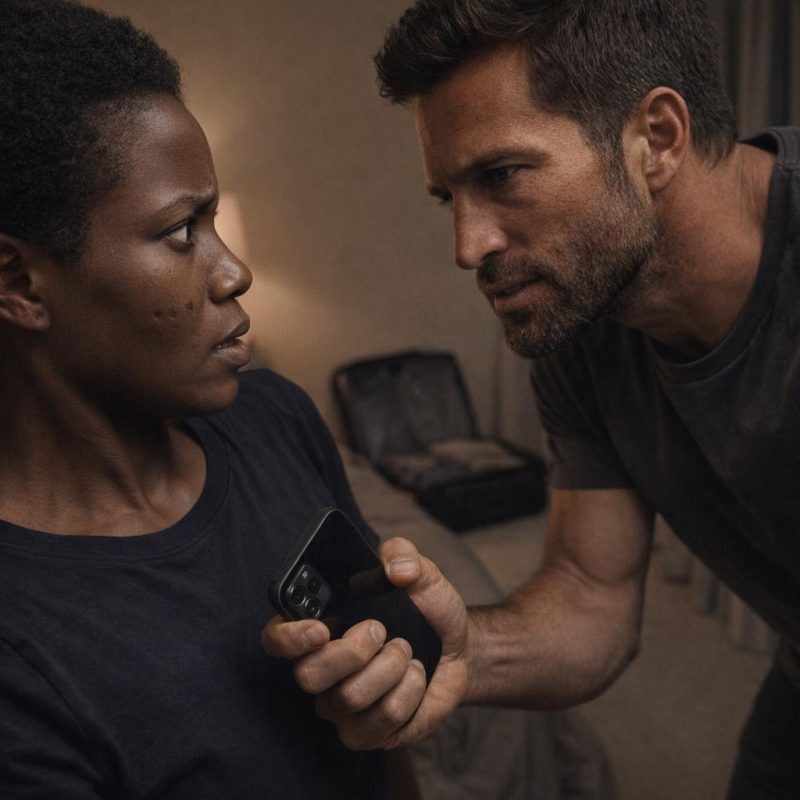 Image by RM AI
Secret Meeting
I waited until Mark left for work Monday morning, then I used my laptop to email Agent Collins from a new account I'd created. We arranged to meet at a coffee shop forty minutes away, somewhere Mark would never think to look. Collins was already there when I arrived, sitting in a back corner with a folder on the table. "I need the truth," I said as soon as I sat down. "All of it. What is my husband involved in?" She studied me for a moment, then nodded slowly. "I can share some information if you're willing to help us." She opened the folder and pulled out several photographs. They showed Mark—or someone who looked exactly like him—but different. His hair was darker, styled differently, and he was wearing clothes I'd never seen. He was standing with people I didn't recognize in locations I couldn't identify. "Do you know when or where these were taken?" Collins asked. I shook my head, staring at the images. "I've never seen these before. Who are these people?" Collins didn't answer directly. Instead, she asked more questions about Mark's past, about the gaps in his history, about whether I'd ever wondered why he had so few connections to his life before we met. The conversation felt like pieces of a puzzle I couldn't quite see. She hinted at things without saying them outright—protection programs, relocated witnesses, fabricated identities. Collins slid a photograph across the table—Mark in different clothes with different hair, standing next to people I'd never seen—and asked me if I knew when and where it was taken.
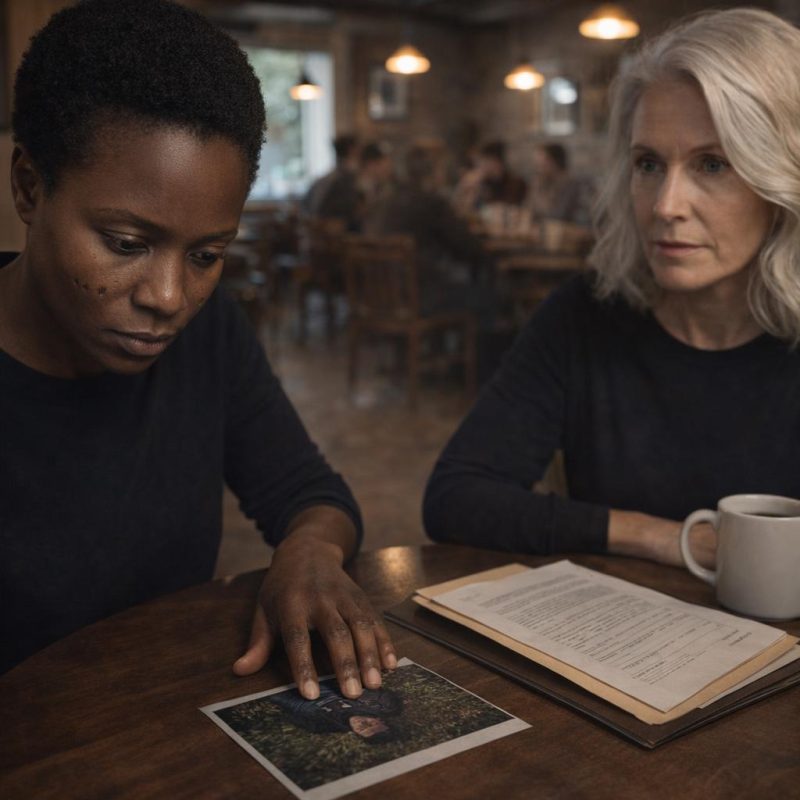 Image by RM AI
Digital Ghost
That night, after Mark fell asleep, I took my laptop into the bathroom and started searching. I tried every public database I could find, every search engine, looking for Mark Brennan's history before age twenty-six. Nothing. His employment records didn't exist before eight years ago. His social media presence started exactly when we met. I couldn't verify his college degree through normal channels. It was like he'd materialized fully formed as an adult. Collins's hints about witness protection started making a horrible kind of sense. I thought about the photographs with the different name and tried searching for Michael Brennan instead. Results appeared immediately—dozens of them. News articles from nine years ago, court documents, federal case files. Michael Brennan had been involved in something big, something that made headlines. I clicked through article after article, my stomach sinking with each one. The Michael in these stories was the right age, and one grainy photograph looked enough like Mark to make my breath catch. The articles mentioned federal investigations, testimony, organized crime. I sat on the bathroom floor with my laptop, reading about a man who might be my husband, a man who might have had very good reasons to disappear and become someone else. Every search came back empty until I tried the name Michael instead of Mark, and suddenly there were results—none of them good.
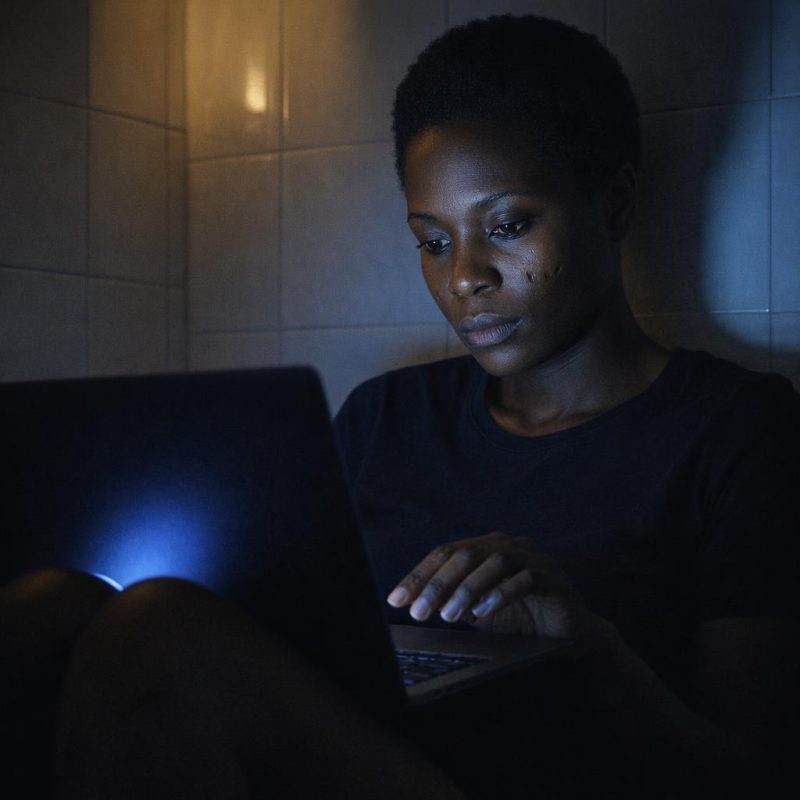 Image by RM AI
Before Mark
Rachel came over the next morning with coffee and her laptop, and I showed her everything I'd compiled. We sat at my kitchen table and went through it systematically—every gap, every impossibility, every piece of Mark's history that simply didn't exist. No employment records before age twenty-six. No college transcripts that could be verified. The apartment he claimed to have lived in during his early twenties? The building had been condemned and demolished two years before he supposedly lived there. His childhood home address led to a vacant lot. Every reference, every former employer, every detail of his pre-relationship life either couldn't be confirmed or was demonstrably false. Rachel didn't say much at first, just took notes and cross-referenced things on her own laptop. Finally, she looked up at me with this expression I'd never seen on her face before—something between pity and fear. "Sarah, this isn't just someone hiding their past," she said quietly. "This is someone who had their past professionally erased." I nodded, my throat tight. "Witness protection." "It's the only thing that makes sense," she agreed. The absence of any record felt like proof in itself, and I had to face what I'd been avoiding—I might have married someone who didn't legally exist until eight years ago.
 Image by RM AI
The Caruso Connection
After Rachel left, I went back through the photos I'd taken at the motel. I'd been so focused on the overall scene that I hadn't really examined the documents scattered across Mark's desk. I zoomed in on each image, squinting at the blurry text. One name appeared over and over: Vincent Caruso. I opened a new browser window and typed it in. The results loaded slowly, and my stomach dropped as I started reading. Vincent Caruso wasn't just some random name—he was a major organized crime figure who'd been prosecuted fifteen years ago on federal racketeering charges. The articles described money laundering operations, interstate criminal enterprises, violence. He'd been sentenced to fifteen years in federal prison. I kept scrolling, looking for more recent information. There—a small article from six months ago. Vincent Caruso had been released on parole after serving his full sentence. Six months ago. Exactly when Mark's behavior had changed, when the nightmares started, when he began looking over his shoulder everywhere we went. I stared at my laptop screen, my hands shaking slightly. Vincent Caruso had spent fifteen years in federal prison for racketeering, released just six months ago—and Mark's strange behavior had started six months ago.
 Image by RM AI
Family Destroyed
I spent the next two days digging into the Caruso case, pulling up every court document I could access online. The federal prosecution had been massive—a multi-year investigation that dismantled an entire criminal organization. Multiple witnesses had testified, their identities sealed by court order. The case hinged on financial evidence, detailed documentation of money laundering and racketeering that spanned state lines. One witness in particular kept being referenced in the sentencing documents: a forensic accountant who'd provided the paper trail that made conviction inevitable. His testimony had been devastating, apparently. Every mention of him was redacted, his name blacked out in every public record. I called Rachel and walked her through what I'd found. "That's how witness protection works," she said over the phone. "They seal everything. If this accountant testified against someone like Caruso, he'd have been relocated immediately after the trial." I thought about Mark's fabricated employment history, his nonexistent past, the way he'd appeared in my life fully formed. "Mark worked in accounting," I said quietly. "Before he switched to sales." Rachel was silent for a moment. The trial transcripts mentioned a forensic accountant who provided the financial evidence that ensured conviction, but his name was redacted from every public document—redacted the way witness protection requires.
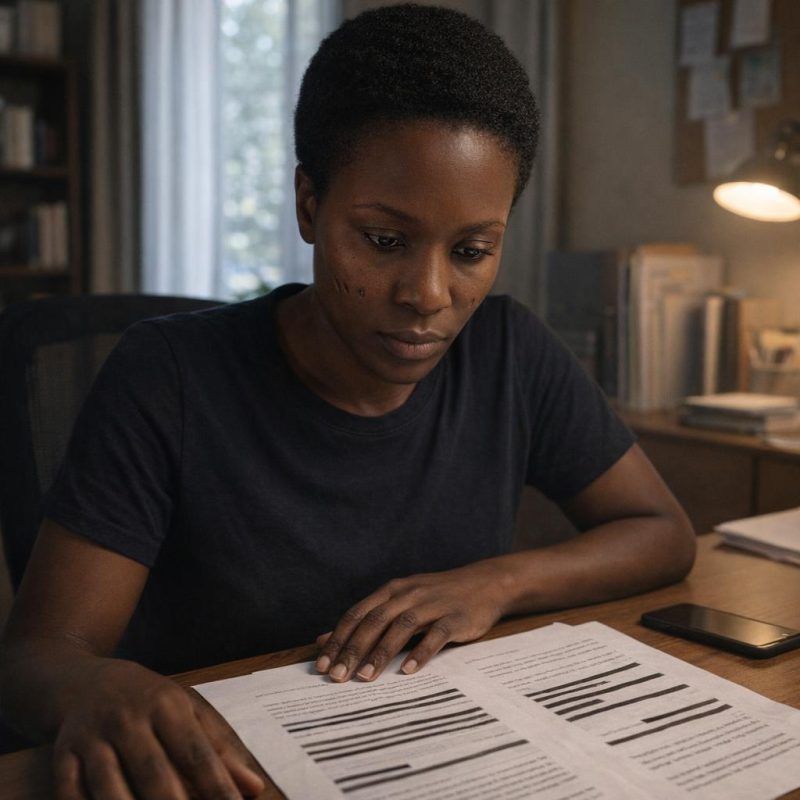 Image by RM AI
Fifteen Years
I couldn't sleep that night, so I did what I always do when my brain won't shut off—I made lists and timelines. On one side of my notebook, I wrote everything I knew about the Caruso case. On the other, everything I knew about Mark. The trial had concluded fifteen years ago in federal court in New Jersey. Witnesses would have been relocated immediately after sentencing. Mark Brennan had appeared with a documented identity—Social Security number, employment records, everything—exactly fifteen years ago. The geography matched too. Mark had always been vague about where he grew up, but he'd mentioned New Jersey once or twice in passing. His stories about his childhood were generic, the kind of details anyone could invent. No specific schools, no verifiable friends, nothing concrete. I stared at the parallel timelines I'd drawn, watching them converge at that single point fifteen years ago. Michael Brennan testifies. Mark Brennan appears. Michael disappears into protection. Mark walks into my life eight years later with a completely constructed past. The math was perfect. The timing was perfect. Everything lined up with a precision that felt like proof. I stared at the parallel timelines I'd drawn and felt my marriage dissolve into before and after—before I knew, and after I couldn't unknow that the man I loved might have never existed at all.
 Image by RM AI
Rachel showed up the next afternoon with her laptop and a determined expression. "We're going deeper," she announced, settling in at my kitchen table. She'd brought access to some professional background check databases through her work, the kind that showed employment verification and tax records. We started with the three employers Mark had listed on various documents over the years. The first company checked out—they existed, they were legitimate, and their records showed Mark had worked there. But the second company had gone out of business seven years ago, and when Rachel pulled up the incorporation records, we discovered it had actually closed the same year Mark supposedly started working there. The third employer was even worse—the business license had been issued two years after Mark claimed to have left. "These aren't just gaps," Rachel said, highlighting the discrepancies on her screen. "These are impossible. You can't work somewhere that doesn't exist yet." We cross-referenced dates, checked business registrations, verified timelines. Some of Mark's employment history was real, but pieces of it were clearly fabricated, filled in with companies that couldn't be verified or didn't exist during the timeframes he claimed. Rachel pointed to three different employers Mark claimed on various documents, and when we cross-referenced them, two had gone out of business the same year he supposedly started working there.
Public Records
Rachel showed up the next afternoon with her laptop and a determined expression. "We're going deeper," she announced, settling in at my kitchen table. She'd brought access to some professional background check databases through her work, the kind that showed employment verification and tax records. We started with the three employers Mark had listed on various documents over the years. The first company checked out—they existed, they were legitimate, and their records showed Mark had worked there. But the second company had gone out of business seven years ago, and when Rachel pulled up the incorporation records, we discovered it had actually closed the same year Mark supposedly started working there. The third employer was even worse—the business license had been issued two years after Mark claimed to have left. "These aren't just gaps," Rachel said, highlighting the discrepancies on her screen. "These are impossible. You can't work somewhere that doesn't exist yet." We cross-referenced dates, checked business registrations, verified timelines. Some of Mark's employment history was real, but pieces of it were clearly fabricated, filled in with companies that couldn't be verified or didn't exist during the timeframes he claimed. Rachel pointed to three different employers Mark claimed on various documents, and when we cross-referenced them, two had gone out of business the same year he supposedly started working there.
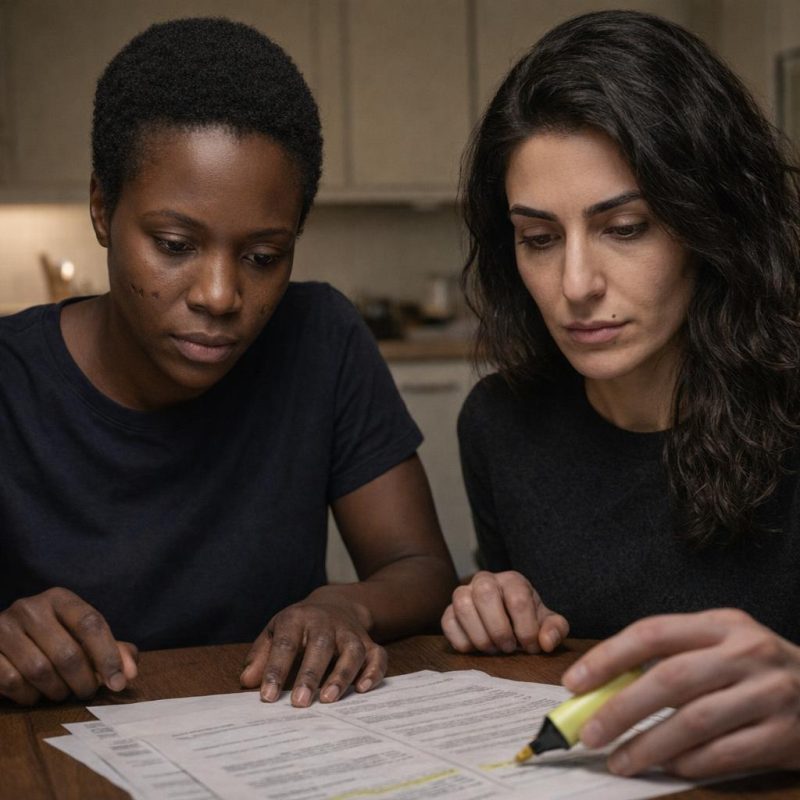 Image by RM AI
Stranger in My Bed
That night, I lay in bed next to Mark and tried to remember what it felt like to trust him completely. He was asleep, his breathing steady and deep, his face relaxed in a way it never was during waking hours anymore. I studied his profile in the darkness—the gray at his temples, the lines around his eyes, the small scar on his chin he'd told me came from a childhood bike accident. Was that story even true? Had there been a bike accident, or was it just another piece of the elaborate fiction he'd constructed? I thought about our wedding day, the way he'd cried when I walked down the aisle. Had those tears been real? Our first apartment, our inside jokes, the way he knew exactly how I took my coffee—were any of those moments genuine, or had I been living with a performance for eight years? Every memory felt contaminated now, like I was watching our life together through a filter that revealed hidden strings and stage directions. Mark shifted in his sleep, reaching for my hand the way he always did, that unconscious gesture of connection we'd developed over years of sharing a bed. He reached for my hand in his sleep like he always did, and I pulled away for the first time in our marriage because I didn't know whose hand I was holding anymore.
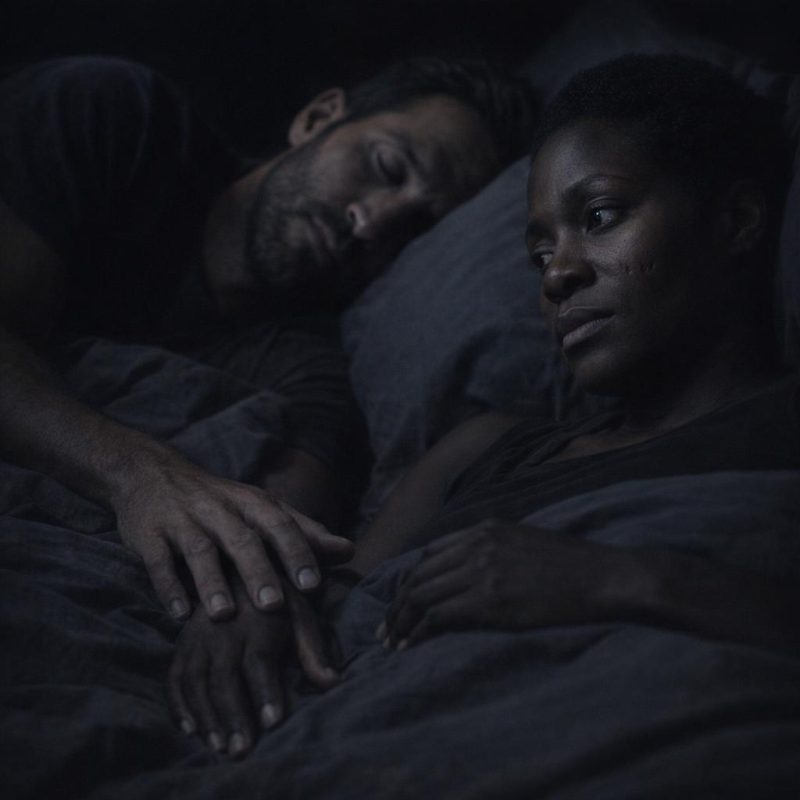 Image by RM AI
Breaking Point
I confronted him the next morning over coffee. I'd printed out everything—the employment discrepancies, the timeline impossibilities, the companies that didn't exist when he claimed to work there. I laid it all on the kitchen table between us like evidence at a trial. "Explain this," I said, my voice steadier than I felt. "Explain how you worked at a company that closed before you started there." Mark stared at the papers, his face going pale. He tried to deflect at first, suggesting maybe the records were wrong, maybe I'd gotten confused about dates. But I wouldn't let him. I went through each impossibility, each fabrication, each piece of his history that couldn't possibly be true. "Who are you?" I finally asked. "Because Mark Brennan didn't exist before fifteen years ago, and I need to know who I actually married." That's when he broke. His composure just crumbled, and he started crying—real, ugly crying that shook his whole body. But even through the tears, even when I begged him to just tell me the truth, he wouldn't explain. He kept saying he loved me, that I was the only real thing in his life, that everything between us was genuine. Through his tears, he said the only true thing in his life was loving me, but when I asked if Mark was even his real name, he couldn't answer.
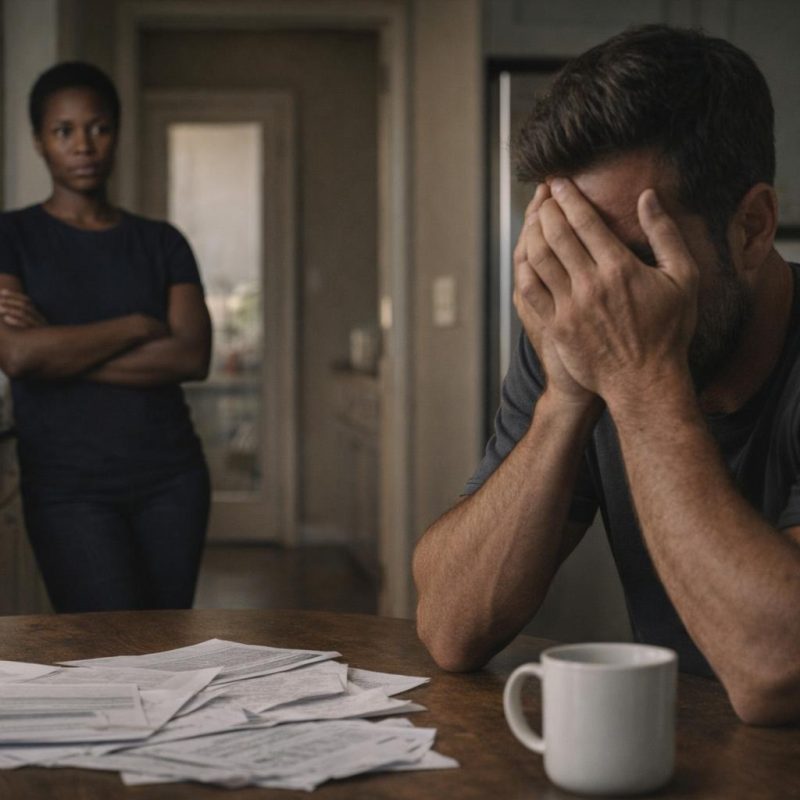 Image by RM AI
Violated
We'd gone to Rachel's house that evening to get away from the tension, to pretend for a few hours that everything was normal. When we pulled into our driveway around nine, I noticed it immediately—the front door was slightly ajar, a sliver of darkness visible where it should have been closed and locked. Mark saw it too. He put his arm out to stop me from getting out of the car. "Stay here," he said, but I ignored him and followed as he approached the house cautiously. The inside was chaos. Every drawer had been pulled open, papers scattered across the floor, cushions pulled from the couch. But our TV was still there, my laptop sat untouched on the coffee table, Mark's expensive watch was still on the bathroom counter. Nothing was missing. This wasn't a burglary—it was a search. Mark moved through the house with this grim recognition on his face, like he'd been expecting this. I found it in the kitchen, propped against the coffee maker where I'd be sure to see it—a photograph of me leaving a coffee shop downtown. I was mid-stride, unaware of the camera, and the angle suggested it had been taken from across the street. The intruders had left one thing behind—a photograph of me leaving the coffee shop where I'd met Agent Collins, proof that someone had been watching us both.
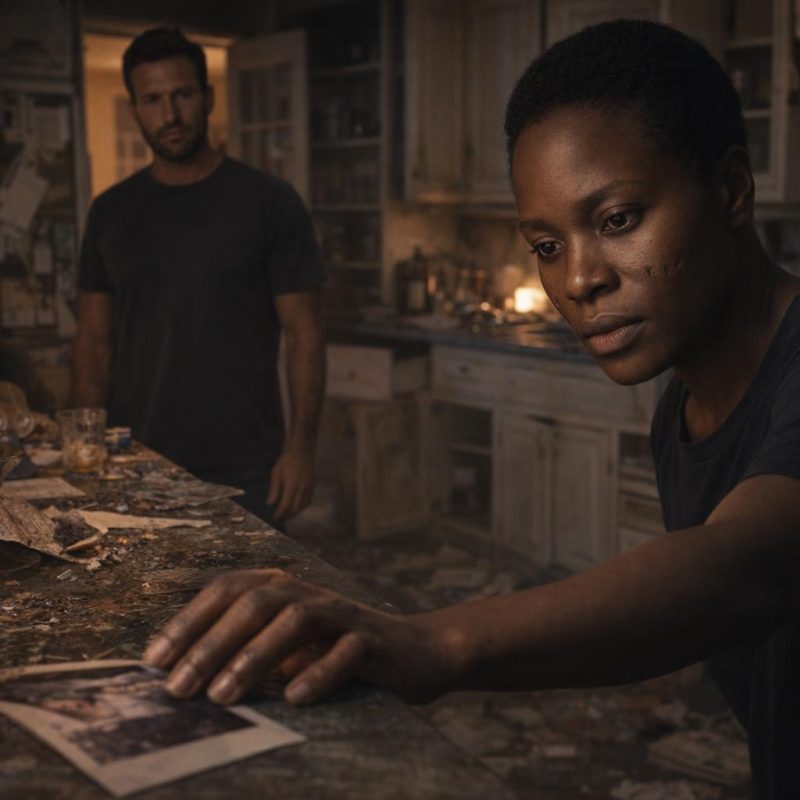 Image by RM AI
The Truth About Running
After the police left—taking notes about the break-in but clearly not understanding what they were really looking at—I cornered Mark in the kitchen. The photograph of me was still on the counter between us, proof that whatever he'd been trying to protect me from had already found me. "No more half-truths," I said. "Who are these people?" He leaned against the counter, and for the first time since I'd known him, he looked genuinely defeated. "People from my past," he said quietly. "They've been looking for me for a long time, and they found me a few months ago." My hands were shaking. "What did you do to them?" He shook his head. "The less you know, the safer you'll be." I grabbed the photograph and held it up between us. "Does this look safe to you? They know where I get coffee, Mark. They know my routine. They broke into our house." He stared at the photo, his jaw working. "I thought if I disappeared, if I drew them away from you—" "But I'm already part of this," I said, and the truth of it settled over both of us like a weight. He nodded slowly, and I saw something break behind his eyes. When I asked who these people were and what he'd done to them, he said the less I knew, the safer I'd be—but the photograph proved I was already part of this whether he protected me or not.
 Image by RM AI
Fortress
I spent the next morning on my laptop ordering everything I could think of. Professional security cameras with night vision and cloud storage. Motion sensors for every window and door. A locksmith arrived that afternoon and changed every lock in the house while Mark watched from the doorway, his expression unreadable. I opened a secure cloud account and gave Rachel the login credentials in a text that just said "if anything happens to me." Then I uploaded everything—the photographs I'd found, my research on Mark's fabricated history, screenshots of property records, timelines I'd created. I backed it all up in three different locations because I'd watched enough true crime documentaries to know that evidence has a way of disappearing. Mark helped me install the cameras without saying much, holding the ladder steady while I mounted one above the front door, passing me tools when I needed them. But when I climbed down from positioning the final camera, I caught him looking at me with an expression I'd never seen before. It was somewhere between gratitude and grief, like he was proud of me for being strong enough to do this but devastated that I had to. Like he was watching me prepare to survive what he'd brought into our lives, and it was killing him. Mark watched me set up the final camera with an expression I'd never seen before—something between gratitude and grief, like he was proud of me for preparing to survive what he'd brought into our lives.
 Image by RM AI
Demolished
I told Mark I had an early meeting and left the house before he could ask questions. The address I'd found on the back of one of his old photographs led me across town to a neighborhood I'd never been to, all chain-link fences and industrial buildings. When I found the street number, I had to check it twice because there was nothing there—just an empty lot surrounded by construction fencing and a sign announcing future luxury condos. I pulled over and sat in my car, staring at the bare dirt where Mark's past should have been. My phone confirmed what I was seeing: the building had been demolished five years ago. I got out and walked to the fence, taking photos of everything. The construction sign listed all the permits and contractors, and at the bottom, in smaller print, it described the previous structure: mixed-use apartments with retail and office space on the ground floor. One of those ground-floor units had housed a forensic accounting firm. I remembered that phrase from my research on the Caruso trial—forensic accountant, financial evidence, sealed testimony. I sat back in my car and stared at that empty lot for a long time, thinking about how thoroughly someone's entire life could be erased. The construction sign listed the previous building as mixed-use apartments with a forensic accounting firm on the ground floor, and I sat in my car staring at the empty lot where Mark's previous life had been literally erased.
 Image by RM AI
Elena's Warning
The email arrived two days later in an account I barely used anymore, one I'd set up years ago for online shopping and then forgotten about. The subject line was just my first name, which should have been my first warning. "Sarah—You don't know me, but I know Mark. Or I knew who he was before. We're both in danger because of the same people, and I think you deserve to understand why." It was signed Elena Rostova, a name that meant nothing to me. She wanted to meet somewhere public and crowded—she suggested the mall food court on a Saturday afternoon. "I know this sounds insane," the email continued, "and you have no reason to trust me. But I've been where you are right now, confused and scared and not knowing who your husband really is. I can help you understand, but only if you're willing to hear the truth." I read it three times, looking for signs that this was a trap or a scam. But there were details in her message that felt too specific, too knowing. She mentioned the break-in at our house, which hadn't been reported in any news. She knew Mark had disappeared to a motel. Elena's message ended with a single line that made my blood run cold: "They found him because they found me first, and I'm sorry for what that means for you."
 Image by RM AI
Two Witnesses
I found Elena exactly where she said she'd be, at a corner table in the mall food court with sight lines to all the entrances. She was younger than I'd expected, maybe early forties, with striking pale eyes and a nervous energy that made her constantly scan the crowd. "Thank you for coming," she said as I sat down. "I wasn't sure you would." She told me her story in a low, urgent voice. Fifteen years ago, she'd testified in a federal organized crime trial. The government had put her in witness protection immediately afterward, given her a new name, a new life. "Mark testified too," she said. "Different circumstances, different role, but same trial. Same organization." I felt something cold settle in my stomach. "Vincent Caruso," I said, and she nodded. "He got out six months ago. And he's been systematically finding everyone who put him away." She didn't know Mark's real name or exactly what his role had been—witness protection kept them separated, she explained. But she knew there had been five people who testified. "In the past six months, two of them have disappeared," she said, her voice shaking slightly. "No bodies, no evidence, just gone. And I'm terrified Mark is next." Elena looked around nervously and said there had been five witnesses who testified, and in the past six months, two of them had disappeared—and she was terrified Mark would be next.
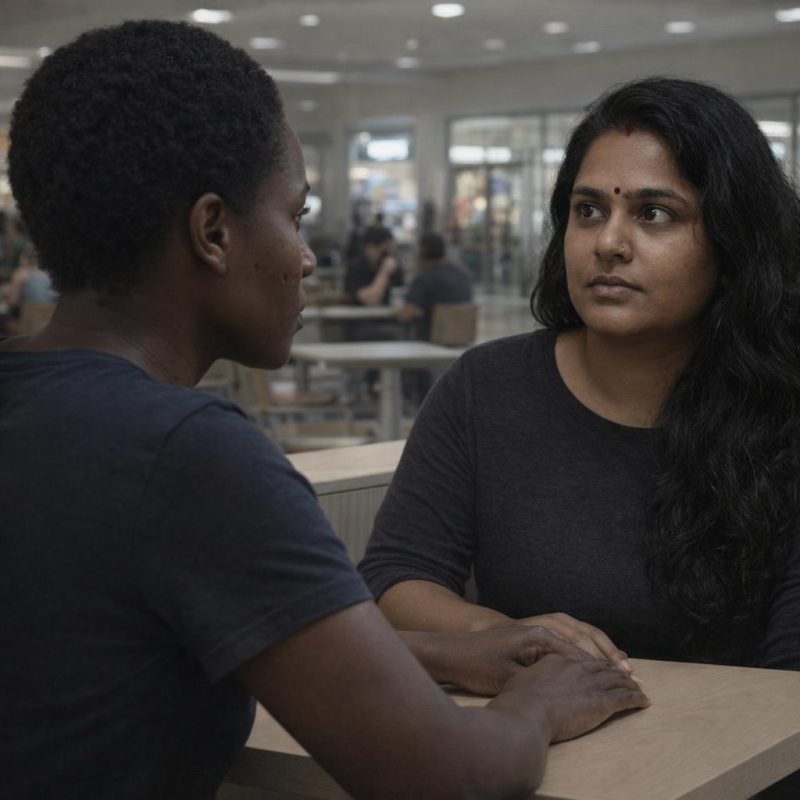 Image by RM AI
Same Trial
I confronted Mark the moment I got home, before I could lose my nerve. "I met with Elena Rostova today," I said, and watched all the color drain from his face. "She contacted you?" His voice was barely above a whisper. "How did she—" "She told me about the trial," I interrupted. "About Caruso. About witness protection." He sank onto the couch, his head in his hands. "She shouldn't have involved you. That's against every protocol—" "Stop," I said. "Just stop with the evasions. Did you both testify fifteen years ago?" He nodded slowly. "Yes. But we barely knew each other. Our roles in the case were separate. I haven't had any contact with her since." "You're not supposed to," I said, remembering what Elena had told me. "Witness protection forbids it." Mark looked up at me. "Then why would she risk reaching out now?" "Because two of the other witnesses have disappeared," I said, and watched his expression shift from confusion to horror. "In the past six months. She thinks Caruso's organization is hunting all of you." He stood up abruptly, pacing. "I didn't know. I had no idea about the others." I asked him how many people had testified against this organization, and when he said five, I had to tell him that according to Elena, only three of them were still alive.
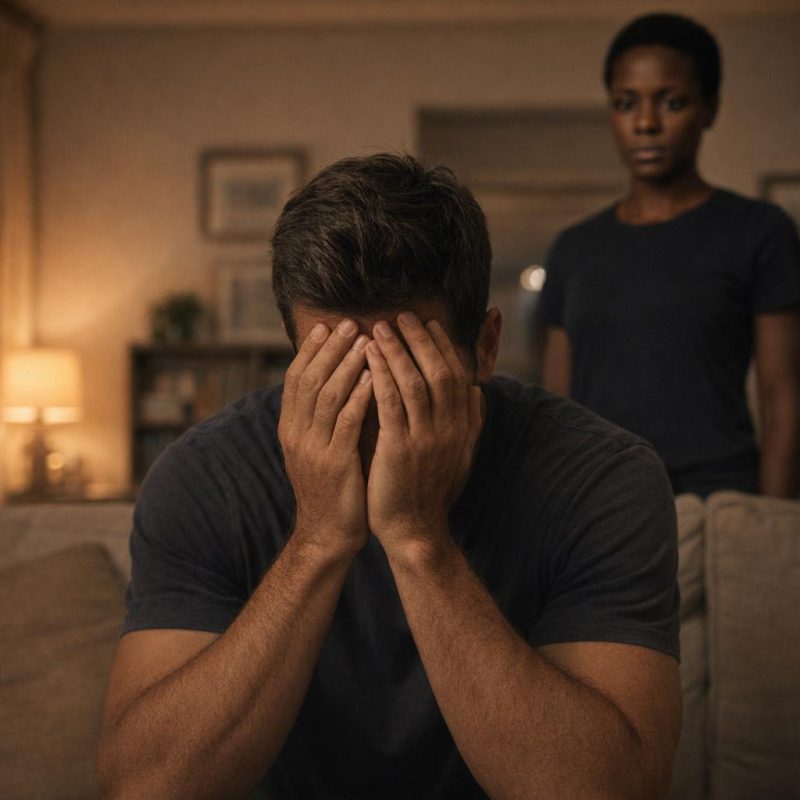 Image by RM AI
Fifteen Years Ago
After Mark went to bed that night, I sat at the kitchen table with my laptop and pieced together the timeline I'd been avoiding. The federal trial had concluded exactly fifteen years ago—I'd found the sentencing date in archived court records. Witness protection would have created new identities immediately after testimony, maybe even before the trial ended if the witnesses were considered high-risk. Mark's documented history as Mark Brennan began fifteen years ago. I'd verified that through every database I could access. Which meant he'd been given this identity, this name, this entire life right after he testified. I pulled up old photos on my phone, scrolling back to the early days of our relationship. We'd met at the gym, a chance encounter that had felt like fate at the time. I'd thought he was charming and a little shy, new to the area and looking to make friends. That had been fourteen and a half years ago. I did the math three times because I didn't want to believe it. Mark had only been living as Mark for six months before he walked into my life. Six months to learn a new name, a new history, a new way of being in the world. I calculated back to when we met and realized Mark had only been living as Mark for six months before he walked into my life—barely enough time to learn how to be someone else, let alone fall in love as that person.
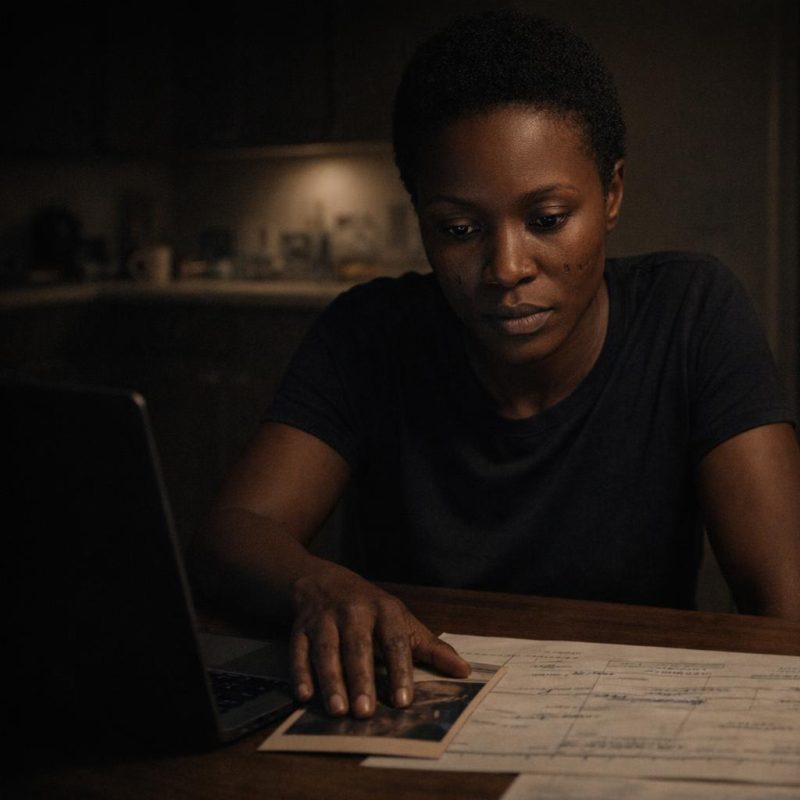 Image by RM AI
The Trial Archives
I spent hours reading through archived newspaper coverage of the trial, my coffee going cold beside me as I scrolled through article after article. The case had been massive—Vincent Caruso and twelve associates charged with racketeering, money laundering, extortion, and conspiracy. The prosecution had built their case on testimony from multiple cooperating witnesses, people from inside and outside the organization who'd agreed to testify in exchange for protection. But what really broke the case, according to every article I read, was the financial evidence. Caruso's operation had moved money through dozens of shell companies and offshore accounts, a network so complex it had taken years to untangle. The prosecution's financial expert had provided documentation that mapped the entire money laundering scheme, testimony that made the paper trail comprehensible to a jury. I found one article from a legal journal that went into more detail about the financial testimony, how crucial it had been to securing convictions. But the witness's identity was sealed by court order due to the extreme danger from the organization. I thought about the demolished building, the forensic accounting firm that had occupied the ground floor. One article mentioned that the prosecution's case relied heavily on financial documentation provided by an insider who helped authorities understand the money laundering network—but the witness's name and background were sealed by court order.
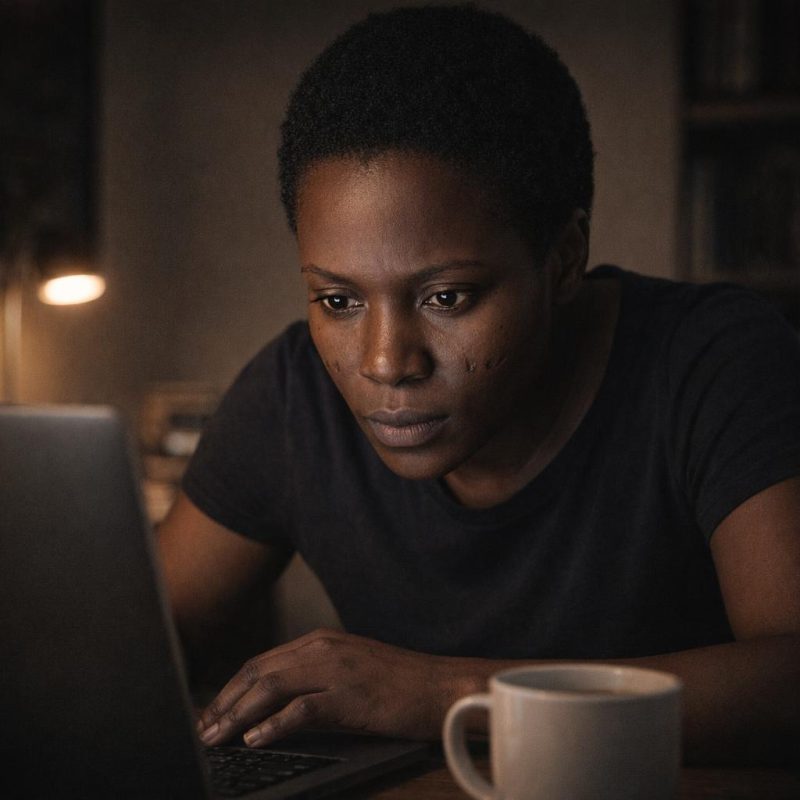 Image by RM AI
The Missing Accountant
I spent the next morning digging deeper into the trial coverage, searching for any names connected to the financial testimony. Most articles kept the witness identities sealed, but older pieces from before the trial had been less careful. That's when I found it—buried in a local business journal from fifteen years ago, an article about a young forensic accountant named Michael Castellano who'd discovered irregularities in client accounts and brought evidence to federal authorities. The piece described him as mid-twenties, brilliant with numbers, someone who'd risked everything to do the right thing. I searched for more mentions of the name. Three more articles came up, all from the months leading to the trial, all describing Castellano as a crucial witness due to his financial expertise. Then nothing. After the trial concluded, Michael Castellano vanished from every database, every public record, every trace of normal life. It was like he'd been erased. I found one grainy photograph from a news story before the trial began—a young man leaving a courthouse, hand partially covering his face. The image quality was terrible, pixelated and blurred. But I stared at it for twenty minutes straight, my coffee going cold beside me, because even through the poor resolution and fifteen years of aging, I recognized the shape of his jaw, the set of his shoulders, the way he held himself. The last article about Michael Castellano mentioned he was in his mid-twenties at the time of testimony, which would make him exactly Mark's current age—and the grainy photograph showed a younger version of the face I'd been waking up next to for eight years.
 Image by RM AI
Perfect Match
I opened a new document and created two columns—everything I knew about Michael Castellano on one side, everything Mark had ever told me about his past on the other. The ages matched perfectly. Castellano had been twenty-six during the trial fifteen years ago. Mark was forty-one now. The timeline aligned down to the year. Mark had always been vague about his education, mentioning business courses and accounting work but never specifics about where or when. Castellano's background showed exactly that kind of training. The geographic details fit too—Mark had once mentioned growing up in the Northeast, which matched the region where Castellano had worked before testifying. I pulled up the dates again. Michael Castellano's last public appearance was documented three days after the trial ended. Mark's earliest verifiable record—his first apartment lease, his first utility bill—appeared six days later. Six days. Not months, not years. The physical description from the articles matched Mark's build and features—same height range, same general appearance. I tried to find alternative explanations, some other way these details could align so perfectly. Maybe there were other young accountants who testified. Maybe the timing was coincidence. But I'd been researching for days now, and every thread led back to the same conclusion. The evidence was circumstantial, sure, but when you laid it all out together, the pattern was undeniable. I stared at the two timelines side by side—Michael Castellano disappeared exactly when Mark Brennan appeared, and the gap between them was measured in days, not weeks.
 Image by RM AI
Unofficial Confirmation
I called Detective Morris and asked if we could meet at the station. He sounded surprised but agreed immediately. When I arrived, he led me to a small conference room and closed the door. I spread out my timeline, the articles about Castellano, the comparison chart I'd created. He listened without interrupting as I walked him through everything I'd found. When I finished, I asked the question directly: could someone in witness protection be identified through public records like this? Morris leaned back in his chair, studying me carefully. He said he couldn't confirm witness protection identities officially, even if he wanted to—that was federal jurisdiction, completely sealed. But the way he said it, the emphasis he put on certain words, told me what he couldn't say outright. He explained that witness protection was a serious federal matter, that the marshals went to extraordinary lengths to create new identities and erase old ones. Then he suggested, very carefully, that if I believed my husband was in danger from his past, I should trust that instinct. He recommended I contact Agent Collins rather than local police, since this was clearly beyond what his department could handle. Morris never confirmed my theory directly, never said Mark was Michael Castellano, never acknowledged the witness protection program was involved. But his body language, his careful phrasing, the way he emphasized certain warnings—it was all the unofficial validation I needed. Detective Morris said he couldn't confirm protected identities even if he wanted to, but he suggested very carefully that if I believed my husband was in danger from his past, I should trust that instinct.
 Image by RM AI
The Confrontation Plan
I spent the rest of the day at the library, printing documents and organizing everything into a presentation that would be impossible to deny. I printed the articles about the Caruso trial, highlighting every mention of the financial testimony. I printed the business journal piece about Michael Castellano, the photograph of the young man leaving the courthouse. I created a timeline chart showing Castellano's disappearance and Mark's appearance with the six-day gap marked in red. I printed the photo of the demolished office building where Castellano had worked, the address that matched Mark's old mail. Every piece of evidence got its own page, arranged chronologically so the story would be undeniable. I rehearsed what I would say, how I would present each fact calmly and methodically. I prepared for the possibility that Mark would leave rather than explain, that confronting him might end our marriage right there at the dining room table. But I'd already decided that living with lies was worse than living alone. I needed the truth, whatever it cost. When I got home, I spread everything across our dining room table like preparing for a trial. Articles on the left, timeline in the center, photographs on the right. Each document told part of the story, and together they formed a narrative that couldn't be explained away. I stood back and looked at the display, my hands shaking slightly. I arranged the documents on our dining room table like preparing for a trial, because in a way I was—and I had no idea if the verdict would destroy us or somehow save us.
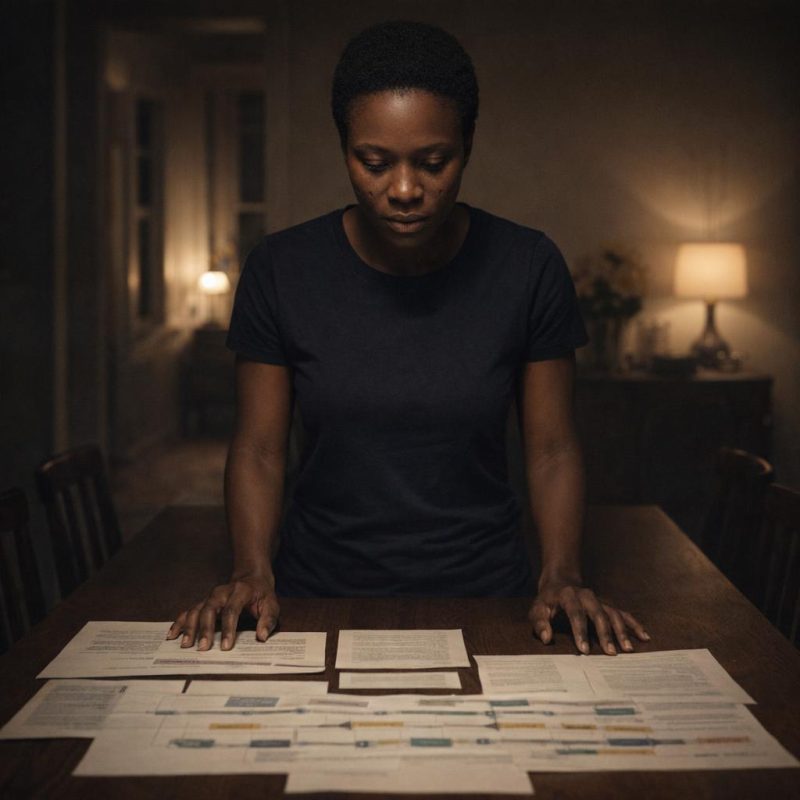 Image by RM AI
Denial
Mark came home around six, calling out a greeting as he walked in. His voice died when he saw the dining room table. He stood in the doorway, staring at the spread of documents, his face going pale. I told him calmly that I wanted the complete truth, right now, no more evasions. His first response was defensive—he said I was connecting unrelated facts, seeing patterns that weren't there. I walked him through the timeline methodically. He tried to explain away the demolished building, claiming lots of buildings get torn down. I showed him the articles about the Caruso trial. He said that was a famous case, everyone knew about it. I presented the business journal article about Michael Castellano. Mark's voice got quieter, less certain. He claimed the name was probably common, that I was making assumptions. I showed him the dates—Castellano's disappearance, his own first records, the impossible gap. Mark's explanations became weaker, more desperate. He was grasping at anything that might make this go away. Then I picked up the grainy photograph of young Michael Castellano leaving the courthouse fifteen years ago. I placed it directly in front of him and asked him to explain why that face looked exactly like his, just younger. When I showed him the photograph of young Michael Castellano and asked him to explain why that face looked exactly like his, he stopped mid-sentence and his entire defense collapsed into silence.
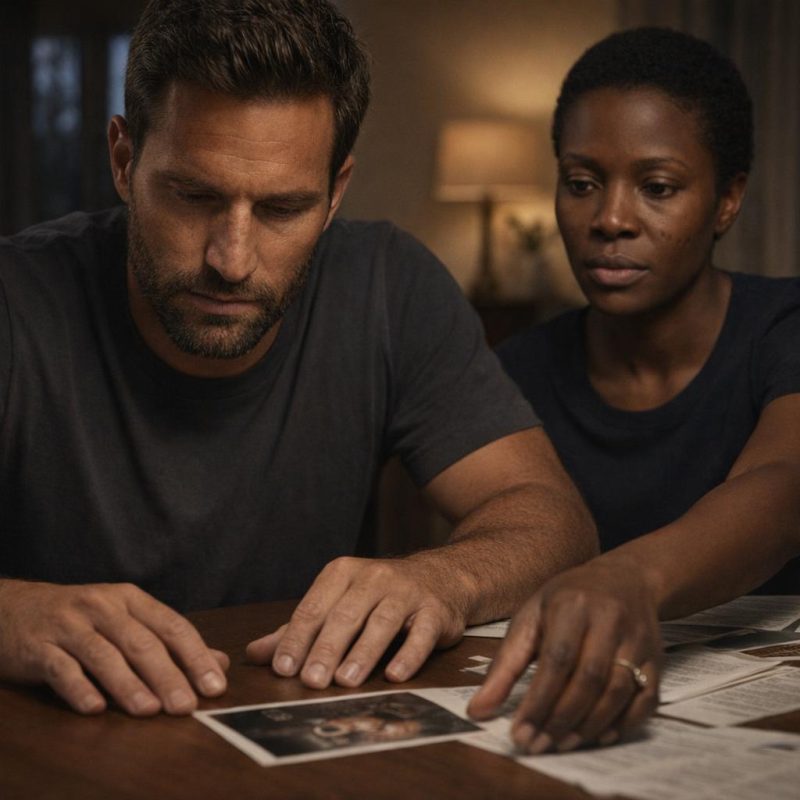 Image by RM AI
Cornered
I pulled out the side-by-side timeline comparison, the one that showed Michael Castellano's last public appearance and Mark Brennan's first documented existence with only six days between them. I laid it in front of him and asked him to explain that. Mark stared at the document, his jaw working like he was trying to form words that wouldn't come. Finally, he looked up at me and asked what I wanted him to say. I told him I wanted the truth, the whole truth, starting with his real name. No more deflections, no more vague explanations. I deserved to know who I'd actually married. Mark closed his eyes, his hands gripping the edge of the table. He said that if he told me everything, I had to understand there was no going back. That knowing would change things in ways I couldn't predict. I said I was already in danger, that people were already watching our house and following me, so whatever protection ignorance was supposed to provide was already gone. He argued that there were different levels of danger, that what I knew now was different from what I'd know if he confirmed everything. I cut him off. I told him I was done being protected through lies, done being kept in the dark about my own life. If our marriage meant anything, he owed me the truth. Mark was quiet for a long moment, then nodded slowly. I told him I wanted the truth, the whole truth, starting with his real name—and after a long silence, he said he'd tell me everything but I had to understand there was no going back once I knew.
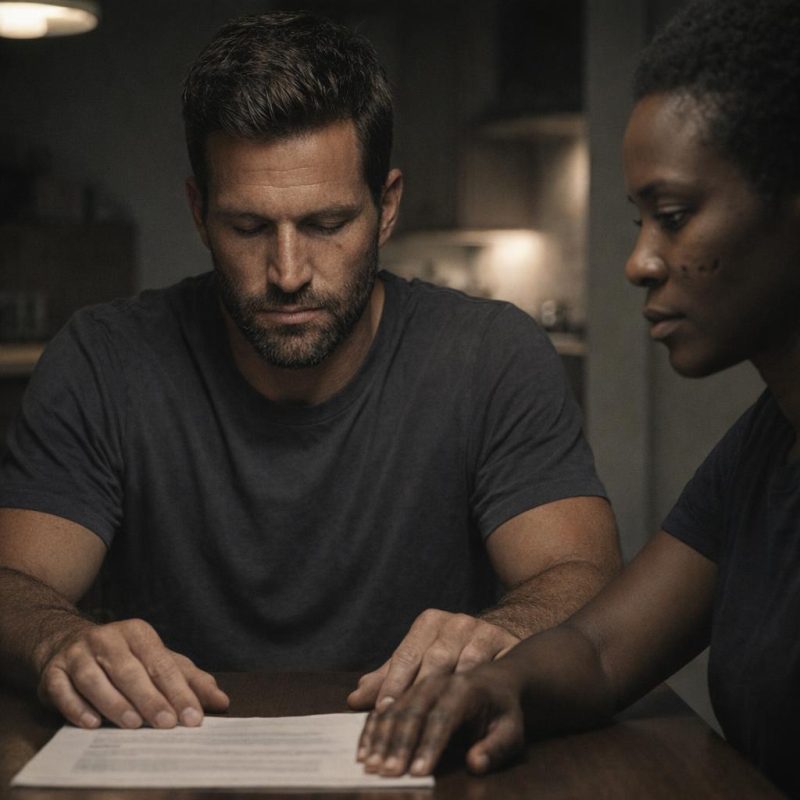 Image by RM AI
The Words He Couldn't Take Back
Mark sat down across from me, his hands folded on the table like he was bracing himself. He started by admitting that he'd been living under an assumed identity for fifteen years. That Mark Brennan wasn't his birth name—it was a name created by federal marshals, a complete fabrication designed to hide who he'd been before. Everything I knew about his past, every story he'd told me about his childhood, his family, his education—all of it was a constructed cover story. The details had been carefully crafted to be believable but untraceable, a background that would hold up to casual scrutiny but had no real roots. He said he'd been living this lie for so long that sometimes he almost forgot it wasn't real, that Mark Brennan had become more real to him than the person he'd been before. But that person still existed, buried under fifteen years of careful pretense. I asked him what his real name was. Mark closed his eyes, and I watched him struggle with something internal, like saying the name out loud would break whatever spell had kept him safe all these years. His voice came out barely above a whisper, rough with emotion. I asked him what his real name was, and he closed his eyes like saying it out loud would make it real again, and whispered, "Michael—Michael Castellano."
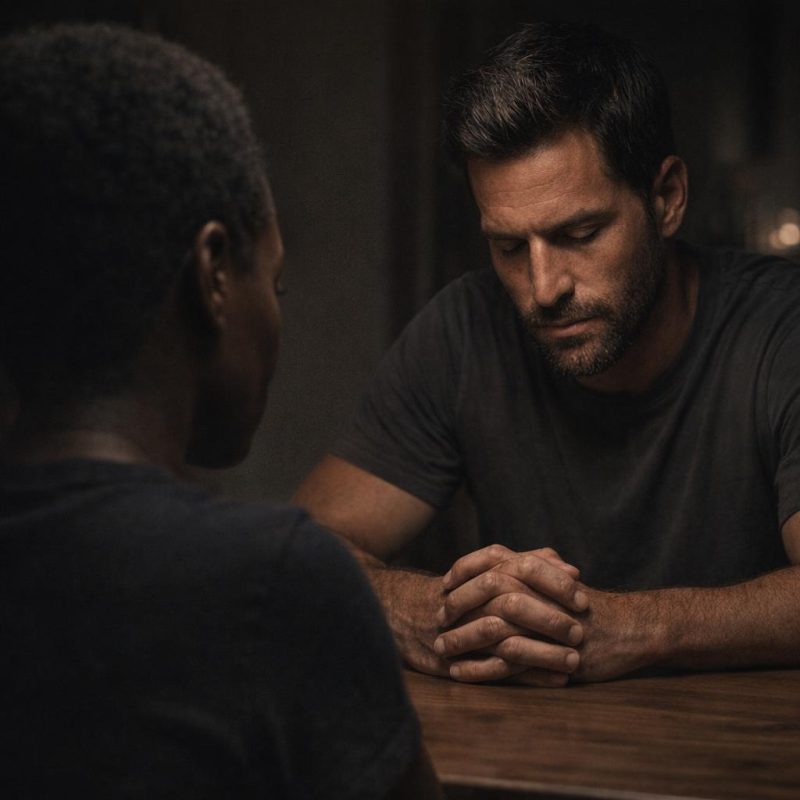 Image by RM AI
Incomplete Truth
Mark—Michael—started explaining what had happened fifteen years ago, but his words were careful, edited. He said he'd been working as a forensic accountant when he discovered evidence of serious federal crimes. He'd brought that evidence to authorities and agreed to testify in court against dangerous people. After the testimony, he'd been placed in witness protection because the people he'd testified against had the resources and motivation to hunt him down. That much he confirmed. But when I pushed for specifics—what exactly had he witnessed, what organization, what made them so dangerous they were still hunting him fifteen years later—he stopped. He said knowing those details would make me complicit in ways that could get me killed. That there was a difference between knowing he had a past and knowing the specific details of what he'd done and who he'd testified against. I told him that was ridiculous, that I was already involved whether he gave me details or not. Mark shook his head. He said my current knowledge made me a bystander, someone who'd stumbled into his past accidentally. But if he told me everything—his exact role, what he'd seen, the full scope of what he'd testified about—it would change how certain people viewed me. I'd become something different in their eyes, a potential threat rather than collateral damage. When I pushed him to explain what crimes he witnessed and why people were still hunting him fifteen years later, he said knowing those details would make me complicit in ways that could get me killed—but I'd already decided I needed to know everything no matter what it cost.
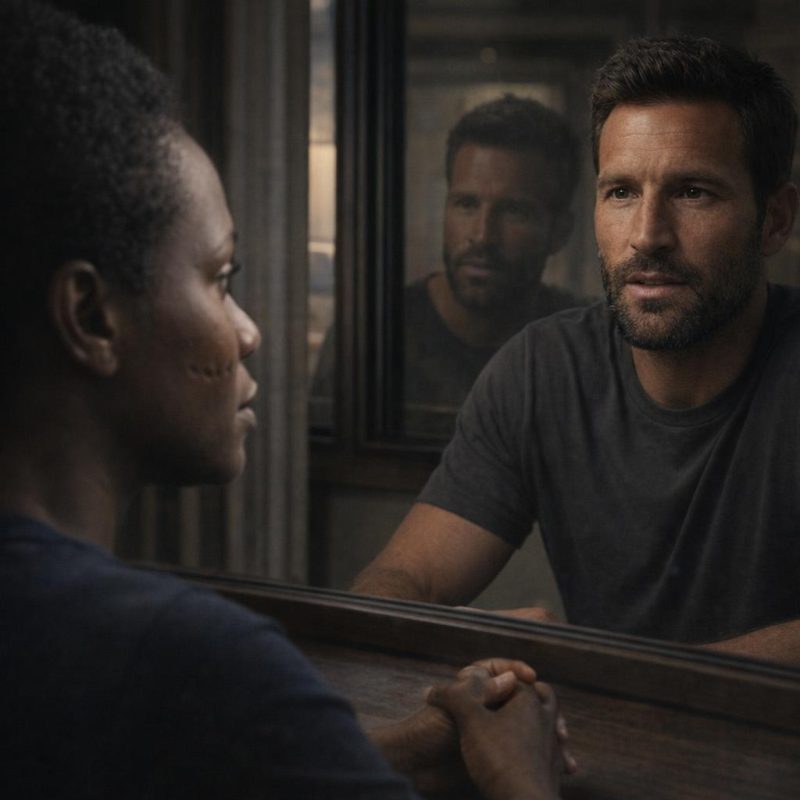 Image by RM AI
No More Shields
I cut him off before he could finish another carefully worded non-answer. "No," I said. "No more shields. No more protecting me from information I'm already neck-deep in." Mark started to speak but I held up my hand. "You keep saying knowing the details would make me complicit, would make me a target in some different way. But Mark, they already photographed me. They already know who I am. The difference between being collateral damage and being a threat? That's just semantics at this point." He shook his head, that same stubborn resistance I'd seen at the motel. "It's not semantics. There are things that once you know them—" "Then I'll know them," I interrupted. "I need to understand what crimes you witnessed. I need to know who you testified against and why they're still hunting you fifteen years later. I need to know your exact role in whatever federal case put you in this situation." My voice was shaking but I didn't care. "You don't get to decide what I can handle anymore. You lost that right when you disappeared without a word and let me find out you had an entire secret life." Mark's shoulders sagged. He looked at me with something that resembled surrender and said that once I knew what he'd done, I might wish I'd let him keep protecting me from it.
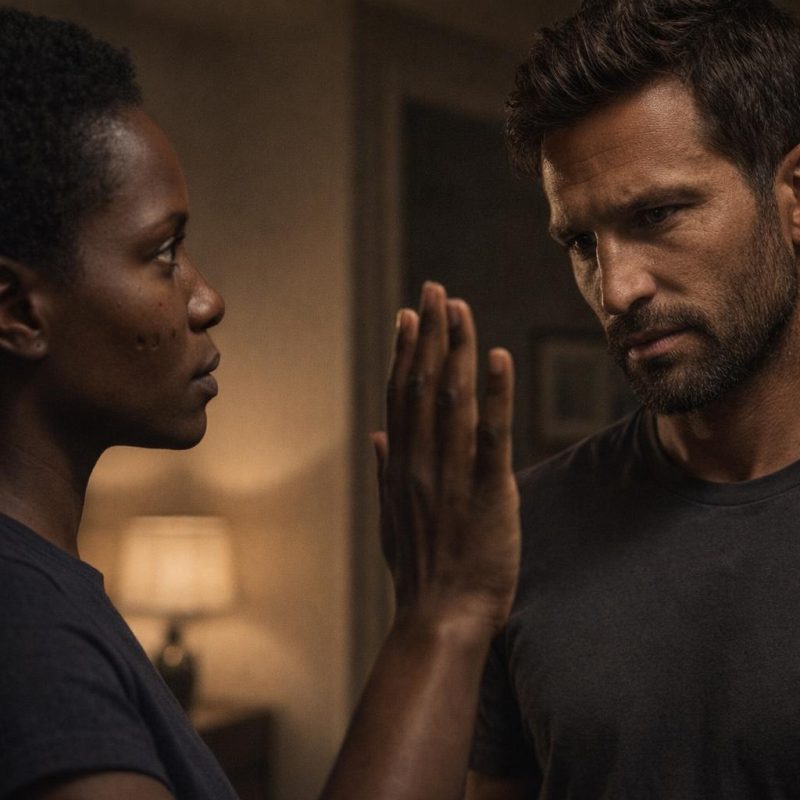 Image by RM AI
The Weight of Words
Mark sat there for a long moment, his hands clasped between his knees, staring at the floor. When he finally looked up, his eyes were different—older somehow, like he'd aged a decade in the silence. "Okay," he said quietly. "I'll tell you everything. But I need time to find the words." I started to protest but he continued. "I've spent fifteen years trying to forget who I used to be. I buried that person so deep that digging him back up feels like—" He paused, searching. "Like resurrecting a dead man. Like speaking a language I've deliberately forgotten." His voice cracked slightly. "I need to prepare myself to become him again, even just long enough to explain." I wanted to push, to demand he start talking right now, but something in his expression stopped me. This wasn't evasion. This was genuine pain. "How long?" I asked. "Until morning," he said. "Give me until morning and I'll hold nothing back. I promise." Every instinct screamed at me to refuse, to insist on answers immediately. But he asked me to give him until morning, and something in his voice made me agree even though every hour of silence felt like another small betrayal.
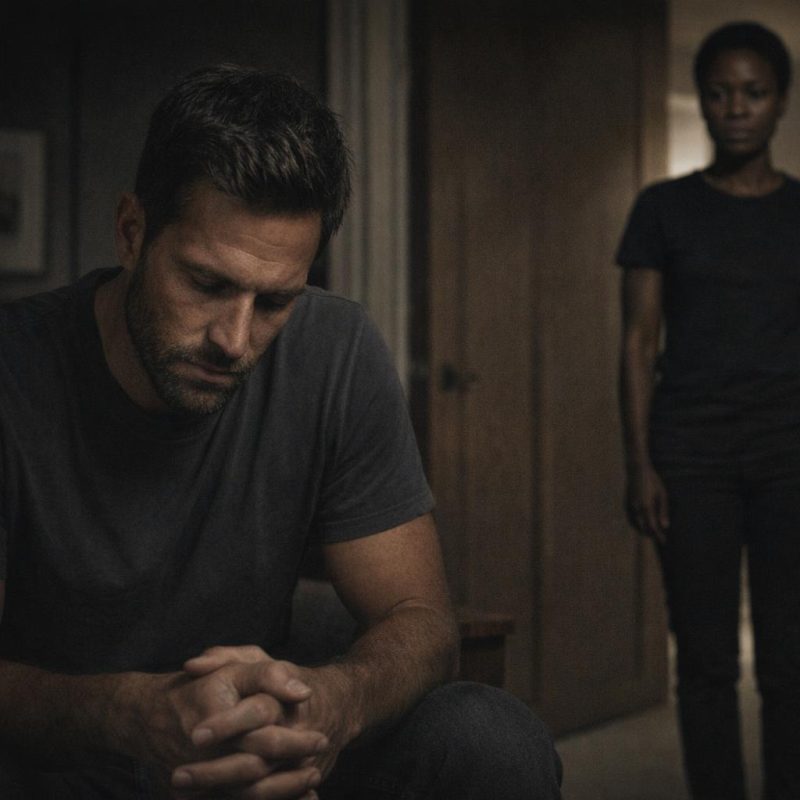 Image by RM AI
Before the Dawn
I didn't sleep. How could I? I lay in our bed—the bed we'd shared for eight years—staring at the ceiling and mentally preparing myself for whatever was coming. Mark had taken the couch, giving me space, and the house felt too quiet without his breathing beside me. I replayed our entire relationship in my head, looking for signs I'd missed. The way he never talked about his childhood in detail. His reluctance to have children. How he'd steered us away from social media, from anything that might make us too visible. I thought about Elena and the other witnesses who'd vanished, and I wondered if Mark would have disappeared too if I hadn't tracked him down. Would he have just evaporated from my life without explanation? Part of me wished I'd never gone to that motel, never started digging. But that was cowardice talking. Rachel had texted around midnight asking if I was okay, and I'd replied that I'd know everything by morning. The truth was, I had no idea if I could forgive what I was about to learn. I had no idea if the man who emerged from tomorrow's confession would be someone I could still love. As dawn approached, I felt both terrified and strangely calm. When the first gray light came through the window, I heard Mark moving in the kitchen, and I knew that whatever happened next would either save us or destroy us completely.
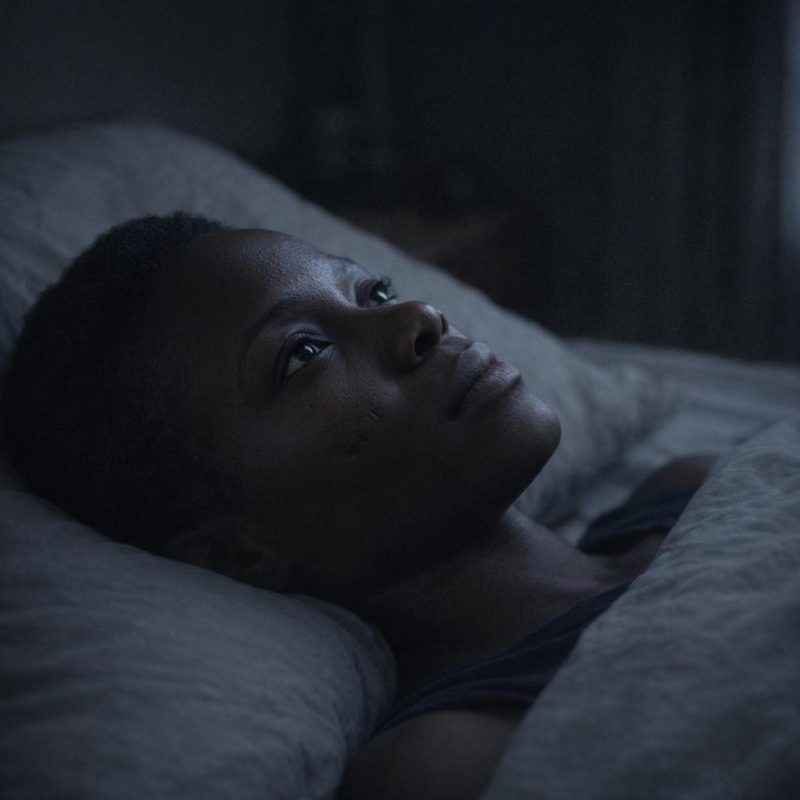 Image by RM AI
Michael Speaks
I found him sitting at the kitchen table, two cups of coffee already poured. He looked like he hadn't slept either—his eyes were red-rimmed, his hair uncombed. When I sat down across from him, he didn't wait for me to speak. "My real name is Michael Castellano," he said, and just like that, we crossed the threshold. "I was a forensic accountant. Twenty-six years old, working for a legitimate firm in Chicago that handled accounts for various businesses. I was good at my job—maybe too good." He took a breath. "One of our clients was a restaurant group. On paper, everything looked normal. But I started noticing irregularities in the cash flow. Money moving in patterns that didn't match the business model." His hands were shaking slightly around his coffee cup. "I dug deeper. Found connections to other businesses, shell companies, offshore accounts. It took me three months to understand what I was looking at." He met my eyes. "The Caruso family. Organized crime. Money laundering on a massive scale." My heart was pounding. He said he had been a forensic accountant who stumbled onto something he wasn't supposed to find, and the words that followed would take everything I thought I knew about my husband and reduce it to rubble.
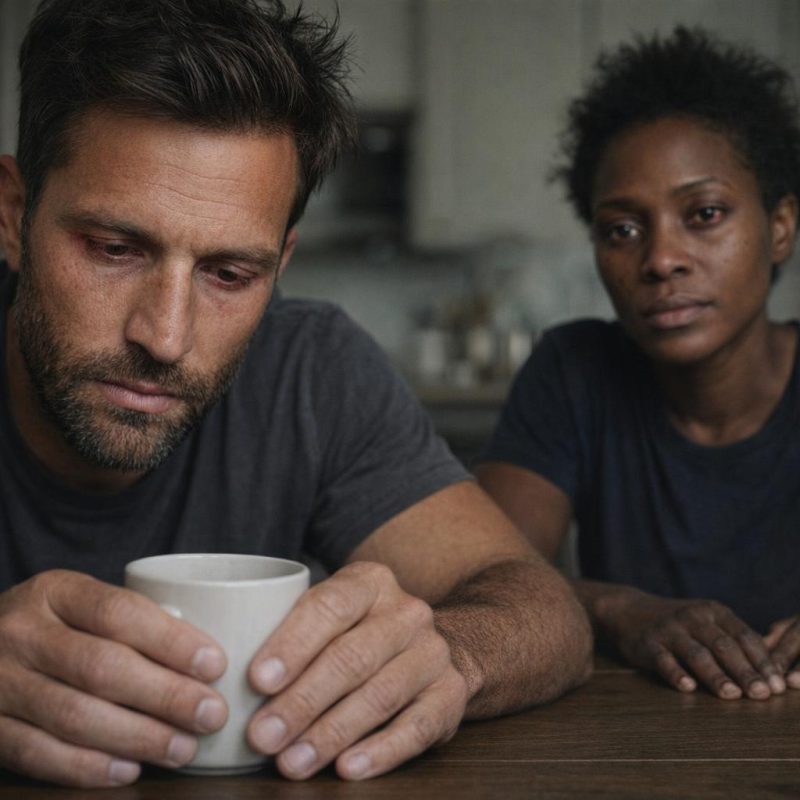 Image by RM AI
The Complete Truth
Mark—Michael—kept talking, and I felt my entire world restructuring itself around his words. He'd gone to the FBI with evidence of the Caruso organization's financial crimes. Testified in federal court. His testimony, combined with the financial records he'd provided, resulted in fifteen-year prison sentences for Vincent Caruso and six of his associates. "The day after the trial ended, federal marshals came to my apartment," he said. "They told me I had two hours to pack whatever I could carry. Everything else—my apartment, my car, my bank accounts, my entire identity—would be erased." He explained how they'd created Mark Brennan from nothing. New social security number, new birth certificate, new employment history, new everything. "They placed me here, set me up with credentials as a financial consultant, gave me a cover story about growing up in Oregon." His voice dropped. "Meeting you happened during that first year. I was supposed to be building a normal life, establishing my cover. And then you walked into that coffee shop and—" He stopped. "I fell in love with you. But I was forbidden from ever telling you the truth." I sat there understanding that every anniversary, every intimate moment, every shared memory had occurred with someone who didn't technically exist. When he finished, I sat in silence understanding for the first time that I had never actually known my husband at all—because my husband had never actually existed.
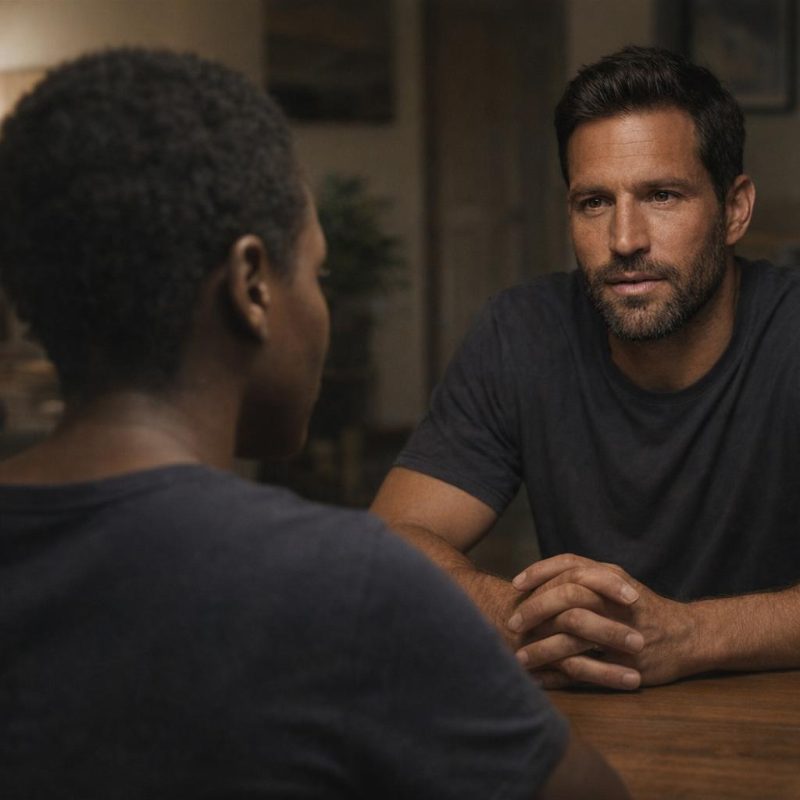 Image by RM AI
Strangers
The confession hung between us like something physical, a barrier I couldn't see through. I didn't speak for several minutes. Couldn't. My mind was trying to reconcile the man sitting across from me with the story he'd just told. Every memory now had an asterisk attached to it. Our first date—had that been real or part of establishing his cover? Our wedding vows—had those words been his or something the marshals had coached him to say? "Was any of it real?" I finally asked. My voice sounded strange, distant. "Us. Our marriage. Was any of it actually real?" "My love for you is real," Mark said immediately. "Everything I feel for you is real. The identity might be manufactured but my feelings aren't." "How can you say that?" The words came out sharper than I intended. "How can love built on lies be considered real? I married Mark Brennan. That person doesn't exist. So who the hell did I actually marry?" He flinched but didn't look away. "You married me. The person I became. Michael Castellano died fifteen years ago. Mark Brennan is who I am now." I looked at the man across from me and realized I didn't even know what to call him anymore—Mark felt like a lie, Michael felt like a stranger, and husband felt like a word that had lost all meaning.
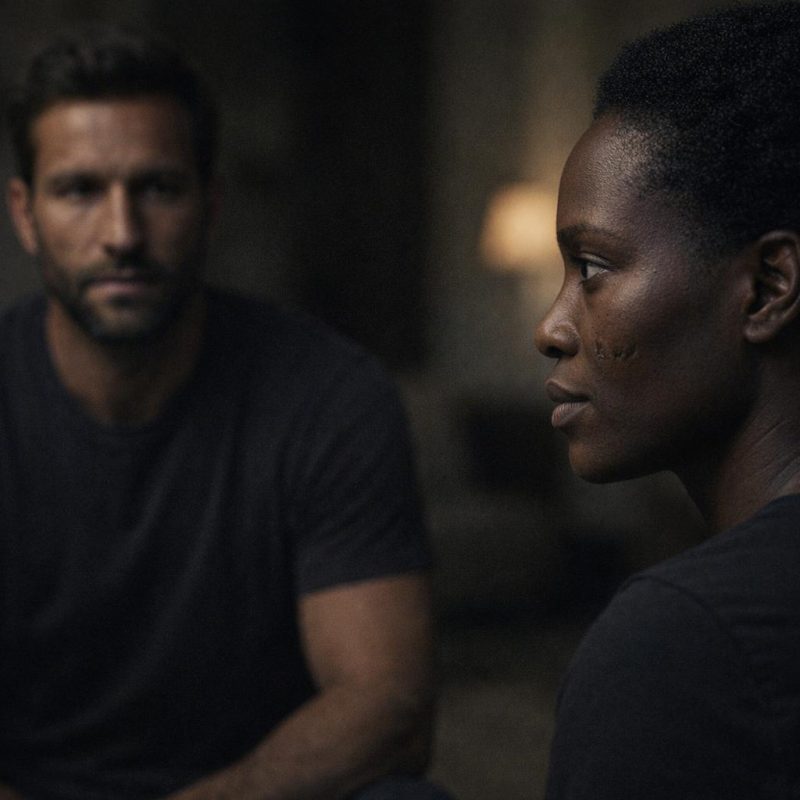 Image by RM AI
Rewritten History
I stood up from the table and walked through our house like I was seeing it for the first time. Every photograph on the wall, every memento on the shelves—they all looked different now. I picked up a picture from our second anniversary trip to the coast. Mark was smiling at the camera, his arm around me, looking perfectly happy and normal. But now I understood that smile had been filtered through constant performance, through the weight of maintaining a fiction. I remembered how he'd insisted we stay off social media, how he'd always positioned himself away from cameras at parties. I'd thought he was just private. Now I knew he was hiding. Our wedding photo sat on the mantle. I stared at it, trying to remember that day, trying to separate what had been genuine from what had been necessity. Had he meant those vows? Or had they been written by the same federal marshals who wrote the rest of his life story? Every vacation we'd taken, every decision about where to live, every choice about our future—how many of those had been influenced by his need to stay hidden? The anger building inside me was hot and sharp. I felt manipulated even though I understood his reasons. I picked up our wedding photo and wondered if the vows he spoke that day had been written by the same federal marshals who wrote the rest of his life story.
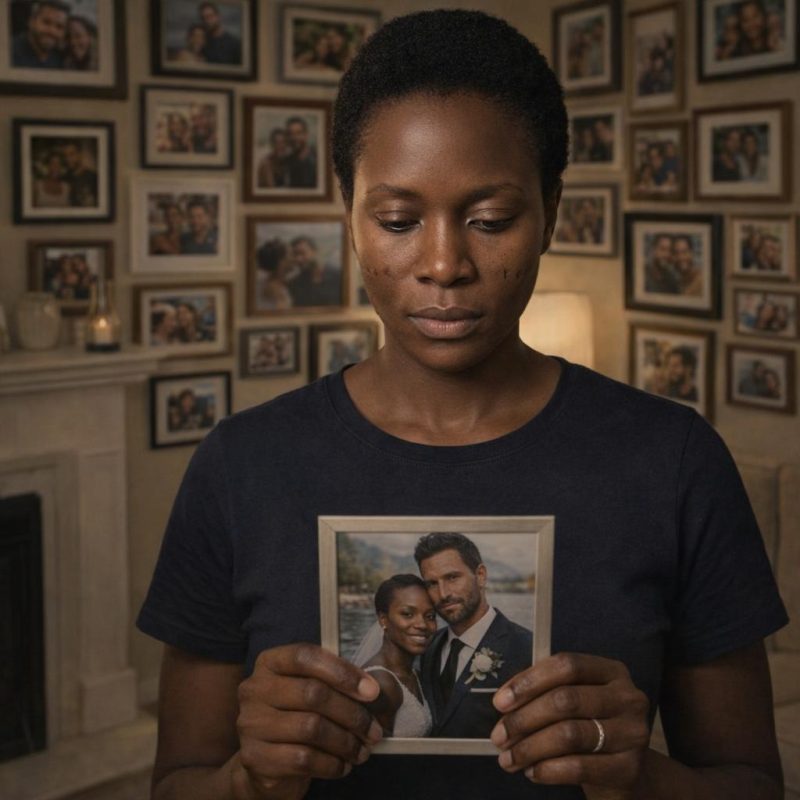 Image by RM AI
A Terrible Choice
I took the photo with me to the bedroom and sat there alone for an hour, maybe more. Mark didn't follow me. He gave me space, which was probably the smartest thing he could have done. When I finally came back out, he was still at the kitchen table, looking like he was waiting for a verdict. "I can't forgive you," I said. "Not yet. Maybe not ever." He nodded, accepting it. "But I also can't abandon you to face Caruso alone." His head came up, confused. "Those people already photographed me. They already know who I am. Running away won't make me safe—they've connected me to you whether I stay or go." I sat down across from him again. "So I'm choosing to stay and help you face this threat. But I need you to understand something." I made sure he was looking at me. "I'm not staying because I forgive you. I'm not staying because our marriage is okay. I'm staying because whoever you really are, I'm not going to let someone murder you while I have the power to help prevent it." Mark's eyes were wet but he didn't cry. "Thank you," he said quietly. I told him I wasn't staying because I forgave him—I was staying because whoever he really was, I wasn't going to let someone murder him while I had the power to help prevent it.
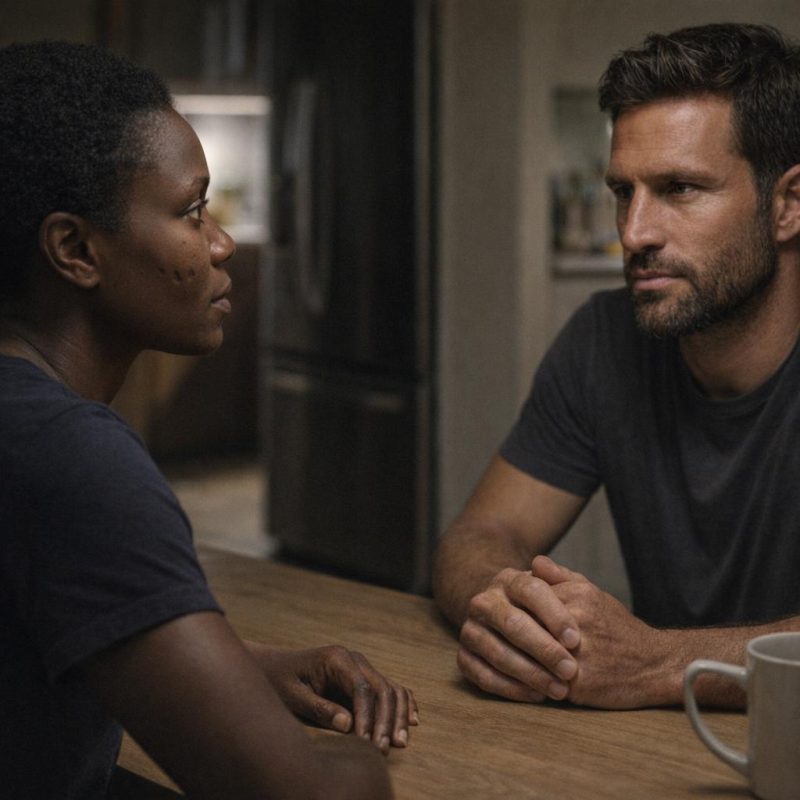 Image by RM AI
Protection Compromised
Agent Collins showed up at our door three days later, and the look on her face told me everything before she even opened her mouth. She didn't waste time with pleasantries. "Caruso's people found all five witnesses," she said, standing in our living room like she was delivering a death sentence. "Two are already dead. The other three are in protective custody, but the network is compromised." Mark went pale beside me. Collins explained that someone inside the system had leaked information—they didn't know who yet, but the damage was done. Fifteen years of careful protection protocols had been systematically dismantled. "The marshals want to relocate you immediately," she continued, looking at Mark. "New identity, new country, complete severance from your current life." My stomach dropped. "What does that mean for me?" I asked. Collins met my eyes, and I saw something like sympathy there. She didn't answer right away, which was answer enough. "Emergency relocations don't automatically include spouses," she finally said. "Especially when the spouse wasn't part of the original protection agreement." Mark stood up so fast his chair scraped against the floor. "Then I'm not going," he said. Collins looked at him like he'd lost his mind, but I understood exactly what he meant—we'd just decided we were in this together, and apparently the universe was testing that commitment immediately.
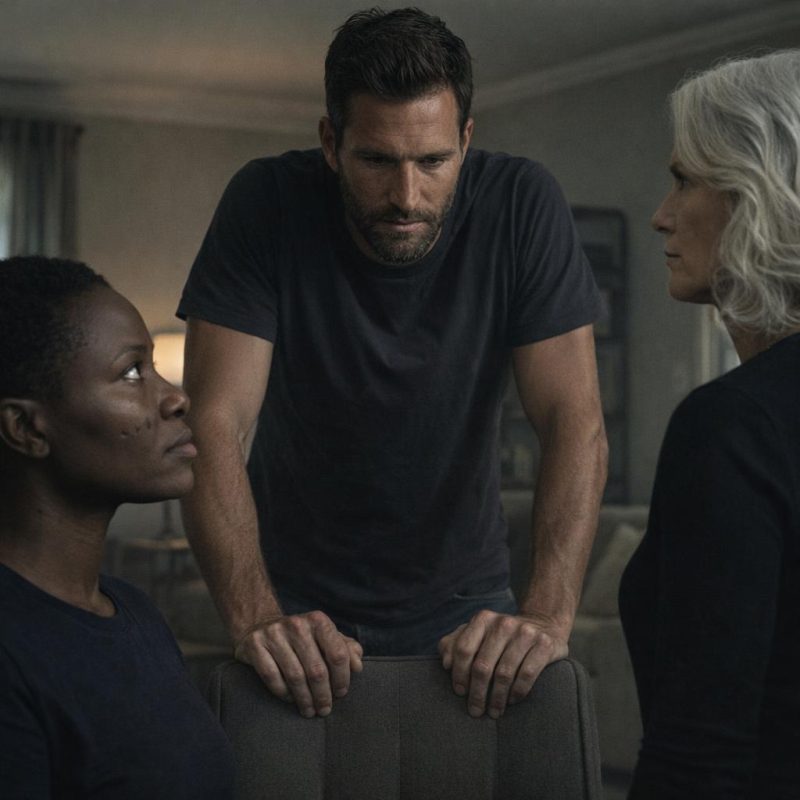 Image by RM AI
Battle Plans
We spent the next six hours at our kitchen table, the three of us, mapping out something that felt more like a suicide mission than a plan. Collins kept saying we should reconsider, that running was the smart choice, but I shut that down. "Caruso's patient," I said. "You said so yourself. He'll wait another fifteen years if he has to. We can't live like that." Mark nodded, his hand finding mine under the table. Collins sighed and pulled out a laptop. "If we're doing this, we do it right," she said. "The only way to end this permanently is to catch him in the act. Attempted murder, conspiracy, whatever we can make stick with witnesses and evidence." She looked at Mark. "That means using you as bait." I felt him tense beside me, but I squeezed his hand. "What's my role?" I asked. Collins shook her head. "You don't have one. Civilians don't participate in federal operations." I laughed, actually laughed. "I'm already targeted. They photographed me, threatened me. I'm not a civilian anymore—I'm a participant whether you like it or not." Mark backed me up, and eventually Collins relented. We reviewed everything—Caruso's methods, his resources, the federal capabilities for protection. The plan took shape slowly, carefully, with Mark as the visible target and agents surrounding him in layers we hoped Caruso wouldn't see. When Collins finally closed her laptop, she looked at both of us. "What I'm proposing is essentially using Mark as bait," she said quietly. "And that means the danger will be as real as it gets."
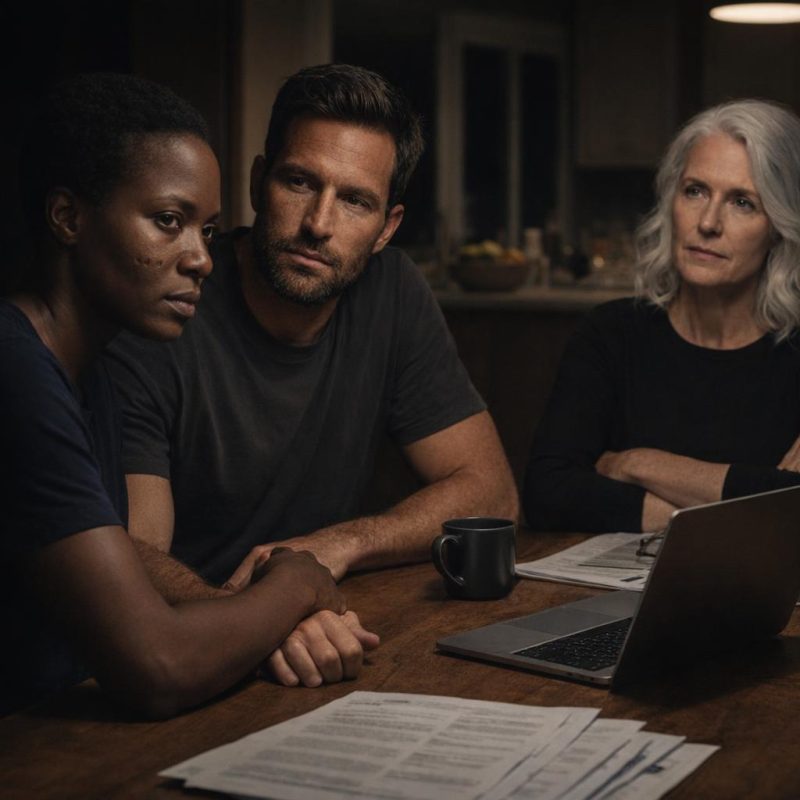 Image by RM AI
Direct Contact
The burner phone rang two days later while we were eating breakfast. Mark stared at it like it was a snake, then looked at Collins, who'd been staying in our guest room. She nodded and activated the recording equipment she'd set up. Mark answered on speaker. "Michael Castellano," a voice said, smooth and cold. "It's been a long time." I felt ice slide down my spine. Vincent Caruso sounded like someone's grandfather, pleasant and patient. "I've waited fifteen years for this conversation," he continued. "Fifteen years watching my family suffer because you decided to play hero." Mark's jaw clenched. "I testified to the truth." Caruso laughed softly. "The truth. My son died in prison because of your truth. My business, my reputation, everything I built—destroyed. And you got to disappear, start over, play house with a nice woman who has no idea who she married." His voice hardened. "All debts come due, Michael. I want to meet face-to-face. Discuss how you're going to pay for what you took from me." Mark tried to negotiate, but Caruso wasn't interested. "I'll call back in twenty-four hours with a location," he said. "You come alone, or Sarah receives a visit that will make her wish you'd never walked into her life." The line went dead, and I realized I'd stopped breathing.
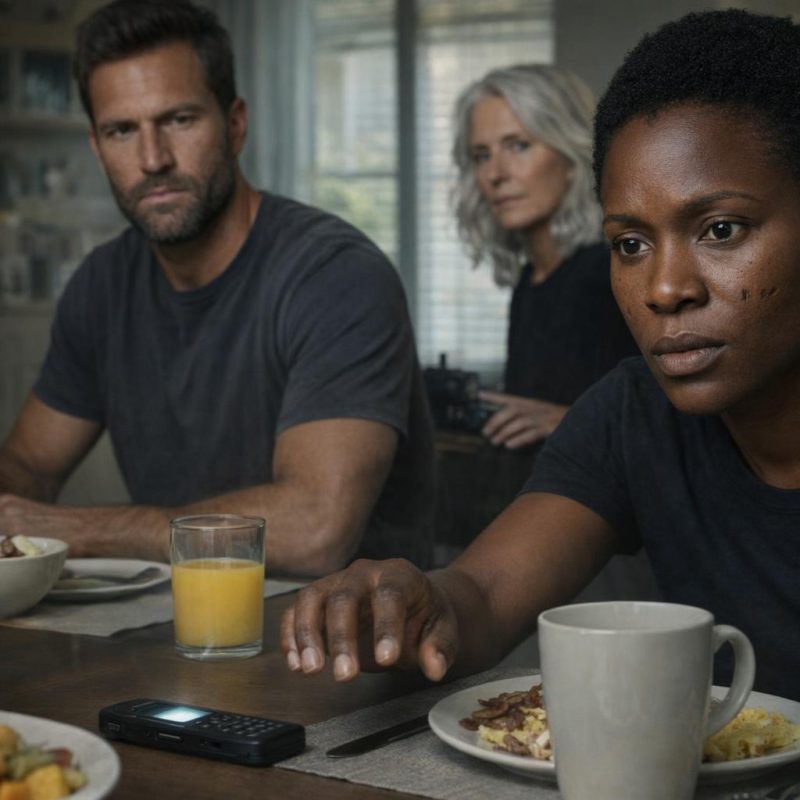 Image by RM AI
Not a Spectator
Collins wanted me in a safe house immediately. "Absolutely not," I said. We were back at the kitchen table, the recording of Caruso's call still playing in my head. "If his people are watching—and we know they are—my sudden disappearance will tip them off that something's wrong." Collins shook her head. "The risk is too high." Mark agreed with her, which annoyed me more than it should have. "Listen to me," I said, leaning forward. "Caruso threatened me specifically. He knows who I am, where I live. If I vanish right before this meeting, he'll know it's a trap." I looked at Collins. "My presence might actually be expected. I'm Mark's wife. Where else would I be?" Collins studied me for a long moment. "If you're there, you follow every instruction I give. No improvisation, no heroics." I nodded. "Agreed." She pulled out a bulletproof vest and communication equipment, laying them on the table between us. "This isn't a movie," she said quietly. "People might die tomorrow. You understand that?" I picked up the vest, feeling its weight. Mark was watching me with an expression I couldn't quite read—fear mixed with something else. Gratitude, maybe. "I understand," I said. Collins handed me an earpiece. "Then we do this together," she said, and I realized this was no longer something happening to my husband—it was something we were facing together.
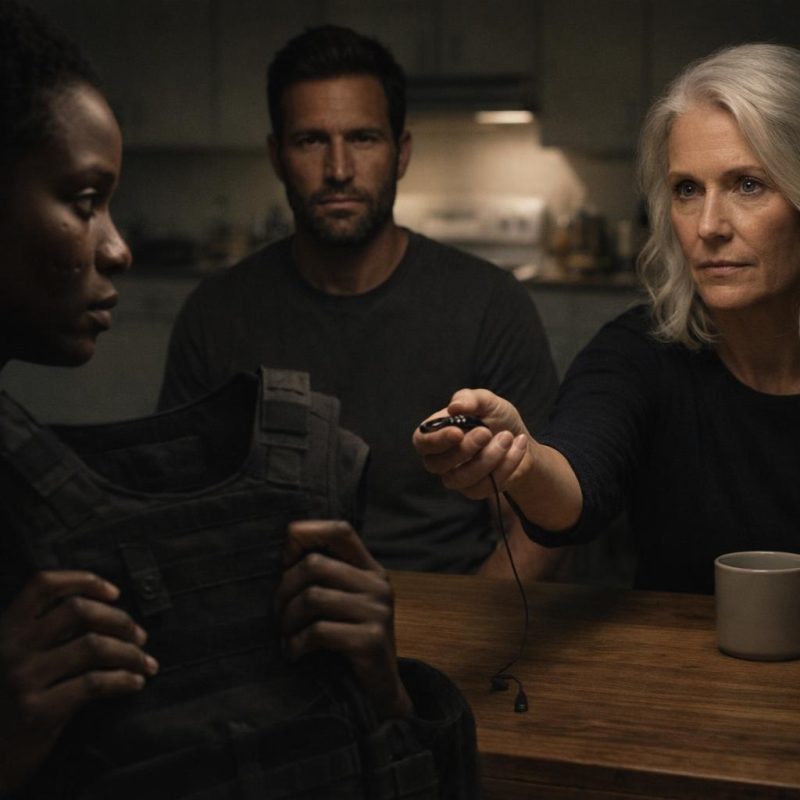 Image by RM AI
The Meeting Place
Caruso called exactly twenty-four hours later with instructions. An abandoned warehouse on the industrial edge of town, six PM, come alone. Collins had federal agents moving into position before we even left the house. She rode with us part of the way, reviewing the plan one more time. "Mark goes in first. Sarah, you stay by the car until we give the signal. We'll have eyes on you the entire time." She touched her earpiece. "The moment Caruso makes a concrete threat or produces a weapon, we move in." Mark drove with both hands tight on the wheel. I wore the bulletproof vest under my jacket, and I could feel its weight with every breath. The communication device in my ear crackled occasionally with Collins coordinating positions. "Team One in place. Team Two moving to south entrance." The sun was setting as we reached the industrial district, casting long shadows across empty lots and rusted buildings. The warehouse came into view—a massive concrete structure with broken windows and weeds growing through cracks in the parking lot. Mark pulled in where Caruso had instructed, and my heart was hammering so hard I thought everyone could hear it through the comms. Then I saw him. A single figure standing in the warehouse doorway, backlit by the dying light. Fifteen years of running came down to this moment.
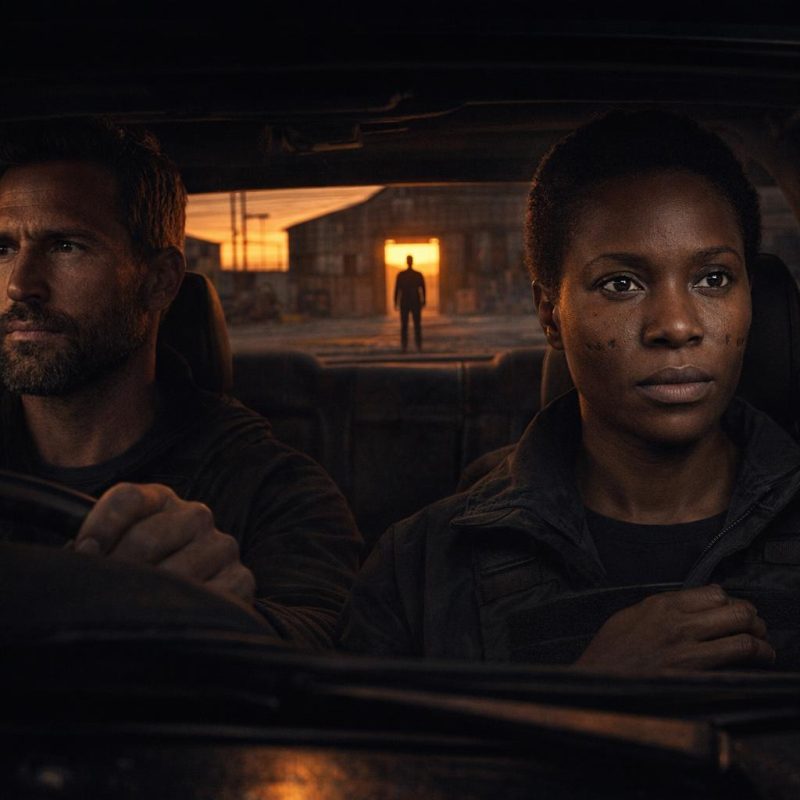 Image by RM AI
Face to Face
Mark got out of the car and walked toward the warehouse. I stayed behind as planned, every muscle in my body screaming to follow him. Through the earpiece, I heard Collins: "All teams hold position. Wait for my signal." Mark's hidden microphone picked up Caruso's voice. "Michael. You look older. Softer." There was movement I couldn't see, conversation I could barely hear. Then Caruso said something about payment and consequences, and suddenly there were more voices. More men. Collins swore in my ear. "He brought backup. More than we anticipated. All teams, be ready to—" Gunfire. Loud and close and coming from multiple directions at once. "Move in! Move in now!" Collins shouted, and I heard agents running, more shots, Mark yelling something I couldn't make out. Then I heard my name. Mark screaming it, desperate and terrified, from inside the warehouse. Collins was shouting orders to stay back, to wait for the all-clear, but I was already running. Every instinct I had said run away from gunfire, but I ran toward it instead. Toward Mark's voice. Toward the chaos erupting around me. Federal agents were engaging Caruso's men around the perimeter, and I heard gunshots from inside the warehouse and Mark screaming my name, and I ran toward the danger instead of away from it.
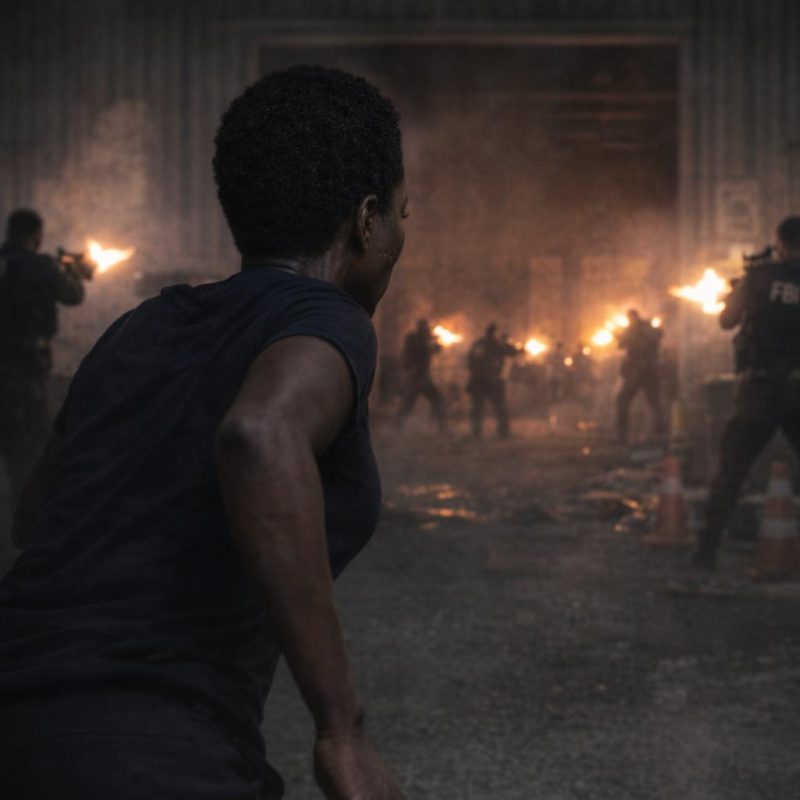 Image by RM AI
Together
I found Mark pinned behind a stack of old pallets, debris raining down around him as bullets hit concrete and metal. He saw me and his eyes went wide with terror. "Get down!" he shouted, and I dove behind the pallets with him just as another round of shots tore through the space where I'd been standing. We pressed against each other, breathing hard, and I could feel his heart racing as fast as mine. More gunfire erupted from somewhere above us. Mark pulled me lower when shots came close, covering my head with his arms. When there was a break in the shooting, I grabbed his hand and pulled him toward better cover near a concrete pillar. Federal agents were swarming the building now, their tactical gear and weapons overwhelming Caruso's men. Collins's voice came through my earpiece, directing teams through the warehouse. I saw Caruso trying to escape through a side door, but agents cut him off. The gunfire was sporadic now, then stopping altogether as agents secured the scene. Mark and I stayed pressed against that pillar, holding onto each other like we might disappear if we let go. "Clear! Building is clear!" someone shouted. Slowly, we stood up. My legs were shaking. Mark's face was covered in dust and his eyes were wild, but he was alive. We were both alive. When the silence finally came, I found myself holding Mark's hand so tightly I couldn't feel my fingers, and I realized that whatever happened next between us, we had just saved each other's lives.
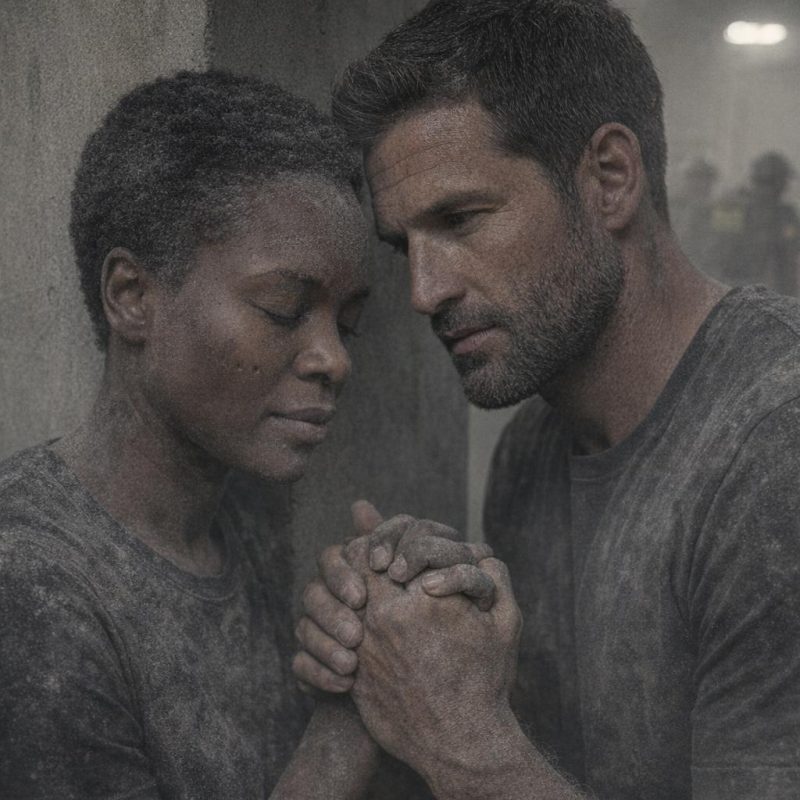 Image by RM AI
Captured
They brought Caruso out in handcuffs ten minutes later. Collins walked beside him, her hand on his arm, her face showing nothing but professional satisfaction. Other agents followed with Caruso's men, all of them subdued and secured. Medical teams were treating injuries—two agents had been hit but nothing life-threatening. Mark and I stood near the warehouse entrance, still holding hands, watching it all unfold like we were outside our own bodies. Collins stopped in front of us. "It's over," she said. "Caruso's going away for a long time. Attempted murder, conspiracy, weapons charges. He won't be a threat to anyone anymore." Caruso looked at Mark then, and I felt Mark's hand tighten around mine. There was no remorse in Caruso's expression. No acceptance or defeat. Just pure, concentrated hatred that made my skin crawl. His eyes said this wasn't over, that somehow, someday, there would be consequences for what Mark had done. But agents were loading him into a waiting vehicle, and Collins was explaining the charges and the evidence, and the immediate physical threat was actually, finally over. Mark let out a breath that sounded like fifteen years of tension releasing all at once. I leaned against him, exhausted and wired and still processing that we'd survived. Collins walked Caruso past us in handcuffs, and he looked at Mark with an expression of pure hatred that said this wasn't over even as agents loaded him into a waiting vehicle.
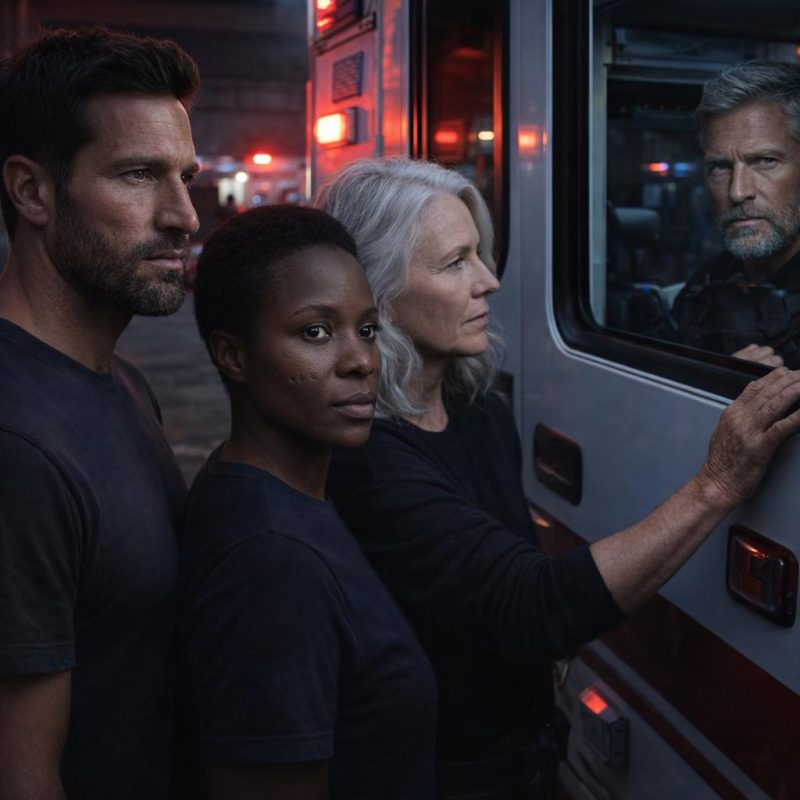 Image by RM AI
Aftermath
The paramedic shone a light in my eyes while I sat on the ambulance bumper, Mark beside me with his own blanket wrapped around his shoulders. Neither of us had serious injuries—some bruises, scraped knees from when I'd hit the warehouse floor, Mark's wrists raw from zip ties. Nothing that required stitches or hospitals. Collins stood nearby giving instructions to other agents, coordinating the processing of evidence and suspects. The scene around us was controlled chaos—crime scene tape, flashing lights, agents moving with purpose. It felt surreal after the violence and terror of what had just happened inside that warehouse. Mark's hand found mine again, and we sat there in silence while the adrenaline slowly drained away and left us hollow and exhausted. Collins came over after a while to explain what happened next. Federal charges. Witness testimony. Caruso facing decades in prison. Other people in protection would be notified the threat was over. The immediate crisis was definitively ended. She said it with satisfaction, like checking off the final item on a very long list. But sitting there with Mark, the physical safety we'd fought for felt strangely empty. The danger was over, but what did that actually mean for us? Mark turned to me then, his voice quiet and raw. "Are you going to leave me now?" he asked. "Now that you don't have to stay for safety?" I opened my mouth to answer and realized I honestly didn't know anymore.
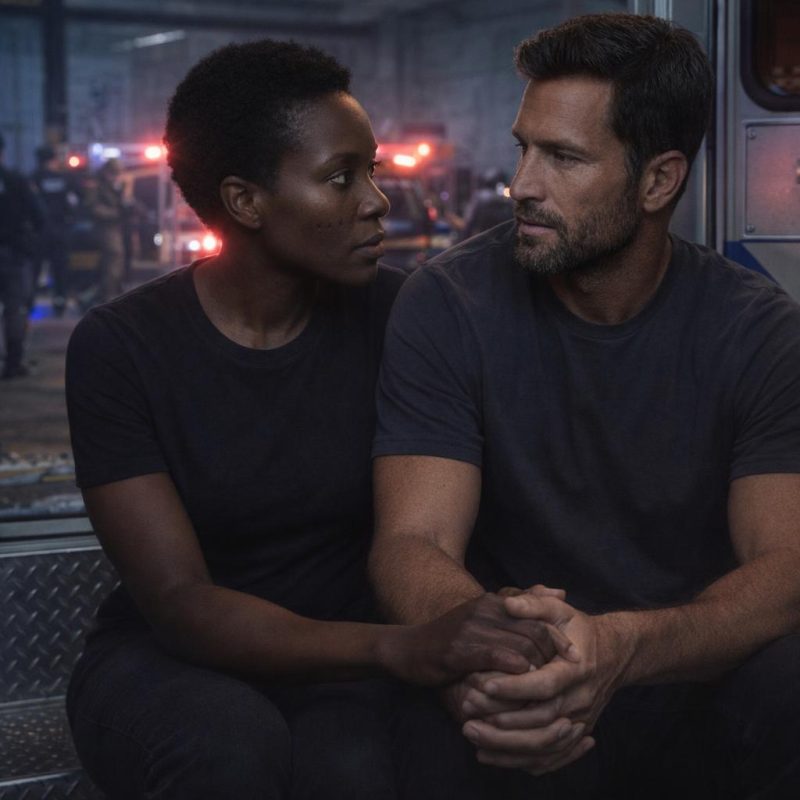 Image by RM AI
What Remains
We drove back to our house in silence, both too exhausted for conversation. The front door still showed signs of the break-in—splintered wood around the lock that we'd never gotten around to fixing because we'd been too busy running for our lives. Inside, everything looked exactly as we'd left it, frozen in time from before our world exploded. We sat on the couch together, and for the first time in our entire marriage, Mark answered every question I asked without deflection or evasion. He told me about his childhood, his real family, the choices that led him into Caruso's organization. He explained which parts of our relationship had been genuine—his feelings for me, he insisted, had always been real, even if the foundation they were built on was fabricated. I told him how the betrayal had shattered my understanding of our entire life together, how I didn't know which memories to trust anymore. We talked until dawn, acknowledging that the marriage we'd had was essentially over. The question was whether something new could be built in its place, something honest. "I'll understand if you need to leave," Mark said finally, his voice breaking. "I'll understand if you can't forgive this." I looked at him—really looked at him—and saw both the stranger who'd lied to me and the man I'd loved for years. "I don't know if I can ever trust you again," I said slowly. "But I'm not ready to give up on finding out." And for the first time since this nightmare started, that felt like enough.
 Image by RM AI
Starting Over
Rachel showed up three days later with packing boxes and takeout, ready to help us dismantle the life we'd built on lies. We'd made the decision together—Mark and I were leaving. Not because we had to, not because someone was chasing us, but because we needed to start fresh somewhere without the weight of accumulated deception. Collins had offered assistance with new documentation, a voluntary relocation that was about choice rather than necessity. We picked a city neither of us had connections to, somewhere we could build something real from the ground up. Rachel moved through our house with her usual energy, wrapping dishes in newspaper and telling me she respected whatever decision made me happy. Mark formally resigned from his job, gave notice using the identity he'd lived under for fifteen years. I did the same at my workplace. We sold or donated most of our possessions—furniture that had filled our fabricated home, decorations that represented a marriage that never really existed. The house went on the market within a week. Standing in our nearly empty living room, surrounded by boxes, Mark asked me a question that stopped me cold. "What name do you want me to use going forward?" he said. "Michael? Mark? Something else entirely?" I looked at him for a long moment, thinking about identity and honesty and the person he was choosing to become. "The only name that matters," I told him, "is the one you choose to be honest with."
 Image by RM AI
First Day
Our new apartment was on the third floor of a building in a city where neither of us had history. Empty rooms with afternoon light streaming through bare windows, hardwood floors that echoed when we walked. Mark—Michael—whoever he was choosing to be—signed the lease using his real name for the first time in fifteen years. I watched him write it out, the unfamiliar letters that represented the person he'd been before everything went wrong. We unpacked the few possessions we'd brought with us, our entire shared life fitting into a dozen boxes. No furniture yet, no decorations, nothing but the essentials and each other. Standing in what would be our living room, we acknowledged what we both knew—this relationship would require constant work, trust rebuilt through consistent honesty over time, no guarantees that we'd make it. "No more secrets," he promised. "No matter how painful the truth is." I nodded, accepting that I'd chosen this uncertain path willingly, that hope and fear could coexist in the same moment. The future stretched ahead of us, unknown and terrifying and finally built on something real. He reached for my hand the way he always had, that familiar gesture that had once felt like home and then like betrayal. This time I didn't pull away—because for the first time in our marriage, I knew exactly whose hand I was holding.
 Image by RM AI
KEEP ON READING
20 Weirdest Historical Objects in Museums
Check Out the Pickled Heart of a Saint. Museums carry…
By Rob Shapiro Oct 1, 2025
20 Ocean Mysteries We Still Haven’t Solved
Unanswered Questions Of The Ocean. The ocean covers most of…
By David Davidovic Sep 1, 2025
10 Phenomenal Mythical Creatures & 10 That Are Just Plain…
Legends Both Majestic And Peculiar. Do you ever wonder why…
By Chase Wexler Oct 1, 2025
20 Historical Predictions That Turned Out To Be True
Crystal Ball Moments In History. Do you wonder what it's…
By Chase Wexler Sep 1, 2025
10 Presidents Who Never Served In The Military & 10…
Commanders And Civilians In Office. Power can rise from very…
By David Davidovic Sep 1, 2025
20 Wars That Could Have Ended Much Sooner Than They…
Wars That Lasted Far Too Long. Wars are often remembered…
By David Davidovic Sep 1, 2025