

The Appointment I Almost Cancelled
I stared at my phone for the third time that morning, my thumb hovering over the reschedule button. The reminder notification glowed at me: Annual Physical - Tomorrow 9:00 AM. I'd already postponed this appointment twice in the past month, and honestly? I felt fine. Better than fine, actually. My energy was good, I was sleeping well, and nothing hurt. The whole thing felt like one more obligation on an already packed calendar, one more thing to check off a list that never seemed to get shorter. I could think of a dozen things I'd rather do with those two hours—catch up on work emails, finally organize the garage, maybe just sit with a cup of coffee and do absolutely nothing. Preventive care is important, sure. Everyone says that. But when you're busy and everything feels normal, it's hard to justify the time. I sat there in my kitchen, coffee getting cold, weighing responsibility against convenience. Then I did something that felt completely unremarkable at the time. I hit 'confirm appointment' instead of 'reschedule,' not knowing that choice would change everything.
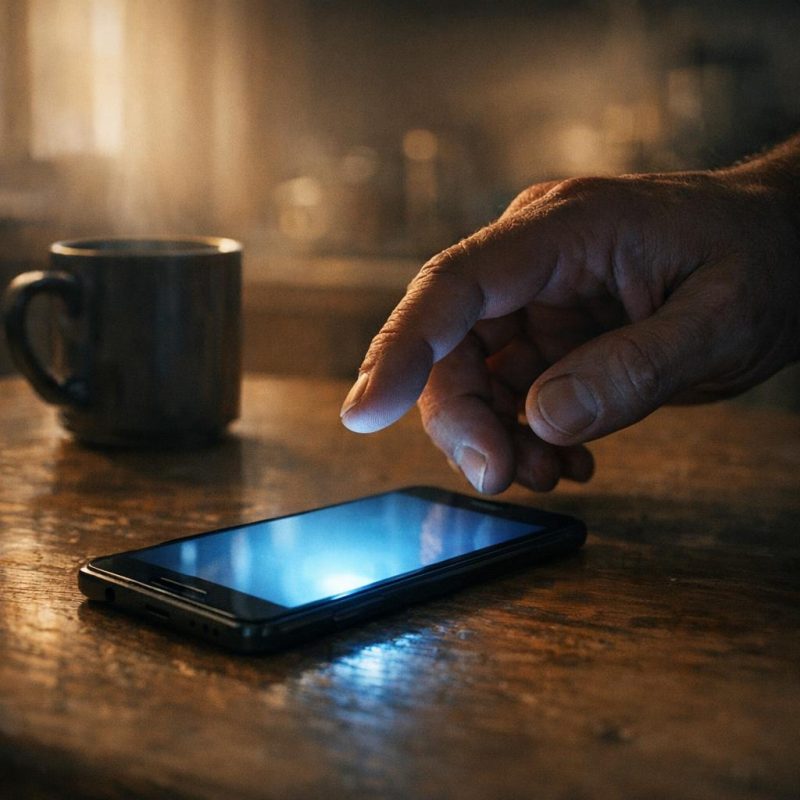 Image by RM AI
Just Another Tuesday Morning
The waiting room looked exactly like it had for the past decade—same beige walls, same outdated magazines, same faint smell of antiseptic and air freshener. I filled out the clipboard forms with the same answers I'd given a dozen times before, checking 'no' down the list of symptoms and conditions. The medical assistant called me back, took my vitals, and everything registered in the normal range. My blood pressure was fine. Temperature normal. Dr. Chen came in with her usual calm presence, her black hair pulled back in that neat bun, frameless glasses catching the fluorescent light. We went through the routine questions—how was I feeling, any concerns, any changes since last year. I told her everything was good, because it was. She conducted the standard examination, listened to my heart and lungs, checked my reflexes. All perfectly unremarkable. She ordered the usual blood work as part of my annual screening, nothing out of the ordinary. That evening, I mentioned the appointment to Mark while we were making dinner. He looked up from chopping vegetables, asked how it went, seemed genuinely interested in a typical spousal way. I shrugged and said it was fine, just routine stuff. And that was that.
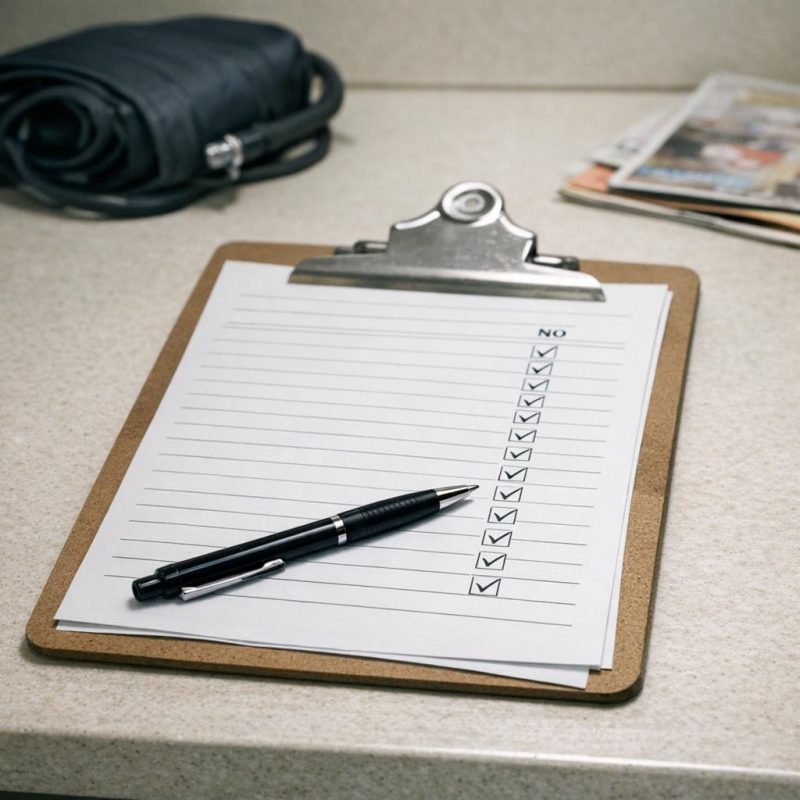 Image by RM AI
The Checkmark Life
I walked out of the medical building feeling oddly accomplished, like I'd just completed something virtuous. There's this weird satisfaction that comes from checking off 'annual physical' from your mental to-do list, you know? Like you've done your due diligence as a responsible adult. I drove back to work with a clear conscience, already thinking about the emails I needed to catch up on and the project deadline looming at the end of the week. The appointment faded into the background almost immediately, just another task completed. I remember thinking briefly how easy routine healthcare was when everything was normal—you go in, they check the boxes, you leave. The blood work would come back fine like it always did. I'd get a portal message in a few days saying everything looked good, maybe a reminder to keep up with exercise and eat more vegetables. Standard stuff. I threw myself back into my regular responsibilities, focused on work, made plans for the weekend, thought about what to cook for dinner. The medical visit became just another mundane Tuesday morning, already half-forgotten. I didn't think about the appointment again for three days.
 Image by RM AI
The Callback
I was at my desk when my phone buzzed, and Dr. Chen's office appeared on the caller ID. My first thought was that they'd probably forgotten to have me sign some form or needed to update my insurance information. But when the receptionist spoke, her tone was carefully neutral in a way that immediately felt off. She asked if I could come back in for a follow-up appointment. I laughed a little, asked if we could just discuss whatever it was over the phone—I mean, I'd just been there three days ago. There was a pause, and then she said the doctor would prefer to discuss my results in person. My stomach did this weird flip. I tried to keep my voice casual, asked if everything was okay, if there was something specific they needed to go over. She gave me nothing, just that same professional neutrality, saying Dr. Chen wanted to review my blood work with me. I scheduled an appointment for two days later, my hand suddenly unsteady as I typed it into my calendar. After I hung up, I sat there staring at my computer screen without seeing it. They don't call you back in just to say everything's fine, right? But I tried to convince myself it was probably routine, maybe a vitamin deficiency or something minor. 'The doctor would prefer to discuss your results in person,' the receptionist said, and my stomach dropped.
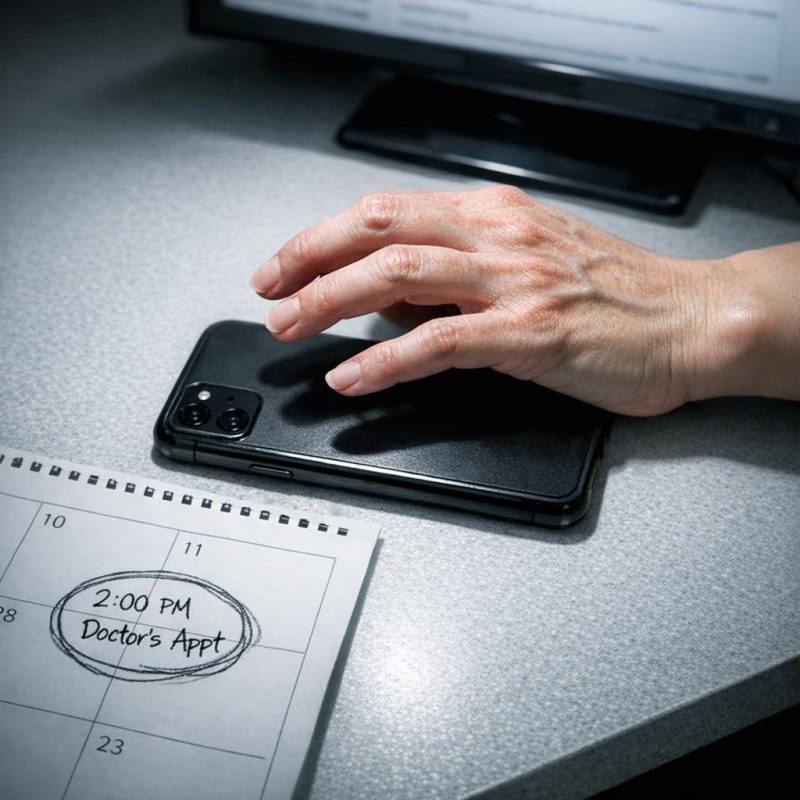 Image by RM AI
Reading Tea Leaves
I met Rachel at our usual coffee shop the next morning, trying to act normal while my brain kept circling back to that phone call. She took one look at my face and asked what was wrong before I'd even sat down. I explained the callback appointment, keeping my tone light, like it was probably nothing. But Rachel's frown told me she wasn't buying my casual act. She leaned forward, her curly hair falling over her shoulder, and asked exactly what the receptionist had said. I repeated the conversation word for word, and watched her expression shift from concern to something more serious. We went through possible explanations together—maybe my cholesterol was high, maybe I was anemic, maybe they just wanted to discuss preventive stuff in more detail. But even as we listed benign possibilities, I could feel my anxiety growing instead of shrinking. Rachel asked detailed questions about how I'd been feeling, whether I'd noticed anything unusual. The more we talked, the more real it became. She offered to come with me to the follow-up appointment, and I almost said yes before declining. I needed to do this on my own. But sitting there with her, I felt less alone with the worry. 'They don't call you back in just to say everything's fine,' Rachel said quietly, and I couldn't argue with that.
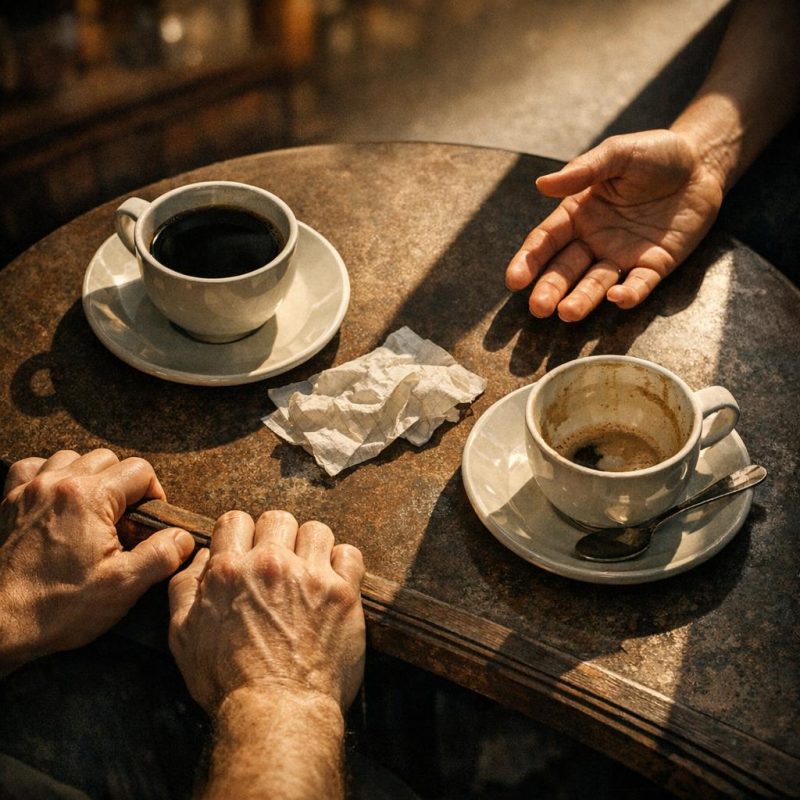 Image by RM AI
The Waiting Room Redux
Two days later, I was back in that same waiting room, but everything felt different. The beige walls seemed darker somehow, the air heavier. I'd arrived fifteen minutes early and spent the time analyzing every detail like it might give me clues—the receptionist's expression when I checked in, how long other patients waited before being called back, whether anyone else looked as anxious as I felt. The other people in the waiting room seemed completely oblivious, flipping through magazines or scrolling on their phones, probably here for routine appointments just like I'd been last week. Had I looked that unconcerned just days ago? It felt impossible now. I watched the hallway door, waiting for Dr. Chen to appear. My heart was beating too fast, and I kept taking deliberate breaths to slow it down. Every time the door opened, I tensed. Finally, Dr. Chen stepped out and called my name. I searched her face immediately, looking for advance warning, some hint of what was coming. But her expression was carefully composed, professionally neutral, revealing nothing. I stood up on legs that felt unsteady and followed her down the familiar hallway to the exam room. When Dr. Chen opened the door to call me back, the doctor's expression was carefully composed, professionally neutral, and that scared me more than anything.
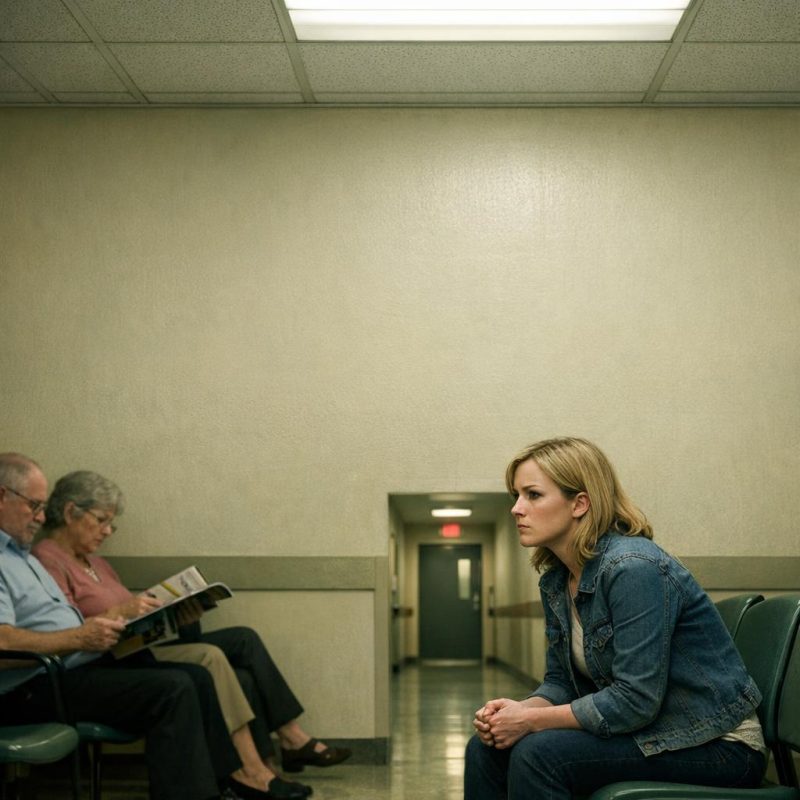 Image by RM AI
When Numbers Tell Stories
Dr. Chen sat down across from me and laid the lab results on the desk between us. I stared at the numbers and medical terms that meant nothing to me while she began explaining with careful precision. Multiple markers were outside normal ranges—my liver function tests showed abnormalities, my blood counts were off in ways I didn't understand. She walked me through each result, explaining what the values typically indicated, but the medical terminology washed over me in waves. I caught phrases like 'elevated enzymes' and 'concerning patterns' and 'requires further investigation.' I tried to focus, to understand, but my brain kept stalling on the basic fact that something was wrong. Actually wrong. This wasn't a vitamin deficiency or high cholesterol. I asked what it could mean, my voice sounding strange to my own ears. Dr. Chen remained calm but I could see the concern in her eyes behind those frameless glasses. She explained that several conditions could cause these results, that we needed additional diagnostic testing to narrow down the possibilities. She was already writing orders for imaging and a specialist referral. I watched her pen move across the prescription pad and felt my entire life pivot on the axis of bloodwork values I'd never heard of before. 'These levels indicate we need to investigate further,' Dr. Chen said, and the word 'investigate' hung in the air like a diagnosis itself.
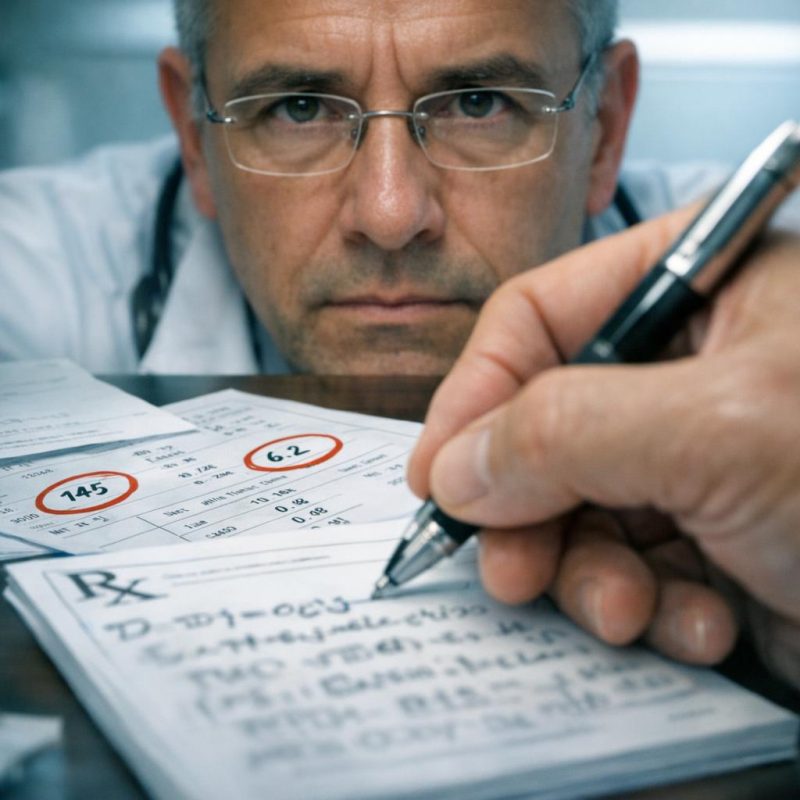 Image by RM AI
Telling the People Who Matter
That evening, I sat at our kitchen table and made the decision not to wait for more information before telling my family. I called Emma and asked her to come over, told her we needed to talk about something important. When she arrived and saw both Mark and me sitting there with serious faces, her expression immediately shifted to worry. I explained everything—the callback, the abnormal blood work, the upcoming tests and specialist referral. I tried to stay calm and factual, but my voice shook on certain words. Mark's face went pale, and he immediately started asking questions I couldn't answer yet. What exactly was wrong? What were the possibilities? When would we know more? Emma reached across the table and grabbed my hand, her eyes filling with tears she was clearly trying to hold back. I squeezed her fingers, trying to be strong for her even though I felt like I was falling apart inside. Mark pulled out his phone and started searching for information about liver enzymes and blood count abnormalities, his face illuminated by the screen's glow. I watched my husband and daughter processing this news, and realized this wasn't just my burden anymore. This was something we would all carry together now. Mark immediately started researching online while Emma reached for my hand, and I realized this was now something my family would carry too.
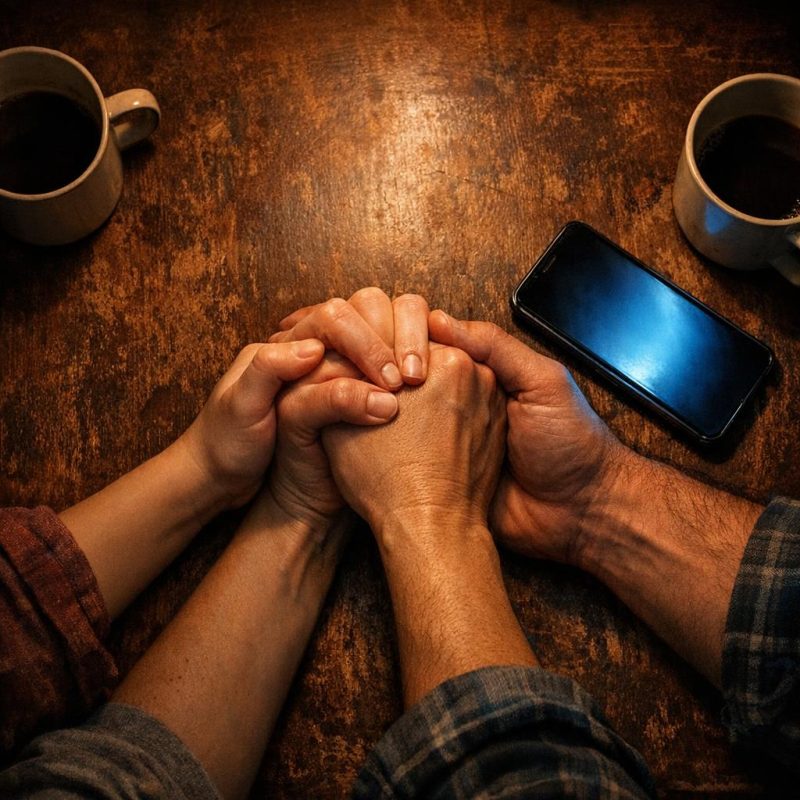 Image by RM AI
The Diagnostic Gauntlet
The next week turned into a blur of medical appointments that all started to feel the same. CT scan on Monday, where I had to drink contrast that tasted like metallic chalk and hold my breath while the machine whirred around me. More blood draws on Wednesday, this time checking for something called tumor markers, which sounded exactly as ominous as you'd think. The MRI on Friday was the worst—forty-five minutes lying perfectly still in a tube that felt like a coffin while it banged and clanged around me. Mark came to most of the appointments, sitting in waiting rooms scrolling through his phone while I changed into hospital gowns that never quite closed in the back. I kept trying to read the technicians' faces, searching for any hint of what they were seeing on their screens, needing to understand what was happening inside my body. But they'd all been trained in the same poker face, offering nothing but professional pleasantries and instructions to breathe normally. Each test came with its own waiting period for results, and I was collecting medical paperwork faster than I could file it. I tried to keep working between appointments, but my mind wasn't really there. My body had become a mystery that strangers were solving piece by piece. The MRI technician's careful silence as she reviewed the images before releasing me told me more than words could have.
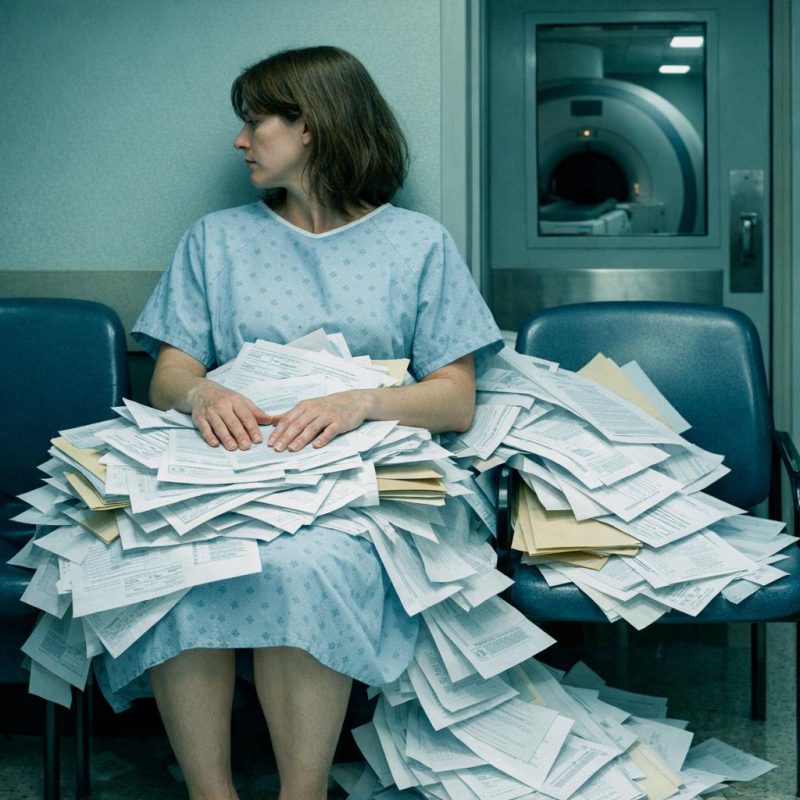 Image by RM AI
The Cruelest Kind of Limbo
Waiting for test results is a special kind of torture that nobody warns you about. Every hour felt like it lasted three days and also somehow disappeared in seconds. I'd be sitting at my desk trying to focus on work, and then realize I'd been staring at the same email for twenty minutes without reading a single word. My phone became an extension of my hand—I checked it obsessively, terrified I'd somehow miss the call that would change everything. Mark asked me every single evening if I'd heard anything yet, and I could hear the strain in his voice even though he was trying to sound casual. Rachel texted me multiple times a day with messages that ranged from funny memes to simple heart emojis, just letting me know she was thinking of me. At night, after Mark fell asleep, I'd pull out my laptop and fall down research rabbit holes, googling symptoms and diagnoses and prognoses until my eyes burned. My chest felt tight all the time, like I couldn't quite get a full breath. I tried to prepare myself mentally for every possible outcome, rehearsing in my head how I'd react to different news. Everyone around me handled me with this careful concern, like I might shatter if they spoke too loudly. Waiting is the hardest thing I've ever done. When Dr. Chen's office finally called on the fourth day, my hand shook so badly I almost couldn't answer.
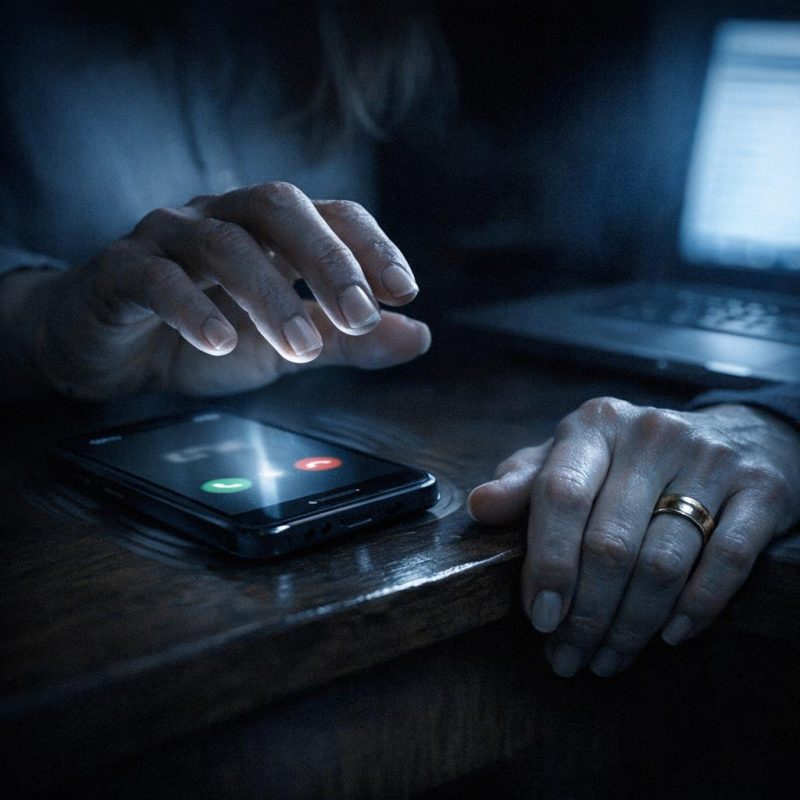 Image by RM AI
The Diagnosis Room
Dr. Chen had referred me to an oncologist. That word alone had made my stomach drop, but I'd told myself it was just precautionary. Now I sat across from Dr. Patel in his office, Mark gripping my hand so tightly my fingers were going numb, while words like 'malignancy' and 'staging' and 'treatment options' floated through the air between us. My brain kept trying to reject what I was hearing, insisting there must be some mistake. I felt completely fine. How could I have cancer when I felt fine? Dr. Patel walked us through every test result with careful thoroughness, pointing to images on his computer screen that meant nothing to me but apparently told him everything. The cancer had a specific type and location that he explained in terms I struggled to absorb. He talked about staging based on what the scans had shown, using numbers and letters that would determine my future. Mark's face had gone completely white, and I watched him processing this the same way I was, both of us trying to make sense of information that felt impossible. Dr. Patel outlined what treatment would generally look like, though he said we'd discuss details at our next appointment. Then he said something that made time stop. 'The good news is we caught it early because of your routine screening,' Dr. Patel said, and I realized my almost-cancelled appointment had saved my life.
The Treatment Roadmap
I came back to Dr. Patel's office three days later with a notebook, determined to understand exactly what was about to happen to my body. Nurse Kelly Brennan met us in the consultation room, her warm smile somehow making the situation feel slightly less terrifying. She had freckles across her nose and wore scrubs covered in cheerful cartoon characters that seemed wildly out of place given what we were discussing. Dr. Patel laid out the complete treatment protocol while Kelly translated the medical jargon into language I could actually understand. Chemotherapy would happen in cycles, specific drugs administered in a specific order over specific timeframes. They walked me through expected side effects—nausea, fatigue, hair loss, neuropathy, increased infection risk—and how each one would be managed. Mark sat beside me taking notes in his precise handwriting, asking practical questions about timing and logistics that I couldn't even think to ask. Kelly handed me educational materials about each phase of treatment, pamphlets about nutrition and exercise and managing symptoms. We discussed things I'd never considered, like whether I wanted to preserve fertility options before treatment started. My head was spinning, overwhelmed by medical terminology I'd never heard before. We scheduled my first chemotherapy session for the following week. Kelly handed me a thick folder of information about chemotherapy side effects, and the weight of it in my hands felt like the future crushing down.
Three AM Research Spiral
I couldn't sleep that night. Mark had gone to bed around eleven, exhausted from the emotional weight of the day, but I'd told him I needed to finish some work emails. Instead, I sat in the dark at my laptop, the screen's glow the only light in the room, and started searching. I read medical journals about my specific cancer type, clinical trial results, treatment protocols from different cancer centers across the country. I studied five-year survival rates and prognostic factors, memorizing percentages like they were answers to a test I had to pass. I joined online patient forums and read through hundreds of posts from people at various stages of treatment and recovery. For a while, understanding the science made me feel powerful, like I was taking control of something that felt wildly out of control. But the more I learned, the more questions I had, and the more terrified I became. Every statistic had an inverse. Every success story had a shadow. I compared treatment approaches, read about experimental therapies, studied drug interactions and resistance patterns. The information didn't comfort me—it just gave my anxiety more specific things to fixate on. I finally closed the computer at dawn, having memorized five-year survival rates and treatment protocols but feeling no more in control than when I'd started.
The Space Between Us
In the days before treatment started, I noticed something I couldn't quite name about Mark. He was doing everything right—coming to appointments, asking questions, handling logistics, saying all the supportive things a husband should say. But there was a distance in his eyes when he said them, like he was somewhere else even when he was sitting right next to me. I'd catch him staring at nothing, his expression blank in a way that made me feel suddenly alone in the room. When I tried to talk to him about how he was feeling, he'd reassure me that everything was fine, that he was just worried about me, that we'd get through this together. His words were perfect. But something about the delivery felt hollow, like he was reading lines from a script. I wondered if this was how he processed fear—by retreating into himself, by going through the motions while his emotions shut down somewhere I couldn't reach. Maybe the diagnosis had scared him more than he could articulate. Maybe he was protecting me from his own terror by keeping it locked away. I felt guilty for wanting more from him when he was already doing so much, but I couldn't shake the sense of Mark's odd distance. When I reached for his hand during a quiet moment, he squeezed back automatically but was already looking at his phone, and I felt suddenly alone despite his presence.
Tyler's Brief Return
Tyler came by the house four days before my first treatment. Emma had been there constantly since the diagnosis, but Tyler had been notably absent until Mark called him and told him he needed to visit. He sat stiffly on the edge of our couch, his tall frame folded in on itself, offering condolences that sounded like he was talking to a distant acquaintance rather than his mother. 'I'm really sorry you're going through this,' he said, staring at a spot on the wall behind my head. 'That's really tough.' I tried to connect with him, asking about his work and his life, reaching for any thread of conversation that might bring us closer. He deflected every personal question with one-word answers and vague generalities. When Mark entered the room, Tyler's posture relaxed slightly, and they talked about sports and some project Tyler was working on with an ease that made my chest ache. I watched them interact and felt like an outsider in my own living room, hurt by Tyler's coldness toward me. After thirty minutes, Tyler stood up and said he had to get back to work, that he had a deadline he couldn't miss. Mark walked him out, and I heard them talking in low voices by the front door. He left after thirty minutes, citing work obligations, and I wondered when the distance between us had grown too wide to cross even for cancer.
The First Infusion
The infusion center was nothing like I'd imagined. It was bright and clean, with big windows and recliners instead of hospital beds, but that somehow made it worse—like they were trying to pretend this was normal, comfortable, fine. Nurse Kelly got me settled in a chair and started the pre-medications, explaining each one as she hung the bags. Mark sat in the visitor chair beside me, his hand resting on the armrest near mine. When the actual chemotherapy started dripping through the IV, I watched the clear liquid flow through the tubing and into my vein, poison that was supposed to save my life. Other patients sat in chairs around the room at various stages of treatment—some sleeping, some reading, some staring at their own IVs with expressions I recognized. Kelly checked on me frequently, taking vitals and asking how I felt. Dr. Patel stopped by briefly to see how the infusion was going. The whole process took hours, and I felt okay during most of it, which was almost disappointing—I'd braced for something more dramatic. Mark stayed the entire time, leaving only once to get coffee. When it was finally done, Kelly gave me prescriptions for anti-nausea medication and a long list of side effects to watch for. I was pushing through fear with every breath. Nurse Kelly checked my vitals one last time before leaving, saying 'Call if you need anything tonight,' and I realized the hardest part was just beginning.
The Aftermath
The nausea hit twenty-four hours after my first infusion, and it was nothing like I'd imagined. I'd had food poisoning before, stomach flu, morning sickness with Emma and Tyler—this was different. This was my body turning against itself at a cellular level, and no amount of anti-nausea medication could fully stop it. I spent three days moving between the bed and the bathroom, too weak to do much else. Mark brought me crackers and ginger ale, helped me to the shower when I could barely stand, changed the sheets when I couldn't make it in time. He did everything right, but there was something mechanical about it—efficient, thorough, detached. When Rachel stopped by on day two, she sat on the edge of my bed and just held my hand while I cried. She didn't try to fix anything or offer solutions. She just stayed. That's when I noticed the difference. Mark was helping me survive. Rachel was reminding me I was still human. By day four, the worst had passed, and I could keep down toast. I looked at the calendar on my phone, counting the days until the next treatment cycle. The dread hit me like a physical weight—I had to do this again and again and again.
The Why Me Question
I couldn't sleep that night, so I lay there in the dark asking the question that had been circling my mind since diagnosis: why me? I'd done everything right. I exercised regularly, ate my vegetables, never smoked, barely drank. My family history was clean—no cancer on either side that anyone could remember. I pulled up my medical records on my phone, scrolling through years of annual checkups with perfect results. Clean mammograms. Normal bloodwork. Healthy weight. Dr. Patel had explained that many cancers just happen, that sometimes there's no identifiable cause, no genetic mutation, no environmental exposure to blame. Random cellular malfunction. Bad luck. I hated that answer. I wanted something to point to, some mistake I'd made that I could learn from, some reason that made sense. Instead, I got chaos theory and probability. I reviewed my diet in my head, my stress levels, the cleaning products I used, the water I drank. Nothing. I found nothing to blame myself for, and somehow that made it worse. The unfairness of it burned in my chest. I pulled up my medical history on my phone, scrolling through years of clean checkups, and found no answers in the documentation of my previously healthy life.
The Attempt at Normal
I went back to work on a Tuesday, determined to feel normal again. I'd timed it perfectly—ten days after treatment, when I had the most energy before the next cycle. I told myself three hours would be manageable. I made it through two meetings and halfway through reviewing a project proposal before my body staged a revolt. The exhaustion wasn't like being tired. It was like someone had unplugged me mid-sentence. My colleagues kept asking if I needed anything, their voices careful and concerned, their eyes sliding away from my thinning hair. I hated being the fragile one, the sick person everyone tiptoed around. I tried to power through, but my hands were shaking and I couldn't focus on the words in front of me. I finally texted Mark to come get me. Sitting in the parking lot waiting for him, watching my coworkers leave for lunch like normal people with normal lives, something inside me finally broke. I cried for everything cancer had taken—my strength, my independence, my ability to just exist without my body betraying me. Mark pulled up fifteen minutes later and drove me home without asking questions. I lasted three hours before having to call Mark to pick me up early, and sitting in the parking lot waiting for him, I finally cried over what cancer had taken from me.
The Vitamin Routine
Mark had the vitamins lined up on the breakfast table when I came downstairs—five different bottles arranged in a precise row. He'd been doing this every morning for weeks now, and I'd gotten used to the routine. Multivitamin, vitamin D, B-complex, iron, and some herbal supplement he'd researched for immune support. This morning, though, my stomach was already queasy, and the thought of swallowing six large pills made me want to skip it. 'Maybe I'll take them later,' I said, reaching for just my coffee. Mark's hand closed gently around my wrist. 'You need to take them now, with food. It's important.' His voice was firm, not angry, but there was an intensity there that made me pause. 'I'm just not feeling great this morning,' I tried again. He was already filling a glass with water, setting it beside my plate. 'That's exactly why you need them. To keep up your strength during treatment.' The way he said it left no room for discussion. I took the pills one by one while he watched, and something about his focused attention felt oddly intense. I told myself he was just worried, just trying to help in the only way he knew how. 'You need to keep up your strength,' he said firmly when I mentioned maybe skipping them today, and his tone left no room for discussion.
Rachel's Warning
Rachel asked me to meet for coffee at the place near her office, away from the house. I thought maybe she wanted to talk about her own life for once, give me a break from cancer being the only topic. But when we sat down, she had that look—the one that meant she'd been holding something back. 'I need to say something, and I hope you won't be mad,' she started. My stomach tightened. 'Mark's been amazing through all this, I know that. But some of the things I've noticed when I visit... they feel off to me.' I felt immediately defensive. 'Off how?' She chose her words carefully. 'The way he hovers over those vitamins every day. The intensity when he makes sure you take every single one. It just doesn't sit right with me.' I wanted to argue, to explain that this was how Mark showed love—through control and routine and making sure everything was done correctly. 'He's scared,' I said. 'This is how he copes.' Rachel nodded, backing off. 'You're probably right. I just wanted to say it out loud.' We changed the subject after that, but I left feeling unsettled. That evening, I found myself watching Mark differently, noticing things I'd been too tired to see. 'I know he's your husband,' Rachel said carefully, 'but something about the way he watches you take those vitamins every day doesn't sit right with me.'
The Art of Self-Doubt
I couldn't stop replaying Rachel's words that night. Mark was asleep beside me, his breathing steady and even, while my mind spun through every interaction we'd had since diagnosis. The vitamin routine. His insistence. The way he watched me swallow each pill. But then I thought about everything else—how he'd driven me to every appointment, sat through every infusion, cleaned up after me when I was too sick to make it to the bathroom. That wasn't the behavior of someone with bad intentions. That was love, wasn't it? Intense, controlling love, but love nonetheless. Rachel had her own baggage. Her ex-husband had cheated, lied, made her question everything. Of course she saw problems where none existed. Of course she projected her trust issues onto my marriage. Mark's intensity came from fear of losing me, from feeling helpless while I fought cancer. I was reading too much into normal behavior because the chemo was messing with my head, making me paranoid and emotional. I felt guilty for even entertaining Rachel's concerns. Mark deserved better than my doubt. I took a deep breath and let it go, convincing myself that stress was making everyone see shadows. I decided Rachel was projecting her own relationship anxieties onto my marriage, and the relief of that explanation let me finally fall asleep.
Tracing the Timeline
I pulled out my journal the next afternoon, determined to make sense of my illness. If the doctors couldn't tell me why I got cancer, maybe I could find the pattern myself. I started mapping everything—when I'd first felt unusually tired, when the other vague symptoms had started, what was happening in my life at those times. The fatigue had begun last spring, I realized. Eight months before my diagnosis. I'd attributed it to work stress, to getting older, to not sleeping well. But looking back, that's when everything had started shifting. I checked my calendar from that period, looking for environmental changes, new exposures, anything that might explain it. Nothing stood out. Work was normal. Home was normal. I noted when Mark had started the vitamin routine—he'd noticed I seemed run down and wanted to help boost my energy. That was around the same time, actually. The timing felt like it should mean something, but what? He'd been trying to help me feel better, giving me supplements because he'd noticed I was tired. That made sense. I kept searching for answers in my timeline, in my habits, in my environment. The timeline showed my symptoms had begun about eight months before my appointment, right around when Mark had started the vitamin routine.
The Wrong Direction
Dr. Patel's office felt different this time. Mark sat beside me, his hand on my knee, as we waited for the results of my third treatment cycle. I'd been feeling awful, but I'd assumed that was normal—that chemo was supposed to make you feel terrible while it killed the cancer. Dr. Patel came in with my chart, and his expression made my chest tighten. 'Your blood work came back,' he said, sitting down across from us. 'The tumor markers aren't responding the way we'd expect.' I didn't understand at first. 'What does that mean?' 'They should be declining by now. Significantly. But they're remaining elevated, almost unchanged from your initial diagnosis.' Mark leaned forward. 'Is the cancer worse than you thought?' Dr. Patel shook his head slowly. 'That's what's puzzling. Your cancer type typically responds well to this protocol. Most patients show marked improvement by the third cycle. But your body isn't responding the way it should.' The room felt like it was tilting. I'd been poisoning myself with chemo for nothing? 'Could it be treatment-resistant?' I managed to ask. 'Possibly. But I want to run additional tests first. We need to figure out why your body isn't responding to a protocol that should be effective for your cancer type,' Dr. Patel said, and I felt the floor shift beneath me.
Unusual Markers
Dr. Patel's office felt clinical and cold as I sat across from him, my arm still sore from the last blood draw. 'I want to run a more comprehensive panel,' he said, pulling up something on his computer screen. 'We need to understand why your body isn't responding.' I nodded, too tired to ask many questions. The lab felt familiar now in the worst way—I knew which chair had the best arm rest, which technician had the gentlest touch. This time felt different though. The tech kept glancing at the order form, her eyebrows pulling together. 'These are pretty extensive,' she said, more to herself than to me. 'What exactly are you testing for?' I asked Dr. Patel. He explained they were looking at liver function, kidney markers, metabolic panels, autoimmune factors—things that might explain why the treatment wasn't working. It made sense medically. But watching vial after vial fill with my blood, I couldn't shake the feeling that he was searching for something specific he wasn't naming. The lab tech mentioned they were running some unusual tests she didn't usually see for cancer patients, and I wondered what Dr. Patel wasn't telling me.
Money Troubles Surface
I was walking past Mark's office when I heard his voice through the door, tight with a stress I didn't recognize. 'I understand the payment is overdue,' he was saying. 'I just need another extension.' I stopped, my hand on the hallway wall. 'The credit limit is maxed, I know that. I'm working on it.' His tone carried something desperate, almost pleading. I'd been so focused on treatment that I hadn't thought about our finances in months. When he came out twenty minutes later, I asked him directly. 'Are we in trouble? Money trouble?' He smiled, but it didn't reach his eyes. 'Medical bills are piling up. Insurance doesn't cover everything.' I felt guilt wash over me—I was the reason we were struggling. 'Let me look at the accounts. Maybe I can help.' 'You need to focus on getting better,' he said firmly. 'I've got this handled.' But his jaw was tight, his shoulders rigid. The reassurance felt hollow despite the reasonable words. I sensed he was minimizing something bigger, and the tightness in his jaw suggested something more.
Hospital Vitamins
The hospital room became my world for two days after my blood counts dropped dangerously low. Mark showed up each morning with my vitamins in a small plastic bag, despite the nurses explaining that the hospital provided all necessary supplements through my IV. 'She needs these specific ones,' he insisted when Nurse Kelly questioned him on the second day. Something about his tone made my skin prickle. I was too nauseous to take them most of the time, which seemed to stress him out more than my actual condition. 'It's important to maintain the routine,' he kept saying. Nurse Kelly suggested we skip the supplements while I was hospitalized, that my body needed rest from everything non-essential. Mark's response was immediate and firm. 'Her routine shouldn't be disrupted. These are part of her treatment plan.' I watched him from the bed, noticing how his hands shook slightly as he lined up the bottles on my tray table. When I could keep them down, I took them just to avoid the conflict. Nurse Kelly caught my eye once, her expression unreadable. 'She needs these specific supplements,' he told the nurse firmly when questioned, and something about his insistence made my skin prickle with unease I couldn't explain.
Emma Comes Home
Emma appeared in my hospital room doorway with a rolling suitcase and an expression that meant business. 'I'm staying until you're better,' she announced. Mark looked surprised, maybe not entirely pleased, though he covered it quickly with a smile. She took over some of the caregiving immediately—adjusting my pillows, bringing me water, asking the nurses questions I was too tired to think of. That evening, when Mark pulled out my vitamins from his bag, Emma spoke up quietly. 'Dad, she needs rest, not more pills.' The air in the room changed. Mark's smile froze for just a second before he recovered. 'These are necessary for her strength during treatment,' he said smoothly. Emma suggested we ask Dr. Patel about whether all the supplements were really needed. Mark's response was defensive in a way that felt disproportionate. 'I've been taking care of your mother. I know what she needs.' I felt caught between them, grateful for Emma's presence but worried about the tension crackling in the space. Emma backed down, but I saw her watching Mark more carefully after that. And I saw something flash across his face before he smiled.
Careful Confessions
Emma convinced me to take a short walk around the neighborhood once I was home from the hospital. Away from the house, away from Mark, the conversation shifted into something more honest. 'He seems different lately,' I admitted, watching my feet on the sidewalk. 'Distant. Like he's going through the motions but not really there.' Emma squeezed my hand. 'I've noticed that too.' I asked her something I'd been wondering for years. 'Have you and your dad always had this tension?' She was quiet for a moment. 'I've never fully trusted him, Mom. I don't know why. Just a gut feeling.' The admission surprised me more than it should have. I found myself sharing how isolated I'd felt, how alone I was despite Mark's constant physical presence. Emma listened without judgment. 'What do you mean about not trusting him?' I asked. She hesitated, choosing her words carefully. 'Nothing specific. Just instinct over the years.' We walked in silence for a bit. 'Trust your instincts, Mom,' Emma said, squeezing my hand, and I wondered what my daughter had noticed that I was too afraid to see.
Watching His Hands
I started watching Mark's hands. I couldn't help it. Every evening when he prepared my medications and vitamins, I found myself studying the careful way he separated each pill, the precision with which he handled every bottle. His movements seemed too practiced, too exact. Why did it require such focus to count out supplements? I caught myself staring at his face while he worked, trying to read something in his expression. He glanced up suddenly and our eyes met. I looked away quickly, heat rising in my cheeks. 'Everything okay?' he asked, and his smile felt like a question I didn't know how to answer. 'Just tired,' I mumbled. But the smile lingered on his face in a way that made my stomach turn. Emma was standing in the doorway—I don't know how long she'd been there. She'd witnessed the whole exchange, the way I'd been watching him, the way he'd caught me. That night I lay in bed next to a man I'd been married to for decades and felt like I was living with a stranger. I looked away quickly when he glanced up and caught me staring, but his smile afterward felt like a question I didn't know how to answer.
Complications Cascade
I woke up on the emergency room floor with Emma's face above me, her voice calling my name from somewhere far away. The collapse had happened fast—one moment I was walking to the kitchen, the next I was on the ground with Mark and Emma both shouting. The ambulance ride was a blur of beeping machines and worried faces. At the hospital, doctors moved around me with urgent efficiency. My liver function was abnormal. My metabolic panels were concerning. Nothing made sense for where I should be in treatment. Dr. Patel arrived looking troubled, his usual calm demeanor cracked around the edges. 'We need to run a full toxicology panel,' he said to the attending physician. My heart stuttered. Toxicology. That word meant poison. That word meant something beyond cancer was in my body. I looked at Mark standing by the wall, his face appropriately worried and confused. Emma held my hand, her grip tight and frightened. Nurse Kelly came in to draw more blood, her movements gentle but her expression serious. 'Results will take several days,' Dr. Patel said quietly. Dr. Patel arrived looking troubled and said they needed to run a full toxicology panel, and my heart stuttered at the word 'toxicology.'
The Atypical Case
Dr. Patel pulled a chair up beside my hospital bed the next afternoon, and I could tell from his expression that he was about to say something he didn't want to say. 'I need to be honest with you. Your disease progression makes no medical sense.' Emma sat on my other side, listening intently. He explained that my symptoms didn't match typical cancer progression, that my treatment resistance was unusual for my specific cancer type. Some markers were improving while others were worsening in ways that contradicted each other. The side effects were more severe than they should be. 'I've consulted with three colleagues,' he said quietly, 'and none of us have seen a cancer patient present quite like this.' The words hung in the air between us. 'What else could be wrong?' I asked, my voice barely above a whisper. 'I don't know yet. We're waiting on the extended test results.' Emma asked about my prognosis given all the complications. Dr. Patel's hesitation told me everything. My mind raced with terrifying possibilities—another disease, some rare condition, something the doctors had missed. But underneath all those fears was a darker thought I couldn't bring myself to voice. 'I've consulted with three colleagues,' he said quietly, 'and none of us have seen a cancer patient present quite like this.'
Rachel's Visit
Rachel came to the hospital that afternoon and pulled a chair right up next to my bed, close enough that I could see the worry lines around her eyes. She asked how I was really feeling, not the polite version I gave everyone else. I told her I was tired, confused, scared. She nodded like she expected that answer. Then she brought up Mark's visit from that morning, the one I'd barely registered through my medication fog. 'He seemed very concerned,' she said carefully, watching my face. 'Very attentive. Very... controlled.' I didn't say anything. 'It felt like a performance,' Rachel continued, her voice dropping lower. 'Like he was playing the role of worried husband instead of actually being worried.' I wanted to defend him. The words were right there, the same ones I'd used for years whenever Rachel had made comments about Mark. But this time, they stuck in my throat. 'He's always been smooth,' she said. 'Always knows exactly what to say, how to present himself. But today it felt too smooth, you know?' I did know. God help me, I did. 'I've known you twenty-five years,' Rachel said, 'and I've never trusted him, but now I'm actually worried.'
The Secret Decision
They discharged me the next morning with a monitoring plan and a list of symptoms to watch for. Mark had already left for work when I got home, which felt like a gift from the universe. I stood in our bedroom for a long moment, staring at the bathroom door. Then I gathered every vitamin and supplement bottle from the kitchen, the bedroom, my purse. My hands shook as I lined them up on the bathroom counter. This was insane. I was being paranoid. There was no way my husband of twenty-three years was doing what I suspected. But I unscrewed the first cap anyway. Poured the pills down the sink. Then the toilet. Then the sink again, running water to wash away any trace. I replaced them with similar-looking over-the-counter pills from my own aspirin supply, matching colors and sizes as closely as I could. Returned each bottle to its exact position, the way Mark had arranged them. Took the empty aspirin bottles outside to the trash bin, burying them under other garbage. The whole time, I kept telling myself I was wrong. That I'd feel exactly the same in a few days and realize how ridiculous this was. I refilled the bottles with lookalike pills and returned them to their exact positions, creating a test I prayed would prove me wrong.
Unexpected Improvement
I woke up on the third day and something felt different. Not dramatically different, not like a miracle cure. Just... clearer. The constant low-grade nausea that had become my baseline wasn't there. My head didn't feel wrapped in cotton. I could think without pushing through fog. I sat up in bed without the usual wave of dizziness. At first, I told myself it was the hospital treatment finally kicking in. Dr. Patel had adjusted my medications. That had to be it. But as I moved through the morning, making coffee without needing to sit down halfway through, I couldn't ignore the timing. Three days. Three days since I'd stopped taking the vitamins Mark prepared for me every morning and evening. Three days since I'd poured them all down the drain. I sat on the edge of my bed, coffee cup trembling in my hands. The improvement was subtle but undeniable. More energy than I'd had in weeks. Less nausea. Clearer thinking. And it coincided exactly with stopping those supplements. I sat on the edge of my bed and felt my stomach drop as I realized what this improvement meant about what had been in those vitamins.
His Insistence Returns
Mark came home from work that evening and stopped in the kitchen doorway, studying me. 'You look better,' he said, and there was something in his voice I couldn't quite identify. 'Your color is better. You seem stronger.' I told him I was feeling a bit better, maybe the hospital treatment was working. 'No,' he said, moving closer. 'It's the vitamins. They're finally building up in your system the way they're supposed to.' He went to the cabinet and pulled out the bottles, lining them up on the counter with more care than seemed necessary. 'You should take a double dose tonight. Maintain the momentum.' My heart started pounding. I made some excuse about my stomach being sensitive, not wanting to overdo it. His hand landed on my shoulder, fingers pressing just a little too firmly. 'Laura, you've been so good about taking these. Don't stop now when they're finally working.' It might have been encouragement. It might have been something else. I couldn't refuse without making him suspicious, without revealing that I knew something was wrong. When I hesitated, his hand tightened on my shoulder in what might have been encouragement or warning, and I forced myself to swallow the fake pills while smiling up at him.
The Package for Rachel
I'd saved three bottles before making the substitutions, hidden them in a plastic grocery bag in my trunk under the spare tire. For days they'd sat there while I tried to convince myself I was being crazy. But I wasn't crazy. I was getting better without them, and Mark was getting more insistent about them. I needed to know for sure. I called Rachel from my car in a grocery store parking lot, hands shaking so badly I could barely hold the phone. She met me twenty minutes later. I handed her the bag through her car window, unable to meet her eyes. 'I need you to get these tested,' I said. 'Privately. Without telling anyone.' Rachel took the bag, looked inside, then looked at me. Really looked at me. 'What do you think is in them?' she asked quietly. I couldn't say it. Couldn't make the words come out. But Rachel had known me for twenty-five years. She waited. 'I've been feeling better since I stopped taking them,' I finally whispered. 'Mark keeps pushing me to take more. And I just... I need to know.' My voice broke. 'I need you to get these tested without telling anyone,' I said, my voice breaking, 'and Rachel, if I'm right about this, my husband is trying to kill me.'
Performance Art
I went home and made dinner like I did every Tuesday. Mark asked about my day and I told him about a book I was reading, a show I'd watched. Normal conversation. Easy conversation. Conversation that felt like I was reading lines from a script. Emma came over for dinner and I laughed at her work stories, asked about her latest project. Took my fake pills at the usual time while Mark watched approvingly. 'See?' he said. 'You're doing so much better with the routine.' I smiled and thanked him for keeping me on track. Every word felt like acting. Every gesture calculated. I'd shared a bed with this man for over two decades, raised a daughter with him, built a life with him. And now I sat across the dinner table wondering if he was trying to kill me while discussing whether we needed to replace the living room curtains. Emma noticed I seemed tense and I blamed it on treatment side effects. Mark kissed my forehead when we went to bed and I didn't flinch, didn't pull away. He kissed my forehead goodnight and I didn't flinch, but lying in the dark afterward, I wondered how long I could maintain this charade without breaking.
Pressure Intensifies
Over the next few days, Mark seemed to notice my continued improvement with increasing attention. He commented on my better color every morning. Mentioned how much stronger I seemed. And every time he noticed, he added another supplement to my regimen. 'I found this new one that's supposed to help with energy,' he'd say, presenting another bottle with detailed explanations about ingredients and benefits. 'And this one supports liver function during treatment.' I had to find new ways to dispose of them without him noticing. Palming pills while pretending to swallow. Hiding them in tissues. Flushing them later when he wasn't watching. Emma asked one evening why I was taking so many supplements, said it seemed excessive. Mark dismissed her concern with a wave of his hand, explaining that cancer treatment required aggressive nutritional support. I sat between them, trapped, watching him line up even more pills than usual. His frustration was starting to show through the caring facade, just barely. I was getting better and he knew it. 'Your color is so much better,' he said while lining up even more pills than usual, and I saw something in his eyes that might have been frustration masked as hope.
Medical Paradox
Dr. Patel called me in for a follow-up appointment to discuss my recent blood work. Mark came with me, of course. Always attentive. Always concerned. Dr. Patel pulled up my latest results on his computer screen and I could see the surprise on his face. 'This is unexpected,' he said, turning the monitor so we could see. 'Your tumor markers are declining. Your liver function is normalizing. These are significant improvements.' He looked at me with cautious optimism. 'Whatever you're doing differently is working.' I felt Mark's hand on my knee, squeezing gently. Supportively. 'Has anything changed in your routine?' Dr. Patel asked. I opened my mouth and nothing came out. I wanted to tell him everything. Wanted to hand him one of those bottles and beg him to test it. But Mark was right there, and I had no proof yet, and what if I was wrong? What if I accused my husband of poisoning me and the tests came back clean? 'Nothing significant,' I finally said. 'Just continuing with the supplements and treatment plan.' Mark nodded in agreement, adding something about consistency and patience. 'Whatever you're doing differently is working,' Dr. Patel said with a puzzled smile, and I nearly told him the truth before fear stopped my voice.
The Call That Changed Everything
I was sitting in my car outside the grocery store, mentally running through my shopping list, when Rachel called. The second I heard her voice, I knew. You know how sometimes you can just tell from the first syllable that everything's about to change? Her tone was tight, controlled in that way people get when they're trying not to alarm you but they're absolutely alarmed themselves. 'Hey,' she said, and there was a pause that felt like falling. 'I got the preliminary results back.' My hand gripped the steering wheel. I hadn't expected to hear from her for at least another week. 'The lab pushed it through as a favor,' she continued. 'Laura, I need you to listen to me carefully. I can't discuss this over the phone.' My knuckles went white against the black leather. 'What did you find?' I asked, though part of me didn't want to know. Wanted to stay in this parking lot forever, suspended in the moment before confirmation. 'I need you to come to my house right now,' Rachel said. 'Can you do that? Are you alone?' I nodded even though she couldn't see me. 'I'm alone.' 'Good. Come straight here. Don't go home first.' She paused again, and I could hear her breathing. 'Laura, there's something in these vitamins that shouldn't be there,' Rachel said, 'and I need you to come see me right now.'
The Truth in Black and White
Rachel spread the lab report across her kitchen table like she was laying out evidence at a crime scene. Which, I guess, she was. I stared at the words swimming before my eyes, trying to make sense of the clinical language and chemical formulas. Then I saw it. Arsenic. The word jumped out at me in bold print, followed by numbers and measurements that meant nothing to my brain but everything to my gut. 'These levels are significant,' Rachel said quietly, her finger pointing to a column of figures. 'Consistent with chronic exposure over an extended period.' I couldn't breathe. Couldn't think. The paper blurred as tears filled my eyes. 'I had my friend run the tests twice,' Rachel continued. 'Different samples. The results are identical. Laura, there's no question. There's arsenic in those vitamins.' I heard myself ask how this was possible, though I already knew the answer. We both knew. 'Who prepares your vitamins every morning?' Rachel asked gently. I didn't answer. Couldn't say his name out loud. Not yet. Not while holding proof that made the impossible real. My husband had been poisoning me. Deliberately. Methodically. For months. Maybe longer. I sat in Rachel's kitchen holding proof that my husband had been poisoning me, and the world I thought I knew collapsed into rubble around me.
The Inner Circle
Emma arrived at Rachel's house twenty minutes after I called her, confusion and worry written all over her face. 'Mom, what's going on? You sounded terrified on the phone.' I was sitting on Rachel's couch, the lab report in my hands, trying to figure out how to tell my daughter that her father had tried to kill me. There's no good way to say those words. No gentle approach. I handed her the papers and watched her read. Watched confusion turn to disbelief, then horror, then fury. 'Dad did this?' Her voice cracked. 'He's been poisoning you?' I nodded, unable to speak. Emma sank down beside me, staring at the evidence. 'Why would he do this? I don't understand.' 'I don't either,' I whispered. That was the part that kept circling in my mind. Why? We'd had our problems, sure, but this? This was beyond anything I could comprehend. Rachel brought us tea neither of us would drink. Emma kept reading the report, like if she looked long enough the words would change. 'We need a lawyer,' she finally said, her voice steady despite the tears on her cheeks. 'We need to get you somewhere safe.' 'She's staying here tonight,' Rachel said firmly. Emma took my hands and said with fierce certainty, 'We're going to get you out of this,' and I believed her.
Building the Case
Rachel knew an attorney who handled domestic cases, and somehow she got us an appointment that same afternoon. I sat in a conference room with Emma beside me, spreading lab results and medical records across the polished table while a woman named Jennifer Chen took notes. 'Walk me through the timeline,' she said. So I did. Told her about the vitamins Mark insisted I take every morning. The illness that came on gradually. The cancer diagnosis. How he'd been so attentive, so caring, always making sure I took my supplements. Jennifer asked detailed questions, writing everything down in precise handwriting. She reviewed the toxicology report, my medical files, the documentation of my symptoms over the past year. 'This is substantial evidence,' she said finally. 'But before we involve law enforcement, we need to talk to your oncologist.' I blinked at her. 'Why?' 'Because arsenic poisoning can mimic certain medical conditions,' Jennifer explained. 'Your doctor needs to know about this exposure. It could affect his understanding of your diagnosis and treatment.' I hadn't even considered that. Hadn't thought beyond the immediate horror of what Mark had done. 'You're saying the poison might be connected to my cancer?' 'I'm saying your doctor needs the complete picture,' Jennifer said carefully. The attorney looked up from the documents and said, 'Mrs. Mitchell, we need to involve the police, but first we need to talk to your oncologist.'
The Diagnosis That Never Was
Dr. Patel's expression shifted from confusion to something like horror as he reviewed the toxicology report alongside my medical records. Emma sat beside me, holding my hand so tight I could feel her pulse. 'Chronic arsenic poisoning,' Dr. Patel said slowly, 'presents with symptoms nearly identical to certain cancers. Fatigue, weight loss, abnormal blood markers, liver dysfunction.' He looked up at me. 'Laura, I need to tell you something difficult.' I braced myself, though I didn't know for what. 'The markers we've been tracking, the ones that led to your diagnosis—they're consistent with arsenic toxicity. The treatment resistance we've seen makes sense now because...' He paused, choosing his words carefully. 'Because there was no cancer to treat.' The room tilted. Emma gasped beside me. 'What are you saying?' I whispered. 'I'm saying the symptoms we attributed to malignancy were actually poisoning effects. Your improvement after stopping the vitamins confirms it. Laura, based on this evidence and your response to cessation of exposure, I don't believe you ever had cancer.' I had never had cancer. The disease I'd been fighting, the death sentence I'd been living under, the fear that had consumed me for months—none of it was real. I had never had cancer—my husband had been killing me slowly, and the disease I'd been fighting was him.
Detective Huang Takes the Case
Detective Lisa Huang had kind eyes but a notebook she filled with details that made my attempted murder feel terrifyingly real. We sat in an interview room at the police station, Emma beside me for support, while I told the whole story from the beginning. The vitamins Mark prepared every morning. My gradual decline. The cancer diagnosis that wasn't cancer at all. How I'd tested my theory by switching the pills. The lab results confirming arsenic. Detective Huang asked careful questions, taking notes in precise handwriting. 'How long had he been preparing these supplements?' 'About eighteen months,' I said. 'Maybe longer. I can't remember exactly when it started.' She wrote that down. Asked about our marriage, our finances, whether I'd noticed any unusual behavior. I realized with growing horror that I didn't know much about our financial situation. Mark had always handled the money. 'That's common in these cases,' Detective Huang said. 'Financial motive is often a factor in spousal poisoning.' The words 'spousal poisoning' made me feel sick. That's what this was. Not a mistake. Not an accident. Attempted murder. 'We have enough to move forward with an investigation,' the detective said. 'But Mrs. Mitchell, I need you to stay away from your husband while we build this case.' Detective Huang closed her notebook and said, 'Mrs. Mitchell, we have enough to move forward, but I need you to stay away from your husband while we build this case.'
Telling the Children
Tyler sat across from me in Rachel's living room, and I watched my son's face as I told him the truth about his father. Emma was beside me, Rachel hovering nearby, all of us braced for his reaction. 'The vitamins Dad gave you had arsenic in them,' I said as gently as I could. 'The lab results are conclusive.' Tyler shook his head. 'No. There has to be a mistake. Dad wouldn't—he loves you.' 'I have the evidence,' I said, showing him the reports. 'Tyler, I know this is hard to hear.' 'Hard to hear? You're accusing Dad of trying to kill you!' His voice rose, defensive and angry. 'This is insane. There has to be another explanation.' Emma tried to speak but he cut her off. 'You believe this? You actually think Dad would poison Mom?' 'I've seen the evidence,' Emma said quietly. 'It's real, Tyler.' He stood up, pacing, running his hands through his hair. He looked so much like Mark in that moment it made my chest ache. 'Why would he do this? It doesn't make sense!' 'I don't know,' I admitted. 'I wish I understood.' Tyler grabbed his jacket, his face twisted with confusion and anger. 'I can't—I need to think.' Tyler stood up abruptly and said, 'This has to be a mistake,' and I saw how much he looked like his father in that moment of defensive anger.
A Son's Conflict
Tyler called me the next morning. I could hear in his voice that he hadn't slept. 'I need to ask you some things,' he said, his words careful and measured. So I answered his questions. Walked him through the timeline again, explained how I'd discovered the truth, described the lab results in detail. There was a long silence on the other end. 'I've been thinking about things,' Tyler finally said. 'Remembering. Like how Dad always made sure you took those vitamins. How he'd get weird if you forgot. And that time you mentioned stopping them and he got so insistent.' His voice cracked. 'I didn't want to see it, Mom. I didn't want to believe my father could do something like this.' 'Tyler, none of this is your fault,' I said through my own tears. 'I know. I just—I keep thinking I should have noticed something. Should have protected you.' We both cried then, the phone line carrying our shared grief across the distance. 'What happens now?' he asked. 'There's a police investigation. I'm staying with Rachel. Your sister's been helping me figure everything out.' 'Are you safe?' 'I'm safe.' Another pause. Then: 'I believe you,' Tyler finally said through tears, 'and I don't know how to live with that.'
Safe Harbor
Emma's apartment was on the other side of the city, in a neighborhood Mark had never liked. Too artsy, he'd always said. Too unpredictable. Now that felt like the safest thing in the world. Rachel helped me carry the single bag Emma had packed from the house—clothes grabbed during Mark's work hours, toiletries, a few photos Emma thought I'd want. Everything I owned reduced to one duffel bag. The restraining order was official now, signed by a judge that morning. Mark couldn't come within five hundred feet of me. Couldn't call, couldn't text, couldn't show up at places he knew I'd be. Emma had taken time off work to stay with me those first few days. She set me up in her guest room, the one she usually used as a home office. Clean sheets. A lamp on the nightstand. A glass of water she refilled without me asking. Rachel hugged me goodbye at the door, made me promise to call if I needed anything. Then it was just Emma and me in the quiet apartment. That first night, lying in that unfamiliar bed, I finally felt safe enough to stop holding it together. And I completely fell apart, sobbing into the pillow while my daughter held me, all the terror I'd been carrying finally finding its way out.
The Search Warrant
Detective Huang texted me at ten in the morning: 'Search warrant approved. Team heading to your residence now.' I stared at my phone in Emma's living room, watching updates arrive every twenty minutes. They'd found the supplement bottles in the bathroom, exactly where I'd left them. They were photographing everything, bagging evidence, documenting the scene like it was a crime scene. Because it was a crime scene. The home I'd decorated, where I'd raised my children, where I'd trusted my husband—it was all evidence now. Emma sat beside me on the couch, reading over my shoulder as each message came through. 'Found additional supplements in home office,' Detective Huang wrote at two PM. 'Hidden in desk drawer. Multiple bottles.' My hands started shaking. I'd never gone through Mark's office. He'd always kept it locked, said he needed privacy for work calls. What else had been in there? What else had I never seen? The final text came at eight that night: 'Search complete. Multiple sources testing positive for arsenic. Will brief you tomorrow on full findings.' I looked at Emma, and she looked back at me with the same realization dawning. I'd lived with a stranger for twenty-three years.
Following the Money
Detective Huang spread the financial documents across the conference table in my attorney's office. Emma sat beside me, her hand finding mine as the detective began walking us through what they'd found. Mark had gambling debts approaching six figures. Online poker sites, sports betting accounts, casino credit lines I'd never known existed. Credit cards in his name only, maxed out and hidden. Loans taken against our retirement accounts without my signature—apparently that was legal for a spouse to do. The detective showed me spreadsheets tracking his losses over the past three years. Tens of thousands disappearing every month into accounts I'd never seen on our bank statements. 'The pattern escalates significantly about two years ago,' Detective Huang said, pointing to a spike in the graph. Two years ago. Right when my symptoms had started. Right when he'd begun insisting I take those vitamins. 'Financial pressure is one of the most common motives in spousal murder cases,' she continued. 'Your death would have provided him with significant funds to cover these debts.' I stared at the numbers, at the evidence of his secret life. Emma was crying quietly beside me. I'd thought I knew this man. I'd thought we'd built a life together. But looking at those spreadsheets, I realized I'd only ever known the version of himself he'd chosen to show me.
The Policy
Detective Huang pulled out another folder. 'There's one more thing,' she said, and I watched her slide a document across the table. Life insurance policy. My name at the top. Two million dollar payout. I felt the room tilt. 'He increased your coverage fourteen months ago,' the detective explained. 'Changed it from your standard policy through his employer to this private policy with a much higher benefit.' Fourteen months. I remembered that day. Mark had come home with paperwork, said we needed to update our insurance as we got older. Said it was responsible planning, making sure we were both protected. I'd signed where he pointed, trusting him completely. Why wouldn't I? He was my husband. 'The timing shows clear premeditation,' Detective Huang continued. 'He increased the policy, then began the poisoning shortly after. Your cancer diagnosis would have made your death appear natural. He would have collected two million dollars, paid off his debts, and had money left over.' I thought about him smiling at me as I signed those papers. Calling it 'planning for their future.' Emma made a sound beside me, something between a sob and a gasp. The future Mark had been planning was one where I was dead and he was debt-free. I ran to the bathroom and threw up, bile burning my throat as badly as the truth.
The Arrest
The news alert popped up on Emma's television at three PM: 'Local Man Arrested in Alleged Poisoning of Wife.' We both froze. Emma grabbed the remote and turned up the volume. There he was. Mark, being led out of his office building in handcuffs. His colleagues watching from the windows. News cameras capturing every second. He looked shocked at first, then that expression I recognized slid into place—the controlled anger he'd shown the few times I'd ever really challenged him over the years. His jaw tight. His eyes hard. But he kept his head up, maintained his dignity even as officers guided him toward the police car. The news anchor was talking about attempted murder charges, about allegations of arsenic poisoning, about a wife whose name was being kept confidential. I watched Mark's face on the screen, looking for something. Remorse, maybe. Fear. Some sign that he understood what he'd done. But there was only anger. Anger at being caught. Anger at being exposed. Then, just before they put him in the car, he looked directly at the camera. His eyes found the lens with an intensity that made my breath catch. For one moment, I could have sworn he was looking right at me. Right through the television screen into Emma's living room where I sat watching. And the expression on his face made my blood run cold, because I wondered if somehow, he knew I was watching.
My Statement
The prosecutor's office was smaller than I'd expected. I sat across from a woman named Sarah Chen who'd been assigned to my case, with Detective Huang beside her taking notes. 'Take your time,' Sarah said. 'We need every detail you can remember.' So I started at the beginning. The checkup I'd almost cancelled. Dr. Martinez finding the lump. The biopsy, the diagnosis, the treatment plan. Then the vitamins Mark had insisted I take. How he'd get anxious if I forgot them. How he'd watch me swallow them every morning. I walked them through my growing suspicions, the late-night research, the decision to test my theory by switching the pills. How his behavior had changed when I stopped taking the arsenic he'd been feeding me. How he'd pressured me, manipulated me, tried to convince me I needed those supplements. Five hours I sat there, answering every question. Describing every interaction I could remember. Providing context about our marriage, about the financial stress I'd noticed, about the small changes in his behavior I'd dismissed. My voice went hoarse. Emma brought me water. But I kept going, because this was my chance to tell the truth. All of it. When I finally finished, Sarah looked at me with something like awe. 'Mrs. Mitchell,' she said quietly, 'your thoroughness and courage may have just put your husband away for the rest of his life.'
His Defense
The news article appeared three days after Mark's arraignment. Emma showed it to me on her laptop, her face tight with anger. Mark's defense attorney had given a statement to the press. According to them, I'd suffered a mental breakdown during cancer treatment. The stress and fear had made me paranoid, delusional. I'd fabricated evidence in an unstable state, convinced myself my loving husband was trying to kill me when he'd only been trying to help. They pointed to my late-night research as proof of obsessive behavior. Called my careful documentation 'conspiracy theorizing.' Suggested I needed psychiatric evaluation, not legal protection. I read it twice, my hands shaking. He was trying to make me look crazy. After everything he'd done, after trying to kill me, he was now trying to destroy my credibility. Rachel called within an hour of the article posting, furious. 'They can't actually believe this,' she said. 'The lab results are independent. The arsenic is real.' Emma reminded me that doctors had confirmed the poisoning. That the evidence was objective, scientific, irrefutable. But I felt that old familiar doubt creeping in—the gaslighting I'd lived with for years. Mark making me question my own reality. This was his final attempt at control, I realized. He couldn't poison my body anymore, so now he was trying to poison everyone's perception of my sanity.
The Hearing
The preliminary hearing was held in a courtroom that smelled like old wood and anxiety. I sat in the gallery with Emma, my hands folded in my lap to keep them from shaking. This was the first time I'd seen Mark since his arrest. He sat at the defense table in a suit I'd helped him pick out two years ago, looking composed but older somehow. Grayer. The prosecutor presented the evidence methodically. Medical records showing my arsenic levels. Lab results confirming contamination in the supplements. Financial documents revealing his gambling debts. The life insurance policy he'd increased fourteen months before my symptoms began. Each piece built on the last, creating a picture of premeditation that even his attorneys couldn't effectively counter. They tried—argued about chain of custody, questioned my mental state, suggested alternative explanations. But the evidence stood. Objective. Scientific. Irrefutable. The judge listened to both sides, her face impassive. Then she ruled: sufficient evidence for trial. Mark would face attempted murder charges. I watched his face as the judge spoke. For just a moment, his careful mask slipped. I saw fear there. Real fear. The future he'd been planning—me dead, him debt-free—had crystallized into something very different. A trial. Possible prison. The complete destruction of the life he'd built. He looked back at me once before they led him out, and I didn't look away.
The Deal
My attorney called on a Tuesday afternoon while I was folding laundry. The kind of mundane task that felt surreal given what she was about to tell me. Mark's legal team had approached the prosecutors about a plea deal. His defense was crumbling. The evidence was too substantial, too scientific, too damning. They knew a jury would convict him, and the sentence would be maximum. So they were offering something different. He would plead guilty to attempted murder in exchange for fifteen to twenty years. No trial. No testimony. No cross-examination where his attorneys would try to paint me as unstable or vindictive. The prosecutor wanted my input before accepting. I sat down on the edge of my bed, a half-folded towel in my lap. Part of me wanted him to face a full jury. Wanted twelve strangers to hear every detail of what he'd done. Wanted the public judgment he deserved. But Emma was listening from the doorway, and I thought about Tyler, and I thought about months more of this consuming our lives. The attorney said eighteen years was likely, with the deal. Substantial time. An admission of guilt. An end. I looked at Emma. She nodded. 'Whatever you need, Mom.' I told my attorney yes. He would plead guilty to attempting to kill me, and I would never have to testify against the man I'd once promised to love forever.
The Real Recovery
Six weeks after Mark's sentencing, I sat in Dr. Patel's office for what I hoped would be my last appointment as a poisoning victim. He pulled up my latest blood work on his computer screen, and I watched his face for clues. Then he smiled. That calm, measured smile I'd come to trust. All my markers were normal. Liver function completely recovered. Kidney function excellent. No lasting damage from the arsenic exposure. My body had been resilient once the poison stopped, he explained. Everything had healed. My prognosis was excellent for full recovery. I started crying right there in his office, and I wasn't even embarrassed. These were different tears than the ones I'd shed over the past year. Relief. Joy. Gratitude. Dr. Patel handed me a tissue and told me he was sorry again for the initial misdiagnosis. I told him what I'd told him before—arsenic poisoning wasn't something anyone thought to look for. He'd figured it out. He'd saved my life. We discussed an ongoing monitoring plan, just to be safe, but he was confident. I was going to be okay. Actually, truly okay. I walked out of that appointment into the sunshine, breathing freely for the first time in over a year, and felt like I was finally meeting myself again.
Family Mending
Rachel's kitchen had become our gathering place. Neutral territory where we could rebuild what Mark had broken. I sat between Emma and Tyler at her table, the three of us navigating the strange landscape of being a family without him. Tyler had been in therapy for weeks, processing the betrayal. He looked different now—older, but also somehow lighter. Less burdened by the weight of defending someone who didn't deserve it. Emma passed the salad, and we talked about normal things. Work. Weather. Tyler's classes. Then he set down his fork and looked at me. 'Mom, I need to say something.' His voice cracked slightly. 'I'm sorry I didn't see it sooner. I'm sorry I defended him. I'm sorry I made you feel like you were crazy.' I reached across the table immediately. 'Tyler, no. He manipulated all of us. That's what he did.' 'But you were dying, and I—' 'You loved your father,' I said firmly. 'That's not something to apologize for.' Rachel refilled our water glasses quietly, giving us space. Emma's hand found mine under the table. We were all broken in different ways, but we were here. Together. Choosing to heal. Tyler squeezed my hand back, and I knew we would find our way back to each other.
The Appointment That Saved My Life
The hospital's community center was packed when I stepped up to the podium. Emma and Rachel sat in the front row, their faces encouraging. Dr. Chen and Dr. Patel were there too, along with Nurse Kelly, who gave me a thumbs up. My hands shook as I adjusted the microphone. I'd agreed to share my story publicly for the first time, and now I had to actually do it. I started with the truth. I almost cancelled that yearly checkup. I felt fine. I was busy. It seemed unnecessary. But I went anyway, and that routine appointment revealed something was terribly wrong. I didn't share every graphic detail—this wasn't about sensationalizing trauma. It was about emphasizing that early detection matters even when you feel fine. That preventive care saves lives. That the appointment you're tempted to skip might be the one that changes everything. People in the audience were crying. Some were nodding. A woman in the back row was already pulling out her phone, probably to schedule something she'd been putting off. The event coordinator thanked me for my bravery. But I didn't feel brave. I felt grateful. Grateful for second chances and the people who'd fought for me. I looked out at the audience and knew that if even one person went to their checkup because of my story, something good would have come from the worst year of my life.
KEEP ON READING
The 20 Most Recognized Historical Figures Of All Time
The Biggest Names In History. Although the Earth has been…
By Cathy Liu Oct 4, 2024
10 of the Shortest Wars in History & 10 of…
Wars: Longest and Shortest. Throughout history, wars have varied dramatically…
By Emilie Richardson-Dupuis Oct 7, 2024
10 Fascinating Facts About Ancient Greece You Can Appreciate &…
Once Upon A Time Lived Some Ancient Weirdos.... Greece is…
By Megan Wickens Oct 7, 2024
20 Lesser-Known Facts About Christopher Columbus You Don't Learn In…
In 1492, He Sailed The Ocean Blue. Christopher Columbus is…
By Emilie Richardson-Dupuis Oct 9, 2024
20 Historical Landmarks That Have The Craziest Conspiracy Theories
Unsolved Mysteries Of Ancient Places . When there's not enough evidence…
By Megan Wickens Oct 9, 2024
The 20 Craziest Inventions & Discoveries Made During Ancient Times
Crazy Ancient Inventions . While we're busy making big advancements in…
By Cathy Liu Oct 9, 2024