

The Way Things Were
I knew my kitchen the way you know your own breathing. Twenty-six years in this house meant I could reach for the paprika without looking, find the measuring spoons by muscle memory alone. The cabinet above the stove held my everyday mugs, handles turned left because that's how my hand naturally grasped them. The drawer beside the sink—third slot from the right—that's where the vegetable peeler lived, next to the garlic press with the bent handle. I'm not saying everything was perfect. The cabinet under the sink had a sticky latch I'd been meaning to fix since Obama's first term. The spice rack was crowded, labels fading on jars I'd refilled so many times I could probably identify most by smell alone. But it was mine. Every stain on the cutting board told a story. Every chip in the tile backsplash marked a moment—the time Caleb was seven and 'helped' make pasta sauce, flinging the wooden spoon like a catapult. I didn't need labels or organizers or whatever they sold at those home stores. My hands knew where everything belonged. My body moved through that space like water, efficient and certain. Then Sloane started helping, and something about it felt wrong from the very first visit.
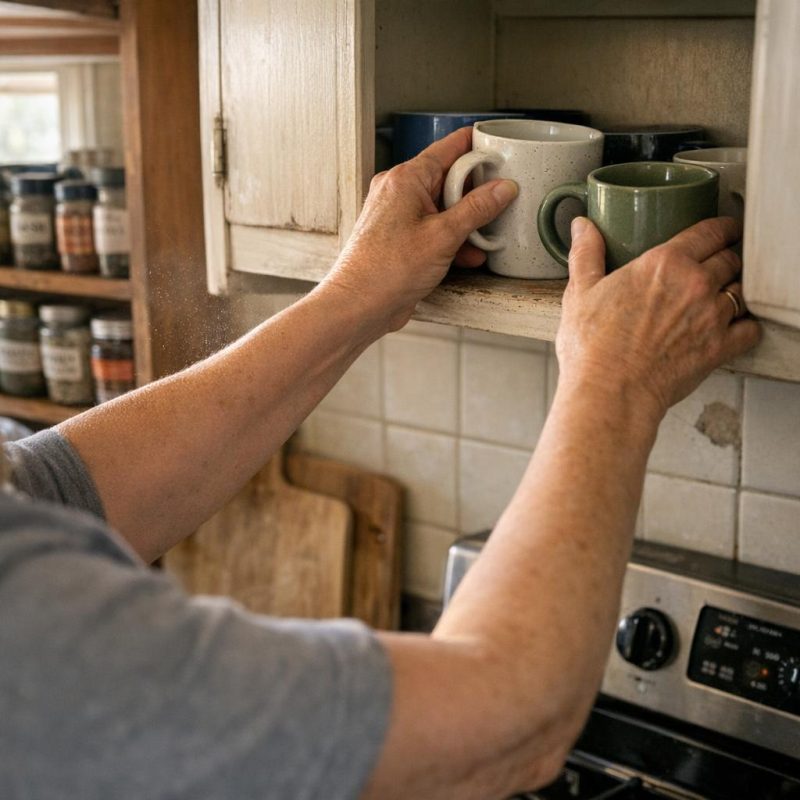 Image by RM AI
Small Adjustments
It was a Sunday afternoon, late September, when Sloane first wandered over to my counter while I was making coffee. 'Oh, Evelyn, do you mind?' she asked, already moving my cutting boards from their spot beside the stove to a drawer I barely used. 'These'll stay cleaner tucked away.' Her smile was bright, helpful. I remember standing there with the coffee scoop in my hand, not sure what to say. She'd already moved on to the spice rack, turning all the labels to face forward, alphabetizing them with quick, efficient movements. 'Just makes everything easier to find,' she said, not looking at me. I reached for the cumin that afternoon—for the chili I'd been making the same way for thirty years—and my hand closed on empty air. It took me three tries to locate it, now filed under C instead of in its usual spot near the paprika and chili powder. When Caleb came back from the garage, I mentioned it, keeping my voice light. He laughed, actually laughed. 'Mom, she's just trying to help. You should see what she did with our pantry.' Caleb laughed it off, but I couldn't shake the feeling that my hands had been made strangers in my own space.
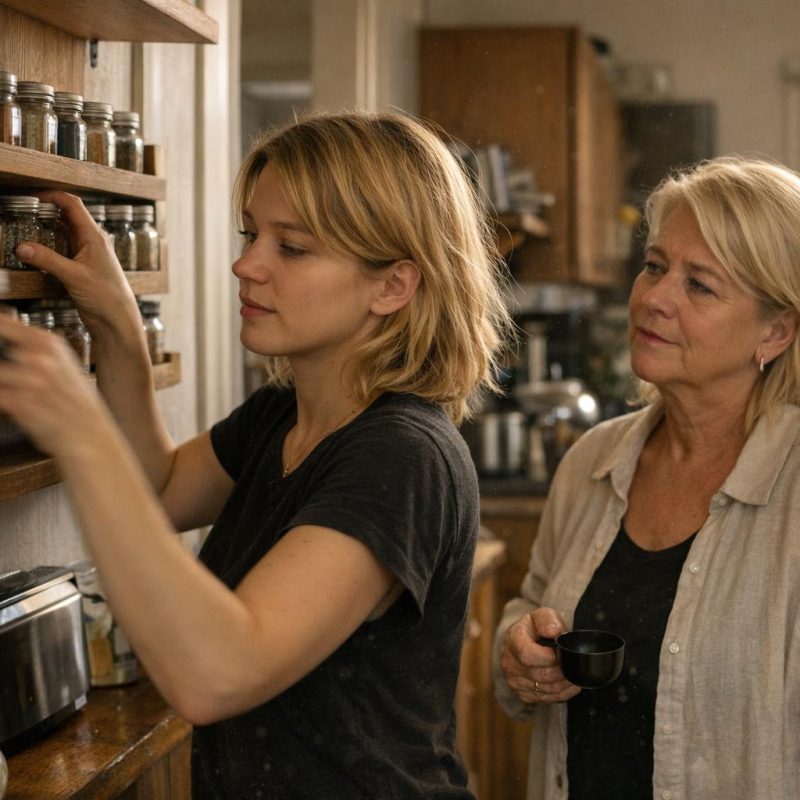 Image by RM AI
The Mug Situation
The next visit, Sloane went straight for the mug cabinet. Lily and Owen were coloring at the kitchen table, and I was rinsing lunch dishes when I heard the ceramic clink. I turned to see Sloane methodically rotating every single mug so the handles faced right, arranging them by size. 'It creates visual calm,' she explained, glancing at the kids. 'Studies show organized spaces reduce anxiety.' Lily looked up from her drawing, watching her mother's hands move with that same efficient precision. I dried my hands on the towel, trying to find words that wouldn't sound petty. They were just mugs. It was just handles. But these were the same mugs I'd reached for every morning for years, and now they felt wrong, backward, like putting your shoes on the opposite feet. Owen tilted his head, studying the cabinet with serious five-year-old concentration. 'Is that better, Mama?' he asked. Sloane kissed the top of his head. 'Much better, sweetheart.' I didn't say anything. What could I say? That she was making my kitchen uncomfortable in my own home? That would sound ridiculous. Lily asked me later why Grandma's cups were 'wrong before,' and I had no answer that didn't sound defensive.
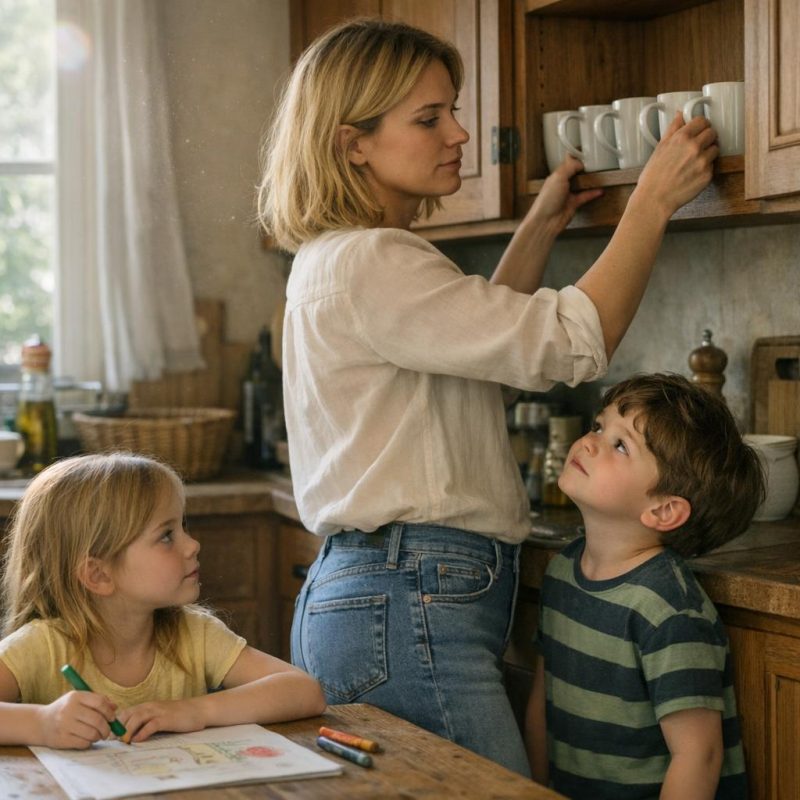 Image by RM AI
Selective Tidiness
I started paying closer attention after that, watching what Sloane touched and what she ignored. She'd reorganize the drawer where I kept my cooking utensils, moving the wooden spoons to a different container, relocating the whisks. But the sticky cabinet under the sink? Untouched. The cluttered pantry where boxes of pasta and half-empty bags of rice competed for space? She walked right past it. The junk drawer that actually was a disaster—batteries mixed with twist ties and expired coupons—never even opened. It was strange, when I thought about it. If someone genuinely wanted to help organize, wouldn't they start with the actual mess? Instead, she focused on the places I used most: the drawers I opened every day, the cabinets I reached into by instinct. She'd pull out my pot holders and refold them. Move the kitchen shears to a different hook. Shift the olive oil from beside the stove to a cabinet two steps away. Each change was small, defensible, logical even. But together, they added up to something that made me hesitate every time I cooked, made me think before reaching, made me feel clumsy in the space I'd moved through without thought for decades. It was starting to feel less like help and more like something I couldn't name.
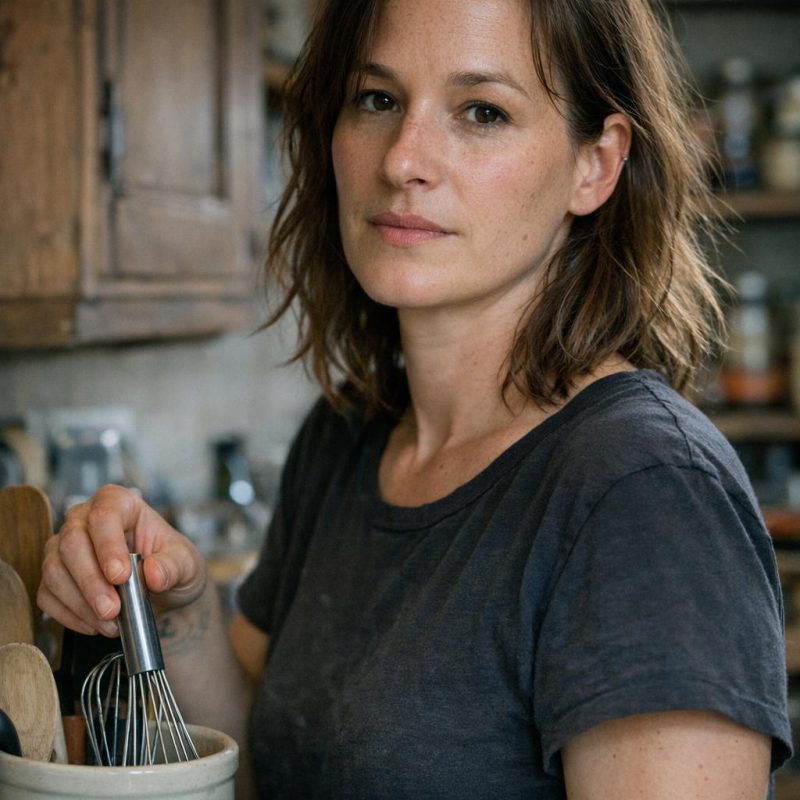 Image by RM AI
Missing Measuring Cups
I was halfway through mixing cookie dough with Lily when I reached for my measuring cups and found nothing but empty hooks. I checked the drawer below—nothing. The counter, the dish drainer, even the dishwasher. Gone. Lily watched me open and close cabinets, her wooden spoon paused mid-stir. 'Grandma? What're you looking for?' I tried to keep my voice steady. 'Just my measuring cups, honey.' It took me ten minutes to find them, finally, in the cabinet above the refrigerator—the one I needed a step stool to reach, the one where I stored the punch bowl I used maybe twice a year. When I asked Sloane about it later, she was loading the dishwasher, her movements casual. 'Oh, those? I thought you'd prefer them out of sight.' She didn't look up from arranging plates. 'They were cluttering the counter area, and you don't bake that often, right?' I stood there holding the nested cups, feeling something cold settle in my chest. I baked every Sunday. She knew that. We'd had fresh cookies on her last three visits. When I asked why, she smiled and said, 'I thought you'd prefer them out of sight.'
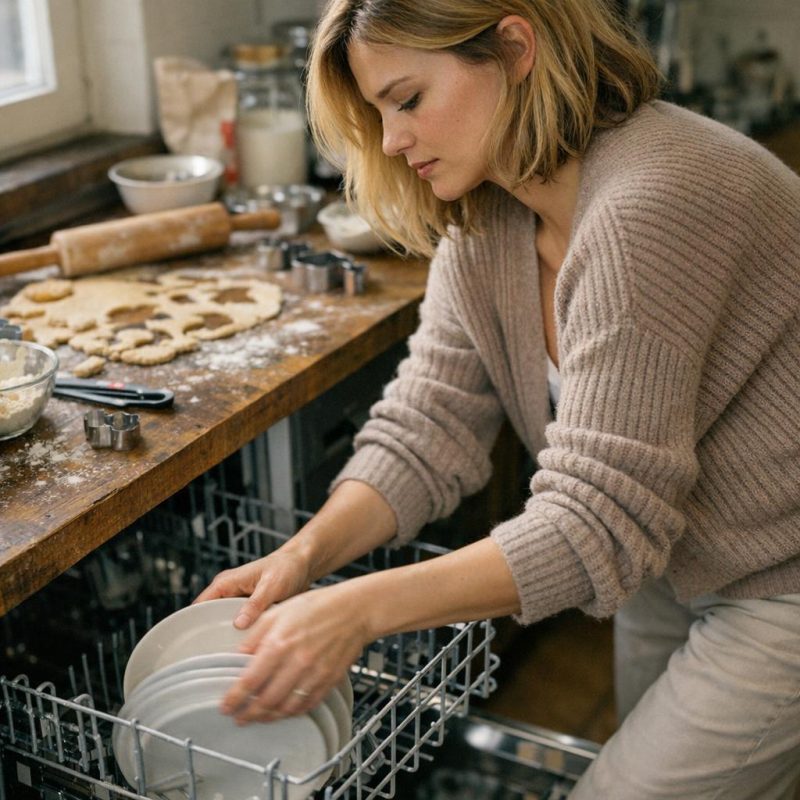 Image by RM AI
The Knife in the Wrong Slot
I was making dinner on a Thursday evening, something simple, just chicken and vegetables. I opened my knife drawer—the same drawer I'd opened thousands of times—and reached in without looking. My fingertips brushed steel, sharp steel, and I yanked my hand back so fast I banged my knuckle against the drawer frame. My chef's knife, the good one with the eight-inch blade, was lying blade-up in the wrong slot, wedged at an angle that would've caught my palm if I'd grabbed it the way I always did, the way anyone would grab a knife from their own familiar drawer. I stared at it, my heart hammering. I've never stored knives that way. Never. The blade always faces down, handle up, in the designated slot on the right side. That's basic kitchen safety, the kind of thing you don't forget after decades of cooking. But someone had moved it, placed it wrong, left it waiting. I pulled it out carefully, checked my fingers for cuts even though I'd pulled back in time. The handle was slightly damp, recently washed and put away. My hand jerked back just in time, and I wondered if that was luck or something darker.
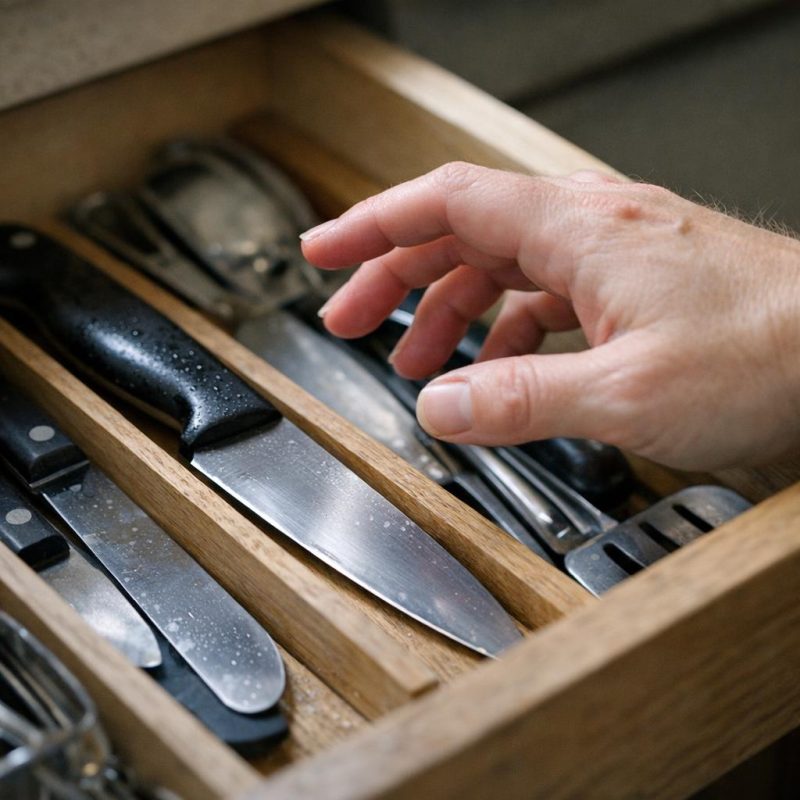 Image by RM AI
The Recipe Box
The recipe box sits on the shelf above my kitchen desk, the same wooden box my mother gave me when I got married. I don't open it often anymore—most of those recipes are in my head now—but I'd needed her beef stew recipe, the one with the bay leaves and the specific timing she'd written in the margins. When I pulled the box down, something felt off immediately. The dividers were backward, tabs facing the wrong direction. I opened it slowly. The cards were all there, stained and worn, my mother's handwriting mixing with mine across decades of crossed-out adjustments and added notes. But they weren't in order. Desserts mixed with main dishes. Holiday recipes shuffled into weeknight dinners. Someone had taken them out, looked through them, put them back wrong. I stood there running my fingers over my mother's handwriting on the apple cake recipe, the one she'd made for every birthday until the year she died. These weren't just recipes. They were conversations across time, private annotations, grocery lists scribbled on the backs. The cards were all there, but they felt exposed, like someone had been learning my history without permission.
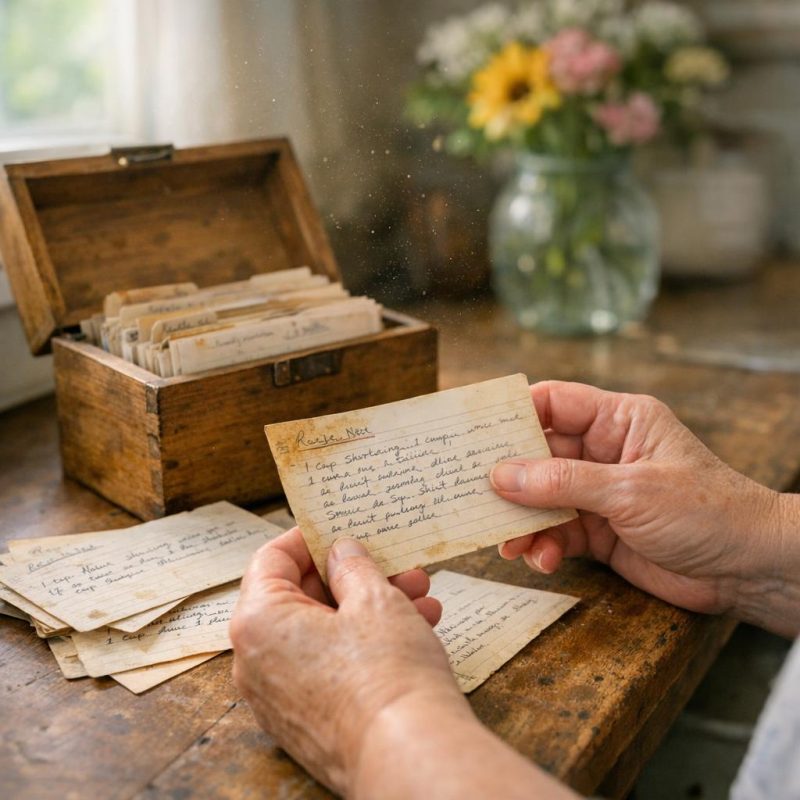 Image by RM AI
Mrs. Chen's Observation
Mrs. Chen caught me putting out the recycling on Tuesday morning. She was tending her garden, her hands dark with soil, and she waved me over to admire her tomatoes. We chatted about the weather, her grandson's college acceptance, the usual neighborhood news. Then, casual as anything, she mentioned seeing Sloane's car in my driveway last Thursday. 'I thought maybe she was dropping something off,' Mrs. Chen said, pinching off a dead leaf. 'But her car was there quite a while. Two hours, maybe? I noticed because I was waiting for a delivery.' I must have looked confused, because she added, 'You weren't home—I'd seen you leave earlier for your book club.' I kept my face neutral, nodded, made some noncommittal sound. Mrs. Chen went back to her tomatoes, the conversation already moving on. But my mind was racing. Thursday I'd been gone from one until four. Sloane had texted saying she'd drop off some hand-me-down clothes for Owen on the porch. Just a quick stop, she'd said. Not two hours inside my house. Not enough time to go through drawers, move things, rearrange. She said it so casually, but it made my stomach tighten—why would Sloane be inside when I wasn't home?
 Image by RM AI
The Locked Door
I pulled into my driveway around three that afternoon, earlier than I'd expected. Doctor's appointment got canceled—they'd called while I was already halfway there, so I just turned around and came home. Sloane had texted earlier saying she'd drop off some of Owen's outgrown clothes on the porch, nothing fancy, just a quick stop while she ran errands. But when I walked up to the front door, my key wouldn't turn. The deadbolt was locked from the inside. I stood there confused for a second, then noticed the kitchen light was on through the window—that warm yellow glow I always recognize. My stomach did a little flip. I tried the door again, jiggling the handle like that would somehow change physics, then finally knocked. Waited. The house felt too quiet, that weird stillness where you know someone's inside but they're not answering. I knocked again, harder this time, and called out Sloane's name. Finally I heard footsteps, quick and light across the hardwood. The lock clicked. But before the door opened, before I saw her face or heard her explanation, I caught it—the sound of a drawer sliding shut from somewhere deep in the house, quick and guilty, like someone caught mid-act.
 Image by RM AI
The Tote Bag
Sloane appeared in the doorway with this bright, surprised smile, like she hadn't just made me wait outside my own house. 'Oh, Evelyn! I didn't expect you back so soon.' She was holding a canvas tote bag against her hip, the kind from Whole Foods, stuffed with what looked like kitchen towels or maybe fabric. 'I was just—well, I noticed last time how cluttered some of your cabinets were getting, so I thought I'd help reorganize a bit. You know, while I was dropping off Owen's things.' She stepped aside to let me in, still talking, her voice cheerful and efficient. 'I hope you don't mind. I know how overwhelmed you get with keeping track of everything.' I hadn't asked for help. Hadn't mentioned being overwhelmed. Hadn't even complained about my cabinets, which were fine—lived-in, sure, but fine. I looked past her into the kitchen and saw the counter wiped down, a stack of dish towels folded beside the sink. Everything looked normal, almost too normal, like a stage set. 'That's very thoughtful,' I said carefully, watching her face. She beamed. But her timing was too perfect, her explanation too rehearsed, and I felt my distrust harden into something colder.
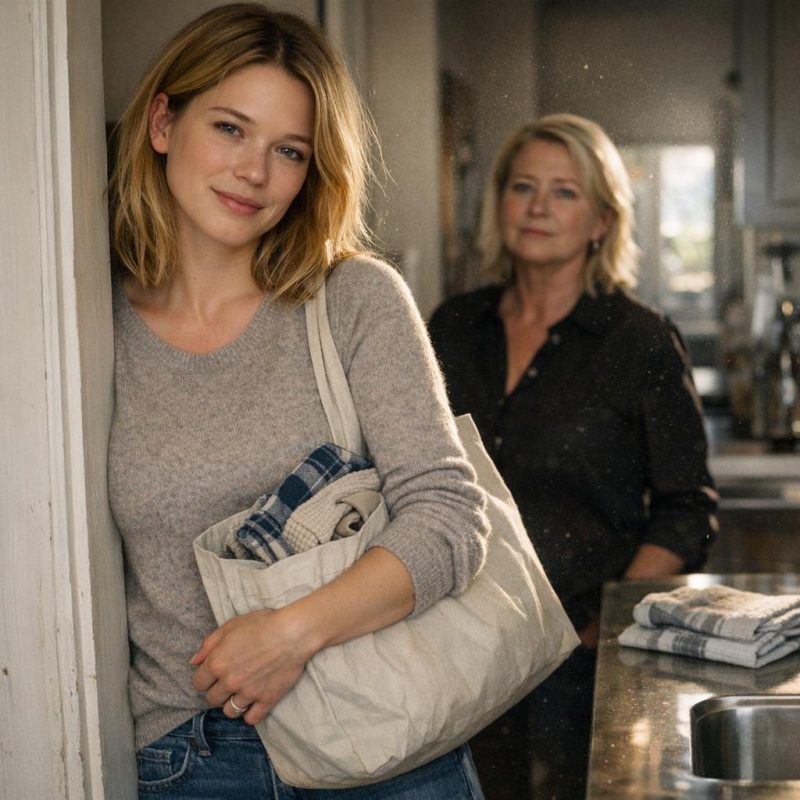 Image by RM AI
The Torn Card
After Sloane left—another round of cheerful goodbyes and reminders to 'let her know if I needed anything'—I stood in my kitchen and just looked around. Everything seemed fine at first glance. The counters were clear, the dish towels stacked neatly. But something felt off, that nagging sensation you get when someone's rearranged your things and tried to put them back but not quite right. I opened the cabinet under the sink to grab a trash bag and saw the bin was fuller than I'd left it. Not overflowing, just more than it should've been. I pulled it out, planning to take it to the curb, and that's when I saw it—a flash of pale yellow cardstock among the crumpled paper towels and coffee grounds. My breath caught. I reached in and pulled it out carefully, and my stomach dropped. It was my mother's lemon pound cake recipe card, the one she'd written out for me in her careful cursive forty years ago. The edges were worn soft from handling, the paper stained with butter and time. Torn in half. Clean down the middle, like someone had folded it first and then pulled. That card should never have been in the trash—I would never throw it away, and Sloane knew that.
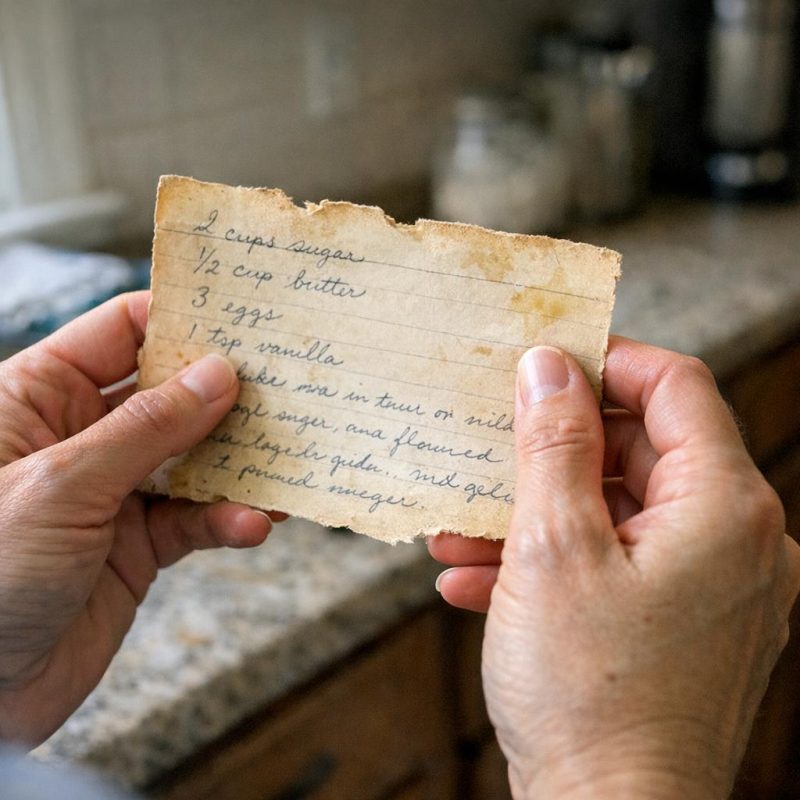 Image by RM AI
The Flicker
I didn't even think. I just walked straight to the living room where Sloane was gathering her tote bag and held up the two pieces of the recipe card. 'What is this?' My voice came out steadier than I felt. She looked up, and for just a second—maybe half a second—her expression changed. It wasn't surprise or concern. It was something sharper, colder. Almost like annoyance, or satisfaction, like she'd been waiting for this exact moment. Then it was gone, replaced by wide-eyed shock. 'Oh my God, Evelyn, I'm so sorry! I was clearing out that drawer by the stove and it must've gotten mixed in with some old papers. I didn't realize—I would never have thrown it away on purpose, you know that.' She reached for the pieces, but I pulled them back. Her apology was smooth, practiced, like she'd rehearsed it. Too quick. Too perfect. 'It was in the trash,' I said quietly. 'Under coffee grounds.' She bit her lip, doing this whole distressed routine. 'I feel terrible. Let me make it up to you—I'll help you organize those cards properly so this doesn't happen again.' Her apology was too quick, too smooth, and I realized she'd been waiting for me to find it.
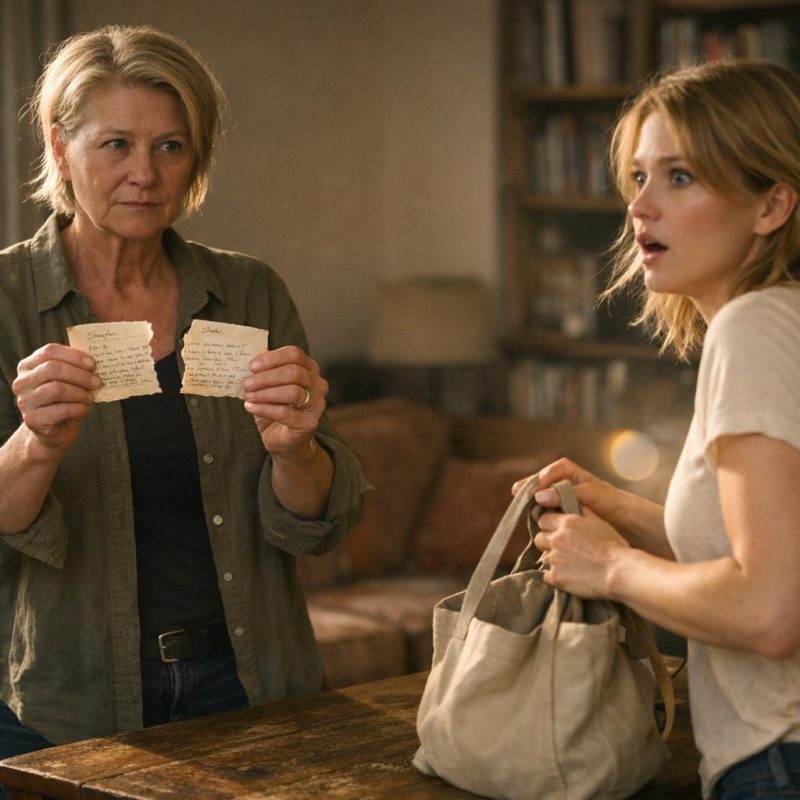 Image by RM AI
Taping It Back Together
That night, after everyone had gone and the house was finally quiet, I sat at my kitchen table with a roll of scotch tape and the two halves of my mother's recipe card. The paper was soft and fragile where it had torn, the fibers separated cleanly down the fold. I lined up the edges as carefully as I could, smoothing them flat with my fingertips before pressing the tape down along the back. It wouldn't ever look the same—the crease would always be there, a visible scar running right through my mother's handwriting. Through the '2 cups sugar' and 'cream until light.' Through her little note at the bottom: 'Don't overbake, sweetheart.' I kept replaying that moment in the living room, the flicker in Sloane's expression before she recovered. The way she'd apologized without actually explaining how a card from a closed drawer ended up buried in the trash. How she'd offered to 'help organize' when I'd never asked. I pressed the tape down one more time, making sure it held. The card was salvageable, technically. But something about this whole situation felt deliberate, calculated. I couldn't shake the feeling that this wasn't about tidiness—it was about control.
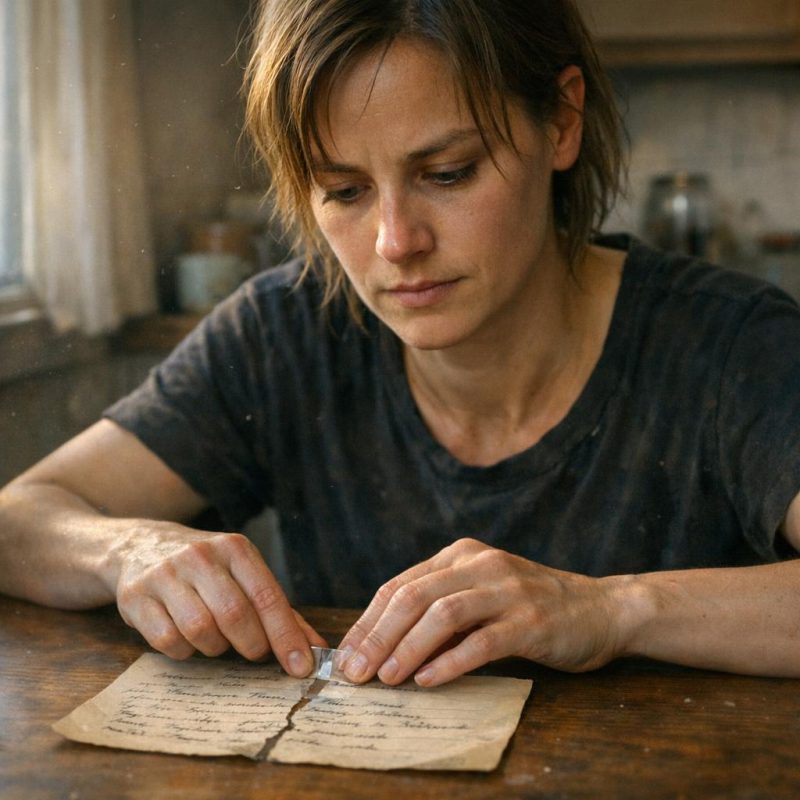 Image by RM AI
The Decision to Observe
I thought about calling Caleb. Thought about saying, 'Your wife tore up Grandma's recipe card and tried to hide it.' But I could already hear how it would sound—dramatic, petty, like I was making something out of nothing. Sloane would cry. Caleb would mediate. I'd end up apologizing for being 'sensitive' or 'struggling with change,' and nothing would actually get resolved. I've been through enough family dynamics to know how this plays out. So instead, I made a different choice. I decided to stop reacting and start observing. If Sloane wanted to come into my house and move things around, throw things away, play innocent when confronted—fine. Let her. But I wasn't going to keep stumbling into her traps unprepared. I was going to watch. Document. Gather my own evidence before I said another word to anyone. I pulled out a small notebook from the junk drawer, the kind I usually use for grocery lists, and wrote the date at the top of the first page. Underneath, I noted: 'Recipe card found torn in trash. Sloane claimed accident.' Short, factual, unemotional. If she wanted to play games in my kitchen, I'd learn the rules first.
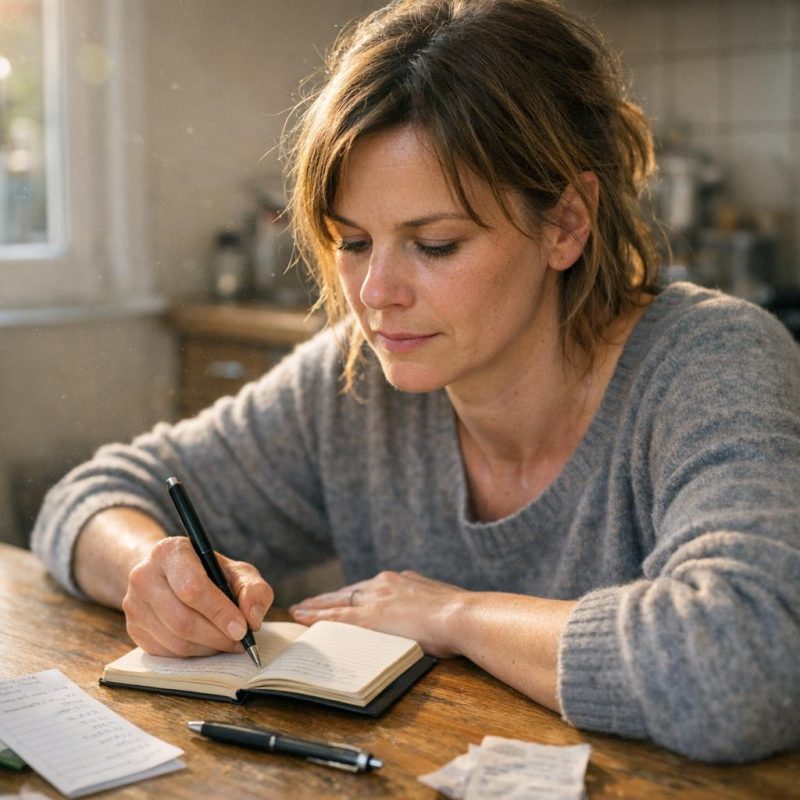 Image by RM AI
The Photos Begin
The next morning, I started taking pictures. Nothing obvious, nothing that would look suspicious if someone scrolled through my phone. Just casual shots of my kitchen from different angles—the counter with the canister set lined up by the stove, the utensil drawer pulled open to show where everything sat, the chair at the breakfast table and exactly how far it was pushed in from the edge. I made sure the timestamps were visible, then saved everything to a locked folder I labeled 'Recipes.' It felt paranoid, honestly. Like something from a movie, not something a sixty-two-year-old woman should be doing in her own house. But I kept thinking about Mrs. Chen's comment, about Sloane's car being in my driveway for two hours when I wasn't home. About the torn recipe card and that flicker of satisfaction on her face. So I kept taking pictures. The coffee mugs on their hooks. The placement of the fruit bowl. Small, forgettable details that no one would notice changing unless they were looking. And when I compared the pictures from Wednesday to the ones I took Friday afternoon, after Sloane's next 'quick visit,' I saw them—the changes she swore weren't there.
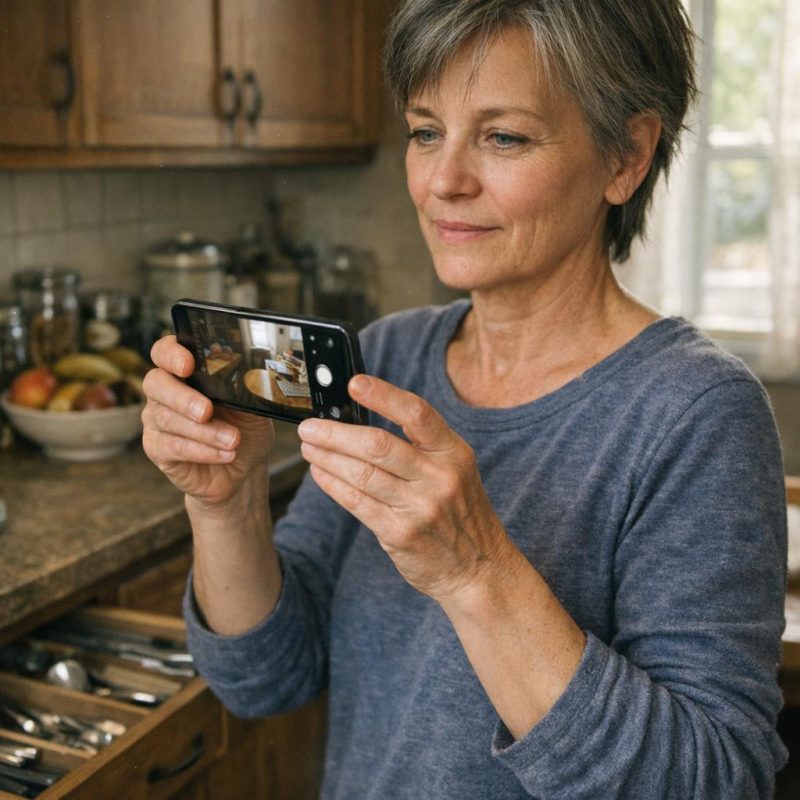 Image by RM AI
The Flour Test
I needed something more concrete, something that couldn't be explained away as memory or perception. So I came up with a test. Simple, subtle, the kind of thing that would seem completely innocent if anyone noticed. I took a tiny pinch of flour—barely visible, just a few grains—and sprinkled it on the counter directly behind the ceramic cookie jar that sits in the corner by the toaster. That jar hasn't moved in probably five years. It's decorative, a heavy thing my sister gave me, and I never actually keep cookies in it. No reason for anyone to touch it, much less move it. I smoothed the flour out with my fingertip until it was almost invisible, just a faint dusting you'd only see if you were looking. Then I took a picture, zoomed in close so the flour was clearly visible. Dated and saved. Sloane came by two days later with some excuse about borrowing a casserole dish. I stayed in the living room, let her 'grab it from the kitchen,' didn't follow. After she left, I went straight to the counter. The flour was smudged, and the jar had been moved three inches to the left.
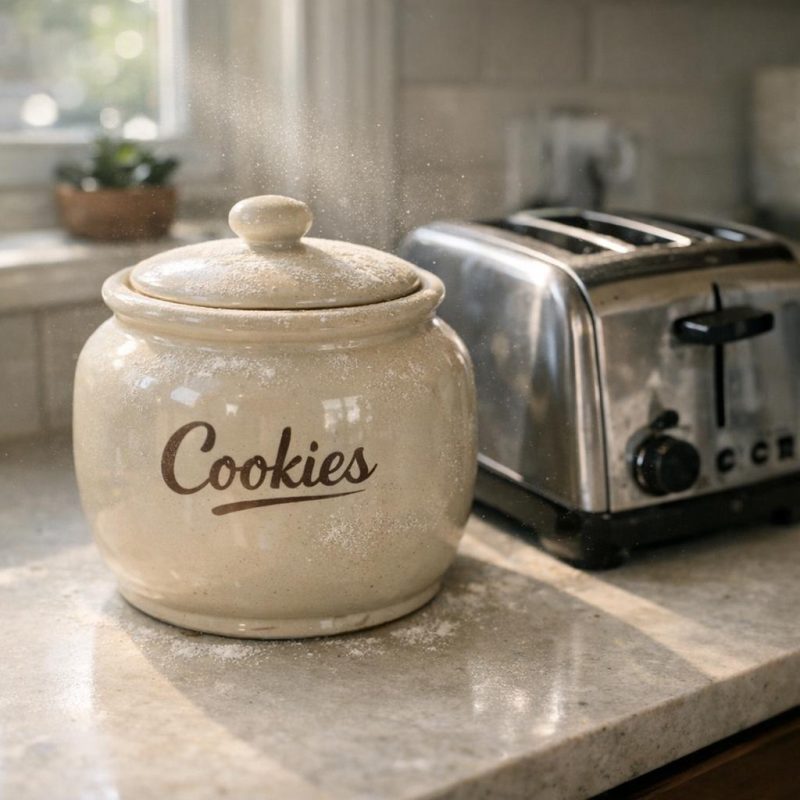 Image by RM AI
The Pink Hair Tie
I decided to try something even more obvious. A bright pink hair tie—mine from years ago when I briefly tried putting my hair up for yoga classes. It's unmistakable, almost neon, the kind of thing you can't confuse with anything else. I tucked it into the very front of my silverware drawer, right where you'd see it the second you opened it. Took a picture, made sure the time stamp was clear. Then I waited. Sloane came by three days later, said she needed to borrow my good serving spoons for a dinner party. I stayed in the living room again, pretended to be absorbed in my book. I heard the drawer open and close. After she left, I checked. The hair tie was gone. Not moved, not pushed to the back—gone completely. I looked everywhere. Checked the trash, the other drawers, even the floor in case it had fallen. Nothing. When she came back the next week to return the spoons, I asked her directly. Casual, light, like it didn't matter. 'Hey, did you happen to see a pink hair tie in that drawer?' She looked me straight in the eye and said she hadn't touched my drawers.
 Image by RM AI
The Pattern Emerges
That's when I started paying attention to timing. Not just what was moved, but when. I pulled out my phone and scrolled back through texts, cross-referenced them with my calendar. The pattern was so clear I couldn't believe I'd missed it. The worst instances—the completely rearranged spice cabinet, the kitchen towels folded and stacked in a new spot, the measuring cups moved from one drawer to another—all of it happened on days when Sloane knew I'd be out. Doctor's appointments. My book club meetings. The afternoon I told her I was driving to see my sister. But the family dinners when Caleb was there? When other people could witness? Those visits were normal. Pleasant, even. She'd help with dishes, wipe down the counters, but nothing would be moved or reorganized. Nothing that would make me question my own memory later. I sat at my kitchen table with my phone in front of me, staring at the evidence I'd compiled without even meaning to. She wasn't organizing for my benefit—she was performing when nobody else could see.
 Image by RM AI
The Microphone in the Trash
I was taking out the trash on a Thursday morning when I saw it. Something small and black, partially hidden under a wadded paper towel near the top of the bin. I almost didn't bother looking—almost just tied the bag and carried it out. But something made me pause. I pulled the paper towel aside and there it was: a tiny clip-on microphone, the kind you see people use for presentations or videos. It was snapped clean in half, deliberately broken, the wire dangling loose. My stomach dropped. I lifted it out carefully, turned it over in my palm. It wasn't old or corroded—this thing was recent, maybe even new before someone destroyed it. The clip was still shiny. I tried to remember the last time I'd taken out the trash, what day Sloane had last been here. Two days ago. She'd stopped by to 'return a Tupperware container' and spent fifteen minutes in the kitchen while I was in the bathroom. My heart thudded so hard I had to sit down—suddenly the constant 'helping' made a sick kind of sense.
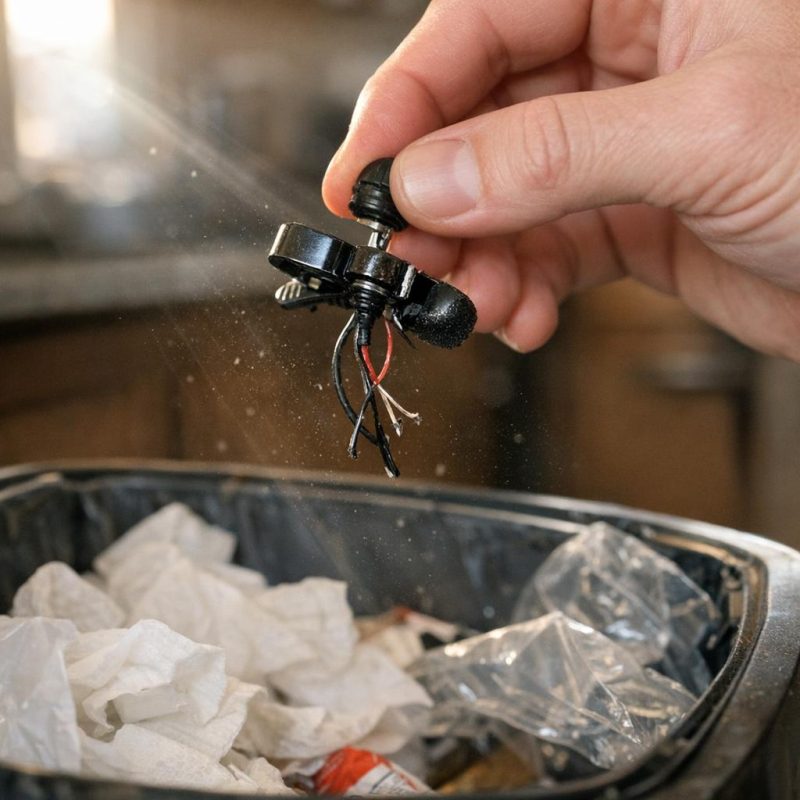 Image by RM AI
The Sick Realization
I sat at the kitchen table for over an hour, just staring at that broken microphone. My first thought was that maybe I was losing it, that I'd somehow bought this thing myself and forgotten. But no. I've never owned anything like this. Never needed to. So why was it in my trash? Why was it broken? And then the pieces started clicking together in a way that made my skin crawl. The rearranging. The timing. The way Sloane always seemed to have a reason to be in my kitchen when I wasn't watching. She wasn't just moving things—she was staging something. Creating a scene, a backdrop. But for what? A recording? Evidence of something? I picked up the microphone again, felt the clean snap where someone had broken it in half. This wasn't accidental. Someone had used it and then destroyed it, tossed it in my trash like I'd never notice. My mind raced through possibilities, each one worse than the last. Was she recording me without my knowledge? Recording herself in my space? But for what?
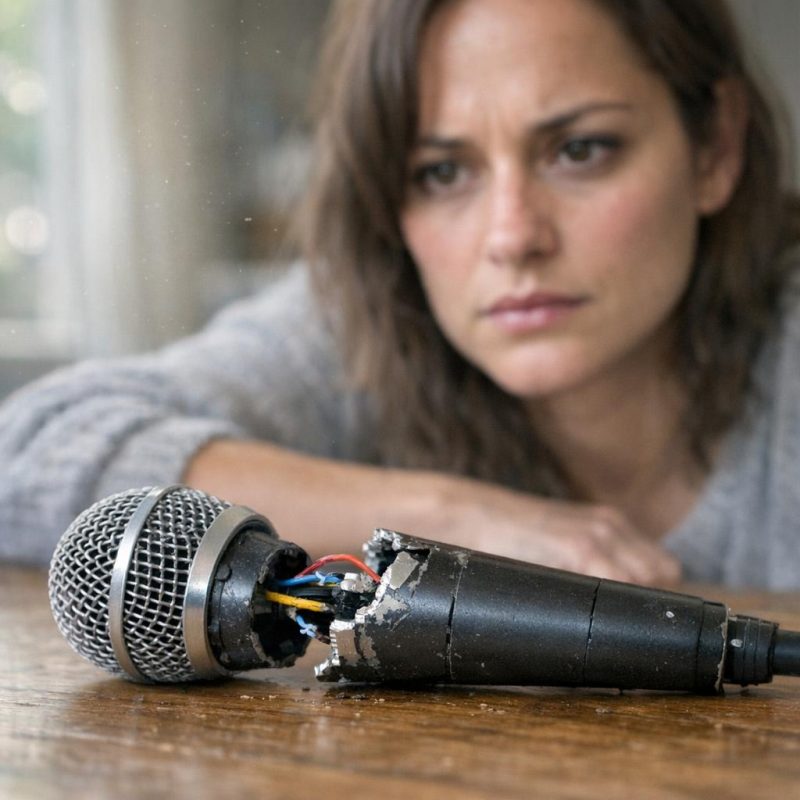 Image by RM AI
Asking for Help
I knew I couldn't do this alone anymore. Whatever was happening, I needed proof that couldn't be dismissed or explained away. Proof I could show someone else, something concrete. So I did something I never thought I'd do—I walked next door and knocked on Mrs. Chen's door. Her son Marcus answered, home from college for the summer. I've known him since he was eight years old, watched him grow into this kind, tech-savvy kid who always helped me when my printer stopped working or my email did something weird. I asked if we could talk privately. We sat on her porch and I explained—not everything, not the whole paranoid spiral, but enough. That I needed to know if someone was moving things in my house when I wasn't there. That I thought I needed a camera but had no idea how to set one up. He didn't laugh. Didn't look at me like I was crazy. He just nodded, asked a few questions about where and when, and then told me he could help. He agreed without hesitation, and the kindness in his eyes made me feel less alone.
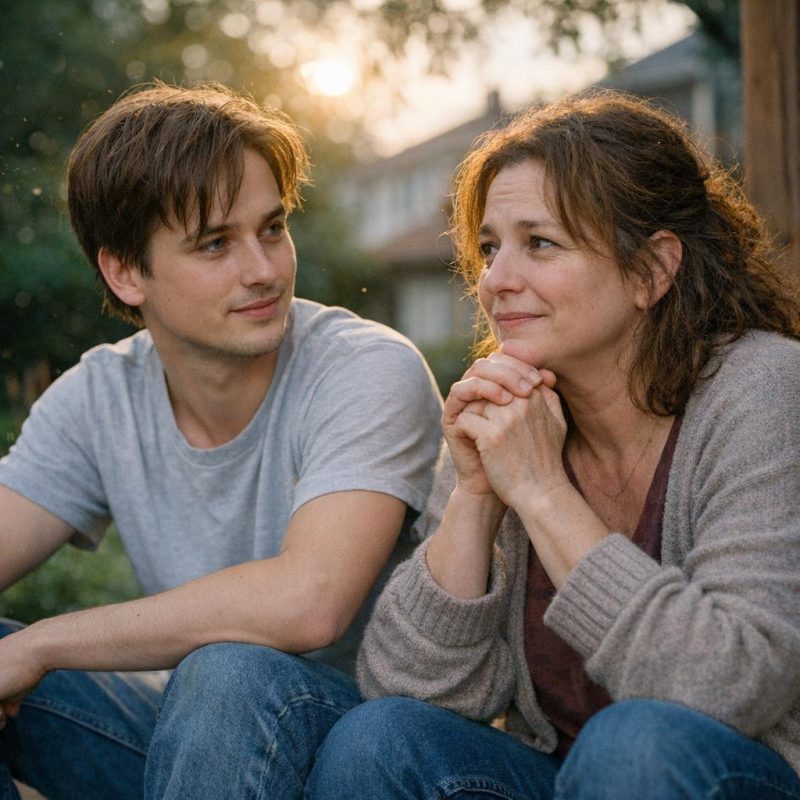 Image by RM AI
Planning the Camera
Marcus came over the next afternoon with a small box. Inside was a camera—tiny, discreet, nothing like the obvious security cameras you see mounted outside houses. This one was designed to blend in, he explained. We could tuck it on a shelf between cookbooks or behind a plant, angle it so it captured the drawers and counters where Sloane always seemed to focus. He walked me through the whole setup, patient and thorough. Showed me how it connected to WiFi, how the footage saved to a cloud account, how I could watch it in real-time or review it later from my phone. He made me practice logging in, finding the recordings, zooming in on the playback. 'You've got this, Miss Evelyn,' he said, and I almost believed him. We tested different angles, finally settling on a spot on the shelf just above the counter where the cookie jar used to sit. Perfect view of the silverware drawer, the cabinets, the whole workspace. He showed me how to access the footage from my phone, and I felt the balance of power shift ever so slightly.
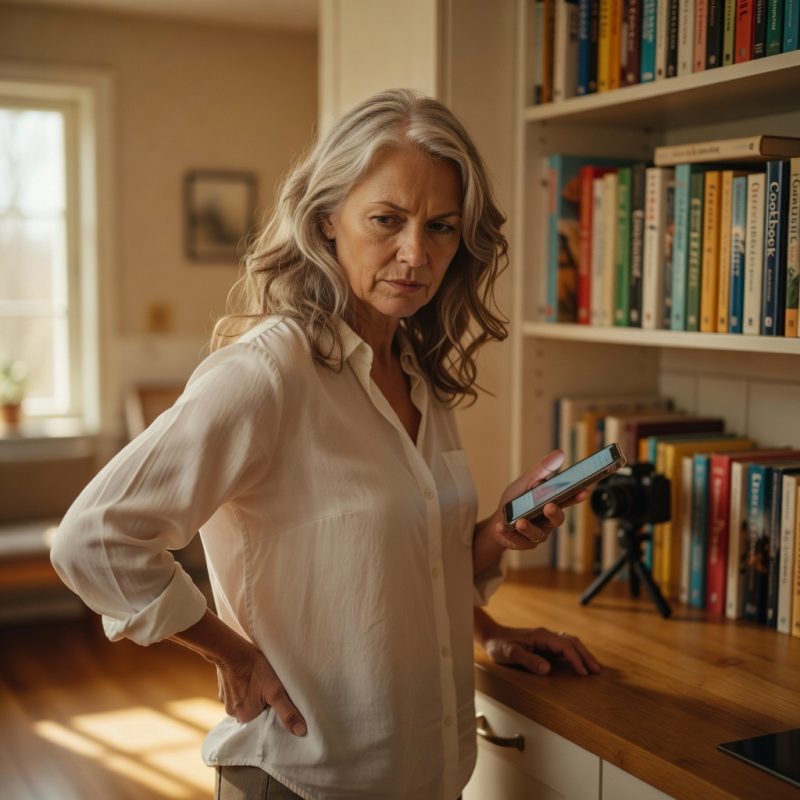 Image by RM AI
The Wait
The camera was in place. All I had to do now was wait. I went about my routines—grocery shopping, watering the plants, pretending everything was normal. But my phone felt heavier in my pocket, the knowledge of that camera like a secret I was carrying everywhere. Then Sloane texted. Casual, breezy, the way she always did. 'Hey! I have that book you mentioned. Mind if I drop it off Tuesday afternoon?' My heart kicked. Tuesday. Three days away. I forced my fingers to type a normal response. 'Sure, that works! I'll be out running errands but the door's unlocked. Just leave it on the counter.' Her reply was almost instant. A thumbs-up emoji and a smiley face. I stared at my phone, at that innocent little message, and felt my hands start to shake. I had three days to keep my composure. Three days to act like nothing had changed, like I didn't know what I knew, like I wasn't about to catch her in the act. She said she'd stop by Tuesday afternoon—I had three days to keep my hands steady and my face blank.
 Image by RM AI
The Day Of
Tuesday morning I woke up before my alarm, stomach churning. I made coffee, went through the motions of breakfast, checked the camera app on my phone at least a dozen times to make sure it was working. The red light was on. Recording. I had to leave by one o'clock—early enough that Sloane would know I wasn't home, late enough that it seemed natural. I grabbed my purse, my shopping list, my keys. Checked the camera one more time. Then I drove to the library across town, parked in the far corner of the lot where I had a clear view of my phone screen. At 1:47, I saw it. Sloane's silver sedan pulling into my driveway, parking right behind where my car usually sat. She got out, glanced around, walked up to my front door. My thumb hovered over the app. I could watch live if I wanted to. See exactly what she was doing in real-time. But I didn't. I couldn't. I needed to see it all at once, with distance, with clarity. The camera was recording, and I had no idea what I was about to see.
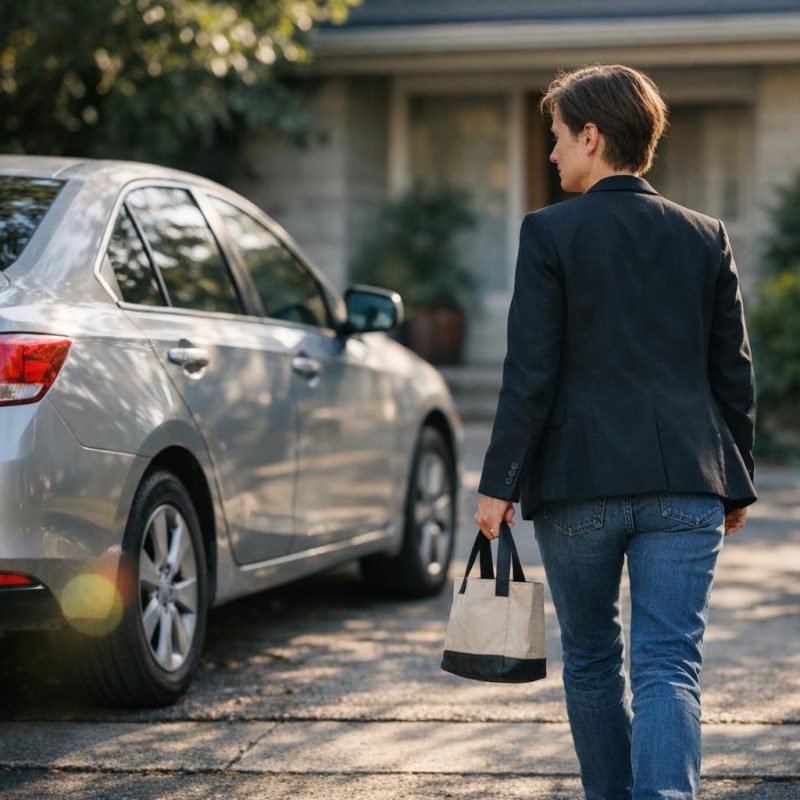 Image by RM AI
Watching the Footage Alone
I sat in my car in that library parking lot, engine off, phone in my lap. The screen felt too bright in the afternoon light. I opened the camera app, found the recording from 1:47 p.m., and pressed play. The angle was good—I could see most of the kitchen, the counter, the cabinet doors. For the first minute, nothing. Then Sloane walked into frame carrying something black and rectangular. A bag, maybe. She set it on my kitchen table and unzipped it, and my stomach dropped. She pulled out a tripod. Not a small one, either. The kind with adjustable legs and a phone mount at the top. She set it up carefully, positioned it toward the cabinets, adjusted the height twice. My hands went cold. This wasn't someone tidying up while I was out. This wasn't even someone snooping. She tapped her phone, checked the angle on the screen, stepped back into frame, and smiled. Not at me. At the camera. At whoever she thought would be watching. She didn't tidy—she performed.
 Image by RM AI
The Knife Placement
I kept watching. Sloane moved to the knife drawer, the one beside the stove. She opened it slowly, like she was being careful, and pulled out the wooden block where I kept my rarely-used paring knives in the back. Then she reached deeper and pulled out the chef's knife, the serrated bread knife, the long carving blade I only used at Thanksgiving. One by one, she moved them to the front of the drawer. Repositioned them so the handles faced out, blades pointing back. She stepped away, checked the tripod screen, adjusted the angle slightly. Then she walked back into frame, opened the drawer again, and gasped. Actually gasped. Her hand flew to her mouth. She looked right at the camera with wide, worried eyes and shook her head slowly, like she'd just discovered something terrible. But I'd just watched her arrange it all herself. She gasped on camera like she was shocked, but I'd watched her place them there herself.
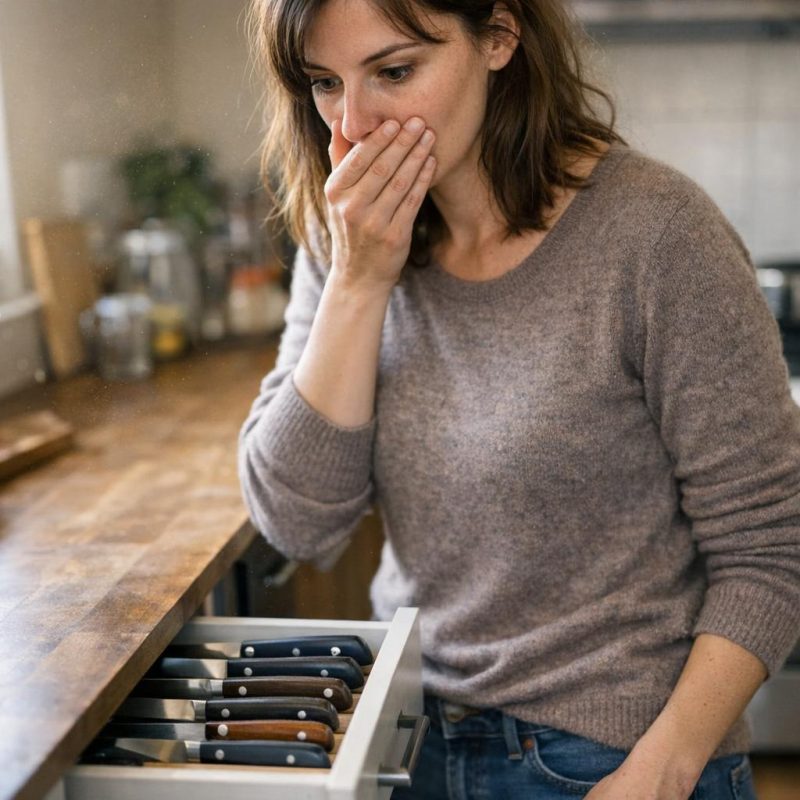 Image by RM AI
The Cast-Iron Pan
The footage kept rolling. Sloane moved to the stove next, lifted my cast-iron skillet—the heavy one I used for cornbread—and carried it across the kitchen. She opened the cabinet above the fridge, the tall one I needed a stepstool to reach, and heaved the pan onto the top shelf. She adjusted it twice, making sure it sat near the edge. Then she stepped back, checked the camera, and walked into frame again. This time she looked up at the cabinet with this worried, pained expression, like she'd just noticed how dangerously high it was. She even put her hand on her hip, shook her head, glanced at the camera like she was sharing her concern with someone who'd understand. My chest felt tight. I thought about all the times she'd mentioned things in passing. The knife drawer. The step stool. The pan I 'shouldn't be lifting anymore.' I realized with a sickening jolt that every 'unsafe' thing she'd ever mentioned, she'd created herself.
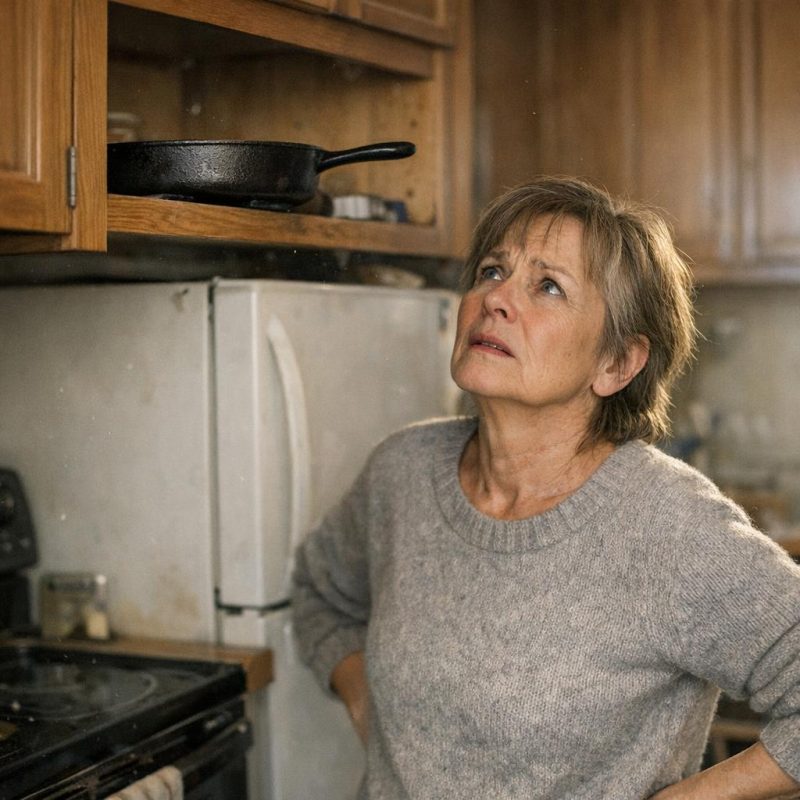 Image by RM AI
The Canister Swap
I didn't want to keep watching, but I couldn't stop. Sloane moved to the counter where I kept my sugar and salt canisters, the blue ceramic ones my sister gave me years ago. She unscrewed the lids on both, peered inside to check which was which, then carefully swapped them. She put the sugar where the salt had been. Put the salt where the sugar had been. She screwed the lids back on, wiped her hands on a dish towel, then checked the tripod again. Adjusted the zoom. Walked back into frame and opened the sugar canister—the one that now held salt—and made this exaggerated shocked face. She held up a pinch of it, brought it close to the camera, shook her head with this sad, knowing look. Like she'd just caught me in the middle of a dangerous mistake. Like I'd done this to myself. But I hadn't. She was documenting proof of my incompetence—proof she was manufacturing herself.
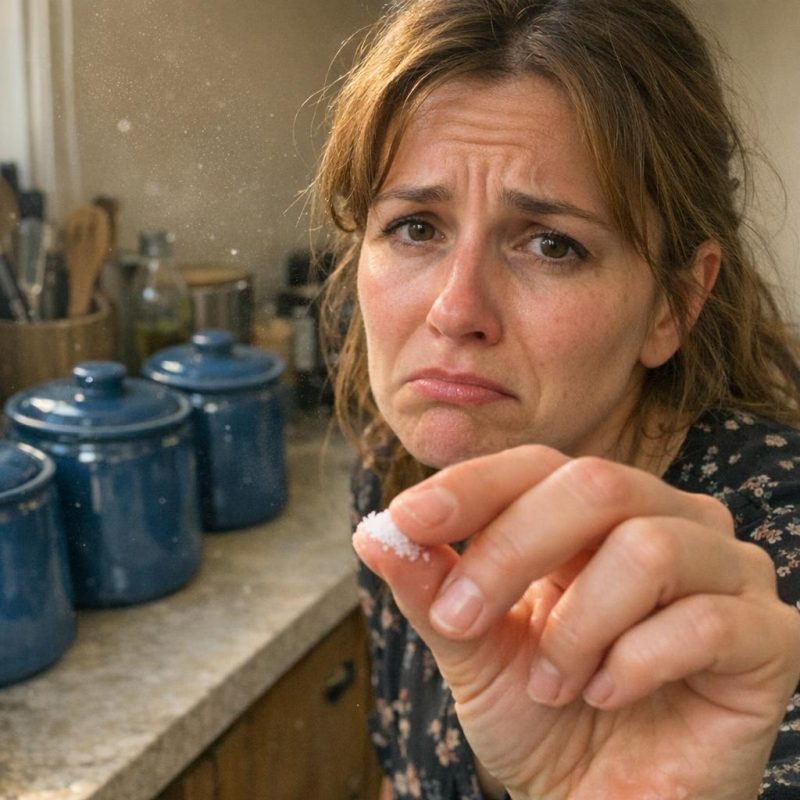 Image by RM AI
The Recipe Box Scene
Then she went for my recipe box. I watched her walk to the shelf where it sat, the wooden box my father made when I got married, and lift it down with both hands. She carried it to the counter, right in front of the camera, and opened the lid. She pulled out a card—one of my mother's, I could tell by the handwriting even on the small screen—and held it up to the camera like it was evidence. She read aloud. I couldn't hear the audio through my phone speaker well, but I saw her lips moving, saw her pointing at the ingredients list. Butter. Sugar. Cream. She pulled out another card. Then another. Each time, she held it up, shook her head, made a face like she was discovering something troubling. Then she looked right at the camera and laughed. Not the polite laugh I'd heard a hundred times at Sunday dinners. Something sharper. Meaner. She laughed and said, 'This is why she makes everything so unhealthy,' in a voice I'd never heard before.
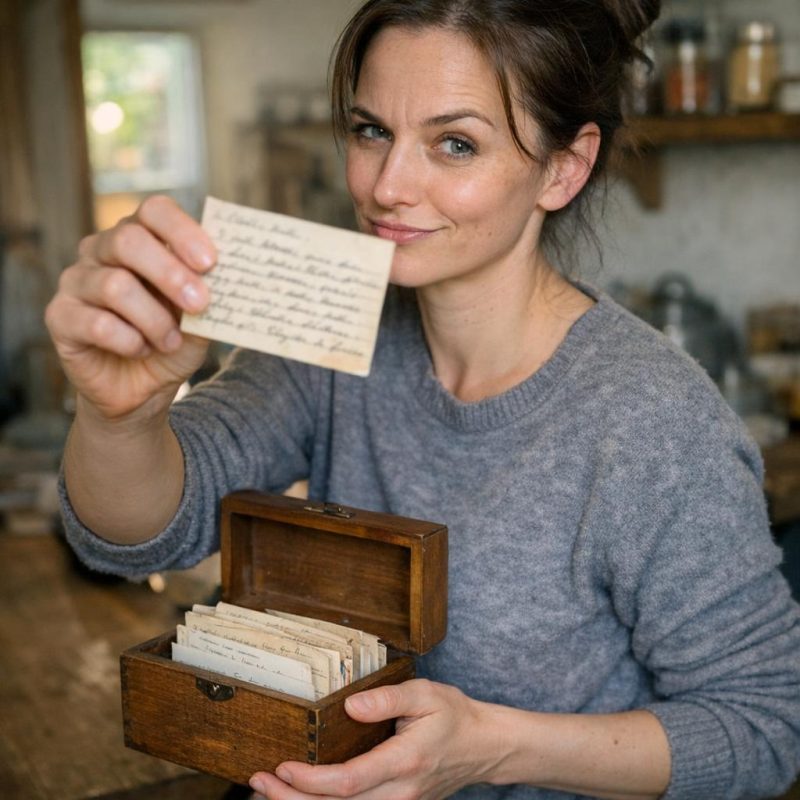 Image by RM AI
The Torn Card Again
I thought that would be the end of it. I thought she'd put the cards back, pack up the tripod, leave. But she didn't. She reached into the box one more time and pulled out the lemon cake card. The one I'd taped back together after finding it in the trash. My mother's card. She held it up to the camera, showing the tape along the tear, and smirked. Actually smirked. Then she tore it in half again. Right down the middle, clean and deliberate. She held both pieces up for a second, like she was making sure the camera caught it, then tossed them into the trash can beside the counter. She dusted her hands off. Looked at the camera one more time with this satisfied little smile. Then she started packing up the tripod. I sat there staring at the screen, not just hurt but shocked, because this wasn't a private insult—it was content.
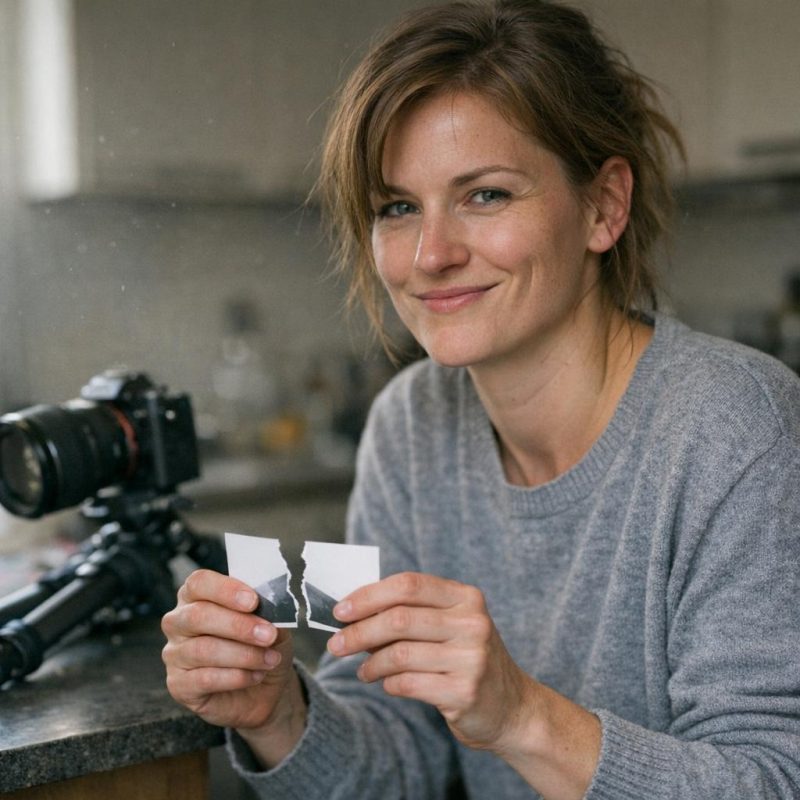 Image by RM AI
The Message on Screen
I was about to stop the playback when something happened on screen. A notification popped up on Sloane's phone—the one mounted on the tripod. She'd left the screen facing out, and the banner was just visible at the top. I squinted at my own phone, trying to read it. The camera had caught it clearly enough. A text message. The contact name said 'Mom,' and I could see most of the preview text below it. My stomach lurched. I paused the video, zoomed in as much as the app would let me, and read it again to make sure I wasn't imagining it. 'Did you get any good before clips? Sponsor wants it by Friday.' I stared at those words until they stopped making sense. Sponsor. Before clips. Her mother was in on this. Whoever her mother was, whatever this was, they were coordinating. It was from someone saved as 'Mom,' and it said, 'Did you get any good before clips? Sponsor wants it by Friday.'
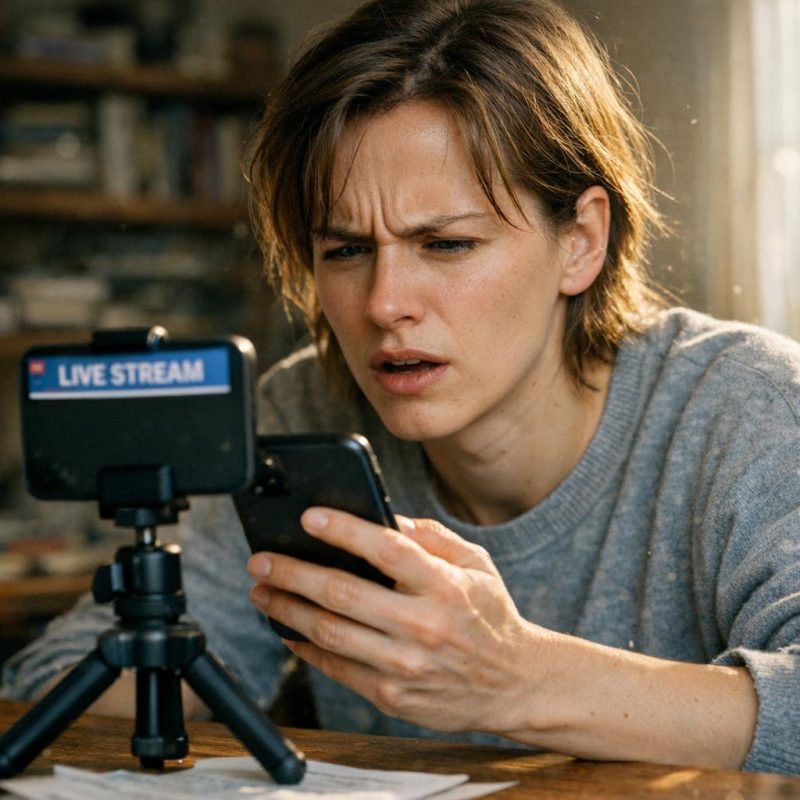 Image by RM AI
The Sponsor Question
I rewound the footage and paused on the message again. Read it three more times. 'Before clips.' Like there would be 'after' clips too. Like this was part of a sequence. And 'sponsor'—what sponsor? Who sponsors someone to rearrange an old woman's kitchen and film it? I tried to piece it together. The tripod. The performance. The manufactured dangers. The documentation. It wasn't just meanness. It wasn't just cruelty for cruelty's sake. Someone was paying for this. Someone wanted this footage by Friday. Sloane and her mother had a deadline. I sat there in my car, phone screen dim now, trying to make sense of what kind of business involves staging your mother-in-law's kitchen to look unsafe and filming yourself discovering the problems you created. Whatever Sloane was building, it wasn't just family drama—it was a business.
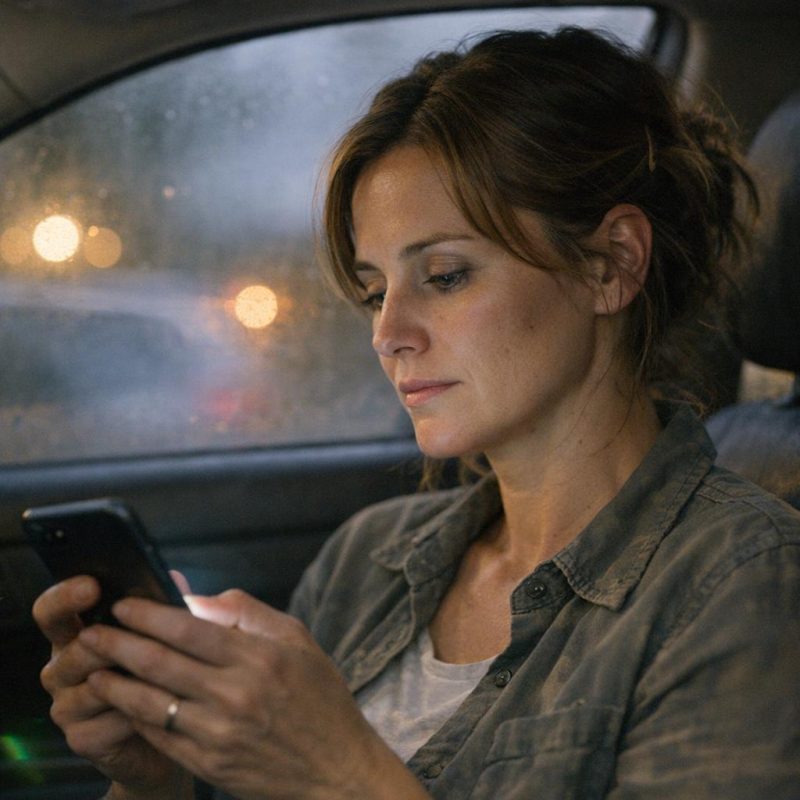 Image by RM AI
Asking Marcus About Cameras
I sat in the car for another ten minutes before I called Marcus. He picked up on the second ring, probably thinking I'd locked myself out again or needed help with the printer. I asked him straight—if someone wanted to film themselves 'discovering' things, what kind of phone setup would they use? He didn't even pause. 'Oh, like a tripod mount or one of those ring lights? Yeah, that's standard for content creation. You filming something, Evelyn?' I felt my throat tighten. Content creation. 'What kind of content?' I asked, keeping my voice steady. He explained it like it was the most normal thing in the world—people film themselves doing all sorts of stuff now. Organizing, cooking, reacting to things. They post it on social media. TikTok, Instagram, maybe YouTube if it's longer. 'It's everywhere,' he said, almost laughing. 'My niece makes like three videos a day.' I thanked him and hung up before he could ask more questions. My hands were shaking again. Social media. An audience. Sloane hadn't just been filming me for her own records or some private project. She'd been creating content—posting it somewhere people could watch, comment, share. He said, 'Sounds like social media content—TikTok, Instagram, maybe YouTube,' and my stomach dropped.
 Image by RM AI
The Public Humiliation
I sat there trying to picture it. Strangers watching footage of my kitchen. Watching me shuffle around in my slippers, oblivious. Watching Sloane 'discover' the dangers she'd planted herself. And those strangers—they'd have no idea what was real. They'd see exactly what Sloane wanted them to see. An old woman. A messy cabinet. A concerned daughter-in-law trying so hard to help. They'd nod along, maybe leave a comment. 'You're so patient.' 'She's lucky to have you.' 'My MIL is the same way.' I felt sick. This wasn't just meanness between us. It wasn't even just about Caleb or the grandkids. Sloane had been building a public story about me—a narrative where I was the problem, the liability, the one who couldn't be trusted. And she'd been doing it in front of an audience I would never see, never meet, never get to correct. Every video was another piece of evidence in a case I didn't know was being made. My kitchen wasn't just a stage—it was evidence in a case she was making against me.
 Image by RM AI
Searching for Sloane Online
I called Marcus back that night. Asked him—hypothetically, I said—how you'd find someone's social media if you didn't know their username. He walked me through it like I was a child, which I guess I was in this world. Search her name, check if the account's public, look for posts that match what you're expecting. 'You looking someone up?' he asked, curious now. I told him it was just a question. He offered to help, said he could search faster than I could fumble through it. I gave him Sloane's full name. Waited while he typed. My heart was pounding so hard I could feel it in my jaw. He was quiet for a minute. Then two. Then he said, 'Found her. You want the username?' I did. I wrote it down on the back of an envelope, my handwriting shaky and crooked. I thanked him and hung up before he could ask what this was about. I stared at the username for a long time before I opened my phone. Part of me didn't want to see it. Didn't want to know how many people had watched me be humiliated without my knowledge. He found her account within minutes, and the number of followers made my vision blur.
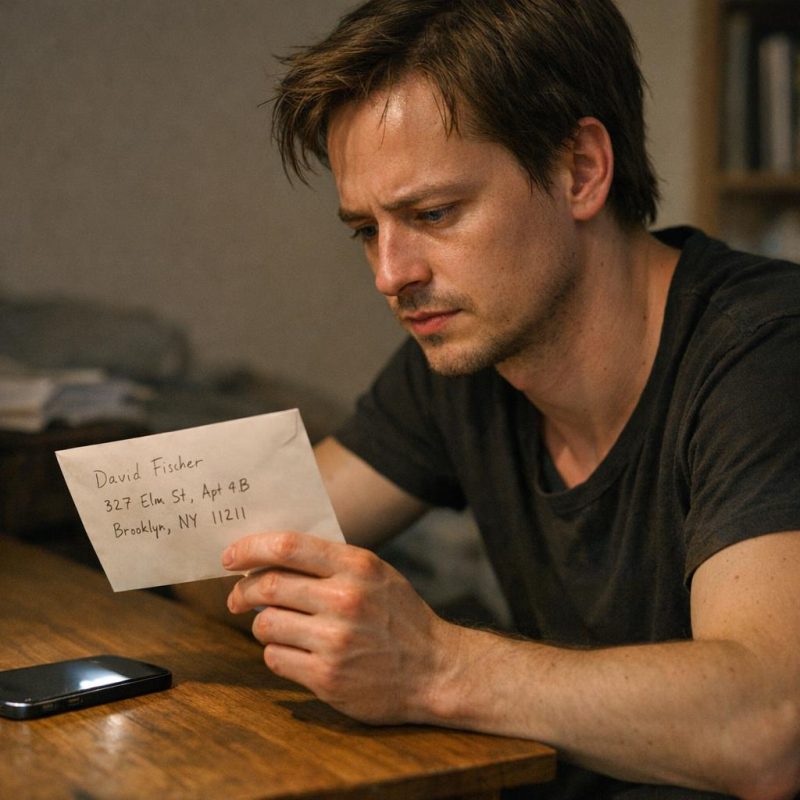 Image by RM AI
The Follower Count
Forty-three thousand. That's how many people were following her. I read the number three times to make sure I wasn't misreading it. Forty-three thousand strangers who saw whatever Sloane decided to show them. Her bio was worse. 'Navigating boundaries and family wellness. Breaking toxic patterns. Advocate for healthy spaces.' Each phrase felt like a knife. Boundaries. Wellness. Toxic patterns. I knew exactly what those words meant in her context. She wasn't talking about herself. She was talking about me. I was the toxic pattern she was documenting. The unsafe space she was advocating against. The boundary she was learning to enforce. And all those people—forty-three thousand of them—they were cheering her on. I could picture the comments without even reading them. 'You're so strong.' 'It's hard but necessary.' 'Protect your peace.' I didn't open any of the videos. Couldn't make myself do it yet. But I didn't need to. The numbers told me everything. She had an audience. She had a narrative. And I was the villain in a story thousands of people believed. I was the toxic pattern she was documenting for profit.
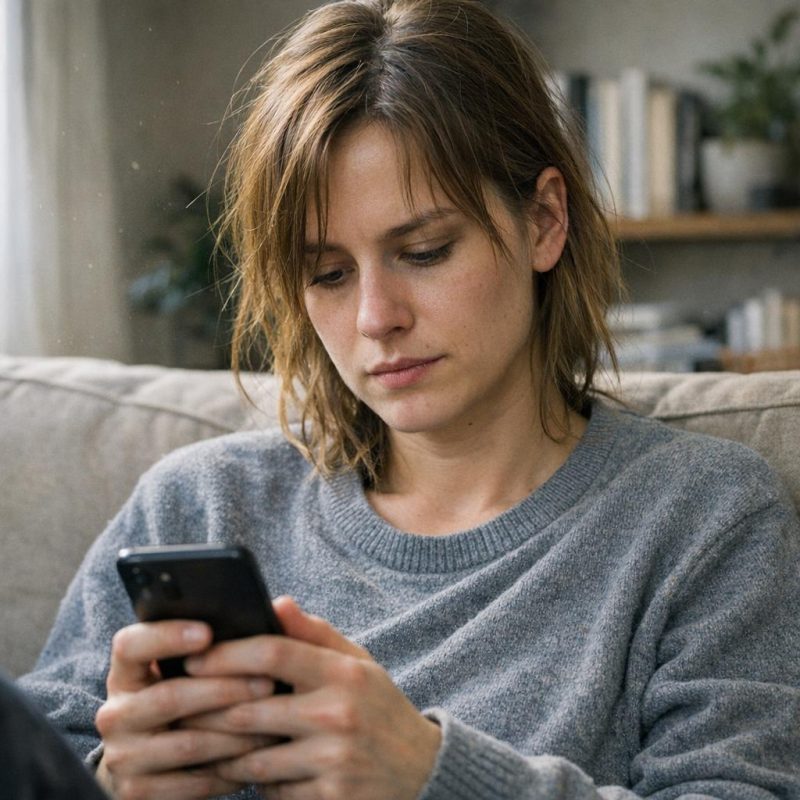 Image by RM AI
The Ripple Effects
The changes had been small, so small I hadn't noticed them building. But now, sitting across from Caleb at his kitchen table three days later, I saw them clearly. He flinched when I offered to watch Lily for the afternoon. Just a tiny hesitation, a quick glance toward Sloane in the other room, before he said they had it covered. Sloane appeared a moment later, all warmth and concern. 'You should rest, Evelyn. You've been doing so much lately.' I hadn't been doing anything. That was the problem. I used to watch the kids twice a week. Now it had been nearly a month. I used to help with dinners, with laundry, with the small tasks that made me feel useful. Now every offer was met with gentle resistance. 'We don't want to burden you.' 'You deserve to relax.' 'We've got it handled.' And Caleb—he wouldn't look at me directly anymore. His eyes slid past mine, landed somewhere near my shoulder. Like he was afraid of what he might see if he really looked. They were treating me like I was fragile, and I realized the videos were shaping how they saw me.
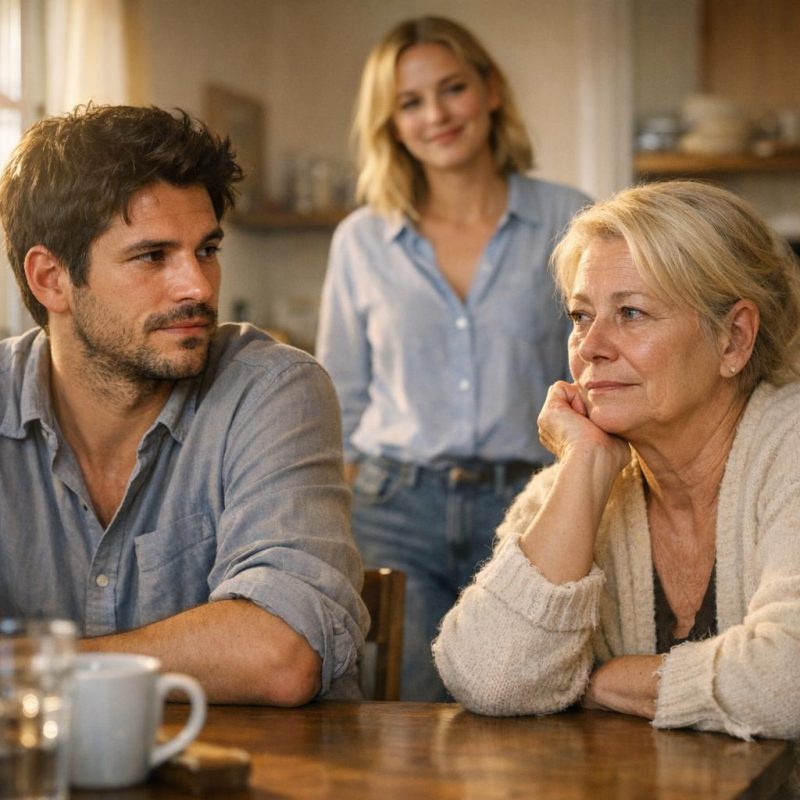 Image by RM AI
The Grandkids' Phrases
It was Lily who broke me. She was playing with her dolls on the floor while I sat nearby, trying to just be present without offering help that would be refused. She set up a little house with blocks, narrating to herself the way kids do. Then she moved one doll toward the door and pulled it back. 'No, you can't go there,' she told the doll in a serious voice. 'Grandma's house isn't always safe.' I froze. She kept playing, oblivious. But those words—they weren't hers. She was seven. She didn't talk like that. 'Isn't always safe.' That was Sloane's language. Careful. Clinical. Designed to sound concerned rather than cruel. I wanted to ask Lily where she'd heard that. Wanted to pull her into my lap and promise her my house was safe, had always been safe. But I couldn't. Because she'd learned to fear me through something I hadn't seen, couldn't defend against. My grandkids were learning to fear me through a script I'd never seen.
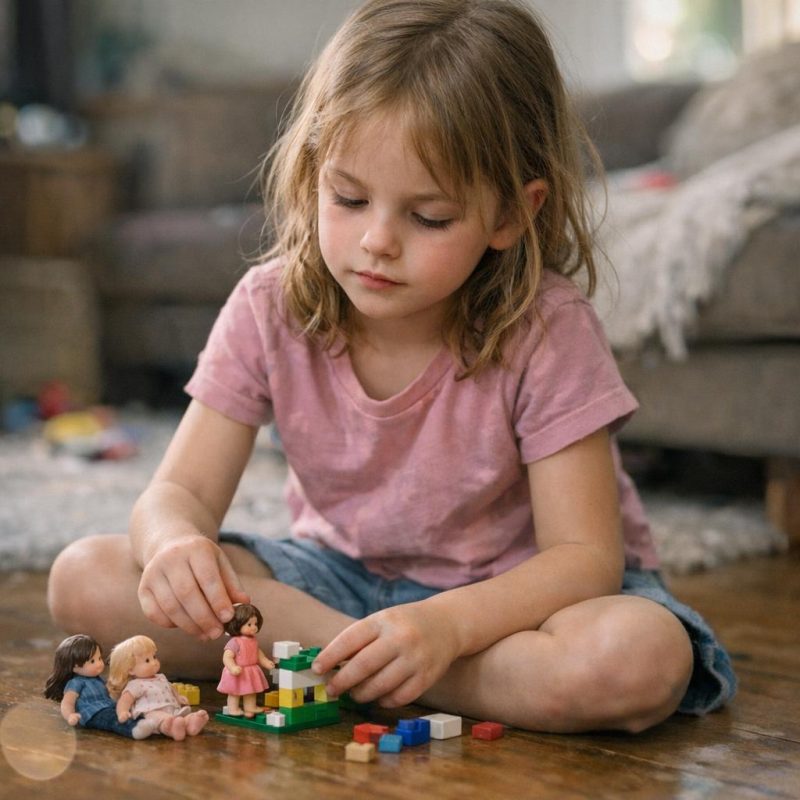 Image by RM AI
Asking Caleb Gently
I waited until Sloane took Lily upstairs for a bath. Caleb was loading the dishwasher, moving slowly like he wanted to avoid conversation. I asked him gently—so gently—if Sloane had been posting about boundaries and family stuff online. He shrugged without turning around. 'Yeah, she does that. It's harmless. Lots of people share that kind of thing now.' Harmless. I asked if he ever watched the videos. Another shrug. 'Sometimes. She's just talking about setting healthy boundaries, dealing with difficult family dynamics. It's actually pretty helpful for some people.' Difficult family dynamics. I was the difficult family dynamic. But his voice was so casual, so dismissive, like this was nothing. Like publicly documenting your mother-in-law's supposed incompetence was just modern life. I pressed a little. Asked if he thought it was okay to film people without telling them. His hands stilled in the soapy water. He didn't answer right away. When he finally spoke, his voice was quieter. 'She's not trying to hurt anyone, Mom.' But he wouldn't look at me. He knew something was wrong, but he didn't want to see it, and that scared me more than Sloane's lies.
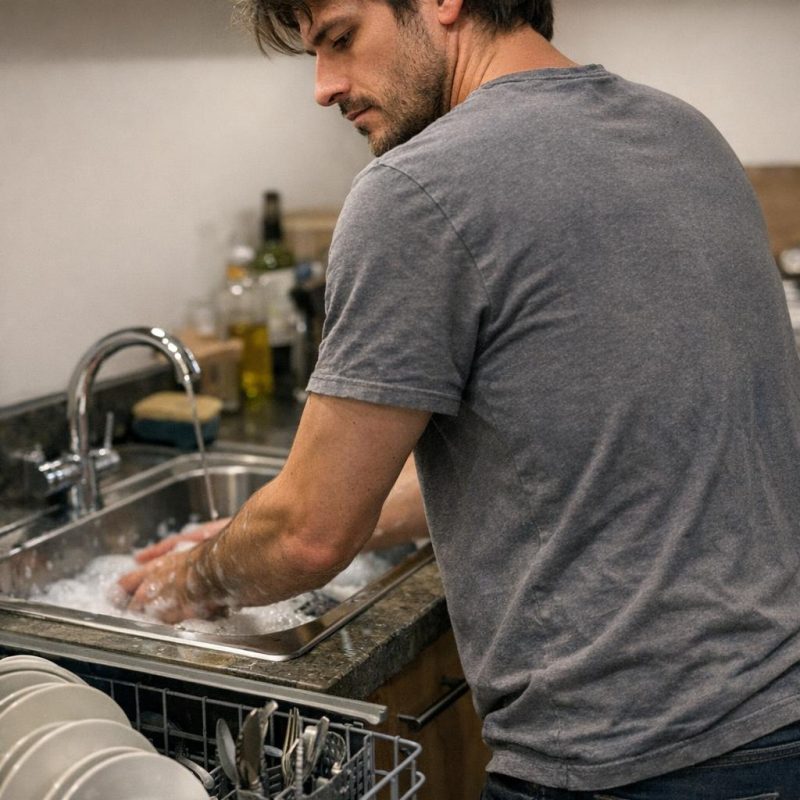 Image by RM AI
Understanding the Goal
It came together slowly, then all at once. The videos. The follower count. The careful language about safety and boundaries. The way my family had started treating me like I was fragile, incompetent, a problem to be managed. Sloane wasn't just documenting my kitchen for clicks and sympathy. She was building a case. Every staged danger, every concerned video, every careful phrase about wellness and toxicity—they were all pieces of a larger goal. She was painting me as unsafe. Unstable. A risk to the children. And once that picture was complete, once enough people believed it, she'd have justification for what she really wanted. To cut me out. No more babysitting. No more family dinners at my house. No more influence over Caleb or the kids. She'd be the hero protecting her family from a danger no one else could see, and I'd be the problem everyone quietly agreed to avoid. If she could make me look unstable, she'd be the hero for protecting the children, and I'd be the problem no one mentioned.
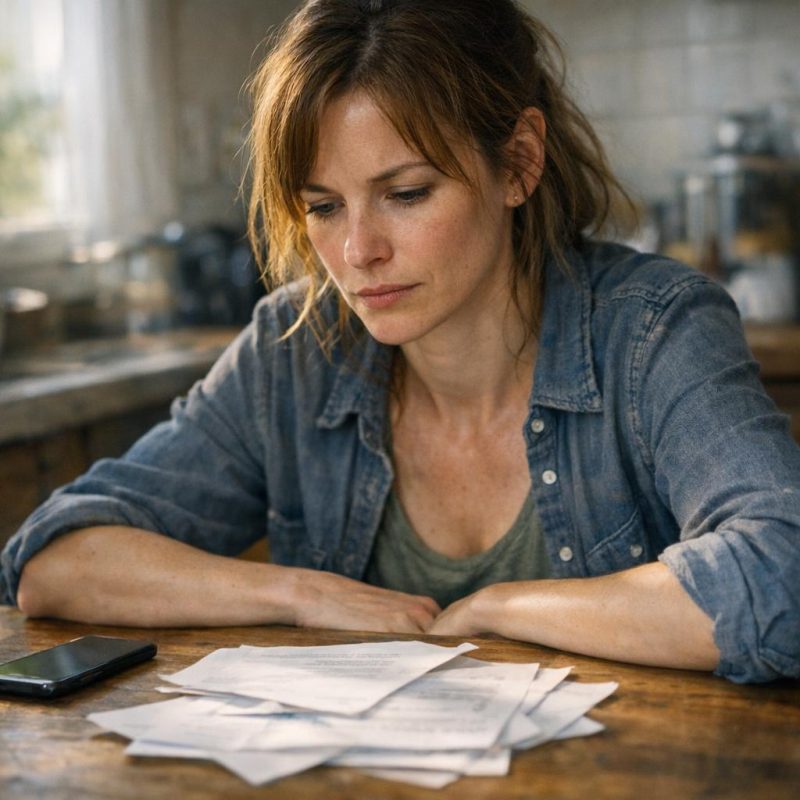 Image by RM AI
Planning the Sunday Dinner
I decided to invite them for Sunday dinner. Nothing elaborate—just pot roast and vegetables, the kind of meal I'd made a thousand times. But this time, I was going to be ready. I spent Tuesday afternoon in my kitchen with a roll of clear stickers I'd bought at the dollar store, each one barely bigger than a dime. I pressed one inside each canister where the lid meets the rim, where you'd never notice unless you were looking. If Sloane rearranged them, I'd know. I left a recipe card on the counter too—one I'd written out that morning in my neatest handwriting, for a pie I had no intention of making. It sat there, obvious and inviting, right next to the mixing bowls. Then I charged my phone completely and tested the voice recording app twice to make sure it worked. The sound was clearer than I'd expected. I could hear the hum of the refrigerator, the click of the kitchen clock, even my own breathing. I practiced slipping the phone into my apron pocket, the one that sat flat against my hip. It felt strange, planning this way. Like I was the one setting a trap instead of walking into one. If Sloane couldn't resist the stage, I'd make sure the performance was recorded one last time.
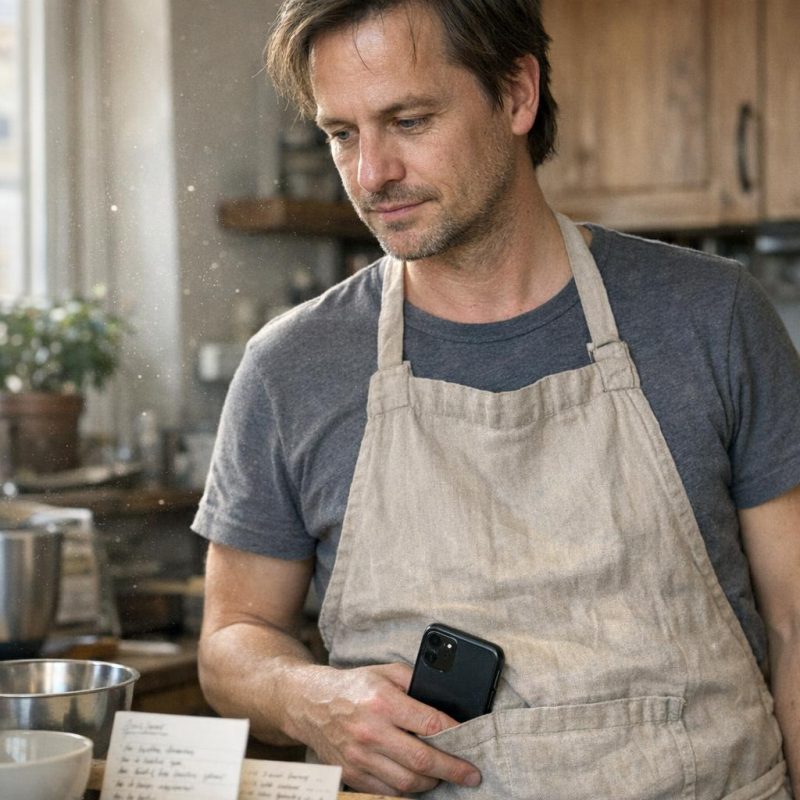 Image by RM AI
The Invitation
I called her Wednesday morning, right after Caleb would've left for work. She answered on the second ring, her voice bright and easy. 'Evelyn! Hi!' I kept my tone warm, casual. 'I was thinking,' I said, 'it's been a while since I had everyone over for a proper Sunday meal. Would you all be free this weekend?' There was the briefest pause, and I could almost hear her mind working. Then she said, 'Oh, that sounds lovely. Let me check with Caleb, but I'm sure we can make it work.' I smiled into the phone. 'Wonderful. And Sloane—thank you again for helping out in the kitchen last time. It really was thoughtful of you.' She laughed, soft and pleased. 'Of course! I'm always happy to help.' We said goodbye, and I set the phone down carefully, my hand steadier than I'd expected. She'd accepted without hesitation. No excuses, no reluctance. If anything, she'd sounded eager. Her eagerness felt like confirmation—she thought I was still playing by her rules.
 Image by RM AI
Preparing the Evidence
Thursday and Friday passed in a blur of careful preparation. I rechecked the stickers inside each canister, making sure they were still invisible unless you tilted the lid just right. I wiped down the counters and left the decoy recipe card exactly where I'd placed it, smoothing one corner that had started to curl. Friday night, I rehearsed staying calm. I stood in front of the bathroom mirror and practiced my expressions—warm smile, easy laugh, nothing that would give me away. I imagined Sloane walking into my kitchen, her phone already recording, her mind already scripting the next post. And I imagined myself standing there, apron pocket heavy with my phone, saying nothing. Just watching. Just waiting. Saturday, I cooked the pot roast and let it cool, then tucked it into the fridge so all I'd need to do Sunday was reheat. I set the table with my everyday dishes, nothing fancy. I didn't want this to feel like an occasion. Just a normal family dinner. Just another opportunity for Sloane to do what she'd been doing all along. Sunday was two days away, and I had to believe I could hold my nerve long enough to catch her.
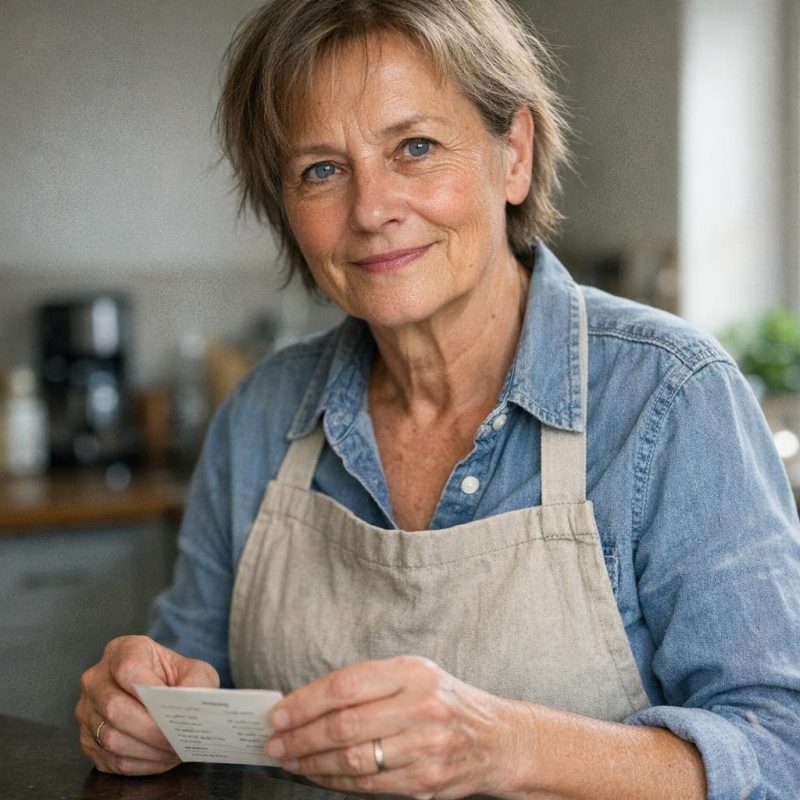 Image by RM AI
Sunday Arrives
They arrived just after noon, Lily bouncing up the front steps with Owen trailing behind her, clutching a stuffed dinosaur. Caleb carried a bottle of wine, and Sloane held a bakery box tied with string. 'We brought dessert,' she said, smiling as she handed it to me. 'Lemon tart. Your favorite, right?' I thanked her and led them inside, my phone already recording in my apron pocket. The weight of it felt enormous, like everyone could see it pressing against my hip. But no one looked twice. Caleb set the wine on the counter, and Sloane glanced around the kitchen with that same assessing look I'd seen before. 'It smells amazing in here,' she said. I smiled. 'Just pot roast. Nothing fancy.' Lily tugged at my hand, asking if we could play in the living room, and I said yes, of course. My heart was hammering so hard I was sure they could hear it. But my voice stayed steady. My hands didn't shake. I looked at Sloane and saw her smile back at me, easy and warm. Sloane smiled at me like we were friends, and I smiled back, knowing one of us was lying.
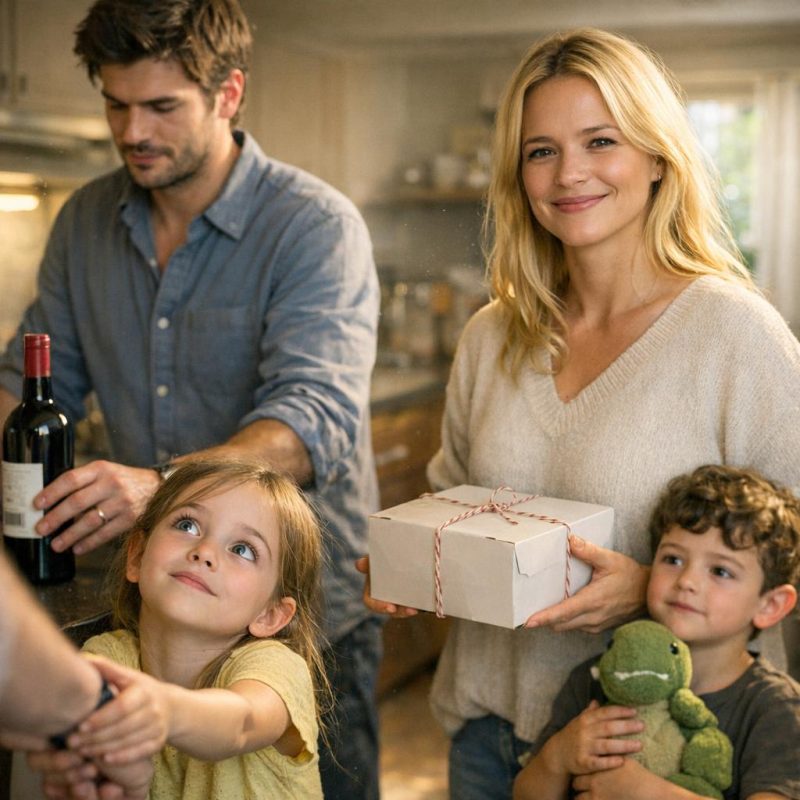 Image by RM AI
While I'm in the Living Room
I sat on the living room floor with Lily and Owen, building a tower out of blocks while Caleb scrolled through his phone on the couch. Lily was narrating an elaborate story about a princess and a dragon, and I nodded along, but I couldn't focus. Every part of me was listening for sounds from the kitchen. After about ten minutes, Sloane appeared in the doorway, wiping her hands on a dish towel. 'I'm just going to get dinner ready,' she said lightly. 'You relax, Evelyn.' Caleb glanced up and smiled at her, and I said, 'Oh, you don't have to do that.' But she waved me off. 'I don't mind. Really.' And then she disappeared back into the kitchen. I stayed where I was, stacking another block on Lily's tower, my pulse roaring in my ears. I couldn't follow her. Couldn't check. Couldn't do anything but sit there and pretend everything was fine. Owen knocked the tower over, and Lily squealed with laughter, and Caleb chuckled from the couch. The sounds felt distant, like they were happening in another room. Every second felt like an hour, but I couldn't check the recording yet—not while Caleb was watching.
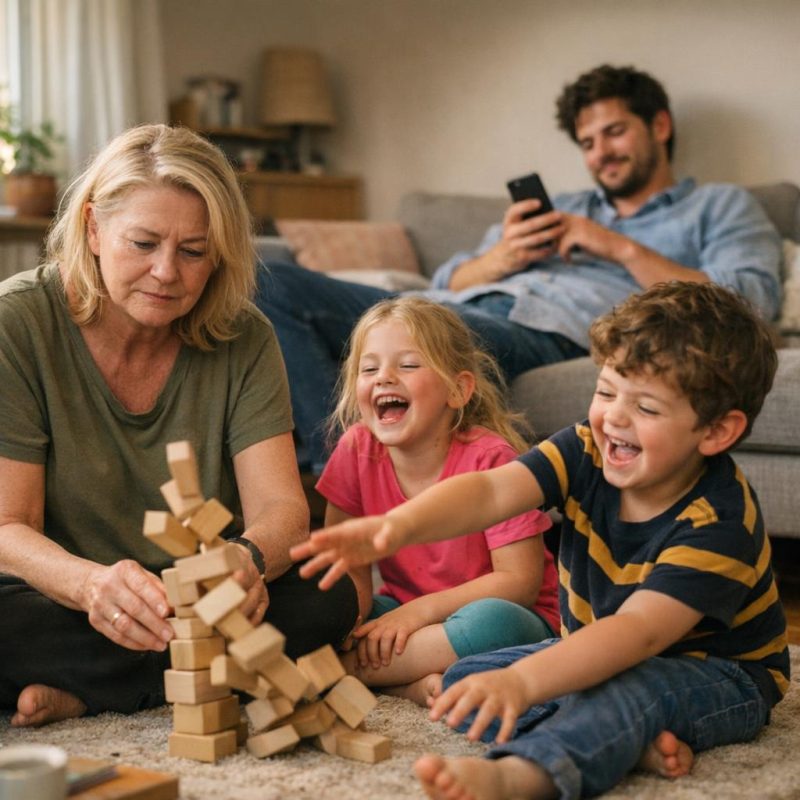 Image by RM AI
The Whisper on the Recording
They left just after three, and I stood on the porch waving until their car turned the corner. Then I went inside, locked the door, and pulled my phone from my apron pocket with shaking hands. I sat at the kitchen table and opened the recording app. The file was nearly two hours long. I skipped ahead to the timestamp when Sloane had gone into the kitchen alone, my finger hovering over the play button. Then I pressed it. At first, it was just the sound of movement—cabinet doors opening, something being set down on the counter. Then I heard her voice, low and careful, like she was talking to herself. But she wasn't. She was on the phone. 'No, I know,' she said quietly. 'I'm being careful. I just need to make sure it looks... organic, you know?' A pause. Then: 'I'm worried. I'm just worried about the kids. That's the angle.' Another pause. My stomach turned over. Then she said the words that made the room spin: 'Once Caleb sees the video, he'll agree you shouldn't be alone with them.'
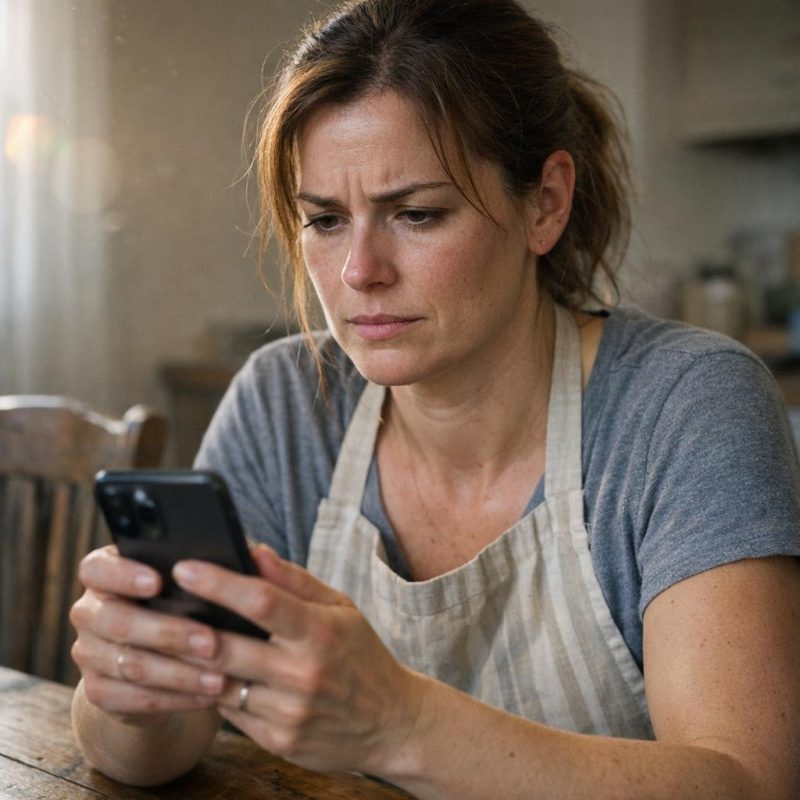 Image by RM AI
The Second Voice
I rewound the recording and listened again, this time with the volume turned all the way up. Sloane's voice came through clearly, but there was something else beneath it—faint, tinny, like it was coming through a speaker. I pressed the phone closer to my ear and held my breath. There. A second voice. Older, steady, coaching her through each line. 'Make it about safety, not you,' the voice said. 'Keep your tone concerned, not angry. You're protecting them, remember?' Sloane murmured agreement, and I heard the sound of something being moved, a cabinet door closing softly. The second voice continued, calm and deliberate. 'Once he sees the pattern, he'll understand. You're not being cruel. You're being responsible.' My hands were shaking so hard I nearly dropped the phone. Sloane hadn't come up with this on her own. Someone had been guiding her, scripting her responses, telling her exactly what to say and how to say it. The voice was older, confident, and I realized with cold certainty that Sloane wasn't working alone.
 Image by RM AI
Gloria's Voice
I played the recording a third time, forcing myself to focus past the anger and the betrayal. I needed to hear that second voice clearly. I needed to know who had been coaching my daughter-in-law to destroy me. The voice came through again—calm, authoritative, with a slight rasp I'd heard before at family gatherings and holiday dinners. My breath caught. I knew that voice. It was Gloria. Sloane's mother. The woman who'd smiled at me over Thanksgiving turkey and complimented my pie. The woman who'd always seemed so pleasant, so supportive. She was the one on the other end of the line, feeding Sloane every word, every angle, every calculated move. 'You're doing the right thing,' Gloria said on the recording, her tone soothing and firm. 'Caleb will see it eventually. And once he does, she won't be a problem anymore.' I sat there in my quiet kitchen, the recording still playing, and understood. This wasn't impulsive. This wasn't Sloane acting on her own insecurities or ambitions. Sloane wasn't just rearranging my kitchen; she was following a script written by someone who'd been planning this from the start.
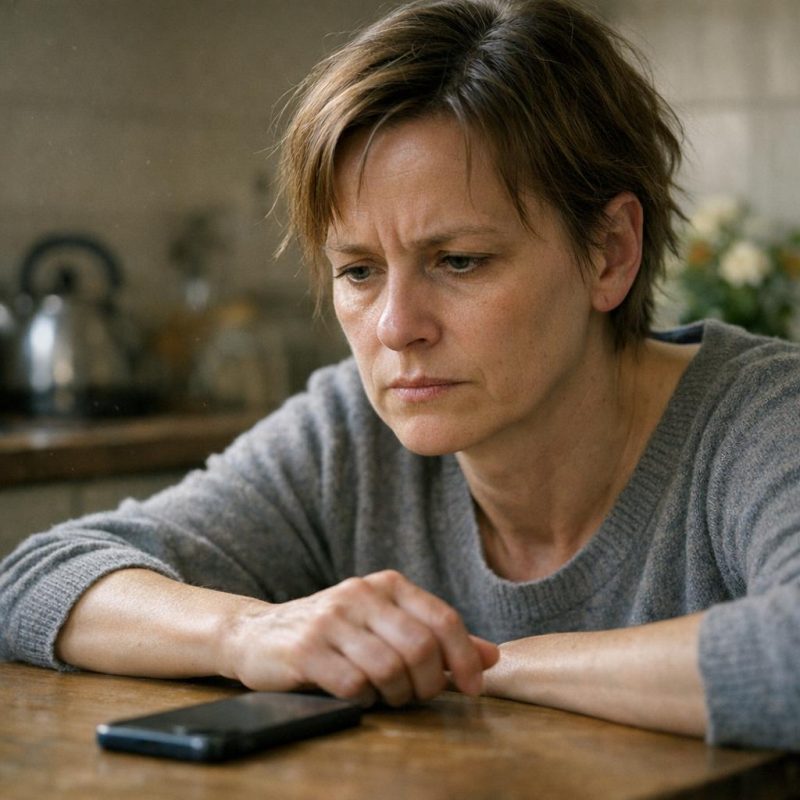 Image by RM AI
The Coaching Messages
I sat there staring at the recorder, and something clicked into place. A memory surfaced—something Caleb had mentioned weeks ago, so casually I'd barely registered it at the time. He'd said Gloria had been 'checking in' on him, sending him helpful articles about elderly parents and cognitive decline. I'd thought it was thoughtful, the kind of thing a concerned mother-in-law might do. But now, with Gloria's voice still echoing in my head from that recording, I understood what those messages really were. They weren't concern. They were seeds. Little doubts planted one text at a time, reframing my normal behaviors as warning signs. The jar I'd left on the counter wasn't just a jar anymore—it was evidence of forgetfulness. The appointment I'd rescheduled wasn't just a schedule change—it was confusion. Gloria had been working on Caleb's perception of me for months, gently steering his thoughts until he started seeing problems that didn't exist. I felt the room tilt slightly as the full scope landed. This wasn't just about my kitchen or my recipe cards or even Sloane's manipulations. She wasn't just directing Sloane—she was manipulating my son, feeding him doubts one text at a time.
 Image by RM AI
The Pivot to Action
I stood up from the table and looked around my kitchen—the sticky cabinet handle, the neatly organized drawers that used to be mine, the camera still hidden above the refrigerator. I'd spent weeks gathering evidence, watching, waiting, documenting every move. But suddenly I was exhausted by the surveillance, by the careful planning, by living like a detective in my own home. This wasn't who I was. This wasn't the ending I wanted. The story needed to end now, on my terms, with the truth laid bare between us. No more recordings. No more hidden cameras. Just a mother showing her son what had been done to both of us. I made the decision right there: I would show Caleb everything. That evening, when they came for dinner, Sloane settled into her usual routine. She smiled, helped set the table, and as we sat down to eat, she started steering the conversation toward my 'struggles'—how I'd seemed tired lately, how she'd noticed I was repeating myself. I let her talk for a moment, then I set down my fork. 'Caleb,' I said quietly, interrupting her mid-sentence. 'Could you come into the kitchen with me for a minute?' At dinner, when Sloane started steering the conversation toward my 'struggles,' I interrupted gently and asked Caleb to come into the kitchen.
 Image by RM AI
The Torn Card
He followed me, confusion written across his face, while Sloane stayed frozen at the table. In the kitchen, I opened the drawer where I'd kept the evidence and pulled out the recipe card—the one I'd taped back together after finding it in the trash. The edges were worn, the tape visible across the middle where I'd carefully aligned the two pieces. It was my mother's handwriting, faded but still clear, instructions for the lemon cake she'd made for every one of Caleb's birthdays until she passed. 'Do you remember this?' I asked, holding it out to him. He nodded slowly. 'Of course. Grandma's lemon cake.' 'Sloane threw this away,' I said, keeping my voice level. 'I found it in the trash, taped it back together, and put it in a safe place. The next week, I found it in the trash again.' I watched his face as the words landed. He took the card from my hands, turning it over, his fingers tracing the tape line. His face went pale, and he looked at the card like he'd never really seen it before.
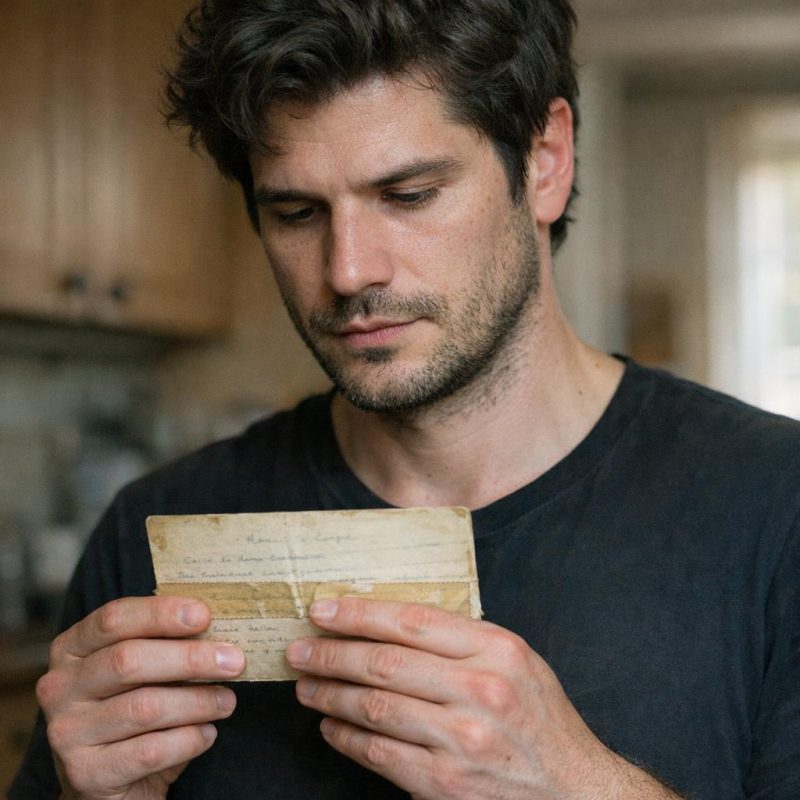 Image by RM AI
The Moved Knives
I didn't give him time to process. I needed him to see everything while his defenses were down. 'There's more,' I said, and walked to the knife drawer. I pulled it open carefully, the blades still facing upward the way I'd left them after finding Sloane's setup. 'She rearranged these,' I explained. 'Put the blades facing up, then filmed herself 'discovering' how dangerous it was. She sent the video to you, didn't she? Told you I was becoming unsafe?' Caleb stared into the drawer, his expression shifting from confusion to something darker. 'She said you'd left them that way,' he whispered. 'She was worried about the kids getting hurt.' 'I know what she said. But I never arrange knives that way. No one does.' I watched him reach toward the drawer, his hand hovering over the blades without touching them. 'She staged it, Caleb. She created the danger, then pretended to find it.' His hands trembled as he touched the drawer, and I saw the doubt finally crack open.
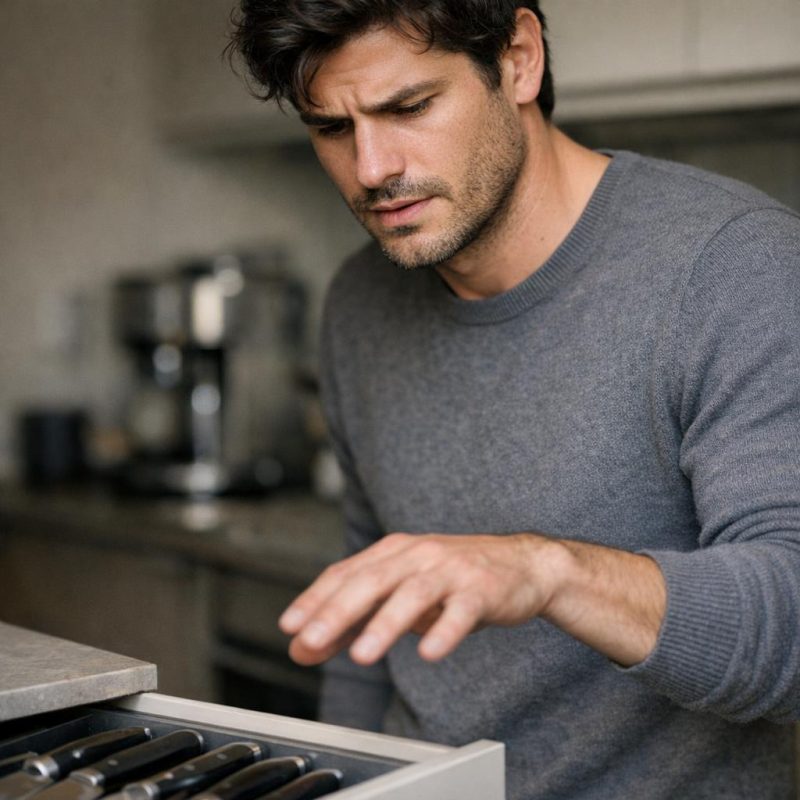 Image by RM AI
Playing the Footage
I pulled out my phone and opened the video file I'd saved. 'I installed a camera,' I said quietly. 'I needed to know what was happening in my own home.' I hit play and held the phone where he could see the screen. The footage showed my kitchen from above—the angle slightly wide, capturing most of the counter space. Sloane entered the frame carrying her phone on a small tripod. She set it up carefully, adjusted the angle, then moved to the knife drawer. We watched her rearrange the blades, positioning them upward with deliberate precision. Then she stepped back, pressed record on her phone, and walked out of frame. A moment later, she returned, gasped dramatically, and reached for the drawer while speaking to her camera. 'Oh my God,' her recorded voice said. 'This is so dangerous. Mom, you can't leave knives like this.' Caleb watched in silence, his jaw tight, his eyes fixed on the screen. I let the footage play for another few seconds, then paused it. The kitchen behind us was so quiet I could hear both of us breathing. When Sloane appeared in the doorway behind us, her face drained of color.
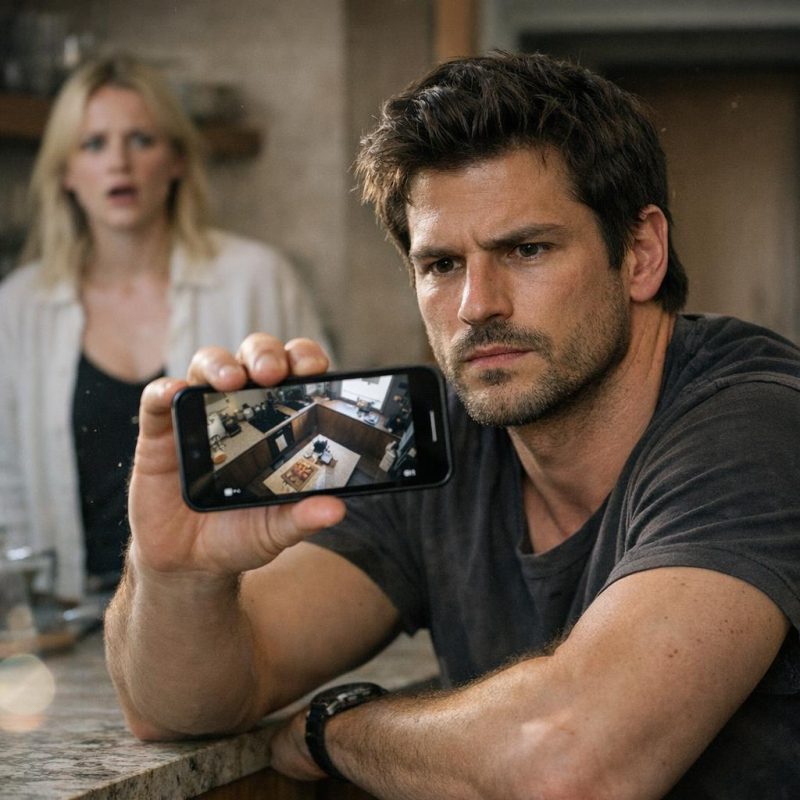 Image by RM AI
Sloane's Defense
'Caleb—' she started, but her voice cracked. She stepped into the kitchen, her hands raised slightly as if trying to calm a situation that was already beyond her control. 'It's not—you don't understand. I was making a funny video. It was supposed to be ironic.' Her eyes were wet now, tears forming quickly, her breath coming in short gasps. 'I was just trying to show how silly those viral videos are. I wasn't trying to—' 'You sent it to me,' Caleb said flatly. 'You told me Mom was getting unsafe.' 'I—my mom was pressuring me,' Sloane said, switching tactics. 'She kept saying I needed to document things, that I needed to protect you and the kids. I didn't want to, but she kept pushing and I just—I made a mistake.' She looked at me, her expression pleading. 'I'm sorry. I never meant for it to go this far.' But Caleb had heard her real voice on the footage—the casual, unrushed tone as she staged the scene, the calculated performance for the camera. The excuses rang hollow in the kitchen's silence.
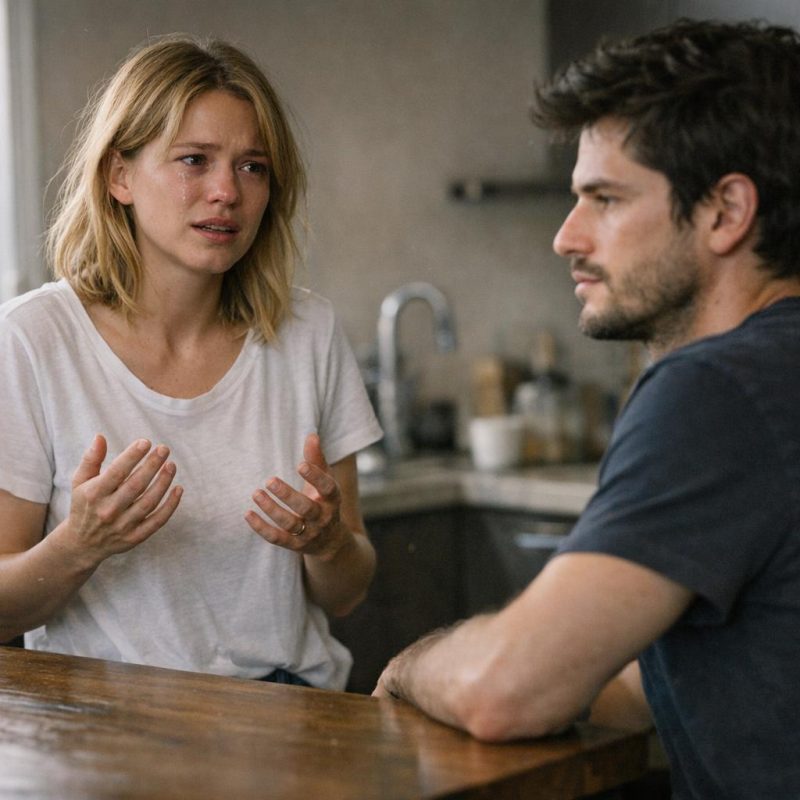 Image by RM AI
Playing the Audio
I wasn't done. I pulled up the audio file on my phone—the recording from when Sloane had been on the phone with Gloria, whispering in my hallway while I'd been out. I pressed play. Sloane's voice came through first, quieter than in person but unmistakable. 'He's starting to agree with me. He said maybe she shouldn't be alone with the kids anymore.' Then Gloria's voice, that calm, authoritative tone I'd heard at holiday dinners. 'Good. You're doing the right thing, sweetheart. Once he sees it clearly, she won't be a problem anymore.' The recording continued for a few more seconds—strategy, reassurance, coordination. I stopped it and looked at Caleb. His face had gone rigid, his eyes locked on Sloane. 'You were planning to take my mother away from her grandchildren?' His voice was low, dangerous in a way I'd never heard before. Sloane opened her mouth, but nothing came out. She looked between us, trapped, her defenses finally exhausted. Caleb looked at his wife like he'd never met her, and said, 'You were planning to take my mother away from her grandchildren?'
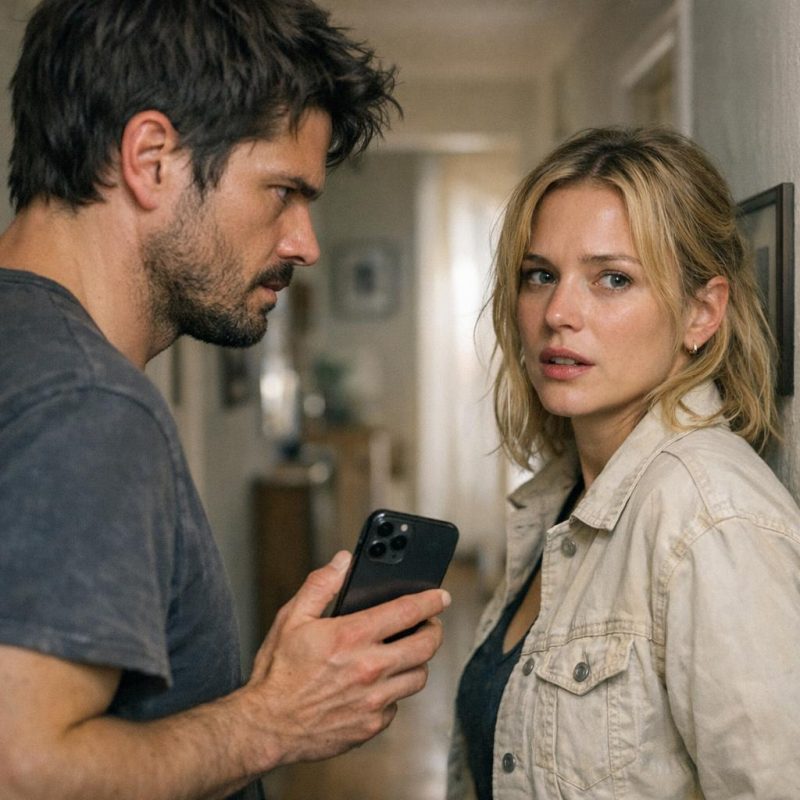 Image by RM AI
Gloria's Messages
Caleb pulled his phone from his pocket, his hands still shaking slightly. He scrolled through his messages, his face growing darker with each swipe. 'I need to show you something,' he said, and turned the screen toward me. The messages were from Gloria, sent over the course of months. 'Just checking in—how's your mom doing with her memory?' one read. Another: 'I read an article about early signs of cognitive decline. Repeating stories is one of them. Has she been doing that?' And another: 'It's hard to admit when a parent needs help, but waiting too long can be dangerous.' There were dozens of them, each one subtle, each one framing my normal behaviors as symptoms of decline. Caleb scrolled slowly, letting me read each message. 'I thought she was being helpful,' he said quietly. 'I thought she cared.' His voice cracked slightly on the last word. 'She'd send these, and then Sloane would point out the exact same things a few days later. I started seeing problems everywhere.' He looked at me, his eyes red. 'She's been in my head for months,' and I realized the kitchen was only half the battlefield.
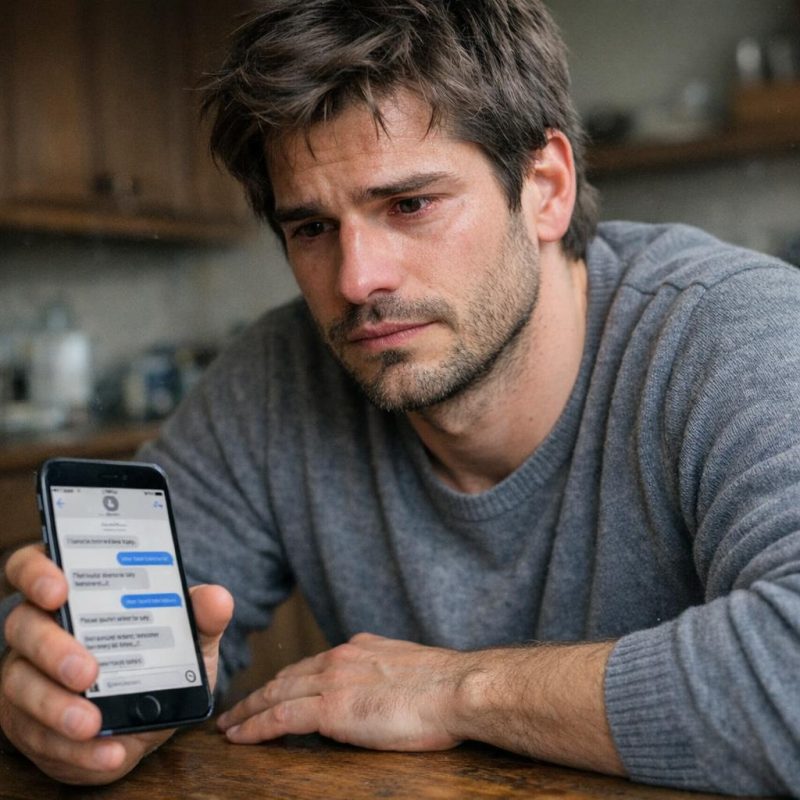 Image by RM AI
Caleb's Choice
Sloane came down about twenty minutes later, her face freshly washed, her expression carefully composed. She walked into the kitchen like nothing had happened, like we'd just been discussing the weather. Caleb stood up from the table and faced her. His hands weren't shaking anymore. 'We need to talk,' he said quietly. She glanced at me, then back at him. 'Caleb, I know you're upset, but—' He held up his hand. 'No. I'm done listening to explanations.' His voice was steady, almost too steady. 'I read Gloria's messages. All of them. I saw what you two were doing.' Sloane's composure cracked slightly. 'I was trying to help,' she said. 'Help your mother, help you see—' 'You weren't helping,' Caleb interrupted. 'You were building something. A story. A case. And I won't let anyone build a life on humiliating my mother.' The words hung in the air. Sloane looked at me, then back at him, and something in her face changed—not remorse, but recognition that the game was over. She didn't argue. She just turned and walked out of the kitchen. I heard the front door close a few minutes later. Sloane's 'help' ended that night, and the house felt quiet in a way it hadn't in months.
 Image by RM AI
The Aftermath
The days after felt strange, like waking up after a fever breaks. Caleb came by more often, but he didn't hover. He'd sit at the table with his coffee, sometimes talking, sometimes just sitting. We didn't dissect everything that had happened—there'd be time for that, maybe, or maybe not. What mattered was that the house felt different. Quieter, yes, but not empty. More like the air itself had changed, like someone had finally opened a window that had been painted shut for months. I noticed small things. The canisters stayed where I put them. My spice drawer remained untouched. The recipe box sat on the counter where it belonged, and nobody suggested moving it to a 'safer' place. Caleb brought the kids over one afternoon, and Lily asked if we could bake cookies. I said yes without thinking, without wondering if someone would swoop in and reorganize my measuring cups halfway through. It was just us, flour on the counter, Owen licking the spoon. Normal. Or maybe not normal yet, but heading that way. Trust doesn't snap back overnight, but at least the lies can't keep breathing in the open.
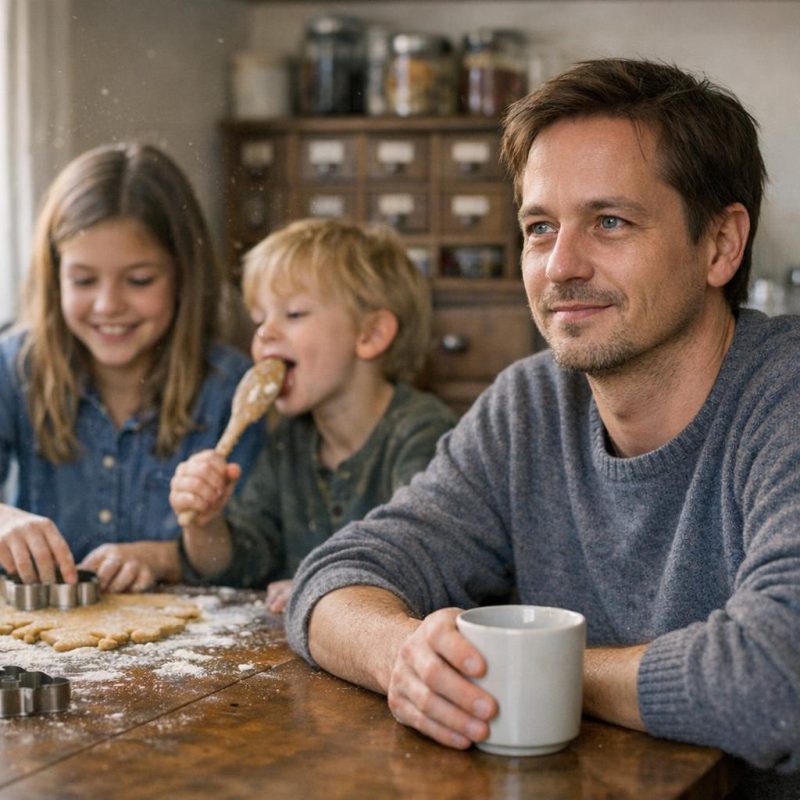 Image by RM AI
Reclaiming the Kitchen
I spent a Saturday morning putting things back where they belonged. The canisters went to their spots by the stove, the ones they'd occupied for years before Sloane decided they needed 'better placement.' The wooden spoons returned to the crock near the cutting board. The dish towels—mine, the ones with the faded strawberries that Sloane had quietly replaced with matching gray ones—came back out of the drawer where I'd hidden them. I moved slowly, deliberately, touching each item as I returned it. This wasn't about spite. It was about memory, about the muscle knowledge of reaching for the sugar without looking, about the comfort of a space that reflects your own hands. The recipe box went back to its place of honor on the counter, the taped lemon cake card visible on top. I rearranged the spice drawer, putting the curry powder where I could reach it, not where it looked organized for someone else's Instagram. The kitchen started to feel like mine again. Not perfect, not magazine-ready, but lived-in and real. It felt like naming myself again, deciding that love does not require me to shrink.
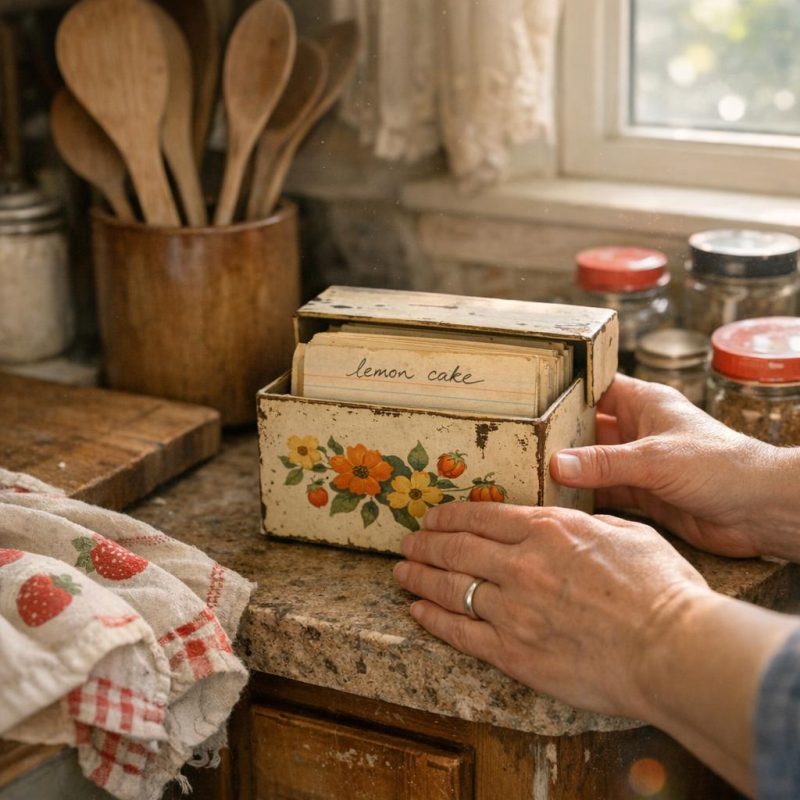 Image by RM AI
The Lemon Cake
The following Sunday, I taught my grandkids my mother's lemon cake recipe at my table. Lily stood on the step stool, reading the ingredients from the taped card propped against the canister like a flag. Owen cracked eggs with fierce concentration, fishing out shells when they landed in the bowl. Caleb sat at the table, watching us, and at one point he reached over and gently pressed down a corner of tape on the card where it had started to peel. 'I should've seen it sooner,' he said quietly. I looked at him, flour on my hands, and shook my head. 'She was good at it,' I said. 'That's what made it work.' Lily asked what the next step was, and I guided her through creaming the butter and sugar, the same way my mother had taught me. The mixer whirred. The kitchen smelled like lemon zest and butter. Caleb stayed at the table, and I realized the lesson Sloane learned isn't just that she got caught—it's that you can't throw someone's memories in the trash and expect them to stay quiet.
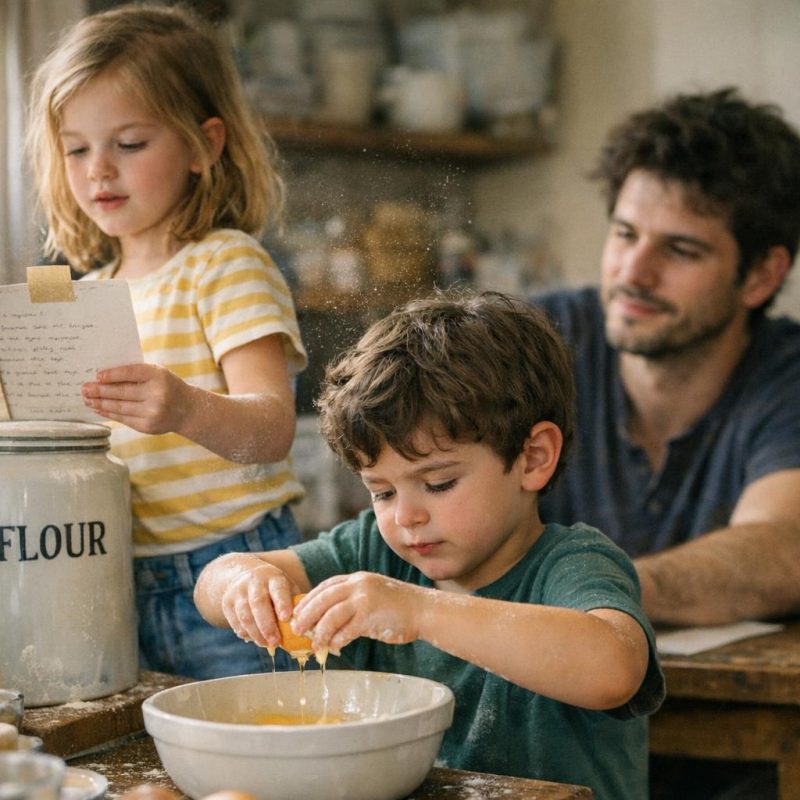 Image by RM AI
KEEP ON READING
The 20 Most Recognized Historical Figures Of All Time
The Biggest Names In History. Although the Earth has been…
By Cathy Liu Oct 4, 2024
10 of the Shortest Wars in History & 10 of…
Wars: Longest and Shortest. Throughout history, wars have varied dramatically…
By Emilie Richardson-Dupuis Oct 7, 2024
10 Fascinating Facts About Ancient Greece You Can Appreciate &…
Once Upon A Time Lived Some Ancient Weirdos.... Greece is…
By Megan Wickens Oct 7, 2024
20 Lesser-Known Facts About Christopher Columbus You Don't Learn In…
In 1492, He Sailed The Ocean Blue. Christopher Columbus is…
By Emilie Richardson-Dupuis Oct 9, 2024
20 Historical Landmarks That Have The Craziest Conspiracy Theories
Unsolved Mysteries Of Ancient Places . When there's not enough evidence…
By Megan Wickens Oct 9, 2024
The 20 Craziest Inventions & Discoveries Made During Ancient Times
Crazy Ancient Inventions . While we're busy making big advancements in…
By Cathy Liu Oct 9, 2024