

HOA Karen Fined Me $200 Over a Trash Can — So I Exposed Her Secret At The Board Meeting
HOA Karen Fined Me $200 Over a Trash Can — So I Exposed Her Secret At The Board Meeting
The Envelope
I came home from the grocery store on a Wednesday afternoon, arms full of reusable bags because I'm trying to be a good person or whatever, and there it was—a cream-colored envelope taped to my front door. The official HOA letterhead practically screamed at me before I even opened it. Inside was a violation notice for leaving my trash can at the curb past the designated 8:00 a.m. pickup window. The fine? Two hundred dollars. I actually laughed out loud standing there on my porch, because surely this was some kind of mistake. I checked my phone—I'd brought the can in at 8:10 a.m. Ten minutes. I walked straight across the street to Janice's house, notice in hand, expecting her to be mortified about the error. She opened the door in her usual business-casual outfit, looked at the paper, then looked at me with this completely flat expression. 'The rule is eight o'clock,' she said. No apology. No acknowledgment that this was absurd. Just that little upward tick at the corner of her mouth that I can still picture perfectly. When Janice smirked instead of apologizing, I knew this wasn't going to end with a check.
 Image by RM AI
Rules Are Rules
Let me give you some context about where I live. Our neighborhood HOA wasn't always like this—when I moved in five years ago, it was pretty laid-back, the kind of place where people actually waved at each other. Then Janice got elected president three years back, and suddenly we had a twenty-page addendum to the bylaws covering everything from acceptable mailbox fonts to the exact shade of white allowed for window trim. She sent violation notices for lawn height discrepancies measured in half-inches. She rejected a neighbor's garden gnome for being 'visually disruptive.' I'm not exaggerating—someone got cited because their porch light was 65 watts instead of the regulation 60. The Facebook group for our street was full of people venting about her latest crackdown, posting screenshots of her emails with the laugh-cry emoji. But here's the thing: everyone paid their fines. Everyone repainted their shutters or moved their recycling bins or whatever she demanded. It was easier than fighting. People joked about her behind closed doors, but no one ever pushed back—until now.
 Image by RM AI
The Morning It Happened
That morning started normal enough. I had a work call scheduled for 7:30—one of those video conferences that was supposed to be thirty minutes but dragged into an hour because Brad from accounting can't grasp the concept of brevity. I was still in my pajama pants, sitting at my kitchen table, nodding along while watching the garbage truck make its way down the street through my window. It came at 7:52, right on schedule like it does every Wednesday. I made a mental note to grab the can as soon as the call ended, but then Brad started sharing his screen and I got pulled into some budget spreadsheet conversation. The call finally wrapped at 8:07. I literally jogged outside in my slippers, grabbed the handle of my trash can, and that's when I saw her. Janice was standing in her driveway across the street, phone in hand, already staring directly at my house. Not getting her mail. Not checking her own trash. Just standing there. I waved awkwardly. She didn't wave back. She didn't just happen to be there—she was waiting.
 Image by RM AI
The Smirk
I couldn't stop thinking about that smirk. You know the one—that self-satisfied little expression people get when they've caught you in something and they're absolutely thrilled about it. I kept replaying the interaction in my head while I sat at my desk pretending to work. Two hundred dollars for ten minutes. Ten minutes while I was literally on a work call in my own home. The more I thought about it, the angrier I got, but not the hot, explosive kind of anger. This was cold and calculating. I started wondering how many other people she'd done this to, how many neighbors had just written checks to make her go away. I pulled up my bank account and stared at the balance. I could afford the fine—that wasn't the point. The point was that she'd been so smug about it, so certain I'd just roll over like everyone else. I opened a new document on my computer and titled it 'Janice Documentation.' I didn't know what I was looking for yet, but I knew I'd find something. If she wanted to make an example out of me, I'd make one out of her.
 Image by RM AI
First Observations
I started taking walks. Nothing crazy, just casual strolls past Janice's house at different times of day. She lived four houses down from me on the opposite side, a beige two-story with black shutters and that obsessively maintained lawn she was always so proud of. On Monday I walked by around 9:30 a.m. and noticed her grass was maybe a quarter-inch longer than the HOA maximum—not enough to write her up for, but I noted it anyway. Tuesday afternoon I spotted a small oil stain on her driveway, which technically violated the 'clean and presentable' vehicle storage clause. Wednesday morning I took my coffee to-go and did a slow loop around the block. I wasn't being creepy about it, just observant. I started keeping notes in my phone, timestamped and everything. Things I would never have noticed before suddenly seemed significant. A sprinkler head pointed slightly toward the sidewalk. A recycling bin with the wrong number sticker. Thursday I walked past around eleven-thirty and stopped dead in my tracks. Her trash can sat at the curb until almost noon on Thursday.
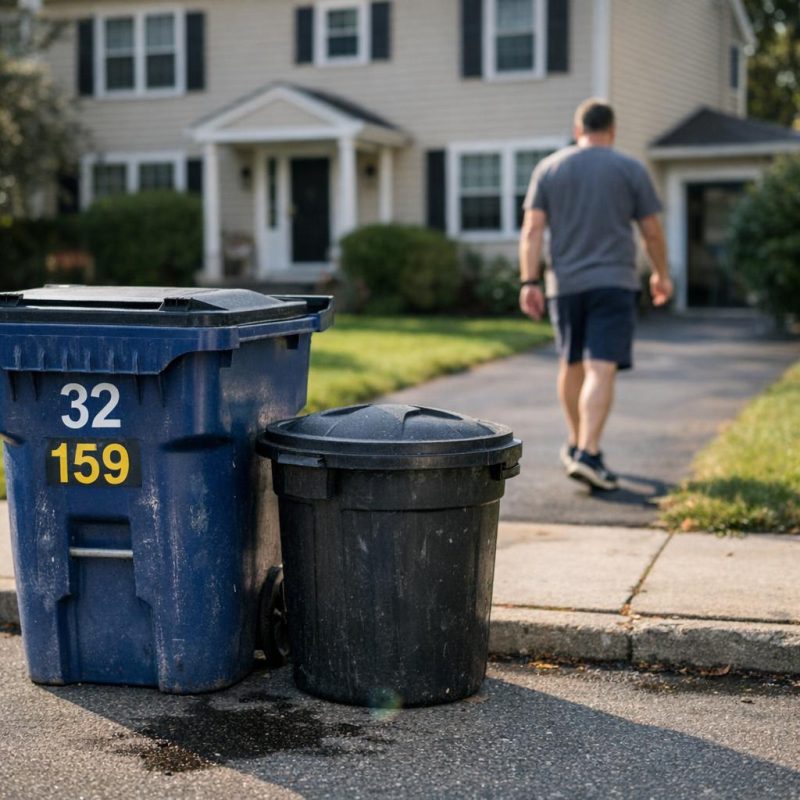 Image by RM AI
The Decorative Shed
The shed caught my attention on Friday. I'd walked past Janice's house probably a hundred times before, but I'd never actually looked at her backyard properly. The fence was that standard six-foot privacy style, but there was a gap near the corner where you could see through if you were at the right angle. I wasn't being a creep—I was just walking my normal route and happened to glance over. There it was, tucked behind her garage: a decent-sized storage shed that I'd somehow never registered before. The thing was, it wasn't the approved gray or dark green that our HOA guidelines specified for accessory structures. It was beige. Like, contractor-beige. The kind of generic tan that comes standard but definitely doesn't match our neighborhood's 'cohesive aesthetic vision' that Janice herself had written into the revised bylaws. I went home and pulled up the PDF of the HOA architectural guidelines, scrolling through until I found the section on outbuildings. Right there on page fourteen: 'All storage structures must be Mountain Gray or Forest Green to maintain visual harmony.' I pulled up the guidelines that night and confirmed it—unauthorized beige.
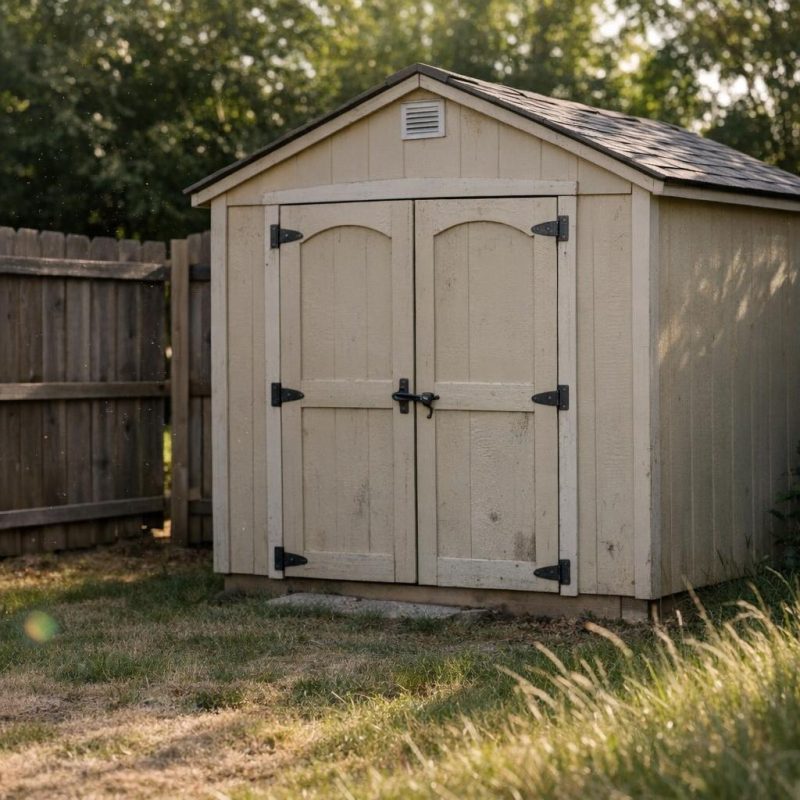 Image by RM AI
The Pergola
The pergola was new. I'm absolutely certain of this because I'd been walking past Janice's house regularly for two weeks by this point, and I would have noticed a whole pergola appearing in her backyard. But there it was on a Tuesday morning—fresh lumber, clean white paint, still had the hardware store stickers on some of the beams. It was actually nice, the kind of thing you'd see in a home improvement magazine, with lattice sides and space for climbing plants. The kind of thing that would definitely need HOA approval. I went home and dug into the bylaws again, specifically the section about modifications and improvements. The language was crystal clear: 'Any permanent structure, including but not limited to decks, pergolas, gazebos, or shade structures, requires written approval from the Board of Directors, documented via official meeting minutes, with a minimum seven-day notice period for homeowner review.' I'd been to exactly zero HOA meetings where Janice's pergola was discussed. I checked the community website where meeting agendas were supposedly posted. Nothing. According to the bylaws, any permanent structure needs a documented vote.
 Image by RM AI
The Treasurer
I needed proof, not just my own observations. So I crafted what I thought was a very careful, very casual email to Marcus Chen, our HOA treasurer. Marcus had always seemed reasonable—he'd helped me understand the parking rules when I first moved in, never came across as power-hungry like Janice. I kept the message brief and friendly: 'Hey Marcus, I'm trying to get more involved in community decisions and was hoping to review the last six months of board meeting minutes. Just want to understand how things work! Thanks so much.' I hit send at 3:47 p.m. on a Thursday and honestly expected either no response or some runaround about needing to file a formal request. My phone pinged at 4:23 p.m. Marcus had replied with a cheerful 'No problem!' and attached six PDF files, labeled by month. Just like that. No questions about why I wanted them. No checking with Janice first. No bureaucratic hoops to jump through. I downloaded all six files and stared at them on my desktop, almost suspicious of how easy it had been. He sent them over without hesitation, like it was the most normal request in the world.
 Image by RM AI
No Pergola Approval
I opened the first PDF with this weird mix of excitement and dread, like checking your bank account after a weekend trip. The minutes were formatted professionally—someone had actually used proper headers and everything—with timestamps and motions recorded in that stiff, formal language boards love. I started searching for anything related to 'pergola' or 'structure' or 'Hawthorne.' Nothing in March. Nothing in April. I went through May, June, July, August. Not a single mention of any approval for Janice's backyard addition. There was a discussion about someone's fence height in June, and a lengthy debate about pool safety regulations in July, but absolutely zero record of Janice requesting or receiving permission for her massive pergola. I actually laughed out loud at my desk. The woman who'd cited regulation subsections at me like she was reciting scripture had apparently just... built whatever she wanted? But as I scrolled back through the expense reports attached to each month's minutes, something else caught my eye. Line items I hadn't noticed before, buried among the landscaping bills and pool maintenance invoices. But I did notice something else buried in the expense reports.
 Image by RM AI
Administrative Expenses
The reimbursements to Janice appeared almost every month, sometimes twice. 'Administrative expenses—printing' for seventy-five dollars. 'Administrative expenses—office supplies' for a hundred twenty. 'Administrative expenses—community outreach materials' for ninety-eight fifty. Each one was approved in the minutes with barely any discussion, just a quick motion and second. I grabbed a notebook and started writing them down, adding them up as I went. March had two reimbursements totaling a hundred sixty-five dollars. April had one for eighty-three. May had three—that month alone was over two hundred fifty. I kept scrolling, kept tallying. My handwriting got messier as the total climbed. These weren't huge amounts individually. Nothing that would make you stop and question it if you were just glancing through. But together? In just six months, Janice had reimbursed herself nearly eighteen hundred dollars for 'administrative expenses.' For a community of thirty-seven homes. I sat back in my chair, pen still in hand, staring at my chicken-scratch calculations. What kind of printing costs that much? Seventy-five dollars here, a hundred twenty there—they added up fast.
 Image by RM AI
Vendor Names
I pulled up the HOA's approved vendor directory on our community website—yes, we had one of those, because of course we did. It listed every company the board was supposed to use for services: landscaping, pool maintenance, pest control, that kind of thing. The idea was to ensure quality and prevent board members from funneling work to their buddies. I started cross-referencing the vendor names from the reimbursement receipts. Most matched up fine. 'PrintQuick Solutions'—there it was, approved in 2019. 'Office Depot'—yep, standard stuff. But then I hit two company names that made me pause. 'Summit Property Services' appeared three times in the expense reports for various administrative fees. Not on the vendor list. I searched the whole PDF. Nothing. Then 'Greenlawn Administrative Solutions'—billed for 'community consultation services' twice. Also not on the list. I Googled both names with our city added to the search. Nothing came up except generic LinkedIn profiles and some random business directories that didn't actually provide information. No websites, no reviews, no real presence. Two of the companies weren't on the list—they didn't exist in any directory I could find.
 Image by RM AI
Coffee with Beth
I needed to talk to someone, and Beth from three houses down had always seemed sensible. We'd chatted a few times at the mailboxes, and she'd once mentioned how ridiculous the HOA could be. I texted her: 'Coffee tomorrow morning?' She suggested her back patio at nine. When I got there, she already had two mugs ready and waved me over to her patio table. We did the usual small talk for maybe five minutes—her daughter's soccer season, my work deadlines—before I eased into it. 'So I've been looking into some HOA stuff,' I said, trying to sound casual. 'Just curious about how decisions get made.' Beth's expression shifted immediately. 'Oh God, don't get me started on that board,' she said. 'Janice especially.' She told me about getting cited for having decorative rocks that were 'non-conforming to community aesthetic standards.' About her neighbor who got fined for parking his truck in his own driveway because it was 'commercial-appearing.' The more she talked, the more I realized this wasn't just about my trash can. This was a pattern. Beth leaned forward and lowered her voice like she was sharing classified information. Beth said she'd gotten fined once for a garden gnome that was 'too whimsical.'
 Image by RM AI
Public Records
That afternoon, I pulled up the state's business entity search database. It's public record—anyone can look up any registered company in the state. I typed in 'Summit Property Services' and hit search. One result came up. I clicked through to the details page. Registration date: eight months ago. Registered agent: listed as 'SPS Management LLC.' Business address: a residential street address I didn't recognize yet. I copied the address into a notepad file and searched the second company. 'Greenlawn Administrative Solutions.' Same thing. Registration date: also eight months ago. Registered agent: 'GAS Consulting LLC.' My cursor hovered over the business address field, and my stomach did this little flip before I even processed what I was seeing. Same address. The exact same residential street address as Summit Property Services. I stared at the screen, reading and rereading the information. Two different companies, both registered within weeks of each other, both listing the same home address. Not an office building. Not a co-working space. A residential address. Neither company had websites. Neither had any online presence beyond these bare-bones state registrations. Both LLCs were registered eight months ago to the same address.
 Image by RM AI
The Address
I opened a new browser tab and typed the address into Google Maps. Street View loaded slowly, and when it finally rendered, I felt my breath catch. It was a house. A nice house, actually—two-story, beige stucco, desert landscaping. It looked familiar in that vague way houses in our area all kind of look familiar. But then I noticed the house number more carefully. I minimized the map and pulled up our HOA directory, the one with everyone's addresses for emergency contact purposes. I scrolled down to the H's. There it was. Hawthorne, Janice. The same address. The exact same street number. I went back to the state registration page and checked again, certain I'd misread something. Nope. Summit Property Services and Greenlawn Administrative Solutions were both registered to Janice's home address. The companies that had been billing our HOA for hundreds of dollars in administrative fees were registered to our HOA president's house. I took a screenshot. Then another one. Then I copied the registration details into a document and saved it three different places. I stared at the screen for a full minute, rereading the street number.
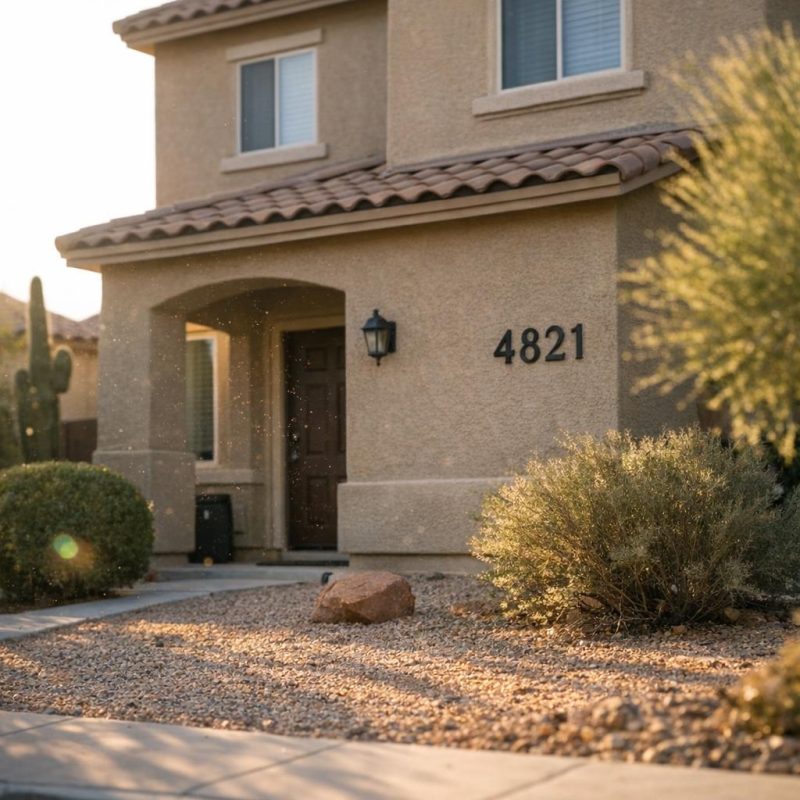 Image by RM AI
Gerald's Wisdom
Gerald Hoffman lived two streets over and had retired from accounting about five years ago. I'd helped him carry groceries once during a summer storm, and he'd mentioned his background. I texted him asking if I could stop by for some advice, nothing formal. He said sure, come by after lunch. His home office still looked like an accountant worked there—filing cabinets labeled by year, a desk calendar, even an old-school calculator. I showed him printouts of the meeting minutes, the reimbursements, the business registrations. I tried to lay it out chronologically, clearly. Gerald put on his reading glasses and went through each page methodically, making little 'hmm' sounds. After maybe ten minutes, he set the papers down and looked at me over the frames. 'So she's billing the HOA for services from companies she owns?' he asked. I nodded. 'And the HOA is paying her?' Another nod. 'Without disclosure to the other board members that she owns these companies?' I hadn't confirmed that part yet, but the meeting minutes showed the reimbursements approved without discussion. Gerald adjusted his reading glasses and said, 'That's called self-dealing, and it's fraud.'
 Image by RM AI
The Documentation Begins
I drove home from Gerald's house with my hands tight on the steering wheel, his words playing on repeat in my head. Fraud. That was the actual word for this. Not 'questionable' or 'sketchy'—fraud. When I got home, I cleared off my kitchen table and started organizing everything systematically. I created a spreadsheet with dates, amounts, vendor names, and registration details. I printed every relevant meeting minute page and highlighted the reimbursement approvals. I printed the state business registration documents showing Janice's address. I made a timeline showing when each company was registered and when the first invoices appeared in the HOA records. I cross-referenced every reimbursement against the approved vendor list and noted which ones weren't on it. I even printed screenshots from Google Maps showing the address match. Everything went into a folder with labeled dividers: 'Meeting Minutes,' 'Reimbursements,' 'Business Registrations,' 'Vendor Analysis.' My printer ran out of ink halfway through, and I had to run to the store for more. I worked through dinner, barely noticing I was hungry. By midnight, I had forty pages printed and labeled in chronological order.
 Image by RM AI
Trash Can Surveillance
I started watching Janice's trash can the way she'd apparently been watching mine. Every Tuesday morning, I'd set my alarm for pickup time—7:30 AM—and I'd peek out the window to see when her bins went to the curb and, more importantly, when they came back in. The first week, she was compliant. Bins back by 8:15. The second week, I photographed her can still sitting there at 9:03 AM. My phone timestamp was crystal clear in the corner of every shot. The third week, she must've forgotten entirely because that green bin sat at the curb all morning. I took a photo at 8:47. Then another at 9:30. I was working from home that day, so I kept checking. At 10:15, still there. I made myself coffee and watched through the kitchen window like some kind of suburban detective. One morning it was still there at 10:47—more than three hours after pickup.
 Image by RM AI
The Unapproved Pergola Photos
The pergola was harder to photograph without being obvious about it. Janice's backyard wasn't visible from the street, but you could see it pretty clearly from the walking path that ran along the back of our development. I took my 'casual evening walk' with my phone in hand, stopping to tie my shoe at just the right angle. The structure was gorgeous, I'll give her that—stained cedar with climbing vines already started, integrated lighting, the works. Probably cost fifteen grand. I pulled up the architectural guidelines on my phone right there on the path. Section 4.2: 'Permanent outdoor structures exceeding eight feet in height or one hundred square feet in area require board approval prior to construction.' This thing was easily ten feet tall and twice the square footage limit. I took seven photos from different angles, making sure the scale was obvious. It was beautiful, expensive, and completely against the rules she enforced on everyone else.
 Image by RM AI
Board Meeting Notice
The HOA newsletter arrived in my mailbox on a Thursday—one of those tri-fold things printed on cardstock that Janice probably charged the association thirty cents per copy to produce. Most of it was the usual stuff: reminders about lawn maintenance, a passive-aggressive note about dog waste, an announcement about landscaping companies getting access to the back gate. But there, in the bottom right corner, was what I'd been waiting for: 'Quarterly Board Meeting - Tuesday, April 18th, 7:00 PM - Community Clubhouse. All residents welcome to attend and observe.' I read it three times. Two weeks away. I carried that newsletter inside and stuck it on my refrigerator with a magnet. Then I pulled out my phone and created a calendar entry with every possible reminder—one week before, three days before, the morning of, two hours before. I circled the date and time on the newsletter, then added it to my calendar with one word: Showtime.
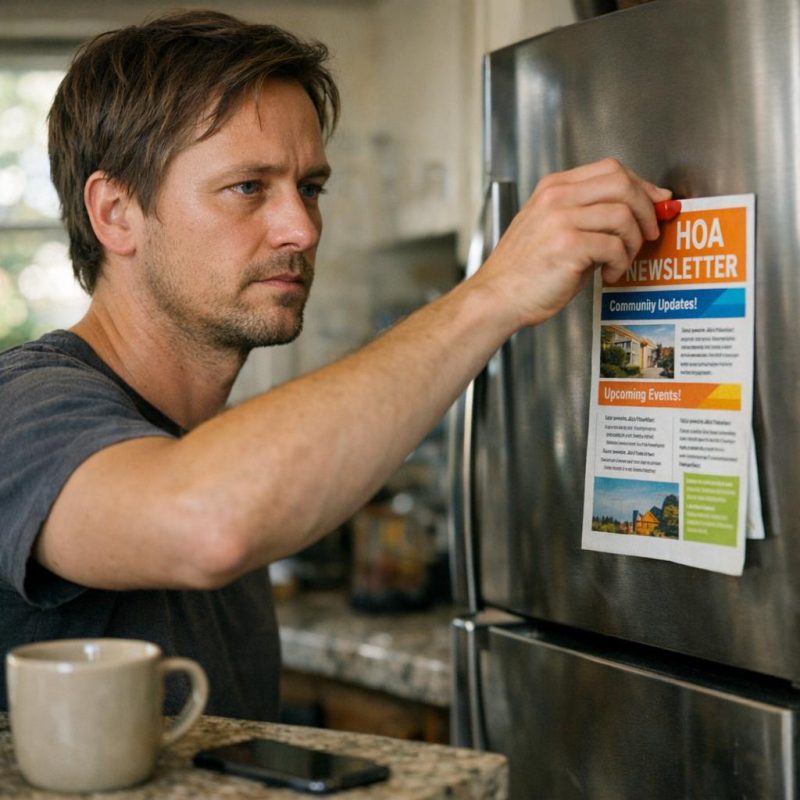 Image by RM AI
Rehearsal
I started practicing in front of my bathroom mirror like I was preparing for a TED Talk. Standing there in my pajamas, I'd hold my folder and run through how I'd present each piece of evidence. 'If we look at the April meeting minutes, you'll see a reimbursement to Premium Landscape Solutions for $3,847...' I'd pause, make eye contact with imaginary board members. Stay calm. Keep my voice level. I must've done it a dozen times, adjusting my wording, finding the spots where I sounded too angry or too rehearsed. I practiced my opening: 'I have some concerns about HOA finances that I'd like to bring to the board's attention.' Not accusatory. Just concerned. I rehearsed the trash can photos, the pergola violations—saving those for impact after the financial stuff. I recorded myself on my phone once and played it back. I sounded nervous but coherent. I needed to sound reasonable, not vengeful—facts, not feelings.
 Image by RM AI
Second Thoughts
Three days before the meeting, I almost chickened out. I was lying in bed at two in the morning, staring at the ceiling, thinking about what I was about to do. This wasn't just questioning a fine anymore. I was about to publicly accuse the HOA president of fraud in front of the entire board and whoever else showed up. What if I was wrong? What if there was some explanation I hadn't considered? What if Gerald had misunderstood the business registration stuff? I'd look insane. Worse, I'd look like some vindictive resident with a grudge over a trash can fine. I could just pay the $200, let it go, move on with my life like a normal person. It wasn't worth making enemies over, right? I could sell the house eventually, get away from this whole mess. But then I pictured Janice at my door with that fine, that little smile on her face when she handed it to me. Then I remembered the smirk, and the doubt evaporated.
 Image by RM AI
Diane's Warning
Diane caught me checking my mail on Saturday afternoon. She's lived in the neighborhood since it was built—one of those people who knows everyone's business without being gossipy about it. She walked over from her driveway with her hands in her cardigan pockets, looking concerned. 'I heard you're planning to bring something up at the meeting,' she said quietly. I must've looked surprised because she added, 'Gerald mentioned you'd been asking questions about finances.' I admitted I'd found some irregularities. Her face went tight. 'Alex, I'm going to be honest with you—challenging Janice has never gone well for anyone. I've been here nineteen years. I've seen people try.' She told me about a guy who questioned a fine for his mailbox color. Suddenly he was getting violation notices every week for things nobody else got cited for. Another family pushed back on an assessment increase. She said the last person who questioned a fine ended up moving away within six months.
 Image by RM AI
The Quiet Week
The next week felt like waiting for exam results. I went to work, came home, avoided my front windows when Janice did her evening patrols. I saw her twice from a distance—once getting her mail, once talking to someone at the clubhouse parking lot—and both times my stomach dropped like I'd been caught doing something wrong. Which was ridiculous. I hadn't done anything except look at public records. Still, I kept my head down. I didn't want any interaction before the meeting, nothing that might tip her off or give her a chance to prepare a defense. I finalized my presentation, adding little sticky tabs to mark the key pages in my folder. I printed an extra copy of the most damning evidence, just in case. My coworkers probably thought I was distracted all week. I was. Every time I saw Janice patrol the neighborhood, I felt my pulse quicken.
 Image by RM AI
The Night Before
Monday night I spread everything across my kitchen table one final time. The folder was organized within an inch of its life—color-coded tabs, page numbers in the corners, my notes on index cards clipped to the relevant sections. I went through it page by page, making sure nothing was out of order. Meeting minutes with highlighted reimbursements. Business registration printouts with Janice's address circled. My timeline spreadsheet showing the pattern. The trash can photos with timestamps. The pergola pictures with the guidelines printed underneath. I'd even printed a one-page summary as a handout, just the key facts without editorial commentary. I rehearsed my opening statement one more time, then closed the folder and set it by my front door with my keys. I barely slept. I kept thinking about Diane's warning, about that guy who'd moved away, about Gerald's careful legal language. Tomorrow night, everyone would see what I'd found—or I'd look like a paranoid fool.
 Image by RM AI
Unexpected Turnout
I arrived at the clubhouse ten minutes early, folder tucked under my arm, and stopped short when I saw the parking lot. Cars lined both sides of the street. Through the windows, I could see people already inside—way more than the usual handful of retirees who showed up to complain about lawn heights. I counted at least fifteen people as I walked in, maybe closer to twenty. Marcus gave me a small nod from the back row. Beth was there with her husband. Gerald sat near the front with his reading glasses already on. Diane caught my eye and mouthed 'good luck.' Even Tom from two streets over was there, the guy who'd gotten dinged for his mailbox color. Everyone was talking in low voices, that pre-meeting buzz of people who'd shown up with opinions. Janice stood at the front table arranging papers, her face carefully neutral. She glanced up when I walked in, registered the folder in my hands, then went back to her setup like nothing was unusual. My heart was already hammering. I'd prepared for the usual audience—a few bored neighbors, maybe one person backing me up. This felt different. This felt like everyone had already chosen sides. Word about my $200 fine had traveled faster than I'd realized.
 Image by RM AI
Janice Takes Control
Janice called the meeting to order at exactly seven o'clock. Her voice had that smooth, practiced quality she always used—warm but authoritative, like a kindergarten teacher who expected compliance. She went through the usual opening remarks, acknowledging the 'wonderful turnout' without commenting on why so many people had shown up. Then she moved into routine business: landscaping contract renewal, pool maintenance schedule, upcoming community garage sale. She had this way of making everything sound both important and tedious at the same time. People shifted in their seats. Someone's phone buzzed. Marcus was taking notes on his laptop. I sat there with my folder closed on my lap, waiting, watching her work the room. She was good at this, I had to admit. The polished efficiency, the confident smile, the way she made eye contact with different people as she spoke. She covered two budget line items and a proposal for holiday decorations before pausing to check her notes. When she got to 'outstanding compliance issues,' her eyes found mine.
 Image by RM AI
Tom's Question
Before Janice could continue, Tom raised his hand from the middle row. 'I have a question about that, actually,' he said. He was maybe twenty-nine, worked from home doing something with software. 'I've gotten three fines in the past six months. My neighbors have too. I've lived here four years and never got one before this year. What changed?' A few people murmured in agreement. Janice's smile didn't waver. 'We've simply been more consistent about enforcement,' she said smoothly. 'The bylaws haven't changed, but we recognize that previous boards may have been lax in applying them fairly. Everyone deserves equal treatment under the guidelines.' It was a perfect non-answer. Made it sound like she was doing everyone a favor. Tom frowned but didn't push back. I saw Beth lean over to whisper something to her husband. Gerald was studying Janice with that same careful expression he'd had in his driveway. The thing about her delivery was how reasonable it all sounded if you weren't paying close attention. She made enforcement sound like justice. Janice's smile tightened as she deflected with practiced ease.
 Image by RM AI
The Moment
I stood up. My chair scraped against the floor louder than I'd intended. 'Before we get to my trash can fine,' I said, 'I'd like to clarify something about compliance standards.' My voice sounded steadier than I felt. I opened the folder and pulled out the first section. 'I've spent some time reviewing our bylaws and meeting minutes, and I found some discrepancies I think the community should be aware of.' Janice's eyebrows went up slightly. 'Alex, this isn't really the appropriate forum for—' 'It's directly relevant to the fines being discussed,' I interrupted. My hands weren't shaking. That surprised me. 'And since we're talking about equal enforcement and transparency, I think everyone here would benefit from seeing what I found.' I could feel the entire room's attention shift. Marcus sat up straighter. Beth had her phone out, recording maybe. Gerald's expression was unreadable. Diane gave me the tiniest nod of encouragement. The room went quiet, and Janice's expression shifted slightly.
 Image by RM AI
Trash Can Hypocrisy
I pulled out the first set of photos and held them up. 'This is Janice's house on April fourteenth at 9:47 AM. Trash cans still at the curb.' I passed the photo to Marcus, who studied it and handed it to the person next to him. 'April twenty-second, 10:15 AM. Same thing. May sixth, 11:30 AM.' I had timestamps on all of them, clear shots showing her address number and the bins. 'According to section four-point-three of our guidelines, containers must be removed by 8 AM the morning after collection. I was fined two hundred dollars for having mine out at 8:10 AM.' Tom leaned forward to look at the photos as they made their way around the room. 'But the president's been violating the same rule repeatedly—by hours, not minutes—without any fines.' Janice opened her mouth to respond, but I wasn't done. 'I have four separate incidents documented between April and June. All trash collection days. All well past the deadline.' Beth was staring at the photos with her mouth slightly open. Gerald had pulled out his own copy of the guidelines. Murmurs rippled through the room as people leaned forward to see.
 Image by RM AI
The Pergola
I moved to the next section before Janice could regain control. 'Section seven-point-two requires board approval for any exterior structural modifications,' I said, pulling out the pergola photos. 'This structure was added to the president's backyard sometime in March. It's clearly visible from the common area path.' I laid out three different angles on the table. The pergola looked even more substantial in the photos than it had in person—easily ten by twelve feet, with a stone base and lighting fixtures. 'I reviewed all meeting minutes from January through June. There's no record of approval for this project, no architectural review request, no vote.' I slid the relevant minutes across to Marcus. 'Can you confirm that?' He picked them up immediately, flipping pages faster than I'd expected. His finger traced down one page, then another. The room had gone completely silent except for the sound of paper. People were craning their necks to see the photos. Janice sat frozen, her hands flat on the table. Her jaw was tight. Marcus picked up the meeting minutes and started flipping through them rapidly.
 Image by RM AI
The Vendor Question
I took a breath and moved into more dangerous territory. 'While reviewing the minutes, I also noticed several reimbursements to vendors I didn't recognize,' I said carefully. I kept my voice neutral, factual. 'Pristine Landscaping, Summit Property Solutions, Apex Administrative Services. None of these companies appear on our approved vendor list from the annual meeting.' I didn't have physical proof of wrongdoing here yet—just the pattern I'd noticed. But I wanted to see how Janice would respond. Gerald was frowning now, looking down at his own papers. Beth had stopped recording and was staring at Janice. Tom muttered something to the person next to him. The silence stretched out. I could see Janice calculating her response, that practiced composure slipping just slightly at the edges. Her shoulders had gone rigid. Finally, she cleared her throat. 'Those are legitimate administrative expenses,' she said. Her voice was cooler now, the warmth completely gone. 'The board has discretion to engage specialized services as needed for community management.' But she didn't meet anyone's eyes when she said it.
 Image by RM AI
The Business Registrations
I reached into the folder for the last section—the pages I'd printed from the Secretary of State website. My hands were completely steady now. 'Here's the interesting thing about those vendors,' I said quietly. I slid the business registration documents across the table, facing Janice but visible to Marcus and Gerald on either side. 'Pristine Landscaping Solutions, LLC. Registered March 2022. Principal address: 847 Maple Ridge Drive.' I paused. 'That's your address, Janice.' I laid out the second document. 'Summit Property Solutions, LLC. Registered January 2022. Same address.' One more page. 'Apex Administrative Services. September 2021. Same address.' The papers sat there on the table between us, official state seals clearly visible at the top of each page. I hadn't said she was stealing. I hadn't accused her of fraud. I'd just presented publicly available business registrations. But everyone in that room could do the math. Beth actually gasped. Tom stood up to see better. Gerald reached for his reading glasses. The color drained from her face as Marcus reached for the papers.
 Image by RM AI
Marcus Investigates
Marcus pulled the reimbursement ledger closer, his finger moving down the page as he cross-referenced the dates. The room had gone completely silent—even the people in the back stopped shifting in their chairs. I watched him flip between my printouts and the financial records, his expression getting tighter with each comparison. 'Pristine Landscaping Solutions,' he said, voice absolutely flat. 'First reimbursement: April 2022.' He tapped the registration document. 'Company created: March 2022.' Another flip of pages. 'Summit Property Solutions. First payment: February 2022. Registered: January 2022.' Gerald leaned over to see better, his reading glasses catching the overhead light. Beth had her hand over her mouth. Janice sat frozen, her face still drained of color, but she hadn't spoken since I'd laid out the business registrations. Marcus went through each one methodically—Apex Administrative Services, two other LLCs I'd found buried in the records. Every single one followed the same pattern. Create the company, bill the HOA within weeks. He looked up slowly and said, 'These companies were created after the fiscal year started.'
 Image by RM AI
Janice's Defense
Janice finally found her voice, though it came out sharper than I think she intended. 'Those are subcontractors I hired for HOA work,' she said, looking around the table like she was daring someone to challenge her. 'Legitimate vendors providing legitimate services to this community.' Her hands were flat on the table now, fingers spread. 'I registered them as LLCs for tax purposes, which is completely legal and frankly standard business practice.' She was recovering some of her usual authority, that steel I'd seen when she handed me the trash can fine. 'The HOA needed specialized services. I have the expertise to provide them. Nothing in our bylaws prohibits board members from contracting with the association.' Tom frowned. Beth looked uncertain. I stayed quiet—I'd said what I needed to say. Marcus flipped through the ledger again, and I saw the exact moment Gerald zeroed in on something. His finger stopped on a line item. The former aerospace engineer who'd probably spent forty years reading technical specifications. Gerald asked quietly, 'Then where are the receipts for services rendered?'
 Image by RM AI
No Receipts
Marcus started going through the documentation page by page, and I watched the confidence drain right back out of Janice's face. 'There's no invoice attached to this reimbursement,' Marcus said, indicating a $3,200 payment to Pristine Landscaping. 'Or this one. Or this one.' He kept flipping. 'No work orders. No service descriptions. No before and after photos.' Gerald pulled the ledger toward himself, scanning the entries with that methodical precision. 'Standard accounts payable procedure requires documentation of services,' he said. 'Purchase orders, invoices, delivery confirmations. Basic audit trail.' Diane had her phone out, actually taking notes. Tom looked like he was watching a car accident in slow motion. The whole room was leaning forward now, trying to see the documents on the table. Marcus went through every single reimbursement I'd highlighted—probably two dozen of them. Not one had supporting documentation beyond Janice's signature approving payment to her own companies. Someone in the back row said, 'That's embezzlement.'
 Image by RM AI
The Room Turns
That's when the room just erupted. The guy who'd spoken—I think his name was David, lived on Oakmont—stood up and said, 'I got fined a hundred and fifty bucks last year for parking my work van in my own driveway overnight.' A woman near the front added, 'We got cited for our house numbers being the wrong font. The wrong font. Cost us sixty dollars.' More people started talking, voices overlapping. Someone mentioned a fine for a basketball hoop. Someone else brought up a citation for holiday lights being up two days past the deadline. The anger in that room wasn't directed at me anymore—it had found its actual target. Beth was shaking her head slowly, and I saw her whisper something to Tom. Marcus tried to regain order, but people kept talking. Gerald sat back in his chair with his arms crossed, watching Janice with an expression I couldn't quite read. And Janice—she was looking around the table like she was trying to find an ally, but there wasn't one left. Janice stood abruptly, her chair scraping the floor.
 Image by RM AI
Janice Leaves
The scraping sound cut through the noise and everyone went quiet again. Janice gathered the papers in front of her—not the ones I'd brought, just her own notes—and tucked them under her arm. 'I need to retrieve the additional documentation from my home office,' she said, voice tight and controlled. 'The service records, the invoices, all of it. I keep backup files there.' She looked at Marcus, then Gerald. 'This is clearly a misunderstanding based on incomplete information, and I'm not going to sit here and be accused of crimes while the proper paperwork is literally fifteen minutes away.' Nobody said anything. Marcus opened his mouth like he might object, but what was he going to do—physically stop her from leaving? 'I'll be back within the hour with everything you need to see that this is completely above board,' Janice said. She walked toward the door, heels clicking on the linoleum, back straight. Professional. Composed. We all watched her go. The door closed behind her with a soft click. Marcus checked his watch. Gerald exchanged a look with Diane. Beth was chewing her thumbnail. She didn't come back.
 Image by RM AI
Emergency Vote
After forty-five minutes of waiting, Marcus cleared his throat and called the meeting back to order. Janice's empty chair sat at the head of the table like an accusation. 'Given the information presented tonight and the board president's absence,' Marcus said carefully, 'I'm proposing an emergency motion.' He glanced at Gerald, who nodded. 'Effective immediately, I move to freeze all HOA spending pending a formal independent audit of our finances for the past three years.' Gerald seconded it before Marcus even finished speaking. They didn't debate. There was no discussion about whether this was an overreaction or if we should wait for Janice to return with her supposed documentation. Tom voted yes. Diane voted yes. Beth, who'd been silent for twenty minutes, said 'yes' so firmly it surprised me. They asked for objections from the homeowners in attendance—there were none. Just a room full of people who'd been nickel-and-dimed with petty fines while someone apparently helped themselves to the community fund. Marcus wrote something in the meeting minutes, his handwriting tight and precise. The vote was unanimous.
 Image by RM AI
Walking Home
I don't really remember leaving the rec center. One minute I was sitting there watching Marcus draft the motion to retain a forensic accountant, and the next I was walking down Elmwood Drive in the dark, my folder of documents tucked under my arm. The streetlights made these little pools of yellow on the sidewalk. My hands were shaking now—delayed reaction, I guess. All that adrenaline from standing up in front of everyone finally hitting my system at once. I'd gone in there expecting to make my case, maybe get my fine reduced, possibly get laughed out of the room. I hadn't expected Janice's face to go white like that. Hadn't expected her to just walk out and not come back. The whole thing felt surreal, like I'd stepped through a door expecting a coat closet and found myself in a different building entirely. I kept replaying the moment I laid out those business registrations, the silence that followed. The way the room had turned. I'd expected confrontation, but not complete collapse.
 Image by RM AI
Beth's Text
My phone buzzed while I was unlocking my front door. Text from Beth: 'Thank you for tonight. Seriously. I know that took guts.' I stood there in my doorway, reading it twice. Then another message came through: 'I got fined $150 last month for wind chimes on my back porch. WIND CHIMES. Said they violated noise ordinances even though literally nobody complained.' A third message: 'I almost paid it. I was going to pay it tomorrow actually. Just shut up and hand over the money because that's what you do, right?' I could picture her typing this furiously, probably still in her car in the rec center parking lot. 'But watching you tonight—watching you actually DO something instead of just accepting it—I don't know. It made me realize how much I've been letting people push me around. Not just the HOA. Everything.' The last message came through a few seconds later. She wrote: 'You just saved me from becoming a doormat.'
 Image by RM AI
The Waiting Game
The next three days felt like waiting for medical test results. I kept checking my phone every hour like something would magically appear—some update, some news, anything. Beth texted me twice asking if I'd heard anything. I hadn't. Marcus had said the review would take 'a few days,' which is one of those phrases that could mean anything from seventy-two hours to next month. I tried to distract myself with work, but I kept losing focus halfway through spreadsheets, just staring at my computer screen thinking about those invoices. The shell company names. The dates that lined up too perfectly with fines. On day three, I was making dinner—just pasta, nothing fancy—when my phone rang. Marcus's name on the screen. I actually froze with the wooden spoon still in my hand, tomato sauce dripping onto my counter. I answered on the third ring trying to sound casual, like I hadn't been obsessively waiting for this exact call. He didn't waste time with small talk. Marcus called on day three and asked if I could meet him at the clubhouse.
 Image by RM AI
The Audit Begins
Marcus had spread everything across one of those long folding tables in the meeting room—printouts, highlighted sections, sticky notes everywhere. He looked tired. Like genuinely tired, not just 'long day at work' tired. He'd been going through two years of financial records, cross-referencing every payment, every vendor, every reimbursement. 'Okay,' he said, tapping a yellow highlighter against a particularly thick stack of papers. 'So you found four shell companies in the stuff you brought me.' I nodded. He pushed another stack toward me. 'I found eleven more.' I just stared at the pages. Fifteen shell companies total. Fifteen separate fake businesses that had been billing the HOA for services that either never happened or were wildly overpriced. Landscaping companies that didn't exist. 'Maintenance contractors' that had no online presence, no business licenses, nothing. The reimbursements went back two full years—small amounts at first, then gradually increasing. Five hundred here, eight hundred there, occasionally a thousand. He said, 'This is way bigger than we thought.'
 Image by RM AI
The Total
Marcus had done the math on a separate sheet of paper, written in blue pen with numbers double-checked in the margins. I watched him slide it across the table toward me like he was delivering bad news at a doctor's office. The preliminary total—and he stressed 'preliminary' three times—came to $18,247. That was just what they'd found so far in two years of records. There might be more in earlier years, but the digital records only went back that far. The rest were in storage boxes somewhere, and nobody had bothered to dig them out yet. I kept staring at that number. Eighteen thousand, two hundred and forty-seven dollars. Siphoned out of HOA funds through fake companies while Janice went around measuring people's grass height with a ruler and fining them for having their garbage cans visible from the street. While she sent certified letters about unauthorized planter boxes and stood in people's driveways with her clipboard taking notes. I sat down hard and said, 'Eighteen thousand dollars over trash cans and garden gnomes.'
 Image by RM AI
Gerald's Analysis
Gerald showed up the next evening after Marcus called him in to review everything. He's a retired accountant, used to work for some regional firm before he moved here, and he went through those financial records like someone reading a mystery novel where he already knew the ending. He kept making these little 'mm-hmm' sounds, nodding to himself, occasionally circling something with a red pen. After about forty minutes, he sat back and took off his reading glasses. 'It's actually elegant,' he said, which was a weird word to use for fraud. But then he explained it. The amounts were always small enough to avoid triggering any automatic audits or reviews. They were spread across multiple 'vendors' so no single company looked suspicious. They were buried in routine operational expenses—the kind of boring line items nobody bothers to question because they seem normal. Landscaping, maintenance, repairs. Stuff every HOA pays for. The timing was irregular enough to avoid pattern recognition. He said, 'Small amounts, spread out, buried in routine expenses—it's textbook fraud.'
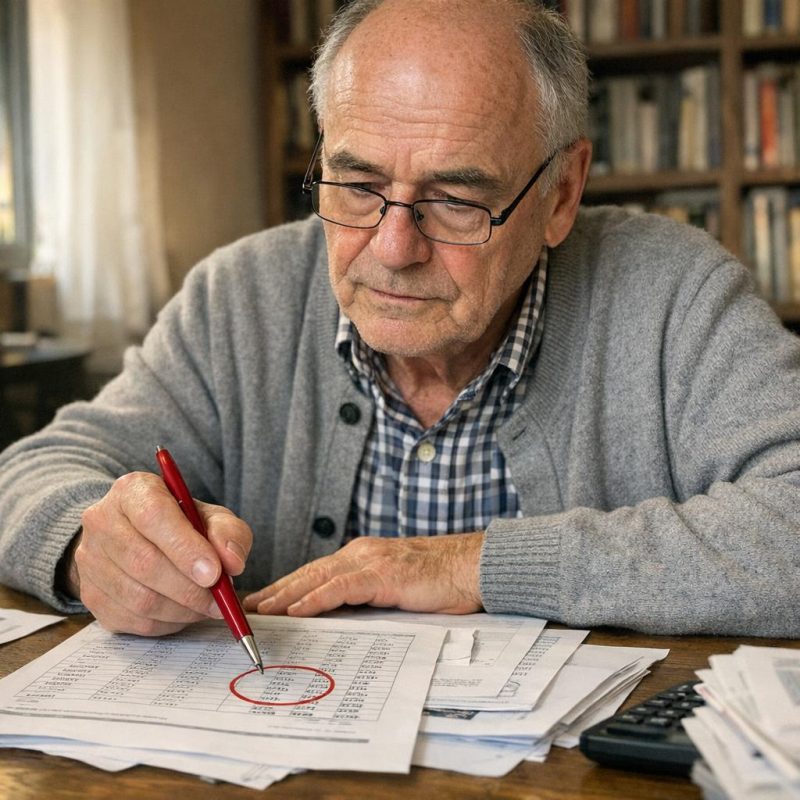 Image by RM AI
The Resignation Letter
Janice's resignation letter arrived via email two days after the preliminary audit numbers came out. Marcus forwarded it to me within minutes. It was weirdly formal—the kind of letter a CEO writes when they're 'stepping down to spend more time with family' after a scandal. She cited 'personal reasons' and 'health concerns that require my full attention at this time.' Three short paragraphs, total. She thanked the board for the 'opportunity to serve' and expressed 'confidence in the community's future.' That was it. No acknowledgment of the investigation. No mention of the missing eighteen thousand dollars or the fifteen shell companies or any of it. Definitely no apology. Marcus tried calling her twice. Both times it went straight to voicemail. Her house—the one with the perfect lawn and the seasonal wreath—had a 'For Sale' sign in the front yard within a week. I drove past it on my way to the grocery store and just sat there at the stop sign staring at that sign. She didn't apologize, didn't admit guilt—just resigned and disappeared.
 Image by RM AI
Legal Consultation
Marcus set up a consultation with a lawyer who specialized in HOA disputes and financial fraud. I went with him because apparently I was now unofficially involved in every decision, which felt surreal. The attorney's office was in one of those professional buildings with beige carpet and stock photos of beaches on the walls. She reviewed everything we brought—took her maybe twenty minutes—then laid out our options in this very calm, matter-of-fact way. We could pursue criminal charges, which would mean involving the police, possibly the district attorney, definitely a lot of publicity. Or we could file a civil suit to recover the funds, which would be faster but still expensive and public. Or we could do nothing, which she didn't recommend but had to mention for legal reasons. The criminal case was stronger, she said. Clear paper trail, obvious intent, substantial amount. But prosecution would mean legal fees the HOA would have to pay upfront, months of proceedings, and our neighborhood drama splashed across local news. The lawyer said we had a strong case, but prosecution would mean publicity and legal fees.
 Image by RM AI
The Settlement Offer
Janice's attorney contacted Marcus exactly one week after her resignation. Professional letter, very corporate, proposing a settlement. Janice would repay the full amount—all $18,247—in exchange for the HOA agreeing not to pursue criminal charges or civil litigation. The money would come in a lump sum, certified check, within thirty days. In return, we'd sign a non-disclosure agreement and a release of all claims. Marcus called an emergency board meeting to discuss it. I sat in the back of the room while they debated. Some board members wanted to take the money and move on—it was guaranteed restitution, no legal fees, no dragged-out court case. Others argued that letting her buy her way out sent the wrong message, that she should face actual consequences beyond writing a check. Beth was in the 'make her face consequences' camp. Another board member pointed out that criminal prosecution wasn't guaranteed to result in jail time anyway, and we might end up with nothing. I sat there listening to them go back and forth, feeling weirdly detached from the whole thing. The board had to decide: justice or restitution.
 Image by RM AI
The Pattern Revealed
I was lying in bed that night, staring at the ceiling, when it all suddenly clicked into place. Not just the fraud itself, but the whole picture. Why Janice had been so aggressive about enforcement. Why she'd gone after every tiny violation with such intensity. Why she'd created this atmosphere of constant surveillance and fear. It wasn't personality. It wasn't a power trip. It was strategy. She needed everyone focused on the petty stuff—on trash cans and mailbox colors and wind chimes—so nobody would look at the finances. She needed people scared and compliant, too intimidated to ask questions or run for the board or request to review HOA records. Every violation notice, every fine, every smirking comment about rule-followers versus troublemakers—it was all designed to keep attention away from where the real problem was. She'd created a system of aggressive enforcement to distract from systematic embezzlement, using fear and fines to keep people compliant while she siphoned HOA funds through shell companies for over two years. I sat up in bed, heart pounding, finally understanding. Every petty fine, every smirk, every rule violation—it was all calculated cover for theft.
 Image by RM AI
Marcus's Admission
Marcus came over the next morning, looking like he hadn't slept. He stood in my doorway holding two coffees from the gas station down the street—not the good coffee, but the kind you drink when you need caffeine more than flavor. 'Can we talk?' he asked, and I let him in. We sat at my kitchen table, and he just stared at his cup for a long time before speaking. 'I should have noticed,' he said finally. 'The irregularities. The pattern. I was on the board for three years, and I never questioned anything she presented.' His voice was flat, exhausted. 'I trusted her completely. We all did. She had an answer for everything, and she made anyone who asked questions feel like they were being difficult.' I nodded, recognizing that dynamic. 'She was good at it,' I said. 'That was the point.' Marcus looked up at me, his face drawn. 'I keep thinking about all the times someone raised a concern at meetings and she'd shut them down. Make them feel stupid for asking. Make us feel like backing her up was the reasonable thing to do.' He rubbed his face. 'She made us all feel like we'd be the bad guys for questioning her.'
 Image by RM AI
Board Decision
The board meeting to decide on the settlement was tense but brief. Beth had printed copies of the attorney's offer for each of us—full repayment of $187,400 plus interest, paid within ten days, in exchange for no criminal prosecution. Gerald adjusted his reading glasses and studied every line. Beth sat with her arms crossed, her expression unreadable. Marcus looked at each of us in turn. 'We need to vote,' he said quietly. 'This isn't about what she deserves. It's about what the community needs.' Gerald spoke first. 'I want her prosecuted,' he said, his voice sharp. 'But I want our money back more. And I want to start fixing things.' Beth nodded slowly. 'Agreed. We take the settlement.' Marcus looked at me. I thought about everything—the trash can fine, the smugness, the manipulation, the fear she'd created in people like Diane. I thought about two years of stolen money and calculated cruelty. And I thought about what would actually help the neighborhood heal. 'Yes,' I said. 'Take the settlement.' The vote was unanimous. I voted yes, not because I forgave her, but because the neighborhood needed to move on.
 Image by RM AI
The Repayment
Nine days later, Janice's attorney walked into Marcus's office with a leather portfolio. I was there as a board member—Marcus had insisted on witnesses. The attorney was a thin man in an expensive suit, all business, no small talk. He pulled out a certified check, set it on Marcus's desk, and slid a receipt across for signature. The check was made out to the HOA for $194,780.00. Marcus picked it up, held it to the light, examined the certification seal. His hands were steady, but I could see the tension in his jaw. The attorney waited in silence. Marcus signed the receipt, and the attorney left without another word. We sat there for a moment, just staring at the check. 'That's it,' Marcus said quietly. 'We're whole again.' I nodded, but something felt hollow about it. The number was right. The restitution was complete. The HOA's accounts would be restored, and we could move forward with repairs and reserves and normal operations. But sitting there in that office, looking at that check, I felt nothing like victory. The money was real, but it didn't erase what she'd done.
 Image by RM AI
New Leadership
The following week, the board held elections for interim leadership. Marcus was nominated immediately, and no one else wanted the job. He accepted with visible reluctance. 'Only until the annual meeting,' he said. 'Then we do proper elections.' His first act as president was to form a transparency committee—me, Beth, and two other homeowners—tasked with drafting reforms to prevent future abuse. We met at Beth's house with laptops and legal pads, working through what had gone wrong and how to fix it. The list grew quickly: mandatory financial audits by external firms, term limits for board members, required training on fiduciary duty, public access to all non-confidential records. But the centerpiece was Beth's idea. 'Everything financial gets posted online,' she said. 'Every month. Every transaction. Every invoice and receipt. No exceptions.' Gerald loved it. Marcus approved it at the next board meeting without discussion. The first reform: all financial records posted publicly online every month.
 Image by RM AI
Community Meeting
Marcus called a special community meeting for a Saturday morning at the clubhouse. I got there early and helped set up chairs. By ten o'clock, the room was packed—more people than I'd ever seen at an HOA meeting. Diane was there with her husband. Tom sat in the back taking notes. Even people I'd never seen at any meeting showed up. Marcus stood at the front with printed handouts detailing everything: the fraud, the investigation, the settlement, the repayment, the new reforms. His voice was steady and direct. He didn't sugarcoat anything. He explained how Janice had manipulated the finances, how the board had failed to catch it, how the community's money had been stolen and was now returned. Then Beth presented the transparency reforms, walking through each change and why it mattered. People asked questions—good questions, tough questions—and the board answered all of them honestly. When Tom asked if the financial records would really be posted every month, Marcus pulled up the HOA website on the projector and showed him the first upload, dated two days earlier. The room went quiet for a moment, then someone started clapping. For the first time in years, people seemed to trust their HOA board.
 Image by RM AI
The For Sale Sign
I was making coffee on a Tuesday morning when I noticed the sign. A professional real estate sign, crisp white with navy lettering, planted in Janice's front lawn. 'FOR SALE' in bold letters, with a photo of a smiling agent I didn't recognize. I stood at my kitchen window, mug in hand, just staring at it. Part of me had wondered if she'd stay, if she'd try to tough it out and pretend nothing had happened. But no. She was leaving. Three weeks had passed since her resignation, and now she was gone—or going. Over the next few days, I watched the activity from my window. A cleaning crew. A staging company. Professional photographers. Then, on Saturday, a moving truck pulled into her driveway. I stood at my window and watched movers load boxes into a truck.
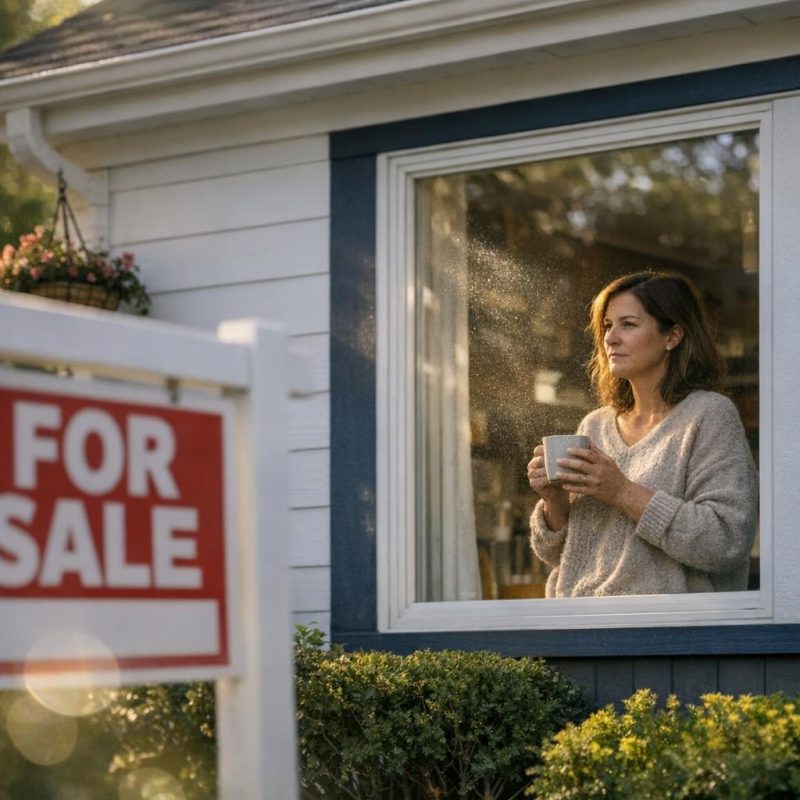 Image by RM AI
Diane's Gratitude
Diane knocked on my door on a Wednesday afternoon holding a plate covered in foil. When I opened it, the smell of fresh-baked chocolate chip cookies hit me immediately. 'I wanted to thank you,' she said, her voice soft but steady. 'For what you did. For standing up when the rest of us were too afraid.' I invited her in, and we sat in my living room with coffee and cookies that were genuinely excellent. She told me she'd been living in fear of violations for three years, ever since Janice fined her $150 for a holiday decoration that stayed up two days past the deadline. 'I stopped decorating after that,' she said. 'I stopped doing anything that might get noticed. I just wanted to be invisible.' Her hands trembled slightly around her mug. 'When you fought back, when you kept pushing even after that trash can fine, I wanted to help but I couldn't. I was too scared.' She looked at me with an expression that was part gratitude, part regret. 'I wish I'd been brave enough years ago.'
 Image by RM AI
Tom's Proposal
Tom showed up at the next board meeting with a proposal printed on recycled paper. He was nervous, fidgeting with his pen, but his idea was solid. 'I think we should create a neighborhood newsletter,' he said. 'Not from the board. From residents. Different people each month, sharing updates, events, ideas. Real voices, not official announcements.' Marcus leaned forward, interested. 'Like a community forum?' Tom nodded. 'Exactly. Something that belongs to everyone, not controlled by anyone. We could rotate editors, invite submissions, keep it casual.' Beth loved it immediately. I could see why—it was the opposite of Janice's approach. Instead of top-down control, it was bottom-up communication. Instead of surveillance and enforcement, it was connection and participation. Marcus called for a vote. The idea passed unanimously—communication, not control.
 Image by RM AI
The Final Board Meeting
The final board meeting under the old bylaws felt like attending a funeral—except everyone was celebrating. Marcus had printed copies of the new governance rules for everyone. Beth brought cookies. Gerald actually smiled, which I'd never seen before. Tom was documenting everything for the first community newsletter. Marcus walked us through each change: transparent budgets, term limits, resident voting on major decisions, appeal processes for violations. 'These bylaws take effect immediately,' he said. 'The old system is officially retired.' Beth raised her hand. 'I move we burn Janice's violation form templates.' Everyone laughed, but she was half-serious. Gerald seconded it anyway. We spent an hour discussing actual community improvements—new playground equipment, a neighborhood garden, better lighting on Oak Street. People volunteered for committees. Tom took notes. Marcus asked if anyone had concerns about the new structure. Silence. Not the tense, fearful silence from before. The comfortable kind. The meeting adjourned after forty-five minutes. No fines were issued, no one was scolded—it felt like a different place.
 Image by RM AI
Six Months Later
Six months passed, and I kept waiting for things to revert to the old dysfunction. They didn't. The neighborhood newsletter came out monthly, each edition edited by different residents. Someone started a kids' Halloween decorating contest—no regulations about 'approved seasonal displays,' just fun. The community garden Tom had proposed actually got built, with volunteer shifts and a little free library box next to the tomatoes. I walked past it most mornings. Saw neighbors I'd lived near for years but never really talked to, suddenly chatting over zucchini plants. The Facebook group transformed completely. Instead of complaint threads and violation warnings, people posted about lost cats, recipe swaps, and upcoming block parties. Marcus sent quarterly financial reports that actually made sense. Beth organized a neighborhood yard sale that raised money for new park benches. Even Gerald seemed lighter somehow, like he'd been released from some exhausting performance. The weird thing? It wasn't dramatic. No grand speeches or emotional reconciliations. Just people existing together without constant surveillance and punishment. People actually talked to each other now, not just complained behind closed doors.
 Image by RM AI
The New Family
A young couple moved into Janice's old house in early spring. I saw the moving truck and decided to do what nobody had done for me when I'd moved in—actually welcome them. I brought over some cookies and a printed copy of the new HOA bylaws, plus Tom's latest newsletter. The woman, maybe early thirties, looked relieved when I explained how things worked now. 'We were so nervous about the HOA thing,' she admitted. 'But these bylaws seem really reasonable?' Her partner nodded enthusiastically. I told them the short version of what had happened—the fines, the investigation, the reform. Left out some of the more dramatic details. They seemed shocked that an HOA could function without being tyrannical. 'Our last place had a board president who measured everyone's grass with a ruler,' the woman said. 'We almost swore off HOA neighborhoods entirely.' I laughed and told them about the community garden, the newsletter, the upcoming summer barbecue Marcus was organizing. Gave them my number if they had questions. They actually seemed excited to be here. They laughed and said they'd almost avoided HOA neighborhoods entirely—glad they didn't.
 Image by RM AI
Ten Minutes
I took out my trash on a Tuesday morning, same green bin that had started everything. Rolled it to the curb at 6:47 a.m. Collection was at 7:00. I stood there for a moment, looking at that stupid bin, remembering the photo Janice had taken, the $200 fine, the six-page violation letter. The whole absurd cascade that followed. A neighbor walked past walking her dog, waved. 'Morning, Alex!' Normal. Easy. No suspicion, no documentation, no enforcement. The truck came at 7:03. I left my bin out until 7:13—ten minutes past collection—while I finished my coffee on the porch. Nobody photographed it. Nobody sent a fine. Nobody cared, because it didn't matter. It had never mattered. But that ten minutes, that original ten minutes seventeen months ago, had mattered in ways I couldn't have imagined. Sometimes the smallest infractions reveal the biggest problems. Sometimes pushing back against something petty exposes something huge. I rolled my bin back to the garage, empty and light. Funny how ten minutes can unravel an entire system—or build a better one.
 Image by RM AI
KEEP ON READING

The story of Ching Shih, the Woman Who Became the…
Unknown author on WikimediaFew figures in history are as feared…
By Emilie Richardson-Dupuis Dec 29, 2025
Einstein's Violin Just Sold At An Auction—And It Earned More…
A Visionary's Violin. Wanda von Debschitz-Kunowski on WikimediaWhen you hear…
By Ashley Bast Nov 3, 2025
This Infamous Ancient Greek Burned Down An Ancient Wonder Just…
History remembers kings and conquerors, but sometimes, it also remembers…
By David Davidovic Nov 12, 2025
The Mysterious "Sea People" Who Collapsed Civilization
3,200 years ago, Bronze Age civilization in the Mediterranean suddenly…
By Robbie Woods Mar 18, 2025
The Last Samurai: The True Story Of Saigō Takamori And…
Susann Schuster on UnsplashYou probably imagine a samurai as a…
By Sara Springsteen Mar 3, 2026
20 Soldiers Who Defied Expectations
Changing the Rules of the Battlefield. You’ve probably heard plenty…
By Annie Byrd Feb 10, 2026