

I Won a Luxury Vacation Online—But When I Arrived, I Discovered the Terrifying Truth Behind the 'Contest'
I Won a Luxury Vacation Online—But When I Arrived, I Discovered the Terrifying Truth Behind the 'Contest'
The Email That Changed Everything
I almost delete it without reading it. That's the thing I keep coming back to — how close I came to just hitting the trash icon and moving on with my Tuesday. The subject line says "Congratulations — You've Been Selected" and my first instinct is spam, obviously. But something makes me pause, maybe because the sender address looks real, maybe because I'm sitting alone in this too-quiet apartment with a cup of tea going cold beside me and I have nowhere to be. So I open it. The email is beautiful, honestly — clean layout, an embossed-looking logo for something called Meridian Luxury Escapes, and photographs that make my chest ache a little. Turquoise water. A white-railed balcony overlooking the ocean. A spa room with candles and folded towels and afternoon light coming through sheer curtains. According to the email, I've won a fully inclusive prize package: oceanfront suite, gourmet dining, spa treatments, private excursions, and round-trip airfare. I scroll down to the fine print and it all looks legitimate — business registration numbers, a professional website, a contact name and direct phone line. I barely remember entering any sweepstakes, but I do a lot of things on autopilot these days. The divorce was finalized four months ago and I've been filling the hours however I can. I sit there in the quiet of my kitchen, reading the email a third time, and I let myself want it — really want it — in a way I haven't let myself want anything in a long time.
 Image by RM AI
Rachel's Warning
I call Rachel before I've even finished my second cup of tea, which tells you how excited I am, because I usually wait until after nine. She picks up on the second ring and I can hear her getting ready for work in the background, that familiar sound of cabinet doors and rushing water. I tell her about the email and she goes quiet in a way that I recognize immediately — it's her thinking-carefully quiet, not her happy quiet. "Mom," she says, and just the way she says it deflates me a little. She starts listing things: unsolicited prize notifications, requests for personal information, vacation scams targeting people going through major life transitions. She's not wrong to be cautious and I know that. But I also know I read every word of that email twice and it looked real. I tell her the website checks out, that there are registration numbers, that I haven't been asked for a credit card. She says that doesn't mean anything, that these operations can be sophisticated. We go back and forth like that for a few minutes, me defending something I'm not even fully sure I believe in yet, her trying to protect me without saying outright that she thinks I'm being naive. And then my phone buzzes against my ear — an incoming call from a number I don't recognize. I switch over, half-expecting silence or a recorded message. Instead, a calm, professional voice introduces herself as a representative from Meridian Luxury Escapes and begins walking me through every detail of my prize package.
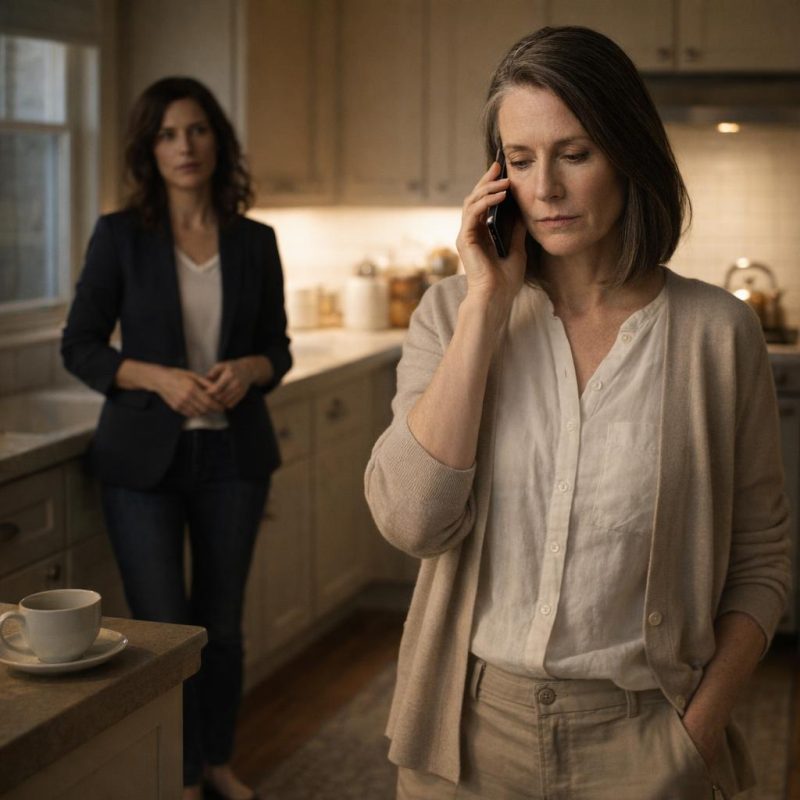 Image by RM AI
Departure Day
The flight itself is fine — smooth air, a window seat, and three hours of watching clouds thin out into blue. I spend most of it rereading the confirmation email on my phone, memorizing the details: the transfer company name, the driver's name, the sign he's supposed to be holding. By the time we land I'm nervous in that good way, the way you get before something you've been looking forward to. The terminal is bright and loud and smells like sunscreen and jet fuel, and I follow the signs toward arrivals feeling almost giddy. I find the area where drivers wait with their signs and I walk the whole length of it twice, reading every name. Mine isn't there. I check my phone — no messages, no missed calls. I try the number listed for the transfer company and it rings four times and drops to voicemail, a generic recording that doesn't even use the company name. I leave a message and try again ten minutes later. Same result. Around me, other travelers are being greeted, hugged, loaded into vans and taxis, moving on with their days. I find a bench near the exit and sit down with my carry-on between my feet, watching the arrivals board cycle through flights that have nothing to do with me. I try the number one more time. Voicemail again. I set my phone face-up on my knee and watch the automatic doors slide open and closed, open and closed, and the giddy feeling from the plane is already somewhere far behind me.
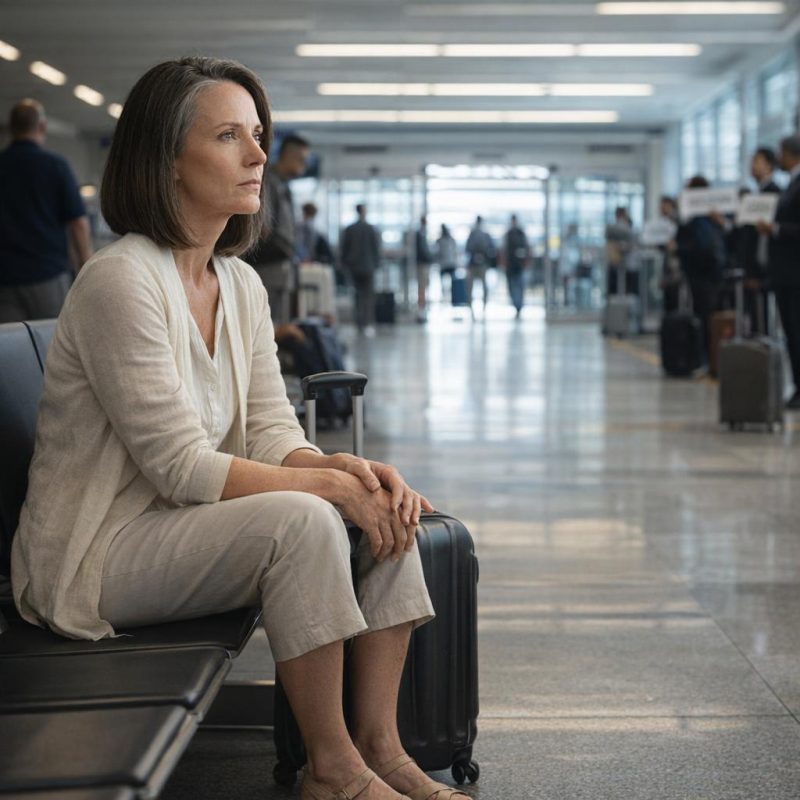 Image by RM AI
The Wrong Resort
The taxi driver squints at the address on my phone for a long moment before nodding, and something about that pause stays with me during the whole drive. We leave the main road after about twenty minutes and the landscape changes — fewer buildings, more scrub brush, the road narrowing and the pavement getting rougher. I keep checking the resort's website photos on my phone: the infinity pool catching the late sun, the white-columned entrance draped in bougainvillea, the lobby with its high ceilings and polished floors. When the building finally comes around a bend in the road I actually lean forward in my seat, thinking maybe I'm looking at the wrong structure. But the driver slows down and gestures, and there it is. The paint on the facade is peeling in long strips. The landscaping is overgrown in some places and dead in others. The entrance canopy sags on one side. I hold my phone up and look at the photograph, then at the building, then at the photograph again. The shape is roughly the same — same roofline, same general footprint — but everything else is wrong. I pay the driver and he pulls away quickly, and I stand on the cracked concrete path with my suitcase beside me, the humid air pressing in from all sides. The building in front of me looks like a photograph of itself taken twenty years later, after everyone stopped caring. I stand there for a moment, not moving, letting that gap between what I expected and what I'm looking at settle over me like something heavy.
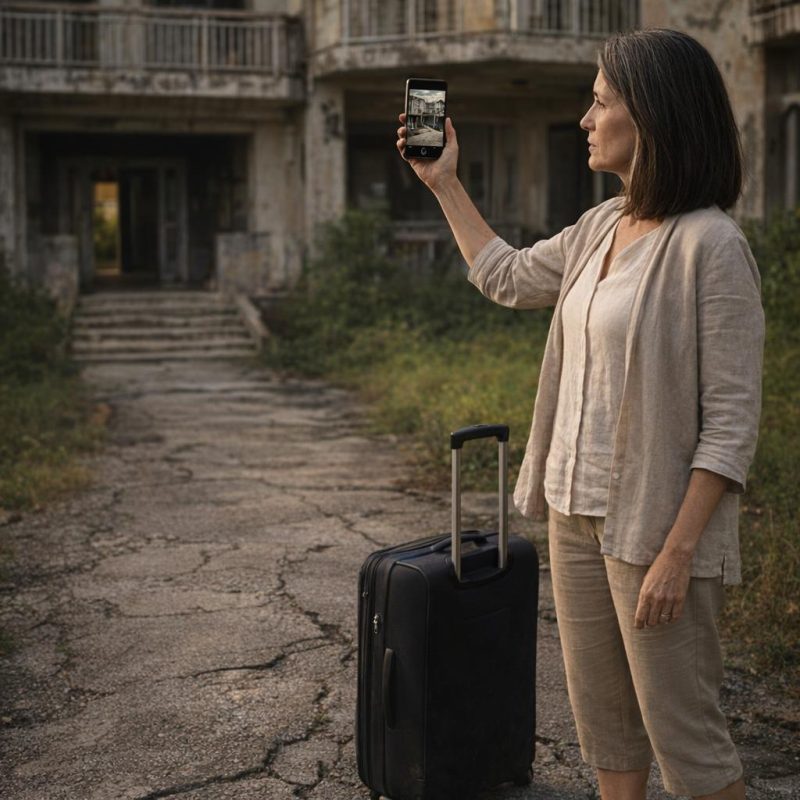 Image by RM AI
Marcus and the Excuses
The lobby is small and dim, with a ceiling fan turning slowly overhead and a front desk that looks like it was last updated sometime in the nineties. A man behind the counter looks up when I come in — mid-forties, thinning hair, a resort polo that's a size too big — and gives me a smile that doesn't quite reach his eyes. He introduces himself as Marcus and pulls up my reservation on a computer that takes a moment to respond. I ask about the oceanfront suite right away, because I've been thinking about it since the taxi ride and I want an answer. He nods like he was expecting the question and tells me there have been some changes, that upgrades are still being processed, that there are renovations happening in that wing. I ask which wing. He gestures vaguely. I ask when the renovations will be finished. He says he's not sure of the exact timeline. I ask about the contest — who runs it, who I should contact about the discrepancy between what was advertised and what I'm looking at. He says he doesn't have much information about the promotion side of things, that it's handled separately, that he can pass along my concerns. He's not rude about any of it. He just keeps not answering, in a pleasant, practiced way that makes it hard to push back without feeling unreasonable. He slides something across the desk toward me — my room key. It's an actual metal key on a plastic fob, and the room number written on the fob is in blue ballpoint pen, someone's handwriting, not printed.
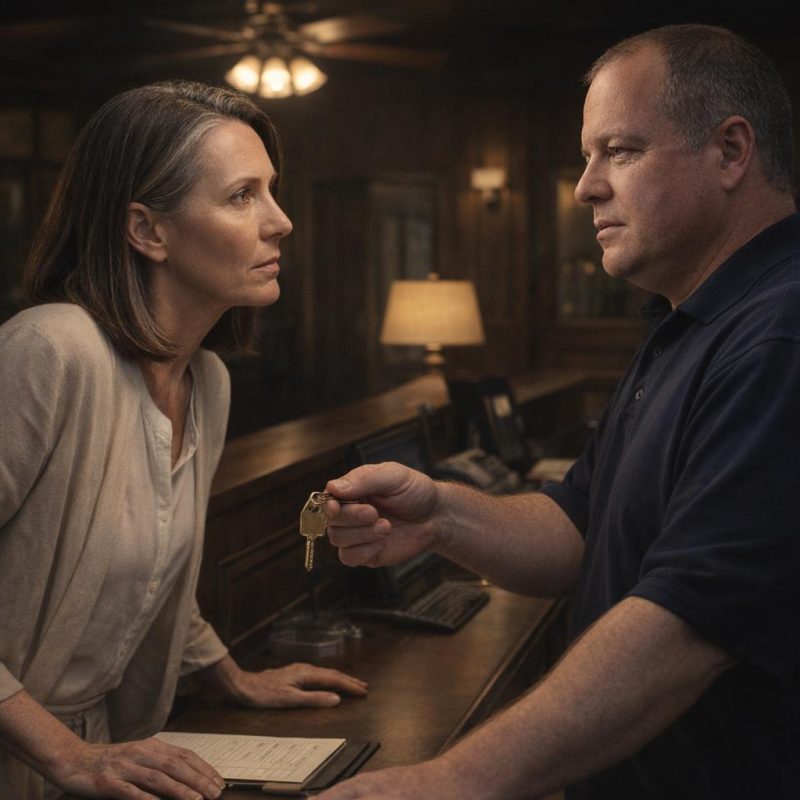 Image by RM AI
Meeting the Others
The dining room is smaller than I expected and the menu is a laminated single page, nothing like the multi-course tasting menus described in the prize package. I take a table near the window and order whatever seems safest and try not to compare it to what I was promised. A woman at the next table catches my eye and smiles — late sixties, silver curls, a warm open face — and introduces herself as Patricia. She asks if I'm here for the vacation contest too, and when I say yes she laughs a little and gestures at the room like, well, here we are. She invites me to join her and I do, grateful for the company. A few minutes later a third woman approaches — Linda, she says, early sixties, sharp blazer even in this heat, a measured way of speaking that makes me think corporate background. She sits down and within ten minutes the three of us have our phones out, comparing our prize notification emails side by side. The language is identical. Not similar — identical, word for word, the same paragraph breaks, the same exclamation point after "Congratulations." We all entered different sweepstakes, or thought we did. We all received the same follow-up call with the same professional tone. We all have the same confusion about the transfer that never came and the resort that looks nothing like the photographs. Patricia talks easily and laughs at the right moments. Linda is quieter, more precise, asking questions rather than sharing. I listen to both of them and think about the emails lined up on our three screens, and something about the sameness of it all sits in my chest without quite resolving.
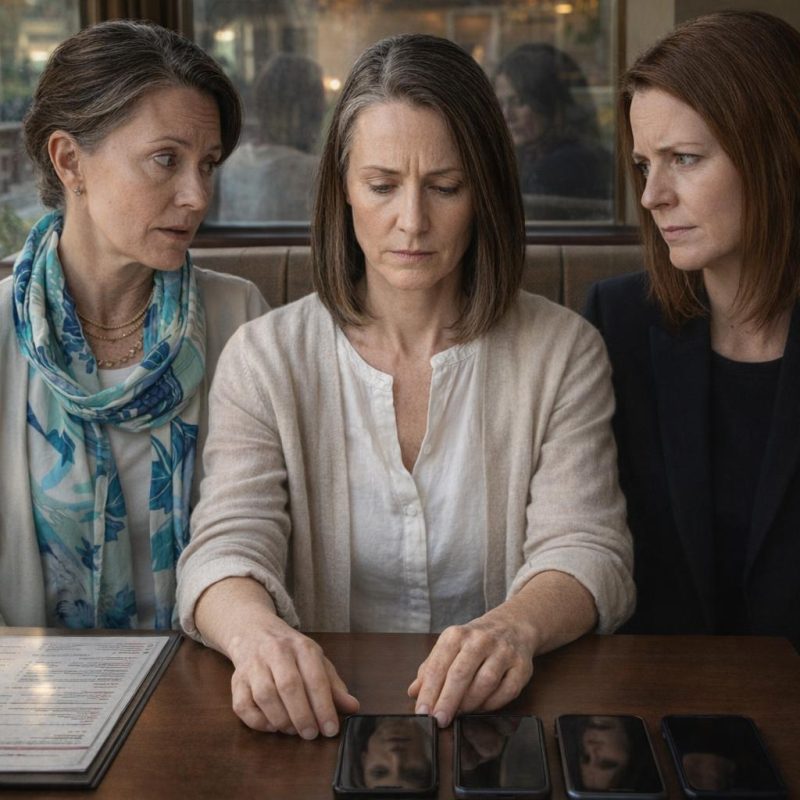 Image by RM AI
Shared Disappointments
By the next morning there are six of us gathered in the small common area near the lobby — all contest winners, all with the same story. Missing transfers, mismatched accommodations, vague answers from Marcus. Patricia takes an informal lead, suggesting we pool what we know and figure out our options. Linda mentions she spent an hour the night before trying to find the travel company online and kept hitting dead ends — a website that exists but has no reviews, no social media presence, a registered address that maps to a mail forwarding service. Everyone nods like that matches something they'd already half-suspected. I share what Marcus told me about the renovations and the room assignments and a few people groan in recognition. Eleanor is there too — she arrived sometime the previous evening, older than the rest of us, maybe seventy, slight and careful in the way she moves, sitting at the edge of the group and listening more than she speaks. I notice her watching people's faces when they talk, not in a rude way, just attentive, like she's filing things away. Patricia is the one who brings up the idea of demanding formal compensation or leaving early, and most people seem to agree in principle, though no one has figured out the logistics yet. Then one of the other women — not Eleanor, someone I haven't spoken to much — mentions almost offhandedly that she received a note slipped under her door, something about scheduling a private meeting with resort management.
 Image by RM AI
Eleanor's Warning
I catch Eleanor's eye across the common area and she gives me a small, deliberate look — not a smile exactly, more like an acknowledgment — and then she gets up and walks toward the side door that leads to the garden path. I follow her, not sure why, just something in that look that felt like an invitation. Outside, the air is thick and the path is shaded by overgrown hedges. Eleanor stops near a stone bench and glances back toward the building before she speaks. She says it quietly, almost under her breath: something is wrong here, not just the accommodations, not just the missing transfers. She tells me not to trust the other guests and not to trust the staff. I ask her what she means, what specifically she's seen or heard, and she shakes her head. She says she's been asking questions since she arrived and she doesn't like where the answers are pointing. I ask her what questions, what answers. She says she's arranged a car for tomorrow morning and she's leaving as soon as it arrives. I tell her she's scaring me a little and she looks at me with those careful, worried eyes and says that's probably not the worst thing. I start to ask her one more time — what does she actually know, what should I be watching for — but she's already turning away, moving back down the path toward the far end of the garden, and she walks away without another word.
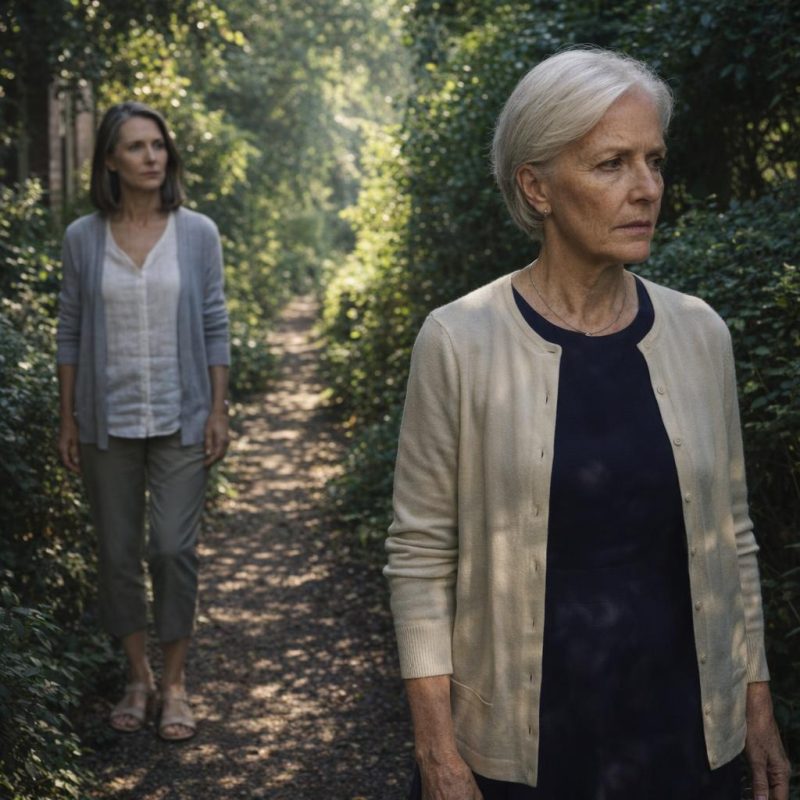 Image by RM AI
The First Upgrades
The morning starts quietly enough — coffee in the common area, a few guests drifting in and out — but by nine o'clock there's a noticeable cluster forming near the front desk. I watch from my chair as Marcus appears with a clipboard and a stack of key cards, looking more purposeful than I've seen him since I arrived. He calls names one at a time, and each person who steps forward gets a new key and a brief, low explanation I can't quite hear from where I'm sitting. What I can see is their faces — surprise, then pleasure, then something almost like relief. A staff member appears almost immediately to escort the selected guests toward the far end of the property. I follow at a distance and watch through the iron gate as they're led down a path toward a cluster of private villas — low white buildings with terracotta roofs and lush gardens, nothing like the main building where the rest of us are staying. Linda appears beside me, arms crossed, watching the same thing. She gives me a look that says she has no more answers than I do. I drift back to the front desk and ask Marcus how the upgrades are being assigned, but he just smiles and says it's based on availability. He steps away to take a call, leaving his clipboard on the counter. I glance down at it, and there it is — Patricia's name, circled in red.
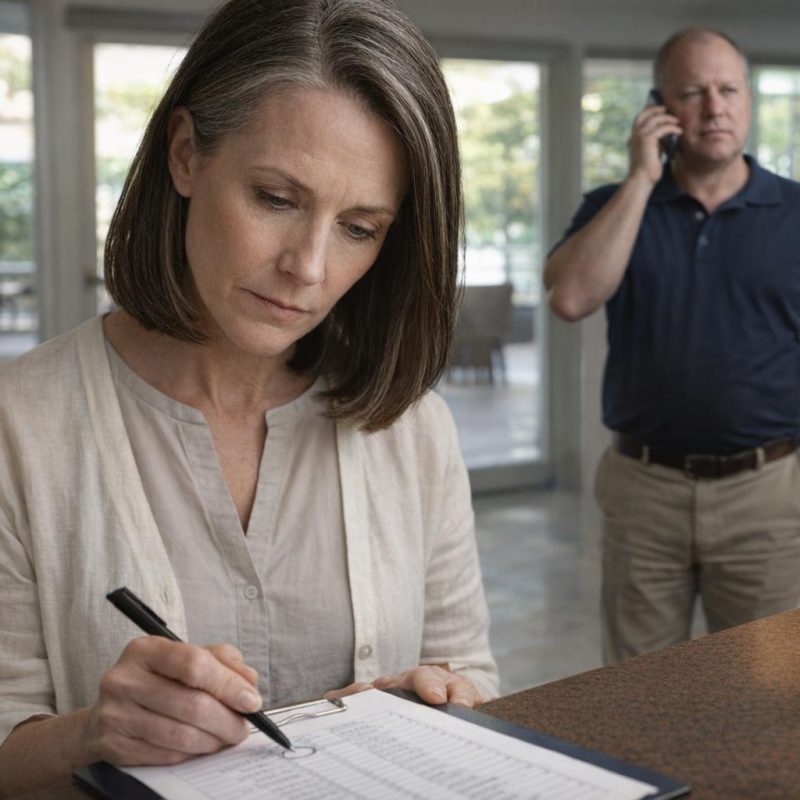 Image by RM AI
Building Friendships
Patricia doesn't disappear behind that gate and forget about the rest of us. She's easy to be around — warm in that unhurried way that some people just are, the kind of warmth you can't fake for very long. We end up talking for hours. She tells me about her husband, gone three years now, and how the first year she barely left the house. I tell her about the divorce, about signing papers on a Tuesday in February and driving home alone to a house that suddenly felt like it belonged to someone else. She nods like she knows exactly what that particular silence sounds like. Linda joins us late in the afternoon, pulling a chair into the shade, and she's different here than she was inside — less guarded, more willing to laugh. She spent thirty years in corporate finance and retired eight months ago and still doesn't quite know what to do with herself on a Tuesday. We order drinks we didn't really need and stay until the light goes gold and the air cools just enough to feel like a gift. It's strange, finding this kind of easy company in a place that's been making me uneasy since I arrived. But sitting there between the two of them, listening to Patricia laugh at something Linda said, the unease goes quiet for a little while, and the evening settles around us like something almost ordinary.
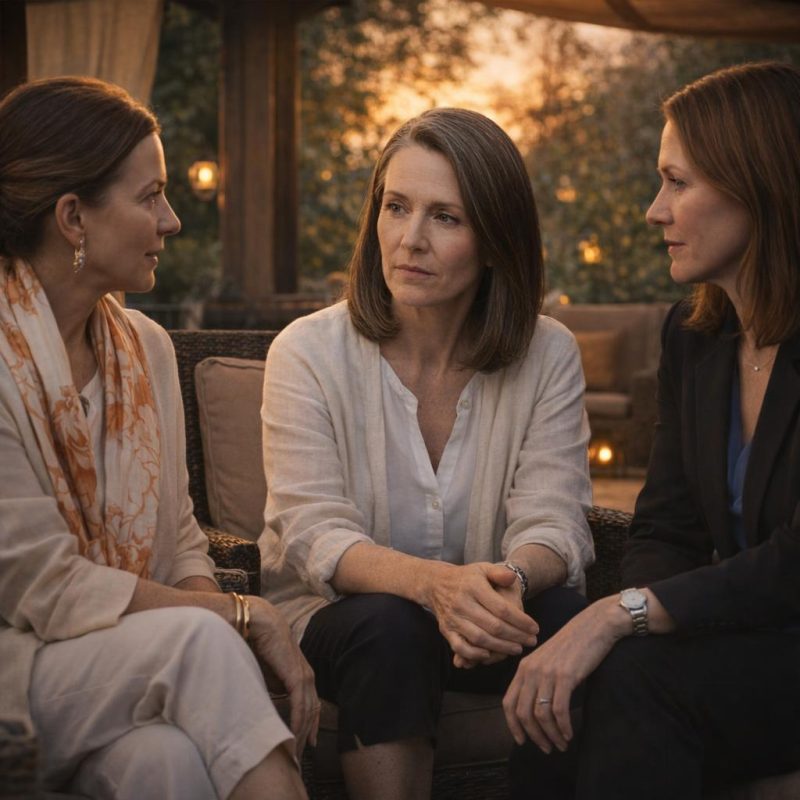 Image by RM AI
Eleanor Disappears
Eleanor isn't at breakfast. None of the other guests have seen her. I find Marcus near the reception desk and ask if he knows where she is, and he tells me, almost too casually, that Eleanor checked out during the night. I ask him to say that again. He does. I ask why she would leave in the middle of the night without telling anyone, and he says she seemed unhappy with the accommodations and wanted to get home. I ask if she left a number, an email, anything, and he shakes his head and says guest information is private. I stand there for a moment trying to decide if I'm overreacting. Then I walk down the corridor toward the room Eleanor had been in. The door is propped open. A housekeeper is already inside, stripping the bed, moving with the brisk efficiency of someone who has done this many times. The nightstand is bare. The small chair by the window where Eleanor had left her cardigan the one time I'd glanced in is empty. I think about what she said to me in the garden — that she'd arranged a car, that she was leaving in the morning, that being scared wasn't the worst thing. She'd said morning. Not the middle of the night. The stripped bed and the bare walls sat there in the afternoon light, saying nothing back.
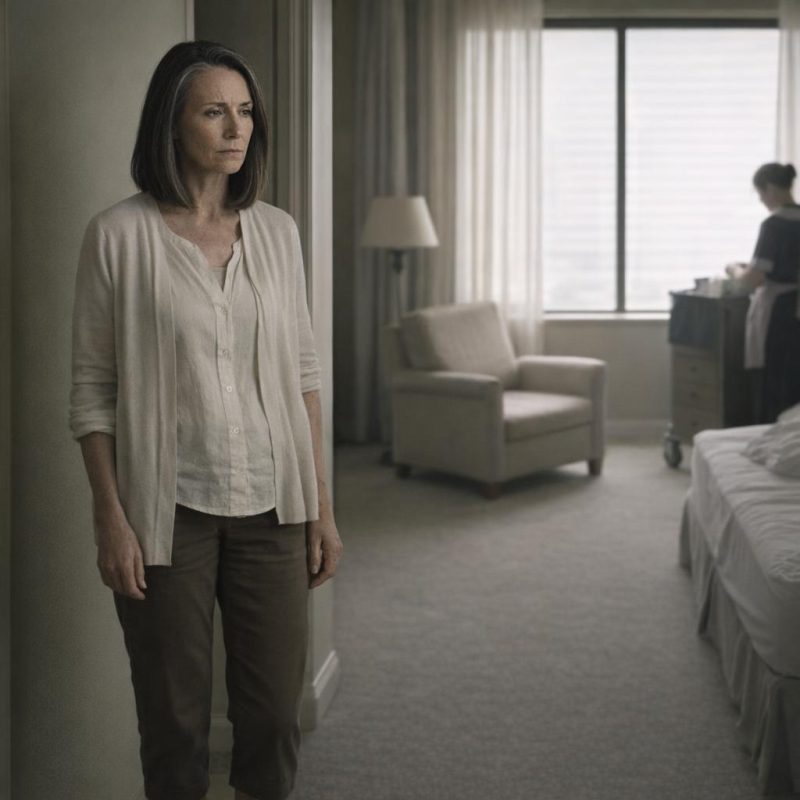 Image by RM AI
More Vanishing Guests
It isn't just Eleanor. I start paying attention over the next two days, and the numbers don't add up. The man who'd been at my dinner table the first night — the one who'd talked about his late wife and his garden — is gone. So is the couple from the second floor, and the quiet woman who always had a book. Patricia mentions over breakfast that Linda had a private meeting with Marcus yesterday afternoon, called in by the front desk with a note slipped under her door. I hadn't thought much of it at the time. After breakfast I walk down to Linda's room and knock. Nothing. I try the handle out of habit and the door swings open — unlocked, already cleared out. The closet is empty. The bathroom counter is bare. Her suitcase, her books, the reading glasses she'd left on the nightstand the last time I'd stopped by — all of it gone. I find Marcus in the corridor and ask him directly what happened to Linda. He says she completed her stay and checked out. I tell him Linda told me she'd booked two full weeks and we were only on day six. He says guest schedules sometimes change. I go to Linda's room one more time, just to be sure, and find it already made up for the next guest, every trace of her erased.
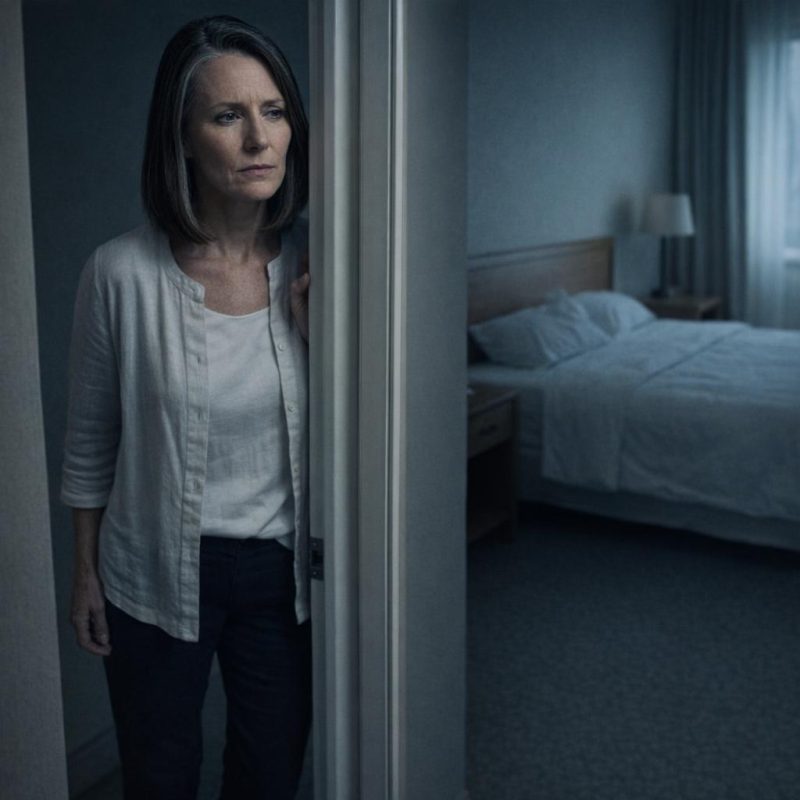 Image by RM AI
The Common Thread
Patricia and I find a corner table after lunch and I open my notebook. I've been writing things down since Eleanor left — names, dates, the order people disappeared — and looking at it all together feels different than holding it loosely in my head. I tell Patricia that Eleanor was recently widowed, that she'd mentioned it the first day. Patricia nods slowly and says Linda had just retired — thirty years at the same firm, and then suddenly nothing. I write that down. I went through my divorce less than a year ago. Patricia lost her husband three years back and has been rebuilding ever since. Every single one of them had been through something that turned their life sideways. Patricia says it's probably just coincidence — that people going through transitions are maybe more likely to enter contests, more likely to want an escape — and she doesn't sound entirely convinced of that even as she says it. I write the word transitions at the top of the page and underline it twice. I don't know what it means yet. I just know the list keeps growing, and every name on it belongs to someone who was standing at some kind of crossroads when they arrived.
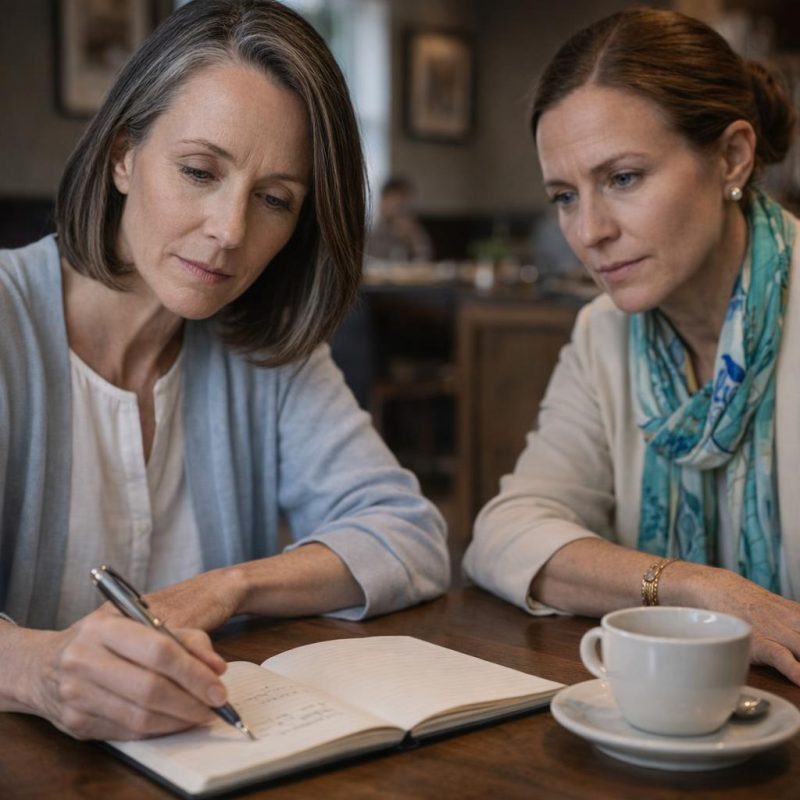 Image by RM AI
Marcus Refuses to Answer
I knock on Marcus's office door mid-morning and ask if I can have a few minutes. He lets me in but stays standing, which tells me something. I ask him directly: who organized the contest? He says he only manages the property and that marketing is handled elsewhere. I ask where elsewhere is, what company, what contact. He says corporate headquarters handles all of that and he doesn't have a number to give me. I ask about the prize notification — the email I received, the company name on it — and he says he wouldn't have visibility into that. I tell him that six guests I spoke with personally have left without any warning or goodbye, and I ask him to explain that. He says guest departures are voluntary and private and he isn't able to discuss them. I ask to see any documentation about the contest — a promotional flyer, a sponsor name, anything — and he says those records aren't something he can share. I thank him and leave. I stand in the corridor outside his closed door for a moment, going over the conversation in my head. He hadn't raised his voice. He hadn't been rude. He'd answered every question with something that sounded like an answer and wasn't, and the silence where real information should have been sat heavier than anything he'd actually said.
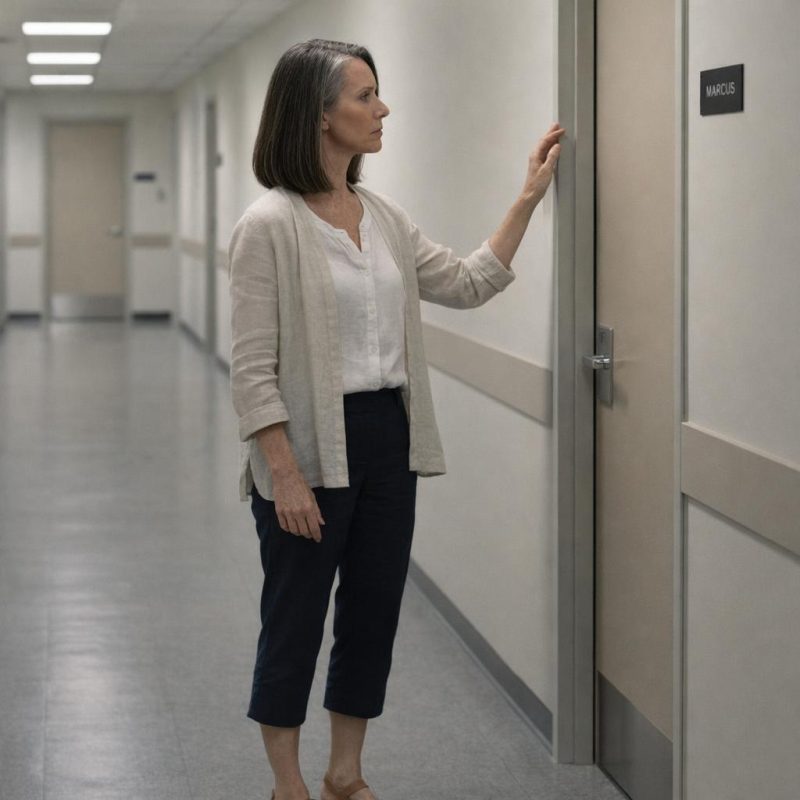 Image by RM AI
Daniel Arrives
I'm in the garden with my notebook when he sits down — not at my table exactly, but close enough that it's clearly intentional. He introduces himself as Daniel, says he arrived two days ago, and there's something in the way he says it that suggests he's been watching the place long enough to have opinions about it. He's silver-haired, easy in his manner, the kind of person who seems comfortable in most rooms. He asks if I've noticed anything strange about the resort. I'm careful. I say the accommodations aren't quite what was advertised. He smiles like that's the most diplomatic thing he's heard all week and says he's been getting the same runaround from staff every time he asks a direct question. I ask what kind of questions. He says he's been trying to find out who actually runs the travel company that sent the prize notifications — that the name on the email doesn't match anything he can find online. That gets my attention. I've been thinking the same thing and haven't said it out loud to anyone since Linda disappeared. We talk for a while, carefully at first, each of us offering a little and watching what the other does with it. He seemed unsettled — or at least that was how it looked to me. I hesitate for just a moment, thinking of Eleanor's warning, thinking of how little I actually know about this man. Then I tell him yes.
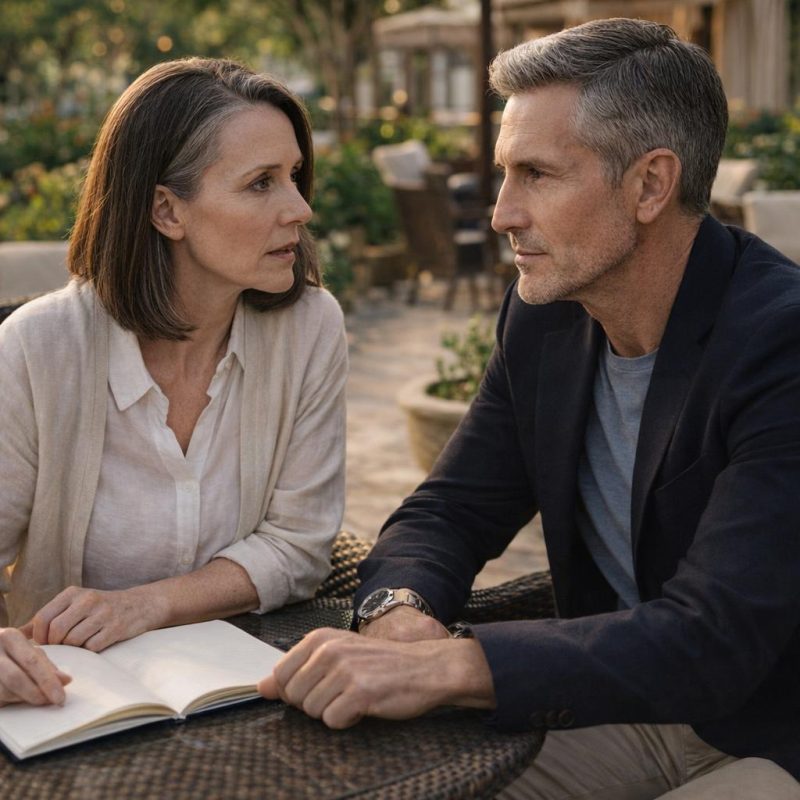 Image by RM AI
Comparing Notes
We meet the next morning in a quiet corner of the resort's reading room, laptops open, my notebook between us. Daniel pulls up the travel company's website first and I lean in to look. It's polished — clean fonts, stock photography of beaches and villas, a logo that looks like it cost money. But when you start clicking around there's almost nothing there: no staff page, no physical address, no reviews, no social media presence beyond a few generic posts. I search the company name separately and find almost nothing — a couple of forum mentions, no news coverage, no Better Business Bureau listing, nothing that suggests it's been operating long enough to have a reputation. Daniel opens a domain lookup tool and types in the website address. We both watch the results load. I search for any contest announcements or winner testimonials and come up empty. Daniel turns the laptop slightly so I can see the screen more clearly. The domain registration date sits at the top of the results: four months ago.
 Image by RM AI
The Barely-There Company
Marcus reappears at the edge of the reading room just as Daniel and I are wrapping up, and I give him a polite nod before turning back to the screen. We've moved past the website now and Daniel has pulled up the business registration records for the travel company. There's an address listed — a street in a quiet suburb about forty minutes outside the city. I type it into the map application and zoom in. It's a small two-story office building, the kind that houses insurance adjusters and accounting firms. Daniel picks up his phone and calls the building management number listed in the property directory. I watch his face while he talks. He asks whether a company by that name currently leases space there, and then whether they ever have. He listens for a moment, thanks the person, and hangs up. He shakes his head slowly. No such company. Not now, not ever. I go back to searching and find the business license records — or rather, I find almost nothing. A single filing, dated around the same time as the domain registration, with no subsequent activity. The phone number on the website routes to a generic voicemail service that doesn't even mention the company name. Someone spent real money building all of this — the website, the registration, the materials — and then left it completely hollow inside. I pull up the street view one more time: the building's lobby directory is visible through the glass doors, and there is no tenant, no floor, no suite that has ever belonged to the travel company — just empty slots where a name should be.
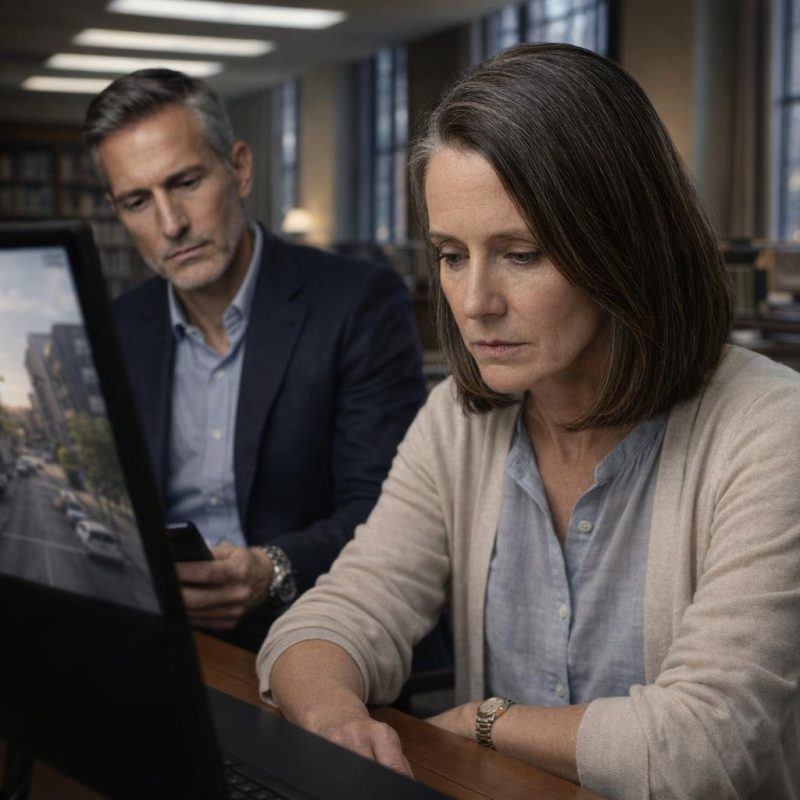 Image by RM AI
Being Watched
Back in my room after lunch, I notice it immediately — the small things that are just slightly wrong. My notebook is on the desk where I left it, but the cover is facing the other direction. The toiletries on the bathroom shelf have been nudged a few inches to the left. I stand in the middle of the room for a long moment, telling myself it's housekeeping, telling myself I'm imagining things. I text Daniel and he comes up within minutes, and when I show him what I mean he doesn't dismiss it. He walks the room carefully, checking the window latch, looking at the smoke detector. He doesn't find anything, but he doesn't tell me I'm wrong either. That afternoon, Marcus stops me near the lobby and mentions, almost in passing, that he hopes I enjoyed the garden that morning. I smile and say yes. It's only when I'm walking away that it hits me — I hadn't told Marcus I was in the garden. I hadn't told anyone. I find Daniel on the terrace and tell him quietly, and I watch something shift in his expression. He suggests we move our conversations off the resort property from now on. That evening I sit on my balcony and watch the last of the light leave the sky, and the feeling doesn't go away — the sense of being observed from somewhere I can't see, by someone I can't name.
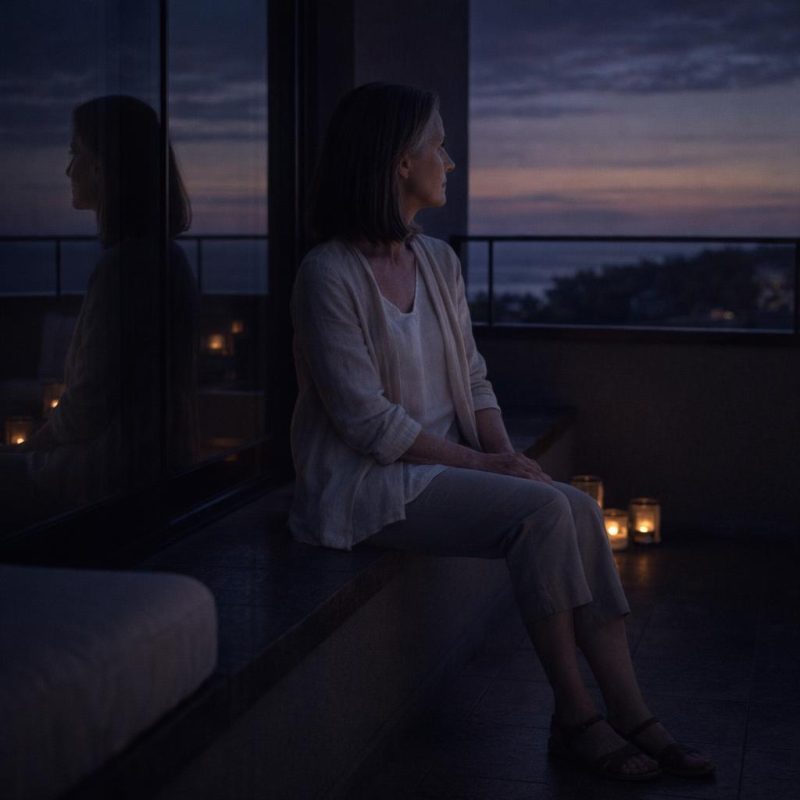 Image by RM AI
Hidden Files
The administrative corridor is quieter than I expected for mid-afternoon. Daniel had noticed the office door standing open earlier — a room that's always been locked when we've passed it before — and we slip inside quickly, pulling it nearly shut behind us. It's a plain room: a desk, a printer, two filing cabinets against the far wall. The cabinet drawers are labeled with letters of the alphabet, and when Daniel opens the D-through-G drawer I see the folders immediately, each one tabbed with a guest's name. He pulls several and we spread them across the desk. The contents stop me cold. Financial statements. Family contact information. Details about divorces, recent inheritances, medical histories. I recognize the name on one folder — a quiet woman who checked out three days ago, always sat alone at breakfast. Her file includes her bank account balances and a note about a custody dispute from two years back. Another folder holds photographs of someone's house, their car, their front yard. Daniel photographs page after page with his phone, working quickly and quietly. I keep reading, and the more I read the worse it gets — these aren't things you find with a basic internet search. Someone had dug deep into these people's lives, into the private corners they thought no one could reach. We hear footsteps in the corridor and Daniel closes the cabinet in one smooth motion. We're back in the hallway before the footsteps round the corner, and I press my back against the wall and try to breathe. The weight of what I'd just read settled over me and didn't lift.
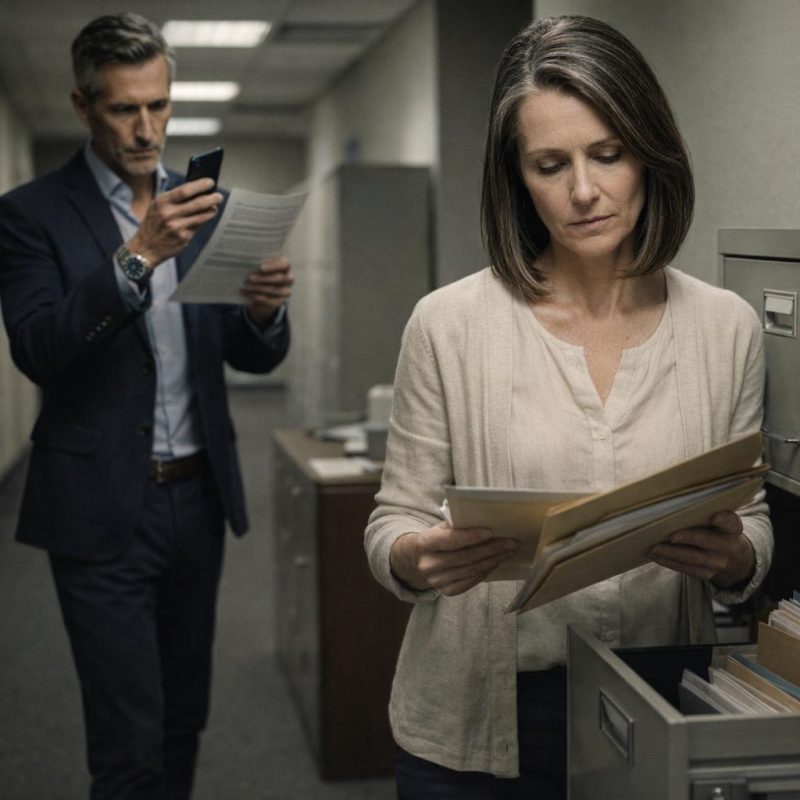 Image by RM AI
May's File
I wait until nearly ten o'clock, until the corridor is empty and the resort has gone quiet. The office door is closed but not locked — the same as this afternoon. I slip inside and go straight to the filing cabinet, to the M section. My folder is thicker than I expected. I open it on the desk and start reading, and my hands go very still. Copies of my divorce decree. Financial statements from the last three years. My children's home addresses and their employers. A summary of my mother's final illness and the hospice care she received. There are photographs — my house, my car, the front porch with the hanging basket I planted last spring. I turn the pages slowly, feeling something cold move through me. Then I find the medical records, and then a photograph of the inside of my bedroom closet, the shelves I thought only I had ever seen. I keep turning pages. Near the back of the folder, tucked between two printed documents, there is a photocopy of a handwritten letter — my handwriting, on the pale blue stationery I bought the year my mother got her diagnosis. I wrote that letter the night before she went into the hospital for the last time. I never sent it. I kept it in a wooden box on my nightstand, under a photograph and a dried flower from her garden. I stand there in that dim office holding the photocopy, and I cannot make sense of how it got here.
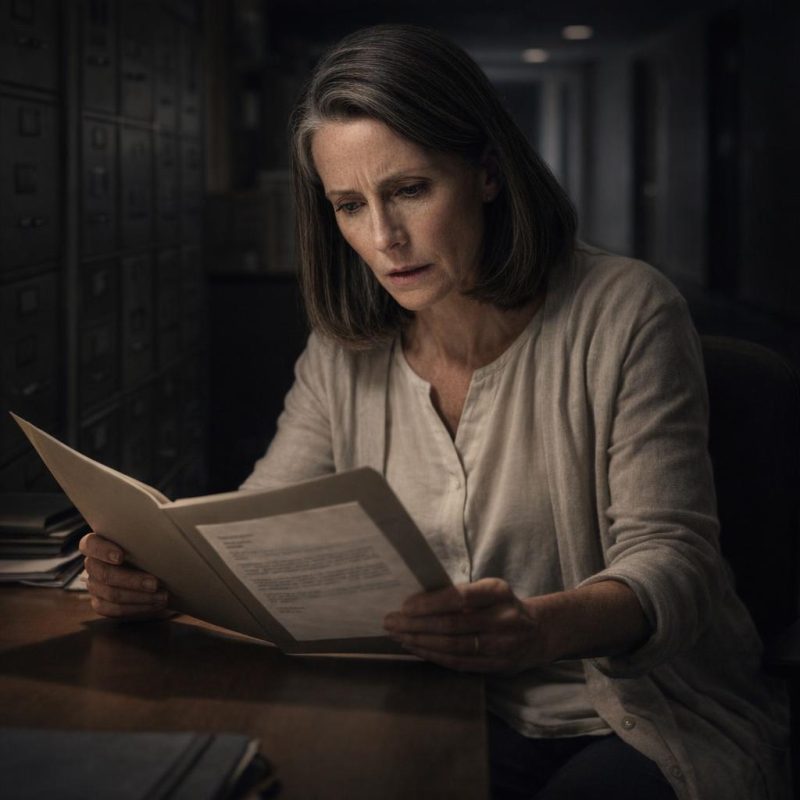 Image by RM AI
The Cost of Bringing Us Here
We find a small café about a mile from the resort, the kind of place with mismatched chairs and a chalkboard menu, and we take a corner table where no one is close enough to overhear. Daniel has his notebook out and I have the photographs he took on his phone pulled up on my screen. We start adding things up. Airfare for what looks like thirty or forty guests, some of them flying internationally — Daniel estimates that alone at somewhere between fifty and a hundred thousand dollars. The fake travel company: website design, business registration, printed materials, the voicemail service. The resort accommodation, even at whatever discounted rate they might be paying. And then the files. The background investigations, the surveillance, the physical access to people's homes — that kind of work doesn't come cheap. Private investigators, travel, time. Daniel taps his pen against the notebook and says quietly that we're probably looking at several hundred thousand dollars, minimum, and that's a conservative estimate. I wrap both hands around my coffee cup and stare at the table. I've been trying to think of this as a scam, as something with a recognizable shape and a familiar motive. But the numbers don't work for a scam. You don't spend this much to steal from people who don't have that much to steal. The scale of it sat there between us on that café table, and neither of us had an answer for what it meant.
 Image by RM AI
Private Information
Back in my room, I spread the photographs across the bed and go through them again, slower this time. I've been trying to stay analytical about it, trying to treat it like a puzzle rather than a violation, but that gets harder the longer I look. I zoom in on the photocopy of my letter and study it carefully. There's a small brown ring near the bottom right corner — a coffee stain I remember making the night I wrote it, when I set my mug down too close to the page. It's there in the photocopy. That means someone photographed the actual letter, the original, sitting in my wooden box on my nightstand. I go through the other images. A photograph of documents I kept in a shoebox on the top shelf of my bedroom closet — my mother's old letters, a copy of her will, things I hadn't touched in over a year. A photograph of the inside of my jewelry box, open, with my mother's ring visible in the small velvet tray. I remember last spring, maybe April, when I came home one afternoon and had the strangest feeling that something was different — a drawer not quite closed, a chair at a slightly wrong angle. I'd told myself it was the stress of the divorce making me jumpy, that I was seeing things that weren't there. I sit on the edge of the bed with the photographs around me, and the quiet of the room feels different now than it did this morning.
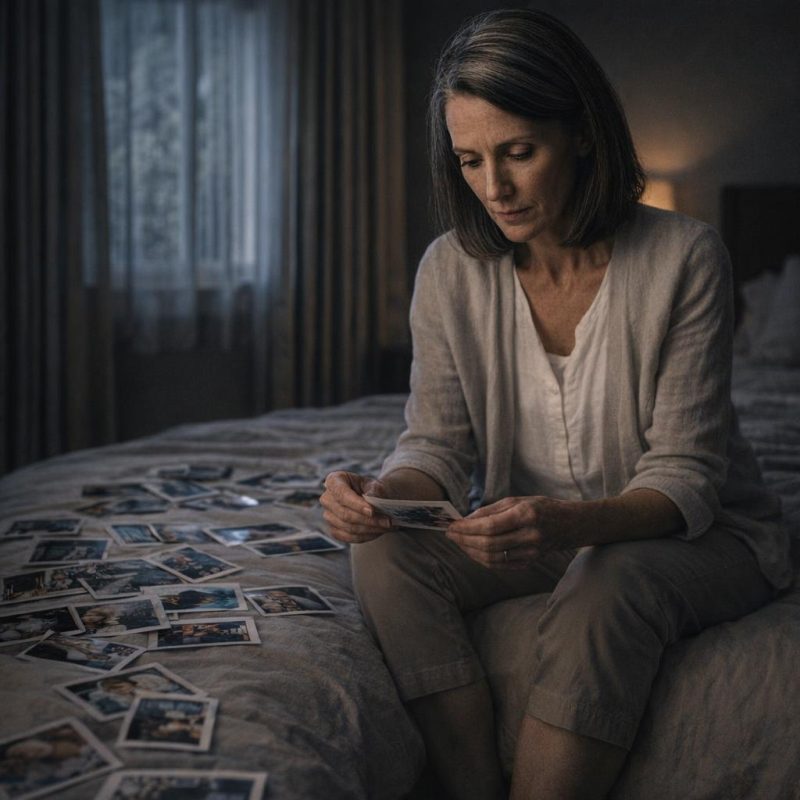 Image by RM AI
The Pattern in the Files
Daniel photographs more files late that night and we meet the next morning at the café, the images spread across both our phones. We go through a dozen folders together, reading carefully, comparing notes. The pattern is there once you know to look for it. Every single file has a section near the back labeled Personal Qualities Assessment — two or three paragraphs, written in a consistent style, describing the guest in terms I wouldn't expect to find in any kind of financial profile. Words like resilient. Compassionate. Adaptable. One file describes a man's response to losing his wife and how he'd continued to show up for his community afterward. Another describes a woman's decision to leave a stable career to care for an aging parent. Daniel points out that every file also notes a recent major life transition — a divorce, a bereavement, a retirement, a health crisis. Not as a vulnerability to exploit, as far as we can tell, but almost as a qualification. My own assessment is in there too, in the photographs Daniel took: notes about the divorce, about the years I spent caring for my mother, about how I'd handled both. I'm reading it and feeling something I can't quite name — not just anger, but something stranger than that. Then Daniel slides his phone across the table and points to an image near the bottom of one folder. It's a handwritten note on plain paper, separate from the printed assessment, and it lists what look like evaluation criteria: integrity, kindness, and strength through adversity.
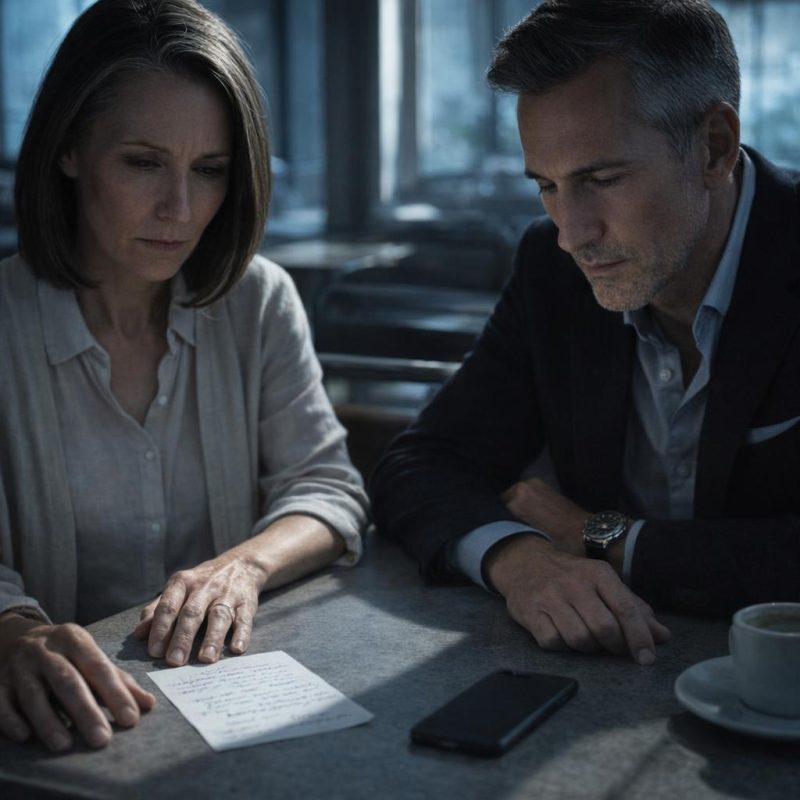 Image by RM AI
Not a Scam
I pace the length of my room for what feels like an hour, turning the evidence over in my mind. No one has asked me for money. Not once, not in any form — no processing fee, no upgrade charge, no request for banking details. I think back through every interaction since I arrived and I can't find a single moment where anyone reached for my wallet. I meet Daniel in the garden and say it out loud, and he nods before I finish the sentence. He's been thinking the same thing. He points out that the operation cost far more than they could realistically recover from guests like us — people in transition, people rebuilding, not people with vast fortunes. I suggest identity theft, but even as I say it I know it doesn't fit. Identity thieves don't write character assessments. They don't care whether you're compassionate or whether you showed integrity during a hard year. Daniel sits back and says maybe this is some kind of recruitment, and we both turn that word over for a moment. Recruitment for what? A social experiment, maybe. Some kind of study. But nothing we come up with accounts for the scale, the specificity, the sheer cost of it all. I tell him honestly that not knowing the purpose frightens me more than any straightforward scam would have. At least a scam has a shape you can recognize. Daniel is quiet for a moment, and then he looks at me and asks the question neither of us has thought to ask yet: who, exactly, are we all supposed to be worthy of?
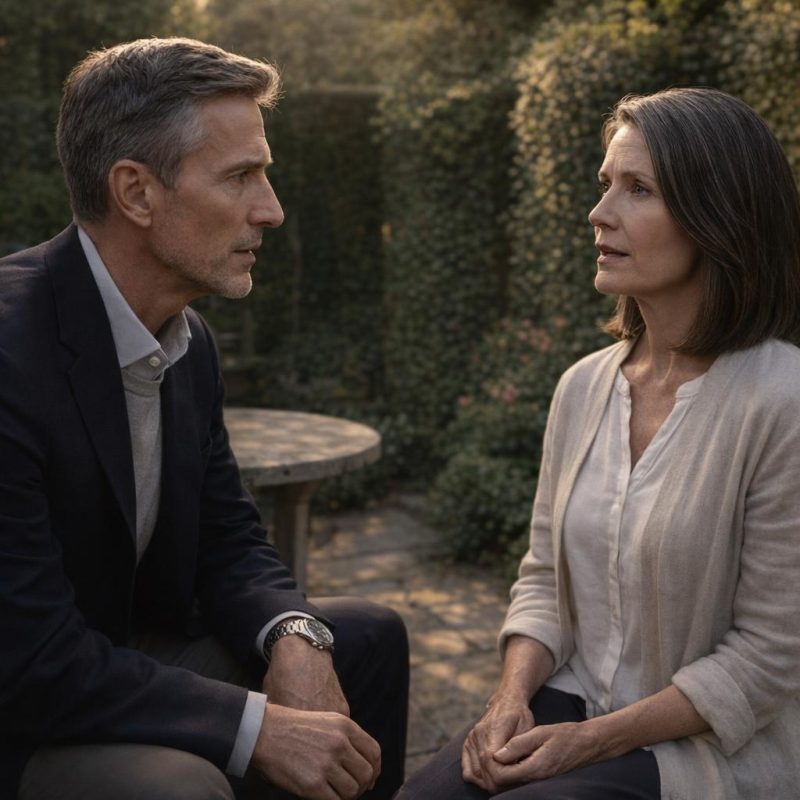 Image by RM AI
Someone Knows We Know
I get back to my room feeling unsettled, the conversation with Daniel still turning in my head. Something about the door feels different when I push it open — not wrong exactly, just slightly off, the way a room feels when someone else has been breathing in it. I stand in the doorway for a moment before stepping inside. My suitcase is sitting against the wall where I left it, but the handle is facing the wrong direction. I always leave the handle facing the wall. I tell myself I'm being paranoid, that I probably moved it myself without thinking, but my hands are already moving toward the bed. I crouch down and reach under the mattress, fingers searching the spot where I tucked the notebook three days ago — the spiral-bound one where I'd written everything, the camera locations, the questions about the character assessments, the timeline of strange moments, Daniel's theory about recruitment. My fingers find nothing but the flat surface of the box spring. I pull the mattress up further and check again. I get down on my knees and look. I check the nightstand, the wardrobe, under the bathroom sink. I go through every drawer twice. My notebook is gone.
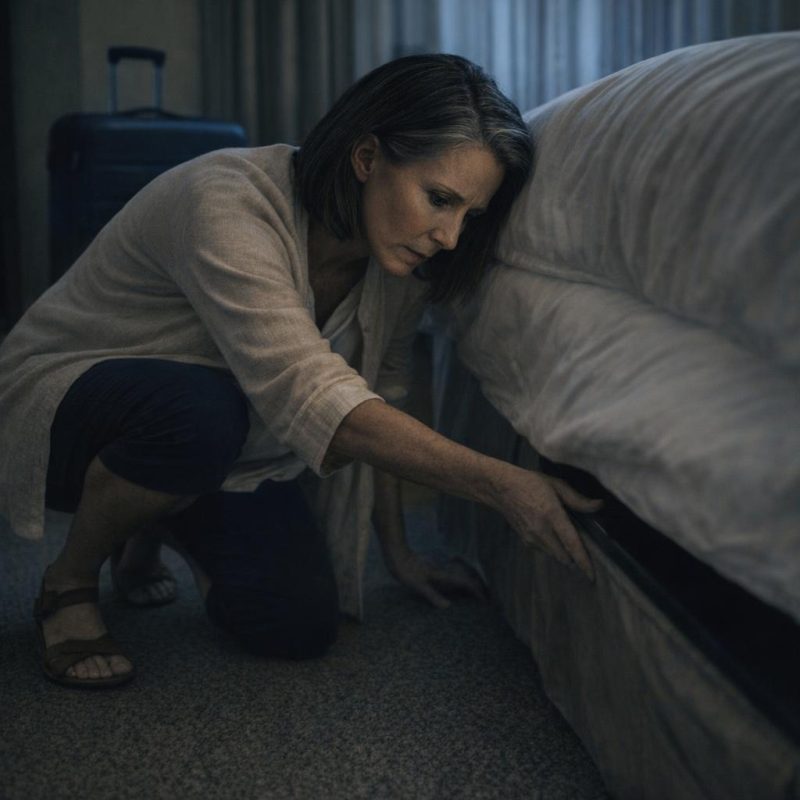 Image by RM AI
Searching for Answers Alone
I don't sleep well, and by early morning I'm already outside, moving along the resort's perimeter with my phone in my hand and my heart beating a little too fast. Fear is one thing, but sitting in that room waiting for something to happen feels worse. I start at the east garden and work my way around slowly, trying to look like someone enjoying a morning walk. It doesn't take long before I spot the first camera — tucked into the crook of a palm tree, angled toward the main path. I photograph it without stopping. Then another, mounted under the eave of the pool house, and a third hidden in a cluster of bougainvillea near the side gate. I count seven before I reach the back of the property. That's when I find the maintenance building — a low concrete structure set back from the landscaping, half-hidden by a row of hedges. The door has a keypad lock. I cup my hands against the window glass and peer inside: filing cabinets, a long table with computer monitors, stacks of binders. Fresh tire tracks cut through the soft ground behind it, wide enough for a van or a truck. I photograph those too, then step back and look at the building for a long moment. Whatever answers exist here, they're locked behind that door, and I'm standing outside alone with a phone full of photographs and no one to hand them to. The morning light is warm on my face, and none of it feels like a vacation anymore.
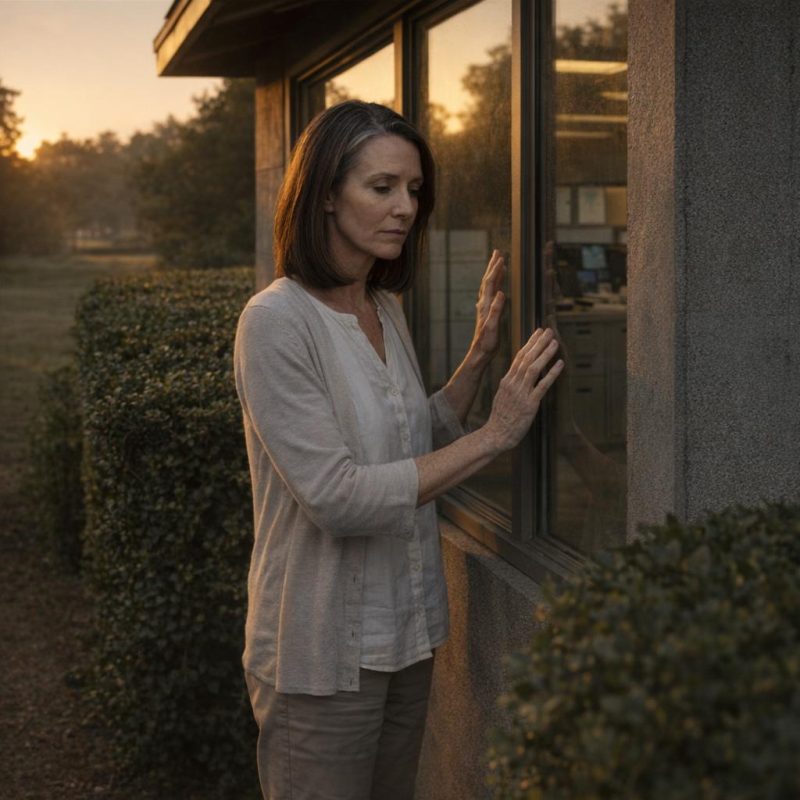 Image by RM AI
Daniel's Support
I'm sitting on the garden bench staring at nothing in particular when Daniel finds me. He takes one look at my face and sits down without being asked. I tell him about the notebook — all of it, the suitcase handle, the empty space under the mattress, the way the room felt when I walked in. He listens without interrupting, and when I finish he's quiet for a moment in a way that feels like he's actually thinking rather than just waiting to respond. He says we need to be more careful, that we shouldn't write anything down that we can't afford to lose. I tell him I'm frightened, and saying it out loud to another person makes it feel both more real and somehow more manageable. He admits he's scared too. We talk about leaving — whether we should just pack our bags and drive to the nearest town and call someone. But I keep thinking about Eleanor, about the other guests who might not have noticed what we've noticed, and I say that out loud. Daniel nods slowly and says he understands, that he feels the same pull. We agree to keep going but to be smarter about it, to share information verbally and keep nothing written. He puts his hand briefly over mine on the armrest, and I don't pull away. For the first time since the notebook disappeared, the tight knot in my chest loosens just slightly, and the garden feels a little less like a place I'm trapped in.
 Image by RM AI
Too Helpful
Daniel meets me after lunch with a folder of printed pages — property records, he says, pulled together with help from a contact who does real estate research. I flip through them and the detail is striking: ownership transfers going back fifteen years, shell company names, registered agents. I ask how his contact found all this so quickly and he gives a smooth answer about knowing the right databases, but something about the speed of it stays with me. Then he mentions a storage annex behind the east wing, describes it precisely — the corrugated metal roof, the padlocked side door — and I feel a small, cold shift in my chest, because I don't remember mentioning that building to him. I keep my expression neutral and let him keep talking. He gives me background on Marcus — employment history, a previous resort posting in another state — information that sounds specific but that I have no way to check. Then, almost in passing, he mentions he arrived three days ago. I look up from the papers. I have a clear memory of seeing him at the breakfast buffet on my fourth morning here, which would make it four days, not three. I don't correct him. I just nod and look back down at the pages, but my pulse is doing something I can't quite settle.
 Image by RM AI
Checking Daniel's Story
I wait until Daniel heads to his room after dinner, then I walk to the front desk with what I hope looks like a casual question about checkout procedures. Marcus is behind the counter, looking as harried as ever, his eyes flicking to his phone before he registers me. I ask, as offhandedly as I can manage, when my friend Daniel checked in — I want to send him a card, I say, and I've lost track of the days. Marcus types something and glances at the screen. Six days ago, he says. Not three. I keep my face still and ask whether Daniel won the same contest I did, just making conversation. Marcus looks up with a small frown and says Daniel made a regular reservation. I ask if I can glance at the guest registry to confirm the checkout date for my own booking, and Marcus turns the monitor slightly. I don't need long. Daniel's reservation was made weeks before the contest notification ever reached me — I can see the booking date clearly from where I'm standing. I thank Marcus and walk back toward my room at a pace I hope looks unhurried. My stomach is doing something unpleasant. The screen had said six days, not three. The screen had said a regular reservation, booked weeks in advance. I turn the numbers over in my mind and can't find an explanation that settles.
 Image by RM AI
Victoria Hale
The administrative office is empty during the late-afternoon staff changeover — I've noticed the pattern over the past two days. I slip inside and move quickly to the filing cabinet nearest the window. Most of the folders are operational: supply orders, maintenance logs, linen inventory. Then I find one labeled Foundation Correspondence, thicker than the others, held shut with a rubber band. Inside are letters on heavy cream paper, formal in tone, referencing property management directives and guest services protocols. The name at the top of each letter is the same: Victoria Hale. I photograph every page, hands steady despite the sound of my own breathing. Back in my room I search the name online. The results come back immediately — obituaries, three of them, all from roughly three months ago. Victoria Hale, seventy-five, described in each as a private businesswoman and philanthropist with extensive holdings across several states. No surviving children listed. No close family mentioned. One obituary notes a private charitable foundation established in her name. I read the entries twice, then set my phone face-down on the bed and sit with what I've found. Somewhere behind the contest, behind the character assessments and the hidden cameras and the locked maintenance building, there is a name. Victoria Hale. And she has been dead for three months.
 Image by RM AI
Mysterious Circumstances
I spend most of the next morning going deeper. The three obituaries I found last night don't quite agree with each other — one says Victoria died at home, another places her in a hospital, and a third is vague enough that it says nothing useful at all. I search for news coverage and find a brief item from a regional outlet, published about two weeks after her death, with a headline that asks careful questions about the circumstances. I click through and read it twice before the page returns a 404 error. I try the outlet's archive directly — nothing. Then I find a cached version through a search workaround, and the article is still there, partial but readable: it mentions that local authorities had opened a preliminary inquiry, that certain aspects of the timeline were being reviewed. No follow-up piece appears anywhere. I search for thirty minutes across a dozen publications and find nothing after that first cached fragment — no resolution, no closure, no statement from any official source. The inquiry, if it happened, seems to have ended without a public record. I sit back and look at the ceiling of my room, the phone warm in my hand. Victoria Hale built something large enough to run this resort, fund a foundation, and select strangers for reasons nobody has explained to me. And the questions around how she died seem to have gone somewhere quiet and stayed there.
 Image by RM AI
The Foundation
I find Daniel by the pool in the late afternoon and sit down across from him, my doubts about his arrival date still sitting unspoken between us like something I haven't decided what to do with yet. I tell him about Victoria Hale — the foundation correspondence, the obituaries, the cached article with its unanswered questions. He listens with the focused attention he always brings, and I watch his face carefully without letting him see me doing it. He asks good questions, precise ones, and then he opens his laptop and starts pulling foundation records. It takes him less than ten minutes to find the incorporation documents. He turns the screen toward me. The foundation was established two years ago with an initial endowment of three hundred million dollars. I read the number twice. Three hundred million. The stated purpose, printed in plain legal language in the articles of incorporation, is supporting women in transition — financial independence, life rebuilding, second chances. I sit back in my chair and look out at the water. I don't mention to Daniel what Marcus told me at the front desk. I keep that tucked away, quiet, while I try to absorb what's in front of me. Three hundred million dollars, a dead woman, a resort full of carefully selected strangers, and a purpose that sounds, uncomfortably, like a description of my own life for the past year. The late sun sits low over the water, and the weight of it all settles around me like something I can't yet name.
 Image by RM AI
Searching for Heirs
I take my laptop back to my room after dinner and sit cross-legged on the bed with the curtains drawn, searching for anything I can find about Victoria Hale beyond the foundation documents. The foundation records are clean and formal — they tell me what she built, not who she was. So I go sideways. Forums. Genealogy boards. Social media threads that have been sitting dormant for years. It takes me almost an hour before I find something useful: a thread on a genealogy website, posted about three years ago, from someone asking if anyone had information about a Victoria Hale from Connecticut. The original poster says Victoria had hired private investigators — multiple firms, over several years — and had spent what the poster describes as a significant amount of money trying to locate a family member. The replies are sparse. One person suggests Victoria was searching for a lost relative, someone she had been separated from long ago. Another poster says they had heard something similar but couldn't confirm it. The thread just stops after that, no resolution, no follow-up, no answer. I read it three times. I think about the foundation's stated purpose — women in transition, second chances, life rebuilding — and I think about the resort full of carefully selected strangers, and I sit with the quiet, unsettling feeling that Victoria Hale spent years looking for someone she never found.
 Image by RM AI
No Children
I spend the next morning in the business center, working through public records databases with the kind of focused patience I used to bring to grant applications back when I was still working. Birth records, marriage records, property filings — I build a picture of Victoria Hale piece by piece, and the picture that emerges is stark in its solitude. No marriage certificate. No birth records listing her as a mother. She was an only child, according to the records I can access, and she died without a spouse or children on any official document I can find. She owned four properties across three states, all held in her name alone. I sit back and stare at the screen. A woman with three hundred million dollars and no one to leave it to. That thought sits heavy. Then I go deeper, following a thread into older legal filings, and I find a reference buried in a property transfer document from decades ago — a footnote citing related proceedings in family court. The language is careful and indirect, but it references a sealed adoption record connected to Victoria's name. I try every search path I can think of to access the file itself, but it's locked behind a court order with no public access. I stare at the sealed record notation on my screen, the cursor blinking, and the question of who Victoria Hale was looking for takes on a shape I hadn't expected.
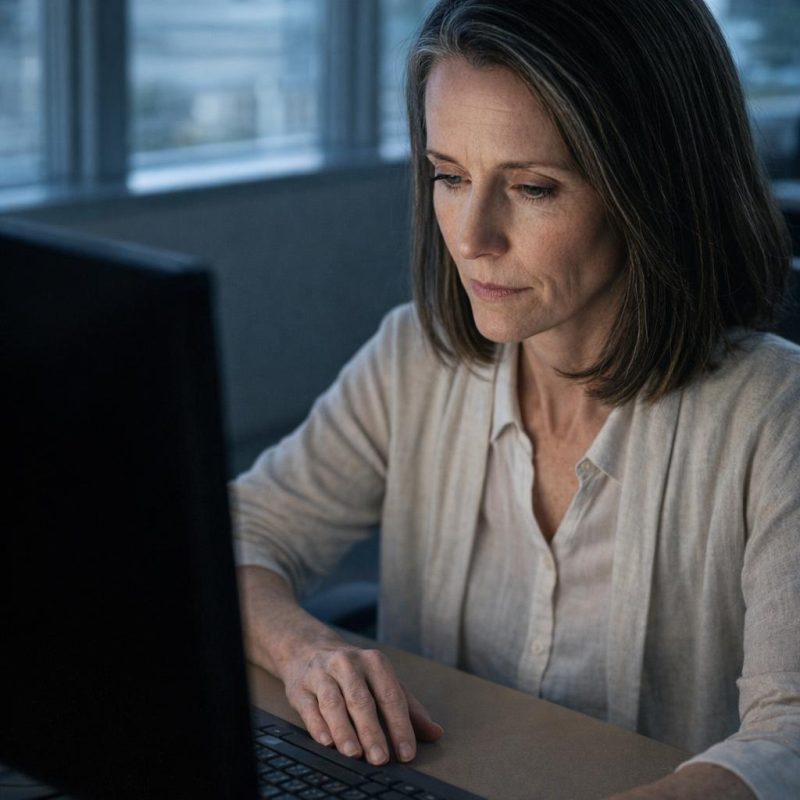 Image by RM AI
Daniel's Lies Exposed
I tell myself I'm just going back to the administrative wing to check the foundation filing dates, but I think some part of me is looking for something I haven't named yet. The office is quiet in the early afternoon, the door unlocked the way it sometimes is when Marcus is elsewhere on the property. I move quickly, scanning the shelves, and I find a manila folder tucked between two binders that looks newer than the rest. Inside are printed emails — internal communications about the resort's preparation for the contest winners' arrival. Most of it is logistics: room assignments, dietary notes, activity schedules. I'm about to put it back when a name stops me. One email, dated two weeks before I ever received my prize notification, references coordinating with an observer named Daniel. I read the sentence again. Observer. The email discusses his role in monitoring how guests settle in and interact with the property and with each other. A second message, further down in the stack, refers to him as engaged by the foundation for the duration of the guests' stay. My hands aren't steady when I photograph both pages with my phone. I stand there in the quiet office, the folder still open in front of me, and the word observer sits in my chest like something I can't swallow back down.
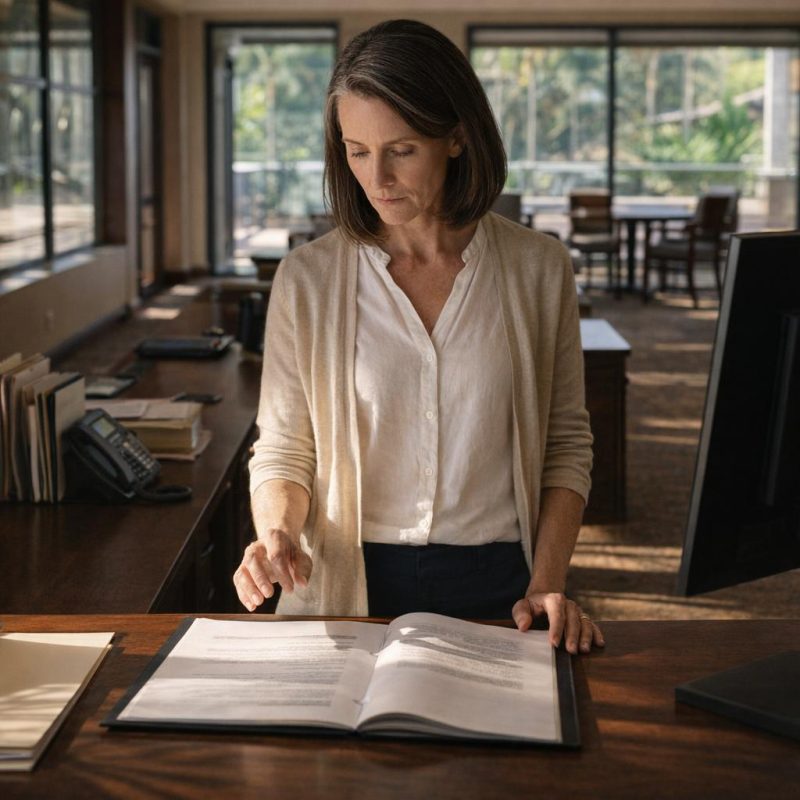 Image by RM AI
Confronting Daniel
I find Daniel in the garden near the far hedge, and I don't give myself time to lose my nerve. I hold my phone out and let him see the photograph of the email. His face goes still in a way I haven't seen before — not surprised exactly, more like a man who has been waiting for a door to open and isn't sure what's on the other side of it. I ask him directly: was he hired to watch us. He looks at the ground for a moment, then back at me, and he says yes. He says he was contacted by someone connected to the foundation and asked to observe how the guests interacted and adapted during their stay. I ask what that means, what he was supposed to be looking for, and he says he was given general parameters but not a full explanation of the purpose. I ask who hired him. He says he can't tell me that. I ask if anything he told me was real. He's quiet for a long moment, and then he says he does care what happens to me — that whatever his role was at the start, he's saying it now. I don't know what to do with that. I don't know if I believe him, and I don't know if it matters, and before I can decide what to ask next, he says there are things happening at this resort that he doesn't fully understand either.
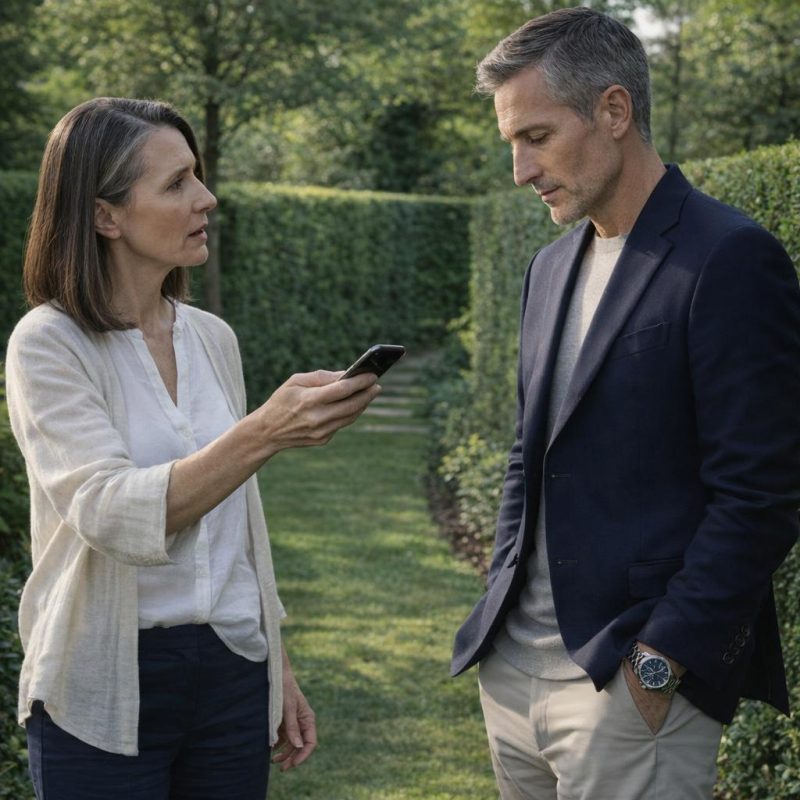 Image by RM AI
Daniel's Disappearance
I wake up the next morning with the conversation still sitting unresolved in my chest and go straight to Daniel's room. I knock twice, then a third time. Nothing. I go down to the front desk and find Marcus behind the computer, his eyes already sliding sideways before I finish asking the question. He checks the screen and tells me Daniel checked out early this morning, just after six. I ask if he left a message for me. Marcus shakes his head without quite meeting my eyes. I go up to Daniel's floor anyway and find the door propped open, the room already turned over — fresh linens, surfaces wiped, no trace of anyone having been there at all. I stand in the doorway for a moment. The room smells like cleaning solution and nothing else. I think about the conversation in the garden, the words he said about caring what happened to me, and I think about how easily a person can say the right thing and still walk out a door before sunrise. I don't know if he left because he chose to or because someone told him to, and I'm not sure the distinction changes how it feels. I walk back to my own room alone, and the quiet of the hallway settles around me like something I've been carrying for a long time without noticing.
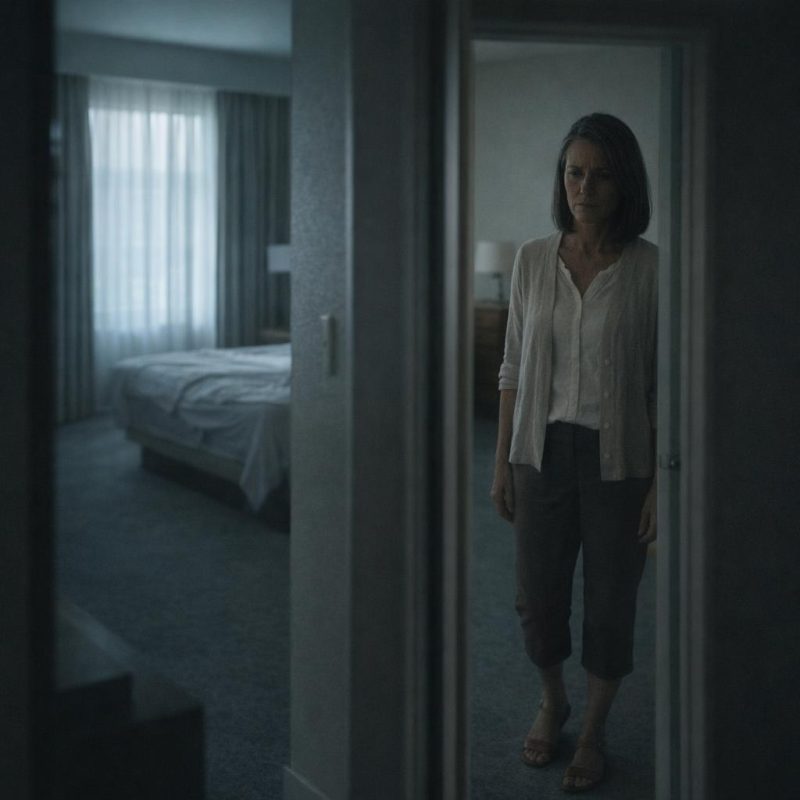 Image by RM AI
Clues Left Behind
I sit on the edge of my bed for a while, not doing much of anything, and then I notice the envelope on the floor just inside the door. It must have been slipped under while I was downstairs. My name is written on the front in handwriting I recognize. Inside is a single folded page. Daniel's note is short — maybe eight lines — and it starts with an apology that I read twice before I move on. He tells me to look more carefully at the foundation files, that there are documents I haven't found yet. He writes that the upgraded villas are not what they appear to be, that I should pay attention to what happens in them and when. He says to trust my instincts about the other guests, that not everyone here is what they seem. The last line is a plain warning: be careful. I fold the note and hold it in my hands. He must have written this before he left, slipped it under my door in the dark while I was still asleep. I don't know what to make of a man who watches you for someone else and then leaves you a warning on his way out the door. I sit there with the note in my lap, the morning light coming in flat and pale through the curtains, and the weight of it — the apology, the warning, the fact that he thought to leave it at all — settles over me without lifting.
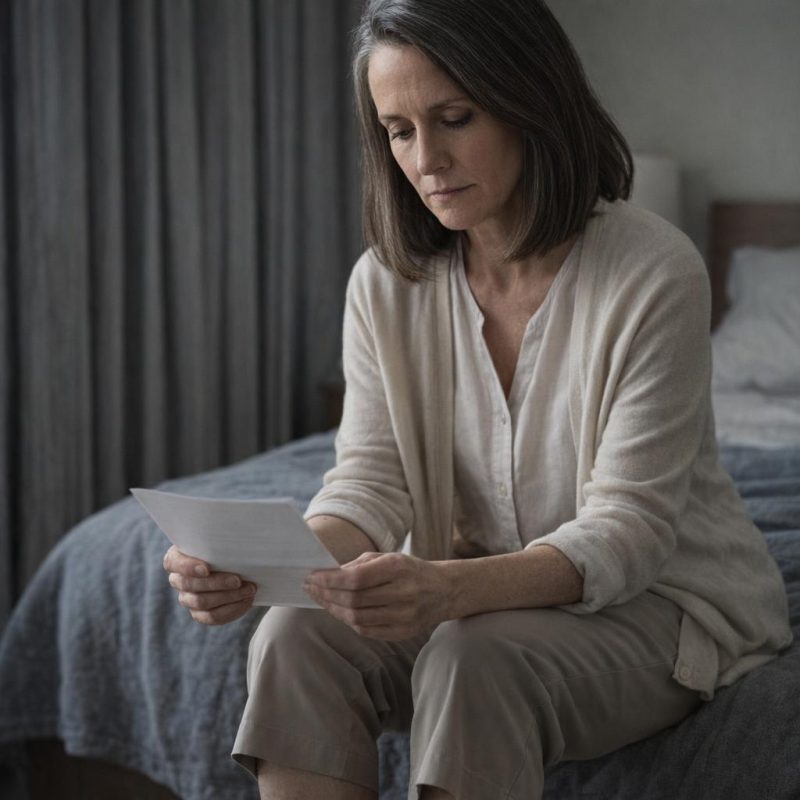 Image by RM AI
The Villas Are Interview Rooms
I wait until the evening staff rotation, when the path behind the villas is quiet, and I follow the route I mapped out that afternoon. The gated villa area sits apart from the main resort, separated by a low hedge and a gravel path that curves away from the pool lights. I move slowly, staying close to the tree line. Most of the villas are dark, but one has a warm light coming through a gap in the curtains. I stop at the edge of the window and look in. Patricia is sitting in an upholstered chair across a low table from a woman I've never seen before — early fifties, dark blazer, a leather folder open across her knees. Patricia is talking, gesturing with one hand, and the woman is writing something down without looking up. Then the woman slides a document across the table and Patricia leans forward to read it. It looks nothing like a vacation. It looks like a job interview, or something close to it — the posture, the folder, the careful back-and-forth of it. I press back against the wall, out of the light. I think about Daniel's note, about the warning to pay attention to what happens in these villas, and then the woman inside turns slightly in her chair and I see her face clearly for the first time.
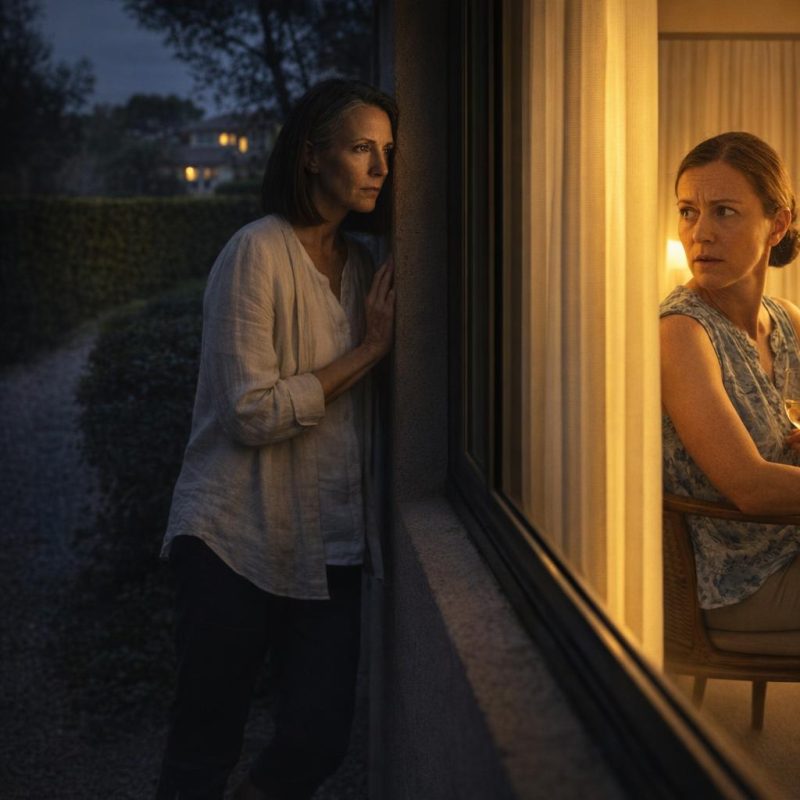 Image by RM AI
Secret Evaluations
I walk back to my room slowly, taking the long way around the pool, trying to let the night air do something useful for the noise in my head. It doesn't help much. I sit at the small desk and go through everything I've gathered — the foundation documents, the genealogy thread, the sealed adoption reference, the emails about Daniel, his note, and now what I just watched through that window. When I lay it all out in sequence, a shape starts to emerge that I don't entirely want to look at. The private meetings. The villa upgrades that aren't really upgrades. The observer who was watching how we settled in and adapted. Every piece of it points in the same direction: someone has been assessing us since we arrived, measuring something, and I have no idea what the criteria are or who is making the judgments. I think about every conversation I've had since I got here, every choice I've made, every moment I let my guard down or held it up. I think about whether I've been passing or failing whatever this is, and the fact that I can't answer that question makes my skin feel wrong. I'm angry — genuinely, quietly angry — at being studied without my knowledge or consent. But underneath the anger is something heavier, something that doesn't have a clean name, and I sit with it in the dark of my room for a long time.
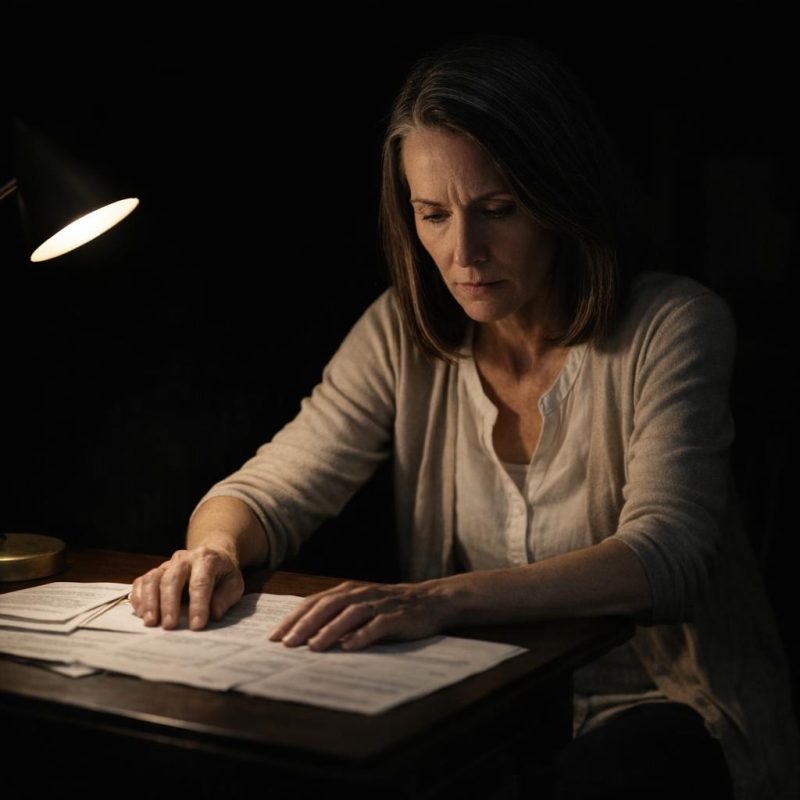 Image by RM AI
The Invitation
The envelope is already on the floor when I wake up, slipped under the door sometime before dawn. I almost step on it on my way to the bathroom. It's thick, cream-colored, the kind of stationery that costs more than my monthly grocery bill back home. My name is printed on the front in clean, formal type — not handwritten, not casual. I sit on the edge of the bed and open it carefully, like it might say something different if I'm not paying attention. Inside is a single card, embossed with the foundation's name at the top, requesting my presence at Villa Seven at two o'clock this afternoon for a private meeting with foundation representatives. That's all. No explanation. No hint of what will be discussed. I've watched this happen to other guests — the quiet summons, the escorted walk through the gated section, the return with something changed in their faces. I thought about refusing. I actually sat there for a few minutes turning the card over in my hands, telling myself I didn't have to go. But I know I'm going. I spend the morning going back through everything I've gathered, writing out my questions in the small notebook I brought from home, trying to feel prepared for something I can't fully name. By one-thirty I'm dressed and sitting quietly, the invitation on the desk in front of me, carrying the strange weight of being chosen for something I still don't understand.
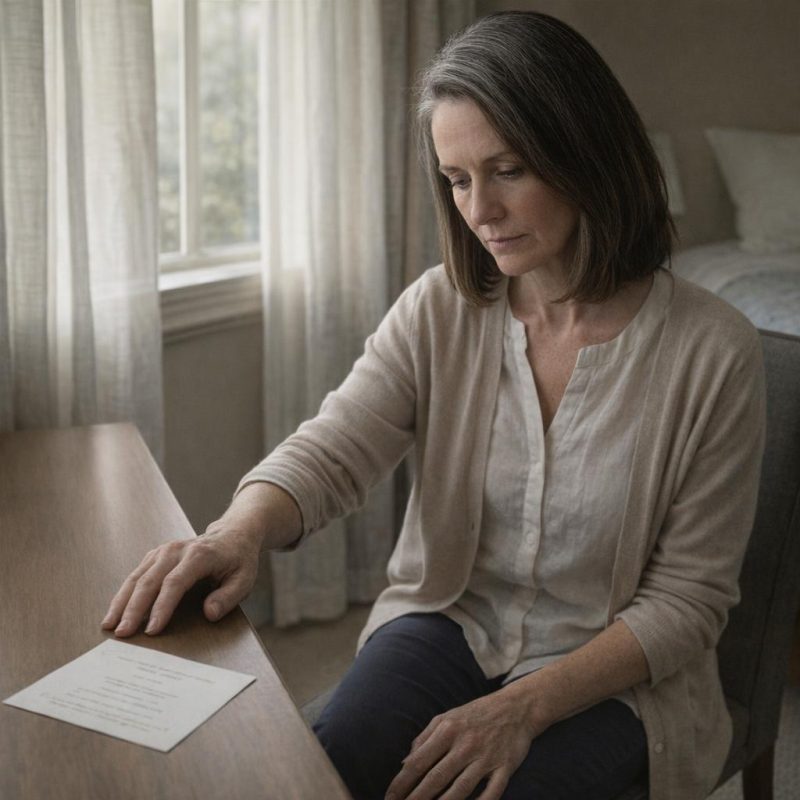 Image by RM AI
Entering the Villa
A staff member I don't recognize meets me at the gate to the villa section at exactly two o'clock and walks me through without a word. The path is lined with flowering hedges, everything manicured and still, and the quiet feels deliberate in a way that makes my pulse pick up. Villa Seven is larger than I expected — a proper building, not just a bungalow — and inside there's a room set up like a small conference space, with a polished oval table and leather chairs and a pitcher of water nobody has touched. A man stands when I enter. He's in his sixties, sharp-featured, wearing a charcoal suit that fits like it was made for him, and he introduces himself as Mr. Harrison, executor of Victoria Hale's estate. His handshake is firm and brief. He thanks me for coming in a tone that suggests he expected I would. I sit across from him and try to keep my breathing even. He sets a folder on the table between us and says he has quite a bit to explain, and that he hopes I'll hear him out before asking questions. I tell him I'll try. Then I look down at the folder, and I see my full name printed on the tab in the same clean type as the invitation — and through the clear plastic cover, looking back at me, is a photograph of my mother as a young woman.
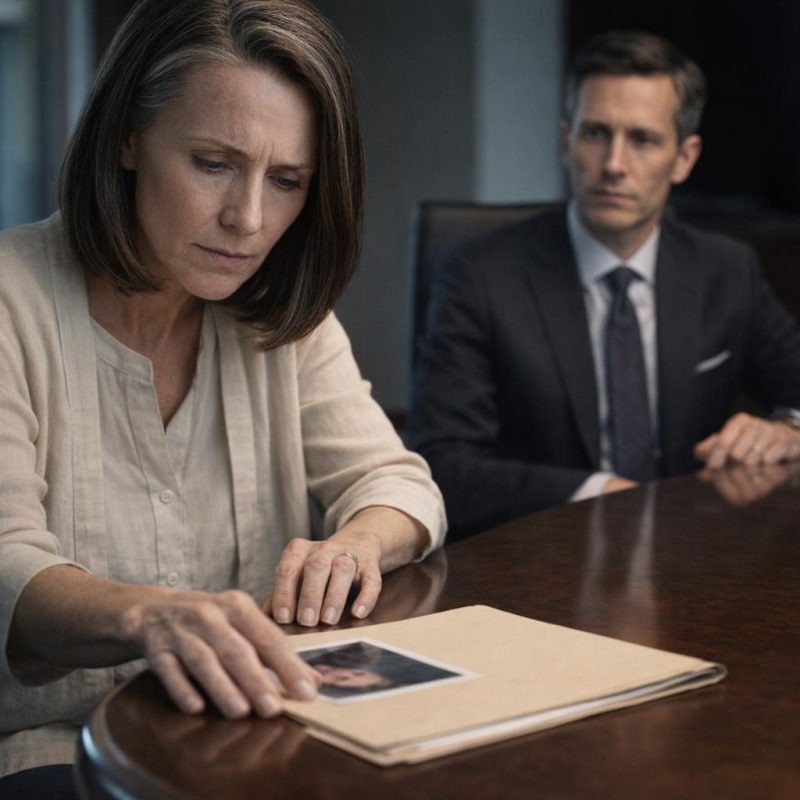 Image by RM AI
Victoria Chose You
I can't stop staring at the photograph. My mother looks maybe twenty-five in it, standing somewhere I don't recognize, squinting slightly into the sun. I have never seen this picture before in my life. Mr. Harrison gives me a moment, then opens the folder and begins. He tells me that Victoria Hale personally selected every single contest winner. Not randomly, not through any algorithm — personally, after more than two years of research and investigation. I ask him what that means, exactly. He says Victoria hired investigators to compile detailed files on specific women, tracking their life histories, their values, the choices they made under pressure. I feel something cold move through me. I ask how Victoria even knew I existed, how my name ended up on any list. He says Victoria had her reasons for identifying the individuals she chose, and that he'll explain the full context, but he needs me to understand the scope of it first. He assures me that Victoria's intentions were not malicious. I want to believe him. I'm not sure I do. What I keep coming back to is the file sitting open on the table — my name, my mother's face, a folder thick enough to hold years of someone else's attention trained on my life without my knowledge or consent. None of this was chance. Not a single moment of it.
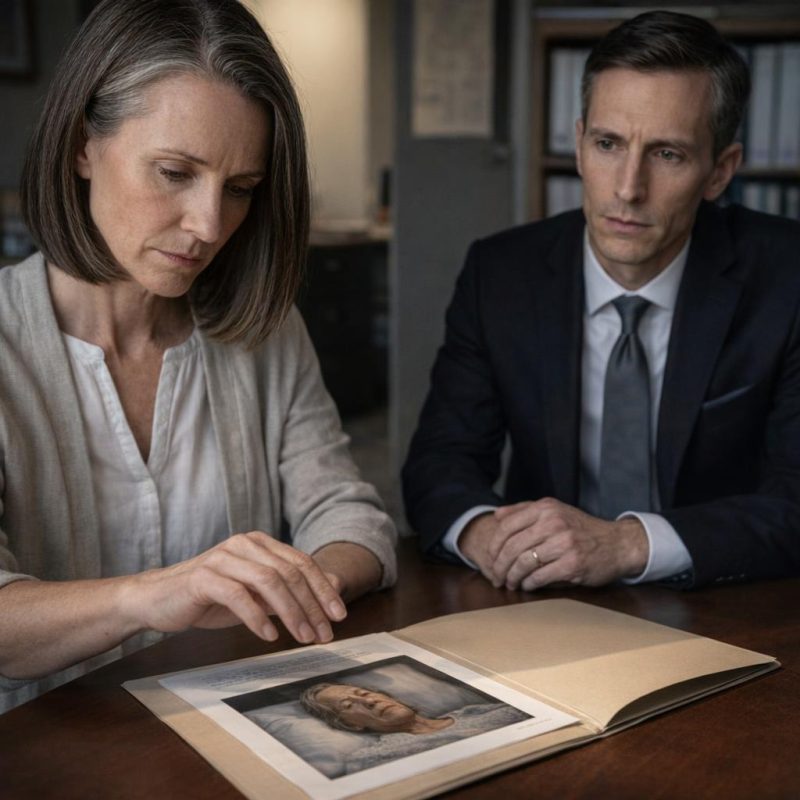 Image by RM AI
Monitored for Years
I ask him how long. He doesn't hesitate. He says Victoria began monitoring my life over twenty years ago. The room goes very quiet after that, or maybe that's just what happens inside my head. Twenty years. I do the math without meaning to — my kids were small, my marriage was still intact on the surface, I was working double shifts and thinking about nothing except getting through the week. Someone was watching all of that. I ask Mr. Harrison what gave Victoria the right to do that, and my voice comes out steadier than I feel. He says Victoria believed she had compelling reasons, and that once I understand the full picture, I may see it differently. I tell him I doubt that. He says he understands. I ask if she watched my children. He confirms that Victoria tracked major life events — marriages, births, losses. I push back from the table and stand up. My hands are flat on the polished wood and I can hear my own breathing. I tell him that I have sat here and listened and tried to be patient, and that I deserve to know why I was targeted, why my family was surveilled, why my mother's photograph is in that folder. Mr. Harrison looks at me steadily and asks me to sit down, and says he will explain everything. I sit. And I ask him why Victoria Hale was watching me.
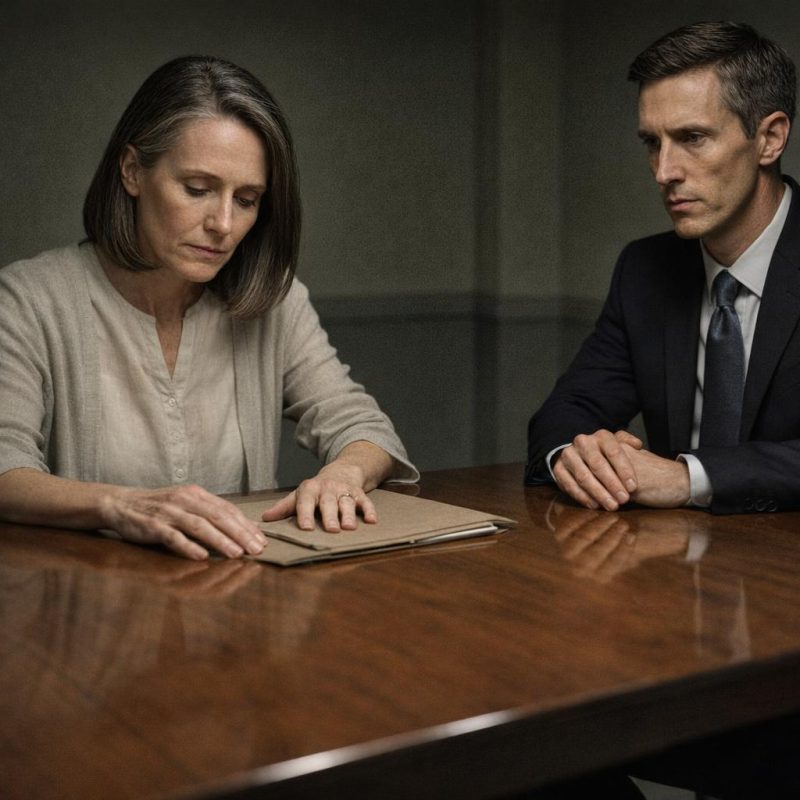 Image by RM AI
The Daughter She Lost
Mr. Harrison takes a slow breath and folds his hands on the table. Then he tells me. In 1970, Victoria Hale gave up a baby girl for adoption. She was twenty-two, unmarried, and had no resources to fight the pressure from her family. She signed the papers and spent the next fifty years trying not to think about it, and then the last decade of her life thinking about almost nothing else. She hired investigators, genealogists, DNA services — every avenue available to a woman with unlimited money and a fixed obsession. She never found her daughter. The trail had gone cold decades before she started looking. So Victoria did something else instead. She built a profile — not of who her daughter was, but of who she might have become, given the right values and the wrong circumstances. Women who had sacrificed, endured, rebuilt. Women whose life stories carried a particular kind of quiet strength. She identified candidates whose histories matched that imagined profile, and she created the contest to bring them here, to this place, to be evaluated in person. The inheritance — the foundation, the estate, everything — was meant to go to the woman who best embodied the daughter she had lost and never stopped grieving. I sit across from Mr. Harrison and I don't say anything for a long time. The photograph of my mother is still visible in the open folder. Every strange piece of this week rearranges itself in my mind, and for the first time, it all fits.
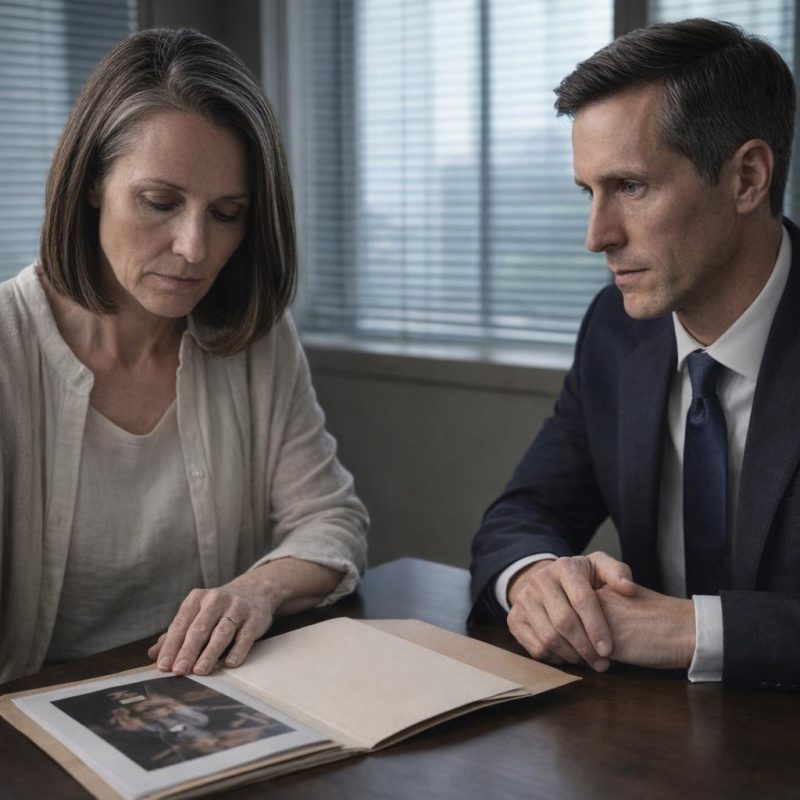 Image by RM AI
Processing the Truth
I walk out of Villa Seven and keep walking until the path runs out at a low stone wall overlooking the water. I sit down on a bench there and just breathe for a while. The ocean is doing what it always does — indifferent, continuous, not particularly interested in what I've just learned. I think about Victoria. Eighty-something years old, more money than most people can imagine, and what she was really carrying was a twenty-two-year-old's grief that never got resolved. I feel something genuine for her in that — I do. Losing a child, even to circumstances rather than death, leaves a mark that doesn't fade. I understand that in my bones. But then I think about the folder with my mother's photograph in it. I think about investigators watching my children's birthdays, my divorce, the years I spent holding everything together with both hands while someone took notes. I think about sitting in this beautiful place believing I'd won something, when really I'd been auditioned. Every conversation, every meal, every moment I let myself feel something — all of it observed and measured against a profile of a woman who doesn't exist. I wasn't chosen for who I am. I was chosen for how closely I resembled someone's idea of who someone else might have been. I sit with that for a long time, and the ocean keeps moving, and the hollow feeling of it doesn't lift.
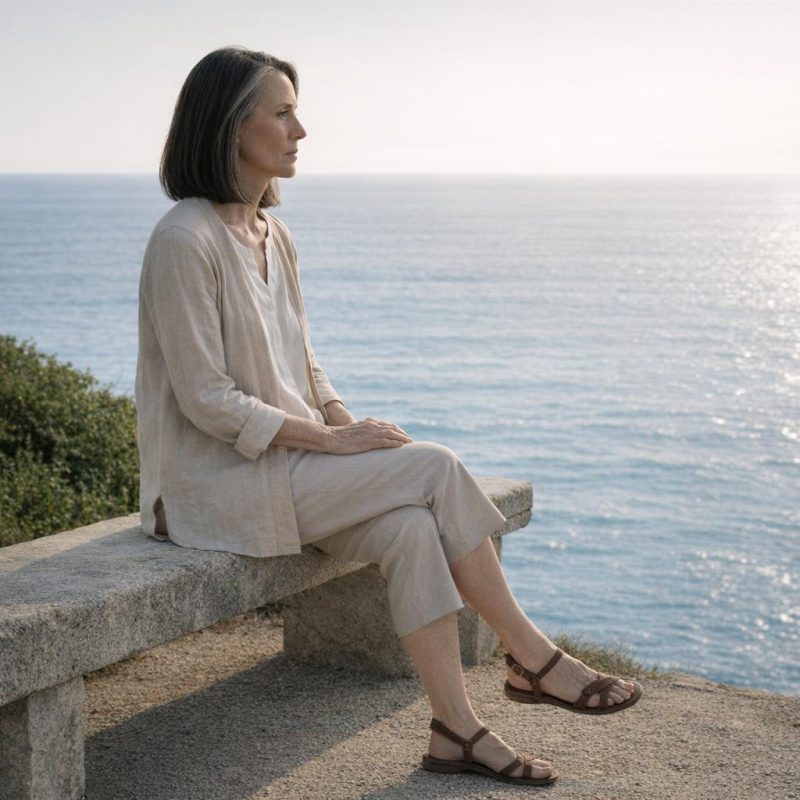 Image by RM AI
The Other Women Know
When I make my way back to the main resort, I find small clusters of guests near the terrace, speaking in low voices with the careful energy of people who have all just been told the same difficult thing. Patricia spots me first and crosses the lawn toward me with her arms slightly open, like she's considering a hug and hasn't decided yet. She asks if I had my meeting. I tell her yes. She nods and says she had hers yesterday, that she hasn't slept properly since, that she keeps turning it over and can't find a way to set it down. Linda is sitting at one of the terrace tables and looks up when I approach — she seems shaken in a way I haven't seen from her before, something loosened behind her usual composure. She says she can't believe what Victoria did, that the whole thing feels like something out of a story someone made up. I tell her it doesn't feel made up from where I'm standing. More guests drift in and out of the conversation. Some of them sound almost energized — I can hear it under the shock, the rawness of people who have just learned there is something very large at stake. Others sound genuinely angry, the way I felt in that conference room. Patricia says maybe they should all refuse to participate, that none of them agreed to this. But her voice doesn't carry the weight of someone who means it, and I notice the other women notice that too, and something in the easy solidarity of the past few days quietly splinters.
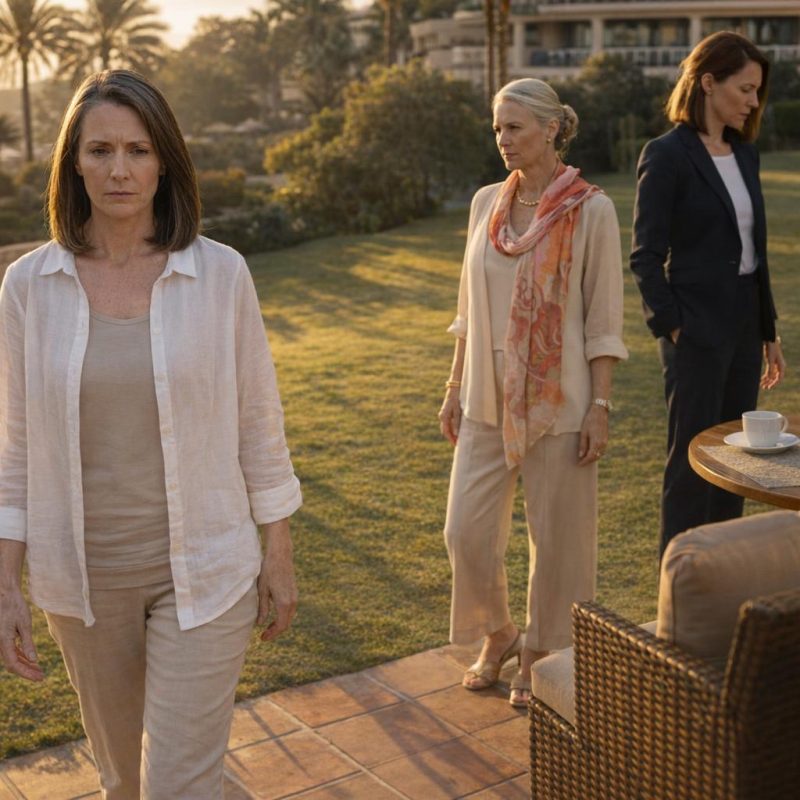 Image by RM AI
Robert's Betrayal
I go back to Mr. Harrison the next morning. There are things I still need to understand — specifically, how Victoria's investigators ever landed on me in the first place, how my name surfaced out of however many millions of women in the world. Mr. Harrison is quiet for a moment when I ask. Then he says there is something difficult I need to know, and he reaches into his briefcase and sets a small stack of documents on the table. They're dated fifteen years ago. He walks me through them carefully. Victoria's investigators had contacted Robert — my ex-spouse — seeking information about me and offering to facilitate an introduction between Victoria and our family. Robert had refused. Not politely. The documents include a letter from Robert's attorney threatening legal action if Victoria's organization made any further contact. Mr. Harrison then opens his laptop and turns it toward me, and I read through a chain of emails — Robert's name in the header, his words on the screen — explicitly blocking every attempt Victoria's people made to reach me over the following years. I sit back in my chair. Fifteen years. Robert knew about this for fifteen years and never said a single word to me. I think about every year of that marriage I spent feeling small and overlooked, and now I'm looking at proof that he made a choice — a deliberate, documented, repeated choice — to keep this from me. Mr. Harrison slides the printed emails across the table, and my ex-spouse's name sits at the top of every page.
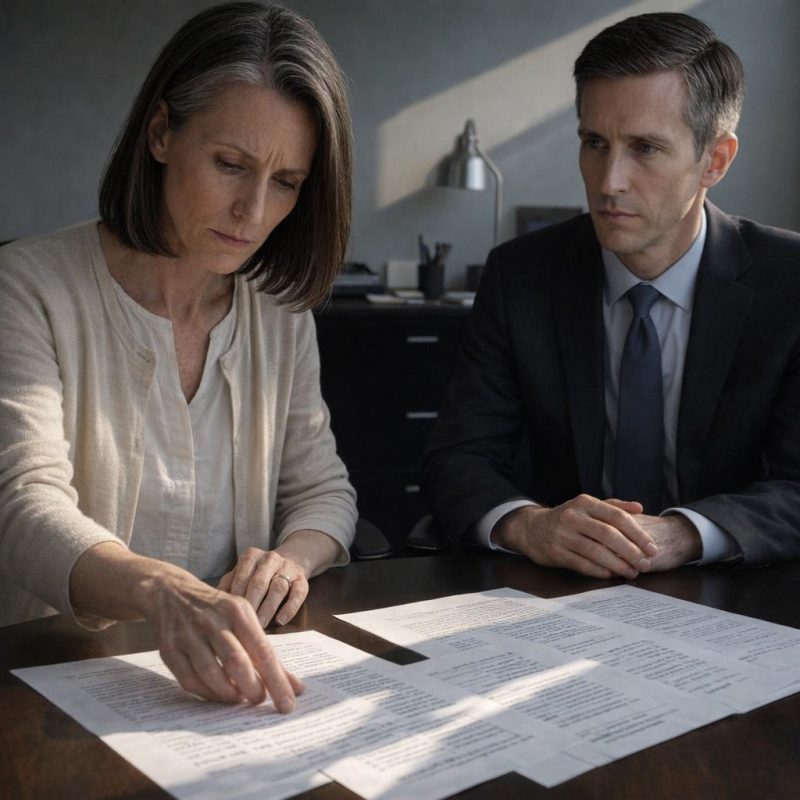 Image by RM AI
The Connection to Mother
Mr. Harrison opens a different section of the file and slides a small envelope across the table. Inside are photographs — old ones, the kind with soft edges and that particular faded warmth of 1970s color film. I pick up the first one and my breath catches. There is my mother, young and laughing, her hair long and dark the way it was in the photos from her bedroom dresser. Standing beside her is a woman I recognize from the portrait in Victoria's suite. They are arm in arm outside what looks like a community center, a hand-painted banner visible behind them. Mr. Harrison tells me they met through a women's advocacy organization in the early seventies, that they worked side by side for years, that my mother was one of the few people Victoria trusted with the truth about her pregnancy. When Victoria lost the baby to adoption and the grief drove her inward, the friendship quietly fell away. Years later, when Victoria's investigators began searching, they found that her old friend had a daughter. When my mother died, Mr. Harrison says gently, Victoria's interest in me deepened into something closer to devotion. I sit with the photographs spread across the table in front of me, my mother's young face looking up at me from a life I never knew she had, and the distance between us feels both wider and somehow, finally, smaller.
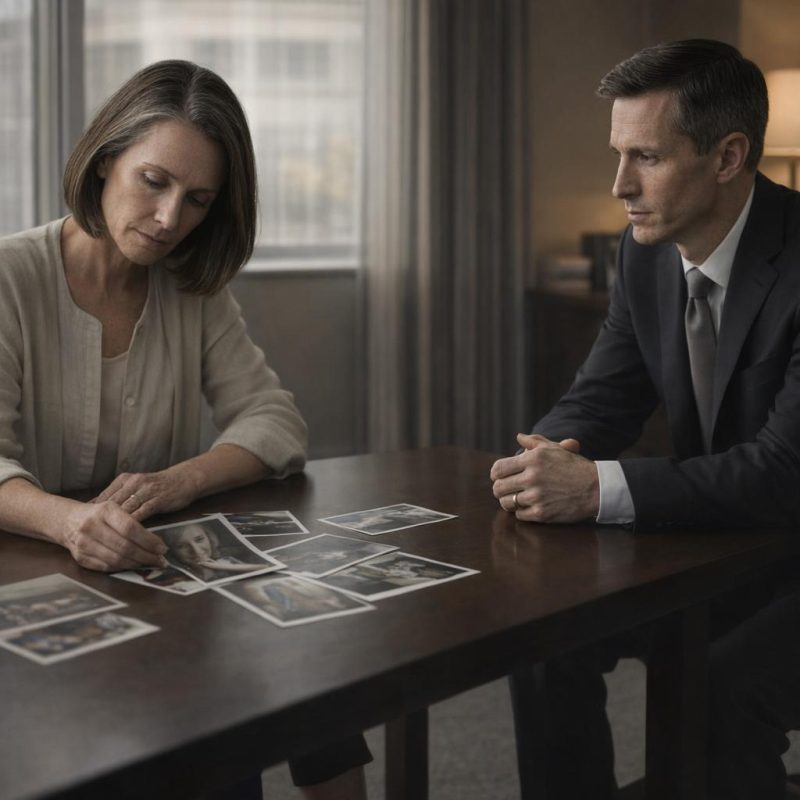 Image by RM AI
Never Random
I ask Mr. Harrison whether all the other women have something like this — some personal thread connecting them back to Victoria. He shakes his head. Most were identified through research, he says, through philanthropic records and community work and public profiles. They were worthy candidates, but they were found through methodology. I ask him directly whether I was different. He pauses in the careful way he has, then says yes. Victoria considered me one of her primary interests from early in the search. I ask if she thought I might actually be her daughter — if that was the real reason. He says no, firmly. Victoria had the adoption records. She knew the birth certificate. There was never any confusion about that. But she believed, he says, that I embodied the kind of woman her daughter might have become — the values, the resilience, the way I had moved through difficulty without losing my essential self. I sit with that for a moment. All those years I spent feeling like I had slipped through the world without leaving much of a mark, and Victoria had been watching, seeing something in me I had never managed to see in myself. Mr. Harrison closes the file and folds his hands on the table, and my name sits at the top of the primary candidates list in the open folder between us.
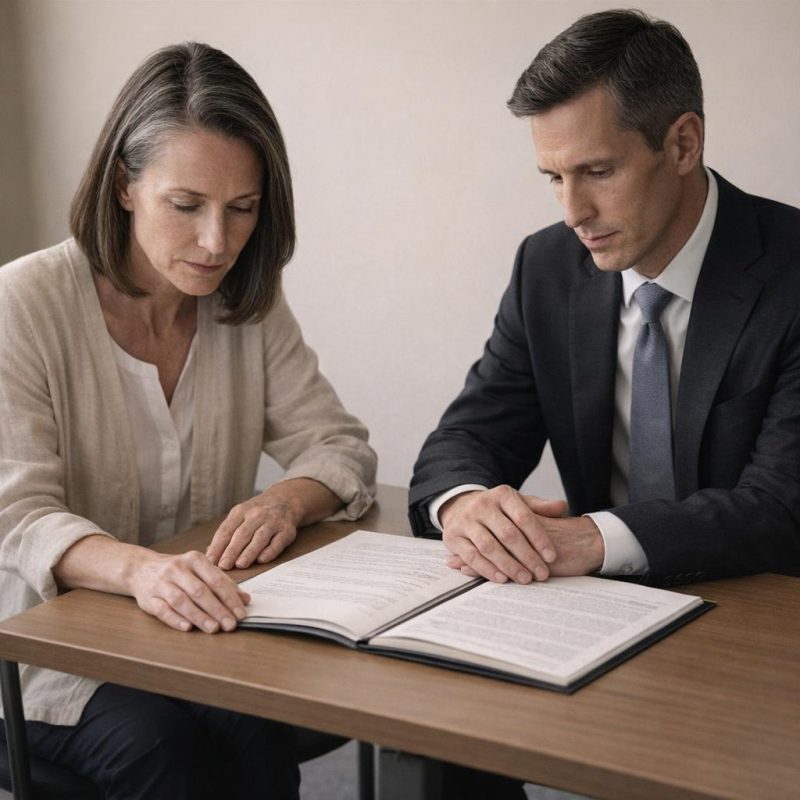 Image by RM AI
Watching the Competition
The days after the meeting with Mr. Harrison have a different texture to them. I watch the resort shift around me like a stage set being quietly rearranged. Patricia organizes a group volunteer morning at a local school, and I go along, but something about the way she positions herself near the foundation's representative — always in frame, always speaking just loudly enough — makes it hard to feel the warmth I might have felt otherwise. Linda gives a small speech at dinner about her commitment to women's education, and it is genuinely moving, but I catch myself wondering how much of it she has rehearsed. I see guests who were easy and relaxed a week ago now performing their best selves with a kind of visible effort that is almost painful to watch. I try to keep being myself — to ask real questions, to listen without an agenda — but even that starts to feel like a strategy once I become aware of it. The evaluation has gotten into everything, the way a dye gets into water, and I cannot find the clear version of any interaction anymore. I sit on the terrace that evening watching the sun go down over the water, and what I feel most is a quiet sadness for the easy, unguarded conversations we were all having in those first few days, before we understood what we were really here for.
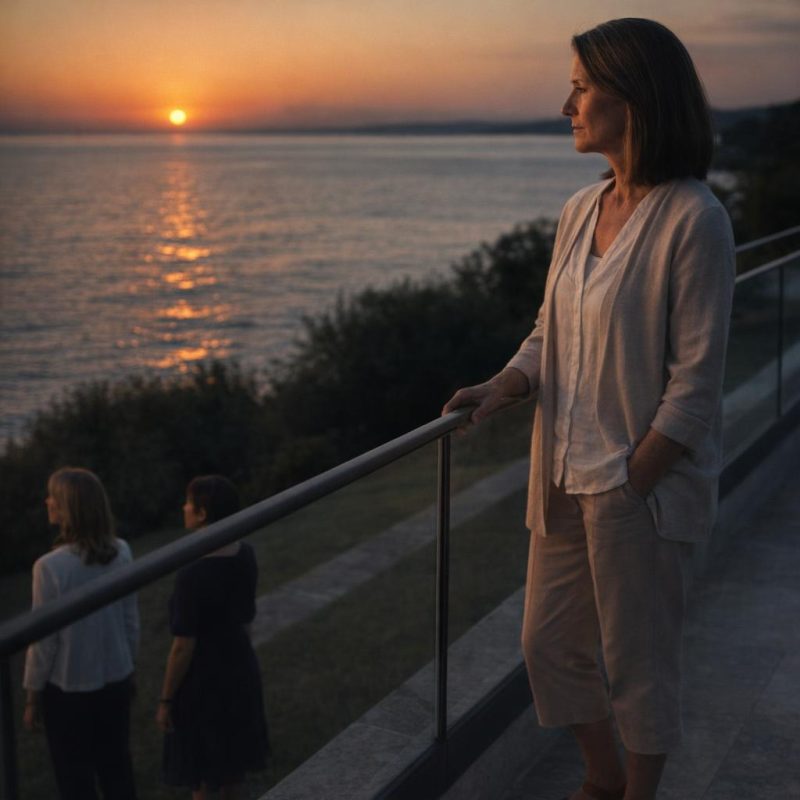 Image by RM AI
Patricia's True Nature
I overhear two staff members talking near the business center — something about a background discrepancy, a name I recognize. I find Mr. Harrison that afternoon and ask him about Patricia's file. He is quiet for a moment, then confirms that Patricia provided false information in her contest application. She claimed to be a widow. She is divorced. She overstated her charitable work significantly and described a financial hardship that the records do not support. I find Patricia on the garden terrace and ask her, as quietly and directly as I can, whether any of what she told me about herself was true. She goes still, then defensive. She says everyone here is shading the truth in some direction. She says she needed this more than the others, that she had looked at her life after her divorce and seen nothing waiting for her, and that she had done what she had to do to get a seat at the table. I tell her I understand desperation — I do — but that I thought what we had was real. She says she is sorry, and I think she means it, but the sorry lands in a place that cannot quite reach the friendship I thought we had built. I walk back to my room alone, and the small, careful trust I had placed in her sits somewhere in my chest like something that has gone cold.
 Image by RM AI
Linda's Hidden Connection
I have been quietly pulling at threads for days, and Linda's thread is the one that finally gives. I find employment records in a public business filing — a company called Meridian Group, one of Victoria's holdings from the nineties — and Linda's name is in the staff directory from twenty-two years ago. She was there for eighteen months. I sit with it for a while before I go to her. When I do, I keep my voice even and show her what I found. Linda goes very still. Then she says yes, she worked there briefly in her late thirties, a mid-level operations role, nothing significant. She says she never met Victoria. She says she did not make the connection until she was already here and by then she was afraid that disclosing it would get her removed. She looks at me steadily when she says it, and I want to believe her — the story is plausible, the timeline fits, and nothing in her manner suggests she is lying. But I have been wrong about people on this trip before, and trust has become a thing I hold more carefully now. I tell her I appreciate her being honest with me. She nods. Neither of us says anything else for a moment. Then I go back to my room and find the employment records still open on my laptop, Linda's name printed in a column beside Victoria's company name.
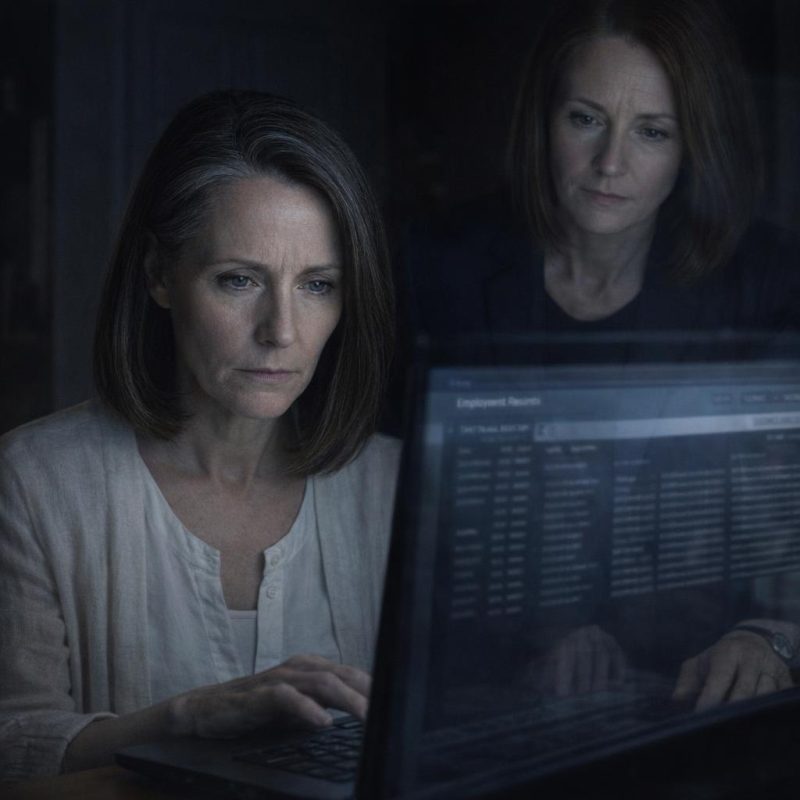 Image by RM AI
The Saboteur Revealed
Three strong candidates have left the resort in the span of a week, and the departures have been too sudden and too similar to feel like coincidence. I start asking quiet questions. A staff member mentions anonymous messages — disturbing ones, sent to guests' personal emails. I go to the business center and ask to speak with security. The footage is grainy but clear enough: Patricia, twice, at the terminal in the corner, at timestamps that match the messages exactly. I dig further with Mr. Harrison's help and find that foundation staff received anonymous tips about two other guests — one falsely accused of a prior criminal matter, another described as openly mercenary about the money. Both left within days of those tips being filed. I bring everything to Mr. Harrison — the footage timestamps, the printed emails, the staff complaint records — and lay it out on the table in front of him. He goes through it methodically, and when he looks up his expression is controlled but tight. He says this behavior disqualifies Patricia immediately and that the foundation's integrity process requires him to act on it today. I watch him reach for his phone. On the table between us, the security still showing Patricia at the terminal sits face-up, timestamp visible in the lower right corner.
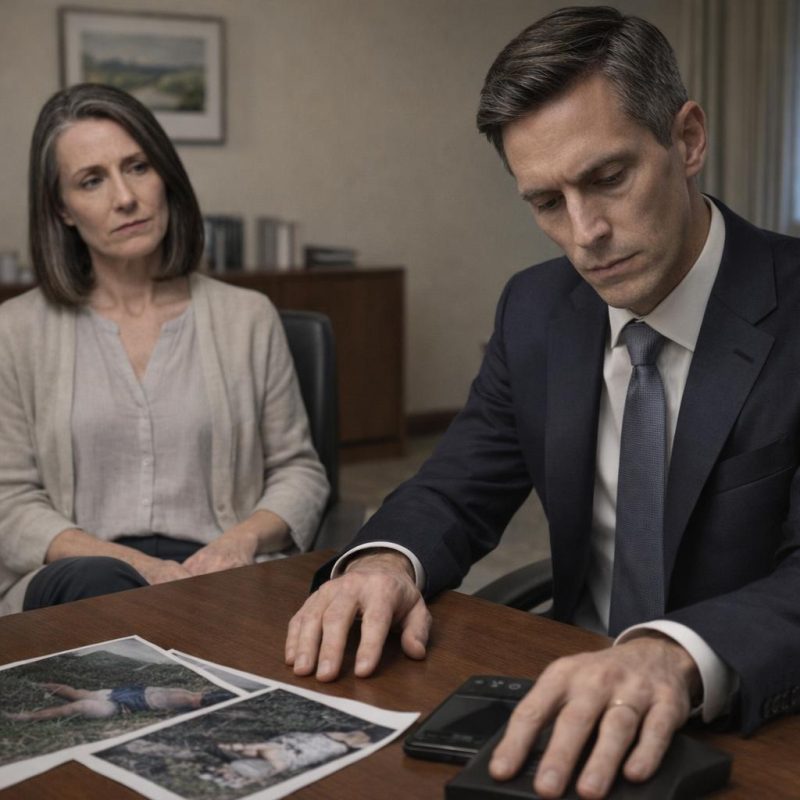 Image by RM AI
Protecting the Foundation
The attorneys meet with Patricia in one of the small conference rooms off the main lobby, and I wait outside with Mr. Harrison. I can hear her voice through the door — not the words, just the register, rising and tightening. When she comes out her face is flushed and her composure is gone in a way I have not seen before. She looks at me and says she will go to the media. She says she will tell them everything — the contest, the inheritance, the evaluation, all of it — and that by the time she is done, Victoria's name will be attached to a scandal that no foundation can survive. Mr. Harrison speaks carefully, trying to walk her back, but Patricia is not listening to careful anymore. I think about the women the foundation was built to help, the programs and grants and quiet interventions that would simply stop existing if this became a public spectacle. I ask Patricia if I can speak with her alone, just the two of us, away from the attorneys. She looks at me for a long moment. She says fine. We step outside onto the side terrace, and the afternoon is warm and very still, and before I can find the right words my phone buzzes in my pocket — a message from an unknown number that reads: *I already sent the story. You have two hours.*
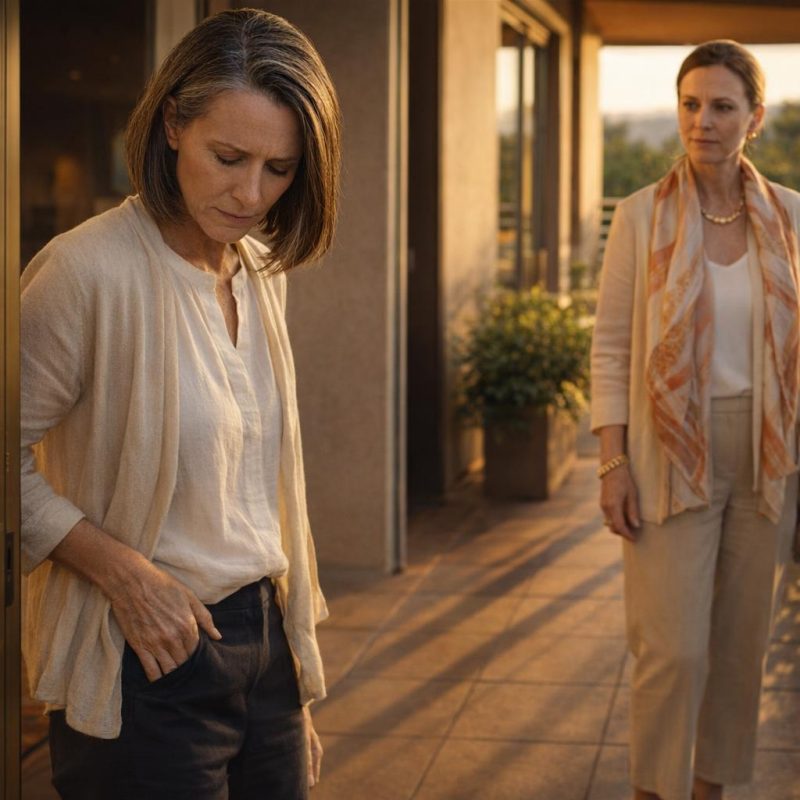 Image by RM AI
Finding Common Ground
I show the message to Mr. Harrison and he moves immediately to make calls. But I stay with Patricia, because the look on her face when she reads it over my shoulder tells me she did not send it. She is as shaken as I am. I ask Linda to come outside, and then two other guests who have been steady and honest throughout all of this. We sit together on the terrace in the afternoon light, and I tell Patricia the truth — not the legal version, not the careful version, but the real one. I tell her about Victoria's grief, about my mother, about the decades of searching that came from a place of profound loneliness rather than power. Linda talks about her own divorce, the years she spent feeling erased, and what it meant to her to be seen as capable of something larger than her circumstances. The other guests speak about the foundation's work in terms that are specific and personal. I tell Patricia that I understand the desperation she felt — that I lived inside a version of it for years — and that destroying something built from grief will not fill the place inside her that feels empty. She cries. She says she is ashamed. She says she felt invisible after her divorce and that she stopped caring about consequences. She agrees not to contact anyone. The apology she offers the group is quiet and unpolished, and it lands in the silence between us like something that cost her everything she had left.
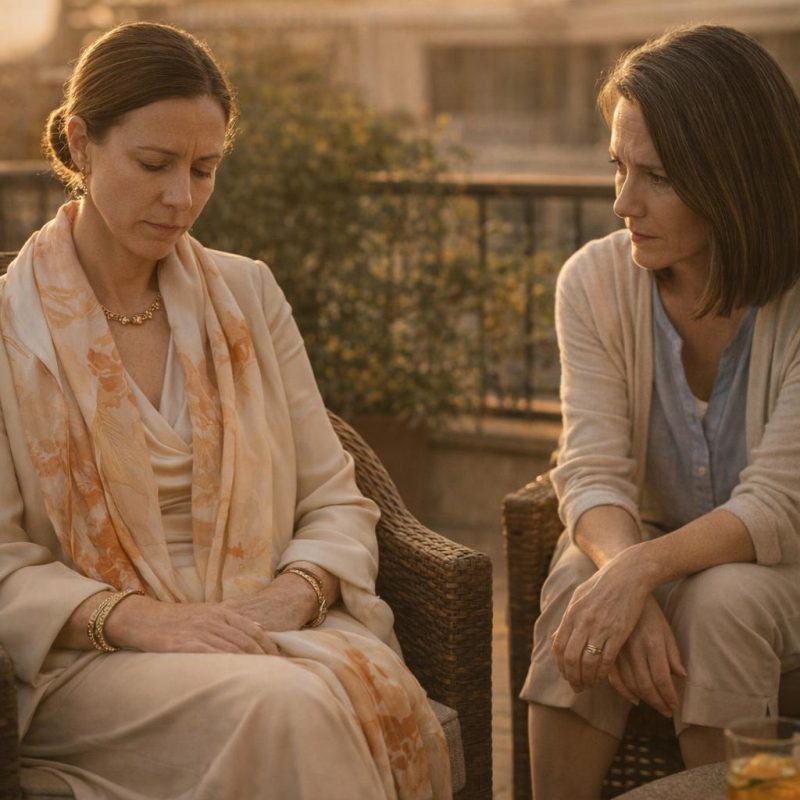 Image by RM AI
The Decision
Mr. Harrison calls us all into the main conference room just after lunch, and the air in there is different from anything I've felt since I arrived — tighter, more formal, like something is about to be decided that can't be undecided. He stands at the head of the table with two other board members I haven't seen before, and he thanks everyone for their patience. He says the evaluation was thorough and that several women demonstrated remarkable character under genuinely difficult circumstances. He talks about the criteria — not résumés, not financial histories, but behavior when no one appeared to be watching. Kindness offered without calculation. Integrity maintained when it cost something real. Linda sits very still across from me. Patricia has her hands folded on the table and she doesn't look up. I keep my own hands in my lap and try to breathe. Mr. Harrison says the board looked for someone who remained fully herself throughout the process — someone who helped others even when it seemed to work against her own interests. He pauses, and the room goes so quiet I can hear the ceiling fan turning. Then he says my name.
 Image by RM AI
The Weight of Inheritance
After the others file out, Mr. Harrison asks me to stay. I sit across from him and tell him honestly that I don't understand. I tell him there were women in that room with more education, more experience, more obvious qualifications for something this large. He listens without interrupting, and then he says something I don't expect. He says I was the only person in the entire evaluation who never once performed for the cameras — that I helped people because it was the right thing to do, not because I thought anyone was watching. He mentions Patricia specifically. He says standing up for her after what she did, and doing it without anger, was the moment the board felt certain. He tells me Victoria spent years looking for someone who embodied the values she believed her daughter would have carried into the world. I ask what happens now, and he slides a folder across the table. The foundation holds assets in the hundreds of millions. There are programs running in eleven countries. There are staff who need direction and decisions that need to be made. I look at the folder and then back at him, and the terror and the honor arrive at exactly the same moment and settle into me like something I will carry for the rest of my life.
 Image by RM AI
The Real Prize
I find myself walking the resort grounds alone in the early evening, just moving through the paths I've come to know over these strange, disorienting days. Linda falls into step beside me near the garden wall, and we walk together for a while without saying much. Eventually she asks how I'm feeling, and I tell her the truth — that I came here feeling invisible. That after the divorce I had genuinely stopped believing I had anything left to offer anyone. She nods slowly and says she can see something different in me now, something that wasn't there when we first met. I think about that. I think about every moment I almost left, every time I almost talked myself out of trusting what I was seeing. I found something here that no inheritance can replicate — a voice I had quietly set down somewhere in my marriage and forgotten I ever owned. The money matters. The foundation matters enormously. But the woman who walked into this resort two weeks ago would not have been able to carry any of it. I tell Linda I hope we stay in touch, and she says she'd like that very much. We stand there as the light goes amber over the water, and the quiet between us feels like the beginning of something rather than the end.
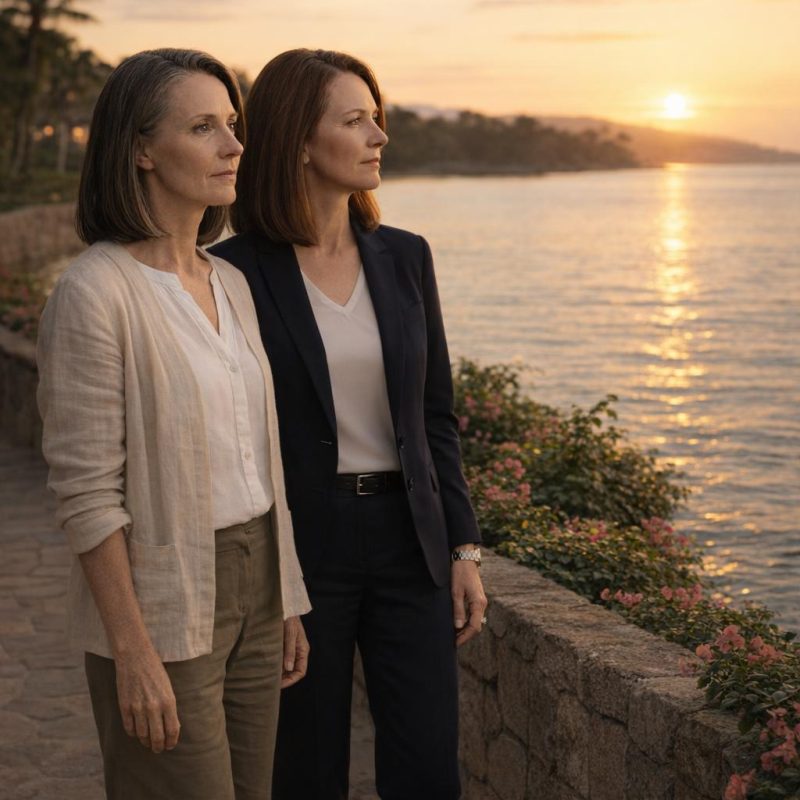 Image by RM AI
Coming Home
Rachel is waiting at the arrivals gate when I come through, and I watch her face change the moment she sees me — a small shift around her eyes, like she's recalibrating something. She hugs me and then holds me at arm's length and says, 'Mom. You look different.' I tell her I'll explain everything in the car. By the time we pull into my driveway I've told her most of it, and she sits in the parked car with both hands on the steering wheel just staring through the windshield. She says she doesn't know whether to cry or call a lawyer. I tell her Mr. Harrison already is one. Inside, there is a courier package on my doorstep with the foundation's return address. I bring it in and open it at the kitchen table while Rachel stands beside me. Inside the envelope is a letter, handwritten on heavy cream paper, addressed to me by name in a careful, deliberate script. It is from Victoria. She writes that she watched me sit with my mother through her final weeks — that she was there, at a distance, and that she saw what it cost me and what I gave anyway. She writes that I reminded her of everything she lost and everything she still hoped was possible. I read the last paragraph twice, and then I set the letter down on the table between us, her words still open on the page.
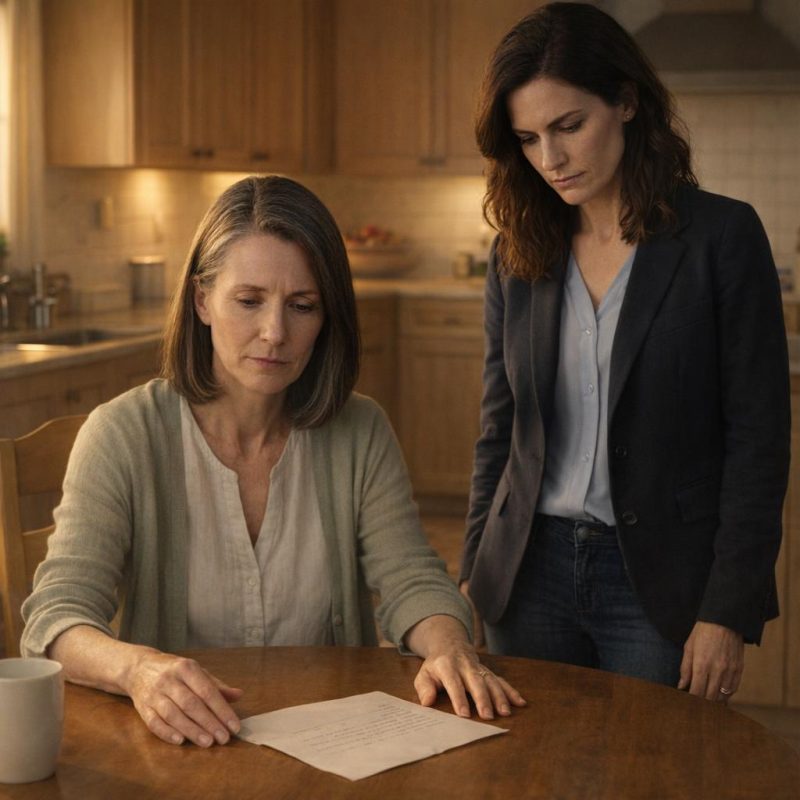 Image by RM AI
KEEP ON READING

The Brutal Realities Of Gladiator Life Beyond the Arena
David Cruz asenjo on PexelsWhen most people think of gladiators,…
By Rob Shapiro Mar 31, 2026
The Volcano Winter That Nearly Toppled Europe
Collin Ross on UnsplashMost people, if asked to name a…
By Cameron Dick Mar 31, 2026
From School Plays To Starting A Cult: 20 Of The…
The Books That Made Us. Many people will tell you…
By Farva Ivkovic Jan 31, 2025
20 Facts About Jane Grey, The Forgotten Queen Of England
A Quick, Messy, and Tragic Reign. Lady Jane Grey never…
By Maria Cruz Jan 31, 2025
20 Priceless Historical Art Pieces Rescued By The Monuments Men
Protecting Human History. While the soldiers on the front lines…
By Sara Springsteen Mar 31, 2026
Almost Every Ancient Statue Has a Missing Nose, And It's…
Gary Todd from Xinzheng, China on WikimediaWalk through the classical…
By Elizabeth Graham Mar 31, 2026