


The Intersection
So there I was, stuck in the middle of the busiest intersection in town during Friday rush hour, my ancient Honda making that god-awful grinding noise before going completely silent. Horns started blaring immediately. I could feel my face burning as I tried the ignition again and again—nothing. People were shouting, some guy leaned out his window gesturing like I'd personally ruined his life, and I just wanted to disappear. Then this young man appeared at my window, maybe late twenties, with kind eyes and an almost too-calm smile. 'Let me help you,' he said, and before I could protest, he'd somehow convinced the angry mob to give us space while he pushed my car to the curb. I was thanking him profusely, fumbling for my phone to call AAA, when he reached into his jacket pocket. 'Mrs. Hayes,' he said—and I froze because I hadn't told him my name. 'I think this belongs to you.' He held out a brown leather wallet, worn and cracked with age. I opened it, confused, not recognizing it at all. Then I saw the photograph tucked into the clear sleeve—a young woman with long dark hair and that ridiculous peasant blouse everyone wore in the early eighties. My hands started shaking. I stared at my twenty-one-year-old face in that faded photograph and felt time collapse around me.
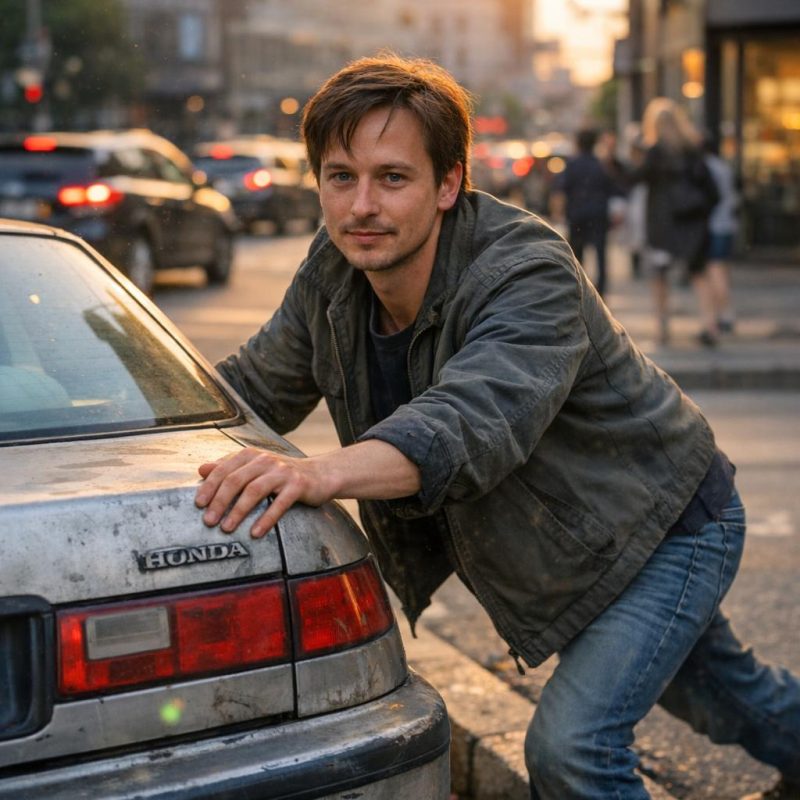 Image by RM AI
The Receipt
'Where did you get this?' I asked, my voice barely working. Daniel—he'd introduced himself while I was still processing—was already pulling a pen from his pocket, scribbling on the back of a gas station receipt. 'It's complicated,' he said, glancing nervously at the traffic backing up behind us. 'I need to explain everything, but not here. Can we meet somewhere?' I couldn't take my eyes off that photograph. The wallet itself meant nothing to me—I'd never owned anything like it—but that picture was definitely mine. I remembered the day it was taken, remembered who took it, remembered what came after. 'Who are you?' I whispered. He pressed the receipt into my hand. 'Please call me tonight. There's so much you need to know about—' A sharp whistle cut him off. Two traffic police were striding toward us, one already gesturing at my car blocking the lane. Daniel stepped back quickly. 'Tonight,' he said urgently. 'Please.' Then he disappeared into the crowd of pedestrians before I could ask anything else. The officers were businesslike and slightly annoyed as they helped me arrange a tow. I barely heard them. That evening, Emily called with panic in her voice: 'Mom, did you meet someone named Daniel today?'
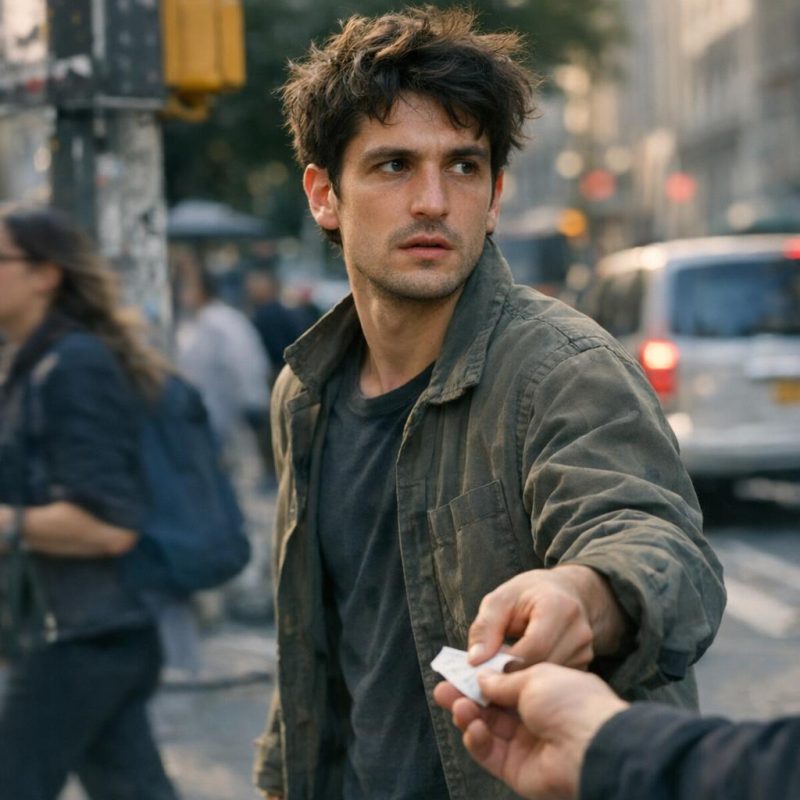 Image by RM AI
Sarah's Name
I waited until almost ten before I finally called the number on that crumpled receipt, my hand shaking so badly I misdialed twice. Daniel picked up on the first ring like he'd been waiting. 'Thank you for calling,' he said, and I could hear relief in his voice. I didn't waste time with pleasantries. 'My daughter somehow knows your name. Who are you and what's going on?' There was a long pause. Then: 'The wallet belonged to Sarah Brennan. She was your roommate at college, right?' Sarah. God, I hadn't thought about Sarah in decades. We'd lost touch after graduation, the way you do when life pulls you in different directions. 'Sarah kept that wallet for forty years,' Daniel continued quietly. 'She asked me to find you before she died.' The floor seemed to tilt under me. 'Died? When?' 'Last month. Cancer.' His voice caught slightly. 'She was very specific about her final wishes. Finding you was at the top of the list.' I sat down hard on my kitchen chair, that old photograph still in my hand. 'But why? Why would she keep my wallet all this time? I never even knew it was missing.' Daniel was quiet for a moment, and when he spoke again, his voice was gentle but firm. When I asked why Sarah would go to such lengths, Daniel said quietly, 'Because she knew something about your adoption that you were never told.'
 Image by RM AI
The Secret I Kept
I couldn't sleep that night. By morning, I knew I had to tell Emily the truth before Daniel did. She came over for coffee, sensing something was wrong the moment she walked in. I'd rehearsed this conversation a thousand times over the years, but the words still came out broken and raw. 'When I was twenty-one, in college,' I started, my coffee cup rattling against the saucer, 'I got pregnant.' Emily's eyes went wide, but she didn't interrupt. 'I wasn't ready. I was terrified. The father—he was gone before I even knew. So I made a choice.' My voice cracked. 'I gave the baby up for adoption. A boy.' The silence stretched between us like a chasm. Emily's face went through so many emotions I couldn't track them all—shock, confusion, hurt, maybe even anger. 'You had another child,' she whispered finally. 'I have a brother somewhere?' I nodded, tears streaming down my face now. 'I chose a good family, or at least I thought I did. I believed he'd have a better life than I could give him at twenty-one.' I'd carried this secret like a stone in my chest for forty years, never telling anyone except Sarah, who'd held my hand through it all. Emily was silent for a long time, then whispered, 'Does Dad know?' and I realized my secret had just shattered more than one life.
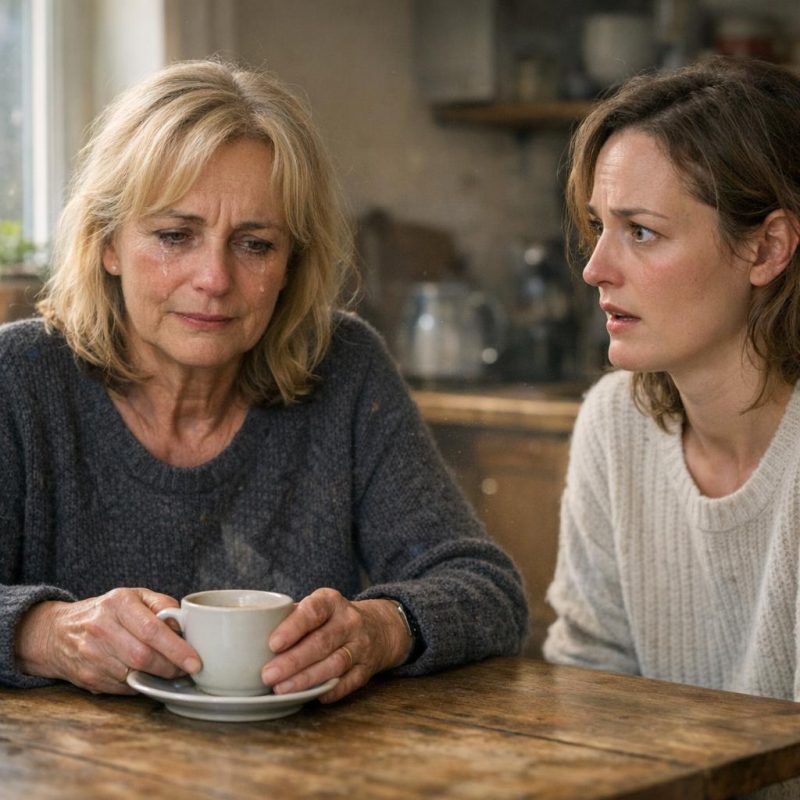 Image by RM AI
The Attorney's Office
Emily didn't leave, thank God. Instead she sat there, processing, occasionally asking questions in this careful voice I'd never heard from her before. I told her everything I could remember about the adoption. 'It was all arranged through this private attorney—Thomas Brennan. Sarah's father, actually.' Emily's head snapped up at that. 'That's why Sarah kept the wallet,' she said, and I nodded. 'Thomas set everything up very quietly. He said he had a couple, nice people, who desperately wanted a child. I met them once, just once, in his office.' I could still see their faces—James and Linda Whitfield, both so polished and proper, sitting across from me in those leather chairs. 'They seemed perfect,' I continued. 'Successful. Stable. Everything I wasn't.' The memory felt both crystal clear and impossibly distant. 'They promised they'd love him, give him every opportunity. Thomas said it was best if we didn't stay in contact, that a clean break was easier for everyone.' I'd signed papers I barely read, desperate to believe I was doing the right thing. Emily was watching me with this new expression I couldn't quite read—not judgment exactly, but maybe a dawning understanding of who I'd been before I became her mother. Emily asked the question I had been avoiding: 'Mom, do you think Daniel might be that baby?'
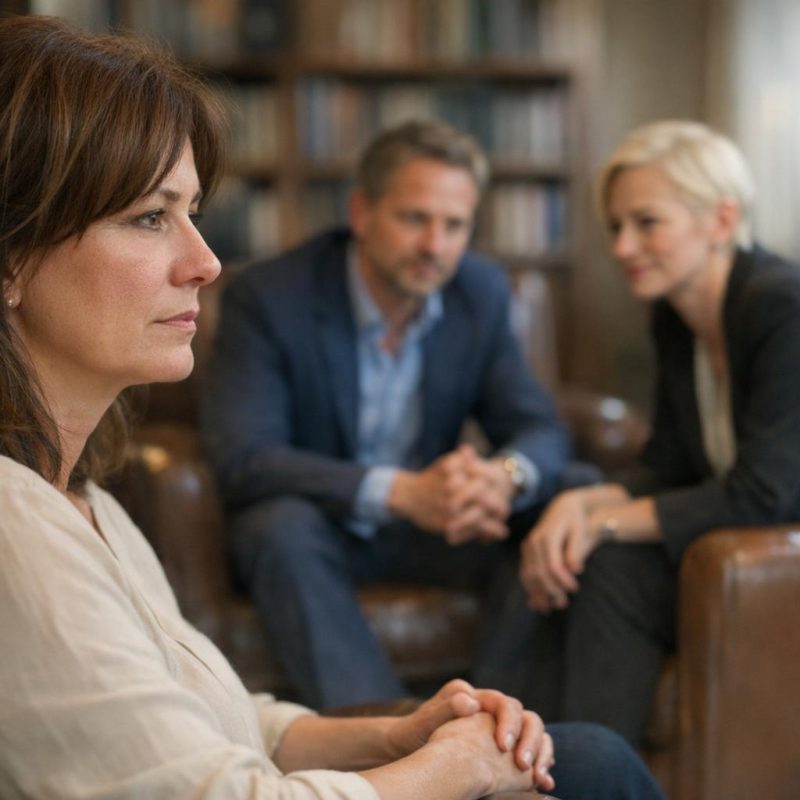 Image by RM AI
Daniel's Story
I met Daniel at a coffee shop downtown two days later, both of us sitting in a corner booth like we were exchanging state secrets. He'd brought a folder, and his hands kept fidgeting with it. 'I need to explain something,' he started. 'Sarah adopted me when I was two years old.' My heart, which had been racing at the possibility, suddenly felt heavy. 'So you're not...' 'No,' he said gently. 'I'm not your biological son. Sarah and Thomas divorced when I was young, but she raised me on her own. She was an amazing mother.' He paused, his eyes getting distant. 'But in her last years, she became obsessed with something. She found irregularities in her father's old adoption files—cases from the early eighties, around the same time as yours.' My mouth went dry. 'What kind of irregularities?' 'Records that didn't match up. Babies placed with families different from the ones the birth mothers had met. Money changing hands in ways that seemed wrong.' He opened the folder slightly but didn't show me yet. 'She spent three years investigating before the cancer got too bad. She wanted to expose what her father had done, but she died before she could finish.' I was gripping my coffee cup so hard I thought it might shatter. I asked if he thought he was my son, and Daniel said, 'No—but I think I know who is.'
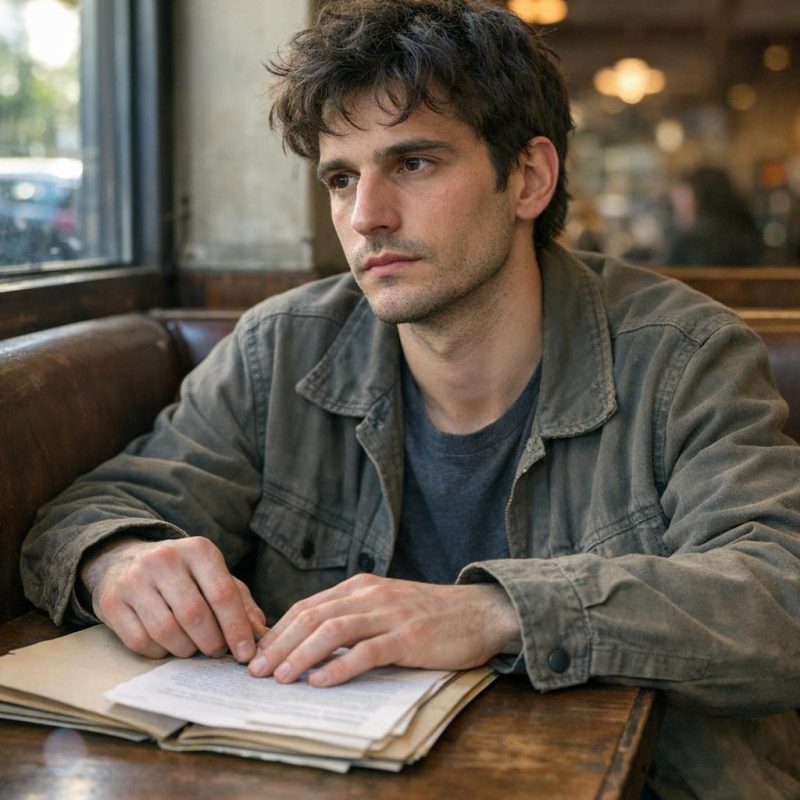 Image by RM AI
The File Box
Daniel spread photocopies across the table between us—old letters on Thomas Brennan's law firm letterhead, handwritten notes on yellow legal paper, carbon copies of receipts. My hands trembled as I picked up the first one. 'Sarah found these in a file box after her father died,' Daniel explained. 'He'd kept everything, like he couldn't quite bring himself to destroy the evidence.' The letters were coded but not coded enough. References to 'arrangements' and 'premium placements' and dollar amounts that made my stomach turn. 'He was selling babies?' I whispered, and Daniel nodded grimly. 'Sarah thought so. Not all of them, maybe, but some. The ones where the adoptive parents were wealthy enough and desperate enough.' I felt sick. One letter caught my eye—the date at the top made my vision blur. I picked it up with shaking hands, reading the carefully worded phrases about 'finalizing the transaction' and 'ensuring discretion.' It was written in the same week I'd given birth, the same week I'd handed my son to strangers and tried to forget. My eyes found a name in the middle paragraph and my heart stopped. One letter was dated the exact week my son was born, and it mentioned 'the Whitfield arrangement.'
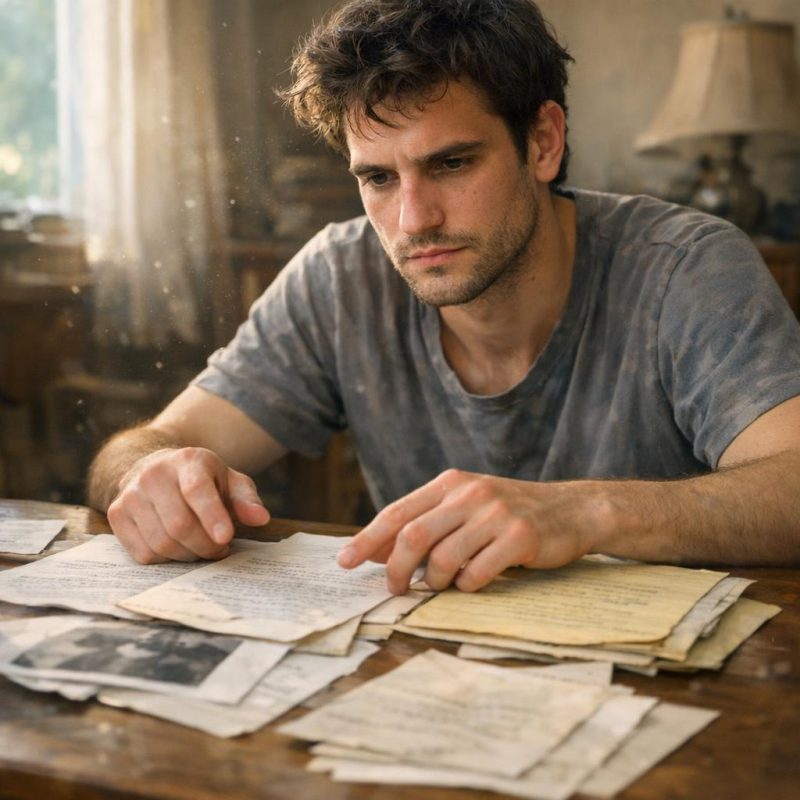 Image by RM AI
Michael's Ghost
I called Emily as soon as I got home, my hands still shaking from what Daniel had shown me. 'There's more I need to tell you,' I said. 'About your brother's father.' I could hear her take a sharp breath, and I imagined her sitting down, bracing herself. 'His name was Michael Carrington. He was a year ahead of me in school, and I thought—God, I thought I loved him.' The words felt strange after so many years of silence. 'We were together for about six months. Then he just disappeared—left school, left town, I never knew why. I found out I was pregnant two weeks after he vanished.' Emily was quiet, letting me talk. 'I tried to reach him, but his parents said they didn't know where he was. Eventually I stopped trying. I told myself it was better he didn't know, that I was doing this on my own.' It was a lie I'd perfected over the decades. 'But the truth is I was terrified. Terrified of being rejected, terrified of being trapped, terrified of everything.' My voice cracked. 'So I let Thomas Brennan make it all go away, thinking I was giving my baby a better life.' Emily asked if I had ever tried to find him, and I admitted that I had been too afraid of what I might discover.
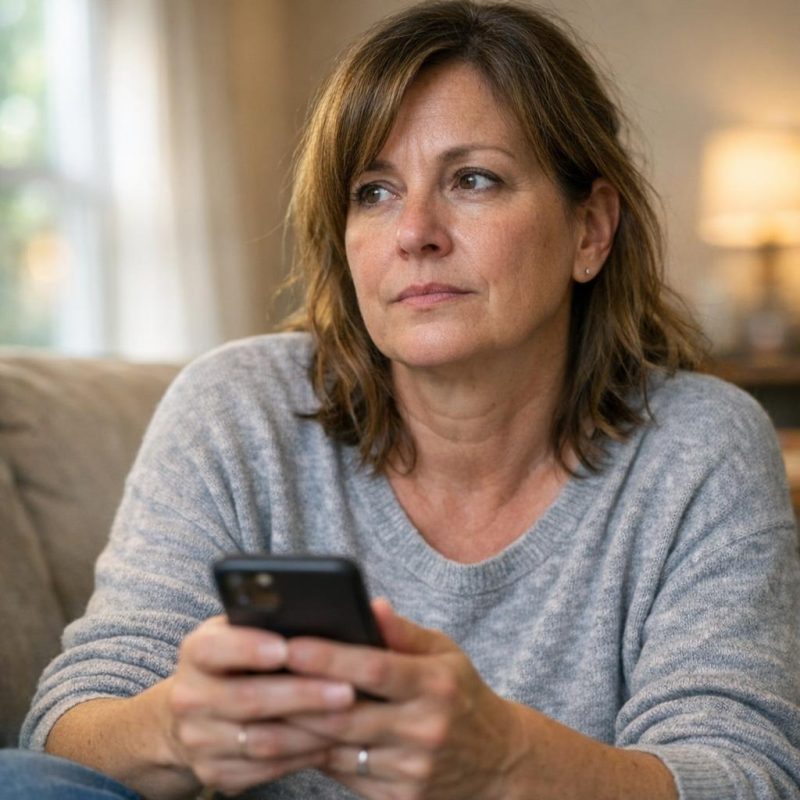 Image by RM AI
Emily's Research
Emily called me back two days later, and I could hear the tension in her voice before she even spoke. She'd been using her access to the medical billing databases—something she admitted made her nervous, like she was crossing a line she couldn't uncross. 'I went back forty years,' she said. 'I searched for any births linked to the Whitfield name, anything that might connect.' I'd been pacing my kitchen, phone pressed to my ear, barely breathing. She explained how the old records were partially digitized, messy and incomplete, but there were fragments if you knew where to look. 'Mom, I found something,' she said, and my heart stopped. There was a sealed transfer record for an infant boy, born the same week as my son. The notation was brief, clinical, but Emily's voice shook when she read it to me: 'non-biological placement.' I had to sit down. My legs just gave out. 'What does that mean?' I asked, though part of me already knew. Emily said it meant the baby wasn't biologically related to the family who received him. It meant someone had placed a child with people who weren't his birth parents—people who wanted him badly enough to make it happen. She found a sealed transfer record for an infant boy, born the same week as my son, with a notation that made her voice shake: 'non-biological placement.'
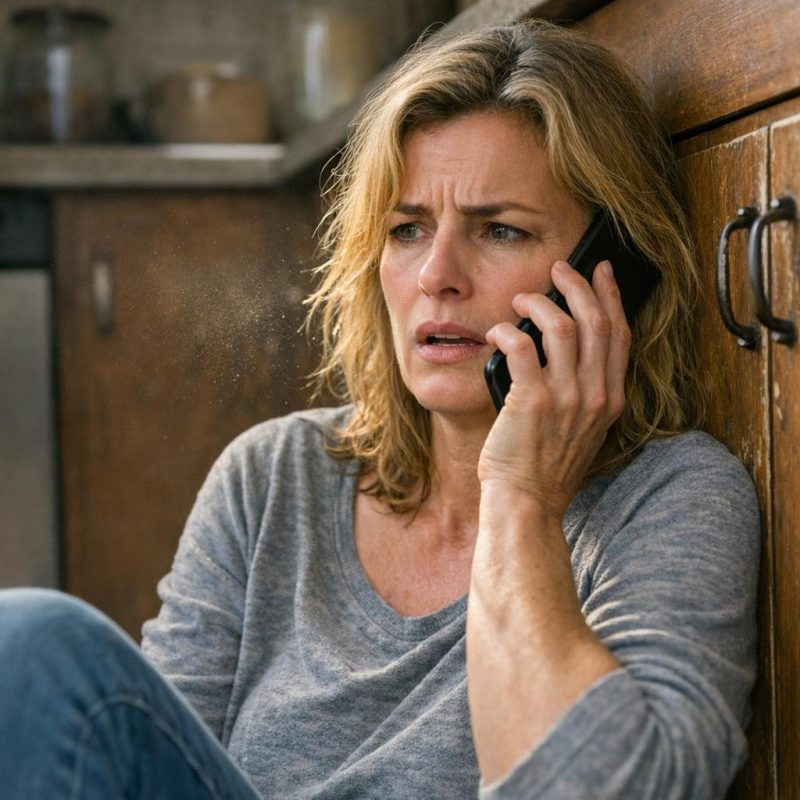 Image by RM AI
The Whitfield Estate
Daniel picked me up the next morning, and we drove out to the edge of town where the old estates sat behind iron gates and long driveways lined with trees. I'd never been to this part of town much—it wasn't my world, never had been. But Daniel knew the address, and when we pulled up to the Whitfield property, I felt something shift in my chest. The house was enormous, sprawling across acres of perfectly manicured lawn. There was a fountain in the circular driveway, stone columns at the entrance. 'They've always been prominent here,' Daniel said quietly, watching my face. 'Philanthropy, charity boards, that kind of thing.' I stared at the house, trying to imagine my son growing up behind those walls. Had he been happy? Had he wanted for nothing? Or had he felt the same emptiness I'd carried all these years? Daniel was looking something up on his phone, scrolling through old news articles. He went quiet for a moment, then turned to me. His expression was careful, measured, like he knew what he was about to say would hurt. 'They donated the new wing to the hospital the year you gave birth.'
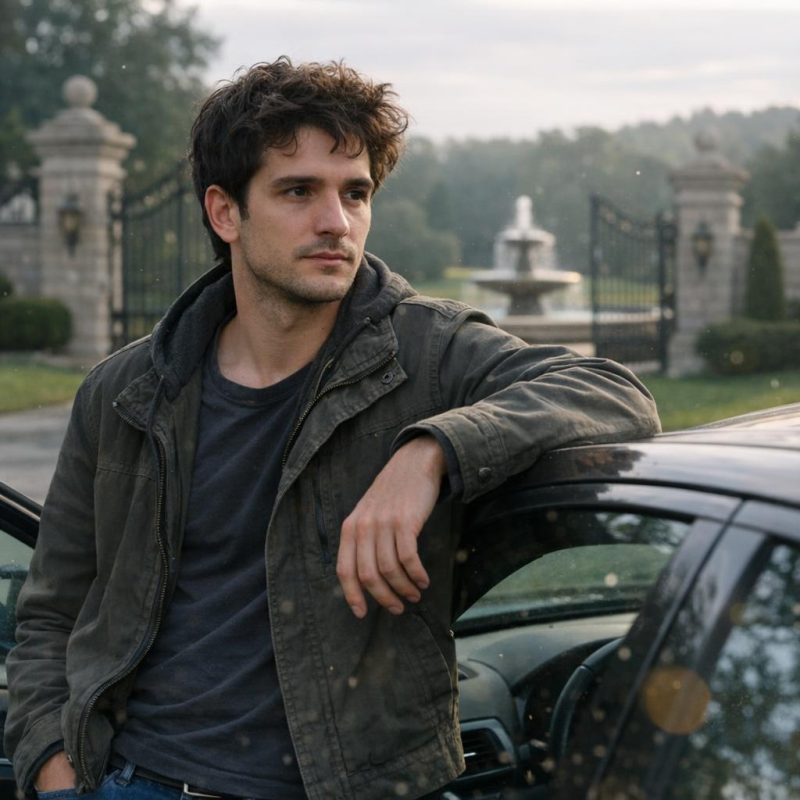 Image by RM AI
The Couple I Met
I tried to explain to Daniel what I remembered about the adoption—about the couple I'd met through Attorney Brennan. John and Linda Hayes. They seemed so kind, so genuine. Linda had cried when she held my hand and told me how much they wanted a child, how they'd been trying for years. John was quiet, steady, the kind of man who seemed like he'd be a good father. I remembered thinking they would love my baby the way I couldn't, that they would give him everything I couldn't provide. 'They seemed perfect,' I told Daniel. 'I really believed I was doing the right thing.' He was listening carefully, nodding, but there was something in his expression that made my stomach turn. He reached into his bag and pulled out a photocopy of a document. 'I need to show you something,' he said. It was an amended birth certificate, the kind that gets issued after an adoption is finalized. I looked at the names listed as parents, expecting to see John and Linda Hayes. But that's not what it said. Daniel pulled out a photocopy of an amended birth certificate that listed different parents entirely: Thomas and Margaret Whitfield.
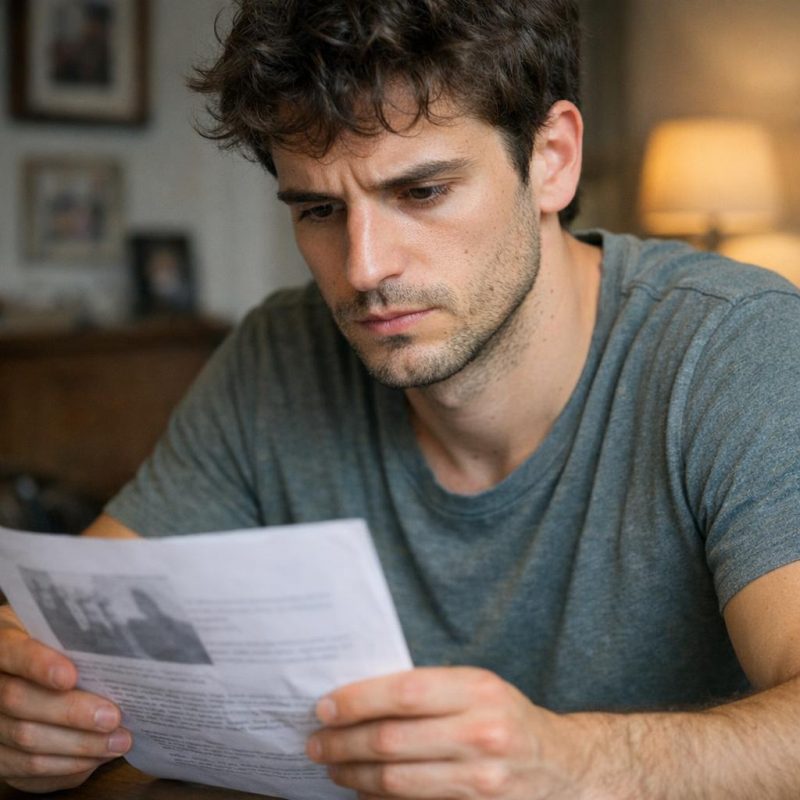 Image by RM AI
Attorney Brennan
We found Attorney Brennan living in a modest ranch house on the north side of town, nowhere near the Whitfield estate. He answered the door slowly, leaning on a cane, his eyes watery and suspicious. I introduced myself, reminded him of the adoption he'd handled forty years ago, and watched his face harden. 'I handled many adoptions,' he said curtly. 'I don't recall specifics.' Daniel pressed him gently, asking about records, about the Hayes family, about the Whitfields. Brennan shook his head, his jaw tight. 'All my records were destroyed in a fire,' he said. 'Nineteen ninety-seven. Lost everything.' I felt my frustration rising, the sense that he was lying, that he knew exactly what we were talking about. 'You don't remember anything about my case?' I asked. He looked at me with something like pity, or maybe contempt. 'I'm sorry for whatever you're going through,' he said. 'But I can't help you.' We left, and I felt defeated, like we'd hit a wall. But as we walked down his driveway, Daniel suddenly stopped and turned back toward the house. 'Wait,' he said. I followed his gaze to the living room window, where a framed photo hung on the wall inside. As we left, Daniel noticed a framed photo on Brennan's wall: him shaking hands with Thomas Whitfield at a ribbon-cutting ceremony.
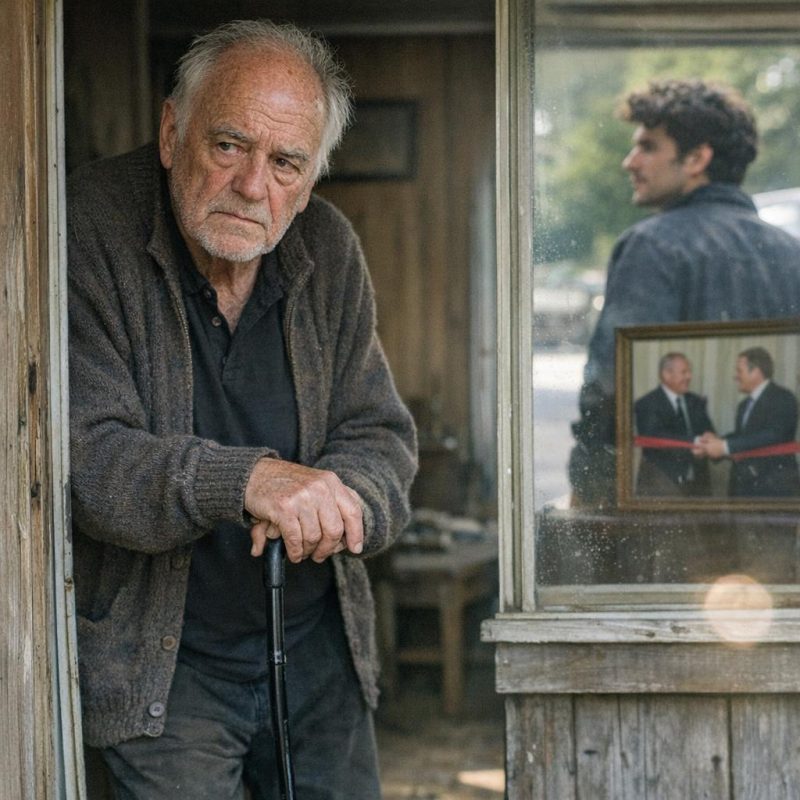 Image by RM AI
The Fire That Wasn't
Emily called me that night, excited in a way that felt almost manic. She'd been digging through historical newspaper archives, searching for anything about the fire that destroyed Brennan's records. 'Mom, listen to this,' she said, and I could hear the rustling of pages, the click of her keyboard. She'd found articles from 1997, coverage of the fire at Brennan's office building. It had been ruled suspicious—there were traces of accelerant, signs of forced entry, but the investigation had stalled. No arrests were ever made. 'Why would someone destroy adoption records?' Emily asked, and I didn't have an answer. But then she found something else, something that made her voice go sharp. 'The fire happened exactly one week after the state announced an audit,' she said. 'They were going to review private adoption agencies for compliance.' I felt my blood run cold. It wasn't a coincidence. Someone had burned those records to hide something, to keep the state from finding out what had really been going on. Emily kept talking, reading excerpts from articles, but I could barely focus. All I could think about was how deliberate it all seemed, how calculated. The fire occurred exactly one week after a state audit was announced for private adoption agencies.
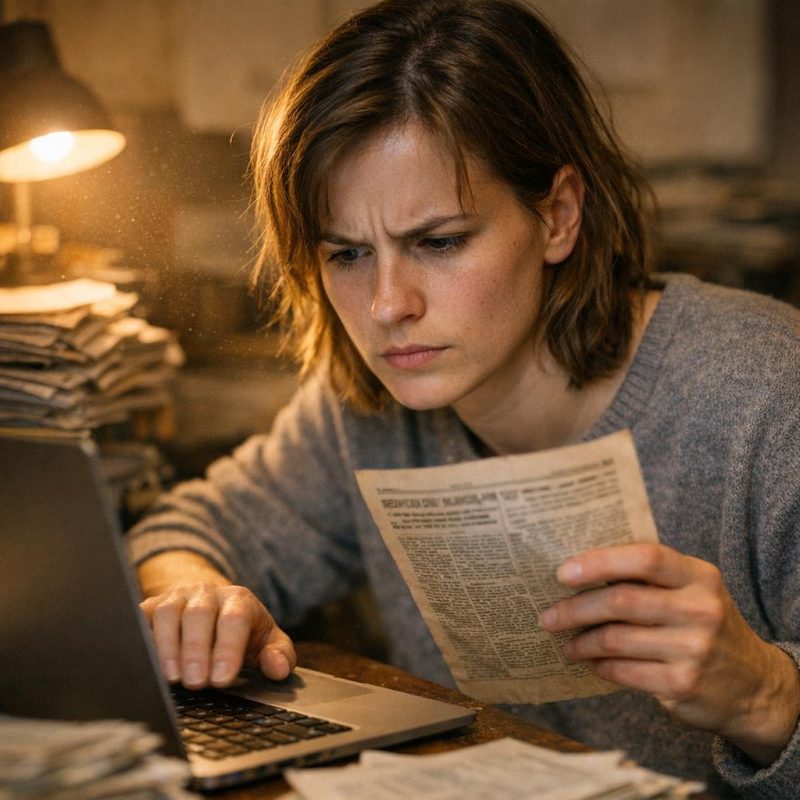 Image by RM AI
Sarah's Journal
Daniel came over with a manila envelope, the kind that feels heavy with secrets. He looked hesitant, like he wasn't sure he should be showing me what was inside. 'These are photocopies,' he said. 'From Sarah's journal. She kept it hidden, but I found it after she died.' I opened the envelope and saw pages of handwritten entries, Sarah's neat, careful script filling the lines. She wrote about her father, about how he'd come home late some nights, looking worn down and angry. She wrote about arguments she'd overheard, about money and decisions he didn't want to make. One entry stood out, dated just a few months after my son was born. She described her father sitting at the kitchen table, his head in his hands, telling her mother he hated what he'd been forced to do. 'But the money,' Sarah had written, 'the money was too good to refuse.' I read it twice, three times, trying to understand. Sarah's father had worked for the hospital—Daniel had told me that before. He'd been part of the system, part of whatever had happened to my son. And he'd been paid for it. One entry read: 'Dad came home angry tonight. He said he hated what they made him do, but the money was too good to refuse.'
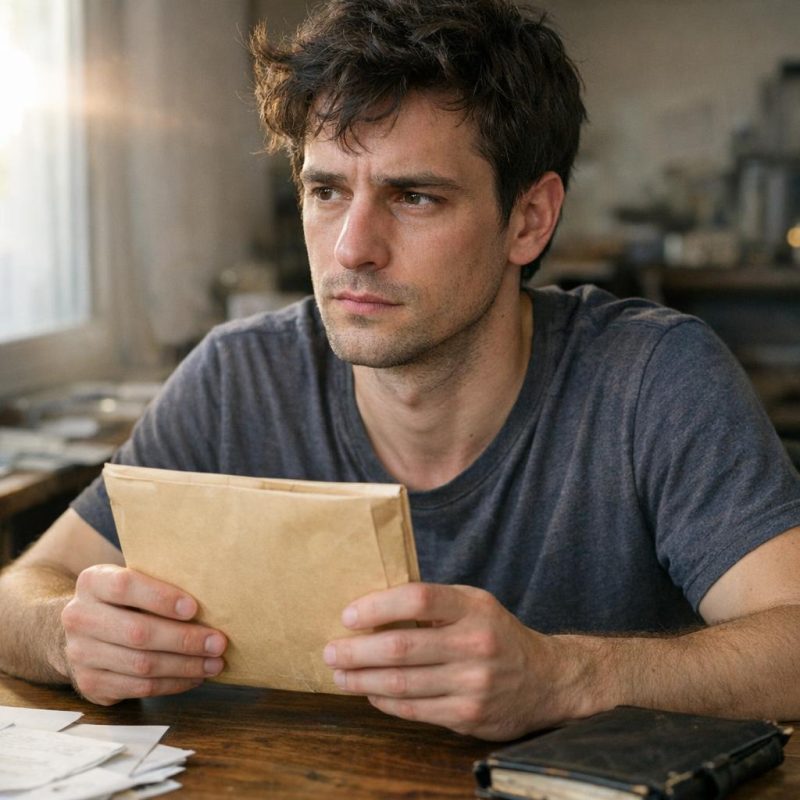 Image by RM AI
Emily's Doubt
Emily came over for dinner, but neither of us had much appetite. She'd been quiet all evening, picking at her food, and I could tell something was weighing on her. Finally, she set down her fork and looked at me. 'Mom, I need to ask you something,' she said. Her voice was careful, measured. 'Are we sure we should keep doing this?' I felt a jolt of surprise. 'What do you mean?' She leaned back in her chair, her eyes full of conflict. 'What if he doesn't know he was adopted? What if the Whitfield son has built a whole life, and we come in and destroy it?' I understood her fear—I'd been wrestling with it myself. But I also knew I couldn't stop now. 'I need to know,' I said. 'I need to know what happened to my baby.' Emily nodded, but she didn't look convinced. 'I'm not saying we stop,' she said. 'I'm just saying we need to be ready for what we might find.' She was right, of course. But the truth was, I wasn't sure I'd ever be ready. I told Emily I couldn't stop now, but her question haunted me: 'What if he doesn't want to know?'
 Image by RM AI
The Genealogy Site
Daniel showed up at my door with a small DNA testing kit, the kind you spit into a tube and mail off. 'I know this feels invasive,' he said, 'but it's the fastest way to know for sure.' I stared at the kit, feeling a strange mix of fear and hope. He explained how the genealogy sites worked, how people uploaded their DNA and the database looked for matches—siblings, parents, cousins. 'I've already been working on this,' he admitted. 'I've connected with someone who might be your son.' My heart stopped. 'You what?' He held up his hands. 'I didn't tell him anything yet. I just reached out, said I was doing family research. But Mom, he's been searching too.' I sat down, the kit still in my hands. 'Searching for what?' Daniel's expression softened. 'For answers about his own birth. He's been at it for years, apparently.' I felt tears prick my eyes. All this time, while I'd been too afraid to look, maybe he'd been looking too. Maybe we'd been searching for each other all along. When I asked if this person knew why Daniel was reaching out, he said, 'Not yet—but he's been searching for answers about his own birth for years.'
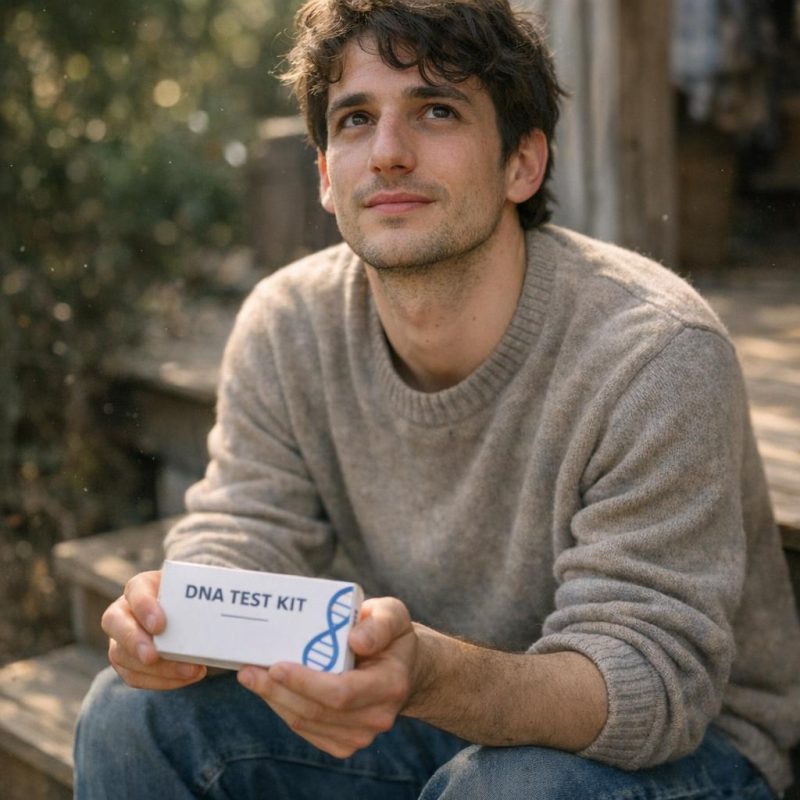 Image by RM AI
The Waiting
Six weeks. That's how long the DNA testing site said it would take. Six weeks of waking up at 3 AM, staring at the ceiling, wondering if somewhere out there, my son was doing the same thing. Emily tried her best to keep me occupied—she'd show up with takeout containers and photo albums, spreading our family history across my kitchen table like we were building a jigsaw puzzle of our lives. 'Look at this one,' she'd say, pointing to some Christmas morning from the eighties, or a beach trip where Daniel was missing his front teeth. I appreciated what she was doing, really I did. But my mind kept wandering to the baby I'd never photographed, never brought home for Christmas. One evening, we were looking through her baby pictures—she was maybe three days old in one of them, wrapped in a hospital blanket with her tiny fist near her face. Emily went quiet for a moment, studying the photo. Then she looked up at me with those searching eyes she's had since childhood, the ones that always seemed to see more than I wanted to show. She pointed to the photo of me holding her as a newborn and asked, 'Did you feel this way when you held him?'
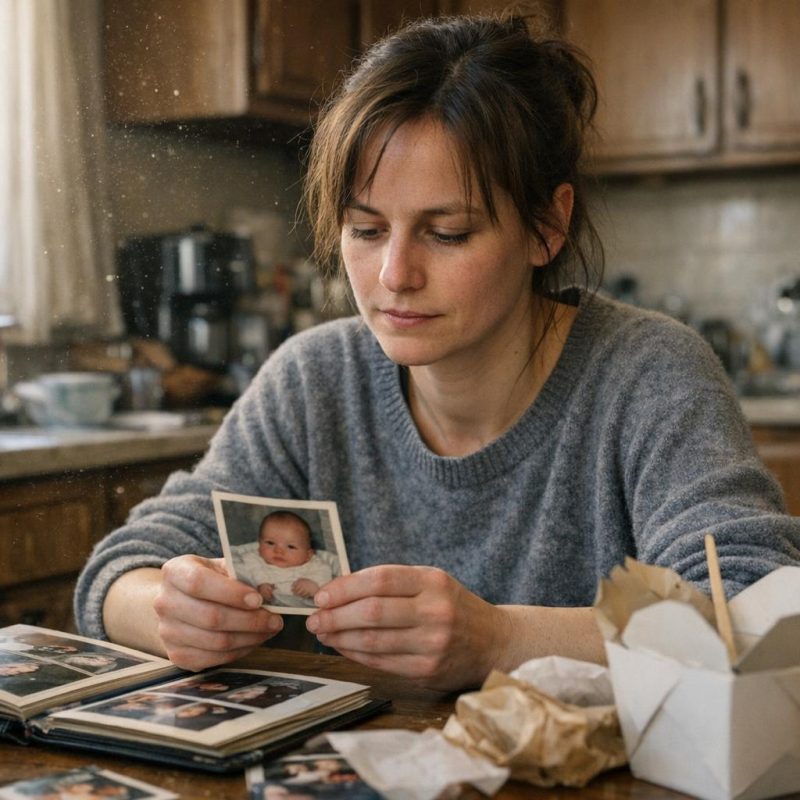 Image by RM AI
Margaret's Call
The phone rang on a Tuesday afternoon while I was making tea. Unknown number, but something made me answer it anyway. 'Mrs. Holloway? This is Margaret Whitfield.' I nearly dropped my phone. I'd never spoken to the woman in my life, but I knew exactly who she was—Thomas Whitfield's wife, or ex-wife, Daniel had mentioned. 'I hope I'm not catching you at a bad time,' she said, her voice smooth and measured, like she was calling about a charity fundraiser. 'I was wondering if we might meet for coffee. There's a matter I'd like to discuss with you privately.' My mouth went dry. 'What kind of matter?' She paused, and I could hear her choosing her words carefully. 'It concerns a misunderstanding from many years ago. I think it would be beneficial for both of us to clear the air before there's any unnecessary confusion.' Unnecessary confusion. What a delicate way to put it. I gripped the phone tighter. 'How did you even get my number?' 'That's not important,' she said quickly. 'What's important is that we talk. Would Thursday work for you?' I wanted to say no, wanted to hang up and pretend this call never happened. But I was too curious, and maybe too afraid not to know what she wanted. Margaret's voice was calm, almost rehearsed, and I felt a chill when she added, 'It would be better if we spoke before you take this any further.'
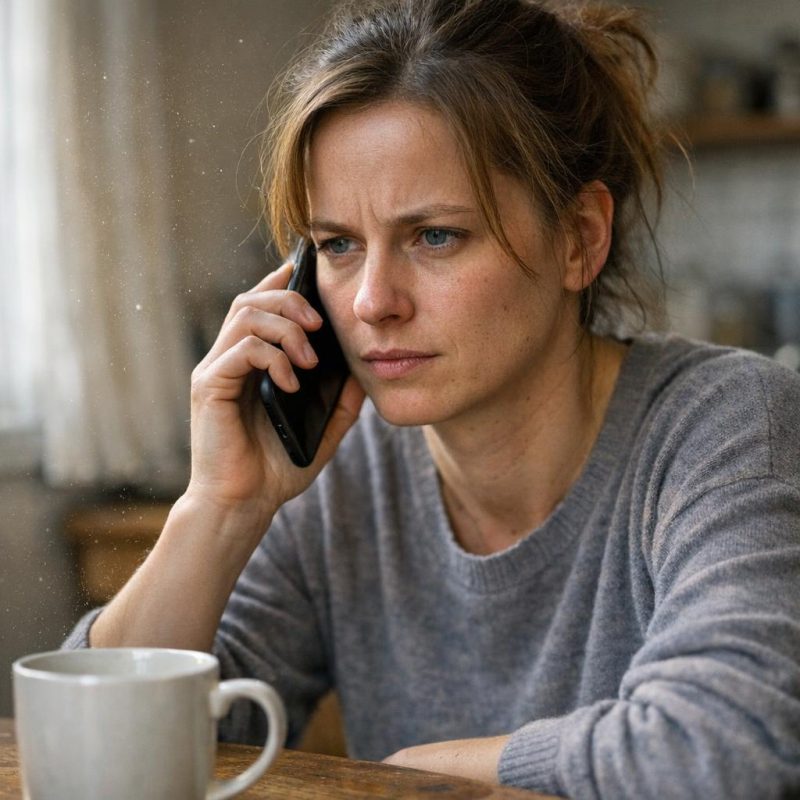 Image by RM AI
The Coffee Shop Meeting
We met at a coffee shop on the nice side of town, the kind with exposed brick and plants hanging from macramé holders. Margaret was already seated when I arrived, wearing a cream-colored blazer and pearl earrings—everything about her screamed old money and control. She stood to shake my hand, and her smile was perfectly calibrated: warm but not too warm, polite but distant. 'Thank you for coming,' she said as we sat down. She didn't waste time. 'I understand there's been some inquiry into my family's private affairs. I want to assure you that yes, my family did go through a private adoption in the early 1980s, but everything was handled legally and properly through reputable channels.' I watched her face carefully. 'What channels?' 'A licensed agency that unfortunately closed many years ago,' she said smoothly. 'All the paperwork was in order. The birth mother gave full consent.' My stomach twisted. 'And who was the birth mother?' Margaret's expression didn't change. 'That information was kept confidential, as was standard practice at the time.' I leaned forward. 'What about the Hayes couple? Were they part of this process too?' And there it was—just for a fraction of a second, her composure cracked. Her jaw tightened, her eyes flickered with something that looked like fear or maybe calculation. When I mentioned the Hayes couple, Margaret's composure slipped for just a second before she said, 'I don't know who that is.'
 Image by RM AI
Daniel's Warning
I called Daniel the moment I got home, my hands still shaking from the coffee meeting. 'She's lying,' I said before he could even say hello. 'I could see it in her face when I mentioned the Hayes name.' Daniel sighed, and I heard papers rustling on his end. 'Mom, the fact that she contacted you at all is a bad sign. It means they're monitoring what we're doing.' A cold feeling settled in my chest. 'What do you mean, monitoring?' 'I mean someone tipped them off that you were asking questions. Someone's been watching.' He paused. 'I've been doing some digging of my own. The Whitfields have money, real money, and people with that kind of wealth don't leave things to chance.' I sat down on my couch, suddenly exhausted. 'You think they hired someone to follow us?' 'Not follow—more like keep tabs. Track who you're talking to, who I'm contacting.' It sounded paranoid, but the way Margaret had found my number, the rehearsed quality of her words—it all made a sick kind of sense. 'Daniel, this is crazy. Why would they care so much after all this time?' 'Because whatever happened back then, they don't want it coming out now,' he said. Then he went quiet for a moment. 'Mom, I need to show you something. Can I come over?' When he arrived twenty minutes later, Daniel showed me a screenshot of a private investigator's license renewal—the investigator's billing address was the Whitfield estate.
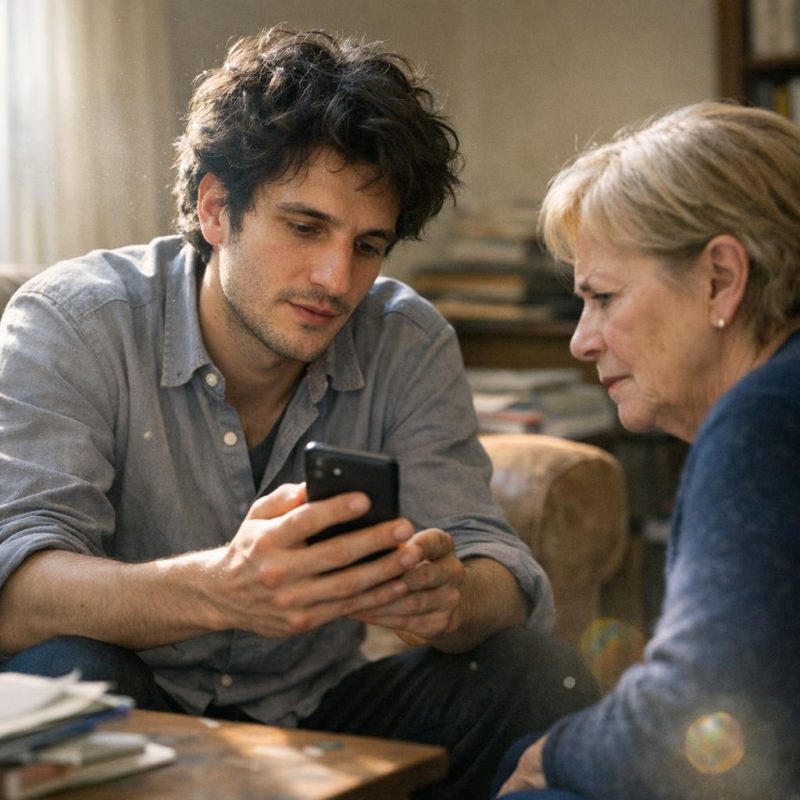 Image by RM AI
The Hayes Family Search
Emily insisted on coming with me to find the Hayes family. 'You're not doing this alone, Mom,' she said, and honestly, I was grateful. Daniel had tracked them down through public records—Linda and Robert Hayes, now in their mid-seventies, living in a retirement community about three hours north. I called ahead, explaining vaguely that I was looking into an adoption from 1983 and would like to speak with them if they were willing. Linda's voice on the phone had been hesitant but not unfriendly. 'I remember that time,' she'd said quietly. 'We can talk.' The drive felt endless. Emily tried to make conversation, pointing out landmarks and asking about my plans for the garden this spring, but my mind was racing too fast to engage. What would I say to these people? What did they know? The retirement community was nicer than I expected—not quite luxury, but comfortable, with walking paths and a pond. We found their unit number and stood outside the door for a moment. Emily squeezed my hand. 'Ready?' I wasn't, but I knocked anyway. The door opened almost immediately, like Linda had been standing right behind it, waiting. She was a small woman with white hair and kind eyes that went wide when she looked at me. Her hand flew to her mouth. When we arrived, Linda Hayes opened the door, took one look at me, and burst into tears.
 Image by RM AI
The Truth from Linda
Linda ushered us inside, apologizing through her tears, while her husband Robert helped her to the couch. Emily and I sat across from them, and for a long moment, nobody knew what to say. Finally, Linda composed herself enough to speak. 'I'm sorry,' she said, wiping her eyes. 'It's just—you look exactly like the photo they showed us. From the hospital.' My heart started racing. 'What photo?' Robert took his wife's hand. 'In 1983, we were matched with a baby through a private adoption agency. They showed us a picture of the birth mother—you—and told us the baby would be ready for placement in a few days.' He paused, his jaw tightening. 'Then, at the last minute, they called and said there had been a complication. The adoption fell through.' Linda's voice broke. 'But they said they had another baby, a boy who needed a home just as urgently. They convinced us it was meant to be, that this was the right child for us.' She looked down at her hands. 'We wanted a baby so badly, we didn't ask the questions we should have asked.' I felt Emily stiffen beside me. 'So you took a different baby?' 'We raised him,' Robert said quietly. 'We loved him. We still love him. But we never knew what happened to the first one.' Linda whispered, 'We never knew what happened to the baby we were supposed to get—the one they said was yours.'
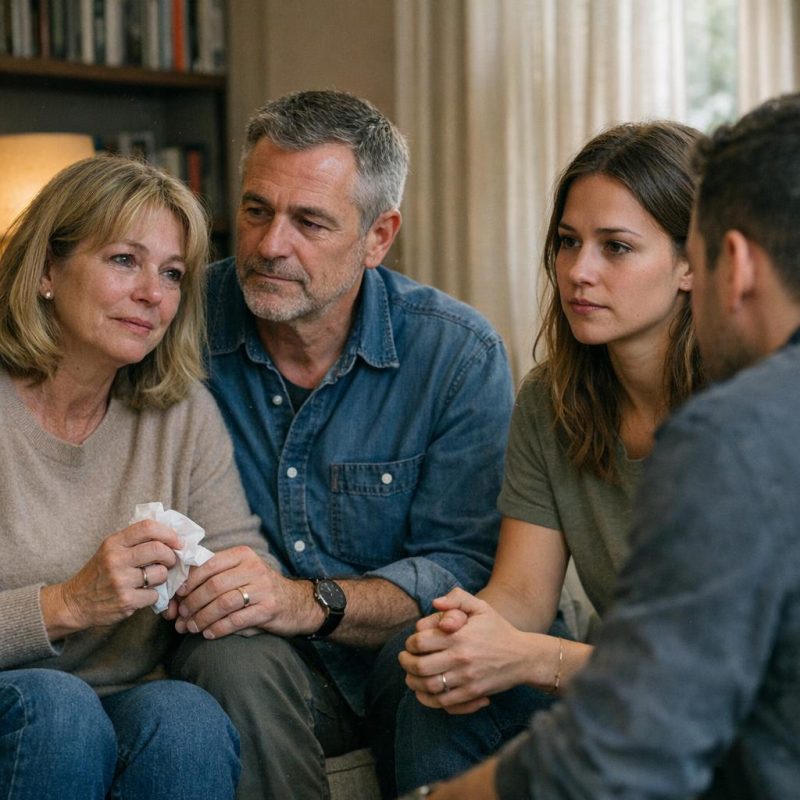 Image by RM AI
The Hayes's Son
Linda called her son after we'd been talking for about an hour. 'Peter should hear this too,' she said, and I wasn't sure if I was ready but I nodded anyway. He arrived within twenty minutes—a tall man with graying temples and his father's steady gaze. When Linda introduced us, explaining the whole tangled story, Peter listened without interrupting, his expression unreadable. Finally, he turned to me. 'So you're looking for your biological son, and my parents were supposed to adopt him?' I nodded, my throat tight. He studied my face for a long moment, and I found myself doing the same, searching for any resemblance, any hint of recognition. There was none. He had his adoptive father's square jaw, but his eyes were different, his build was different—everything was different. 'I've always known I was adopted,' Peter said quietly. 'My parents never hid it from me. But I've never been able to find out anything about my birth family. The agency that placed me closed down years ago, and all the records disappeared.' He glanced at his mother, then back at me. 'I'm sorry I'm not who you're looking for. I can see it in your face.' I felt tears prick my eyes, for him and for me and for all of us caught in this mess. Peter said gently, 'I've wondered my whole life who my birth mother was—maybe we can help each other find answers.'
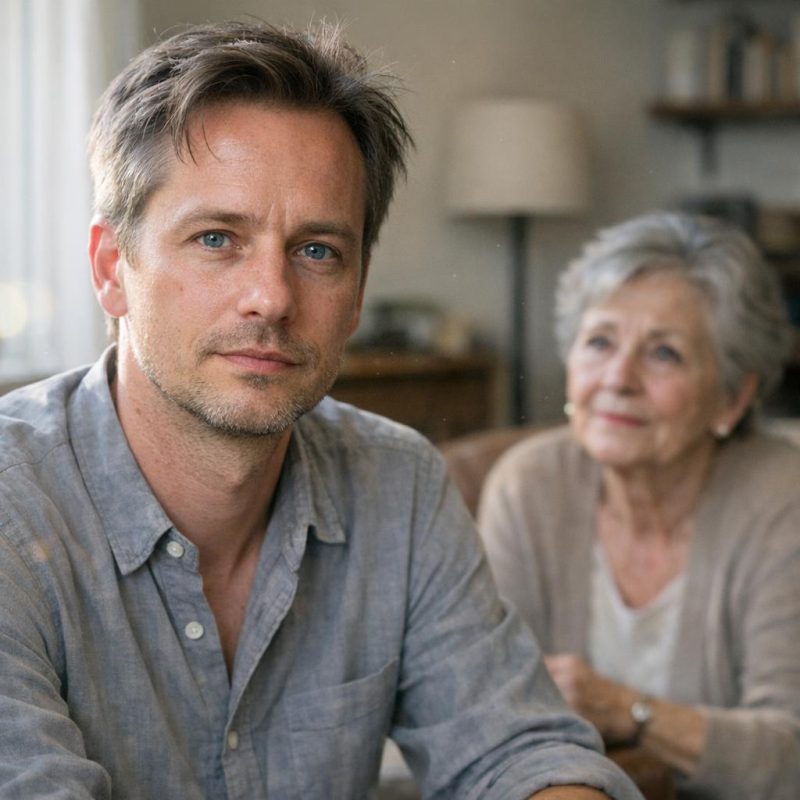 Image by RM AI
Two Mothers, Two Sons
Emily and I drove home in silence for the first hour, both of us trying to process what we'd learned. Finally, she spoke. 'So let me get this straight. The Hayes family was supposed to adopt your baby, but at the last minute, they were given a different baby—Peter. And your baby went somewhere else.' I nodded, my hands gripping the steering wheel. 'To the Whitfields, we think.' 'But who's Peter's birth mother? Where did he come from?' The question hung in the air between us. I'd been so focused on finding my own son that I hadn't fully considered the implications. Two babies. Two families expecting adoptions. Two mothers who gave birth and somehow both of their babies ended up in the wrong homes—or at least not the homes that were planned. 'Mom,' Emily said slowly, 'this wasn't just a mix-up. This was deliberate. Someone switched these babies on purpose.' My stomach turned. She was right. The precision of it, the timing, the way the agency had convinced the Hayes family to take a different child—none of it was accidental. 'The Whitfields wanted a baby,' I said, thinking out loud. 'They had money and connections. And someone gave them mine.' 'But why give the Hayes family a different baby at all?' Emily asked. 'Why not just tell them the adoption fell through?' I didn't have an answer. But Emily asked the question that made my blood run cold: 'How many other babies were switched?'
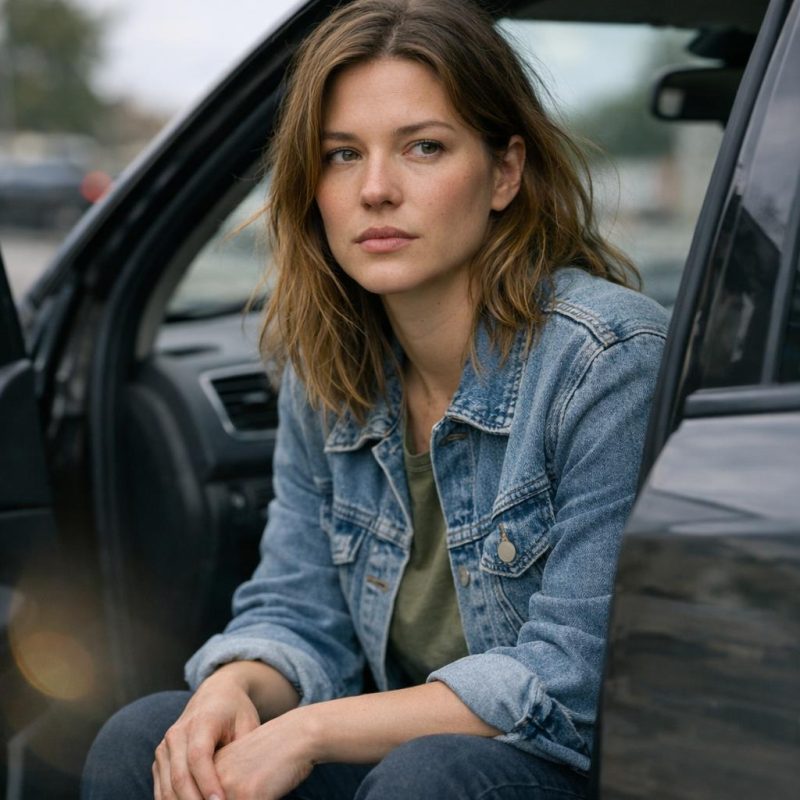 Image by RM AI
Peter's Records
Peter emailed me his adoption records two days later, and I printed them out with shaking hands. Emily sat beside me at the kitchen table as I spread the pages out, comparing them line by line with my own documents. The similarities were impossible to ignore. Same adoption agency. Same attorney—Brennan. Same vague, sanitized language about 'amended placement arrangements' and 'revised family assignments.' It was like someone had used a template, just swapping out names and dates. 'Mom, look at this,' Emily said, pointing to a section I'd almost missed. The intake form. The hospital name was right there, spelled out in faded typewriter ink. 'That's where I gave birth,' I whispered. My throat felt tight. Emily pulled out her phone and started cross-referencing dates. 'Peter was placed with the Hayes family on March 14th, 1984. You gave birth on March 9th.' 'Five days apart,' I said. 'Could be a coincidence,' Emily offered, but her voice said she didn't believe it. I kept reading, my eyes scanning down the page until I found it—the detail that made everything stop. One document listed the same hospital, the same week, and the same attending physician as my own records.
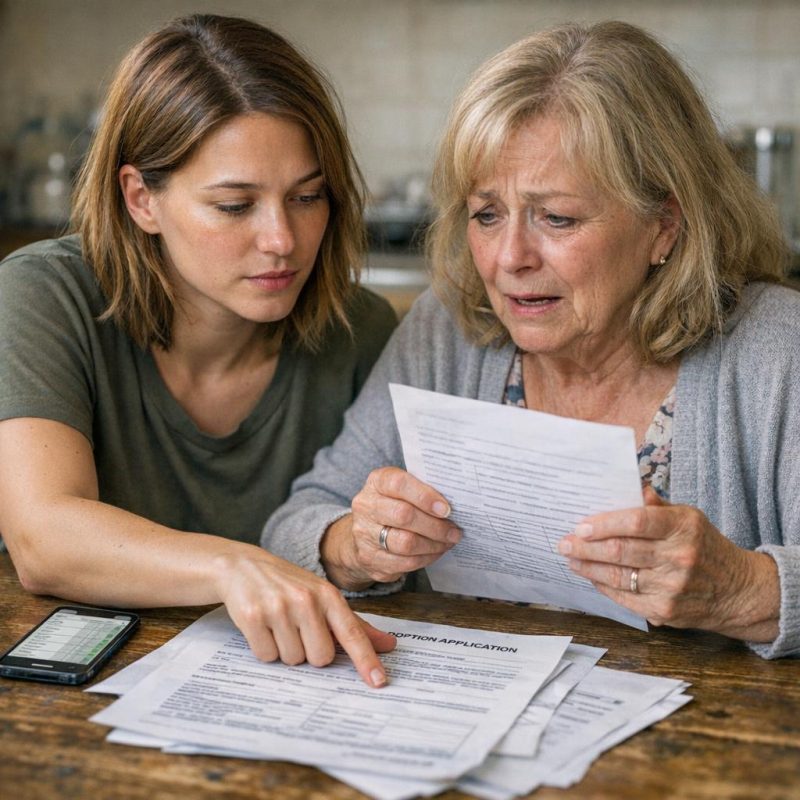 Image by RM AI
The Hospital
The hospital looked different now—bigger, more modern, with a new glass atrium that hadn't existed forty years ago. Daniel met us in the lobby, holding a folder of notes he'd compiled. 'I called ahead,' he said. 'They're expecting us.' The records administrator was polite but firm. All files from the 1980s had been digitized five years ago, she explained, and the physical documents were destroyed per standard retention policy. 'Destroyed?' I repeated. She nodded sympathetically. 'We can pull up digital records if you have a patient ID or date of birth, but I have to warn you—digitization doesn't always capture handwritten notes or marginal annotations.' We tried anyway. She typed, clicked, scrolled. My birth date. The maternity ward. But the file that appeared on her screen was bare-bones—just a discharge summary, no details. Emily asked about interdepartmental transfer records. The woman shook her head. 'If it wasn't scanned, it doesn't exist anymore.' We thanked her and walked back through the lobby in silence, the weight of another dead end pressing down on us. As we left, a retired nurse approached us in the parking lot and said, 'You're asking about the wrong records.'
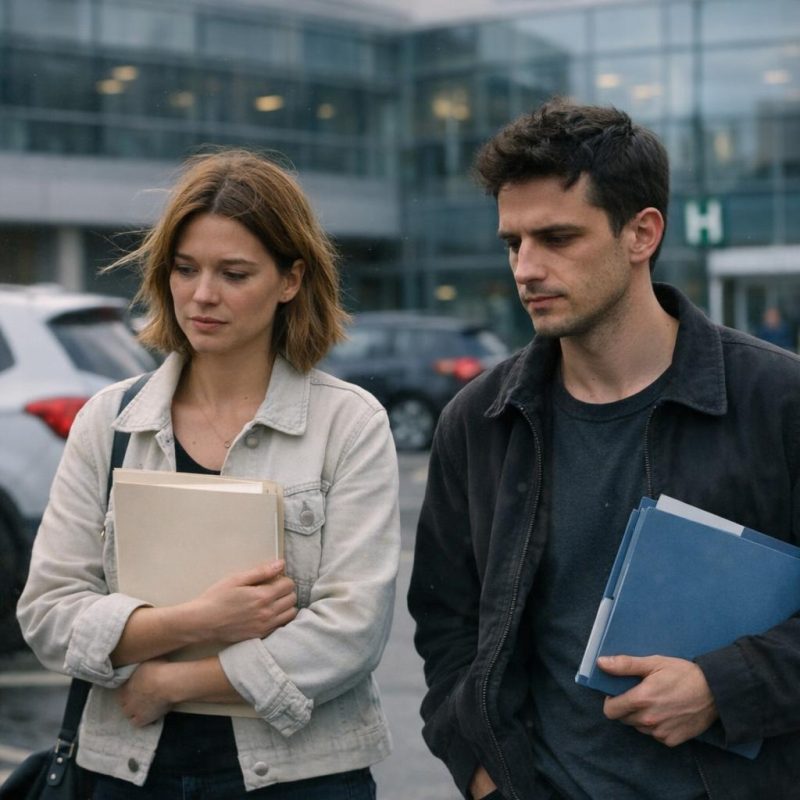 Image by RM AI
Nurse Helen's Story
The woman was older, maybe late fifties, with silver hair pulled back in a loose bun. She introduced herself as Helen Cross. 'I worked the maternity ward back then,' she said, glancing around nervously. 'I heard you inside, asking about the eighties. I've been retired three years, but I still remember things that didn't sit right.' We stood in the parking lot, the four of us forming a small circle. Helen explained that she'd been a night-shift nurse and had seen babies transferred between floors without the usual documentation. 'Sometimes a baby would come in with one chart, and by morning, it would have a different one,' she said. 'I asked my supervisor once, and she told me to mind my business.' Emily asked if she remembered any specific incidents. Helen hesitated, then nodded. 'There was one night—late, maybe two in the morning. A lawyer showed up. That wasn't normal. Family, yes. Social workers, sometimes. But a lawyer with a briefcase?' She looked directly at me. 'We weren't supposed to ask questions, but I remember one night a lawyer came in with a briefcase—and two babies left in different arms than they came in with.'
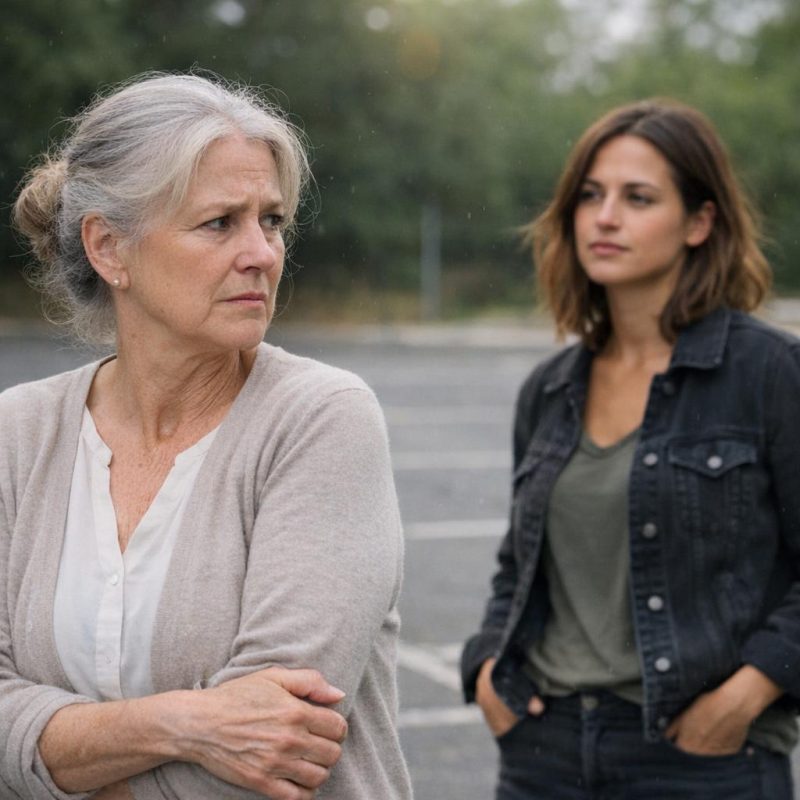 Image by RM AI
The Briefcase
I felt Emily's hand on my arm, steadying me. Daniel pulled out his phone and scrolled quickly, then turned the screen toward Helen. 'Is this the lawyer you saw?' It was a photo of Attorney Brennan from an old law firm directory—younger, but recognizable. Helen's eyes widened. 'That's him,' she said without hesitation. 'I remember because of his briefcase. Expensive leather, looked custom-made. It had gold initials on the side—W.B., I think.' 'William Brennan,' Daniel confirmed. My heart was pounding so hard I could barely hear my own thoughts. Helen had seen him. She'd witnessed this forty years ago, and she'd kept it to herself all this time. 'Do you remember anything else about that night?' I asked, my voice cracking. Helen bit her lip, thinking. 'There was paperwork,' she said slowly. 'He had the nurses sign something—a transfer authorization, maybe. And he wasn't alone.' 'What do you mean?' Emily asked. Helen looked uncomfortable, like she was pulling up a memory she'd tried to bury. 'There was another man with him that night—tall, silver hair, looked like money. He did all the talking.'
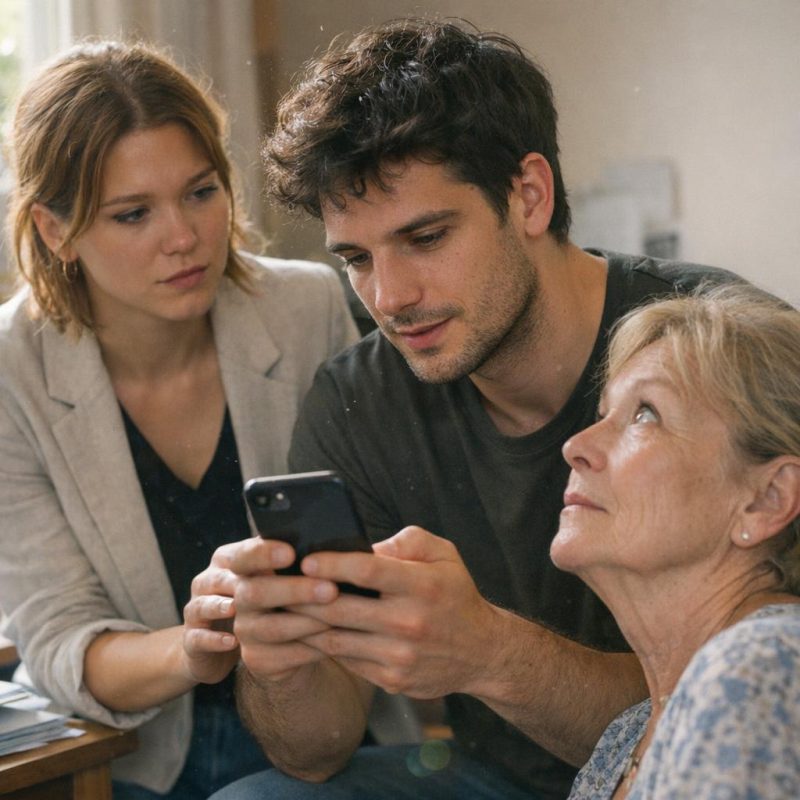 Image by RM AI
Helen's Fear
The description hit me like a punch. Thomas Whitfield. It had to be. Daniel asked Helen why she'd never reported what she saw, and her face darkened. 'I tried,' she said quietly. 'Not officially, but I mentioned it to my supervisor the next morning. She pulled me into her office and told me that if I valued my job and my nursing license, I'd forget what I thought I saw.' Helen's hands twisted together. 'I was twenty-six. I had student loans. I couldn't afford to lose everything over something I didn't fully understand.' I didn't blame her—I couldn't. She'd been intimidated into silence by people with power and money, just like I'd been made to feel like I had no choice all those years ago. Emily asked the question I was too afraid to. 'Would you testify now? If we needed you to go on record about what you saw?' Helen looked away, staring at the hospital building like it held ghosts she didn't want to face. 'I'm not sure I'm brave enough,' she admitted, her voice barely a whisper. Then she turned back to us. 'But I kept something that might help.'
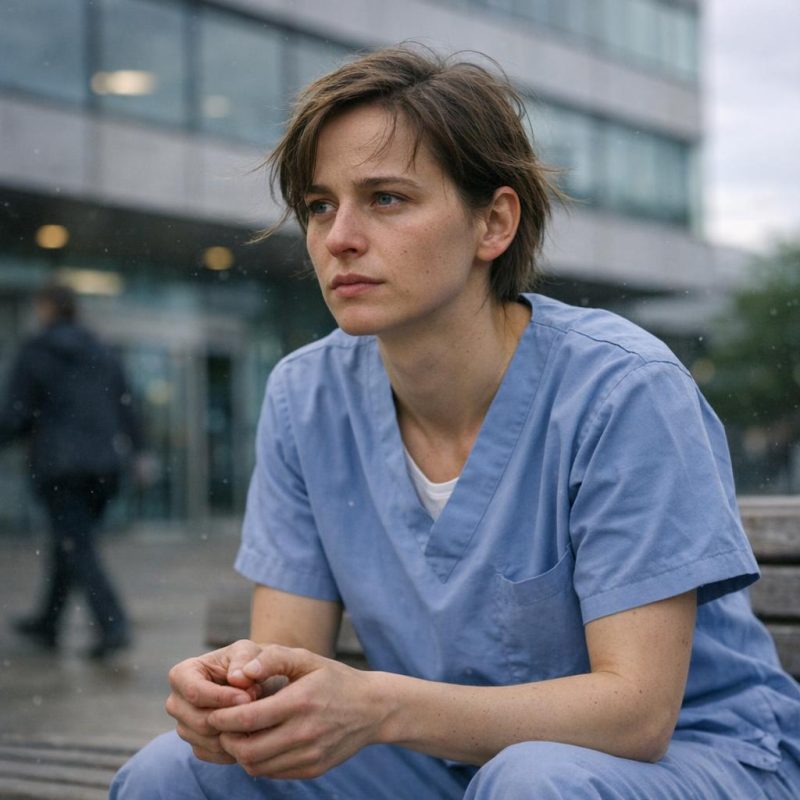 Image by RM AI
The Logbook
Helen invited us to her house, a small bungalow twenty minutes from the hospital. She made tea, but none of us touched it. She disappeared into a back room and returned with a cardboard box labeled 'Maternity 1983-1985.' 'I wasn't supposed to take this,' she said, setting it on the table. 'When they started digitizing, they were going to shred everything. I grabbed this logbook on my last shift. I told myself it was just nostalgia, but I think I knew I was saving evidence.' She opened the box and pulled out a spiral-bound notebook, its pages yellowed and brittle. It was a handwritten log of patient names, baby weights, birth times, and transfer notes. Helen flipped through it carefully until she found March 1984. My hands shook as I leaned in. There were dozens of entries—mothers, babies, routine discharges. But some had notes in the margin, scribbled in a different handwriting. 'Reassigned per legal instruction,' one said. 'See Brennan.' And then I saw it. My name. Patricia Hensley. Baby boy, 7 lbs 3 oz. And beside it, in that same margin handwriting: 'Reassigned per legal instruction—see Brennan.'
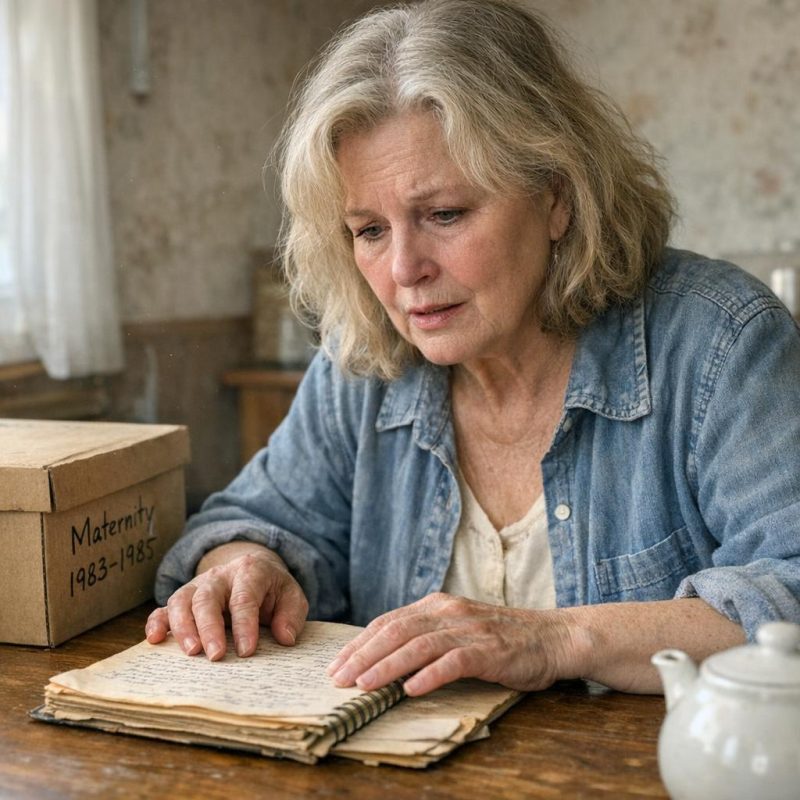 Image by RM AI
The DNA Results
I checked my email obsessively for three days after submitting my DNA sample. When the notification finally came, I almost didn't open it. Emily was at work. I was alone in my living room, staring at my laptop screen like it might explode. I clicked. The results loaded slowly—ethnicity breakdown, health markers, and then the section I'd been waiting for: Close Family Matches. One name sat at the top of the list. 'JWhitfield42.' The username meant nothing to most people, but my breath caught. The profile was sparse—no photo, no location, no personal details. Just a date of birth: February 1984. The match probability: 49.7%. Parent-child relationship. I called Daniel immediately, my voice shaking so badly I could barely get the words out. He drove over within twenty minutes. I showed him the screen, and he stared at it for a long moment before pulling up a separate browser window. He typed quickly, cross-referencing public records and social media. Then he stopped. His face went pale. Daniel pulled up the profile and said quietly, 'That's him—that's James Whitfield, Thomas's son.'
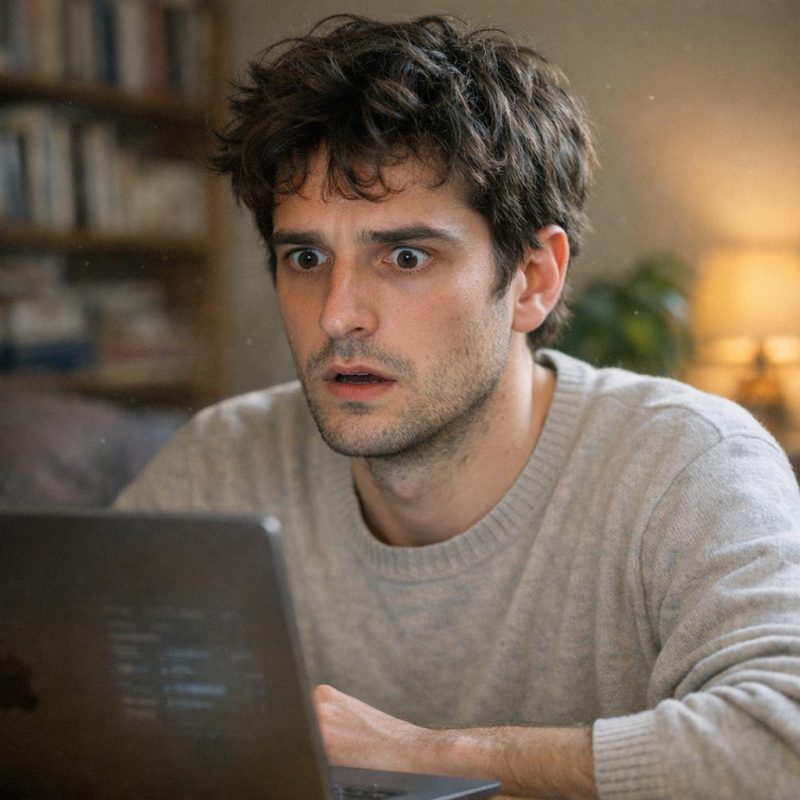 Image by RM AI
Emily's Question
Emily came over that night after I texted her. She sat across from me in the same spot Daniel had occupied hours earlier, staring at the DNA results on my laptop. 'So what now?' she asked. I didn't have an answer yet. The system allowed me to send a message to JWhitfield42—to James—but every time I opened the message box, my mind went blank. What do you say to someone whose entire life is about to be upended? How do you tell someone that the parents who raised him, the family he's known his whole life, might have stolen him? Emily leaned forward. 'Mom, you have to ask yourself if you're ready for this. Because once you reach out, there's no going back. His life changes. His relationship with the Whitfields changes. Everything changes.' She wasn't wrong. And there was a part of me—a deep, scared part—that wanted to close the laptop and pretend I'd never found him. But I couldn't. I'd spent forty years grieving a son I wasn't allowed to keep, and now I knew his name. I told Emily I had to, but the truth was I didn't know if I was ready to meet the son I had lost—or if he was ready to meet me.
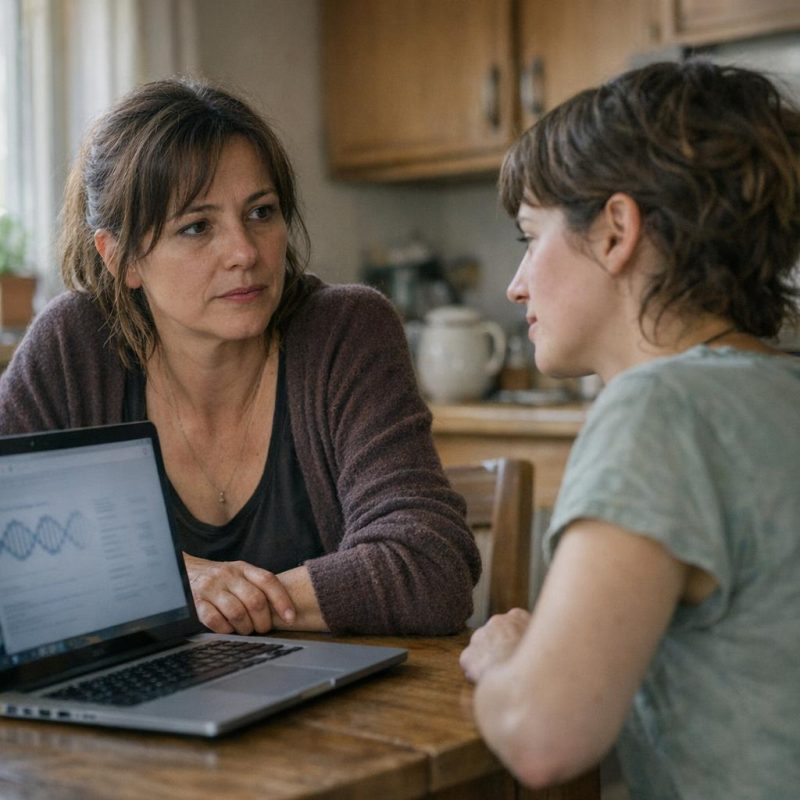 Image by RM AI
The First Message
I must have written and deleted that message twenty times. My hands were shaking so badly I could barely type. Emily had gone home hours ago, and it was past midnight, but I couldn't sleep—couldn't do anything but stare at that blank message box on the genealogy site. Finally, I just started typing the truth: 'My name is Patricia. I placed a baby boy for adoption in 1983, and I believe you might be my son. I don't expect anything from you. I just needed you to know that I've thought about you every single day for forty years. If you're willing, I'd like to speak with you.' I read it over three times before I hit send. Then I closed the laptop and sat there in the dark, convinced I'd never hear back. That he'd think I was some crazy woman trying to disrupt his life. That maybe I was. I made tea I didn't drink. I walked circles around my living room. I checked my email on my phone every five minutes like a teenager waiting for a text back from a crush. The silence felt like it was crushing me. Three hours later, at 3:47 AM, my laptop chimed with a notification, and I nearly knocked over my cold tea getting to it. The reply appeared: 'I've been waiting for this message my whole life.'
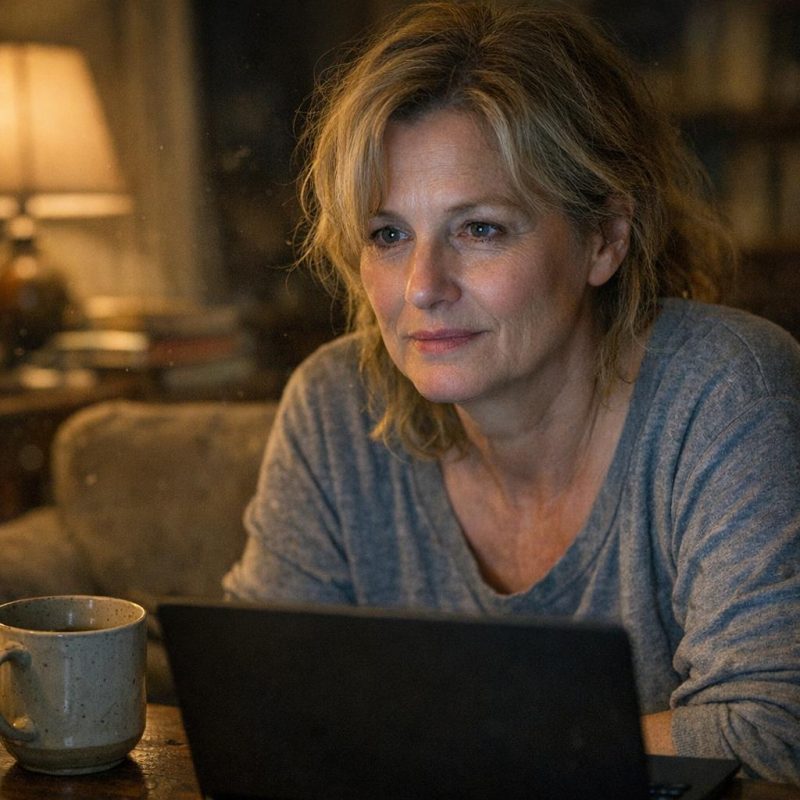 Image by RM AI
James's Suspicions
James wrote back immediately with a longer message. He said he'd always known something was off about his place in the Whitfield family—that he looked nothing like his parents, that they treated him differently than they treated each other, that there were whispers at family gatherings that stopped whenever he entered a room. About six months ago, he'd been going through old files in his parents' home office looking for his passport and found a birth certificate that didn't quite match the story he'd been told. The hospital was different. The date seemed wrong by a few days. Small things, but enough to make him suspicious. He'd taken a DNA test on a whim, expecting to find distant cousins, maybe some genealogy answers. He never expected to find a half-match to someone named Emily Morrison. He'd been sitting on that information for weeks, he said, trying to decide what to do with it. Trying to figure out if he wanted to know the truth or if ignorance really was bliss. He wrote about feeling like a stranger in his own life, about wondering who he really was. And then he asked the question I'd been dreading. He wrote, 'I need to know the truth—but I need to know if you're ready to tell me why you gave me up.'
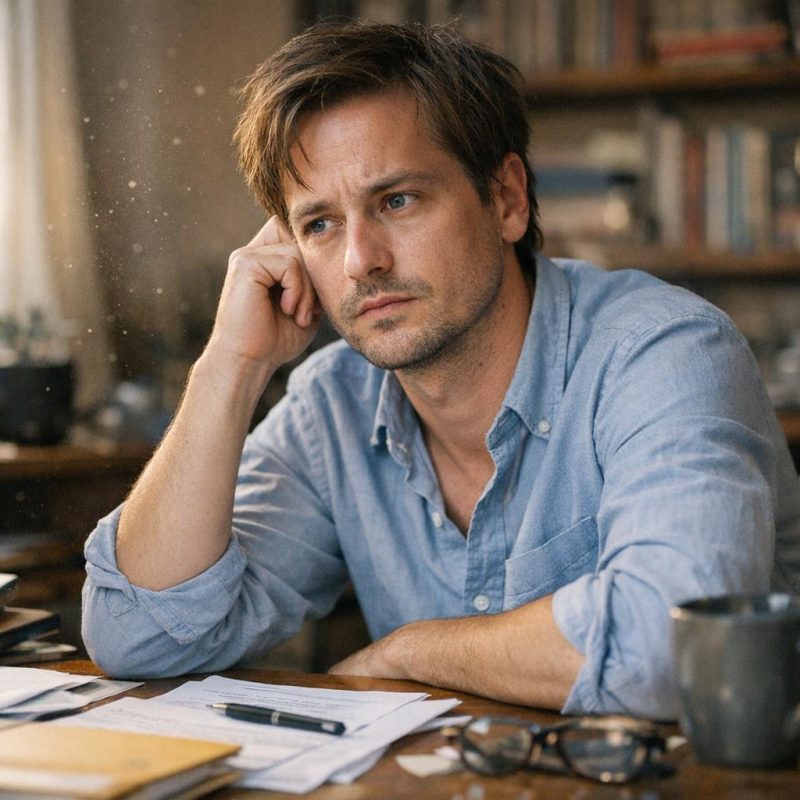 Image by RM AI
The Phone Call
We switched to phone calls after that. I couldn't tell this story over email—it felt too important, too raw. When he answered, his voice was deeper than I'd imagined, careful and a little scared. I told him everything. About being twenty-two and pregnant and terrified. About Michael leaving before I even knew I was carrying his child. About my parents' shame and the social worker who promised me that adoption was the loving choice, that my baby would go to a family who could give him everything I couldn't. I told him about signing papers in a hospital room while my body still ached from delivery, about how they wouldn't let me hold him, about how I'd believed—truly believed—that he was going somewhere better. That he'd have two parents who wanted him desperately, who'd love him the way I couldn't provide for him. My voice broke more than once. James listened without interrupting, and when I finished, there was a long silence on the line. I could hear him breathing, could hear something that might have been crying. Then his voice cracked when he said, 'The family I grew up with was wealthy, but they were never loving—and now I know why.'
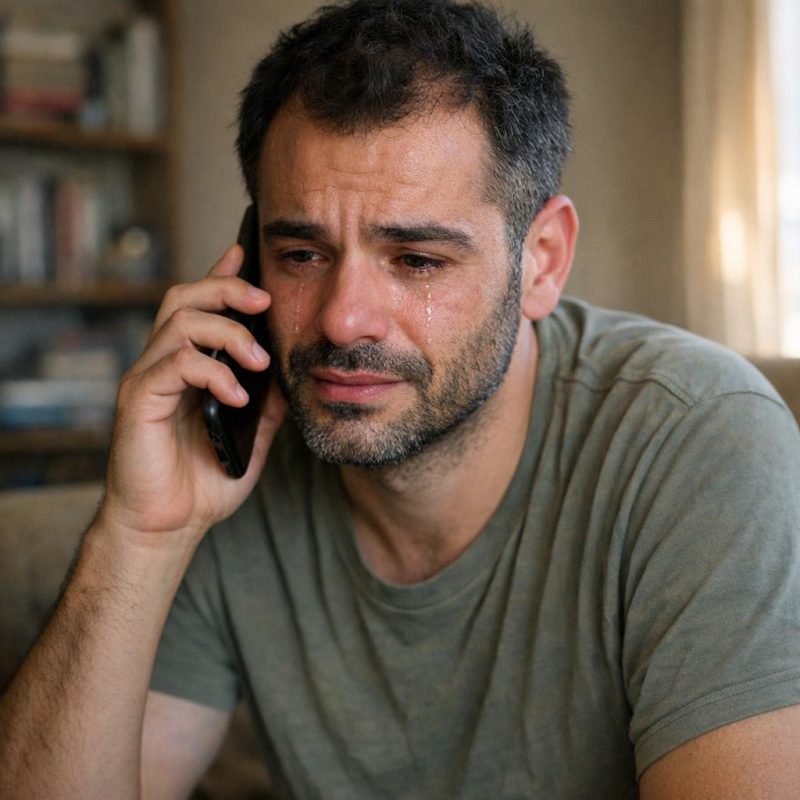 Image by RM AI
James's Childhood
James told me about his childhood in pieces, like he was opening old wounds one at a time. The Whitfields lived in a massive house in Connecticut, he said. His father Thomas was some kind of corporate executive, his mother Margaret came from old money. They had everything—except warmth. He described dinners where no one spoke, where he was corrected constantly about his posture and his manners and the way he held his fork. He said his parents never hugged him, never told him they loved him, never came to his school events. They sent him to the best schools, gave him the best tutors, but treated him more like a project than a son. Like something they'd invested in and expected returns on. He said he always felt like he was auditioning for their approval and never quite getting the part. Other kids had parents who were proud of them—his parents just seemed disappointed that he wasn't better. When he was twelve, he'd worked up the courage to ask his mother where he came from, if he was adopted. His father had overheard and pulled him aside later. James's voice got quiet when he told me what Thomas had said. He said, 'When I asked about my birth once, my father told me I should be grateful—that he paid good money to have me.'
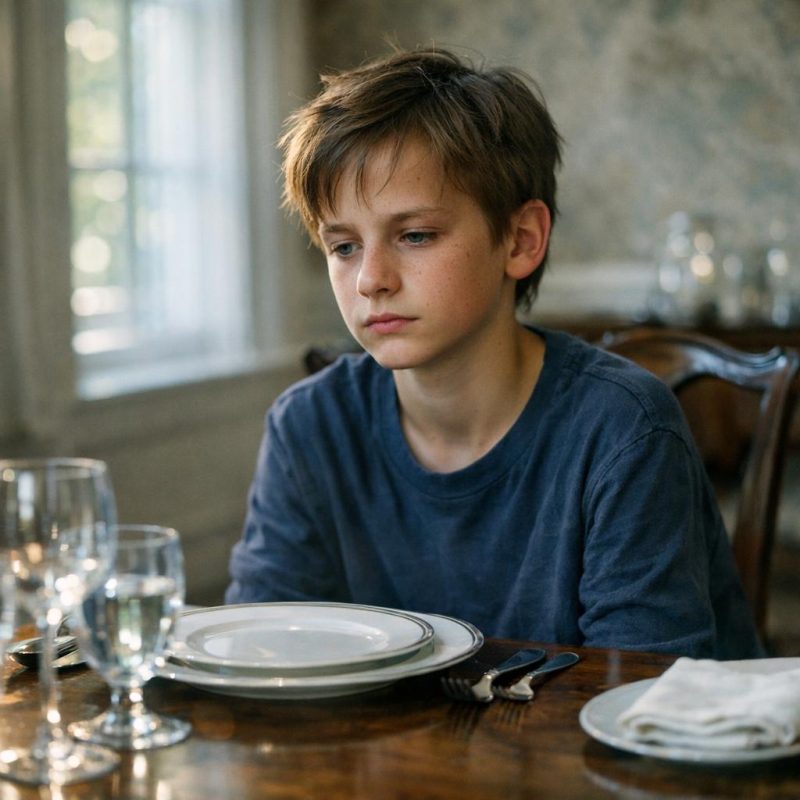 Image by RM AI
Meeting in Person
We decided to meet in person two weeks later. The emails and phone calls weren't enough anymore—I needed to see him, and I think he needed to see me too, to make this real. We chose a park halfway between my town and where James lived now, about two hours from each of us. Emily insisted on coming with me, and I was grateful. I barely slept the night before. I changed my outfit four times that morning like I was going on the world's most important first date. We got there early and sat on a bench near the entrance, and I watched every man who walked past, wondering if it was him. Emily held my hand. She was nervous too—this was her brother, after all. The brother she never knew existed. Then I saw him walking up the path, and I knew immediately. He was tall, with dark hair going gray at the temples, and he had Michael's eyes—that same intense brown that I used to get lost in. But his chin, his jawline, the way he held his shoulders—that was all me. All my side of the family. I stood up, and Emily stood with me, and we just stared at each other for what felt like an hour but was probably only seconds. When I saw him walking toward me, I recognized Michael's eyes and my own stubborn chin, and I couldn't stop myself from crying.
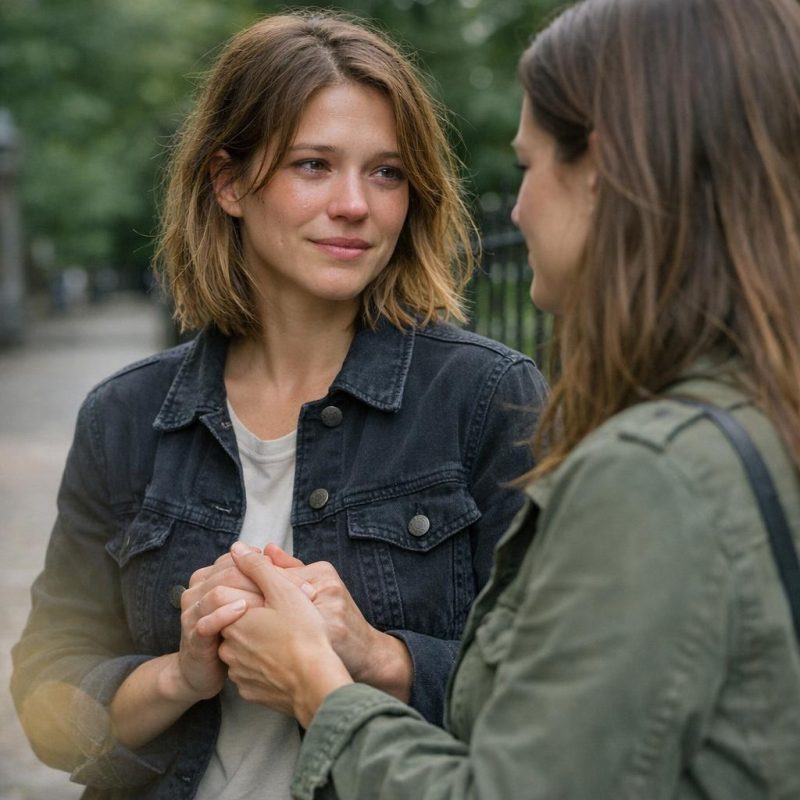 Image by RM AI
Emily Meets Her Brother
We spent three hours in that park, talking and crying and trying to compress forty years into an afternoon. James was quiet at first, watchful, like he was still deciding if he could trust us. But Emily broke through to him faster than I could have. She asked him about his work—he's a teacher, high school English—and they discovered they'd both read the same obscure novels, had the same cynical sense of humor. I watched them find each other, and it was like watching two puzzle pieces click into place. Emily told him about growing up with me, about the stories I'd told her, about learning she had a brother she'd never met. James listened with this expression I couldn't quite read—grief, maybe, or longing. He said he'd always wanted siblings growing up, that the Whitfield house had been so cold and empty. They talked about what they'd missed, the childhood they should have shared, the holidays and inside jokes and stupid arguments they'd been robbed of. And then Emily's expression changed, got harder. She looked at James and then at me, and her voice was steady when she spoke. Emily said to me later, 'We need to make sure the people who did this pay for what they took from all of us.'
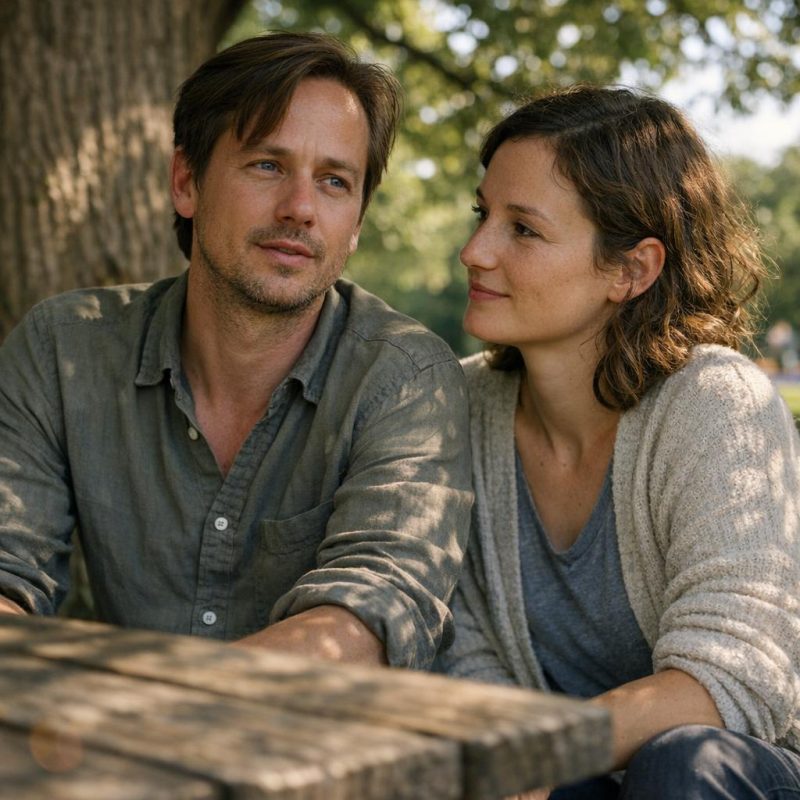 Image by RM AI
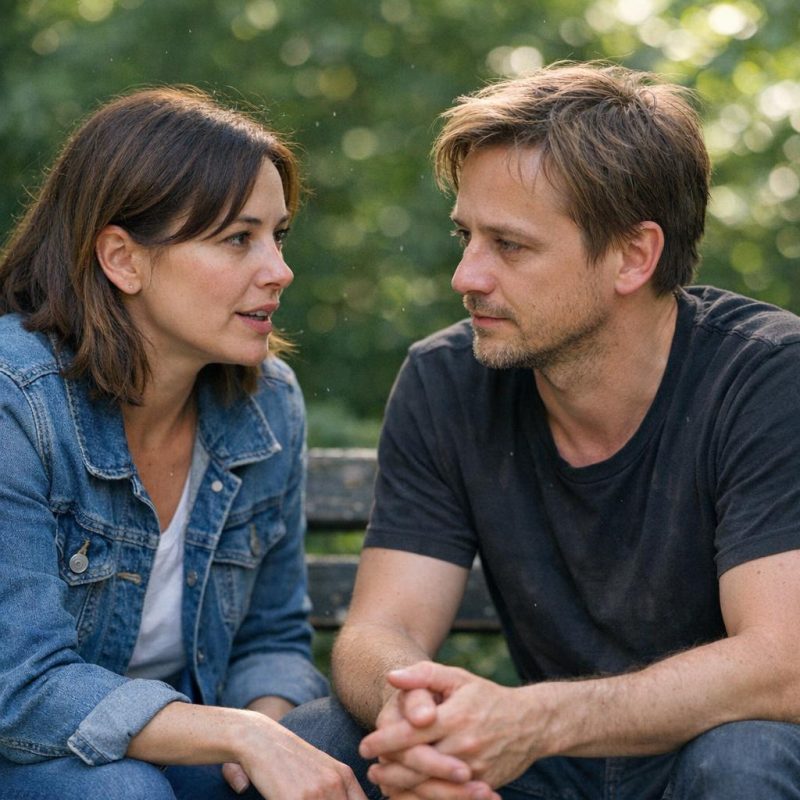 Image by RM AI
Confronting the Whitfields
James made the decision faster than I expected. He said he needed to confront Thomas and Margaret Whitfield directly—not for closure, but for answers. He wanted them to admit what they'd done, to say it out loud. I tried to talk him out of it at first, worried about what it would do to him to face them, but he was determined. He said he'd spent his whole life afraid of them, trying to earn their approval, and he was done. He wanted the truth, and he wanted me there with him when he got it. So two days later, we drove to Connecticut together. The Whitfield estate was exactly what I'd imagined—huge, pristine, completely intimidating. Old money in every brick. James hadn't told them we were coming. He said if he gave them warning, they'd have time to prepare their lies. We walked up to the front door together, and I felt like I might throw up. My son—the baby I'd given away forty years ago—was about to confront the people who'd raised him, and I was about to face the people who'd taken him from me. James rang the doorbell. We waited. Then the door opened, and there he was—Thomas Whitfield, silver-haired and cold-eyed, looking at James standing beside me with an expression I couldn't quite read. Thomas opened the door, looked at James standing beside me, and said coldly, 'I knew this day would come eventually.'
 Image by RM AI
Thomas's Defense
Thomas let us in, but it wasn't hospitality—it was calculation. Margaret appeared in the hallway behind him, her face pale, her hands twisting together. James didn't waste time. He demanded the truth about how they'd gotten him, about what they'd paid, about what they'd known. Thomas barely blinked. He said they'd gone through 'appropriate channels' to acquire a healthy infant from 'acceptable stock.' Those were his actual words—acquire, stock—like James had been a purchase, not a person. He explained that Margaret couldn't have children and that they needed an heir, someone to carry on the family name and business. He'd contacted someone who specialized in 'discreet arrangements' for people in their position. People who wanted children without the mess of public adoption agencies and their invasive questions. He admitted he'd specified preferences—white, healthy, educated birth parents—and paid accordingly. He talked about my son like he was describing buying a car. Margaret stood there silent, looking at the floor. I asked Thomas if he had any remorse, if he understood what he'd stolen from both of us. When I asked if he had any remorse, Thomas looked me in the eye and said, 'I gave your son opportunities you never could have.'
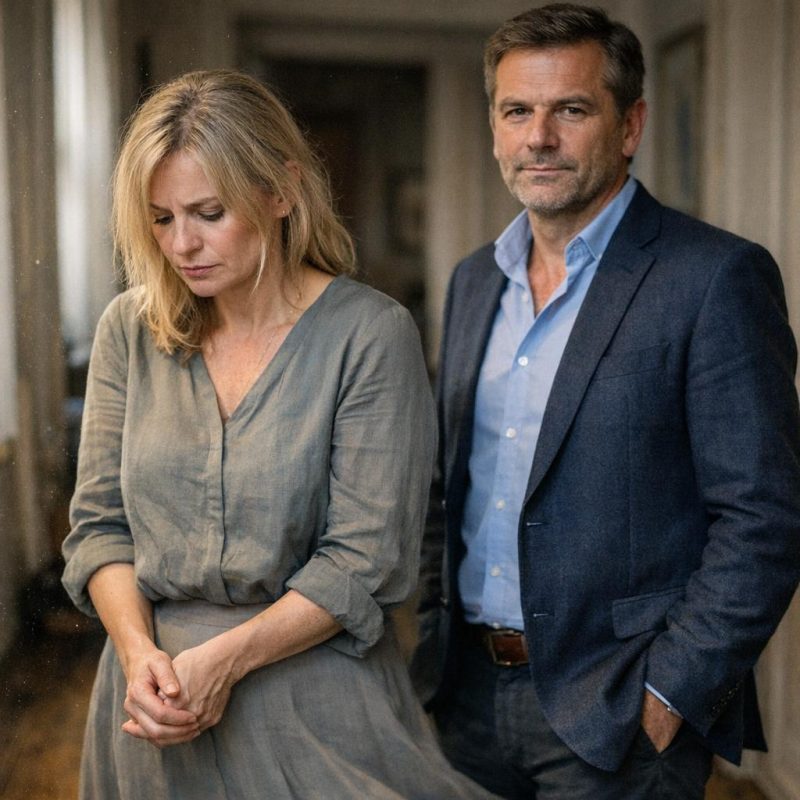 Image by RM AI
Margaret's Silence
Margaret stood there like a statue throughout the whole confrontation, her hands trembling against her sides. Her face had gone pale the moment we'd walked in, and it only got worse as Thomas talked. She didn't defend him, didn't argue with anything he said, just stood there looking at the floor like she wanted it to swallow her whole. I couldn't take it anymore. I turned to her directly and asked if she'd known—if she'd known where James came from, if she'd known what they'd done to get him. The silence stretched out so long I thought she might not answer at all. Then she nodded, just once, her chin barely moving. 'I'm sorry,' she whispered, her voice so quiet I almost didn't hear it. 'I'm so sorry.' It wasn't enough—how could it ever be enough?—but there was something genuine in her regret that Thomas completely lacked. She looked broken, like she'd been carrying this weight for forty years and it had finally crushed her. I felt pity for her, which surprised me, because I'd expected to feel only rage. But then James stepped toward her, his voice shaking. 'Did you ever love me,' he asked, 'or was I always just part of the deal?'
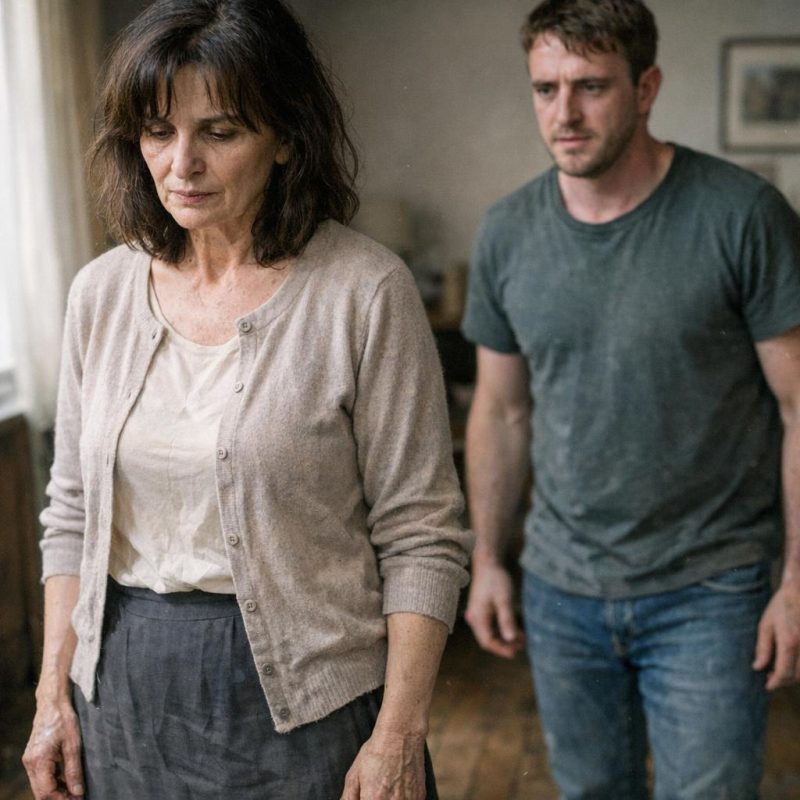 Image by RM AI
The Truth Comes Out
Thomas didn't flinch when James asked that question. He just looked at his son with cold eyes and changed the subject entirely. He started talking about Brennan, about how the lawyer had run a whole network of illegal adoptions for wealthy clients like them. It wasn't just about finding babies for people who couldn't have children, Thomas explained—it was about matching the right babies to the right families. Brennan would switch infants, move them around, ensure that wealthy clients got babies with 'desirable traits' they'd paid for. Education, health, appearance—it was all part of the transaction. My stomach turned as he described it so casually, like he was explaining a business model. I asked how many families were involved, and Thomas shrugged. 'At least a dozen that I know of,' he said. 'Probably more.' He said Brennan had kept meticulous records of everything, every transaction, every family, every baby. But those records had been hidden away years ago when the authorities started asking questions. I felt horror rising in my throat as I realized the scope of what they'd done. Then Thomas added one more detail that made everything worse. 'Sarah's father,' he said, looking at me directly. 'He was the one who kept the records hidden.'
 Image by RM AI
Daniel's Revelation
Daniel was waiting outside when we left the Whitfield house, sitting in his car with the engine off. I knocked on his window and he looked up at me with red-rimmed eyes. He asked me to get in, said there was something he needed to tell me. We sat there in the cold car while he explained what his mother had spent the last years of her life doing. Sarah had been trying to identify all the victims of her father's complicity, he said. She'd gone through old files, tracked down leads, pieced together a picture of the entire operation. The guilt had consumed her, Daniel told me. She'd known what her father had done and she'd stayed silent for decades, too afraid to speak up, too ashamed to face what it meant. But in the end, she couldn't live with it anymore. The stress, the guilt—it had hastened her death, Daniel believed. He'd watched his mother deteriorate under the weight of a secret that wasn't even hers to carry. I felt grief wash over me, grief for Sarah, for all of us caught in Brennan's web. Then Daniel reached into his jacket and pulled out a folded piece of paper. 'She compiled a list,' he said quietly. 'Twelve names, twelve babies, twelve families torn apart.'
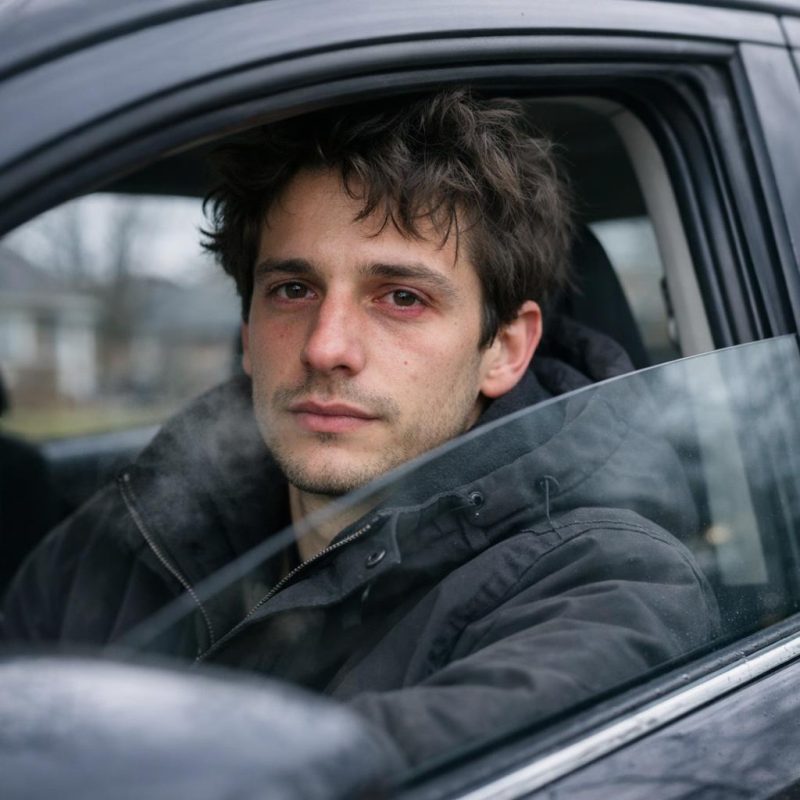 Image by RM AI
The Lawyer's Network
Daniel unfolded the paper and I saw Sarah's careful handwriting covering both sides. He explained that Brennan hadn't worked alone—he couldn't have. There were doctors who falsified birth records, nurses who switched hospital bracelets, social workers who forged consent forms and placement documents. They'd all benefited financially from the scheme, Daniel said. Brennan had paid them well to keep quiet and look the other way. It was a whole network of people, all profiting from stolen babies. My hands shook as I looked at the names on Sarah's list. Some I didn't recognize, but others I did—hospital administrators, lawyers, even a judge. Sarah had been thorough in her research, tracking down everyone involved. Daniel pointed to one section of the list where Sarah had noted which medical professionals had been present at specific births. I started reading through them, my eyes scanning down the page. Then I saw it. One name made my heart stop completely, made the whole world tilt sideways. Dr. Raymond Cross—the physician who'd delivered my son, the man I'd trusted, the doctor who'd held James in his hands before I ever could.
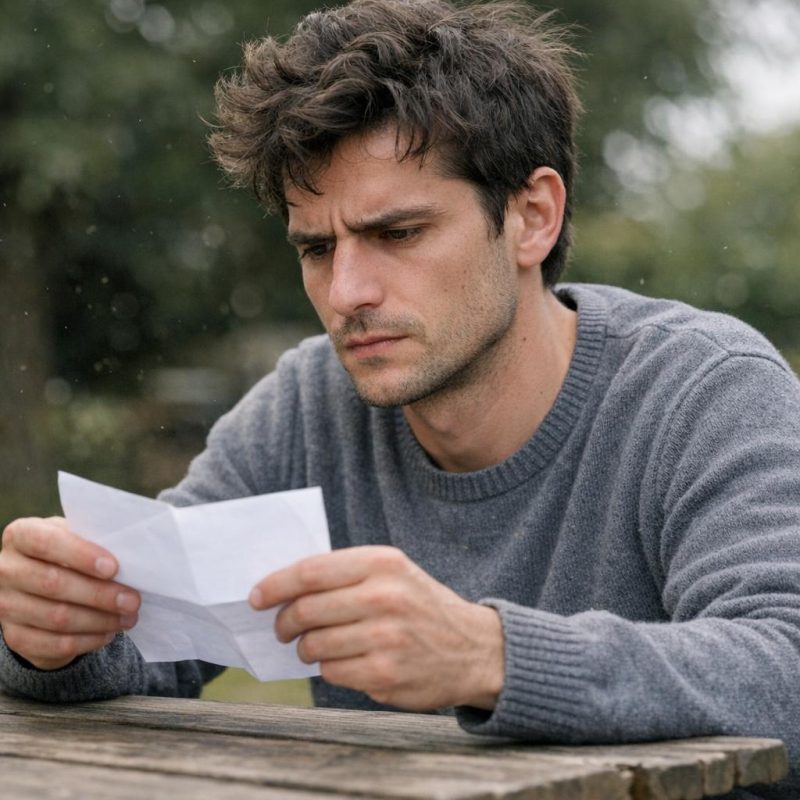 Image by RM AI
Helen's Evidence
I called Helen Cross that same afternoon, my voice shaking as I told her what we'd discovered. There was a long silence on the other end of the line. Then she asked if we could meet, said she had something important to discuss. Daniel came with me to her apartment, and we sat in her small living room while she brought out tea with trembling hands. She told us she'd always suspected her brother Raymond was involved in something illegal, but she'd never had proof. Now, knowing there were other victims, other families destroyed by the same network—it changed everything for her. She said she'd been too afraid to speak up alone, too worried no one would believe a retired nurse against respected doctors and lawyers. But if there were others, if there was evidence, she'd testify. She'd give us her logbook, the one she'd kept all these years with dates and discrepancies she'd noticed. She'd tell everything she knew to any lawyer who'd listen. Helen looked at me with tears in her eyes, years of guilt and regret written across her face. 'I should have spoken up forty years ago,' she said, her voice breaking. 'But maybe it's not too late to make this right.'
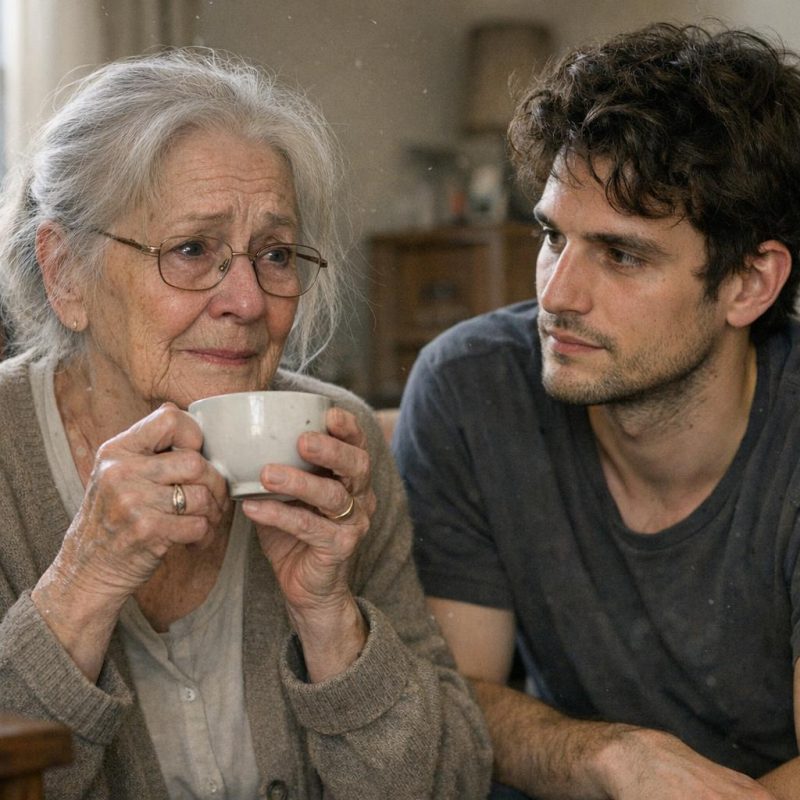 Image by RM AI
Building the Case
We found an attorney who specialized in adoption fraud and civil rights cases—a woman named Rebecca Chen who'd built her career taking on powerful institutions. We all met in her office: me, Daniel, Emily, and James. Rebecca listened to our story without interrupting, taking notes, asking sharp questions. When we finished, she leaned back in her chair and told us we had a case. Not just against Thomas Whitfield, but against Brennan's estate, against the hospital, against everyone who'd participated in the scheme. It would be messy, she warned. It would take years. We'd be going up against people with money and connections, people who'd spent decades covering their tracks. But if we had Helen's testimony and Sarah's research, if we had James's DNA results and my medical records, we could prove what had happened. We could file a lawsuit and maybe, finally, get justice. Rebecca asked if we were ready for what that meant—media attention, public scrutiny, powerful enemies. I looked at James, at Emily, at Daniel. We all nodded. 'It's time,' I said. The attorney warned us that going public would mean facing powerful people who have spent decades covering their tracks—but we all agreed it was time.
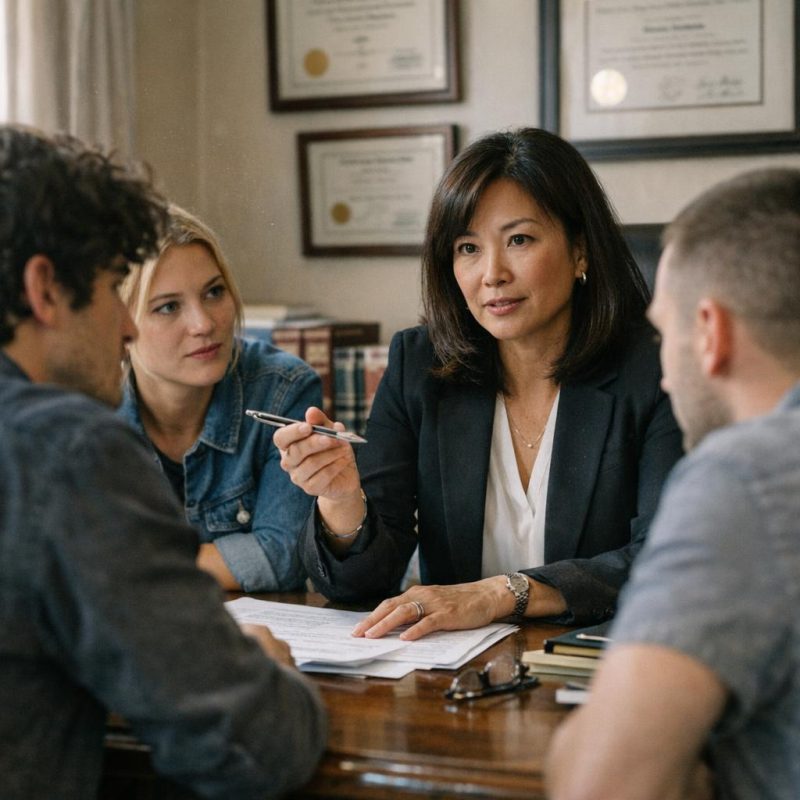 Image by RM AI
The Whitfield Countermove
The cease-and-desist letter arrived at my house three days after we filed the lawsuit. The Whitfield family's lawyers claimed I was defaming their clients, causing emotional distress, making false accusations that damaged their reputation. They threatened to sue me personally if I continued to pursue the case or speak publicly about the allegations. The letter was filled with legal language designed to intimidate, to make me feel small and powerless. I called Rebecca immediately and she told me not to worry—it was a standard intimidation tactic, nothing more. They had no grounds to sue me for telling the truth. But the Whitfields weren't done. That evening, James called me, his voice tight with anger and something else—fear, maybe. Thomas had phoned him directly, had told him exactly what would happen if he testified against the family. James would be disinherited, cut off from the family fortune completely. He'd be publicly disowned, his name removed from all Whitfield business documents and family records. Thomas had made it clear: James could have his biological mother and the truth, or he could have his inheritance and the Whitfield name, but he couldn't have both. 'He said if I testified,' James told me, his voice breaking, 'he would disinherit me and publicly disown me.'
 Image by RM AI
The Primary Twist: The Trafficking Network
Daniel came to my house the next morning with a cardboard box full of documents. His hands were shaking as he set it on my kitchen table. He'd found more of his mother's research, he said—files Sarah had hidden in her storage unit, papers she'd never shown anyone. These weren't just notes about individual cases. These were bank records, financial transactions, letters between Brennan and his clients. Emily and James were already there, and we all gathered around as Daniel started pulling out documents. What we saw made everything click into a horrifying new picture. Brennan's operation wasn't just about switching babies for wealthy clients who wanted specific traits. It was systematic infant trafficking—babies taken from poor mothers, from single women, from marginalized families, and sold to affluent couples for profit. The consent forms were fabricated, the signatures forged, the legal paperwork manufactured to make everything look legitimate. Sarah had found evidence of dozens of cases where mothers had never actually surrendered their children, where rights were terminated without proper notification or legal process. Daniel showed me my own file, and I saw a consent form I'd never signed, authorization documents I'd never seen. My vision blurred as I realized the full truth. My son hadn't been placed by mistake, hadn't been given to the Whitfields through some tragic bureaucratic error. He had been sold.
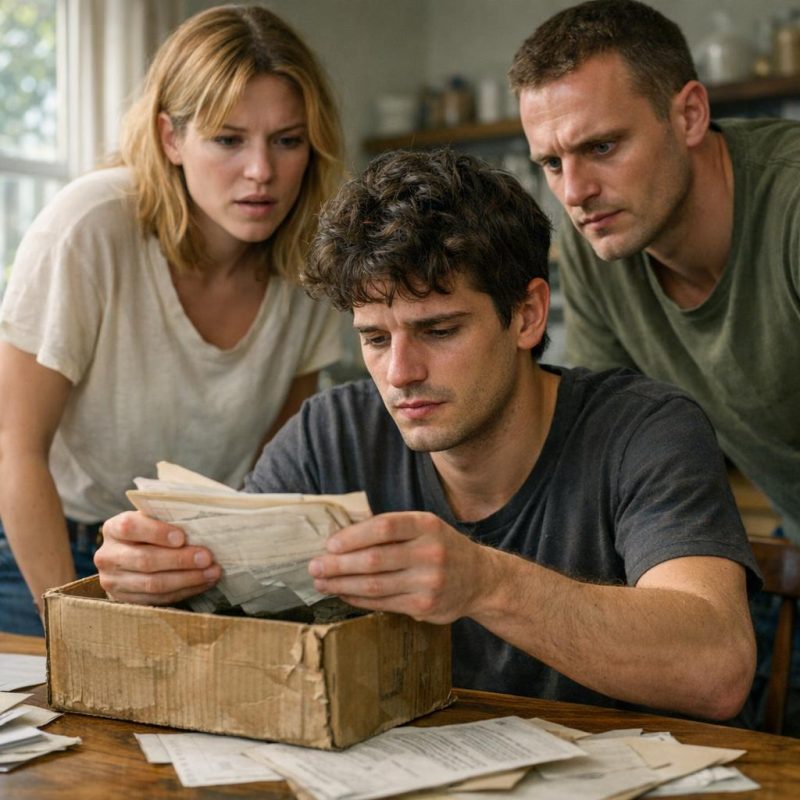 Image by RM AI
The Reframing
The attorney Emily hired specialized in adoption fraud cases. She spread my original documents across the conference table—the papers I'd signed in 1983, the ones I'd kept in a file folder all these years. I recognized my signature on the initial consent forms, shaky and young. But then she showed me the final placement documents, the ones that transferred custody to Thomas and Margaret Whitfield. My signature looked similar, but something was off. The attorney pointed to the date on the placement papers—three weeks after I'd left the hospital, after I'd already returned to my apartment and tried to resume some version of normal life. I'd never signed anything three weeks later. I'd signed everything at the hospital in those awful, blurry hours before they took my baby. She placed a magnifying glass over both signatures and I saw it clearly: the loops were different, the pressure inconsistent. Someone had traced my signature from the hospital documents and forged it onto the placement paperwork. My hands went cold. All these years, I'd believed I'd legally given my son to the Whitfields, that I'd signed away my rights in a binding, irreversible way. The attorney looked up at me, and her voice was quiet but firm. She said, 'This means your parental rights were never properly terminated—legally, you've been his mother all along.'
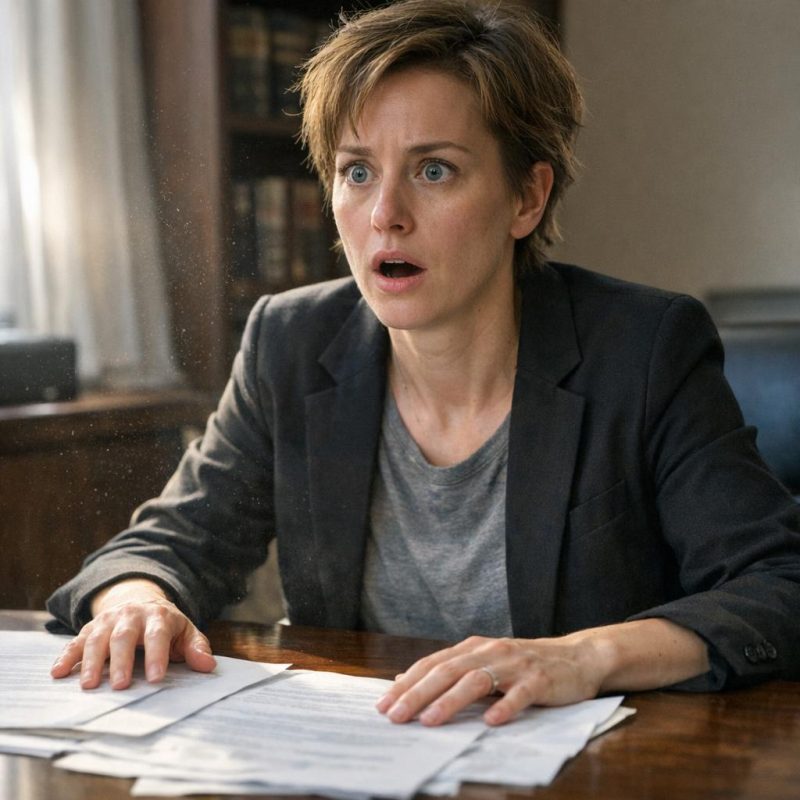 Image by RM AI
The Other Victims
Daniel had Sarah's complete list—thirty-seven names, families scattered across three states. He started making calls, reaching out to people who'd been living with the same questions I'd carried for decades. Some didn't want to reopen old wounds. Some had always suspected something was wrong but never had proof. But one by one, families started agreeing to meet with the attorneys. A woman from Pittsburgh whose twin daughters had been placed separately without her knowledge. A father from Baltimore who'd been told his son died in the hospital, only to discover years later that the child had been adopted out. A young mother who'd been coerced into signing papers while still sedated from emergency surgery. Each story was different but the pattern was identical—lies, forged documents, manufactured consent. Daniel coordinated everything, turning his mother's research into a coalition of victims ready to fight back. The attorneys said we had enough evidence for criminal charges and civil damages. They filed the paperwork on a Monday morning, naming Brennan and Thomas Whitfield as primary defendants. I sat in Daniel's kitchen when he got the call from the lead attorney, confirming that other families were joining, that our individual cases were being consolidated. By the end of the week, twelve families had come forward—and the case became a class action lawsuit.
 Image by RM AI
The Media Firestorm
The local news picked it up first, then the state papers, then suddenly CNN was calling my house. My phone wouldn't stop ringing. Producers wanted interviews, journalists wanted statements, advocacy groups wanted me to speak at press conferences. Emily helped me decide which requests to accept. I said yes to a national morning show because I wanted people to understand this wasn't some bureaucratic mistake from decades ago—this was deliberate, criminal, ongoing. They flew me to New York and put me up in a hotel that made me feel completely out of place. The makeup artist in the green room tried to calm my shaking hands. The host was kind, professional, and when the cameras started rolling I forgot to be nervous because I was too angry. I told them about the hospital, about believing for forty years that I'd made the right choice, about discovering that choice had been stolen from me. I talked about the other families, about Sarah Hagen's courage, about Daniel's determination to expose the truth. The studio lights were hot and bright but I kept my eyes on the host and spoke as clearly as I could. During the interview, she asked, 'What do you want people to know?' and I said, 'That our children were stolen—and the people who did it are still free.'
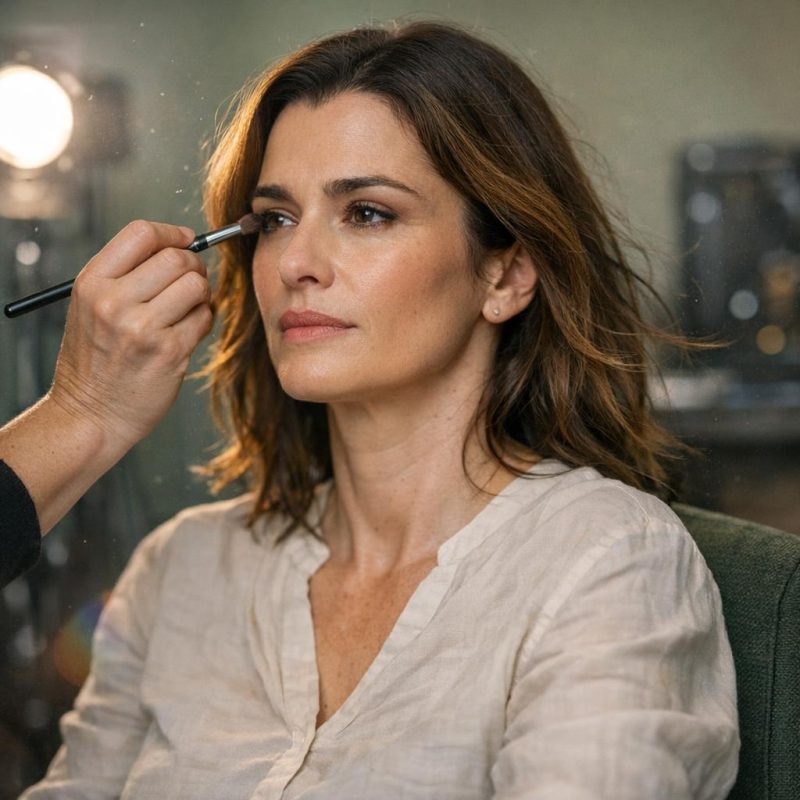 Image by RM AI
Brennan's Arrest
Three days after my interview aired, federal agents raided Attorney Brennan's office. Emily called me as soon as she saw the news alert on her phone. We turned on the television together and watched the footage—men in FBI jackets carrying boxes out of that downtown building where I'd met him all those weeks ago. The crawl at the bottom of the screen said he was being charged with fraud, conspiracy, and human trafficking. Human trafficking. The words felt too big, too severe, but they were accurate. That's what he'd done—trafficked infants for profit, built a business out of separating mothers from babies. They showed him in handcuffs being walked to a car, his lawyer beside him shouting 'no comment' at the reporters. I kept staring at his face on the screen, this elderly man who'd sat across from me and lied so smoothly about paperwork and protocols. Emily squeezed my hand and I realized I was crying, but not from sadness. From relief, maybe. From the strange feeling of watching someone finally be held accountable. The agents seized decades of files from his office—records he'd kept, transaction logs, correspondence with clients. Evidence that would help the other families, proof that would make the case irrefutable. The news showed him being led away in handcuffs, and I felt a small piece of justice finally take shape.
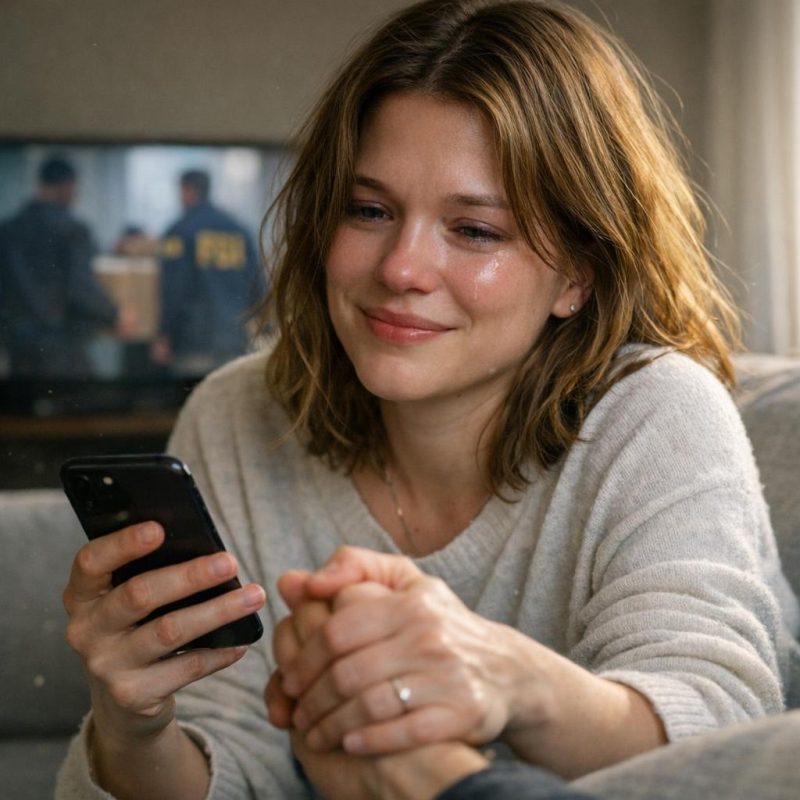 Image by RM AI
Thomas Whitfield's Downfall
Thomas Whitfield's indictment came two weeks later. The charges were similar—conspiracy, fraud, obstruction of justice. But what happened next was almost more satisfying than the arrest itself. His business partners issued statements distancing themselves from him. Investors pulled funding from his projects. Charities returned his donations and removed his name from buildings. The empire he'd built on reputation and connections began collapsing in spectacular fashion. James called me when it happened, his voice tight with emotions I couldn't quite parse. He said his father had been formally removed from the family trust, cut off from access to the Whitfield fortune that bore his name. Margaret had worked with the board to make it happen. James said he'd been to see a lawyer about legally changing his surname, that he didn't want to carry that name anymore, didn't want any association with what his father had done. I asked him what name he'd choose and there was a long pause on the line. He said he was thinking about Graham, his mother's maiden name, something clean and separate. Or maybe he'd just be James—no family weight attached. He called to tell me that his father had been removed from the family trust—and that he wanted nothing to do with the Whitfield name anymore.
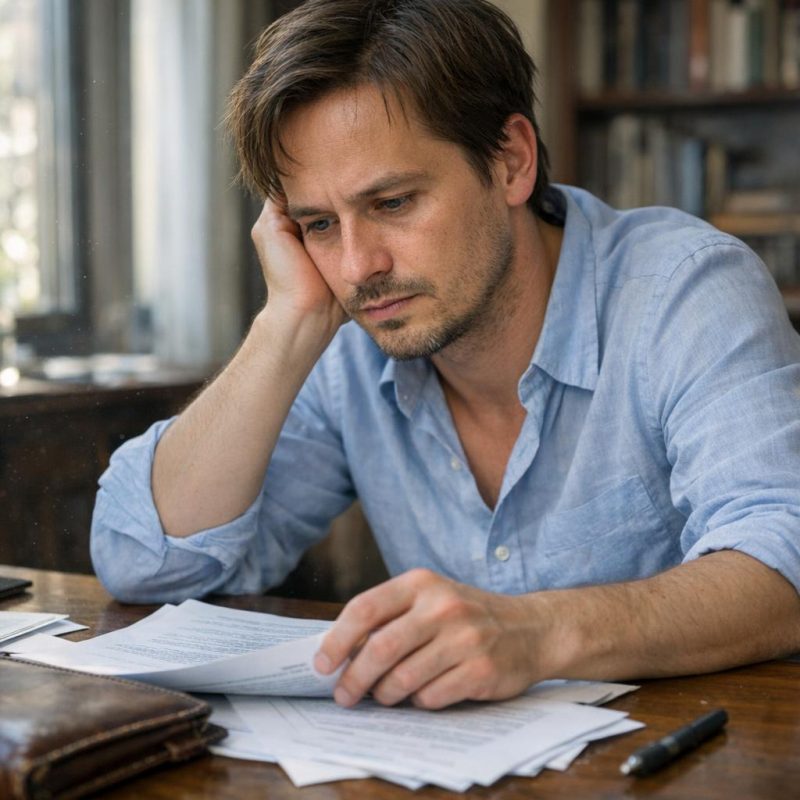 Image by RM AI
Margaret's Testimony
I didn't expect Margaret to turn. Everything I knew about her suggested she'd stand by Thomas no matter what, that loyalty to family and reputation would override everything else. But her lawyer reached out through the prosecution team, saying Margaret wanted to cooperate, that she had information that could strengthen the case. She agreed to testify against Thomas in exchange for immunity from prosecution. The prosecutors said her testimony would be crucial—she'd been there for conversations, had seen documents, could verify Thomas's direct involvement in orchestrating the adoptions. They asked if I'd be willing to meet with her before the trial and I wasn't sure I could face her. But Daniel said it might bring closure, might help me understand. We met in a conference room at the prosecutor's office, just the two of us and her attorney. She looked smaller than I remembered, older, worn down. She didn't make excuses or try to justify anything. She just said she'd known something was wrong, that she'd chosen to look away because it was easier than confronting her husband. She handed over files Thomas had kept at home, correspondence that proved he'd paid Brennan for specific placements. Margaret's lawyer said she wanted to speak with me privately, and when we met, she said, 'I can't undo what was done—but I can make sure he pays for it.'
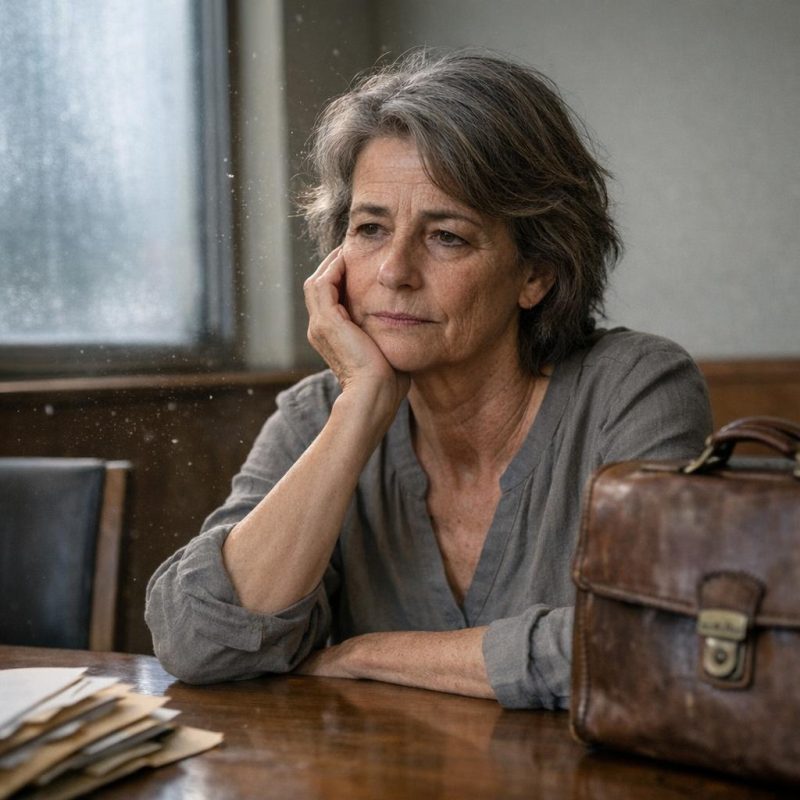 Image by RM AI
The Trial Begins
The courtroom was packed the day the trial began. I sat in the second row with Emily on one side and Daniel on the other. James sat across the aisle with Margaret. Behind us were the other families—the Pittsburgh mother with the separated twins, the Baltimore father, the young woman who'd been coerced while sedated. Twelve families total, representing only a fraction of Brennan's victims, but enough to make the scope of the conspiracy undeniable. The judge entered and we all stood. Thomas Whitfield sat at the defense table looking composed, expensive suit, professional demeanor, but I could see tension in his shoulders. Brennan looked worse—pale, diminished, nothing like the confident attorney who'd sat across from me months ago. The prosecutor was a woman in her forties who'd built her career on human rights cases. Her opening statement was devastating. She walked the jury through the timeline, the financial records, the forged documents, the pattern of targeting vulnerable mothers. She showed them photographs of babies, including James as an infant, and asked them to imagine being told your child was safe and loved when really they'd been stolen and sold. She described it as systematic infant trafficking, a criminal enterprise that had operated for decades with impunity. The prosecutor ended her opening statement by saying, 'These weren't mistakes—these were crimes, and today we begin to hold the criminals accountable.'
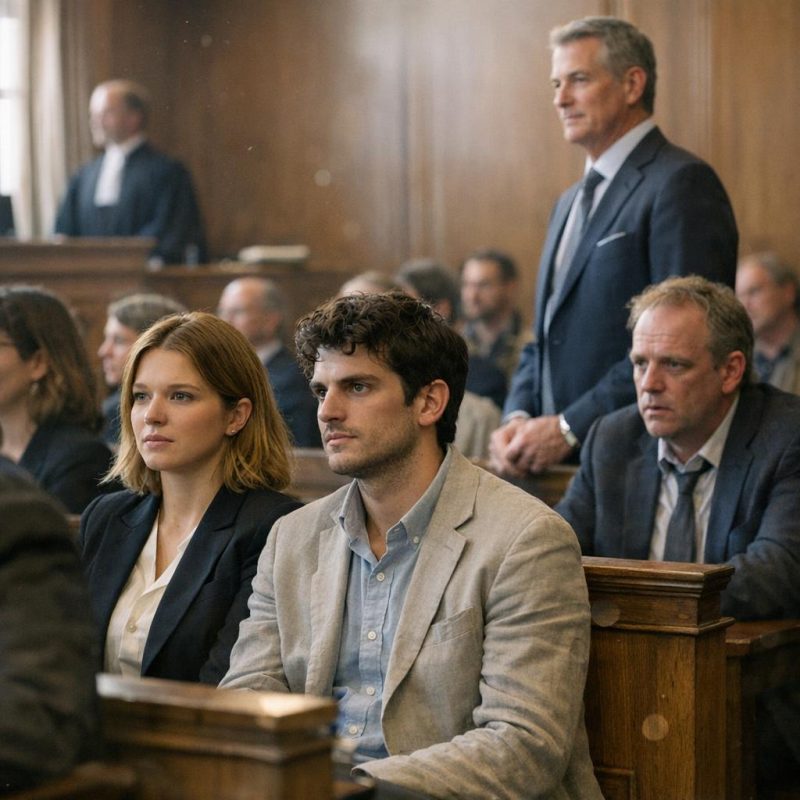 Image by RM AI
Patricia's Testimony
I took the stand on the third day of testimony. The prosecutor led me through my story gently—the pregnancy, the fear, the pressure I'd felt as a twenty-two-year-old with no support system. I described the hospital, the way Brennan had presented the adoption as my only viable option, the papers I'd signed while still recovering from delivery. I told them about the forty years of believing I'd made a selfless choice, that my son was with a loving family who could give him opportunities I couldn't. Then we talked about the wallet, about meeting James, about discovering the truth. My voice cracked when I described seeing the forged signature, realizing my consent had been manufactured, understanding that everything I'd believed about the adoption was a lie. The jury was watching me closely and I tried to look at them directly, to make them understand that I wasn't some abstract victim—I was a real person whose life had been shaped by these men's crimes. The defense attorney stood for cross-examination, his questions designed to make it seem like I'd wanted to give my baby away, like I'd been relieved to have someone else raise him. He asked about my circumstances in 1983, about whether I'd really been prepared for motherhood. When he asked if I regretted giving my baby up, I looked at James sitting in the gallery and said, 'I regret that I was never given a choice.'
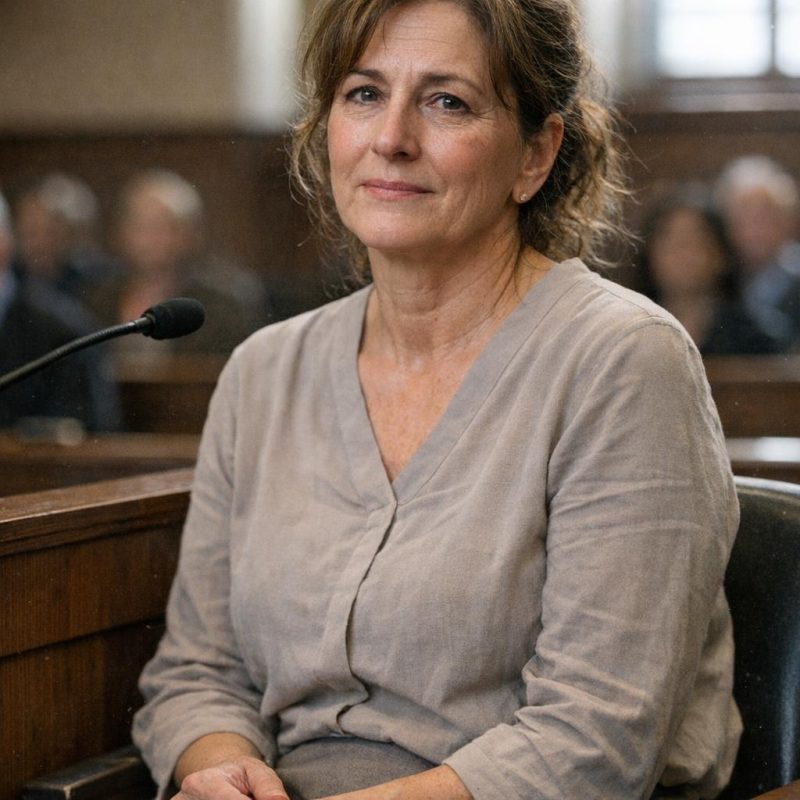 Image by RM AI
The Verdict
The jury filed back in after two days of deliberation. I'd barely slept, my stomach twisted into knots every time I thought about the possibility they might not believe us. James sat on one side of me, Emily on the other, and I could feel them both trembling slightly as the judge asked if they'd reached a verdict. The forewoman stood. 'We have, Your Honor.' My heart was pounding so hard I thought everyone could hear it. Count by count, she read the verdicts—guilty, guilty, guilty. Brennan slumped in his chair, his attorney already reaching for him, but Thomas Whitfield just stared straight ahead, his face blank. Behind us, the courtroom erupted. Families were crying, hugging each other, some of them people I'd met during the trial who'd been searching for their own stolen children. A woman I'd spoken to in the hallway grabbed my shoulder and whispered, 'Thank you, thank you.' The judge banged his gavel, trying to restore order, but the energy in the room was electric, unstoppable. I felt Emily's arms around me, then James's hand finding mine across the bench. The prosecutor turned and gave us a small nod. It wasn't just a verdict—it was validation that what happened to us was real, was wrong, was criminal. James squeezed my hand as the verdict was read, and I realized that after forty years, I could finally breathe.
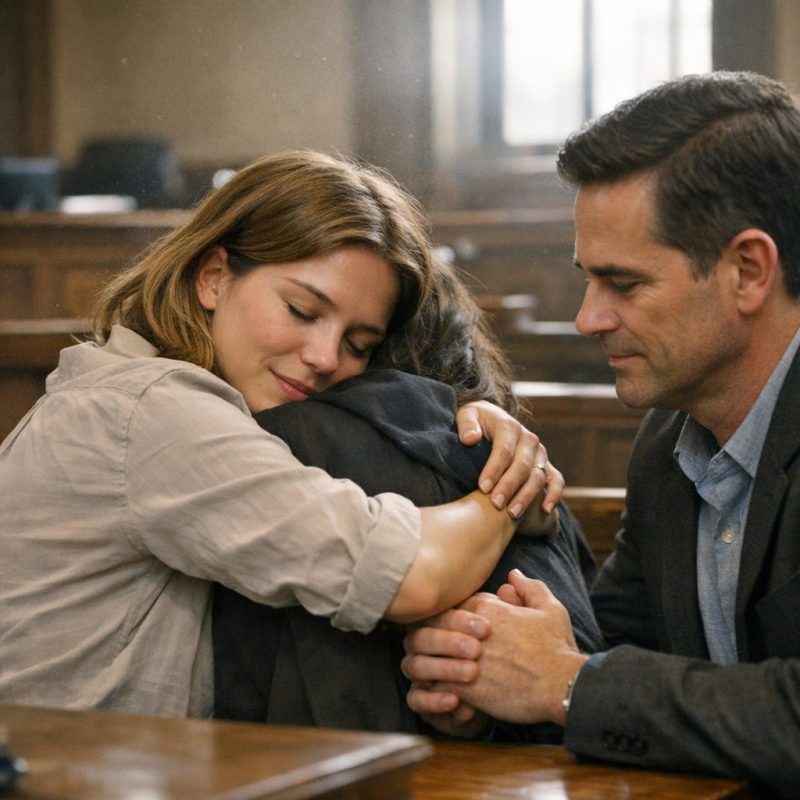 Image by RM AI
Picking Up the Pieces
In the weeks after the trial, James and I started meeting for coffee every Saturday morning. We'd sit at this little café near his work and just talk—carefully at first, like two people learning a new language. He told me about growing up in Portland, about his parents who'd loved him fiercely but never understood why he felt incomplete. I told him about Emily's childhood, about the years I'd spent teaching and trying not to think about the baby I'd lost. Sometimes the conversations were easy, full of laughter when we discovered we both loved terrible action movies and hated cilantro. Other times they were hard, when he'd ask me what I'd imagined his life would be like or when I'd catch myself apologizing again for not finding him sooner. We shared photos on our phones—him as a gap-toothed kid with a soccer trophy, Emily and him side by side now, realizing they had the same nose. He introduced me to his favorite bookstore, and I showed him where I used to live when I was pregnant with him. Slowly, we were building something real, not based on what could have been but on who we actually were. James asked if I would come to dinner at his apartment and meet his partner, and I said yes.
 Image by RM AI
A New Family
Thanksgiving at my house felt different this year—fuller, louder, right in a way it never had been before. James arrived early with his partner David, and Emily had flown in the night before, already claiming her role as official dessert supervisor. We moved around the kitchen in a chaotic dance, bumping into each other and laughing, Daniel recording everything on his phone like the proud uncle he'd become. Emily kept making James taste-test things, declaring him the tie-breaking vote on whether the sweet potatoes needed more cinnamon. I watched them together—my daughter and my son—and felt something settle in my chest that had been restless for decades. Over dinner, Emily told embarrassing stories about me, and James shared ones about his college years, and David fit in like he'd always been part of this strange, pieced-together family. We didn't pretend the past hadn't happened or that we hadn't lost forty years. But we also didn't let that loss define this moment. When I brought out the pumpkin pie, Emily grinned at James and said, 'Just so you know, having a big brother means you're legally required to take my side in all arguments now.' Everyone laughed, and James promised he would. As we sat around the table, James raised his glass and said, 'To the family we were always meant to be.'
 Image by RM AI
The Wallet
Last week, I finally went through all the documents and photos from the trial and the years before. I bought a wooden memory box, the kind with brass hinges that close with a soft click. Inside, I placed the wallet—cracked leather, faded stitching, still holding that driver's license photo of my younger self. Next to it, I tucked the hospital bracelet I'd kept from James's birth, the one that said 'Baby Boy' because I'd never gotten to name him. I added the first photo we took together after we found each other, both of us looking a little shell-shocked but smiling. There were the court documents, the adoption papers with the forged signature, and a letter James had written to me after the trial thanking me for fighting. Emily helped me organize everything, her hand on my shoulder as we worked. When we finished, I held that old photo of myself at twenty-one—frightened, alone, trying so hard to be brave. She looked like a stranger and exactly like someone I knew. I'd spent so much of my life thinking I'd failed her, failed my son, failed everyone. But sitting there with the box in my lap, I understood something I hadn't before. I looked at that photograph of my twenty-one-year-old self and realized she would be proud of the woman I became—and the son I never stopped loving.
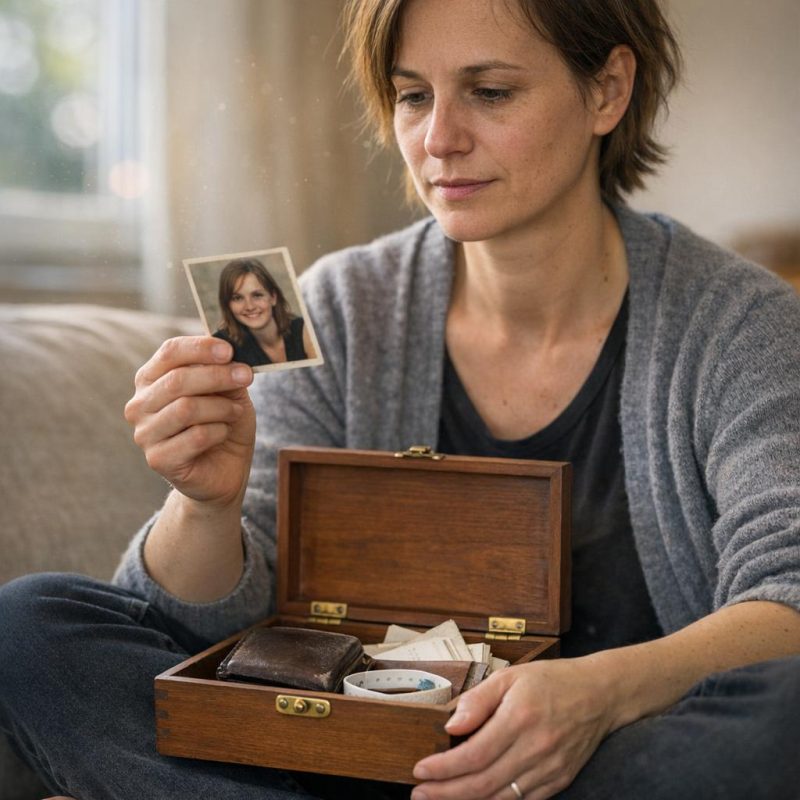 Image by RM AI
KEEP ON READING

20 Greek Gods We Don't Often Talk About
Step Aside, Zeus. Greek mythology isn’t only about Zeus and…
By Elizabeth Graham Jan 16, 2026
10 Historic Courtship Practices That Should Be Brought Back &…
Old-School Dating Was a Mix of Charming & Unhinged. Historic…
By Emilie Richardson-Dupuis Jan 20, 2026
Legendary Tales: 20 Most Fascinating Mythical Creatures from Folklore
Mythological Beasts. Stories about mythical creatures endure for a simple…
By Christy Chan Jan 16, 2026
Pooches Of The Past: Extinct Dog Breeds
Unknown authorUnknown author on WikimediaDogs have been showing up in…
By Elizabeth Graham Jan 27, 2026
The 20 Craziest Silent Films Ever Made
When Silence Let the Madness Speak. Silent cinema didn’t just…
By Chase Wexler Jan 5, 2026
The three most expensive historical artifacts ever sold at auction
Attributed to Leonardo da Vinci on WikimediaAuctions are where history…
By Emilie Richardson-Dupuis Jan 9, 2026