 Unknown authorUnknown author on Wikimedia
Picture the phrase eternal youth and modern wellness culture comes to mind first, with its supplements, cold plunges, and biohacking routines promising to slow the clock. A century earlier, the same obsession already had a committed believer, one willing to test the theory on his own body rather than just write about it.
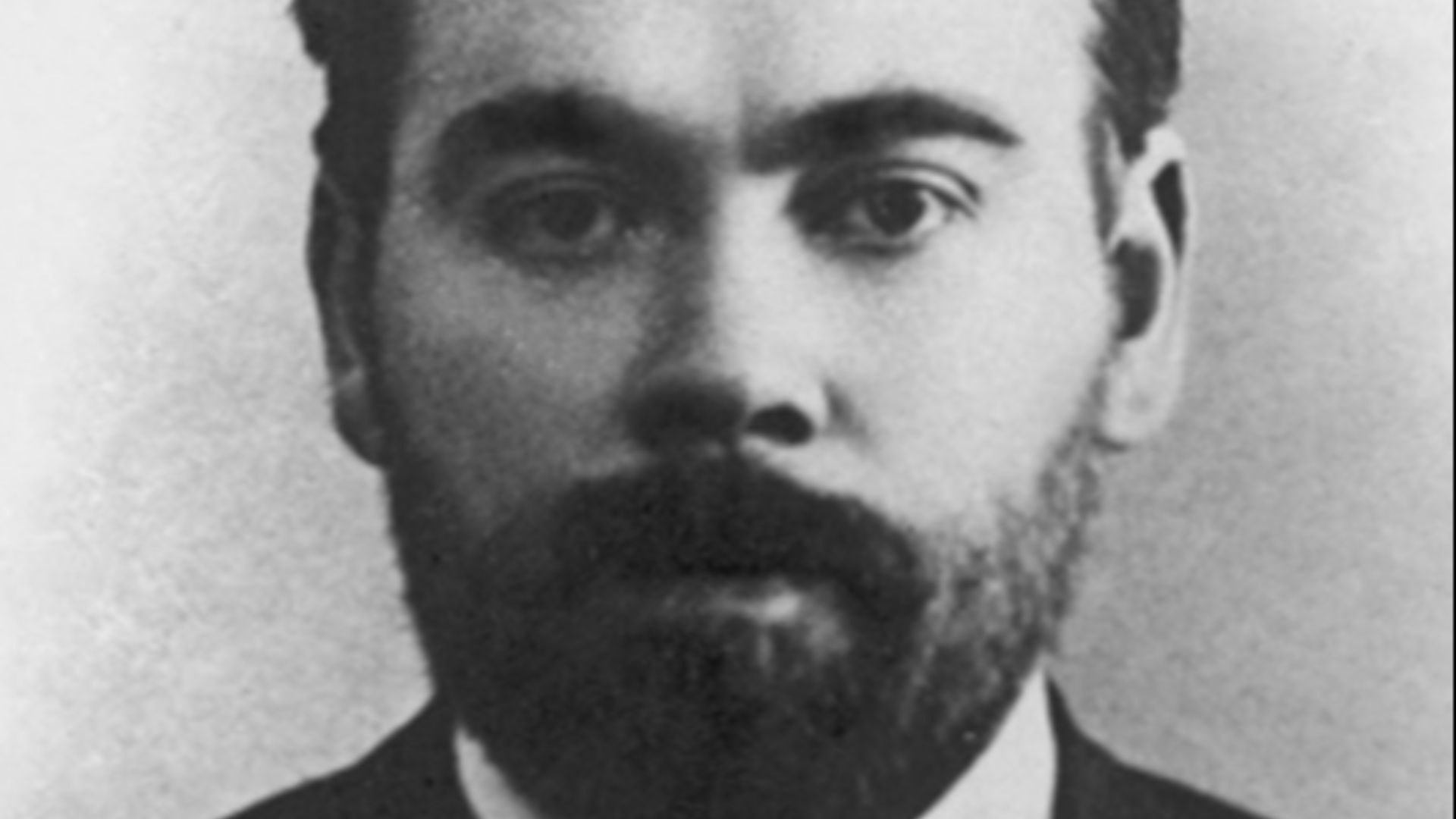
That believer was Alexander Bogdanov, a Russian physician, philosopher, and revolutionary who became convinced that blood itself held the key to slowing aging. He built an entire scientific institute around that idea, transfused his own blood with younger colleagues repeatedly to prove it, and ultimately died from the very procedure he trusted most, all before most of the world had even settled on how blood types actually worked.
A Revolutionary Who Believed In Rejuvenation Through Blood
Bogdanov cofounded the Bolshevik faction alongside Vladimir Lenin in the early 1900s before the two split over philosophical disagreements, particularly Bogdanov's interest in blending Marxism with a kind of collectivist mysticism Lenin dismissed outright. Pushed out of the party's inner circle, Bogdanov redirected his energy toward science, economics, and speculative fiction, eventually developing a systems theory called tektology decades before similar ideas took hold in the West.
His 1908 novel Red Star imagined a Martian society that extended life and strengthened social bonds through literal blood exchange between citizens, a fictional preview of the real experiments he would later run on himself. Bogdanov called the underlying idea physiological collectivism, the belief that sharing blood between individuals could improve the health of everyone involved and potentially push back the effects of aging.
In 1926, that belief gained an institutional home when Bogdanov founded and directed the Institute for Blood Transfusion in Moscow, the first research center of its kind anywhere in the world. The institute gave his ideas a formal scientific setting, even though the theory behind them remained far more ideological than proven.
Testing The Theory On His Own Body
Bogdanov did not treat rejuvenation as a theory to study from a safe distance. Over several years, he personally underwent roughly a dozen blood transfusions, exchanging blood mainly with younger students and colleagues at his institute and tracking the results on himself with genuine scientific seriousness.
He reportedly noted improvements after some of these transfusions, including better eyesight and a slowing of gray hair, and interpreted them as early evidence that youth itself could be biologically transferred between people. For Bogdanov, the experiments doubled as a small-scale demonstration of his broader political ideals, treating shared blood almost as proof that mutual benefit between people was not just a social ideal but a measurable biological reality, one he was eager enough to believe in that he rarely questioned how thin the supporting evidence actually was.
The science underneath this optimism was still catching up to the ambition behind it. Karl Landsteiner had only identified the ABO blood group system in 1901, and reliable cross-matching practices were far from standardized in Soviet medicine by the 1920s, leaving real, largely unacknowledged risk built into every transfusion Bogdanov performed.
The Transfusion That Killed Him
In early 1928, Bogdanov underwent what became his final transfusion, receiving blood from a student at his own institute. Historical accounts differ on the exact cause of what followed, pointing variously to an incompatible blood match and to an underlying infection, with malaria and tuberculosis both mentioned in different sources describing the donor's condition. Whatever the precise mechanism, Bogdanov fell severely ill afterward and died on April 7, 1928, while the student who had donated the blood recovered fully.
Soviet authorities publicly treated his death as a loss suffered in the name of dedicated research, and Bogdanov received formal recognition afterward despite his diminished political standing in the years leading up to it. Some historians have since raised the possibility that Bogdanov, aware of the risks and increasingly marginalized politically, may have approached that final transfusion with something closer to resignation than confidence.
Whether the outcome was pure accident or something closer to a knowing final experiment remains genuinely unsettled among historians. What is documented without dispute is simpler and stranger at once, a scientist who spent years trying to prove that blood could hold back time, and who ended up giving his own life to that pursuit instead.
KEEP ON READING