

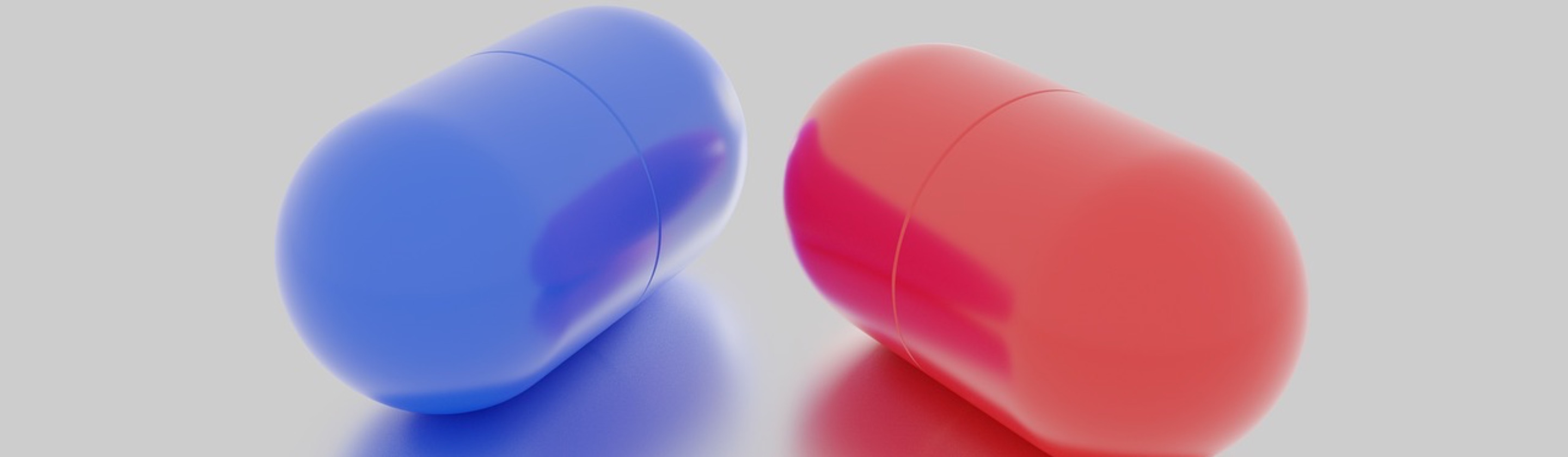
There's a question that philosophy has never quite managed to shake: How do you know that the world you're experiencing right now is real? It's easy to dismiss that as an absurd thought, but philosophers have been grappling with it seriously for centuries, and the more rigorously you examine it, the harder it becomes to wave away. After all, the tools we use to test reality are the same tools that might themselves be unreliable, which is precisely what makes the problem so persistent.
What started as a method of intellectual discipline in the 17th century has since become one of the most enduring thought experiments in the history of ideas. From René Descartes' foundational skepticism to the modern brain-in-a-vat scenario developed by Hilary Putnam, this question has drawn some of philosophy's sharpest minds without producing a consensus. Whether you've studied philosophy formally or you're approaching it fresh, it's a problem that has something to offer anyone willing to take it seriously.
Descartes and the Origins of Radical Doubt
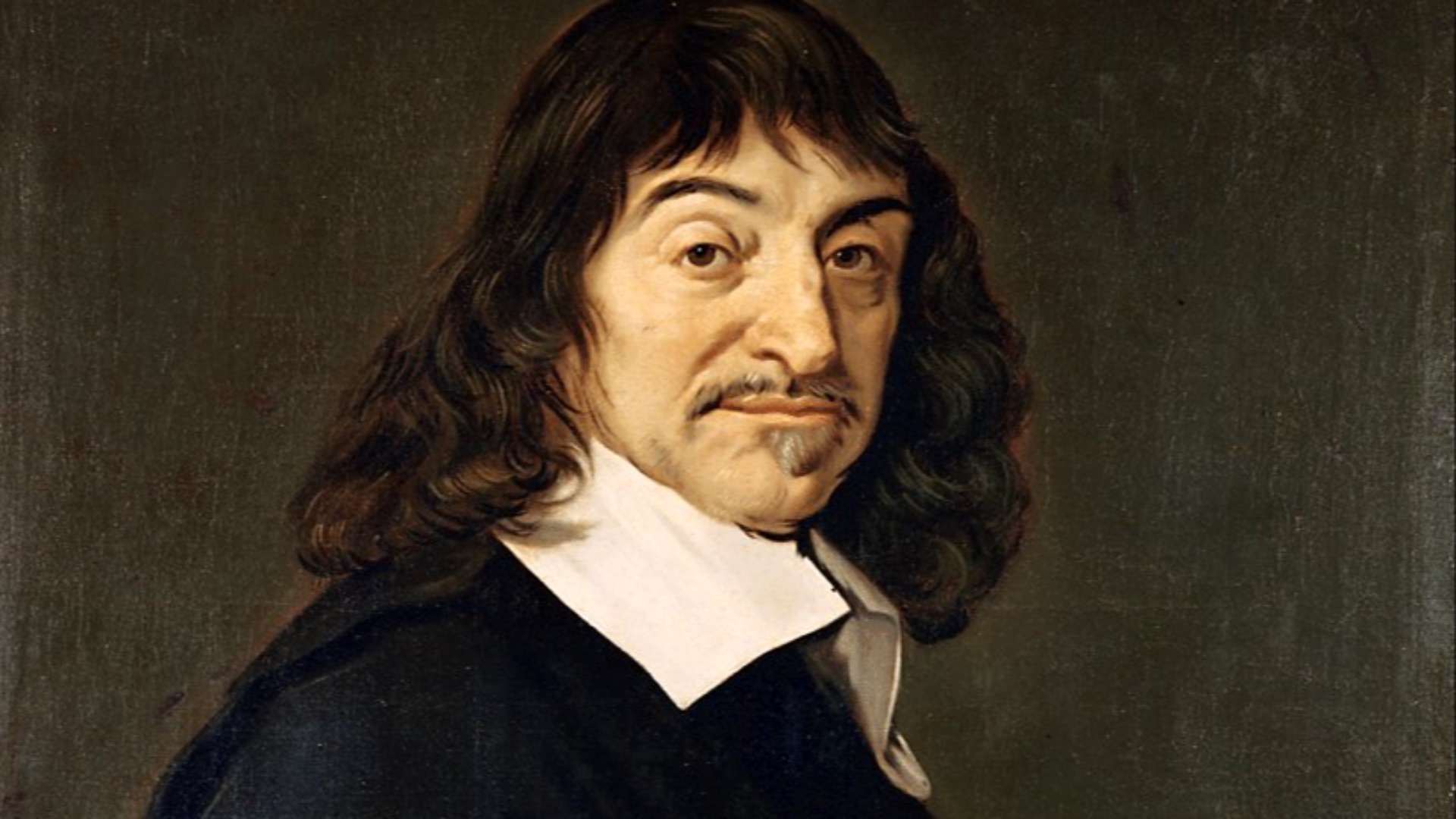
The story most commonly begins in 1641, when French philosopher René Descartes published his Meditations on First Philosophy. In the First Meditation, Descartes set out to identify which of his beliefs could be held with absolute certainty, and his method was to reject anything that gave him even the slightest reason for doubt. It was a deliberate exercise; he wanted to find the most secure possible foundation for knowledge by systematically clearing away everything shaky.
His first move was to observe that the senses have a track record of deceiving us. He then introduced the dream argument: since you can experience things in dreams with the same vividness as waking life, how do you know that what you're perceiving right now isn't a dream? From there, he escalated to the evil demon hypothesis: the idea that a supremely powerful, malicious entity could be controlling every perception and even every mathematical intuition, constructing an entirely false reality with no external referent at all.
What Descartes arrived at was his famous cogito ergo sum, or "I think, therefore I am." Even under the most extreme skeptical pressure, the very act of doubting proved that there was a doubter; and that, he argued, was the one thing the evil demon couldn't take away. It was a narrow conclusion but also a remarkable one, and the skeptical framework he'd built around it didn't dissolve with the answer. It remained as an open challenge to everyone who came after him.
The Brain in a Vat and Philosophy's Attempts to Respond
By the 20th century, Descartes' evil demon had a more modern, technological counterpart: the brain in a vat. The scenario imagines that your brain has been removed from your body and is being kept alive in a nutrient solution by a scientist, who feeds it perfectly convincing simulated sensory data through electrodes. You'd have no way of detecting this from the inside; every sensation, every memory, every perception of this article would be indistinguishable from what you'd experience if the world were real.
The British philosopher G.E. Moore had already attempted a commonsense rebuttal to this kind of skepticism. In his 1939 essay "Proof of an External World," Moore held up his hands and argued that their existence was sufficient proof that an external world existed. It was deliberately practical: Moore's position was that our immediate knowledge of physical objects is more convincing than any abstract philosophical hypothesis designed to undermine it. Critics pointed out, however, that this simply assumes what the skeptic is questioning; it doesn't actually defeat the argument.
Hilary Putnam took a more technical approach in his 1981 book Reason, Truth and History, where he argued that the brain-in-a-vat scenario is self-refuting. His reasoning was that language gets its meaning from causal connections to the world; if you were truly envatted and had never interacted with real physical objects, you couldn't meaningfully refer to things like vats or brains at all. Therefore, the very fact that you can coherently form and understand the question is itself evidence that you're not a brain in a vat. It's a clever argument, though not without its critics, and the debate it sparked has shaped the philosophy of language and mind ever since.
The Simulation Argument and What You're Left With
The brain-in-a-vat scenario took on renewed relevance when Swedish philosopher Nick Bostrom published a paper in The Philosophical Quarterly in 2003. Rather than relying on imaginary demons or rogue scientists, Bostrom's simulation argument works from probability and the expected trajectory of technological development. He presented a trilemma: either civilizations almost never survive long enough to develop realistic simulations, or advanced civilizations consistently choose not to run them, or we are almost certainly living inside one right now.
The logic follows from simple numbers. If even one civilization across the universe ever runs a large number of highly detailed simulations containing conscious beings, those simulated minds would far outnumber minds in base reality, and a randomly selected conscious entity would therefore be far more likely to be simulated than not.
What makes this question so philosophically durable is that it can't be resolved from the inside. Every instrument you'd use to test reality is part of the reality you're trying to test, and any evidence you could gather would be equally available in a convincing simulation. The scenario is unfalsifiable by design, and rather than being a reason to dismiss it, that quality is precisely what keeps it philosophically alive. It sits at the boundary where science reaches its current limits and philosophy takes over.
You don't need a definitive answer to find something worth taking from this question. What Descartes, Moore, Putnam, and Bostrom all share—across nearly four centuries of philosophical inquiry—is the conviction that examining the foundations of what you know is one of the most rigorous things a thinking person can do. Whether or not reality turns out to be base-level, the habit of questioning your own certainties is a valuable one.
So, is reality real? The most honest answer is that philosophy hasn’t produced a single response that satisfies everyone; even when the world feels immediate and solid, there are still parts we haven't fully pieced together. It's a reminder of how much our sense of certainty depends on assumptions we’re still trying to understand.
KEEP ON READING

From Heroes To Zeroes 20 Historical Figures Whose Heroism Was…
History is full of legends, but not every hero lived…
By Noone Feb 25, 2026
The Clueless Crush: How I Accidentally Invited a Hacker Into…
Fluorescent Lights and First Impressions. My name is Tessa, I'm…
By Ali Hassan Nov 4, 2025
This Infamous Ancient Greek Burned Down An Ancient Wonder Just…
History remembers kings and conquerors, but sometimes, it also remembers…
By David Davidovic Nov 12, 2025
Einstein's Violin Just Sold At An Auction—And It Earned More…
A Visionary's Violin. Wanda von Debschitz-Kunowski on WikimediaWhen you hear…
By Ashley Bast Nov 3, 2025
The Mysterious "Sea People" Who Collapsed Civilization
3,200 years ago, Bronze Age civilization in the Mediterranean suddenly…
By Robbie Woods Mar 18, 2025
20 Things That Used To Mean You Were Rich But…
Luxury Used To Be Practical. A lot of old status…
By Cameron Dick May 29, 2026