

Just How Barbaric Was It Back Then?
If you’ve ever toured a dungeon exhibit or watched Braveheart, you’ve probably been handed a very specific picture of “medieval devices”: elaborate, custom-built machines with theatrical names and museum-ready menace. While it’s fascinating to see just how ludicrous some devices actually were, historians keep finding a different story—one where some famous devices show up very late, lack contemporary records, or belong to entirely different eras. With that, let’s explore which ones existed and which ones were figments of a terrifying imagination.
1. The Iron Maiden
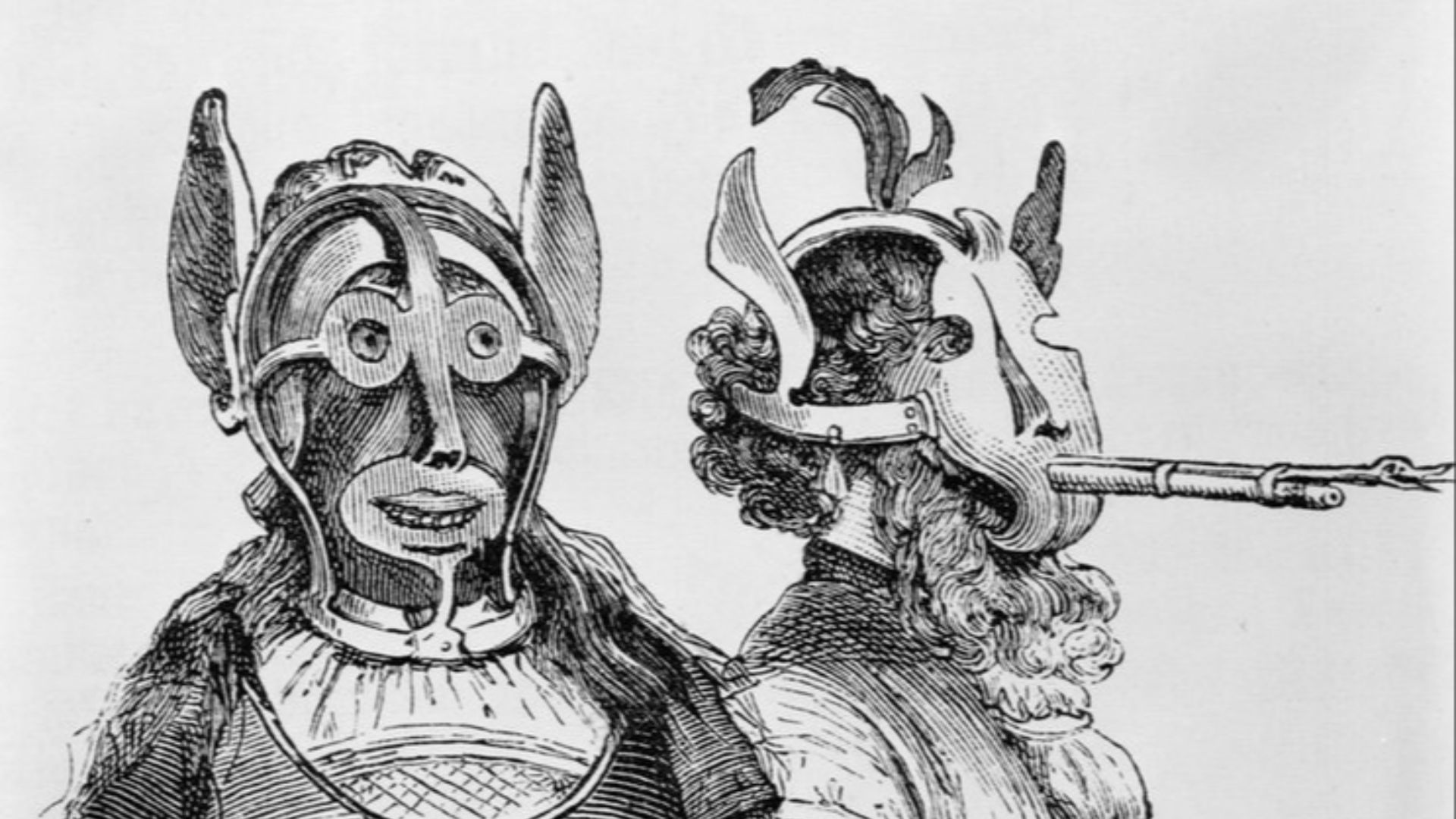
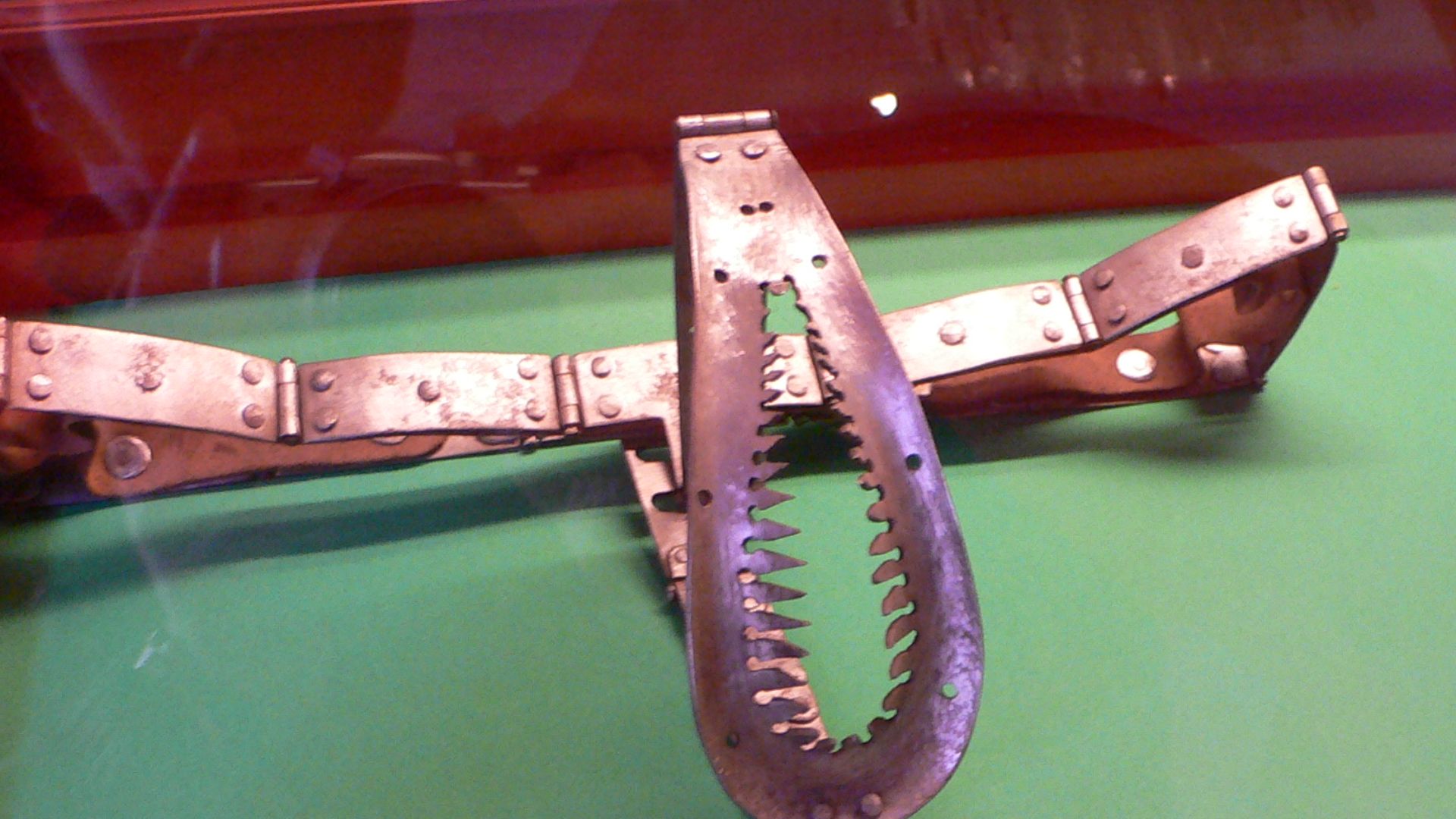
The spiked “Iron Maiden” is one of the best-known props of fake medieval cruelty, but historians discovered it appeared much later, and showpiece versions were displayed later than the Middle Ages. In reality, the story takes off from modern-era writing rather than medieval documentation, so what you’re really looking at is a legend that outgrew its evidence.
2. The Pear of Anguish
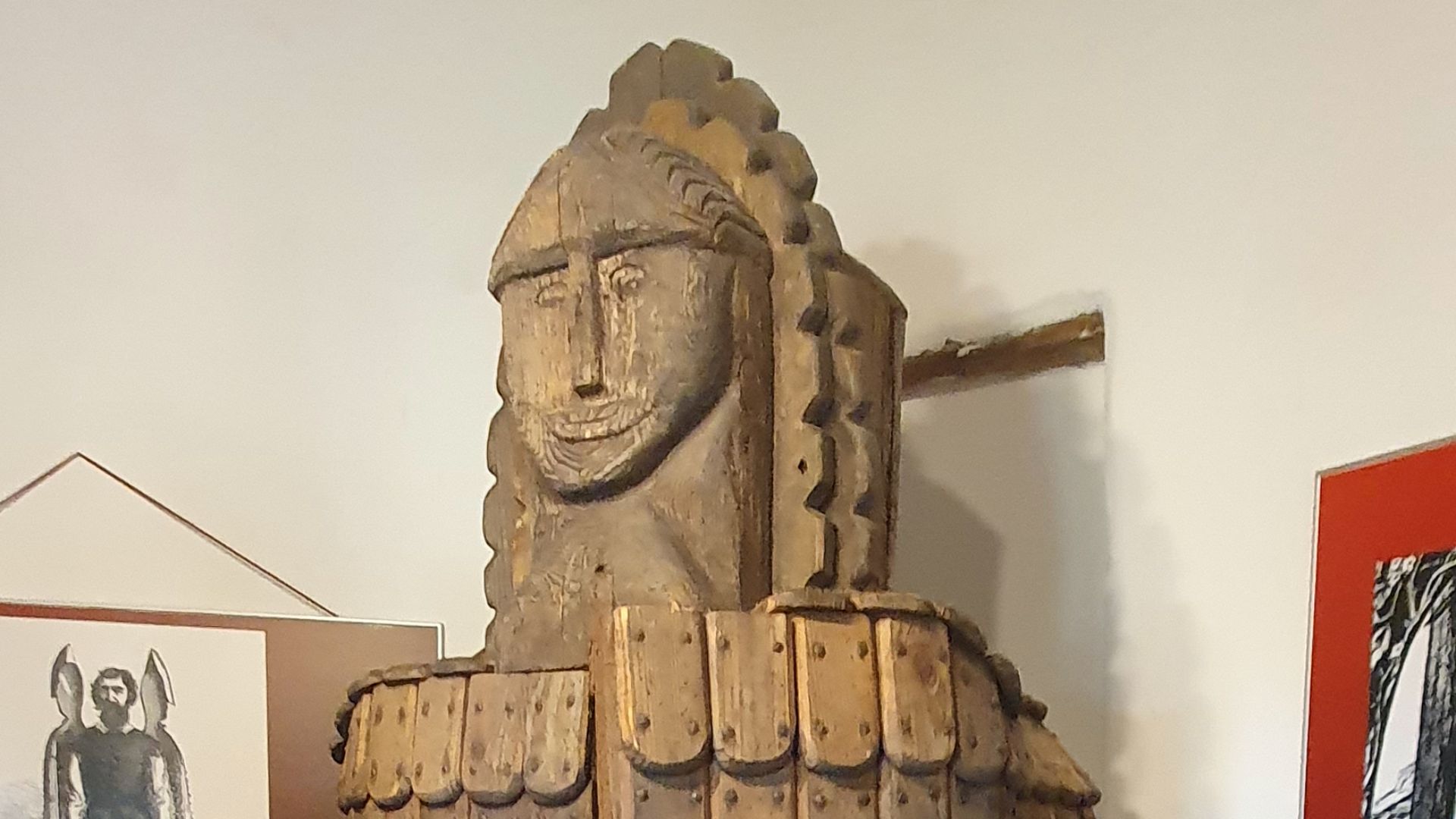
The “pear” is often presented as a medieval Inquisition staple, yet research suggests otherwise. According to historians, objects called pears first appeared in the mid-19th century. You know what that means: we don’t have medieval-era evidence for this crazy contraption...which is probably for the best.
 Klaus D. Peter, Wiehl, Germany on Wikimedia
3. The Chastity Belt
You’ve undoubtedly heard it before: crusading husbands locking up their wives with this brutal device. However, the whole thing is widely treated as a myth. In fact, research suggests that surviving examples are actually argued to be Victorian reproductions. So, while you can still find the idea everywhere, the “medieval” framing doesn’t have the support.
4. The Brazen Bull
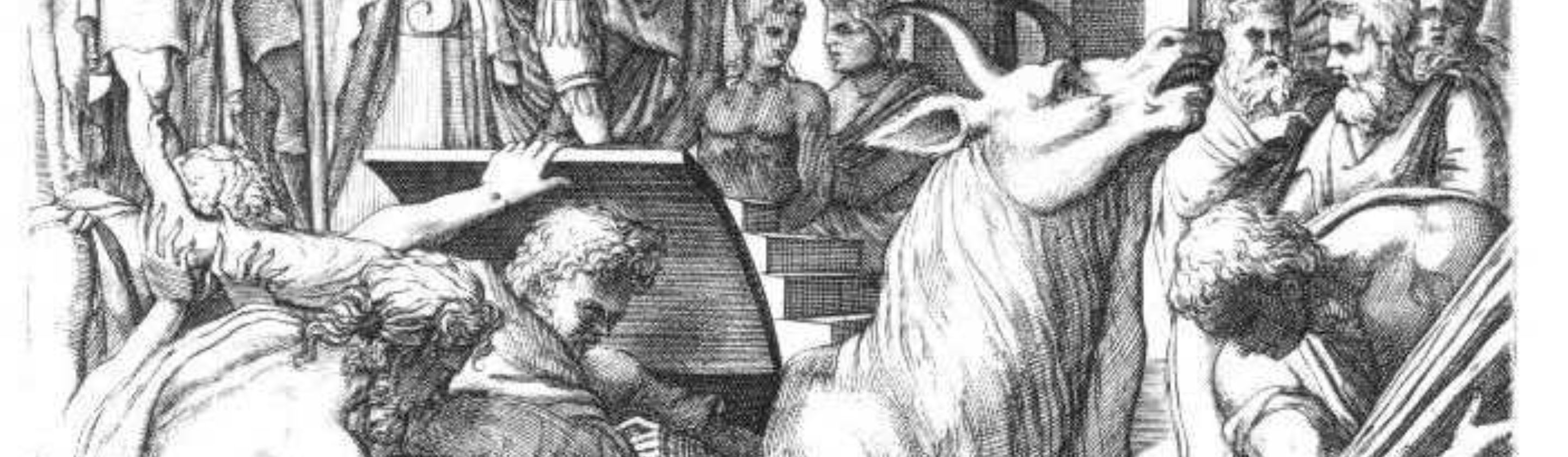
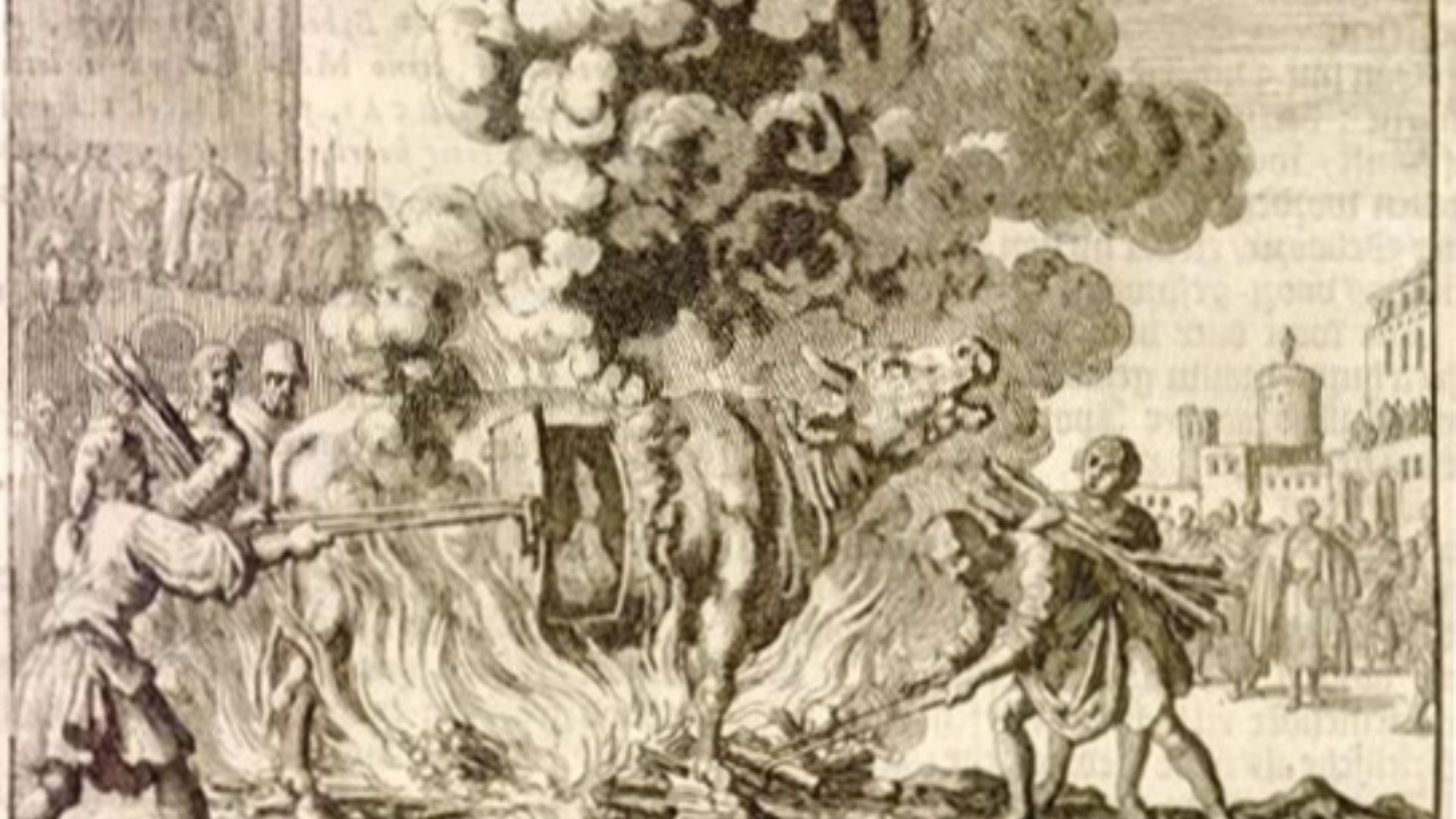
Lists of medieval devices regularly include the Brazen Bull, but the story isn’t tied to medieval Europe. We can trace the legend back to Phalaris of Acragas and the alleged bronze bull in the sixth century BC, which places the tale far outside the Middle Ages.
 anonymous (old engraving, before 19th century) on Wikimedia
5. “Chinese Water Torture”
Despite the name, the method isn’t presented as a traditional Chinese technique—and it’s not medieval in the way you think. The earliest known version is documented in late-15th-century Bologna, and the term itself arrived much later.
6. The Thumbscrew
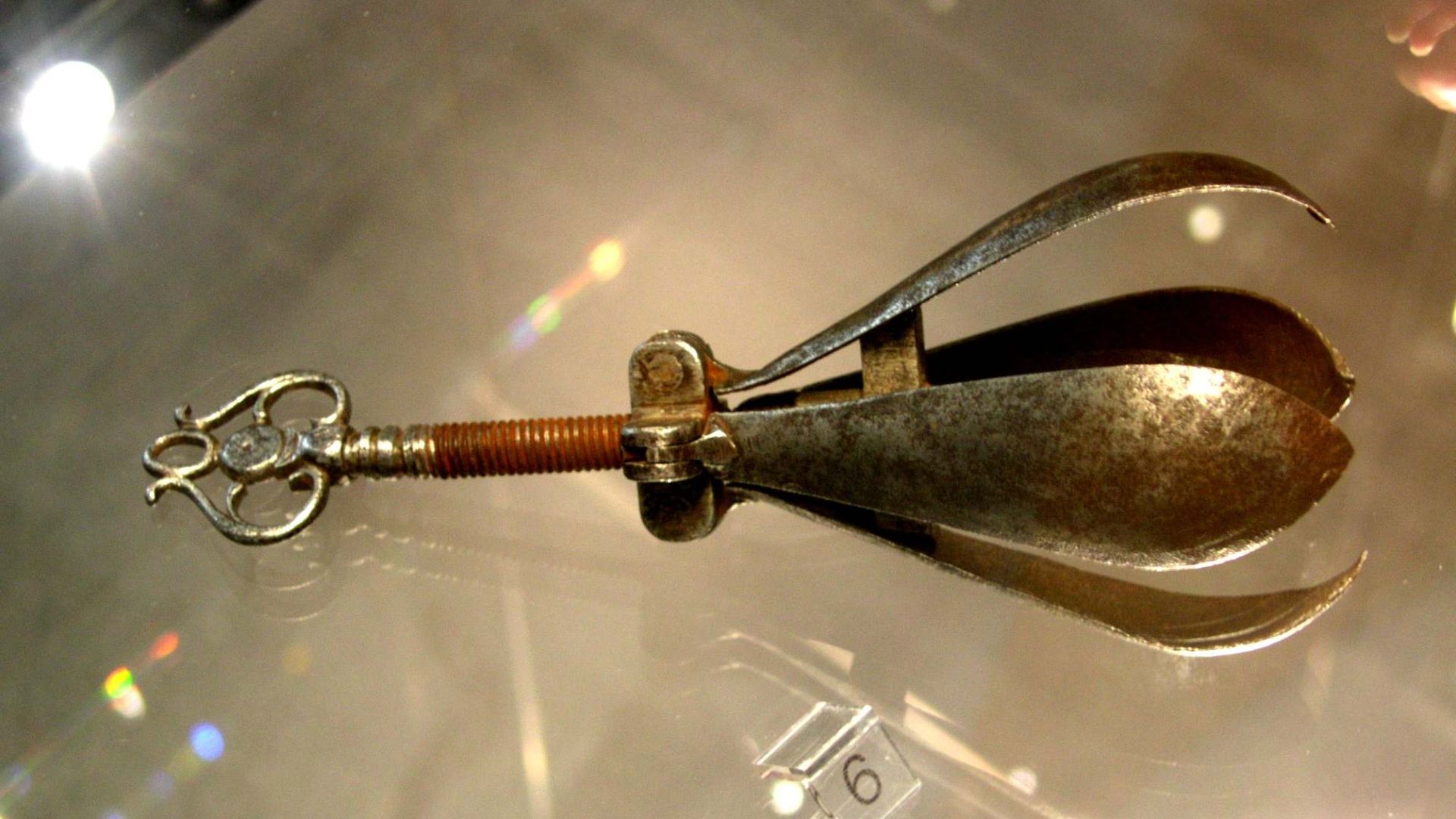
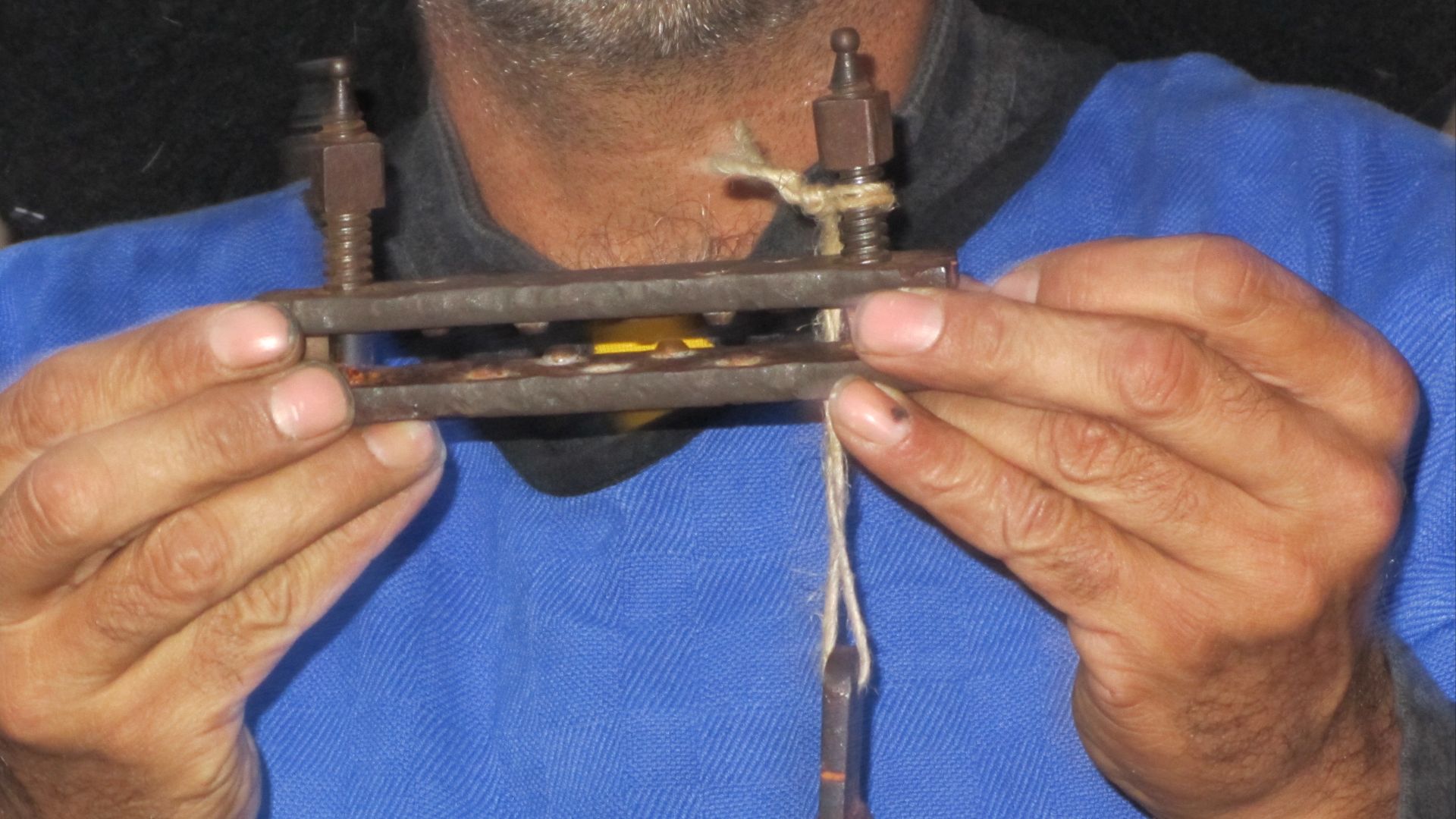
The thumbscrew is frequently waved around as a medieval fixture, but historians discovered its emergence in early modern Europe, not the medieval period. Museums themselves pinpoint it from the Middle Ages to the Industrial Era, so while you might still see it marketed as medieval, the documented framing shows otherwise.
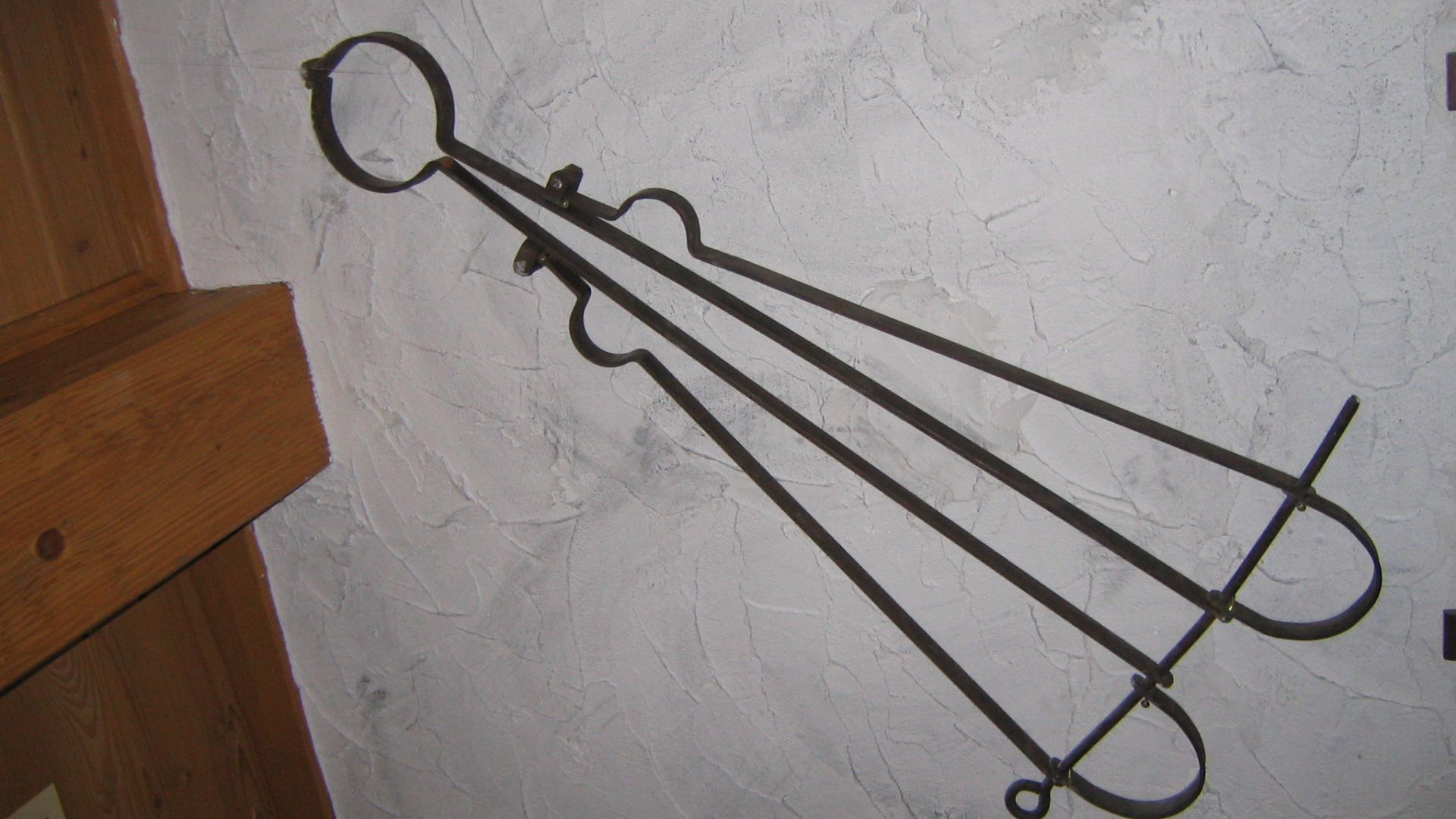
7. The Scavenger’s Daughter
It may sound like a quasi-cute fable, but this horrendous binding device was anything but. Though real, calling it medieval muddies the period; it’s associated with Tudor-era state power. The Royal Armouries describes the Scavenger’s Daughter as invented in the reign of Henry VIII, tying it to the 16th century.
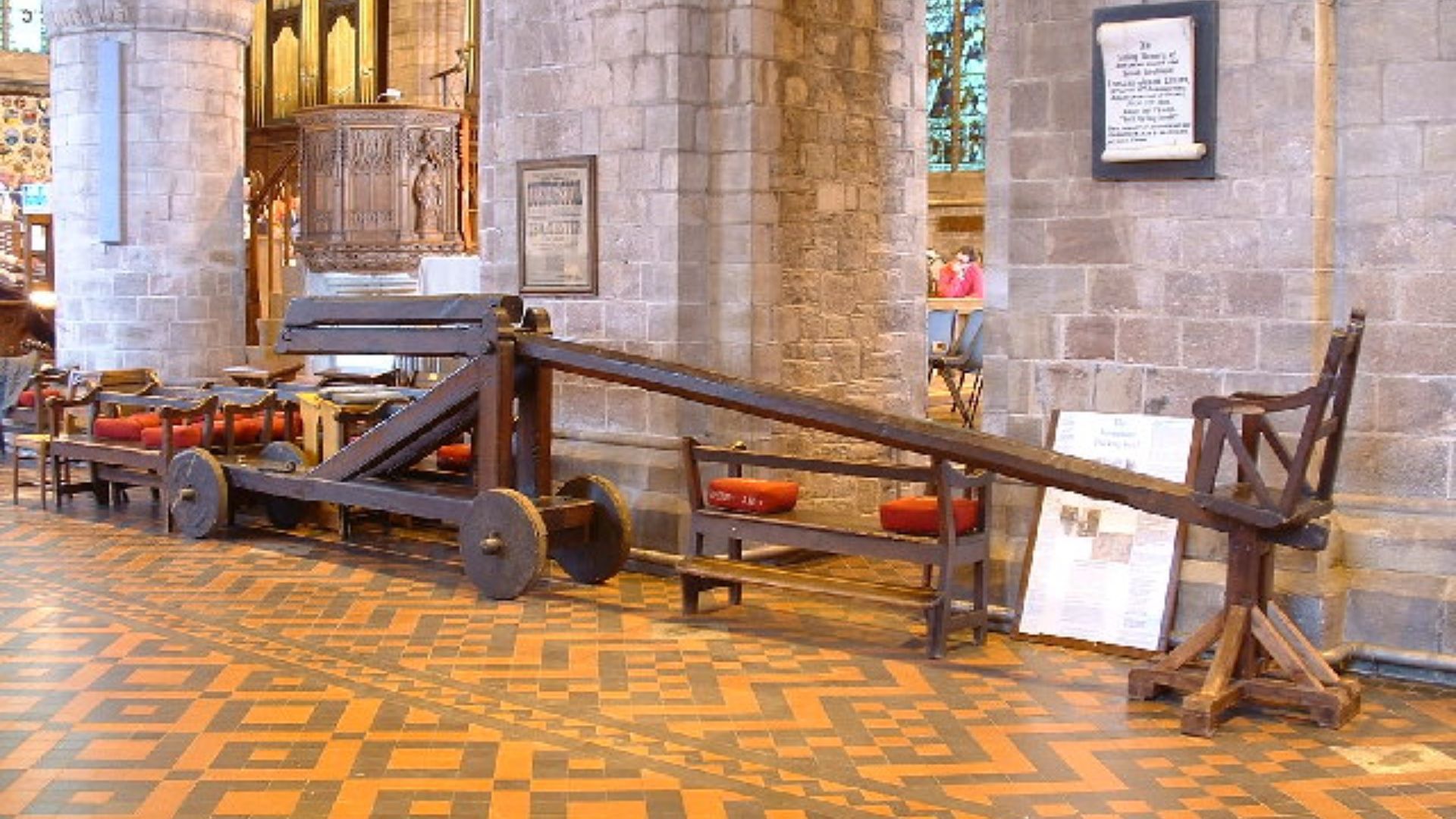
8. The Ducking Stool
People often treat the ducking stool—a device used for public humilation and punishment—as a medieval throwback, but the term and the apparatus show up in later records. The earliest record of it is actually toward the beginning of the 17th century.
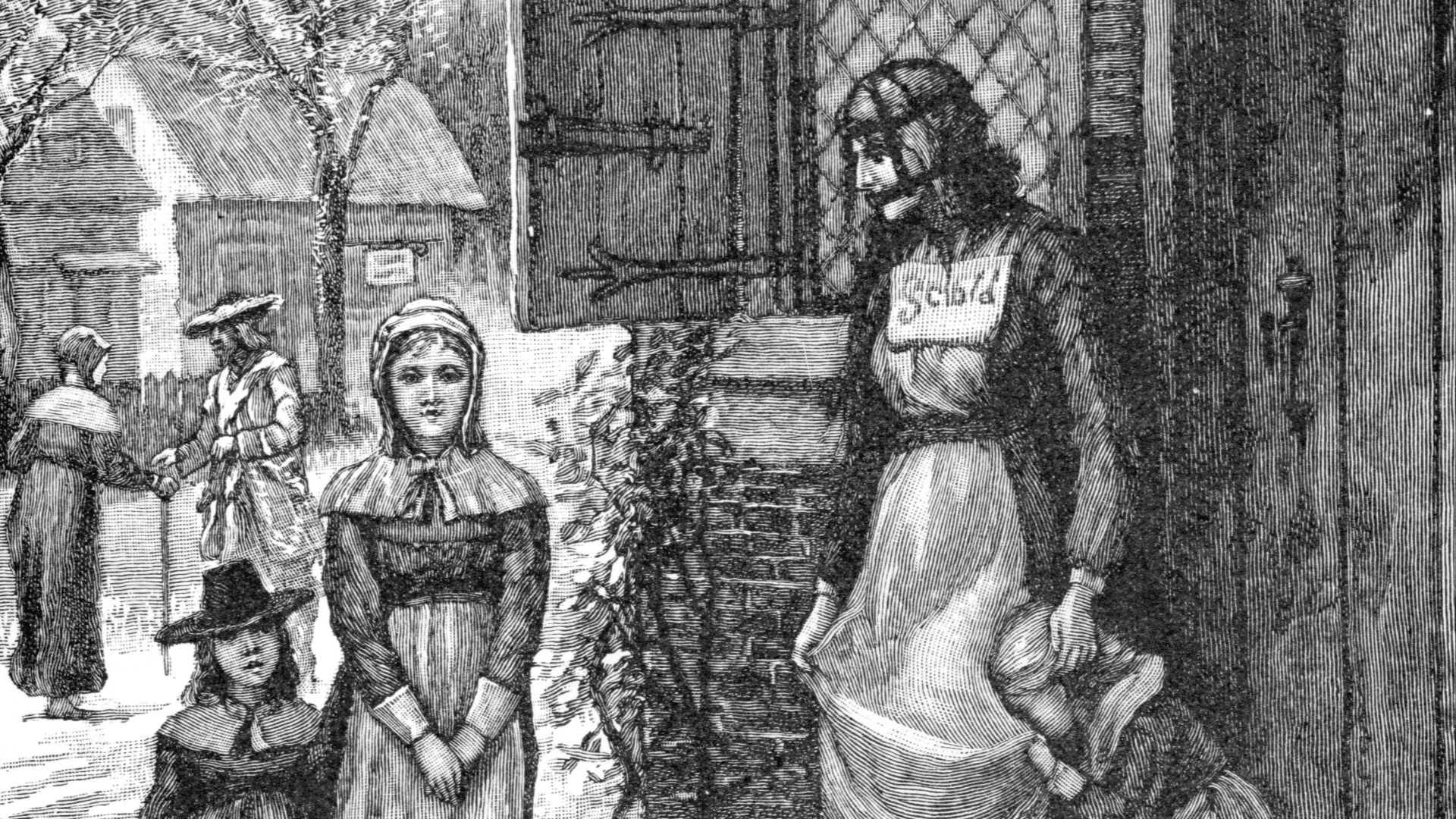
9. Scold’s Bridle
While people often toss the scold’s bridle into medieval tales, its true documented origin points to the 16th century. Often used on women who were considered gossips, or even town drunkards, you can read about its infancy in Scotland in 1567, which places it after the medieval period.
 Joel Dorman Steele and Esther Baker Steele on Wikimedia
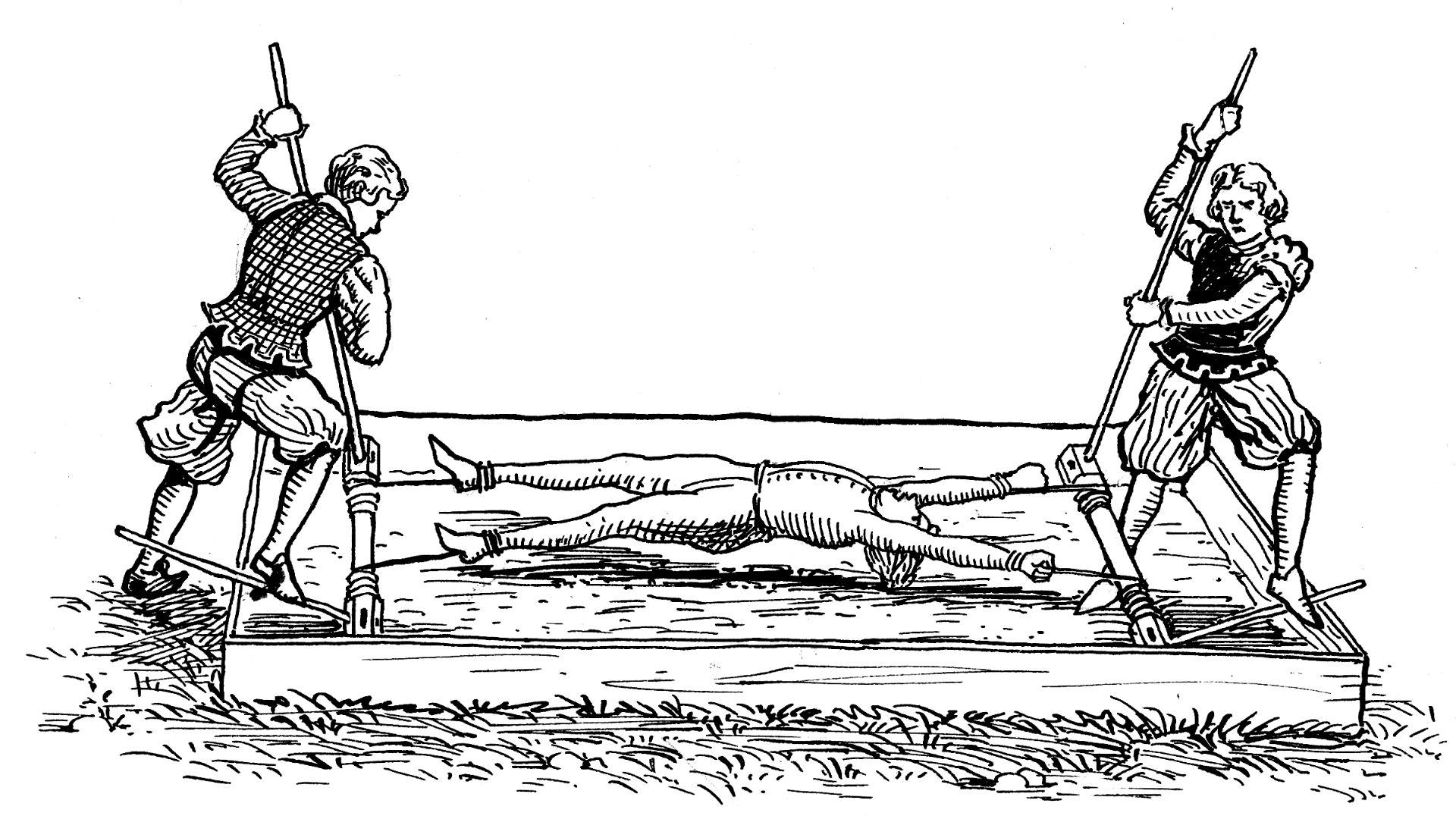
10. The Rack
Hang on just a second—we’re really here to clear the air. Yes, racks existed. No, not in every medieval castle. The device is well-attested in ancient contexts, but selective examples inflate its supposed medieval ubiquity. Though it seems fitting that every king had one of these in his basement, it’s really just conjecture.
 Pearson Scott Foresman on Wikimedia
Don’t let your hopes fall too far down the well—plenty of so-called disciplinary devices existed, and we’re about to explore them.
1. Strappado
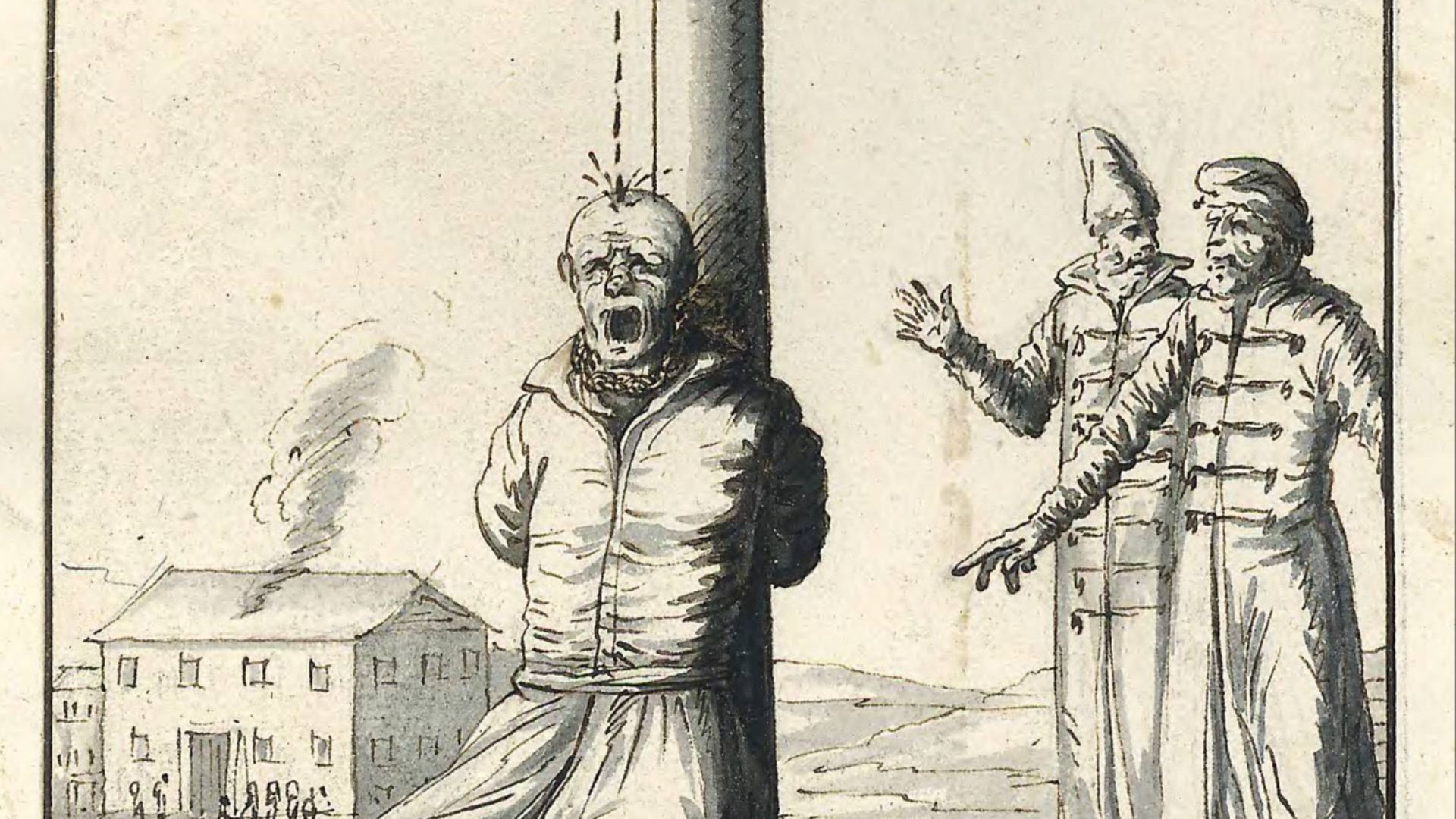
Sometimes called the corda, the basic setup is exactly what it sounds like: a person suspended by the wrists, which are bound behind their back. Think of it as a suspension attached to the wrists, often causing shoulder dislocation (they sometimes added weights to intensify pain).
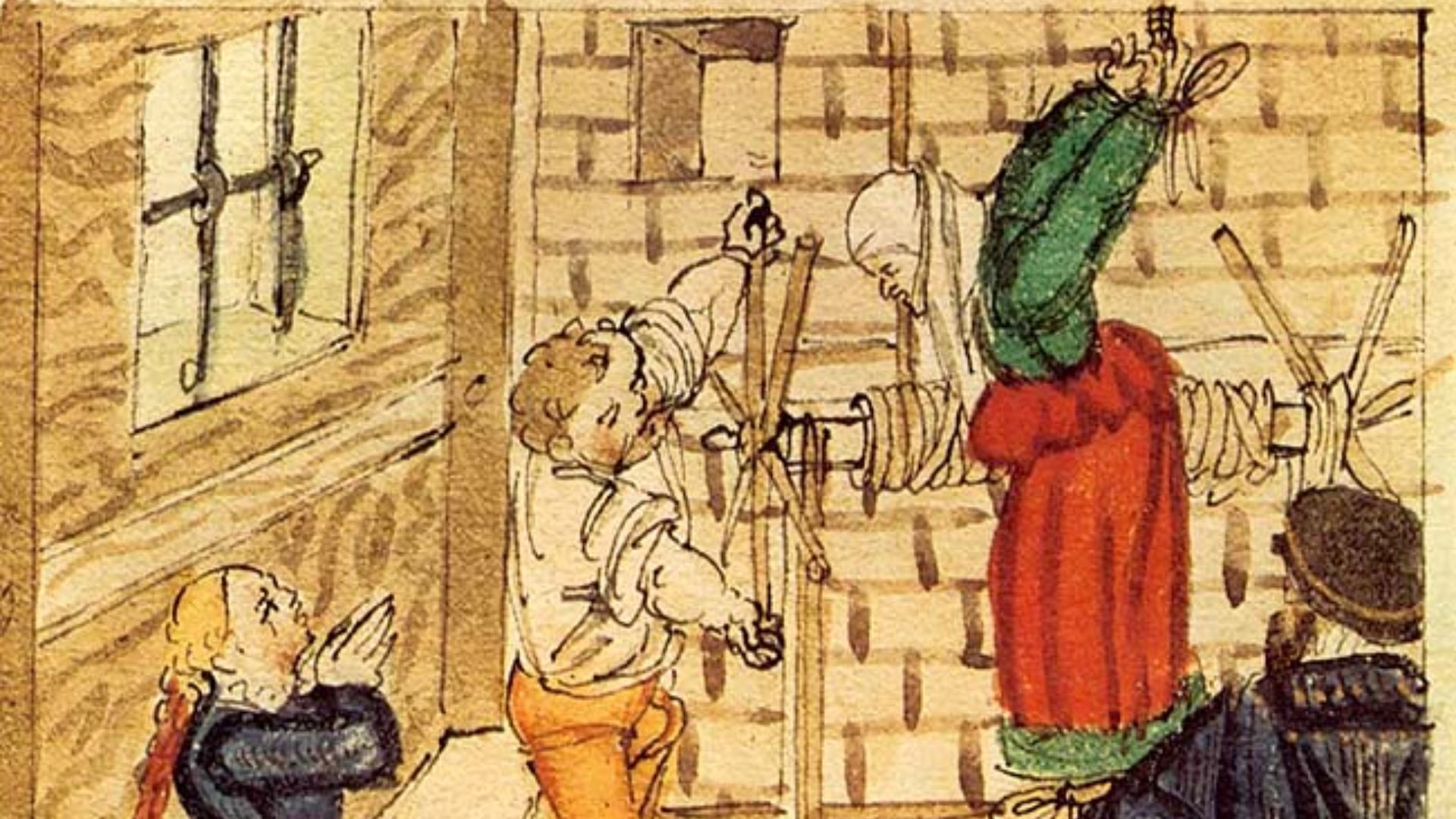 Johann Jakob Wick on Wikimedia
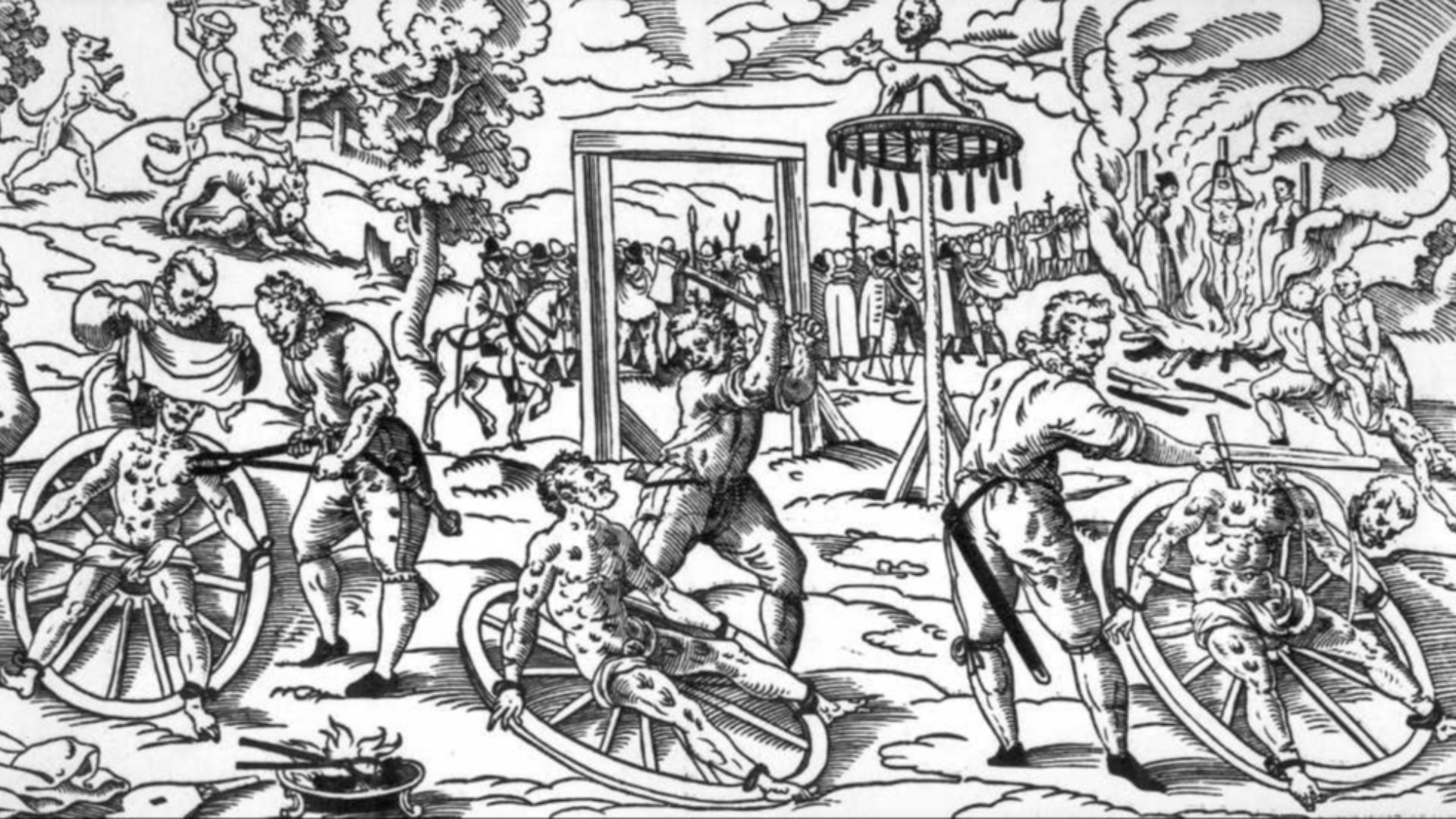
2. Breaking Wheel
With a name like that, you know not to expect anything good. The breaking wheel was used for breaking bones or bludgeoning condemned persons to make an example out of them. Worse still, it remained in use across Europe for centuries.
3. The Pillory
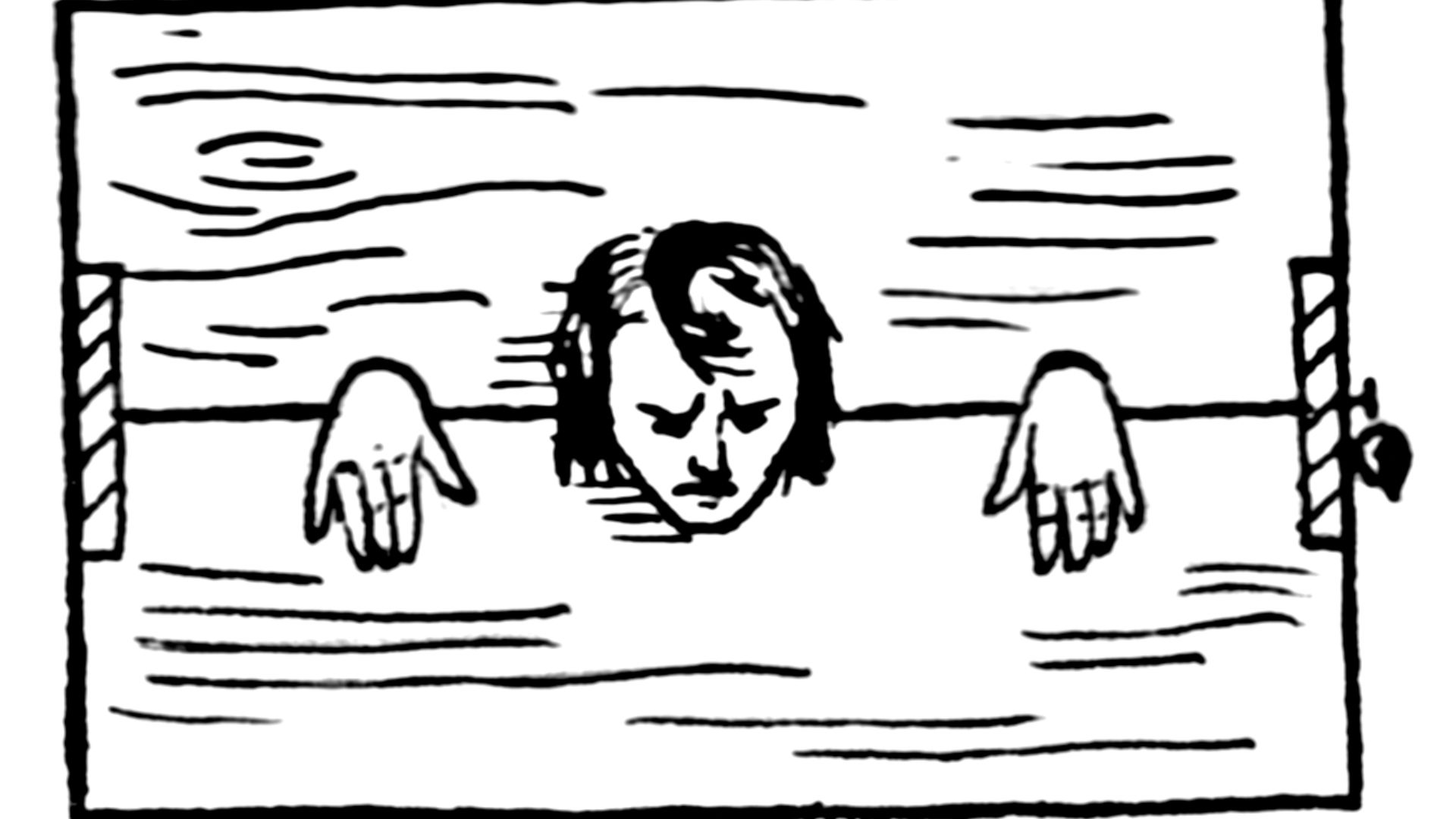
Medieval town squares? Those are never good. Just ask any victim of the pillory, a device that locked a person’s head and hands in place for public punishment. It was a widely recognized instrument with a long history.
 Pearson Scott Foresman on Wikimedia
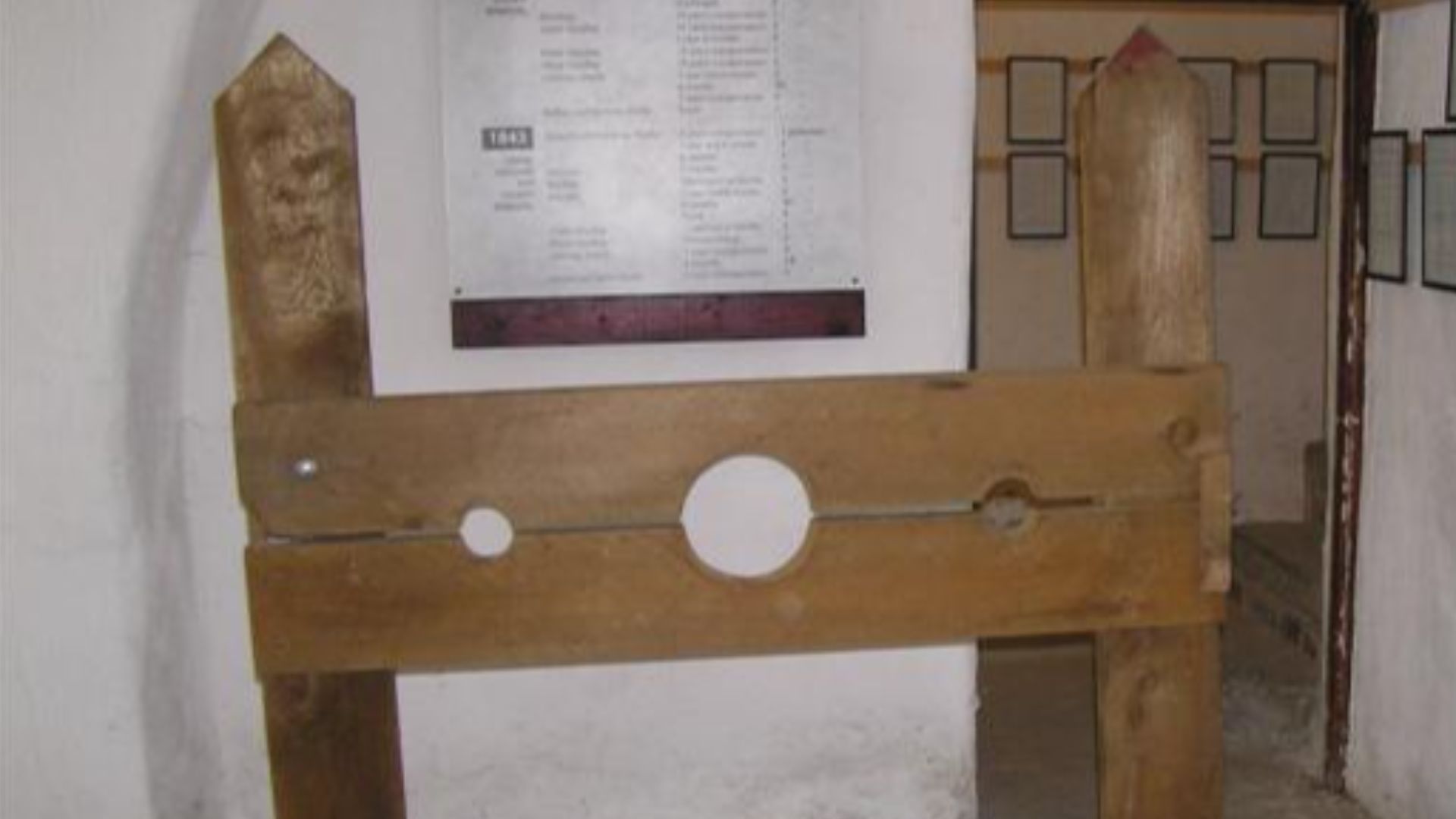
4. The Stocks
Stocks doesn’t sound that bad at first glance, but don’t let its simple name fool you. It restrained a person’s limbs, most commonly the ankles, and was used for public humiliation punishments, particularly from medieval times onward across Europe. Though it appears identical to the pillory, this one actually restrained a seated person's ankles, while a pillory forced you to stand.
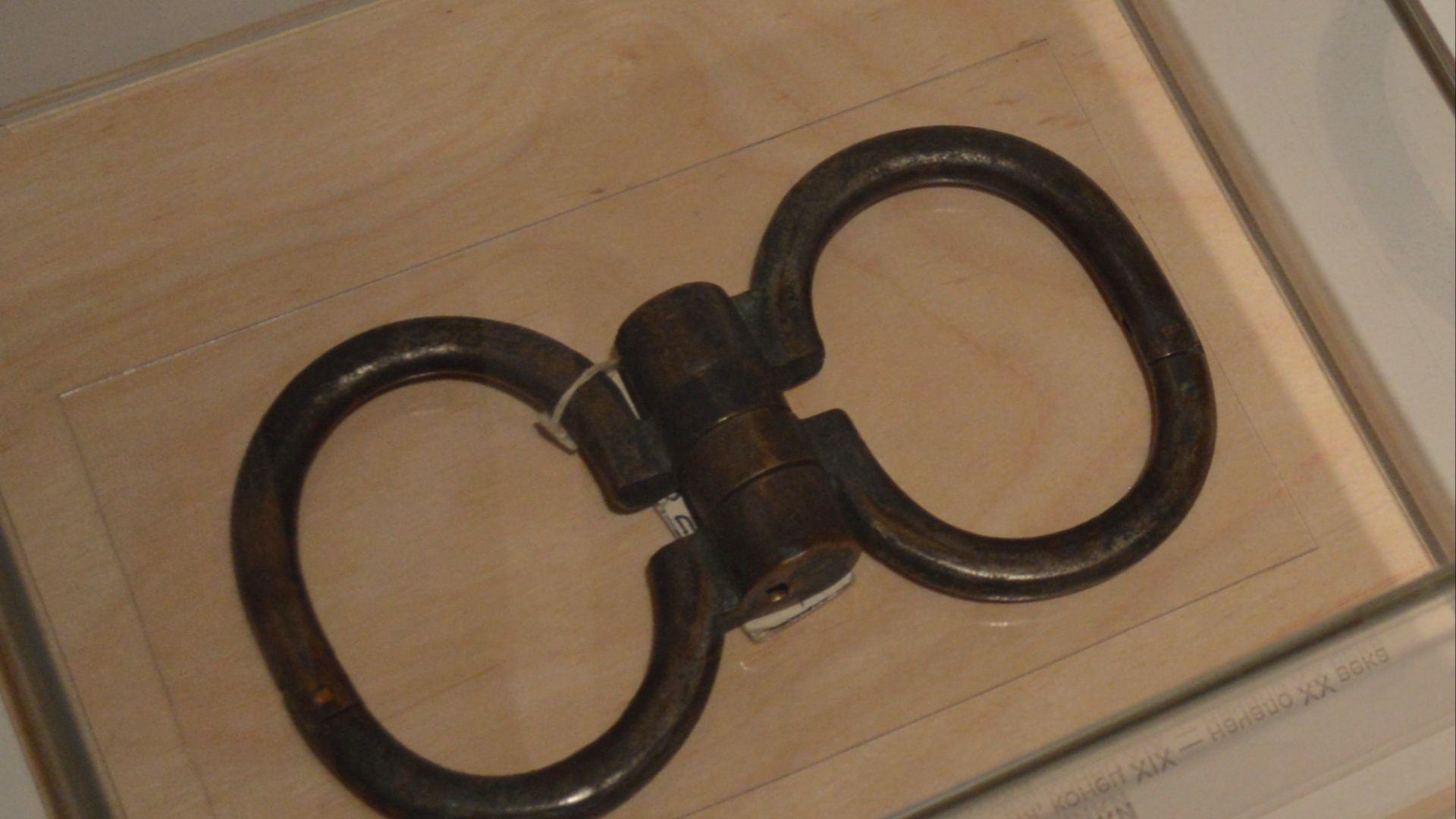
5. Manacles
Unfortunately, manacles aren’t a legend—they’re surviving objects meant to lock hands and sometimes feet. Dated back to the 15th to 17th centuries, these were really just steel or iron restraints that essentially acted as handcuffs.
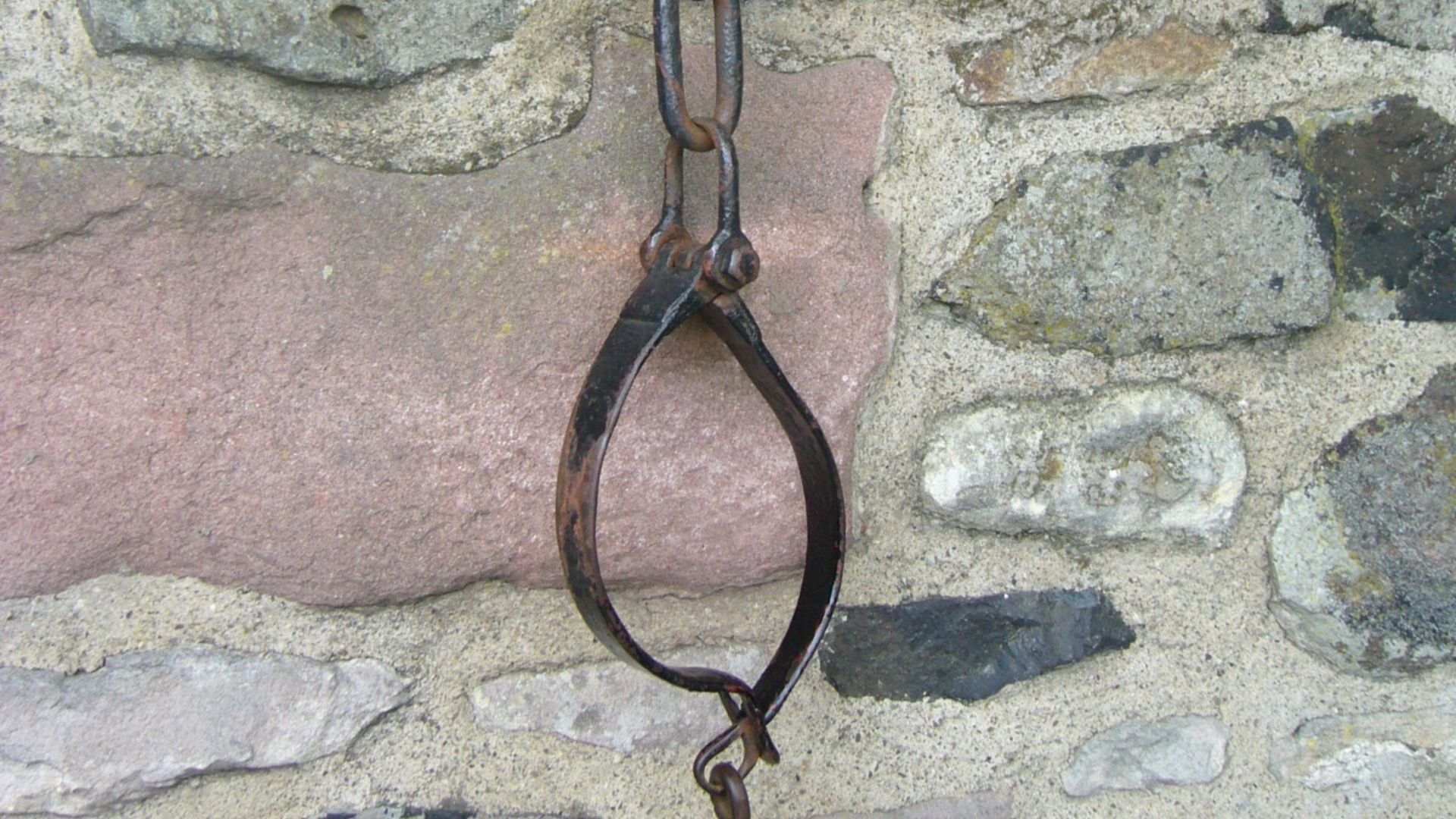
6. Iron Restraining Collars
Criminals, meet the iron collars: a restraint used to control movement and enforce compliance. (One look at these things and you’d see why.) It dates back to the 15th to 17th centuries, and it’s one of the more common names in disciplinary devices.
7. Branding Irons
There’s no denying these existed, especially since today’s museums still display them. Also dating to the 15th to 17th centuries, this tool wasn’t only used on criminals; sometimes, it was used to brand livestock or even tools to prevent theft. However, that’s not to say it didn’t meet human skin every once in a while.
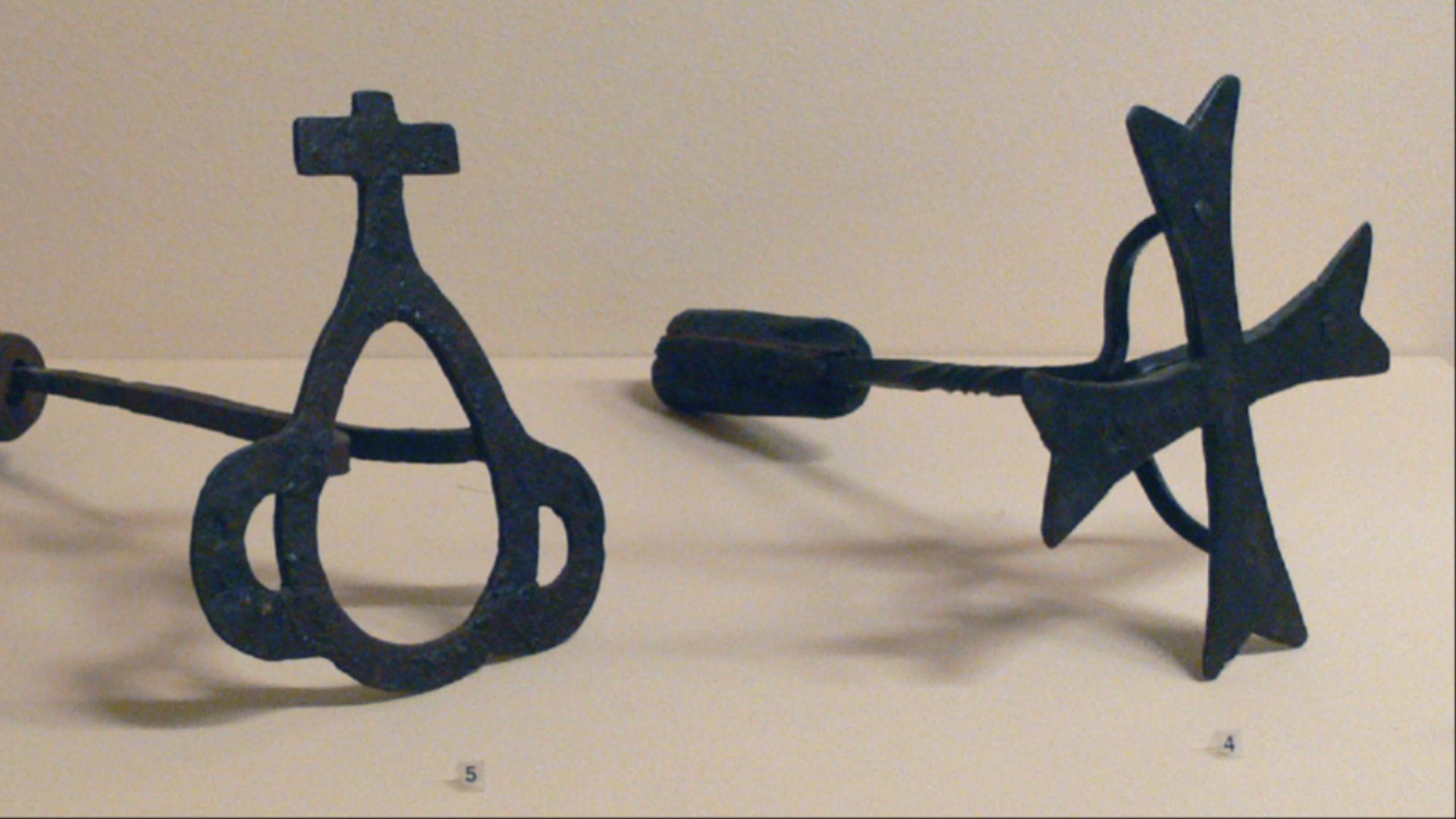 Photo: Andreas Praefcke on Wikimedia
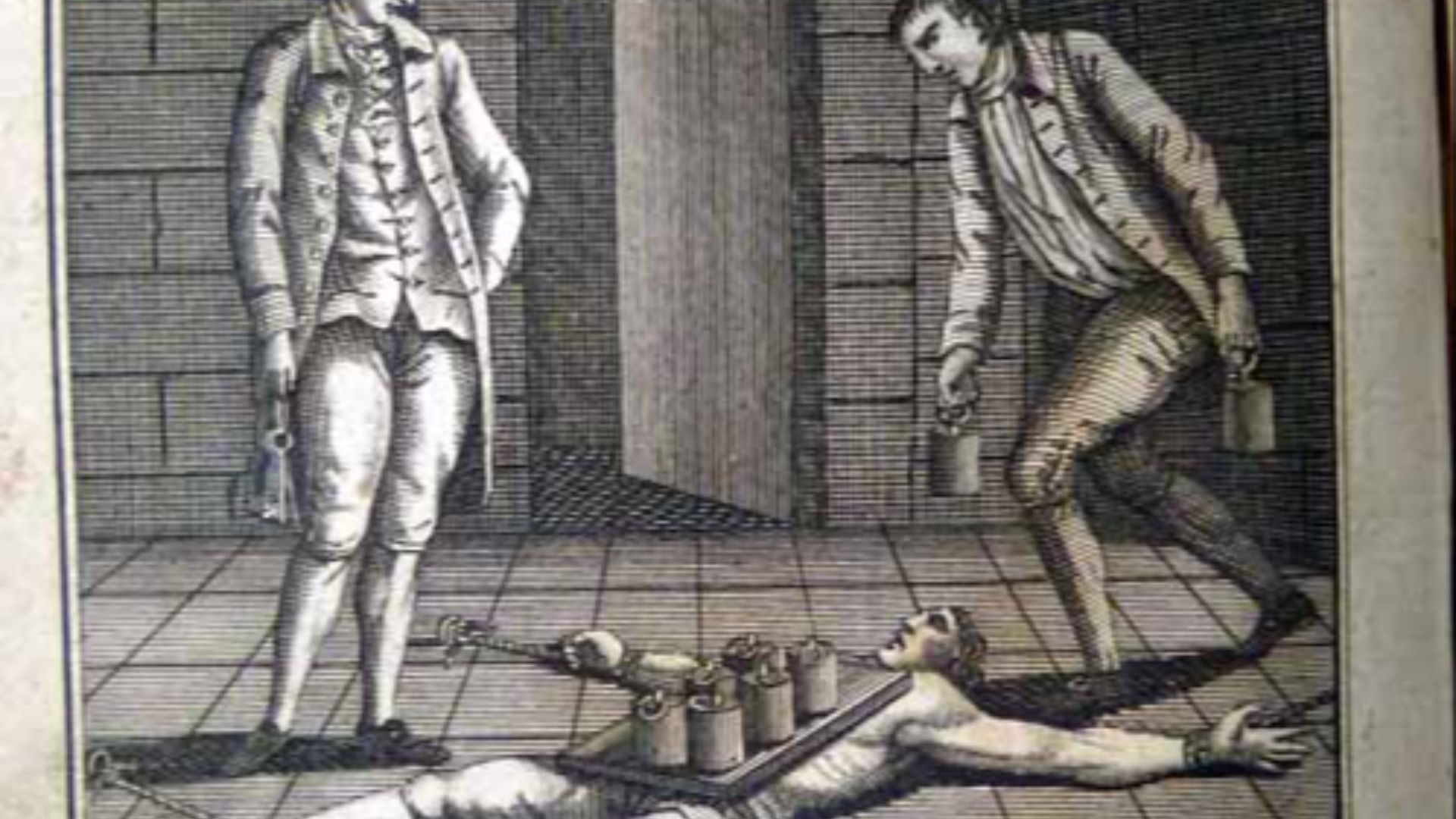
8. Pressing With Weights
Otherwise known as “Peine Forte et Dure,” this wasn’t a rumor; it was a formal legal response in medieval England when an accused person wouldn’t plead. Essentially, the accused would suffer being pressed with weights as a coercive measure. Good luck standing your ground then.
 Unknown authorUnknown author on Wikimedia
9. The Stake
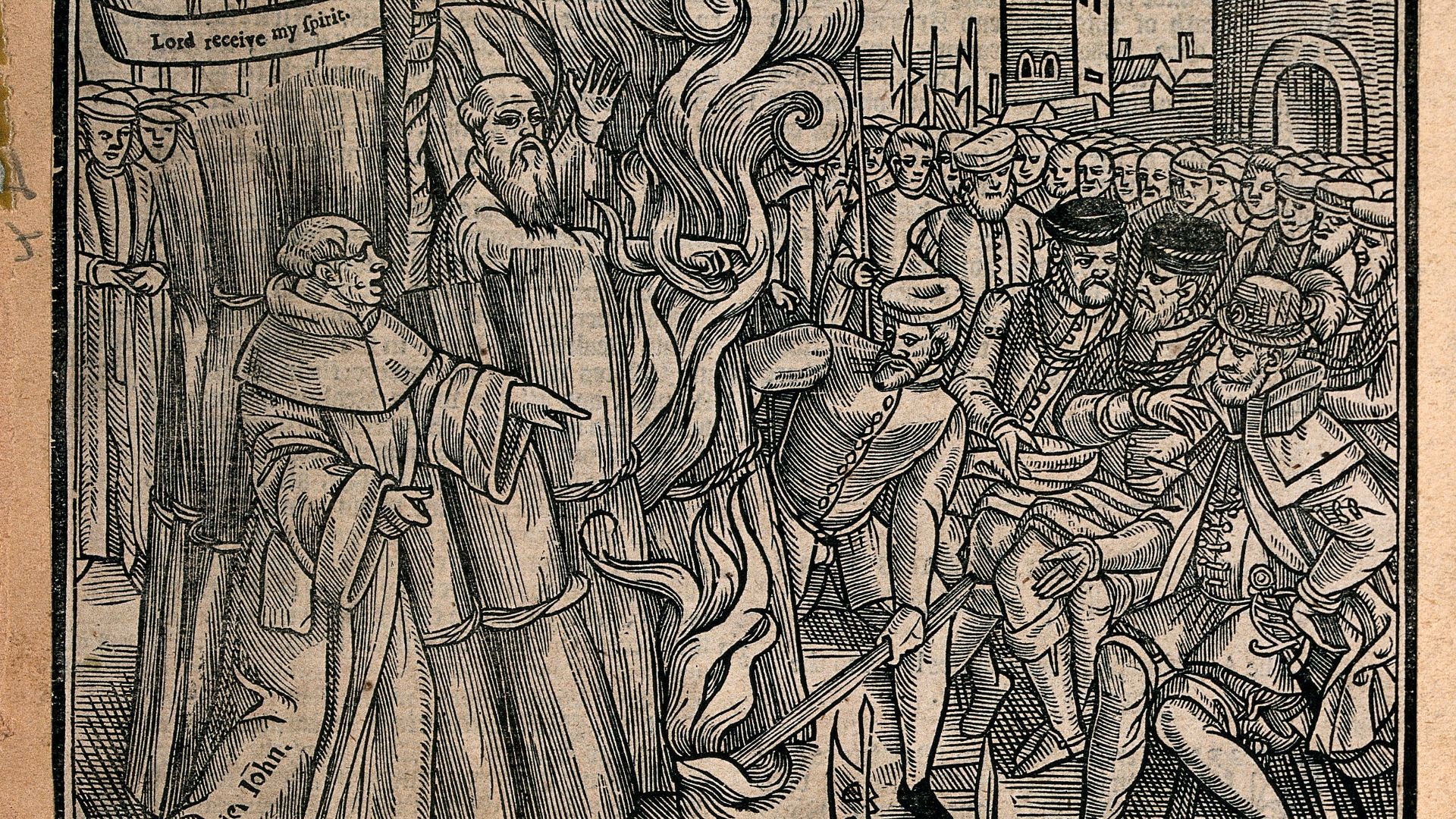
If you know anything about the Salem Witch Trials, you know about the stake. It was merely a fixed wooden post used to secure a person in place for execution by fire. Today, it’s a widely recognized method later adopted in Europe, and it specifically references Joan of Arc’s fate in 1431.
10. The Gallows
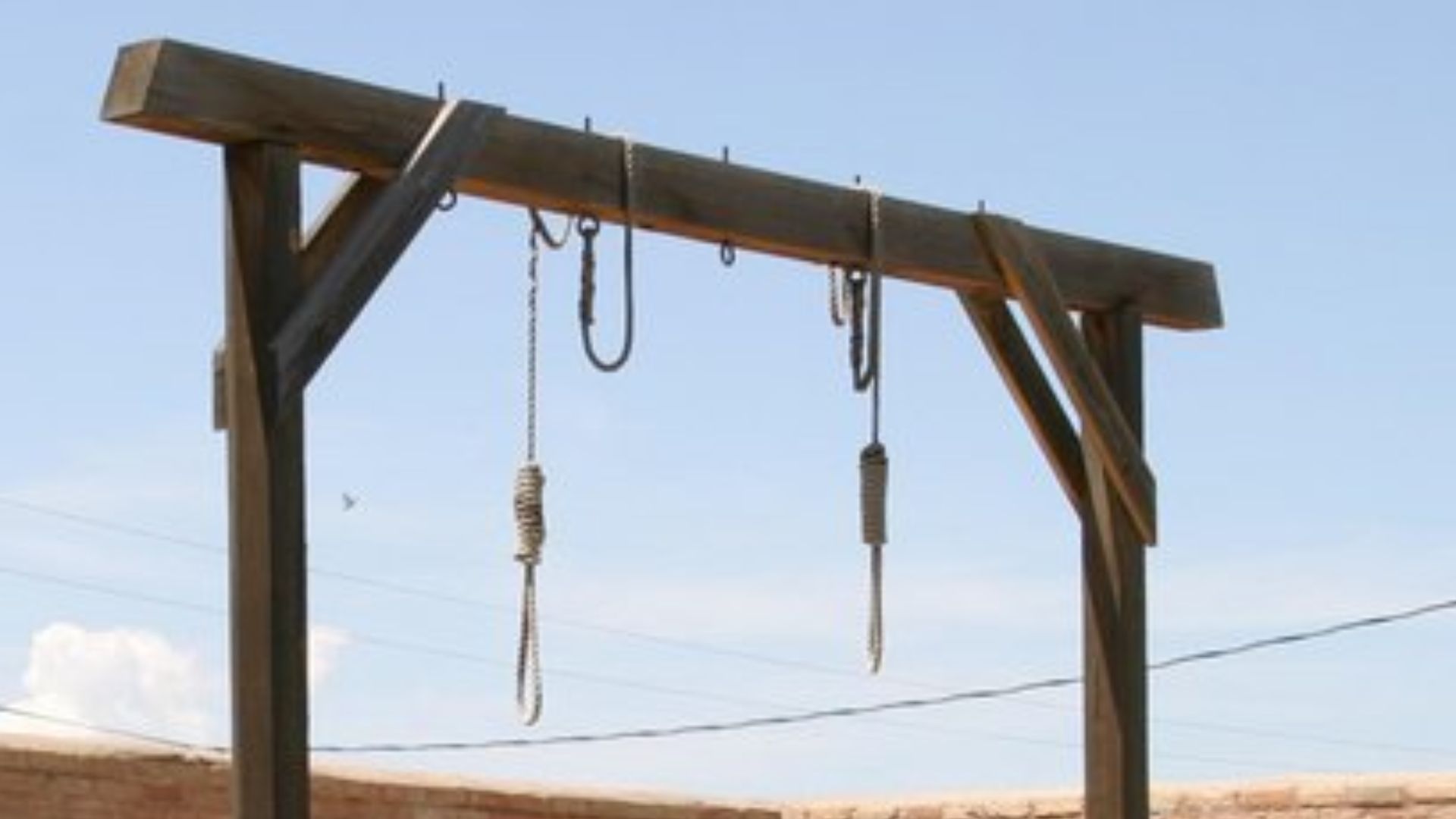
“Send them to the gallows!” You’ve heard about them in song and books alike—the apparatus for execution by hanging. Now, it isn’t “medieval” by invention alone (it existed across many eras), but it was definitely part of medieval capital punishment.
KEEP ON READING

20 Greek Gods We Don't Often Talk About
Step Aside, Zeus. Greek mythology isn’t only about Zeus and…
By Elizabeth Graham Jan 16, 2026
10 Historic Courtship Practices That Should Be Brought Back &…
Old-School Dating Was a Mix of Charming & Unhinged. Historic…
By Emilie Richardson-Dupuis Jan 20, 2026
Pooches Of The Past: Extinct Dog Breeds
Unknown authorUnknown author on WikimediaDogs have been showing up in…
By Elizabeth Graham Jan 27, 2026
The 20 Craziest Silent Films Ever Made
When Silence Let the Madness Speak. Silent cinema didn’t just…
By Chase Wexler Jan 5, 2026
Legendary Tales: 20 Most Fascinating Mythical Creatures from Folklore
Mythological Beasts. Stories about mythical creatures endure for a simple…
By Christy Chan Jan 16, 2026
The three most expensive historical artifacts ever sold at auction
Attributed to Leonardo da Vinci on WikimediaAuctions are where history…
By Emilie Richardson-Dupuis Jan 9, 2026