

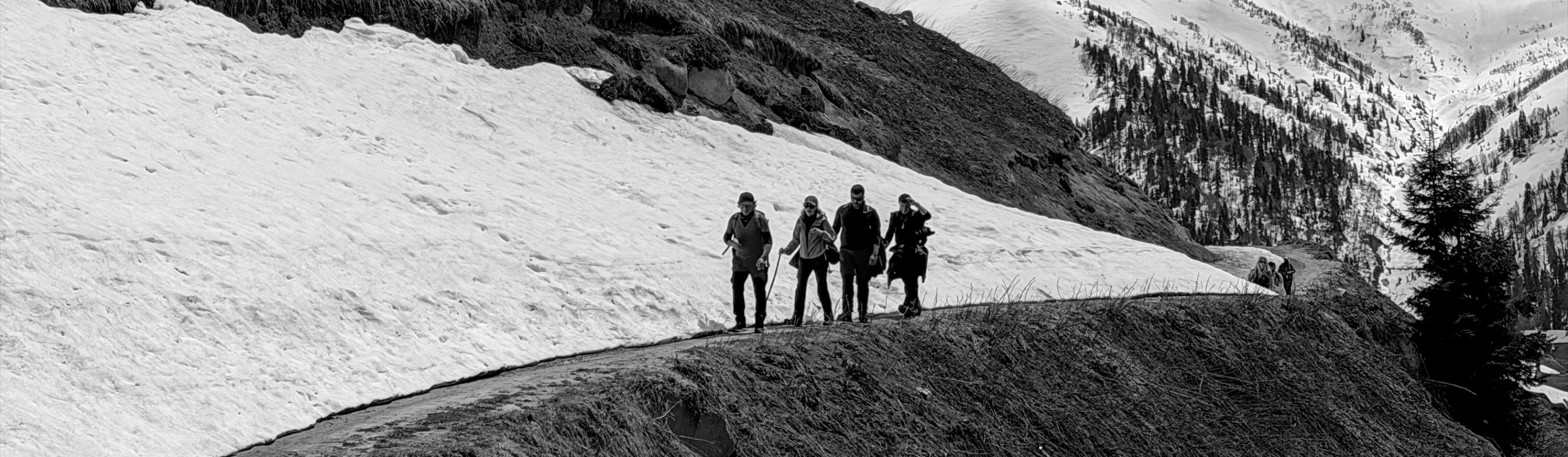
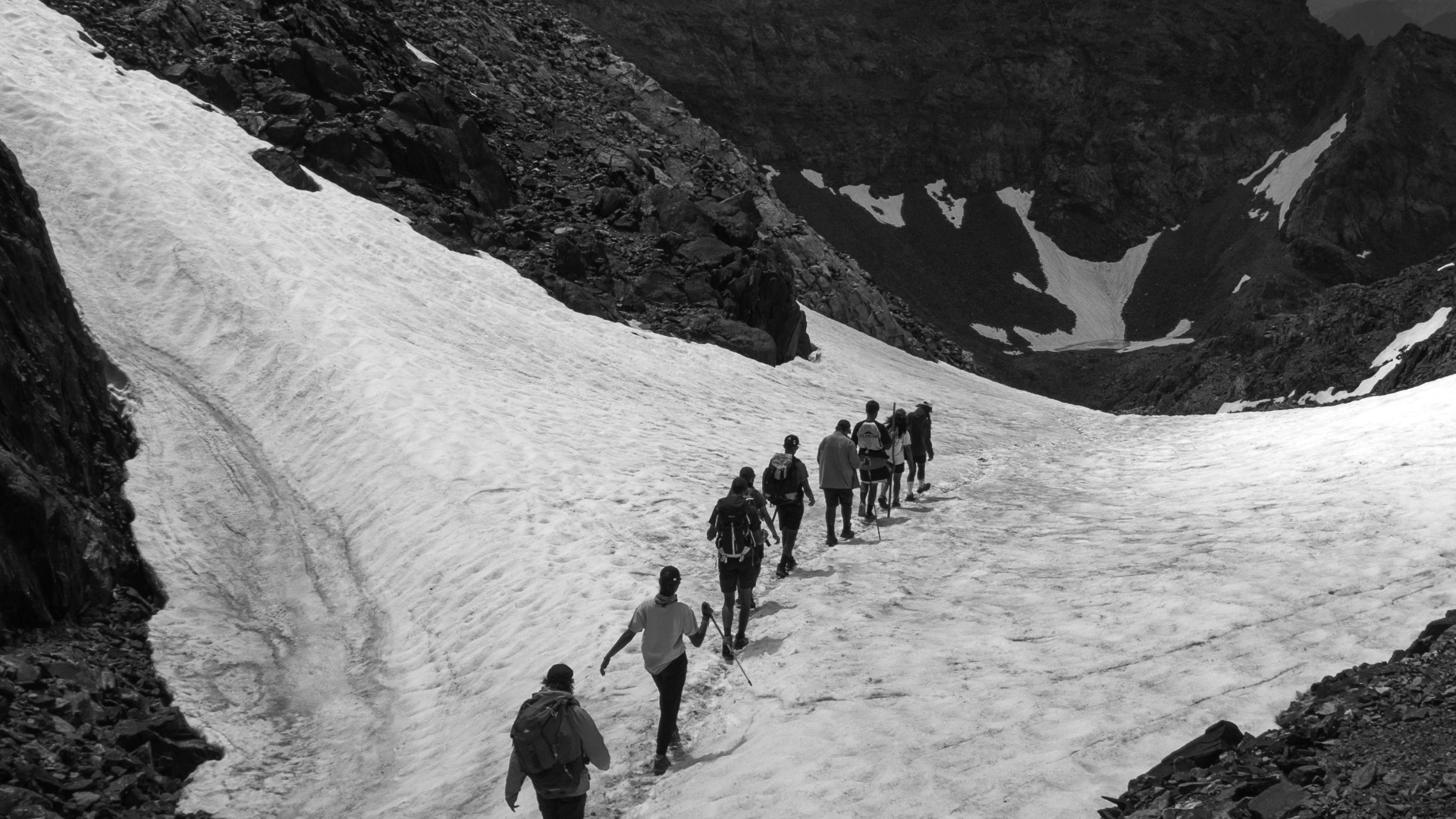
By now, most have probably heard of the Dyatlov Pass Incident. But in case you haven't, here's the story: On January 23, 1959, a group of nine (they started as 10, though one hiker had to leave for medical reasons) experienced Soviet hikers set out into the Ural Mountains under the leadership of 23-year-old Igor Dyatlov. Most were students at the Ural Polytechnic Institute, well-equipped for the demanding conditions ahead. They never reached their destination; searchers discovered their campsite a month later under circumstances so unusual that the case was deemed unsolved for decades.
Over the years that followed, dozens of theories attempted to explain what happened, from classified Soviet weapons tests to paranormal (or even extraterrestrial) activity. In 2021, the "truth" seemed to finally come to light when a pair of Swiss researchers published what many consider the strongest scientific case yet, and subsequent fieldwork has added to the evidence. Even so, even now, people still debate whether the mystery is truly solved.
A Scene That Defied Explanation
When a search party reached the hikers' campsite on February 26, 1959, they found a tent slashed open from the inside, supplies still left behind, and a trail of footprints leading toward a nearby wood. The first two bodies were recovered near the remnants of a fire, barefoot and nearly completely nude, dressed only in underwear despite temperatures far below freezing. As more bewildering clues surfaced over the following months, the injuries became increasingly difficult to explain: fractured ribs, crushed skulls, one hiker missing her tongue, and radioactive contamination on the clothing.
Soviet authorities concluded their investigation in May 1959 with a determination that the hikers had died due to a "compelling natural force," a phrase that accounted for very little. Three deaths were attributed to physical trauma so severe that investigators compared it to the force of a speeding car, while the other six were ruled as hypothermia. With investigation records sealed for years afterward, public suspicion that something significant was being concealed only deepened.
Perhaps unsurprisingly, numerous separate theories emerged in the absence of a satisfying official account. Speculation spanned far and wide, with some proposing the incident was due to classified military experiments, KGB involvement, and infrasound-induced panic, among other hypotheses; witnesses in the area also reportedly observed strange glowing orange spheres in the sky that very night. Each theory, however, only accounted for some details while leaving others unexplained.
The Science Behind the Slab Avalanche Theory
The fate of those hikers remained a mystery for over 60 years. Then, in 2021, the most rigorously argued case came when ETH Zurich professor Alexander Puzrin and EPFL's Johan Gaume published a study in Communications Earth & Environment, a Nature Research journal. Using computer simulations and analytical models, they argued that a rare slab avalanche—triggered by the hikers cutting into the slope to pitch their tent and worsened by wind-driven snow accumulation—could account for both the injuries and the chaotic scene left behind. A slab avalanche occurs when a compressed snow layer sitting atop a weaker one releases suddenly, and such events can happen on gentler slopes than most people assume.
Critics initially objected that the slope wasn't steep enough and that rescue teams had found no avalanche evidence; Puzrin and Gaume addressed each concern directly. Their measurements showed the slope angle near the campsite was around 28 degrees, steeper than earlier reports had indicated, and heavy snowfall in the weeks following the incident would have buried any remaining physical traces. Their models also demonstrated how even a small slab could have produced the crushing internal fractures documented in the autopsies, leaving survivors too disoriented and physically compromised to return to the tent.
Three follow-up expeditions confirmed the field evidence. A January 2022 visit recorded two fresh slab avalanches on the slopes above the campsite under conditions similar to those of February 1, 1959, and a January 2023 expedition photographed another on Kholat Syakhl, approximately 700 meters from where the tent had stood. That consistency across multiple seasons significantly strengthened the case, and left almost no room for doubt.
Why the Debate Hasn't Ended
But doubt still lingered. Puzrin and Gaume, too, have been deliberate in framing their findings as a plausible explanation rather than settled fact, noting that no physical evidence from 1959 survives to confirm the theory absolutely. There is, after all, no documented avalanche debris, no snowpack photographs, and no contemporaneous witness accounts of a slide from that night. What the research does establish is that such an event was physically consistent with the conditions present.
At the same time, some details now have more plausible explanations. The radioactive contamination found on certain hikers' clothing is often explained separately: two members of the group had prior connections to the 1957 Kyshtym nuclear disaster, with one having lived in the contaminated zone and another having helped with cleanup efforts. The missing tongue and eye damage, long treated as evidence of something sinister, are now widely attributed to decomposition and wildlife activity in the months before those particular bodies were recovered.
With all that said, the Dyatlov Pass incident may never reach a concrete conclusion that satisfies every skeptic, and that enduring uncertainty is part of what keeps it in public discourse more than six decades on. The slab avalanche theory, backed by peer-reviewed modeling and confirmed through repeated fieldwork, stands as the most credible explanation currently available; the gaps left by the original Soviet investigation, however, mean that science alone can't fully close the case. You're left with a tragedy that's part historical record and part unresolved puzzle, where the evidence points in a convincing direction without quite delivering a definitive answer.
KEEP ON READING

The story of Ching Shih, the Woman Who Became the…
Unknown author on WikimediaFew figures in history are as feared…
By Emilie Richardson-Dupuis Dec 29, 2025
Einstein's Violin Just Sold At An Auction—And It Earned More…
A Visionary's Violin. Wanda von Debschitz-Kunowski on WikimediaWhen you hear…
By Ashley Bast Nov 3, 2025
This Infamous Ancient Greek Burned Down An Ancient Wonder Just…
History remembers kings and conquerors, but sometimes, it also remembers…
By David Davidovic Nov 12, 2025
The Mysterious "Sea People" Who Collapsed Civilization
3,200 years ago, Bronze Age civilization in the Mediterranean suddenly…
By Robbie Woods Mar 18, 2025
20 People In History Who Backstabbed Those Who Trusted Them
The Long History of the Knife in the Back. Betrayal…
By Cameron Dick Jun 24, 2026
20 Soldiers Who Defied Expectations
Changing the Rules of the Battlefield. You’ve probably heard plenty…
By Annie Byrd Feb 10, 2026