

My Husband Kept a Locked Cabinet for 27 Years. When Detectives Finally Opened It, Everything I Knew Was a Lie.
My Husband Kept a Locked Cabinet for 27 Years. When Detectives Finally Opened It, Everything I Knew Was a Lie.
The Locked Cabinet
For twenty-seven years, I never asked what was inside. That's what you need to understand about my marriage to Greg—we had our boundaries, and I respected them. The locked cabinet stood in his home office, a dark oak piece he'd bought secondhand before we even moved into this house. It had a brass lock that clicked when he turned the key, and he kept that key on a ring with his car keys, always with him. I'd dust around it every week, vacuum beneath it, rearrange the framed photos on top of it. Sometimes I'd pause with my hand on the smooth wood and wonder what papers or files needed that level of privacy. But I never asked. Not really. He'd told me early on it was work documents, confidential client files from his years in property management, things he was legally obligated to keep secure. That made sense to me. Greg had always been careful about professional ethics, meticulous about details. I trusted him. God, I trusted him completely. Our life felt solid—Rachel grown and living in Portland, the mortgage paid off, retirement accounts looking healthy. We'd built something good together, something real. Then two detectives arrived at my door with a search warrant.
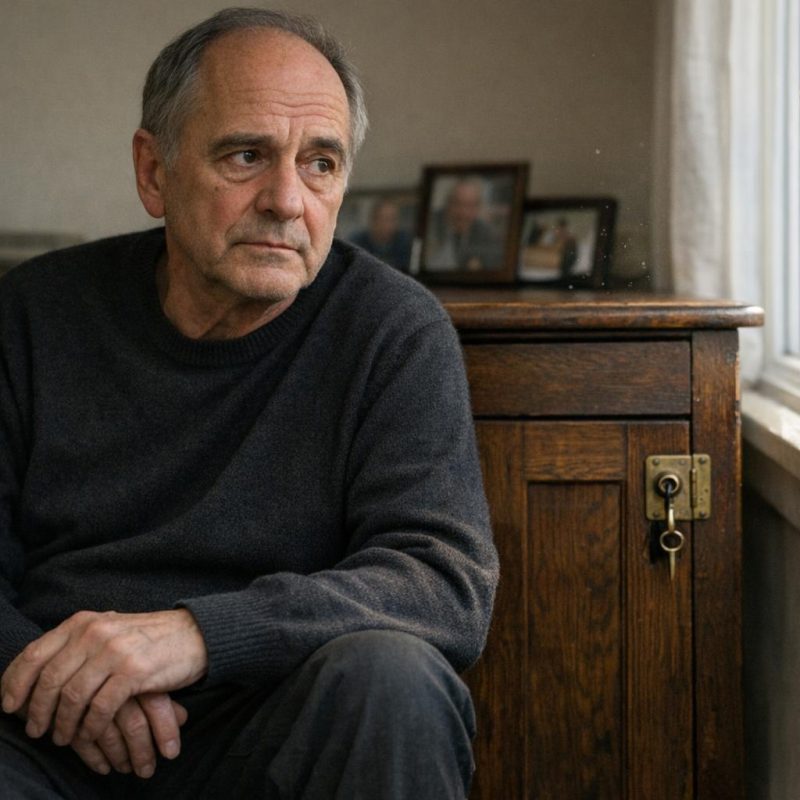 Image by RM AI
Men in Plain Clothes
Detective Marsh introduced himself first, holding up his badge with the kind of practiced patience that told me he'd done this a thousand times. Detective Carver stood behind him, older, watching my face like he was reading a foreign language. I remember thinking absurdly that I should offer them coffee, that this was some mistake they'd clear up quickly. 'Mrs. Brennan, we have a warrant to search your residence, specifically your husband's office,' Marsh said, already stepping past me into the hallway. I followed them in a daze, my slippers shuffling on the hardwood. They knew exactly where to go. Carver photographed everything—the desk, the filing cabinet, the bookshelves—while Marsh pulled on latex gloves. I stood in the doorway, my arms wrapped around myself, watching these strangers touch Greg's things. 'What are you looking for?' I asked, but Marsh just glanced at me with something that might have been sympathy. 'We can't discuss an ongoing investigation, ma'am.' Carver produced a small tool kit from his jacket. He knelt in front of the locked cabinet. My heart hammered against my ribs as I watched his hands work the lock with casual expertise. They opened the cabinet in seconds, as if they had known exactly what they were looking for all along.
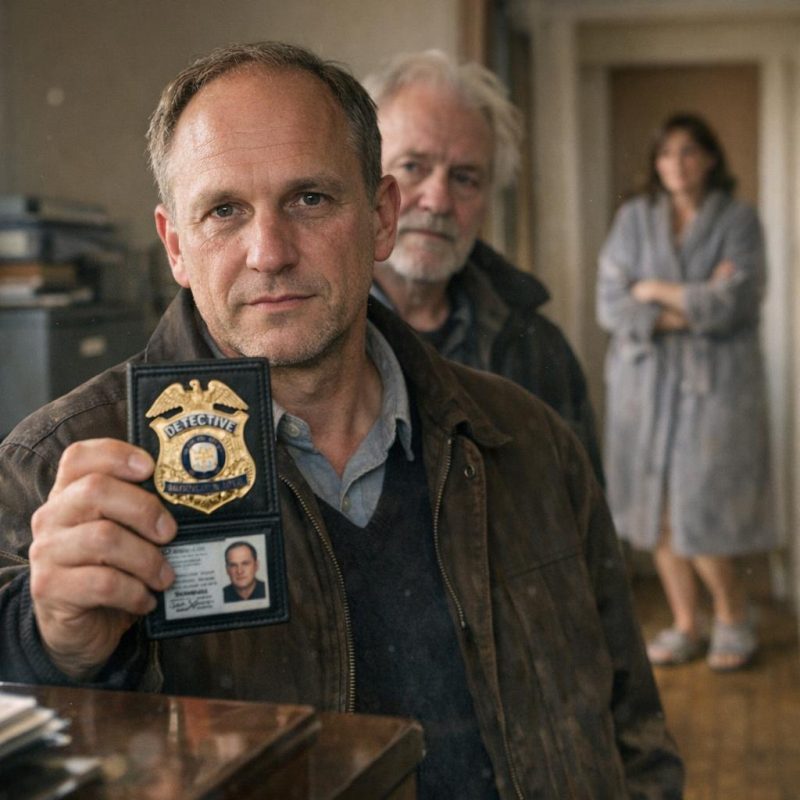 Image by RM AI
The Phone Call
My hands shook so badly I could barely hold my phone. I'd retreated to the kitchen while the detectives photographed and bagged documents from the cabinet, my mind spinning in useless circles. Greg had driven up to Lake Wenatchee for a fishing weekend with his old college buddy—he wasn't supposed to be back until Sunday. The phone rang four times before he answered, and I could hear wind and water in the background. 'Hey, sweetheart, everything okay?' His voice sounded so normal, so Greg. 'There are detectives here,' I said. 'They had a warrant. They opened your cabinet.' The silence stretched so long I thought the call had dropped. When he spoke again, everything had changed—his voice had this thin, tight quality I'd never heard before. 'What did they take?' Not 'what cabinet?' or 'what are you talking about?' He knew. He'd always known this might happen. Rachel called right after I hung up with Greg, something about needing the recipe for my pot roast, and I could barely string words together to tell her I'd call her back. I sat at the kitchen table, staring at my reflection in the dark window, while Greg's voice echoed in my head. His voice cracked: 'Paula, it's not what you're thinking. But it's bad.'
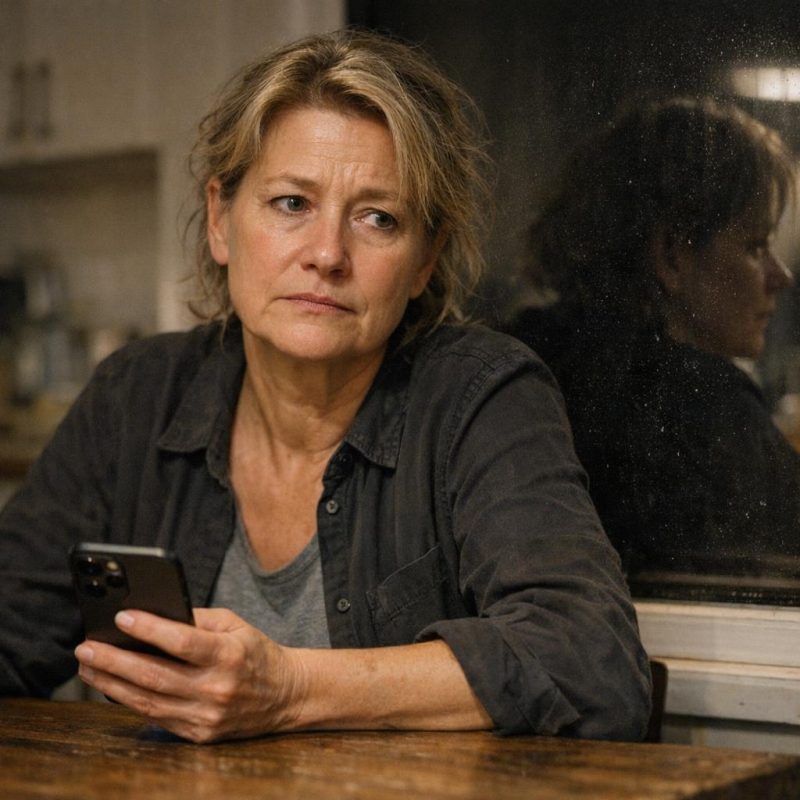 Image by RM AI
Twenty Years Ago
He called back twenty minutes later, and I could tell he'd pulled over somewhere because the background noise had gone silent. 'I need to tell you something I should have told you twenty years ago,' he started, and my throat closed up. Greg's voice carried that careful, measured tone he used when he was trying to stay calm. He told me that back in 1998, he'd been working as a property manager for a development firm called Northpoint Holdings. It was supposed to be a straightforward job—managing estate sales, helping elderly clients downsize or transition properties after a spouse died. But about six months in, he started noticing irregularities in the paperwork. Signatures that didn't quite match. Property values that seemed deliberately underestimated. 'I started keeping copies,' he said. 'I didn't know what else to do.' He'd discovered that clients were being told their properties were worth far less than market value, that their late spouses had debts that didn't actually exist. The company would buy the properties for pennies on the dollar, then flip them for enormous profits. Vulnerable people, grieving people, were being systematically robbed. 'Who was doing this?' I asked, though part of me didn't want to know. He said the owner, Leonard Voss, was stealing from elderly homeowners who had no one left to protect them.
 Image by RM AI
The Blackmail
Greg's voice dropped lower, like he was afraid someone might overhear even though he was alone in his car. He explained how he'd confronted Leonard about the discrepancies, thinking maybe it was an accounting error, something they could fix. Instead, Leonard had smiled at him—Greg described that smile in detail, like it still haunted him—and pulled out a file folder. Inside were documents with Greg's forged signature approving fraudulent property assessments. 'He'd been setting me up from the beginning,' Greg said. 'Every file I reviewed, every property I questioned, he'd created paperwork making it look like I was the one authorizing the fraud.' Leonard told him that if he went to the authorities, he'd make sure Greg took the fall. He had two young children working in the company who would testify they'd seen Greg handle all the paperwork. He had bank records that could be interpreted as kickbacks. Greg was trapped. He kept working there, he said, because quitting would look like guilt, and he was collecting evidence, trying to build a case solid enough that the truth would come out. He'd planned to take everything to the state attorney general's office. Before Greg could go to the police, Leonard died suddenly—and the trap closed around him anyway.
 Image by RM AI
The Insurance Policy
I pressed the phone so hard against my ear it hurt, trying to understand. 'So what was in the cabinet?' I asked. Greg exhaled slowly, and I imagined him sitting in his car somewhere off Highway 2, watching the dark trees. He told me the cabinet held everything—copies of the fraudulent documents, the forged signatures, the real property assessments versus the fake ones Leonard had used. Bank statements showing where the money went. 'It was my insurance policy,' he said. 'Proof that I wasn't the mastermind. That I was trying to stop it.' After Leonard died of a heart attack in 2000, the company dissolved almost immediately. The fraud investigation never materialized because Leonard's wife claimed ignorance and sold off all the assets. Greg said he'd kept the documents all these years in case someone finally connected the dots, in case he needed to prove he'd been a victim too, not a perpetrator. It sounded almost reasonable the way he explained it. Almost. 'Why didn't you just destroy it all?' I asked. 'Why keep it locked in our house?' There was a pause. But then he told me the part that made my stomach turn: my name was in those files.
 Image by RM AI
The Account
My vision actually blurred for a second. 'What do you mean my name?' I heard myself ask, my voice sounding distant and strange. Greg started talking faster, his words tumbling over each other. He said that in 1999, when he realized Leonard might destroy him financially before the truth came out, he'd moved some money into an account in my name. Just one small investment account, he said. It was money from his salary and bonuses, he claimed, clean money he was trying to protect in case Leonard tried to seize all his assets. But now, he admitted, the detectives might argue that money was connected to the fraud. That he'd been laundering proceeds through my name. 'How much money?' I asked. He hesitated. 'About sixty thousand, initially. It's grown over the years with investments.' I thought about Rachel's college tuition. I thought about the kitchen renovation we'd done in 2005, the new counters and appliances I'd picked out so carefully. I thought about our retirement accounts, the comfortable life we'd been living. That money had paid for Rachel's tuition, our kitchen renovation, and the life I thought we built together.
 Image by RM AI
Sitting in the Dark
I don't remember ending the call with Greg. I must have said something, must have hung up, but the next thing I knew I was sitting in his office in the dark. The detectives had left hours ago with three boxes of files and a receipt I'd signed without really reading. The cabinet stood open now, completely empty except for some dust and a paper clip in the corner. I kept staring at that empty space like it might give me answers. Twenty-seven years I'd walked past that cabinet. Twenty-seven years I'd trusted the lock, trusted Greg, trusted that our life was what it appeared to be. I'd dusted the top of it every week, set framed photos on it—Rachel's graduation, our anniversary trip to Vancouver, my mother's portrait. What else hadn't I seen? What else had I walked past without questioning? The house felt different now, like every surface might be hiding something. I thought about calling Rachel but couldn't imagine what I'd say. Your father might be a criminal. Our money might be stolen. I might have been living off the suffering of people I never met. I realized the detectives had not just searched our house—they had cracked open the story of our marriage.
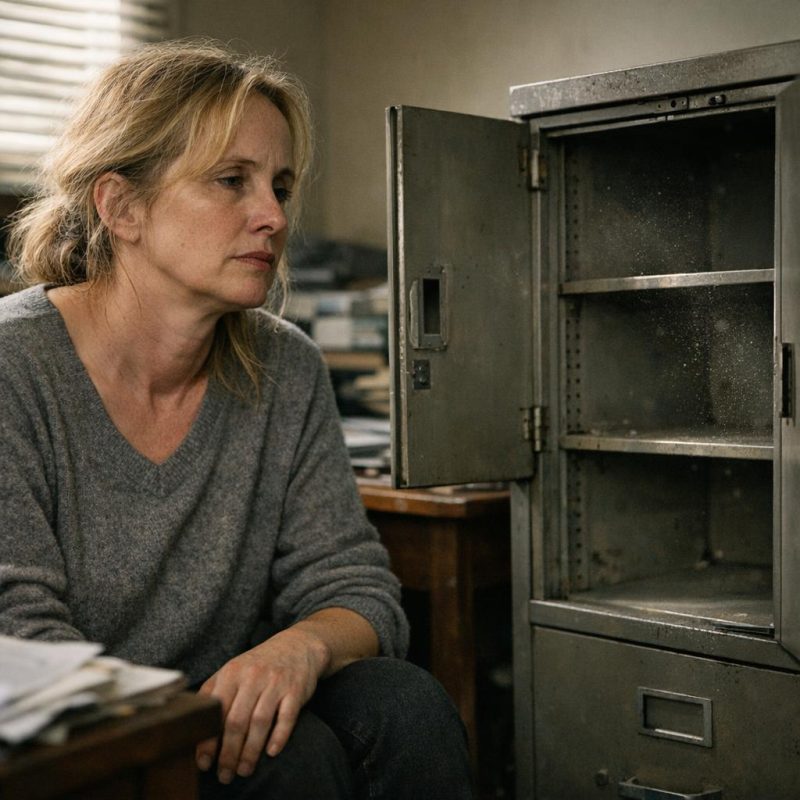 Image by RM AI
The Return
Greg's car pulled into the driveway three days early, just after noon on Thursday. I watched from the kitchen window as he got out, moved slower than usual, like he'd aged a decade on that drive home. He didn't have his fishing gear with him—just one small duffel bag. I realized he must have left most of his things at the cabin, packed in a hurry, probably the moment he hung up with me. When he came through the door, we stood there looking at each other across the kitchen island. The same kitchen where we'd had coffee every morning for twenty-seven years. The same counter where I'd rolled out Christmas cookies with Rachel. Everything looked the same but nothing felt the same. 'Paula,' he said, and his voice cracked on my name. I wanted to yell at him. I wanted to shake him and demand answers. Instead I just stood there, watching this man I thought I knew completely, seeing a stranger in his face. His shoulders were slumped forward, his eyes red-rimmed like he hadn't slept. Part of me felt angry enough to throw him out. Part of me felt sorry for him. The rest of me just felt numb. He looked smaller somehow, like the weight of twenty years had finally landed on him all at once.
 Image by RM AI
The Legal Call
Greg didn't even set down his bag. He went straight to his office, came back with his phone, and started scrolling through contacts. 'We need a lawyer,' he said. 'Right now. Before we say anything else to anyone.' I told him we needed to talk first, to figure out what actually happened, but he shook his head. 'No. Lawyer first. I know someone—Ellen Krieger. She handles these kinds of cases.' These kinds of cases. White-collar crime. Fraud. I felt sick. He made the call right there in the kitchen, put it on speaker. Ellen answered on the second ring, her voice crisp and professional. Greg gave her the basics—the detectives, the cabinet, the files they'd taken. She didn't sound surprised, just asked pointed questions. How long ago? What did they take? What did you tell them? Then she turned to me. 'Mrs. Dalton, did you sign anything? Give any statements?' I said I'd signed the receipt for what they removed. There was a pause. 'We need to meet tomorrow morning. Both of you. Don't talk to anyone else until then.' Greg thanked her, ended the call. I stood there thinking about how quickly he'd known what to do, who to call. Ellen's first question was not whether Greg was guilty—it was whether anyone else knew about the account in my name.
 Image by RM AI
The First Meeting
Ellen Krieger's office was in a glass tower downtown, all polished steel and expensive art. She was younger than I expected, maybe early fifties, with sharp eyes and an air of absolute competence. She sat us down in a conference room and didn't waste time on pleasantries. 'Here's what I know so far,' she said, opening a folder. 'There's a probate case that was closed twenty-three years ago. It was recently reopened based on new evidence. The estate in question was substantial—over eight hundred thousand in assets. The family believes funds were misappropriated during the original probate process.' She looked at Greg. 'Your name appears in the original case file as a financial consultant. Peter Coyle was the attorney of record. The executor was a man named Leonard Voss, who died in 2003.' I watched Greg's face. He didn't react. Ellen continued. 'The family has retained an attorney who specializes in estate fraud recovery. She's very good at what she does, and she's been building this case for eighteen months.' My mouth went dry. 'Who was the deceased?' I asked. Ellen glanced at her notes. 'The estate belonged to a widow named Judith Harmon, and her grandson had hired an attorney—Margaret Chen—who did not give up easily.
 Image by RM AI
The Victim's Name
Judith Harmon. A real person with a real name. Not just an abstract case number or legal file. A widow. Someone's grandmother. I kept repeating the name in my head on the drive home, trying to imagine who she'd been. Did she have other grandchildren? Had she lived alone? What had she wanted her money to go toward? Ellen had shown us a copy of the original death certificate—Judith had died in 1999 at age seventy-six. Which meant when this all happened, when Greg was allegedly involved, I was thirty-one years old. Rachel was five. We'd just bought our house. I remembered Greg working long hours that year, remembered him being stressed, remembered him saying he was helping a colleague with a complicated estate case. I'd believed him. I'd never questioned it. That night I sat across from Greg at the dinner table—neither of us eating, just pushing food around our plates—and I asked him directly. 'Did you ever meet her? Judith Harmon?' He looked up, and for a second I saw something flicker across his face. Fear, maybe. Or guilt. 'No,' he said. 'I never met any of the clients. I just did the financial analysis Leonard asked for.' I asked Greg if he had ever met her, and he said no, but his eyes told a different story.
 Image by RM AI
Rachel's Questions
Rachel called on Sunday evening while Greg was in the shower. I almost didn't answer—I wasn't ready to hear her voice, wasn't ready to hold myself together for her. But she'd already called twice that weekend, and ignoring her a third time would only make her more worried. 'Mom, what's going on?' she said the moment I picked up. 'Dad sent me this weird text saying you guys had some legal stuff to deal with but everything was fine. That doesn't sound fine.' I tried to keep my voice steady. Told her there was an old business matter that had come up, nothing for her to worry about. She didn't buy it. 'Mom. I'm not five. What kind of legal stuff? Is Dad in trouble?' I could hear the anxiety creeping into her voice, and it broke something in me. She had her whole life ahead of her—a good job, a boyfriend she was getting serious with, plans to maybe start a family soon. She didn't need this weight. 'We're handling it,' I said. 'I promise we'll tell you more when we know more ourselves.' There was a long silence. Rachel asked if we were in trouble, and I could not bring myself to lie, but I could not tell her the truth either.
 Image by RM AI
The Missing Lawyer
Ellen called us back to her office on Tuesday. This time she had more information, and none of it was good. She spread several documents across the conference table—timelines, file inventories, legal motions. 'The other central figure in this case,' she said, 'was an attorney named Peter Coyle. He was Leonard Voss's partner in the original fraud scheme. After Leonard died in 2003, Peter left the state. Moved to Arizona, practiced law under a different firm name, stayed off the radar.' Greg was staring at the papers like they might catch fire. 'What does that have to do with now?' Ellen met his eyes. 'Peter Coyle died four months ago. Heart attack. He was seventy-two. When they cleared out his apartment, they found a key to a storage unit he'd been renting for over twenty years.' My stomach dropped. I knew where this was going. 'The storage unit was full of records,' Ellen continued. 'Estate files, ledgers, correspondence. Everything from the original fraud operation and apparently some activity that continued after Leonard's death. The family discovered it during probate of Peter's estate and turned it over to authorities.' Before he died, he left behind a storage unit full of records—and that was what had triggered the investigation.
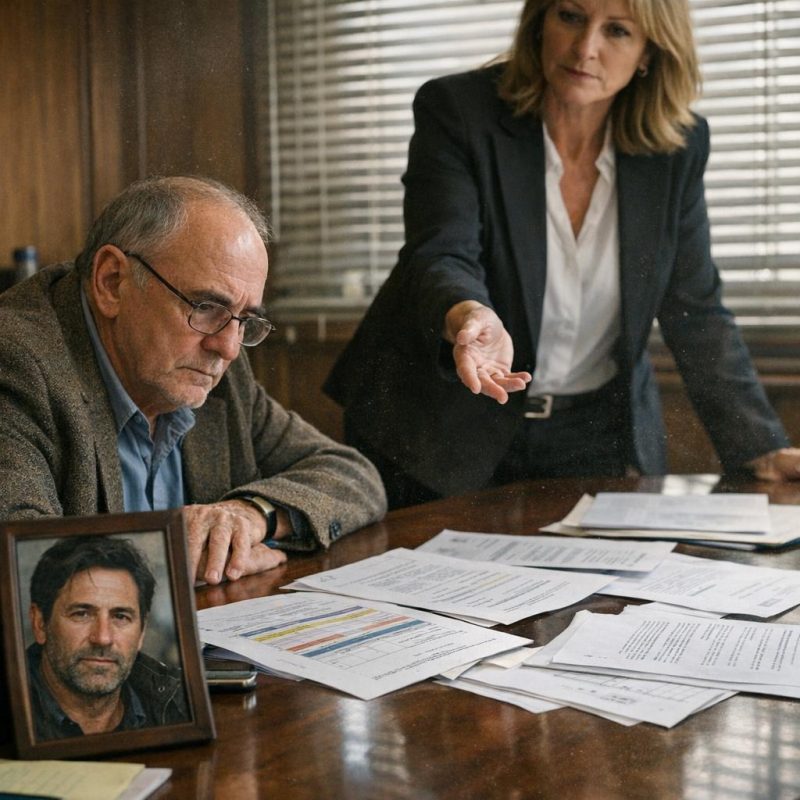 Image by RM AI
The Storage Unit
Ellen slid a thick document across the table—an evidence inventory from Peter Coyle's storage unit. I started reading and felt my hands go numb. Ledgers dating from 1997 to 2005. Estate files for seventeen different cases. Correspondence files organized by year. Bank records. Copies of fraudulent court filings. It was all there, carefully preserved, like Peter had been keeping insurance or maybe just couldn't let it go. 'This is what the prosecution has,' Ellen said quietly. 'They've been cataloging it for months. Margaret Chen has been working with the DA's office and the state bar. They're building both a civil case for the families and a potential criminal case.' Greg had gone pale. 'How bad is it?' Ellen's expression didn't change. 'It's comprehensive. Peter kept everything. There are notes about individual transactions, communications about how to structure the fraud to avoid detection, discussions of how to divide proceeds.' She paused. 'And Greg—your name appears extensively. Not just as a consultant. There are letters, memos, records of payments made to accounts in your name.' I looked at my husband. Really looked at him. He was staring at the inventory like it was a death sentence. Greg's name appeared in those records more than a hundred times.
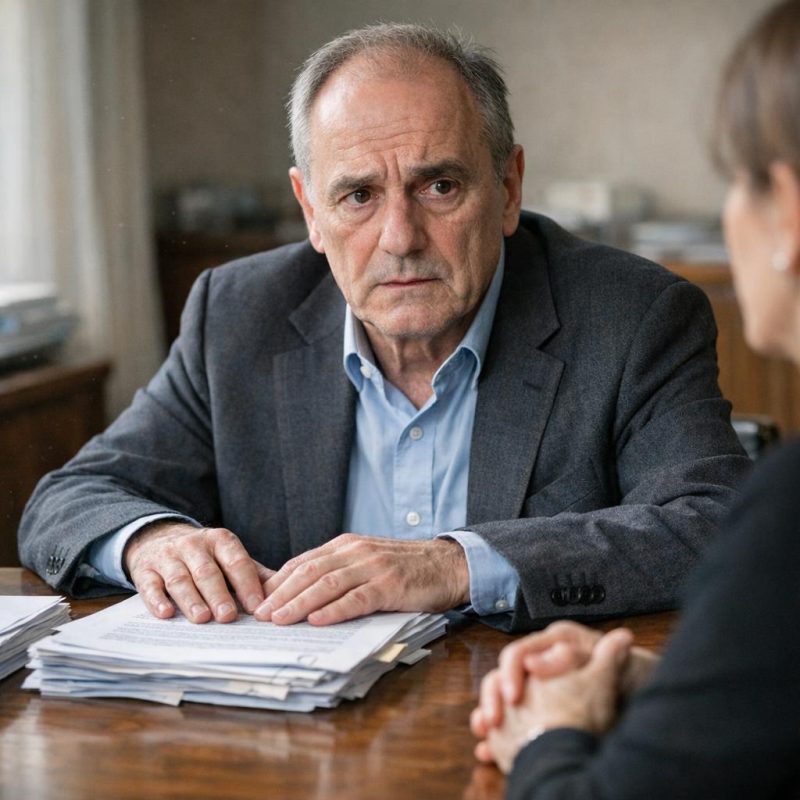 Image by RM AI
The First Doubt
That night I couldn't sleep. I kept thinking about those hundred-plus mentions of Greg's name, kept imagining what those documents said. Around two in the morning I got up and found Greg in the kitchen, sitting in the dark with a glass of water he hadn't touched. I sat down across from him and asked the question I'd been avoiding for days. 'Did you do more than just keep the documents? Were you actually part of it—the fraud itself?' He looked up at me, and I saw something in his face I'd never seen before. Exhaustion, maybe. Or resignation. 'I did what Leonard asked me to do,' he said. 'Financial analysis. Valuation work. I didn't know at first that it was fraudulent. By the time I understood what was happening, I was already implicated. So I kept copies—protection, in case Leonard ever tried to pin everything on me.' I wanted to believe him. God, I wanted to believe him. 'That's all?' I pressed. 'You just did the analysis and kept records?' He nodded. 'I was trying to protect myself, Paula. Protect us. I never wanted any of this to touch our family.' But he would not look at me when he said it.
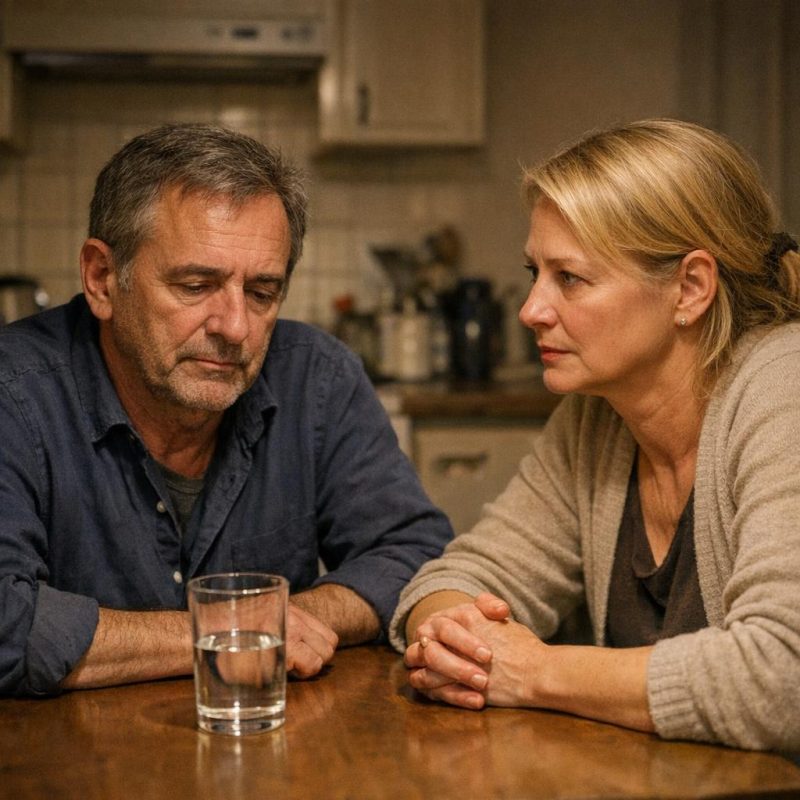 Image by RM AI
The Son
Ellen called the next morning and asked if I could come to her office immediately. When I arrived, there was a man already waiting—early thirties, sharp suit, the kind of rigid posture that comes from carrying something heavy. 'This is Thomas Voss,' Ellen said. 'Leonard's son.' My stomach dropped. Thomas shook my hand with a grip that felt more like a warning than a greeting. He told me he'd been cooperating with investigators for months, trying to distance himself from his father's legacy. He said he wanted nothing to do with what Leonard had built. But then he said something that made my hands go cold. 'My father kept everything,' Thomas said, his voice tight. 'Two sets of books. One for the firm, one for himself. The personal set had names, dates, payments—everything.' Ellen leaned forward. 'Do you know where those records are?' Thomas nodded. 'They were in a storage unit. I gave the key to the prosecutor last week.' I felt the room tilt. Another set of records. Another layer of documentation that could bury us. Thomas looked at me with something close to pity. 'I'm sorry,' he said. 'But those records would prove his father did not work alone.'
 Image by RM AI
The Financial Audit
Ellen sat us both down two days later and laid it out in terms even I couldn't rationalize away. 'We need to conduct a full financial audit,' she said. 'Every account, every asset, every dollar that came into your household over the past three decades.' Greg went pale. I felt nauseous. She explained that if any of our money—our home, our savings, Rachel's college fund—could be traced back to the fraud, we might be facing restitution claims. Civil suits. Asset seizures. I thought about our house, the one we'd lived in for twenty-six years. The vacations we'd taken. Rachel's education. How much of it had we earned, and how much had we unknowingly built on someone else's suffering? Ellen pulled out a referral for a forensic accountant. 'This will be invasive,' she warned. 'But if we don't do it ourselves, the prosecution will—and they won't be gentle.' Greg took the card with shaking hands. I watched him, searching his face for reassurance, for some sign that this would be okay. He wouldn't meet my eyes. The audit would show every dollar that might have come from someone else's loss—and whether we could ever give it back.
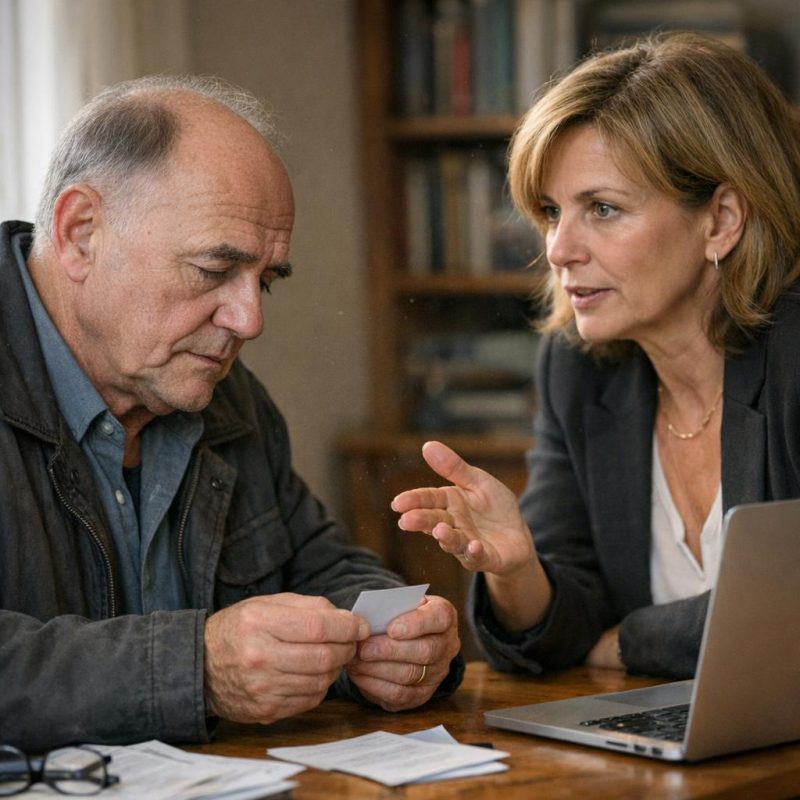 Image by RM AI
Outside Perspective
Rachel showed up the following afternoon with her friend Sarah, who I'd met a handful of times at family dinners. Sarah was an attorney herself—corporate law, nothing criminal—but she had a sharp, analytical way of looking at things that made me nervous. We sat in the living room with tea nobody drank. Rachel was trying to be supportive, but Sarah kept asking questions. Gentle ones, but pointed. 'So Greg kept these documents for almost three decades,' Sarah said slowly. 'As insurance, he said?' I nodded. 'Against Leonard.' Sarah tilted her head. 'But if Leonard was blackmailing him, wouldn't destroying the evidence have been safer? Why keep proof of your own involvement?' I opened my mouth and found I had no answer. Rachel glanced between us, uncomfortable. 'Maybe he thought Leonard had copies,' she offered. Sarah nodded, but her expression didn't change. 'Maybe. Or maybe he kept them because they were valuable. Leverage works both ways.' The room went quiet. I felt something crack inside me, some fragile structure I'd been building to hold Greg's story together. Sarah set down her teacup and looked at me with careful sympathy. 'I'm not saying he's lying,' she said. 'But you should ask yourself: why, if Greg was truly blackmailed, he kept the evidence instead of destroying it.'
 Image by RM AI
The Sleepless Night
That night I couldn't turn my brain off. Sarah's question kept circling—why keep the evidence?—and the more I thought about it, the less Greg's explanation made sense. Around midnight I got up and went into the study, the one we'd always kept financial records in. I started pulling out old folders, bank statements, tax returns. I didn't even know what I was looking for. Just something that might make this make sense. I went back years, deeper than I'd ever bothered to look before. Most of it was mundane—mortgage payments, utility bills, Rachel's school expenses. But then I found a statement from twenty-two years ago, tucked into a folder marked 'Misc. 2003.' There was a deposit. Fifteen thousand dollars. No notation, no explanation. Just the amount and a date. And next to it, in Greg's handwriting, a single word: 'Received.' My hands started shaking. I checked the date again. Flipped through other statements to confirm the timeline. My mouth went dry. I found a bank statement from twenty-two years ago with a deposit I could not explain—and it was in Greg's handwriting.
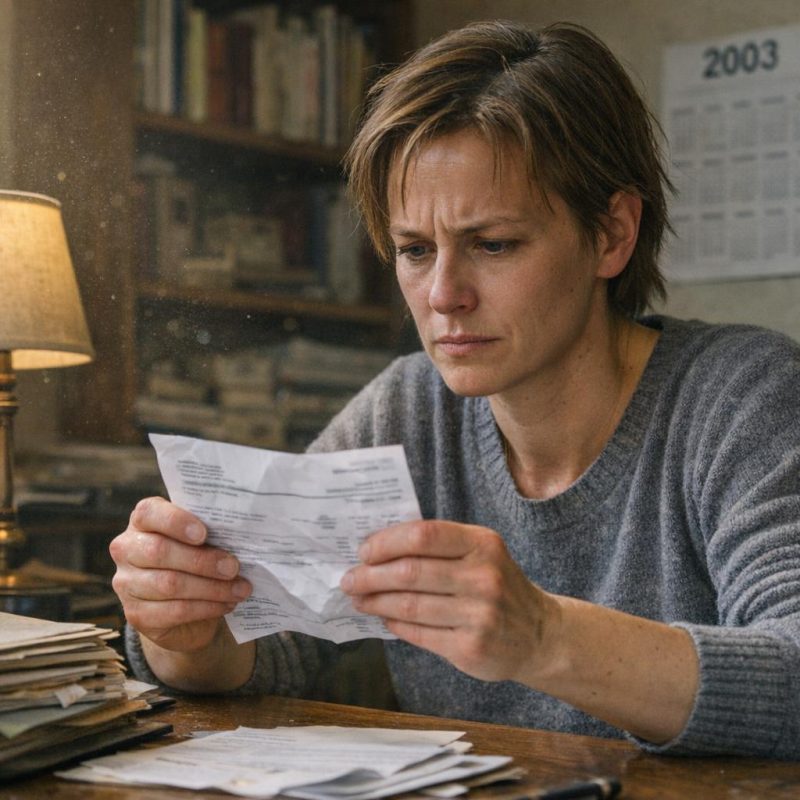 Image by RM AI
The Confrontation Over the Deposit
I waited until morning. I made coffee, set the statement on the kitchen table, and sat there until Greg came down. He saw it immediately. His whole body went rigid. 'Where did this come from?' I asked, my voice steadier than I felt. He picked up the paper, stared at it for a long moment. 'A work bonus,' he said finally. 'From the firm.' 'Fifteen thousand dollars?' He nodded. 'It was a good year.' I pointed to the date. 'This was deposited in March of 2003. What firm, Greg? What work?' His jaw tightened. 'I did some consulting. Independent projects. I told you about them.' 'You didn't tell me about fifteen thousand dollars appearing in our account.' He set the statement down, rubbed his face. 'It was a long time ago, Paula. I don't remember every detail.' But I did remember something. I remembered the timeline Ellen had shown me. I remembered when Leonard Voss had died. 'Greg,' I said quietly, 'that deposit was made two months after Leonard Voss died.'
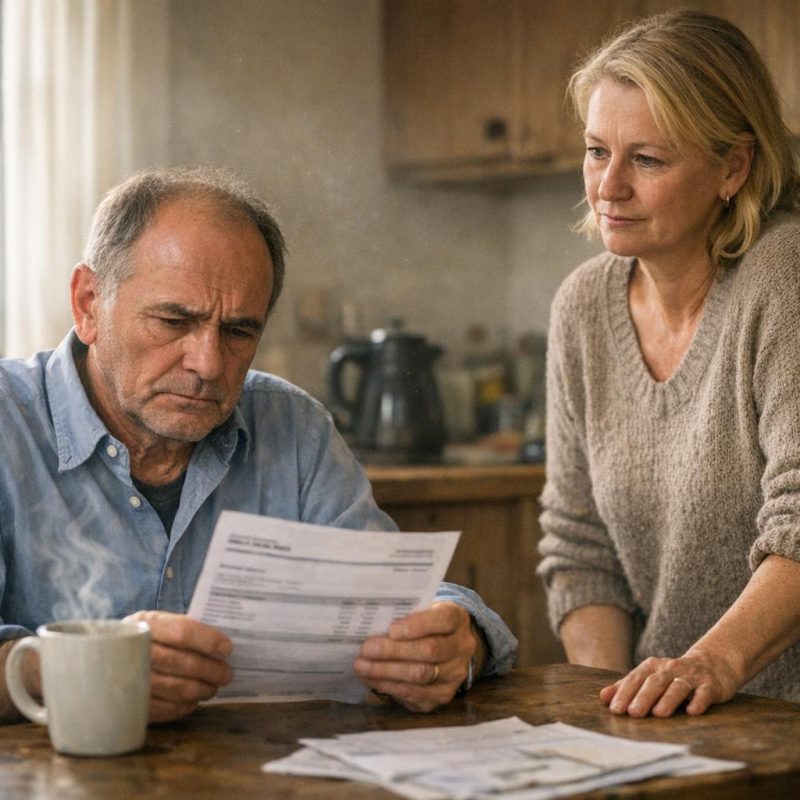 Image by RM AI
Meeting Judith Harmon
Margaret Chen called and asked if I would be willing to meet one of the victims. I almost said no. I didn't think I could bear it. But she said it might help me understand what was truly at stake, so I agreed. She drove me to a small assisted living facility in Evanston. We walked down a pale green hallway that smelled like disinfectant and overcooked vegetables. Judith Harmon was waiting in the common room, a tiny woman with white hair and hands that trembled when she reached for her tea. Margaret made the introductions gently. Judith smiled at me with such warmth it broke something inside me. She told me about her late husband, about the estate he'd carefully built to take care of her. About how the money had simply disappeared while she was recovering from a stroke, and by the time she understood what had happened, it was gone. 'They said it was legal,' Judith said softly. 'Fees and closures and processing. But it didn't feel legal. It felt like theft.' I wanted to apologize. I wanted to tell her I didn't know. But the words stuck in my throat because I wasn't sure anymore what I'd known and what I'd chosen not to see. Judith looked at me with such fragile hope and asked if I knew who had taken her husband's legacy from her.
 Image by RM AI
The Question of Timing
I drove home in silence and walked straight into Greg's office. He was at his desk, staring at his computer screen without really seeing it. 'I need you to explain something,' I said. He looked up, wary. 'The deposit. March 2003. Two months after Leonard died. If the scheme ended when he died, where did that money come from?' Greg closed his laptop slowly. 'The firm didn't shut down immediately,' he said. 'There were ongoing cases, delayed payments. Things took months to wind down.' 'Delayed payments from what?' 'Consulting work. Estate closures that were already in process.' I crossed my arms. 'Estate closures.' He nodded, but he wouldn't look at me. 'Greg, if Leonard was the one running the fraud, and he died, why were there still payments coming in months later?' 'Because the work was already done,' he said, but his voice wavered. 'The files were already in motion. Payments were just delayed.' It sounded reasonable. It almost made sense. But there was something in the way he said it—too rehearsed, too careful—that made my skin crawl. Greg said the firm took months to shut down, and there were delayed payments—but his voice wavered.
 Image by RM AI
The Second Victim
Margaret Chen called me the next day. Her voice was measured, professional, but I could hear the weight behind it. 'I need to inform you of something,' she said. 'Judith Harmon was not the only victim we've identified.' I sat down heavily. 'How many?' 'At least three others. Possibly more. All elderly individuals, all estates processed through Leonard Voss's network of firms between 2001 and 2004.' I felt cold. 'And they all lost money the same way?' 'The same pattern,' Margaret confirmed. 'Inflated fees, asset transfers, unexplained closures. Hundreds of thousands of dollars, collectively.' I tried to process it. Multiple victims. Multiple families destroyed. And Greg's name was somewhere in all of it, buried in those documents. 'Margaret,' I said slowly, 'when did these happen? The other estates—when were they processed?' There was a pause. I heard papers rustling. 'Let me check the dates,' she said. Another pause, longer this time. When she spoke again, her voice had changed. Sharper. 'Mrs. Henriksen, two of those estates were processed after Leonard Voss's death.'
 Image by RM AI
The Folder
Ellen called me three days later, and I knew from her tone that she had found something. 'I need you to come to my office,' she said. No preamble, no reassurance. Just that flat, professional voice that meant bad news. I drove there in a fog. When I arrived, she had documents spread across her desk—copies from Peter Coyle's old files, obtained through some legal process I did not fully understand. She pointed to a folder near the edge. 'This was labeled with Greg's initials,' she said. 'GH. It was in a secured drawer.' I stared at the papers. Letters. Correspondence. All dated after Leonard Voss's death. Some were typed, some handwritten. All were between Greg and Peter Coyle. Ellen watched me as I read through them. They discussed estates, closures, fees. The language was careful, coded almost, but the meaning was clear enough. They had stayed in touch. They had worked together. My hands started shaking when I reached the last letter in the stack. It was addressed to Greg directly. The handwriting was neat, precise. It was dated April 2002—eight months after Leonard died. And it was signed by Peter Coyle. The final line was simple, almost casual: 'Let's finish what we started.'
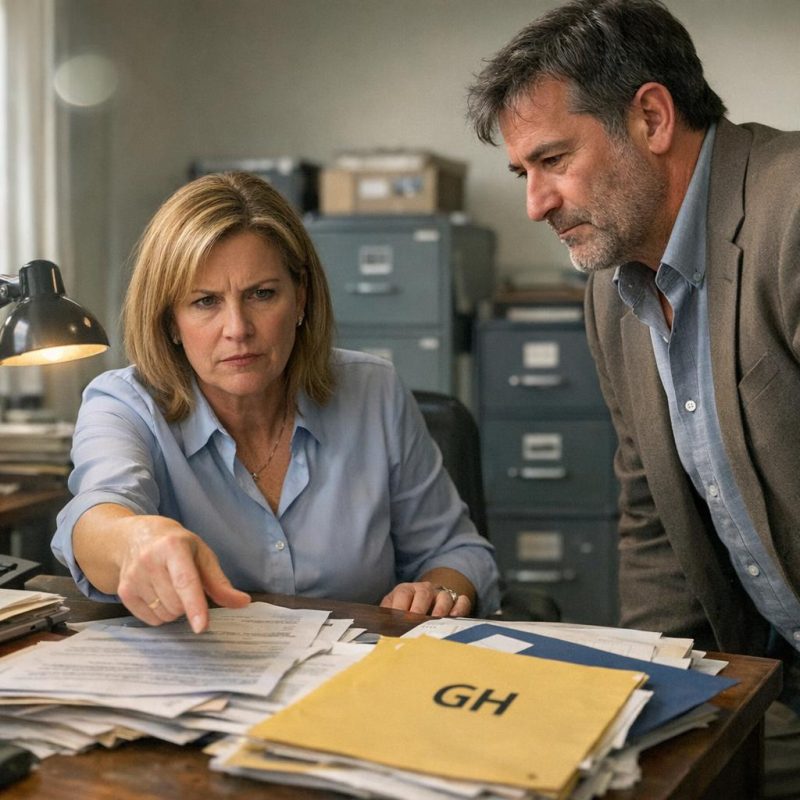 Image by RM AI
The Lie Unravels
I drove home with the copies Ellen had given me. I did not call ahead. I walked in, found Greg in the living room, and put the letter in front of him. He looked at it for a long time. Then he closed his eyes. 'I can explain,' he said quietly. I waited. He said Peter had reached out after Leonard died, asking for help tying up loose ends. Greg claimed he only met with him to get his own documents back—the ones Leonard had used to blackmail him. He said he was terrified Peter would use them the same way. He said it was just a few meetings, nothing more. I listened to all of it. Then I asked the question that had been sitting in my mind since I read the letter. 'If you got your documents back from Peter,' I said slowly, 'then why did you still have copies in the cabinet?' Greg stared at me. His mouth opened, then closed. He looked down at his hands. And he had no answer.
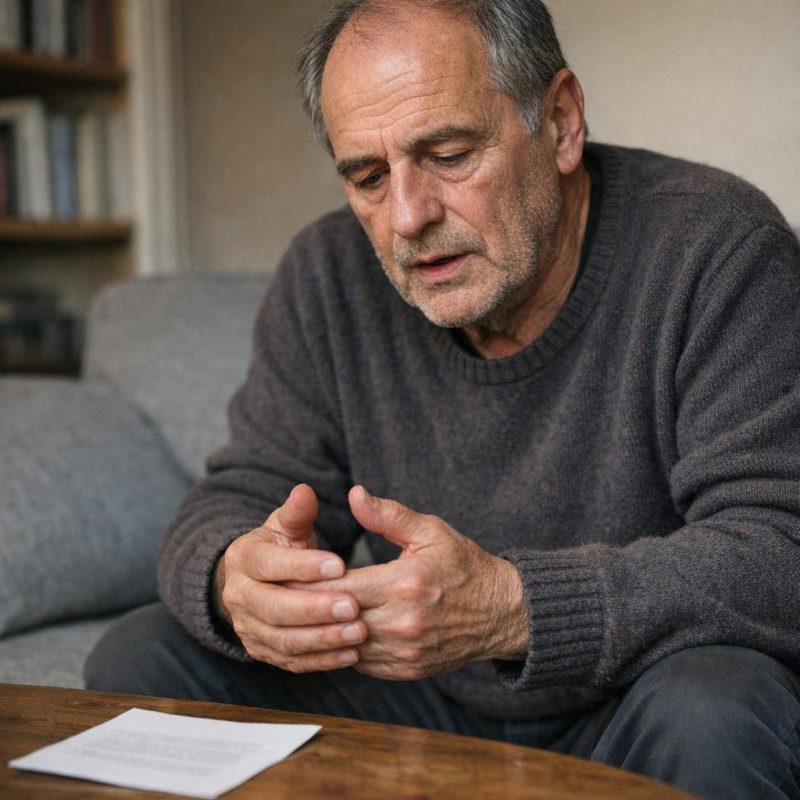 Image by RM AI
Rachel's Fear
Rachel came over that night. I had not wanted to tell her everything, but she saw it on my face. She sat across from me at her small kitchen table, and I told her about the letter, about Peter Coyle, about the estates that had been processed after Leonard died. I watched the color drain from her face. 'Mom,' she whispered, 'my college fund. The money for my apartment. Where did it come from?' I did not know how to answer that. She started crying, not loud, just silent tears running down her cheeks. 'Am I going to be investigated too?' she asked. 'Are they going to say I knew? That I took stolen money?' I reached for her hand, but she pulled it back. She looked terrified. Young. 'If it was stolen,' she said, voice breaking, 'do I have to give it all back? Everything?' And I realized, sitting there in her tiny kitchen, that I did not know the answer.
 Image by RM AI
The Asset Freeze
Ellen called me the next morning. Her voice was calm, but I could hear the strain beneath it. 'Paula, I need to prepare you for something,' she said. 'The prosecution may move to freeze your assets.' I felt my stomach drop. 'What does that mean?' I asked, though I already knew. She explained it carefully. If they believed Greg had profited from criminal activity, they could freeze everything—bank accounts, retirement funds, the house. It would be temporary, she said, pending the outcome of the investigation. But temporary could mean months. Years, even. 'Can they do that?' I asked. 'Even if I did not know anything?' Ellen paused. 'Yes,' she said quietly. 'They can.' I thought about Rachel, about the bills, about everything we had built. I thought about losing the house. I thought about having nothing. Ellen kept talking, explaining legal options, but I barely heard her. If they froze our assets, we would lose everything. And there would be nothing I could do to stop it.
 Image by RM AI
The Old Neighbor
The call came from a woman named Diane Porter. I barely remembered her—she had lived two doors down from us in the old neighborhood, back when Rachel was in elementary school. 'Paula,' she said, 'I hope you do not mind me calling. Detectives came by last week asking questions about Greg.' My chest tightened. 'What kind of questions?' Diane hesitated. 'They asked about his relationship with Leonard Voss. And someone named Peter Coyle.' I gripped the phone tighter. 'What did you tell them?' She sighed. 'I told them the truth. I used to see the three of them sometimes. Having lunch at that cafe on Maple Street. I remember because it seemed odd—Greg never mentioned them, but they seemed close.' I felt something cold spread through me. 'When was this?' I asked. Another pause. 'Well, that's the thing,' Diane said slowly. 'I remember seeing them together after Leonard's funeral. I am sure of it, because I remember thinking it was strange. She said she remembered seeing the three of them having lunch together several times—even after Leonard's funeral.'
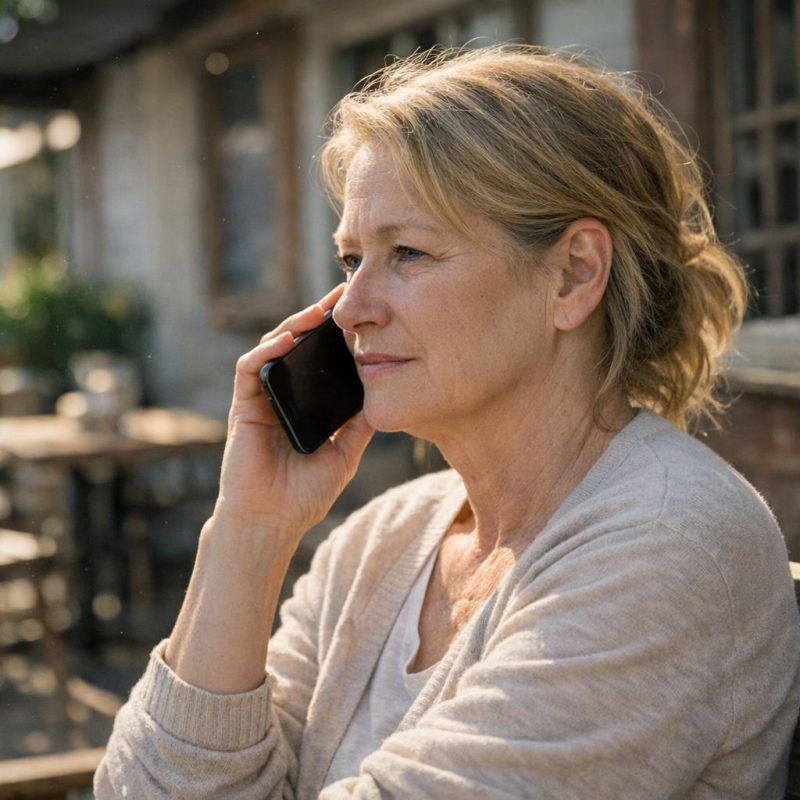 Image by RM AI
The Breaking Point
I confronted Greg that night. I did not yell. I did not cry. I just told him I knew. About Peter. About the lunches. About all of it. He sat down heavily on the couch and put his head in his hands. 'Paula,' he said, voice breaking. Then he started crying. Real, shaking sobs. I had not seen him cry like that in decades. When he finally looked up, his face was red and wet. 'I was trying to protect us,' he said. 'Everything I did, I did for this family.' I stood there, looking at him, and felt nothing. No sympathy. No anger. Just a cold, clear certainty. 'I do not believe you anymore,' I said. His face changed. The grief was still there, but beneath it, something else. Recognition, maybe. Or resignation. He looked at me with an expression I had never seen before—like he had been waiting for this moment, dreading it, but knowing it would come. And I realized he had known all along. He had known I would stop believing him eventually. He had just hoped it would not be now.
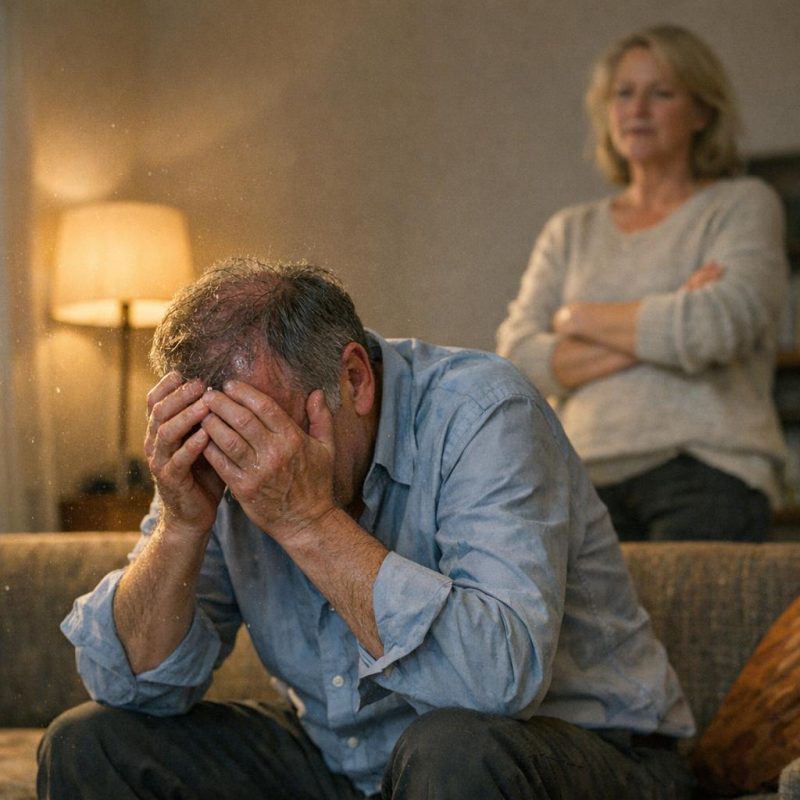 Image by RM AI
Moving Out
I packed a bag the next morning. Greg watched from the bedroom doorway but did not try to stop me. Rachel had offered her couch, and I took it. I could not stay in that house anymore. Every corner reminded me of something I thought I knew, something that turned out to be a lie. Greg followed me to the car. 'How long?' he asked quietly. I put my bag in the trunk. 'I do not know,' I said. He nodded. He looked smaller somehow, older. 'Paula, I—' 'Do not,' I said. I got in the car and started the engine. He stepped back onto the curb. As I pulled away, I glanced in the rearview mirror. He was still standing there, hands in his pockets, watching me go. I looked at the house—the house we had lived in for over twenty years, the house I had thought of as home. And I wondered if I would ever be able to live there again.
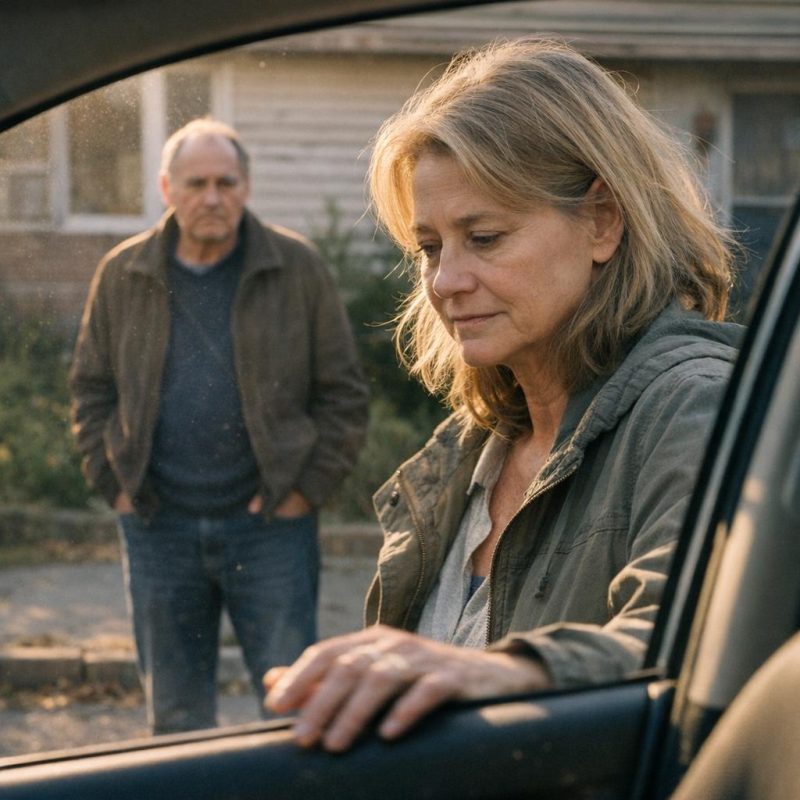 Image by RM AI
The Ledger
Ellen called me at Rachel's apartment four days later. 'We have a problem,' she said. My stomach turned. 'What now?' She told me the probate attorney had sent over a detailed ledger from one of the estates—Judith Harmon's. It showed specific transactions, fees, transfers. Ellen's voice was tight. 'Paula, there is an entry here. It shows a direct payment to an account in your name.' I felt the room tilt. 'That is not possible,' I said. 'I never had access to any estate funds. I did not even know—' 'I believe you,' Ellen said quickly. 'But the entry is there. Five thousand dollars. Transferred directly.' I sat down on Rachel's couch, trying to breathe. 'When?' I asked. Ellen was quiet for a moment. When she spoke again, her voice was careful, measured. 'The transaction was dated three months after Leonard Voss died.'
 Image by RM AI
The Prosecutor's Call
Ellen called me the next afternoon. I was still at Rachel's apartment, staring at my phone like it might explode. 'The prosecutor's office wants to interview you,' she said. 'Separately from Greg.' I felt my chest tighten. 'Why separately?' I asked, though I already knew the answer. Ellen paused, and I could hear papers rustling on her end. 'They want to understand what you knew and when you knew it,' she said carefully. 'They are trying to determine if you were involved or if you were kept in the dark.' I stood up and walked to the window, looking down at the street below. A woman was walking a dog. Everything looked so normal. 'I did not know anything,' I said. My voice sounded thin, even to me. 'I believe you, Paula,' Ellen said. 'But they need to hear it directly. And they need to assess your credibility.' There was another pause, longer this time. When she spoke again, her voice was quieter, almost gentle. 'Paula, if I am being honest with you—if I am being your attorney and not just your advocate—you need to understand something.' I waited. 'If you were smart,' she said slowly, 'you would consider cooperating against him.'
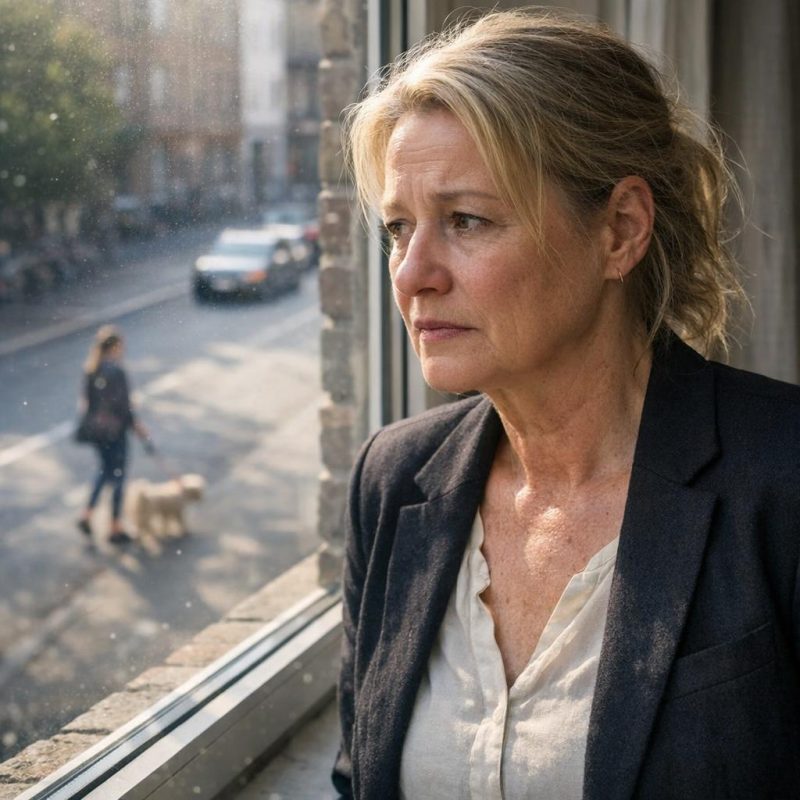 Image by RM AI
The Separate Interview
The interview room was smaller than I expected. Detective Marsh sat across from me, Detective Carver beside him. They were the same two who had come to my house that first night, but now they looked at me differently. Like I was something to be examined. Marsh started with easy questions—my name, how long I had been married, what I knew about Greg's work. I answered everything honestly. Then Carver leaned forward. 'Mrs. Hendricks, did you ever notice irregularities in your finances?' he asked. I shook my head. 'No. Greg handled all of that.' Marsh wrote something down. 'But you filed joint tax returns,' he said. 'You signed them.' I nodded. 'Yes, but I trusted him. I did not read through every line.' Carver's expression did not change. 'Did you ever ask where the money was coming from?' he asked. 'The vacations, the renovations, the college tuition?' I felt my face flush. 'We lived comfortably, but not extravagantly,' I said. 'I thought it was from his salary and bonuses.' Marsh exchanged a glance with Carver. 'And it never seemed odd to you,' Marsh said slowly, 'that your husband kept a locked cabinet for twenty-seven years?' I stared at him. The question hung in the air like an accusation. I realized they thought I might have known all along.
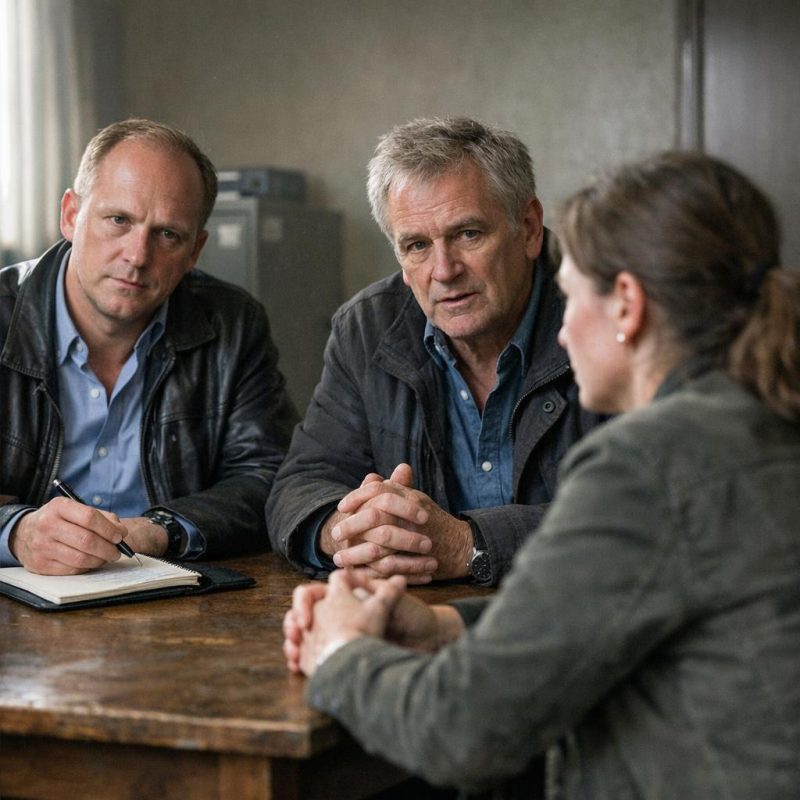 Image by RM AI
The Old Tax Returns
I went back to the house the next day. I had to go through our old tax returns—Ellen said I needed to review everything before the next interview. I found them in the basement, in a filing cabinet Greg had organized by year. I pulled out the folders from the years after Leonard Voss died. My hands were shaking as I flipped through the pages. And then I saw it. My signature. Right there on the bottom of a Schedule B form, next to Greg's. It was dated four months after Leonard's death. The form listed interest income from an account I did not recognize. I stared at the signature. It looked like mine—the looping 'P,' the way the 'a' and 'u' connected. But I had no memory of signing it. I pulled out more returns. There were three more, all with my signature, all listing the same account. I sat on the basement floor, surrounded by paperwork, trying to remember. Had I signed these without reading them? Had Greg handed me a stack of forms one April evening and I just scribbled my name while cooking dinner or folding laundry? Or had he forged them? I could not tell if I had signed them without reading carefully, or if Greg had forged them.
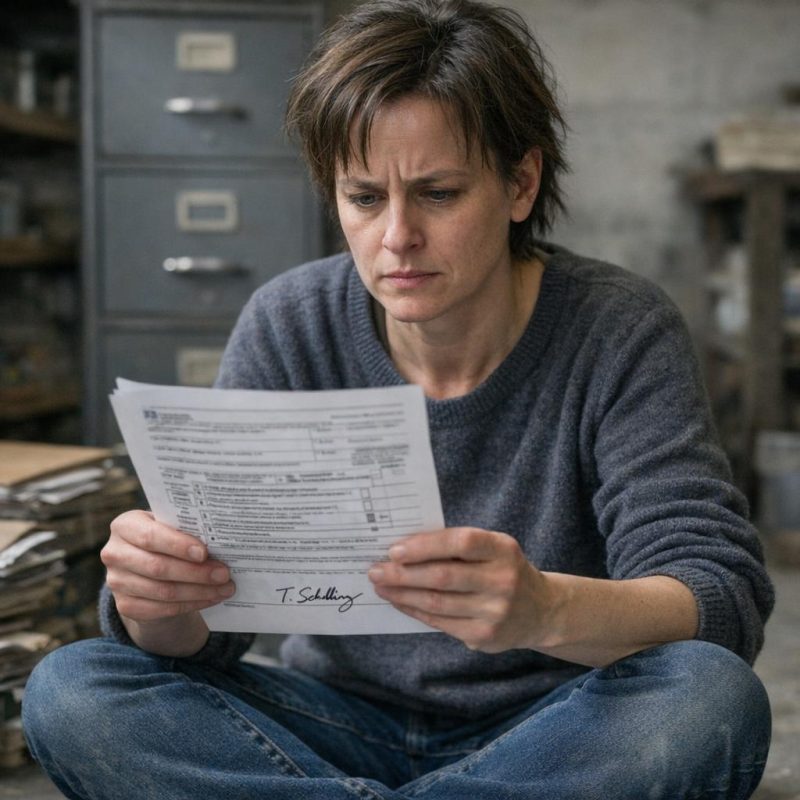 Image by RM AI
Sarah's Advice
Sarah came over that evening. Rachel had told her what was happening, and she showed up at the apartment with takeout and a bottle of wine. We sat on the couch, and I told her about the signatures, about the interview, about Ellen's advice. Sarah listened quietly, her lawyer brain processing everything. 'Okay,' she said finally. 'Let me explain something to you from a legal standpoint. Ignorance can be a defense—but only if it is genuine and provable.' I nodded, though I was not sure I understood. 'What does that mean?' I asked. Sarah set down her wine glass. 'It means you need to be able to show that you had no reason to suspect anything,' she said. 'That Greg actively concealed information from you. That you were not willfully blind.' I felt a chill run through me. 'Willfully blind?' I repeated. Sarah looked at me carefully. 'It is a legal term,' she said. 'It means deliberately avoiding knowledge of a crime. If the prosecution can argue that you chose not to ask questions because you did not want to know the answers, then ignorance is not a defense.' She paused, and her next words were gentle but firm. 'Paula, juries do not like wives who claim they never asked questions.'
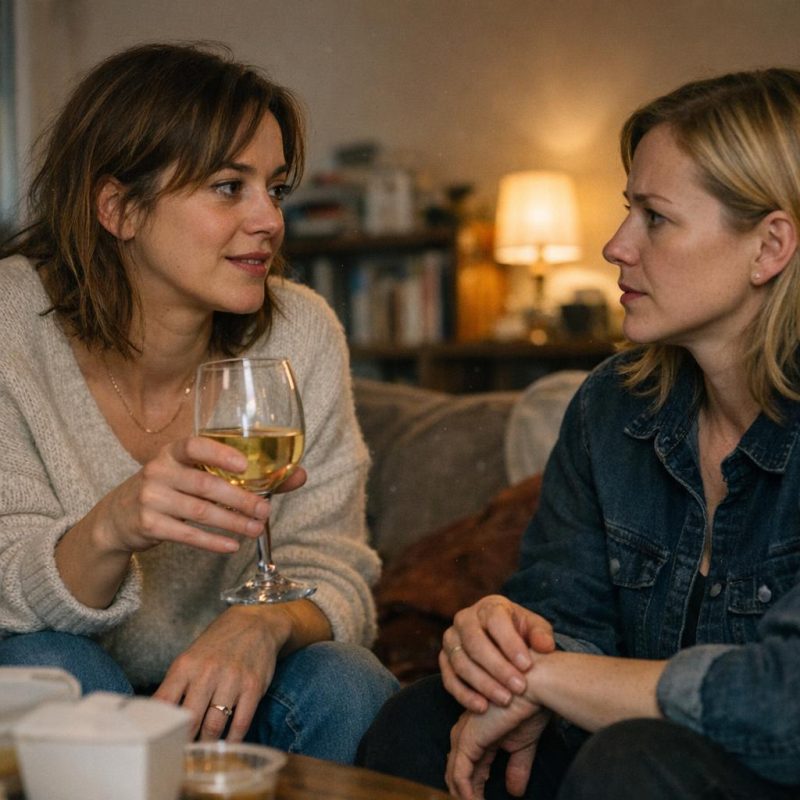 Image by RM AI
The Media
The story broke three days later. I was at the grocery store when Rachel called me, her voice panicked. 'Mom, there is a news article,' she said. 'It is online. They are naming you and Dad.' I abandoned my cart and went straight back to the apartment. I pulled up the article on my laptop. The headline read: 'Local Attorney and Wife Named in Reopened Estate Fraud Investigation.' They used our full names. They listed our address. They included a photo of our house that someone must have taken from the street. The article was careful—it used words like 'persons of interest' and 'ongoing investigation'—but the implication was clear. We were suspects. I read it three times, my hands shaking. Then I made the mistake of scrolling down to the comments. People I had never met were calling us thieves, con artists, criminals. Someone had posted a photo of me from the church directory. Another comment said I had 'dead eyes.' I closed the laptop and sat in the dark apartment, listening to the traffic outside. The next morning, I went to get the mail. My neighbor Mrs. Chen was in the hallway. She saw me and quickly looked away, hurrying back into her apartment. By the next morning, my neighbors were staring at me like I was a stranger.
 Image by RM AI
Rachel's Breakdown
Rachel called me that night, and I could tell immediately that she had been crying. 'Mom,' she said, her voice breaking. 'Everyone has seen it. People at work, people I went to college with—they are all sending me the article.' I closed my eyes. 'I am so sorry, sweetheart,' I said. 'This is not your fault,' she said quickly. 'But I do not know what to say to people. I do not know how to explain this.' I could hear her breathing, ragged and uneven. 'My friend Emma texted me,' Rachel continued. 'She asked if our family had really stolen money from dead people. And I did not know how to answer her.' I felt something crack inside my chest. 'What did you say?' I asked. Rachel was quiet for a long moment. 'I said it was complicated,' she whispered. 'But she said that is what guilty people always say.' I wanted to tell her that her father was innocent, that this was all a terrible mistake, that everything would be okay. But I could not get the words out. Because I did not know if any of that was true anymore. 'Rachel,' I said softly. 'I need you to know that I did not know about any of this.' 'I know, Mom,' she said. Then she asked the question I had been dreading. 'But is Dad a criminal?' And I did not know how to answer.
 Image by RM AI
The Handwriting Expert
Ellen hired a handwriting expert. She said it was the only way to prove I had not knowingly signed those documents. The expert was a woman named Dr. Brennan who worked out of a small office downtown. I met her there with Ellen. Dr. Brennan had me provide multiple handwriting samples—my signature over and over, normal writing, rushed writing. Then she examined the tax returns under a magnifying glass and some kind of special light. The whole process took three hours. A week later, Ellen called me with the results. I could tell from her voice that it was not good news. 'Dr. Brennan completed her analysis,' Ellen said. 'And?' I asked, my stomach tight. Ellen sighed. 'She said the signatures are consistent with your handwriting in terms of pressure, slant, and letter formation,' she said. 'But she also noted some hesitation marks and slight variations that could indicate tracing or simulation.' I sat down. 'What does that mean?' I asked. 'It means,' Ellen said carefully, 'that she cannot say definitively either way. The signatures could be yours—signed quickly without much thought. Or they could be very good forgeries. The expert said the signatures could be Paula's, or they could be very good forgeries.'
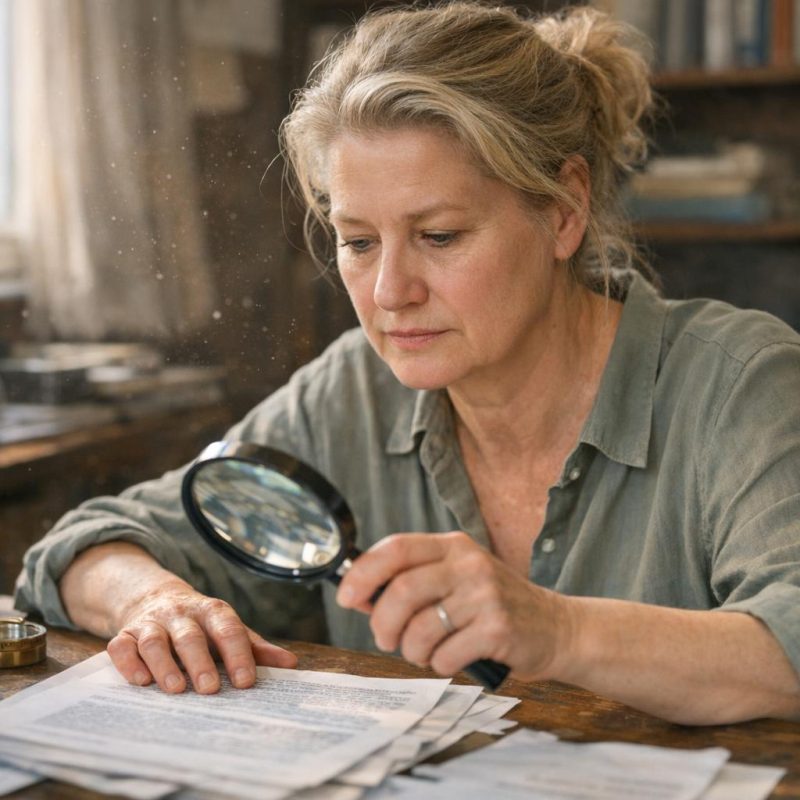 Image by RM AI
Thomas Voss's Testimony
Two days later, Ellen called with more bad news. Thomas Voss had provided a deposition to the prosecutor's office. Leonard's son had been going through his father's belongings and found something. 'He found a journal,' Ellen said. 'Leonard kept notes about his business dealings.' I felt my throat tighten. 'And?' Ellen was quiet for a moment. 'There is an entry about Greg,' she said. 'Leonard wrote that Greg was someone who understood the business. That he was reliable and discreet.' I closed my eyes. 'That does not mean anything,' I said. 'Lots of people understood Leonard's business.' 'Paula,' Ellen said gently. 'The entry specifically mentions estate management. And it describes Greg as someone who knew how to handle sensitive client matters without asking too many questions.' I felt dizzy. 'When was it written?' I asked. Ellen paused, and I knew the answer was going to be bad. 'The journal entry was dated six months before Leonard died,' she said quietly. Six months before. Which meant Greg had been involved from the beginning. Which meant everything he had told me about being surprised by Leonard's scheme, about not knowing until it was too late—all of it might have been a lie. The journal entry was dated six months before Leonard died.
 Image by RM AI
The Night Drive
I could not sleep that night. Around two in the morning, I got out of bed, got dressed, and drove to the old neighborhood where we had lived during those years—the years when Leonard was still alive, when Greg was supposedly trapped, when I thought we were just trying to survive. The house looked smaller than I remembered. Someone had painted the shutters blue. I parked across the street and sat there with the engine off, trying to remember what our life had felt like back then. I tried to picture Greg coming home from work, the way he would hang his coat in the closet, the way we would sit at the kitchen table and talk about our days. I tried to remember if he had seemed anxious. If he had seemed guilty. If there had been any sign at all that he was involved in something terrible. But I could not remember anything like that. I remembered him being tired sometimes. I remembered him being frustrated with work. But I did not remember him being afraid. I did not remember him losing sleep or acting strange or seeming like a man who was being blackmailed. And the more I sat there, the more that absence of guilt began to feel like its own kind of evidence. I realized I could not remember a single moment from that time when Greg seemed worried or guilty—and that terrified me.
 Image by RM AI
The Second Ledger
Margaret Chen called me the next afternoon. She said she needed to meet in person. We met at a coffee shop downtown, and she brought a folder that looked just like the one she had shown me before. 'Thomas Voss kept looking,' she said. 'He went through Peter Coyle's storage unit again. He found another ledger.' I felt my stomach drop. 'Another one?' She nodded and opened the folder. This ledger was smaller, spiral-bound, with dates that started after Leonard's death. I stared at the columns—estate names, amounts, dates. But what made my hands shake was the notes column. In tight, precise handwriting, someone had written initials next to certain entries. GH. Greg's initials. Over and over. Margaret pointed to one entry. 'This was eight months after Leonard died,' she said quietly. 'The Harmon estate. Judith Harmon.' I looked at the amount. Sixty-three thousand dollars. And next to it, in that same handwriting: GH approved. My vision blurred. This was not Leonard's ledger. This was proof that Greg had continued the scheme after Leonard was gone. That he had made decisions. That he had approved distributions. One entry read: 'GH approved final distribution—Harmon estate closed.'
 Image by RM AI
The Question of When
I went home and sat in the kitchen with that photocopy of the ledger spread out in front of me. The dates were clear. The initials were clear. Greg had not just been dragged into Leonard's scheme and then waited for it to end. He had kept it going. For two years after Leonard died, Greg had approved estate distributions, signed off on closures, continued the fraud that was supposed to have been Leonard's creation. And that was when the worst thought started to take shape. If Greg had been comfortable enough to continue the scheme after Leonard died—comfortable enough to approve distributions and close estates—then maybe he had not been trapped at all. Maybe Leonard had not discovered Greg's mistake and used it as blackmail. Maybe Greg had been part of it from the beginning. Maybe the whole story he had told me about being cornered, about having no choice, about being a victim—maybe all of that had been a lie to cover the fact that he had been a willing participant the entire time. I thought back to the stories he told me about discovering the fraud, and I wondered if he had discovered it—or designed it.
 Image by RM AI
Ellen's Warning
Ellen called me that evening. Her voice was steady, but I could hear the weight behind it. 'Paula, we need to talk about what happens next,' she said. 'Based on the evidence Margaret Chen has provided to the prosecutor, Greg is almost certainly going to be charged. It is not a question of if anymore. It is a question of when.' I sat down on the couch and closed my eyes. 'What does that mean for me?' I asked. Ellen was quiet for a moment. 'It means you need to make a decision,' she said. 'You need to decide whether you are going to stand by him through this—whether you are going to support his defense, appear in court, present a united front—or whether you are going to protect yourself. Financially. Legally. Emotionally.' I felt something cold settle in my chest. 'You are asking me to choose between my husband and my own survival,' I said. 'I am asking you to be realistic,' Ellen said gently. 'If Greg is convicted, everything you have built together could be taken in restitution. Your home. Your savings. Everything. You need to decide if you are willing to lose all of that for him.' She paused. 'And you need to decide soon.' She said the decision would define the rest of my life.
 Image by RM AI
The Phone Records
Two days later, Ellen called again. The prosecutor had subpoenaed old phone records. They went back years, and they showed something Ellen said I needed to know about before the prosecution used it in court. 'Greg and Peter Coyle were in contact,' she said. 'Frequently. For two years after Leonard Voss died.' I felt my breath catch. 'How frequently?' I asked. 'Multiple calls per week,' Ellen said. 'Sometimes multiple calls per day. The records show sustained communication between Greg and Peter starting a few months after Leonard's death and continuing for about two years.' I sat down slowly. 'What were they talking about?' Ellen sighed. 'We do not have recordings. But the timing lines up exactly with the second ledger. The calls started right around the time the first post-Leonard estate was processed. And they continued through every single estate that was drained during that period.' I felt sick. 'And then?' I asked. Ellen paused. 'And then they stopped,' she said. 'Completely. No more calls. No more contact.' I could barely get the words out. 'When did they stop?' Ellen's voice was quiet. 'The calls stopped exactly one week after the last estate was closed.'
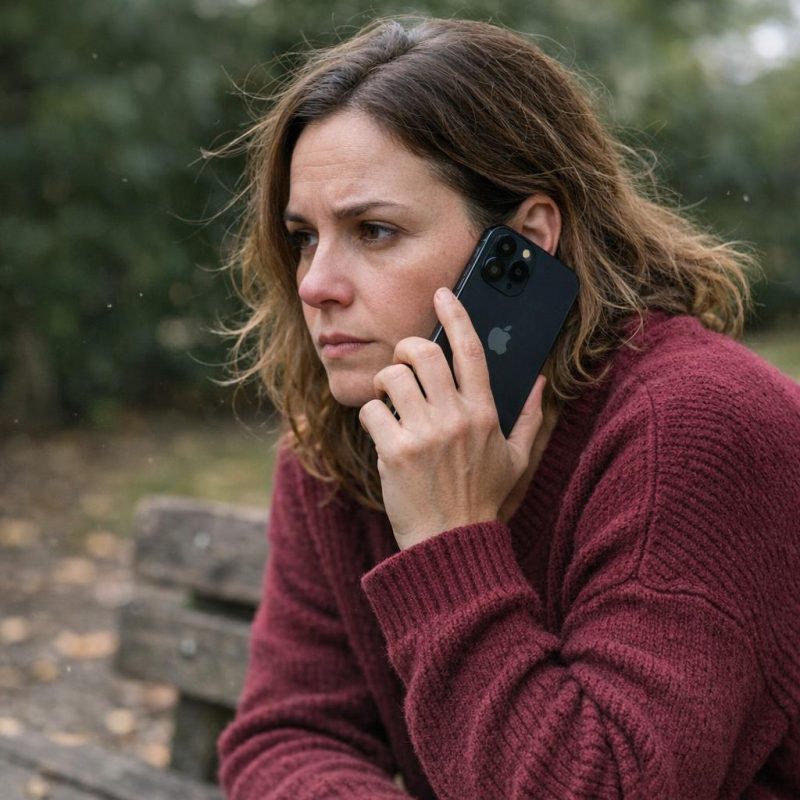 Image by RM AI
The Confrontation Before the Truth
I drove to the detention center that afternoon. I did not call ahead. I did not want to give Greg time to prepare. When they brought him into the visitation room, he looked surprised to see me. I sat down and put the folder on the table between us—copies of the second ledger, copies of the phone records. 'I have seen everything,' I said. My voice was shaking, but I kept going. 'I have seen the ledger with your initials. I have seen the phone records showing you and Peter Coyle talking for two years after Leonard died. I have seen the dates, Greg. I have seen the amounts. I have seen your approvals.' He stared at the folder but did not open it. 'I need you to tell me the truth,' I said. 'Not the version you told the detectives. Not the version you have been telling yourself. I need the real truth. All of it.' He was very still. His hands were folded on the table, and he did not look at me. 'Paula—' he started, but I cut him off. 'No more excuses,' I said. 'No more explanations about being trapped or having no choice. I need to know what you actually did. And I need to know why.' He looked at me for a long time, and then he said, 'You won't forgive me.'
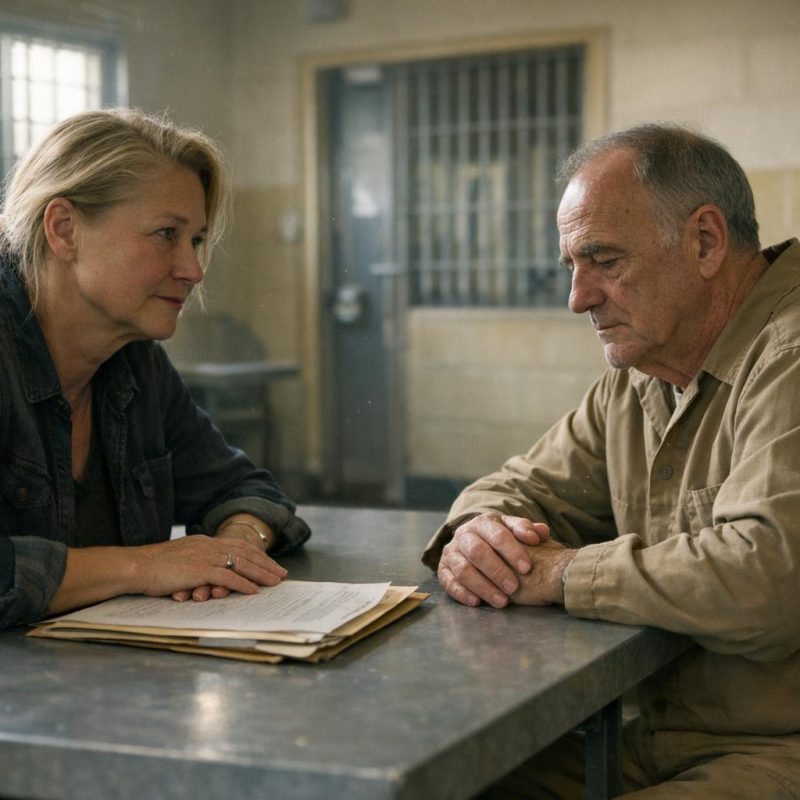 Image by RM AI
The Night Before
I sat there waiting. The room was cold and the fluorescent lights buzzed overhead and Greg sat across from me looking older than I had ever seen him. 'I need time,' he said finally. 'I need to think about how to explain this.' I felt something crack inside me, but I nodded. 'How much time?' I asked. He closed his eyes. 'One more day,' he said. 'Let me gather my thoughts. Let me figure out how to tell you in a way that you will understand.' I wanted to scream at him that there was no way to make me understand, no way to make this okay, but I was so tired. I was tired of fighting and tired of being lied to and tired of not knowing who my husband really was. 'One day,' I said. 'Tomorrow. You tell me everything tomorrow, or I am done.' He nodded slowly. 'Tomorrow,' he said. I left the detention center and drove home in silence. I did not eat dinner. I did not turn on the TV. I just sat in the living room and watched the light fade outside the window. Greg called that night to say goodnight, and I barely responded. I did not sleep, because I knew that whatever he told me tomorrow would end the life I thought I had.
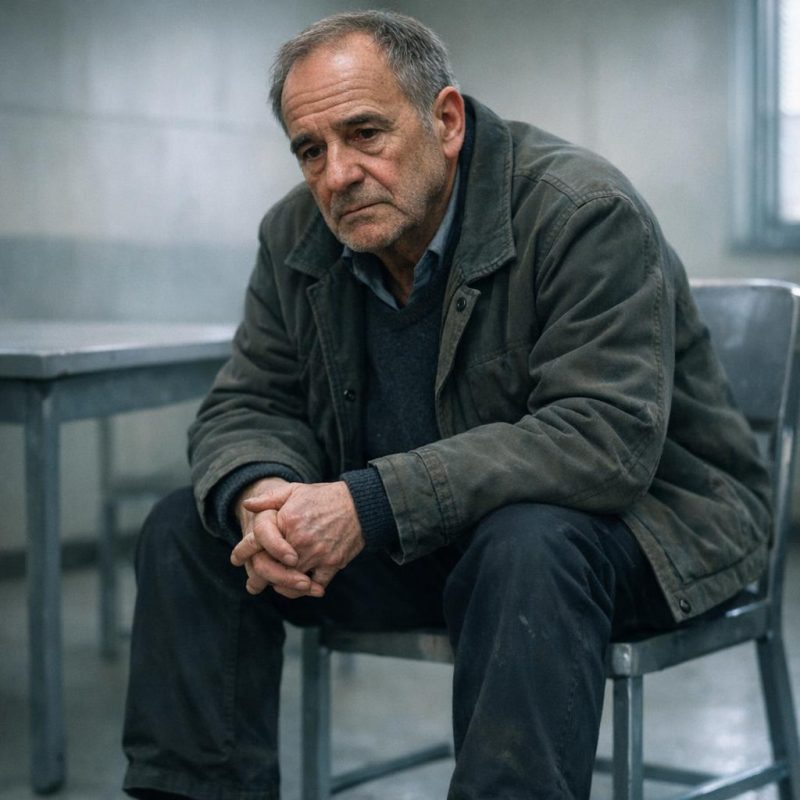 Image by RM AI
The Full Confession
The next day, Greg told me everything. We sat in that same visitation room, and he spoke in a low, steady voice that I barely recognized. He said that after Leonard died, Peter Coyle had contacted him. Peter knew about Greg's involvement, and he proposed that they continue the scheme—just the two of them, splitting the proceeds. Greg said yes. For two years, they identified estates, manipulated paperwork, drained accounts, and divided the money. Greg personally approved the closure of three estates, including Judith Harmon's. He signed off on the distributions. He made the decisions. He was not trapped. He was not blackmailed. He chose it. 'I kept the documents in the cabinet,' Greg said quietly, 'because I knew Peter could turn on me. I needed insurance. If he ever tried to blame everything on me, I had proof that he was just as involved. It was protection. Mutual destruction.' I stared at him. The locked cabinet had never been about preserving evidence against Leonard Voss. It was never about protecting himself from a dead man's scheme. The locked cabinet had never been insurance—it was evidence he kept to make sure Peter could never turn on him without destroying himself too.
 Image by RM AI
The Aftermath of Truth
I sat there listening to every word, and somewhere in the middle of it all, I realized something that made my whole body go cold. The man sitting across from me—the one who had shared my bed for twenty-seven years, who had eaten dinner with me every night, who had raised our daughter and fixed the screen door every summer—that man was either gone or had never existed at all. Greg spoke so calmly about the estates he had drained, about the paperwork he had signed, about the money he had taken from people like Judith Harmon. There was no anguish in his voice. No real remorse. Just this clinical recitation of facts, like he was explaining a complicated tax return. I kept waiting for him to break down, to show me some shred of the person I thought I knew. But he just kept talking. When he finally finished, I sat there in silence for what felt like hours. Then I asked him the only question that mattered to me anymore. I asked him why he was telling me all of this now. He looked at me with those tired eyes and said, 'Because I wanted you to hear it from me before the prosecutor did.'
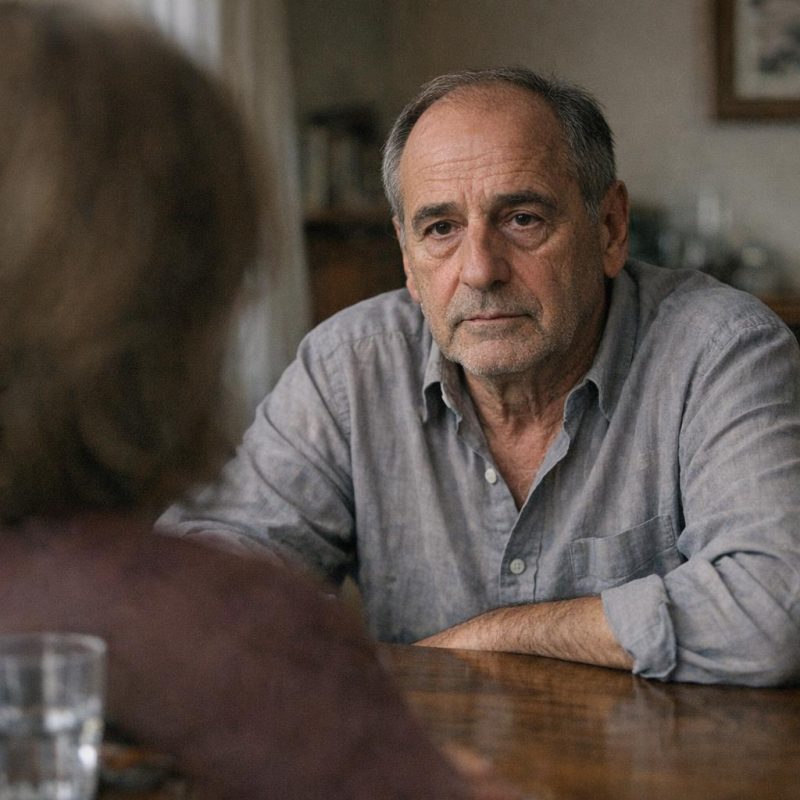 Image by RM AI
The Decision
I took a breath and told him I was going to cooperate with the prosecutors. I told him I would give them everything I knew about the account in my name, about the cabinet, about the documents. I told him I would testify if they asked me to. And then I told him our marriage was over. I said it clearly, without tears, without drama. Just a statement of fact. I expected him to argue, to beg, to try to manipulate me one more time with some story about how he had done it all for us, for our family, for our future. But he did not do any of that. He just sat there looking at me, his hands folded on the table between us. There was something in his expression I could not read—resignation, maybe, or relief. Like he had been waiting for me to finally see him for what he really was. I stood up to leave, and he spoke just once more. He said he understood. That was it. No fight. No desperation. He did not beg or argue—he just nodded, as if he had been expecting this all along.
 Image by RM AI
The Arrest
Three days later, Detective Marsh and Detective Carver came to the house with four uniformed officers and a warrant for Greg's arrest. I had been expecting it, but seeing them actually walk up the driveway still felt surreal. Greg was in the living room reading the newspaper when they knocked. He stood up slowly, folded the paper, and set it on the coffee table like it was any other morning. Detective Carver read him his rights while Detective Marsh put the handcuffs on. The charges were fraud, conspiracy, and money laundering spanning two decades. Greg did not resist. He did not say a word. They led him out through the front door, past the neighbors who had come out to watch, past the flower beds he had planted ten years ago, past the mailbox with both our names on it. I stood in the doorway watching it all happen. As they led him down the walkway toward the police car, he turned his head and looked back at me once. Just once. And I turned away.
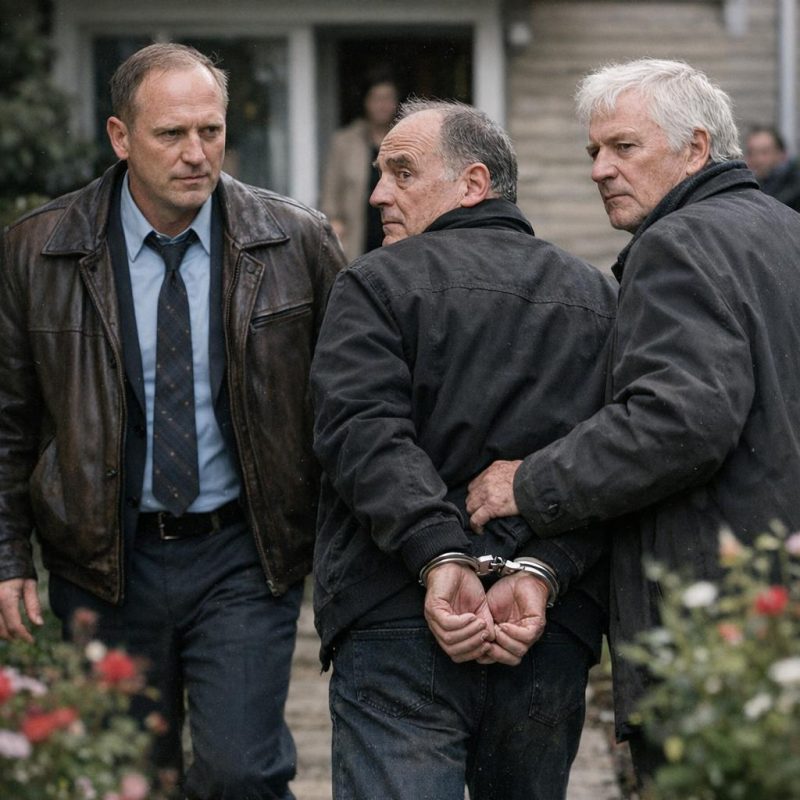 Image by RM AI
Testifying
Two weeks later, I testified before a grand jury. I sat in that windowless room with twenty-three strangers and told them everything I knew. I told them about the locked cabinet, about the account in my name, about the documents I had found and the conversations I had had with Greg. Detective Marsh and Detective Carver were there, and they nodded along as I spoke, confirming details and entering evidence. The prosecutor was a woman in her forties with sharp eyes and a no-nonsense demeanor. She asked me to walk through the timeline, to describe Greg's behavior over the years, to explain what I had known and when I had known it. I answered every question as honestly as I could. At the end, after all the facts had been laid out, she asked me something I was not prepared for. She asked if I thought Greg had ever loved me. I sat there for a moment, staring at the table in front of me. And then I said, 'I do not know anymore.'
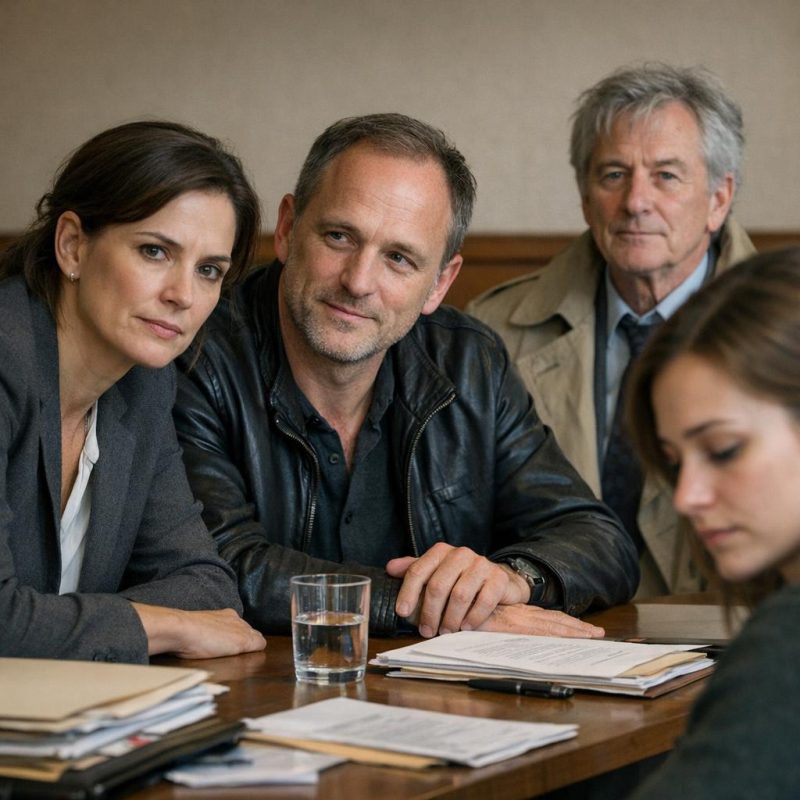 Image by RM AI
Meeting Margaret Chen
Margaret Chen found me in the hallway outside the grand jury room after I finished testifying. She was the probate attorney representing Judith Harmon's family, and I had only met her once before, back when this whole thing started to unravel. She thanked me for my testimony. She said it made a difference, that it would help them recover at least some of what had been stolen from the estate. I asked her if the family would actually get anything back, and she said probably not everything—a lot of the money was already gone—but they might get enough to matter. Enough to feel like someone had finally acknowledged what had been done to them. She was quiet for a moment, then she told me that Judith Harmon's grandson had been fighting for years to understand what happened to his grandmother's estate. Margaret said the family might finally get some restitution. She said it would not bring back what was stolen, but it was a kind of justice.
 Image by RM AI
Rachel's Anger
Rachel showed up at my door two days after Greg's arraignment. She was furious. She pushed past me into the living room and started yelling before I even had a chance to close the door. She said I had betrayed Dad, that I had destroyed our family, that I had chosen strangers over my own husband. She said I was selfish and vindictive and that I should have stood by him no matter what. I let her yell. I let her get it all out. And then I told her the truth. I told her that the people Greg stole from were not strangers—they were real people with real families who had been devastated by what he did. I told her about Judith Harmon, about the estate that had been drained while she was still alive, about the grandson who had spent years trying to understand what happened. Rachel said it did not matter, that he was still my husband, still her father. And I looked at her and said, 'The family was destroyed the day Greg decided to steal from people who could not fight back.'
 Image by RM AI
The Plea Deal
Greg accepted a plea deal six weeks later. His attorney, Ellen Krieger, called me to let me know. She said Greg had decided not to go to trial, that he was admitting guilt in exchange for a reduced sentence. I asked her what that meant, and she said it meant he would avoid the maximum charges, but he would still serve significant time. She said the prosecution had recommended twelve years, but the defense had negotiated it down. She told me the sentencing hearing was scheduled for the following month, and that I had a right to attend if I wanted to. I asked her how Greg was handling it, and she paused before answering. She said he was resigned. That he understood what was coming. That he had made his choice. Then she told me the number that had been agreed upon. His lawyer said he would serve at least eight years.
 Image by RM AI
The Sentencing Hearing
I went to the sentencing hearing. I do not know why, exactly—maybe I needed to see it end, or maybe I needed to hear what the victims had to say. The courtroom was small and cold, with fluorescent lights that made everyone look pale and tired. Greg sat at the defense table in a suit I recognized, one I had bought him for Rachel's college graduation. The judge asked if anyone wanted to make a victim impact statement, and a man in his early fifties stood up. He said his name was David Harmon, and that his grandmother was Judith Harmon. He spoke about how she had spent the last years of her life confused and ashamed, convinced that she had somehow failed her late husband by mismanaging his estate. He said she had died believing she was responsible for losing everything he had worked for. He looked directly at Greg and said, 'She died two years ago still believing she had failed her husband by losing his estate.'
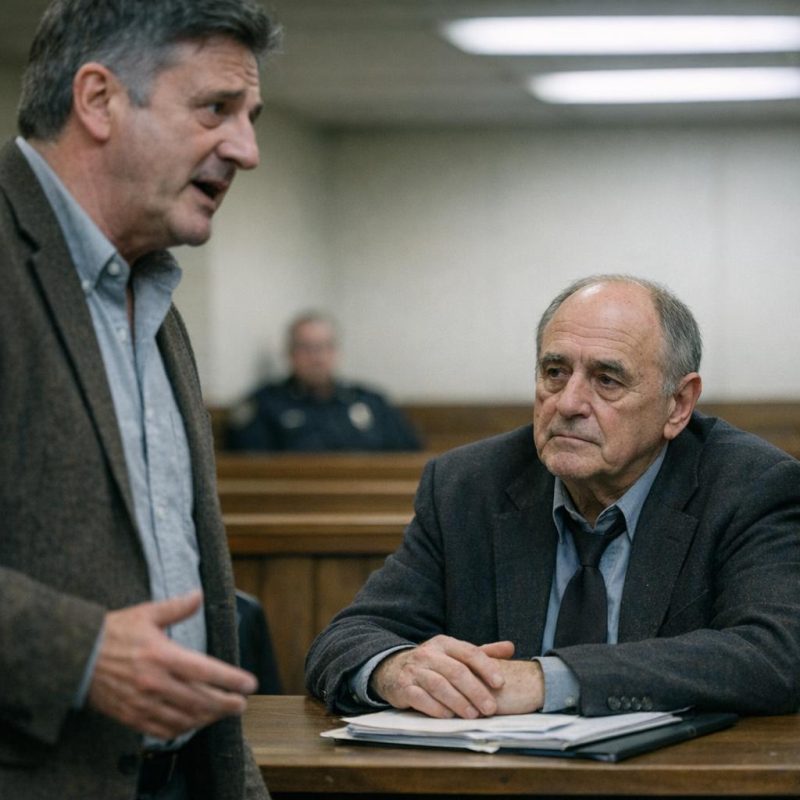 Image by RM AI
The Last Words
The judge asked Greg if he wanted to make a statement before sentencing. I watched him stand, slowly, like his body was heavy with something I could not name. He cleared his throat and looked toward the victims' families, then toward the judge. 'I want to apologize,' he said, and his voice was steady, controlled. 'I made terrible decisions that hurt innocent people. I betrayed the trust of clients who believed in me, and I take full responsibility for my actions.' It sounded rehearsed. He spoke for maybe two minutes, saying all the right things—remorse, accountability, shame. But he never looked at me. Not once. His eyes moved across the courtroom, pausing on the judge, on the prosecutor, on David Harmon and the other victims, but they never landed on where I sat in the third row. I kept waiting for him to turn, to acknowledge that I was there, that I had been there for twenty-seven years. He did not. When he sat down, I understood. I realized his apology was not for me—it was for the courtroom, for the record, for history.
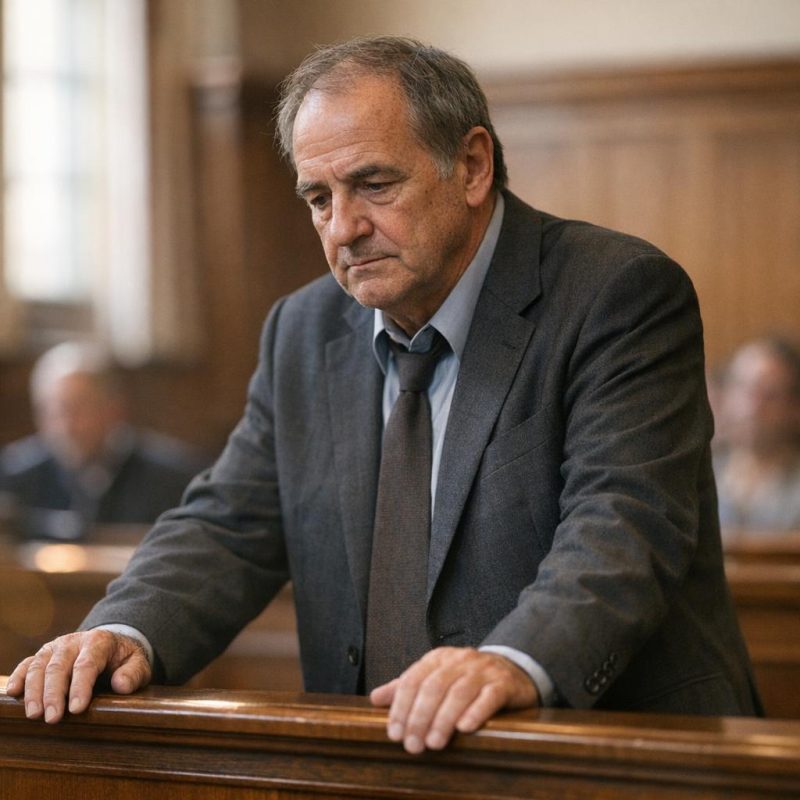 Image by RM AI
Signing the Papers
I met with a lawyer the following week to start the divorce. She was kind but efficient, walking me through paperwork that felt surreal to sign. I initialed boxes, checked terms, agreed to things I had never imagined agreeing to. When it came to the division of assets, she explained that anything tied to Greg's business—the investments, the accounts, even some of the home equity—might have originated from fraudulent activity. I signed a waiver relinquishing any claim to those funds. I did not want them. I did not want anything that had come from what he had done. She made notes on a yellow legal pad, her pen moving quickly. Then she looked up and asked, almost gently, if I wanted to keep the house. It was mine to claim if I chose—my name was on the deed, and I had legal right to it. I thought about the kitchen where I had made breakfast for twenty-seven years. I thought about the office with the empty space where the cabinet had been. I thought about the bedroom where I had slept beside a man I did not know. The lawyer asked if I wanted to keep the house, and I said no—I could not live there anymore.
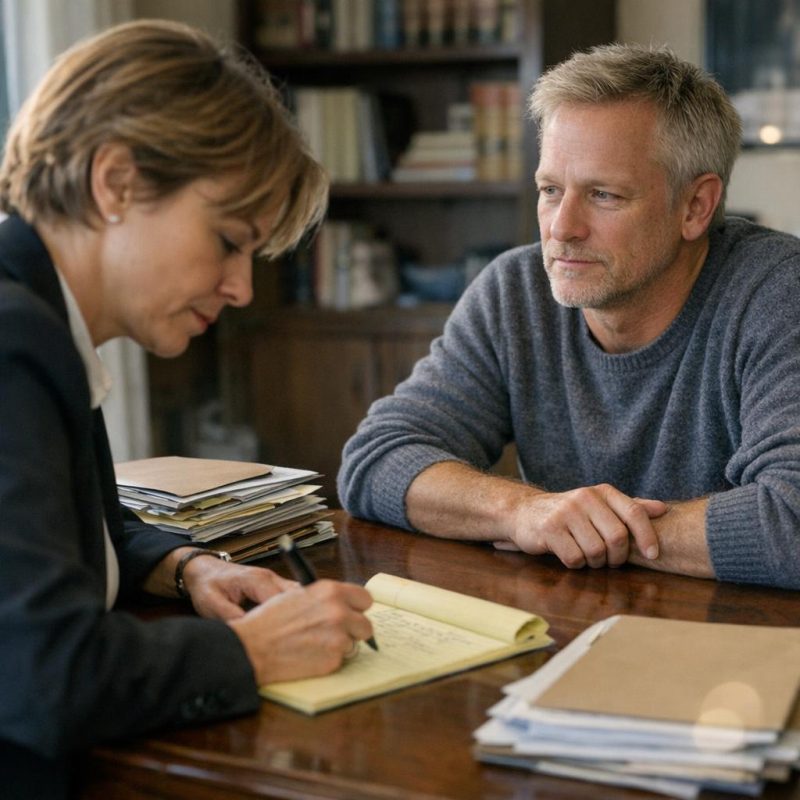 Image by RM AI
Rachel's Apology
Rachel called me three weeks after the sentencing. I almost did not answer—we had barely spoken since the day she shouted at me in my kitchen, accusing me of knowing, of being complicit. But I picked up on the fourth ring, and when I heard her voice, it was quieter than I had ever heard it. 'Mom,' she said, and then she was quiet for a long time. I waited. 'I'm sorry,' she finally said. 'I didn't understand. I thought—I don't know what I thought. That you must have known, or that you should have known, and I was so angry. But I've been reading everything, all the trial coverage, and I see now how he hid it. How he hid everything.' Her voice cracked a little. 'I was horrible to you, and you didn't deserve that. You were a victim too.' I sat on the edge of my bed in the apartment I was renting, staring at the blank wall, and I felt something loosen in my chest. 'Thank you,' I said, and I meant it. She asked if we could start over, and I said we could try.
 Image by RM AI
The Empty Office
I went back to the house one last time to collect the things I had left behind—photo albums, a few books, some dishes my mother had given me. The real estate agent had said the bank would take possession by the end of the month, so I had to move quickly. The house was silent when I walked in, emptier than it had ever felt. I moved through the rooms like a stranger, packing boxes and labeling them with a black marker. When I finished, I stood in the doorway of Greg's office. The cabinet was gone—seized as evidence months ago—and the space where it had stood was just a blank stretch of wood floor, slightly lighter than the rest, like a shadow in reverse. I stared at that empty space and realized I had spent nearly three decades building a life around something that was never real. The lie was gone now. The cabinet, the marriage, the man I thought I knew—all of it was gone. And what was left was just me, standing in an empty room, trying to figure out who I was without it. I did not know yet, but for the first time in my life, the uncertainty did not terrify me—it felt like freedom.
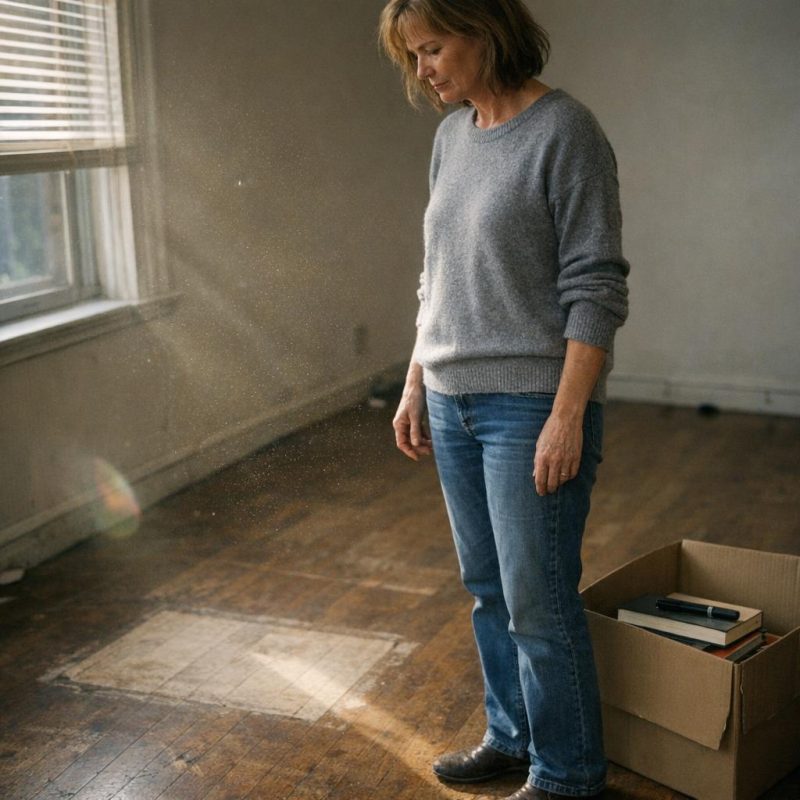 Image by RM AI
KEEP ON READING
20 Unluckiest People in History
Some people have bad days and then there are people…
By Noone Mar 17, 2026
Revisiting The Mystery Of Cleopatra's Tomb
Siednji Leon on UnsplashCleopatra VII, the last active ruler of…
By Rob Shapiro Mar 17, 2026
The Warrens Sold America on Demonic Possession, Until One Brutal…
The Controversial World of Ed and Lorraine Warren. Even if…
By Annie Byrd Mar 17, 2026
20 Historical Figures Who Were Too Brilliant For Their Own…
When Genius Came With a Price. History is full of…
By Emilie Richardson-Dupuis Mar 17, 2026
Historical Heartbreaks: The 20 Most Famous Breakups in History
Love Has Always Hurt. History loves a grand romance, but…
By Emilie Richardson-Dupuis Mar 16, 2026
20 Weird Obsessions Of Famous Historical Figures
Bet You Didn’t Know This About Tesla. History tends to…
By Sara Springsteen Mar 16, 2026