

My HOA Fined Me $750 for My Mailbox—Then I Discovered Why They Really Wanted Me Gone
The Letter
So there I was, coming home from work on a Tuesday, and there's this official-looking envelope stuck to my front door. You know the kind—cream-colored, heavy stock, with a return address that just screams bureaucracy. I pulled it down, already annoyed because who tapes things to your door anymore, and opened it right there on the porch. It was from the HOA. A violation notice. For my mailbox. My perfectly normal, black metal mailbox that had been standing at the end of my driveway for the entire four years I'd lived in this neighborhood. The fine? Seven hundred and fifty dollars. I actually laughed out loud at first because it seemed so ridiculous. But then I read it again. 'Unapproved modification to exterior property feature.' No warning. No previous notice. Just a massive fine and a deadline two weeks out. I stood there rereading it, and a cold feeling started to creep in—this didn't feel random.
 Image by RM AI
Reading the Fine Print
I took the letter inside and spread it out on my kitchen table under the overhead light, reading every word like it was a legal contract I was about to sign. The language was so vague it was almost impressive. 'Non-compliant with community aesthetic standards.' What standards? There was a reference to section 4.7 of the HOA guidelines, which I'd never actually read because, honestly, who does? But what really got me was the photograph. They'd included a printed photo of my mailbox, circled in red pen like evidence at a crime scene. The angle was weird, too—taken from the street at a low position that made the mailbox look crooked even though I knew it wasn't. I went outside and checked. It was perfectly straight. Someone had crouched down or angled their camera deliberately to make it look worse. Why would anyone do that? The photo was taken from an angle that made my mailbox look worse than it was—and I wondered who had gone to that much trouble.
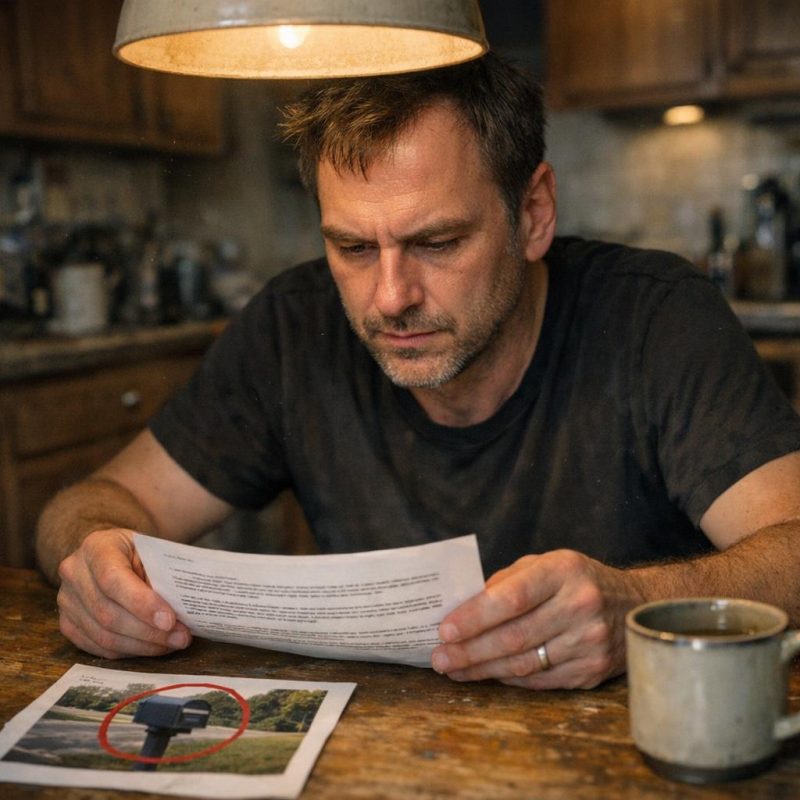 Image by RM AI
The Call
I called the HOA office the next morning during my lunch break, expecting maybe there'd been some mistake, some clerical error I could clear up in five minutes. A woman answered on the third ring. 'Heritage Oaks HOA, this is Patricia.' Her voice was flat, professional, like she was reading from a script. I explained who I was, gave her my address, mentioned the fine. There was a pause, the sound of typing. 'Yes, I have your file here,' she said. I asked why I was being fined for a mailbox that had been there for years. She said it had been flagged during a recent compliance review. I asked why I hadn't received a warning first. 'The guidelines don't require warnings for clear violations,' she said. I could feel my jaw tightening. I asked about the other mailboxes in the neighborhood that looked identical to mine. Another pause. 'I can only speak to your property, Ms. Harding.' Her tone hadn't changed once. 'Rules are rules,' she said, and hung up before I could respond.
 Image by RM AI
Walking the Block
That afternoon, I did something I'd never done before—I actually walked my entire neighborhood and looked at mailboxes. I felt ridiculous at first, like some kind of mailbox detective, but the more I walked, the angrier I got. Two houses down from me, there was a mailbox that was literally leaning to one side, the post rotted at the base. No violation notice. Around the corner, someone had painted their mailbox bright yellow with sunflowers on it. Kind of tacky, honestly, but no notice there either. I kept walking, block after block, taking notes on my phone like I was gathering evidence for court. Some mailboxes were rusty. Some were dented. Some were identical to mine in every possible way—same style, same black metal, same basic design. And you know what? Not a single one had a violation notice taped to the door. I counted six mailboxes that looked just like mine—and not one had a fine taped to the door.
 Image by RM AI
The Neighbor
I ran into Derek the next evening while I was checking my mail—ironic, I know. He lives three houses down, works from home doing something with software. We'd chatted a few times about normal neighbor stuff, nothing deep. I mentioned the fine, half-venting, half-looking for sympathy. His expression shifted immediately. 'Oh man, yeah. I got one of those last month,' he said. His was for a landscaping issue—apparently his front garden edging wasn't 'uniform' enough. He'd paid the two hundred dollar fine just to make it go away. I asked if he'd noticed anyone else getting violations. He shrugged, looked uncomfortable. 'I don't know. I just figured they were cracking down on stuff.' But there was something in his voice, a kind of resignation that didn't sit right with me. Like he'd thought about fighting it and decided it wasn't worth the energy. He shrugged it off, said he just paid it—but something about the way he said it made me think he was tired of fighting.
 Image by RM AI
The Guidelines
That night, I dug through the boxes in my garage until I found the folder from when I'd bought the house. Buried in there was a copy of the HOA guidelines—forty-three pages of single-spaced text that I'd signed off on without reading because you always do. I sat on my living room floor and actually read the thing cover to cover. It was a mess. Section 4.7, the one cited in my violation, said exterior features should 'maintain visual harmony with neighborhood character.' What does that even mean? Visual harmony? There were no specifics, no measurements, no approved styles or colors. Just vague, subjective language that could mean anything depending on who was interpreting it. Other sections were the same way. Landscaping should be 'well-maintained.' Homes should present a 'cohesive aesthetic.' It was like they'd deliberately written the rules to be as open to interpretation as possible. The rules seemed designed to be interpreted however they wanted—and that scared me more than the fine.
 Image by RM AI
The Research Begins
I'm not normally the conspiracy-theory type, but something about all this was bothering me in a way I couldn't shake. So I did what anyone in 2019 would do—I started Googling. Turns out HOAs are required to keep certain records public, at least in our state. Meeting minutes, financial reports, that kind of thing. Our HOA had a website that looked like it hadn't been updated since 2012, but there was a 'Documents' page with PDFs going back a few years. I downloaded everything I could find. Bank statements were redacted, but meeting minutes were there. Approval and denial records for home modifications. Violation notices from the past year. I didn't have a plan, exactly. I wasn't even sure what I was looking for. But I figured if I was being targeted unfairly, maybe there'd be some kind of pattern in the data. Maybe other people were getting hit with weird fines too. I didn't know what I was looking for yet—but I had a feeling I'd know it when I saw it.
 Image by RM AI
Meeting Minutes
I spent most of Saturday morning going through those meeting minutes with a cup of coffee getting cold beside me. Most of it was incredibly boring—discussions about pool maintenance, landscaping contracts, budget line items. But I started noticing a name that appeared over and over again: Patricia Dunmore. The same Patricia I'd spoken to on the phone. She wasn't just an administrative assistant or office manager. She was listed as the HOA Compliance Director, and her name was attached to almost every decision about approvals and violations. Someone wanted to install a new fence? Patricia reviewed it. Someone wanted to repaint their trim a different shade of white? Patricia approved or denied it. There were at least two dozen decisions over the past year with her signature, and I couldn't find a single instance where anyone else had signed off on compliance issues. No checks, no balances, no second opinions. Her name was on nearly every approval—and I started wondering who was checking her work.
 Image by RM AI
Anita's Story
I decided to walk around the neighborhood that afternoon, partly to clear my head and partly because I wanted to see if anyone else had dealt with something similar. Three houses down, I found Anita trimming roses in her front yard. She was maybe late sixties, wearing gardening gloves and a wide-brimmed hat. I introduced myself, mentioned I'd just moved in, and asked if she'd had any issues with the HOA. Her face changed immediately—not angry exactly, but tired. 'Oh, honey,' she said, pulling off one glove. 'I had them after me last year about my fence. Said it was six inches too tall.' She gestured to her side yard where I could see the posts had been cut down. 'I had it removed. Well, cut down. Paid someone to do it.' I asked if she'd tried to fight it. She shook her head slowly. 'It wasn't worth it. They just keep coming at you.' I thanked her and started to leave, but something in her expression stopped me. She'd looked away when she said that last part, like there was more she didn't want to say.
 Image by RM AI
The Property Search
That night I couldn't sleep, so I did what any reasonable person with internet access and growing paranoia would do—I started searching county property records. Our neighborhood wasn't huge, maybe sixty homes total, and the county website let you search by address and see sale history. I went through street by street, writing down anything recent. What I found made my stomach tighten. Three homes had sold in the past two years, all of them after what I could only assume were HOA disputes based on the timing and the fact that I'd seen references to those addresses in the meeting minutes I'd downloaded. One was Derek's neighbor who'd moved out eight months ago. Another was two streets over, sold just last spring. The third had closed in late winter. I sat back and stared at my notes, trying to figure out what it meant. Three sales in two years, all after violations—and I couldn't tell if that was coincidence or something worse.
 Image by RM AI
The Follow-Up Letter
The second notice showed up on Tuesday, tucked inside a yellow envelope with 'URGENT' stamped across the front in red ink. I opened it standing at my mailbox and felt my pulse kick up as I read. This one wasn't a polite reminder. It informed me that I had ten days to bring my mailbox into compliance or face additional penalties of up to two hundred dollars per week, plus potential legal action to enforce the covenant. Ten days. I read it again, then a third time, looking for any softening language or room for appeal. There wasn't any. The letter was signed by Patricia Dunmore again, and this time there was a cc: line at the bottom listing the HOA board president and the association's attorney. I walked back inside and dropped it on the kitchen counter, my hands shaking just slightly. The tone had shifted—it wasn't just official anymore, it felt threatening.
 Image by RM AI
Jordan's Insight
I called Jordan the next morning. We'd gone to college together, and he'd been working in real estate for almost a decade. I figured if anyone could tell me whether I was overreacting, it was him. I explained the situation—the fines, the pressure, the tight deadlines. He listened quietly, then said, 'Yeah, HOA violations are brutal. They can absolutely tank your property value if they escalate.' I asked what he meant by escalate. 'Well,' he said, 'if it goes on your record or if they put a lien on the property, that shows up when you try to sell. Buyers get spooked. You end up having to drop your price just to move it.' He said it casually, like it was common knowledge in his world. But my stomach dropped. I thanked him and hung up, staring at the second notice still sitting on my counter. He said it casually, like common knowledge—but my stomach dropped when I realized what that could mean.
 Image by RM AI
Comparing Notes
I reached out to Derek and Anita again that weekend, asking if we could talk in more detail. We met at the neighborhood park, sitting at a picnic table under the trees like we were planning something covert. I asked them to walk me through exactly what had happened with their violations—how the HOA had contacted them, what the timelines were, whether they'd been given any flexibility. Derek went first. He said they'd started with a polite letter, then ramped up fast with fees and threats of liens. 'I tried to negotiate,' he said. 'They wouldn't budge. It was comply or pay.' Anita nodded. 'Same with me. They gave me two weeks, then started talking about legal action.' I asked if they'd ever gotten a clear explanation of why their situations were violations when other homes seemed fine. Both of them shook their heads. They both described the same thing—pressure, escalation, and no room to negotiate.
 Image by RM AI
Karen's Exception
The next afternoon I went for a walk, this time with a purpose. I wanted to see if there were other homes in the neighborhood with questionable features that had somehow never been cited. It didn't take long. Four houses down from Karen's place—the board member I'd seen at the meeting—I stopped and stared. Her fence was at least seven feet tall, possibly eight, running along the side of her property in dark stained wood. It was way over the height limit mentioned in the covenant. I stood there for a minute, just looking at it, then pulled out my phone. I took three photos from different angles, making sure the height was obvious against the background. No citation notice. No violation letter. Nothing. I checked the meeting minutes again on my phone—her address had never appeared in any compliance discussion. I took a photo of it, standing there in broad daylight—and wondered how long they'd been getting away with this.
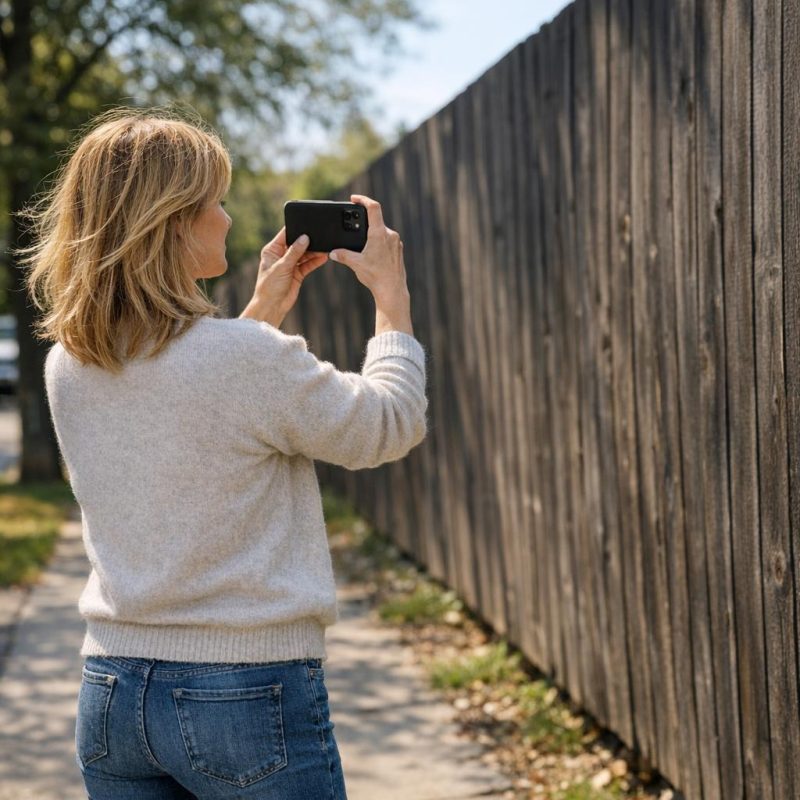 Image by RM AI
The Approval Records
I submitted another public records request that Monday, this time asking specifically for approval records related to fences and exterior modifications for board members' properties. It took four days, but they sent me a PDF with about a dozen pages. I opened it on my laptop and started reading. Karen's fence had been approved three years ago, but the documentation was almost nonexistent—just a single-page form with Patricia's signature and a box checked next to 'Approved.' No photos, no measurements, no notes about whether it met the height requirements. I cross-referenced it with some of the denials I'd seen for other homeowners. Those files were thick—multiple pages, photos, detailed explanations of why the request didn't comply. The difference was staggering. I found two other approvals for board members, both similarly thin. The paperwork was thin, barely documented—and I realized no one had been watching them at all.
 Image by RM AI
The Third Notice
The third notice arrived on Friday. I saw the envelope in my mailbox and my chest tightened before I even opened it. This one was different. The header read 'FINAL NOTICE' in bold caps, and the first line told me I had seventy-two hours to comply or the HOA would pursue legal remedies, including the placement of a lien on my property and referral to their attorney for collections. Seventy-two hours. Three days. The letter went on to say that failure to act would result in additional fines of five hundred dollars and potential court costs. It was signed by Patricia again, but this time the board president had signed it too, right below her name. I sat down at my kitchen table and read it twice, my hands shaking. The mailbox was still sitting there, exactly where it had always been, doing absolutely nothing wrong. I read it twice, my hands shaking—and I knew I was running out of time.
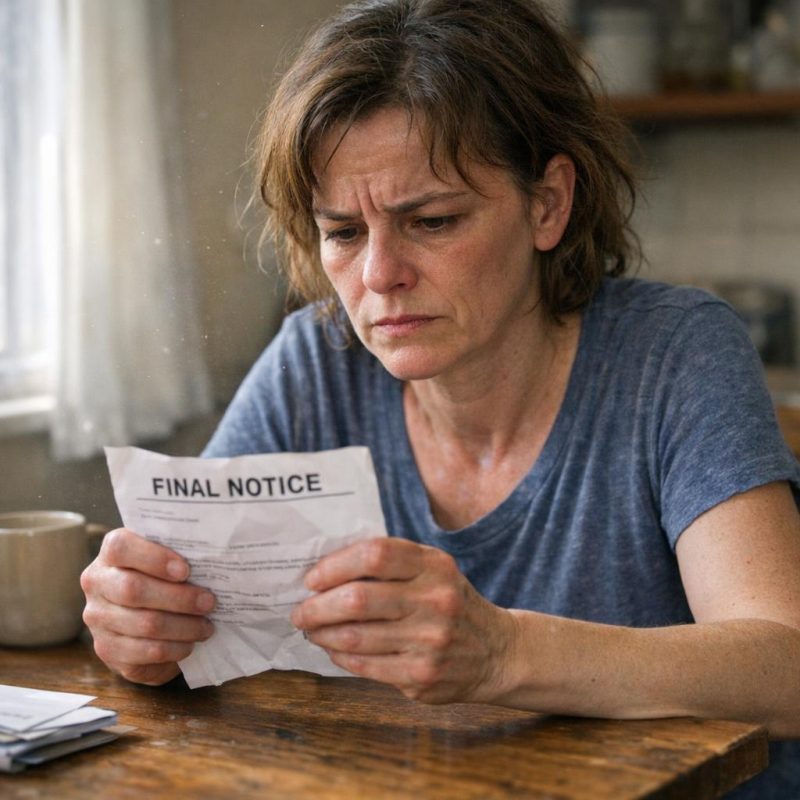 Image by RM AI
Digging Deeper
I spent the entire evening at my laptop, three browser tabs open, a notebook beside me filling up with names and dates. I started with the property sales in our neighborhood over the past three years—public records, all available online. Then I cross-referenced them with the HOA violation notices I'd been collecting, the ones I'd managed to photograph at the community center. I made a spreadsheet. I know that sounds obsessive, but I needed to see it all laid out. Column A: homeowner name. Column B: violation type. Column C: sale date. Column D: buyer name. Column E: board member who signed the notice. I worked through dinner, my coffee going cold beside me. And then I started seeing it. The patterns. The same board members signing off on violations right before a house went up for sale. The same buyers appearing multiple times. One name kept showing up as both a seller and a board approver on different transactions. My stomach turned. I wanted to believe it was coincidence, that I was connecting dots that didn't actually form a picture. But the same names kept appearing—buyers, sellers, approvers—and I started to see the outline of something I didn't want to believe.
 Image by RM AI
Tom's Warning
Tom lived four houses down, a retired lawyer who'd always been friendly in that distant, neighborly way. I'd waved to him for years but never really talked. Sunday morning, I caught him checking his mail and asked if I could pick his brain about something. He invited me in, offered coffee, and listened while I explained the situation—the mailbox, the fines, the pattern I'd started noticing. He didn't seem surprised. He leaned back in his chair, hands folded across his stomach, and told me that fighting an HOA was expensive and exhausting. 'They have funds,' he said. 'Collected from every homeowner. You'll be paying out of pocket for a lawyer while they're using your own money against you.' I asked if he'd ever seen anything like this before in our neighborhood. He paused. 'I've seen the board be aggressive,' he said carefully. 'More aggressive than they need to be.' I waited, but he didn't elaborate. He told me to be careful—and the way he said it made me think he knew more than he was willing to say.
 Image by RM AI
The Shell Company
Back at my laptop, I pulled up the property records again and focused on the two sales that had seemed the strangest—both homeowners who'd been hit with multiple violations, both sold within months of the first notice. I scrolled down to the buyer information. The first one listed a company: Crescent Holdings LLC. I didn't recognize it. I searched the second property. Same buyer. Crescent Holdings LLC. Not a person. Not a family buying a home. A company. I sat back and stared at the screen. I'd never heard of Crescent Holdings. It wasn't a major developer. It wasn't a known property management firm. I googled it and found almost nothing—just the name appearing in a few real estate transactions, all in our area. No website. No contact information. No online presence at all. It felt wrong. The kind of wrong that sits heavy in your chest. The name meant nothing to me—but it appeared twice, and I needed to know who was behind it.
 Image by RM AI
The Business Filing
I found the state's business entity database and searched for Crescent Holdings LLC. It came up immediately. Registered three years ago. Status: active. I clicked through to the filing details, looking for names, addresses, anything that would tell me who actually owned it. The registered agent section was blank—well, not blank, but listed as 'see attached documentation,' which wasn't available online. The business address was in a town thirty minutes away. I copied it, pasted it into Google Maps, and felt my stomach drop. It was a strip mall. I zoomed in on Street View. There, between a dry cleaner and a tax prep office, was a place called MailHub Pro. A mailbox service. Not an office. Not a headquarters. Just a box where someone could receive mail without using their real address. I went back to the state database and searched for officer names, directors, anything. There was nothing public. No names listed, no public officers—just an address that turned out to be a mailbox service.
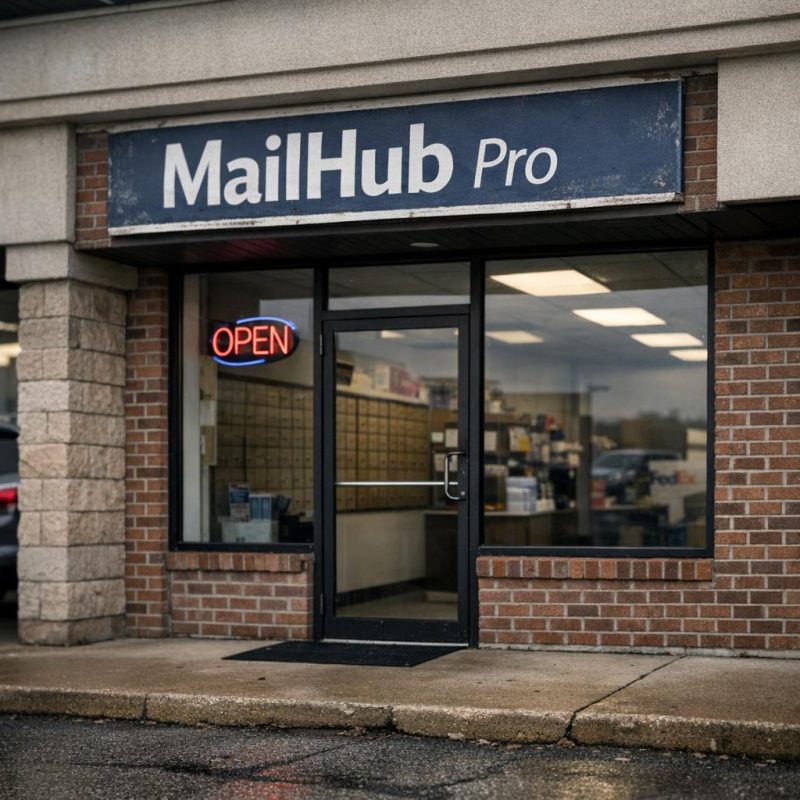 Image by RM AI
The Neighbor Who Sold
I remembered the Johnsons. They'd lived two streets over and sold their house maybe eighteen months ago. I'd heard through the neighborhood grapevine that they'd had some kind of dispute with the HOA, but I didn't know the details. I found Mrs. Johnson's number through a mutual acquaintance and called her. She sounded surprised to hear from me but agreed to talk. She told me they'd been fined for their fence height—something about it being three inches too tall, which she swore wasn't true. They'd fought it, got another notice, then another. 'It was just so much stress,' she said. 'We decided it wasn't worth it.' I asked her how long it took to sell. 'Pretty quick, actually,' she said. 'We were lucky.' I hesitated, then asked if anyone had approached them about buying before they listed it publicly. The line went quiet. 'Why do you ask?' she said, her voice suddenly careful. I told her I was just curious. He said he just wanted out—but when I asked if anyone had offered to buy before he listed it, he went quiet.
 Image by RM AI
Leah's Offer
Leah and I met for coffee on Tuesday. We'd known each other since college, and she'd been working as an investigative journalist for a regional paper for the past five years. I trusted her. I laid out everything I'd found—the fines, the patterns, the shell company, the former neighbors who'd sold under pressure. She listened, taking notes on her phone, her expression getting more serious as I talked. When I finished, she looked up at me. 'This could be a story,' she said. 'But I need documentation. Everything you've got—notices, emails, meeting minutes, property records. And I need to verify it independently.' I told her I could get her copies. She nodded slowly. 'If this is what it looks like, Claire, it's not just your mailbox. It's a pattern of abuse. Maybe worse.' She paused. 'But you need to understand—if I start digging, it's going to get attention. And not everyone's going to be happy about it.' She said if there was a story here, she'd help me find it—but I needed to be ready for what that might mean.
 Image by RM AI
Gathering Evidence
I spent the next two days gathering everything. I printed out every violation notice I'd received, every email exchange with Patricia, every response from the board. I downloaded meeting minutes from the HOA website going back three years. I compiled property records for every house that had sold in the neighborhood during that time. I took photos of my mailbox from every angle, showing how it was identical to every other mailbox on the street. I made copies of the spreadsheet I'd created, highlighting the patterns I'd noticed—the repeat buyers, the timing of violations and sales, the board members' names appearing over and over. I organized it all into a single folder, labeled and dated. It took hours. My kitchen table disappeared under stacks of paper, and my printer ran out of ink halfway through. But when I was done, I sat down and looked at it all. I spread it all out on my kitchen table—and for the first time, it looked like something worth fighting for.
 Image by RM AI
The Meeting Announcement
The HOA sent out its monthly meeting announcement on Thursday. I almost deleted the email—I'd been ignoring them for months, never saw the point in attending. But this time I opened it. The meeting was scheduled for the following Wednesday, seven p.m., at the community center. Standard agenda: budget review, landscaping updates, architectural requests. And then, at the bottom: open forum for homeowner concerns. I read that line three times. Open forum. Public record. Witnesses. I could stand up in front of the board, in front of other homeowners, and ask my questions. I could make them answer—or at least make them refuse to answer in front of everyone. It wasn't a courtroom, but it was something. I forwarded the email to Leah with a single line: 'I'm going to do it.' She wrote back within minutes: 'I'll be there.' I printed the meeting notice and pinned it to my fridge. I marked the date on my calendar—and knew I had seven days to get ready.
 Image by RM AI
Rehearsing the Questions
I sat at my kitchen table with a blank notebook and tried to map out what I wanted to say. The meeting was in seven days, and I kept imagining myself standing up in front of the board—and freezing. So I wrote everything down. Every question I wanted to ask, every inconsistency I'd noticed, every detail about the mailboxes and the violations and the follow-up letters that never came. I practiced out loud in my living room, reading from my notes like I was giving a speech. It sounded good the first time. The second time, it sounded rehearsed. By the third time, I was second-guessing every word. What if they just dismissed me? What if they had an answer I hadn't thought of? What if I sounded paranoid or petty in front of everyone? I rewrote my opening line five times—changing the tone, the phrasing, trying to make it sound reasonable and firm at the same time. But every version felt wrong. Too aggressive, or too passive, or too pleading. I still wasn't sure it would be enough.
 Image by RM AI
Derek's Hesitation
I caught Derek outside his house two days before the meeting and asked if he'd thought about attending. He was watering his lawn, and he turned off the hose when he saw me walking up. 'I don't know, Claire,' he said. 'I've been thinking about it, but—' He trailed off, glancing toward his front door like his wife might overhear. I told him it would help to have someone else there, someone who'd been through the same thing. He shook his head slowly. 'I just don't want to make it worse,' he said. 'If I stand up and say something, they might come after me again. I'm finally off their radar.' I understood. I really did. But I also felt the weight of it—knowing I'd be standing up there alone. He wished me luck, told me he hoped it went well, but I could see the fear in his eyes. It was the same fear I'd felt for weeks. And I wondered if I was making a mistake.
 Image by RM AI
Anita's Encouragement
Anita knocked on my door the next afternoon with a plate of cookies and a determined look on her face. 'I heard you're going to the meeting,' she said, stepping inside before I could even invite her in. I told her I was planning to, that I was going to ask some questions and see what happened. She nodded, setting the cookies on the counter. 'Good,' she said. 'I'm coming with you.' I blinked at her, surprised. 'You don't have to do that,' I said, but she waved me off. 'I know I don't have to. But I want to. Someone has to stand up to them, and if you're brave enough to do it, the least I can do is sit there and make sure you're not alone.' She squeezed my hand, and I felt something loosen in my chest—something I hadn't realized was so tight. I wasn't going to have backup, exactly. But I'd have a witness. A friend. And for the first time in days, I felt a little less alone.
 Image by RM AI
The Day Before
The day before the meeting, I couldn't focus on anything else. I laid out all my paperwork on the dining room table—photos of the mailboxes, copies of the violation letters, notes on the selective enforcement. I went through it all again, checking for gaps, rehearsing my questions one more time. Leah texted me mid-afternoon asking if I was ready, and I told her I thought so. But honestly, I had no idea. I kept running through scenarios in my head. What if they dismissed me outright? What if they had some rule I didn't know about that shut me down before I could even speak? What if no one else cared? I tried to distract myself—watched TV, made dinner, did laundry—but my mind kept circling back to the meeting. That night, I barely slept. I lay in bed staring at the ceiling, running through everything again and again, hoping I was ready.
 Image by RM AI
Arriving at the Meeting
I got to the community center fifteen minutes early. The parking lot was already half full, and I recognized a few cars from the neighborhood. Inside, the meeting room was set up with rows of folding chairs facing a long table at the front. I took a seat in the third row, close enough to be seen but not so close I'd feel trapped. Anita arrived a few minutes later and sat down beside me, giving me a reassuring nod. More people filed in—neighbors I recognized but didn't really know, a few faces I'd never seen before. And then the board members arrived. Karen came in first, carrying a binder and a coffee cup. She didn't look at me. Patricia came in last, walking to the center seat at the front table with the same calm, composed expression she always wore. She scanned the room as she sat down, and for just a second, our eyes met. It wasn't long—maybe a heartbeat—but it was long enough for me to know she knew I was there.
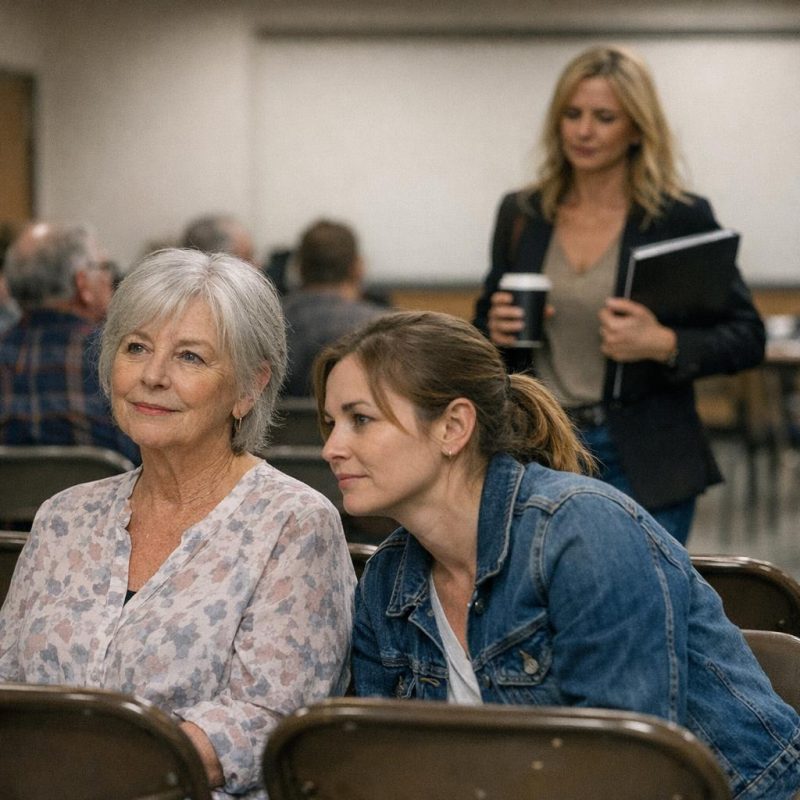 Image by RM AI
The Meeting Begins
Patricia called the meeting to order at seven sharp. She ran through the standard opening—welcoming everyone, reviewing the agenda, reminding people of the rules for public comment. I sat there with my folder in my lap, my hands gripping the edges so tightly my knuckles went white. They started with the budget review. Numbers and percentages and line items I couldn't focus on. Then landscaping updates—new mulch for the common areas, a proposal to replace some of the older trees. I watched the clock on the wall, counting down the minutes. Karen took notes, nodding along as Patricia spoke. No one in the audience asked questions. Finally, Patricia moved to the next agenda item: violations and compliance. My heart kicked up a notch. She opened a different binder, flipping through pages with a practiced ease. I gripped my folder tighter and waited, my heart pounding as they moved through the agenda.
 Image by RM AI
The Violation Announced
Patricia read through a few routine violations first—overgrown hedges, a shed that needed repainting, someone's trash cans left out too long. She handled each one quickly, noting compliance or issuing follow-up deadlines. And then she said my name. 'Claire Harding, 428 Maple Court,' she read aloud, her voice steady and professional. 'Non-compliant mailbox installation. Original citation issued March 14th. No update on compliance received.' She glanced up, her eyes scanning the room like she was looking for me but already knew where I was. 'Is there any update from Ms. Harding regarding this matter?' she asked. The room was quiet. I could feel people turning to look at me, trying to figure out who I was. I took a breath—and stood up. The chair scraped against the floor, louder than I expected. Patricia's gaze landed on me, and I met it head-on. I stood up before she could move on—and the room went quiet.
 Image by RM AI
The First Question
I cleared my throat, forcing my voice to stay steady. 'I have a question,' I said, loud enough for everyone to hear. Patricia tilted her head slightly, waiting. I opened my folder, pulling out the photos I'd printed. 'You cited me for a non-compliant mailbox,' I said. 'But there are five other mailboxes on my street that are identical to mine. Same style, same materials, same installation. Why was mine the only one cited?' I held up the photos, turning them so the room could see. I could feel people leaning forward, murmuring to each other. Patricia's expression didn't change—calm, controlled, unreadable. She glanced at Karen, who was flipping through her binder like she was searching for an answer. The silence stretched out for what felt like forever. Patricia paused, her expression unreadable—and I could feel the room shift.
 Image by RM AI
Patricia's Deflection
Patricia didn't even blink. She just looked at me with this calm, practiced expression—like I'd asked her about the weather. 'The Association handles all violations on a case-by-case basis,' she said, her voice steady. 'We can't discuss individual enforcement decisions in a public forum.' Karen was nodding beside her, like this was perfectly reasonable. A few people in the audience shifted in their seats. I could feel the energy in the room wavering—like they weren't sure if I had a point or if I was just complaining. Anita was watching me closely from the front row, her arms crossed. Patricia started to turn back to her agenda binder, her hand already reaching for the gavel. Like this was over. Like my question didn't deserve a real answer. I felt something sharp and hot rise up in my chest—not quite anger, but close. I wasn't going to let her just brush this off. I straightened my shoulders and stayed exactly where I was. She tried to move on—but I wasn't done.
 Image by RM AI
Presenting the Evidence
I pulled the rest of the photos from my folder and laid them on the table in front of me, one by one. 'These are other mailboxes on my street,' I said. 'Same model. Same color. Same installation date, according to county records.' I set down another set of photos. 'These are fences that don't meet the height requirements listed in the guidelines. No citations.' Another stack. 'These are houses with paint colors that aren't on the approved list. No violations issued.' My voice stayed calm, but I could feel my pulse pounding in my ears. I wasn't yelling. I wasn't accusing anyone of anything specific. I was just showing them what I'd found. Patricia's face was still composed, but her eyes had gone hard. Karen was staring down at the table like she wished she could disappear. People in the audience were craning their necks, trying to see the photos. A couple of them had pulled out their phones. I laid the photos on the table one by one—and I could see people in the audience leaning forward to look.
 Image by RM AI
The Room Reacts
The murmuring started low, just a few whispered comments from the back of the room. Then it grew. Someone said, 'That's my neighbor's fence.' Another voice said, 'Wait, I got cited for that exact same thing.' I heard the click of phone cameras going off as people started taking pictures of the evidence I'd spread across the table. Anita was leaning over to the woman next to her, pointing at one of the photos. I could feel the mood shifting—slowly, but definitely. These weren't just random complaints anymore. This was a pattern. Patricia sat perfectly still, her hands folded in front of her, but I saw the way her fingers tightened just slightly. Karen had stopped pretending to look through her binder. She was just sitting there, stiff and uncomfortable, like she wanted to be anywhere else. I didn't say anything. I just let the room react. Let them see what I was seeing. I saw Patricia's jaw tighten—and I knew I had their attention now.
 Image by RM AI
Karen's Fence
I picked up one more photo—the one I'd been saving. 'This fence,' I said, holding it up so everyone could see, 'belongs to Karen.' I looked directly at her. 'It's six inches over the height limit. It was approved two years ago, according to the meeting minutes I found online.' Karen's eyes widened. A few people in the audience turned to stare at her. 'I'm not questioning whether it should have been approved,' I continued, keeping my tone measured. 'I'm asking why it was approved when other residents with similar requests were denied.' The silence was thick. You could have heard a pin drop. Karen opened her mouth, then closed it again. Her face was turning red—actually red, like she was sunburned. 'That was... those were old approvals,' she stammered, not looking at me. 'Different board members. Different... standards.' Her voice trailed off. She was gripping the edge of the table now, and she still wouldn't meet my eyes. Karen's face flushed red, and she stammered something about old approvals—but she couldn't meet my eyes.
 Image by RM AI
Patricia's Control Slips
Patricia's hand came down on the table—not quite a slam, but close. 'Ms. Foster, your time is up,' she said, her voice sharp now. The calm mask was slipping. 'If you have concerns about enforcement, you can submit them in writing to the board for review.' She reached for the gavel. I opened my mouth to respond, but before I could, someone in the audience stood up. It was a guy I recognized from down the street—I didn't know his name, but I'd seen him walking his dog. 'She's not done talking,' he said loudly. Patricia's head snapped toward him. 'Excuse me?' 'Let her finish,' he said. 'I want to hear this.' And then another voice joined in. 'Yeah, let her finish.' Then another. I stood there, stunned, watching as people I barely knew started speaking up. Patricia's face went tight, her control visibly fraying at the edges. Anita was smiling slightly—just a hint of it, but I saw it. Someone shouted, 'Let her finish!'—and I realized I wasn't alone anymore.
 Image by RM AI
Tom Speaks Up
Tom stood up from the third row. I hadn't even noticed him come in. He was older, probably late fifties, with gray hair and the kind of calm presence that made you stop and listen. I'd talked to him a few times at neighborhood events—he was a retired lawyer, quiet but sharp. 'I have a question for the board,' he said, his voice even and clear. Patricia's eyes narrowed slightly, but she nodded. 'The floor recognizes Mr. Brennan.' Tom adjusted his glasses. 'Can the board explain the approval process for exceptions to HOA guidelines? Specifically, how requests are reviewed, who approves them, and whether there's any documentation available for residents to review?' It was a simple question. Polite. Procedural. But the way he asked it—there was weight behind it. Like he already knew the answer and was just giving them a chance to explain themselves. Patricia hesitated. Just for a second, but I saw it. His voice was calm, measured—and I could tell he'd been waiting for someone to ask the right questions.
 Image by RM AI
The Approval Records
I pulled out the last sheet of paper I'd brought with me—a printed list I'd compiled from the meeting minutes I'd found online. My hands were shaking slightly, but I kept my voice steady. 'I pulled the approval records from the last three years,' I said. 'And I found something interesting.' I glanced down at the list. 'Karen Delgado approved her own fence exception. Patricia Holbrook approved a paint color variance for her property. Board member Richard Chen approved a shed installation on his own lot.' I paused, letting that sink in. 'All of these approvals were made without recusal. Without second votes. Without any documentation that other board members were even consulted.' The room had gone completely silent. No murmuring. No phones clicking. Just dead, heavy silence. I looked up and scanned the faces staring back at me—shock, anger, confusion. Anita's expression was unreadable, but she was watching Patricia closely. I read the names aloud—and the room went completely silent.
 Image by RM AI
Patricia's Threat
Patricia stood up slowly, and for the first time all night, I saw something crack in her composure. Her face was pale, her mouth set in a tight line. 'Ms. Foster,' she said, her voice low and sharp, 'you need to be very careful about making unfounded accusations in a public setting. What you're suggesting could be considered defamatory, and the Association has legal recourse to protect itself and its board members.' It was a threat. Clear as day. A few people in the audience shifted uncomfortably. Karen was staring down at the table like she wanted to disappear. Tom was still standing, his arms crossed, watching Patricia with a calm, unreadable expression. I felt my pulse hammering in my throat, but I didn't move. I didn't look away. 'Everything I've said is documented,' I said quietly. 'Meeting minutes. Approval records. County filings. It's all public record.' I held her gaze. I met her gaze and said, 'Everything I've said is documented'—and I didn't look away.
 Image by RM AI
The Vote
A man I'd never seen before stood up from the back row. He was older, maybe mid-seventies, and his voice was steady and clear. 'I move that we suspend all enforcement actions until an independent audit of the HOA's practices can be conducted,' he said. 'Second,' someone else called out immediately. Patricia opened her mouth, but Tom was faster. 'All in favor?' he said, looking around the room. I watched, barely breathing. Hands went up. One. Two. Five. Ten. More. People who'd sat silent through the entire meeting were raising their hands, some looking relieved, some looking angry. Anita's hand went up. So did Karen's, after a moment of hesitation. Patricia was staring at the room like she couldn't believe what she was seeing. Her mouth was a thin line, her jaw tight. She looked at Tom, but he wasn't looking at her. He was counting hands. 'Motion carries,' he said quietly. The room erupted in murmurs and whispers. I felt something loosen in my chest, something I hadn't realized I'd been holding onto. Hands went up all around the room—and I watched Patricia realize she'd lost control.
 Image by RM AI
Walking Out
I left the community center in a daze. The parking lot was half-empty already, people climbing into their cars and driving off like they couldn't get away fast enough. My legs felt shaky, and I realized I'd been clenching my fists for the last hour. I flexed my fingers and tried to breathe. Anita caught up with me near my car. She didn't say anything at first, just walked beside me in the dim light from the streetlamps. When we reached my Honda, she stopped and turned to face me. 'You did it,' she said, and then she pulled me into a hug. I hugged her back, feeling the relief wash over me in waves. But underneath it, there was something else. Something I couldn't name. 'I don't know what happens now,' I said quietly. Anita pulled back and looked at me. 'You won tonight,' she said. 'That's enough for now.' I nodded, but I didn't feel like I'd won. I felt like I'd kicked a hornet's nest and now I was waiting to see what came out. Anita hugged me in the parking lot and said, 'You did it'—but I couldn't shake the feeling that this was just the beginning.
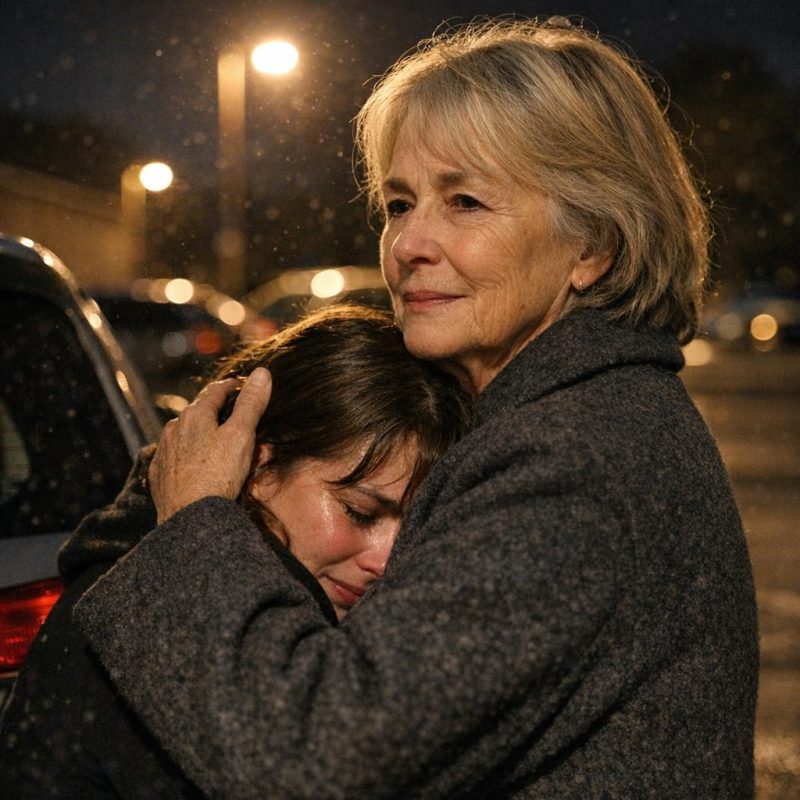 Image by RM AI
The Audit Announcement
The email came three days later. Subject line: 'Update on Community Operations.' I opened it at my kitchen table with my coffee going cold beside me. It was from the HOA board, signed by all five members. The message was short and formal. They were announcing that an independent audit would be conducted of all HOA enforcement actions over the past two years. During the review period, all pending fines and violations would be suspended. Homeowners with questions were invited to contact the management company. I read it once, then again. The words were right. They said what they were supposed to say. But something about the tone felt off—too polished, too careful. Like it had been written by a lawyer instead of Patricia. I clicked on the sender's email address and saw it came from the management company, not the board directly. That was new. I set my phone down and stared at it. This should have felt like a victory. It should have felt like progress. But all I could think about was Patricia's face in that meeting. The way she'd looked at me. I read it twice, looking for the catch—and wondered if they'd actually follow through.
 Image by RM AI
Leah's Investigation
Leah called me on a Thursday afternoon while I was finishing up work. I almost didn't answer because I was on a deadline, but something made me pick up. 'Claire,' she said, 'I've been digging into that shell company. Mountain Ridge Properties LLC.' My heart started beating faster. 'And?' I asked. 'I found the business registration,' she said. 'It's filed with the state. And there's a name listed as the registered agent.' I waited. 'I think it's someone on your HOA board,' Leah said. 'But I need to verify it before I say anything definitive. I'm waiting for a callback from the county clerk's office to confirm the filing details.' I felt my pulse in my throat. 'Who is it?' I asked. 'I can't say yet,' Leah said. 'Not until I'm sure. But Claire—if this is what I think it is, this is huge. This isn't just an HOA being petty. This is fraud.' I sat down on the edge of my couch. My hands were shaking. 'How long until you know for sure?' I asked. 'Maybe a day,' she said. 'Two at most.' She said she needed to verify one more thing before she could tell me—but my heart was already racing.
 Image by RM AI
The Business License
Leah sent the email at 11:47 p.m. I was already in bed, scrolling through my phone, unable to sleep. The subject line was just: 'Found it.' I opened the attachment. It was a scanned document—a business license from the state registry. Mountain Ridge Properties LLC, formed eighteen months ago. And right there, listed as the registered agent, was a name I recognized immediately. Patricia Hendricks. I sat up in bed, staring at the screen. My hands were shaking. I zoomed in on the name, like maybe I'd misread it. But no. It was right there. Patricia's name. Her address—the one two streets over from mine. Her signature at the bottom of the form. I read Leah's message below the attachment. 'This is the smoking gun. Patricia is directly tied to the company that's been buying up properties in your neighborhood. I'm drafting the article now, but I wanted you to see this first. Call me tomorrow.' I set my phone down on the nightstand and just sat there in the dark, my mind racing. Patricia wasn't just enforcing the rules. She was profiting from them. I stared at her name on the screen—and everything clicked into place.
 Image by RM AI
Connecting the Sales
I couldn't sleep after that. I got up, made coffee, and opened my laptop at the kitchen table. I pulled up the list of properties that Mountain Ridge had purchased—the ones Leah had found in the county records. Seven houses, all in my neighborhood, all sold in the last eighteen months. Then I opened the spreadsheet I'd made weeks ago, the one tracking HOA violations and fines. I started cross-referencing. The first property on Mountain Ridge's list: 428 Parkview Lane. I searched my spreadsheet. There it was—fined twice for landscaping violations, then cited for an unapproved fence. Sold four months later. The second property: 332 Oakmont Circle. Three violations in six months. Mailbox. Paint color. Driveway stain. Sold two months after the last fine. I kept going. Every single property that Mountain Ridge had purchased had a history of HOA violations. Every single one had been fined, pressured, cited for things that seemed minor or arbitrary. And every single one had sold below market value. I sat back in my chair and stared at the screen. This wasn't random. This wasn't coincidence. Every single property had been fined, pressured, and pushed—and I started to understand what I was really up against.
 Image by RM AI
Jordan Confirms It
I called Jordan the next morning. He answered on the second ring, and I didn't bother with small talk. 'I need to run something by you,' I said. 'I think my HOA board has been forcing people to sell their homes so they can buy them cheap and resell them.' I walked him through everything—the shell company, Patricia's name on the registration, the pattern of violations and sales. He was quiet for a long moment. 'Claire,' he said finally, 'what you're describing is a real estate scam. It's not common with HOAs, but it happens. You target homeowners with violations and fines until they're either financially drained or just fed up. They sell under duress, usually below market value. You buy the property through a shell company, flip it or rent it out, and pocket the difference.' My stomach dropped. 'That's illegal, right?' I asked. 'Extremely,' Jordan said. 'If you can prove it, this is fraud. Maybe racketeering, depending on how organized it is. You need to take everything you have to the authorities. The state attorney general's office, maybe the FBI if it crosses certain thresholds.' He told me to take everything I had to the authorities—and I realized this was bigger than the HOA now.
 Image by RM AI
The Full Picture
I sat at my kitchen table that night with everything spread out in front of me. The business license with Patricia's name. The list of properties. The violation records. The county sales data. The emails. The meeting minutes. I'd been looking at pieces of this puzzle for weeks, but now I could finally see the whole picture. Patricia and the board had been systematically targeting homeowners—people like me, people who didn't have the time or money to fight back. They'd manufactured violations, piled on fines, made life miserable until people gave up and sold. Then they'd swooped in through Mountain Ridge Properties, bought the homes at a discount, and resold them at market value. It was elegant, in a horrifying way. The HOA gave them cover. They controlled the rules, the enforcement, the records. They could decide who got targeted and when. And because most people didn't attend meetings or ask questions, nobody noticed the pattern. My mailbox wasn't about aesthetics or property values. It was about pressure. It was about pushing me to the edge, hoping I'd crack and sell like the others had. I sat at my kitchen table with all the evidence spread out in front of me—and I knew exactly what they'd been doing, and why they'd come after me.
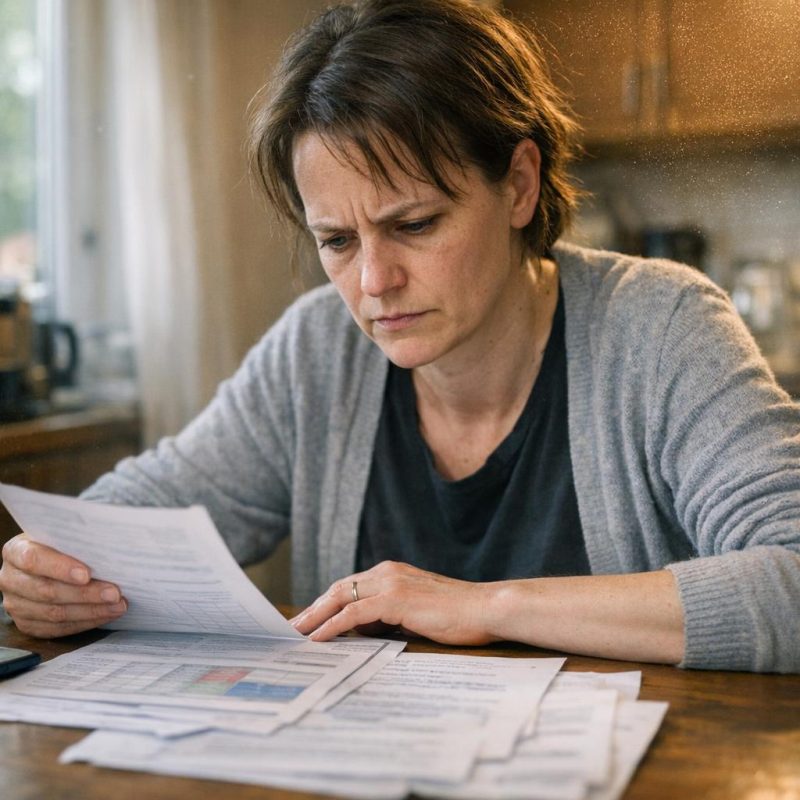 Image by RM AI
Preparing the Report
I spent the next two days building the report. Not just compiling everything—actually organizing it in a way that someone else could understand. I created sections: one for the violation records showing the targeting pattern, one for the property sales with dates and purchase prices, one for Mountain Ridge Properties and Patricia's business license, one for the board meeting minutes where they'd approved their own violations. I cross-referenced everything. I added timestamps. I highlighted the connections that had taken me weeks to piece together. My dining room table became a war room, covered in sticky notes and printouts arranged in chronological order. Derek called twice to check on me, but I barely registered the conversations. I was in the zone, methodical and focused in a way I hadn't been since my old consulting days. When I finally finished, the report was forty-three pages long. Clear. Damning. Irrefutable. I read through it one last time, checking for anything I'd missed, any gap they could exploit. There wasn't one. I printed three copies—one for the HOA, one for Leah, and one for the police.
 Image by RM AI
Leah's Article
Leah worked fast. I met her at a coffee shop two blocks from the neighborhood and handed over her copy of the report. She flipped through it right there, her eyes getting wider with each page. 'This is incredible,' she said. 'This is actual fraud. Like, prosecutable fraud.' She told me she'd have the article ready within forty-eight hours. She was true to her word. I didn't sleep much the night before it published—I kept refreshing my email, waiting for her message. It came at 5:47 a.m.: 'It's live. Buckle up.' The headline read: 'HOA Board Orchestrated Real Estate Scheme to Profit from Homeowner Violations, Investigation Reveals.' Leah had named names. Patricia. Karen. Mountain Ridge Properties. She'd quoted the business license, the property records, excerpts from the violation notices. She'd interviewed two other homeowners who'd sold under pressure. It was thorough, professional, and absolutely devastating. The article went live at 6 a.m.—and by noon, my phone was flooded with messages.
 Image by RM AI
The Emergency Meeting
The HOA called an emergency meeting for that evening. I wasn't sure what to expect—anger, denial, maybe Patricia trying to spin the story. But when I walked into the community center at seven o'clock, the room was packed. Every chair was filled. People were standing along the walls. I saw faces I'd never seen at a meeting before—homeowners who'd ignored the HOA for years, suddenly awake and furious. Tom was at the front table, looking pale and exhausted. Anita sat beside him, her expression grim. Derek caught my eye from across the room and gave me a small nod. The energy in the room was electric, chaotic. People were talking over each other, demanding answers. Someone had printed copies of Leah's article and was passing them around. I sat down in the back, my heart pounding, waiting for the storm to break. Tom called the meeting to order three times before people quieted down. Then he cleared his throat and looked at the empty chairs beside him. Patricia didn't show up—and neither did Karen or the other board members.
 Image by RM AI
The Resignation Letters
Tom pulled out a single sheet of paper and held it up so everyone could see. 'I received this an hour ago,' he said. His voice was steady, but I could hear the strain underneath. 'It's a resignation letter from Patricia Hennessy, effective immediately.' The room went dead silent. He continued. 'I also received resignations from Karen Stowe, Brian Cho, and Lisa Mendez. All four board members have stepped down.' For a moment, nobody moved. Then someone in the front row started clapping, and it spread like wildfire. People were on their feet, applauding, shouting. Anita reached over and squeezed Tom's hand. Derek was clapping too, looking at me with something like pride. But I just sat there, frozen in my chair, staring at the empty seats at the front of the room. I'd wanted this. I'd fought for this. But now that it was happening, it felt surreal—like I was watching it happen to someone else. The room erupted in applause—but I felt numb, like I couldn't believe it was really over.
 Image by RM AI
The Police Investigation
The detective called me three days later. Her name was Linda Vargas, and she introduced herself as part of the county's financial crimes unit. She'd read Leah's article. She'd also received a copy of my report—I'd dropped it off at the police station the same day I gave one to Leah. 'We'd like to open a formal investigation,' she said. 'We'll need your full cooperation, and we'll need access to all your documentation.' I told her I'd give her whatever she needed. We met at the station that afternoon. Detective Vargas was in her fifties, sharp-eyed and no-nonsense. She went through my report page by page, asking clarifying questions, taking notes. She didn't make any promises. She didn't tell me what would happen next. But she treated it seriously. She treated me seriously. That was enough. When I left, she shook my hand and said, 'This is good work. We'll be in touch.' They told me it could take months—but they were treating it seriously, and that was enough for now.
 Image by RM AI
The Audit Results
The independent audit came back six weeks later. The HOA had hired a forensic accountant after the resignations—someone with no ties to the neighborhood, no history with the board. I wasn't involved in the process, but Tom kept me updated. He called me the day the report was finalized. 'You need to see this,' he said. We met at his house, and he handed me a bound document, seventy-eight pages long. I skimmed the executive summary first. Conflict of interest violations. Unapproved financial transactions. Selective enforcement of rules. Failure to disclose board members' business interests. It was all there, documented in clinical, legal language. The auditor had traced the property sales, confirmed the connection to Mountain Ridge Properties, and identified at least nine homeowners who'd been disproportionately targeted. They'd found email records the board hadn't deleted. They'd found payment transfers that didn't match the HOA's official ledgers. The report was damning—and it validated everything I'd suspected.
 Image by RM AI
The New Board
The HOA held elections for a new board two months after the resignations. The turnout was unprecedented—almost every homeowner in the neighborhood showed up to vote. People were paying attention now. They weren't going to let this happen again. Tom and Anita both agreed to run. So did Derek, and a couple of other neighbors I'd gotten to know during the fight. The night before the election, Anita called me. 'You should run too,' she said. 'People trust you. They'd vote for you in a heartbeat.' I thought about it. I really did. But I was exhausted. Bone-deep, soul-tired exhausted. I'd spent months fighting just to stay in my home, just to prove I wasn't crazy. I didn't want to spend the next year rebuilding the HOA from the ground up. 'I'll help however I can,' I told her. 'But I need to step back.' She understood. The next day, I cast my ballot. I voted for Tom and Anita—and felt relieved to hand the responsibility to someone else.
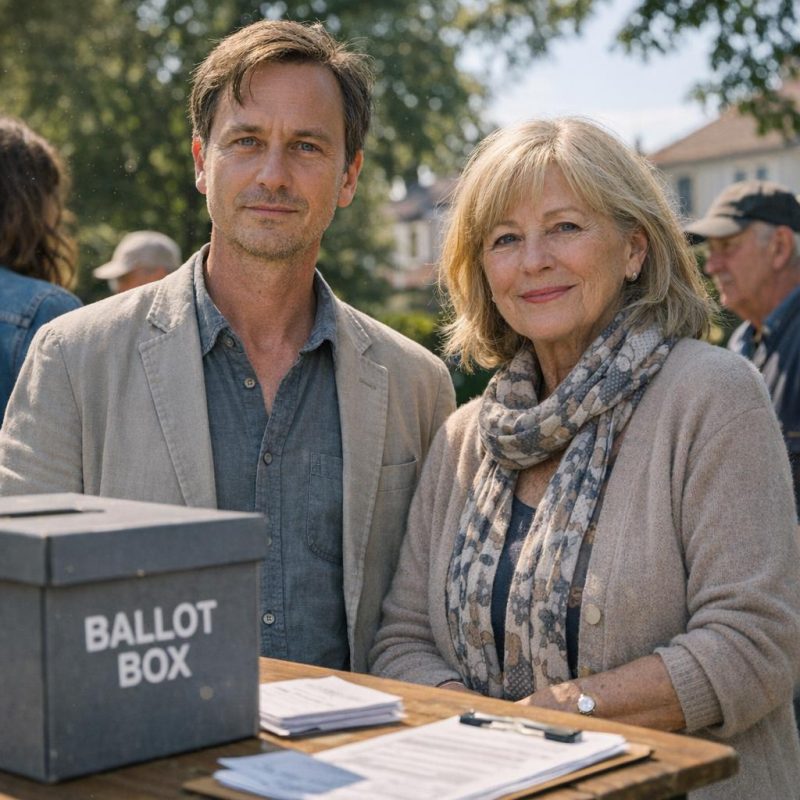 Image by RM AI
The Dropped Fine
The letter arrived on a Tuesday, two weeks after the new board was sworn in. It was on official HOA letterhead, but the tone was completely different from anything Patricia had ever sent. 'Dear Ms. Whitman,' it began. 'The board has reviewed your case and determined that the violation notice and associated fine issued on July 14th were not consistent with HOA bylaws and were improperly enforced. Effective immediately, the $750 fine is rescinded, and your account has been credited accordingly. We sincerely apologize for the distress this matter has caused.' It was signed by Tom, Anita, and the other new board members. I read it once. Then again. Then a third time, just to make sure it was real. Seven hundred and fifty dollars. A mailbox. That's how this whole thing started. I thought about everything that had happened since—Patricia's smirk, the endless violations, the late nights digging through records, Leah's article, the resignations, the investigation. I read the apology three times—and then I laughed, because it all started with a mailbox.
 Image by RM AI
Patricia's Arrest
The news alert popped up on my phone three weeks after Tom's apology letter. I was making breakfast when I saw the headline: 'Former HOA Board Members Arrested on Fraud and Racketeering Charges.' I nearly dropped my phone. The article named Patricia, Rick, and one other board member I'd barely interacted with—all charged with multiple counts of fraud, racketeering, and theft. The county prosecutor had evidence of the kickback scheme, the inflated contracts, the falsified records. Everything Leah and I had uncovered, plus more that the investigators had found. There were photos: Patricia in handcuffs, her face blank and pale, being led into a courthouse. Rick looking furious beside his lawyer. The article mentioned potential prison time—years of it. I sat down at my kitchen table and read the whole thing twice. Then I turned on the local news and watched the coverage, the reporters standing outside the courthouse, the neighbors being interviewed about their shock. I made a cup of coffee and just sat there on my couch, watching it all unfold. And for the first time in months, I finally felt like I could breathe.
 Image by RM AI
The Neighborhood Changes
The neighborhood changed after that. Not overnight—nothing that dramatic—but gradually, like ice melting in spring. People started coming to HOA meetings again, actually engaging instead of just nodding along. Tom and Anita published monthly budgets online, transparent and detailed. The lawn maintenance crew switched to a local company that charged half what Rick's 'friend' had. I started seeing neighbors outside more, talking to each other, waving. Mrs. Chen brought me homemade dumplings one afternoon and thanked me for 'shaking things up.' Greg from three houses down stopped me on my walk and said he'd always thought something was off but didn't know what to do about it. Even the common areas looked better—the playground got new equipment, the walking path got repaired, the flower beds were actually maintained. It wasn't perfect. Some people still kept their distance, uncomfortable with what had happened or maybe embarrassed they hadn't noticed sooner. But the feeling was different. Lighter. The HOA felt like what it was supposed to be—neighbors taking care of the community together. It felt like the place I'd moved to years ago—before everything went wrong.
 Image by RM AI
Reflecting on the Fight
I thought about it all sometimes, usually late at night when I couldn't sleep. The timeline of it: that first letter about the mailbox, the confusion, the mounting violations, the suspicion that something wasn't right. Finding those records. Meeting Leah. The lawsuit that never happened. The public records requests, the spreadsheets, the evidence slowly piling up. Patricia's face when the article went live. The resignations, the investigation, the arrests. All because they wanted my property and thought a $750 fine would be the start of breaking me down. I'd learned things I never expected to learn—how to file FOIA requests, how to read municipal budgets, how to stand in front of a room full of angry people and not back down. How to trust my instincts when something felt wrong. How to ask for help. How to fight back, not with anger, but with facts and persistence and the belief that the truth mattered. I wasn't the same person who'd opened that first violation notice. That version of me would've just paid the fine and repainted the mailbox and hoped it would all go away. I thought about who I was before that letter arrived—and I knew I'd never be that person again.
 Image by RM AI
The Mailbox Stays
I walked down to the end of my driveway on a Saturday morning, coffee in hand, and just stood there looking at my mailbox. Same slightly faded red paint. Same tiny rust spot near the hinge. Same crooked number sticker I'd stuck on years ago and never bothered to fix. It was just a mailbox. Nothing special, nothing fancy, nothing worth fighting over. But it had been the beginning of everything—the excuse they used, the violation they manufactured, the thread I pulled that unraveled their whole scheme. I thought about all the hours I'd spent worrying about it, researching paint colors, wondering if I should just give in and replace it. All the anger and frustration and fear that had started with this ordinary metal box at the end of my driveway. It seemed absurd now. Ridiculous. But also somehow perfect, because sometimes that's how these things happen—not with dramatic confrontations or obvious villains, but with small, petty cruelties that reveal something much bigger underneath. I ran my hand along the top of it and thought: sometimes the smallest things lead to the biggest changes.
 Image by RM AI
KEEP ON READING
Was Caligula The Most Ruthless Roman Emperor?
Artur Matosyan on UnsplashRoman Emperor Caligula is one of ancient…
By Rob Shapiro Dec 18, 2025
1 Weird Fact About Every President
Washington, Lincoln, FDR. Most people know something about the lives…
By Robbie Woods Dec 3, 2024
10 Actors Who Perfectly Played a Historical Figure & 10…
Which Performance is Your Favorite?. Playing the role of a…
By Rob Shapiro Sep 15, 2025
10 Actors Who Perfectly Played a Historical Figure & 10…
Portraying a real person from history is one of the…
By Noone Dec 17, 2025
10 Actors Who Weren't Up To Playing A U.S. President…
Who Wouldn't Vote Woody Harrelson for President?. Actors who sign…
By Rob Shapiro Oct 22, 2025
10 Amazing Facts About Claude Monet & 10 Of His…
The Man Behind The Masterpieces. Claude Monet's name sits comfortably…
By David Davidovic Jan 30, 2026