

I Organized Our Neighborhood Cleanup — Then I Checked the Receipts and My Blood Ran Cold
I Organized Our Neighborhood Cleanup — Then I Checked the Receipts and My Blood Ran Cold
The Morning Everything Changed
I was carrying a box of donated work gloves toward the folding tables when Tyler appeared at my elbow. He's sixteen, lives three doors down with his mom Marissa, and he usually avoids neighborhood events like they're contagious. But there he was, hands shoved in his hoodie pocket, looking like he'd rather be anywhere else. 'Hey, um, can I ask you something?' he said, his voice low enough that I had to lean in. 'About the receipts Denise posted?' I set the box down, wiping dust off my hands. 'What about them?' He glanced over his shoulder toward where Denise was arranging pastries on a table, her smile bright and confident. 'My mom noticed something weird. She thinks you should, like, actually look at them.' My stomach did this uncomfortable flip. 'Weird how?' But he was already backing away, mumbling something about helping his mom unload trash bags. I stood there for a second, confused and suddenly uneasy, before pulling out my phone. I opened the group chat and scrolled to the receipts Denise had posted two days earlier with a cheerful 'Full transparency! 💚' caption — and something about the line items didn't look right.
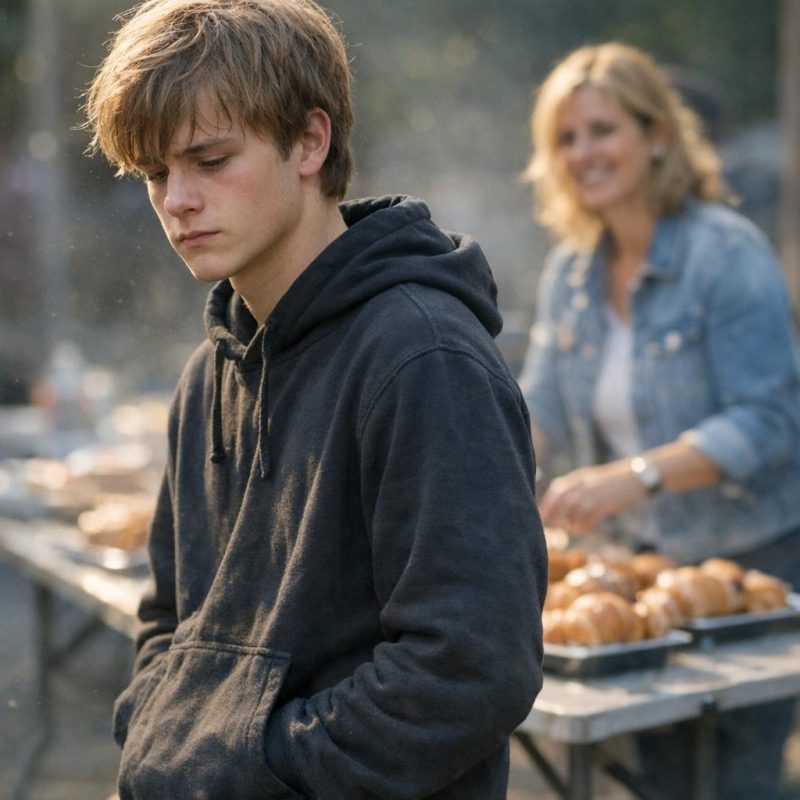 Image by RM AI
Nine Years of Knowing Everyone's Business
I'd lived on Maple Ridge Drive for nine years. Long enough to know that Greg at the corner house mowed his lawn every Saturday at eight a.m., that Mrs. Alvarez still hand-watered her roses at sunset, and that the Johnsons' golden retriever had a talent for escaping their yard exactly when you were running late. You learn people's rhythms when you're trapped together on a suburban cul-de-sac. You learn who actually picks up after their dog and who just pretends they didn't see it happen. You learn the unspoken hierarchies, too. Who gets invited to the summer barbecues and who doesn't. Whose opinions matter at the annual block party planning meetings. Whose kids get playdates and whose get politely overlooked. It sounds petty when I say it out loud, but that's how neighborhoods work, isn't it? Someone's always organizing, always at the center of things, always making sure everyone knows they're indispensable. For the past few years on our block, that person had been Denise. And honestly, I'd never questioned why she worked so hard to stay there.
 Image by RM AI
The Woman Who Always Volunteered First
Denise had moved in about four years ago, one of those whirlwind arrivals where suddenly there's a moving truck and then three days later she's at your door with homemade cookies. She was friendly, energetic, the kind of person who remembers your kids' names after meeting them once. Within a month, she'd volunteered to coordinate the annual block party. Then the holiday decorating committee. Then the neighborhood watch email list. She always said the same thing: 'I'm happy to handle the details. I know everyone's so busy.' And we were. So we let her. Rob, who lives across from her, joked once that Denise could probably run a small country if she put her mind to it. She'd laughed, waving him off, but I remember thinking she looked pleased. She liked being needed, I figured. Lots of people do. Some folks thrive on that kind of thing, on being the person everyone depends on. Looking back, though, I wondered why someone would work that hard to control things no one else even cared about.
 Image by RM AI
The City Grant That Started It All
The whole thing started when the city announced a neighborhood beautification grant program last fall. Five thousand dollars available to communities that wanted to fund cleanup projects, plant trees, install benches, that kind of thing. Denise practically lit up when Mrs. Alvarez mentioned it at a weekend coffee gathering. 'We should absolutely apply for that,' she said, already pulling out her phone to take notes. 'I can handle the application. I used to do grant writing in my old job.' No one questioned it. Why would we? She seemed genuinely excited, and the rest of us had barely enough time to keep our own lives running. Within a week, she'd submitted the application with all our signatures. Within a month, we'd been approved. 'We got it!' she announced in the group chat, followed by a string of celebration emojis. The plan was simple: a spring cleanup day, new plantings along the main street entrance, and a bench near the playground. She told everyone not to worry about a thing — she had it 'completely handled.'
 Image by RM AI
The Donation Drive
Two weeks before the cleanup, Denise started going door to door collecting donations. She said the city grant was generous but wouldn't quite cover everything she'd envisioned — upgraded mulch, better plants, a nicer bench than the basic model. 'If everyone could chip in just twenty or thirty dollars,' she said, standing on my doorstep with her clipboard and that warm, trustworthy smile, 'we could really make this special.' I handed over forty without hesitation. So did Marissa. So did practically everyone on the block. Mrs. Alvarez, who's on a fixed income, gave cash and told Denise she knew it would be put exactly where it was needed. People trusted her. That's the thing I keep coming back to. We trusted her completely, and she knew it. She collected it all in a yellow envelope that she kept tucked under her arm, making notes on her clipboard about who'd contributed what. 'You're all amazing,' she kept saying. 'This neighborhood is so lucky to have people who care.' Mrs. Alvarez handed over cash and said she knew Denise would put it where it was needed.
 Image by RM AI
The Group Chat Flood
In the week leading up to the cleanup, the neighborhood group chat became basically the Denise Show. She posted constant updates. Photos of supplies she'd purchased. Screenshots of her planning spreadsheets. Cheerful messages about how organized everything was, complete with checkmark emojis and exclamation points. 'Gloves ordered! ✓' 'Mulch delivery confirmed! ✓' 'Pastries arranged for volunteers! ✓' It was actually kind of impressive, if overwhelming. A few people offered to help with coordination — Greg volunteered to pick up supplies, Marissa offered to split the shopping — but Denise politely deflected every offer. 'I've got it under control! You all just show up ready to work. 😊' Her confidence was so complete that people stopped asking. I remember thinking it was nice to have someone so capable in charge, someone who genuinely seemed to enjoy this kind of thing. The messages kept coming, one after another, until I started just scrolling past them. Her confidence was so complete that people stopped offering to help — and that should have been my first warning.
 Image by RM AI
The Morning Setup
The morning of the cleanup arrived with perfect spring weather, one of those ridiculously beautiful days that feels designed for community gatherings. I stepped outside at eight-thirty to find Denise had already set up two folding tables near the corner, complete with name tags, sign-in sheets, and boxes of pastries arranged on cheerful paper plates. She was wearing a volunteer coordinator t-shirt she'd apparently had printed, moving from person to person with a clipboard and an enormous smile. Greg was unloading rakes from his truck. Mrs. Alvarez was chatting with neighbors I rarely saw outside their houses. Tyler stood near his mom's car looking characteristically teenage and reluctant. It felt good, honestly. Like we were actually doing something together, being the kind of neighborhood people always talk about wanting. Denise looked thrilled, practically vibrating with energy as she directed people to task stations and checked items off her list. She looked thrilled, moving from person to person like she was running a campaign — and maybe, in a way, she was.
 Image by RM AI
Tyler's Warning
I was halfway through unloading a box of work gloves when Tyler appeared beside me again, looking even more uncomfortable than earlier. 'Hey,' he said quietly. 'Did you check those receipts yet?' I paused, a pair of gloves in each hand. 'Not yet. Why? What did your mom notice?' He shifted his weight, glancing toward where Marissa was talking with Denise near the pastry table. 'She said the math looked off. Like, some of the totals don't match what she'd expect for that stuff.' My stomach tightened. 'Off how?' 'I don't know exactly. She just told me to mention it to you because you're, like, the one who actually organized this with Denise.' He looked miserable, like he regretted saying anything. 'Maybe it's nothing. But she thought someone should double-check before...' He trailed off, shrugging. I set the gloves down. My hands felt cold despite the warm morning. He said his mom had noticed something weird — and that was enough to make me stop what I was doing.
 Image by RM AI
The First Receipt
I stepped away from the supply table and pulled out my phone, opening the neighborhood group chat where Denise had posted all the 'transparency' receipts. At first, everything looked normal — Home Depot, Target, the local hardware store. I squinted at the screen in the bright sunlight, scrolling through line items for work gloves, garbage bags, rakes. Standard stuff. Then I slowed down on a receipt from Target dated three days before the event. Most of it was cleanup supplies, sure. But halfway down the list, there were these random items: decorative solar lanterns, two outdoor throw pillows in 'sage green,' and something called a 'patio accent rug.' I read the line items twice, trying to make sense of it. Maybe she'd bought them for the community space? Except we didn't have a community space. Maybe they were for the park pavilion? But nobody had mentioned decorating anything. My throat felt tight. I told myself there had to be an explanation, that I was reading too much into it. But those throw pillows had never been on any list we'd discussed.
 Image by RM AI
The Second, Third, Fourth Receipts
I kept scrolling, and that queasy feeling in my stomach got worse with every screenshot. There was a receipt from Lowe's with three bags of premium potting soil, a decorative planter, and two hanging flower baskets. Another one from Bed Bath & Beyond — why were we even shopping there? — showed hand towels, a bathroom organizer, and a scented candle set. Hand towels. For a neighborhood cleanup. I felt like I was losing my mind. Each receipt had some legitimate items mixed in, which made it harder to process. Trash bags, yes. Mulch, okay. But then: outdoor string lights. A welcome mat. A set of stemless wine glasses. I kept thinking maybe she'd just grabbed stuff for herself in the same transaction and planned to reimburse us later, but nothing in the chat mentioned reimbursement. And here's the thing that made my hands start shaking: the payment methods were all over the place. Some showed 'cash,' others showed a card ending in numbers I didn't recognize. I couldn't tell where the neighborhood donations ended and her personal purchases began.
 Image by RM AI
The Garden Center Receipt
Then I got to the garden center receipt, and everything inside me went cold. It was from Miller's Nursery, dated just two days ago, and the list was long. Really long. Six flats of perennials — petunias, begonias, salvia — all in purple and white. The exact color scheme Denise had mentioned wanting for her backyard at the last book club meeting. I remembered because she'd gone on about it for fifteen minutes while the rest of us pretended to care. There were also landscape edging stones, three bags of decorative river rock, and a dwarf Japanese maple tree. A tree. The total was over three hundred dollars. My vision actually blurred for a second. This wasn't a mistake. This wasn't her accidentally grabbing the wrong cart at checkout. This was her using our money — money Mrs. Alvarez had scraped together, money Tyler's mom had contributed, money from every household on our street — to landscape her own damn yard. That was when I knew this wasn't just a mistake.
 Image by RM AI
The Confrontation at the Folding Table
I didn't even think about it. I just started walking toward Denise's folding table, my phone hot in my hand, my heart pounding so hard I could feel it in my ears. She was arranging pastries on a platter, smiling at something Karen was saying. I stopped right in front of her table and said, 'Denise, can you explain why community donations paid for patio décor and landscaping for your house?' My voice came out louder than I'd intended. Karen's smile vanished. Denise looked up at me, and for just a split second, I saw something flicker across her face — surprise, maybe, or calculation — before her expression smoothed into confusion. 'What are you talking about?' she asked, but her voice had this strange flatness to it. I held up my phone, showing her the garden center receipt. 'Purple and white perennials. Landscape edging. A Japanese maple. None of this was for the cleanup.' People were starting to turn toward us now. I could feel them gathering, a tightening circle of attention. Tyler appeared at the edge of my vision, and behind him, Paul, his face suddenly alert. Her smile froze, and within seconds a crowd had gathered around us.
 Image by RM AI
The Frozen Smile
Denise let out this weird little laugh, the kind that doesn't reach your eyes. 'Oh, those,' she said, waving her hand vaguely. 'Some of those items were multi-use. We might need them for future events.' Future events? I just stared at her. 'The throw pillows?' I asked. She blinked. 'Well, those were... I thought we could use them at the pavilion if we ever—' 'We don't have a pavilion,' Karen interrupted sharply. Denise's jaw tightened. 'Okay, fine, maybe I accidentally grabbed a few personal items in the same transaction. I was going to reimburse the fund.' But she didn't sound convincing, even to herself. Greg had pulled out his phone now, scrolling through the receipts in the chat. 'What about the bathroom organizer?' he called out. 'Was that multi-use too?' Denise opened her mouth, closed it. Her face was starting to flush. Marissa stepped closer, her expression cold. 'And the wine glasses?' Every explanation was making it worse. Then Mrs. Alvarez pushed through the crowd, her voice cutting through the tension like a knife: 'How much of our money went to your house?'
 Image by RM AI
The Silence That Answered Everything
Denise didn't answer. She just stood there, her mouth slightly open, staring at Mrs. Alvarez like she'd been slapped. The silence stretched out, thick and horrible, and in that silence, everyone understood. You know that feeling when you realize you've been played? That sickening drop in your stomach? It was spreading through the crowd like a wave. I saw it on Karen's face, on Greg's, on Marissa's. People were pulling out their phones now, opening the group chat, scrolling through the receipts they'd barely glanced at before. 'Oh my God,' someone muttered behind me. 'Look at this Target receipt.' 'She bought a rug,' another voice said, disbelieving. Greg was reading items aloud now, his voice getting harder with each one: 'Scented candles. Decorative storage bins. A set of outdoor string lights.' Mrs. Alvarez stood perfectly still, her arms crossed, her eyes never leaving Denise's face. The anger in the air was almost physical. I felt it in my chest, in my clenched hands. More people pulled up the receipts on their phones, and item by item, the truth spread through the crowd.
 Image by RM AI
The Cleanup That Wasn't
The cleanup died right there. People just stopped. Someone dropped their trash bag, and it rolled into the gutter, forgotten. The whole street went quiet except for the sound of people tapping on their phones, whispering to each other, their voices getting angrier. Tyler stood frozen near the supply table, looking absolutely miserable. His mom, Marissa, walked up beside me, her face tight with fury. 'I knew something was off,' she said quietly. Paul was staring at Denise like he'd never seen her before. 'We trusted you,' he said, and his voice was so disappointed it was almost worse than anger. Denise finally seemed to realize how badly this was going. She grabbed her purse from under the table, her movements jerky and panicked. 'I think there's been a misunderstanding,' she said, backing away. 'I should go home and get my records—' But Greg stepped directly into her path, his arms crossed. He's a big guy, and right then he looked immovable. 'No,' he said flatly. 'We need to see a full accounting before anyone goes anywhere.'
 Image by RM AI
The Demand for Receipts
Greg already had his phone out, and he started reading through the receipts methodically, his voice calm but absolutely relentless. 'June fifteenth, Target. Eighty-seven dollars. Includes trash bags, gloves, and two decorative throw pillows.' He looked up at Denise. 'Explain the pillows.' She said nothing. 'June sixteenth, Lowe's. Hundred and forty-three dollars. Mulch, yes, but also premium potting soil and hanging flower baskets.' Still nothing. Her clipboard hung at her side like a prop she'd forgotten she was holding. Marissa pulled up a screenshot on her phone and held it out. 'This one's my favorite. Bed Bath and Beyond. Hand towels and a candle set. For a cleanup.' People were nodding now, their anger hardening into something focused and determined. I felt weirdly calm, like the shock had burned through and left only this cold clarity. Mrs. Alvarez stepped forward again, and this time her voice was steady but ice-cold. 'I gave you two hundred dollars in cash. Karen gave a hundred and fifty. The Hendersons gave two hundred.' She paused, letting that sink in. Then Paul asked the question that made my stomach drop all over again: 'Does anyone have a record of how much cash Mrs. Alvarez and the others contributed?'
 Image by RM AI
The Cash That Disappeared
That's when Mrs. Alvarez dropped the real bomb. She said she'd given Denise two hundred dollars in cash back in June, before the cleanup even happened. Two other neighbors immediately spoke up — Linda, who lived three houses down, said she'd contributed a hundred and fifty, and the Hendersons had given two hundred. All cash. All handed directly to Denise. I felt my stomach twist because I'd been so focused on the receipts that I hadn't even thought about cash donations. Greg asked if anyone had gotten receipts for the cash, and of course no one had. We'd all just trusted her. Mrs. Alvarez looked pale, and I could see her hands shaking slightly as she clutched her purse. That was five hundred and fifty dollars that should have shown up somewhere, on some kind of record or bank statement or something. But none of us had seen a single mention of it. Denise's face had gone completely blank, like she was trying to calculate something in her head. Then she said, very quickly, that she'd deposited all the cash into a neighborhood fund account she'd set up specifically for the cleanup. When someone asked for the account number, she hesitated just long enough for everyone to notice.
 Image by RM AI
The Account That Didn't Exist
Paul stepped forward then, and I remembered he worked in banking. He offered to help verify the account right there on the spot, said he could look it up through the bank's system if Denise just gave him the account number and routing information. It was a reasonable offer, totally professional. But Denise's whole demeanor changed. She fumbled with her clipboard, looked down at it like the answer might be written there, and then said she'd left the account information at home. Paul asked which bank it was with, and she said she couldn't remember off the top of her head. Couldn't remember. The bank where she'd supposedly deposited over five hundred dollars in cash. Greg's expression went dark, and even Marissa, who'd been trying to stay neutral, shook her head slowly. I felt this sick, cold certainty settle over me — not panic anymore, just this awful clarity. The way Denise said it, the way she avoided looking at any of us, made it clear to everyone standing there. There was no account.
 Image by RM AI
The Neighbor Who'd Seen This Before
Linda, who'd been mostly quiet since mentioning her own cash donation, suddenly spoke up. She said something about this whole situation felt familiar, like she'd heard about it happening somewhere else. Not exactly the same, but close. The tone, the setup, the way Denise had organized everything. I turned to look at her, and she was frowning, staring off toward the street like she was trying to remember something specific. Greg asked what she meant, and Linda shook her head slowly, said she couldn't quite place it but that it was nagging at her. Maybe something she'd read online, or heard from a friend in another town. She promised she'd look into it when she got home. I felt this new wave of unease wash over me, different from the anger about the receipts. This was something deeper, something that suggested maybe we weren't the first people Denise had done this to. I glanced over at Denise, and for just a second, I saw something flash across her face. It looked a lot like alarm.
 Image by RM AI
The Afternoon Unraveling
Denise finally left after that, walking quickly toward her house without saying another word to any of us. She didn't even try to defend herself or promise to bring the account information later. She just left. The rest of us stayed there on the sidewalk, standing in this weird exhausted silence, trying to make sense of how much money was actually missing. Paul pulled out his phone and started making notes. Greg was pacing, his jaw clenched. Marissa looked like she might cry. I felt completely drained, like I'd been running on adrenaline for hours and it had all suddenly burned off. We spent maybe twenty minutes trying to piece together who'd paid what, how much had gone to actual cleanup supplies versus Denise's personal shopping spree, and whether we had enough documentation to prove any of it. The numbers kept getting worse. Finally, Greg stopped pacing and said we should file a police report. He said it calmly, matter-of-factly, like it was the only logical next step. And honestly? No one disagreed.
 Image by RM AI
The Math That Didn't Add Up
Paul and I spent the rest of the afternoon at my kitchen table, going through every receipt and donation record we could find. He'd brought his laptop, and I'd printed out all the spreadsheets and email chains I had saved. We made lists. We cross-referenced. We highlighted discrepancies in different colors until my printer cartridge started running low. The more we calculated, the worse it got. Every receipt had something wrong with it — items that made no sense, quantities that didn't match what we'd actually used, prices that seemed inflated. And then there was the cash, which had just vanished into thin air. Paul was methodical about it, treating it like a bank audit, but I could see his anger building with every new discovery. By the time we finished, we'd estimated that at least fifteen hundred dollars had gone to items that had absolutely nothing to do with the cleanup. Decorative pillows. Candles. Potting soil for her garden. Hand towels. The list was almost absurd. I sat back in my chair and just stared at the number we'd written at the bottom of the page, and I felt this wave of shock wash over me all over again.
 Image by RM AI
The Visit to Denise's House
That evening, Greg, Paul, and I decided we should try talking to Denise one more time before we went to the police. Maybe she'd return the money if we gave her the chance. Maybe she'd have some explanation that actually made sense, though I seriously doubted it. We walked to her house just as the sun was setting, the three of us silent and tense. Greg knocked on the front door. We waited. He knocked again, louder this time. Nothing. No sounds from inside, no lights turning on, no footsteps. Paul tried calling her phone, and we could actually hear it ringing faintly from somewhere inside the house, but she didn't pick up. I walked over to the front window and peered through the gap in the curtains, and that's when I saw them. The decorative lanterns we'd supposedly bought for the park entrance were sitting right there on her mantel, arranged in a neat little row like decor she'd always owned. I felt this bitter, vindicating rage rise up in my throat. Greg and Paul came over to look, and none of us said anything for a long moment. We didn't need to.
 Image by RM AI
The Group Chat Explosion
By nightfall, the neighborhood group chat had completely erupted. I'm talking hundreds of messages in the span of maybe two hours. People were furious. Some were in disbelief, asking if we were sure, if maybe there'd been a misunderstanding. Others were demanding accountability, asking what we were going to do next, whether anyone had contacted the HOA or the police. A few people admitted they'd also given Denise cash and had never thought to ask for receipts. The anger in those messages was palpable even through a screen. I sat on my couch scrolling through it all, my phone buzzing nonstop with notifications, and I felt this strange mix of validation and exhaustion. At least people believed us now. At least we weren't the only ones who saw what had happened. Then someone posted a screenshot of a public records search — the kind you can do online for like ten bucks. It showed Denise's previous addresses. She'd lived in two other neighborhoods before ours, one in a town about thirty miles north, and another one out in the suburbs on the other side of the county. I stared at that screenshot, and I felt my curiosity sharpen into something darker.
 Image by RM AI
The Question No One Wanted to Ask
I stared at that screenshot for a long time, wondering if Denise had done this before. It seemed almost too coincidental, you know? That she'd moved around that much, that she'd only been in our neighborhood for two years, that she'd inserted herself so quickly into a leadership role. But I told myself I was being paranoid. People move. People get involved in their communities. It didn't automatically mean she was running some kind of scam. Still, the thought wouldn't leave me alone. I kept thinking about what Linda had said earlier, about how this all felt familiar to her. I scrolled back through the group chat, reading the angry messages again, and then my phone buzzed with a private message. It was from Linda. The preview just said, 'I found something.' I opened it immediately, my heart picking up speed. She said she'd done some digging and found something I needed to see, but she didn't want to post it in the group chat yet. She asked if we could meet tomorrow morning. I typed back 'yes' so fast I almost hit send twice, and then I just sat there staring at my phone, feeling this cold dread settle over me like a weight.
 Image by RM AI
Linda's Discovery
I met Linda at the coffee shop down on Maple Street the next morning, and she already had her laptop open when I got there. She didn't even wait for me to order. She just turned the screen toward me and said, 'Look at this.' It was a neighborhood Facebook group from a town called Riverside, about two hours north of us. The post was dated from about three years ago, and someone had written a long, angry message about a community cleanup that had gone sideways. They'd raised money for supplies and equipment, and when people started asking questions about the budget, the woman who'd organized everything had gotten defensive and then just... stopped responding. A few weeks later, she'd moved away. I felt this cold prickle run down my spine as I read it. The details weren't identical to our situation, but they were close enough. Linda was watching my face. 'Keep reading,' she said quietly. I scrolled down, looking for more information, for something concrete that would tell me this was definitely connected to Denise. But the post didn't include a name — just a description of what had happened that sounded disturbingly familiar.
 Image by RM AI
The Missing Name
I read that post three times, scanning every sentence, looking for a name or some identifying detail that would confirm what I was thinking. But the author had been careful, or maybe just vague. They'd only referred to 'a neighbor who organized a community project' and complained about how she'd left town before anyone could get real answers. There were a few comments underneath from other people in that group, some supportive, some saying the poster was overreacting. One person mentioned that the organizer had seemed 'really enthusiastic at first' but then became 'hard to reach' when questions came up. It all felt so familiar it made my stomach hurt. I looked up at Linda, and she was still watching me with this grim expression. 'Do you think it's her?' I asked, even though I was pretty sure I already knew what she'd say. Linda closed her laptop slowly. 'I don't know,' she said. 'But I have a bad feeling about this.' We sat there for a minute, neither of us drinking our coffee, and I realized we'd crossed some kind of line — we weren't just angry neighbors anymore. We were people who suspected something much bigger and darker than we'd imagined.
 Image by RM AI
The Decision to Call the Police
The next morning, Greg, Paul, and I met at my house to figure out what to do next. I'd printed out Linda's Facebook post, and we spread everything out on my dining room table — the receipts, the donation records, the screenshots of Denise's previous addresses, all of it. Paul kept shaking his head as he looked through everything. 'This is enough,' he said. 'We need to file a police report.' Greg agreed. I felt this weird mix of relief and dread, you know? Like we were finally doing something concrete, but also stepping into territory I didn't really understand. We talked through what we'd tell them, made sure we had copies of everything. Greg pulled out his phone and said he'd make the call right now. He dialed the non-emergency line, put it on speaker, and explained the situation to whoever answered. The dispatcher listened, asked a few questions, and then said they'd send an officer over that afternoon. When Greg hung up, we all just sat there looking at the pile of evidence on my table. It felt real suddenly, official. We'd set something in motion that we couldn't take back.
 Image by RM AI
Detective Chen Arrives
Detective Chen showed up around three o'clock that afternoon. She was younger than I'd expected, maybe mid-forties, with this calm, professional demeanor that immediately made me feel like we'd done the right thing by calling. Greg, Paul, and I took turns walking her through everything — the cleanup day, the missing equipment, the receipts that didn't match, the donation money that had vanished. She took notes the whole time, nodding occasionally but not saying much. Then we showed her the financial records we'd compiled, and she spent a long time reviewing them, asking questions about dates and amounts. She looked at the Facebook post Linda had found, at the public records search showing Denise's previous addresses. I kept waiting for her to tell us we were overreacting, that this was all some misunderstanding, but she didn't. She just kept writing in her notebook, her expression neutral. Finally, she closed the notebook and looked up at us. 'Can I ask you something?' she said. 'Do you know if Denise had lived anywhere else before moving to your block?' The way she asked it made my chest tighten, like she already knew the answer but wanted to hear it from us.
 Image by RM AI
The Question That Changed Everything
I told Detective Chen about the public records search, how we'd found addresses in two other towns before Denise moved here. I mentioned the vague Facebook post Linda had discovered, how the details had matched up in this uncomfortable way even without a confirmed name. Detective Chen wrote something down in her notebook, but she didn't comment, didn't react at all. She just kept that same neutral expression. I felt like I was giving a presentation and couldn't tell if the audience was impressed or bored. Paul mentioned that Denise had only been in our neighborhood for two years, that she'd gotten involved really quickly. Greg added that she'd seemed almost too eager to take charge of the cleanup. Detective Chen nodded, still writing. Then she closed her notebook again and stood up. 'I'm going to look into Denise's background,' she said. 'I'll get back to you once I have more information.' She said it casually, like she was just doing routine follow-up, but something in her tone made me think otherwise. The way she emphasized 'background,' the slight pause before she said it — it made me think she already suspected something bigger than what we'd told her.
 Image by RM AI
The Waiting Game
For three days after that meeting, we heard nothing from Detective Chen. It was torture, honestly. The neighborhood group chat had devolved into this toxic mix of anger and speculation, with people demanding updates and accusing each other of overreacting or not doing enough. Denise's house stayed dark most of the time. I'd see her car in the driveway, so I knew she was home, but she never came outside. A few people had tried knocking on her door, but she wouldn't answer. Linda posted updates saying we'd filed a police report and were waiting to hear back, but that just made people angrier because nobody likes waiting. I kept checking my phone obsessively, hoping Detective Chen would call or email with news. Greg texted me twice asking if I'd heard anything. Paul sent a message saying he drove past Denise's house and saw her peeking through the curtains. The whole block felt like it was holding its breath. Then, on the fourth day, my phone rang. It was Detective Chen. She asked if I could come down to the station — she'd found something she wanted to show me.
 Image by RM AI
The Meeting at the Station
I sat across from Detective Chen in this small, windowless interview room that smelled like stale coffee and made me feel guilty even though I hadn't done anything wrong. She had a manila folder in front of her, the kind that looks thin but somehow holds a lot of weight. She opened it carefully and looked at me. 'I contacted police departments in the towns where Denise previously lived,' she said. My heart started hammering. 'And?' I asked. Detective Chen pulled out a few pages from the folder. 'There were complaints in both places,' she said. She said it so calmly, like she was telling me about the weather. 'What kind of complaints?' I asked, even though part of me already knew. 'Community fundraising projects,' she said. She let that sit there for a second, watching my reaction. I felt sick, this heavy, nauseating feeling settling in my stomach. It wasn't just us. It wasn't just a mistake or a misunderstanding. She'd done this before. The pattern I'd been afraid to see was suddenly right there in front of me, undeniable and horrifying.
 Image by RM AI
The Complaints That Went Nowhere
Detective Chen explained that in both previous towns, neighbors had filed complaints about missing money from community projects Denise had organized. In the first town, it was a playground renovation fund. In the second, it was a neighborhood garden initiative. Both times, people had noticed discrepancies in the budgets, confronted her, and then she'd moved away within weeks. 'Did they press charges?' I asked. Detective Chen shook her head. 'In both cases, Denise left before the investigations could be completed. The amounts involved were relatively small — a few thousand dollars each time — and apparently, no one wanted to pursue it across jurisdictions. It's expensive, time-consuming, and for what they considered minor theft, it just... fell through the cracks.' She looked at me directly. 'But now we have three incidents in three different locations. That changes things.' I felt this wave of anger crash over me, hot and sharp. She'd been doing this for years, moving from place to place, taking people's money and trust, and just disappearing before anyone could hold her accountable. And she would have gotten away with it again if we hadn't decided to dig deeper.
 Image by RM AI
Amanda's Email
Detective Chen reached into a folder and slid a printed email across the table to me. 'This is from Amanda Morrison,' she said. 'She organized a playground fundraiser in the town where Denise lived before this one.' I picked up the pages, my hands shaking slightly. The email was dated three weeks ago, responding to Detective Chen's inquiry. Amanda described how she'd been so excited when Denise volunteered to help manage the fundraising budget for new playground equipment. 'She seemed so organized and trustworthy,' Amanda had written. 'She had spreadsheets for everything.' My stomach twisted as I read on. Amanda explained how Denise had posted receipts regularly to their neighborhood Facebook group, just like she'd done with us. Everything had seemed fine until someone actually started adding up the numbers at the end. By then, several months had passed. 'We trusted her completely,' Amanda wrote. 'She was always the first to volunteer, always posting updates.' I felt my jaw clench as I reached the final paragraph. Amanda wrote that when they finally confronted Denise about the discrepancies, she'd promised to review everything, apologized for any confusion, and then moved away two weeks later with nearly a thousand dollars unaccounted for.
 Image by RM AI
The Playground That Never Got Built
I read through Amanda's email again, this time more slowly, and the similarities made my skin crawl. She described how Denise had posted receipts that mixed legitimate playground equipment purchases with personal items — a coffee maker here, a set of bath towels there, things that could almost be mistaken for community use if you weren't paying close attention. 'We didn't notice at first,' Amanda wrote. 'The receipts looked professional, and she always had an explanation ready when anyone asked questions.' It was exactly what Denise had done with us. The same confident posting of receipts. The same mixture of legitimate and questionable purchases. The same polished explanations that made you feel stupid for even questioning her. Amanda described how they'd eventually hired an accountant to review everything, and that's when the real numbers came out. But by then, Denise had already listed her house with a realtor. 'She told everyone she'd gotten a great job opportunity in another state,' Amanda wrote. 'We believed her.' Detective Chen watched me as I finished reading. 'Does any of this sound familiar?' she asked quietly. I nodded, unable to speak. By the time Amanda's neighborhood realized what had happened, Denise had already put her house on the market.
 Image by RM AI
The Third Town
Detective Chen pulled out another set of notes, these handwritten on a legal pad. 'I also spoke with someone from the first town,' she said. 'The one before Amanda's neighborhood. A man named Robert Chen — no relation.' She smiled faintly at that, but there was no humor in it. 'He was involved with a community garden fund that Denise had helped organize.' I felt something heavy settle in my chest. Three neighborhoods. Three community projects. Three times she'd volunteered, gained trust, and then left. Robert had told Detective Chen about a fundraiser for raised garden beds and a shared tool shed. Denise had offered to coordinate purchases, just like she'd done with us. Just like she'd done with Amanda's playground. 'The amount was smaller that time,' Detective Chen said. 'Around six hundred dollars. And because it was smaller, and because Denise had seemed so apologetic about the confusion, they convinced themselves it was just poor record-keeping.' She looked at me directly. 'Robert said he felt guilty for years afterward, wondering if he should have pushed harder to investigate.' I thought about how close we'd come to doing the same thing. That time, the amount taken had been smaller, and the neighbors had convinced themselves it was just poor record-keeping.
 Image by RM AI
The Amounts That Added Up
Detective Chen spread several pages across the table, and I realized she'd created a detailed timeline. Each page represented a different neighborhood, with dates and dollar amounts listed in neat columns. My eyes scanned across the numbers, adding them up in my head. 'The first town, the community garden — approximately six hundred dollars unaccounted for,' Detective Chen said, tapping the first page. 'The second town, Amanda's playground fund — nine hundred seventy-three dollars documented as questionable purchases.' She moved to the third page. 'And your neighborhood cleanup project — I've been working with your receipts and bank statements. We can document at least two thousand, four hundred dollars in fraudulent or personal expenses.' I stared at the timeline, feeling rage build hot and sharp in my chest. She'd been doing this for years. Moving from neighborhood to neighborhood, town to town, taking people's money and trust. Each time a little bolder, a little more confident. Each amount getting larger. 'That's over four thousand dollars total,' I said, my voice coming out rough. Detective Chen nodded slowly. 'And that's just what we can document,' she said. 'There might be more we haven't found yet.'
 Image by RM AI
The Prosecutor's Decision
Detective Chen gathered the papers back into her folder, her expression serious. 'I'm forwarding everything to the district attorney's office today,' she said. 'With multiple incidents across jurisdictions, they should be willing to file charges for theft by deception.' I felt a small surge of hope, the first I'd felt in days. 'How long will that take?' I asked. She hesitated, and I knew the answer wouldn't be what I wanted to hear. 'Building a case like this is complicated,' she said carefully. 'We're talking about coordinating with law enforcement in two other counties, gathering financial records, interviewing witnesses in multiple locations. It could take weeks, possibly months.' The hope in my chest twisted into frustration. 'And in the meantime?' Detective Chen's expression darkened. 'In the meantime, Denise is a flight risk. She's done this before — twice. She knows that once people start asking the right questions, it's time to move on.' She looked at me directly. 'I'll do everything I can to expedite the warrant process, but I need you to understand that she might try to leave before we can file charges.' I felt my jaw clench. After everything she'd done, after stealing from three different neighborhoods, she might just walk away again. She warned me that building a case across multiple jurisdictions would take time — and that Denise might try to move again.
 Image by RM AI
The Neighborhood Meeting
That night, I sent out an emergency message to the neighborhood group chat, asking everyone to meet at my house. By seven PM, my living room was packed. Greg and Paul stood near the window. Linda sat on the couch next to Marissa. Mrs. Alvarez had brought her daughter and was perched on one of my dining chairs. I told them everything Detective Chen had shared with me. About Amanda and the playground fund. About Robert and the community garden. About the timeline and the documented four thousand dollars. I watched their faces change as I talked — confusion shifting to anger, anger hardening into something darker. 'She's done this before,' Paul said, his voice flat. 'Multiple times.' Marissa looked like she might cry. Mrs. Alvarez just shook her head, her lips pressed into a thin line. 'I trusted her,' she said quietly. 'We all did,' Greg added. The room fell silent for a moment, everyone processing what this meant. That we'd been fooled. That we'd welcomed someone into our neighborhood who had made a habit of stealing from people like us. Linda finally spoke, her voice carrying the weight of what we were all thinking. 'How did none of us see this coming?'
 Image by RM AI
The Surveillance Operation
Greg stood up, his expression determined. 'We need to make sure she doesn't leave before charges are filed,' he said. 'Detective Chen said she's a flight risk, right? So we watch her house. In shifts.' I blinked at him, surprised by how quickly he'd moved to action. But as I looked around the room, I saw several people nodding. 'I'm in,' Paul said immediately. 'Me too,' Marissa added. Within ten minutes, we'd organized a schedule. Greg would take the first shift from his porch, which had a clear view of Denise's driveway. Paul volunteered for the early morning hours. I said I'd cover late evening. It felt a little ridiculous, like something out of a bad crime movie, but no one was laughing. We were all dead serious about making sure Denise faced consequences for what she'd done. The first night, I sat on my porch with a cup of coffee, watching Denise's dark windows. Nothing happened. Her car stayed in the driveway. The lights went out around eleven PM, right on schedule. But on the second night, around two in the morning, I was fighting sleep when I saw lights suddenly go on in her garage.
 Image by RM AI
The Moving Boxes
My heart jumped into my throat. I grabbed my phone and called Greg, my hands shaking as I held it to my ear. 'Her garage lights just went on,' I whispered, even though I was inside my own house and there was no way she could hear me. 'I'm coming over,' Greg said immediately. I heard rustling on his end, the sound of shoes being pulled on. 'Stay on the porch where you can see.' I moved to my front porch, staying in the shadows, my eyes locked on Denise's garage. The door was open now, and I could see her moving around inside. Greg appeared beside me a few minutes later, still in his pajama pants and a hoodie. We watched together as Denise carried a cardboard box out to her car and loaded it into the trunk. Then another box. Then a suitcase. 'She's running,' Greg breathed. My stomach dropped. After everything, after all the evidence Detective Chen had gathered, Denise was going to disappear before anyone could stop her. Greg already had his phone out, dialing. I heard him say 'Detective Chen' into the receiver, his voice urgent. Greg called Detective Chen immediately, and she said she'd try to get a warrant for Denise's arrest by morning.
 Image by RM AI
The Morning She Almost Left
I barely slept. By the time the sky started turning that grayish pre-dawn color, I was back at my window, watching. Denise was still loading her car — methodically, like she'd done this before. A few more boxes. A lamp. Another suitcase. Then she climbed into the driver's seat, and I thought I was going to be sick watching her drive away. But she didn't start the engine. She just sat there for a moment, checking her phone maybe, or taking one last look at the neighborhood. That's when Detective Chen's car turned onto our street, followed by two patrol cars. No sirens, no lights, just quiet and deliberate. They pulled up right behind Denise's car, blocking her in. My heart was hammering so hard I could feel it in my throat. Detective Chen got out first, walking toward the driver's side window with purpose. The patrol officers flanked her. I watched from my window as they approached her car, and for the first time since this started, Denise looked genuinely afraid.
 Image by RM AI
The Arrest
I threw on a jacket and went outside, unable to stay inside for this. Mrs. Alvarez was already on her porch, her hand covering her mouth. Greg appeared from his house, still in that same hoodie. Detective Chen was speaking to Denise through the car window, her voice too low for me to hear. Then Denise stepped out, and Chen's words carried across the quiet street: 'Denise Harmon, you're under arrest for theft by deception.' The patrol officers moved in with handcuffs. Other neighbors started emerging — the Jeffersons, the couple from the corner house, people I barely knew. We all just stood there, watching. Denise didn't resist. She didn't cry or protest. She just let them cuff her hands behind her back, her face blank. But as they walked her toward the patrol car, she turned and looked directly at me. It was just a second, maybe two. Her expression wasn't what I expected — not shame or anger or fear. Denise looked at me as they put her in the car, and for a moment I thought I saw something in her expression — not regret, but calculation.
 Image by RM AI
The Search Warrant
Detective Chen came back around ten that morning with three more officers and a piece of paper. 'Search warrant,' she said when I came outside. I wasn't the only one watching this time. Half the street was out there, pretending to check their mail or work in their yards. We all wanted to see what was inside that house. The officers went in and out for over an hour, carrying boxes and bags to a van parked in Denise's driveway. Laptops, file folders, what looked like financial documents. Greg came and stood next to me on my lawn. 'She really did this,' he said quietly. 'She really planned all of it.' I nodded, unable to speak. My stomach felt like it was filled with lead. Then one of the younger officers emerged carrying a thick file folder, the kind with the accordion sides. Even from across the street, I could see the label written in neat black marker. One officer emerged with a file folder labeled 'Community Projects' — and my stomach dropped.
 Image by RM AI
The File That Told the Story
Detective Chen called me two days later. I'd been checking my phone obsessively, unable to focus on anything else. 'We've gone through the materials from the search,' she said. Her voice sounded tired. 'That file folder — the Community Projects one. It had detailed notes. Plans, really.' I sat down at my kitchen table, gripping the phone. 'What kind of plans?' She paused. 'Fundraising projects from all three neighborhoods. Target amounts, timelines, vendor lists. She had it all mapped out.' The room felt like it was tilting. 'She knew,' I said. 'She knew exactly how much she could take.' 'It looks that way,' Chen said carefully. 'The notes are very thorough. Very organized.' My hands started shaking. 'So this wasn't just opportunity. She came here planning to do this.' Chen was quiet for a moment. 'We're still piecing it together. She said it looked like Denise had been planning each project methodically — but she wouldn't say more until she'd interviewed Denise.
 Image by RM AI
The Interview Request
When Detective Chen called again three days later, I almost didn't answer. I was so tired of thinking about Denise, about the money, about all of it. But I picked up. 'I'm scheduling a formal interview with Denise tomorrow,' Chen said. 'Her lawyer will be present, but we're hoping to get answers about the scope of what happened. I wanted to ask if you'd be willing to attend as a witness.' 'Me?' I said. 'Why?' 'You organized the cleanup. You discovered the discrepancies. You're directly affected by this,' Chen explained. 'Sometimes having the witness present, even behind glass, helps establish the impact of the crime.' I didn't even think about it. 'Yes,' I said immediately. 'I'll be there.' Chen was quiet for a second. 'I appreciate that. I should warn you, though.' 'Warn me about what?' 'Hearing her explain herself, hearing her reasons — it might be harder than you expect. She warned me that hearing Denise's explanation might be harder than I expected — and she was right.
 Image by RM AI
The Woman Across the Table
The interview room was smaller than I expected, visible through one-way glass that made me feel like I was watching a play. Detective Chen sat across from Denise and her attorney, a thin man in an expensive suit who looked bored. Denise looked different than she had that morning in her driveway. She'd fixed her hair. She wore a nice blouse. She sat with her hands folded on the table, looking calm and almost serene. It made my skin crawl. Chen started with basic questions — confirming names, dates, addresses. Denise answered everything evenly, no emotion in her voice. Then Chen pushed the receipts across the table. 'Can you explain these discrepancies?' Denise glanced down at them, then back up. 'I think I'd prefer not to answer that.' Her lawyer nodded approvingly. Chen leaned forward slightly. 'Why did you do it, Denise? Why steal from your neighbors?' Denise smiled slightly — just the corners of her mouth lifting. When Chen asked why she'd done it, Denise smiled slightly and said, 'You wouldn't understand.'
 Image by RM AI
The Moment Before Understanding
Detective Chen didn't back down. She pulled out that Community Projects file and opened it on the table, spreading the pages so Denise could see them all. 'These notes are very detailed,' Chen said. 'Target amounts for each fundraiser. Vendor selection criteria. Timeline projections.' She tapped one of the pages. 'This shows planning, Denise. Forethought. This wasn't opportunistic — you came into this neighborhood with a plan.' Denise's lawyer put his hand on her arm, but she ignored him. She was looking at the papers, her face still calm. 'Was this planned from the beginning?' Chen asked directly. 'When you moved to this neighborhood, did you already know you were going to run this scheme?' I held my breath, watching through the glass. Denise looked up slowly, and her eyes shifted — not to Chen, but to the mirror. To me. As if she knew exactly where I was standing. Detective Chen pressed harder, showing Denise the file and receipts from all three neighborhoods, and asking if this had all been planned from the beginning. Denise looked directly at the glass — as if she knew I was watching — and said, 'Of course it was.'
 Image by RM AI
The Pattern She'd Perfected
Detective Chen opened another folder, this one thicker. 'We contacted the police departments in your previous two neighborhoods,' she said. 'In Riverside Park, you organized a community garden fundraiser in 2019. $8,400 went missing. In Meadowbrook, you ran a playground renovation project in 2021. $12,000 unaccounted for.' She laid out photographs, documents, spreadsheets. My legs felt weak. 'In both cases, you moved before anyone filed charges. In Riverside Park, you were gone within two weeks of the discrepancy being discovered.' Chen's voice was steady, professional, but I could hear the anger underneath. 'This isn't your first time. It's not even your second.' Denise said nothing, just sat there with that same calm expression. Then another woman appeared in the doorway — someone I didn't recognize, maybe forty-five, with tired eyes. 'This is Jennifer Cortez,' Chen said. 'She organized the Riverside Park garden project. She's here to testify.' I felt like I couldn't breathe. This wasn't a mistake or a moment of weakness — it was a practiced, repeatable pattern she'd refined over years.
 Image by RM AI
The Woman Who'd Warned the Others
Detective Chen gestured to the woman in the doorway. 'Jennifer, come in,' she said. Jennifer looked exhausted in a way that went beyond just being tired — like she'd been carrying something heavy for years. She sat down across from me, and Chen explained that Jennifer had organized the Riverside Park garden project back in 2019, the first one Denise had targeted. 'I tried to warn people,' Jennifer said quietly. 'After she disappeared from our neighborhood, I saw on Facebook that she'd moved to Meadowbrook. I reached out to some community groups there, tried to tell them what had happened to us.' She shook her head. 'No one believed me. They thought I was just being vindictive or had some personal grudge. Denise was already so embedded in their community by then.' I felt sick. Someone had actually tried to stop this, and no one had listened. 'I even called the police in Meadowbrook,' Jennifer continued. 'But without formal charges filed in Riverside Park, they said there was nothing they could do.' She looked at me with eyes that understood exactly what I was feeling. 'She was always three steps ahead of us.'
 Image by RM AI
The Escalation Across Towns
Jennifer wrapped her hands around the cup of coffee Chen had brought her. 'In Riverside Park, she only took five hundred dollars,' she said. 'It was enough to notice, enough to hurt our project, but small enough that most people didn't think it was worth pursuing legally.' She paused. 'Some people even suggested I'd miscounted.' Detective Chen pulled out a chart she'd been building. 'Five hundred in Riverside Park in 2019. Twelve thousand in Meadowbrook in 2021. Twenty-three thousand here in 2024.' The numbers were right there in black and white, the escalation pattern impossible to ignore. 'She was testing limits,' Chen said. 'Learning what she could get away with, how to refine her approach.' Jennifer nodded. 'By the time she got to Meadowbrook, she was so much better at it. More confident. Better at deflecting questions.' I thought about how smoothly Denise had handled every concern, how professional her responses had always been. Chen closed the folder. 'If we hadn't caught her here, the pattern suggests she would have continued escalating indefinitely.'
 Image by RM AI
The Prosecutor's Case
Two days later, Detective Chen called to tell me the district attorney had filed formal charges. 'Theft by deception across three jurisdictions,' she said. 'We're coordinating with prosecutors in Riverside Park and Meadowbrook to build a comprehensive case.' Denise's bail hearing happened that afternoon — I didn't attend, but Chen filled me in afterward. The judge had set bail at fifty thousand dollars, far more than Denise could apparently afford. 'She's staying in county jail until trial,' Chen said, and I heard the satisfaction in her voice. Something about that felt like the first real consequence, the first time Denise couldn't just smile and talk her way out of trouble. The prosecution was pulling together bank records, witness statements, her pattern of moving immediately after discrepancies were discovered. Chen said they felt confident about the evidence. 'Trial's scheduled for three months out,' she told me. 'The DA thinks we have enough to convict.'
 Image by RM AI
The Neighborhood Reckoning
I went back to the neighborhood that evening, and it felt different somehow — heavier. Mrs. Alvarez was sitting on her porch, and when I waved, she just nodded. Greg was working in his yard with this mechanical intensity, like if he kept busy enough, he wouldn't have to think about it. Linda stopped by my house later, and we sat in my kitchen without saying much at first. 'I keep going over every conversation,' Linda finally said. 'Looking for signs I should have seen.' I told her I was doing the same thing, but it didn't help. We'd trusted someone who'd made a career out of exploiting that trust. The next day, a few of us gathered at Mrs. Alvarez's house, just trying to process what had happened. Some people were angry at themselves, others just seemed numb. 'I don't know if I'll ever trust a neighborhood project again,' Mrs. Alvarez said quietly, looking at each of us. And honestly, I couldn't tell her she was wrong.
 Image by RM AI
The Witness Statements
Over the following weeks, Detective Chen worked methodically through all three neighborhoods, collecting witness statements. She'd call me with updates — how many people she'd interviewed, what patterns were emerging in their testimonies. When it was my turn to give a formal statement, I sat in that same interview room at the precinct and walked through everything: how Denise had positioned herself as treasurer, how she'd deflected every question about receipts, how she'd isolated financial control while making it seem collaborative. Chen took notes, asked clarifying questions, her pen moving steadily across the page. As I described Denise's techniques — the way she'd redirect conversations, the carefully constructed image of transparency, the subtle pressure not to seem distrustful — something shifted in my understanding. I wasn't describing someone who'd made a mistake or given in to temptation. I was describing a professional. Someone who'd studied this, refined it, turned it into a repeatable system. When I finished, Chen looked up from her notes. 'That's exactly what the other victims describe,' she said. 'Almost word for word.'
 Image by RM AI
The Plea Deal Offer
Six weeks before trial, Detective Chen called with unexpected news. 'Denise's lawyer approached the prosecutor with a plea deal,' she said. I felt my stomach tighten. 'What kind of deal?' Chen explained: Denise would plead guilty to all charges in exchange for a reduced sentence and a structured restitution payment plan. The prosecutor was considering it because trials were expensive, outcomes uncertain, and this would guarantee both conviction and money back to the victims. 'It would probably mean eighteen months instead of the three to five years she might get if convicted at trial,' Chen said. 'But she'd be required to pay back every dollar she stole.' Part of me wanted to say no immediately, wanted to see her face a jury and have every detail of what she'd done laid out in public. But another part of me was just so tired. 'What do you think?' Chen asked. I sat there for a long moment. 'I think I want to hear what the other victims think first,' I finally said.
 Image by RM AI
The Meeting of Victims
The prosecutor arranged a meeting at her office — me, Jennifer, and Amanda, the volunteer from Meadowbrook who'd first noticed discrepancies there. We sat around a conference table, three women who'd never wanted to be connected this way. The prosecutor laid out the options: accept the plea deal and guarantee restitution, or proceed to trial with the possibility of a longer sentence but no certainty. For an hour, we talked through it. Jennifer wanted the trial at first, wanted Denise to face everything publicly. Amanda was worried about the emotional cost of testifying, of reliving it all in court. I kept thinking about our neighborhood, how much everyone just wanted this to be over. 'If we go to trial and lose, we get nothing,' the prosecutor reminded us gently. Finally, exhausted, we agreed to accept the plea. None of us felt good about it. The decision was pragmatic, not satisfying — we wanted the money back more than we wanted a trial, and honestly, we just wanted it to be over.
The Day She Pleaded Guilty
The courtroom was packed on sentencing day. I recognized neighbors from all three towns — people I'd never met but who'd lived through the same betrayal. Denise was led in wearing an orange jumpsuit, her hair pulled back, none of the warmth I'd once seen in her face. The judge asked if she understood the charges, and she said yes. Asked if she was pleading guilty of her own free will, and she said yes. Her voice was flat, mechanical. The prosecutor read the terms: guilty to three counts of theft by deception, eighteen months in county jail, full restitution to all victims on a payment plan to begin immediately upon release. The judge accepted the plea and pronounced the sentence. I waited for Denise to say something — an apology, an explanation, anything that showed she understood what she'd done to people who'd trusted her. But when she turned to look at us before being led away, her face showed absolutely no remorse.
 Image by RM AI
The Restitution That Trickled In
Over the following months, restitution payments started trickling in. I got emails from the county clerk's office every few weeks — twenty-eight dollars here, fourteen dollars there. The money came from Denise's seized assets first, then from whatever she earned working in the jail kitchen. It was something like forty cents an hour, if I remember right. The math was depressing when you actually did it out. Mrs. Alvarez came by one afternoon with a check in her hand, her face unreadable. 'I got my two hundred dollars back,' she said. 'Took nine months, but it's all here.' I thought she'd be relieved, maybe even happy, but she just looked tired. 'The thing is,' she said quietly, 'I would've given her the money if she'd just asked. If she'd told me she was struggling, I would've helped.' She folded the check in half and put it in her pocket. 'This money — it doesn't fix that. It doesn't give me back what I lost.' I asked what she meant, and she looked at me like the answer should be obvious. 'I used to think most people were good,' she said. Mrs. Alvarez got her two hundred dollars back eventually — but she said the money didn't fix what had been broken.
 Image by RM AI
The House That Stayed Empty
Denise's house sat empty for over a year. The lawn grew wild until someone from the bank finally came to mow it. The windows stayed dark, and sometimes I'd walk past at night and feel this weird chill, like the house itself was holding onto what had happened there. Kids in the neighborhood said it was haunted, which was ridiculous but also kind of fitting. It became this physical reminder on our street — you couldn't forget what she'd done because there was her house, just sitting there vacant and quiet. Then one day last spring, I saw a moving truck out front. A young couple with two little kids, maybe four and six years old. The wife was directing the movers, smiling, pointing to where the couch should go. They looked so hopeful, so excited about their new home. I stood on my porch watching them, and this question formed in my mind: did they know? Had their realtor told them the history? Part of me wanted to walk over and warn them, or at least acknowledge what had happened. But I didn't. I wondered if they knew the history, but I never asked — some things are better left in the past.
 Image by RM AI
The Neighborhood That Changed
Our block never went back to the way it was before. You could feel the difference in how people interacted — more cautious, more guarded. When Greg suggested organizing a block party that fall, the response was tepid at best. Linda said she'd help, but only if we had a clear budget and multiple people with eyes on the finances. Marissa, who I barely knew before all this but who'd also lost money, said the same thing. 'I'm not trying to be negative,' she said at the planning meeting in Greg's backyard, 'but I think we all need to see where every dollar goes.' Nobody disagreed. We ended up with a shared spreadsheet that four people had access to, and we met twice to review expenses before the actual event. It felt overly complicated for a simple neighborhood gathering, but it also felt necessary. The party itself was nice — smaller than the cleanups Denise used to organize, but genuine. No one person was in charge of everything. But slowly, tentatively, we started organizing small things again — always with multiple people handling the budget.
 Image by RM AI
What She Took That We Couldn't Get Back
I still live on the same block. I see the new family in Denise's old house sometimes, their kids riding bikes on the sidewalk. Mrs. Alvarez still tends her garden, though she's quieter than she used to be. Greg and Linda and I grab coffee occasionally, and we don't talk about what happened unless someone brings it up first. Sometimes I think about how Denise took more than money — she took our ability to assume the best of people who volunteer, who step up, who seem to care about making things better. That loss feels permanent in a way the financial loss never did. I'm more suspicious now when someone offers to coordinate group efforts. I ask more questions. I watch for red flags I wouldn't have noticed before. But here's what I've also learned, and it took me a long time to get here: the fact that we were willing to trust doesn't make us foolish. It makes us human. It makes us the kind of people who believe community matters, who think neighbors should help each other. And that's something worth protecting, even when it costs us.
 Image by RM AI
KEEP ON READING

20 Mistresses Who Had Powerful Kings Under Their Control
The Real Power Behind the Throne. While history books often…
By Sara Springsteen Mar 11, 2026
20 Historical Figures Who Did A Full Rebrand
Rewriting Their Own Story. Here's the thing about history. It…
By Elizabeth Graham Mar 11, 2026
20 Historical Events Everyone Always Remembers Incorrectly
History is full of famous stories people think they know,…
By Noone Mar 11, 2026
20 Cold War Mysteries That Remain Unexplained
The Lingering Questions of the Cold War. The Cold War…
By Rob Shapiro Mar 11, 2026
The Last Meal Served on the Titanic Proves The Vanity…
Internet Archive Book Images on WikimediaWhen you think about the…
By Sara Springsteen Mar 10, 2026
20 Kindest Acts Of Compassion During Wartime In History
Fate in Humanity Restored. In the darkest moments in human…
By Sara Springsteen Mar 10, 2026