

The Call
I was folding laundry when my phone rang—unknown number, which normally means I let it go to voicemail. But I'd been waiting for a callback from the dentist's office, so I answered. The man on the other end introduced himself as Robert Klein, estate attorney, and asked if I had a few minutes to discuss an inheritance. I actually laughed. I mean, come on. I told him I wasn't interested in whatever he was selling and started to say goodbye. But then he said my full name—Ellen Marie Harris—in this very precise, formal way that made me pause. He wasn't reading from a script. He asked again, politely, if I had time to discuss the estate of Sarah Mitchell. I told him I'd never heard that name in my life. There was a brief silence, and then he said that was understandable, but that I was listed as the primary beneficiary. I stood there with a towel in my hands, half-folded, trying to figure out if this was some elaborate scam. He asked if I could come to his office in person. The lawyer gave me the name again, and I felt the first flutter of something I couldn't quite name.
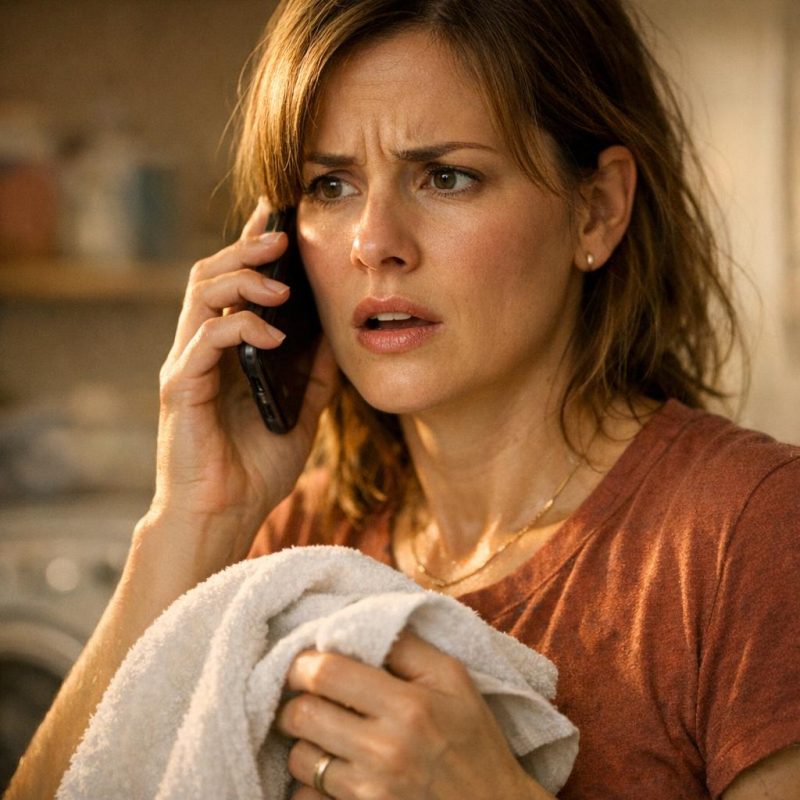 Image by RM AI
The Name
After I hung up, I went straight to my laptop and googled Sarah Mitchell. Pages of results came back—there were dozens of women with that name. I scrolled through LinkedIn profiles, Facebook pages, obituaries, news articles. None of the faces looked even vaguely familiar. I pulled out my old address book from the desk drawer, the one I'd kept since college, and flipped through every page. Nothing. I dragged down the photo albums from the hallway closet and went through them one by one, studying faces in the background of birthday parties and holiday gatherings. Still nothing. I tried to think of distant relatives, second cousins I'd met once at a funeral, old coworkers from jobs I'd had twenty years ago. I even checked my high school yearbook. Every single search came up completely empty. What bothered me most wasn't that I couldn't find a connection—it was that I couldn't find even the shadow of a memory. No half-recognition, no maybe-I-met-her-once feeling. Just a total, unsettling blank where this woman's name should have triggered something, anything at all.
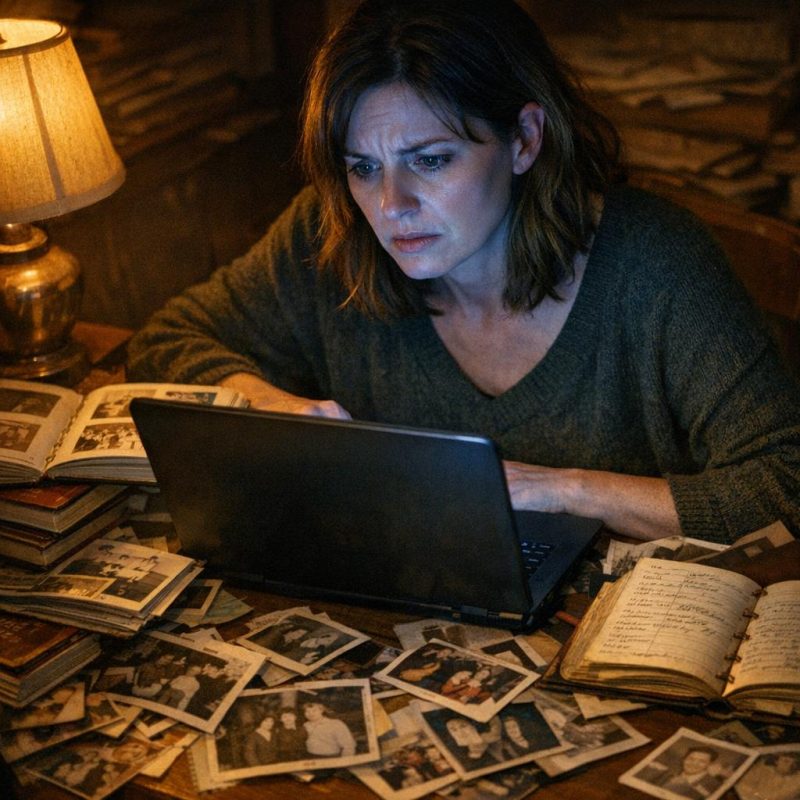 Image by RM AI
The Office
Klein's office was in one of those older professional buildings downtown, the kind with dark wood paneling and brass fixtures. He greeted me in the waiting room—silver hair, wire-rimmed glasses, conservative suit—and led me back to his office. There was already a folder on his desk with my name typed on the tab. He sat down, folded his hands, and confirmed that Sarah Mitchell had named me as her sole beneficiary. I asked the obvious question: how did we know each other? He said he didn't have that information. Sarah Mitchell had no immediate family, he explained, and I was the only person named in her will. I suggested there might be some kind of mistake, maybe another Ellen Harris he was supposed to contact. He slid a document across the desk—my full name, my birth date, even my current address, all listed correctly. I stared at the paperwork, seeing my own information tied to a complete stranger's final wishes. Klein watched me with patient, professional concern, waiting for me to process what he was telling me.
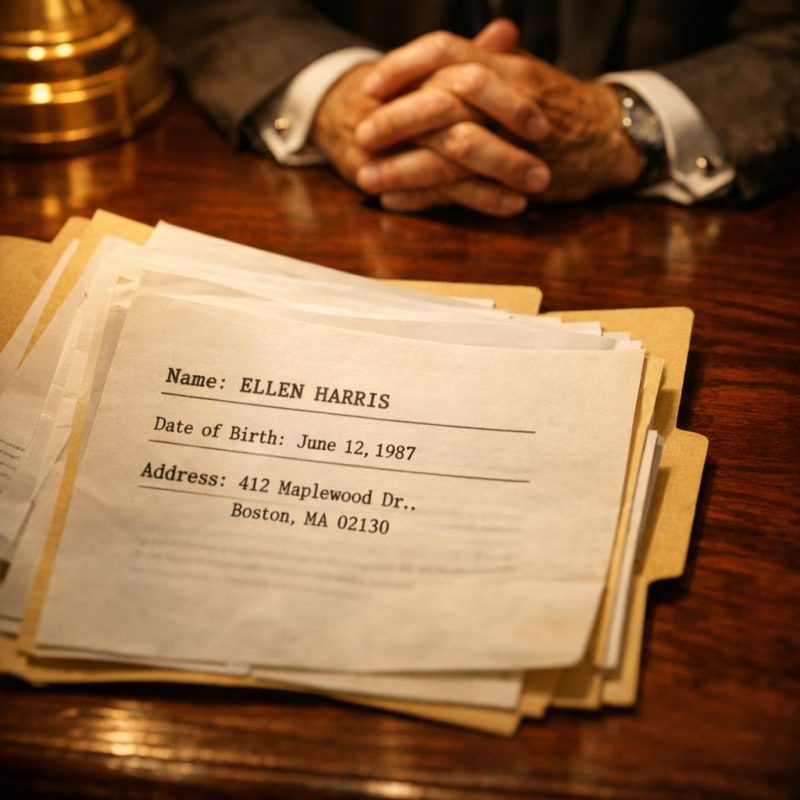 Image by RM AI
The Note
Klein opened the folder and pulled out a piece of paper—handwritten, not typed. He said it had been left with the will. I unfolded it carefully. It was addressed to me by my full name. As I read, my hands started to shake slightly. The note referenced things about my life that weren't public knowledge. Small details. The coffee shop where I used to meet my friend Rachel every Thursday morning. The way I always ordered my tea with honey, never sugar. A moment when I'd helped a stranger with a flat tire on Route 9 about five years ago. Things that only someone who'd been paying attention—close attention—would know. I looked up at Klein and asked where this came from. He said it had been sealed with the will instructions, only to be opened after Sarah Mitchell's death. I read it again, trying to make sense of how a stranger could know these private pieces of my life. The confusion I'd felt before shifted into something heavier, something that sat in my chest like a stone. This wasn't a mistake or a distant relative I'd forgotten. This was something else entirely.
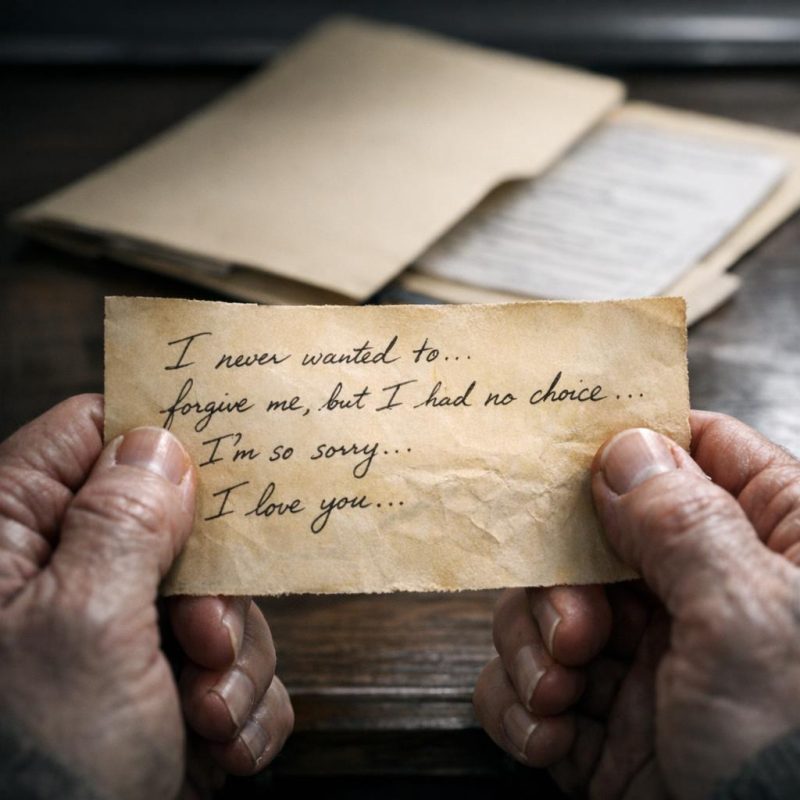 Image by RM AI
The Evening After
I got home around six and found Tom in the kitchen starting dinner. He asked how it went, and I told him about the inheritance while we ate. I explained that Sarah Mitchell was a complete stranger, that I'd never heard her name before in my life. Tom suggested maybe she was a distant family connection I'd forgotten, or maybe someone who'd known my parents. I showed him the copies of the documents Klein had given me. Tom read through them carefully, his reading glasses sliding down his nose the way they always did. I mentioned the handwritten note but didn't go into the specific details it contained. Tom proposed a few logical explanations—mistaken identity that somehow got through the legal system, or maybe someone who'd confused me with another Ellen Harris. I nodded and agreed that maybe he was right. But privately, sitting there at our kitchen table where we'd eaten thousands of meals together, I couldn't shake the feeling that something about this didn't add up. Tom's steadiness usually grounded me, but tonight the note kept nagging at the back of my mind.
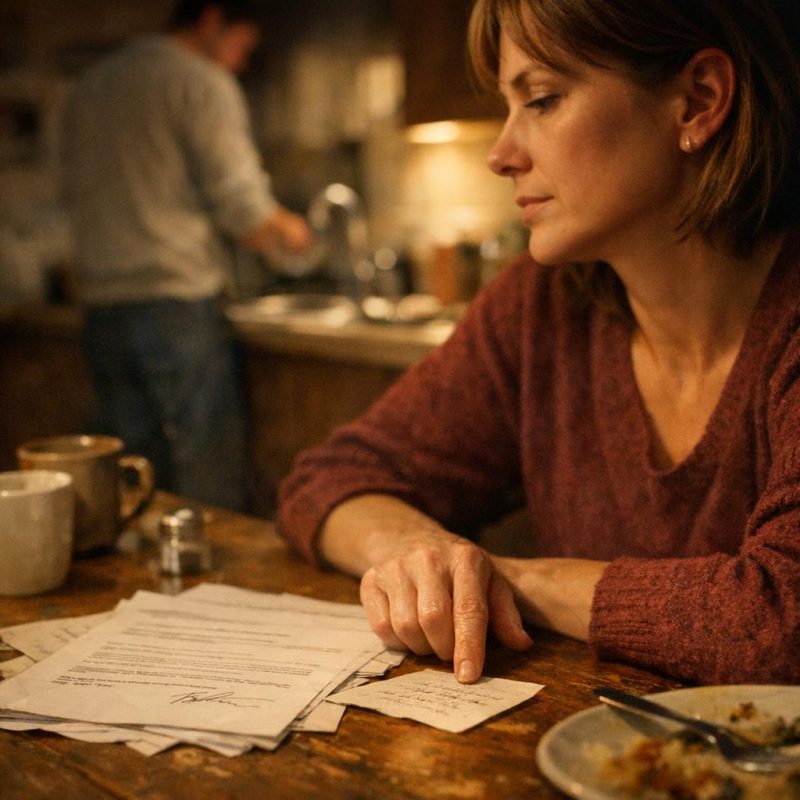 Image by RM AI
Late Search
I waited until Tom's breathing deepened into sleep, then slipped out of bed and went to the computer. It was past midnight. I searched for Sarah Mitchell again, but this time I went deeper—public records, professional directories, anything I could find. Her obituary was brief. No surviving family listed. A few mentions in community newsletters from years ago. But there was almost no social media presence, no Facebook profile, no Instagram, nothing. For someone who'd died recently, she seemed to have lived almost invisibly online. I tried different search combinations, added her city, looked for photos. I found addresses and dates but no real sense of who she'd been. No personality, no connections, no digital footprint that would explain how she'd known those details about my life. The absence felt wrong somehow. Most people leave traces everywhere now—comments, posts, tagged photos. But Sarah Mitchell was like a ghost, barely there even in the records that proved she'd existed. I sat in the blue glow of the screen, exhausted but unable to stop searching, wondering why someone would leave me everything yet seem so deliberately invisible.
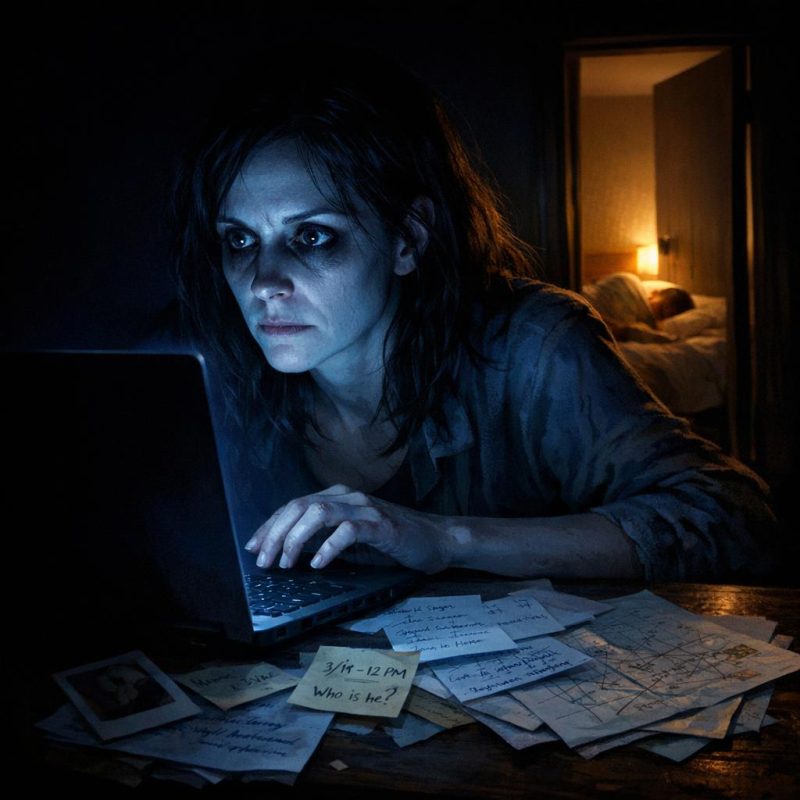 Image by RM AI
Additional Documents
I called Klein's office the next morning and asked for another appointment. When I arrived, I told him I needed more context—anything else Sarah Mitchell had left behind. He pulled out additional estate documents, property records, account statements. I asked about personal effects, papers, anything that might explain our connection. Klein mentioned that a storage unit and an apartment were included in the inheritance, both still containing her belongings. I asked if I could get access to see what was there. He said he'd arrange for the keys. I pressed him about whether he'd ever actually met Sarah Mitchell. He said no, everything had been handled through correspondence and her previous attorney. Then he added something that stuck with me—Sarah had been unusually specific in her will instructions. Very particular about making sure everything went to me, that I was contacted immediately after her death. I left his office with a key to a storage unit and an address I'd never been to, feeling like I was about to open a door I wasn't sure I wanted to walk through.
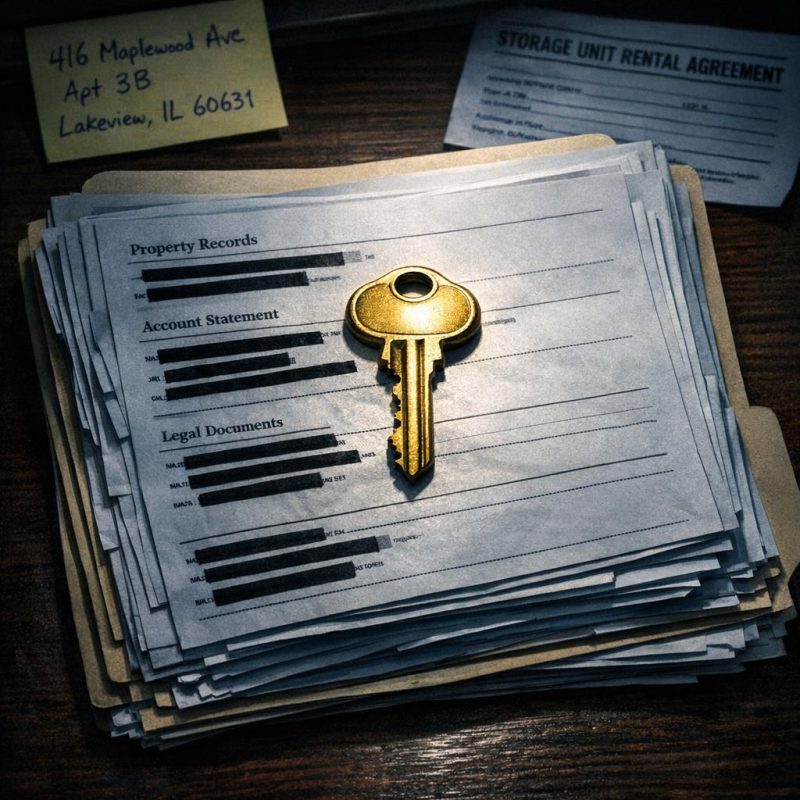 Image by RM AI
The First Photo
The first box from Sarah's apartment arrived at Klein's office three days later. He called me to pick it up. Inside were photographs—hundreds of them. Sarah Mitchell had apparently been a photographer. I spread them across my dining room table. Most were landscapes, city streets, architectural details. Beautiful work, actually. I kept sorting through them, looking for anything familiar. Then I stopped. My hand froze over a photo of a street corner I knew. It was the coffee shop where Rachel and I used to meet every Thursday, the one mentioned in the note. The photo was taken from across the street, angled so you could see the entrance and the window seating inside. I couldn't tell when it had been taken, but the location was unmistakable. I stared at that photograph for a long time, my heart beating faster. This wasn't a coincidence. This wasn't someone who'd vaguely known me. This was someone who'd been there, watching, close enough to capture that specific corner on film.
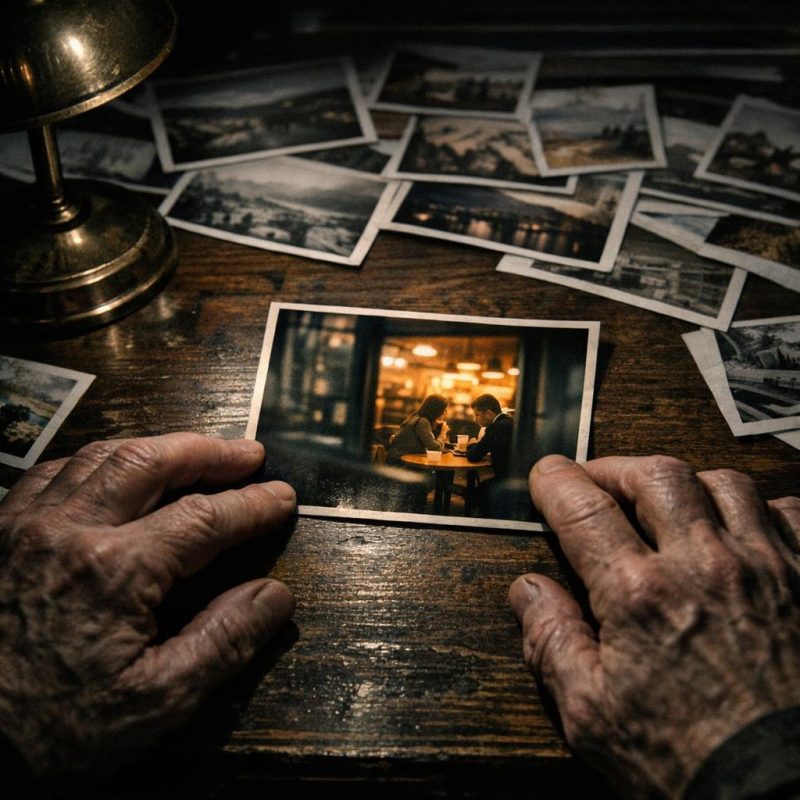 Image by RM AI
Recognition
I picked up the coffee shop photograph again that night, holding it under my desk lamp. The details came into focus—the old green awning that had been replaced years ago, the hand-painted sign in the window advertising a poetry reading series they'd stopped doing around 2008. I remembered those Thursday afternoons with Rachel, how we'd claimed the corner table by the window, how the light would slant across our coffee cups in exactly the way this photograph captured it. My hands started shaking slightly as I calculated the timeline. The awning, the signage, the quality of the film itself—this had to be from fifteen years ago, maybe sixteen. The exact period when Rachel and I met there every week without fail. I set the photo down and walked away, made myself a cup of tea, tried to think about something else. But I kept coming back to look at it. The angle bothered me in a way I couldn't quite articulate. It wasn't a casual street photography shot. The composition was too deliberate, too focused on that specific entrance, that particular window. Someone had stood across that street and pointed their camera at the exact spot where I used to sit every Thursday afternoon, and I had no idea why.
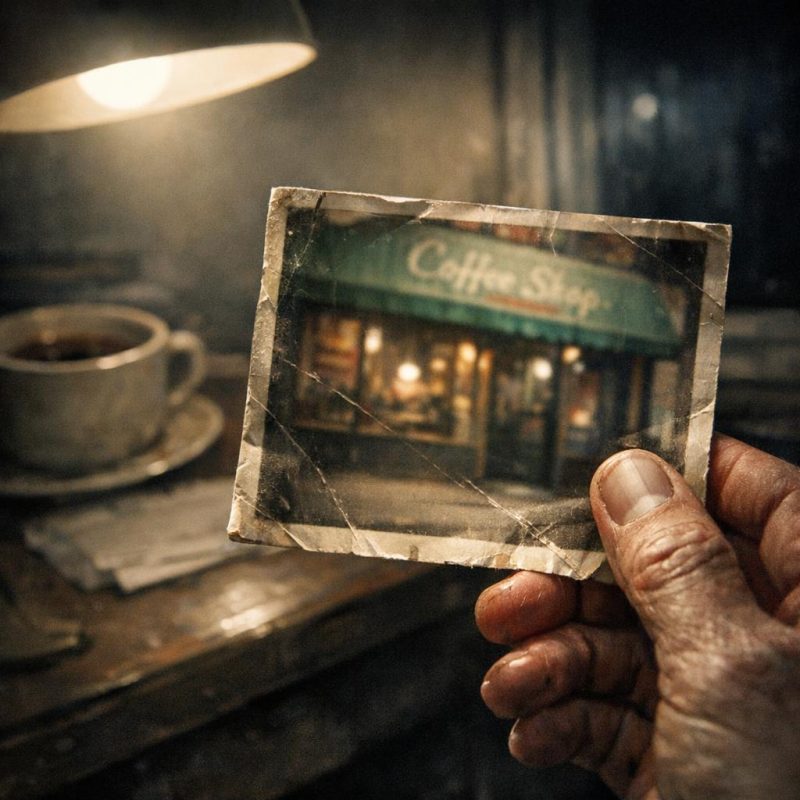 Image by RM AI
The Collection
I went through every single photograph the next morning, methodical and careful this time. Three more stopped me cold. The first showed a park I recognized immediately—the playground where I'd taken my kids when they were small, the distinctive red climbing structure still visible in the background. The second was a building on Market Street, the insurance office where I'd worked in my thirties before the company relocated. The third showed a residential street I knew intimately because I'd lived there throughout my forties, and I could see the corner house with the blue shutters that had been painted white years ago. I spread these four photographs out in a line and tried to make sense of what I was seeing. Different film stocks, different qualities suggesting different cameras or different years. The park photo had to be from the late nineties. The office building from maybe 2005. The residential street from 2012 or so, based on the shutters. Four locations spanning nearly two decades of my life, all places that mattered to me, all captured by the same photographer who'd left me everything she owned. I wanted desperately to believe in coincidence, but the odds felt impossible.
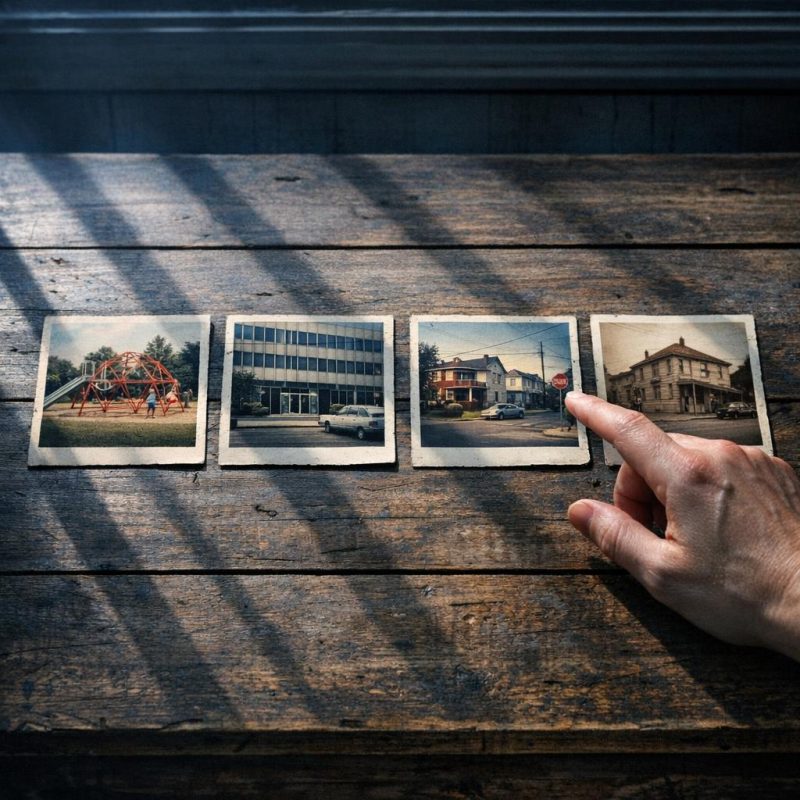 Image by RM AI
Coffee with Jenny
I called Jenny that afternoon. We'd been friends since our kids were in elementary school together, and if anyone would listen without thinking I'd lost my mind, it was her. We met at a coffee shop—ironically, not the one from the photograph—and I brought the pictures in a manila envelope. Jenny ordered us both lattes while I tried to figure out where to start. When I finally told her everything—the inheritance, the lawyer's office, the photographs of places from my past—she didn't laugh or tell me I was overreacting. She just listened with that focused attention she has, the kind that makes you feel heard. Then she asked to see the photos. I watched her examine each one carefully, her expression growing more serious. She asked practical questions: when did I live on that street, when did I work at that building, was I sure about the dates. I admitted what I'd been afraid to say out loud—that I was starting to feel watched, even though the woman who'd apparently been watching me was dead. Jenny looked at me for a long moment, then said we should find out more before jumping to conclusions. I felt better having told someone, but the unease didn't go away.
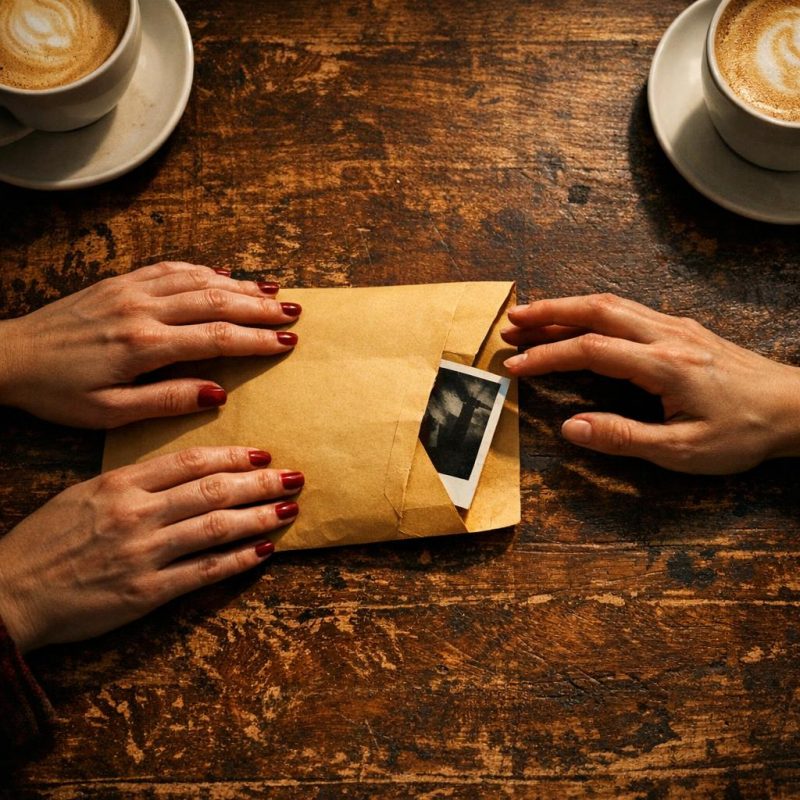 Image by RM AI
Digital Trail
I spent the next two days searching for Sarah Mitchell online with an intensity that probably wasn't healthy. I looked for photography portfolios, exhibition listings, any professional presence that might explain who she was. What I found were fragments—photo credits in small regional publications, a few images in an online archive of a community art show from 2011, her name listed as a contributor to a now-defunct photography collective. Everything pointed to someone who'd worked freelance, kept a deliberately low profile, never built the kind of online presence most professionals cultivate. No Facebook, no Instagram, no LinkedIn. No interviews or artist statements. No gallery representation or teaching positions. I searched photography association databases and found her listed as a member of two organizations, but with no additional information beyond her name and the year she'd joined. Every lead I followed dissolved into nothing substantial. I sat back from my computer screen feeling frustrated and oddly unsettled. How did someone live this invisibly in the modern world? How did a photographer build a career without leaving any real trace of herself? And why would someone so determined to remain unknown leave everything to a stranger?
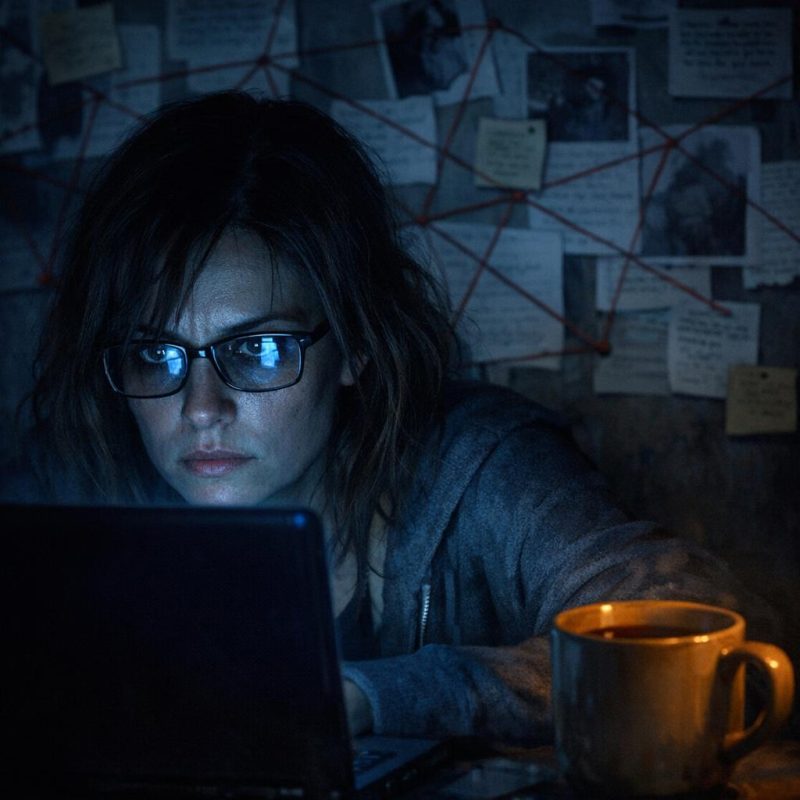 Image by RM AI
The funeral Notice
I finally found Sarah Mitchell's obituary late on the third night of searching. It was brief to the point of being stark—her name, her age, the date of her death. No cause listed. The text said she'd been a photographer who lived quietly, which felt like the understatement of the year. No surviving family mentioned. No list of accomplishments or loved ones or places she'd called home. There was a single line about a memorial service with just a date, no details about who'd attended or who'd organized it. I read it three times, looking for something I'd missed. Sarah had been forty-two years old when she died. That hit me harder than I expected—she'd been so young, younger than I was now. The obituary felt like it had been written by someone who didn't really know her, or maybe by someone following her instructions to reveal as little as possible. I wondered who writes such a bare-bones notice about an entire human life. Who decides that a person's forty-two years on earth can be summarized in four sentences? And why would someone who lived so carefully hidden choose to make herself known to me only after she was gone?
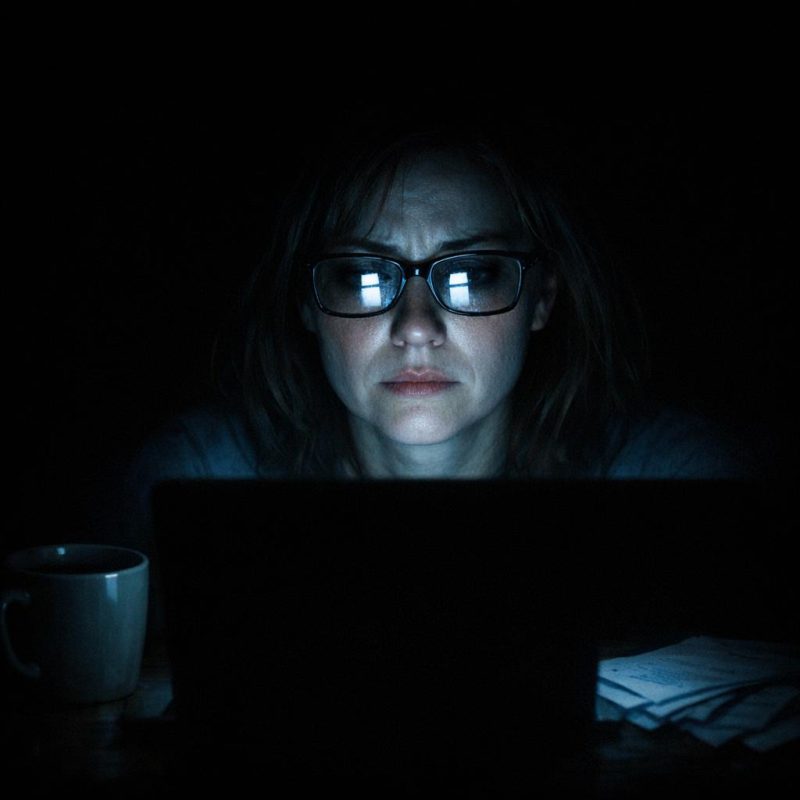 Image by RM AI
The Decision
I got Sarah's last address from Klein's estate documents and drove there on a Thursday afternoon. The building was modest, a three-story apartment complex in a quiet neighborhood I'd driven through before but never really noticed. I parked across the street and sat in my car, engine off, staring at the entrance. This felt like crossing a line somehow, moving from passive recipient of a strange inheritance to active investigator of a dead woman's life. I picked up my phone twice to call Tom, to tell him where I was and what I was doing, but I didn't. How would I explain this? That I was sitting outside a stranger's apartment building because she'd left me money and taken photographs of places from my past? It sounded paranoid even in my own head. But I kept thinking about those photographs, about the coffee shop and the park and the building where I'd worked. I needed to understand why someone I'd never met had apparently tracked pieces of my life across decades. I needed to know what connected us. I took a deep breath, grabbed my purse, and got out of the car before I could talk myself out of it.
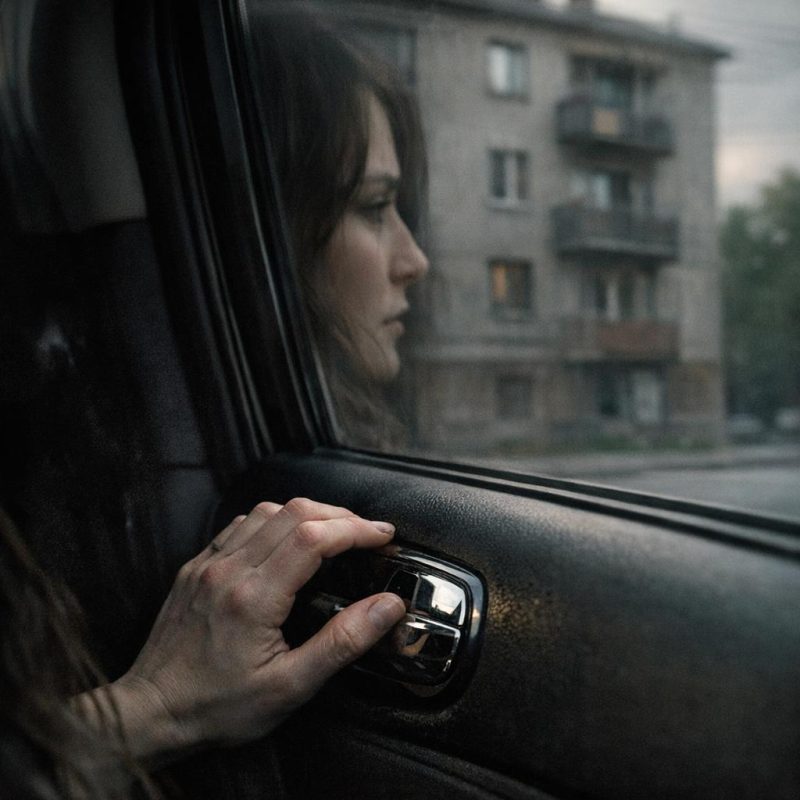 Image by RM AI
The neighbor
I stood in the building's small lobby for a minute, looking at the mailboxes. Sarah's apartment had been 2C. I climbed the stairs slowly, but when I reached the second floor, I walked past her door and knocked on 2B instead. I wasn't ready to face whatever might be inside her actual apartment yet. An older man answered, maybe seventy, with neat gray hair and the alert eyes of someone who notices things. I introduced myself vaguely as someone handling Sarah Mitchell's estate matters, which was technically true. His face softened with recognition. David Brooks, he said, shaking my hand. He'd lived there for twelve years. Yes, he remembered Sarah—quiet woman, very polite, kept to herself mostly. I asked if he'd known her well, and he shook his head. She was a photographer, he said, always had equipment coming and going, but she never really talked about her work. I tried to keep my voice casual when I asked if Sarah had ever mentioned family or close friends. David thought for a moment, then said no, not that he recalled. Sarah had seemed like a very private person, the kind who preferred observing to participating.
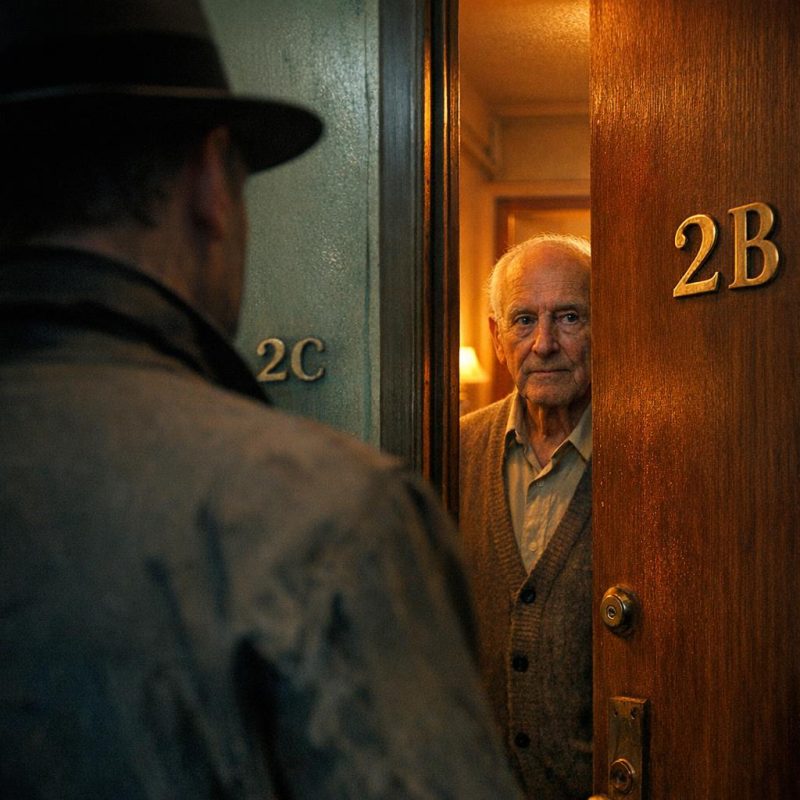 Image by RM AI
The quiet Life
David kept talking, and I let him, hungry for any detail about the woman who'd left me her life. He described Sarah as someone who was always present but somehow separate, like she was watching the world without quite joining it. He'd noticed she often sat by her window with a camera, he said, just looking out at the street or the building across the way. She went out regularly with her photography equipment—he'd see her leaving with bags and tripods—but she always came back alone. In all the years he'd lived next door, David had never seen a single visitor go into her apartment. Not once. She was polite when they passed in the hallway, he said, would say hello and comment on the weather, but she never invited conversation beyond that. I asked what she photographed, and David shrugged. He didn't know specifically, just that she seemed dedicated to it. Then he added something that made my chest tighten: Sarah had seemed sad sometimes, he thought, but he hadn't felt it was his place to pry. I thanked him and turned to leave, but I couldn't stop thinking about the picture he'd painted—a woman who spent her life watching through a lens, alone in her apartment, photographing places that somehow connected to mine.
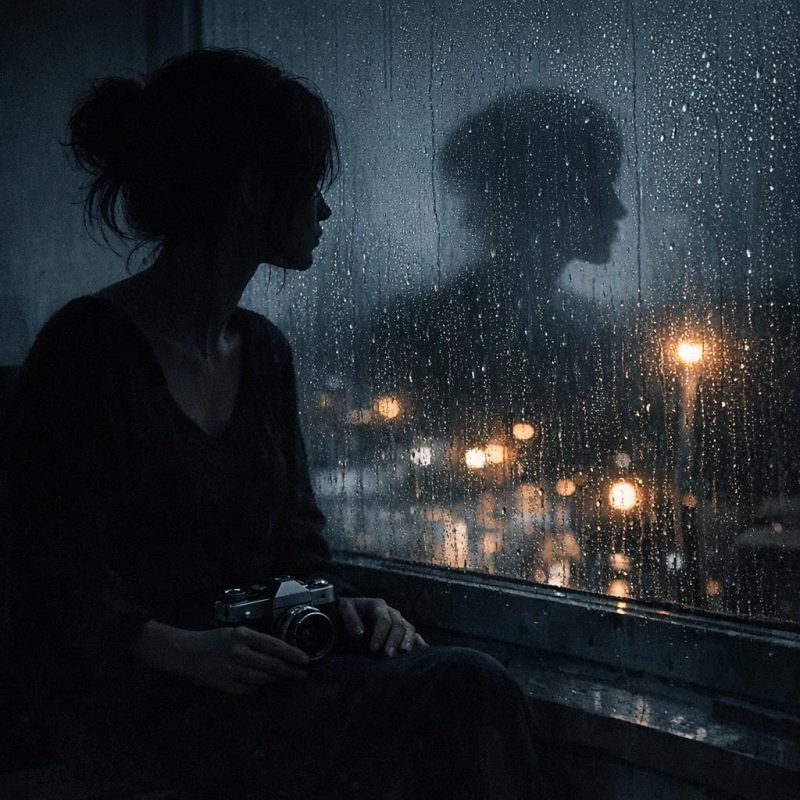 Image by RM AI
The Storage Unit
Klein handed me the key and address on a Tuesday afternoon, and I drove to the storage facility the next morning before I could talk myself out of it. The place was one of those anonymous commercial buildings off the highway—rows of identical orange doors, security cameras everywhere, fluorescent lights humming overhead. I found unit 247 on the second floor and stood there for a solid five minutes, key in hand, feeling like I was about to break into someone's home. Which was ridiculous, right? This was legally mine now. Everything Sarah Mitchell owned belonged to me. But standing there in that sterile hallway, I felt like a trespasser. I inserted the key and it turned smoothly, like it had been used recently. The metal door rolled up with a rattling sound that echoed down the corridor. Inside, everything was organized. Not just neat—organized. Clear plastic bins stacked along one wall, cardboard boxes labeled in neat handwriting, equipment cases arranged by size. I stepped inside and looked around at a dead woman's life, categorized and preserved. The fluorescent light from the hallway spilled across labels I could just barely read: Photos 2015-2018, Equipment Primary, Files Personal.
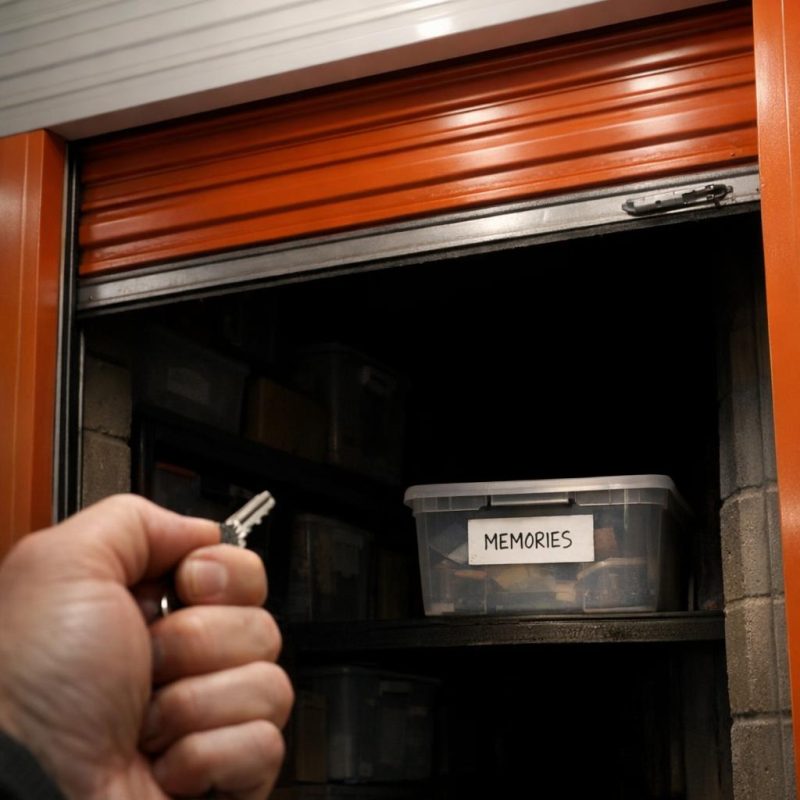 Image by RM AI
The Files
I pulled down the first box—Photos 2015-2018—and opened it on the concrete floor. Inside were binders full of printed photographs and a stack of external hard drives labeled by year. I flipped through the first binder and my stomach dropped. There I was. Not once, not twice—dozens of times. Me at the farmer's market. Me outside the library. Me walking to my car in a parking lot I recognized from three years ago. Different seasons, different clothes, different ages of myself. I opened another box. This one held newspaper clippings, all neatly organized in sheet protectors. Articles mentioning my name—a community fundraiser I'd helped with, a letter to the editor I'd written about the school budget, a photo from a charity event where I was visible in the background. The third box made me feel sick. It contained handwritten timelines, dates and locations written out in careful script. My children's names. My work history. Places I'd lived. Sarah Mitchell hadn't just photographed me occasionally. She'd documented my entire life, methodically, over years. I sat back on my heels, surrounded by evidence of surveillance I'd never suspected.
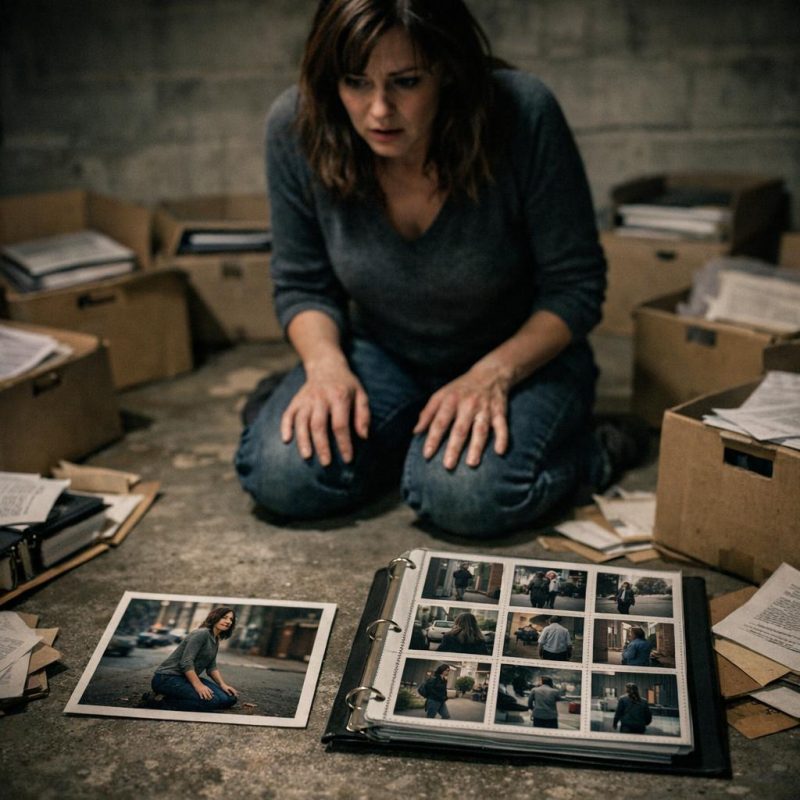 Image by RM AI
The Weight of Eyes
I locked the storage unit with shaking hands and walked to my car checking over my shoulder twice. The drive home took forty minutes and I spent most of it glancing at the rearview mirror, watching cars behind me, wondering if anyone was watching me now. Because that's the thing nobody tells you about discovering you've been watched—you can't stop feeling those invisible eyes even after you know they're gone. I kept thinking about all those years of documentation, all those photographs taken without my knowledge. Who else might know about this? Was Sarah the only one? And if she'd been watching me for decades, had it really ended when she died, or was there something still going on that I couldn't see? I pulled into my driveway and sat there for a moment, looking at my own house like I'd never seen it before. Had Sarah photographed this too? Had she stood across the street with one of those expensive cameras, documenting where I lived? I went inside and checked every lock twice, tested the windows, closed the blinds I usually left open. I felt exposed in ways I'd never experienced before, vulnerable in my own home.
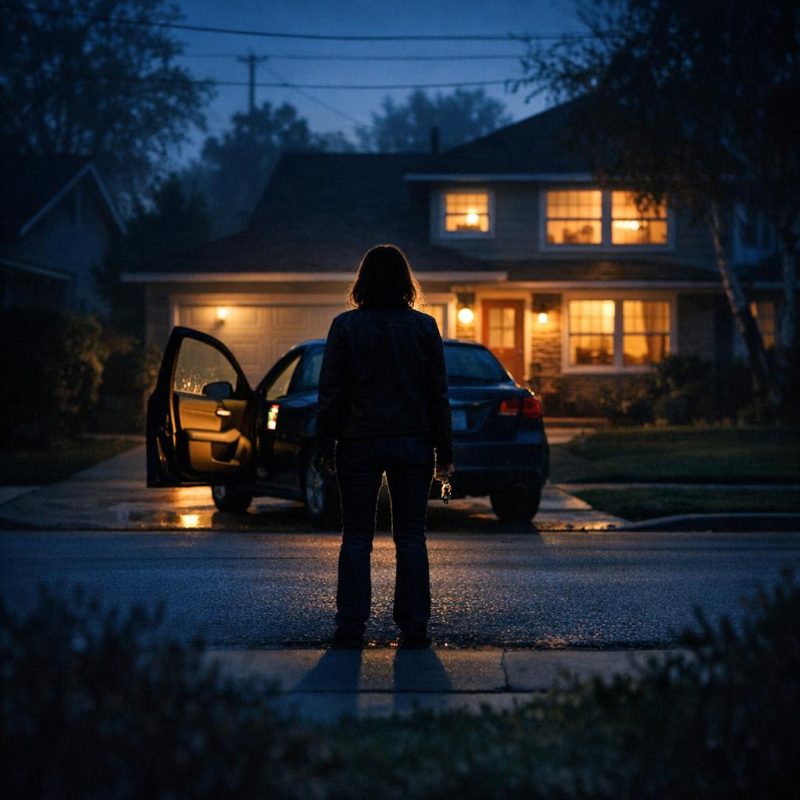 Image by RM AI
Tom's concern
Tom found me in the kitchen past midnight, timeline printouts and photographs spread across the counter. He stood in the doorway in his pajamas, watching me pace back and forth, checking dates against my own memories. "Ellen," he said quietly. "You need to stop. This is consuming you." I told him I needed to understand why a stranger had watched me for years. He came closer, put his hand on my shoulder with that steady warmth I'd relied on for decades. "I'm worried about you," he said. "This is becoming an obsession." I pulled away, defensive. He didn't understand how it felt to discover your life had been observed, documented, filed away like a research project. Tom tried again, gentler this time. "She's dead. She can't hurt you. Whatever this was, it's over." But that's what he didn't get—it wasn't over for me. The violation didn't end just because Sarah Mitchell had. I snapped at him, said things I didn't mean about him not understanding, not caring enough to see how this had shaken me. We went to bed with cold space between us, and I lay there in the dark knowing Tom was trying to help but feeling utterly alone with what I'd discovered.
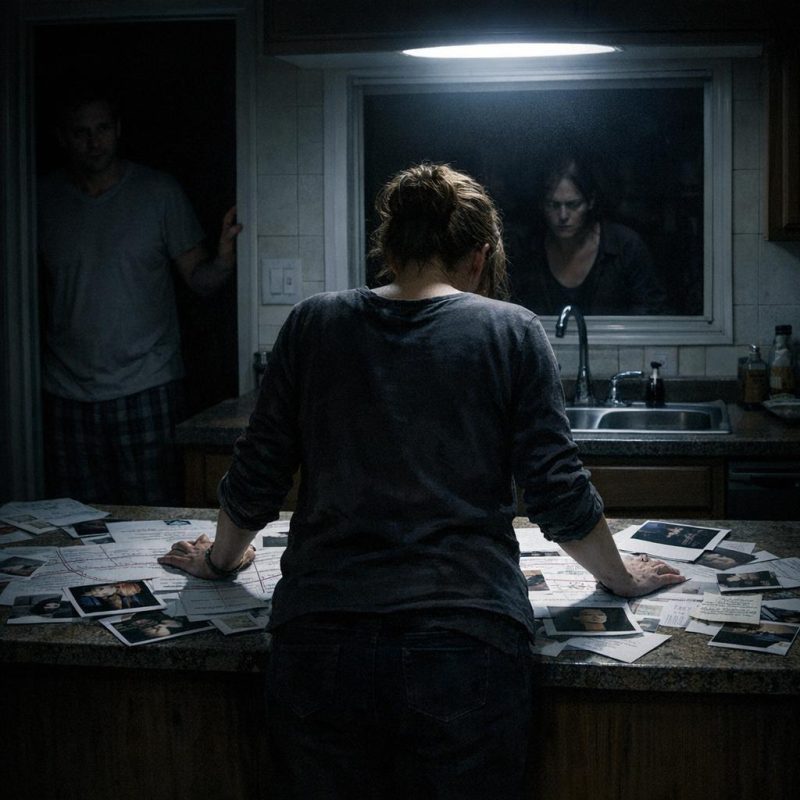 Image by RM AI
The Equipment
I went back to the storage unit two days later without telling Tom. I needed to see the equipment again, to understand what kind of commitment this had required. Sarah's cameras were professional-grade—I didn't know much about photography, but I recognized expensive when I saw it. Multiple camera bodies, each in its own padded case. A collection of lenses that looked like they cost more than my car. I picked up one of the telephoto lenses, heavy and solid in my hands, and wondered how far away she could have been while photographing me. There were tripods, lighting equipment, bags full of accessories I couldn't even name. Everything showed years of careful use but meticulous maintenance. This wasn't casual hobby equipment. This was the gear of someone who'd invested serious money and serious time into their work. I thought about David's description of Sarah leaving with her camera bags, coming back alone, always alone. All that dedication, all that expensive equipment, all those years of careful documentation. For what? To watch me? I lifted the lens cap from the primary camera and saw my own reflection staring back.
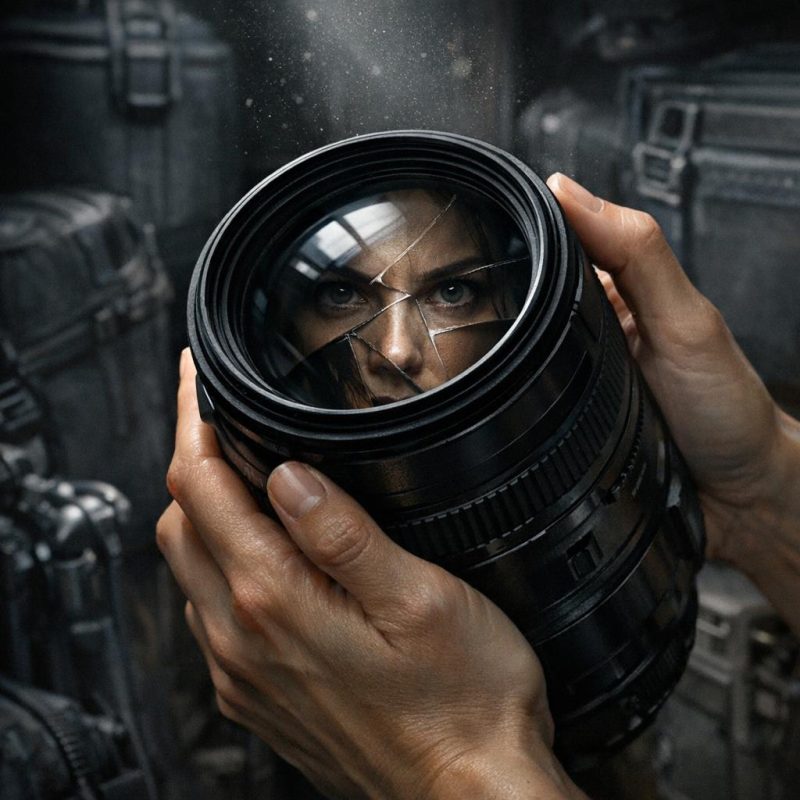 Image by RM AI
The Archive
I brought the external hard drives home on a Thursday night when Tom was at his poker game. I connected them to my laptop at the kitchen table and watched the folders load—hundreds of them, organized by year and date, each one labeled with meticulous precision. I opened the most recent folder first. Images from last year, the year before. Me at the grocery store. Me in my garden. Me walking into the dentist's office. I worked backward through the years, watching myself get younger in reverse. There I was five years ago, ten years ago, fifteen. Different hairstyles, different weights, different versions of myself I'd almost forgotten. The folders went back and back, year after year, thousands of images spanning decades of my life. Many showed me only in the background or at a distance, but I was there, visible, documented. Sarah's filing system was obsessively organized—dates, locations, even weather conditions noted in some folder names. I kept clicking backward through time, my hands cold, my coffee forgotten. The scope was undeniable now. This wasn't coincidence. This wasn't accident. The oldest folder was dated twenty-three years ago.
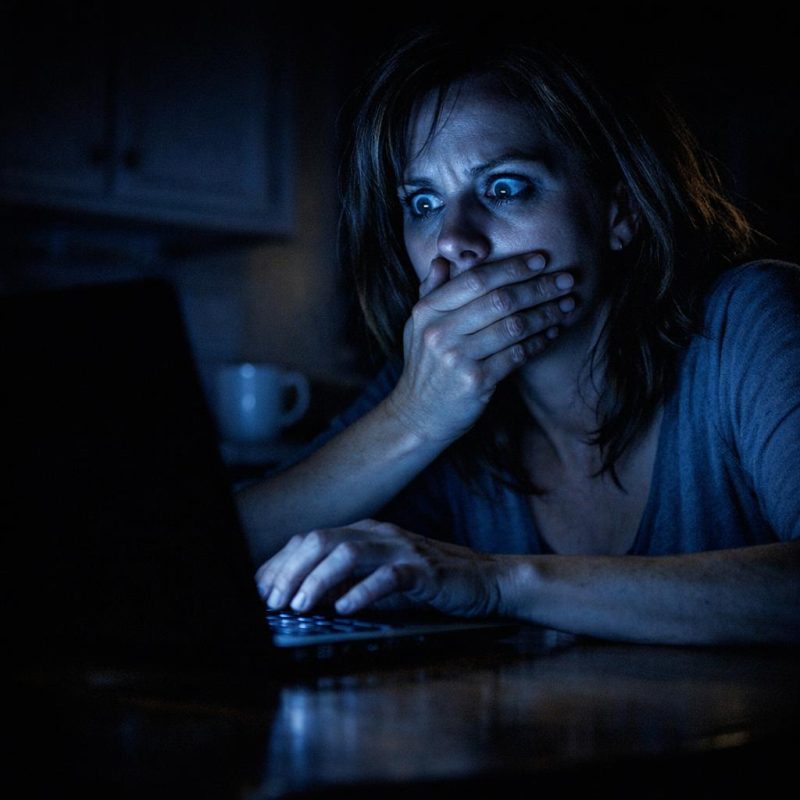 Image by RM AI
The Timeline
I printed representative photos from different years and spread them across the dining room table, arranging them chronologically like a timeline of my life seen through someone else's eyes. There I was at thirty-five, standing outside the elementary school waiting for pickup, my hair darker then, my face less lined. At forty-two, carrying groceries to my car in a parking lot I barely remembered. At fifty-six, walking downtown on what looked like a spring day, wearing a jacket I'd donated years ago. Sarah had tracked me through major life transitions—different homes, different jobs, children growing from elementary school through college. I could see myself aging across the decades, my life documented like a long-term study. I did the math and felt sick. If these photos went back twenty-three years, Sarah would have been in her late teens when she started. A teenager who decided to spend her life watching mine. There were no significant gaps in the timeline—she'd maintained continuous observation for over two decades. I stood there looking at my own life laid out in photographs I'd never known existed. I found myself at thirty-five, at forty-two, at fifty-six—a life observed from the outside.
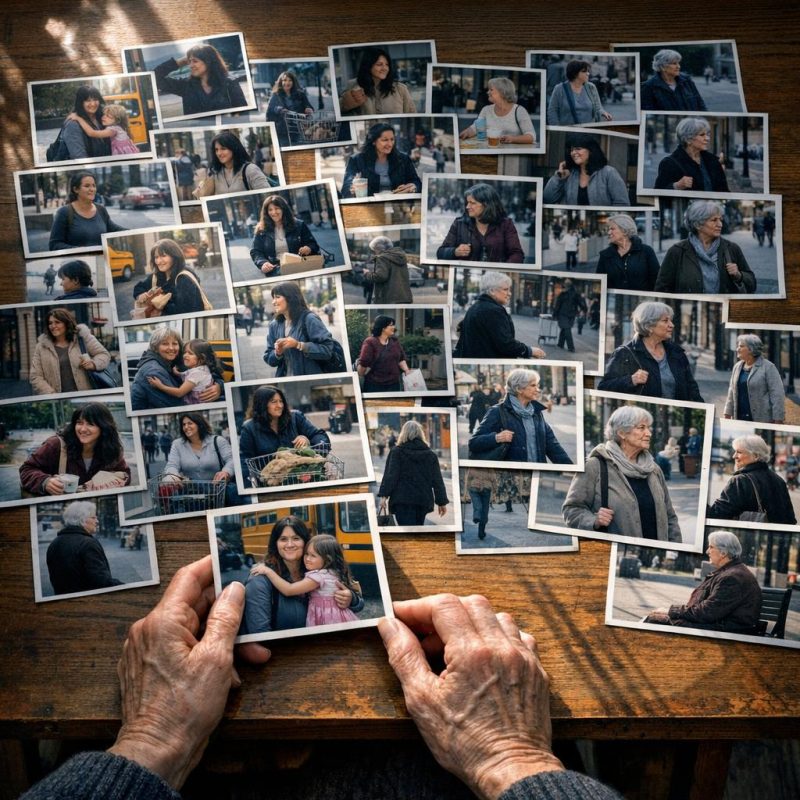 Image by RM AI
Jenny's Kitchen
I packed everything into boxes and drove to Jenny's house on Saturday morning. She took one look at my face and led me to her kitchen table without asking questions. I spread out the photographs, the timelines, the printed evidence of twenty-three years of surveillance. Jenny worked through it methodically, asking practical questions I hadn't thought to consider. Where was I living when this photo was taken? What was happening in my life that year? She helped me create a master timeline on poster board, mapping dates and locations, looking for patterns I might have missed. We worked for three hours, and with every new connection we made, Jenny's expression grew more disturbed. She was supportive, steady, asking the right questions to help me organize the information objectively. But I could see the concern in her eyes—not just about what we were finding, but about what this was doing to me. We stepped back and looked at the completed timeline together, this comprehensive map of my life as seen through Sarah Mitchell's lens. The documentation was thorough, organized, spanning decades. But neither of us could identify a motive. Neither of us could explain the connection. Jenny looked up from the photographs and asked the question I couldn't answer: what did this woman want from you?
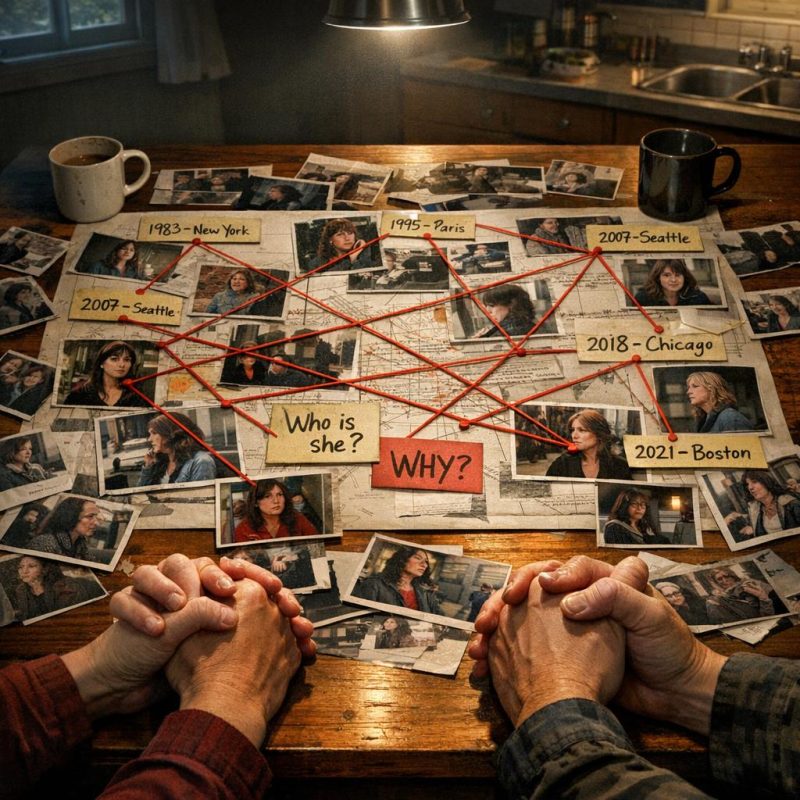 Image by RM AI
Michael Chen
I spent Tuesday morning calling every photographer whose name appeared in Sarah's professional credits. Most numbers were disconnected. Two went to voicemail. One woman told me she'd never heard of Sarah Mitchell and hung up before I could explain further. I was about to give up when I reached Michael Chen, a freelance photographer based in Portland. I mentioned Sarah's name, and there was a pause on the other end of the line—not the blank confusion I'd gotten from everyone else, but something different. Recognition, maybe. I explained who I was, that Sarah had passed away and left me her estate, that I was trying to understand who she'd been. Michael's voice was careful when he responded, each word measured like he was testing the weight of it before speaking. He asked how I knew Sarah, and I told him the truth: I didn't. I'd never met her. Another pause, longer this time. Then he said he'd known Sarah a little, and his voice carried something I couldn't place—caution, maybe, or sadness.
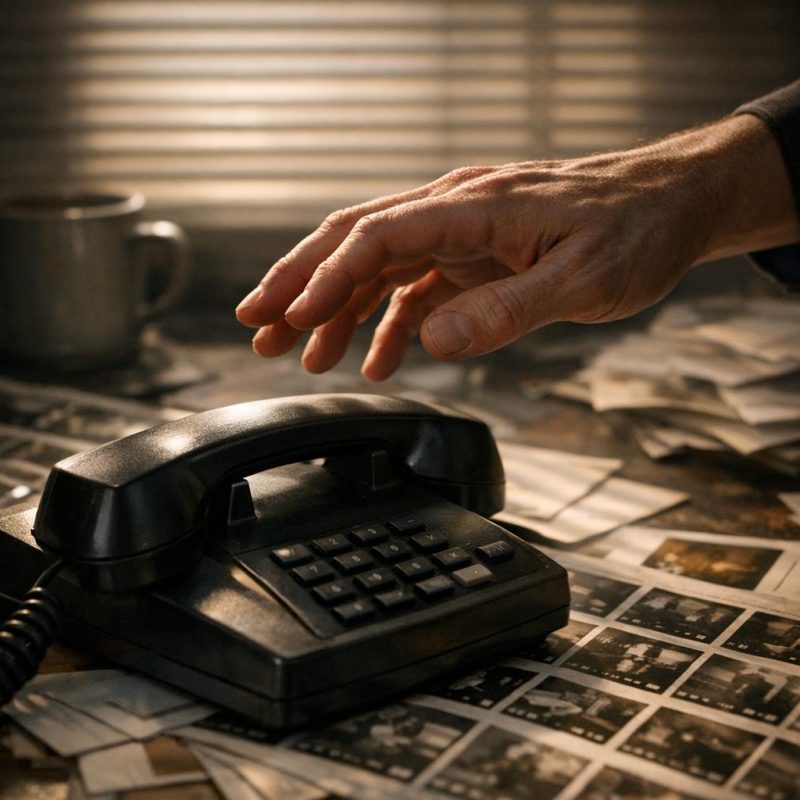 Image by RM AI
Dead Messages
I made a list of everyone I could remember from the past three decades. Former colleagues from the insurance company, the marketing firm, the nonprofit where I'd worked in my thirties. Old neighbors from the apartment complex in Seattle, the rental house in Eugene, the condo before we bought our current place. Friends from book clubs and volunteer committees and that pottery class I took for six months. I sent emails and made phone calls, asking the same question over and over: did you ever know or meet someone named Sarah Mitchell? I attached her photo to the emails, described her to the people I called. The responses came back in a steady stream of negatives. No one recognized her name. No one remembered her face. I contacted people who appeared in the backgrounds of Sarah's photographs, thinking surely they must have seen her, noticed her taking pictures. Nothing. Every lead ended the same way, with blank confusion and apologies. Not one person had ever heard Sarah Mitchell's name.
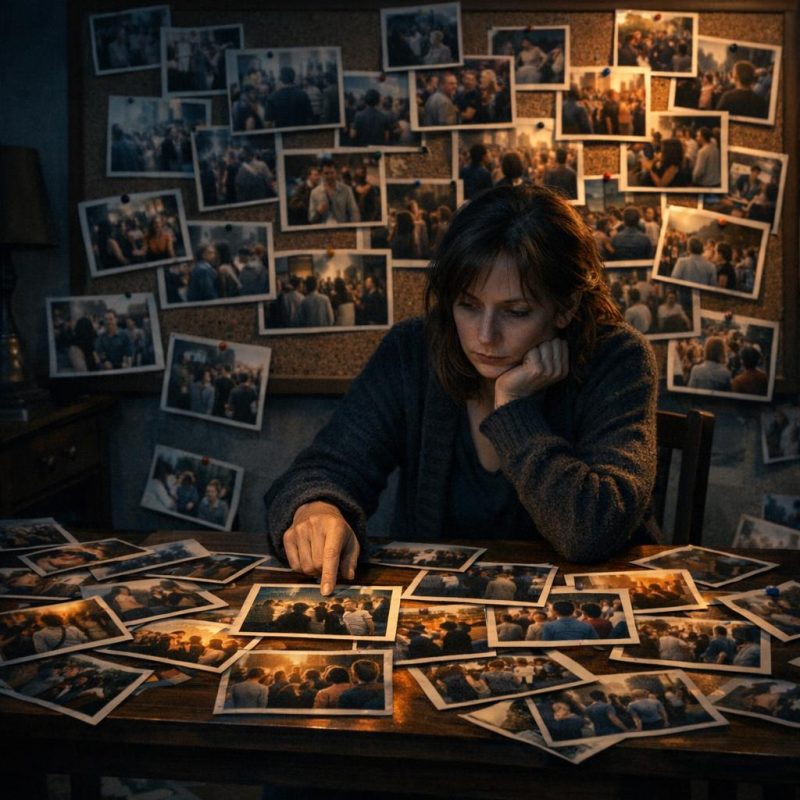 Image by RM AI
The Wedding Photo
I was sorting through another box of photographs when I found it—a picture from my wedding day. The image was taken from across the street, shot through the gap between two parked cars. I could see the church entrance, the white ribbons tied to the railings, the arrangements of white roses and baby's breath that had cost more than I wanted to admit. There I was, twenty-six years old, laughing at something Tom had just said, my veil catching the afternoon light. Tom stood beside me in his rented tux, looking impossibly young. The photo was dated June fifteenth, exactly thirty-one years ago. I did the math twice, then a third time. Sarah would have been eleven years old when she took this picture. A child, standing across the street with a camera, documenting my wedding day. I set the photograph down carefully, my hands shaking. Sarah had been there, somewhere in the crowd or across the street, on the day I married Tom.
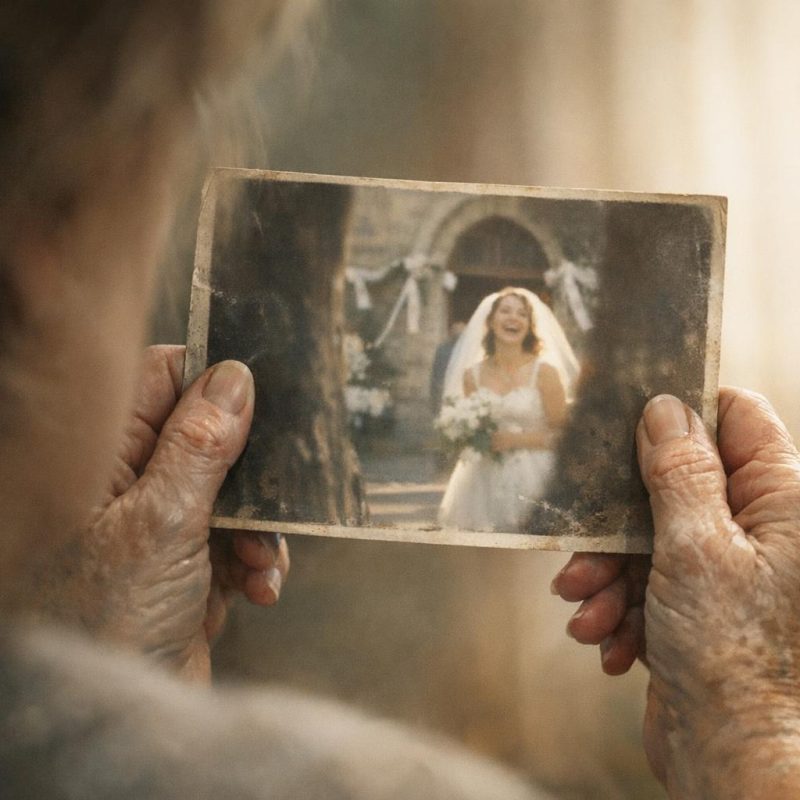 Image by RM AI
The Private Pain
The next photograph I found made me stop breathing. It showed the cemetery on the hill, the one with the oak trees that drop acorns every fall. I was standing beside a fresh grave, wearing the black dress I'd bought specifically for that day and never worn again. My father had his arm around my shoulders. My sister stood on my other side, her face blurred because she'd turned away at the wrong moment. The date on the back confirmed what I already knew: my mother's funeral, eighteen years ago. Sarah had been there. She'd stood somewhere among the mourners or behind the trees or in the parking lot, and she'd photographed my grief. I stared at my younger self, at the raw pain visible even in that distant shot, and felt something shift inside me from fear toward fury. Some moments should belong only to the people who lived them.
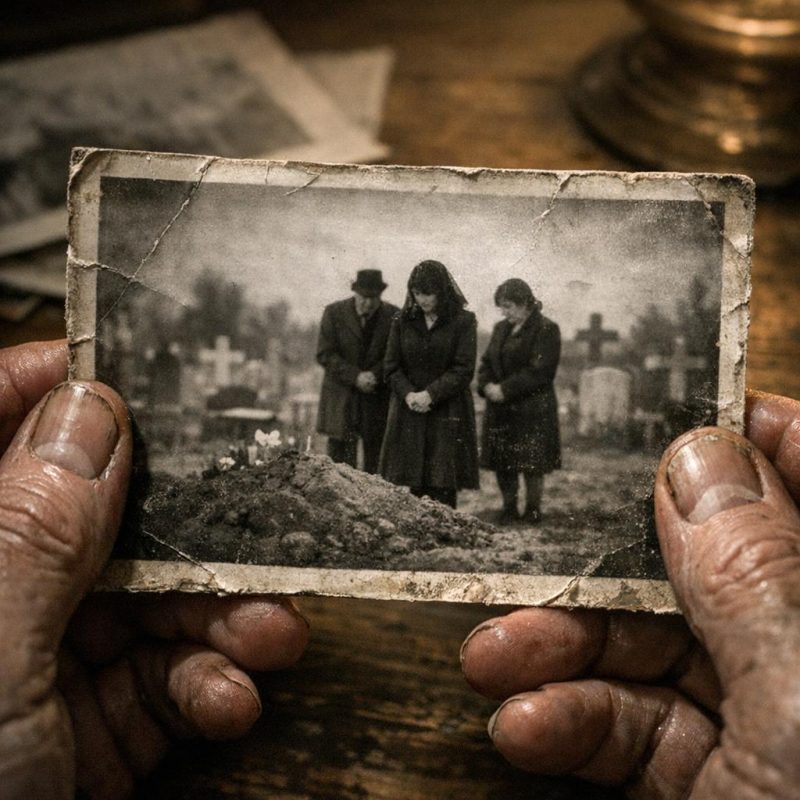 Image by RM AI
The Question
I sat in the dark that night, long after Tom had gone to bed, asking myself the same question until the words stopped making sense. Why me? What had I done to deserve this kind of attention? I mentally reviewed my entire life, searching for anything that would make me interesting enough to watch for twenty-three years. I'd worked ordinary jobs, lived in ordinary places, made ordinary choices. I'd never been famous or notorious. I'd never won anything significant or done anything remarkable. I'd never hurt anyone badly enough to warrant this kind of obsession. I thought about every argument I'd had, every person I might have wronged unknowingly, every moment where I could have made an enemy without realizing it. Nothing fit. Nothing explained why a stranger would dedicate decades to documenting my existence. I kept circling back to the same impossible question, searching for an answer that would make this make sense. What had I done to deserve this kind of attention?
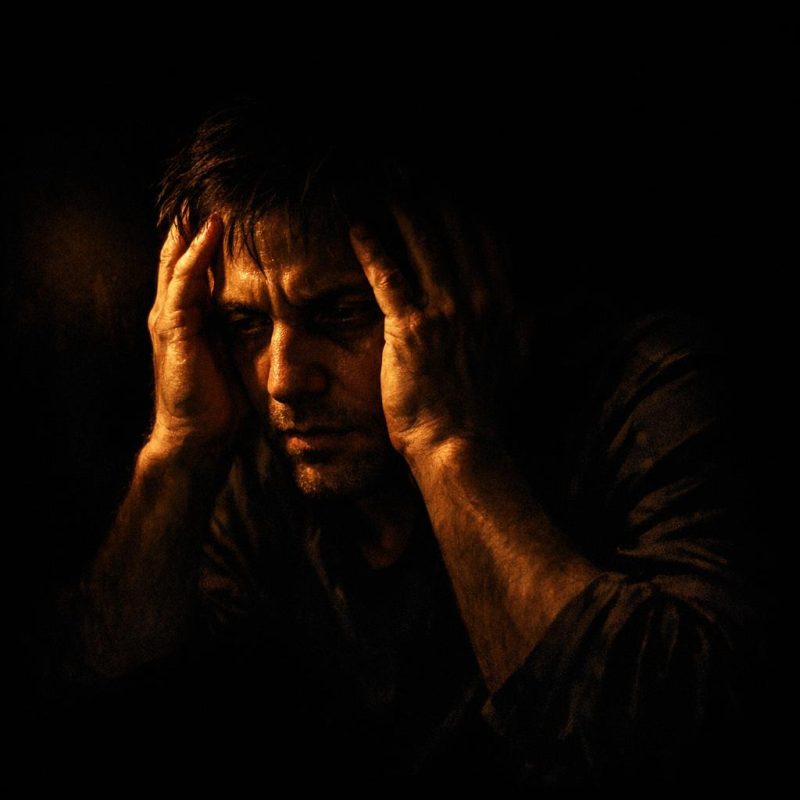 Image by RM AI
The Written Record
I went back to the storage unit on Thursday, determined to search more carefully. I'd been so overwhelmed during my first visits, so focused on the photographs, that I might have missed something. I worked through the boxes methodically this time, checking every corner and underneath every stack. That's when I found it—a cardboard box pushed against the back wall, partially hidden behind a filing cabinet. The box was labeled with a single word in Sarah's neat handwriting: Years. Inside were journals, at least a dozen of them, different sizes and ages. Some had worn covers and yellowed pages. Others looked newer, the bindings still stiff. I lifted the first one out carefully, my heart pounding. The cover was plain blue cloth, soft with age. I opened it and saw handwriting that was careful, almost delicate.
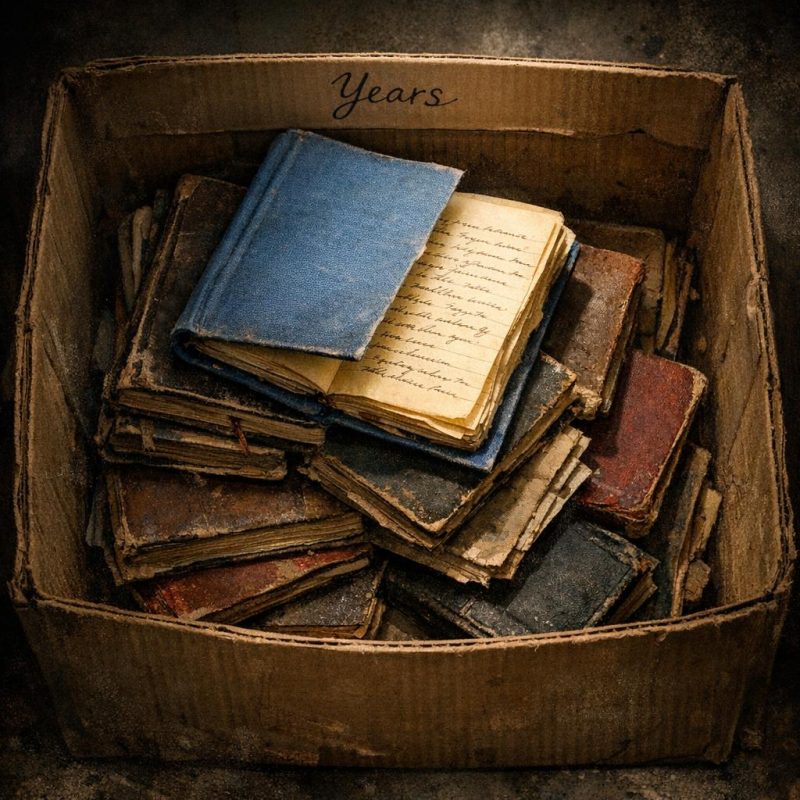 Image by RM AI
The Personal References
I took the journals home and started reading that same evening. Sarah didn't use names in the early entries, but the references were unmistakable. She wrote about watching someone, observing their daily routines, noting small details that only someone present would know. She described a woman who wore her hair in a ponytail when she was stressed, who always ordered coffee with too much cream, who had a habit of touching her wedding ring when she was thinking. I recognized myself in every line. The entries were dated, spanning years, and the details were painfully specific. She wrote about the day I wore my blue coat to the park, the afternoon I sat alone on a bench, crying. I remembered that day—it was right after my mother died, and I'd needed to get away from everyone's sympathy. I'd thought I was alone. But Sarah had been there, watching, recording my private grief in her careful handwriting.
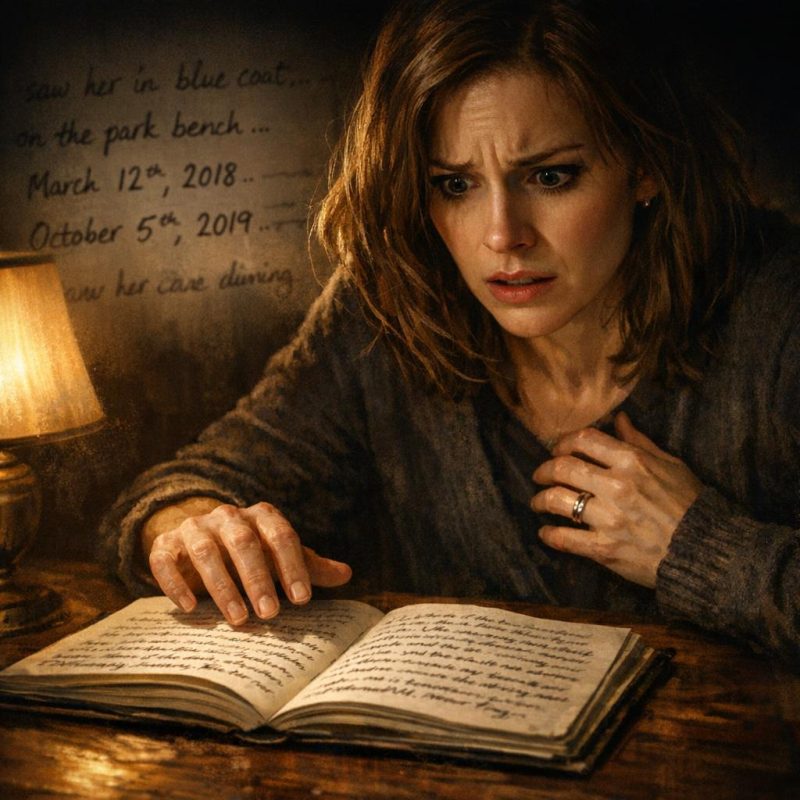 Image by RM AI
The Day Lost
I kept reading, working through the journals in chronological order. Sarah's entries grew more emotional as the years progressed, less observational and more personal. She wrote about longing and loss, about watching from a distance, about wanting things she couldn't have. Then I turned a page and found an entry that made me stop. The handwriting was shakier here, the words pressed harder into the paper. Sarah had written about grief, about a separation that had broken something inside her, about years of searching and watching and hoping. And then, in the middle of the page, a single line that I read three times without understanding: 'the day I lost you.' I stared at those words, trying to place them in any context that made sense. Lost me? I'd never known Sarah Mitchell. I'd never met her, never spoken to her, never had any relationship that could be lost. I read those words three times and understood nothing except that they mattered.
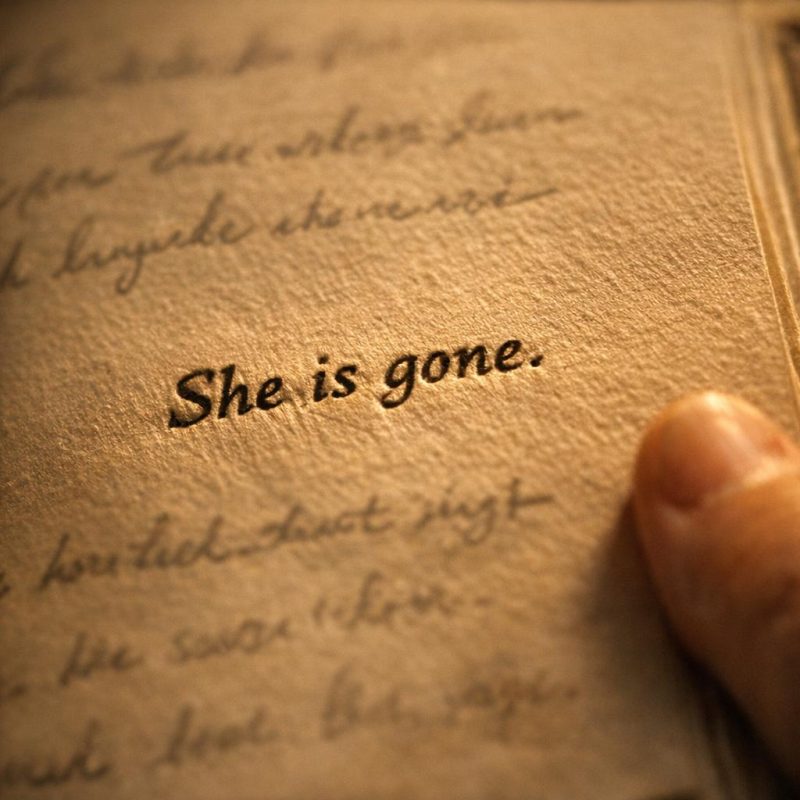 Image by RM AI
The Old Weight
I set the journal down on the coffee table and pressed my palms against my eyes. Sarah's words kept circling through my mind—'the day I lost you'—and something was stirring in the back of my thoughts, something heavy and old that I'd buried so deep I'd almost convinced myself it didn't exist. It wasn't a clear memory, not yet. Just a weight, a pressure building behind my ribs like weather moving in. I stood up and walked to the kitchen, poured myself water I didn't drink, stared out the window at nothing. The feeling wouldn't leave. It sat in my chest like a stone, familiar in a way that made my hands shake. I'd spent decades not thinking about certain things, not looking at certain corners of my past. I'd gotten good at it, at keeping my eyes forward, at telling myself that what was done was done and buried was buried. But Sarah's journals had disturbed something, shifted the earth over a grave I'd thought was permanent. I went back to the living room and picked up the journal again, tried to focus on the next entry, but the words blurred. My mind kept pulling backward, toward a time and a place I'd trained myself to forget. I hadn't thought about that year in decades.
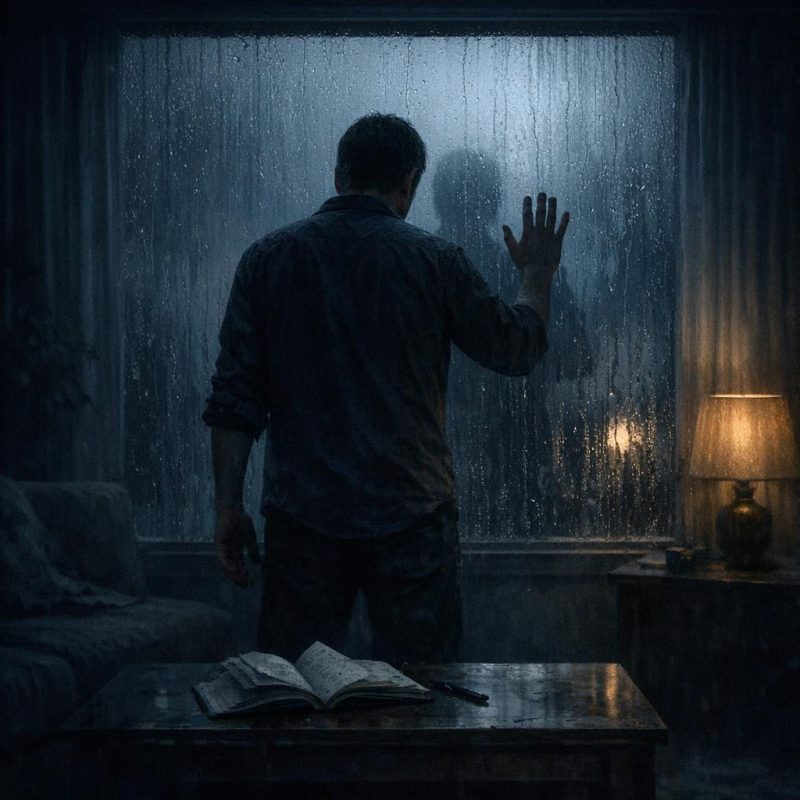 Image by RM AI
The Agency Name
The next morning, I went through Sarah's papers more systematically, looking for something without knowing what. I found it in a manila folder tucked between tax returns from fifteen years ago—a single sheet of letterhead with a logo I recognized instantly, though I couldn't say why. St. Catherine's Family Services. The name hit me like a physical thing, made my breath catch. I stared at the letterhead, at the address printed beneath the name, and felt that buried weight shift again. The paper was old, yellowed at the edges, and there was nothing written on it except a phone number that had been crossed out. I grabbed my laptop and searched for St. Catherine's Family Services, my fingers clumsy on the keys. The results came back sparse—a few mentions in old newspaper archives, a notation that the agency had closed in 2008. I clicked through page after page, finding almost nothing, just fragments of information about an organization that had ceased to exist. But the name kept echoing in my head, familiar and terrible. I knew that name, though I couldn't remember why.
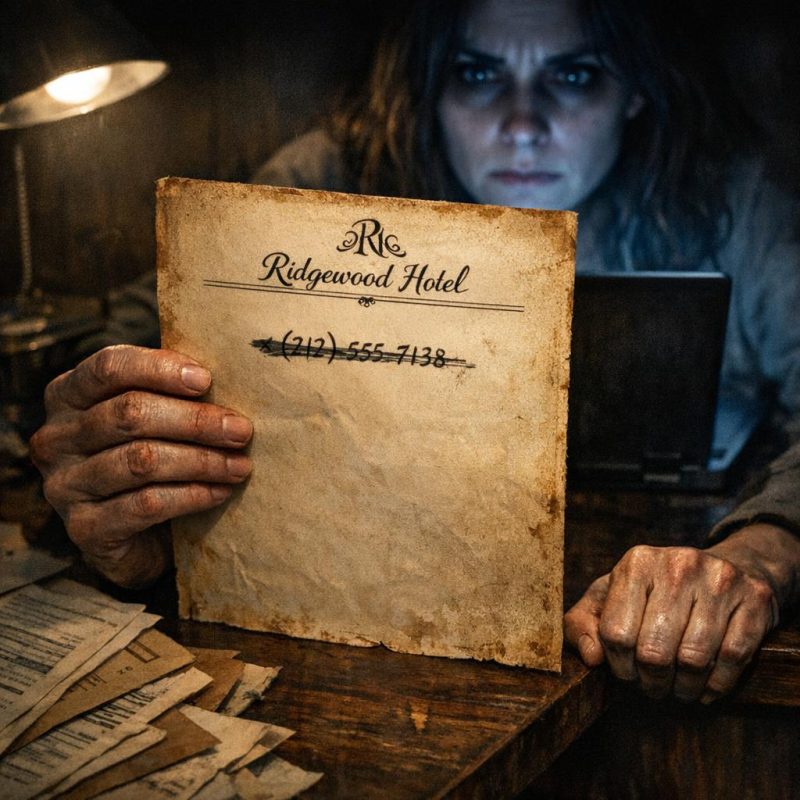 Image by RM AI
The Echo
That night, I lay awake beside Tom, listening to his steady breathing and staring at the ceiling. The adoption agency name circled through my thoughts, tangling with Sarah's words—'the day I lost you.' I kept trying to push the thoughts away, to tell myself I was making connections that didn't exist, seeing patterns in random coincidence. But the weight in my chest had grown heavier, more insistent. Part of me wondered if the answer to Sarah Mitchell had been hiding in my own past all along, in the places I'd refused to look for so many years. The thought terrified me. I'd built my life on moving forward, on not dwelling, on keeping certain doors locked. I'd gotten good at it. So good that I'd almost forgotten the doors were there. Now something was rattling the handles, and I could feel the locks starting to give. Tom shifted beside me, his hand finding mine in the dark, and I held on tight. He had no idea what I was thinking, what I was starting to remember. No idea about the parts of my history I'd never shared with anyone. The clock on the nightstand read 3:47 AM, and I was afraid of what I might remember if I let myself try.
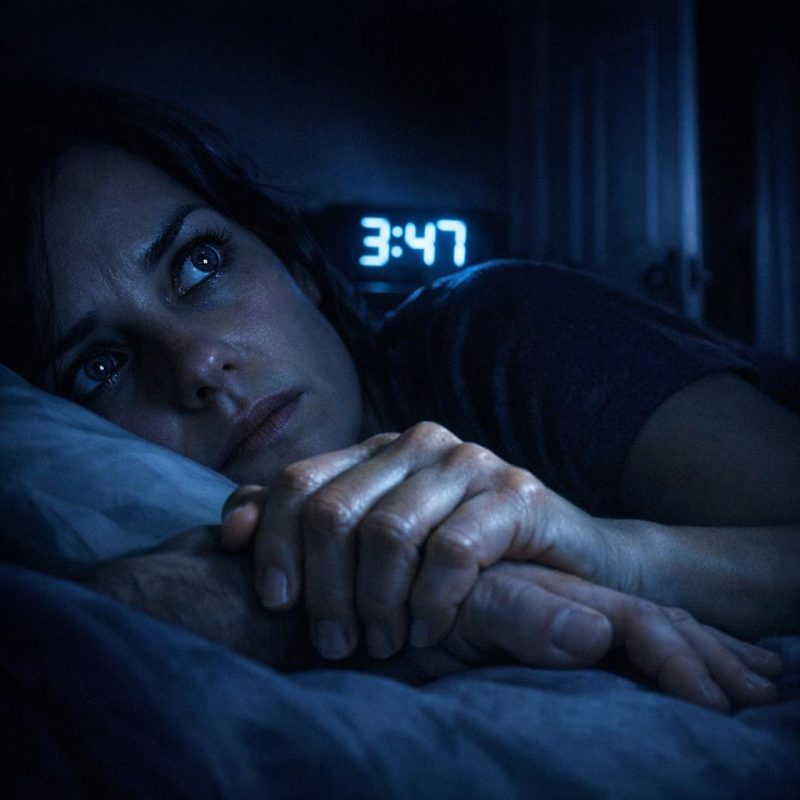 Image by RM AI
The Memory Returns
I stopped fighting it the next morning. I sat at the kitchen table with my coffee growing cold and let myself remember the thing I'd buried for forty-three years. I was eighteen. I was pregnant. I was terrified and alone except for my parents, who'd arranged everything quietly, efficiently, making sure no one else would ever know. They'd found St. Catherine's Family Services, handled all the paperwork, driven me to appointments I barely remembered. I'd given birth in a hospital two towns over, somewhere no one would recognize us. The memory came back in fragments—the weight of her in my arms, so brief, maybe ten minutes before they took her away. Her face, red and wrinkled and perfect. The papers I'd signed with shaking hands, my mother standing beside me, my father waiting in the hallway. The adoption had been arranged before she was born. I never even named her. They'd told me it would be easier that way, cleaner, and I'd believed them because I was eighteen and didn't know any better. I remembered the drive home, staring out the window, feeling hollow. I remembered burying it, pushing it down, never speaking of it again. I remembered everything: the hospital, the papers, the moment they took her away.
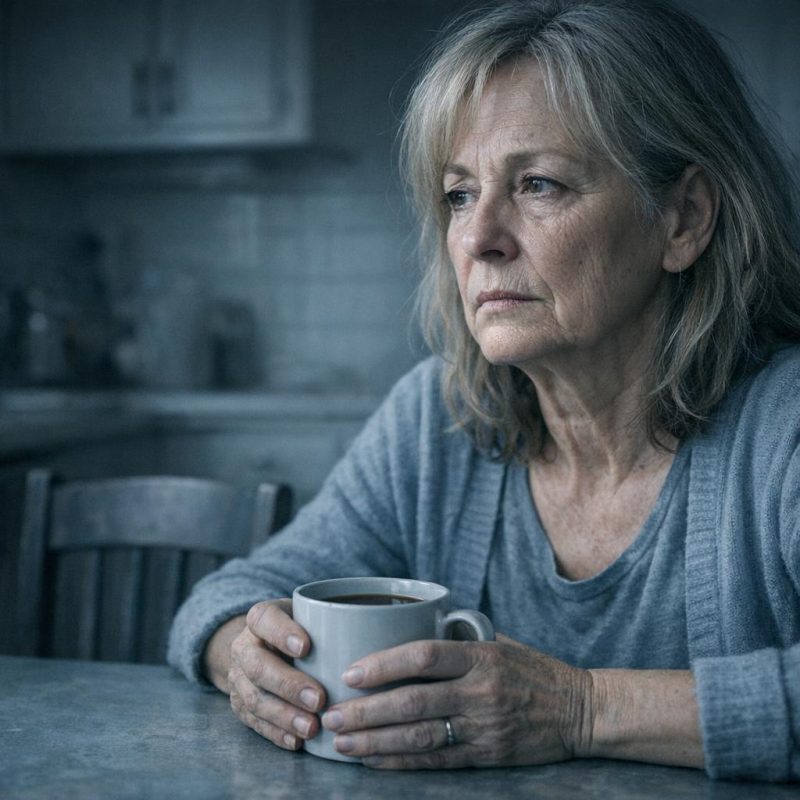 Image by RM AI
The Secret
I sat with that memory for hours, feeling the full weight of what I'd carried alone. My parents had been the only ones who knew, and they'd both been dead for over a decade now. I'd never told Tom. We'd met when I was twenty-five, seven years after I'd given birth, and by then the secret felt like something from another lifetime, something that belonged to a different person. I'd convinced myself it didn't matter, that it was in the past and had nothing to do with the life I was building. So I'd never mentioned it. Not when we got married, not when we had our own children, not in thirty-eight years of marriage. My kids didn't know they had a half-sister somewhere in the world. Jenny didn't know. No one knew except me, and the weight of that silence had become so familiar I'd stopped noticing it. Until now. Until Sarah Mitchell's journals had cracked something open and forced me to look at what I'd been protecting myself from. I'd carried this alone for decades, and now it was reaching back.
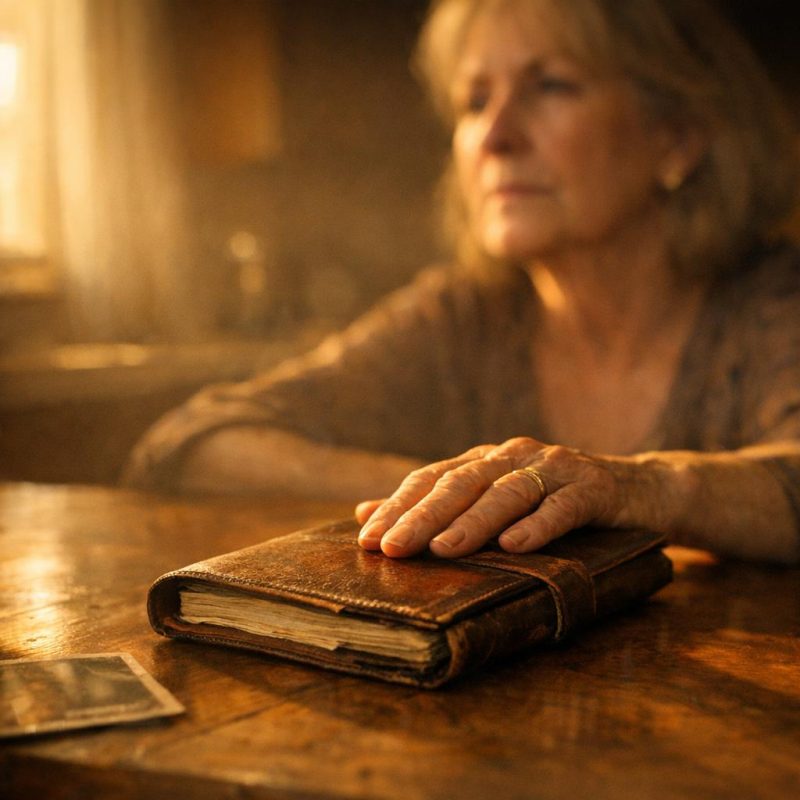 Image by RM AI
The Marriage Truth
I looked at Tom sleeping beside me that night and felt the gap between us like a physical distance. Our entire marriage had been built on incomplete truth. I'd never lied to him, exactly—he'd never asked if I'd had a child before we met, and I'd never volunteered the information. In the beginning, when we were dating, I'd told myself I'd tell him eventually. But weeks became months, months became years, and the secret calcified into something I couldn't figure out how to confess. By the time we got married, it felt too late. How do you tell someone you're about to spend your life with that you've been keeping something this big from them? So I'd convinced myself it didn't matter. That the past was past, that the girl I'd been at eighteen had nothing to do with the woman I'd become. I'd moved forward and never looked back, and Tom had loved the version of me I'd shown him. Now I watched him sleep and understood what I'd done. I'd built our life together on a foundation with a hole in it, a space where truth should have been. And I had no idea how to tell him now. How do you tell your husband about the child you gave away before you ever met him?
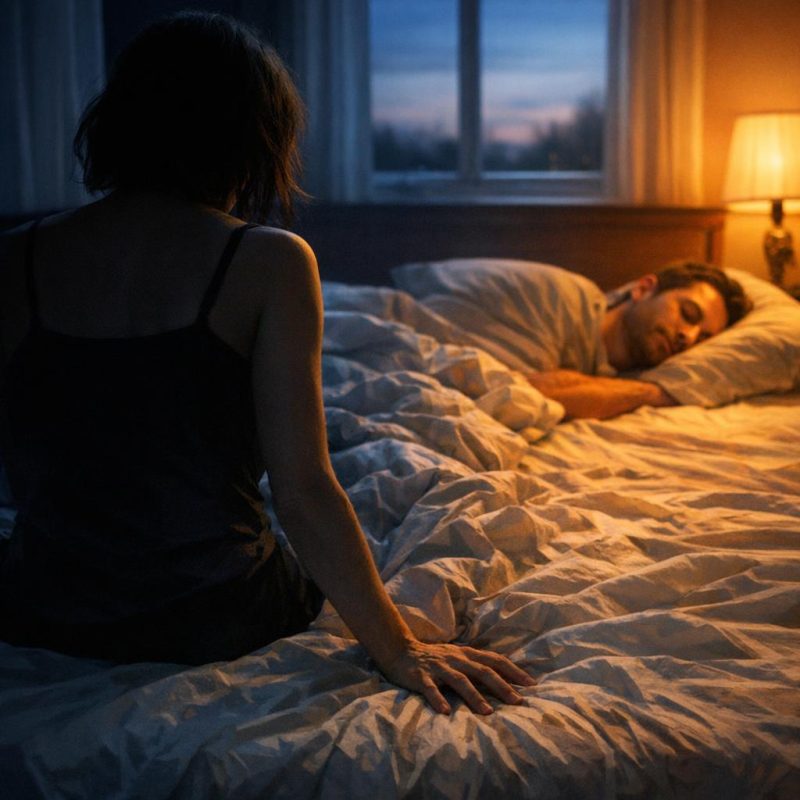 Image by RM AI
The Math
The next morning, I pulled up Sarah Mitchell's obituary again and found her exact birthdate. March 15, 1981. My hands started shaking before I'd even finished the calculation. I'd given birth in March of 1981. I counted backward, forward, checking and rechecking the math like I might find a different answer. Sarah Mitchell was forty-two when she died last year. My daughter would be forty-three now—I'd given birth in early March, and Sarah's birthday was mid-March. The dates were so close they made my vision blur. I searched for Sarah's birth certificate information, found references that confirmed she'd been born in the same county where I'd given birth. I tried to think of reasons this could be coincidence. Maybe lots of babies were born that month. Maybe the adoption agency had handled dozens of cases. Maybe I was seeing connections that didn't exist because I wanted an explanation for why Sarah Mitchell had left me everything. But every calculation brought me back to the same terrible possibility. Sarah Mitchell was forty-two when she died; my daughter would be forty-three now.
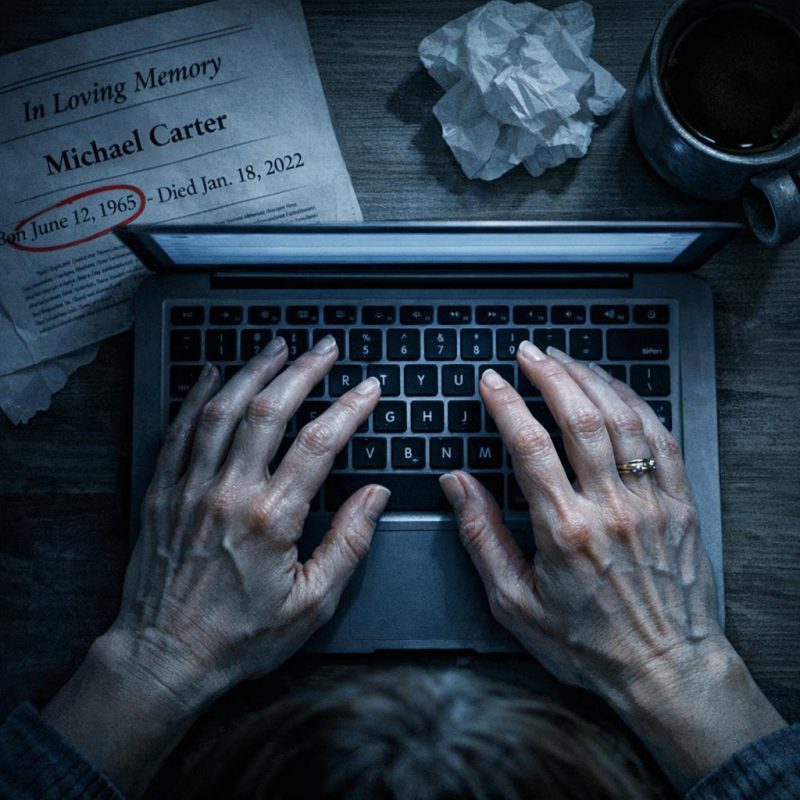 Image by RM AI
The Call to the Past
I searched for St. Catherine's Family Services with new urgency, needing confirmation, needing proof. The agency had closed fifteen years ago—I found a brief notice in an archived newspaper from 2008 announcing the closure after forty years of operation. I searched for information about what had happened to their records, found vague references to files being transferred to state archives or destroyed per privacy laws. I needed to find someone who'd worked there, someone who might remember, someone who could tell me if Sarah Mitchell had been the baby I'd given up. I spent hours searching for former employees, board members, anyone connected to the defunct agency. The internet gave me fragments—a social worker who'd retired to Florida, an administrator who'd passed away in 2012, a lawyer whose trail went cold. I made lists, followed dead ends, searched obituaries and LinkedIn profiles and public records. The agency had been small, family-run, and most of the people who'd worked there were elderly or gone. But somewhere in those old files was the truth, and I had to find it.
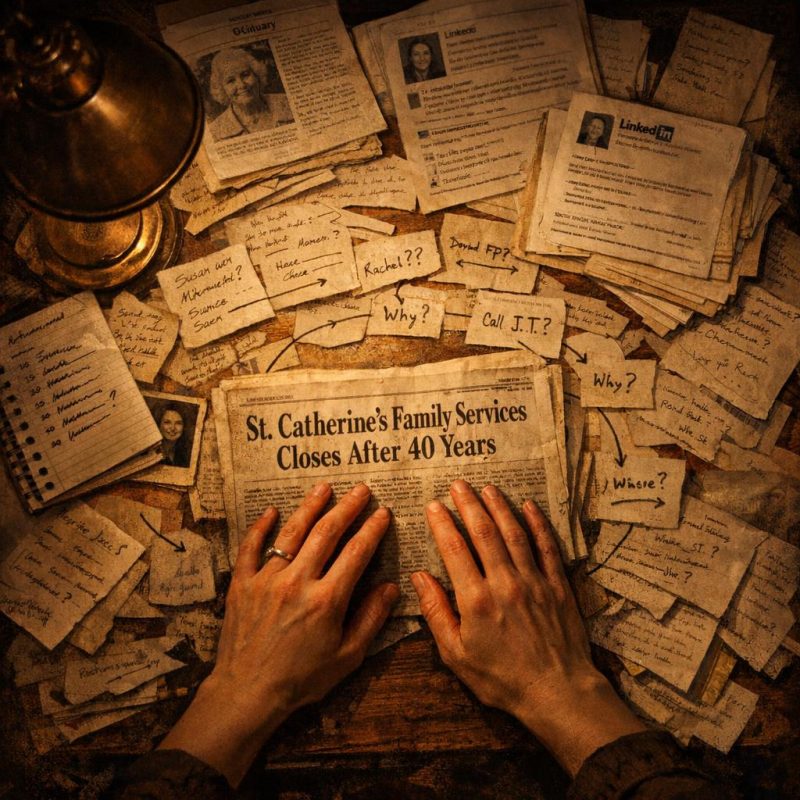 Image by RM AI
Finding Linda
I found her name in an archived newspaper article from 1995—a small piece about St. Catherine's hosting a community fundraiser. Linda Morrison, listed among the staff members. From there it was public records, old phone directories, property tax databases. She'd moved twice since the agency closed, but I traced her to a small town three hours north. I sat in my car for twenty minutes before I called the number I'd found, rehearsing what I'd say, trying to sound calm instead of desperate. When she answered, her voice was thin and careful, the voice of someone who'd learned to be cautious with strangers. I told her my name, explained I was trying to learn about an adoption that went through St. Catherine's in 1980. She went quiet. Not the brief pause of someone thinking, but the stretched silence of someone deciding whether to speak at all. I filled the void with more words—I just need to understand what happened, I said, I need to know about my case. Another pause. Then: "I worked there a long time ago." Her tone had shifted, become even more guarded. I asked if we could meet, if she'd be willing to talk in person. The silence that followed felt like recognition.
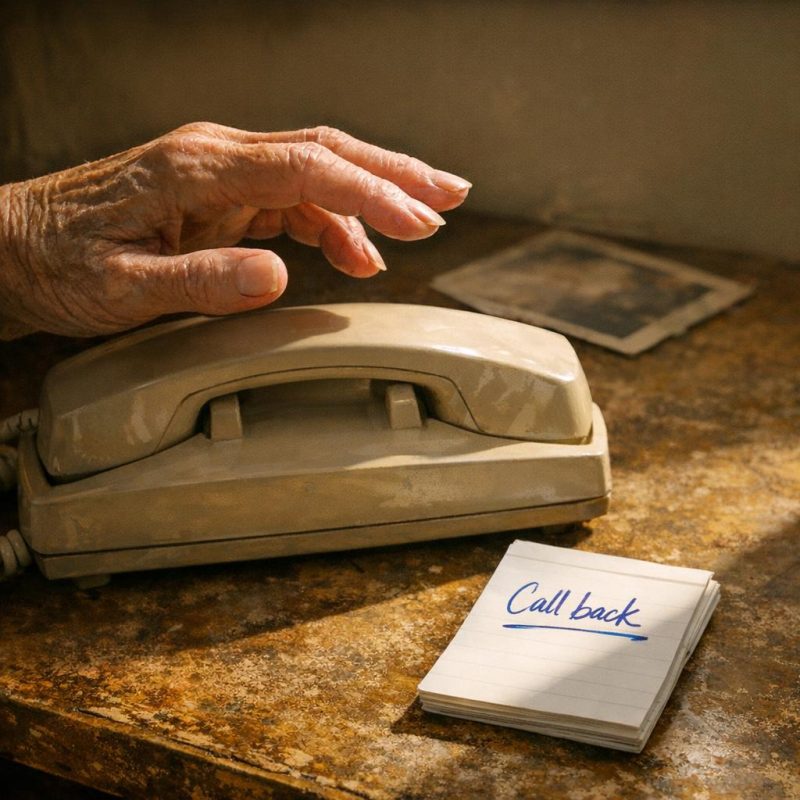 Image by RM AI
The Former Worker
Linda Morrison's house was small and tidy, the kind of place someone maintains alone with careful routine. She was seventy-eight, white-haired and frail, but her eyes were sharp when she opened the door. We sat in her living room surrounded by decades of accumulated life—photographs of grandchildren, needlepoint pillows, a bookshelf filled with paperbacks. I explained as much as I could without revealing everything. I told her I'd given up a baby in 1980, that I was trying to learn what had happened after the adoption. She listened without interrupting, her hands folded in her lap. When I showed her my identification and the few documents I still had from that time, she studied them carefully. "I remember," she said finally, and something in her expression troubled me. Not confusion or blankness, but something heavier. I asked what she remembered. She said the records were sealed, that they were supposed to stay that way. I could feel her wrestling with something—not forgetfulness, but principle. She'd spent twenty years at that agency, and the rules from that era still bound her. Linda said she remembered my case, and her eyes held something I couldn't read—pity, maybe, or something heavier.
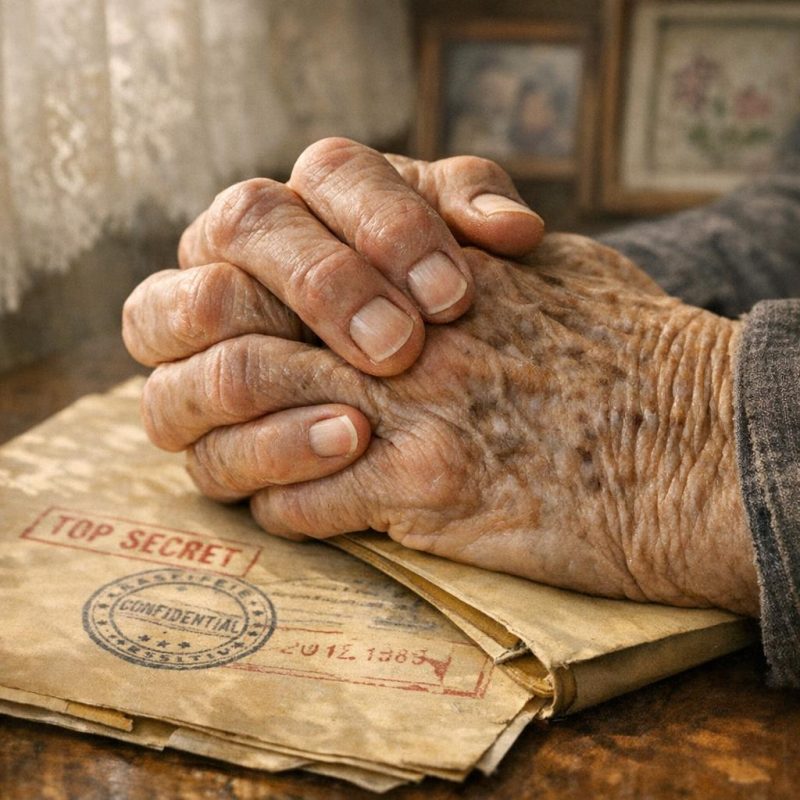 Image by RM AI
Please
I broke. I hadn't planned to, but sitting there watching her hold back what I needed to know, I couldn't maintain the composure I'd been clinging to. I told her about Sarah Mitchell, about the inheritance from a stranger, about the photographs spanning decades of my life. I described finding Sarah's obituary, calculating her age, realizing she would have been born the same year I gave up my daughter. Linda's expression shifted as I spoke, recognition dawning in her careful features. I asked her directly—could Sarah Mitchell have been my daughter? My voice cracked on the question. I was crying now, couldn't stop myself. I told her about the surveillance, the watching, the feeling of being studied by someone I'd never met. I said I needed to know if the woman who'd left me everything was the baby I'd given away forty-three years ago. Linda sat very still, processing everything I'd told her. Her face showed she understood what I was asking, that she knew the answer I was seeking. She closed her eyes for a long moment, then said: "I think you already know."
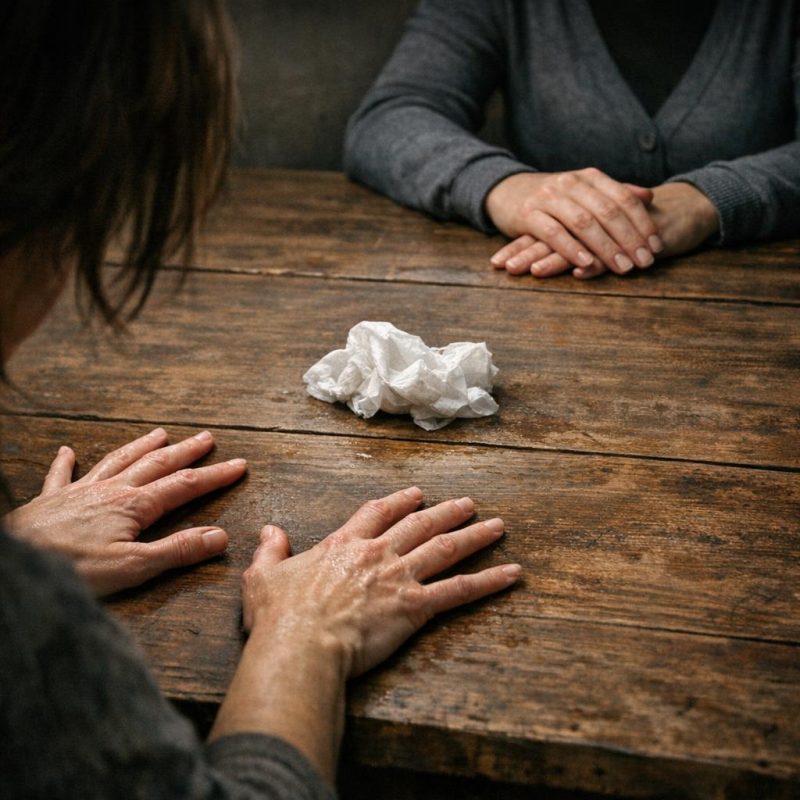 Image by RM AI
The Truth
"Yes," Linda said, opening her eyes. "Sarah Mitchell was your daughter." The words hung in the air between us, confirmation of what I'd been afraid to believe. She explained it carefully, her voice gentle but steady. Sarah had been adopted by the Mitchell family, had grown up in a good home. When she turned eighteen, she'd contacted the agency, asking for help finding her birth mother. The laws had changed by then, records were opening. Sarah found me through legal channels, learned my name, my address, everything. But she never made contact. Linda said Sarah's adoptive parents had kept the agency informed—they'd known their daughter had found me but chosen to watch from a distance instead. "She was afraid," Linda said quietly. "Of rejection, of disrupting your life, of not being wanted again." I understood then that every photograph, every piece of surveillance, had been a daughter's longing, not a stranger's intrusion. Sarah had spent decades watching the mother who gave her away, too frightened to introduce herself. And now she was gone. My daughter had been watching me all her life, and now she was gone.
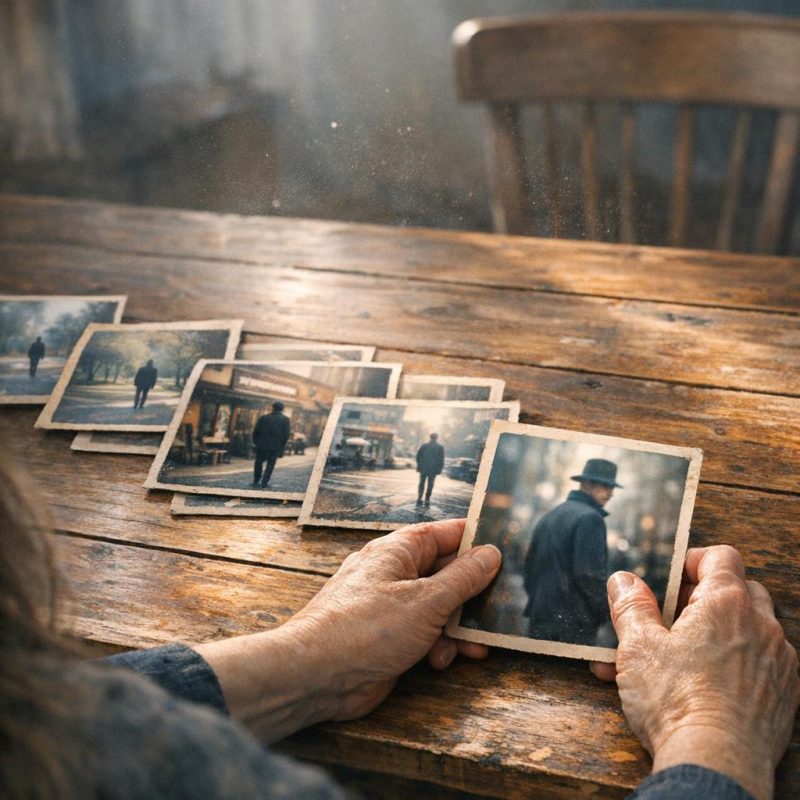 Image by RM AI
The Weight of Names
I drove home in a fog, barely aware of the highway passing beneath me. Three hours of road and I couldn't have told you what I saw. My mind kept replaying everything I knew about Sarah Mitchell through this new lens—every photograph became evidence of longing instead of threat, every piece of surveillance a daughter's quiet vigil. I thought about the pictures of me at the grocery store, at the park, living my ordinary life while she watched from whatever distance felt safe. She'd been so close. For years, decades, she'd been right there, and I'd never known. I remembered the day they took her from me, the few hours I'd held her before the social worker came. I'd named her Sarah then, whispered it to her while we were alone. Sarah Harris, for those brief moments before she became someone else's daughter. The Mitchell family had kept the name, at least. That felt like something, though I didn't know what. I arrived home as the sun was setting and sat in my parked car, unable to go inside yet. Sarah Mitchell had been Sarah Harris first, for the few hours I held her before they took her away.
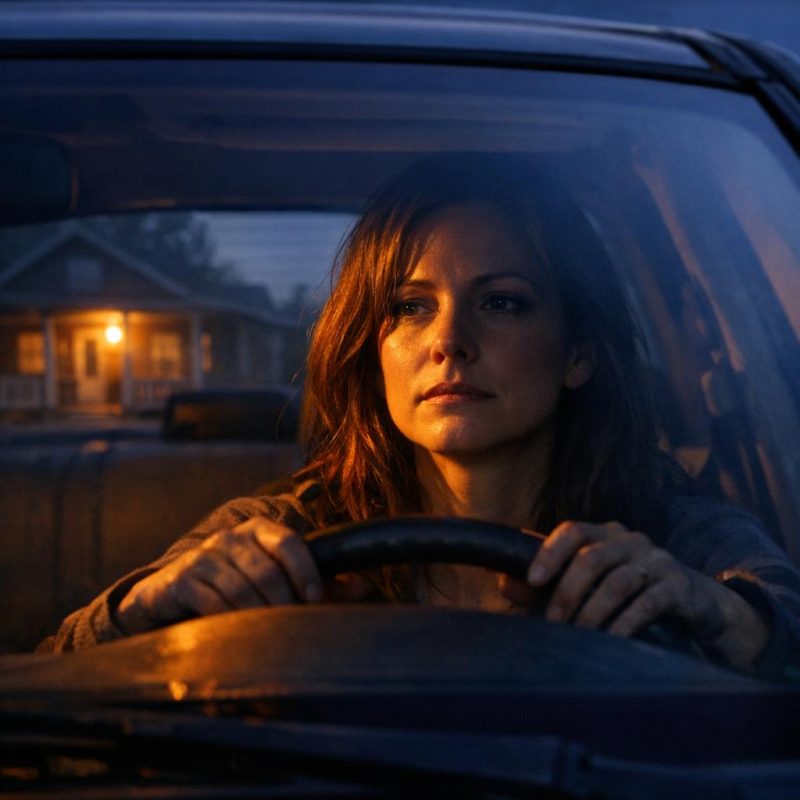 Image by RM AI
The Weight of Years
I went straight to the bedroom and lay down in the dark. Tom was still at work, and I was grateful for the solitude, for the space to let the grief wash over me completely. I thought about every birthday I'd never celebrated, every milestone I'd missed. First steps, first words, first day of school—all of it had happened without me. I'd made myself not think about her over the years, had buried the memory so deep I could almost pretend it hadn't happened. But she'd been real, had been living and growing and becoming a person while I went on with my life. I wondered if she'd been happy, if the Mitchell family had loved her well, if she'd had friends and dreams and a full life. I counted the years—forty-three of them, forty-three years of separation. I'd been eighteen when I gave her up, too young and too scared and too alone. My parents had arranged everything, had told me it was the only option, and I'd believed them because I didn't know what else to do. Now they were gone and she was gone and I was drowning in regret for a decision I'd made when I was barely more than a child myself. I had given her away, and she had spent her whole life trying to find her way back to me.
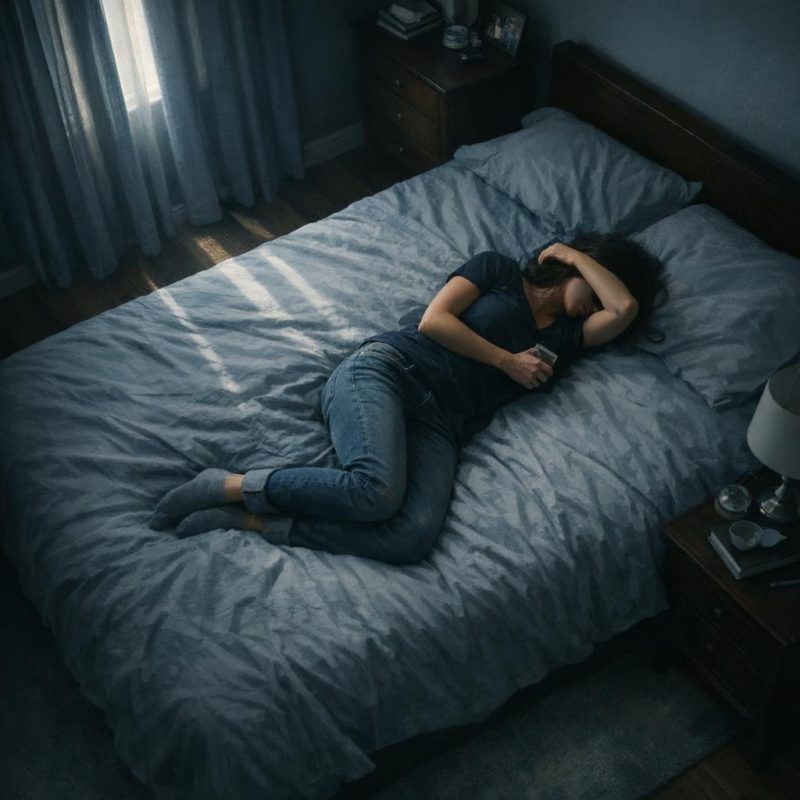 Image by RM AI
The confession
I waited until after dinner, until we'd cleaned the kitchen and settled into the quiet evening routine we'd built over thirty years of marriage. Then I asked Tom to sit down, told him I needed to tell him something I should have told him a long time ago. His expression shifted immediately—he knew this was serious. I started at the beginning. I told him about getting pregnant at eighteen, about my parents' reaction, about the adoption they'd arranged through St. Catherine's. I explained how I'd buried it after they died, how I'd never told anyone because speaking it aloud would make it real again. Tom listened without interrupting, his face unreadable. Then I connected it to Sarah Mitchell. I told him about Linda Morrison's confirmation, about learning that the stranger who'd left me everything was my biological daughter. That the surveillance had been a daughter watching her mother from a distance, too afraid to make contact. I admitted I'd hidden this our entire marriage, that he'd spent three decades with someone who'd kept this enormous secret. Tom sat in stunned silence. Finally, he spoke: "Why didn't you ever tell me?" His voice was quiet, hurt. Tom looked at me like he was seeing someone he had never met before.
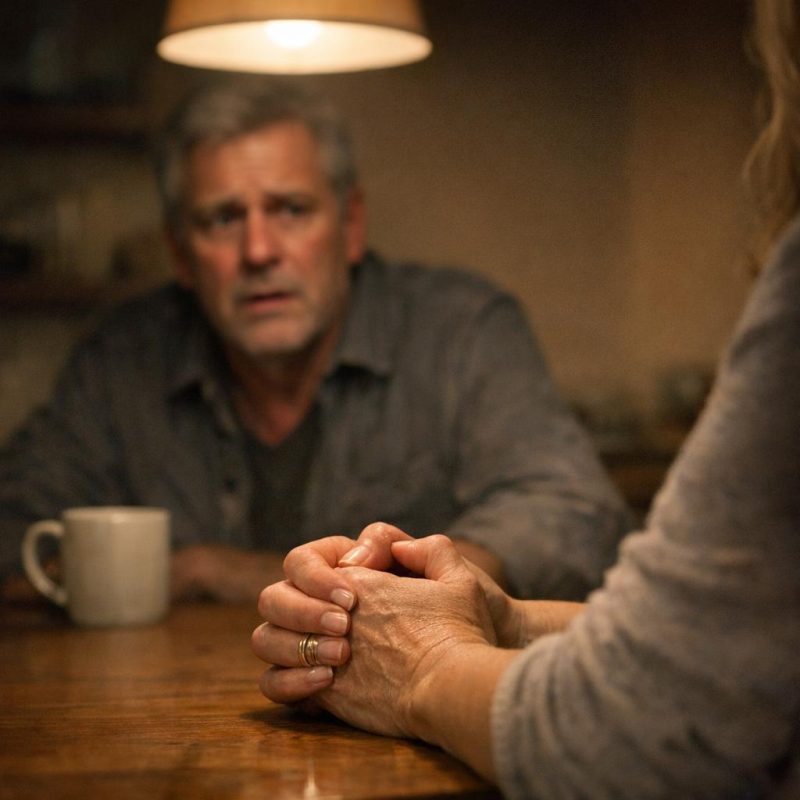 Image by RM AI
Tom's Choice
Tom stayed up all night. I could hear him moving through the house, making coffee at two a.m., pacing in the living room. I lay awake in bed, afraid to go to him, afraid of what his silence meant. I'd broken something between us, I was sure of it. You don't hide something that big for thirty years without consequences. Morning came gray and cold. I heard him in the kitchen and forced myself to get up, to face whatever came next. He was sitting at the table when I walked in, looking exhausted. I started to speak but he held up his hand, asked me to just listen. He said he'd spent the night trying to understand, trying to process decades of omission. He was hurt—he didn't hide that. He wished I'd trusted him sooner, wished I'd let him carry this with me instead of bearing it alone. But he understood why I hadn't. He understood I'd been protecting myself the only way I knew how. Then he reached across the table and took my hand. He said we'd face this together, that he wasn't going anywhere. He said he wished I had trusted him sooner, but he understood why I hadn't.
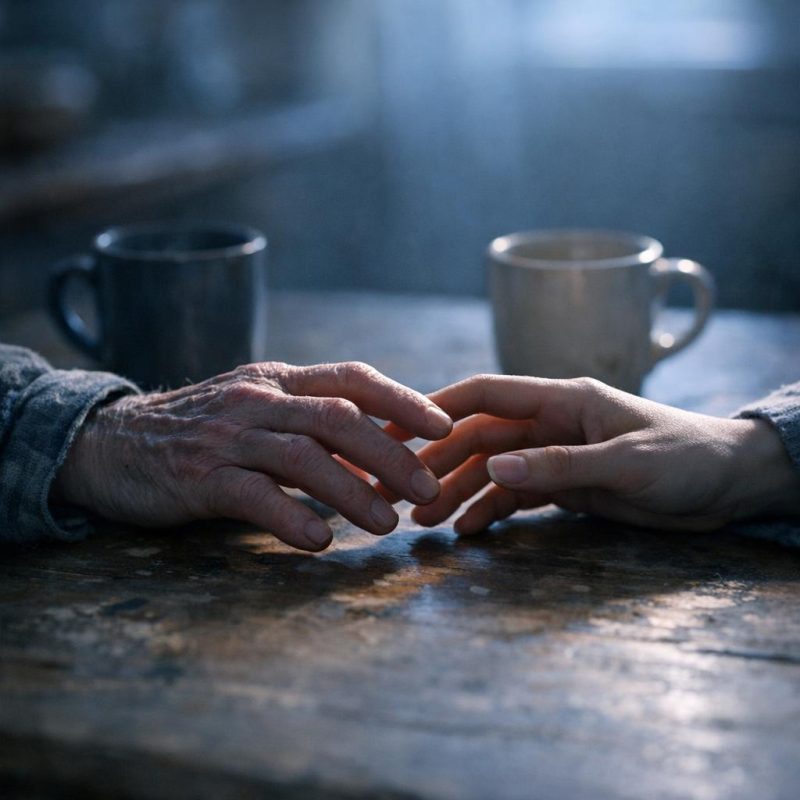 Image by RM AI
Reading Again
I pulled the journals out again the next morning, stacking them on the kitchen table in chronological order. Tom had gone to work, giving me space, and the house felt too quiet. I opened the first one with shaking hands. The handwriting was the same, the dates unchanged, but everything else was different now. Where I'd once read surveillance, I now saw longing. Where I'd felt watched, I now understood she'd been looking for herself in me. She wrote about my morning routine, yes, but the way you'd write about someone you desperately wanted to know. She described the way I laughed at something Tom said in the driveway, and I could hear the yearning in it now. She'd been studying me the way a daughter studies her mother, looking for similarities, for connection, for proof that she belonged somewhere. I read for hours, tears streaming down my face, finally hearing her voice. Not the voice of a stranger documenting my life, but the voice of my daughter, watching from a distance she didn't know how to cross. She had written about me the way you write about someone you love but can never have.
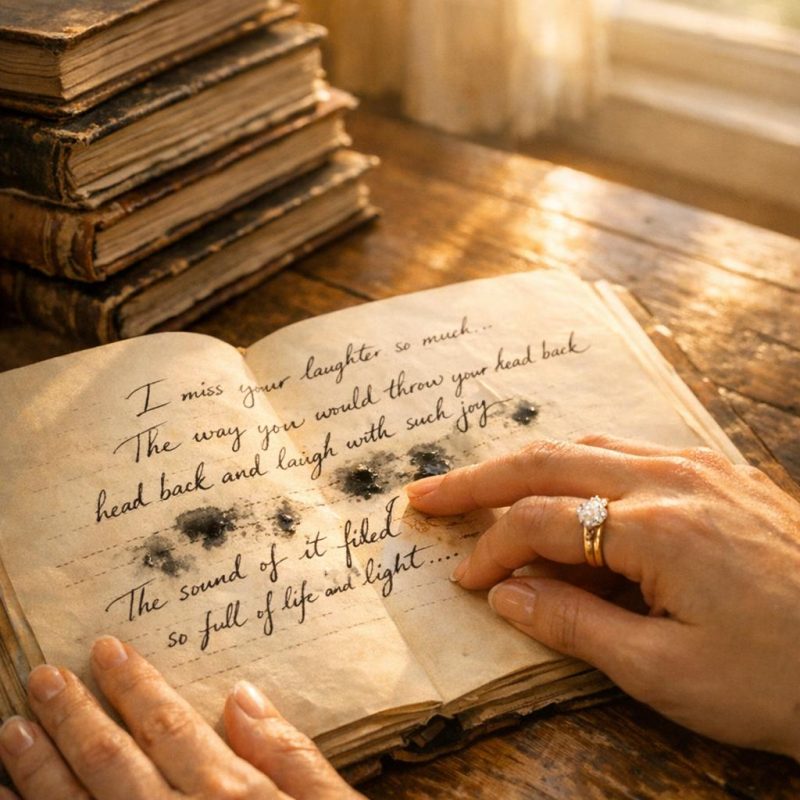 Image by RM AI
Her Voice
I found it in the journal from eighteen years ago, dated October fifteenth. The entry was longer than most, more detailed. She wrote about sitting in her car outside my house for two hours that afternoon. She described the yellow mums I'd planted by the front steps, the way the porch light came on at dusk. She wrote that she'd walked up to my door three times and turned back each time before reaching it. Her hand had been raised to knock, she said, but she couldn't make herself do it. What if I slammed the door in her face? What if I told her I'd moved on, that I didn't want to be reminded? What if I had other children now and she was just an embarrassing secret I'd buried? She wrote that she sat back in her car and cried, then drove away. She said she'd try again when she was braver, when she had the right words. I pressed my hand to the page, wishing I could reach back through time and open that door. She had been right there, and I never knew.
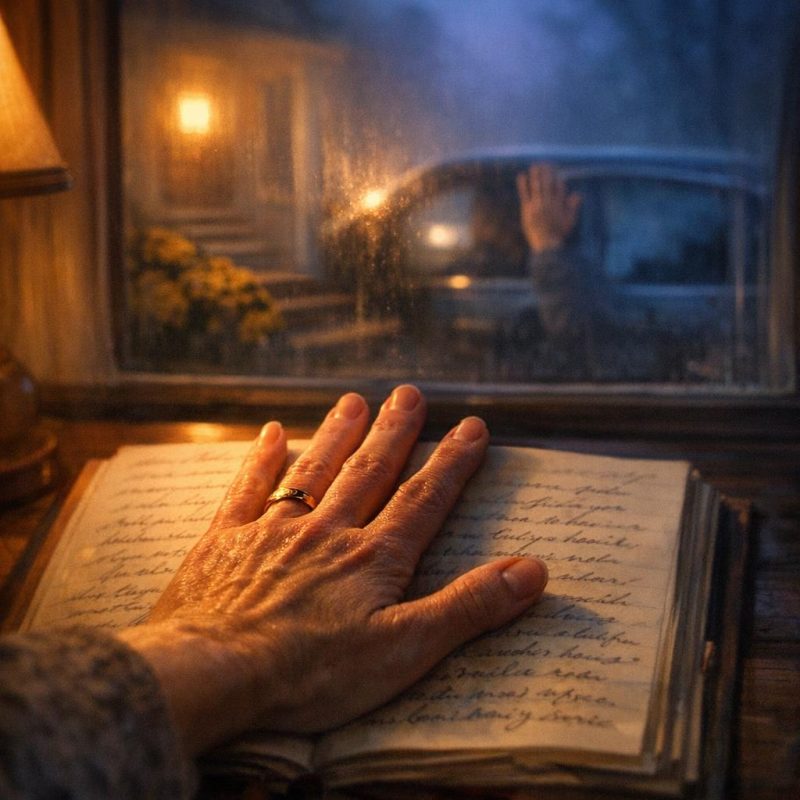 Image by RM AI
The Final Letter
I was closing the last journal when I felt something shift in the back cover. There was a pocket I hadn't noticed before, the kind sewn into the endpaper. I slid my fingers inside and pulled out an envelope. It was cream-colored, expensive paper, and my name was written across the front in Sarah's careful handwriting. Not 'To whom it may concern' or 'To my birth mother.' Just 'Ellen Harris' in blue ink. The envelope was sealed. I turned it over and saw the date written in the corner, small and precise. My hands started shaking so badly I had to set it down on the table. I stared at it for a long time, this final message from a daughter I'd never held. She'd hidden it here, in the back of her last journal, knowing I'd find it only after reading everything else. Only after I understood who she was. Only after she was gone. I picked it up again and carefully broke the seal. The letter was dated three months before Sarah died.
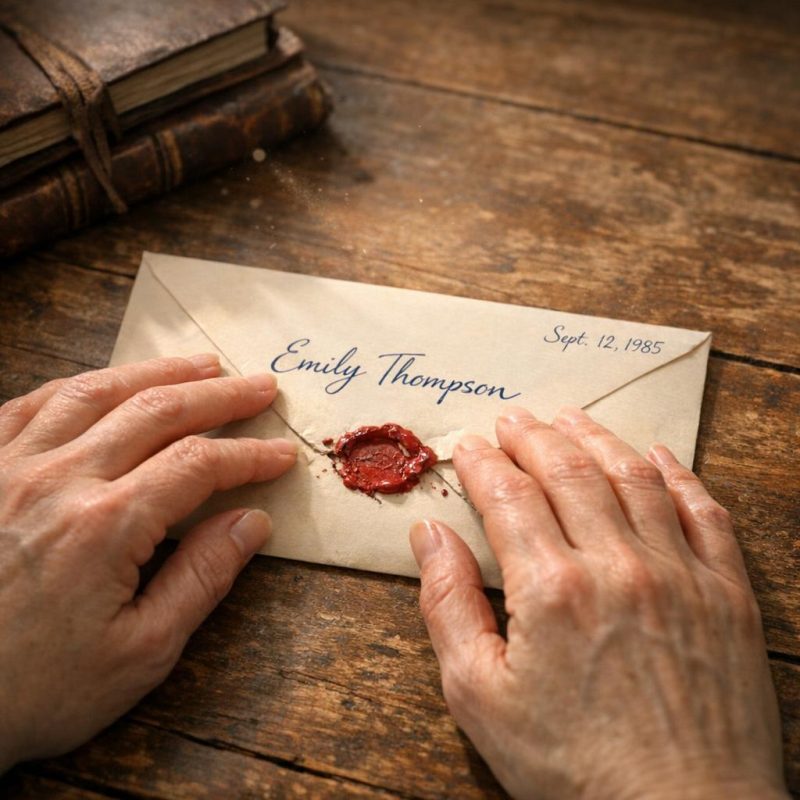 Image by RM AI
Sarah's Words
The letter was two pages, handwritten on the same cream paper. Her handwriting was shakier than in the journals, and I wondered if she was already sick when she wrote it. She started by saying she hoped I'd found the journals first, that she'd wanted me to know her before reading her explanation. Then she told me the timeline. She'd found me when she was eighteen, hired someone to locate me, learned my name and address. She'd driven past my house that first time and seen me in the yard with Tom. She wrote that she'd planned to knock on the door that day, had rehearsed what she'd say. But when she saw how normal my life looked, how settled and peaceful, she couldn't do it. What if I didn't want to be found? What if I'd spent twenty years trying to forget her? She wrote that she'd decided to wait, to watch, to know me from a distance until she was certain I'd want to know her too. But that certainty never came. She wrote that she would rather love me from far away than risk losing me completely.
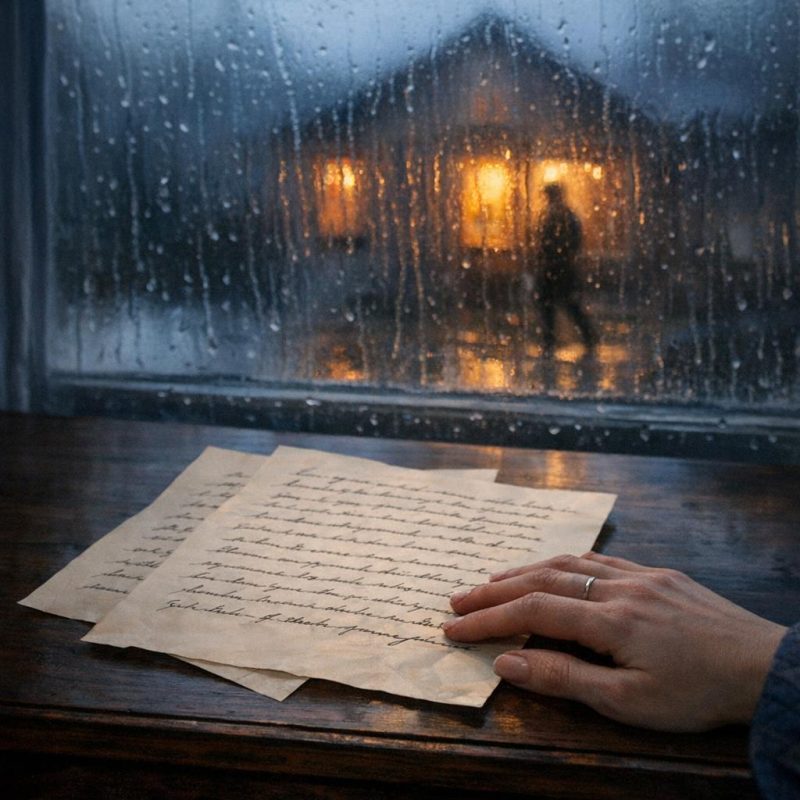 Image by RM AI
Two Women, Same Fear
I set the letter down and saw myself at eighteen, terrified and alone, burying the secret so deep I almost convinced myself it hadn't happened. I'd been so afraid of judgment, of shame, of being defined by that one choice forever. So I'd hidden it from everyone, even Tom, because silence felt safer than risk. And Sarah had done exactly the same thing. She'd found me and then hidden herself away, watching from the shadows because distance felt safer than rejection. We'd both been paralyzed by fear, both chosen protection over connection. If I'd been braver, if I'd told Tom earlier, maybe I would have been ready when she finally reached out. If she'd been braver, if she'd knocked on that door, maybe I would have surprised us both by welcoming her in. But neither of us had that courage. We'd circled each other for twenty-five years, two women who wanted the same thing but were too afraid to reach for it. We had lived our entire lives afraid of each other, and neither of us had to be.
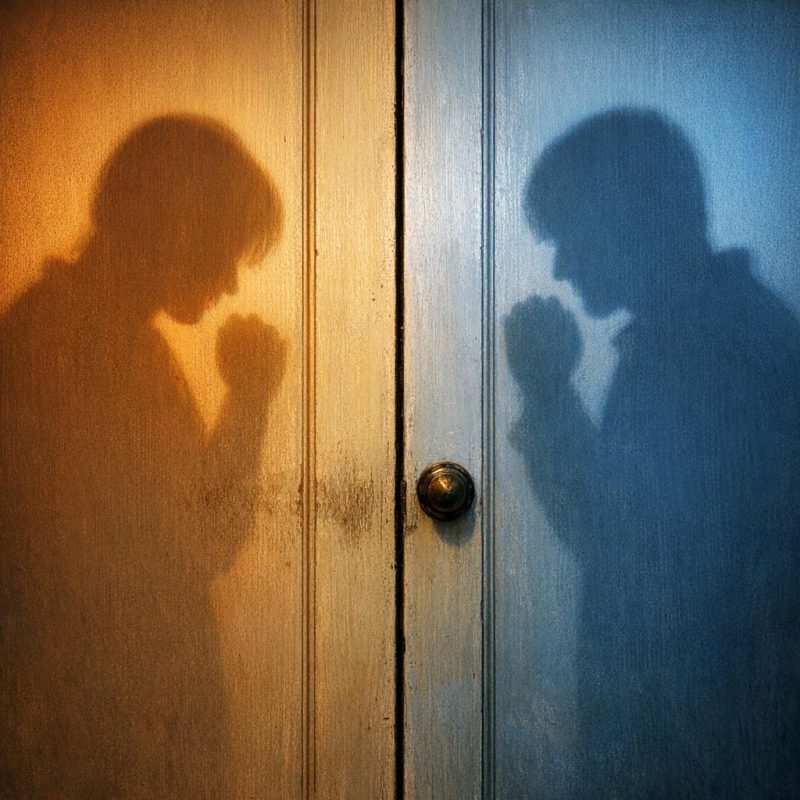 Image by RM AI
The Message
I went back to the boxes Mr. Chen had given me, searching for anything else I might have missed. In a folder of old correspondence, I found printed email drafts Sarah had never sent. Three of them, all addressed to me, all saying variations of the same thing: I'm your daughter, I'd like to meet you, I understand if you don't want contact. None of them sent. And then, tucked in an envelope with old birthday cards from her adoptive parents, I found it. A card addressed to me at my old apartment, the one Tom and I had lived in before we bought the house. It was marked 'Return to sender—addressee unknown.' The postmark was eighteen years old. I pulled out my phone and checked the dates. We'd moved to our current house in late September that year. The card was postmarked October twentieth. I did the math three times, hoping I was wrong. We'd moved three weeks before this arrived. Sarah had reached out once, and I had moved three weeks before her letter arrived.
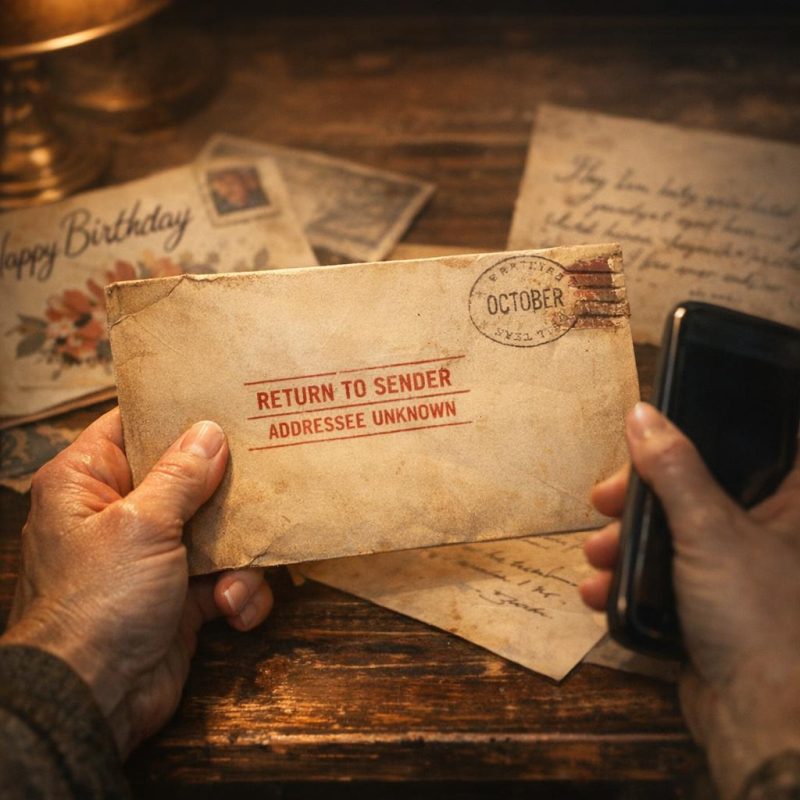 Image by RM AI
Three weeks
I sat at the kitchen table with that returned card in front of me, calculating the timeline over and over like the numbers might change if I tried hard enough. We'd moved on September twenty-eighth. The card was postmarked October twentieth. Three weeks. Twenty-two days, to be exact. I remembered that move—it hadn't been urgent. We'd found the house and liked it, but we could have waited another month to close. We'd just been eager, ready for more space. If I'd been less eager, if we'd delayed even two weeks, I would have been there when the card arrived. I would have opened it and read whatever Sarah had written inside. I would have called her, met her, known her. We could have had eighteen years together instead of this. Instead, she'd gathered all her courage, sent that card, and gotten it back marked undeliverable. She must have thought I'd moved deliberately, that I was running from my past. She never tried direct contact again after that. I kept staring at the dates, at the cruel arithmetic of it. If I had stayed one month longer at that apartment, everything would have been different.
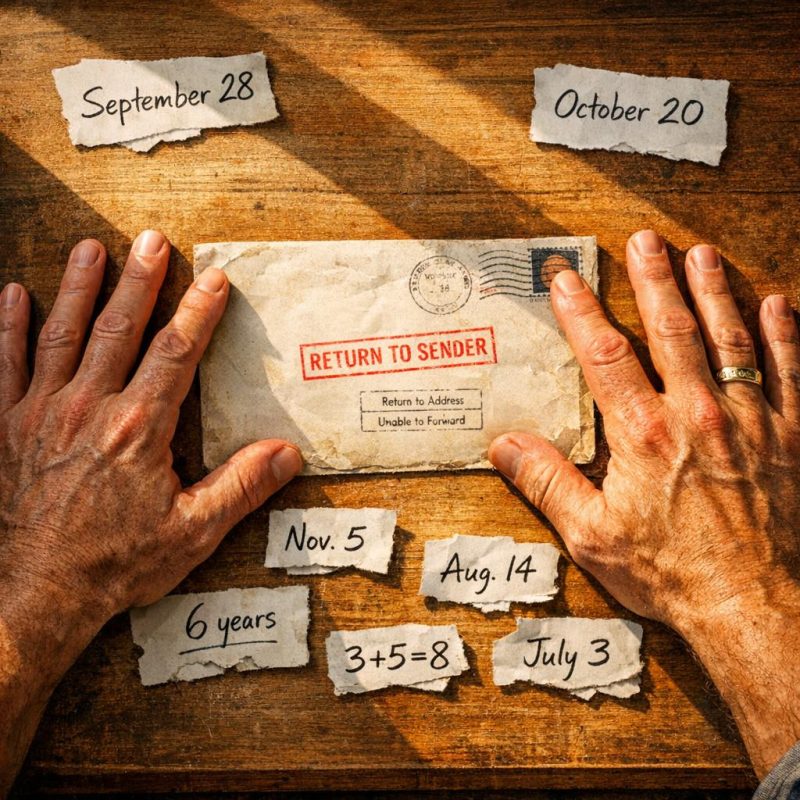 Image by RM AI
Breaking
Something broke in me then, something that had been holding together through all of it. I heard a sound come out of my throat that didn't sound human, and then I was sobbing so hard I couldn't breathe. All of it crashed down at once—the baby I'd given up, the daughter who'd found me, the years we'd lost to fear, the three weeks that had cost us everything, the death that made it all permanent. I slid off the chair onto the floor, hugging my knees, and that's where Tom found me when he came home early. He didn't ask questions, just got down on the floor and pulled me against his chest. I screamed into his shirt, great heaving sobs that felt like they were tearing me apart. I cried for the eighteen-year-old girl I'd been, terrified and alone. I cried for Sarah, watching me from a distance for twenty-five years. I cried for the returned card and the three weeks and the courage neither of us had found in time. Tom held me while I screamed into his chest for the daughter I would never hold.
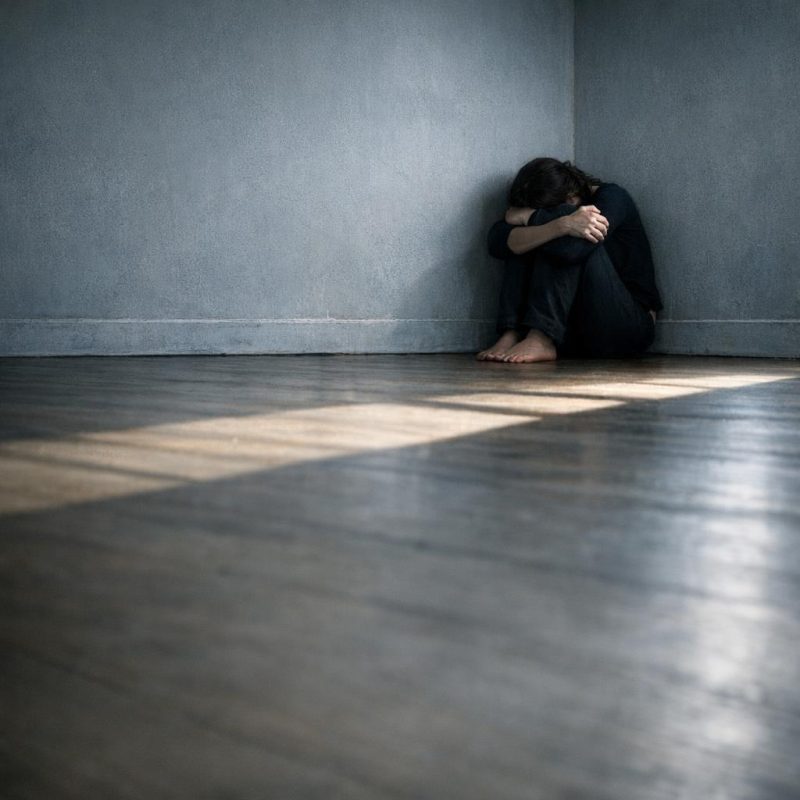 Image by RM AI
The grave
The cemetery was smaller than I expected, tucked behind an old church on the east side of town. I'd called the funeral home to find out where she was buried, and the woman on the phone had been kind, not asking questions I couldn't have answered. I walked through rows of headstones, reading names of strangers, until I found hers. Sarah Mitchell. The dates carved below her name showed a life that had been thirty-four years long, and I stood there doing the math I'd done a thousand times—she'd been nine when I sent that card back. The stone was simple, gray granite, nothing elaborate. I wondered who had chosen it, who had stood here when they lowered her into the ground. My legs felt weak, so I knelt in the grass, and then the words just came. I told her about the fear that had ruled me, about the shame I'd carried for thirty-four years. I told her I understood why she'd watched from a distance, that I would have been terrified too. I told her about finding the photographs, about understanding too late that she'd been reaching out the only way she felt safe. My voice cracked when I said I wished I could go back and open that card, wished I could have been braver. I told her I was sorry, and I told her I would have said yes.
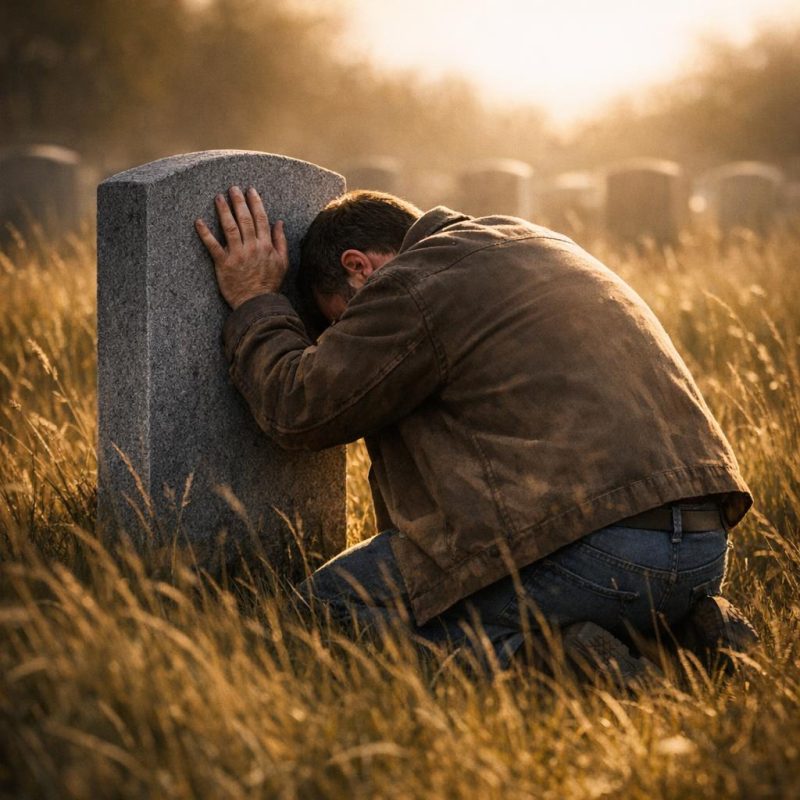 Image by RM AI
The Decision
Tom found me at the kitchen table three days later, surrounded by papers from the lawyer—account statements, property deeds, the inventory of everything Sarah had left behind. The money alone was staggering, more than I'd ever imagined having, but it was the list of her photographs that kept pulling my attention. Two thousand images, catalogued and stored, a lifetime of seeing the world through a lens. Tom sat down across from me and waited, the way he always did, letting me find the words. I told him I couldn't just keep it, couldn't treat Sarah's life like a windfall. He nodded, asked what I was thinking. I'd considered scholarships for adopted kids, donations to search registries, all the obvious choices. But none of it felt right, none of it honored who Sarah actually was. She'd been an artist, I said, someone who saw beauty and captured it, someone who'd lived her whole life invisible by choice. Tom reached across the table and took my hand. What if we made her visible now, he asked. What if we let people see what she saw. The idea settled into my chest like something that had been waiting there all along. I would use it to make sure Sarah's life meant something beyond the silence.
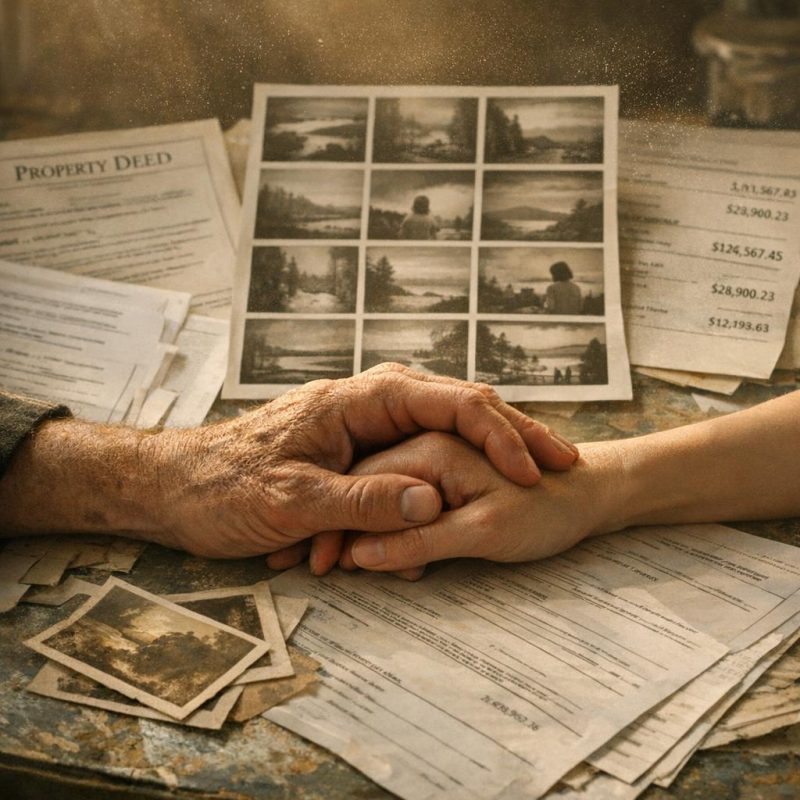 Image by RM AI
The Exhibition
Michael Chen met me at the storage unit where Sarah's photographs were kept, and when I explained what I wanted to do, his eyes filled with tears. He'd known her work, he said, had always thought it deserved to be seen. Together we went through hundreds of images—landscapes that made you feel the wind, street scenes that captured perfect moments of human connection, abstract compositions that showed how Sarah saw light and shadow. We didn't include any of the photographs of me, those stayed private, but everything else we laid out and considered. Jenny helped me write the gallery statement, keeping it simple and true: Sarah Mitchell was my daughter, and this is the gift she left behind. The opening night came faster than I expected. Tom stood beside me as people filled the small gallery space, strangers moving from photograph to photograph, leaning in close, stepping back to take in the whole composition. I heard them murmuring appreciation, saw them pause at images that caught them. A woman asked me which one was my favorite, and I pointed to a photograph of dawn breaking over water, all gold and possibility. People came to see my daughter's work, and for the first time, Sarah Mitchell was truly seen.
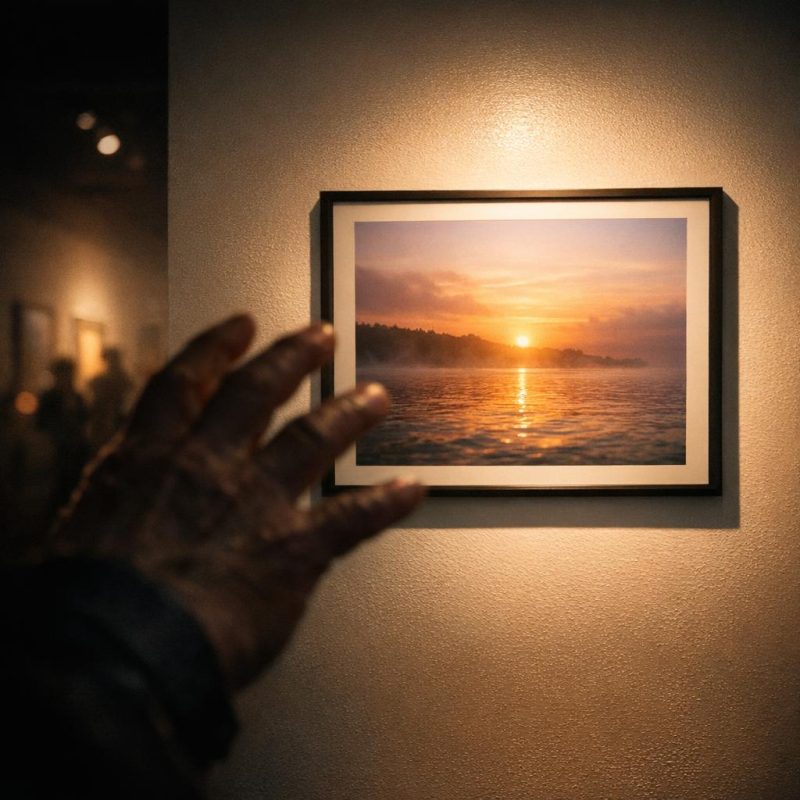 Image by RM AI
The Gift
The gallery emptied slowly, visitors trickling out into the night until only Tom and I remained among Sarah's photographs. I walked the perimeter alone, stopping at each image, seeing not just the composition but the person who'd stood behind the camera. She'd had an eye for moments most people missed—the way light fell through leaves, the expression on a stranger's face, the geometry of shadows on pavement. Each photograph was a piece of her, a window into how she'd moved through the world. Tom came to stand beside me in front of that sunrise image, and I leaned into him, feeling the weight of everything that had brought us to this moment. Sarah had given me more than money or property. She'd given me proof that she'd existed, that she'd created beauty, that she'd thought of me even when fear kept us apart. The inheritance wasn't about the accounts or the house—it was about this connection, this bridge she'd built between us when words had failed. I would never hold her, never hear her voice, never get back the years we'd lost. But I had this, her vision and her art, and I would carry it forward. Sarah had returned to me the only way she knew how, and I would carry her forward for the rest of my days.
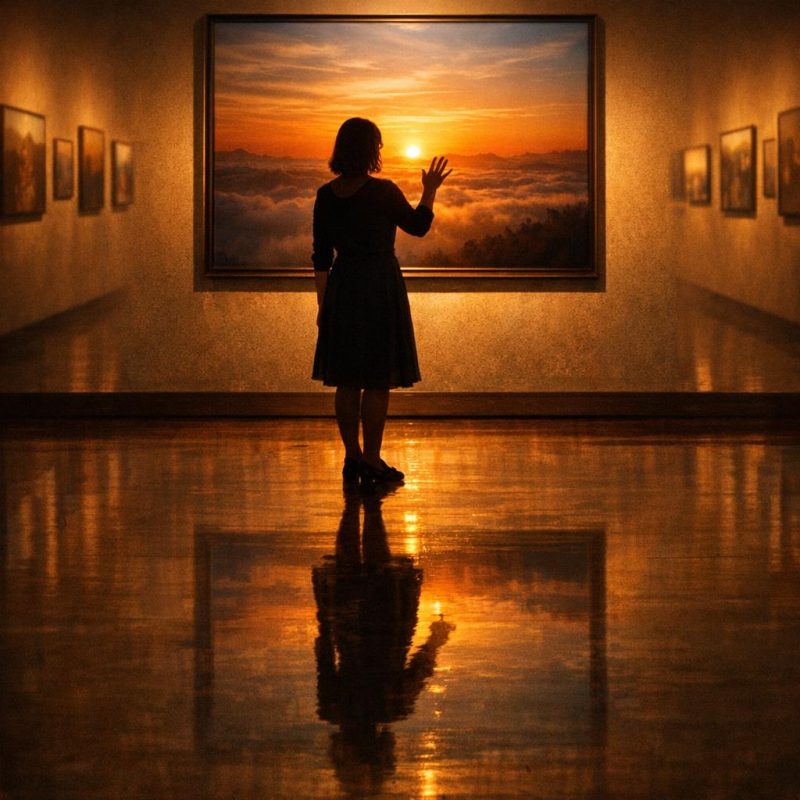 Image by RM AI
KEEP ON READING
The 20 Most Recognized Historical Figures Of All Time
The Biggest Names In History. Although the Earth has been…
By Cathy Liu Oct 4, 2024
10 of the Shortest Wars in History & 10 of…
Wars: Longest and Shortest. Throughout history, wars have varied dramatically…
By Emilie Richardson-Dupuis Oct 7, 2024
10 Fascinating Facts About Ancient Greece You Can Appreciate &…
Once Upon A Time Lived Some Ancient Weirdos.... Greece is…
By Megan Wickens Oct 7, 2024
20 Lesser-Known Facts About Christopher Columbus You Don't Learn In…
In 1492, He Sailed The Ocean Blue. Christopher Columbus is…
By Emilie Richardson-Dupuis Oct 9, 2024
20 Historical Landmarks That Have The Craziest Conspiracy Theories
Unsolved Mysteries Of Ancient Places . When there's not enough evidence…
By Megan Wickens Oct 9, 2024
The 20 Craziest Inventions & Discoveries Made During Ancient Times
Crazy Ancient Inventions . While we're busy making big advancements in…
By Cathy Liu Oct 9, 2024