


The Unexpected Detour
I'm not usually someone who shops at thrift stores. At 34, my life in Portland follows a predictable rhythm – marketing consultant by weekday, Netflix and takeout by weekend. That Saturday started like any other: sleeping in until my body decided it was done, then shuffling to my favorite coffee shop where Mia already knew my order (oat milk latte, extra shot). Walking home, coffee warming my hands against the October chill, I was mentally organizing my weekend to-do list when something caught my eye. A hand-painted sign in a dusty window: '50% Off All Home Decor.' I'm not sure what made me stop – maybe the vintage typeface or the way the morning light hit the glass – but I paused mid-stride. Thrift stores always seemed like places that required patience I didn't have, time to sift through other people's discarded lives looking for hidden gems. But something about this place pulled at me, like a gentle tug on my sleeve. 'Why not?' I thought, surprising myself as I pushed open the door, bell jingling overhead. I had no idea that this impulsive detour would lead me down a path I never expected to travel.
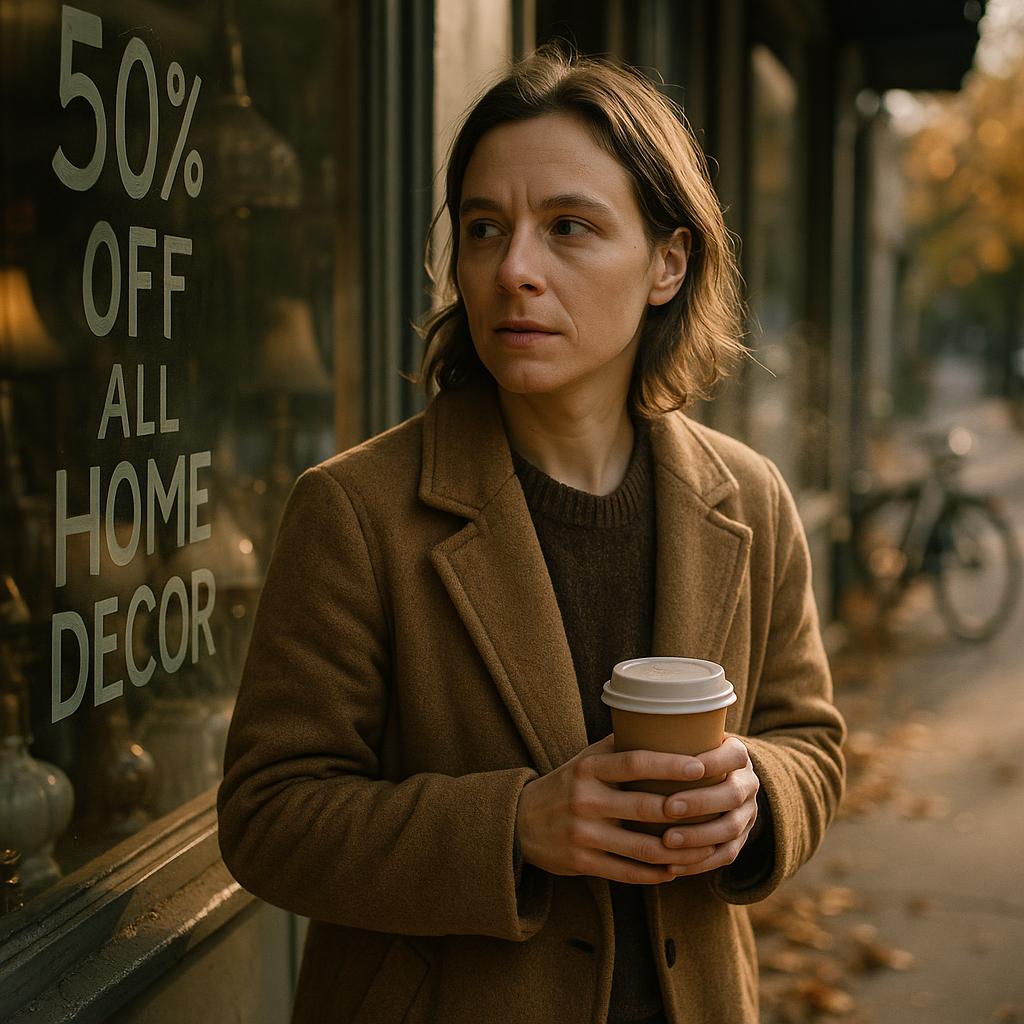 Image by RM AI
Dust and Treasures
The thrift store was exactly what I'd imagined – cramped aisles crammed with forgotten treasures, that unmistakable blend of mothballs and nostalgia hanging in the air. Dust particles danced in the sunbeams that managed to penetrate the smudged windows. I squeezed past a woman intensely examining a collection of vintage salt and pepper shakers, feeling like an imposter among these seasoned treasure hunters who clearly knew what they were looking for. 'Tainted Love' played softly from a radio behind the counter, transporting me back to road trips with my parents, windows down and cassette tapes at the ready. I found myself lingering, running my fingers over weathered book spines and mismatched china that reminded me of Sunday dinners at my grandmother's. That's when I saw it, tucked away in the back corner as if waiting just for me – a landscape painting that stopped me in my tracks. Nothing fancy or valuable-looking, just a peaceful lake scene with trees and flying ducks, but something about it felt strangely familiar, like a half-remembered dream. The wooden frame was scratched and worn, but the image itself pulled at something deep inside me. I moved closer, drawn to it in a way I couldn't explain.
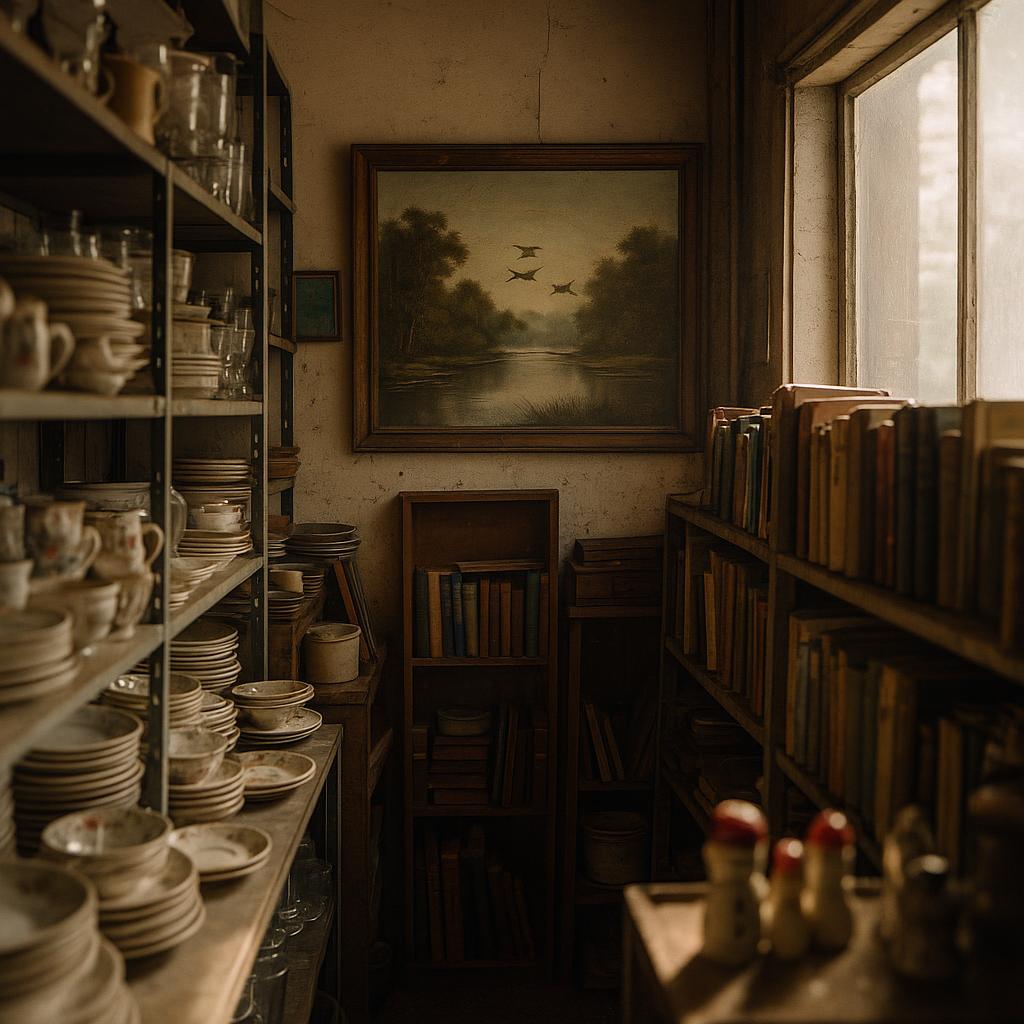 Image by RM AI
Five Dollars for Nostalgia
I stood there, staring at the painting, feeling a strange connection I couldn't quite explain. The cashier, a woman with faded purple hair and reading glasses dangling from a beaded chain, barely looked up from her dog-eared paperback when I approached. "How much for this?" I asked, holding up my find. She glanced over, squinting slightly. "Five bucks," she mumbled, already returning to her book. Five dollars. Less than my morning coffee. I handed over a crumpled bill, suddenly protective of my new treasure as she wrapped it haphazardly in brown paper. Walking home, I kept peeking inside the package, wondering why this particular painting had called to me. It wasn't valuable—just a serene lake scene with trees reflecting in still waters and ducks flying overhead. But something about it transported me straight to my grandmother's narrow hallway, where similar landscapes had hung for decades. I could almost smell her snickerdoodles baking and hear the creak of her rocking chair. When was the last time I'd felt this kind of nostalgia from something that cost less than an app subscription? Little did I know that this five-dollar impulse buy wasn't just a painting—it was about to become the first breadcrumb on an unexpected trail.
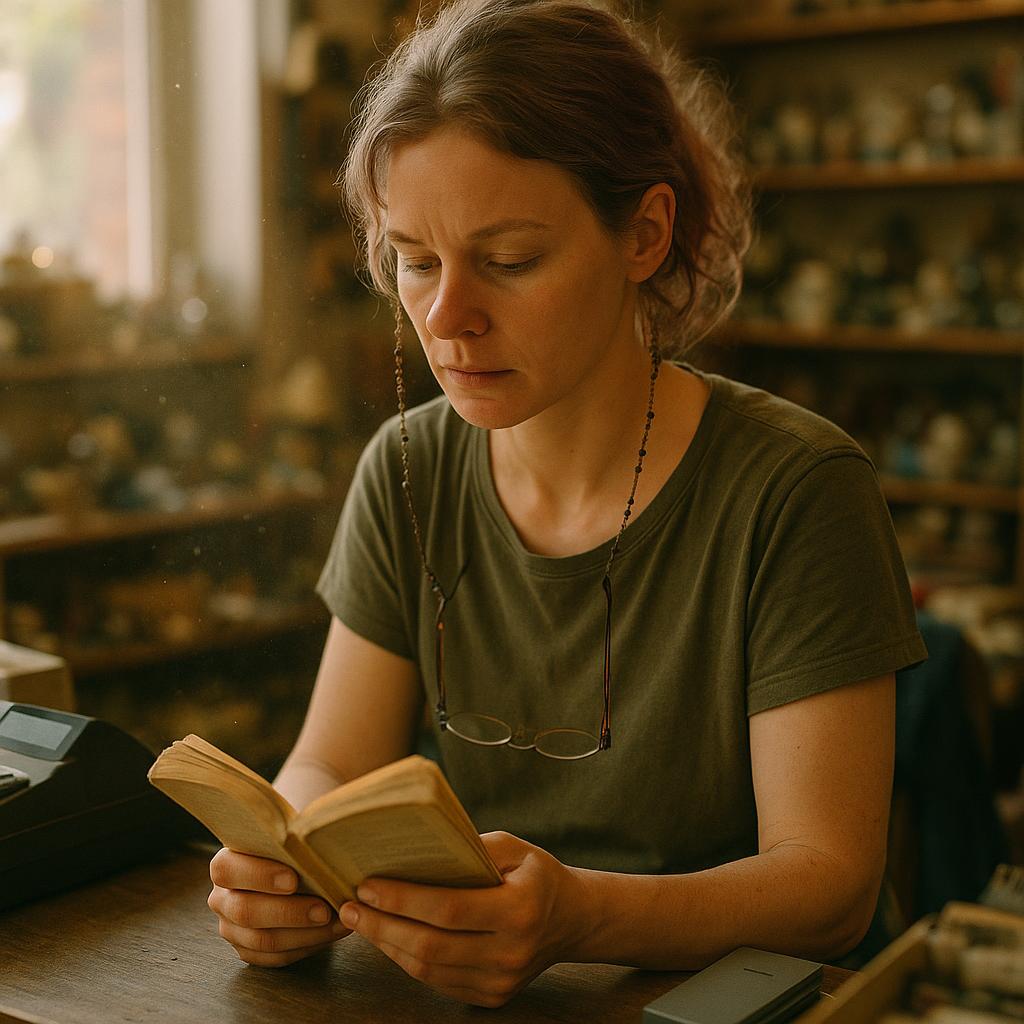 Image by RM AI
The Loose Corner
Back in my apartment, I set the painting on my kitchen table, right next to yesterday's mail I still hadn't sorted. The afternoon sun streamed through my blinds, highlighting the dust motes dancing around my new find. I ran my fingers along the worn wooden frame, appreciating its vintage charm despite the scratches and dings. That's when I noticed it—a corner of the frame was loose, slightly separated from the rest. When I pressed it back into place, I heard something unexpected: a soft rustle, like paper shifting inside. I froze, coffee mug halfway to my lips. Was that...? I tapped the back again, and there it was—an unmistakable crinkle. Something was definitely hidden between the painting and its backing board. My heart did a little skip. Ever since I binged that Netflix series about hidden treasures in ordinary objects, I'd secretly hoped to stumble upon something similar. I set my mug down with a decisive clink. Five-dollar thrift store find or not, this painting was suddenly the most interesting thing in my apartment. I glanced at my phone—3:17 PM on a Saturday with nowhere to be and nothing but curiosity burning through me. Whatever was hidden inside that frame, I was about to find out.
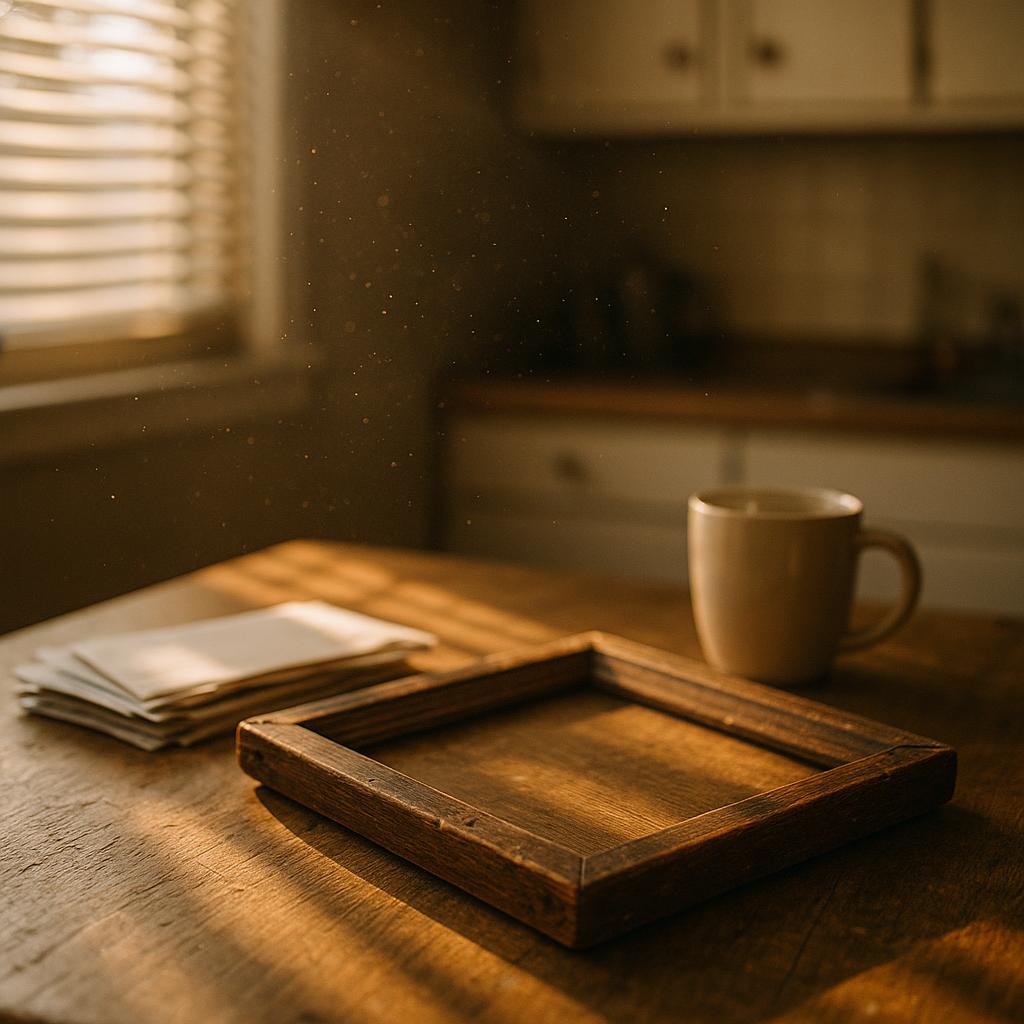 Image by RM AI
What Lies Beneath
I flipped the painting over, oddly excited by the mystery of what might be hidden inside. The backing was covered in brittle kraft paper, yellowed and fragile like an old newspaper left in the sun. Someone had reinforced it with masking tape that had long since lost its stickiness, the edges curling away like they were trying to reveal the secret themselves. "What are you hiding?" I whispered, carefully peeling away the paper. It came off in uneven chunks, releasing that distinct musty smell that only truly old things have. My fingers trembled slightly—partly from the caffeine, partly from anticipation. When I'd created an opening large enough, I reached inside, holding my breath. My fingertips touched something immediately—something that definitely wasn't supposed to be there. I felt the unmistakable texture of thick parchment, folded and tucked away. Gently, I extracted it, surprised by how substantial it felt—yellowed with age but preserved somehow, protected within its wooden cocoon. The paper was stiff between my fingers, like it was reluctant to give up secrets it had kept for decades. As I began to unfold it, I noticed faint handwriting peeking through the creases, and my stomach did a little flip. Whatever this was, someone had gone to great lengths to hide it—and now, for whatever reason, I was the one who'd found it.
 Image by RM AI
Coordinates and Cryptic Words
With trembling fingers, I unfolded the parchment completely, smoothing it against my kitchen table. The paper felt substantial—thick and slightly textured, like expensive stationery from another era. At the top were numbers, arranged in a specific pattern I immediately recognized as geographic coordinates. Latitude and longitude. Below them, written in an elegant but slightly shaky script—like someone elderly had penned it while emotional—was a message that made my skin prickle: 'If you've found this, I hope you'll do what I never had the courage to do. What's hidden there belongs to someone who never got the truth. — R.' Just that. No date, no full name, just a single initial. I read it three times, then four, my coffee going cold beside me. Was this real? Some elaborate hoax planted for the next buyer to discover? But something about the aged parchment and that tremulous handwriting felt too authentic to dismiss. I grabbed my phone and typed the coordinates into Google Maps, my heart racing as the location pinned—a wooded area about an hour outside Portland. Not a popular spot, more like a nature preserve with hiking trails. I stared at my screen, then back at the mysterious note, feeling like I'd stumbled into someone else's unfinished story. And now, somehow, it had become mine to complete.
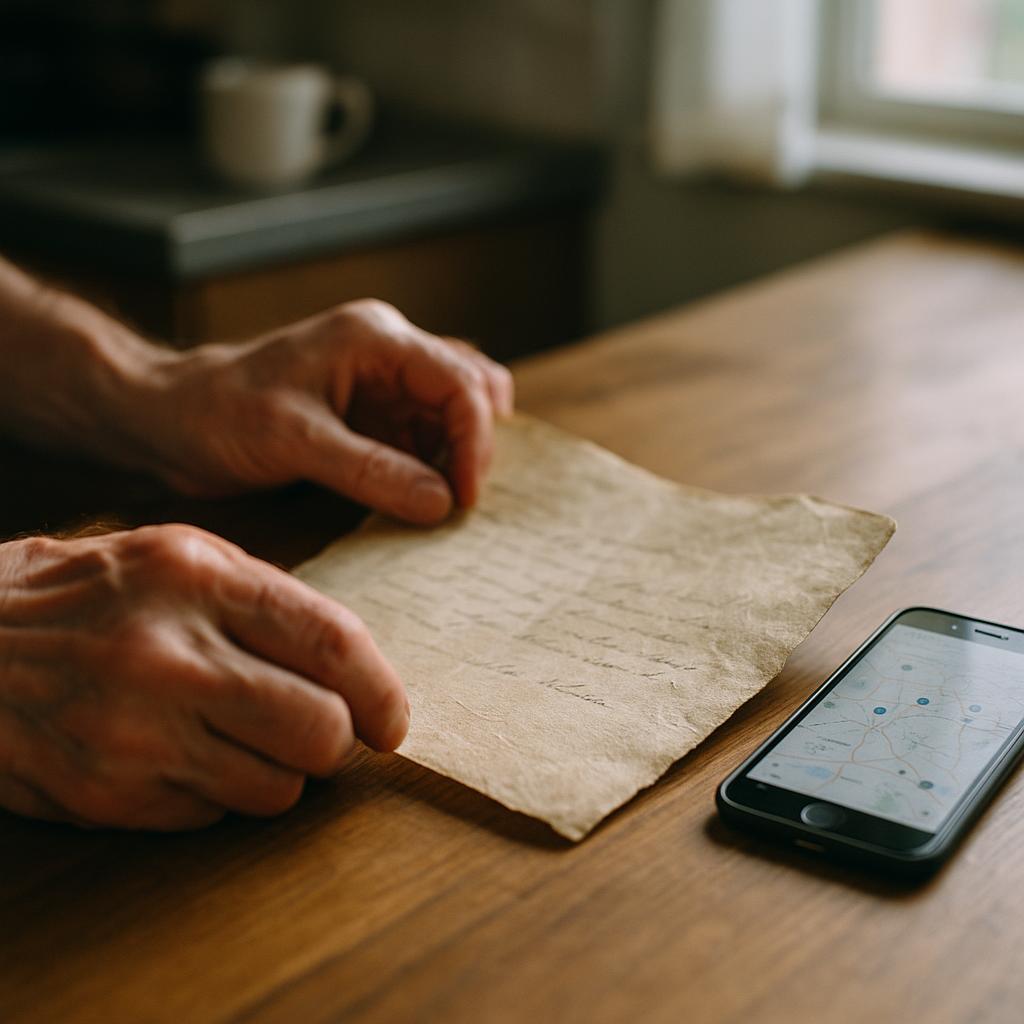 Image by RM AI
The Decision
I spent the entire evening in a strange limbo between excitement and doubt, staring at those coordinates on my phone screen while the note sat on my coffee table like some artifact from another time. Was I really considering following mysterious directions from a hidden message in a thrift store painting? Part of me—the logical, adulting part—said this was ridiculous. People don't just stumble upon real-life treasure maps in five-dollar artwork. But another part—the part that still checked under particularly interesting rocks as a kid—couldn't let it go. I paced my apartment, making pro/con lists in my head while my dinner sat half-eaten on the counter. Around midnight, after falling down a Google rabbit hole about Oakwood Nature Reserve (mostly hiking trails, minimal facilities, 4.2 stars on AllTrails), I made my decision. I set my alarm for 7 AM, packed a small backpack with water, snacks, my phone charger, and—feeling slightly ridiculous—a small garden trowel from my failed pandemic plant-mom phase. Whatever was waiting at those coordinates, I was going to find it. After all, how often does the universe literally hand you a treasure map?
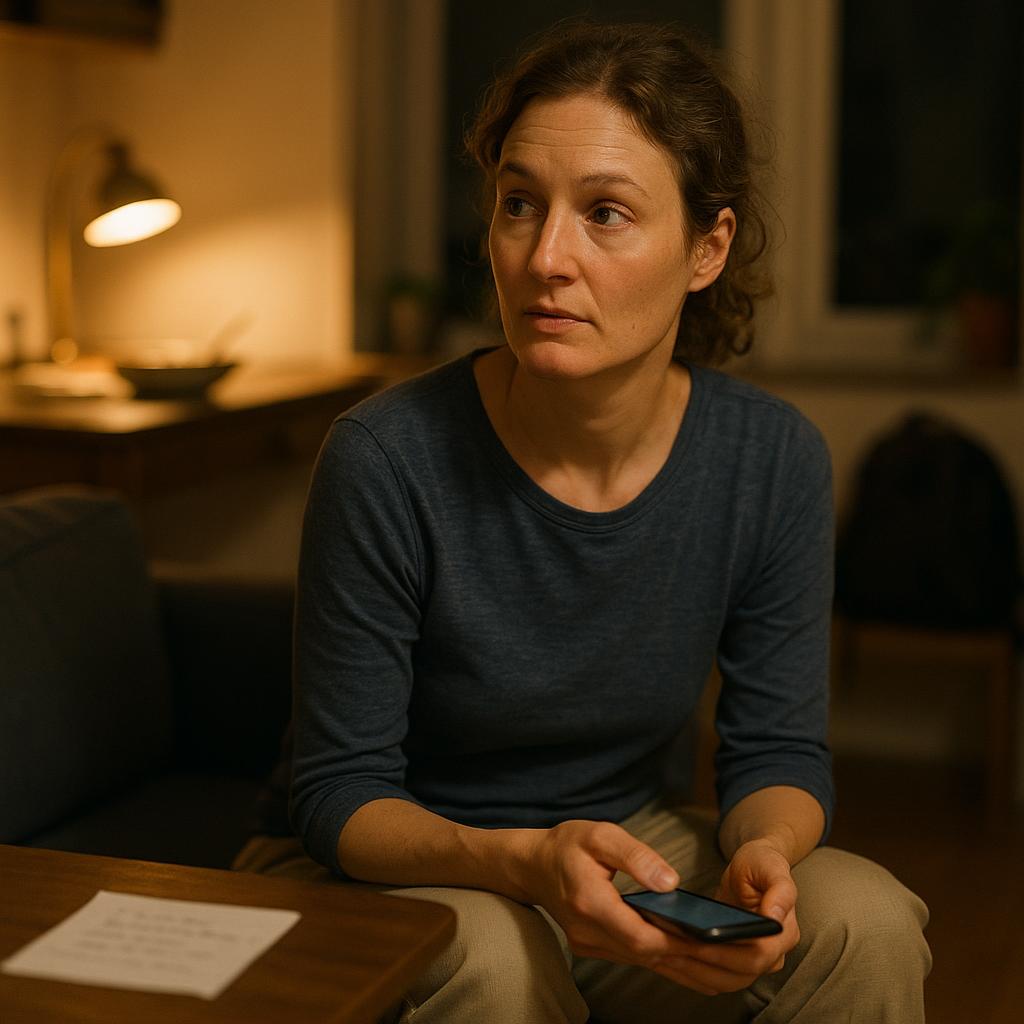 Image by RM AI
Preparation
Sunday morning greeted me with perfect hiking weather—crisp autumn air and golden sunshine filtering through my blinds. I'd barely slept, my mind racing with possibilities about what I might find. I laid out my supplies on the kitchen counter: water bottles, granola bars, a first aid kit (because adulting), and those gardening gloves I'd bought during my short-lived pandemic plant phase. I even dug out the small shovel that had been collecting dust since my basil died a tragic death last summer. Standing there, staring at my little adventure kit, I couldn't help but laugh at myself. Who actually follows mysterious coordinates from a hidden note in a thrift store painting? This was either the beginning of an amazing story I'd tell for years or proof I'd watched too many treasure hunting documentaries during lockdown. Just to be safe—because I've seen enough true crime to know better—I texted Mia my plans and the exact coordinates. "If I don't text by 6, assume I've either found buried treasure or been murdered by ghosts," I wrote, adding a skull emoji. Her response was immediate: "This is either the coolest thing ever or the dumbest. Take pictures either way." With my backpack slung over my shoulder and the mysterious note tucked safely in my pocket, I headed for my car, heart pounding with a mixture of excitement and nerves I hadn't felt since I was a kid.
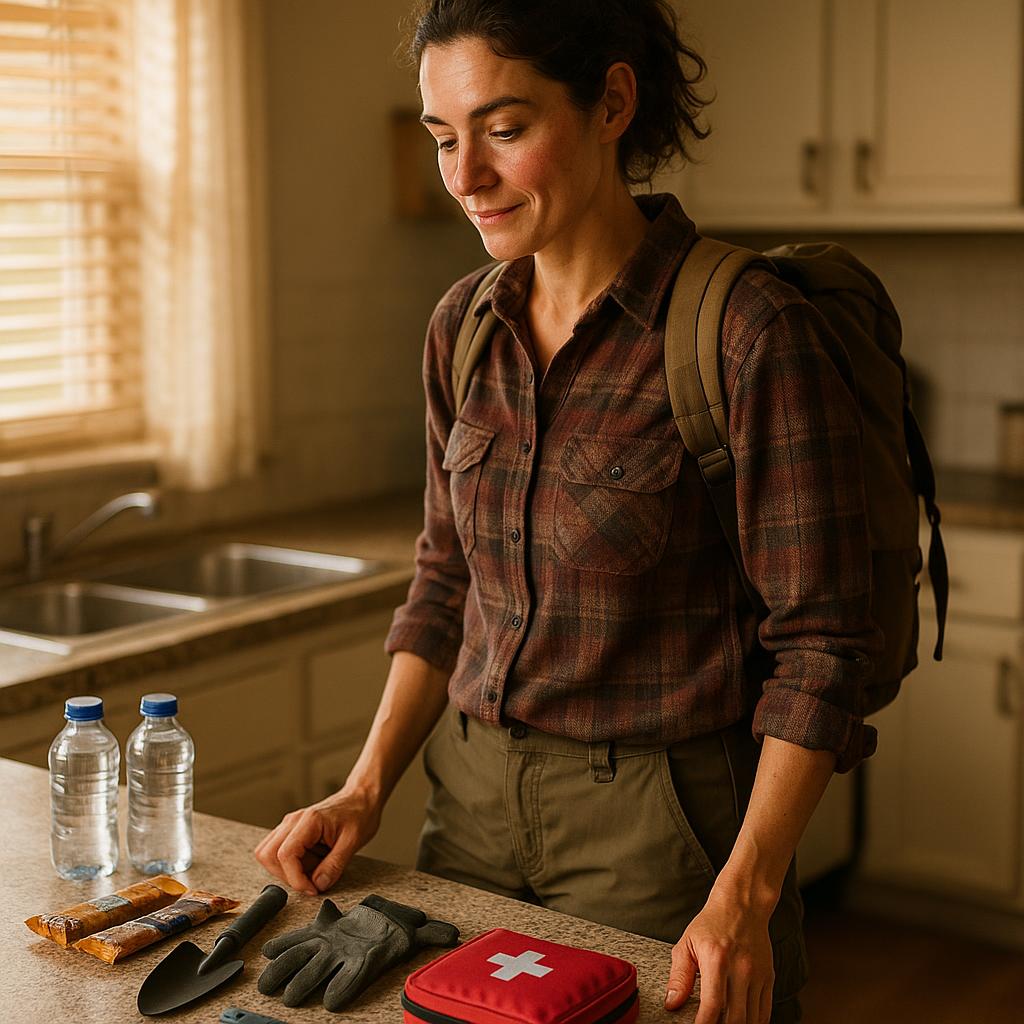 Image by RM AI
Oakwood Nature Reserve
Oakwood Nature Reserve was nothing like the manicured parks I usually visited for my occasional "getting back to nature" Instagram posts. The parking lot was a glorified gravel patch with just three other cars when I pulled in at 10:17 AM (yes, I checked, because suddenly every detail felt important). I double-checked the coordinates against my phone's GPS, my stomach doing that roller-coaster drop when I realized my destination was definitely off the main trail. Way off. Like "this is how horror movies start" off. I sat in my car for a moment, debating whether this adventure was brilliant or completely insane. The rational part of my brain reminded me that normal people don't follow mysterious coordinates from hidden notes in thrift store paintings. But then again, normal people don't find mysterious coordinates in the first place, right? I grabbed my backpack, adjusted my baseball cap, and locked my car twice (city habits die hard). As I approached the trailhead, the woods seemed to stretch endlessly before me – tall pines and oaks creating dappled shadows on the barely-maintained path. A wooden sign with faded lettering warned: "Stay on marked trails." Well, that was one rule I was definitely about to break.
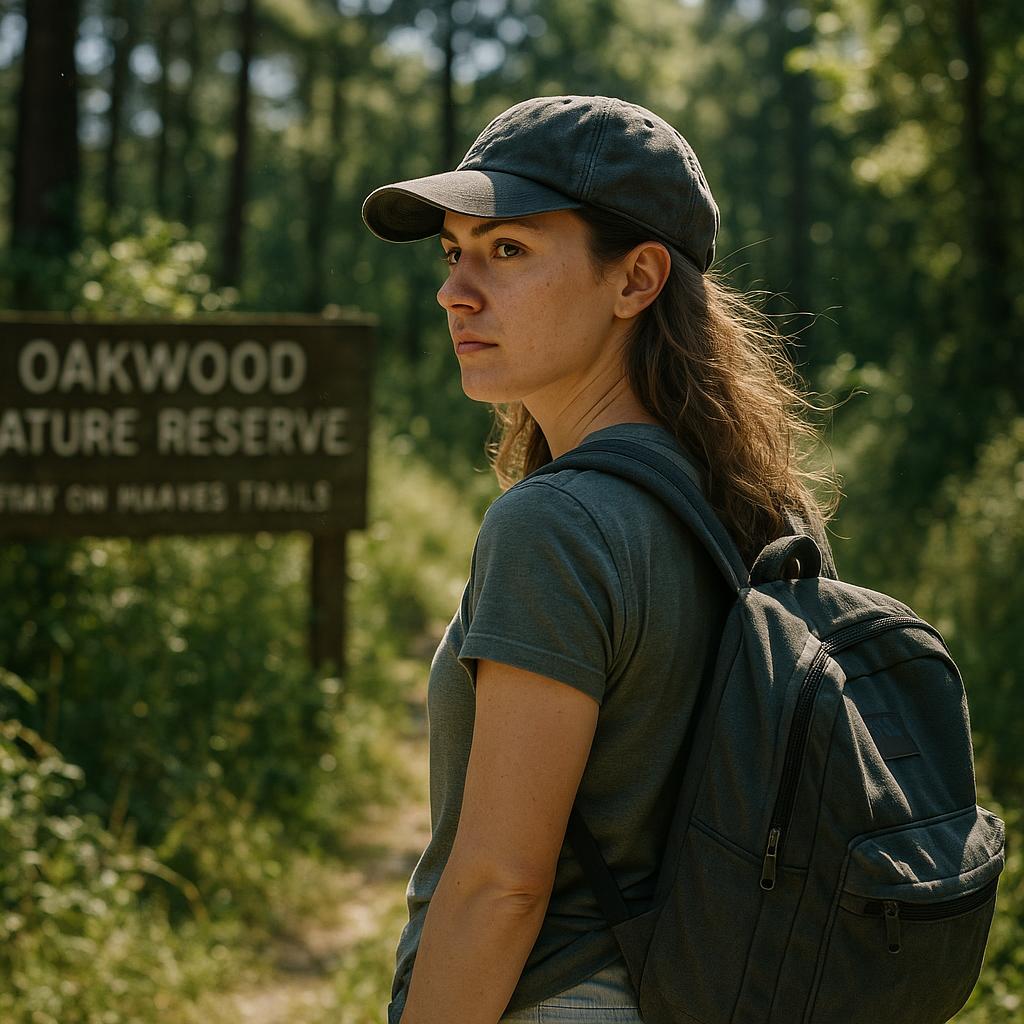 Image by RM AI
Off the Beaten Path
The main trail was pleasant enough—all packed dirt and occasional wooden steps, with helpful little markers every quarter mile. I'd been walking for about twenty minutes, my phone clutched in one hand as I watched the little blue dot inch closer to my destination. Then my GPS pinged: I needed to veer left. I stopped abruptly, staring at the dense wall of ferns and underbrush where the app wanted me to go. No path, no markers, just wilderness. A jogger in neon compression gear passed by, giving me that look people reserve for tourists who stop in the middle of sidewalks. Once she disappeared around the bend, I was completely alone. 'This is how people end up on true crime podcasts,' I muttered to myself, but my curiosity was stronger than my common sense. I took a deep breath, checked that my location sharing was still active with Mia, and stepped off the trail. The moment I crossed that invisible boundary between maintained path and wild forest, something shifted. The air felt different—heavier somehow, like the trees were holding their breath. Twigs snapped under my feet as I pushed deeper into the woods, following nothing but coordinates on my screen and a decades-old promise written by someone I'd never met. With each step, the main trail disappeared behind me until all I could see were trees in every direction, and the unsettling realization that I might be the first person to walk this exact path in years.
 Image by RM AI
The Clearing
I followed my phone's GPS like it was some digital divining rod, pushing through brambles that snagged at my leggings and ducking under branches that seemed determined to claim my hat as a trophy. The forest grew thicker with each step, that distinct earthy smell of decomposing leaves and damp soil filling my nostrils. Just as I was questioning my life choices (and wondering if REI would still be open when I inevitably needed to replace my torn jacket), the dense woods suddenly opened up. I stepped into a small clearing where sunlight streamed through the canopy like spotlights on a stage. My phone buzzed—I'd reached the exact coordinates. I stood still, catching my breath and scanning the area. That's when I noticed it: a patch of ground that looked... different. The earth appeared disturbed, not in an obvious freshly-dug way, but like someone had tried to make nature reclaim something that didn't belong. Fallen leaves had been scattered in a too-perfect pattern. And there, peeking through like a wink from the past, was the unmistakable corner of something metallic. My heart hammered against my ribs as I approached, crouching down to brush away the camouflage of forest debris. Whatever was buried here had been waiting a very long time to be found.
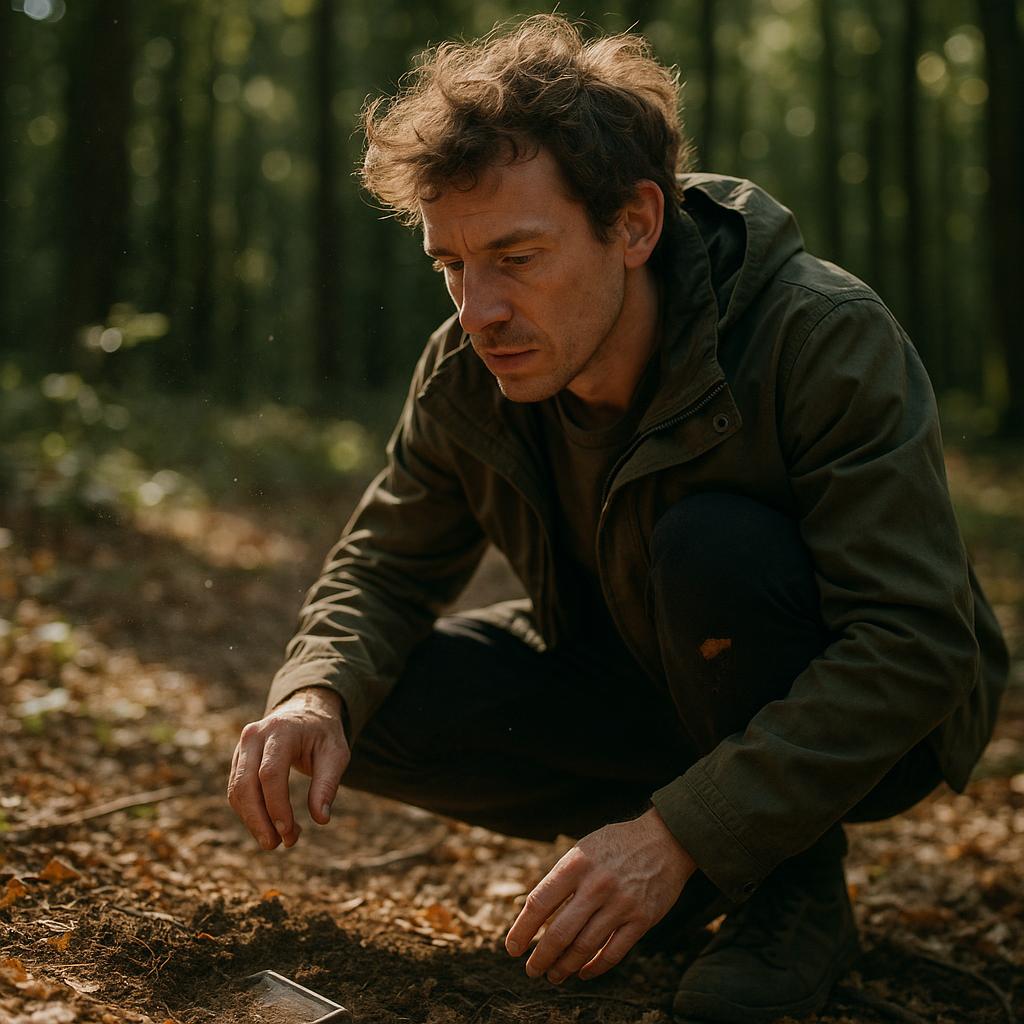 Image by RM AI
The Metal Box
I knelt in the dirt, my heart pounding so loudly I swear the birds went quiet to listen. With trembling hands, I brushed away decades of forest debris to reveal what was unmistakably a metal box—rusted and weathered, but definitely man-made. It wasn't buried deep, just enough to keep it hidden from hikers who might wander off-trail. For a solid minute, I just stared at it, suddenly hit with the weight of what I was doing. This wasn't some random scavenger hunt anymore; I was literally digging up someone's buried secrets. The box was heavier than I expected when I finally worked up the nerve to lift it, like it was reluctant to leave its hiding place after all these years. Soil clung to its corroded edges, and what might have once been a latch was now just a rusted protrusion. I sat back on my heels, cradling this mysterious time capsule in my gloved hands, wondering who had last touched it before me. Was it 'R'? Was it the woman who wrote the letter? I took a deep breath and tried to steady my hands. Whatever was inside this box had been waiting years—maybe decades—for someone to find it. And for some cosmic reason, that someone was me.
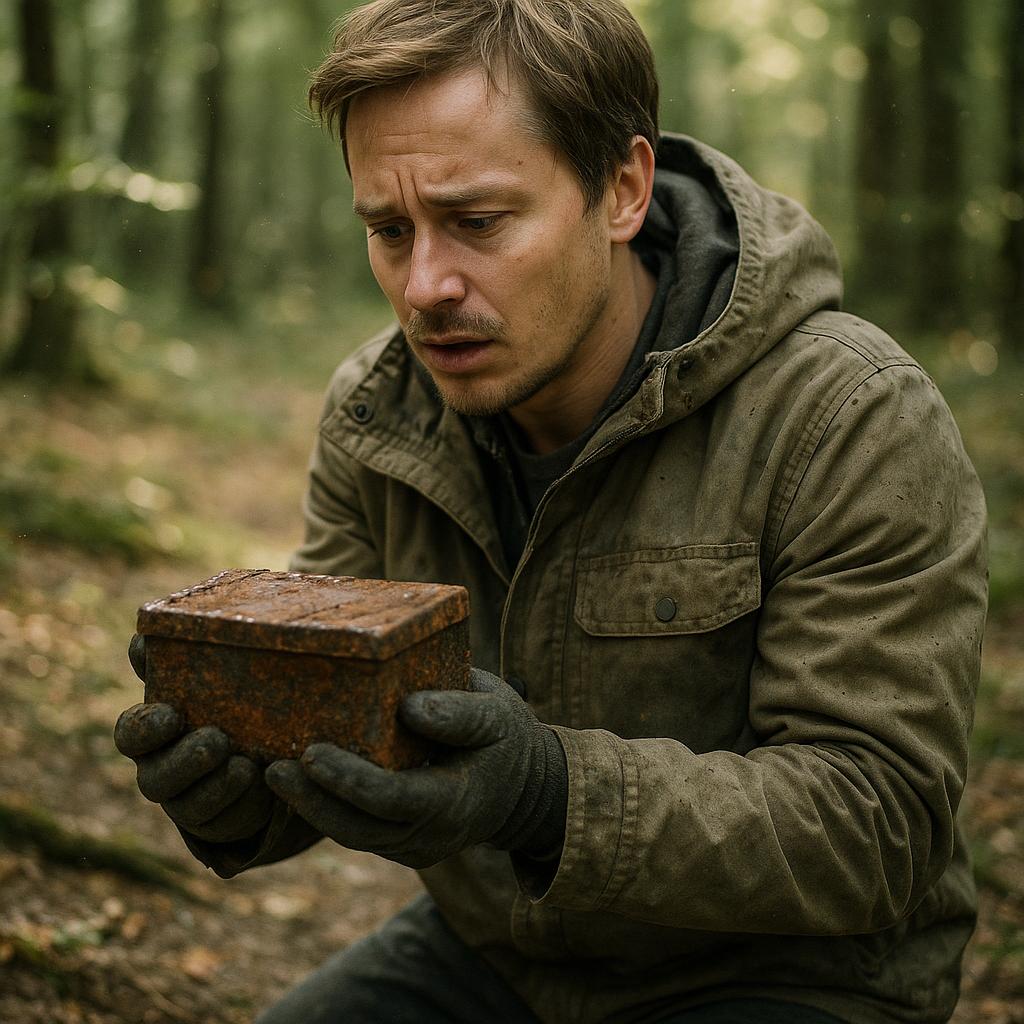 Image by RM AI
Opening the Past
I sat cross-legged on the forest floor, the metal box balanced on my lap like some archaeological find. My fingers hesitated over the rusted latch—was I really about to open someone else's buried secrets? With a deep breath, I gently pried it open, wincing at the creaking sound that broke the forest's silence. The lid finally gave way, revealing treasures protected from time and elements. Inside lay three items: a small velvet pouch, worn but still soft to the touch; a folded letter, its edges yellowed and fragile; and a silver locket, tarnished to a dull gray. I carefully lifted the letter first, my hands shaking so badly I had to set it on my knee to unfold it. The handwriting was immediately familiar—the same elegant but tremulous script from the note in the painting. As I began to read the first line, my throat tightened. This wasn't just some random keepsake—this was a confession. A love letter. A piece of someone's heart buried in the woods for decades. And somehow, through some cosmic lottery, I was the one who'd found it. The weight of what I was holding suddenly felt much heavier than paper should.
 Image by RM AI
Eleanor's Confession
With trembling hands, I unfolded the letter, its paper thin and delicate as moth wings. 'My dearest Thomas,' it began, and immediately my throat tightened. The words that followed were a time machine, transporting me to 1945, where a young woman named Eleanor Winters poured her heart onto paper for a soldier who would never read it. 'They told us you were missing in action, but I knew in my heart you were gone.' Her handwriting wavered in places, as if tears had fallen as she wrote. Eleanor confessed how she couldn't bear to return the locket—a family heirloom passed down for generations—to his parents after his death. 'How could I face them when they lost their only son while I still breathe?' The raw grief leapt off the page, making my own eyes well up for this woman I'd never met. She described hiding the locket, hoping someday to find the courage to do what was right, but that courage never came. 'I've carried this shame longer than I carried our love,' she wrote. 'Forgive me, Thomas.' I sat there, forest sounds fading into background noise, holding the physical weight of someone's unresolved heartbreak in my hands. And suddenly I realized—the painting of the lake with flying ducks—it was the place where they had first met.
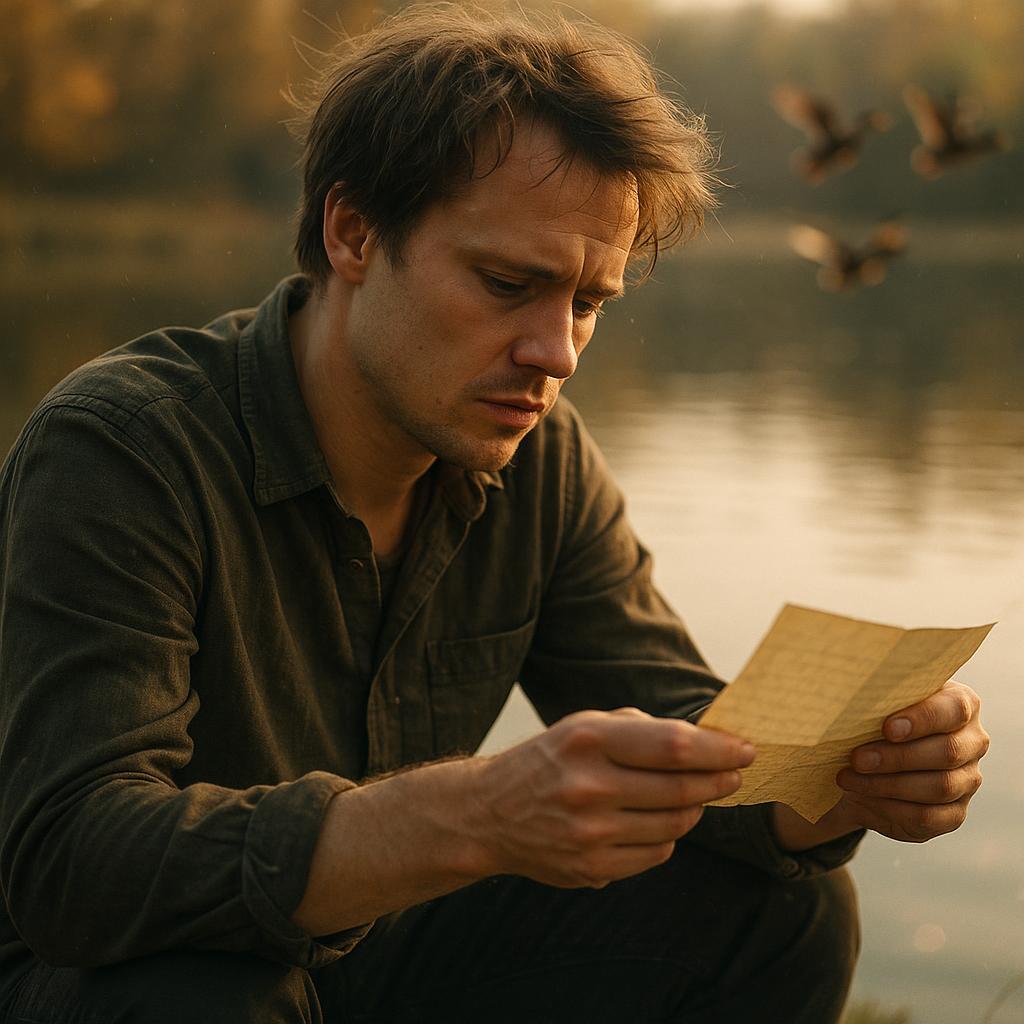 Image by RM AI
The Silver Locket
With reverent fingers, I opened the velvet pouch and gently tipped its contents into my palm. The silver locket was heavier than I expected, its surface dulled by decades of tarnish but still undeniably beautiful. Intricate engravings swirled across its oval surface, surrounding what looked like a family crest—a shield with what might have been a falcon. My heart pounded as I carefully worked the tiny clasp open, half-expecting it to crumble in my hands. Inside, protected from time and elements, was a small black and white photograph of a young man in military uniform. His face was handsome in that classic 1940s way—strong jaw, confident smile, hair neatly parted—completely unaware of the fate that awaited him. Opposite his photo was something that made my breath catch: a small lock of dark hair, carefully tied with thread and pressed against the silver. I ran my thumb over the photograph, this tiny window into Thomas's life before war claimed him. Had Eleanor cut this lock of hair herself? Was it the last piece of him she could hold onto? The intimacy of what I was holding hit me like a physical wave—this wasn't just an antique, it was someone's heart, someone's unresolved grief. And now, somehow, it had become my responsibility.
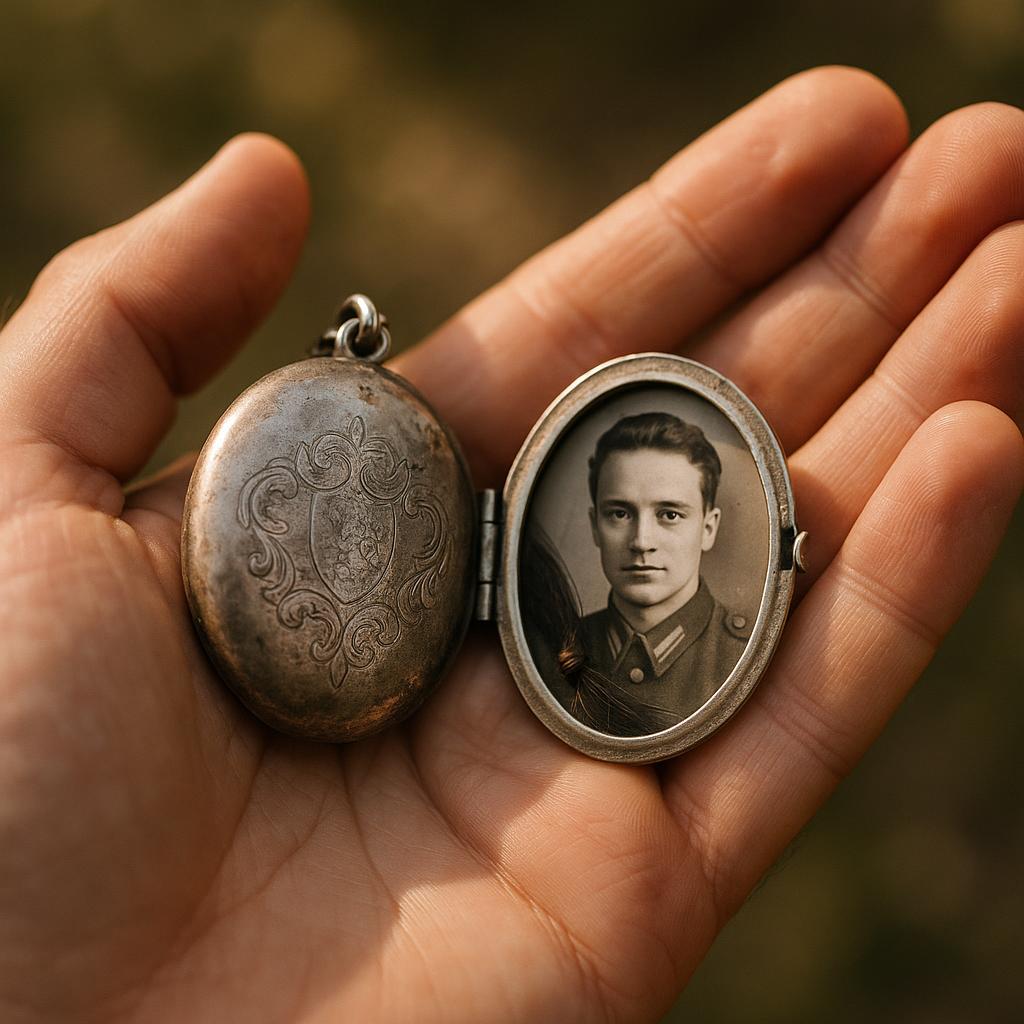 Image by RM AI
The Journey Home
The hike back to my car felt like walking between two worlds. With each step, I carried not just a metal box but the weight of Eleanor's heartbreak and Thomas's lost future. I clutched the box against my chest, wrapped in my sweater like some precious archaeological find. The forest seemed different now—less mysterious, more like a guardian that had kept these secrets safe until I stumbled along. Back in my car, I sat with the engine running, air conditioning blasting against my flushed face, while my mind raced with questions. Who was 'R'? Someone who found Eleanor's confession but couldn't bring themselves to finish what she started? Maybe a relative? A friend? And Thomas's family—were they still out there somewhere, generations later, with no idea that this family heirloom was making its way back to them after 75+ years? I glanced at the box on my passenger seat and felt a strange responsibility settle over me. Eleanor's words echoed in my head: 'What's hidden there belongs to someone who never got the truth.' Somehow, through a five-dollar thrift store painting and a series of cosmic coincidences, I'd become the keeper of a promise that had waited decades to be fulfilled.
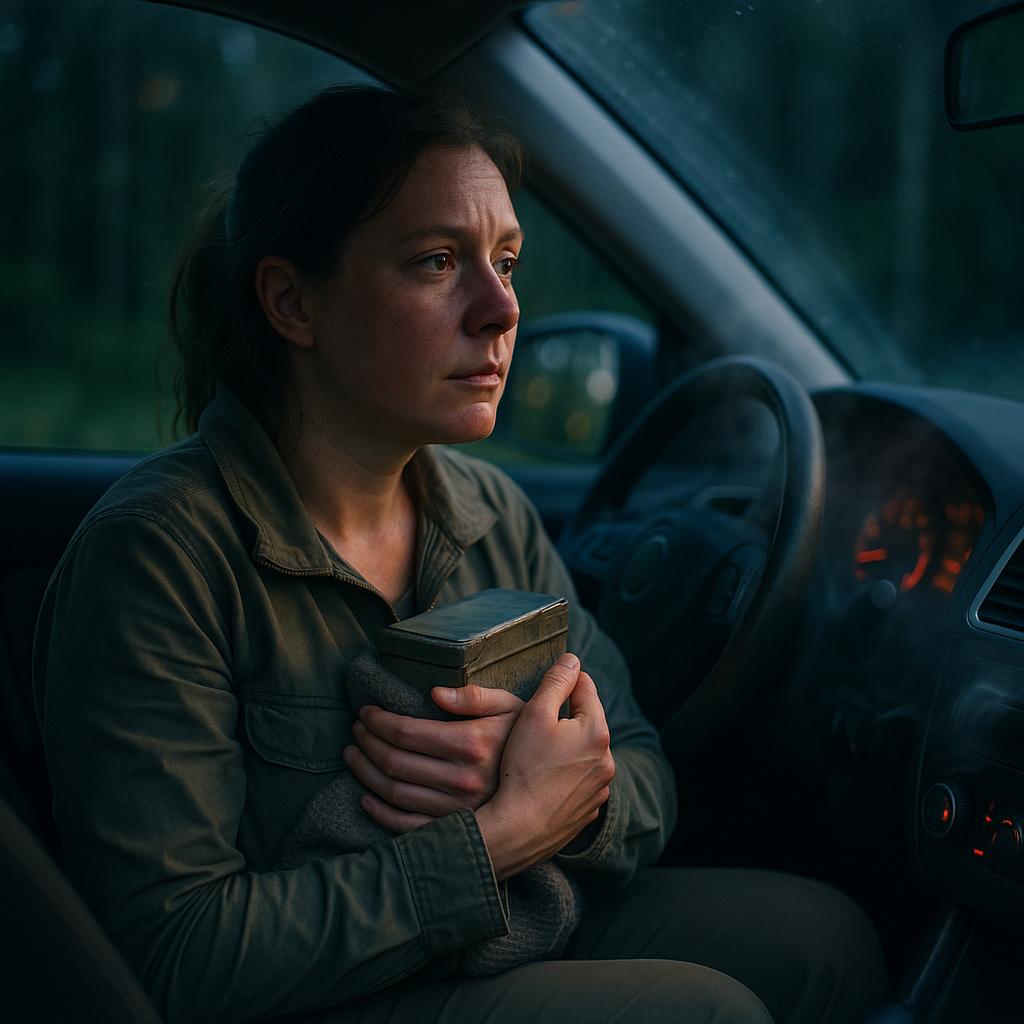 Image by RM AI
Research Begins
I spread everything from the box across my dining table like I was setting up a crime board from one of those detective shows my mom loves. The locket caught the afternoon light, while Eleanor's letter lay open beside my laptop. Thomas Aldridge, 101st Airborne Division. September 1945. I typed his name into military databases, ancestry websites, and local historical archives, feeling like some amateur genealogist on a mission. Three cups of coffee and several browser tabs later, I'd fallen down a rabbit hole of WWII records and newspaper clippings. I found his service photo—the same face from the locket, but larger, clearer—staring back at me from a 1944 newspaper announcement about local boys shipping out. My fingers hovered over a promising lead: an obituary mentioning Thomas's younger sister who had survived him. If I could trace her descendants... I grabbed my phone and snapped pictures of everything, creating a digital backup of this accidental inheritance. It felt surreal that just days ago, my biggest concern was whether to splurge on fancy coffee, and now I was piecing together a decades-old love story that never got its proper ending. What would I even say if I found his family? 'Hi, I bought a painting and found your long-lost family heirloom that a heartbroken woman couldn't bear to return'?
 Image by RM AI
Late Night Revelations
The clock on my microwave blinked 1:37 AM when I finally looked up from my laptop, my eyes burning from staring at the screen for hours. Empty coffee mugs and crumpled snack wrappers surrounded me like the aftermath of an all-night study session. I'd gone full conspiracy theorist mode—tabs upon tabs of military records, newspaper archives, and genealogy websites. The pieces were coming together. Thomas Aldridge, 101st Airborne, had disappeared during Operation Market Garden in 1944, later confirmed dead in '45. But what made my heart race was discovering the Aldridges weren't just any family—they were THE Aldridges of Oakwood Estate, practically local royalty back in the day. With shaking hands that desperately needed a break from caffeine, I typed 'Aldridge family' plus our town name into the search bar. The results loaded painfully slowly, my ancient Wi-Fi struggling under the late-night strain. When the page finally refreshed, I gasped so loudly I probably woke my downstairs neighbor. There, staring back at me from a recent community newsletter article, was an elderly woman with the same distinctive eyes as Thomas from the locket photo. The caption read: 'Margaret Aldridge-Winters, 92, last living relative of the Aldridge estate founders, at the annual heritage festival.' Wait—Winters? As in Eleanor Winters? My brain felt like it was short-circuiting as I clicked on the article, completely unprepared for what I was about to discover.
 Image by RM AI
The Aldridge Connection
I nearly fell out of my chair when the search results loaded. There she was—Margaret Aldridge, 92 years old, living just fifteen minutes from my apartment at Sunset Haven Retirement Community. The community newsletter showed a photo of her at their heritage festival, an elegant woman with silver hair and the same distinctive eyes as Thomas from the locket. The article mentioned she was Thomas's niece, the daughter of his older brother, and apparently the last living relative of the once-prominent Aldridge family. I stared at her photo, my fingers hovering over the keyboard, suddenly aware of the bizarre cosmic connection forming. This woman had likely grown up hearing stories about her uncle who never came home from war. Did she know about Eleanor? About the locket that should have been returned to her family decades ago? I grabbed my phone and snapped a picture of the screen, then leaned back in my chair, mind racing. After 75+ years, the missing Aldridge family heirloom was sitting on my dining table, and its rightful owner was practically in my backyard. Now I just had to figure out how to explain to a 92-year-old woman that I'd been digging up buried boxes in the woods because a thrift store painting told me to.
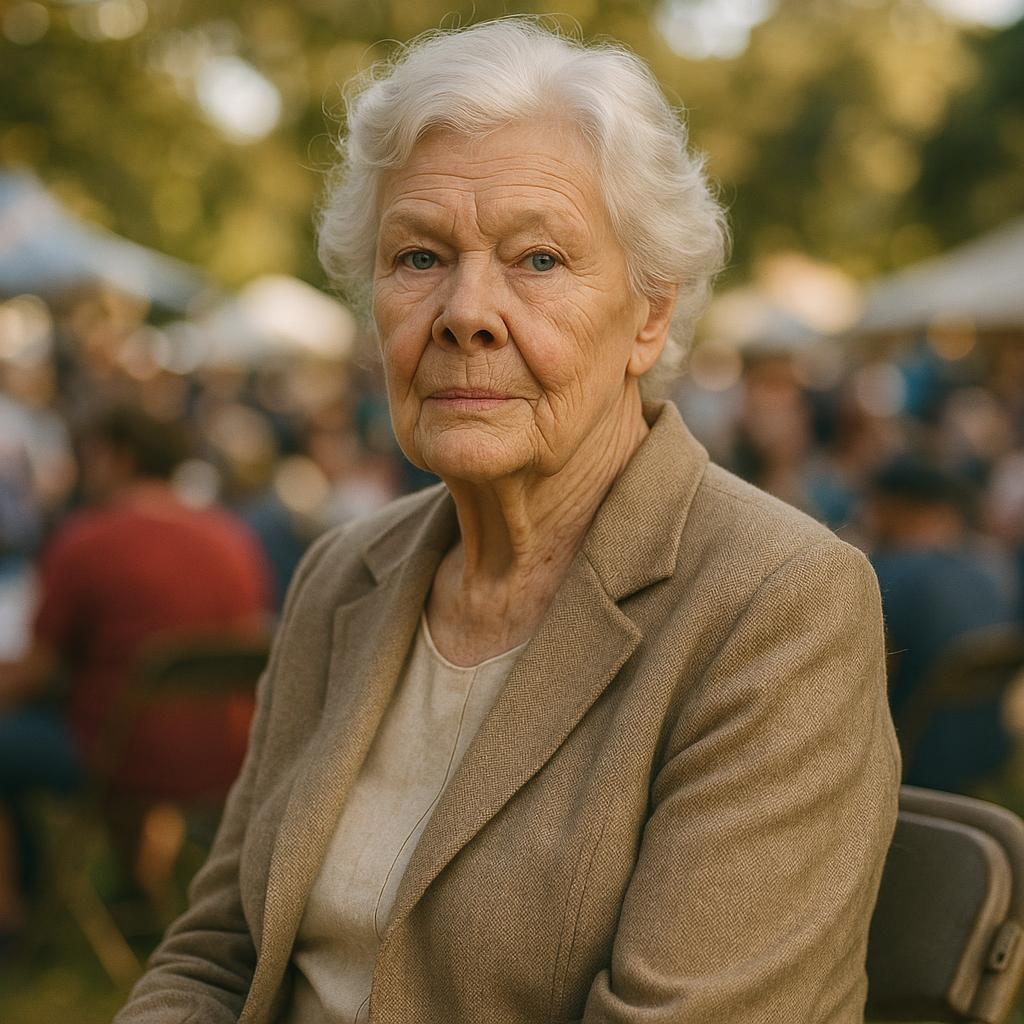 Image by RM AI
Sleepless Questions
Sleep was a lost cause that night. I tossed and turned, my mind racing with questions about the mysterious 'R' who'd hidden Eleanor's confession but never completed the mission themselves. Was it a relative? A friend who found her things after she died? I sat up around 3 AM, flicking on my bedside lamp to examine the painting again. The lake scene seemed different now, charged with meaning I hadn't noticed before. Running my fingers along the worn frame, I spotted something in the bottom corner—tiny, faded letters I'd completely missed: 'E.W. 1943.' My breath caught. Eleanor Winters had painted this herself. This wasn't just some random landscape—this was their special place. I imagined her sitting by that lake, paintbrush in hand, maybe waiting for Thomas or perhaps painting from memory after he'd already shipped out. The ducks flying in the distance suddenly seemed symbolic, like souls departing. I traced the initials with my fingertip, feeling an eerie connection across time. Here I was, holding something she had created with her own hands, something that had hung in her home while she carried the weight of her undelivered apology. What would Eleanor think, knowing her painting had finally led someone to fulfill the promise she couldn't?
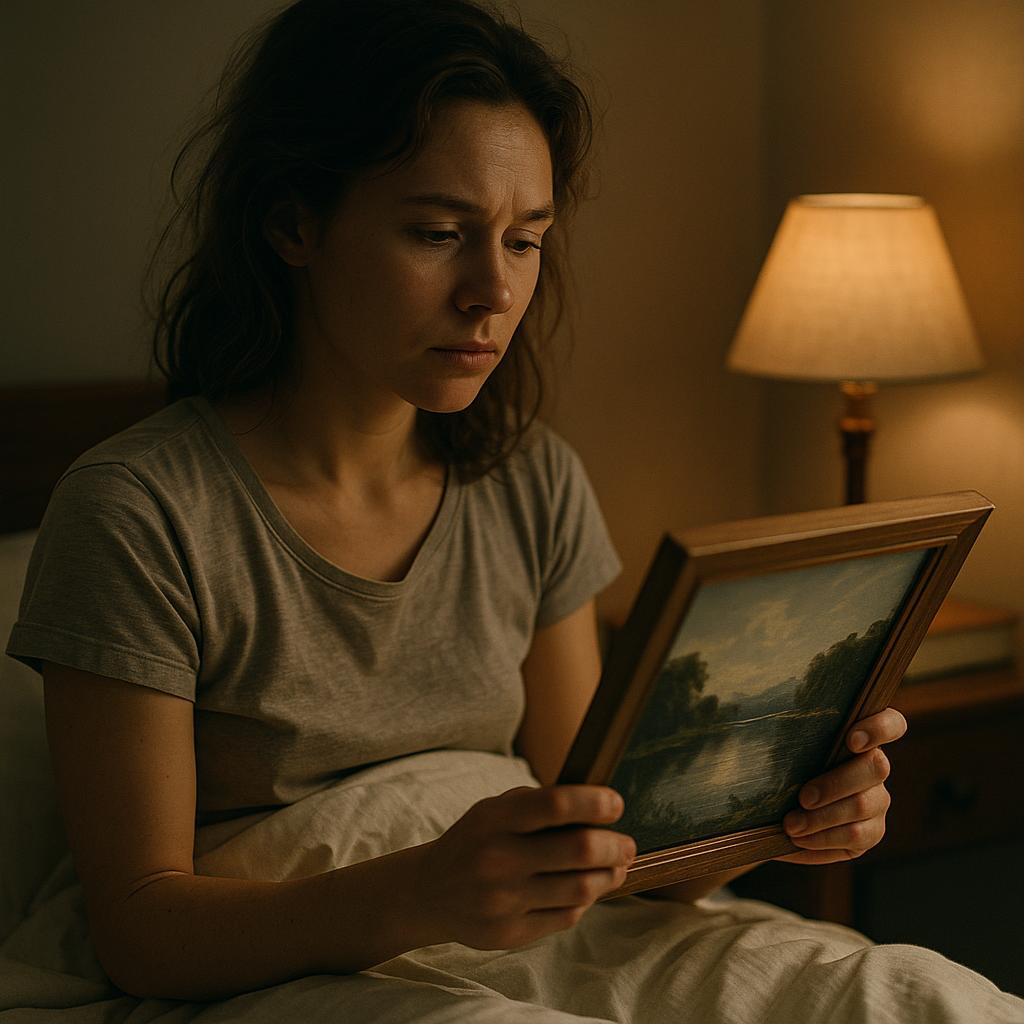 Image by RM AI
Morning Decisions
Monday morning hit me like a truck. I stared at my ceiling fan for a solid five minutes before making a decision that felt both terrifying and absolutely necessary—I called in sick to work. My boss's skeptical "hmm" made me ramble about stomach issues until he mercifully cut me off. With that awkward conversation behind me, I spread everything across my kitchen table again: the letter, the box, and the locket that had been waiting decades to go home. I grabbed a soft cloth and some silver polish I'd found in the back of a drawer (thanks, Mom, for insisting I needed a "proper cleaning kit" when I moved out). As I gently worked away years of tarnish, the locket's intricate details emerged—swirls and patterns I hadn't noticed before. Then, as I carefully cleaned the inside, something caught my eye. Tiny words appeared from beneath the darkness: 'To my son Thomas, may this protect you always - Mother.' My throat tightened. This wasn't just a romantic keepsake; it was a mother's blessing to a son who never returned. I set the locket down, my hands suddenly shaky. In a few hours, I'd be standing in front of a 92-year-old woman, trying to explain how I'd become the unlikely courier of her family's lost history. What if she slammed the door in my face?
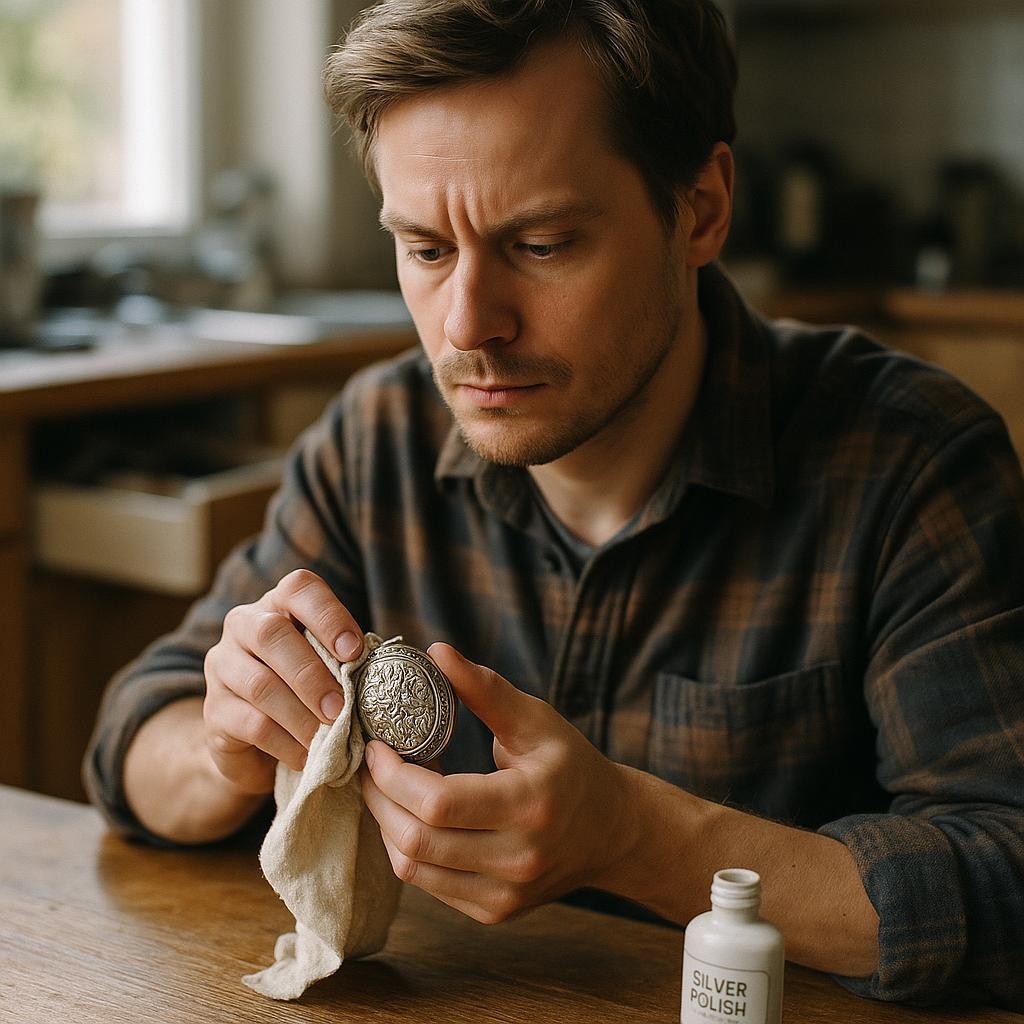 Image by RM AI
Sunset Haven
Sunset Haven Retirement Community looked nothing like I'd imagined. Instead of the clinical, antiseptic vibe I expected, it was actually... charming? Red brick buildings with white trim sat nestled among flowering gardens, more like a quaint college campus than a place where people came to live out their final chapters. My palms were sweating as I approached the reception desk, clutching my tote bag containing the locket and letter. 'Hi, um, I was hoping to speak with Margaret Aldridge?' I stammered to the receptionist, a woman with kind eyes and a name tag reading 'Diane.' She looked at me with immediate suspicion—fair enough, I probably looked like I was running on three hours of sleep and six cups of coffee. 'I have something that might belong to her,' I added quickly, pulling out the now-polished locket. 'It was her uncle Thomas's.' Her expression softened as I gave her the world's most condensed version of my weekend adventure. After a brief phone call, Diane set down the receiver and smiled. 'Miss Aldridge doesn't get many visitors,' she said, her voice gentler now. 'She'll see you in the garden in fifteen minutes.' I nodded, my heart hammering against my ribs. Fifteen minutes to figure out how to tell a 92-year-old woman that I'd been following instructions from a note hidden in a thrift store painting.
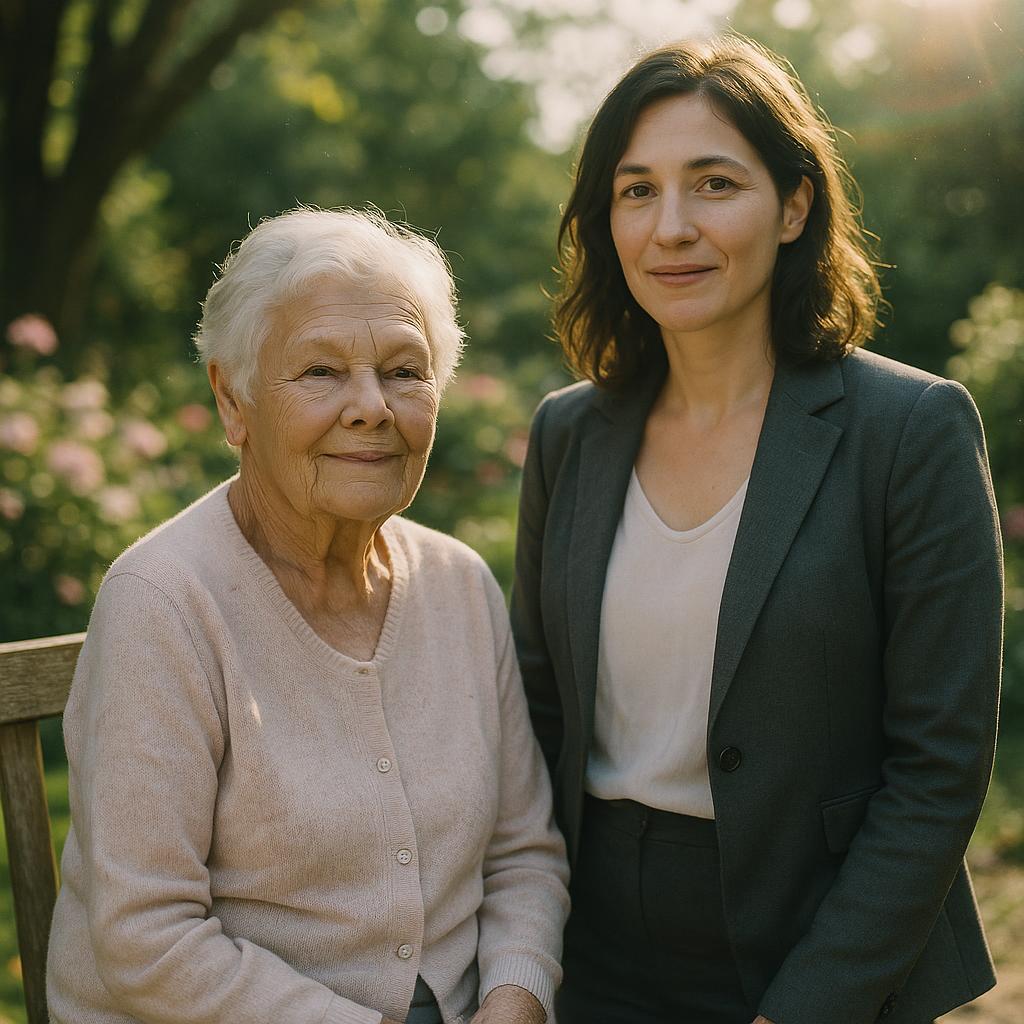 Image by RM AI
Meeting Margaret
I walked through the garden, my heart pounding like I was heading to a blind date arranged by fate itself. The retirement community's garden was surprisingly beautiful—all manicured lawns and colorful flower beds that probably cost more than my monthly rent. Several residents were out enjoying the sunshine, some reading, others chatting in small groups. And there she was—Margaret Aldridge, sitting on a bench near a small pond, looking like she'd stepped out of a vintage photograph. Her silver hair was styled in perfect waves, and despite being 92, she sat with the straight-backed posture of someone who'd been reminded about proper posture her entire life. As I approached, those eyes—God, they were exactly like Thomas's from the locket photo—locked onto me with laser-like precision. No small talk, no warm-up. "Diane says you have something of my uncle's," she stated, her voice crisp and commanding, with that old-money accent you only hear in classic movies nowadays. I sat beside her, suddenly aware of how monumental this moment was. Here I was, about to hand over a piece of history that had been buried in the woods since before I was born, to a woman who'd spent nine decades wondering about her family's missing heirloom.
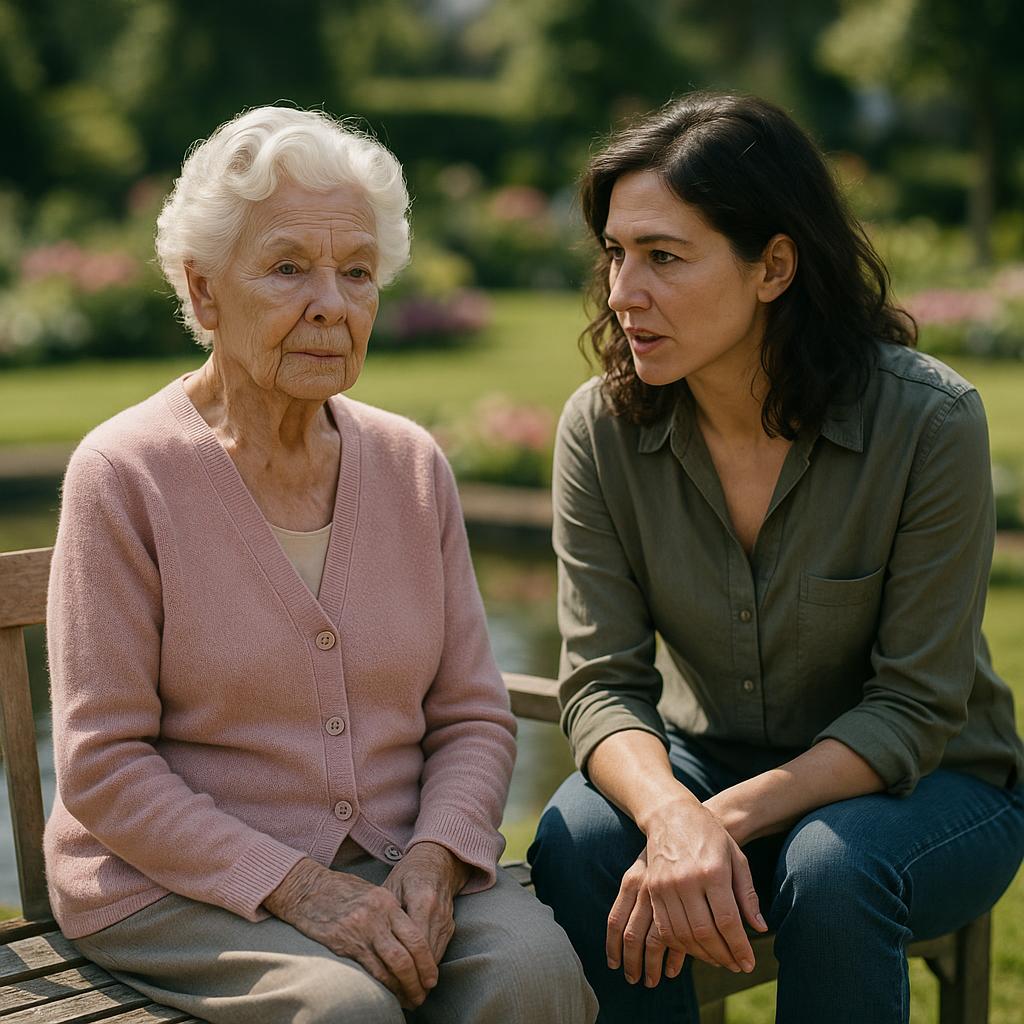 Image by RM AI
The Locket's Return
I sat on the bench beside Margaret, my hands trembling slightly as I pulled the velvet pouch from my bag. 'I know this might sound completely crazy,' I began, explaining everything—the thrift store painting, the hidden note, my impromptu treasure hunt in the woods. Margaret listened with an intensity that made me nervous, her eyes never leaving my face. When I finally placed the locket in her palm, something shifted in her expression. 'I remember this,' she whispered, her voice suddenly younger somehow. Her fingers, spotted with age but surprisingly steady, carefully worked the clasp. When it opened to reveal Thomas's photo, tears welled in her eyes. 'My grandmother gave this to him before he shipped out. We thought it was lost with him.' She traced the tiny inscription inside—words I hadn't even noticed during my cleaning. For a moment, this poised, proper woman transformed before my eyes into the little girl who had lost her beloved uncle nearly eight decades ago. 'Young lady,' she said finally, looking up at me with those familiar eyes that matched the photo in the locket, 'I believe there's someone else you need to meet.'
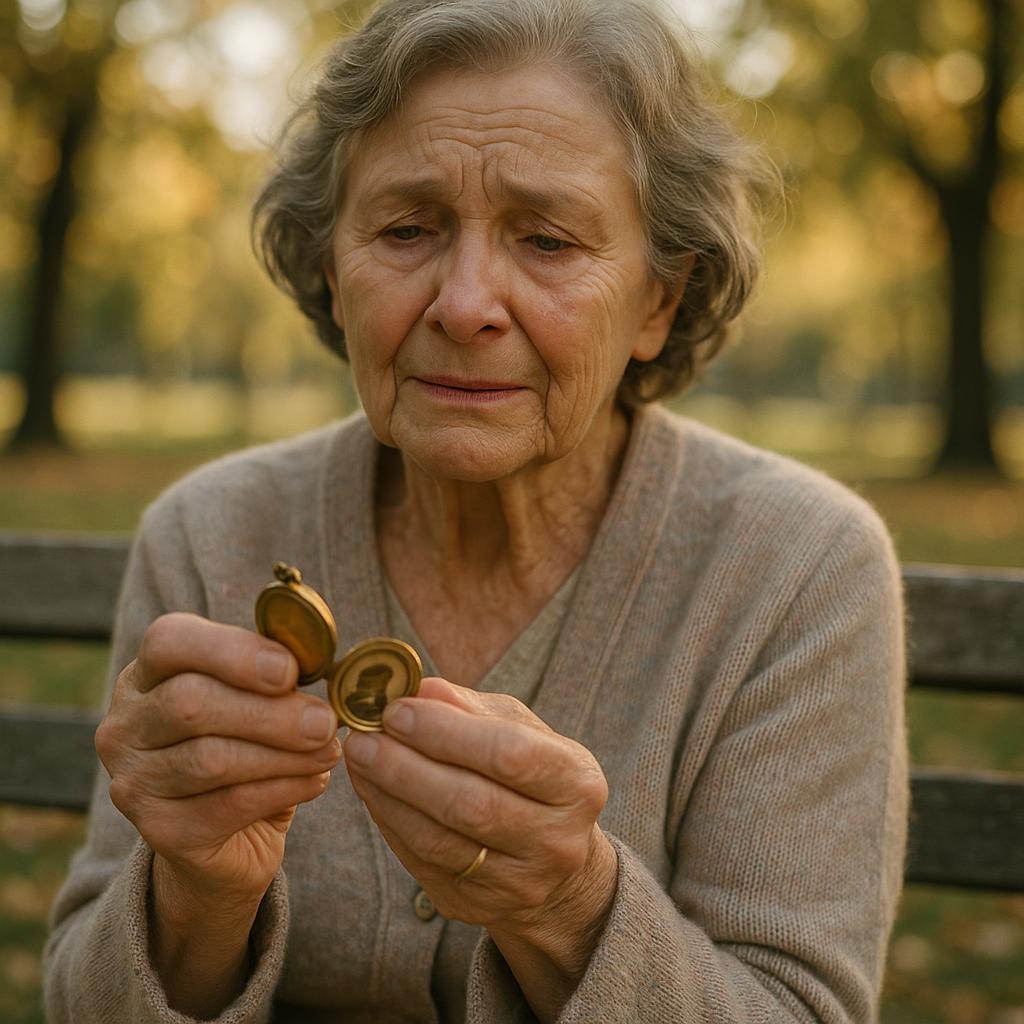 Image by RM AI
Eleanor's Letter
With trembling hands, I pulled Eleanor's letter from my bag and passed it to Margaret. The yellowed paper looked so fragile between her age-spotted fingers. She adjusted her reading glasses and began to read, her expression transforming with each line – first curiosity, then surprise, and finally a profound sadness that seemed to age her even further. 'Eleanor Winters,' she whispered, her voice catching. 'All these years, and I never knew her name.' She looked up at me, those familiar Aldridge eyes glistening with unshed tears. 'But I knew she existed. Uncle Thomas mentioned a special girl in his letters home – never by name, just "my girl" or "my sweetheart."' Margaret's hand trembled slightly as she folded the letter. 'The saddest part is that my grandparents would have welcomed her with open arms. They weren't nearly as rigid or judgmental as she feared.' I felt a lump form in my throat. All those years Eleanor had spent carrying this burden, afraid of rejection that would never have come. 'They lost their son,' Margaret continued softly. 'Any piece of his heart would have been precious to them.' She stared at the letter, and I could almost see her mentally rewriting history – imagining a world where Eleanor had found the courage to come forward, where two grieving hearts might have healed together. But there was something else in Margaret's expression, something that made me wonder if Eleanor's story didn't end with this letter.
 Image by RM AI
Tea and Memories
Margaret's apartment was like stepping into a time capsule. She ushered me inside with surprising energy for a 92-year-old, gesturing toward a floral couch while she prepared tea in delicate china cups that probably cost more than my rent. 'Milk? Sugar?' she asked, her hands steady as she poured. 'Thomas always took his with just a splash of milk.' The walls around us were a gallery of Aldridge family history—sepia-toned portraits in ornate frames, each one telling a chapter of their story. But my eyes kept returning to the photos of Thomas—smiling in his graduation cap, serious in his uniform, laughing beside a lake that looked eerily similar to the one in Eleanor's painting. 'He was brilliant, you know,' Margaret said, handing me a cup. 'Studied literature at university before the war. Could quote Shakespeare from memory.' Her voice softened. 'He wanted to be a professor.' I sipped my tea, watching Thomas transform from a name in a yellowed letter to a real person with dreams and plans and favorite books. Someone who quoted poetry and took his tea with milk. Someone who fell in love with a woman named Eleanor. As Margaret continued sharing stories, I noticed her glancing repeatedly at a closed door across the room, as if it contained something she wasn't quite ready to show me.
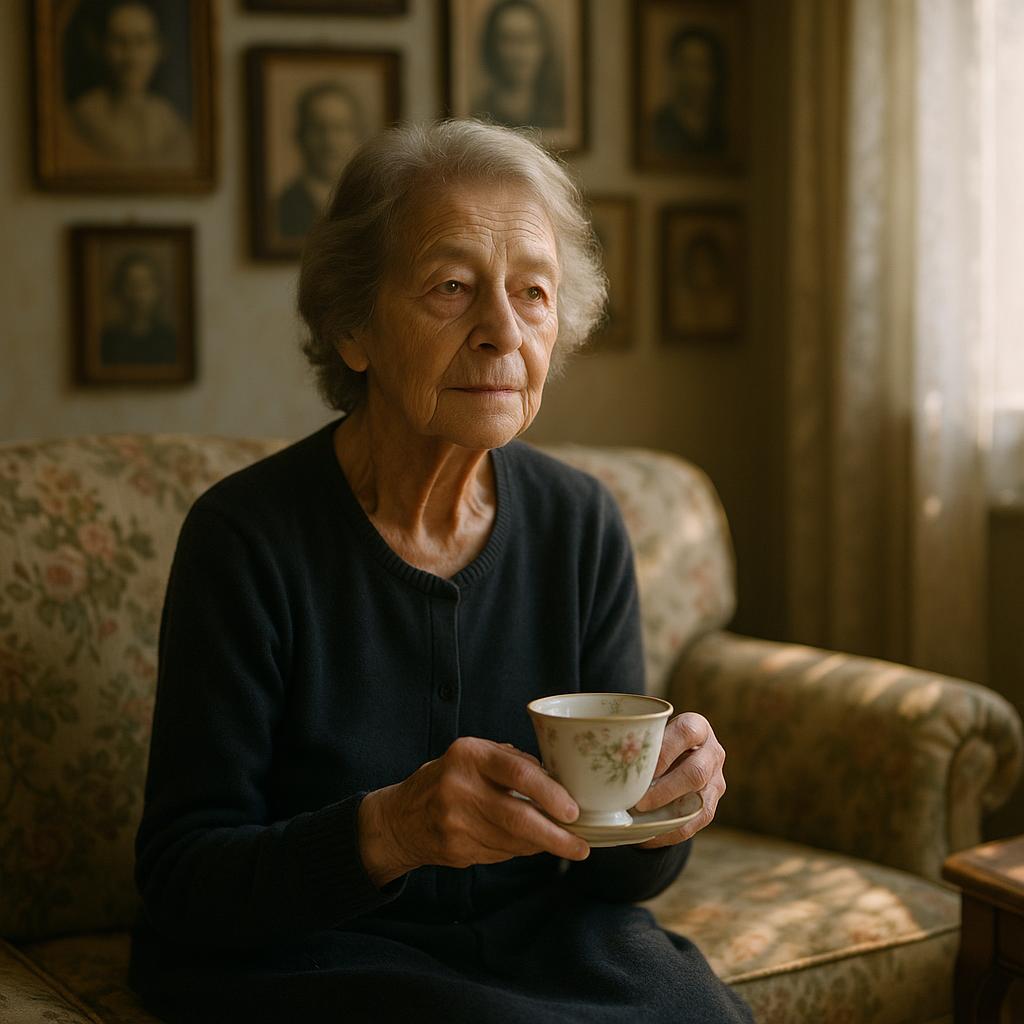 Image by RM AI
The Mystery of R
I pulled the note from my bag and handed it to Margaret. 'I've been wondering about this R person. Who would have hidden Eleanor's letter but never delivered it?' Margaret adjusted her glasses, studying the handwriting with the scrutiny of someone who'd seen it before. Her eyes widened suddenly. 'Good heavens,' she whispered, 'this is Rose's handwriting. Rose Winters—Eleanor's younger sister.' My jaw dropped. The mysterious R had a name, a connection. 'Rose volunteered at our historical society for years,' Margaret continued, her fingers tracing the elegant but shaky script. 'She passed about five years ago.' The timeline clicked into place like puzzle pieces. 'So the painting must have been donated after Rose died,' I said, the realization washing over me. 'She found Eleanor's secret but couldn't bring herself to contact your family directly.' Margaret nodded slowly, her eyes distant. 'Imagine carrying your sister's unfinished business for all those years.' She looked up at me, something new flickering in her expression. 'There's something else you should know about the Winters sisters. Something that explains why Rose might have hesitated all these years.'
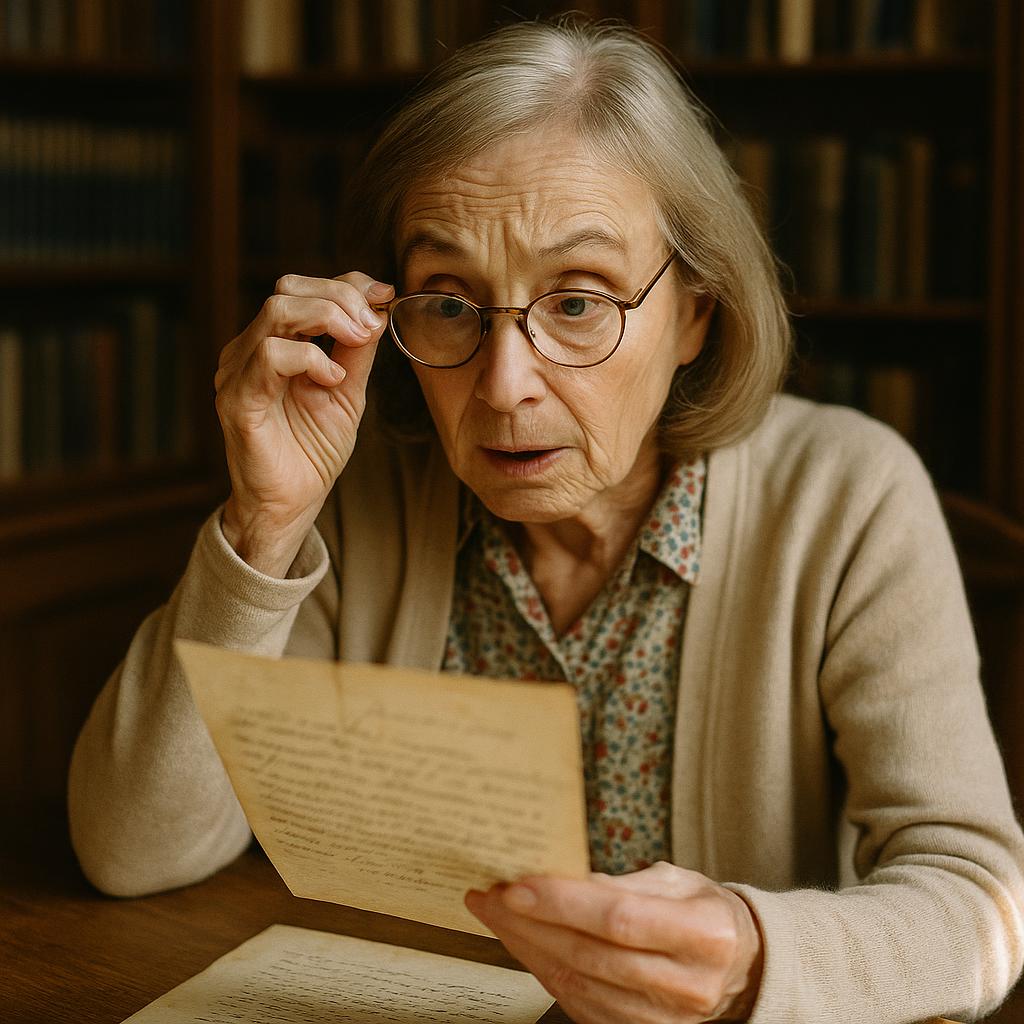 Image by RM AI
Pieces Falling Into Place
Margaret rose from her chair with surprising agility and disappeared into her bedroom, returning moments later with a leather-bound photo album. 'I knew I'd seen her before,' she murmured, flipping through the yellowed pages. She stopped at a newspaper clipping from 2015 – a group photo from the historical society's annual fundraiser. Her finger trembled slightly as she pointed to an elderly woman standing in the back row. 'Rose Winters. Eleanor's sister.' I leaned closer, studying the woman's face – the same high cheekbones as the Eleanor I'd imagined from her letter. 'She volunteered as their archivist for nearly twenty years,' Margaret explained. 'I saw her around town occasionally, but we never spoke.' The realization hit me like a physical blow – these two women, connected by Thomas, had orbited each other for decades in our small town without ever knowing their shared history. Rose must have discovered Eleanor's secret after her sister's death, perhaps finding the letter among her belongings. But something had held her back from approaching the Aldridges directly. 'It's almost too much to process,' I whispered, watching Margaret's eyes fill with tears. 'All these years...' She looked up at me suddenly, her expression changing. 'But there's something else you should know about the Winters sisters – something that explains everything about why Rose kept her distance.'
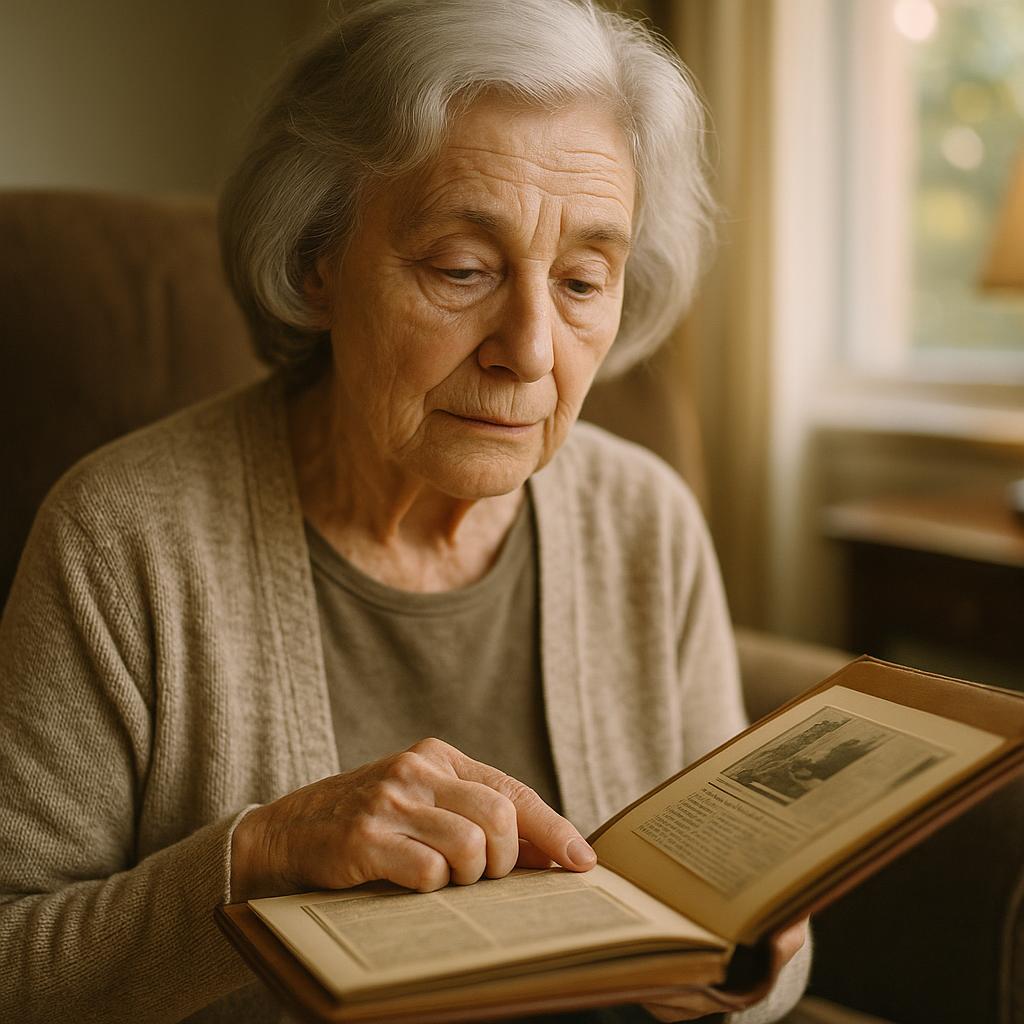 Image by RM AI
Eleanor's Fate
"What happened to Eleanor after the war?" I asked, setting down my teacup. Margaret's eyes clouded with something between curiosity and sadness. She reached for her phone, fingers slightly trembling as she dialed. "My cousin Philip maintains our family archives," she explained. The conversation was brief, but I watched Margaret's expression shift as she absorbed whatever Philip was telling her. When she hung up, she sat in silence for a moment. "Eleanor Winters never married," she finally said. "She taught art at Westfield Elementary for nearly forty years." I pictured Eleanor—young, heartbroken, channeling her grief into teaching children how to create beauty. "She retired in 1983 and passed away in 1995. Her obituary was simple—just mentioned her teaching career and Rose as her only survivor." Margaret's fingers traced the edge of the locket. "All those years, she lived just across town from my family. We probably crossed paths at the grocery store, never knowing." I glanced at the painting I'd brought along, seeing it with new eyes. "She kept painting lakes," Margaret added softly. "Philip says the historical society has three more of her works. All water scenes." She looked up at me, her eyes suddenly sharp. "But there's something else Philip mentioned—something about Rose that changes everything we thought we knew about why this secret was kept so long."
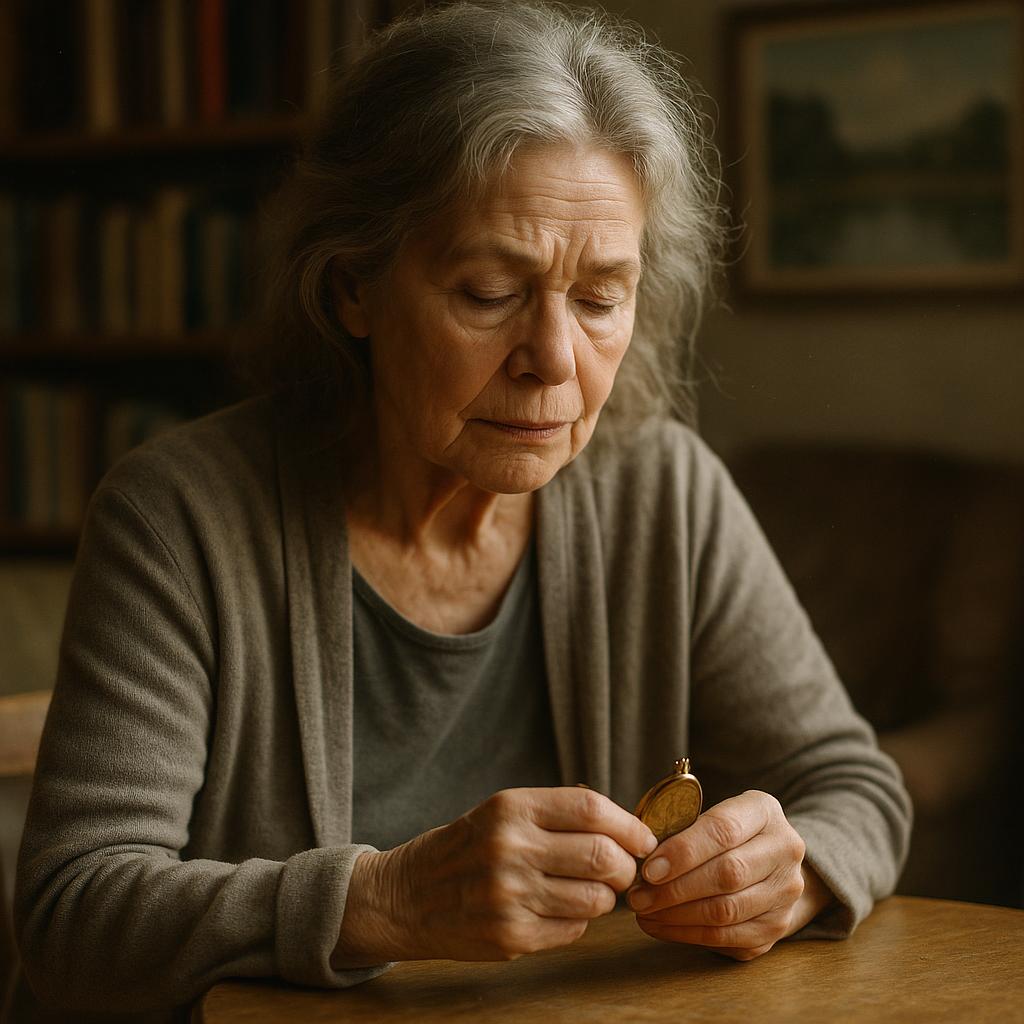 Image by RM AI
The Historical Society
The next morning, I picked up Margaret from Sunset Haven in my beat-up Honda that suddenly felt embarrassingly inadequate next to her refined elegance. 'The historical society is housed in the old Millbrook Library,' she explained as I navigated downtown. 'Rose spent nearly every Tuesday and Thursday there for two decades.' I couldn't stop thinking about how these women—Eleanor, Rose, and Margaret—had lived parallel lives in our small town, connected by invisible threads of love and loss. When we arrived at the stately brick building with its imposing columns, Margaret clutched the locket in her palm like a talisman. 'I've walked past this place a thousand times,' I admitted, helping her up the steps, 'but I've never been inside.' She smiled knowingly. 'Most people haven't. That's why secrets stay buried so long.' The heavy wooden doors creaked as we entered, and I was hit with that distinct smell of old books and furniture polish that screams 'important documents stored here.' A middle-aged woman looked up from the front desk, her eyes widening with recognition when she spotted Margaret. 'Mrs. Aldridge! What a surprise!' she exclaimed, coming around to greet us. 'It's been years since we've seen you here.' Margaret's grip tightened on my arm as she replied, 'We're here about the Winters sisters. And I believe you have something that might complete this extraordinary puzzle.'
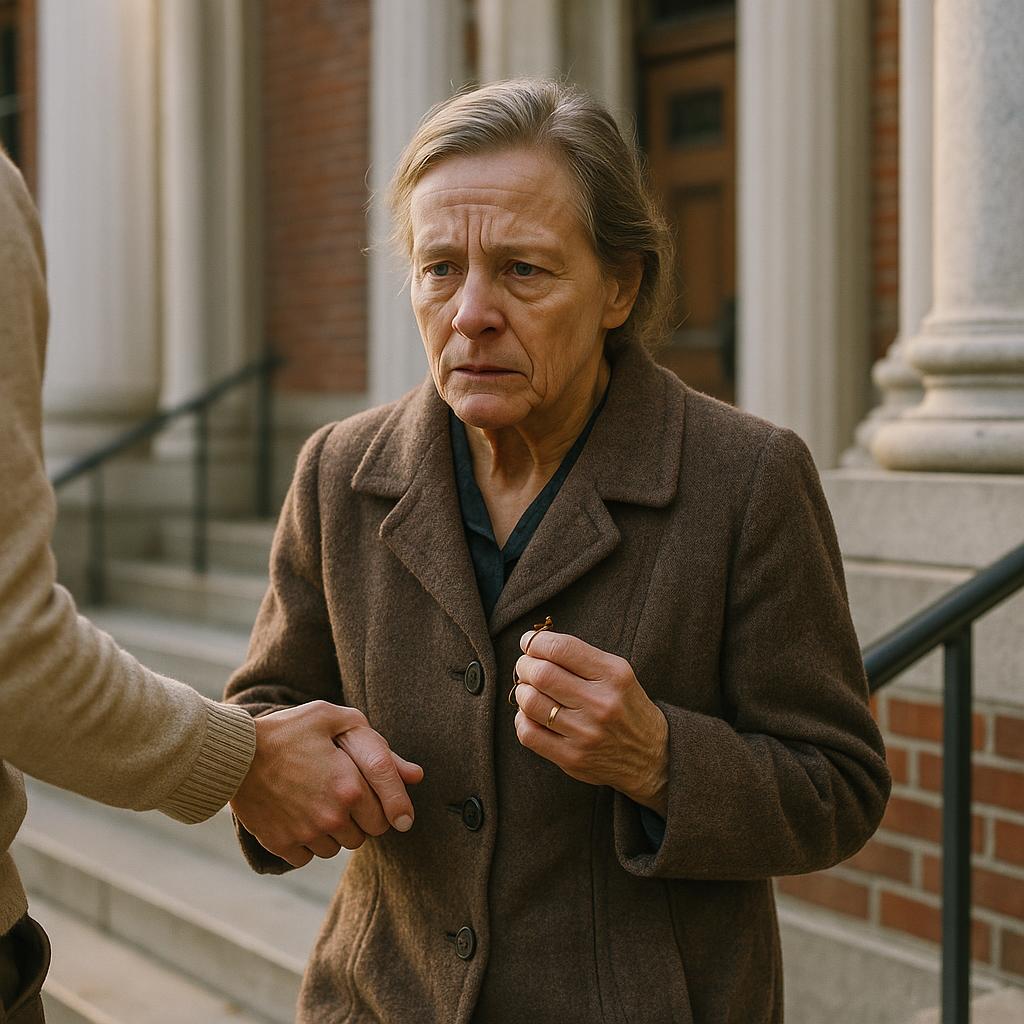 Image by RM AI
A Night of Reflection
That night, I couldn't sleep. I sat cross-legged on my bed, laptop balanced precariously on my knees, falling down an Eleanor Winters rabbit hole. The local newspaper archives had digitized their collection last year (thank God for small-town grants), and there she was—Eleanor in grainy black and white, accepting an art award in 1962. She stood tall and elegant, but her eyes... they held this unmistakable sadness that made my chest ache. I found mentions of her in education newsletters, community bulletins, even a feature about her retirement in 1983 after teaching art to literally thousands of kids. But nowhere—not once—was there any mention of a romantic relationship. Had she spent every single day of those forty-plus years thinking about Thomas? Carrying around the weight of his locket and that undelivered message? I closed my laptop around 2 AM, my eyes burning from screen time and unexpected tears. As I finally drifted off, I couldn't shake the image of Eleanor standing in front of her classroom, teaching children to create beauty while keeping her own heartbreak carefully hidden from the world. What else was she hiding?
 Image by RM AI
The Historical Society Visit
The historical society was housed in one of those grand old Victorian homes that always made me feel like I should've worn something nicer than jeans and a sweater. As we walked up the stone pathway, Margaret looked more alive than I'd seen her yet, her eyes bright with purpose. Inside, the place smelled like old books and furniture polish – that distinct scent of preserved history. Dr. Jenkins, a man with wire-rimmed glasses and elbow patches (seriously, like a central casting 'historian'), practically lit up when he saw Margaret. 'Mrs. Aldridge! What an unexpected pleasure,' he exclaimed, taking her hand between both of his. When we explained our mission – tracking down information about the Winters sisters – his eyebrows shot up. 'Rose was one of our most dedicated volunteers,' he said, leading us toward a back room filled with filing cabinets. 'Catalogued half our collection single-handedly.' He paused, looking thoughtful. 'And Eleanor... we actually have several of her paintings.' He gestured toward a hallway. 'Including one that I believe you'll find particularly interesting.' The way he said it made my skin prickle with anticipation.
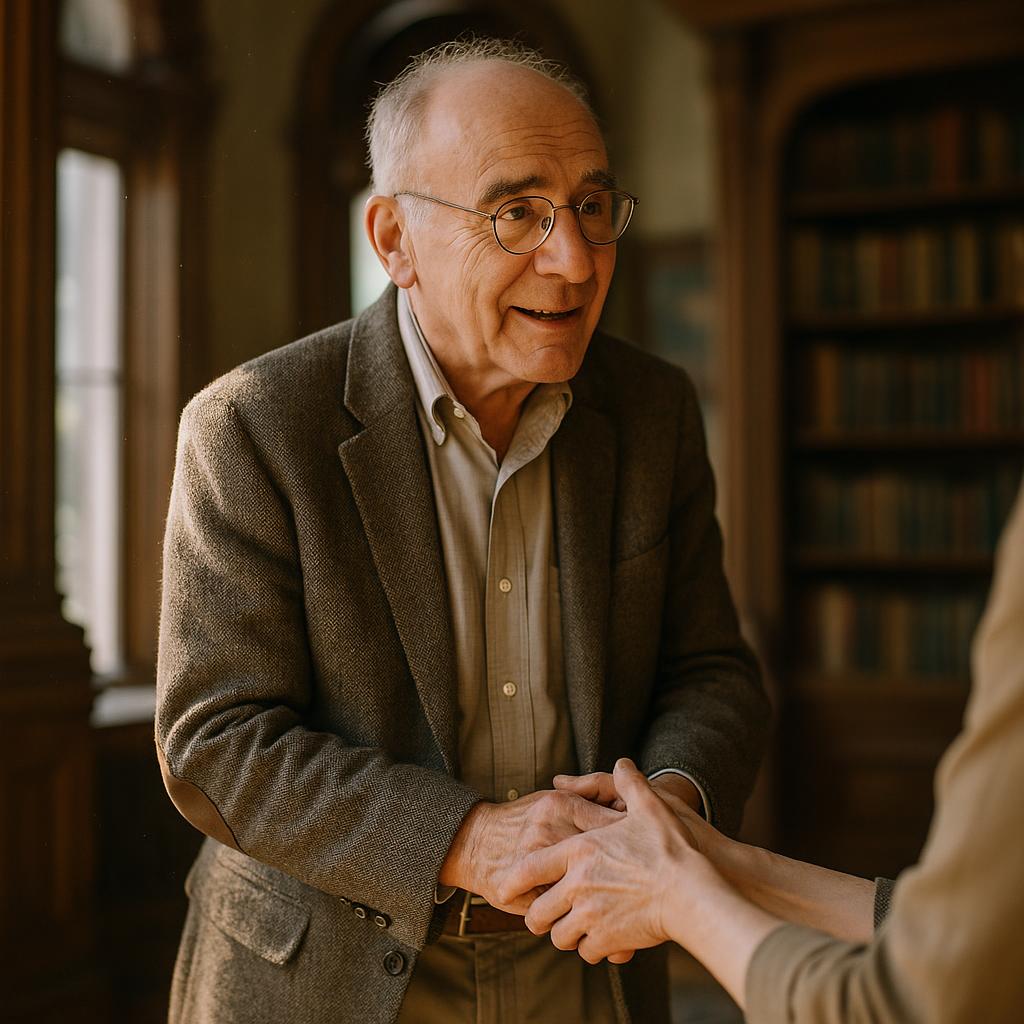 Image by RM AI
Eleanor's Art
Dr. Jenkins led us down a narrow hallway into what looked like a converted sunroom. 'Our local artists' gallery,' he announced with obvious pride. Three landscapes hung on the far wall, and I immediately recognized the style—the same delicate brushwork, the same attention to how light played on water. 'Eleanor Winters,' read the small placard. My heart did a little flip. 'She donated these in the mid-80s,' Dr. Jenkins explained, adjusting his glasses. 'Quite talented, though she never sought recognition beyond our community.' I moved closer, noticing that one painting depicted the exact same lake as my thrift store find, just from a different vantage point. Margaret stood motionless before them, her hand pressed lightly against her chest. I wondered if she was seeing what I was seeing—not just pretty landscapes, but windows into a world her uncle might have shared with Eleanor had he returned from war. A life they might have built together, picnicking beside that lake, watching those same sunsets. 'She painted this view dozens of times,' Dr. Jenkins said softly. 'Always the same lake.' He hesitated, then added, 'There's something else you should see—something Rose left in our archives that I believe was meant to be found... eventually.'
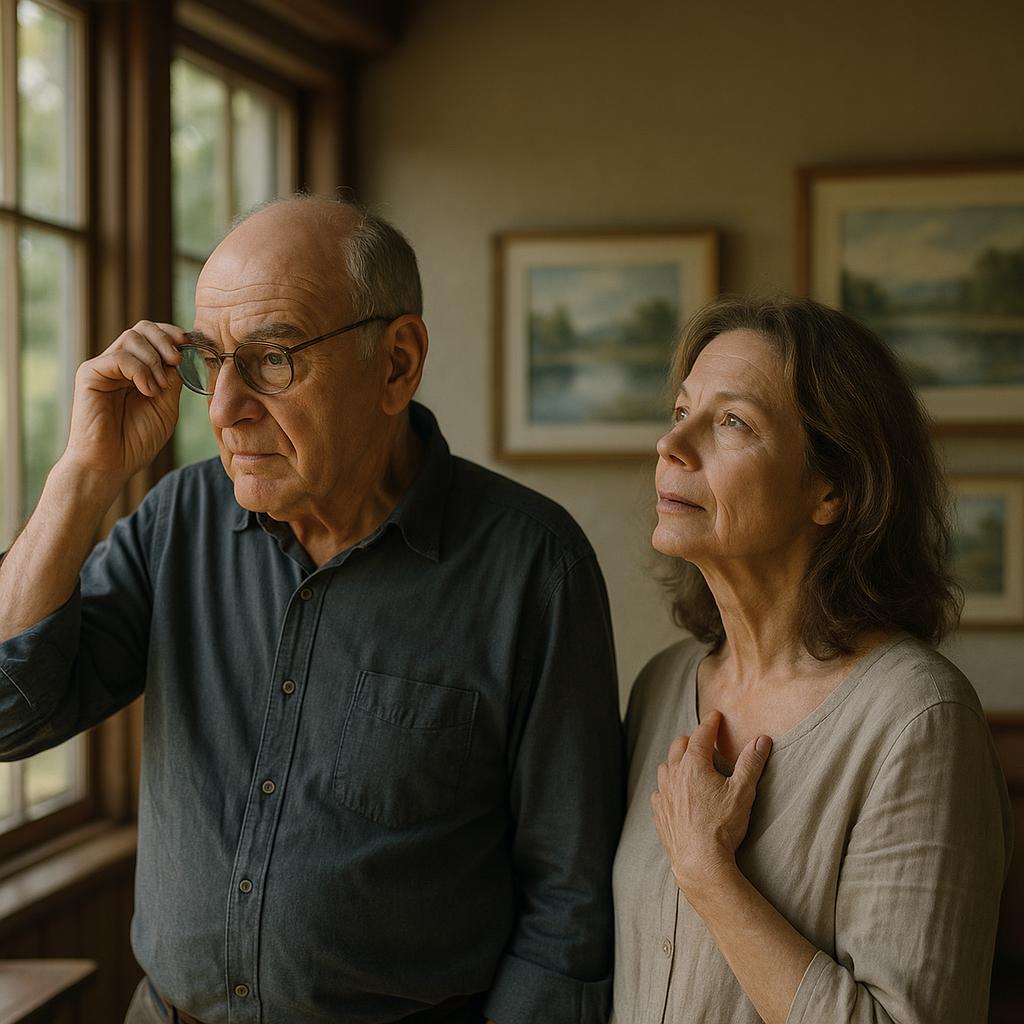 Image by RM AI
Rose's Records
Dr. Jenkins carefully slid a manila folder from the drawer labeled 'W' and placed it on the table between us. 'Winters Family,' he announced, his voice dropping to that reverent tone people use in libraries and funeral homes. 'Rose organized this herself. She was absolutely meticulous about preserving local history.' I leaned forward as he opened the file, revealing a treasure trove of memories—yellowed newspaper clippings, handwritten notes, and photographs that captured moments frozen in time. Margaret's hand trembled slightly as she reached for one particular photo—two young women standing arm-in-arm, their smiles radiant despite the looming shadow of war. 'That's them,' Dr. Jenkins confirmed. 'Eleanor and Rose Winters, summer of 1943.' I gently turned the photograph over, and there it was—Rose's now-familiar handwriting: 'Eleanor and me, summer 1943, before Thomas shipped out.' My breath caught. This wasn't just confirmation that Rose had known about Thomas—she'd been there from the beginning, watching her sister fall in love with a man who would never return. Margaret's eyes met mine, and I could see she was thinking the same thing I was: Rose hadn't just discovered Eleanor's secret after her death. She'd been keeping it all along. But why?
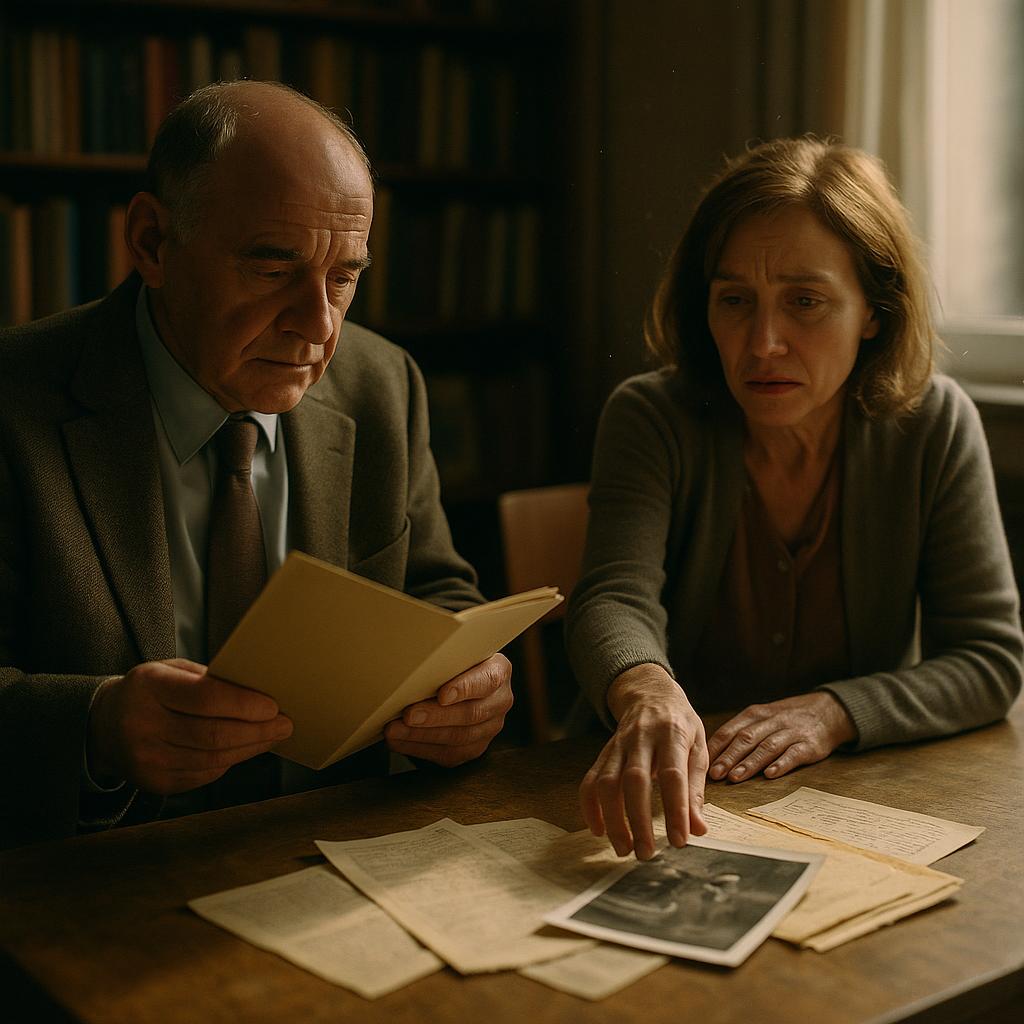 Image by RM AI
The Lake Revealed
As I flipped through the file, a folded map caught my eye. I carefully opened it, revealing a detailed survey of local landmarks covered in Rose's meticulous handwriting. My heart skipped when I spotted a location circled in bold red ink—Crescent Lake, just five miles outside town. Next to it, Rose had written: 'E's favorite place. Where she met T.' Margaret leaned in so close I could smell her lavender perfume, her breath catching. 'Crescent Lake,' she whispered, her voice thick with emotion. 'That's where Thomas spent his summers. Our family had a cabin there until the 70s.' I pulled out my phone and quickly searched for images of Crescent Lake, holding it up beside Eleanor's paintings. The resemblance was unmistakable—the distinctive curve of the shoreline, the cluster of pines on the northern edge, even the way the sunlight dappled across the water. 'All these years,' I said, my voice barely audible, 'she kept painting their special place.' Margaret nodded, tears welling in her eyes. 'She never let it go.' I thought about Eleanor, sitting at her easel year after year, recreating the spot where she'd once been truly happy, preserving those memories in brushstrokes when she couldn't share them with words. But something about the map bothered me—there was another marking on it, something that suggested Crescent Lake held more secrets than just romantic memories.
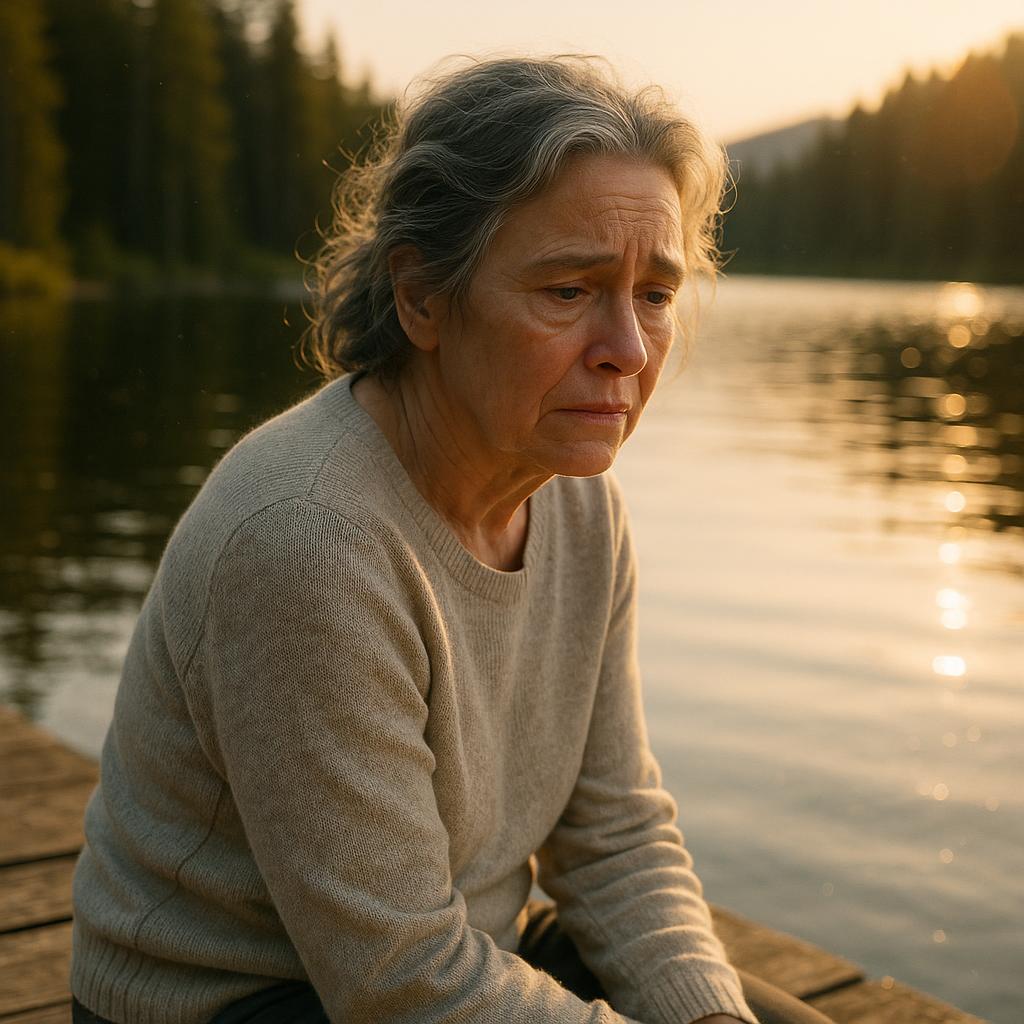 Image by RM AI
Rose's Diary
Dr. Jenkins slid a small leather-bound diary across the table, his fingers lingering on the cover as if reluctant to let it go. 'This was among Rose's personal effects,' he explained. 'Donated after she passed.' I glanced at Margaret, who nodded encouragingly, and carefully opened the worn diary to find entries spanning from 2014 to 2017. My heart raced as I flipped through the pages, scanning Rose's elegant but increasingly shaky handwriting until a particular entry from January 2016 made me freeze. 'Found E's box today while clearing her old desk,' Rose had written. 'The locket is still there, and her letter to Thomas. After all these years, she never could part with it. I should take it to the Aldridges, but I can't bring myself to open those old wounds.' I read the words aloud to Margaret, whose eyes filled with tears. This was it—the moment Rose discovered her sister's secret and made the decision that would eventually lead to me finding that painting in a thrift store. But as I turned the page, the next entry made my blood run cold: 'I've decided what to do with Eleanor's secret, but God forgive me for what I'm about to hide.'
 Image by RM AI
Rose's Final Plan
I carefully turned the page in Rose's diary, and suddenly everything made sense. In March 2016, she'd written: 'Buried E's box at our special place today. Can't bring myself to approach the Aldridges directly, but can't let this die with me either. Will hide coordinates in E's lake painting - the one she always kept. Someone might find it someday.' My fingers traced over her words, feeling the indentations her pen had made. This wasn't just a random hiding place—it was a deliberate plan. Rose had created this breadcrumb trail, hoping someone would eventually connect the dots. A final entry from April 2017, just weeks before her death, read: 'Estate sale next week. Everything goes, including E's painting. I've done what I can. Hope someone braver than me finds it.' I looked up at Margaret, whose eyes were glistening with tears. "She was trying to make things right," Margaret whispered, "in her own way." I nodded, suddenly understanding the weight of responsibility I'd been carrying since that Saturday morning in the thrift store. I wasn't just a random shopper who'd stumbled upon a hidden note—I was the final piece in Rose's elaborate plan, the stranger she'd been waiting for. But as I reread those diary entries, something about the phrase "our special place" nagged at me. Why would Rose call it that unless...
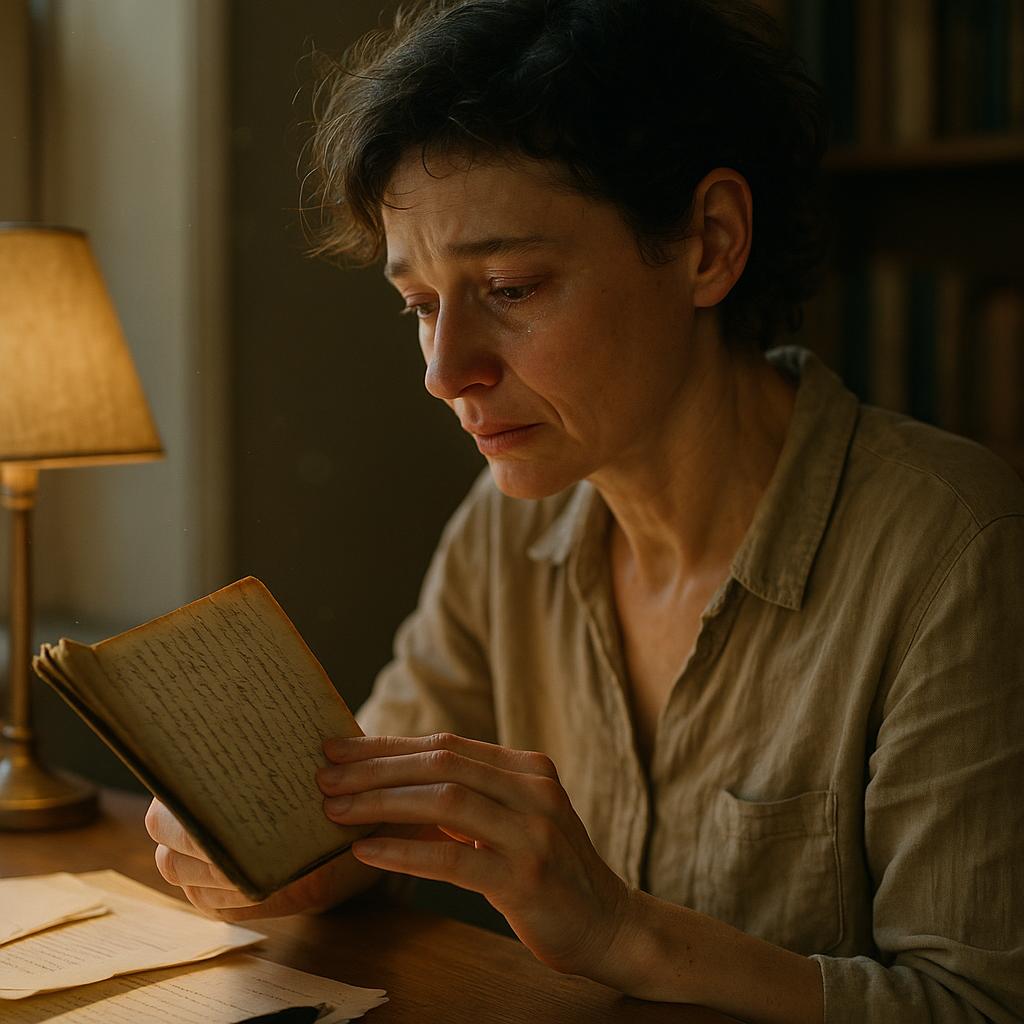 Image by RM AI
The Thrift Store Connection
Dr. Jenkins pulled out a folder labeled 'Estate Disbursements' and spread several documents across the table. 'After Rose passed away in 2017, her belongings were scattered like dandelion seeds,' he explained, adjusting his glasses. I leaned forward, fascinated by the paper trail that had eventually led to me standing in a dusty thrift store on a random Saturday morning. 'Most items went to various charity shops,' he continued, pointing to a hastily scribbled inventory list. 'The historical society acquired her papers and several of Eleanor's paintings, but we missed the significance of that particular lake painting.' Margaret shook her head slowly. 'It seems almost miraculous that it survived intact all this time.' Dr. Jenkins nodded solemnly. 'Estate sales can be chaotic. Items get scattered to the winds.' I thought about how many hands that painting must have passed through—movers, estate liquidators, donation sorters, thrift store employees—all unaware of the secret message tucked inside its frame. 'It's like it was waiting for you,' Margaret said softly, her eyes meeting mine. I felt a chill run down my spine as I realized how easily this connection could have been lost forever. But something still bothered me about Rose's diary entries—why had she gone to such elaborate lengths to hide the truth when she could have simply mailed the locket anonymously?
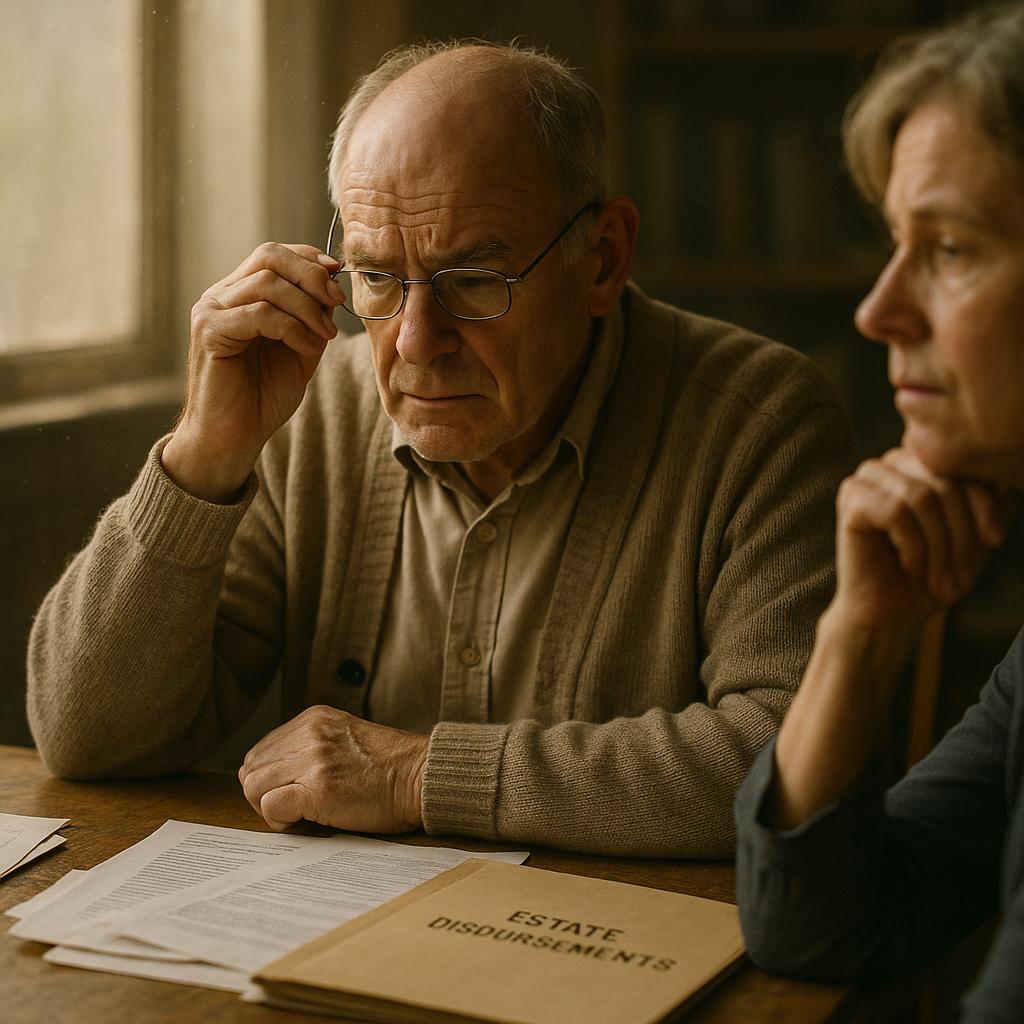 Image by RM AI
Crescent Lake
As we left the historical society, Margaret suggested we visit Crescent Lake. 'I haven't been there in decades,' she admitted, her voice tinged with nostalgia. 'Not since our family sold the cabin in the '70s.' Dr. Jenkins scribbled directions on a notepad, mentioning that the area was now a nature preserve. The drive was mostly silent, both of us lost in our thoughts about Eleanor and Rose. I couldn't help wondering if I was literally retracing their steps from all those years ago. 'Thomas taught me to skip stones there when I was very small,' Margaret said suddenly, breaking the silence. 'He had this special technique—said it was all in the wrist.' She demonstrated with her hand, the motion surprisingly fluid for her age. 'I wonder if he taught Eleanor too.' The thought hit me like a wave—these invisible threads connecting people across decades. Thomas skipping stones with his niece in the same spot where he might have later taught the woman he loved. And now here we were, following breadcrumbs left by Rose, driving toward a lake that Eleanor had painted over and over again, as if she could somehow keep those memories alive through brushstrokes. As we rounded the final curve in the road, the lake came into view, and I gasped. It was EXACTLY as Eleanor had painted it—right down to the distinctive cluster of pines on the far shore. But what made my skin prickle was the realization that we weren't just visiting a pretty landscape. We were heading to the exact spot where Rose had buried something she couldn't bring herself to deliver in person.
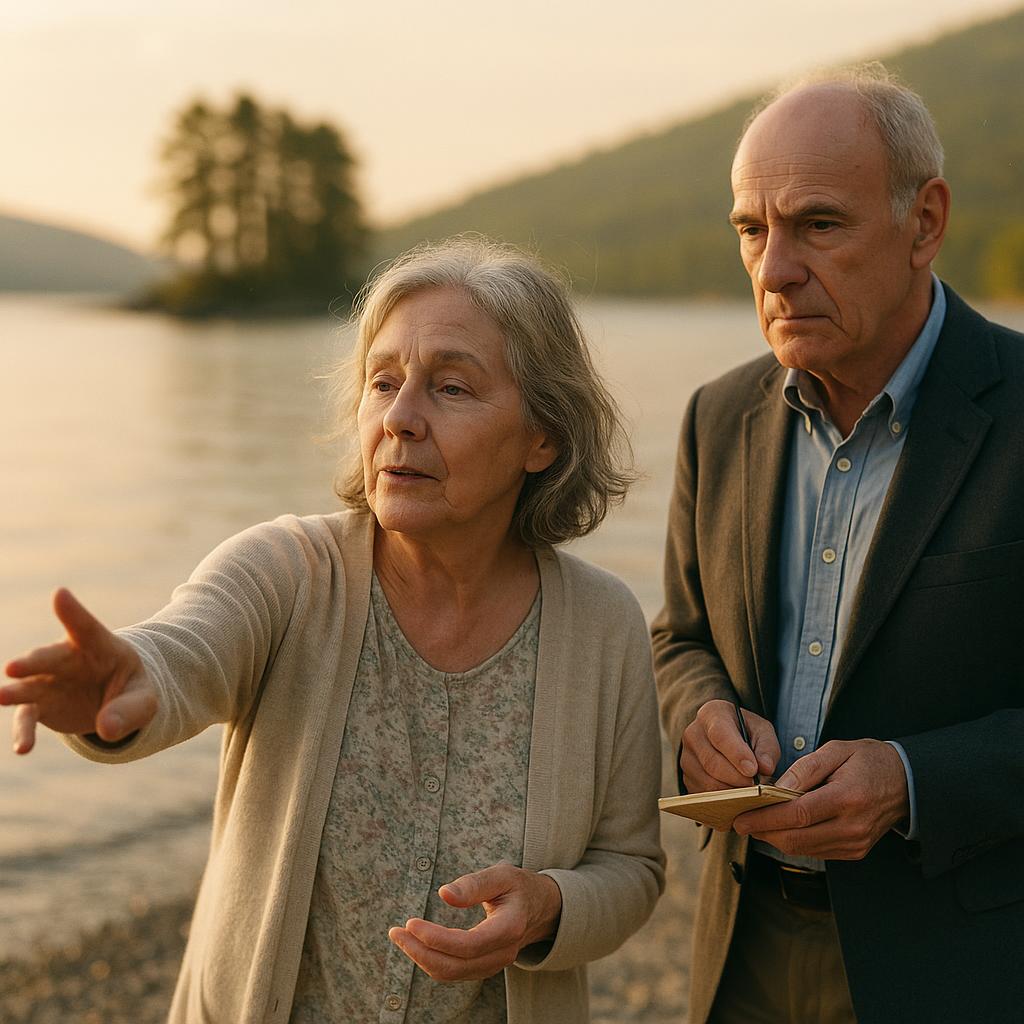 Image by RM AI
Standing Where They Stood
Crescent Lake took my breath away. The water shimmered in the afternoon sun, creating those exact ripples of light that Eleanor had captured in her paintings. It was like stepping into her canvas—surreal and oddly emotional. Margaret moved slowly beside me, her hand gripping my arm with surprising strength. 'This is where the cabin stood,' she said, pointing to a clearing where wildflowers now grew in abundance. 'And that dock—it's been rebuilt, but it's in the exact same spot.' I helped her navigate the uneven ground, imagining young Thomas and Eleanor walking this very path in 1943, falling in love as the world burned around them. Did they skip stones here? Share picnics? Steal kisses when no one was looking? The weight of their unfinished story hung in the air like the afternoon mist rising from the water. Margaret stopped suddenly, her eyes fixed on something in the distance. 'I remember now,' she whispered, her voice catching. 'There was a special place Thomas showed me once—a little clearing with a view of the entire lake. He said it was where he went to think about important things.' She turned to me, her eyes suddenly sharp with realization. 'I think I know exactly where Rose would have buried that box.'
 Image by RM AI
Margaret's Decision
As we stood to leave, the late afternoon sun casting long shadows across Crescent Lake, Margaret touched my arm. 'I'd like you to keep the painting,' she said, her voice soft but determined. I immediately protested, insisting that it should stay with Thomas's family—with her. 'But you're his niece,' I argued. 'It's part of your family history.' Margaret shook her head, a gentle smile playing at her lips. 'Eleanor created it. It's her vision of this place, where she found happiness with Thomas. I have his locket and her letter now—those are my connections to them.' She squeezed my hand. 'The painting is yours. You're part of this story now too.' Her words hit me with unexpected force. In just a few days, I'd gone from random thrift store shopper to keeper of a decades-old love story. As we walked back to the car, I realized how much this journey had come to mean to me—how invested I'd become in Eleanor and Thomas and Rose. I glanced back at the lake one last time, wondering if Eleanor had stood in this exact spot, memorizing every detail to capture later in paint. What I couldn't possibly know then was that Margaret's decision to let me keep the painting would lead to an even more startling discovery.
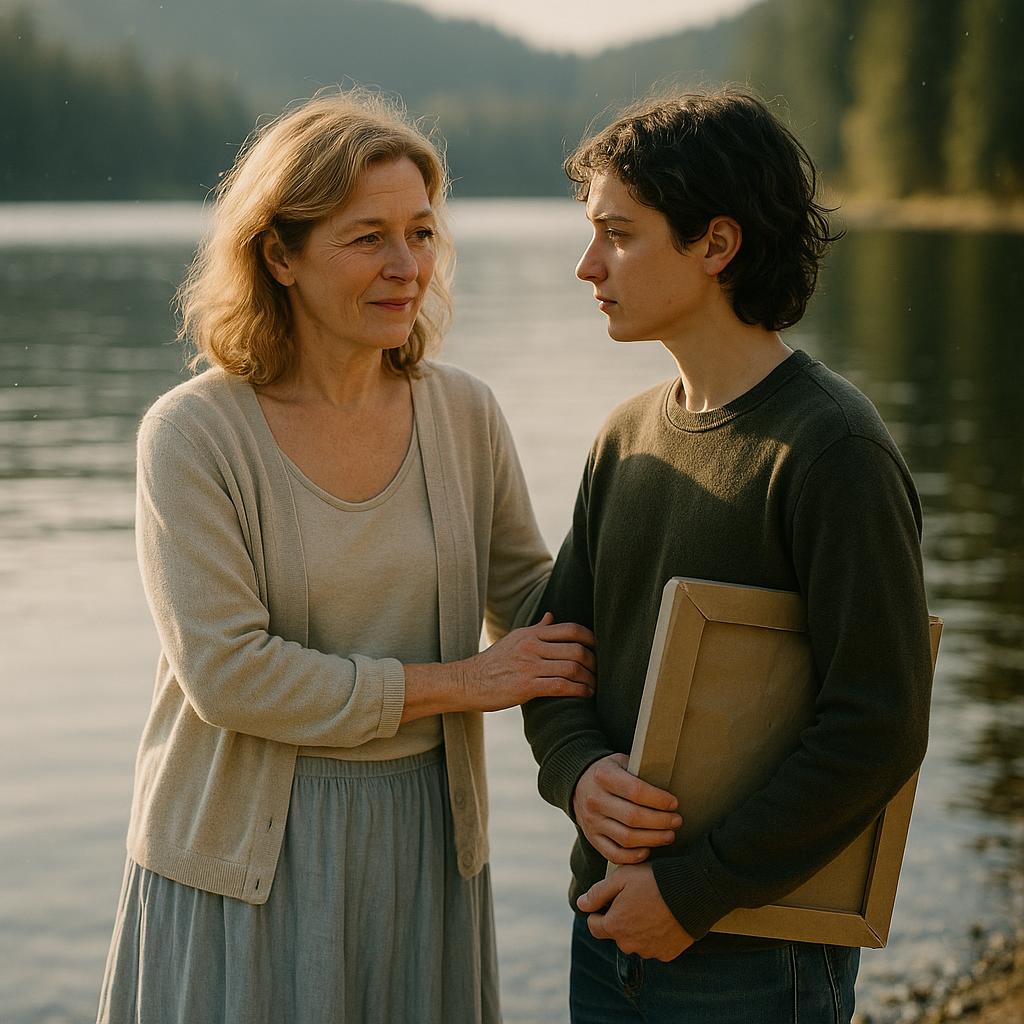 Image by RM AI
A New Connection
On the drive back to Sunset Haven, I watched the landscape blur past my window, still processing everything we'd discovered. Margaret broke the comfortable silence with an unexpected suggestion. 'My grandson James is visiting next weekend,' she mentioned, her voice casual but her eyes twinkling with something I immediately recognized. 'He's a history professor at the state university. He'd be absolutely fascinated by all this.' She paused meaningfully before adding, 'He's about your age. Single too.' I couldn't help but laugh at her transparent matchmaking attempt. Classic grandma move. 'You should join us for lunch on Saturday,' she continued, patting my hand. 'Bring the painting. James could help us document this whole story properly.' I found myself nodding before I'd even fully considered it. There was something appealing about meeting someone else who might appreciate this strange journey I'd stumbled into. Someone who understood the value of history and lost stories. 'I'd like that,' I admitted, surprising myself with how much I meant it. As we pulled into Sunset Haven's circular drive, I wondered what James would make of his great-uncle's secret romance—and whether Margaret's matchmaking instincts were as good as her detective skills had proven to be.
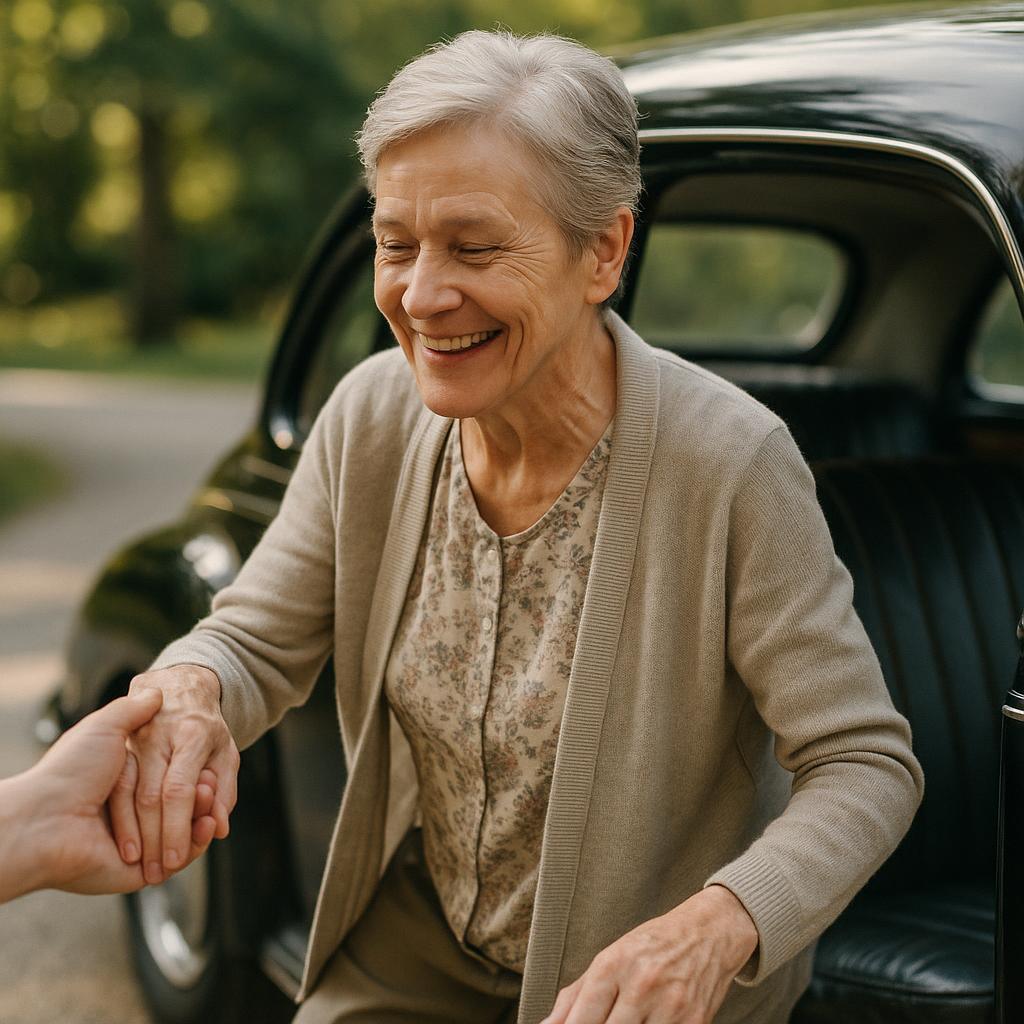 Image by RM AI
The Painting's New Home
That evening, I carefully hung Eleanor's painting on the wall opposite my couch. For such a simple thrift store find, it had completely transformed my living room. The soft blues and greens of the lake scene brought a warmth to my otherwise minimalist space that no IKEA purchase ever could. I found myself sitting there for hours, wine glass in hand, noticing details I'd missed before—like the tiny figures sitting on a distant dock that could have been Eleanor and Thomas sharing a quiet moment together. There was something almost magical about having this piece of history in my home, this tangible connection to a love story that had remained hidden for decades. When my friend Mia called to check in, I couldn't help but spill the entire story, from the thrift store discovery to Margaret's matchmaking plans. 'This is incredible,' she said, her voice filled with genuine awe. 'It's like you were meant to find that painting.' I'd never been one for destiny or fate—I'm more of a 'right place, right time' kind of person—but for the first time, I considered that perhaps she was right. Maybe some things really are meant to be found, and some stories are meant to be continued. As I glanced at my calendar and circled Saturday's lunch date with Margaret and her grandson James, I couldn't shake the feeling that Eleanor's painting had more secrets to reveal.
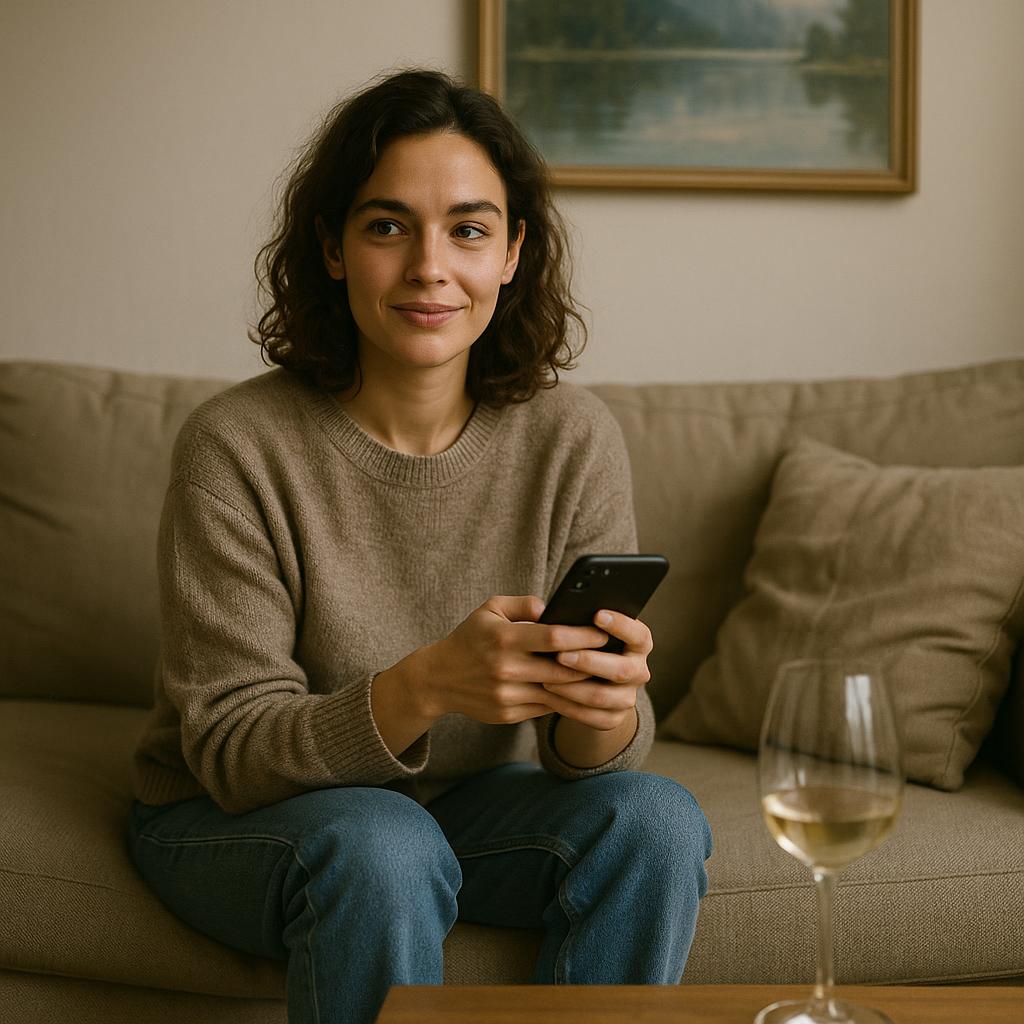 Image by RM AI
Research Rabbit Hole
I couldn't stop thinking about Eleanor and Thomas. Their story had completely consumed me, so I took a few personal days from work to dive deeper. The city library became my second home as I pored through microfiche archives and dusty yearbooks. I even created an account on Ancestry.com (RIP my credit card) to access military records. That's when I discovered Thomas wasn't just a soldier—he was a poet. Several of his poems had been published in university literary journals before he shipped out. One in particular stopped me cold. It was titled 'Reflections on Crescent Water,' and the final stanza hit me like a punch to the heart: 'What remains when light fades from the water? Memory, love, the promise of return.' I sat there in the library, tears streaming down my face, as other patrons awkwardly pretended not to notice. Thomas had written those words never knowing he wouldn't come back, while Eleanor spent decades painting that same lake, keeping his memory alive through her brushstrokes. I couldn't help but wonder—did she ever read his poems? Did she know he had immortalized their love in words just as she had in paint? But the biggest question that kept me up at night was what exactly happened that made their love story remain a secret for so long.
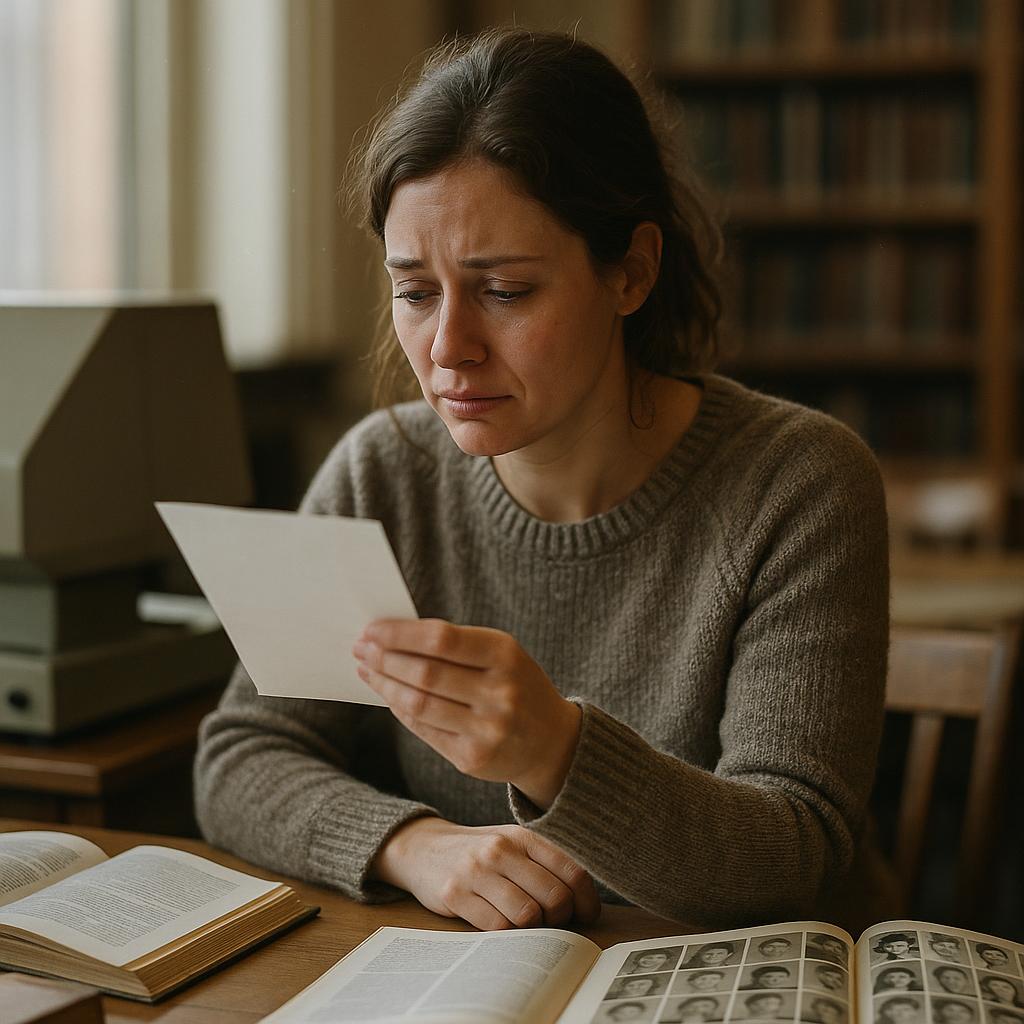 Image by RM AI
Meeting James
Saturday arrived faster than I expected, and I found myself standing in front of my closet, overthinking every outfit option. Why was I so nervous about meeting Margaret's grandson? I finally settled on a casual-but-not-too-casual ensemble and carefully wrapped Eleanor's painting in bubble wrap before heading to Sunset Haven. When I walked into Margaret's apartment, James Aldridge stood up to greet me, and I immediately understood why his grandmother was so proud. Tall with kind eyes and an easy smile that crinkled at the corners, he shook my hand warmly. 'So you're the painting detective,' he said. 'Grandmother hasn't talked about anything else all week.' Margaret beamed from her armchair as we settled in for lunch. What struck me most about James was how attentively he listened—not just to me explaining my thrift store find, but especially to Margaret's stories about Thomas. 'That would have been during the North African campaign,' he'd occasionally add, or 'Letters were heavily censored then.' His passion for history wasn't academic and dry; it was living and breathing. I found myself stealing glances at him throughout the meal, drawn to the way his eyes lit up when connecting historical dots. What I didn't expect was how he looked at me when I wasn't watching—something Margaret noticed with a barely concealed smile that told me her matchmaking plans were proceeding exactly as she'd hoped.
 Image by RM AI
Academic Interest
James couldn't take his eyes off Eleanor's painting as I unwrapped it on Margaret's coffee table. 'This is absolutely fascinating,' he said, leaning in to examine the brushstrokes. 'The way personal artifacts can illuminate historical narratives is exactly what my research focuses on.' He explained he was currently working on a project about civilian experiences during WWII, and Eleanor's story was a perfect case study. 'Would you consider allowing me to document the painting and its discovery for an academic article?' he asked, his eyes meeting mine with genuine excitement. 'I'd credit you as co-author, of course.' The idea of contributing to historical research—of helping preserve Eleanor and Thomas's story in academic literature—gave me a strange thrill. 'I'd love that,' I replied, surprised by my own enthusiasm. As we discussed potential angles for the article, I caught Margaret watching us with that knowing grandmother smile. She pretended to be focused on her tea, but I could tell she was mentally picking out china patterns for our wedding. What neither of us realized then was that James's academic connections would soon uncover a detail about Eleanor that would change everything we thought we knew about her relationship with Thomas.
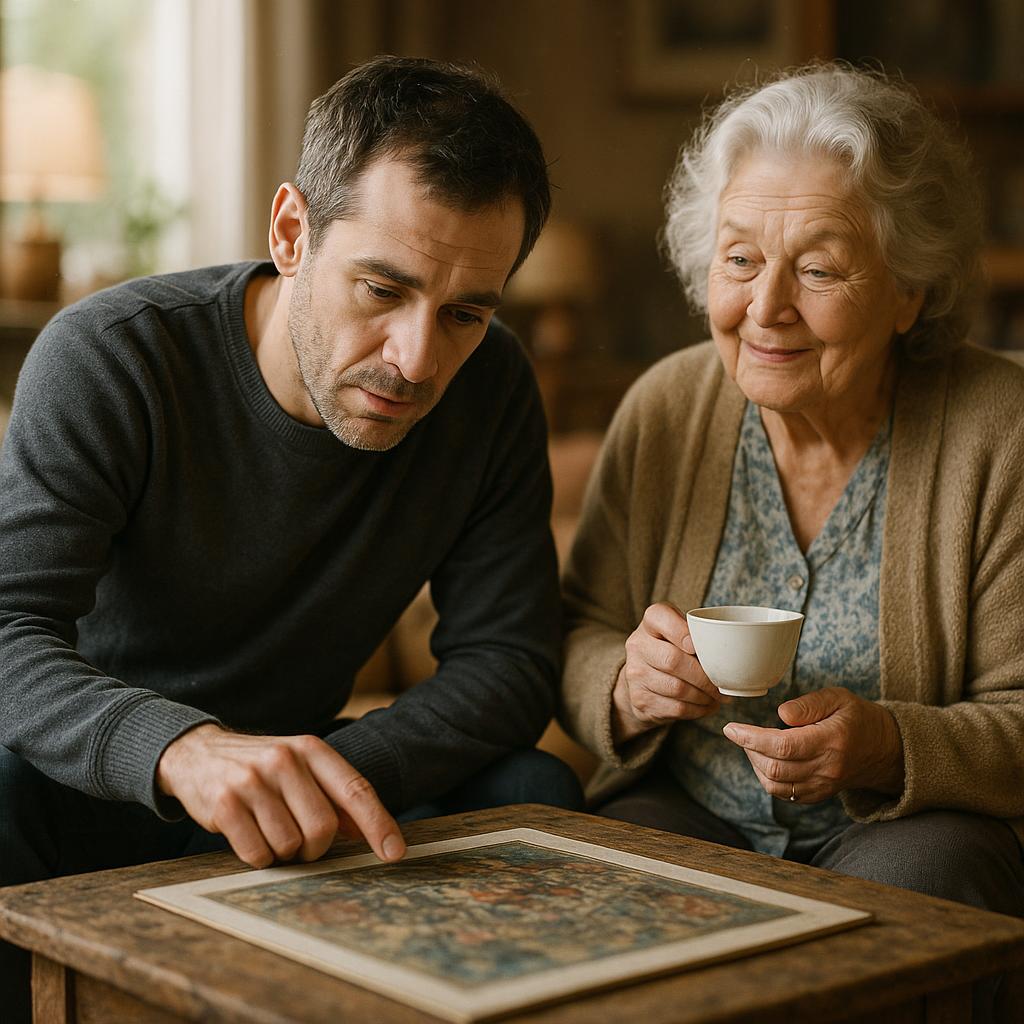 Image by RM AI
Eleanor's Students
After lunch, James pulled out his laptop and turned it toward me with an excited gleam in his eyes. 'I reached out to some colleagues in the education department,' he explained, 'and they found records of Eleanor's teaching career. She taught art at Westridge High from 1950 to 1985.' I leaned closer, staring at a yearbook photo from 1975 on his screen. There was Eleanor, surrounded by smiling teenagers, her expression gentle but carrying that same quiet sadness I'd noticed in other photos. Her hair had grayed by then, but her eyes still held that artist's intensity. 'Thirty-five years teaching teenagers,' I marveled. 'Can you imagine how many lives she touched?' Margaret nodded thoughtfully, tracing her finger across the screen. 'Thomas would have been so proud of her,' she whispered. James scrolled through his notes, his enthusiasm building. 'Several of her former students still live locally,' he continued. 'I've got contact information for three of them who've agreed to meet with us.' He glanced up at me, his eyes meeting mine. 'They might have stories about Eleanor that could help us understand who she really was—beyond the woman who loved Thomas.' What none of us could have anticipated was how one particular former student would reveal the secret Eleanor had kept hidden even from Rose.
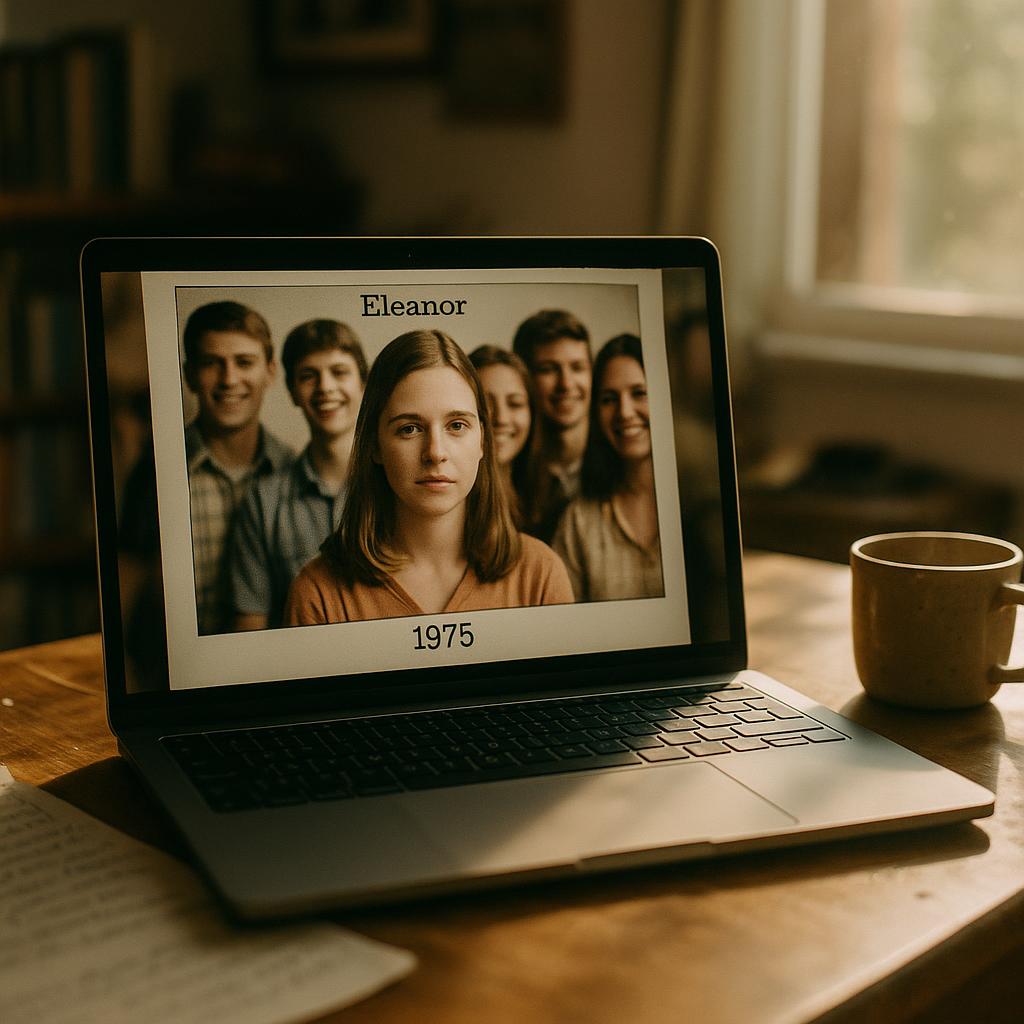 Image by RM AI
Coffee and History
James texted me the next morning with a coffee invitation that was ostensibly about research but felt suspiciously like a date. We met at this cozy little café near campus with exposed brick walls and mismatched vintage furniture—exactly the kind of place Eleanor might have loved. 'I found something you need to see,' he said, spreading military documents across our table while our lattes cooled. The papers detailed Thomas's final mission with the 101st Airborne during Operation Market Garden. 'He volunteered for a high-risk reconnaissance mission,' James explained, his finger tracing a line on a faded map. 'They were ambushed here, behind enemy lines.' I felt a lump form in my throat as I studied a black-and-white photo of Thomas's unit, their young faces unaware of what awaited them. What started as a two-hour coffee meeting stretched into the entire afternoon as we pieced together timelines and theories about Eleanor and Thomas's relationship. I couldn't remember the last time I'd been so intellectually stimulated—or so aware of someone's smile. When James's hand accidentally brushed mine while reaching for a document, the electricity between us was undeniable. What had begun as historical research was quickly becoming something much more personal, and I wasn't sure if I was more excited about uncovering Eleanor's secrets or seeing James again tomorrow.
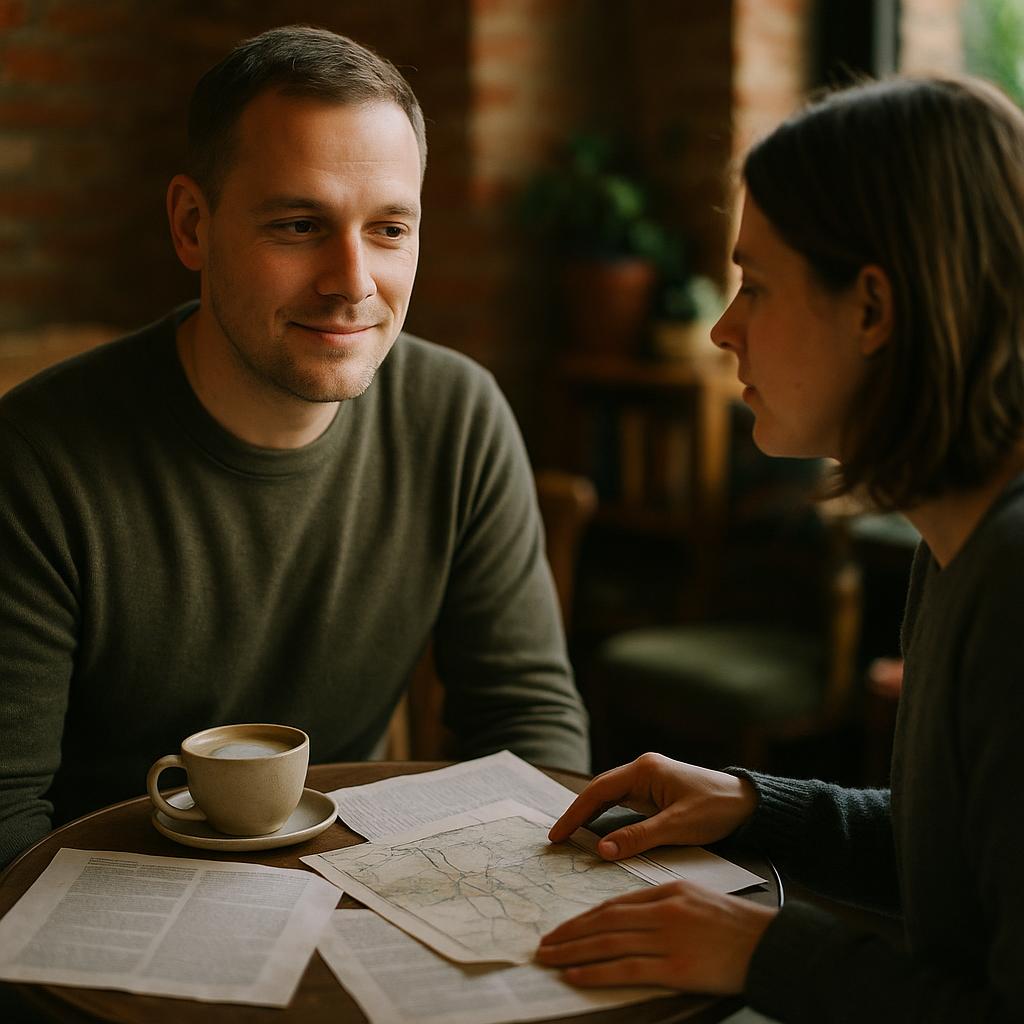 Image by RM AI
Mrs. Calloway
Mrs. Calloway's home was exactly what you'd expect from a retired art teacher—every wall a gallery, every surface holding some treasured creation. James and I sat on her floral couch while she poured tea into delicate cups that looked like they'd survived several decades. 'Miss Winters changed my life,' she said, gesturing toward a small landscape hanging above her fireplace. I nearly spilled my tea when I saw it—the same distinctive brushstrokes, the same peaceful lake scene. 'She gave that to me when I graduated in '67.' Mrs. Calloway described Eleanor as 'brilliantly talented but guarded,' someone who kept her personal life locked away. 'But water,' she said, leaning forward conspiratorially, 'water always made her emotional. She'd walk around the classroom during our landscape projects, and whenever someone painted a lake or river, she'd get this faraway look.' Mrs. Calloway's eyes met mine. 'She told me once that reflections show us what we've lost, but also what we still carry with us.' I glanced at James, whose historian's mind was clearly connecting dots. That's when Mrs. Calloway dropped the bombshell that made everything we thought we knew about Eleanor and Thomas suddenly shift. 'Of course,' she added casually, 'that was before I found out about the letters.'
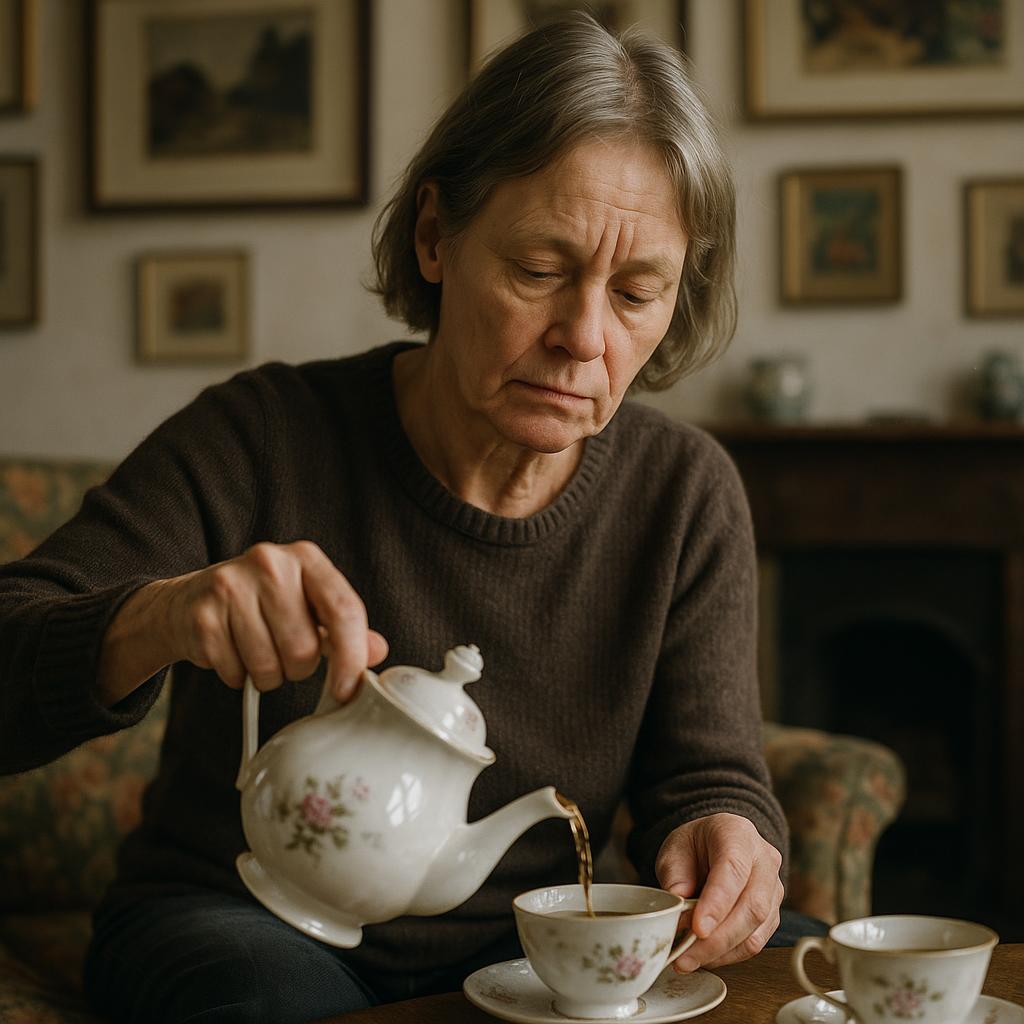 Image by RM AI
The Locket's Story
Margaret's hands trembled as she unfolded the yellowed paper. 'I found this last night,' she said, her voice barely above a whisper. James and I leaned forward on the floral couch in her Sunset Haven apartment, watching as she smoothed the creases of a letter dated August 1944. 'It's from Thomas to my grandparents,' she explained. As she began to read, I felt goosebumps rise on my arms. 'I've told Eleanor about the family locket,' Thomas had written. 'If anything happens to me, I want her to have it. She understands what it means to me.' Margaret looked up, tears glistening in her eyes. 'All these years, we thought she was keeping something from us. But she was honoring his wishes.' I glanced at the locket now resting in Margaret's palm – the same one we'd found in that rusted box. James reached over and squeezed my hand, the gesture so natural it surprised me. 'Eleanor wasn't a secret-keeper,' he said softly. 'She was a promise-keeper.' I stared at the locket, imagining Eleanor holding it close for decades, carrying the weight of Thomas's last request. But something still didn't add up – if Thomas wanted her to have the locket, why did she bury it instead of keeping it with her?
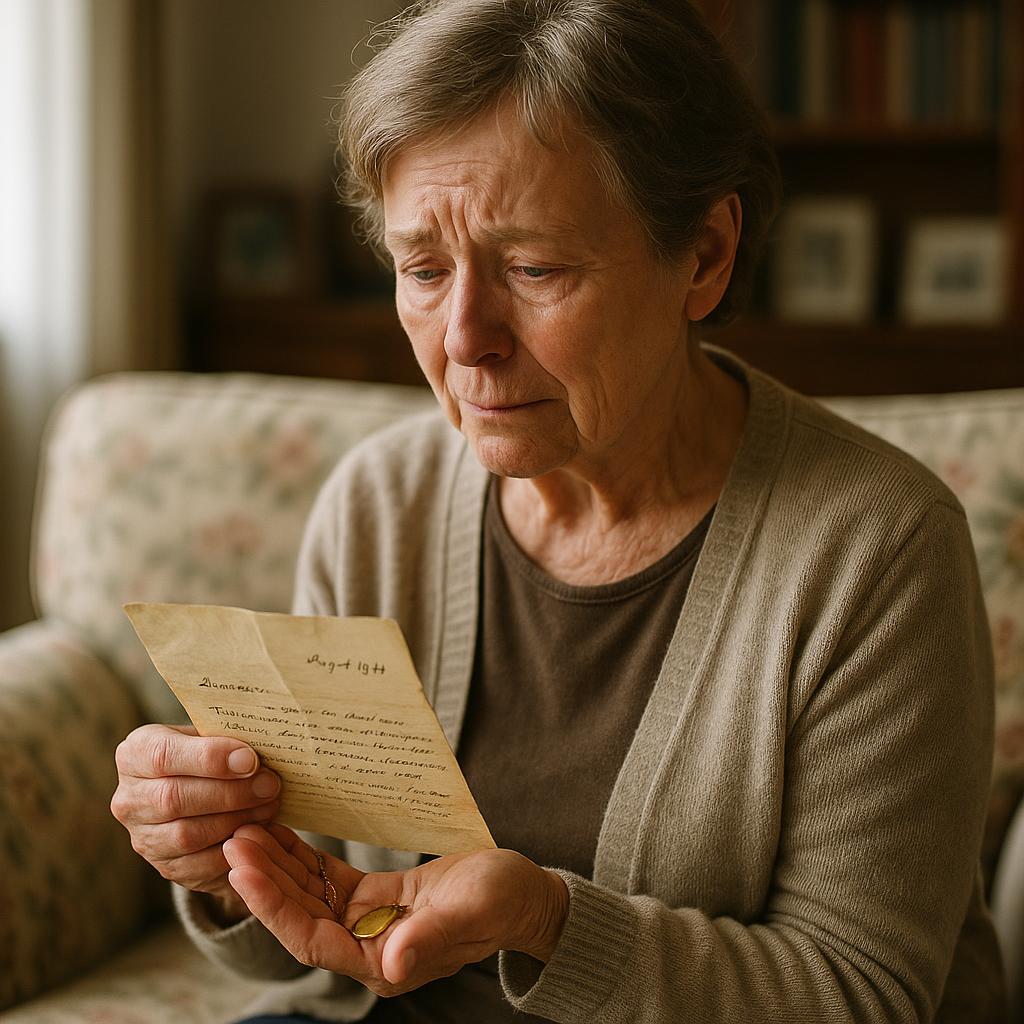 Image by RM AI
Eleanor's Grave
The cemetery was peaceful that afternoon, with sunlight filtering through ancient oak trees as James and I made our way to Eleanor's grave. We found it in a quiet corner—a simple headstone reading 'Eleanor Marie Winters, 1922-1995, Teacher, Artist, Friend.' Fresh flowers lay against the gray stone, their bright colors a stark contrast to the weathered marker. 'Rose must have visited regularly,' James said softly, kneeling to adjust a fallen lily. 'And continued the tradition until her own death.' I stood there, overwhelmed by emotion, thinking about how a random thrift store painting had led me to this moment. This woman, whose art had hung in my living room, whose secrets I'd uncovered, whose love story I'd helped complete—she'd been here all along, resting beneath the same sky she'd painted so many times. Margaret stepped forward, her hands trembling slightly as she placed Thomas's poem against the headstone. 'They're together now,' she whispered, 'in whatever comes after this.' I felt tears welling up as James's warm hand found mine. Standing there, I couldn't shake the feeling that Eleanor had somehow orchestrated all of this—that her painting falling into my hands wasn't just coincidence. What I didn't realize then was that someone had been watching us from behind a nearby mausoleum, someone with their own connection to Eleanor's past.
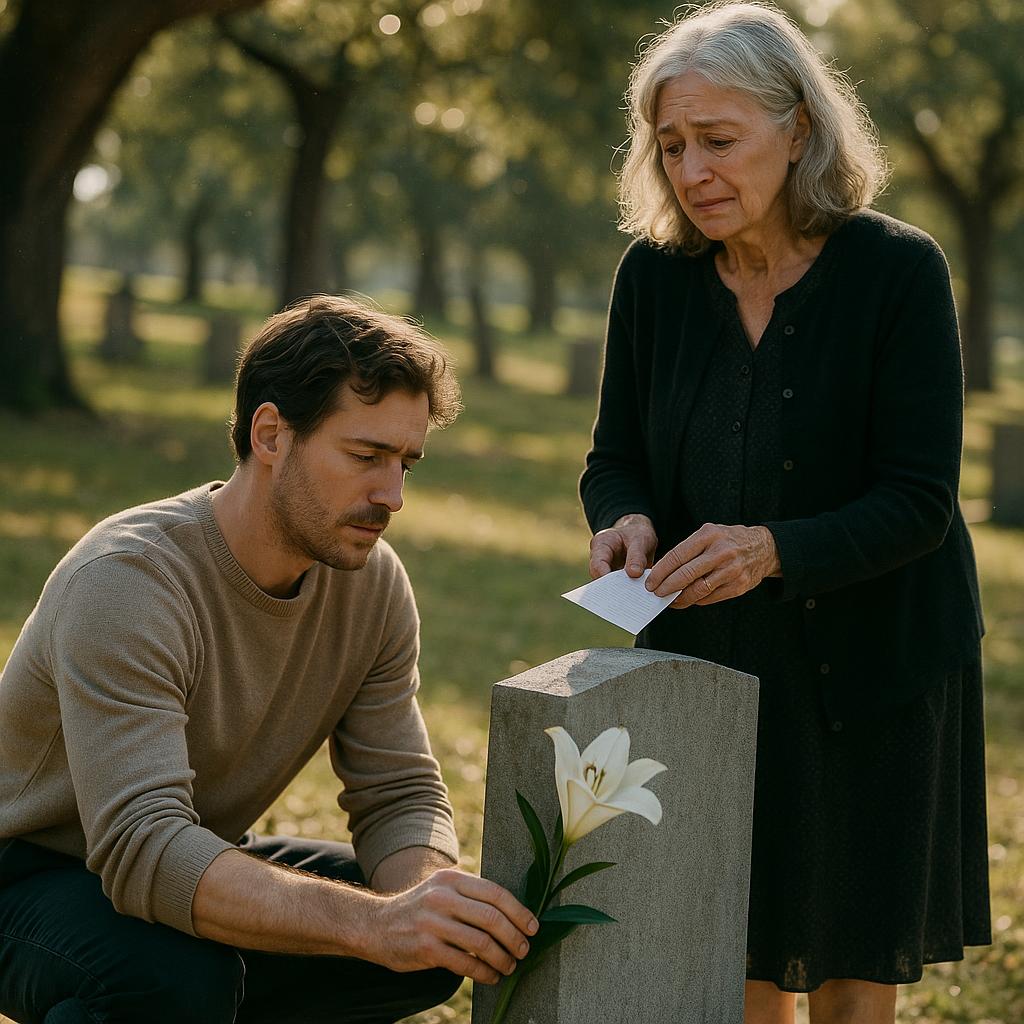 Image by RM AI
The Article Takes Shape
My dining room table had transformed into a war zone of sticky notes, photocopied documents, and coffee-stained notebooks as James and I pieced together Eleanor and Thomas's story for our article. What started as formal research sessions quickly evolved into something more intimate. We'd order takeout, debate historical contexts until midnight, and sometimes just sit in comfortable silence, both of us lost in thought beneath Eleanor's painting. One evening, as I was highlighting a passage from Thomas's military records, I looked up to find James watching me with an expression that made my heart skip. 'You know,' he said, setting down his pen, 'when Grandma first mentioned her thrift store detective, I thought she was exaggerating.' He reached across my scattered notes and took my hand. 'I'm grateful that painting found you,' he continued, his voice soft. 'And that you found Margaret. And me.' The warmth of his palm against mine felt like the most natural thing in the world—as if Eleanor had orchestrated this connection across time. What I couldn't have known then was that our article would soon catch the attention of someone who had their own reasons for wanting Eleanor's story to remain buried.
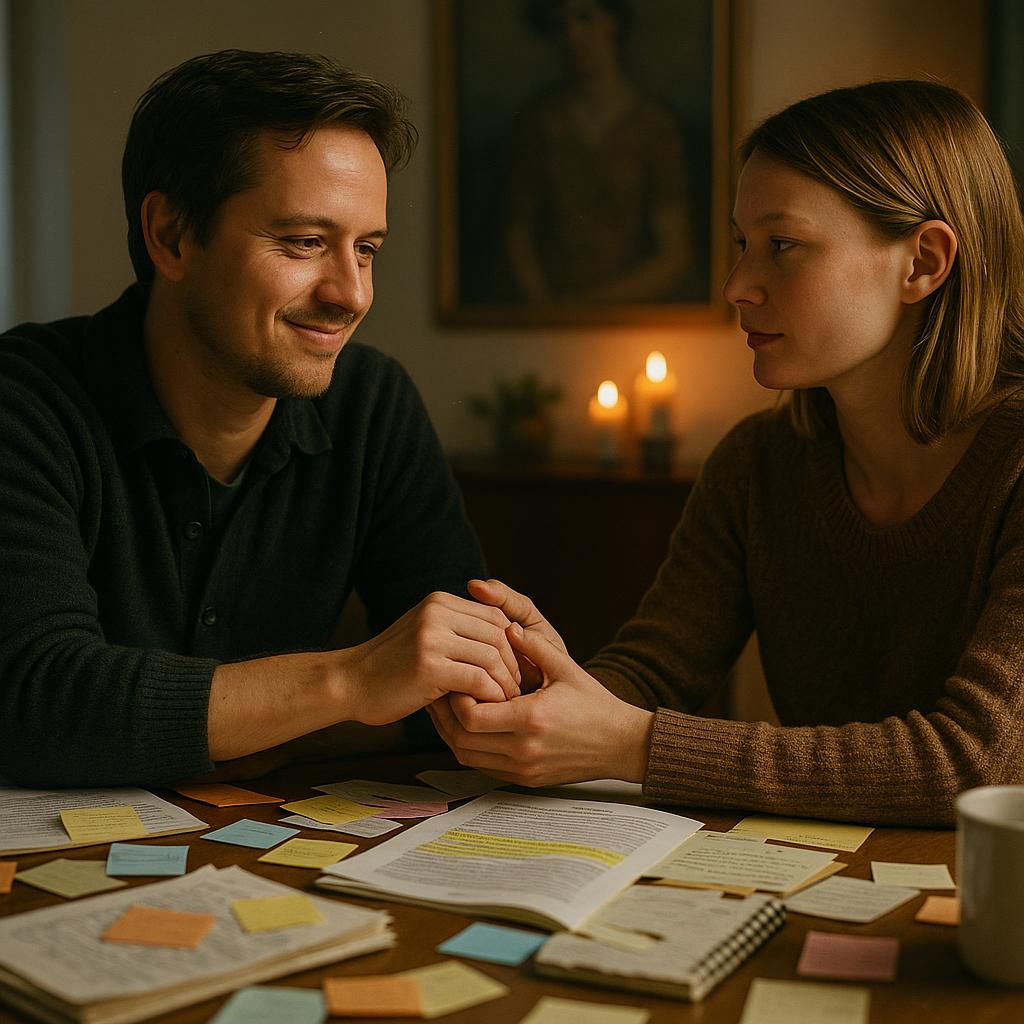 Image by RM AI
Margaret's Health
The call came at 2 AM—James's voice tight with worry. 'It's Grandma. She's in the hospital.' I threw on clothes and drove straight there, finding him in the waiting room with red-rimmed eyes. Margaret had pneumonia, which at 87 was no small thing. For the next week, our research took a backseat as we established a visiting routine, taking turns bringing her fresh flowers and updates on our article. The hospital room was sterile and cold, but Margaret somehow made it feel warm. 'Bring me that locket,' she requested on day three, her voice raspy but determined. When I placed it in her papery hands, she studied it with a new intensity. 'Imagine that,' she whispered, 'I've been thinking about Eleanor all these years without knowing her name. How strange life is.' The doctors spoke in cautious tones about her prognosis—optimistic but realistic about her age and the slow recovery ahead. One evening, as I adjusted her pillows, Margaret grabbed my wrist with surprising strength. 'Promise me you'll finish the story,' she said, her eyes suddenly clear and focused. 'Eleanor and Thomas deserve that much.' What Margaret said next about the locket made me question everything we thought we knew about Eleanor's relationship with the Aldridge family.
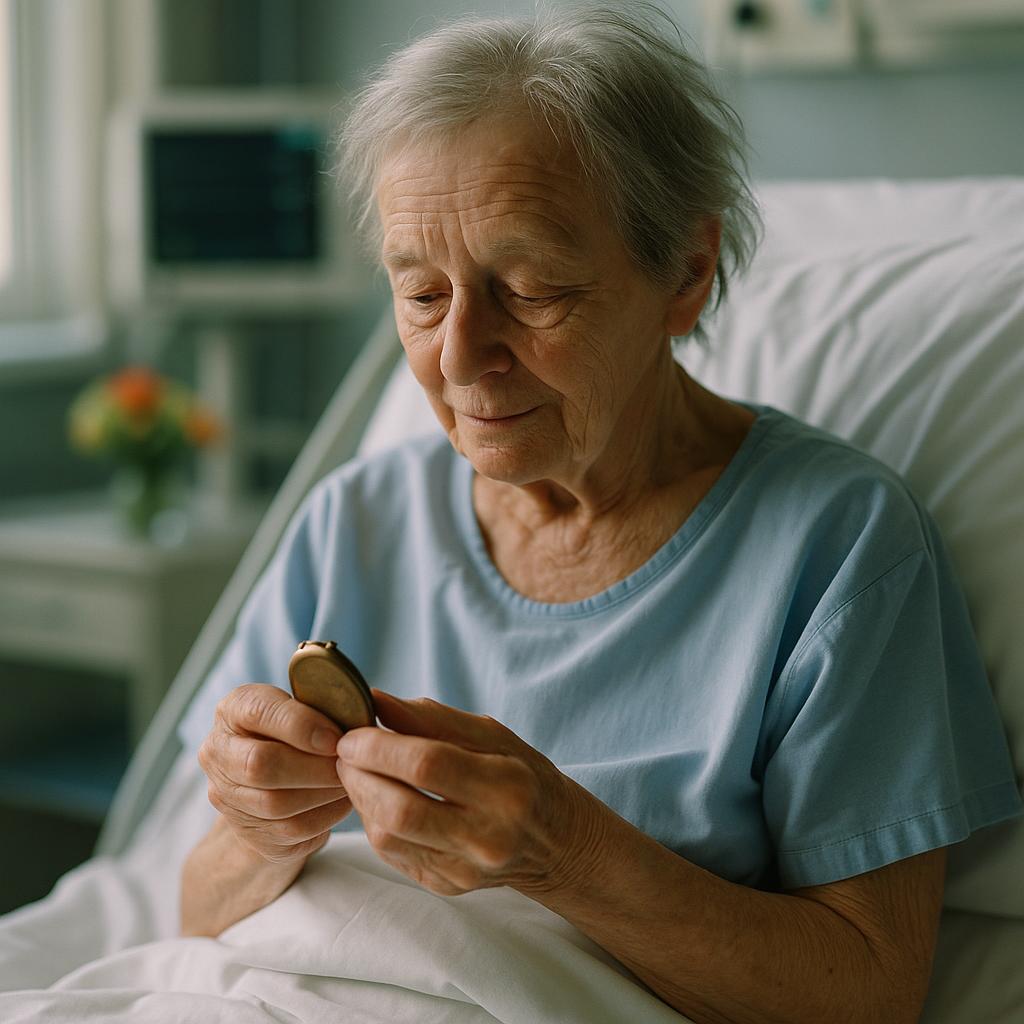 Image by RM AI
Eleanor's Journal
While Margaret was recovering, I got a call that nearly made me drop my phone. Dr. Jenkins from the historical society was practically breathless: 'We found Eleanor's journal!' Apparently, some volunteer sorting through a backlog of donations had discovered a leather-bound diary that had been sitting in storage for years, donated anonymously after Eleanor's death. James and I practically sprinted to the historical society, where Dr. Jenkins had it waiting under archival lights. My hands trembled as I opened it—Eleanor's elegant, slanted handwriting filling pages dated 1943-1946. The war years. Her thoughts, her fears, her daily life without Thomas. When we reached October 1944, I had to step away. 'The world continues turning though my heart has stopped,' she'd written upon learning of Thomas's death. 'I carry his locket against my own heart now, the only part of him I have left.' James squeezed my shoulder as tears blurred my vision. Eleanor's words were so raw, so immediate—it was like she was speaking directly to us across decades. But it was what she wrote about Rose and the Aldridge family that made me realize we'd completely misunderstood why she buried that locket in the first place.
 Image by RM AI
Reading to Margaret
The hospital room transformed when we brought Eleanor's journal to Margaret. James and I had carefully photocopied the most meaningful entries, and watching his gentle hands hold the pages as he read aloud to his grandmother made my heart swell. 'He taught me to skip stones today,' James read, his voice softening. 'Said his niece Margaret is already better at it than he is.' Margaret's eyes widened, glistening with tears. 'I remember that summer,' she whispered, reaching for my hand. 'I was only seven.' I squeezed her papery fingers as James continued reading. The journal revealed Eleanor's deepest secret—she'd wanted to return the locket but feared the Aldridge family would blame her for encouraging Thomas to enlist. 'I told him his country needed brave men like him,' one entry confessed. 'How can I face his sister now, knowing my words helped send him to his death?' Margaret shook her head slowly, a tear tracking down her cheek. 'Oh, Eleanor,' she murmured. 'We never would have blamed you.' As James turned the page, a small pressed wildflower—brittle with age—fell from between the photocopied sheets, and Margaret gasped, recognizing it immediately.
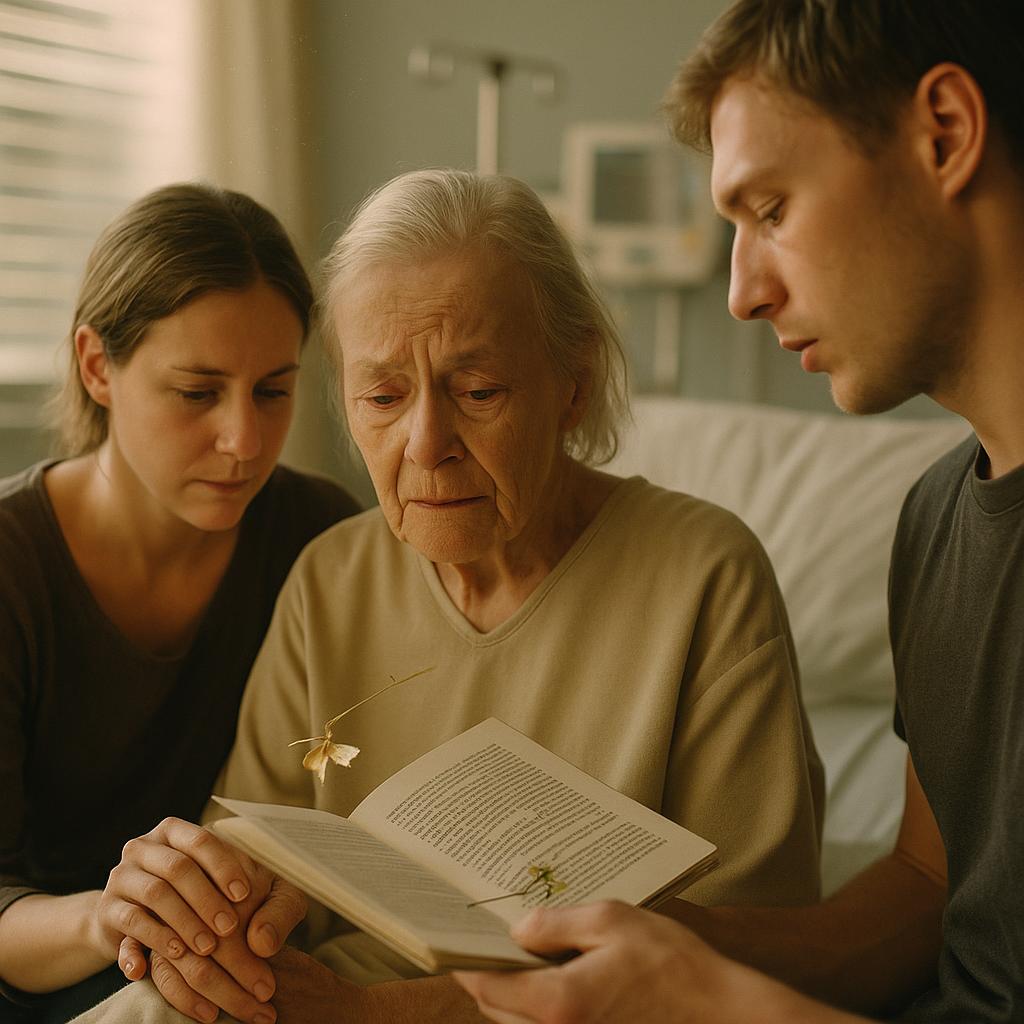 Image by RM AI
The Exhibition Idea
The day Margaret was discharged from the hospital, James surprised us both with an idea that made her eyes light up like I hadn't seen since before her illness. 'What if we created an exhibition about Eleanor and Thomas?' he proposed, spreading his hands excitedly as we settled Margaret back into her Sunset Haven apartment. 'Their story deserves to be shared.' Within days, Dr. Jenkins from the historical society was sitting in Margaret's living room, nodding enthusiastically as James outlined the vision. 'We could display Eleanor's paintings, the letters, Thomas's military records—even the locket,' James explained, his historian's passion evident in every gesture. 'A window into civilian and military experiences during WWII through one couple's love story.' I watched Margaret's face as she listened, her expression shifting from surprise to determination. 'I'll loan Thomas's locket and all his letters,' she announced, reaching for my hand. 'It's time their story was known.' Dr. Jenkins offered their special exhibitions room for the summer, and suddenly our little thrift store mystery was becoming something much bigger. What none of us realized was that the exhibition would attract attention from someone who had their own reasons for wanting to control how Eleanor's story was told.
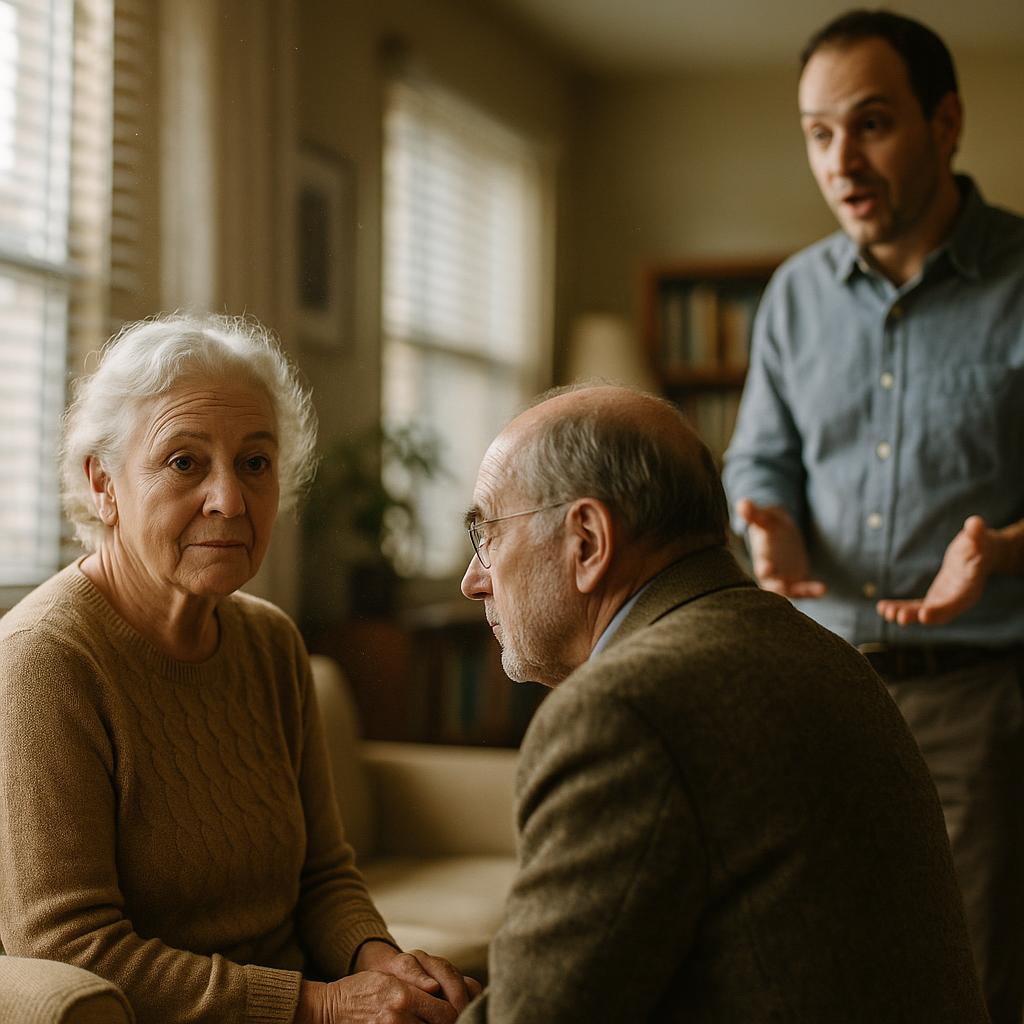 Image by RM AI
Opening Night
I never imagined a thrift store painting would lead to this moment. The historical society's main gallery was transformed for the opening night of 'Reflections: The Eleanor and Thomas Story.' People crowded around display cases holding the locket, Thomas's letters, and Eleanor's journal entries—all pieces of a puzzle I'd stumbled upon by pure chance. Margaret looked radiant in her blue dress, sitting regally beside the centerpiece of the exhibition: my painting. Well, Eleanor's painting. I still thought of it as mine sometimes. 'You did this,' James whispered, his hand finding mine as we watched a group of elderly women—Eleanor's former students—dabbing at their eyes while reading the story of why she buried the locket. 'You gave them both back their voice.' I felt a lump in my throat watching visitors move from display to display, connecting with a love story that had nearly been lost to time. The curator approached us, beaming. 'Someone from the Times is here,' she said excitedly. 'They want to interview you both about how you discovered everything.' As James squeezed my hand, I noticed a tall, stern-looking man in the corner, staring intently at Eleanor's painting with an expression I couldn't quite read—recognition, maybe, or something darker.
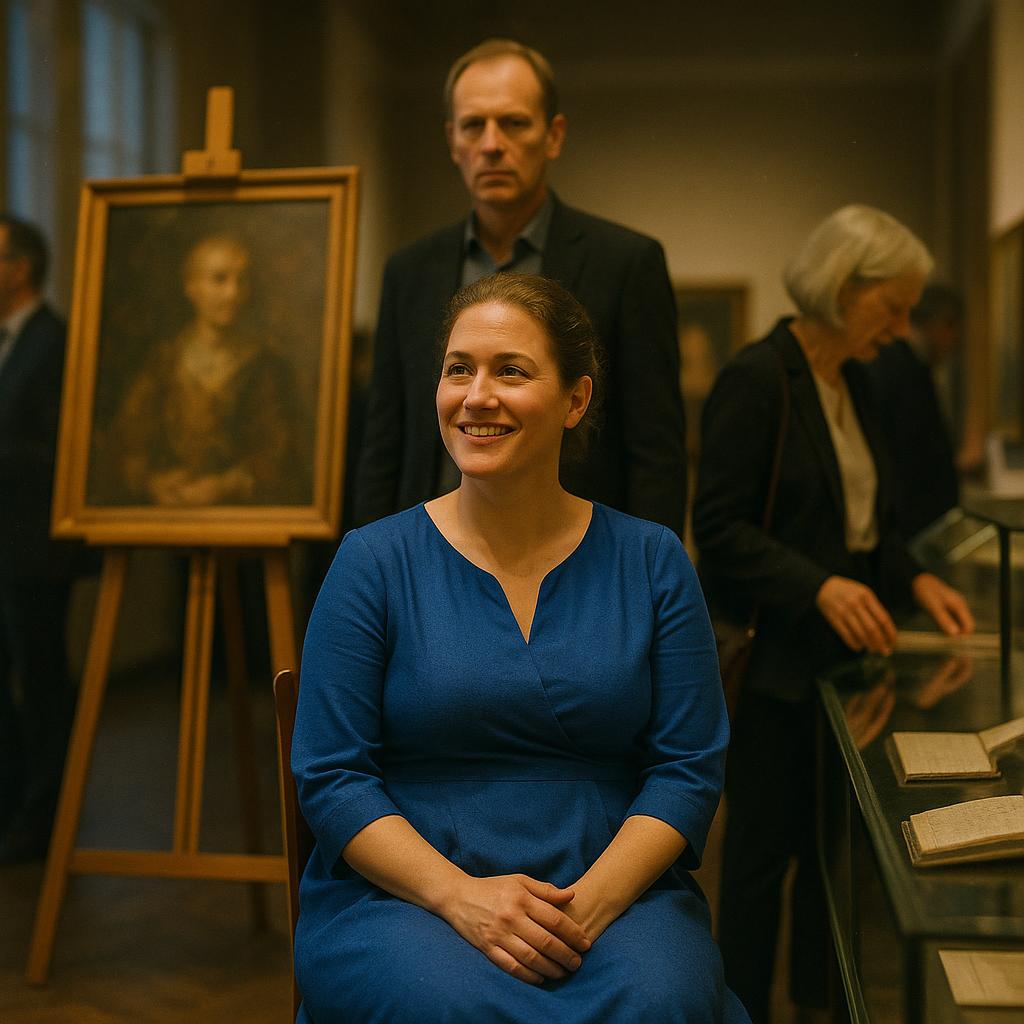 Image by RM AI
Unexpected Visitor
I was admiring a display of Eleanor's sketches when I felt a gentle tap on my shoulder. An elderly man with kind eyes and a neatly pressed suit stood behind me. 'Excuse me,' he said, his voice soft but clear. 'I'm Robert Calloway, Patricia's husband.' My eyes widened in recognition—Mrs. Calloway had been such an important piece of this puzzle. 'I knew Eleanor,' he continued, glancing at the painting. 'I was just a boy during the war, but I remember her coming to our house. My mother was Rose's friend.' He described a memory that made my heart ache: Eleanor sitting alone by Crescent Lake after the war had ended, paintbrush in hand, silent tears streaming down her face as she recreated the scene on canvas. 'Rose told my mother that painting was Eleanor's way of keeping Thomas alive,' he explained, his weathered hand gesturing toward my thrift store find. 'Every brushstroke was a conversation with him.' James appeared beside me, notebook already open, as Robert shared details about Eleanor that weren't in any journal or letter. What he said next about Rose's final interaction with Eleanor before her death would completely change our understanding of why that locket ended up buried in the woods.
 Image by RM AI
Return to Crescent Lake
The morning was crisp and clear when we returned to Crescent Lake, exactly one month after the exhibition opened. Margaret insisted on wearing her best cardigan for the occasion, even though the walk from the parking area left her a bit winded. James carried the bronze plaque we'd commissioned—a small but permanent testament to a love story that had waited decades to be told. 'Right here,' Margaret said, pointing to a sun-warmed boulder near the shoreline. 'This is where they used to sit.' With permission from the nature preserve (and a small donation that James insisted on making), we secured the plaque to the rock: 'In memory of Eleanor Winters and Thomas Aldridge, whose love story began and continues here.' Margaret's voice trembled slightly as she read Thomas's poem aloud, the words dancing across the water's surface like the light. I found myself blinking back tears, thinking about how a random thrift store find had led to this moment of healing across generations. After the small ceremony, James took my hand and led me to the wooden dock that extended into the lake. 'This journey has changed my life,' he said, his eyes reflecting the sunset's glow. 'Finding you through Eleanor and Thomas feels like a gift from the past.' When his lips met mine for the first time, I couldn't help but wonder if Eleanor had somehow orchestrated this all along—if her painting had found me for a reason that went beyond just completing her story.
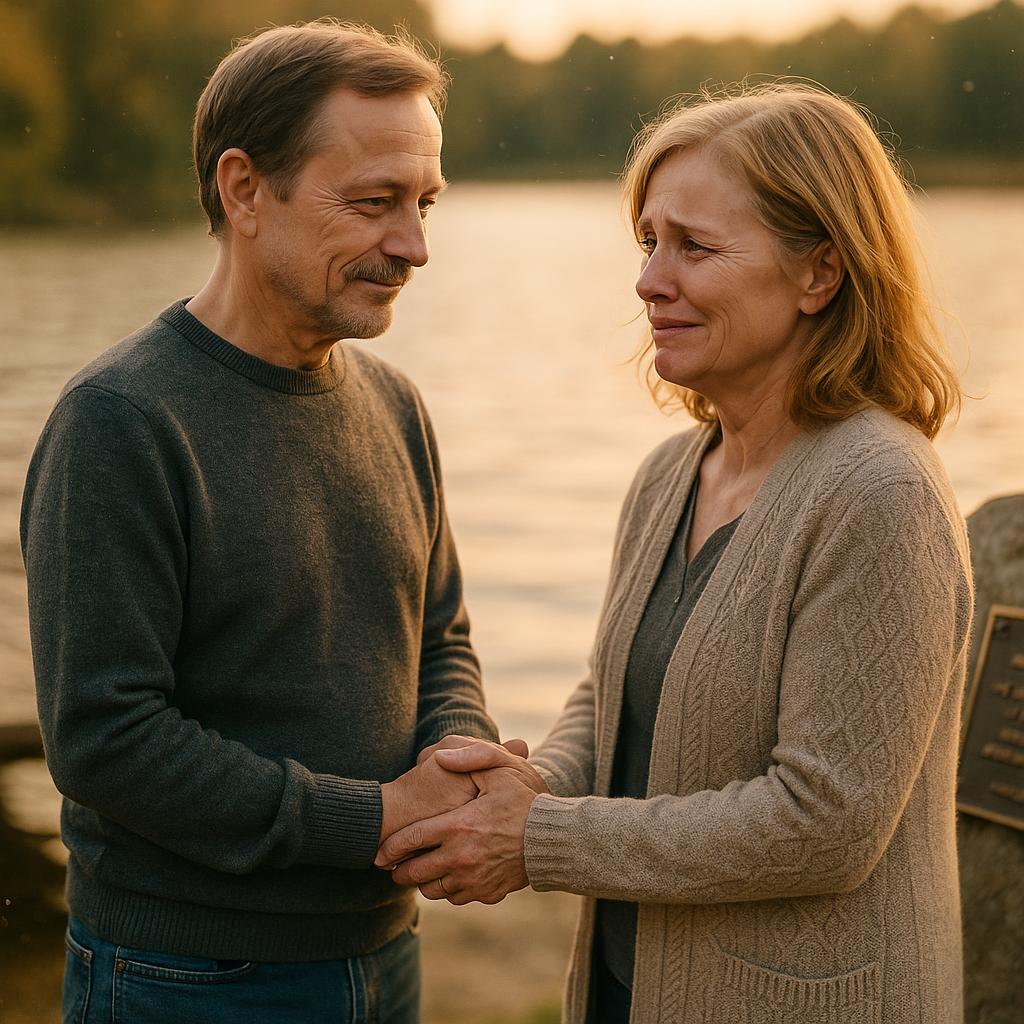 Image by RM AI
Full Circle
I stood in my living room exactly one year after finding that painting, staring at it with completely new eyes. The peaceful landscape with trees reflecting off a calm lake had become so much more than just a $5 thrift store find. It was a portal that had changed everything. James and I were now living together, our academic article on Eleanor and Thomas had been published in a prestigious historical journal, and the exhibition had become so popular that the historical society made it a permanent installation. Margaret, though moving a bit slower these days, still lit up whenever she shared stories about her uncle Thomas. Sometimes I catch myself wondering what would have happened if I hadn't stopped at that thrift store that Saturday. Would Eleanor's story have remained hidden forever? Would James and I have ever met? It's wild how one small decision—walking into a dusty shop I'd normally hurry past—completely redirected my life's path. Last week, a college student visiting the exhibition told me she'd started checking the backs of all her thrift store art purchases. 'You never know what stories might be hiding there,' she said, echoing my exact thoughts. But what none of us realized yet was that Eleanor's story wasn't quite finished revealing all its secrets.
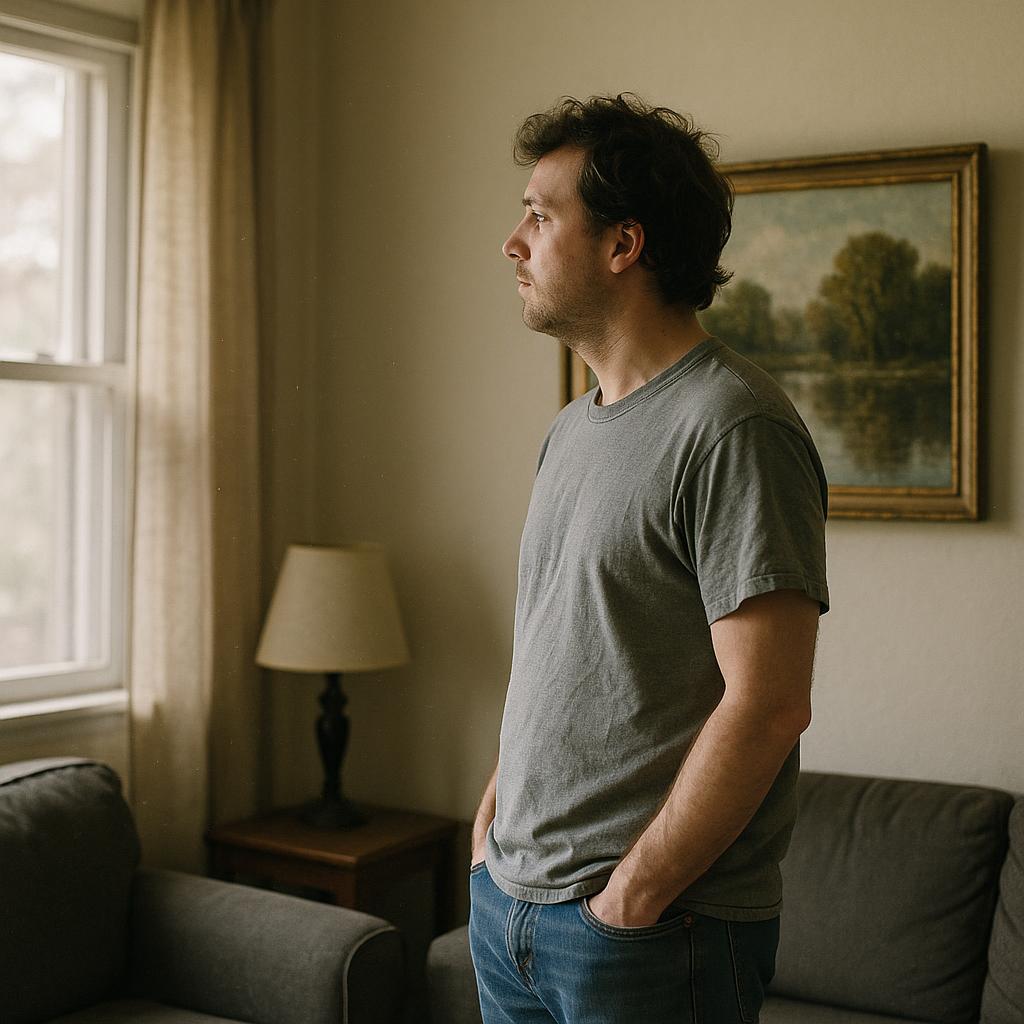 Image by RM AI
KEEP ON READING
20 Weirdest Historical Objects in Museums
Check Out the Pickled Heart of a Saint. Museums carry…
By Rob Shapiro Oct 1, 2025
20 Ocean Mysteries We Still Haven’t Solved
Unanswered Questions Of The Ocean. The ocean covers most of…
By David Davidovic Sep 1, 2025
10 Phenomenal Mythical Creatures & 10 That Are Just Plain…
Legends Both Majestic And Peculiar. Do you ever wonder why…
By Chase Wexler Oct 1, 2025
20 Historical Predictions That Turned Out To Be True
Crystal Ball Moments In History. Do you wonder what it's…
By Chase Wexler Sep 1, 2025
10 Presidents Who Never Served In The Military & 10…
Commanders And Civilians In Office. Power can rise from very…
By David Davidovic Sep 1, 2025
20 Wars That Could Have Ended Much Sooner Than They…
Wars That Lasted Far Too Long. Wars are often remembered…
By David Davidovic Sep 1, 2025