

This Real-Life Indiana Jones Put Other Archaeologists To Shame
When you think of a legendary adventurer, your mind probably goes straight to a leather jacket and a bullwhip, but the man who actually lived the life was often carrying a notebook and a pistol. Roy Chapman Andrews wasn't just a museum director; he was a high-stakes explorer who navigated the treacherous Gobi Desert when it was still a vast blank spot on the map. While Hollywood gave us a fictional hero, Andrews gave the world actual dinosaur eggs and narrow escapes from bandits that make movie stunts look like a walk in the park. His exploits were so daring and his public image so charismatic that he’s widely considered one of the primary inspirations for the character of Indiana Jones.
Getting to know the real Andrews means looking past the silver screen and into the gritty reality of early 20th-century exploration. He didn't just stumble into fame; he literally started his career sweeping the floors of the American Museum of Natural History because he wanted to be near the specimens so badly. From those humble beginnings, he rose to lead massive caravans into "the ends of the earth," a title he later used for his own autobiography. You’ll find that his life was a whirlwind of scientific breakthroughs, political intrigue, and survival stories that prove truth is frequently much more exciting than fiction.
A Career Built on Grit and Grease
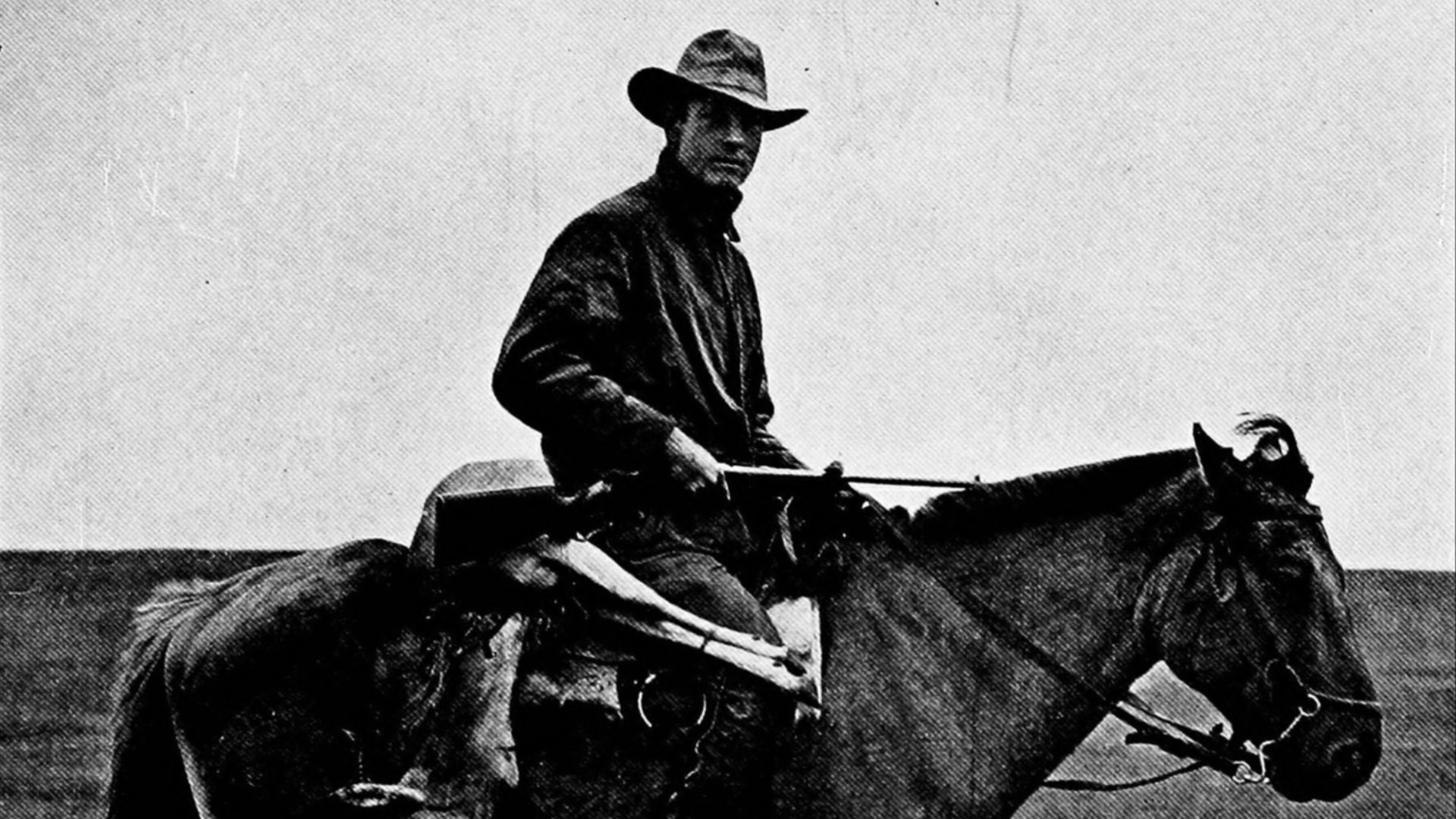 Yvette Borup Andrews on Wikimedia
Andrews rose to prominence without going through college or having any coddling early experiences. Fresh out of school, he barged into the American Museum of Natural History in New York and begged the powers-that-be to hire him, even if it was just as a janitor. He is famously quoted as telling the director of the museum, “I’ll scrub the floors for nothing if you just let me hang around scientists.” He got his job with the museum in the taxidermy department. Talk about starting at the bottom.
Andrews very quickly impressed his bosses with his abilities as a field naturalist as well as his boundless energy. He spent the early years of his career boarding whaling ships and exploring uncharted forests of Korea and Japan in search of new specimens. Many of these specimens can still be found in museums today. It was during these expeditions that Andrews learned how to effectively supply his team in areas with no roads or established maps. Kind of handy when you want to cross one of the harshest deserts on the planet.
By this point, Andrews pitched his ideas to some of the richest men in America, including J.P. Morgan and John D. Rockefeller. He brought them on board to fund his idea of taking an entire road-worthy expedition into the heart of Mongolia using…motorized vehicles. Cars? People at this point thought they’d never work on anything other than pavement. Well, Mr. Andrews showed them all how it’s done by leading a team of Dodge automobiles and hundreds of camels into the depths of the Gobi Desert.
Discoveries That Changed History
The primary goal of the Gobi expeditions was actually to find the "missing link" of human evolution, but the team stumbled upon something even more spectacular. While they never found the early human remains they were looking for, they discovered the first scientifically recognized dinosaur eggs at a site they called the Flaming Cliffs. You can imagine the shock of the scientific community when news broke that dinosaurs were officially confirmed to be egg-layers. This discovery alone would’ve been enough to cement his legacy, but it was just the beginning of a long list of paleontological "firsts."
Andrews and his team didn't just find eggs; they uncovered entirely new species of dinosaurs, including the famous Protoceratops and the "egg-thief" Oviraptor. They also unearthed the skull of the Indricotherium, which was the largest land mammal to ever live, looking somewhat like a giant, hornless rhinoceros. These findings turned the Gobi Desert from a supposed wasteland into one of the richest fossil repositories on the entire planet. You’d find it hard to name another single expedition that yielded such a high volume of groundbreaking material in such a short period of time.
Surviving with a Smile
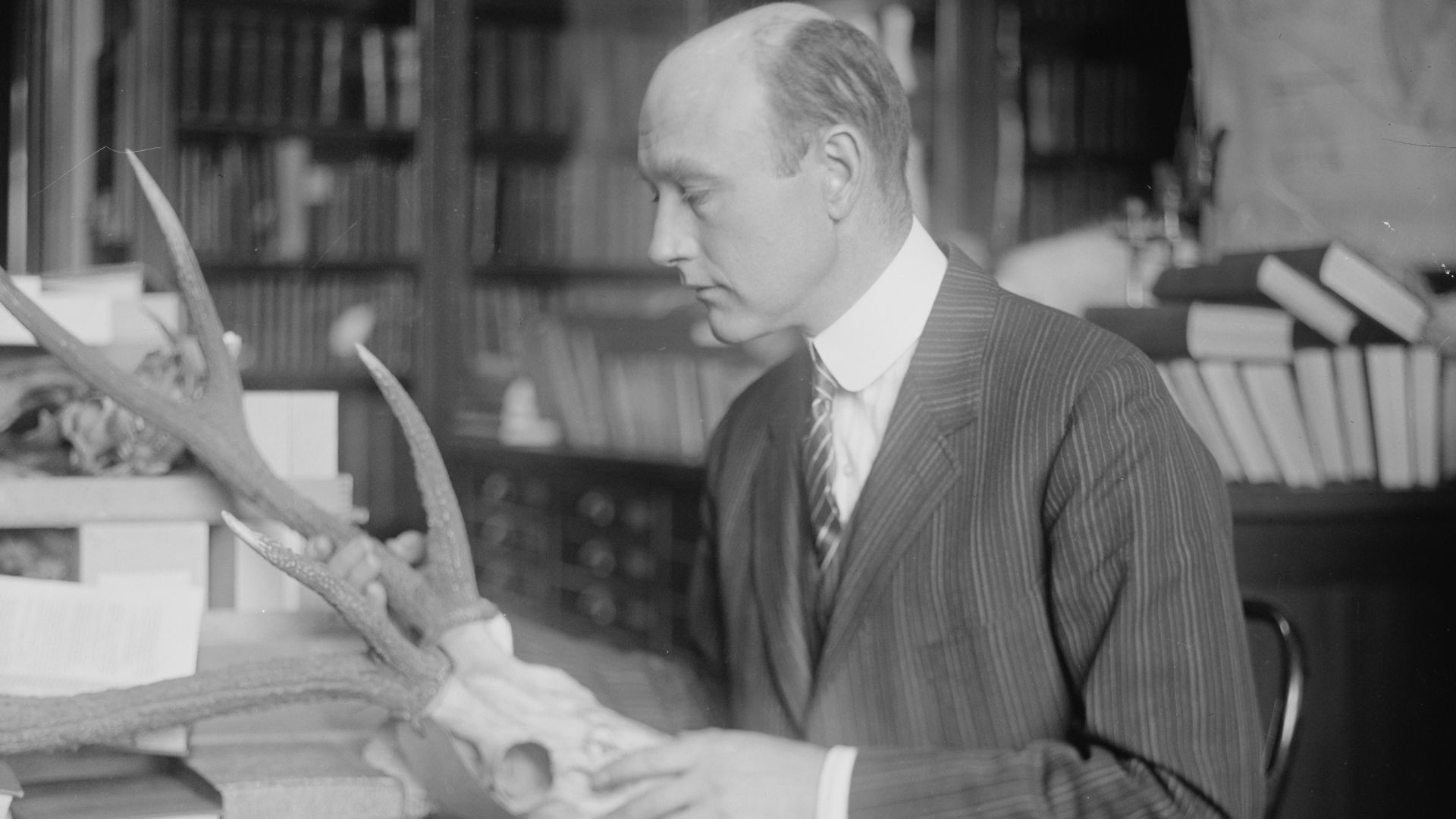 Bain News Service, publisher on Wikimedia
Surviving in the Gobi during the 1920s required more than just a shovel and a brush; it required a steady hand with a .38-caliber pistol and nerves of steel. Andrews frequently wrote about his "narrow escapes," which included everything from being chased by Mongolian bandits to nearly falling off cliffs in the dark. He once accidentally shot himself in the leg while trying to take down an antelope, an injury that would’ve ended most people's trips but barely slowed him down. You’ll notice in his writings that he often treated these brushes with death as mere inconveniences rather than reasons to turn back.
Following his adventures in the field, Andrews went on to become Director of the American Museum of Natural History, so he showed no lack of professionalism back at home base either. He remained enthusiastic about the wonder of natural history until his death, always keeping with him the mantra that "always there has been an adventure just around the corner." Andrews was the real-life definition of "larger than life."
KEEP ON READING

20 Greek Gods We Don't Often Talk About
Step Aside, Zeus. Greek mythology isn’t only about Zeus and…
By Elizabeth Graham Jan 16, 2026
10 Historic Courtship Practices That Should Be Brought Back &…
Old-School Dating Was a Mix of Charming & Unhinged. Historic…
By Emilie Richardson-Dupuis Jan 20, 2026
Pooches Of The Past: Extinct Dog Breeds
Unknown authorUnknown author on WikimediaDogs have been showing up in…
By Elizabeth Graham Jan 27, 2026
The 20 Craziest Silent Films Ever Made
When Silence Let the Madness Speak. Silent cinema didn’t just…
By Chase Wexler Jan 5, 2026
Legendary Tales: 20 Most Fascinating Mythical Creatures from Folklore
Mythological Beasts. Stories about mythical creatures endure for a simple…
By Christy Chan Jan 16, 2026
The three most expensive historical artifacts ever sold at auction
Attributed to Leonardo da Vinci on WikimediaAuctions are where history…
By Emilie Richardson-Dupuis Jan 9, 2026