


Remarkable Ingenuity in Ancient Warfare
Long before modern machinery and advanced metallurgy, ancient civilizations created weapons that demonstrated impressive engineering skill. Many of these tools weren’t just designed for combat; they reflected careful experimentation with materials, mechanics, and physics. From massive siege engines to cleverly designed handheld weapons, these inventions often required sophisticated knowledge of leverage, balance, and structural design. These 20 examples highlight how ancient engineers turned warfare into an arena for innovation and technical achievement.
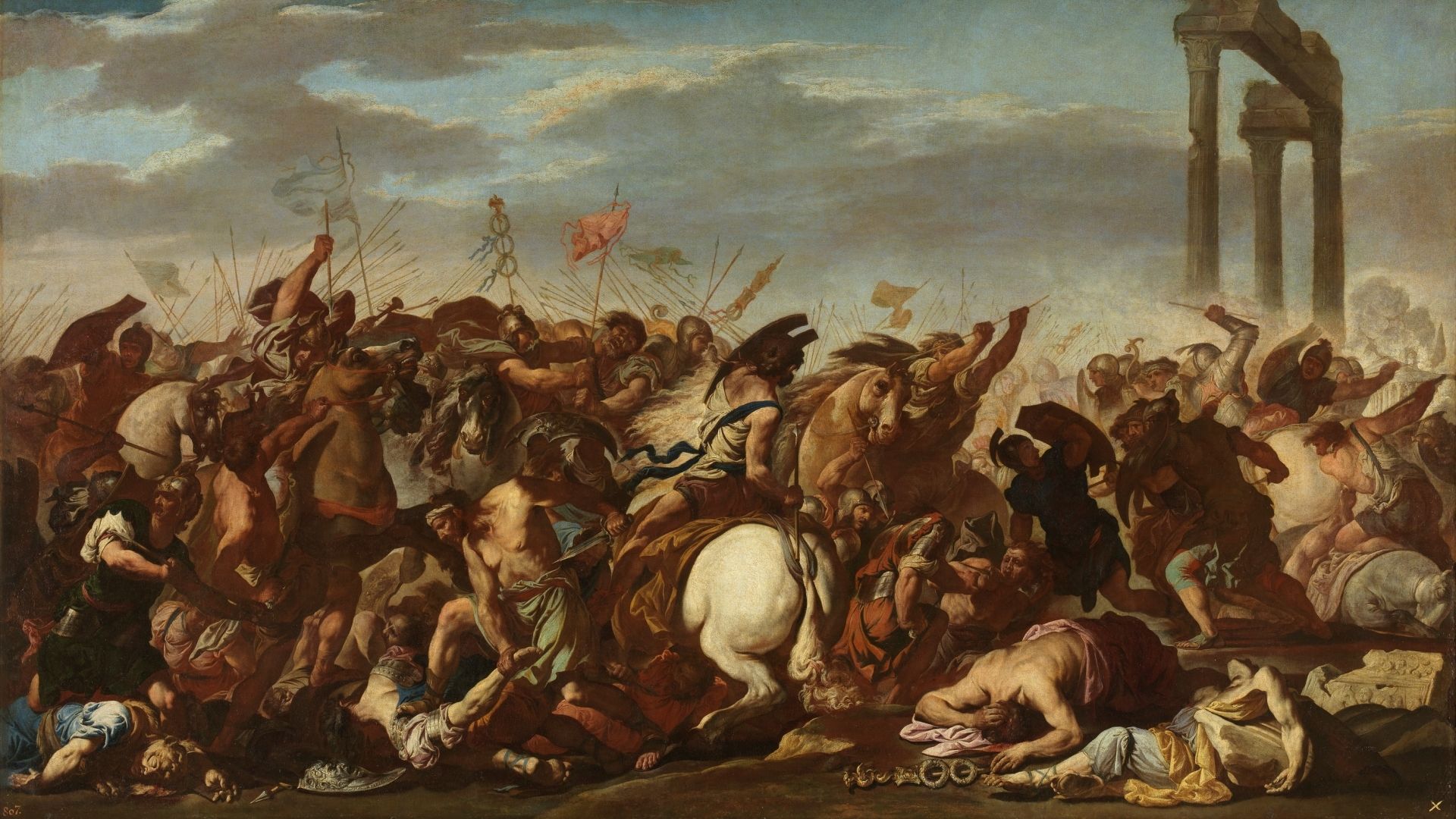
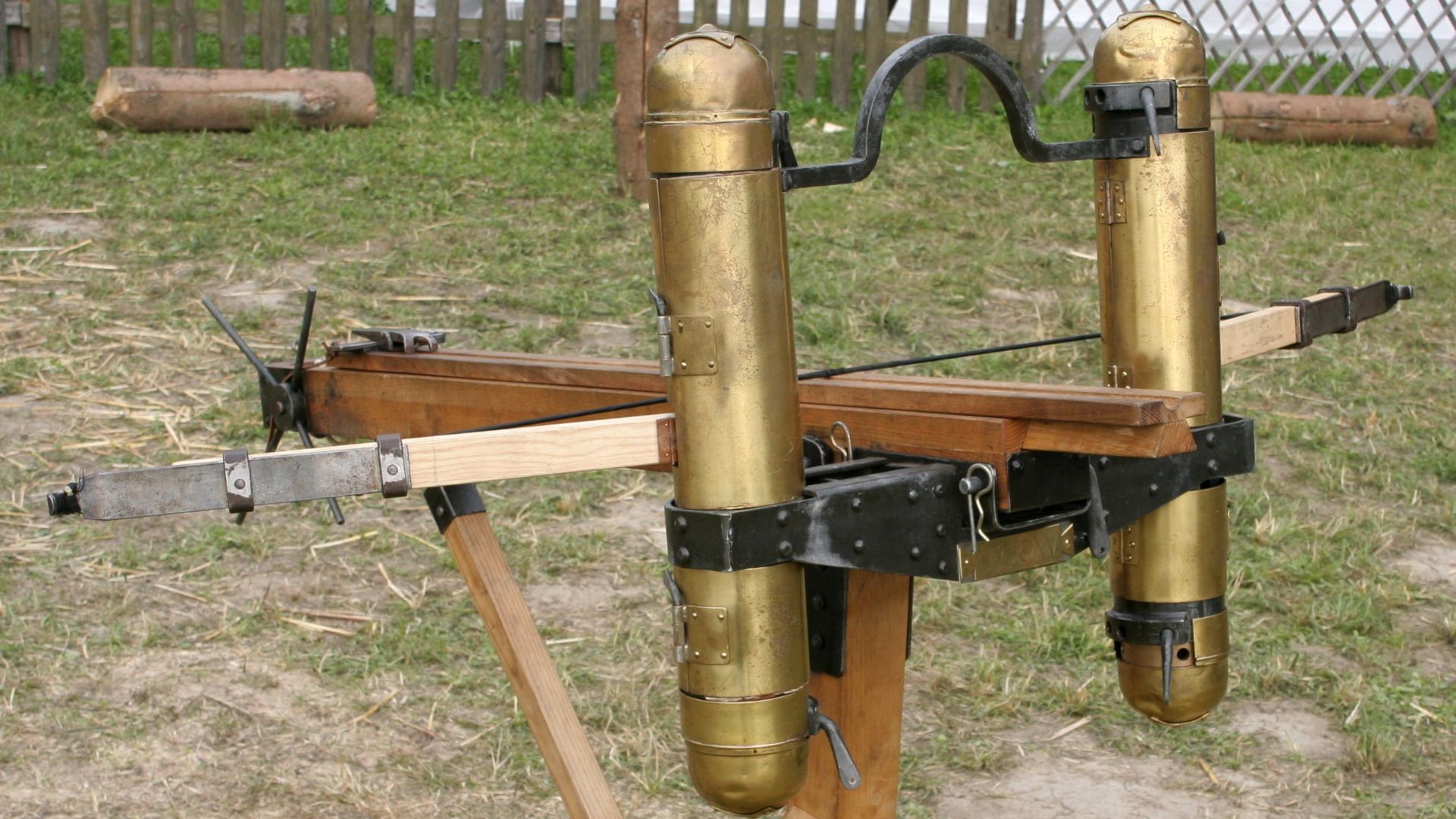
1. Greek Fire Projectors
Greek fire was a Byzantine weapon that functioned somewhat like an early flamethrower. Engineers designed bronze tubes connected to pressurized pumps that could project a burning liquid mixture toward enemy ships.
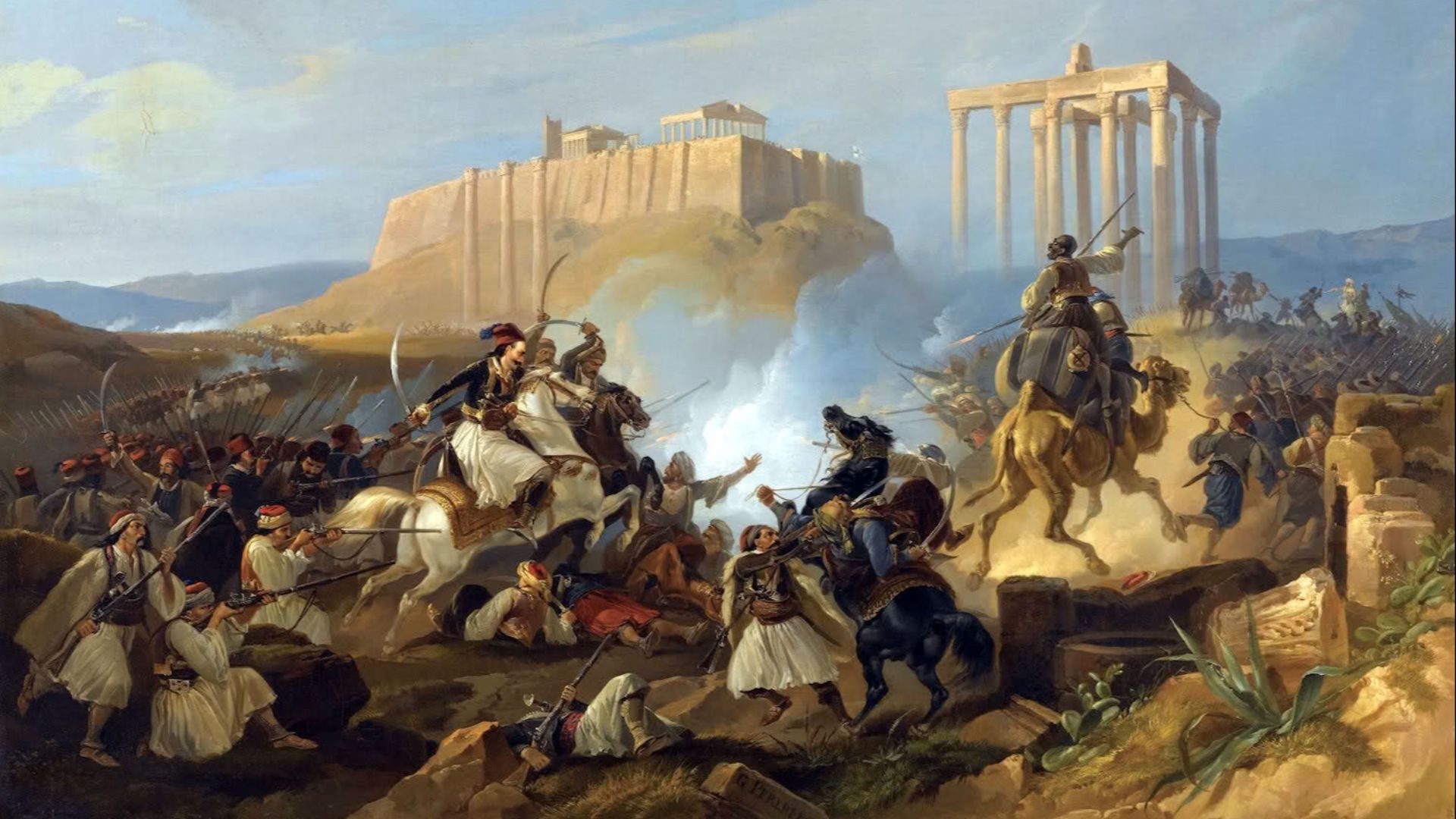 Johann Georg Christian Perlberg (1806-1884) on Wikimedia
2. The Roman Ballista
The Roman ballista was a powerful torsion-powered artillery weapon used to launch large bolts or stones. It worked by twisting bundles of rope or sinew that stored energy, which was released to propel projectiles with considerable force. Engineers carefully calibrated the tension and frame alignment to maintain accuracy. Roman armies often used ballistae during sieges and defensive operations.
3. The Greek Catapult
Early catapults were designed in ancient Greece around the 4th century BCE and relied on tension and torsion mechanics. Engineers experimented with different materials and frame structures to improve range and reliability.
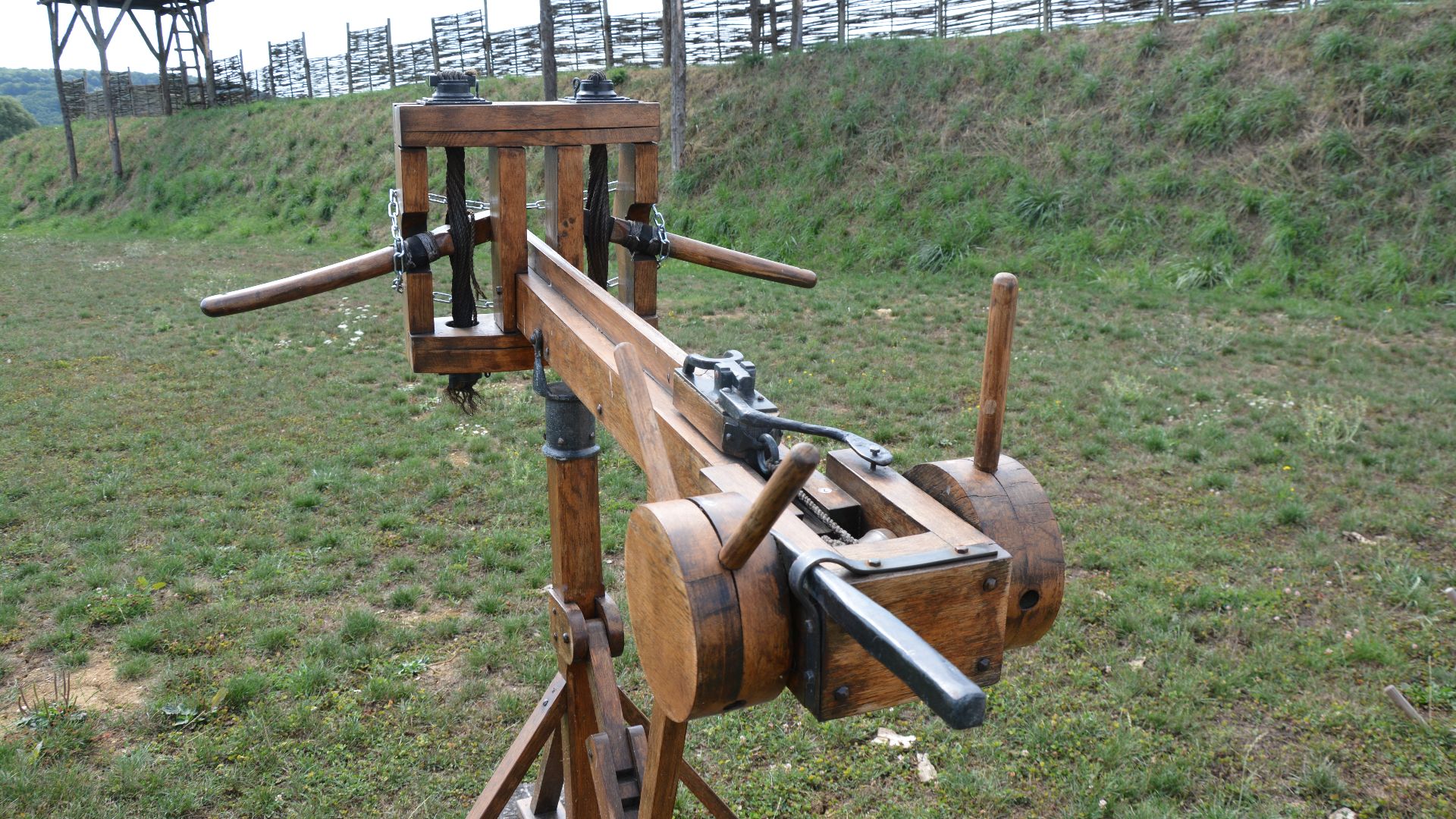
4. The Roman Scorpion
The scorpion was a smaller artillery device resembling a giant crossbow.
It used twisted cords to generate a powerful force that launched long bolts with remarkable precision. Roman engineers designed it for battlefield mobility so soldiers could reposition it quickly. Its accuracy made it effective against enemy troops at medium distances.
 No machine-readable author provided. MatthiasKabel assumed (based on copyright claims). on Wikimedia
5. The Chinese Repeating Crossbow
The repeating crossbow, known as the Zhuge Nu, allowed a user to fire multiple bolts in rapid succession. A simple lever mechanism loaded and fired bolts automatically from a magazine mounted on top.
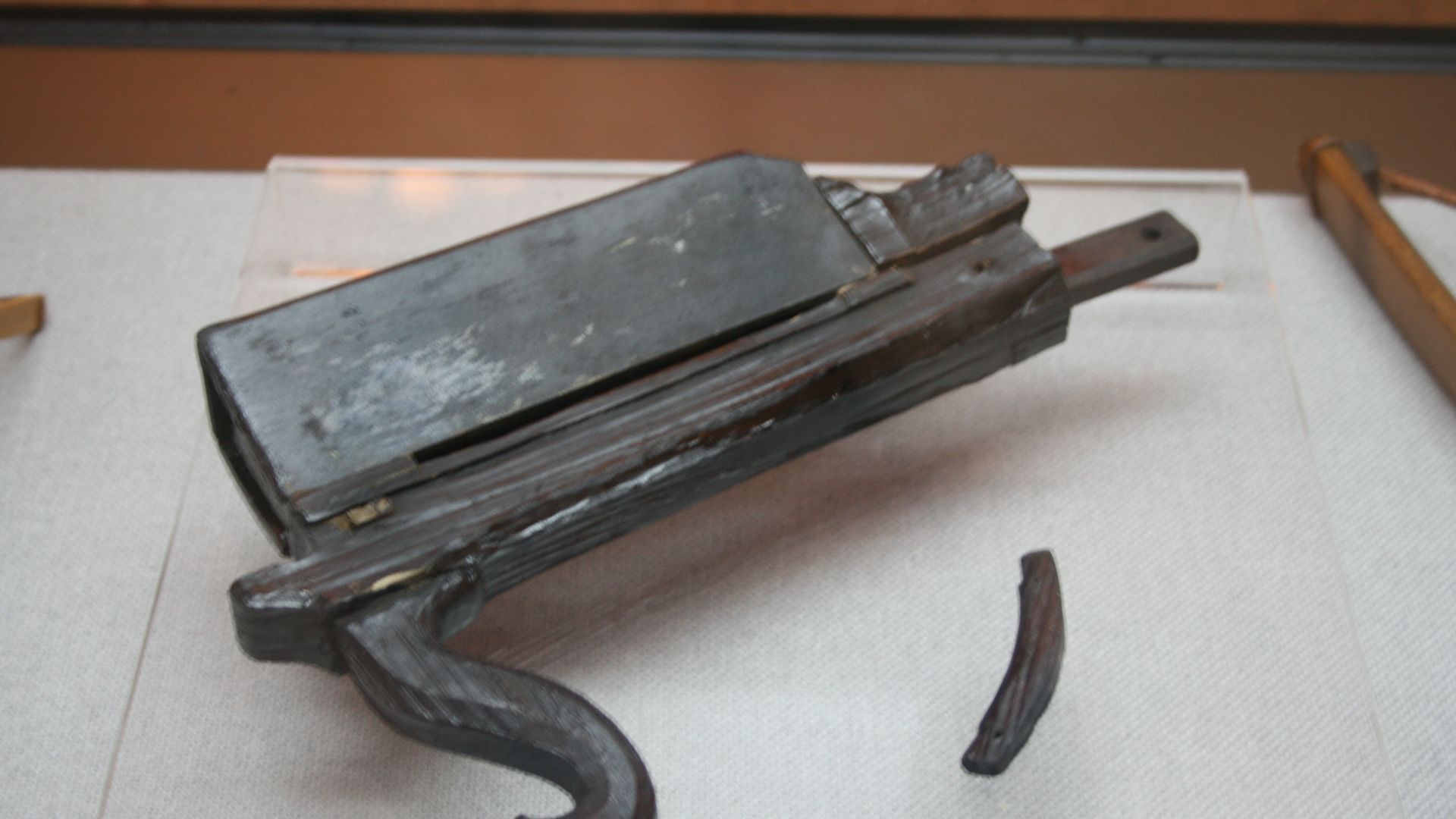 Gary Todd from Xinzheng, China on Wikimedia
6. The Assyrian Siege Tower
Assyrian armies constructed massive mobile towers used during sieges as early as the 9th century BCE. These multi-level wooden structures allowed soldiers to attack fortified walls from above.
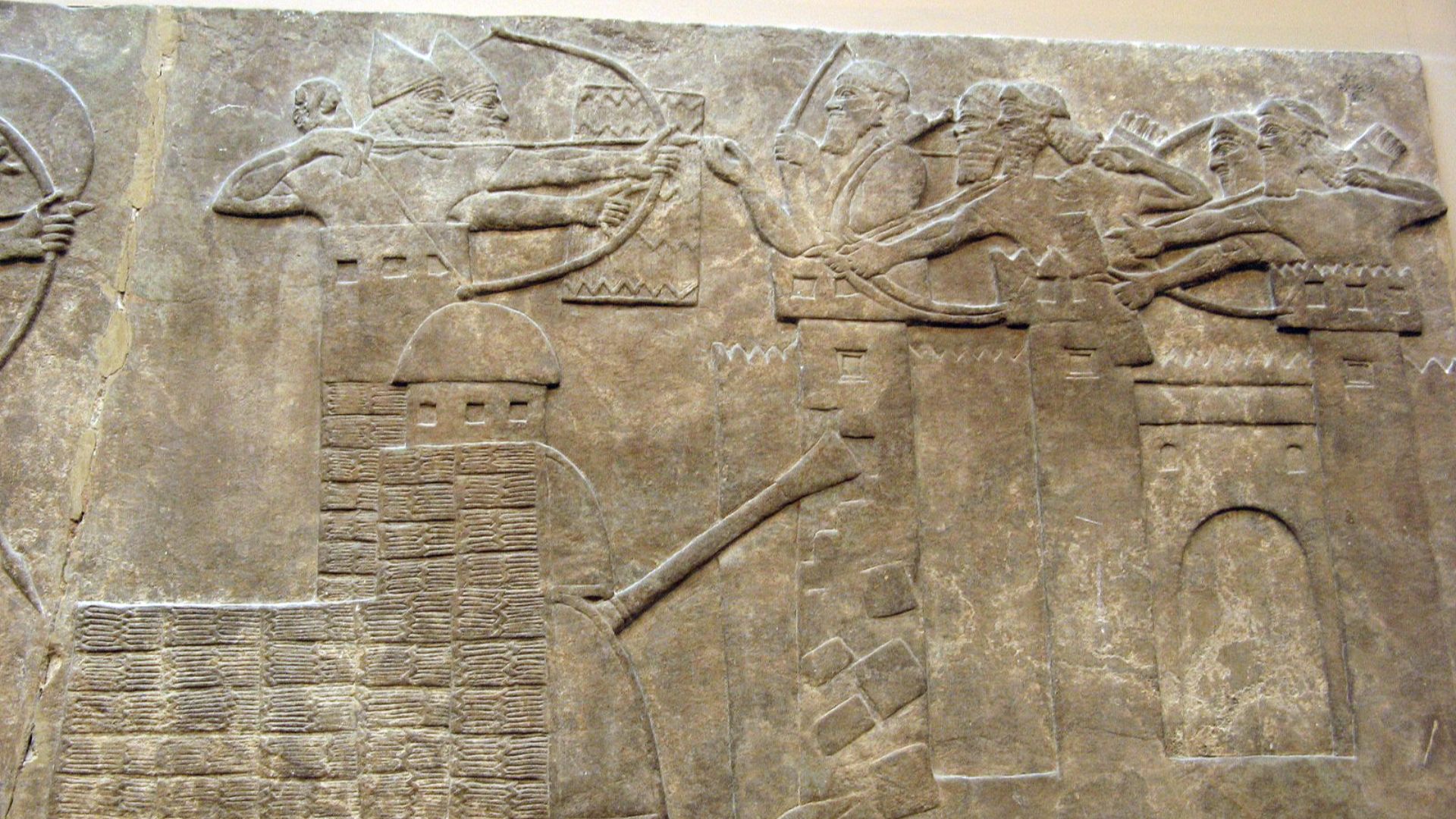 Unknown artistUnknown artist on Wikimedia
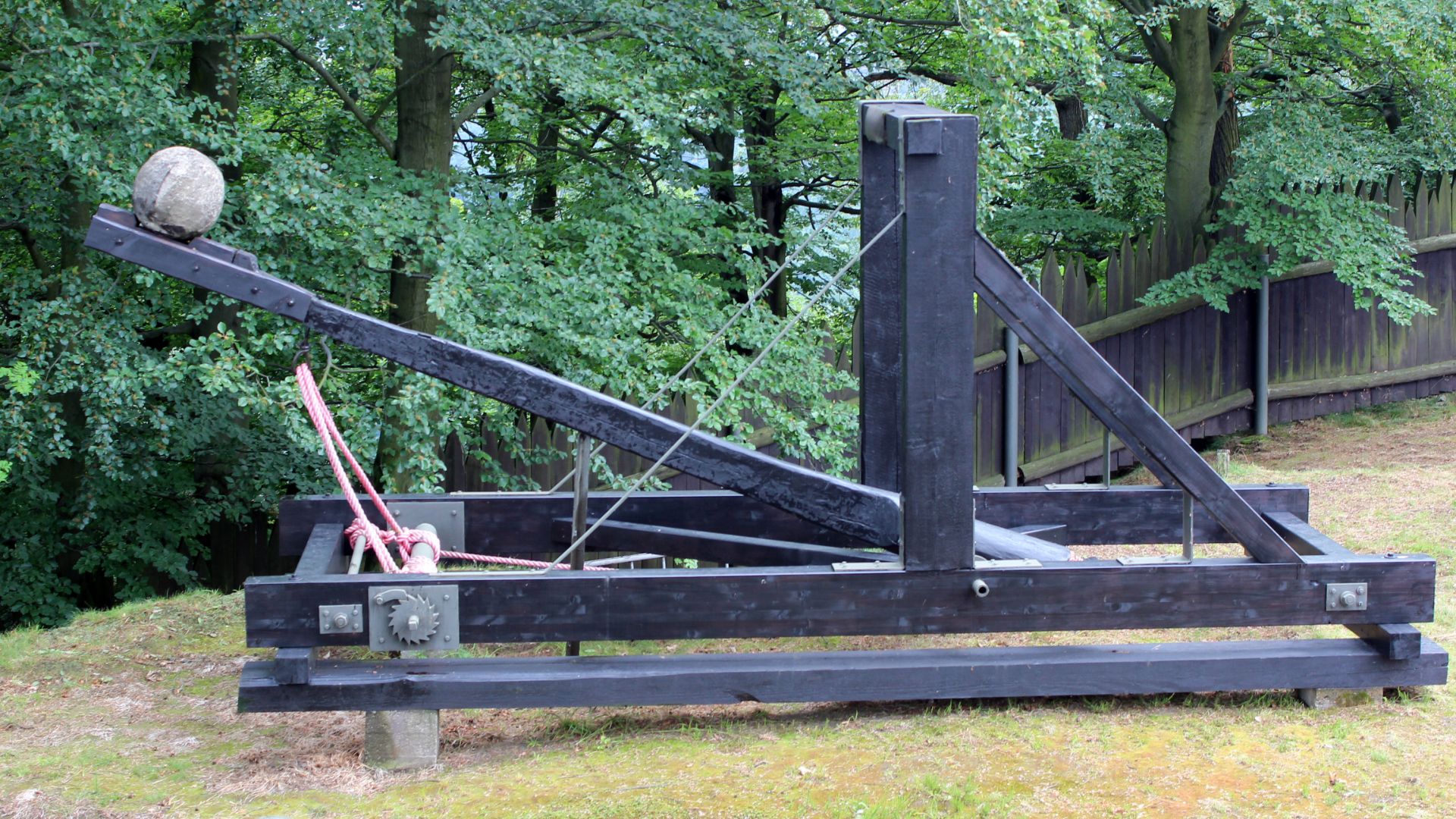
7. The Roman Onager
The onager was a torsion-powered siege engine capable of launching heavy stones. Its single throwing arm functioned similarly to a slingshot powered by twisted rope bundles. When released, the arm struck a padded stop that transferred energy into the projectile. The machine’s design allowed Roman forces to damage walls or disrupt enemy formations from a distance.
8. The Chinese Fire Lance
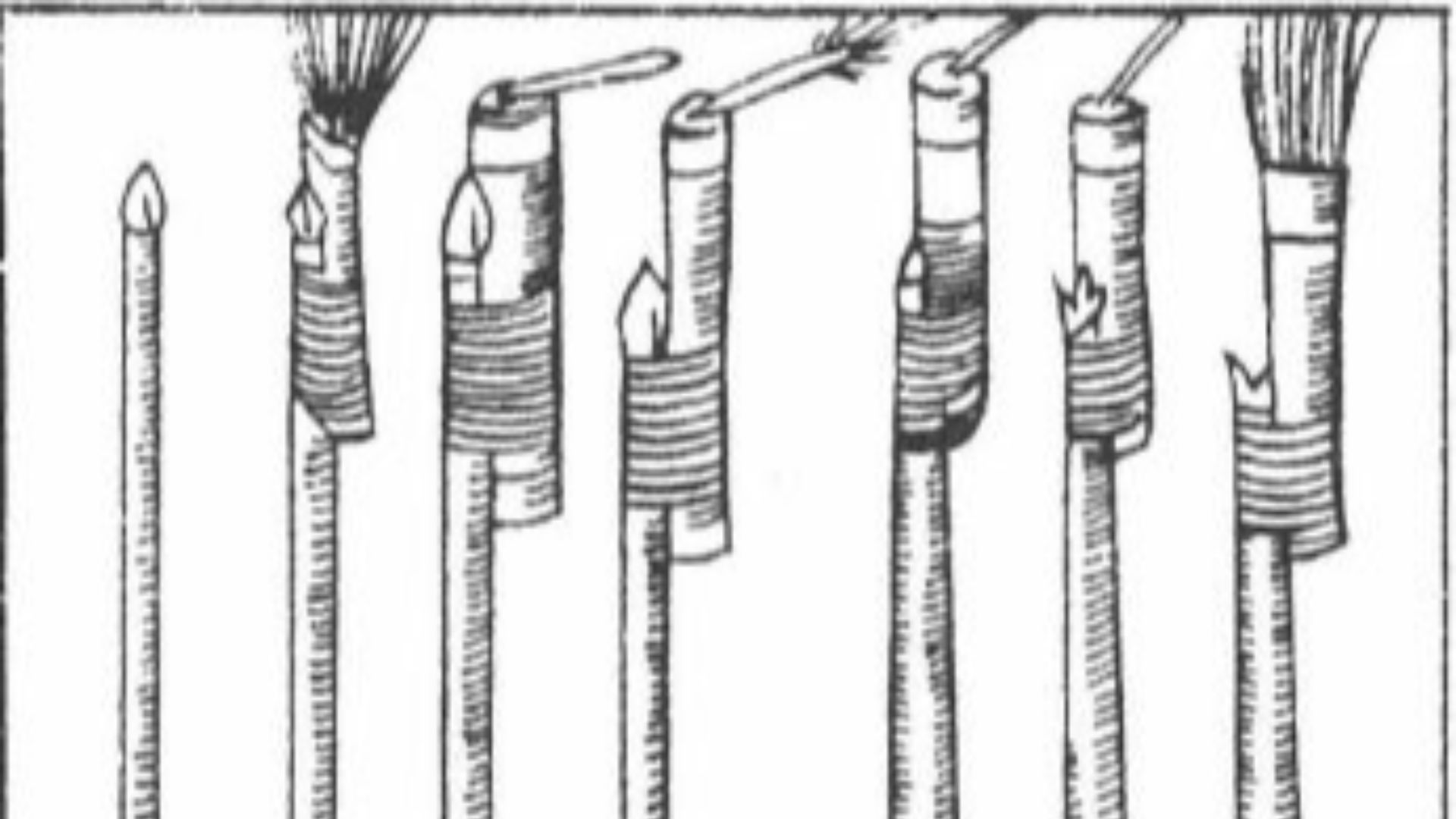
The fire lance was an early gunpowder weapon developed in China during the Song dynasty. It consisted of a bamboo or metal tube attached to a spear that expelled flames and small projectiles when ignited.
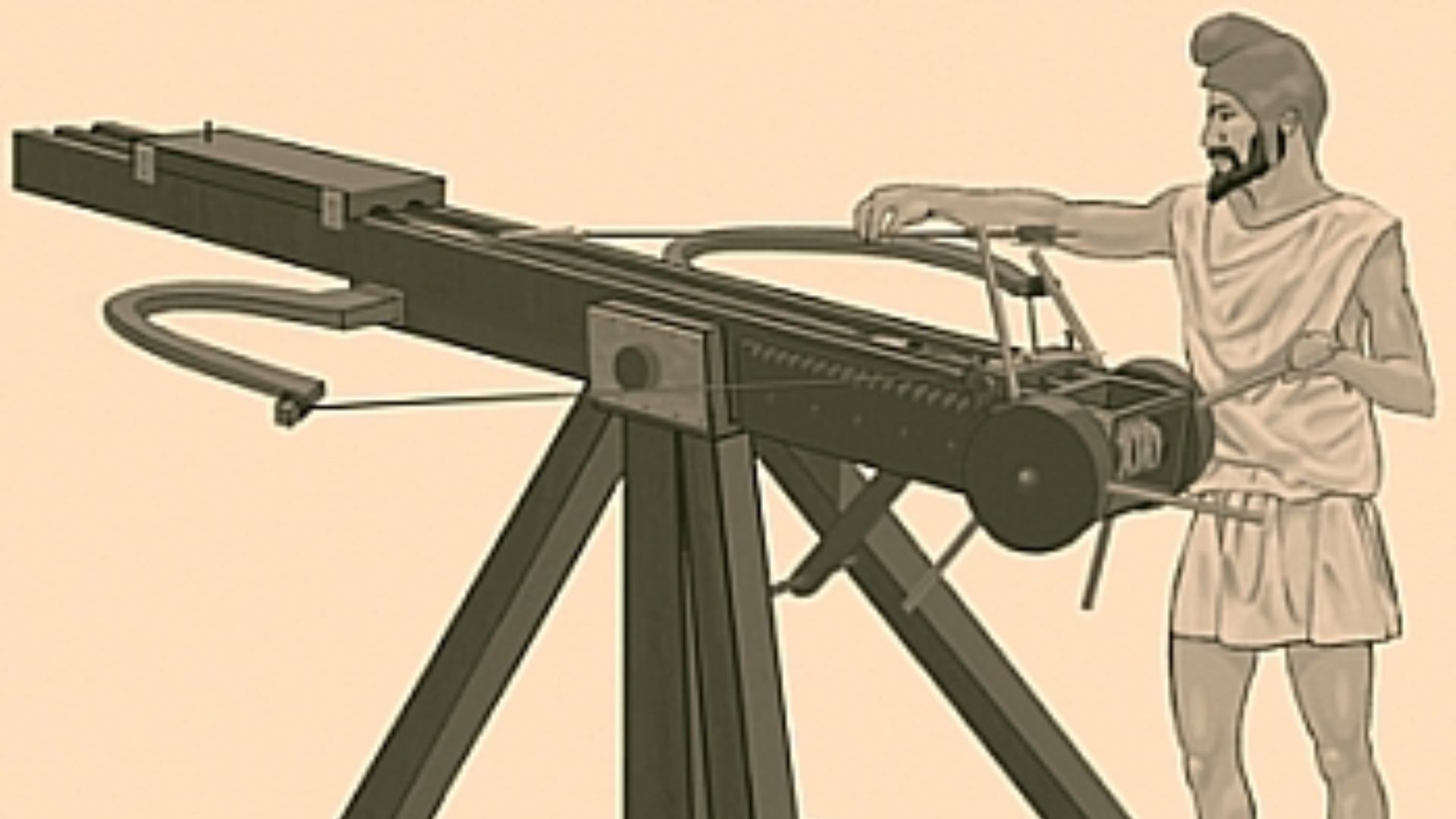
9. The Greek Polybolos
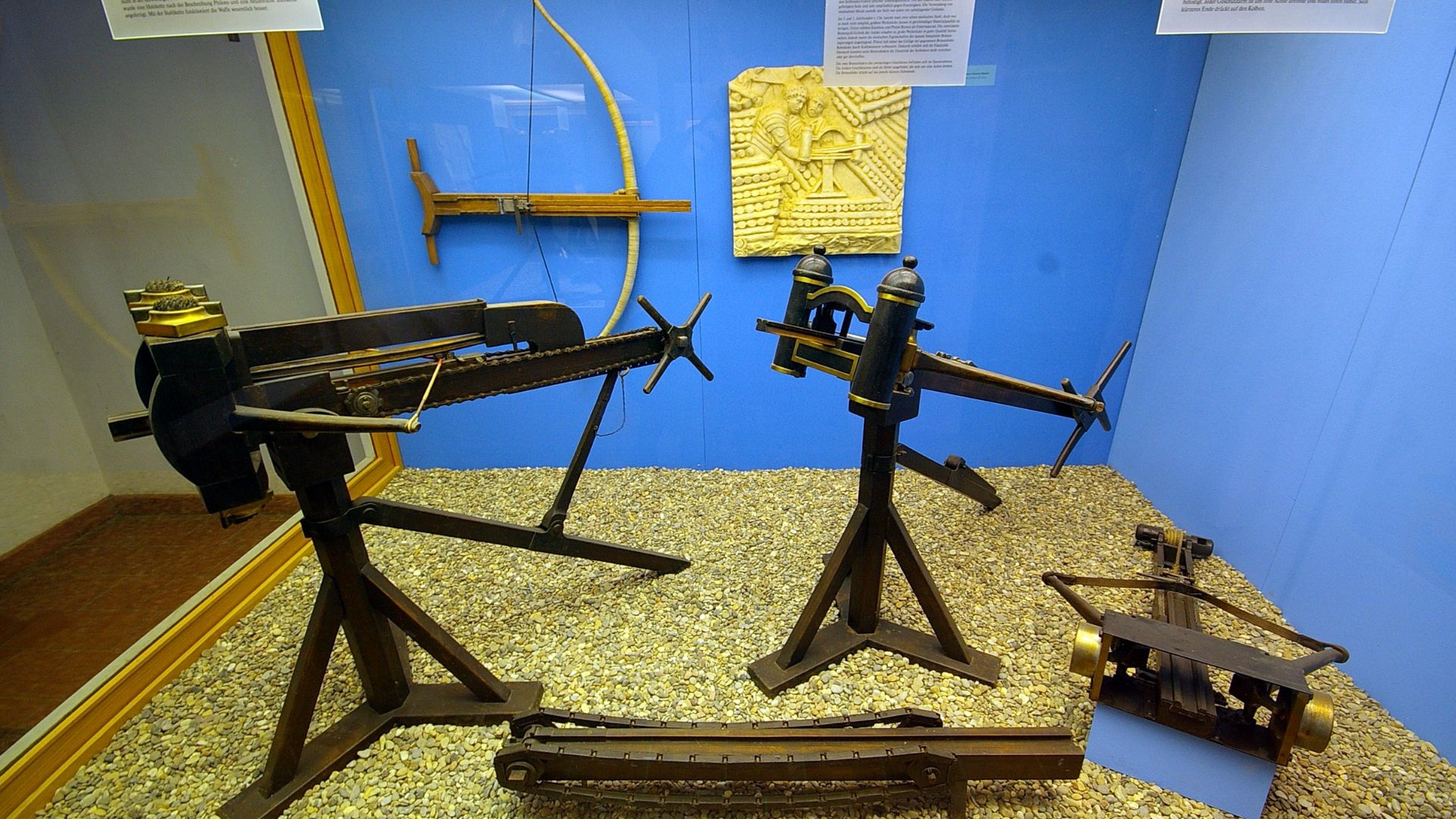
The polybolos was an advanced repeating ballista developed in ancient Greece.
It used a chain-driven mechanism powered by a hand crank to automatically load bolts from a magazine. This design allowed continuous firing as long as the crank was turned. The machine demonstrated a surprisingly sophisticated understanding of automated mechanical systems.
10. The Roman Corvus Boarding Bridge
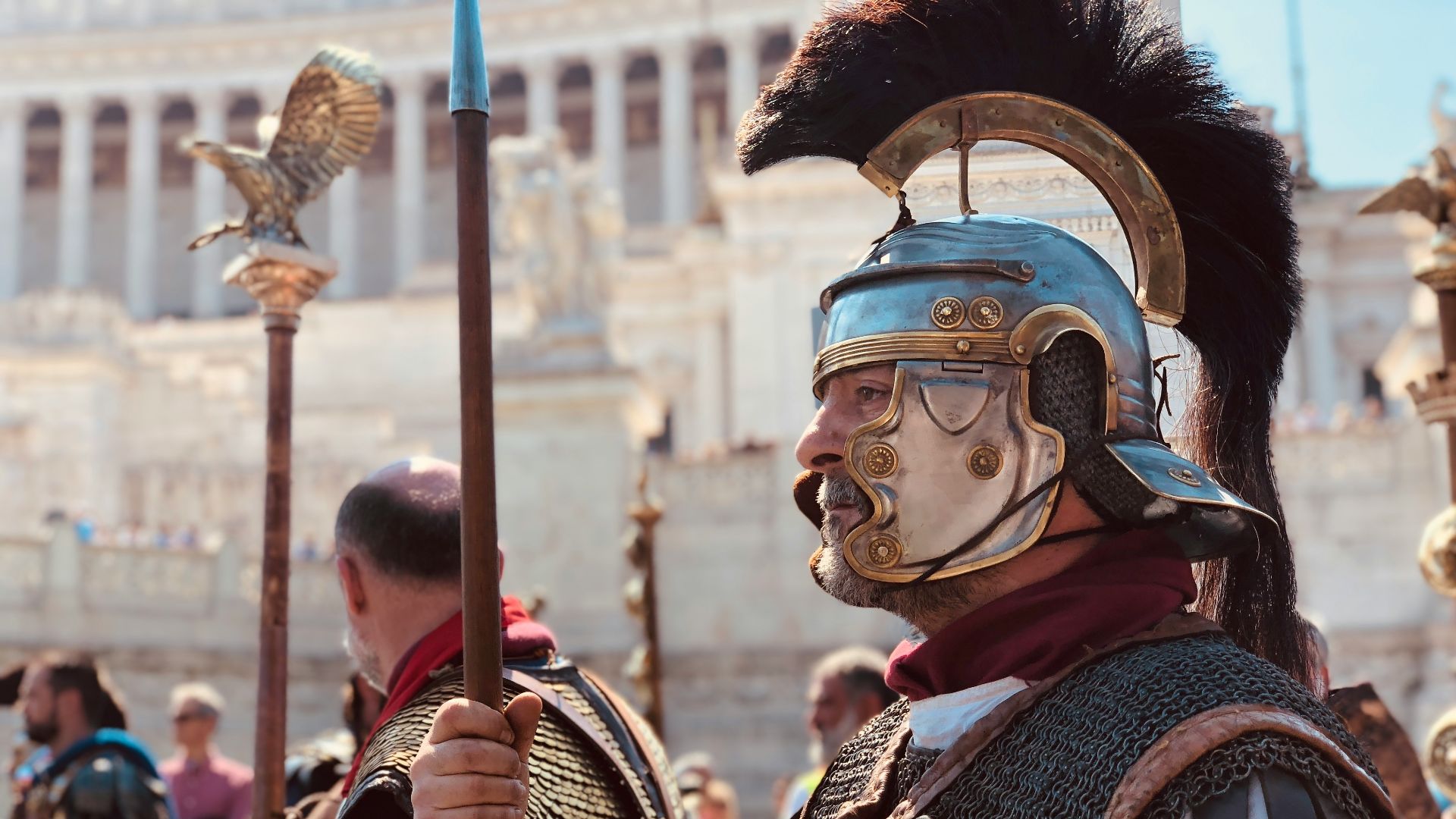
The corvus was a naval boarding device used by Roman ships during the First Punic War. Engineers created a hinged bridge with a heavy spike that dropped onto enemy decks, locking the vessels together.
 Maria Dolores Vazquez on Unsplash
11. The Persian Scythed Chariot
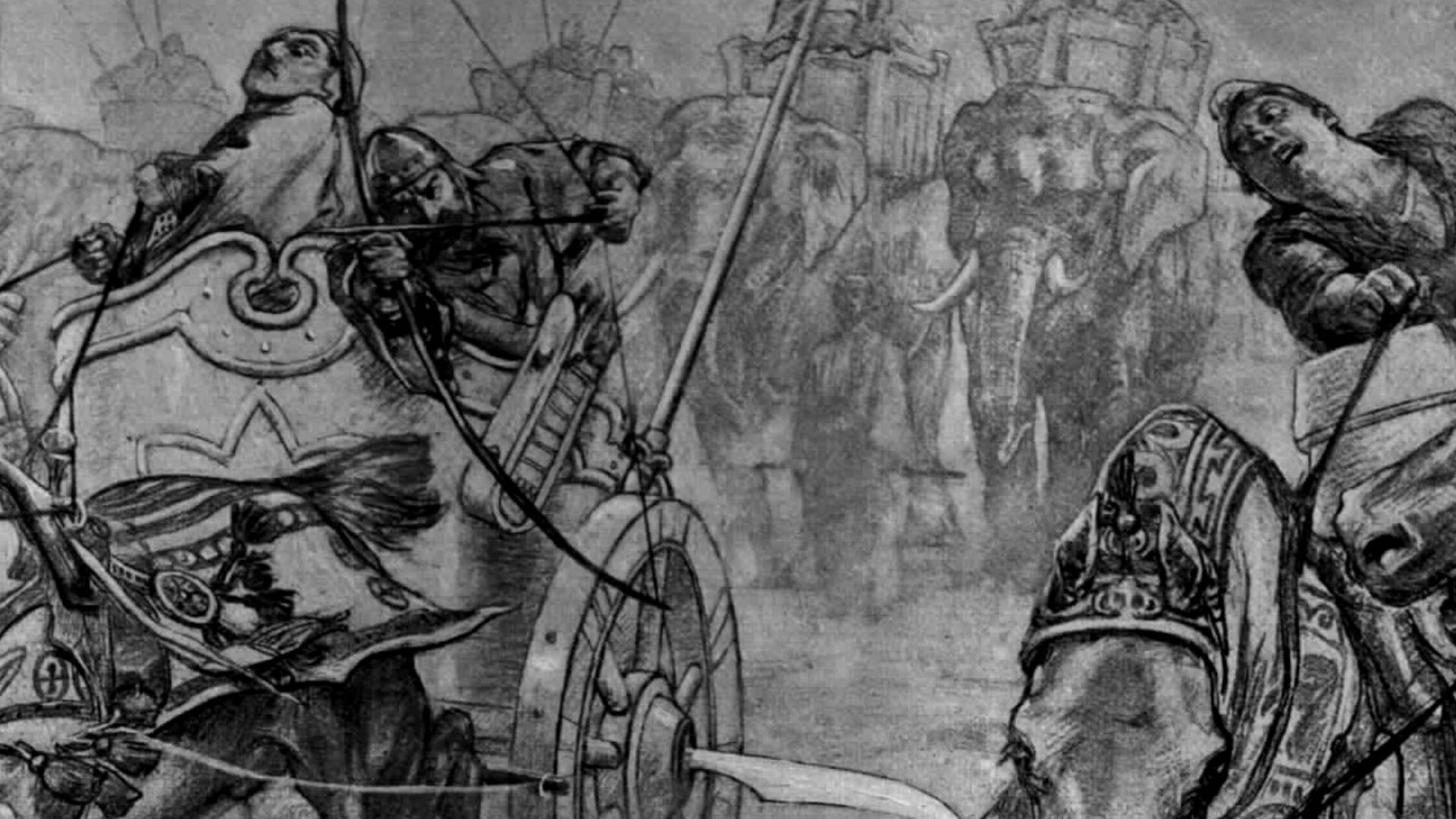
Scythed chariots were designed to break enemy formations by attaching sharp blades to the wheels and sides of chariots. When driven through opposing ranks, the spinning blades could cause serious disruption. Engineers had to carefully balance the chariot’s structure so the added blades didn’t destabilize the vehicle. These weapons were used by several ancient Persian armies.
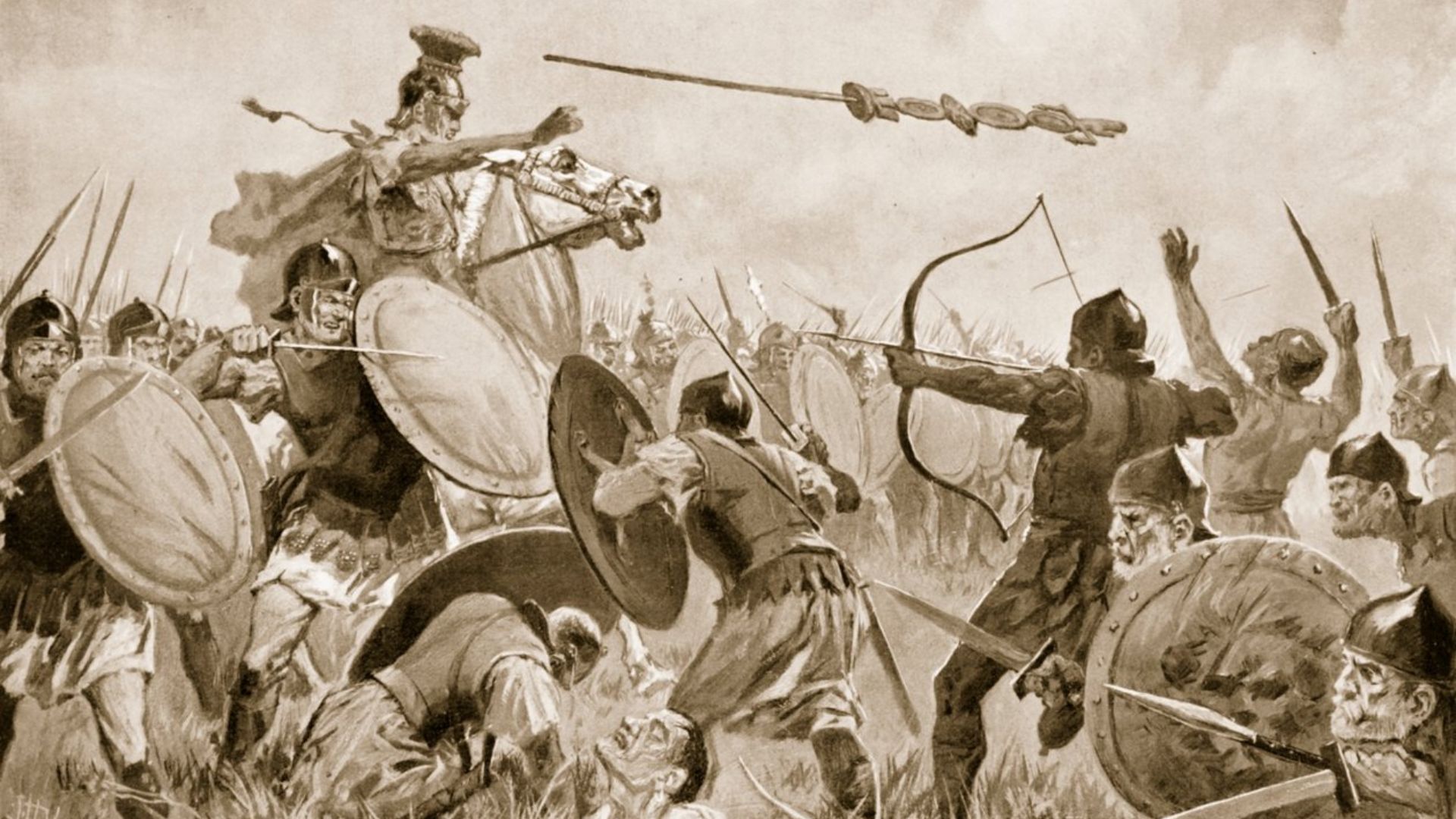
12. The Roman Pilum
The pilum was a specialized Roman throwing spear engineered for battlefield effectiveness. Its long iron shank bent upon impact, making it difficult for enemies to throw it back.
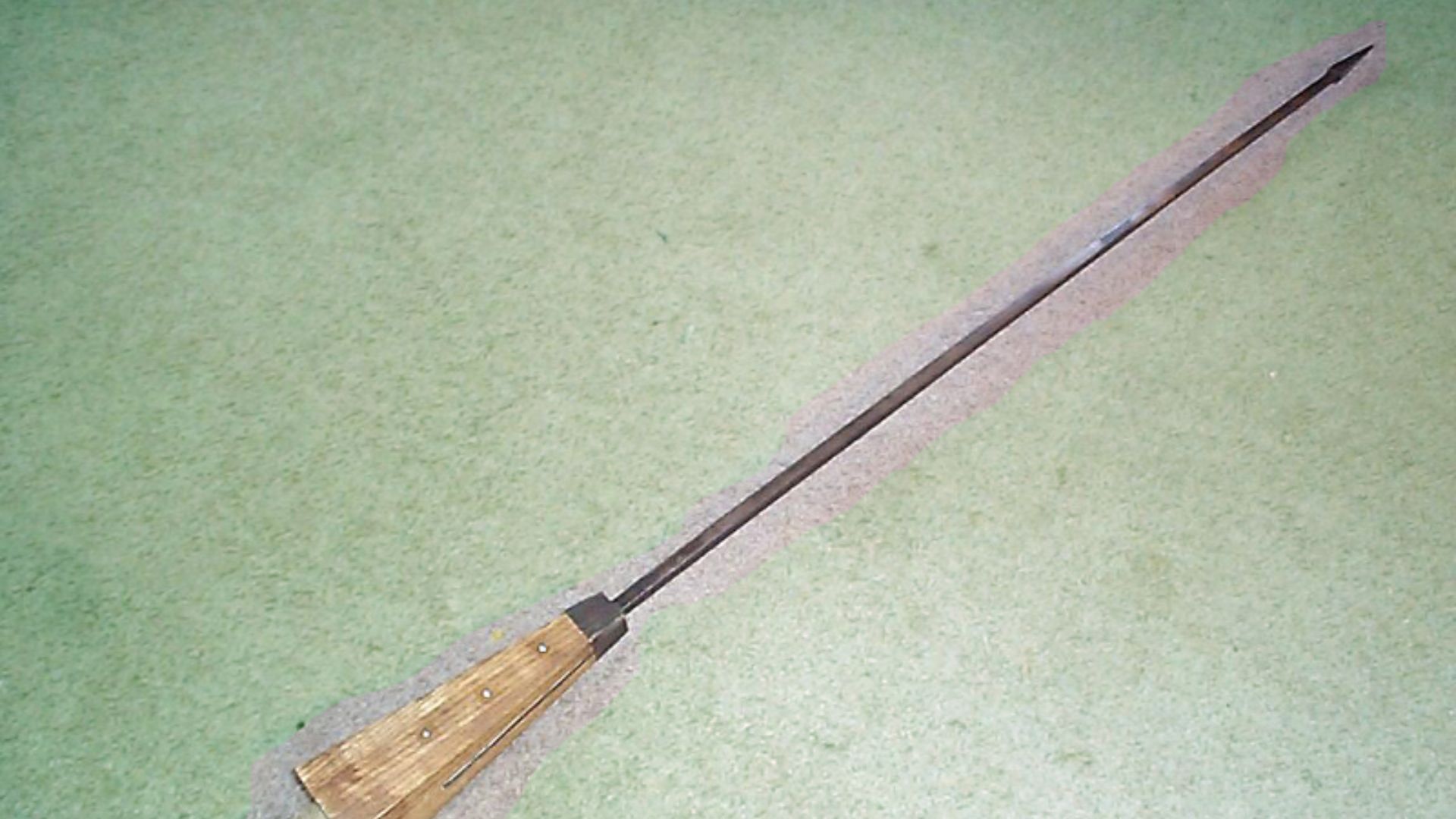 The original uploader was Wandalstouring at English Wikipedia. on Wikimedia
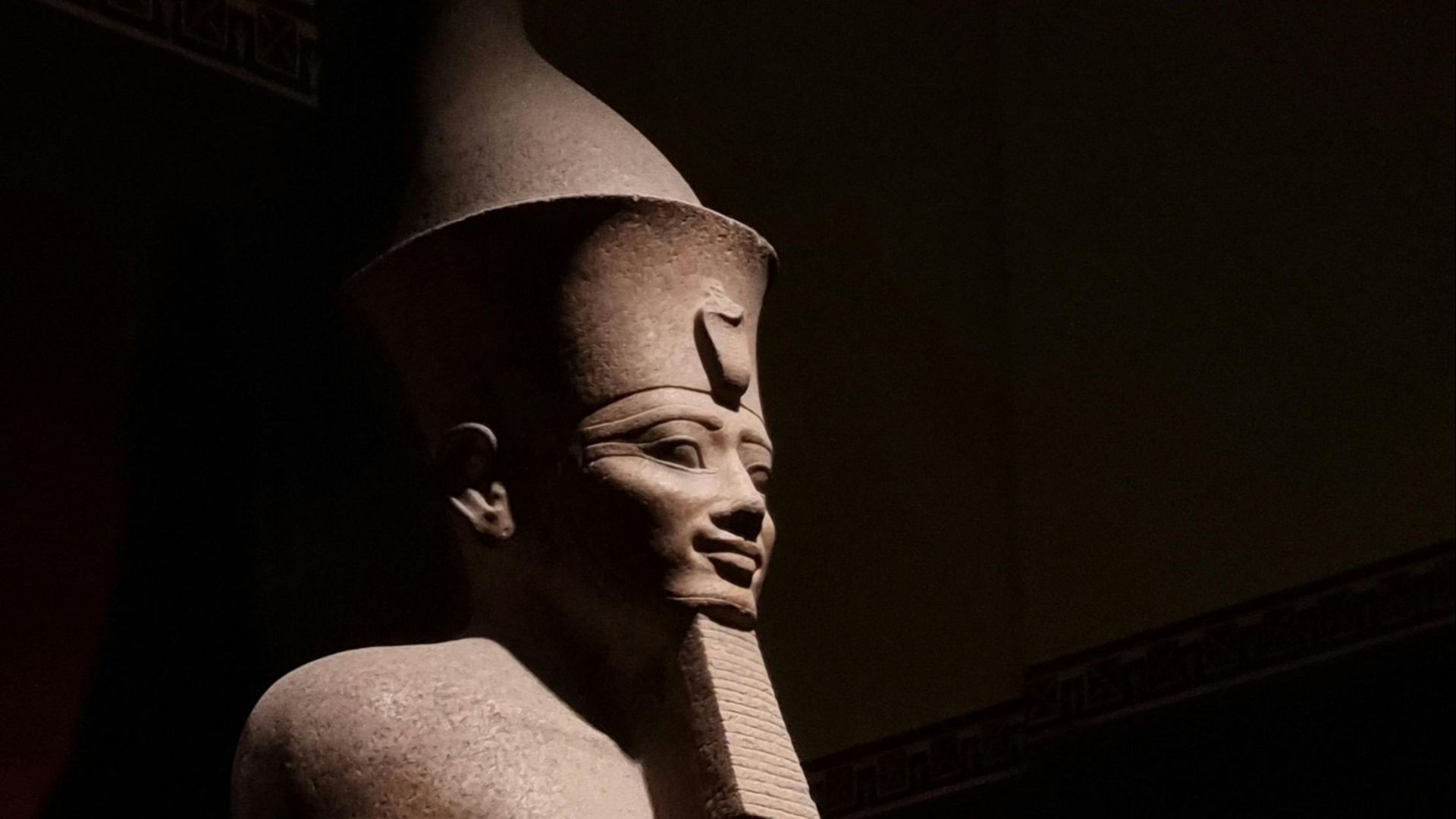
13. The Egyptian Composite Bow
Ancient Egyptian composite bows were built using layers of wood, horn, and sinew bonded together. This layered structure allowed the bow to store more energy than simple wooden bows.
The design produced a greater range and power while remaining relatively compact. Egyptian archers used these bows effectively from both chariots and the ground.
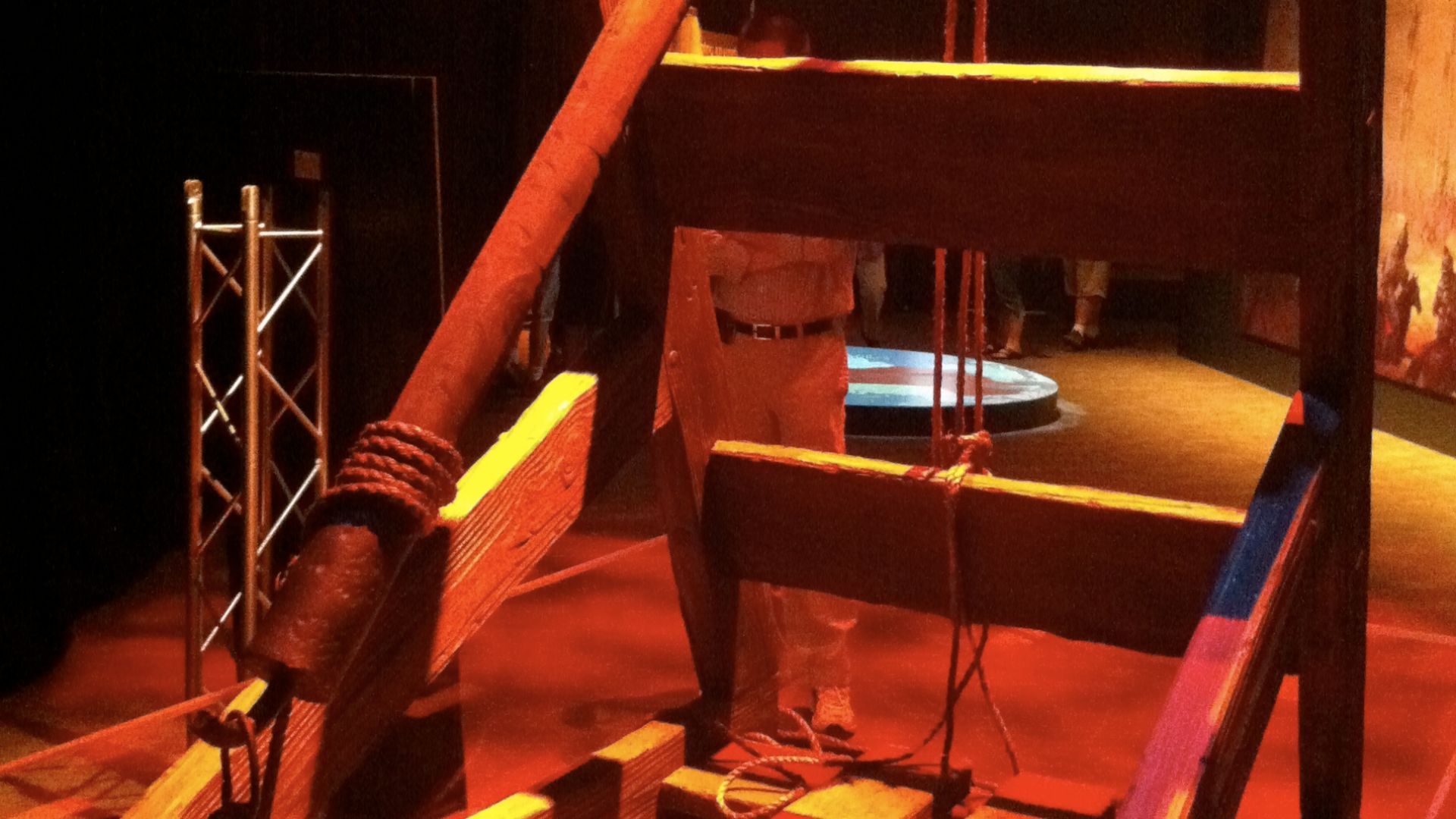
14. The Chinese Traction Trebuchet
The traction trebuchet used teams of soldiers pulling ropes to swing a long throwing arm. This design created significant mechanical leverage that could launch stones or incendiary materials.
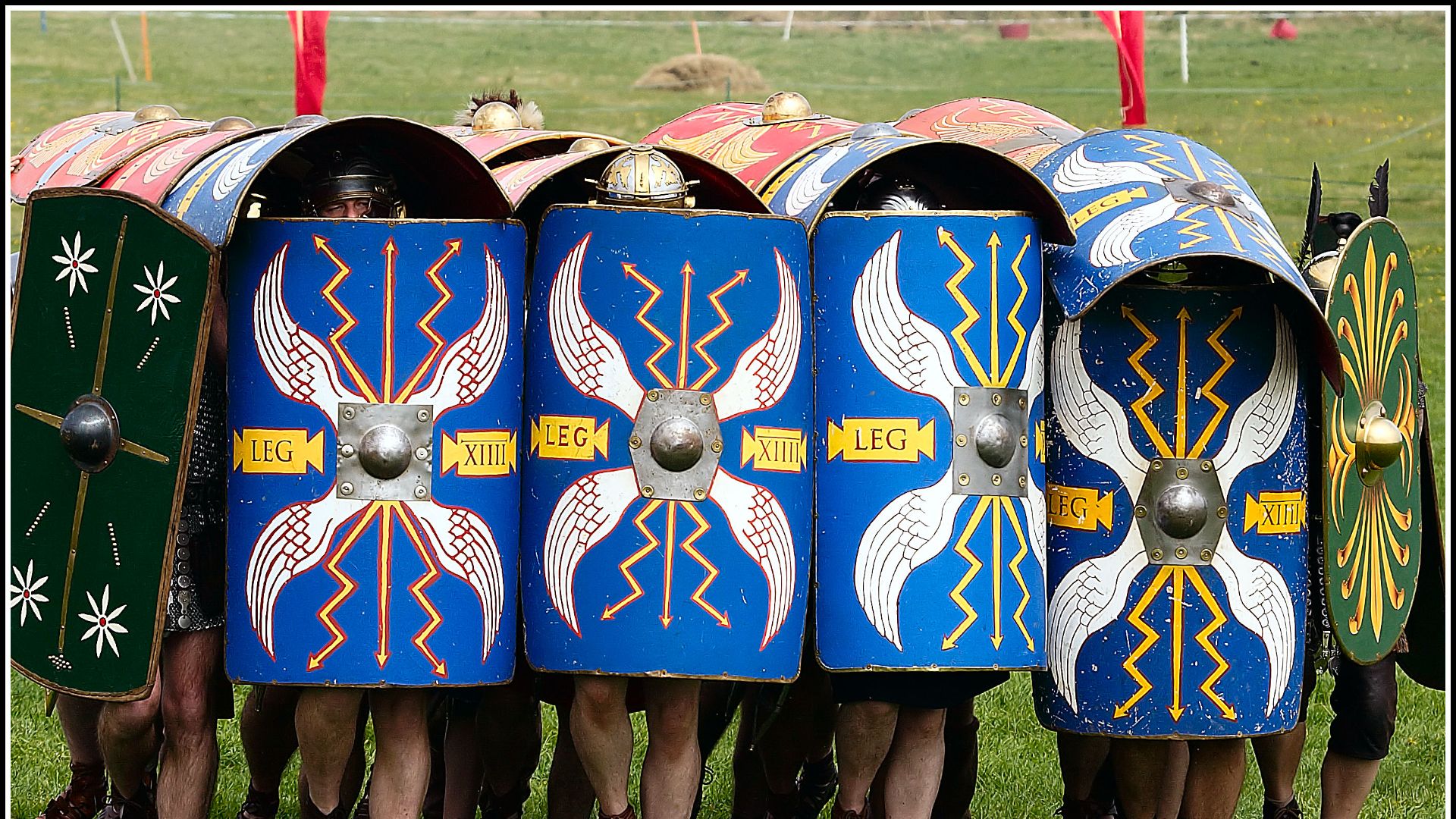
15. The Roman Testudo Formation Shields
Although technically defensive equipment, Roman shields in the testudo formation demonstrated coordinated engineering and design. Soldiers aligned rectangular shields overhead and in front to create a protective shell.
16. The Indian Chakram
The chakram was a circular throwing weapon used in parts of India for centuries. Its thin metal ring design allowed it to travel long distances when thrown with proper technique.

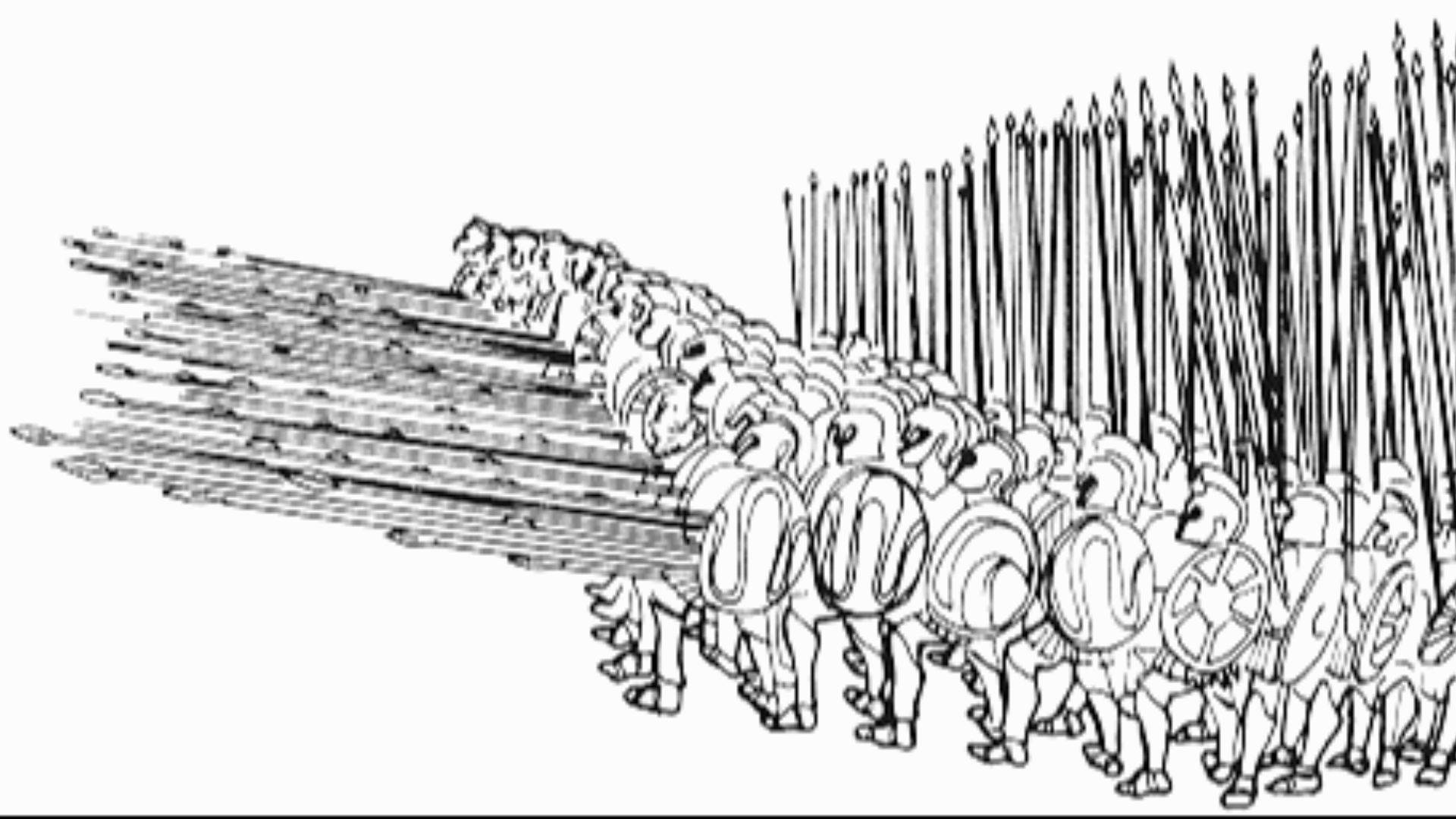
17. The Macedonian Sarissa
The sarissa was an exceptionally long spear used by Macedonian phalanx soldiers. Measuring up to 18 feet in length, it allowed multiple rows of soldiers to present spear points toward the enemy.
 F. Mitchell, Department of History, United States Military Academy on Wikimedia
18. The Roman Siege Ram
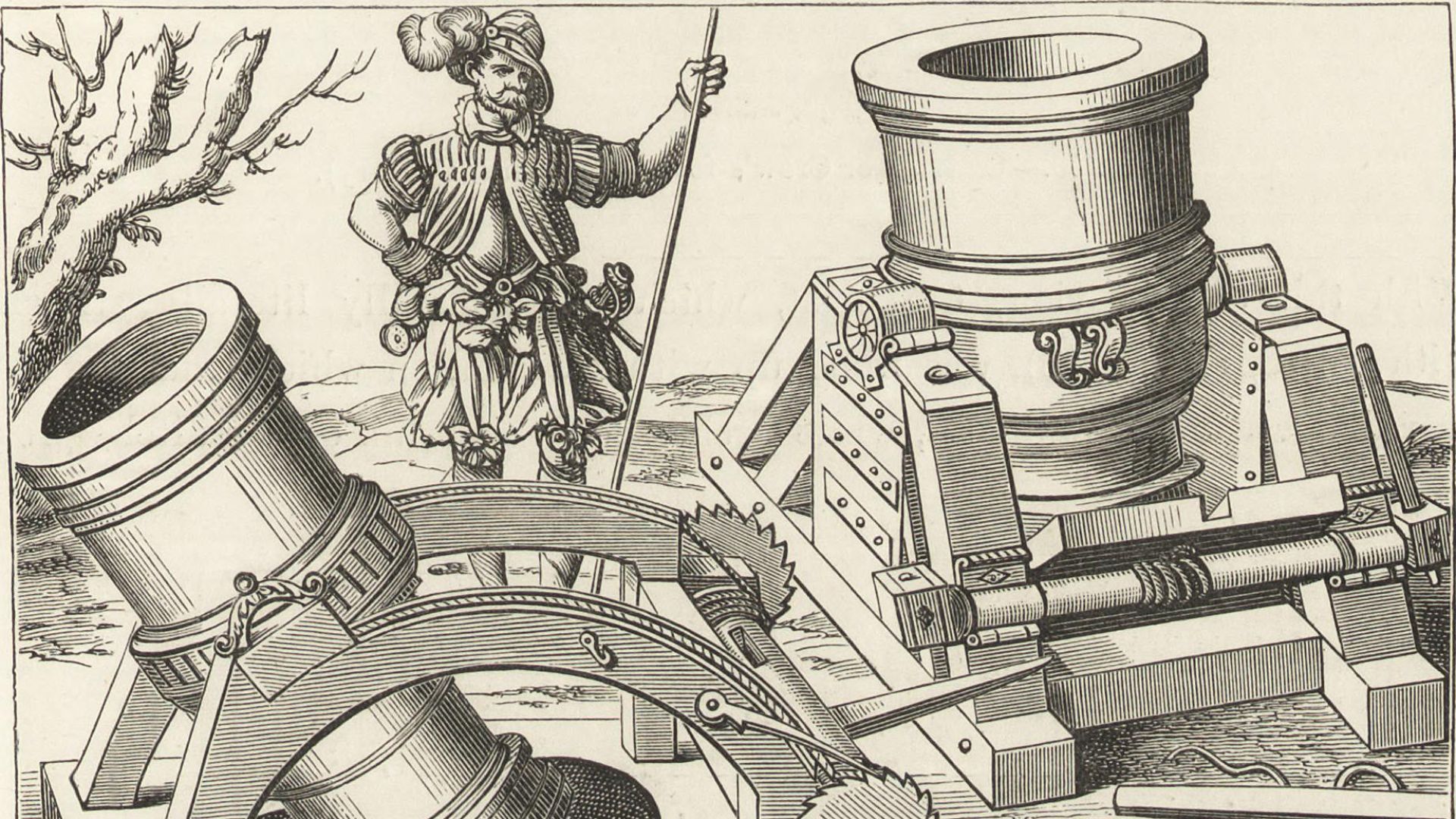
Battering rams were massive wooden beams suspended within protective frames. Soldiers swung the beam repeatedly against gates or walls to break through defensive structures.
 Internet Archive Book Images on Wikimedia
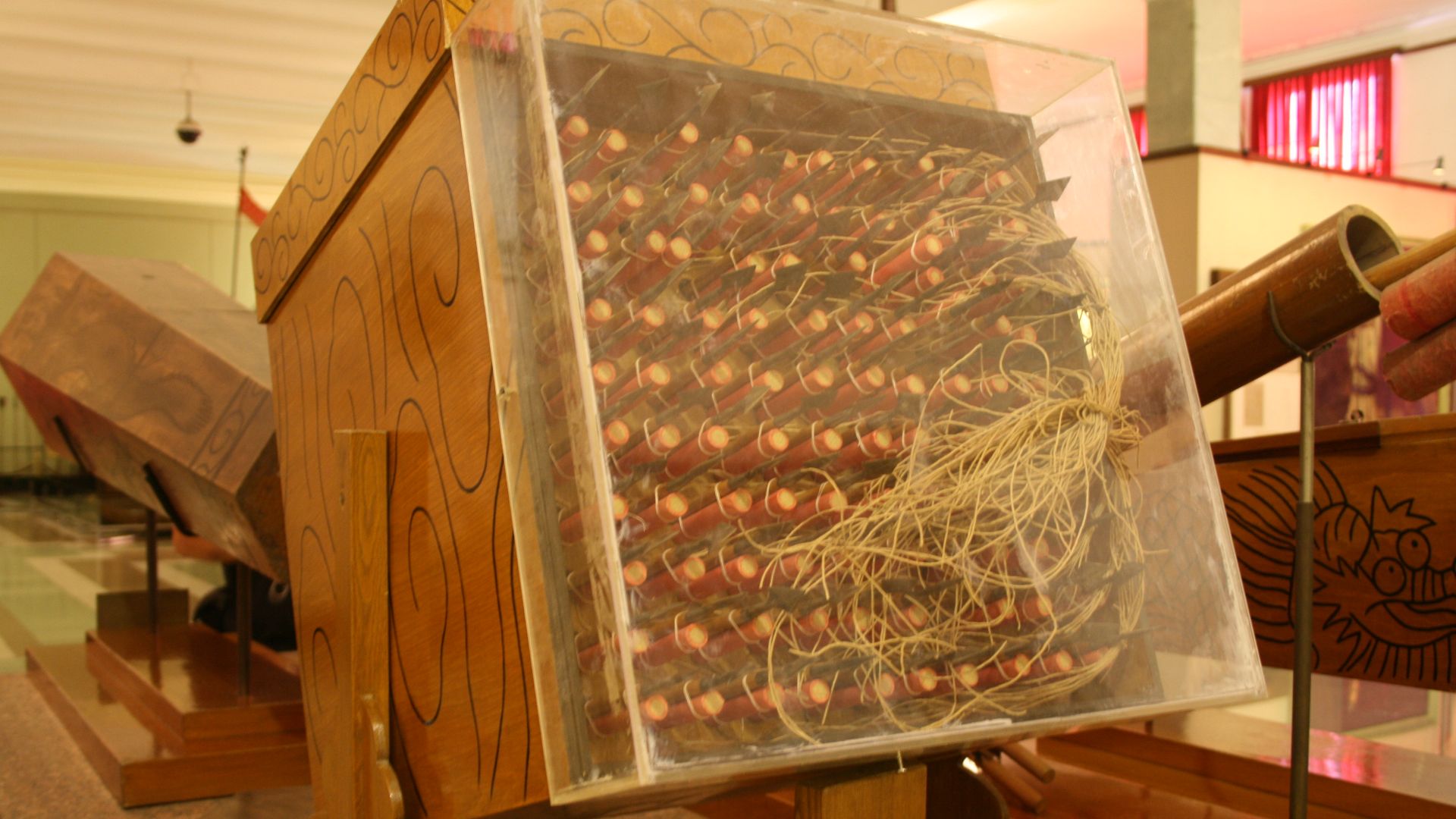
19. The Chinese Rocket Arrows
Rocket arrows were early gunpowder weapons that combined arrows with small rocket engines. When ignited, the rockets propelled the arrows forward while producing flames and smoke.
 Gary Todd from Xinzheng, China on Wikimedia
20. The Roman Siege Ramp at Masada
During the Roman siege of Masada in the 1st century CE, engineers constructed a massive earthen ramp to reach the fortress walls.
The structure required careful layering of soil, stones, and wooden supports to maintain stability.
KEEP ON READING
The story of Ching Shih, the Woman Who Became the…
Unknown author on WikimediaFew figures in history are as feared…
By Emilie Richardson-Dupuis Dec 29, 2025
Einstein's Violin Just Sold At An Auction—And It Earned More…
A Visionary's Violin. Wanda von Debschitz-Kunowski on WikimediaWhen you hear…
By Ashley Bast Nov 3, 2025
This Infamous Ancient Greek Burned Down An Ancient Wonder Just…
History remembers kings and conquerors, but sometimes, it also remembers…
By David Davidovic Nov 12, 2025
The Mysterious "Sea People" Who Collapsed Civilization
3,200 years ago, Bronze Age civilization in the Mediterranean suddenly…
By Robbie Woods Mar 18, 2025
The Love Story Behind the Taj Mahal Was Also a…
Koushik Chowdavarapu on UnsplashThe Taj Mahal is often introduced as…
By Emilie Richardson-Dupuis Apr 2, 2026
20 Soldiers Who Defied Expectations
Changing the Rules of the Battlefield. You’ve probably heard plenty…
By Annie Byrd Feb 10, 2026