

 Alfred Fredericks on Wikimedia
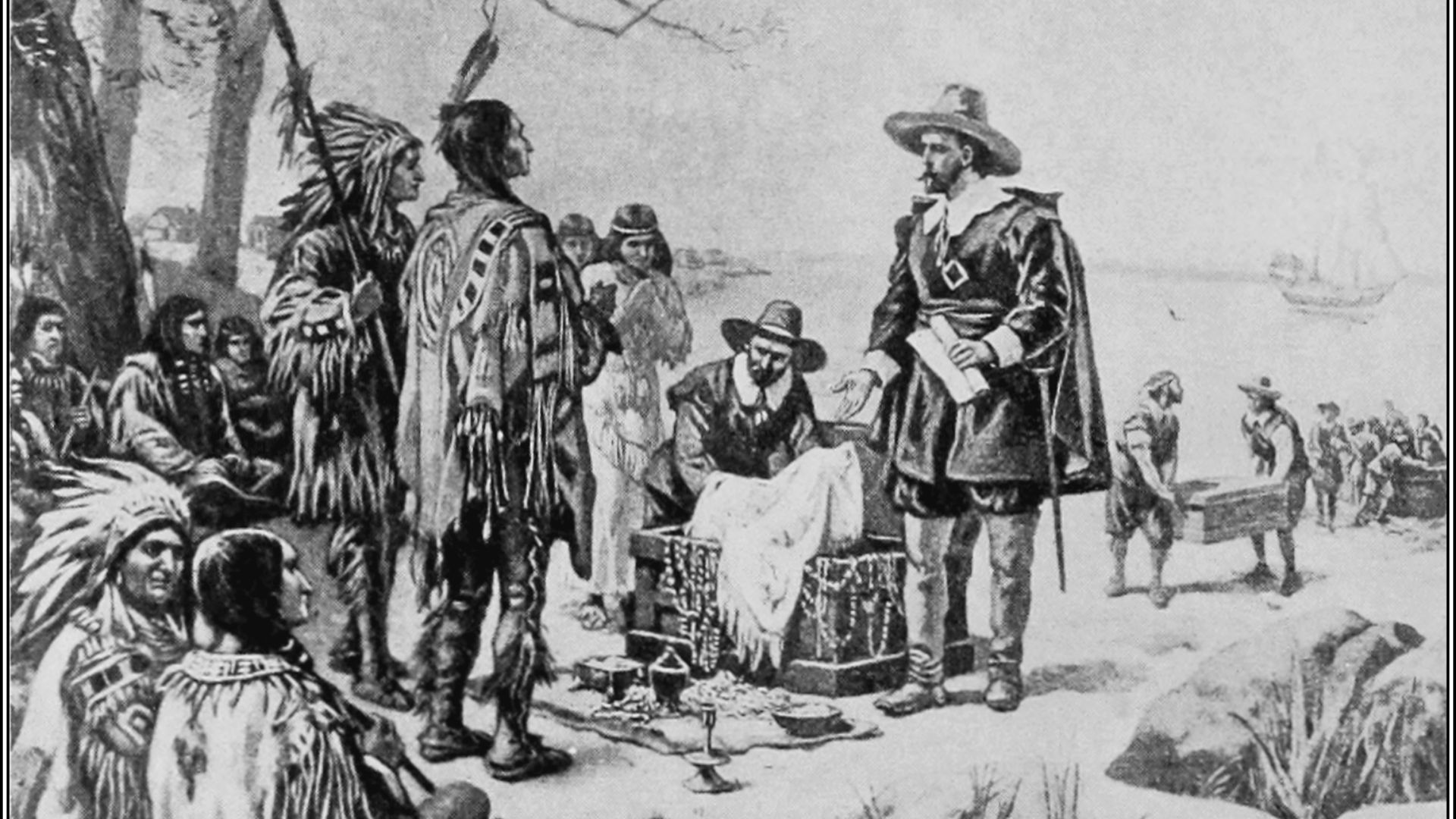
The story is one of the most famous real estate transactions in human history, and almost everything you know about it is wrong. In 1626, a Dutch colonial administrator named Peter Minuit is said to have purchased the island of Manhattan from the Lenape people for twenty-four dollars' worth of beads and trinkets. The deal has been retold as a parable of native naivety and European cunning, a foundational myth of New York City polished by centuries of repetition.
The actual history is messier, more ambiguous, and considerably more troubling than the legend suggests. The beads are probably a myth. The deed no longer exists. The Lenape almost certainly didn't understand the transaction the way the Dutch did. And the $24 figure, which has done more work than any number in American folklore, was introduced not in 1626 but in an 1846 history by Edmund Bailey O'Callaghan, who translated 60 Dutch guilders into a dollar equivalent and rounded it into a punchline.
What the Record Actually Shows
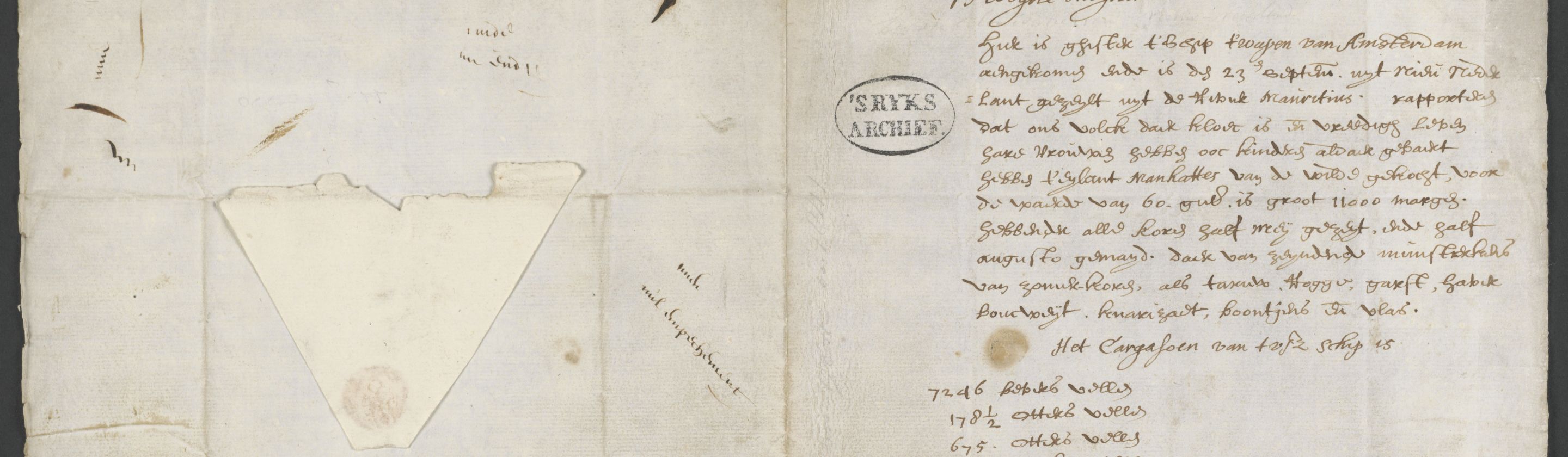
The only surviving contemporary evidence that the purchase happened at all is a single letter. On November 5, 1626, a Dutch West India Company administrator named Pieter Schagen wrote to the States-General of the Dutch Republic reporting that the colony's ship, the Arms of Amsterdam, had arrived from New Netherland. He noted that the settlers had purchased the island of Manhattan from the natives for goods valued at 60 guilders. The letter, now held in the Nationaal Archief in The Hague, mentions no beads, no specific goods, no date, and no named parties on either side. Schagen himself had never been to Manhattan and was relaying secondhand news.
The deed itself has never been found. Exactly which Indigenous people participated remains disputed, with historians variously suggesting the Lenape, the Canarsie, the Munsee, and the Manahatin as potential parties. The scholarly consensus, as summarized by the Gotham Center for New York City History, is that a purchase most likely did take place, probably in mid-May 1626 and probably conducted by Minuit, but none of that is definitively confirmed by any document that still exists.
As for the beads, Encyclopaedia Britannica notes directly that there is no historical evidence they were part of the payment. What it more likely consisted of was metal tools, cloth, and manufactured goods the Dutch considered practical and the Lenape valued genuinely, not as trinkets but as functional items difficult to produce without European metalworking.
Two Entirely Different Transactions
The deepest historical problem with the Manhattan purchase has nothing to do with the price. It has to do with what each side thought they were agreeing to. For the Dutch West India Company, the transaction was a straightforward property transfer. They were buying perpetual title to land, the right to build on it and exclude others permanently.
The Lenape did not share that framework. As the Smithsonian's National Museum of the American Indian has documented, the Lenape held a communal and spiritual relationship with land that had no equivalent in European property law. Land was not a commodity that could be sold outright, any more than water or air could be. What they appear to have understood the exchange of goods to represent was closer to a gift acknowledging permission to share and use the land, not an agreement to vacate it. The historian Paul Otto, writing in the journal De Halve Maen, concluded that the Lenape probably never intended to give up the land but rather to allow the Dutch to occupy it alongside them.
Similar conceptual gaps played out in land negotiations between European colonists and Indigenous peoples throughout the Atlantic coast in the 17th century. The difference in Manhattan's case is that the transaction became foundational mythology, invoked for generations to legitimize colonial occupation of Lenapehoking, the ancestral Lenape territory that encompassed Manhattan and much of the surrounding region.
What the Story Costs
The $24 figure became a joke, and the joke has always done ideological work. Framing the purchase as an absurd bargain implies the Lenape were simply outmaneuvered by sharper negotiators, rather than that two parties sat down with entirely different understandings of what land was and what agreeing to a transaction obligated anyone to do. The swindle narrative, while more sympathetic than the original congratulatory version, still centers European legal concepts as the standard by which the exchange should be judged.
What followed the 1626 transaction was the construction of Fort Amsterdam at the southern tip of Manhattan, the establishment of New Amsterdam as a colonial settlement, and the displacement of the Lenape from Lenapehoking. By the mid-17th century, a wall had been built across the northern edge of the settlement to demarcate the colony from Indigenous territory. The street alongside it still bears the name Wall Street. The Dutch were replaced by the English in 1664 when British forces took the colony and renamed it New York, and the Lenape were pushed steadily westward over the following century through additional transactions, coercion, and violence.
The beads-and-trinkets story endures because it is tidy and makes the acquisition of one of the world's most valuable pieces of real estate feel faintly comic.
The real transaction was neither. It was a meeting between two civilizations that could not hear each other clearly, brokered by a company whose primary interest was beaver pelts, and it set the terms for everything that came after.
KEEP ON READING
The 20 Most Recognized Historical Figures Of All Time
The Biggest Names In History. Although the Earth has been…
By Cathy Liu Oct 4, 2024
10 of the Shortest Wars in History & 10 of…
Wars: Longest and Shortest. Throughout history, wars have varied dramatically…
By Emilie Richardson-Dupuis Oct 7, 2024
10 Fascinating Facts About Ancient Greece You Can Appreciate &…
Once Upon A Time Lived Some Ancient Weirdos.... Greece is…
By Megan Wickens Oct 7, 2024
20 Lesser-Known Facts About Christopher Columbus You Don't Learn In…
In 1492, He Sailed The Ocean Blue. Christopher Columbus is…
By Emilie Richardson-Dupuis Oct 9, 2024
20 Historical Landmarks That Have The Craziest Conspiracy Theories
Unsolved Mysteries Of Ancient Places . When there's not enough evidence…
By Megan Wickens Oct 9, 2024
The 20 Craziest Inventions & Discoveries Made During Ancient Times
Crazy Ancient Inventions . While we're busy making big advancements in…
By Cathy Liu Oct 9, 2024