

The Prescription That Changed Everything
Three years after Robert died, I'd gotten pretty good at ordinary. Tuesday afternoons meant walking Daisy down to the pharmacy on Elm, picking up my blood pressure prescription, maybe stopping for a coffee on the way back. It wasn't exciting, but it was mine, and there was a quiet comfort in that. Daisy padded along beside me through the drizzle, her golden coat darkening at the edges, tail still going like she'd never heard of bad weather. The pharmacy smelled the way it always did — antiseptic and old carpet — and I got in line behind a man with a cough drop rattling around in his cheek. When I reached the counter, I didn't recognize the woman behind it. She was younger than anyone I'd seen working there before, dark hair pulled back tight, eyes that moved fast and careful. She pulled up my file, and something shifted in her face — just slightly, just enough that I noticed. She told me she couldn't fill the prescription today. I asked if it was an insurance issue. She said no. I asked if they were out of stock. She said no again. She was polite about it, professional even, but she wouldn't explain further, and the line behind me was growing. I walked out into the rain with Daisy pressing close to my leg, the unfilled prescription still folded in my coat pocket, and I couldn't quite shake the feeling that something had just gone sideways in a way I didn't have words for yet.
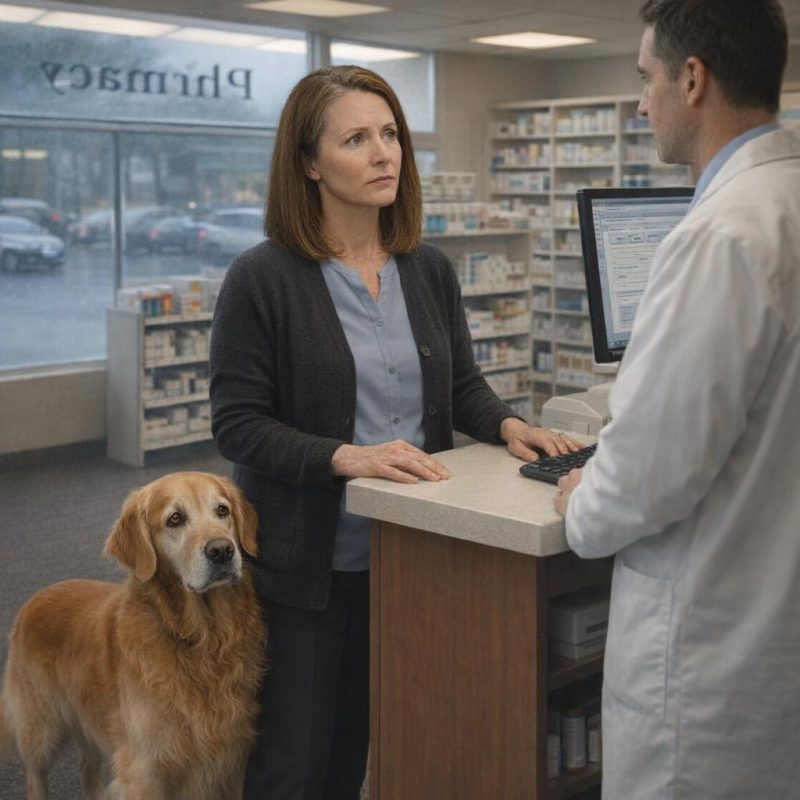 Image by RM AI
After Closing
I went back the next morning, thinking maybe it had been a system glitch or some new insurance requirement I hadn't been told about. The same woman was behind the counter — Emma, her name tag said — and when she saw me come in, something in her posture changed. She finished with the customer ahead of me and then leaned forward just slightly, keeping her voice low. She said she still couldn't fill it, and she still wouldn't say why, not here. I told her I'd been getting that same prescription for four years without a single problem, and I'd like an explanation. The man behind me shifted his weight. Emma glanced at him, then back at me, and said, very quietly, that she'd like to talk to me properly, but not in the store. She asked if I could come back after seven, after they closed. I stood there for a moment, genuinely thrown. A pharmacist asking me to come back after hours wasn't something that happened in the normal course of a Tuesday. I told her that sounded strange. She said she understood that, and she was sorry, but it mattered. I drove home, fed Daisy, reheated some soup I didn't really taste, and sat at the kitchen table turning the whole thing over in my mind. It was strange. It was probably nothing. But something in the way she'd said it mattered kept pulling at me, and by six-thirty I was already reaching for my car keys.
 Image by RM AI
The List
The back door of the pharmacy opened before I even knocked, like she'd been watching for me. Emma let me in and locked the door behind us, and the store felt entirely different after hours — the fluorescent lights still humming but the shelves casting long shadows, the whole place too quiet. She'd set two folding chairs near the dispensing counter and had a folder on the table between them. She didn't waste time. She told me she'd been seeing a pattern, and she needed me to understand she wasn't certain of anything yet, just that something felt wrong. She opened the folder and showed me a printout — four prescriptions, all for women, all roughly my age, all filled or attempted at her counter in the past two months. She said they were technically valid, signed by a licensed physician, the right format, everything in order on paper. But the dosages were unusual, and all four had originated from the same clinic. She said she'd flagged it internally and hadn't gotten a satisfying answer. I looked at the printout for a long time. The names were blurred out except for mine, but the pattern was right there in the dates and the dosage numbers. She told me not to take the medication until she'd had more time to look into it. I drove home in the dark, Daisy waiting at the door when I came in, and I sat down on the floor beside her and just let her lean against me, the weight of what Emma had shown me settling somewhere deep and slow.
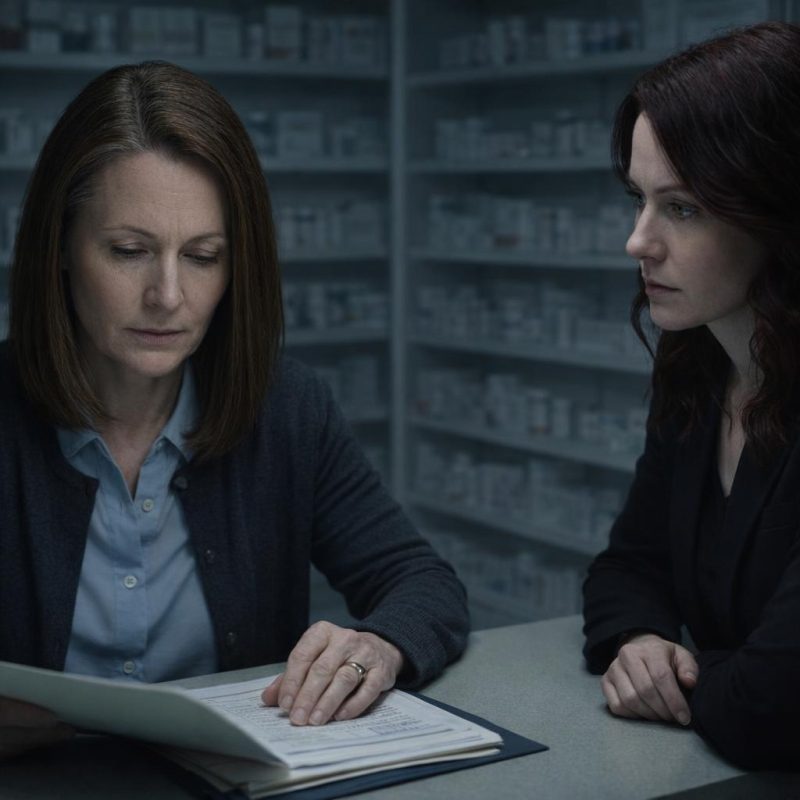 Image by RM AI
Three Other Women
I asked Emma if she could tell me who the other women were. She hesitated, and I understood why — she was already out on a limb just talking to me. But she said she thought I deserved to know, given the circumstances, and she read me three names. The second one stopped me cold. Carol. My friend Carol, who I'd known since our kids were in grade school together, who brought me a casserole every week for a month after Robert died. I asked Emma if she was sure. She was sure. I sat with that for a moment, and then I asked her the question I'd been circling around since the night before — why was she telling me this? She could have just flagged it with her supervisor and left it alone. She looked at her hands and said she couldn't ignore what she was seeing. She said sometimes you notice something and you have a choice about whether to look away, and she'd decided she wasn't going to look away. I didn't push her further on it. She made me promise to check my own prescription history, to see if the dosage had changed recently without my knowledge, and to be careful about who I talked to until we knew more. I promised. Walking back to my car, the night air cool and damp, I kept thinking about Carol. If this was something real, if there was actually something wrong with these prescriptions, then my friend might already be taking whatever it was. That thought sat in my chest the whole drive home, heavy and unmoving.
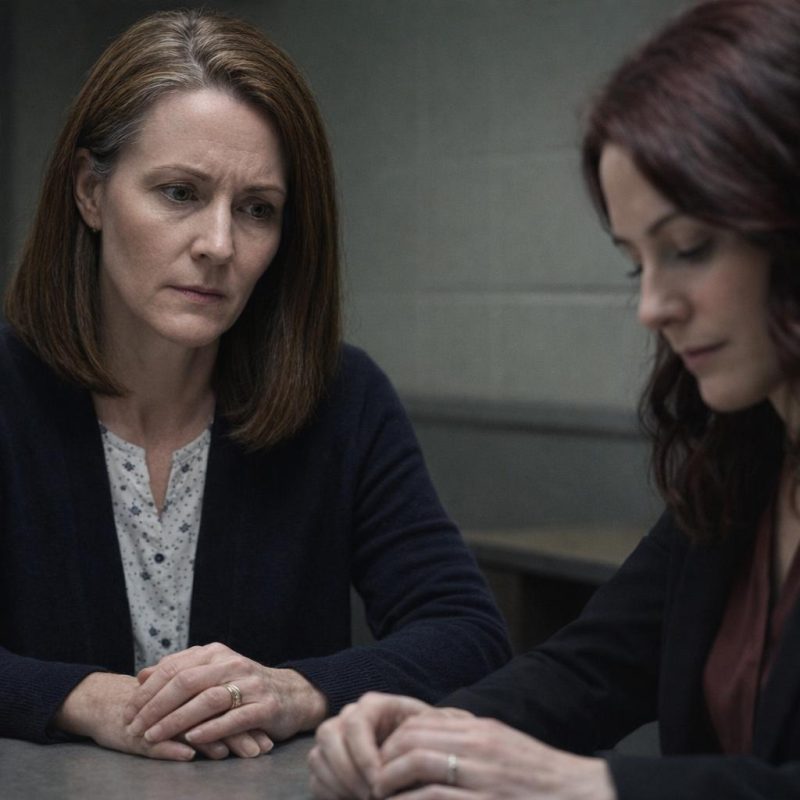 Image by RM AI
The Retired Doctor
The next morning I called my doctor's office before I'd even finished my first cup of coffee. Daisy was stretched out under the kitchen table, chin on my foot, and I remember being glad for the weight of her there. The phone rang four times before someone answered — a voice I didn't recognize, younger than the receptionist I'd spoken to for years. I asked to speak with Dr. Patterson about a prescription concern. There was a brief pause, and then the woman said that Dr. Patterson was no longer with the practice. I asked what she meant. She said he had retired. I asked when. She said approximately four months ago. I sat there holding the phone, trying to remember the last time I'd actually seen him in person — it had been at least six months, maybe more, a routine appointment where everything had been fine and unremarkable. Four months ago he had retired, and no one had called me. No letter, no notice in the mail, nothing. I'd been a patient of his for eleven years. The receptionist offered to transfer me to the new physician group that had taken over the practice. I said I'd call back, and I set the phone down on the table. Daisy lifted her head and looked at me. I didn't know what to tell her. I'd been getting a prescription from a doctor who, it turned out, hadn't been my doctor for months — and nobody had thought to let me know.
 Image by RM AI
The New Healthcare Group
I opened my laptop after lunch and started searching for Dr. Patterson's name alongside the practice address. It didn't take long to find something — a brief notice on a local healthcare news site, the kind of thing you'd scroll past without reading unless you were looking for it. The notice said his practice, along with two others in the county, had been acquired by something called Midwest Health Partners. I typed the name into the search bar. Their website came up immediately — clean, corporate, the kind of site that uses words like 'integrated care solutions' and 'patient-centered outcomes' without ever telling you anything specific. There were stock photos of smiling people in waiting rooms. There was no mention of Dr. Patterson, or of any of the local physicians whose practices they'd absorbed. The About page said they operated clinics across Illinois, Indiana, and Ohio. I clicked through every tab. The board of directors listed names I didn't recognize. The contact page gave a toll-free number and a post office box in Indianapolis. I wrote down the name and the number on the notepad I keep by the computer. It was all perfectly legal-looking, perfectly ordinary on the surface, and yet something about it made me uneasy in a way I couldn't quite articulate. I looked at what I'd written on the notepad: Midwest Health Partners.
 Image by RM AI
The Unexplained Change
I called the number on the notepad the following morning. It took four transfers and about twenty minutes of hold music before I reached someone who said she could help me with prescription questions. I explained that my dosage had apparently been changed without my knowledge, and I wanted to understand why. She put me on hold again. When she came back, she said the adjustment had been made by the physician currently assigned to my file. I asked for that physician's name. She gave me a name I'd never heard. I asked when this person had become my doctor. She said the transition had happened automatically when the practice was acquired. I asked why no one had contacted me. She said patients had been notified by mail. I had not received any mail. She said she was sorry to hear that. I told her I wanted copies of my medical records going back two years. There was a pause, and then she said the records were currently being migrated to a new system and weren't accessible at this time. I asked when they would be accessible. She said I should call back in approximately two weeks. I wrote that down too, though I didn't believe it. I sat at the kitchen table after I hung up, the notepad in front of me, and I thought about Emma's face in that back room — the way she'd looked at those printouts like she was trying to decide how worried to be. I was starting to think she'd made the right call not filling that prescription, and I was told to call back in two weeks.
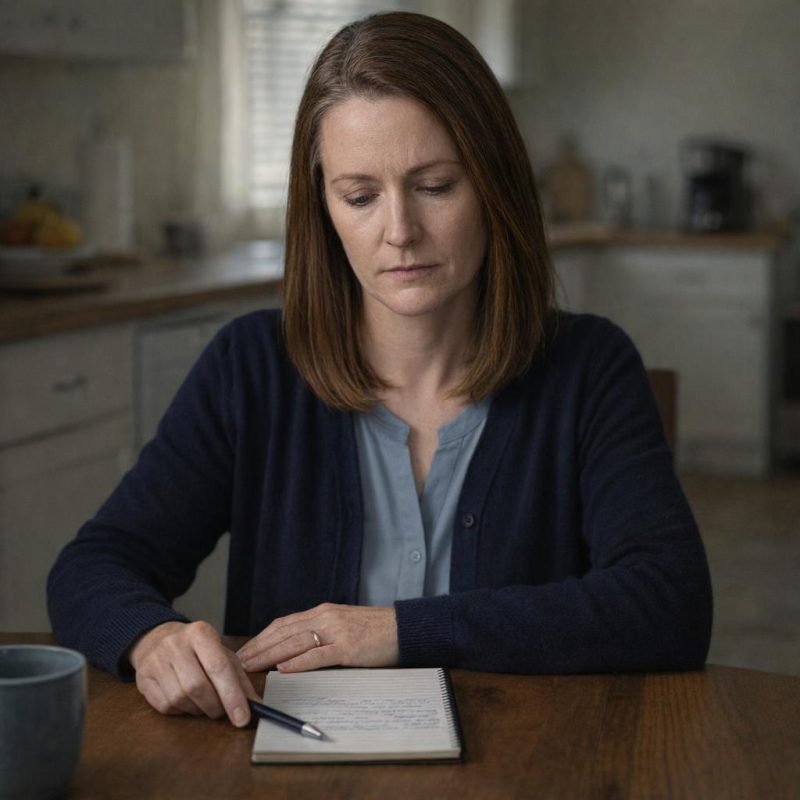 Image by RM AI
Carol's Confusion
I drove out to Carol's house on Thursday afternoon with Daisy in the back seat, telling myself it was just a visit, just checking in on a friend I hadn't seen in a few weeks. Carol answered the door looking pleased to see us, the way she always did, but there were shadows under her eyes and her cardigan was buttoned wrong. She made tea and we sat in her kitchen, Daisy settling under the table between our feet. Carol asked me twice how David was doing, forgetting I'd already answered. She started a story about her neighbor's fence and then lost the thread of it mid-sentence, laughing it off with a wave of her hand. She said she'd been feeling foggy lately, not quite herself, like she was moving through the day a step behind. She said she'd mentioned it to her doctor's office and they'd told her it was probably just fatigue. I listened and nodded and tried to keep my expression easy. And then I saw it. On the counter beside the coffee maker, half-hidden behind a box of crackers — a prescription bottle with a white pharmacy label, the same font, the same clinic name printed along the side as the one on my own unfilled prescription still sitting in my coat pocket.
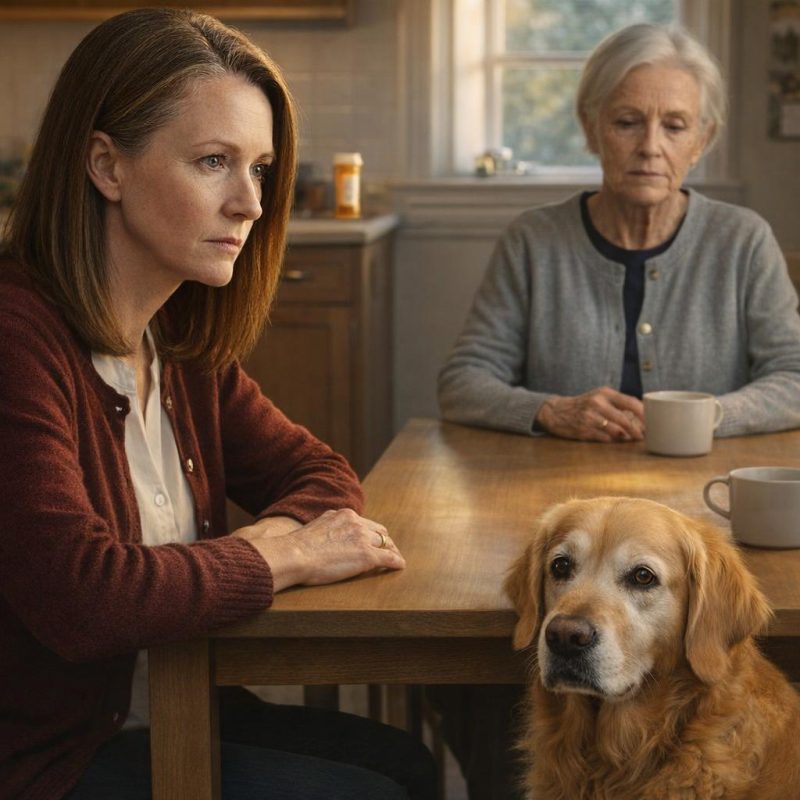 Image by RM AI
Weeks of Fog
I didn't say anything about the prescription bottle right away. I just kept my hands wrapped around my mug and let Carol talk. I asked her, as gently as I could, how long she'd been feeling foggy like that — whether it had come on gradually or all at once. She thought about it for a moment, tilting her head the way she does. Six weeks, maybe seven, she said. Around the time her new doctor had adjusted her medication. She'd assumed it was just her body getting used to the change. She laughed a little and said she figured this was just what getting older felt like, that her mother had been the same way toward the end. I asked if she'd told anyone else, and she mentioned her nephew — said she'd brought it up on the phone once, but he hadn't seemed too worried about it. I nodded and kept my voice easy. Carol poured more tea and started talking about her garden, and I let her, because I didn't know what else to do with what I was sitting with. The prescription bottle on her counter had the same clinic name printed on the label as the one in my coat pocket. I didn't know what that meant yet. But the fear that had been quietly gathering in my chest since I walked through her door didn't feel like nothing.
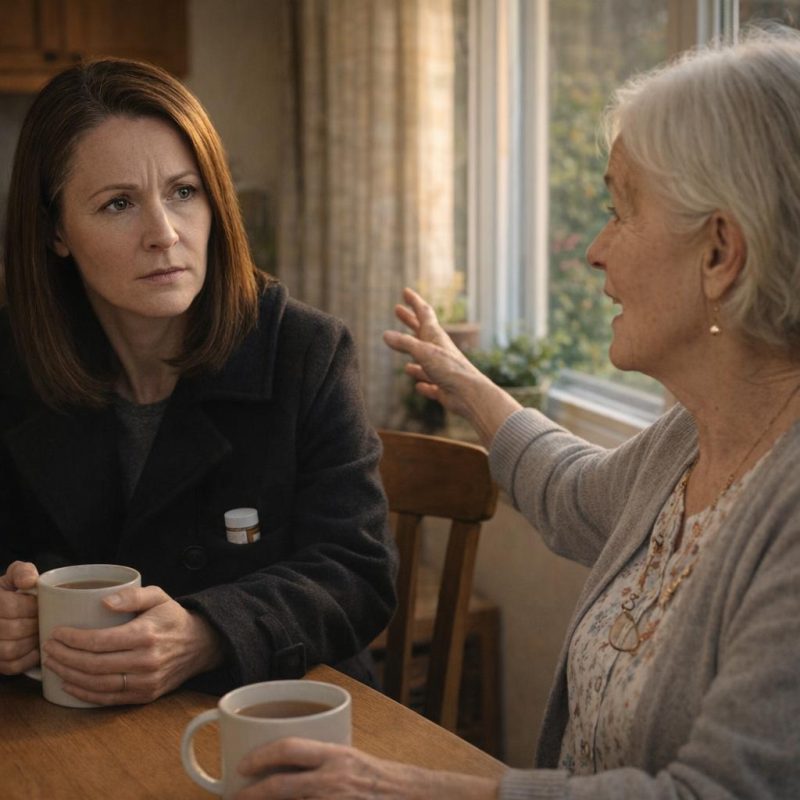 Image by RM AI
Financial Authority
We were still at the kitchen table when Carol mentioned Margaret. It came up the way things do with Carol — sideways, in the middle of something else. She said she'd run into her at church a few weeks back and thought she seemed off. Margaret had always been sharp, Carol said, the kind of woman who remembered everyone's birthday and kept her checkbook balanced to the penny. But that day she'd seemed uncertain, almost dazed. Carol said Margaret had mentioned signing some papers for her nephew — power of attorney, she thought, though Margaret hadn't seemed entirely sure what she'd signed. Carol frowned into her tea. She said the nephew had been coming around a lot lately, asking Margaret about her finances, her accounts, whether she had a will in order. Carol thought it was odd because Margaret had barely mentioned this nephew before, and now suddenly he was very present and very interested. She wondered aloud if Margaret was okay. I said I was sure she was fine, because that was the thing to say. But I wasn't sure at all. I drove home with Daisy in the back seat and the windows cracked, and I kept turning it over — Carol's fog, Margaret's papers, the same clinic name on two different prescription bottles. Each piece on its own was easy to explain away. Together, they sat in my mind like something I couldn't quite put down.
 Image by RM AI
The House Sale
I stopped at the grocery store on Saturday morning, just picking up a few things — bread, coffee, something for Daisy. I was in the produce section when I heard two women talking near the display of bagged apples. I wasn't trying to listen, but the name Dorothy caught my attention because I knew a Dorothy — a quiet widow who used to bring lemon bars to the community center potlucks every spring. One of the women was saying she couldn't believe how fast it had happened. Dorothy had listed her house and it was gone in under two weeks, sold for a price that made the woman shake her head. Way below what it should have gone for, she said. The other woman said Dorothy had moved into a nursing home right after, which surprised her because Dorothy had seemed perfectly healthy at the last church rummage sale. I stood there holding a bunch of bananas I didn't need, not moving. I knew Dorothy. She was maybe sixty-eight, still drove herself everywhere, still kept a garden. I paid for my groceries and sat in the parking lot for a few minutes before I started the car. Carol with her fog and her prescription. Margaret with her nephew and her signed papers. Dorothy with her house sold out from under her and a nursing home she hadn't seemed to need. Three women. Three separate things that might not be separate at all — and the weight of that possibility settled over me like something I couldn't shake loose.
 Image by RM AI
David's Dismissal
I called David that evening after dinner, while Daisy was stretched out at my feet and the house was quiet. I'd been rehearsing what to say all afternoon, trying to make it sound measured and reasonable rather than frightened. I told him about Carol's prescription and the fog she'd been living in for six weeks. I told him about Margaret and the power of attorney and the nephew who'd appeared out of nowhere. I told him about Dorothy and the house that sold in two weeks for less than it was worth. David listened, or I thought he did, but I could hear his teenagers in the background — a door slamming, someone asking about a charger. He said it sounded like a rough stretch for a few people, but that older folks had medical issues, that memory problems weren't unusual, that real estate moved fast sometimes. I said I thought there might be a connection, that the same clinic name kept coming up. He was quiet for a moment and then said, gently but clearly, that I'd been alone a lot since his father passed and that maybe I was looking for something to focus on. He said it kindly, the way you say something you've been thinking for a while. I started to push back, but he said he had to help with homework and that we'd talk more soon. Then he said — and I could tell he meant it as concern, not cruelty — that maybe it would be worth talking to someone about the anxiety.
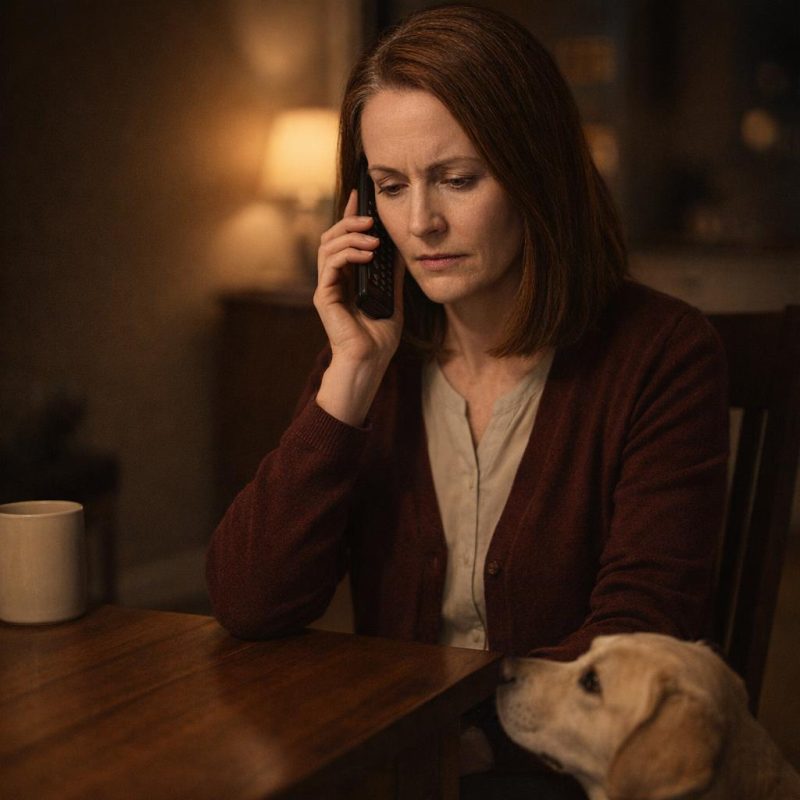 Image by RM AI
The Discovered List
I went back to the pharmacy two days later, telling myself I just needed to pick up a refill for my blood pressure medication. But the truth was I wanted to see Emma again. She looked up when I came in and something shifted in her expression — not alarm exactly, but a kind of careful attention. She asked if I had a minute, and we stepped to the far end of the counter. I told her what I'd learned about Carol, about Margaret, about Dorothy. She listened without interrupting, and when I finished she was quiet for a moment. Then she told me something she said she'd been going back and forth about sharing. She hadn't noticed my prescription by accident, she said. She'd been doing a routine internal audit of prescription records a few weeks earlier when she came across something that didn't belong — a separate document, a list, embedded in the filing system in a way that wasn't standard. My name was on it. So were other names, women's names, with addresses and prescription details beside each one. She said it looked like someone had been tracking which prescriptions were filled and which weren't. She didn't know who had created it or how long it had been there. She warned me that whoever put that list together was paying close attention to these women. I drove home and sat at the kitchen table for a long time, Daisy's head heavy and warm in my lap, the quiet of the house pressing in around me.
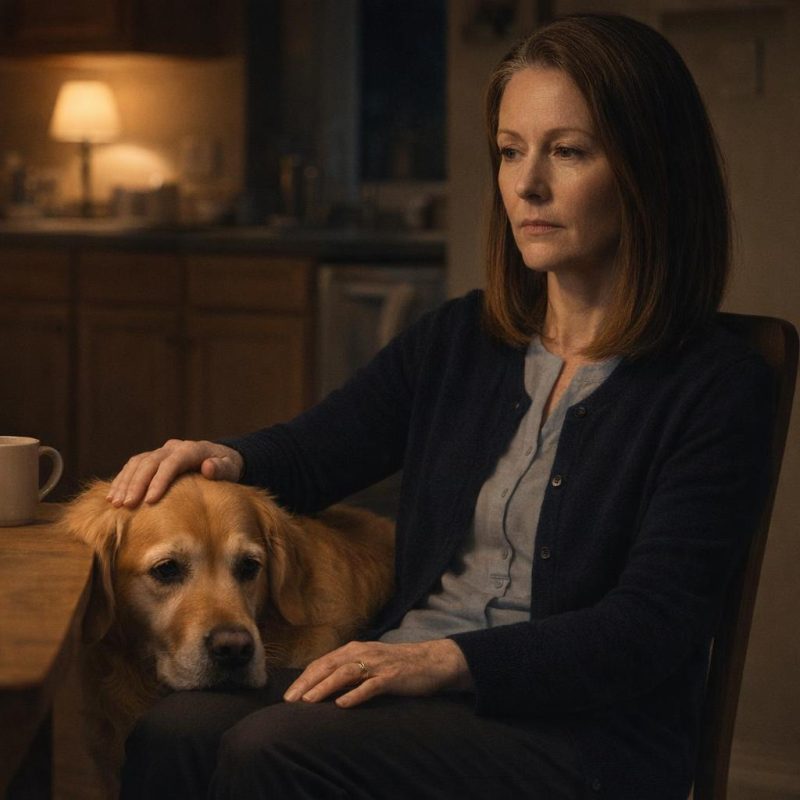 Image by RM AI
Jennifer's Concern
I called Jennifer that same night. She answered on the second ring, which told me she'd been expecting to hear from me — I'd sent her a short text earlier saying I needed to talk. She listened the way David hadn't, asking questions, circling back to details, wanting to understand the sequence of things. When I told her about the list with my name on it, she went quiet in a way that felt different from dismissal. She said she believed me. Those three words did something to me I hadn't expected — my eyes went hot and I had to take a breath before I could keep talking. She asked about the other women, whether I'd spoken to Carol directly about stopping the medication, whether I'd thought about going to the police. I told her I didn't have anything concrete yet, just a pattern and a list I hadn't seen with my own eyes and a pharmacist willing to talk off the record. Jennifer said she'd look into the healthcare group online, see what she could find about their ownership and affiliations. She promised to call every few days to check in. I told her I appreciated it, and I meant it. But after we hung up I sat there in the kitchen with Daisy pressed against my leg, the phone face-down on the table, and the two states between us felt like a distance that no phone call could quite close.
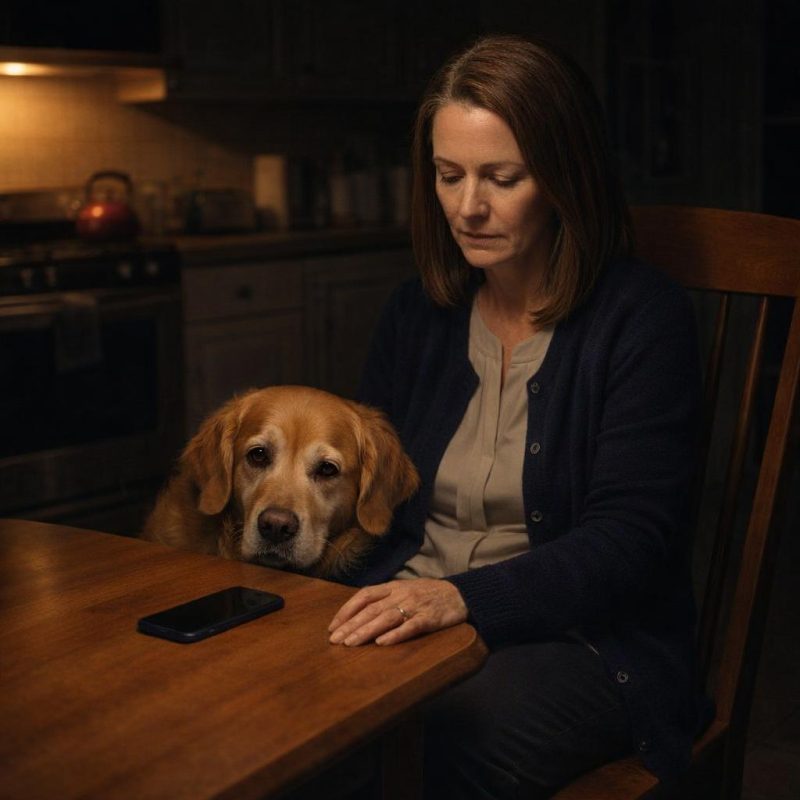 Image by RM AI
Dozens of Names
Emma called me on a Tuesday morning and asked if I could come by her apartment after her shift. She said she had something to show me and that she didn't want to do it at the pharmacy. I drove over around six, and she answered the door still in her work clothes, a stack of papers on the kitchen table behind her. She'd printed the list, she said. The full version, not just the fragment she'd found in the filing system. She'd spent two weeks carefully pulling together every piece she could access without raising flags. I sat down and she set the pages in front of me. It was organized by county — names, addresses, prescription details, dates going back eighteen months. I started counting the names on the first page and had to stop and start again because I didn't trust myself. All women. All between their mid-fifties and early seventies. Most listed as widowed or single-occupant households. I turned to the second page, then the third. Emma stood across the table with her arms crossed, watching me work through it. She said the prescriptions had been issued across three counties, all routing through the same clinic network. I looked up at her and then back down at the pages spread across her kitchen table — forty-three names, maybe more, each one a woman living alone, each one someone's mother or neighbor or friend, and the full weight of what I was looking at pressed the air right out of my lungs.
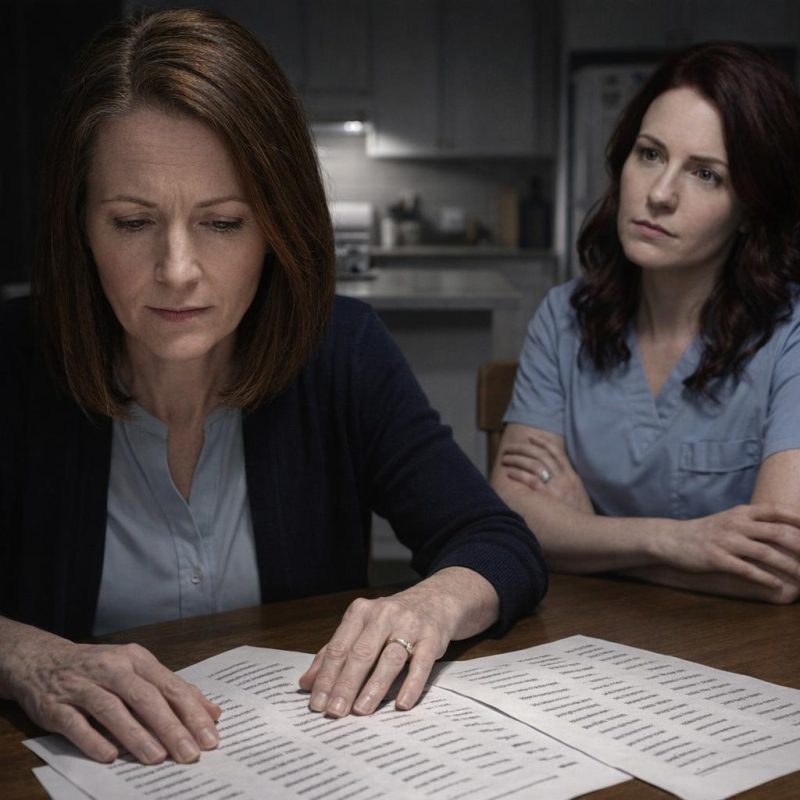 Image by RM AI
The Administrator's Wall
I drove to the Midwest Health Partners clinic the following Monday morning. I'd spent the weekend deciding how to handle it — calm, direct, no accusations, just questions. I asked the front desk for whoever was in charge of patient concerns and was told to wait. About twenty minutes later a man came out and introduced himself as Dr. Mitchell. He was polished in the way that made me think of someone who'd been trained to seem approachable without actually being open. He led me to a small conference room and offered me water, which I declined. I told him I had questions about a prescription change I hadn't been informed of, and about a physician — Dr. Patterson — who had apparently retired without any notice to her patients. Dr. Mitchell nodded slowly and said that staff transitions were handled according to established protocols and that all patients had been notified through standard channels. I said I hadn't been notified. He said he was sorry to hear that and that he'd look into it. I pressed him on the specific dosage change — who had authorized it, when, and why. He said he wasn't able to discuss the details of individual cases without proper authorization and documentation on file. I asked what that meant in practical terms. He said I was welcome to schedule an appointment with one of their current physicians to review my care. I asked him directly whether the clinic's prescription practices were subject to any outside oversight. He folded his hands on the table and said that the clinic's internal practices were proprietary and confidential.
 Image by RM AI
The Stonewalled Request
I submitted the formal records request the same week I met with Dr. Mitchell — certified mail, return receipt, every box checked the way the form instructed. Then I waited. I called the following Monday and was transferred to billing. Billing transferred me to medical records. Medical records said the request was in the system and someone would be in touch. I called again Wednesday and got a different person who said the system had recently undergone a migration and some requests were delayed. I asked how long. She said she couldn't say. I called Friday and was told the department that handled records requests was closed for staff training. I kept a log — dates, times, names when I could get them, which wasn't often. About ten days after I'd mailed the original request, a letter arrived saying my request was being processed and that I would receive a response within the standard timeframe. It didn't say what the standard timeframe was. I wrote back asking for clarification. Two weeks after that, a second letter arrived — and it said my request had been denied due to incomplete authorization documentation, that I would need to resubmit using their updated form, and that the form was not enclosed.
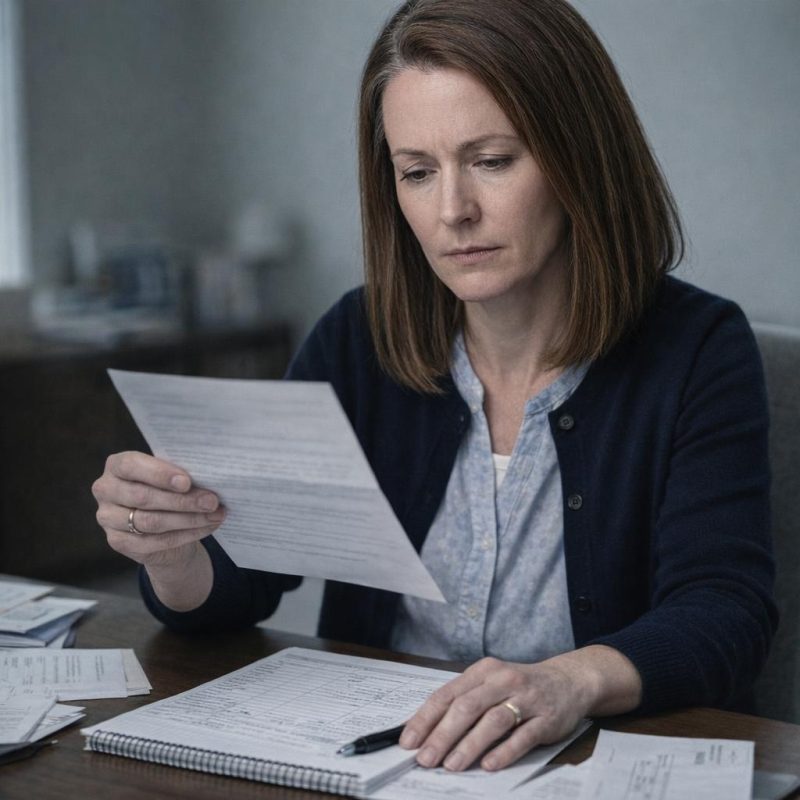 Image by RM AI
The Investment Connection
I'd never spent much time at the public library's reference section before, but I became a regular that week. The librarian — a quiet woman who never asked questions — showed me how to access the state's corporate filing database and left me to it. Midwest Health Partners was registered as a limited liability company. Its managing member was listed as a holding company called Lakeview Administrative Services. I wrote that down and searched for Lakeview next. Lakeview's registered agent was a law firm I didn't recognize, and its listed principals included a company called Heritage Property Solutions. That name stopped me. I searched Heritage separately and found a business profile, a website, and three news articles. The website described Heritage as a company dedicated to helping seniors transition smoothly into the next chapter of their lives. The articles were more specific. Heritage had acquired over two hundred properties in the region over the past five years, most of them from women over sixty who were described in the filings as motivated sellers. One article quoted a Heritage spokesperson saying they provided a valuable service to seniors who needed liquidity quickly. I thought about Dorothy and her house. I thought about the other names on Emma's list. I sat there in the library with the afternoon light coming through the tall windows, and the whole thing settled over me like something I couldn't unfeel — this had never really been about medicine at all.
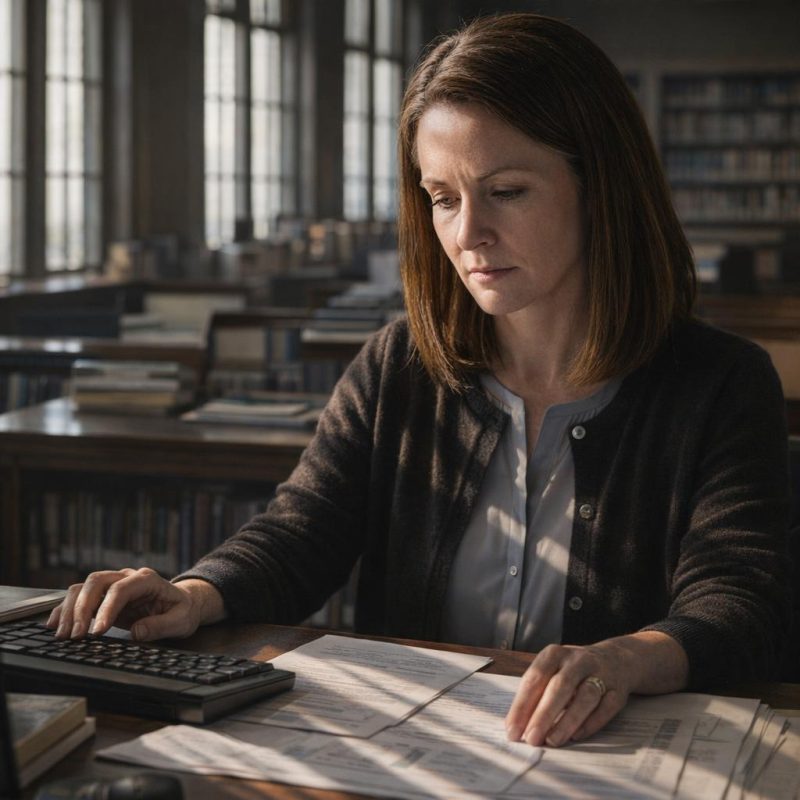 Image by RM AI
The Specialty
I printed everything I could find on Heritage Property Solutions and spread it across my kitchen table that evening. Daisy settled at my feet while I read, her warm weight against my ankles steadier than anything else in the room. The company had a clean, professional website — testimonials from grateful families, soft photographs of smiling older women standing in front of sold signs. But the complaints I found on a consumer review site told a different story. Several women described a representative showing up unannounced after a medical appointment, offering a fast cash sale and help with the paperwork. One woman wrote that she'd felt foggy and overwhelmed at the time and hadn't understood what she was signing until her son reviewed the documents weeks later. Another said the offer had been so far below market value that her neighbor had laughed when she told him. I cross-referenced the counties listed in Heritage's filings against the addresses on Emma's list as best I could from memory. The overlap wasn't perfect, but it was there. Heritage had local representatives operating in at least four counties, and the acquisition pace had accelerated in the last two years. I sat back and looked at the papers fanned out across the table. Daisy lifted her head and rested her chin on my knee, and I put my hand on her and just stayed there, trying to take in the size of what I was looking at.
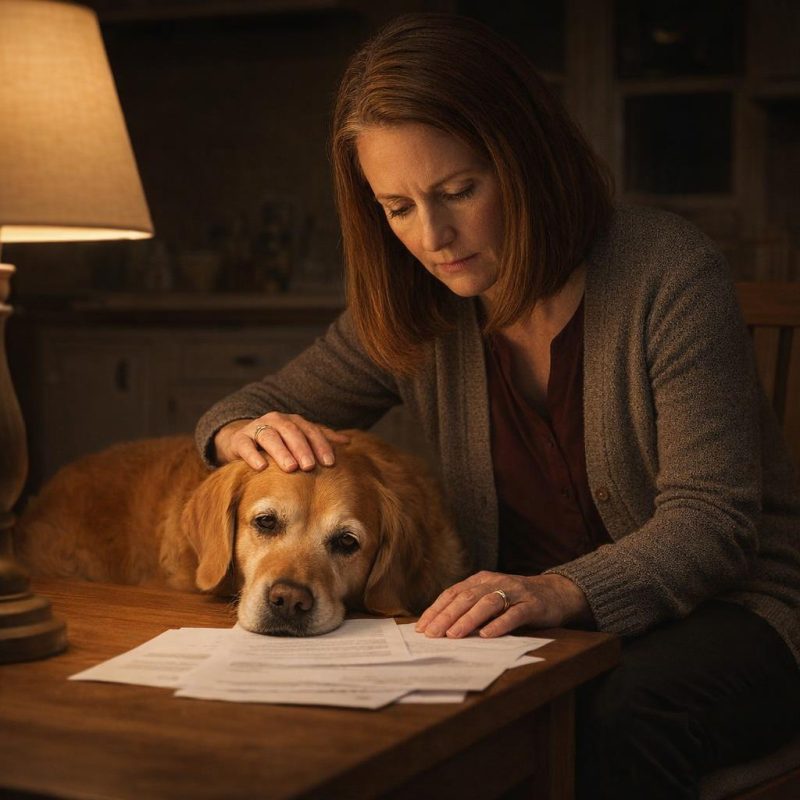 Image by RM AI
Emma's Disappearance
I went to the pharmacy on a Thursday afternoon, wanting to tell Emma what I'd found about Heritage Property Solutions. A woman I didn't recognize was working behind the counter — younger, with her hair in a tight bun, moving efficiently through a line of customers. I waited until the line cleared and asked if Emma was in. The woman looked up and said Emma no longer worked there. I asked when she'd left. Three days ago, she said, without much notice. I asked if Emma had left a forwarding number or any way to reach her. The woman shook her head and said she didn't have anything like that. I thanked her and stepped outside. I stood on the sidewalk and pulled out my phone and dialed the number I had for Emma — the one she'd given me that first afternoon when she'd pulled me aside about my prescription. It rang once and then gave me a recording: the number you have dialed is not in service. I tried again in case I'd misdialed. Same recording. Her locker, the woman had mentioned in passing, had already been cleared out. The number was disconnected, and there was nothing left behind.
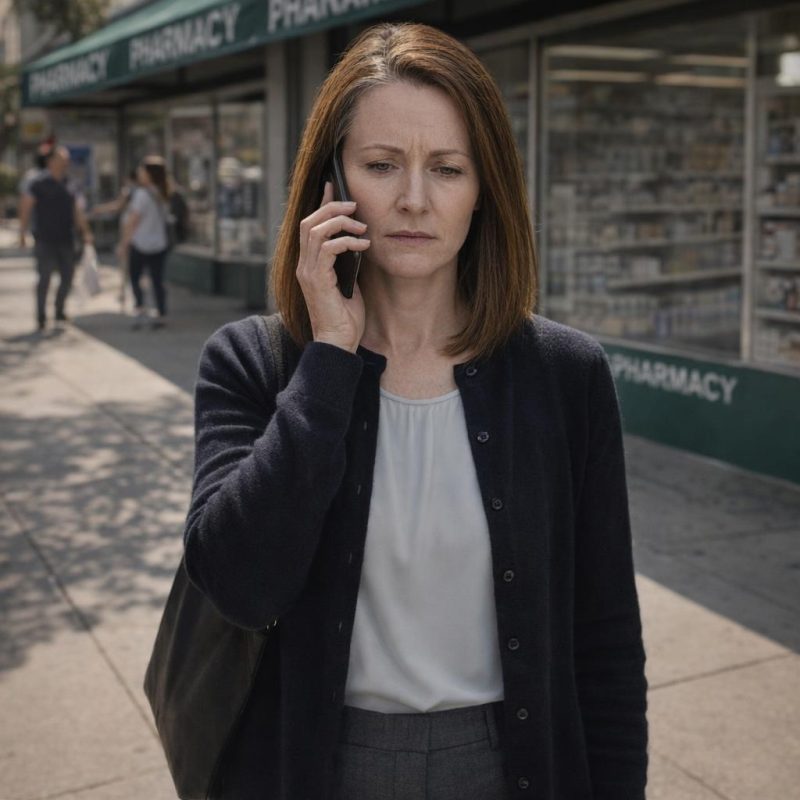 Image by RM AI
Going Forward Alone
I drove home with the radio off. Daisy met me at the door the way she always did, tail moving in slow, steady arcs, and I sat down on the floor right there in the entryway and let her lean against me. She was getting older — I could feel the stiffness in her when she settled — but she still knew when something was wrong. I stayed there longer than I should have, just breathing. I thought about calling the police, but I turned it over in my mind and couldn't find the shape of a report that wouldn't sound like a worried woman with a theory. Emma had resigned. People resigned. I had no evidence of anything except that she was gone and her phone was disconnected. What I did have was everything she'd shown me, everything I'd found since, and the names of women who might still be in the middle of something they didn't understand. I got up and went to the kitchen table and pulled out my notes. Emma had pointed me toward this. She'd taken a risk to do it, and whatever had happened to her, the information was still real. I made a short list — next steps, in order, nothing dramatic. Just the next thing, and then the thing after that. Daisy settled under the table at my feet, and the house was quiet around us, and I felt something firm up in my chest that hadn't been there before.
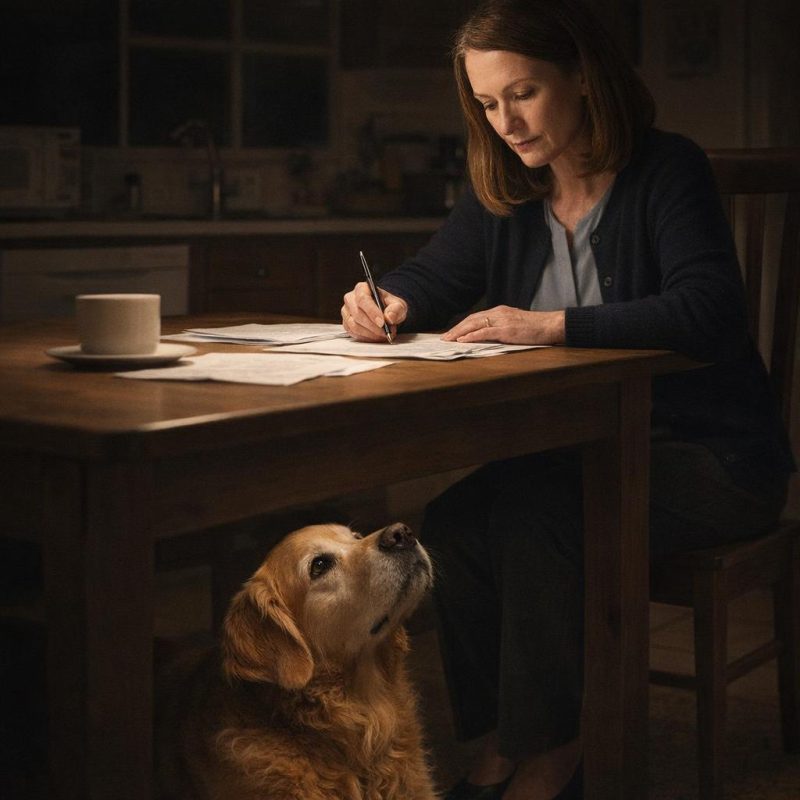 Image by RM AI
Documenting the Pattern
I spent the next day at the kitchen table with every piece of paper I'd collected spread out in front of me. I wrote it all down from the beginning — the prescription change, Dr. Patterson's disappearance, the meeting with Dr. Mitchell, the denied records request, the corporate filings, Heritage Property Solutions, the names on Emma's list, the complaints I'd found online. I wrote it in plain language, the kind anyone could follow, not just someone who already knew the story. Then I made copies of every document — the letters from the clinic, the printed filings, the news articles, the consumer complaints — and organized them in order behind the written summary. Daisy slept in a patch of afternoon sun near the back door while I worked, her breathing slow and even, and the steadiness of it helped me stay focused. When I was done, I put everything into a manila folder and wrote Jennifer's name on the tab in black marker. I thought about what it meant that I was doing this — that I was preparing for the possibility that something might happen before I could finish. I didn't let myself sit with that thought too long. I went to the hall closet and moved the winter blankets on the top shelf and tucked the folder behind them, in the back corner where Jennifer would know to look because it was where I'd always kept her birthday letters when she was small. The weight of the folder in my hands before I let it go stayed with me the rest of the afternoon.
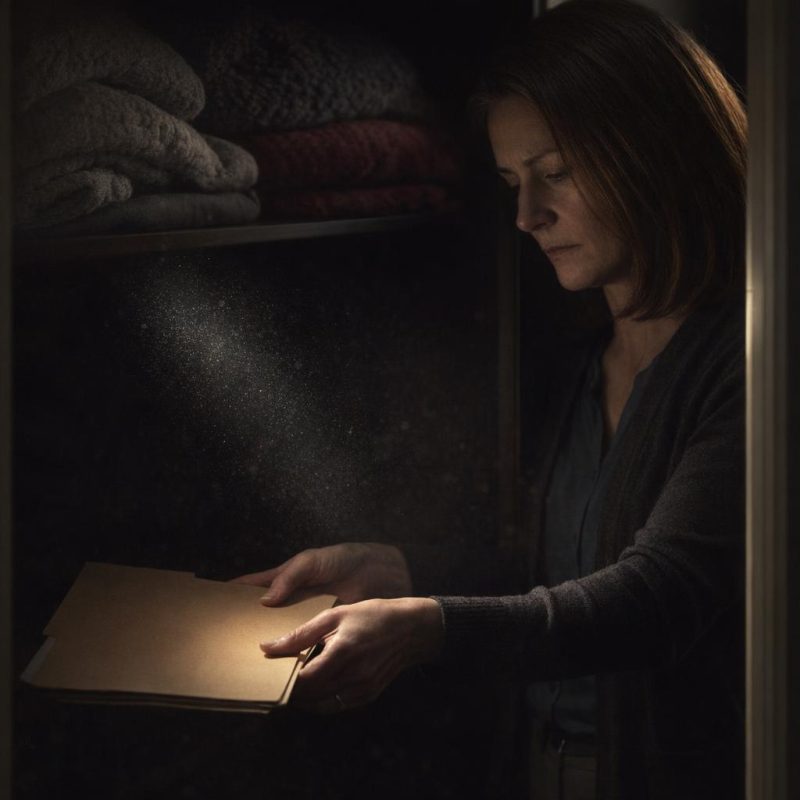 Image by RM AI
The Other Victims
I had the list Emma had shown me — not a copy, just what I'd written down from memory the day she'd shown it to me in the pharmacy. Seven names, six addresses, four phone numbers I'd managed to track down through the county directory and an online search. I started calling on a Tuesday morning. The first number rang and rang. The second was answered by a man who said his mother didn't take calls from people she didn't know and hung up before I could explain. The third number had been disconnected. I left careful messages on the fourth and fifth — I said I had concerns about a clinic we might have in common and that I wasn't selling anything, just looking to talk. The sixth woman answered but went quiet the moment I mentioned the prescription and said she had to go. I sat with the phone in my hand for a while after that, wondering if I was doing more harm than good by calling. Then, just after seven that evening, my phone rang. The woman on the other end said her name was Ruth and that she'd gotten my message. Her voice was careful, measured, like someone choosing each word before she said it. I told her a little of what I'd found and asked if any of it sounded familiar. There was a pause, and then she said, quietly and without any hesitation, that she'd been waiting for someone to ask.
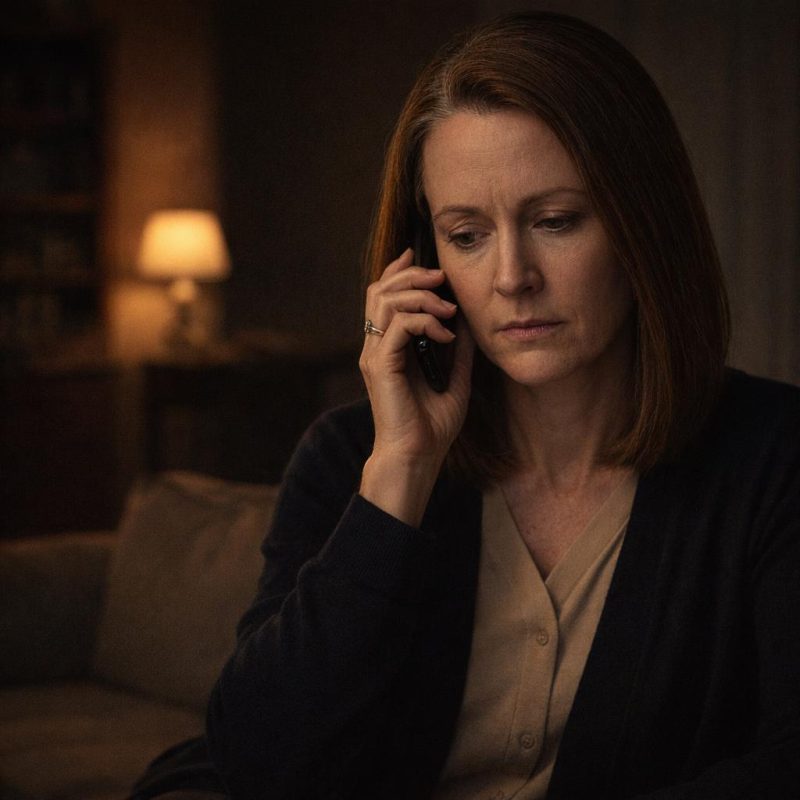 Image by RM AI
Ruth's Warning
We met the next morning at a coffee shop in the next town over — Ruth's suggestion, and I understood why when I got there. She'd chosen a corner table with her back to the wall and arrived before me, already watching the door when I walked in. She was in her late sixties, silver-haired, with careful eyes that moved around the room every few minutes while we talked. She told me she'd been a patient at the same clinic, had received a prescription change she hadn't asked for, and had started feeling, as she put it, like the lights were dimming. She'd had trouble keeping track of her finances, had missed a property tax payment for the first time in thirty years. Then a man from Heritage Property Solutions had knocked on her door. She'd refused to sell. The visits kept coming. Then a lawyer had shown up with documents she said were for her protection, and the pressure to sign had been steady and unrelenting. She'd stopped answering the door eventually. She said I needed to be careful about who I talked to and how, that asking questions had a way of getting back to people. I asked her what she meant. She looked down at the table for a moment, then pushed up the sleeve of her cardigan. On the inside of her forearm, just below the elbow, was a bruise — deep purple fading to yellow at the edges — and when I asked how she'd gotten it, she pulled her sleeve back down and said she'd rather not say.
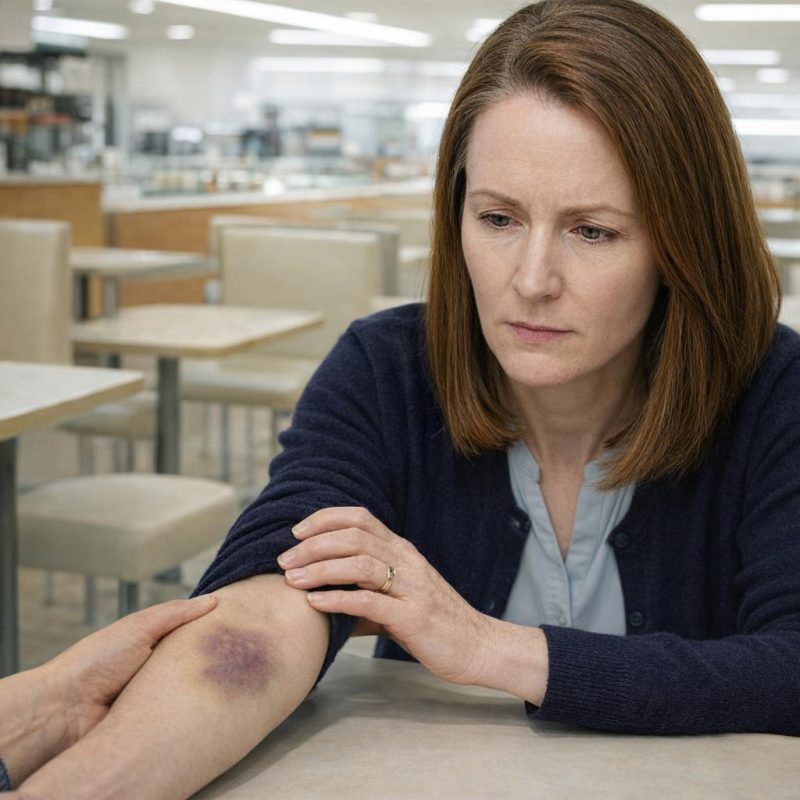 Image by RM AI
The Lawyer's Visit
I was in the kitchen when Daisy lifted her head from her paws and let out a low sound — not quite a bark, just that particular rumble she reserved for strangers. A moment later, the knock came. The man on my porch was somewhere in his late forties, dressed in a suit that cost more than my monthly grocery budget, with cold eyes behind wire-rimmed glasses and a smile that didn't reach them. He introduced himself as Brennan, said he was an attorney, and asked if he could come in. I told him we could talk on the porch. He didn't seem bothered by that. He said he represented several parties who had concerns about certain inquiries I'd been making — about a medical clinic and a property company. He used words like defamation and harassment in a tone so casual it made my skin crawl, the way you'd mention the weather. He said reputations were fragile things and that unfounded rumors had a way of becoming legal problems. I asked him directly who had sent him. He smiled again and said he was simply offering friendly counsel. Then he handed me his card, suggested I consider my position carefully, and walked back to his car without hurrying. Daisy pressed against my leg the whole time. I stood there after he'd gone, turning the card over in my hand — and there it was, printed in small type along the bottom: Heritage Property Solutions, listed among his clients.
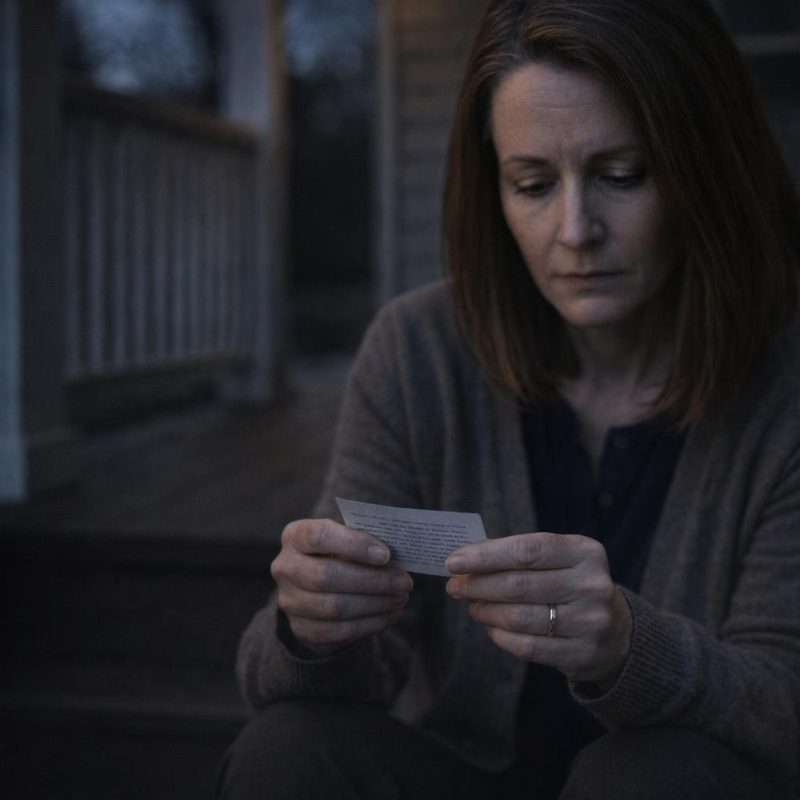 Image by RM AI
David's Argument
David showed up the next afternoon without calling first, which told me everything about his state of mind before he even opened his mouth. He came in, looked around the living room at the papers I'd spread across the coffee table, and his jaw tightened. Jennifer had called him, apparently. He wanted to know what I thought I was doing. I tried to explain — the prescriptions, the property sales, the women I'd spoken to, the pattern I'd been piecing together. He listened with his arms crossed, and when I finished, he shook his head. He said I was seeing conspiracies where there weren't any, that I'd been alone too long and was filling the silence with something to worry about. That one landed. I told him I wasn't imagining the bruise on Ruth's arm or the lawyer who'd shown up on my porch. He said a lawyer visiting wasn't proof of anything, that I was going to get myself into real trouble chasing something that wasn't there. He said he couldn't watch me do this to myself, and then he left, and I stood at the window and watched his car back out of the driveway. Daisy came and sat beside me. I didn't move for a long time, and the house felt quieter than it had before he'd come.
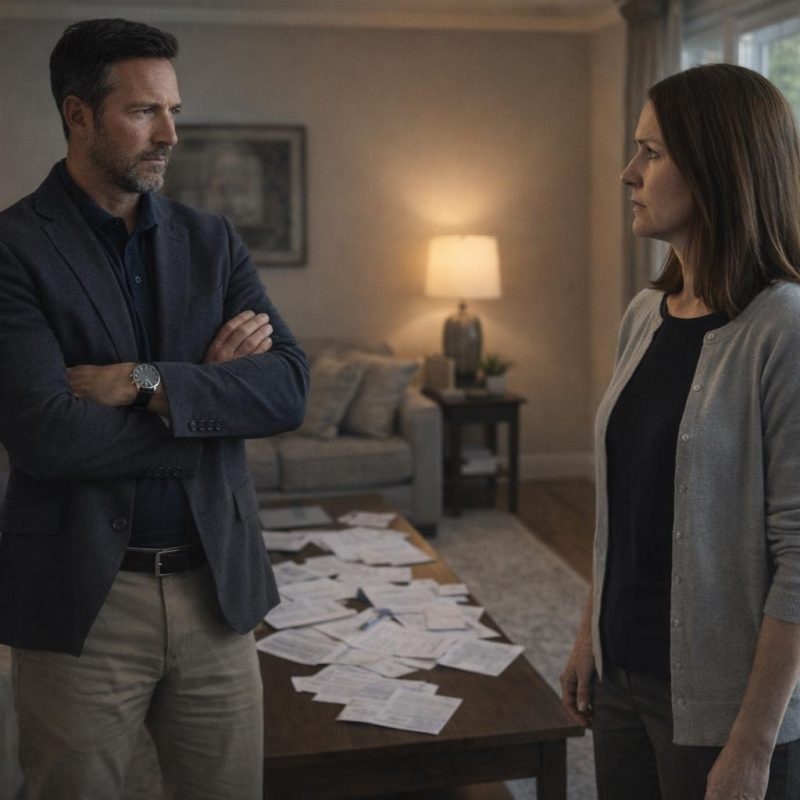 Image by RM AI
Public Records
I drove to the county clerk's office the morning after David left, because sitting at home with his words in my head wasn't doing me any good. The clerk, a patient woman with reading glasses on a beaded chain, helped me navigate the property transfer database without asking too many questions. I requested records for Heritage Property Solutions going back as far as the system allowed. Then I sat down at one of the public terminals and started reading. It took most of the morning. I wrote down every transaction I could find — the address, the sale date, the recorded price, the seller's name. Most of the sellers were women. Most of them appeared to be living alone based on the single names on the deeds. The sale prices were consistently low, not dramatically so, but enough that it caught my eye once I started comparing them to neighboring properties. I made copies of everything, paid the small fee at the front desk, and carried the stack of papers out to my car. I sat in the parking lot for a few minutes before starting the engine, the folder on the passenger seat beside me. Whatever David thought, these were public records. Official documents. Not something I'd imagined. I drove home with both hands on the wheel and my mind already sorting through what came next.
 Image by RM AI
The Pattern Emerges
I spread everything across the kitchen table that evening and started building a timeline. I used index cards at first, then switched to a legal pad when the cards kept sliding around. I went transaction by transaction, writing down the date of each sale, the seller's name, the recorded price. The pattern that emerged was steady and consistent — each seller a woman living alone, each sale price sitting noticeably below what comparable properties had fetched that same year. I pulled up county assessment records on my laptop to double-check my estimates, and the gap held every time. Most of the sales had happened within a narrow window, a few weeks here, a month there, clustered in a way that didn't look random. I counted names I recognized — a woman from my church, a neighbor of Carol's, someone I'd seen at the pharmacy. I wrote their names down in a separate column and stared at them for a while. The evidence was circumstantial, I knew that. I couldn't prove cause and effect from property records alone. But the shape of it was there, clear enough that I couldn't look away from it. I was near the bottom of the stack when I turned to the next page — and there was Dorothy's address, her name printed in the seller line, the sale price thirty percent below what her house had been worth.
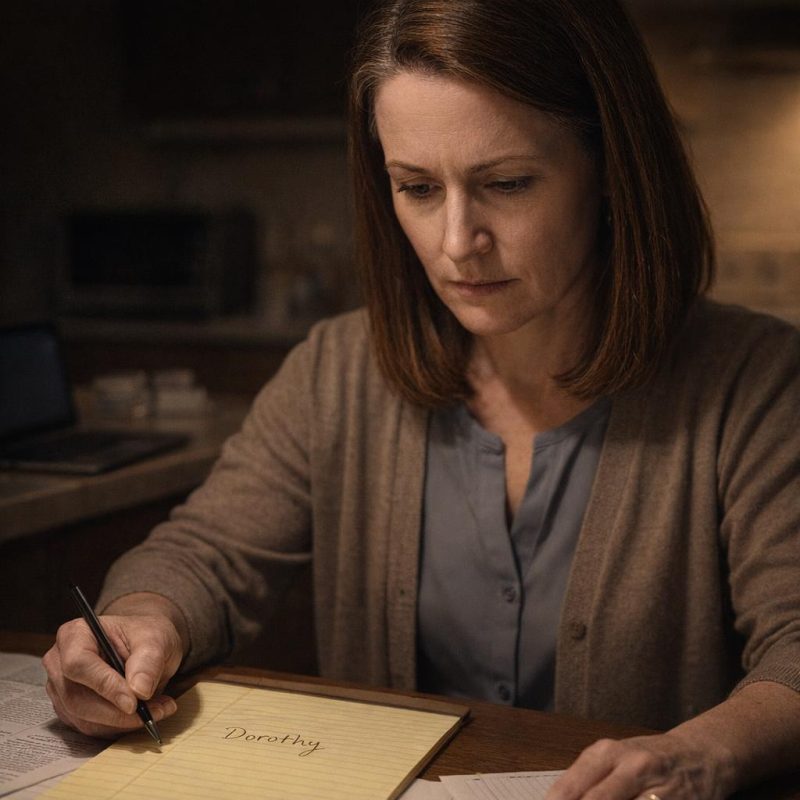 Image by RM AI
Tracing the Timeline
I didn't stop at Dorothy's record. I kept going back, pulling earlier filings I hadn't looked at closely the first time, and the further back I went, the more unsettled I felt. The earliest transactions I could find dated to seven years ago, and those first ones were quieter — fewer per year, more spread out geographically. But they followed the same shape. Same type of seller. Same below-market pricing. The pace had picked up over time, more acquisitions each year, the geography tightening into a more concentrated area. I sat down with a calculator and worked through the numbers as carefully as I could. When I added up all the transactions across the full seven years, I came to somewhere over two hundred properties. Two hundred women, or close to it, who had sold their homes for less than they were worth. I thought about how many of them had understood what they were signing. I thought about how many of them were still out there, living in smaller places now, or with family, or gone entirely. Daisy had fallen asleep at my feet under the table, her warm weight against my ankle. The kitchen light hummed above me. Outside it was full dark, and I hadn't noticed the evening come in, and the number two hundred sat on my legal pad like something I couldn't put back in the box.
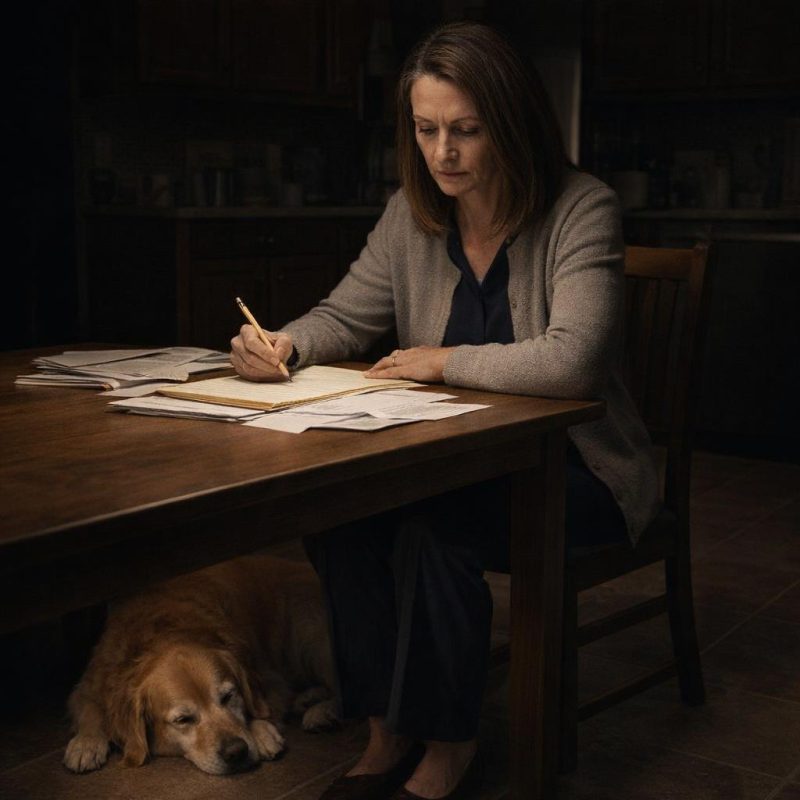 Image by RM AI
The Principals
The next step was the corporate filings. I requested them through the state business registry online, and they arrived in my email two days later as a scanned PDF — forty-three pages of incorporation documents, amendments, and annual reports. I printed them at the library and sat at one of the back tables to read through them. The company structure was layered, subsidiaries nested inside subsidiaries, which slowed me down considerably. I made a rough diagram on a blank sheet of paper just to keep track of what connected to what. The founding documents were at the back of the stack. Heritage Property Solutions had been incorporated nine years ago. There were three names listed as principals in the original filing. I read through the board member amendments, the registered agent changes, the officer listings across the years. Then I turned to the founding page again and read the name at the top of the principals list more carefully. Harold Brennan, listed as founder and former CEO, with a notation that his role had ended six months prior due to death.
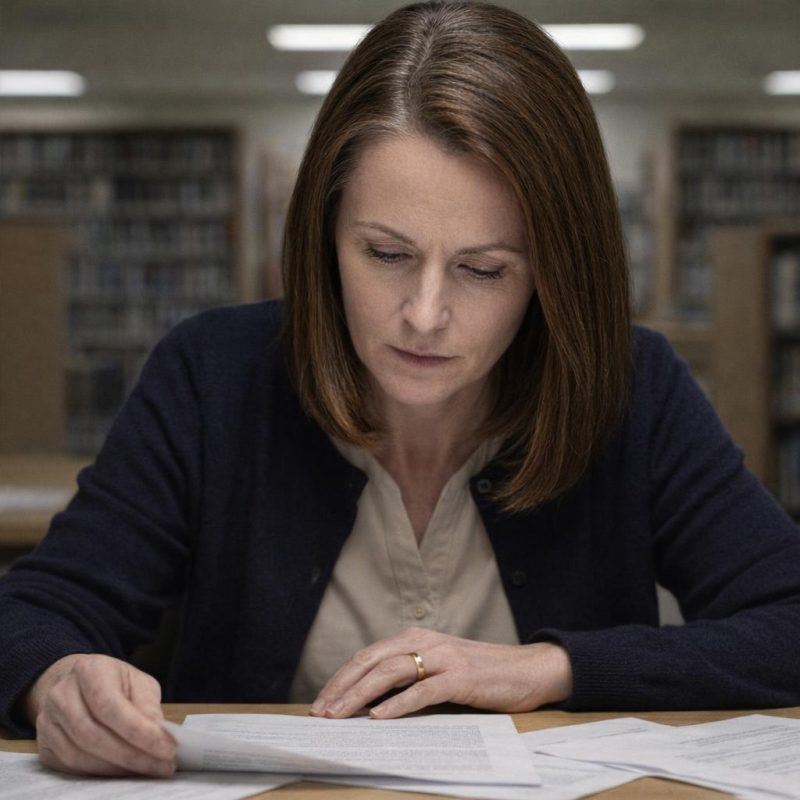 Image by RM AI
Robert's Papers
The attic stairs were narrow and pulled down from the ceiling with a rope handle that had frayed at the end. I hadn't been up there in over a year. Daisy made it halfway up before deciding the angle wasn't worth it and settled at the bottom to wait for me, her chin on the first step. Robert's business papers were in four banker's boxes stacked against the far wall, labeled in his handwriting with years and categories — the kind of careful organization that had been so like him. I carried the first box to the center of the floor where the light was better and started going through it. Most of what I found was routine: invoices, vendor correspondence, tax summaries, the ordinary paper trail of a small business run carefully over many years. I checked every folder for the name Harold Brennan. I checked for Heritage Property Solutions, for any of the subsidiary names I'd written down from the corporate filings. The first box had nothing. The second box had nothing either. I set it aside and sat back on my heels for a moment, listening to the house settle around me. Daisy made a small sound from the bottom of the stairs. I pulled the third box toward me and lifted the lid, and the attic was very quiet as I reached inside and began to look.
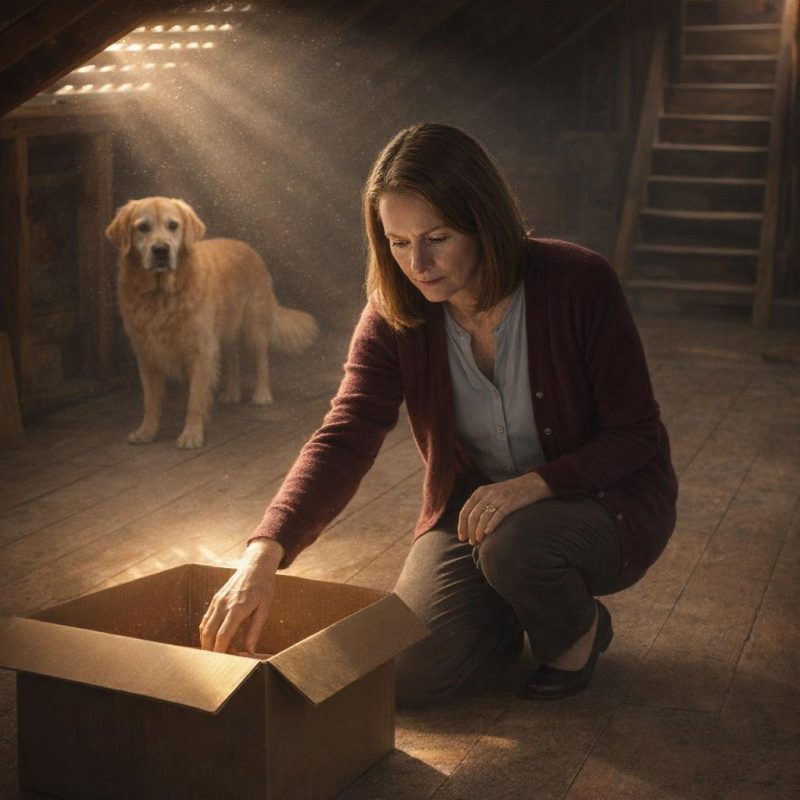 Image by RM AI
The Partnership Agreement
The folder was near the bottom of the third box, tucked behind a set of tax returns from the late nineties. It had no label on the tab, which was unusual for Robert — he labeled everything. Inside were two documents. The first was a partnership agreement, dated twenty-eight years ago, between Robert and a man named Harold Brennan, for a real estate investment venture called Midland Capital Partners. The agreement was four pages, typed on paper that had gone slightly yellow at the edges, outlining profit sharing, decision-making authority, and each party's initial contribution. The second document was a dissolution agreement, dated five years after the first, terminating the partnership by mutual consent. I read both documents twice. The partnership had ended more than two decades before Heritage Property Solutions was incorporated — that much was plain from the dates. I didn't know what it meant. I didn't know if it meant anything at all beyond the fact that Robert had once done business with this man, briefly, long before I'd ever heard the name Harold Brennan. My hands weren't entirely steady as I set the pages down on the attic floor. Both signatures were there at the bottom of the first document, Robert's familiar slanted hand next to Harold Brennan's, and I sat with that for a long time in the quiet.
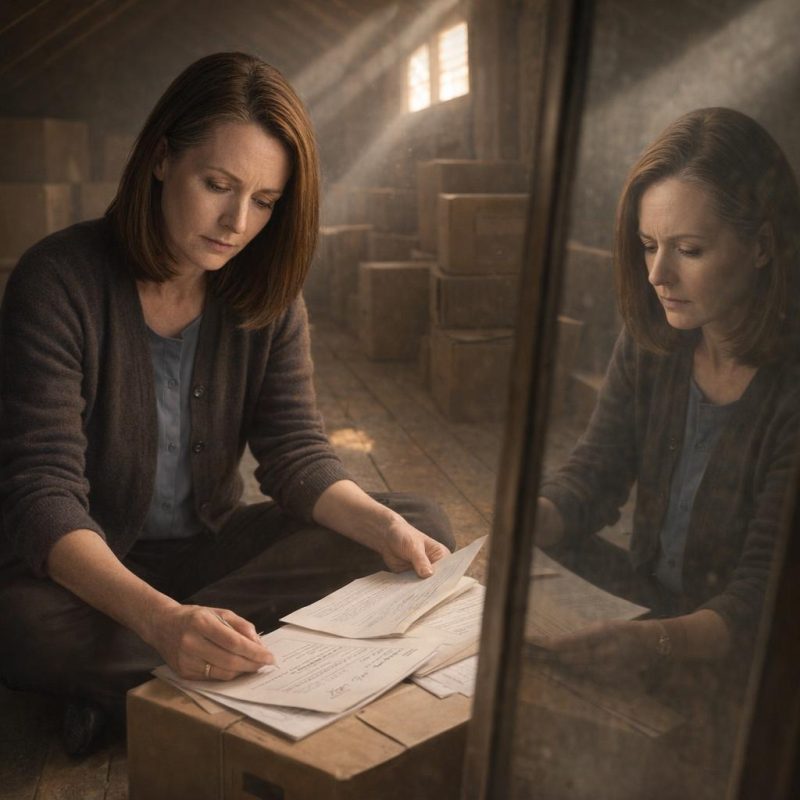 Image by RM AI
The Ended Partnership
I spread both documents flat on the attic floor and read the dissolution agreement a third time, slower. The language was formal and dry, the way legal papers always are, but one phrase kept pulling my eye: irreconcilable differences in business philosophy. That was the reason given for ending the partnership. Not a falling out over money, not a dispute over a specific deal — philosophy. I turned that word over in my mind for a while. The agreement was dated twenty-three years ago, and Heritage Property Solutions hadn't been incorporated until years after that. Whatever Robert and Harold had built together, it had been over and done with long before any of this started. That should have settled something for me. It didn't. Daisy had come up the attic stairs at some point and was lying with her chin on my knee, watching me the way she does when she senses I'm not quite right. I scratched behind her ear without really thinking about it. I was about to fold the papers back into the folder when I noticed something clipped to the inside back cover — a small piece of notepaper in Robert's handwriting. It said: Harold's approach to clients troubles me. I'm not sure he sees them as people.
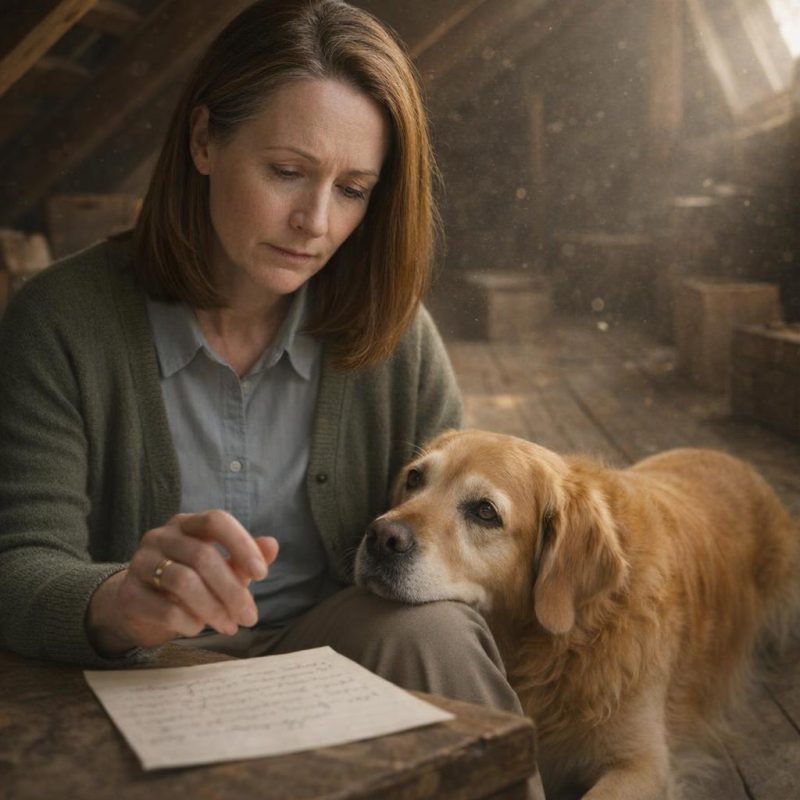 Image by RM AI
Harold's Death
I came downstairs and made a pot of coffee I didn't really want, then sat at the kitchen table with my laptop. I typed Harold Brennan's name into the search bar and hit enter, not entirely sure what I expected to find. The third result was an obituary from the local paper, dated six months ago. I clicked it. Harold James Brennan, age seventy-two, had died of a heart attack on a Tuesday morning in March. The obituary described him as a prominent figure in regional real estate investment, a civic leader, a man of vision. There was a photo — a formal headshot from some business event, a man in a dark suit with sharp features and a confident, practiced smile. He looked like someone who was used to being the most important person in the room. The obituary mentioned Heritage Property Solutions by name, called it his legacy. It said he was preceded in death by his wife, Margaret, and survived by one daughter. I read the name. Emma Brennan. I sat back in my chair. The timing of it — Harold dying six months ago, Emma showing up at the pharmacy around that same stretch of time — sat in my chest like something I couldn't quite swallow. I didn't know what it meant yet. But the obituary listed his only surviving child as Emma Brennan.
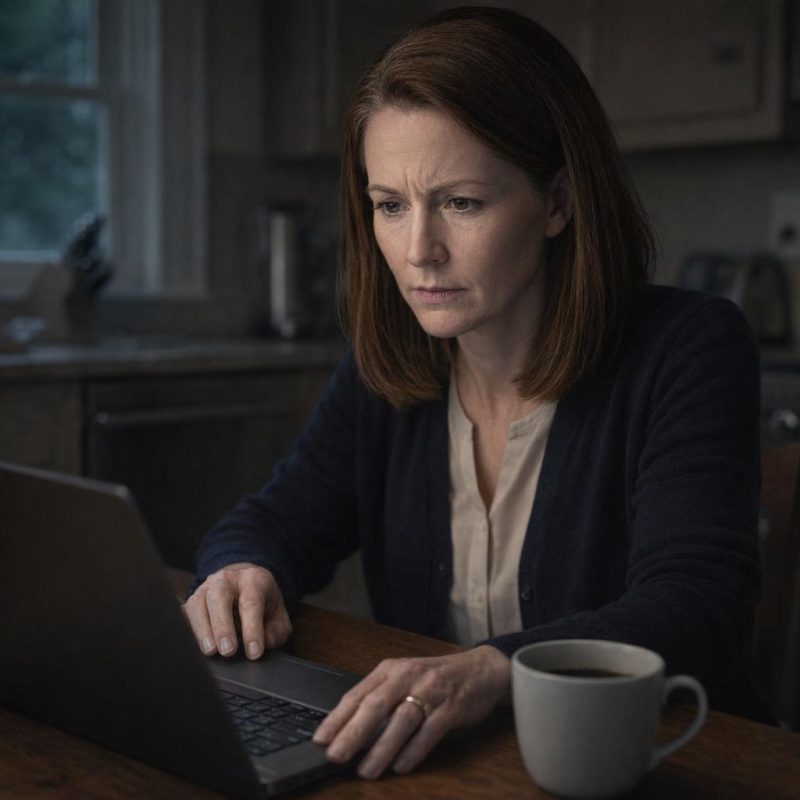 Image by RM AI
The Daughter's Inheritance
I didn't move from the kitchen table for a long time after that. I just sat there with the obituary still open on the screen, the name Emma Brennan sitting there in plain black text. I told myself it was a common enough name. I told myself I was reaching. Then I opened a new tab and searched for corporate ownership records for Heritage Property Solutions. It took me a while to find the right database, but eventually I got there — a transfer of controlling interest filed seven months ago, shortly before Harold's death. The new owner of record was listed as Emma Brennan, with a residential address in the city. I wrote the address down on the back of an envelope. Then I stared at it. I had been to that apartment. I had sat in that living room and drunk a glass of water and listened to a woman tell me I was in danger. The address on the corporate filing and the address where Emma the pharmacist had brought me were the same. My stomach dropped in a way that had nothing to do with hunger. Everything she had said to me — every warning, every careful word — came rushing back, and I didn't know anymore what any of it had meant.
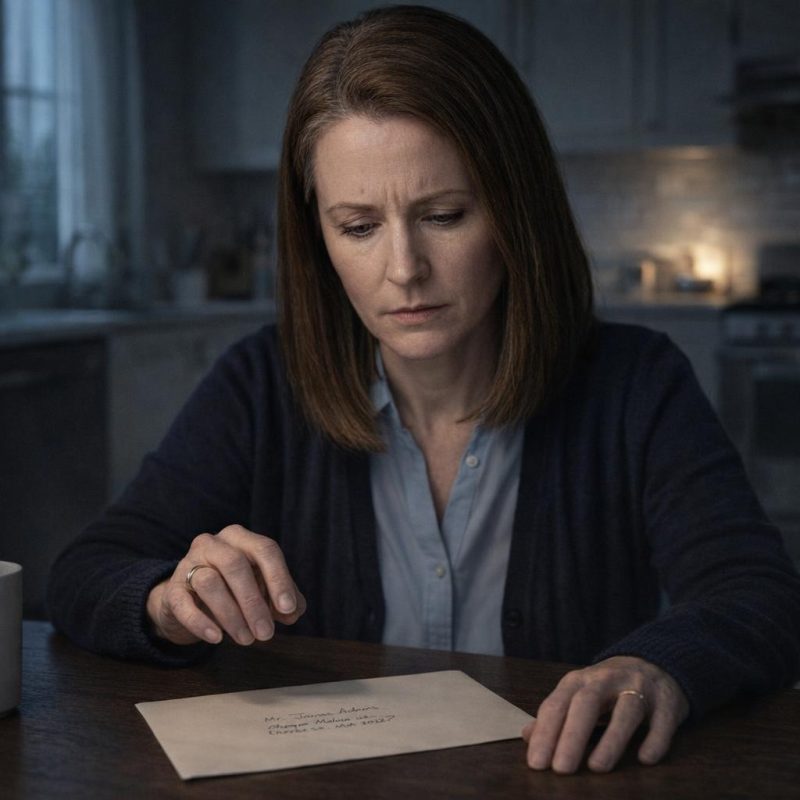 Image by RM AI
Trust Shattered
I closed the laptop and sat in the quiet for a long time. Daisy came and pressed her warm side against my leg, and I let her. I kept going back over every conversation I'd had with Emma — the pharmacy counter, the parking lot, her apartment. She had known about the list. Of course she had. She owned the company the list came from. I thought about how careful she'd been with her words, how she'd given me just enough to keep me moving without ever quite explaining why she was involved. I wondered if the warnings had been real or if they'd been something else entirely — a way to keep track of what I knew, to steer me somewhere. I thought about Carol, about the prescription, about all the women on that list who probably had no idea what had happened to them. I had trusted Emma. I had been grateful to her. And now I didn't know if that trust had been the most foolish thing I'd done through all of this, or if I was wrong to doubt her, or if there was even a way to tell the difference anymore. I had no one I could call. David would tell me I was spiraling. Jennifer was two states away. Robert was three years gone. The house was very still around me, and I sat in the middle of it not knowing who, if anyone, was on my side.
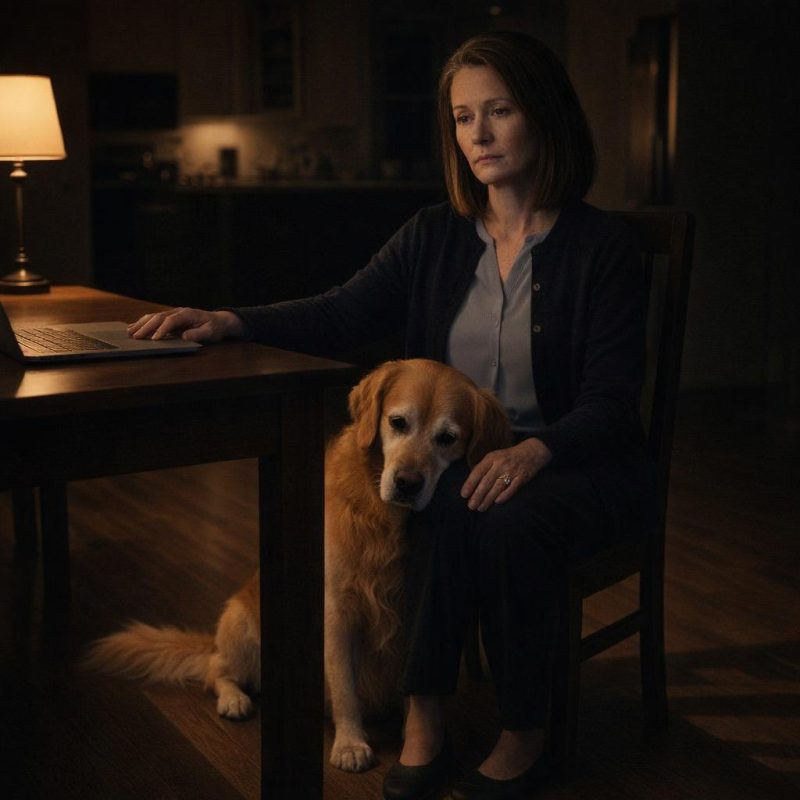 Image by RM AI
Finding Emma
I gave myself one more day before I did anything. I made a list of what I actually knew — not what I suspected, not what I feared, just the facts I could point to. Then I drove to the address on the corporate filing. It was a modest apartment complex on the east side of the city, the kind of place with outdoor stairwells and numbered parking spots. I sat in my car for a few minutes, hands on the wheel, going over what I planned to say. I hadn't figured out a clean version of it. I got out anyway. Her unit was on the second floor. I knocked and waited, listening to the particular silence of someone deciding whether to answer. I knocked again. I heard footsteps. The door opened about six inches, still on the chain, and then the chain came off and the door swung wider. Emma was standing there in a gray sweatshirt, her dark hair loose around her face. She looked like she hadn't slept in days — hollows under her eyes, a tightness around her mouth. She looked at me the way you look at something you've been dreading and half-expecting at the same time. I told her I knew who her father was. I told her I needed her to explain herself. She started to push the door closed, and I put my hand flat against it and held it open.
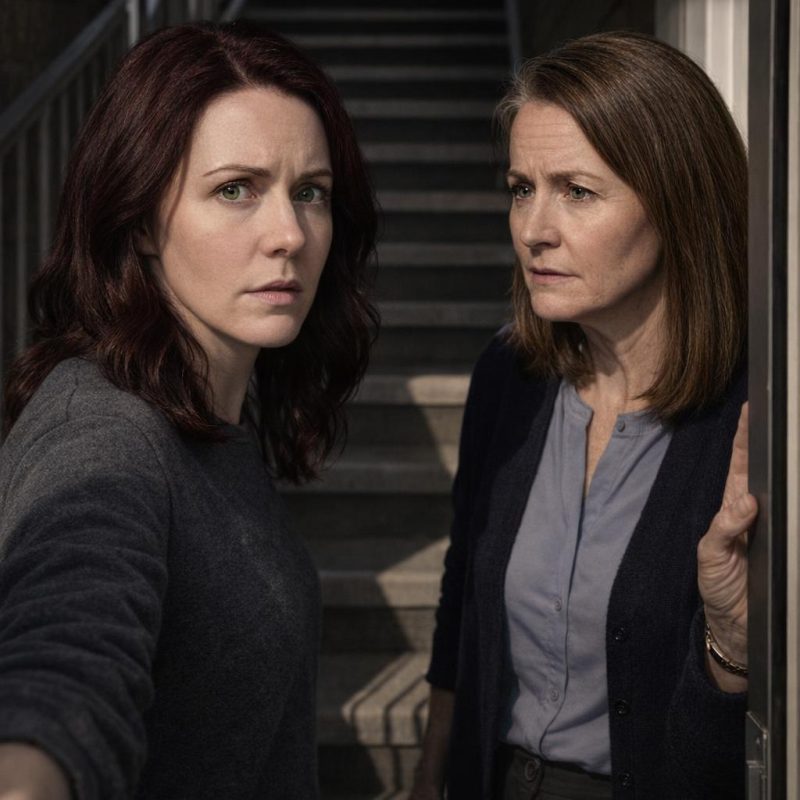 Image by RM AI
The Inside Job
She let me in. The apartment was sparse — a couch, a small table, boxes stacked along one wall like she'd been ready to leave for a while. We sat across from each other and neither of us spoke for a moment. Then she said it plainly: Harold Brennan was her father. She said she'd taken the pharmacy job six months ago, right after he died, because she'd found things in his papers that she couldn't make sense of and couldn't ignore. She'd suspected for a while that something was wrong with how the company operated, but she hadn't had proof. The pharmacy gave her access to prescription records she could cross-reference against the client list she'd found in his files. She said she'd spent months going through it quietly, building a picture piece by piece. When she saw my name come up in the system — my prescription, my address — she said she panicked a little. She hadn't planned to approach anyone directly. But she couldn't just watch it happen. I listened to all of it without interrupting. I didn't know yet whether I believed her. There was too much I still didn't understand, and the part of me that had felt foolish for trusting her in the first place wasn't ready to stand down. But I watched her hands while she talked, the way they stayed flat on her knees, and I heard the flatness that had settled into her voice by the time she finished — the particular exhaustion of someone who had been carrying something alone for a very long time.
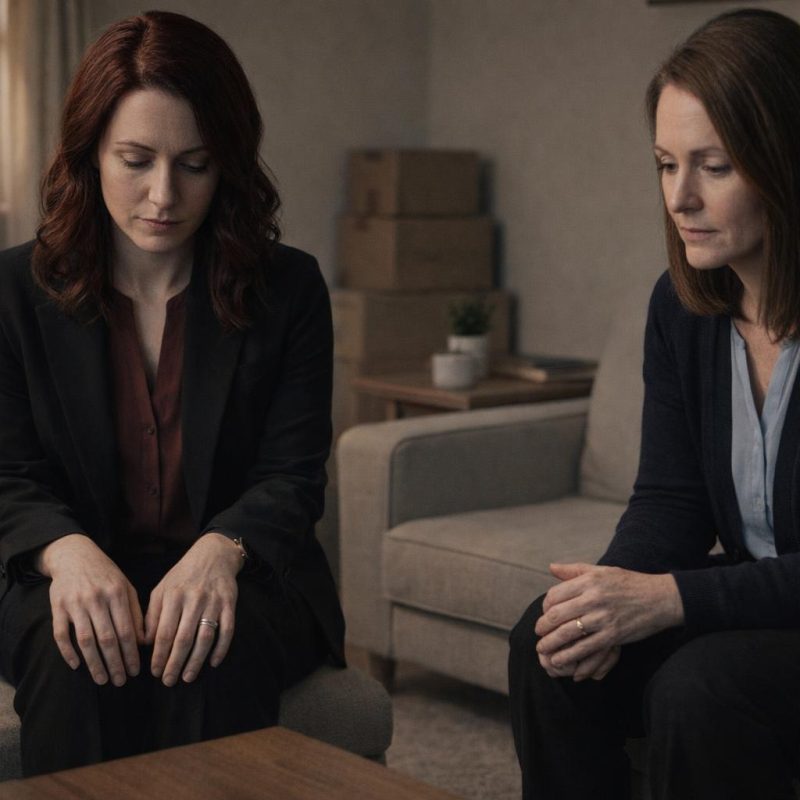 Image by RM AI
The Discovery
She got up and came back with a manila folder, thick with papers. She set it on the table between us and started walking me through it. The scheme, as best she'd been able to piece it together, involved more than just the investment company. There were doctors who had altered or misdirected prescriptions — not dramatically, just enough to cause confusion, forgetfulness, a kind of fog. There were financial advisors who would make contact with women shortly after, offering to help them sort out their affairs. And there were lawyers who had documents ready to move quickly once a woman agreed to sell. Emma said the targets were almost always widows, women living alone, women whose names appeared in probate filings or estate records. She had found evidence of dozens of cases going back years. She spread several pages out and pointed to names, dates, transaction amounts. I recognized the pattern she was describing because I had lived the edge of it — the confusion about my medication, the man who'd shown up about the house. Seeing it laid out like that, case after case, made something go cold in me that I hadn't felt before. Emma's hands were trembling slightly as she gathered the pages back into the folder and set it down. Neither of us said anything for a moment, and the weight of what she'd put on that table between us seemed to fill the whole small room.
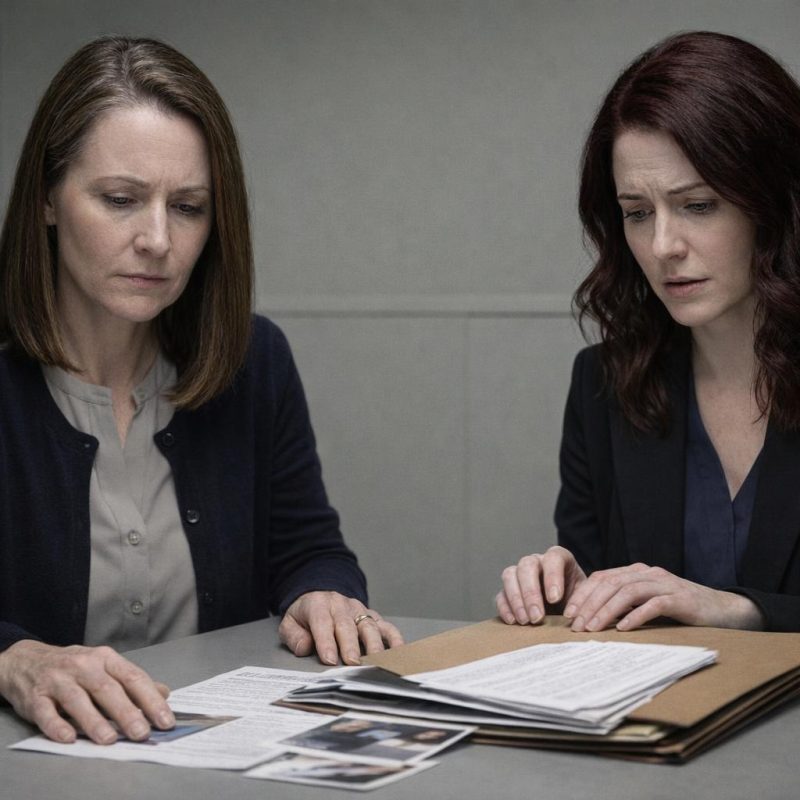 Image by RM AI
Why She Ran
I asked her why she'd disappeared from the pharmacy without a word. She was quiet for a second, then she said someone had noticed what she was accessing. She didn't know who, exactly — someone inside the operation, or someone watching it. About two weeks before she stopped showing up for her shifts, she'd received a message on her personal phone from a number she didn't recognize. She picked up her phone from the end table and turned it toward me. The message was still there on the screen: Accidents happen to people who get curious about things that aren't their business. She said she'd gone into work two more days after that, trying to act normal, and then she couldn't anymore. She'd called in sick and hadn't gone back. She'd been in this apartment since, going through what she had, trying to figure out if there was enough to take somewhere official or if she'd just end up making things worse. She looked at me steadily when she said that last part. She asked if I was willing to help her finish it. I looked at the message on her phone again — that flat, plain sentence sitting there against the white screen — and understood for the first time that whatever I'd walked into, I was already too far inside it to walk back out.
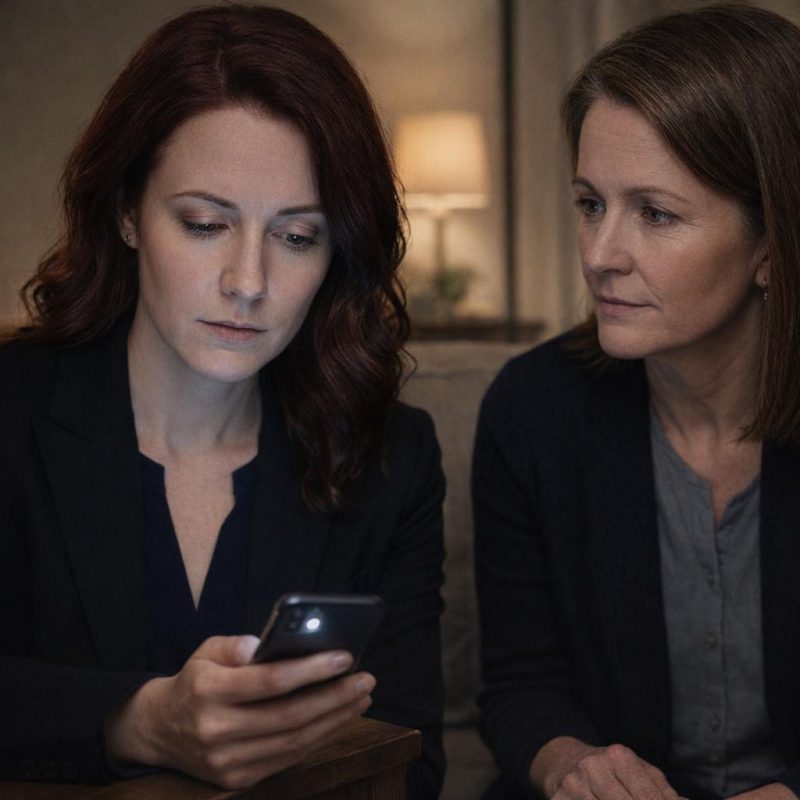 Image by RM AI
The Company Records
Emma got up from the couch and disappeared into the bedroom. She came back carrying a cardboard box — the kind you'd use to move an office — and set it on the coffee table without a word. Then she started pulling out folders. One after another, she laid them open across the table and the floor until there was barely room to stand. Internal memos. Prescription logs. Property transaction records. Financial statements with account numbers highlighted in yellow. She'd taken the pharmacy job specifically to get inside — to pull records from the dispensing system that her father's company had been using to coordinate with the prescribing doctors. She said it plainly, like she'd been waiting a long time to say it out loud. The memos were the worst part. They used language like 'target demographic' and 'high-conversion households' to describe widows and elderly women living alone. There were names — dozens of them — each one attached to a property address and a sale price. Some of the files included notes about cognitive decline, about isolation, about which women had family nearby and which ones didn't. I stood there reading page after page, and the fear I'd carried in quietly for weeks settled into something harder and colder. The papers covered every surface in that small apartment, and the weight of all of it just sat there between us.
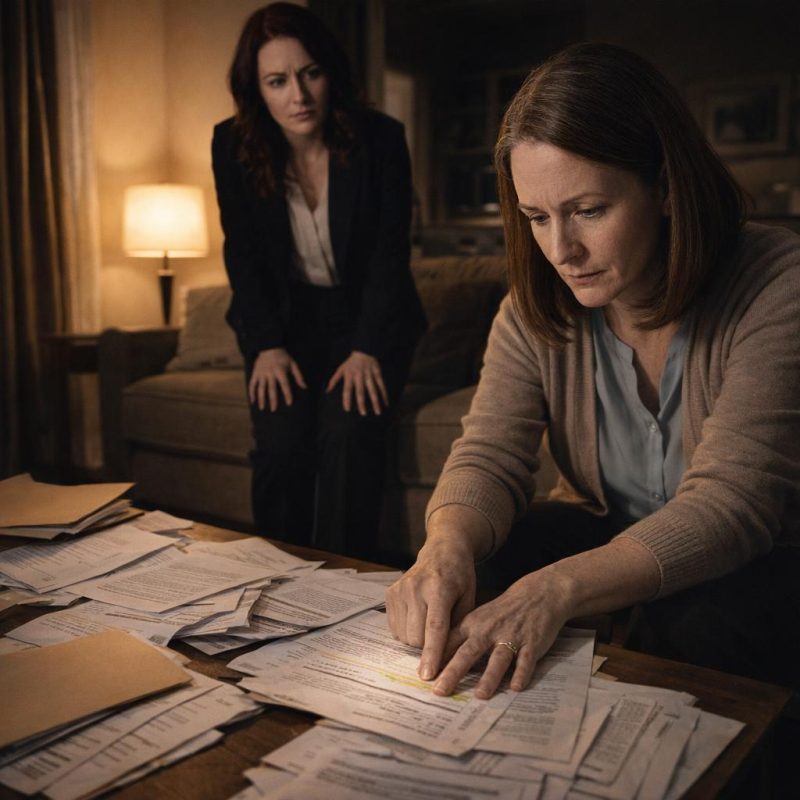 Image by RM AI
The Investor List
Emma pulled a separate set of documents from near the bottom of the box — financial records, she said, showing where the money actually went after the property sales closed. The company hadn't been run by her father alone. There were investors. She spread the pages out and pointed to a column of names and account numbers running down the left margin. Some of the names I recognized — a local attorney, a property management firm I'd seen advertised on bus benches. Others were listed only as account numbers, no names attached at all. Emma said her father had kept certain investors deliberately obscured, even in his own internal records. She'd been trying for months to trace the anonymous accounts through bank routing numbers and shell company filings, and she'd gotten some of them, but not all. The scheme had generated millions across several years — she said that quietly, like she was still getting used to the number herself. She believed some of the earlier investors might not have understood exactly what they were funding. Others, she said, clearly did. I looked at the incomplete column of names and felt the shape of the thing shift under me. We hadn't found everyone yet, and that fact settled into the room and stayed there.
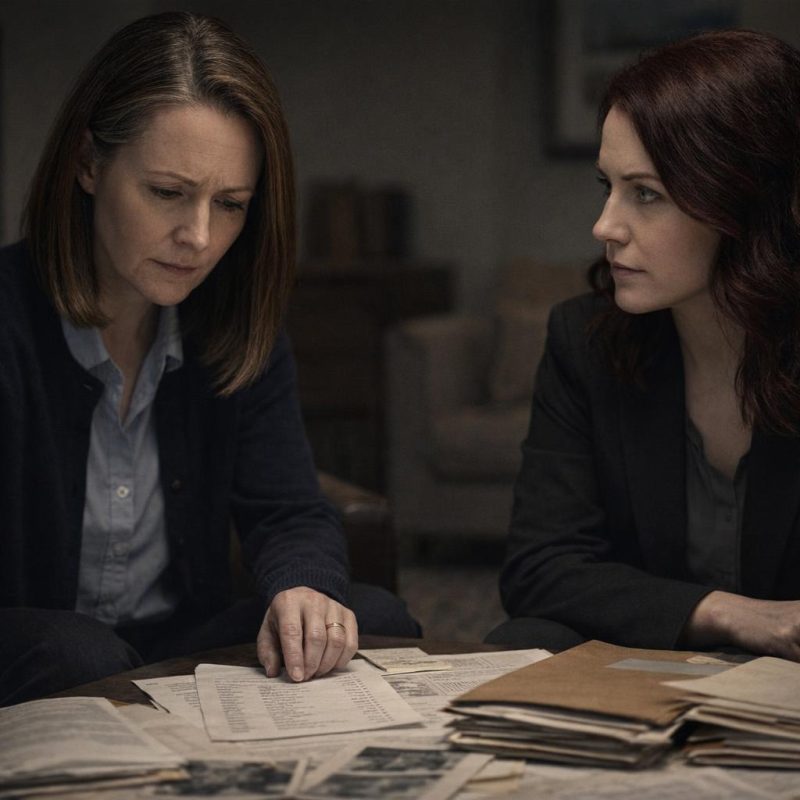 Image by RM AI
The Decision to Act
We sat with the documents for a long time before either of us said what we were both thinking. Emma spoke first. She said we had enough — maybe not everything, but enough to hand to someone with the authority to subpoena the rest. She thought we should go to the state attorney general's office rather than local law enforcement, given how many local names appeared in the files. I told her I was worried the evidence would get buried, or that we'd hand it over and nothing would happen and then whoever was watching Emma's phone would know exactly where to find us. She didn't argue with that. She said the risk was real. But she also said that every week we waited was another week the operation kept running, and there were women out there right now who were probably already in the pipeline — already being dosed, already being steered toward a real estate agent with a company connection. I thought about Carol. I thought about the prescription I'd almost filled without question. I thought about the names on those pages, each one attached to an address that used to be someone's home. I told Emma I was in. We agreed to spend the next day organizing everything into a format an investigator could actually use, and then we'd make the call together.
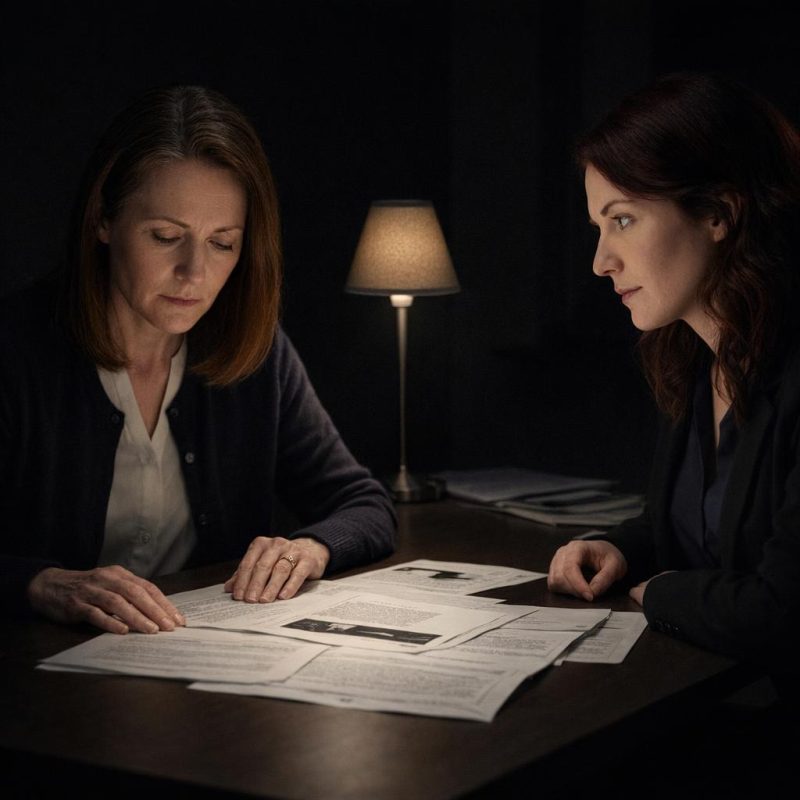 Image by RM AI
The Final Files
We'd been sorting documents for about an hour when Emma stopped and said there was one more folder she hadn't included yet. She said it quietly, almost like she was telling herself as much as me. She crossed to the closet near the front door and came back with a manila folder that looked older than the others — the edges soft and slightly bent, like it had been handled and then set aside more than once. She said she'd pulled it from her father's home office after he died, from a locked drawer in his desk. She'd looked at the first page and then closed it and hadn't opened it again. I asked her why. She said she was afraid of what the names inside might mean — people she might recognize, people who might complicate things in ways she wasn't ready for. I told her we couldn't leave anything out, not now. She nodded slowly and sat back down at the table. She opened the folder and began reading through the first page, then the second. I watched her face. She turned to a page near the middle and went still. Then she set the folder flat on the table and slid it toward me — a typed list of names, each one followed by an investment amount and an account number.
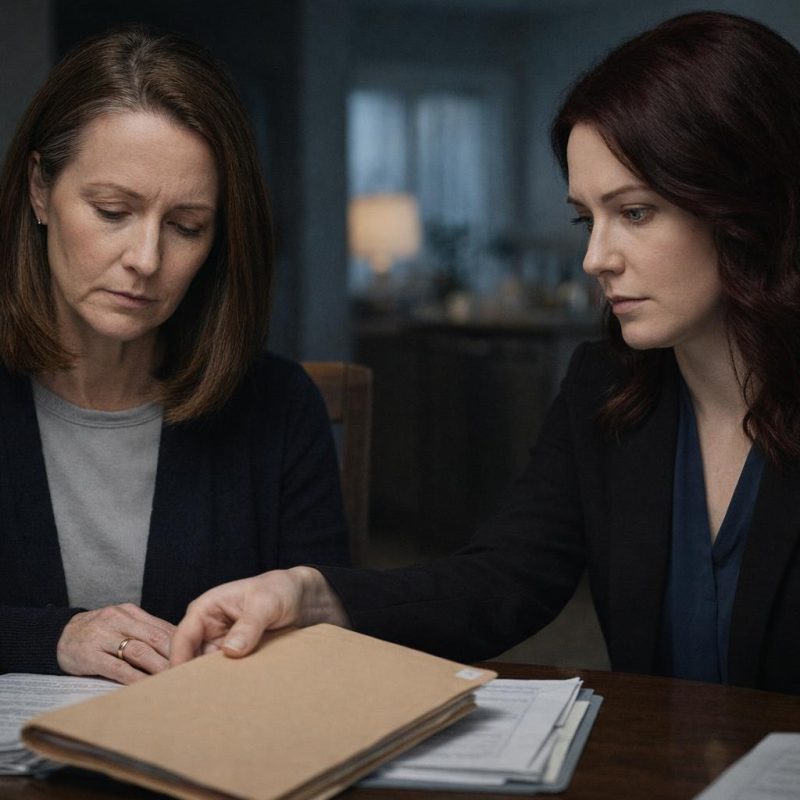 Image by RM AI
Robert's Investment
I pulled the folder closer and started reading down the list. The names were typed in a plain font, alphabetical, each one followed by a dollar amount and a date. I got about halfway down the second column and stopped. The name was right there on the page, flush with the margin like any other entry. Robert's name. His full name, the way it appeared on legal documents. The date beside it read eight years ago. The amount was fifty thousand dollars. I read it twice, then a third time, because my eyes kept sliding off it like they were refusing to hold it. Emma said my name softly from across the table. I looked up at her and she had that expression people get when they've just told you something they can't take back. She said she was sorry. She said she hadn't known. I looked back down at the page. Fifty thousand dollars. Eight years ago. My husband's name on an investor list for the company that had been quietly dismantling the lives of women just like me. The room didn't tilt the way people describe — it just went very still, and I sat there with his name in front of me and couldn't find a single word.
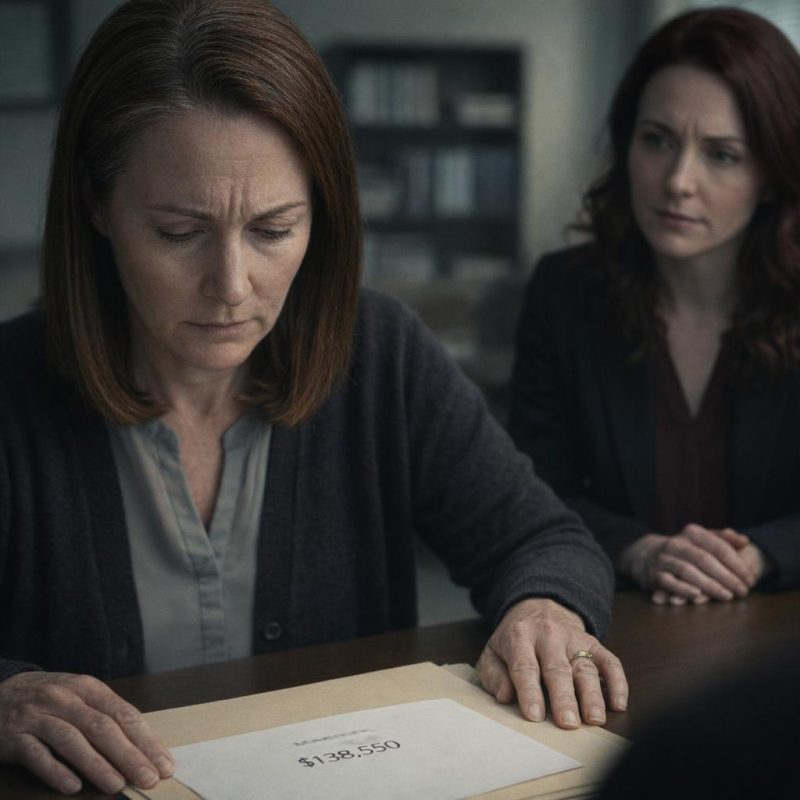 Image by RM AI
The Questions
I don't know how long I sat there before I could form a question. I finally asked Emma when the targeting scheme had actually started — the prescriptions, the property steering, all of it. She said the early documents didn't spell out the business model clearly, but based on what she'd pieced together, the systematic targeting of vulnerable women had begun about seven years ago. Robert's investment was dated a year before that. I asked if that meant he couldn't have known what the money was going toward. Emma said carefully that the early investor documents described the company's strategy in broad terms — acquiring undervalued residential properties, she read from one page — and that some of the language was vague enough to mean almost anything. She showed me a note in her father's handwriting suggesting that early investors had been briefed on the acquisition approach. I felt sick reading it. I kept trying to build a version of events where Robert had simply made a bad investment without understanding what he was part of, and I couldn't make it hold together, but I also couldn't make the other version hold together either. I needed to go home. I needed to go through his office, his files, anything he'd kept. I told Emma I had to do that part alone, and she didn't push back.
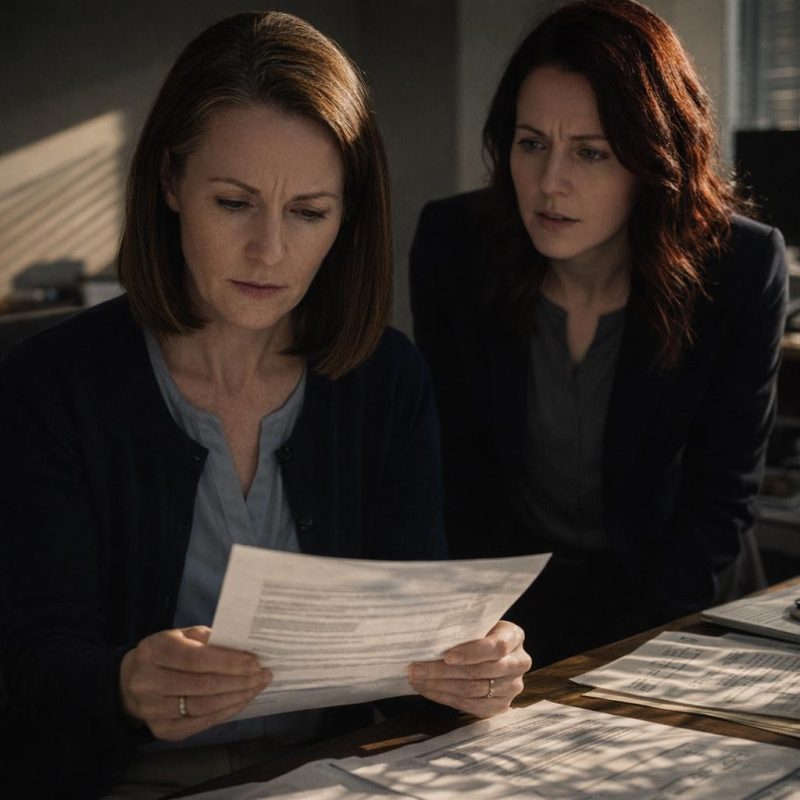 Image by RM AI
The Drive Home
I don't remember much of the drive home. I know I stopped at a red light on Millbrook and sat there after it turned green until the car behind me tapped its horn. I kept seeing his name on that page — the clean typed letters, the dollar amount, the date. Forty years. We'd been married forty years, and I was driving home trying to figure out if I'd ever really known him. I thought about the way he used to sit at the kitchen table on Sunday mornings with the newspaper folded in quarters. I thought about the trip we took to the Smoky Mountains for our thirtieth anniversary, how he'd insisted on stopping at every overlook. I thought about the women on those pages — the names, the addresses, the notes about who lived alone. His money had been part of that. Whatever he knew or didn't know, his money had been part of that. I pulled into the driveway and sat in the car for a while with the engine off. When I finally opened the front door, Daisy was there, pressing her warm weight against my legs the way she always did when something was wrong. I knelt down and held onto her for a moment. The house was quiet in a way it hadn't felt in a long time — not peaceful, just empty.
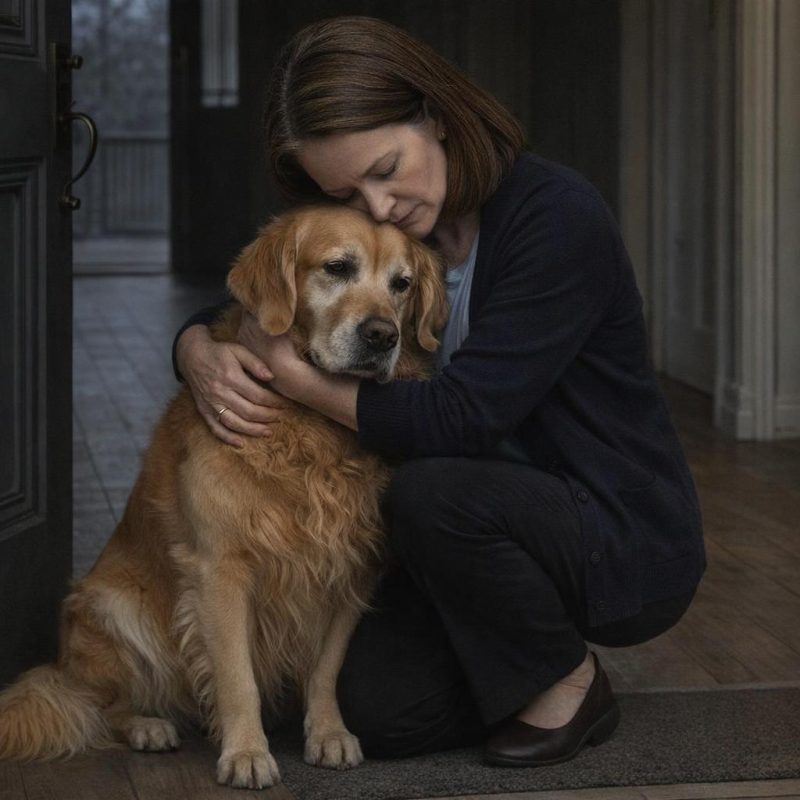 Image by RM AI
Searching for Truth
I started in his office. It felt like the right place — the room where he'd spent his evenings, where he kept his files and his correspondence and the things that mattered enough to hold onto. I went through the desk drawers first, methodically, the way he'd taught me to approach any task worth doing. Old tax returns. Business letters from the nineties. A warranty card for a drill he'd bought in 2004. I moved to the filing cabinet and worked through each drawer — bank statements, insurance documents, receipts he'd kept for reasons I'd never understood. Nothing explained the investment. Nothing even mentioned the company's name. I searched the bedroom closet, checked the shelf above his hanging clothes, went through the cedar chest at the foot of the bed where he kept things he called important. Still nothing. Daisy followed me from room to room, her nails quiet on the hardwood, settling near the door of each room while I searched. I stood in the middle of the bedroom after a while and looked around at the ordinary surfaces of our ordinary life together. Whatever he'd kept about this, he hadn't kept it anywhere obvious. Which meant, if it existed at all, he'd put it somewhere he didn't expect anyone to find it. That thought steadied me more than anything else had all evening.
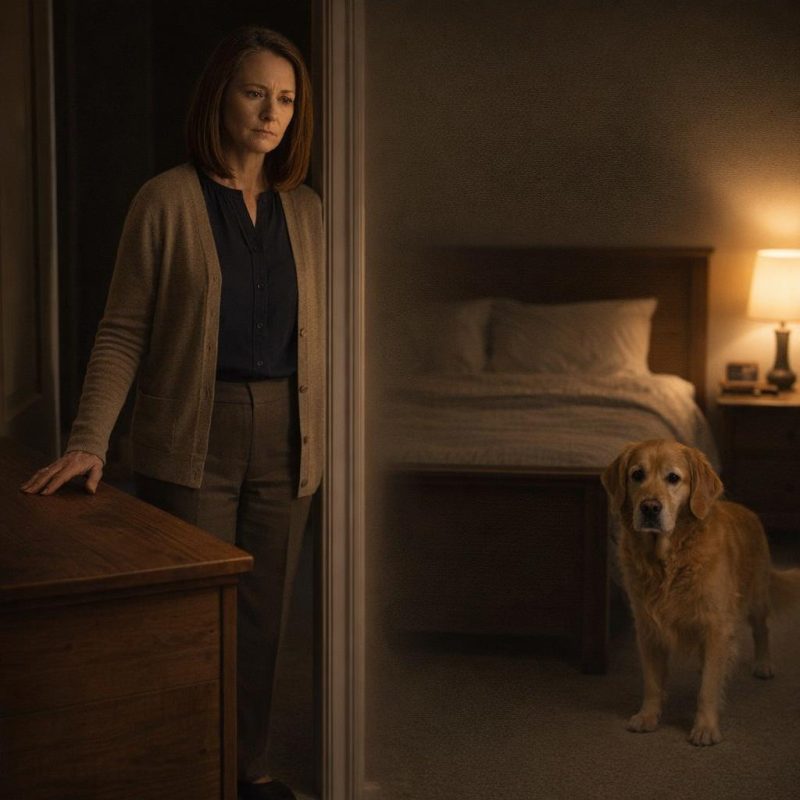 Image by RM AI
The Attic
I went back up to the attic the next morning with a flashlight and a determination I hadn't felt in days. Daisy stood at the bottom of the pull-down stairs and watched me go, her tail moving slowly, her graying muzzle tilted up as if she could follow me by smell alone. She couldn't manage the steep angle anymore, and I didn't try to coax her. I told her I'd be back down soon and meant it as a promise to both of us. The attic was dim and close, the air thick with the smell of old cardboard and cedar. I'd been up here before, but I'd moved through it too quickly, too discouraged. This time I pulled every box away from the walls. I checked behind the old dresser we'd stored up here after my mother passed. I moved the stacked bins of Christmas decorations and the rolled-up rugs we'd never gotten rid of. I worked my way to the far corner, the one I'd barely glanced at before, where a stack of old wool blankets sat folded against the eave. I lifted the first blanket, then the second. Underneath, half-hidden in the shadow of the roofline, sat a small wooden box I had never seen before.
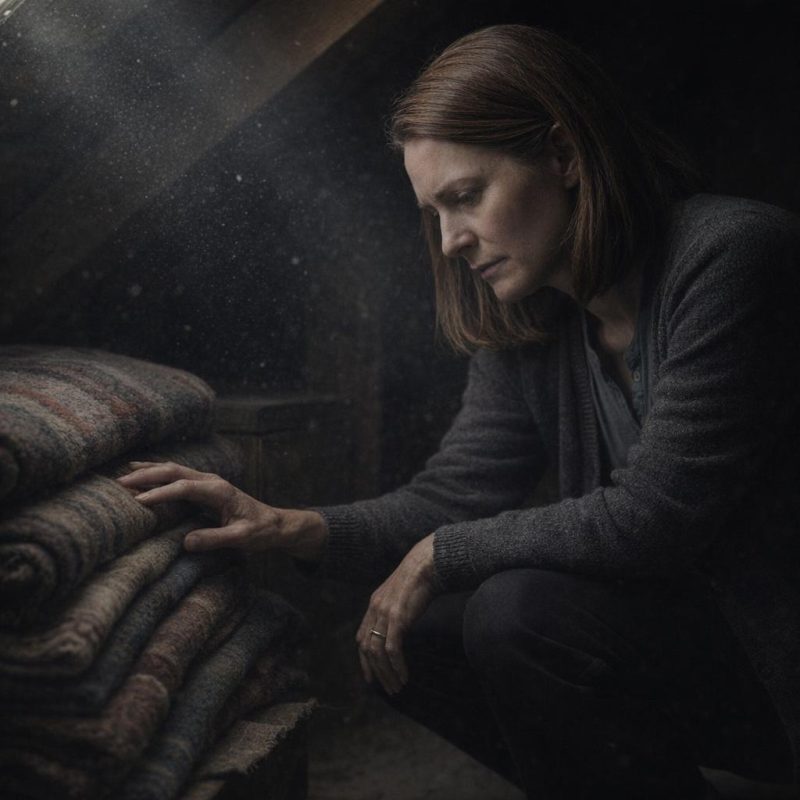 Image by RM AI
The Hidden Box
I carried the box downstairs carefully, both hands underneath it, the way you carry something fragile even when you're not sure it is. I set it on the kitchen table under the overhead light and just looked at it for a moment. It was small — maybe the size of a shoebox, but sturdier, made from what looked like walnut. I remembered Robert taking a woodworking class at the community center years ago, coming home proud of a lopsided birdhouse. This was better work than that. He'd gotten better. I lifted the lid. Inside, folded and stacked with a neatness that was entirely his, were letters in his handwriting and a sheaf of printed documents held together with a binder clip. There were receipts tucked along one side. I picked up the top letter first. The date in the upper right corner stopped me — it was from fourteen months before he died. The words Heritage Property Solutions were written in the second line, underlined once. My hands were shaking enough that I had to set the letter flat on the table to keep reading, and what I read in those first two paragraphs told me that Robert had known — that he had been watching, and writing it all down, and the letter was dated three months before his death.
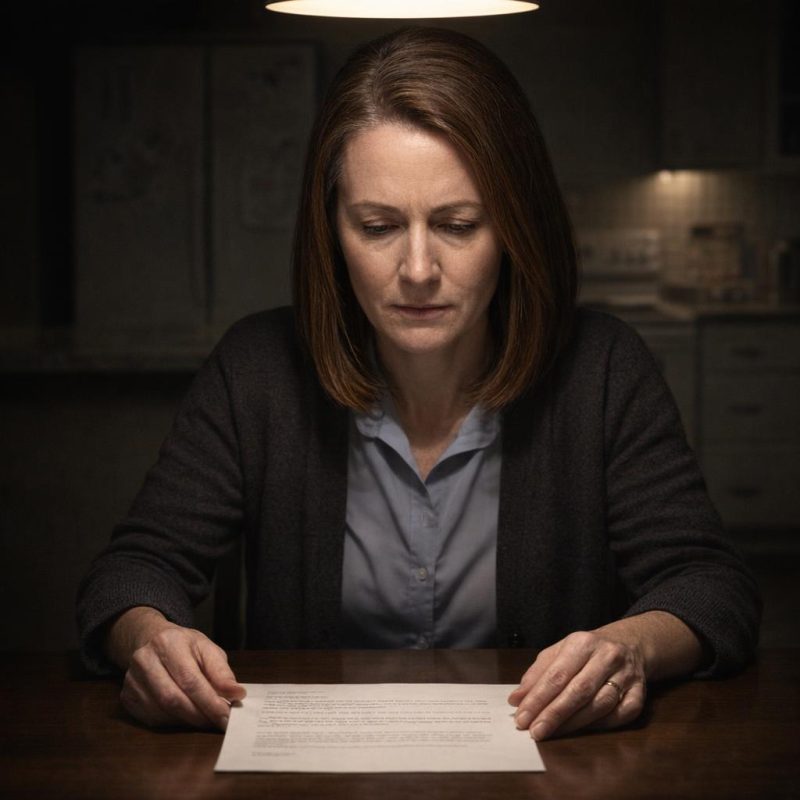 Image by RM AI
Robert's Discovery
I read every letter in order, oldest to newest, spread across the kitchen table while Daisy settled at my feet. Robert's handwriting was steady in the early ones, more urgent as they went on. He'd been contacted by a woman named Patricia — he used only her first name — who had lost her home in a transaction she didn't understand until it was too late. She'd found Robert's name somehow, connected to the investment, and she'd written to him. He wrote that her letter had shaken him badly. He'd started asking questions, pulling on threads, and what he found horrified him. He hadn't known what the investment was funding when he made it. He wrote that plainly, more than once, as if he needed to say it clearly for whoever might eventually read these pages. He documented what he learned about the scheme — the prescriptions, the property transfers, the women who'd been targeted — and he wrote about his own shame at having been used, even unknowingly. He was gathering everything he could. He was going to make it right. I sat there at the table with his letters in my hands, Daisy's warm weight against my ankles, and what settled over me wasn't grief exactly — it was something quieter, something that felt like the long exhale after years of holding my breath.
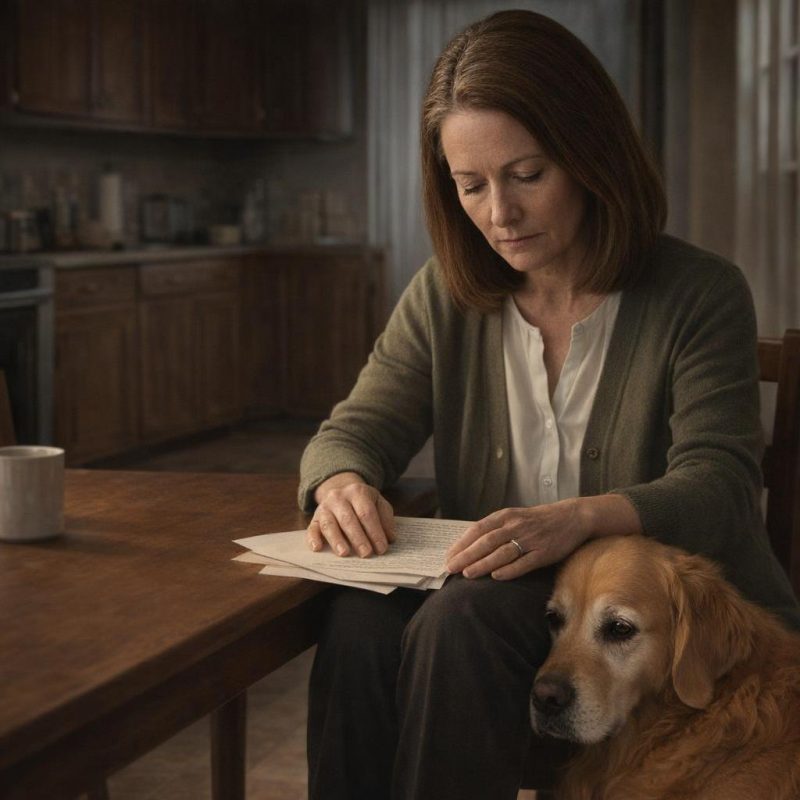 Image by RM AI
The Evidence He Gathered
The documents Robert had collected were meticulous. He'd always been that way — methodical, thorough, the kind of man who kept receipts and read the fine print. I could see it in everything he'd assembled. There were written statements from five women, each one detailing how they'd been approached, how their prescriptions had been altered, how they'd ended up signing documents they hadn't fully understood. Robert had typed summaries of each case and cross-referenced them. He'd traced money moving through Heritage Property Solutions using bank records I didn't know how he'd obtained. He'd identified names — people inside the operation, people who'd signed off on property transfers. There were copies of altered prescriptions alongside the originals, the differences marked in his careful hand. He'd built a timeline that ran nearly two years, showing the same pattern repeating across different women in different towns. I turned each page slowly, reading his notes in the margins, his small precise handwriting flagging dates and amounts and names. He had done all of this quietly, alone, while I was in the next room or asleep down the hall, and I hadn't known a thing. The care he'd put into every page of it sat with me in a way I didn't have words for.
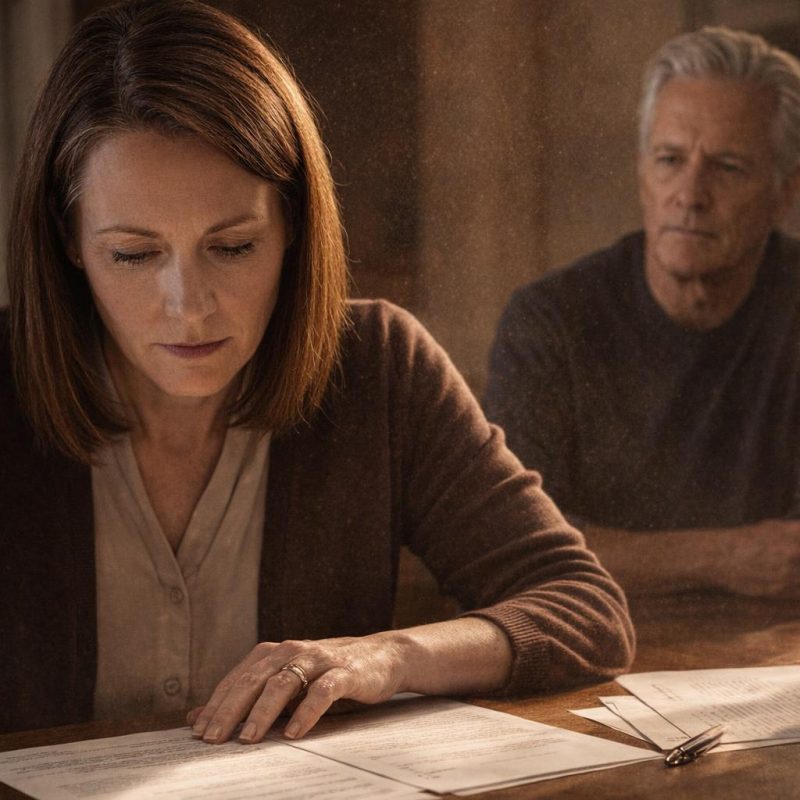 Image by RM AI
Why He Hid It
The last three letters were the hardest to read. Robert's handwriting was tighter in these, the lines closer together, like he was trying to fit more in. He explained why he hadn't told me. He wrote it plainly: he was afraid. Not for himself, he said — or not only for himself. He'd seen enough by then to know that the people running this operation had resources and reach, and he didn't want me anywhere near it until he had enough evidence to make sure they couldn't simply make the problem disappear. He wanted to hand everything over to federal investigators at once, all of it, so there would be no window for retaliation. He wrote that he was close. He wrote that he was sorry for the distance I must have felt from him in those months, that he hoped I'd understand someday why he'd kept quiet. He wrote my name in the second-to-last letter — just once, in the middle of a paragraph — and I had to stop and press my hand flat against the page. His final letter ended with instructions: if something happened to him before he could finish, I should find this box. He'd left clues he hoped would lead me here eventually. He wrote that he loved me, and that he trusted me to see it through. The words were just words on paper, but they were his words, and they were enough.
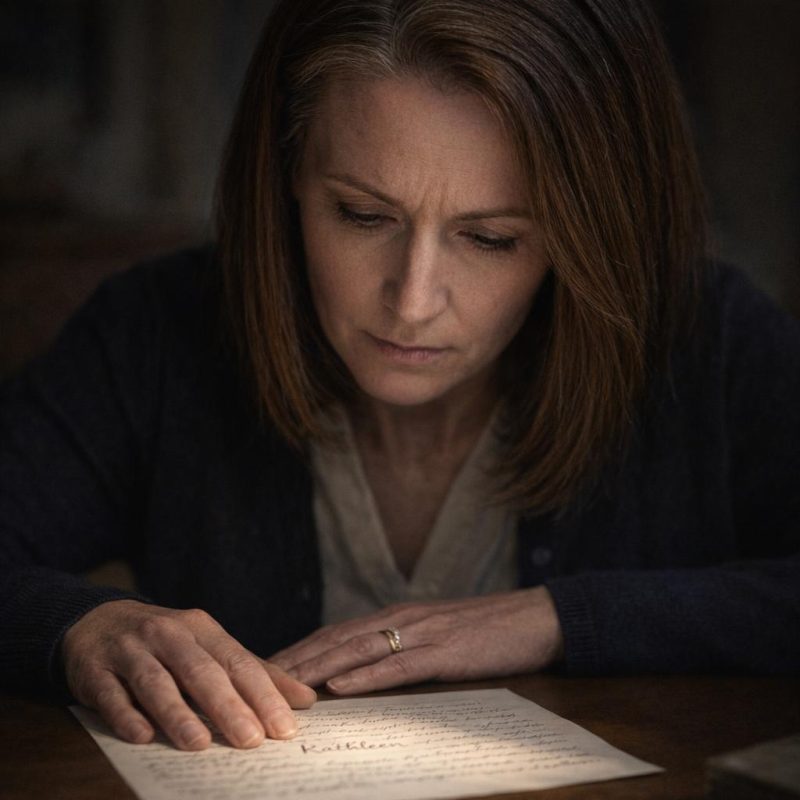 Image by RM AI
The Clues He Left
I sat with the letters for a long time before I went back through the box carefully, piece by piece. Robert had thought of everything. The clues he'd mentioned — I could see them now, small things I'd noticed over the years and filed away as quirks. A book left spine-up on the shelf. A particular drawer he'd always kept locked that I'd assumed held old business papers. He'd been leaving a trail, patient and deliberate, trusting that I would follow it if I ever needed to. Near the bottom of the box, beneath the organized stack of documents, I found a folded index card. On one side, in his handwriting, was a name — Agent Sandra Chen, FBI Financial Crimes — and a phone number with a Chicago area code. Below the number he'd written three words: She is ready. He'd already made contact. He'd already told someone. I held the card in both hands and felt something shift in my chest — not grief this time, but something steadier, something that felt like the ground coming back under my feet. Daisy had come to sit beside my chair at some point, her head resting on my knee, and I scratched her ear without looking up. There was a note on the back of the card in Robert's handwriting, and it said: Tell her everything. Start with Patricia.
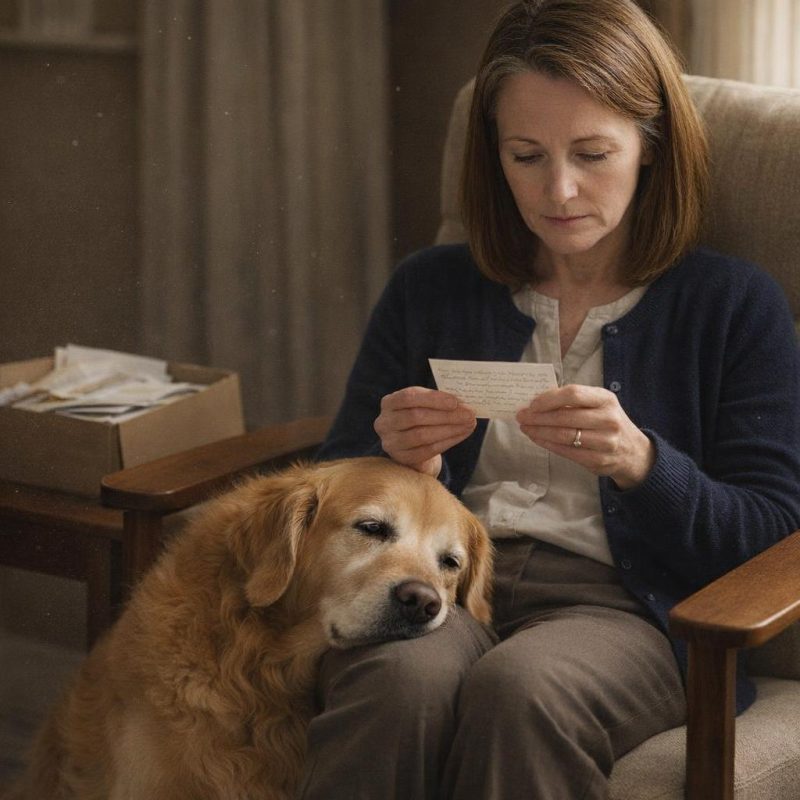 Image by RM AI
Combining the Evidence
I called Emma that same afternoon. She answered on the second ring, and when I told her what I'd found she went quiet for a moment before she said, "I'm coming over." She was at my door within the hour, her dark hair pulled back, that same watchful intensity in her eyes that I'd come to recognize as her version of calm. I spread Robert's materials across the kitchen table and watched her face as she read. She picked up his timeline first, then the women's statements, then the financial records. She set each one down carefully, like they were something that deserved handling. "He got further than I did," she said quietly. "On some of this, he got a lot further." We spent the next two hours going through everything together — her files alongside his, her financial records filling in the gaps his case notes had left open, his documented statements giving names and faces to the numbers she'd been tracking. It came together the way a picture comes together when you finally find the missing pieces: suddenly, completely, with a clarity that made the shape of the whole thing undeniable. By the time we finished, the table was covered edge to edge, and the full scope of what Heritage Property Solutions had done was laid out between us in black and white.
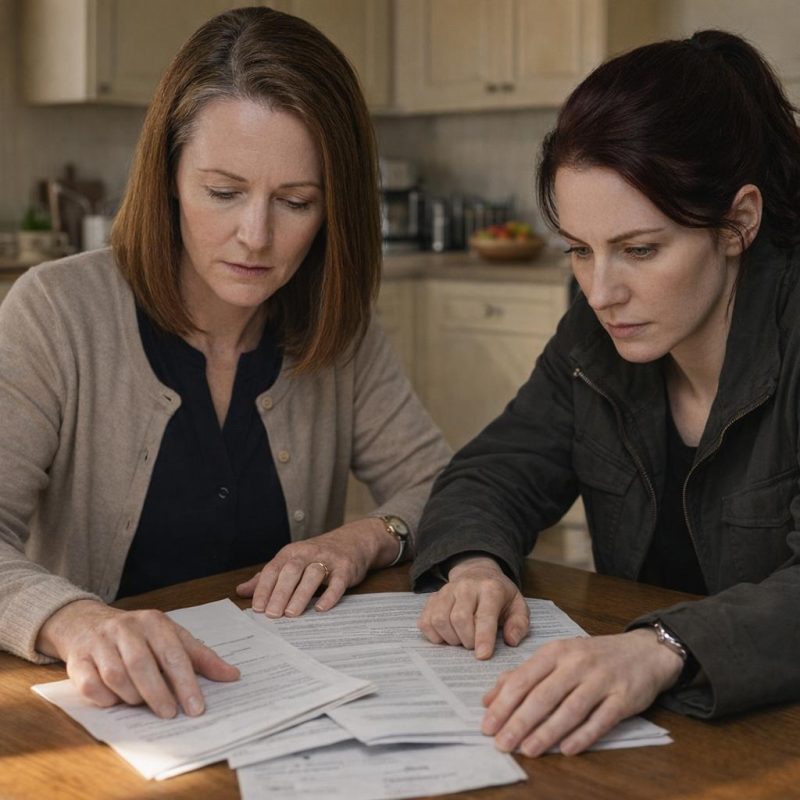 Image by RM AI
Going to the FBI
I called the number on Robert's index card the next morning. Agent Chen picked up on the third ring, and when I said Robert's name she paused before she said, "I wondered if someone would call." She remembered him. She said he'd reached out to her office in the weeks before he died, that he'd been cautious, that he'd said he wasn't ready to bring everything in yet. She'd been waiting. We scheduled a meeting for the following day, and Emma drove us both to the Chicago field office with the evidence packed in two banker's boxes. Agent Chen was younger than I'd expected — mid-forties, precise, with the kind of focused attention that made you feel like every word you said was being filed away. She went through the materials for nearly two hours, asking careful questions about sourcing and chain of custody and how we'd come to have what we had. She didn't rush. When she finished, she set her pen down and said the evidence was substantial and that Robert had done serious work. She said his preliminary contact had already opened a file. Emma slid the index card across the table, and Agent Chen looked at it for a long moment. Then she picked up her phone, turned toward the window, and began making calls.
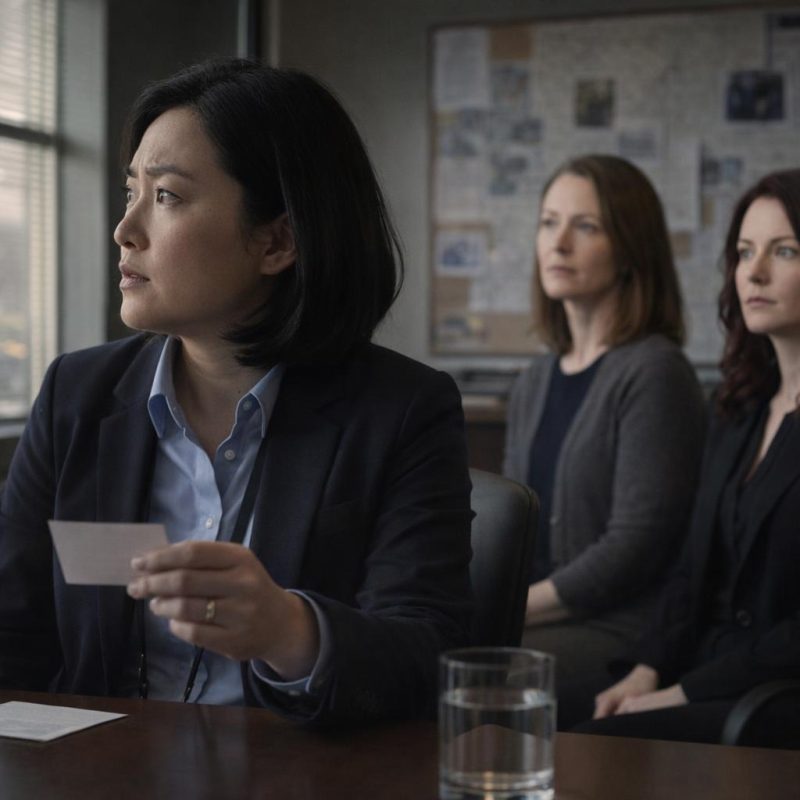 Image by RM AI
The Investigation Breaks
The weeks after that meeting moved faster than anything I'd experienced in three years of quiet grief and slow suspicion. Agent Chen's office executed search warrants on Heritage Property Solutions and the clinic on the same morning, and by noon the local news had camera crews parked outside both buildings. Emma called me before I'd even seen the broadcast, her voice tight and steady, saying it was happening. I sat at my kitchen table with the television on and watched the footage — the sealed doors, the agents carrying boxes, the company logo blurred behind yellow tape. My son David called that evening. He was quiet for a long moment before he said, "Mom, I'm sorry I didn't believe you." I told him it was all right, that I hadn't fully believed it myself for a long time. Jennifer drove home two days later and didn't say much when she arrived — she just held me in the doorway for a long time. The arrests came in waves over the following week: company officials, a clinic administrator, two attorneys whose names I recognized from documents Robert had kept. Carol called, crying, saying she'd seen the news and finally understood what had been happening to her. Other women started coming forward publicly, their stories surfacing in regional papers and then national outlets. I watched the whole operation I'd helped expose come apart, piece by piece, and the story ran on the national wire by the end of the month.
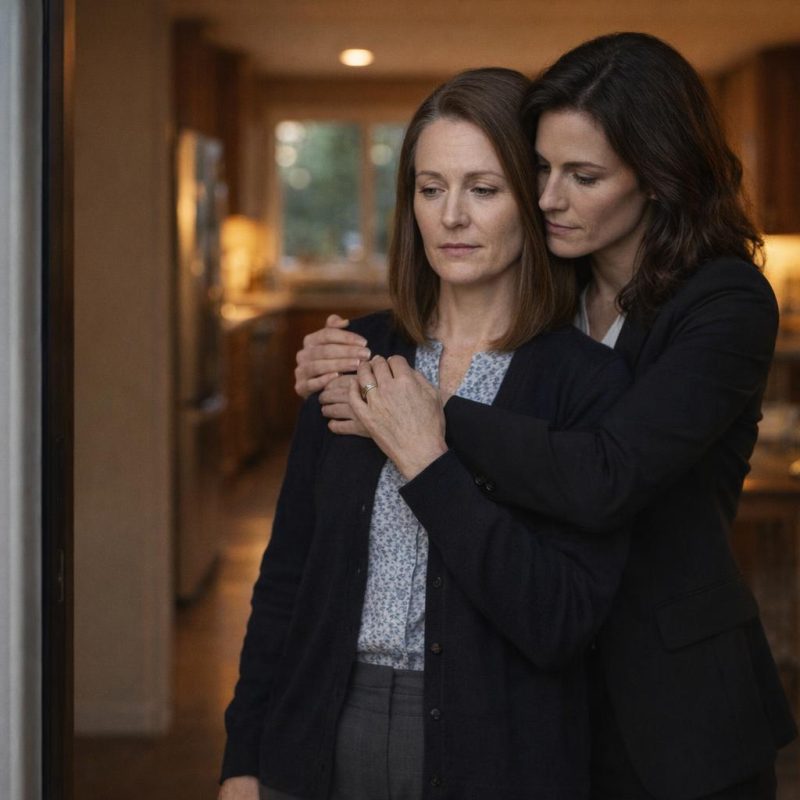 Image by RM AI
Justice and Aftermath
The legal proceedings stretched across months, and I attended more of them than my family thought was good for me. Multiple individuals were charged with fraud, conspiracy, and elder abuse — charges that carried real weight, real consequences. The clinic administrators faced medical board investigations that stripped licenses. Two of the lawyers involved were disbarred. Some of the property sales were reviewed and reversed, and a settlement fund was established for victims. Carol's health had improved steadily after she stopped the medication — she sounded more like herself every time we spoke, sharper, more present. Women I'd never met sent letters and left messages, thanking me for something I still wasn't sure I'd done alone. Emma testified about her father Harold's role and her own investigation, and I watched her from the gallery, composed and precise, her voice never wavering. She had carried that weight far longer than I had. The full scope of what the conspiracy had done — how many women, how many years, how many quiet losses — came out in the courtroom testimony in a way that the news coverage never quite captured. I sat in those hard wooden seats and listened to it all, and when the verdicts came I didn't feel triumphant. I felt the particular heaviness of something that should never have needed to happen finally, irrevocably, being over.
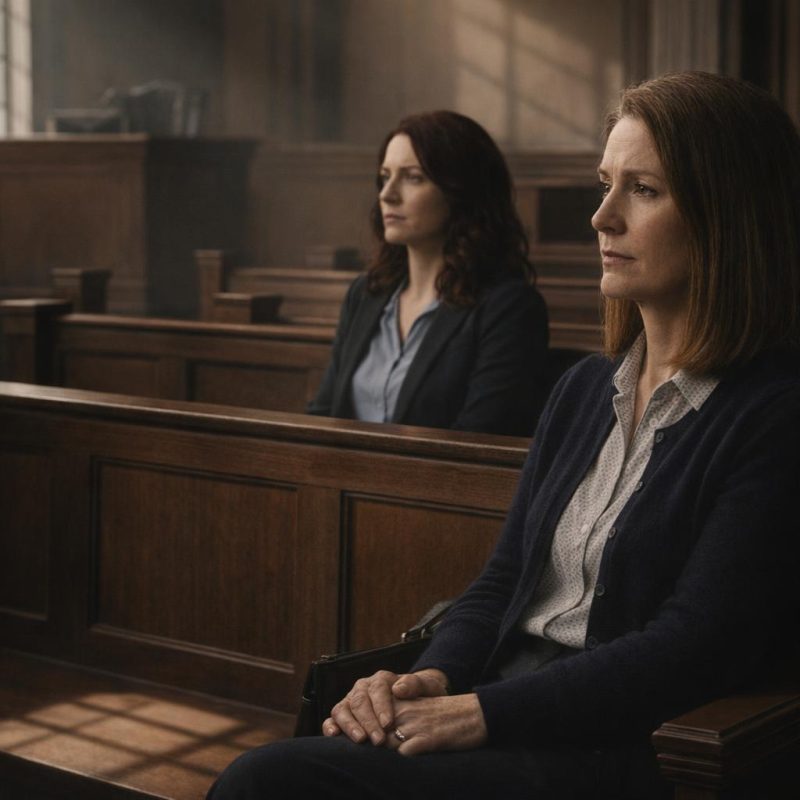 Image by RM AI
What Was Saved
Emma and I met for coffee on a Tuesday morning in late October, at a small place near the pharmacy that had become something like neutral ground for us. Daisy came along and settled under the table with her chin on my foot, the way she always did when she sensed I needed steadying. We talked for nearly two hours. Emma said she was closing her father Harold's company permanently — not selling it, not restructuring it, just closing it. She said it was the only thing that felt honest. I told her I understood. At some point she said, "I'm glad I trusted my instincts that day. About the prescription." I told her that one decision had changed everything — for me, for Carol, for all of them. We talked about Robert, about what he'd tried to do and how close he'd come, and I found I could speak about him without the familiar tightening in my chest. Emma said he must have been a careful man. I said he was, and that I wished I'd known how careful. She reached across the table and squeezed my hand once, and we sat with that for a moment. I thought about how close I'd come to being another quiet name on a list somewhere, another woman who'd lost her home and her health and never understood why. The morning light came through the window and lay warm across the table, and I was grateful — simply, plainly grateful — for the woman sitting across from me.
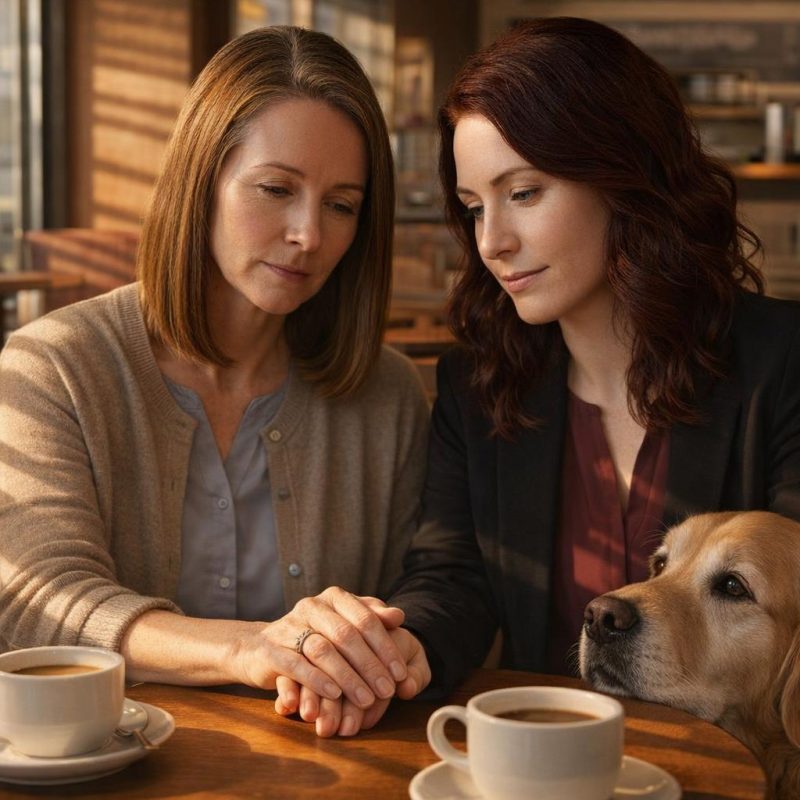 Image by RM AI
One Name Remains
I went back to Robert's evidence box one more time, a few weeks after the last verdict came in. I told myself I was just organizing, putting things in order before I stored them properly. Daisy watched me from the doorway, patient as always. I'd been through the box so many times I thought I knew every piece of paper in it, but near the bottom, tucked flat against the cardboard, I found a folded note I'd missed before. The handwriting was Robert's — the careful, slightly cramped print he used when he was thinking hard. It was dated about two weeks before he died. He wrote that he believed he'd identified most of the network, but that one person had been careful in a way the others hadn't. Someone with enough standing to stay insulated. He wrote that this person had connections that ran deeper than Heritage, deeper than the clinic, and that he hadn't been able to confirm it yet. He said he needed more time. At the bottom of the note, he'd written a single name and drawn a circle around it, then added a question mark beside it. I recognized the name. It belonged to someone prominent — someone whose face I'd seen at community events, whose name appeared on charitable boards, whose reputation in this town was spotless. I sat on the floor of the study with Daisy pressed against my side, the note open across my knees, staring at the circled name Robert had never been able to confirm.
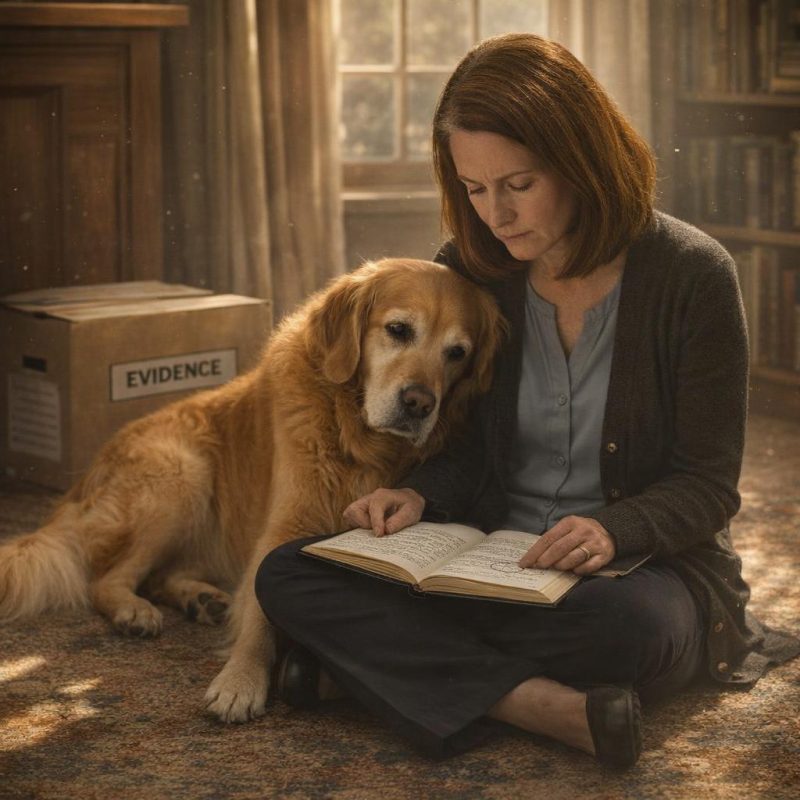 Image by RM AI
KEEP ON READING

20 Greek Gods We Don't Often Talk About
Step Aside, Zeus. Greek mythology isn’t only about Zeus and…
By Elizabeth Graham Jan 16, 2026
10 Historic Courtship Practices That Should Be Brought Back &…
Old-School Dating Was a Mix of Charming & Unhinged. Historic…
By Emilie Richardson-Dupuis Jan 20, 2026
Pooches Of The Past: Extinct Dog Breeds
Unknown authorUnknown author on WikimediaDogs have been showing up in…
By Elizabeth Graham Jan 27, 2026
The 20 Craziest Silent Films Ever Made
When Silence Let the Madness Speak. Silent cinema didn’t just…
By Chase Wexler Jan 5, 2026
Legendary Tales: 20 Most Fascinating Mythical Creatures from Folklore
Mythological Beasts. Stories about mythical creatures endure for a simple…
By Christy Chan Jan 16, 2026
The three most expensive historical artifacts ever sold at auction
Attributed to Leonardo da Vinci on WikimediaAuctions are where history…
By Emilie Richardson-Dupuis Jan 9, 2026