

The Call That Changed Everything
When Megan called on a Tuesday afternoon, I was in the middle of repotting a fern and almost didn't pick up. I'm glad I did. She asked if I'd be willing to house-sit for two weeks while she and Eric took a vacation — something about needing to get away, recharge, the two of them. I said yes before she even finished the sentence. That's just how it's always been with me and Megan. She asks, I show up. I wouldn't have it any other way. There was something in her voice that afternoon, though — a kind of tightness underneath the words, like she was reading from a script she'd written in a hurry. I told myself she was probably just tired. We'd lost Robert four years ago, and the grief had a way of reshaping everything, including the way we talked to each other. Our phone calls had felt a little different since then — shorter, more careful — but I still felt close to her in the way that matters. When I pulled into her driveway two days later with my suitcase, she hugged me longer than usual and thanked me three times before she even got to the door. I helped her carry a bag to the car, waved them off, and walked back inside. The house was quiet and warm and smelled like her candles. I set my suitcase down in the guest room and felt, for the first time in a while, like I was exactly where I was supposed to be.
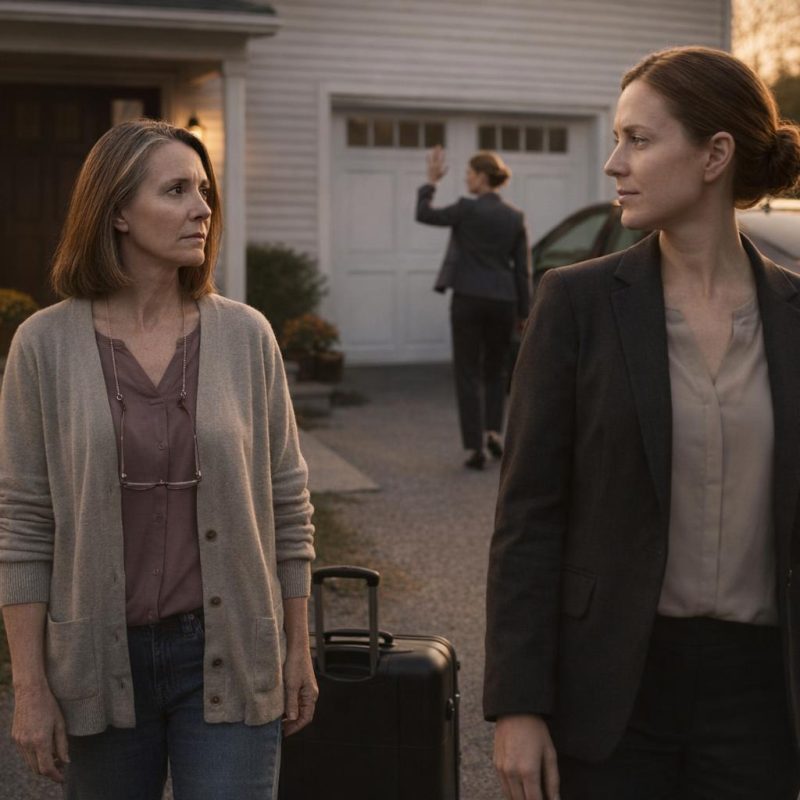 Image by RM AI
Settling Into Routine
The first few days settled into a rhythm I didn't know I needed. I was up by seven, coffee in hand, making my way through the house with a watering can. Megan had left a typed list on the counter — which plants needed what, how much, how often — and I followed it like a small daily ceremony. Her dog, a scruffy terrier mix named Biscuit, became my shadow from the moment I opened the guest room door each morning. We walked the same loop around the block twice a day, and I let him sniff every single thing he wanted to sniff because we had nowhere to be. I called Megan on day three just to check in. She sounded relaxed, genuinely relaxed, and it made me happy in a way I hadn't expected. I told her the plants were thriving and Biscuit had already claimed my left slipper. She laughed. It was a real laugh. I held onto that. The house had a detached garage at the back of the property, set apart from the main structure by a stretch of cracked concrete. I'd noticed it on my first walk around the yard but hadn't given it much thought — just another outbuilding, the kind every older house seems to collect. On our evening walk that fourth day, Biscuit stopped at the edge of the yard and started barking at the garage, low and insistent, his whole body pointed toward the door.
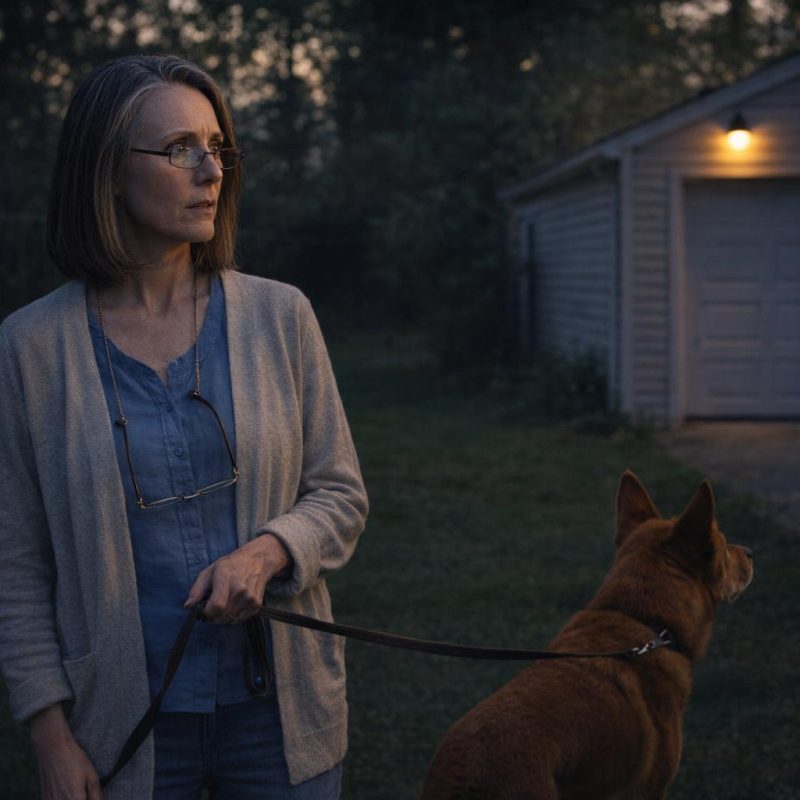 Image by RM AI
The Warning About the Garage
I tugged Biscuit back toward the house and told him to hush, but the barking stayed with me longer than it should have. It pulled up something I'd half-forgotten — the way Megan had mentioned the garage before she left. She'd brought it up twice, actually. The first time felt almost casual, tucked into the middle of her walkthrough: don't worry about the garage, it's just packed with old junk, furniture from my grandmother's place, boxes we never unpacked. But the second time, right before she got in the car, she'd stopped and looked at me directly and said it again. Don't go in there, Mom. It's a mess and I'd be embarrassed. There was an edge to it that I couldn't quite account for. Not angry, not exactly — more like she really needed me to hear it. I'd nodded and smiled and thought nothing of it in the moment. Megan had always been particular about her space. Even as a teenager she'd had rules about her room that I'd learned to respect. This was probably the same thing, just scaled up. She didn't want me poking around in her clutter, and honestly, that was fair. I had no reason to go in there. I set Biscuit's leash on the hook by the back door and went to make myself some tea. But later, standing at the kitchen window with my mug warming both hands, I found my eyes drifting back to the garage, sitting quiet and ordinary in the fading light.
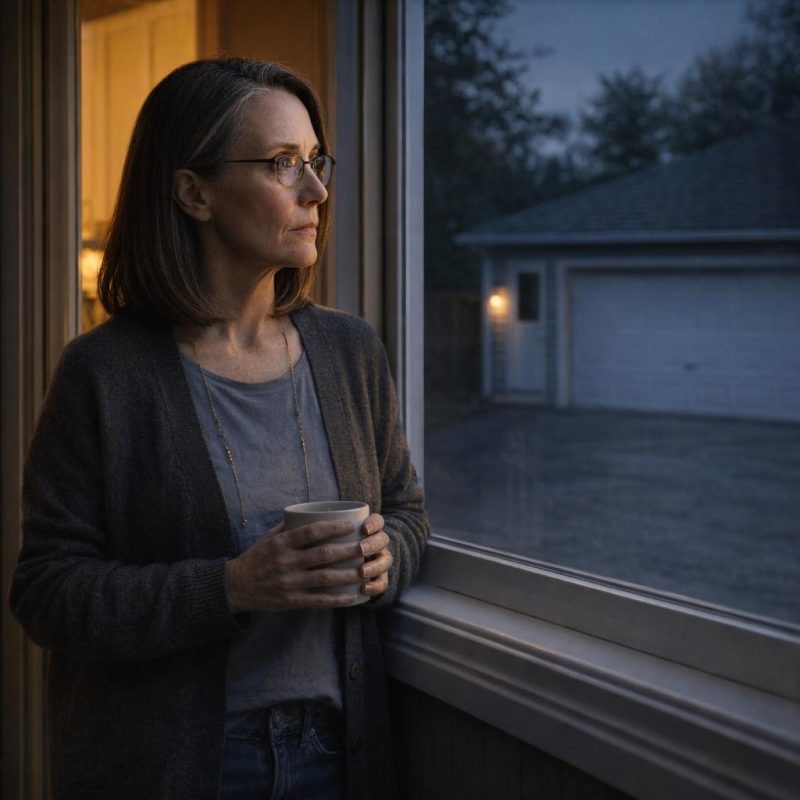 Image by RM AI
The Misplaced Delivery
The delivery truck came on a Wednesday morning, just after ten. I heard it from the kitchen — the rumble of the engine, the hydraulic sigh of brakes — and looked out the window expecting to see the driver heading up the front walk the way every other delivery had gone. But he didn't. He pulled around the side of the driveway, walked straight to the detached garage, and set a medium-sized box down on the concrete just outside the door. Then he was back in the truck and gone before I'd even set down my coffee cup. I stood there for a moment, trying to decide if I'd imagined it. Every other package that week had come to the front porch. I went outside and retrieved the box, turning it over in my hands as I carried it back inside. Megan's name was on the label, printed clearly, no mistake there. But the return address was something I didn't recognize — no company name I knew, a city I couldn't immediately place. I thought about texting her. I even picked up my phone. But she was on vacation, she was finally relaxed, and it was probably nothing — a subscription box, some online order she'd forgotten about, something completely ordinary that just happened to get dropped in the wrong spot. I set the box on the kitchen counter next to the plant list and told myself to leave it alone. Still, I stood there for a moment longer, the unfamiliar return address printed in small black letters, my fingers resting lightly on the cardboard.
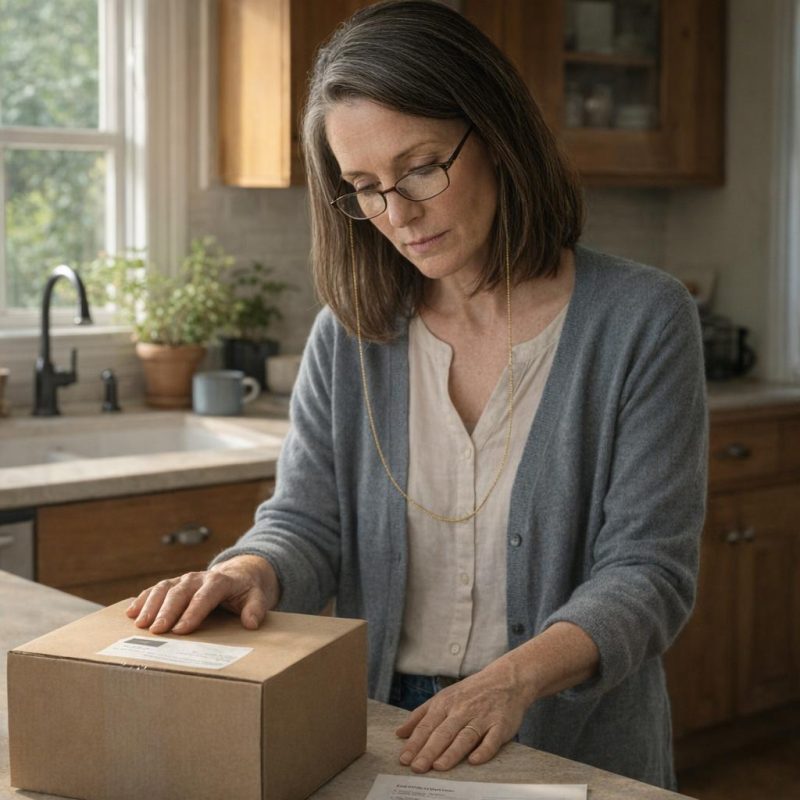 Image by RM AI
Growing Curiosity
I tried to go about my day normally after that, but the garage kept pulling at the edge of my attention. I'd be reading in the living room and find myself glancing toward the back window. I'd be washing up after lunch and catch my eyes drifting to the yard. It was silly, I knew that. Megan had told me exactly what was in there — old furniture, boxes, the accumulated clutter of years. There was nothing mysterious about a storage space. Plenty of people had things they didn't want their mothers rummaging through, and I respected that. I told myself I was just restless, that I missed having a purpose beyond watering schedules and dog walks. On the afternoon walk with Biscuit, I took the long route around the back of the property, and when we passed the garage I slowed down without meaning to. The door looked the same as always — closed, weathered, unremarkable. Biscuit sniffed at the base of it and moved on. I moved on too. I made dinner, watched something on television I couldn't have summarized an hour later, and washed my mug before bed. But somewhere between turning off the kitchen light and reaching the hallway, I stopped. I wasn't sure when I'd turned around. I wasn't sure how long I'd been walking back across the yard in the dark. But there I was, standing at the garage door with my hand resting on the handle.
 Image by RM AI
The Storm
I pulled my hand back and went inside. I wasn't going to be that person — the one who snoops through her daughter's things because of a misdelivered package and a dog that barked at shadows. I went to bed and slept fine. The storm came the next evening, rolling in fast the way summer storms do, the sky going green-gray in under an hour. The power flickered twice and then the back half of the house went dark — the kitchen, the laundry room, the outdoor lights. I found the flashlight Megan kept in the junk drawer and pulled on my rain jacket. Someone had to check for damage, and there was no one else. Outside, the rain was coming sideways. I found a large branch down near the back fence, nothing structural, and made a mental note to deal with it in the morning. I swept the flashlight beam across the yard, checking the fence line, the garden beds, the side of the house. Then I turned toward the garage. The wind must have worked the latch loose at some point during the storm, because the garage door was hanging partially open, swinging slowly in the gusts.
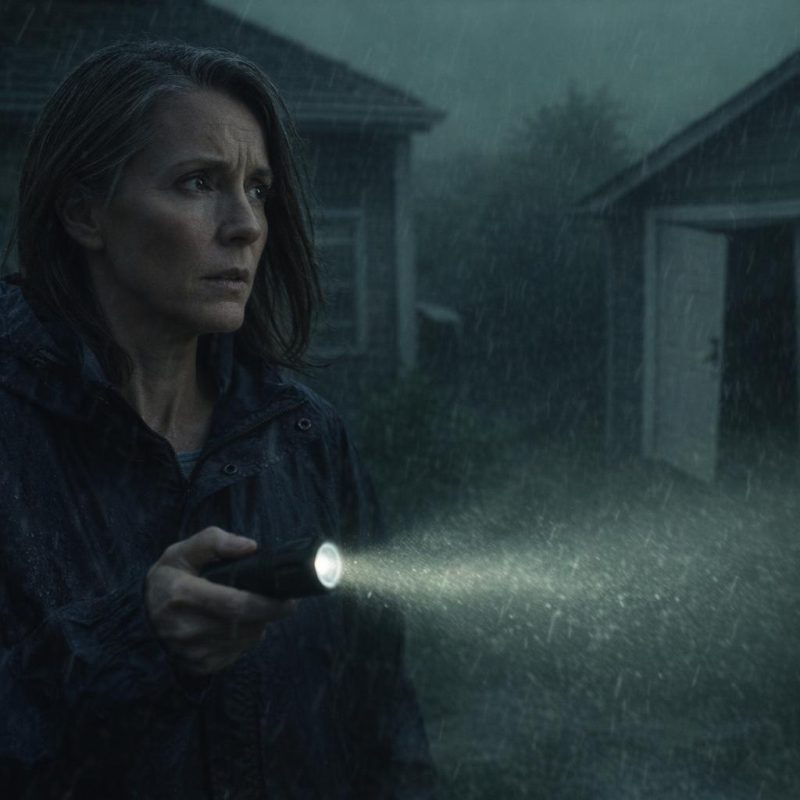 Image by RM AI
A Glimpse Inside
I stood there in the rain for a moment, watching the door sway. Leaving it like that wasn't an option — another strong gust could pull it fully open or damage the hinges. I told myself that was the only reason I was walking toward it. I stepped up to the opening and shone the flashlight inside. Megan had been telling the truth. The garage was exactly what she'd described — dusty, crowded, the kind of space that accumulates years without anyone meaning it to. Old dining chairs were stacked against one wall. Cardboard boxes, some labeled in marker, some not, rose in uneven columns along the other. A rolled-up rug leaned in the corner. Everything had the particular stillness of things that hadn't been touched in a long time. I felt a small loosening in my chest, something close to relief. I'd been building this up in my head all week over nothing. I reached for the door to pull it shut and do the latch, and that's when my flashlight swept across the back corner. There was a large tarp there, draped over something bulky — a cabinet, maybe, or a shelving unit. Most of it was in shadow. But at the bottom edge of the tarp, where it didn't quite reach the floor, the beam caught a thin line of reflected light, metallic and still, sitting quiet in the dark.
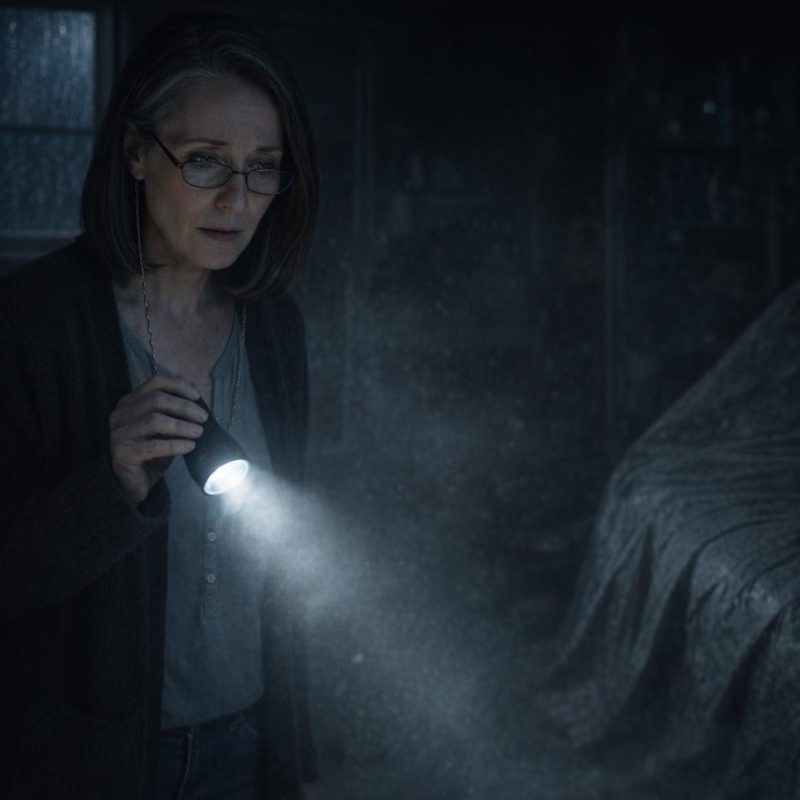 Image by RM AI
The Photograph
I latched the garage door and went back inside. I told myself the reflection was nothing — a filing cabinet, an old toolbox, the kind of thing that ends up in every garage eventually. I slept on it. In the morning the storm was gone and the yard was bright and wet, and I went back out to deal with the fallen branch and properly check the garage latch in the daylight. The door was holding fine. I was about to turn back toward the house when I noticed something on the concrete floor just inside the threshold — a small rectangle, face-down, that must have been dislodged when the door swung open in the wind. I picked it up. It was a photograph, printed on regular paper, the kind you'd run off a home printer. I turned it over. Megan was in it — I recognized her immediately, her hair the way she'd been wearing it recently, so the photo wasn't old. She was standing beside a woman I didn't know, someone I was certain I'd never seen before. Both of them were looking at the camera, and between them, cradled in the unknown woman's arms, was a baby. Megan's hand was resting on the baby's back. My mind went very still. Megan had no children. She had never mentioned a baby, never mentioned this woman, never mentioned any of this. I stood in the wet grass outside the garage, holding the photograph, staring at the two women and the child I couldn't account for.
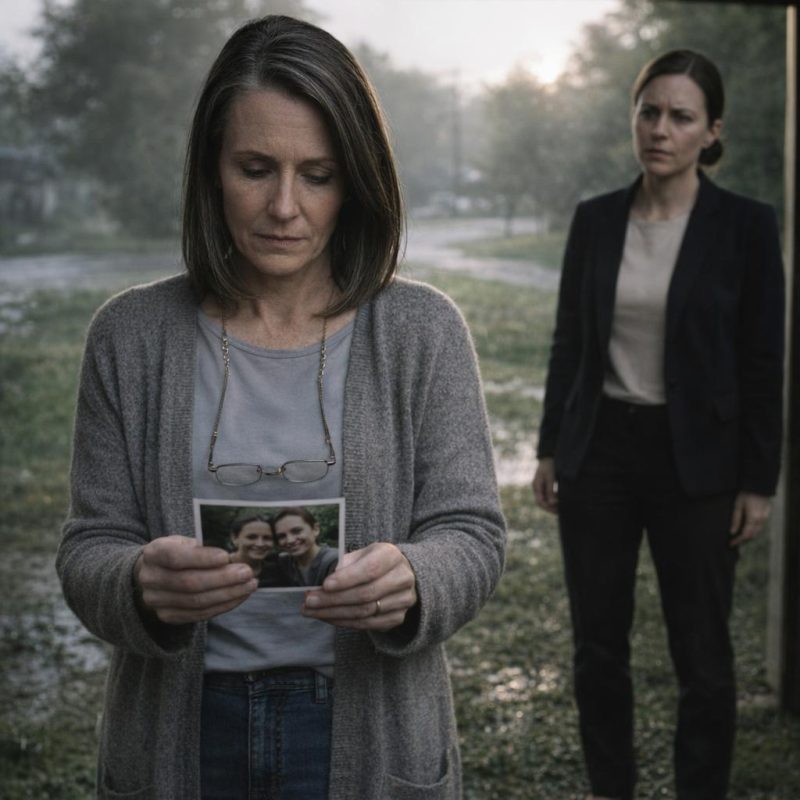 Image by RM AI
The Impossible Baby
I brought the photograph inside and set it on the kitchen table, and I just sat there staring at it. I turned it over, turned it back. Megan's hand on that baby's back. The easy, familiar way she was standing next to this woman I had never seen, never heard mentioned, never been introduced to in any context. I tried to think of a simple explanation. Maybe it was a coworker's baby. Maybe Megan had been at a shower, a hospital visit, some ordinary moment someone snapped a photo of. But the way she was standing — relaxed, close, like she belonged there — didn't feel like a polite visit to a colleague. I picked up my phone twice to call her and put it back down both times. What would I even say? I didn't want to accuse her of anything because I didn't know what I was looking at. I told myself I was her mother, and if something was going on, I had a right to understand it. That's what I kept coming back to — not nosiness, not suspicion, just concern. And then I thought about the locked cabinet in the garage. I'd walked past it twice already and told myself it wasn't my business. But the photograph was sitting right there on the table, and I needed to understand what was inside that cabinet.
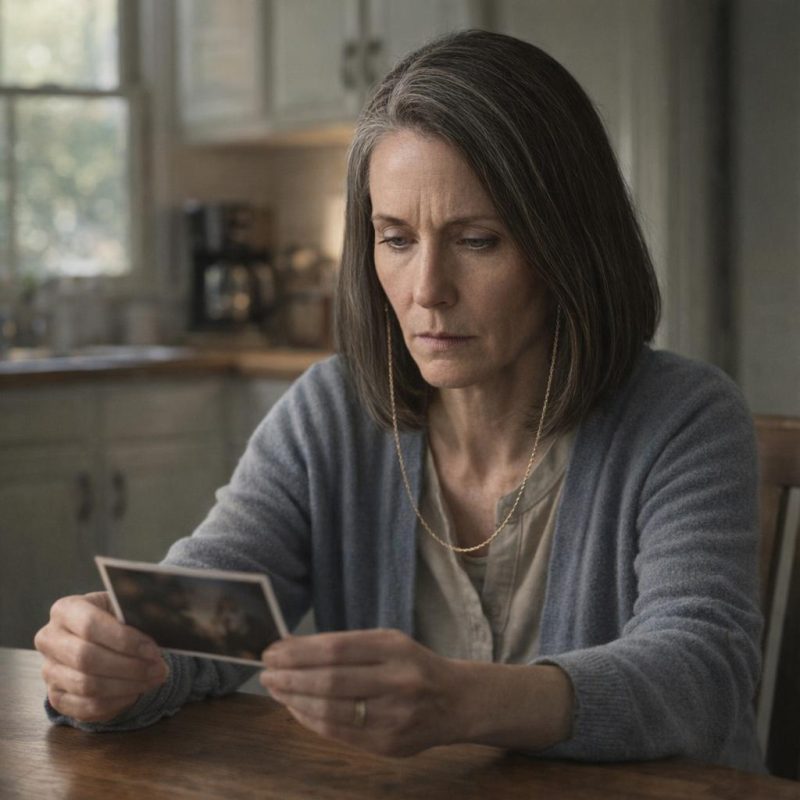 Image by RM AI
Searching for Access
I started in the kitchen, going through the junk drawer where Megan kept spare keys, rubber bands, takeout menus, all the small chaos of daily life. There were four keys on a ring I didn't recognize, and I took them with me. I checked the little dish on her desk in the spare room, found two more loose keys, and added those to my collection. I felt ridiculous doing it — like I was rifling through my own daughter's life — and I kept stopping to remind myself why I was there. I wasn't snooping. I was worried. There was a difference. I told myself that enough times that I almost believed it. Out in the garage, I tried each key in the cabinet lock, one by one, slow and careful. None of them fit. I tried them again in a different order, just in case I'd been clumsy the first time. Still nothing. I stood there for a moment looking at the cabinet, then sat down on the dusty concrete floor with my back against the wall, the keys loose in my hand. The garage smelled like motor oil and old cardboard. I could hear birds outside. I sat there with the photograph in my lap and the cabinet still locked in front of me, and the weight of what I was doing settled over me like something I couldn't put down.
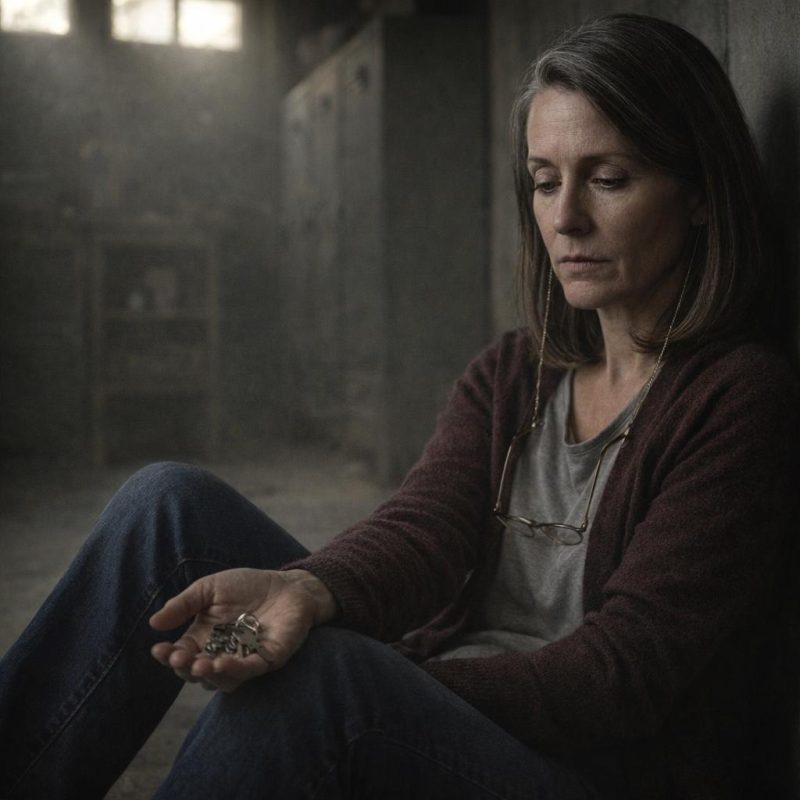 Image by RM AI
Breaking In
I found a red metal toolbox on the shelf above the workbench, the kind with a tray that lifts out. I wasn't looking for anything specific — I just needed to do something with my hands. There were screwdrivers in the tray, a couple of sizes, and I picked up the flathead one and stood in front of the cabinet again. I told myself I would just look. I would look, and then I would put everything back exactly as I found it, and Megan would never know. My hands were shaking a little as I worked the tip of the screwdriver into the gap beside the latch. I wasn't trying to break anything — I was trying to be careful, to ease it rather than force it. It took longer than I expected. I stopped twice, convinced I was doing real damage, and then started again. The third time I applied steady pressure, there was a small, dry crack, and the latch shifted. I stood very still for a moment, screwdriver in hand, listening to the garage like someone might walk in. Nobody did. I set the screwdriver down on the floor beside me. The cabinet doors were slightly ajar now, the latch bent just enough to release. I reached out and pulled them open slowly, and inside, stacked in neat rows, were folders, envelopes, and photographs — more than I could have expected.
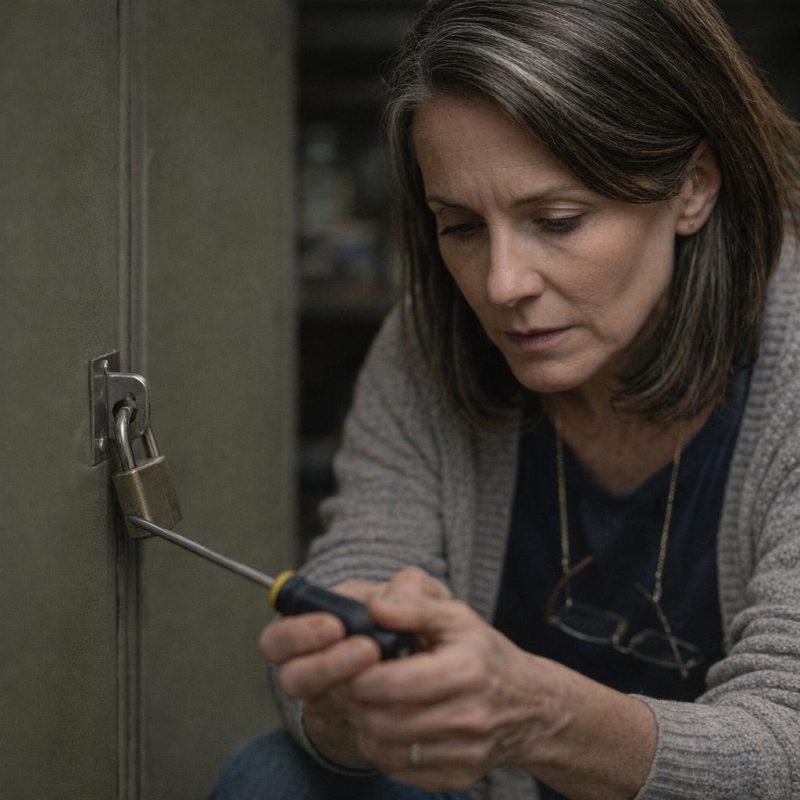 Image by RM AI
The Hidden Archive
I pulled out the first folder and sat down cross-legged on the garage floor with it in my lap. The papers inside were letters — handwritten ones, printed ones, some on plain paper and some on what looked like personal stationery. They were dated, and the dates went back years. I didn't read them in order at first. I just flipped through, catching phrases, trying to get a sense of what I was holding. The word 'arrangement' appeared more than once. So did 'discretion.' There were financial documents tucked between the letters — pages that looked like bank records, with columns of figures and dates. The figures were large enough that I had to look twice to be sure I was reading them right. I found more photographs of the same woman from the printed photo I'd found in the garage doorway, taken at different times, different settings. In some she looked younger. In others she was holding the baby, or standing in what looked like a backyard somewhere I didn't recognize. I kept turning pages, trying to find a name, a clear explanation, something that would make this ordinary. Then I stopped on a single page, a letter fragment, handwritten in careful print. It mentioned monthly payments. It mentioned private meetings. It said the arrangements had to stay between the people who already knew.
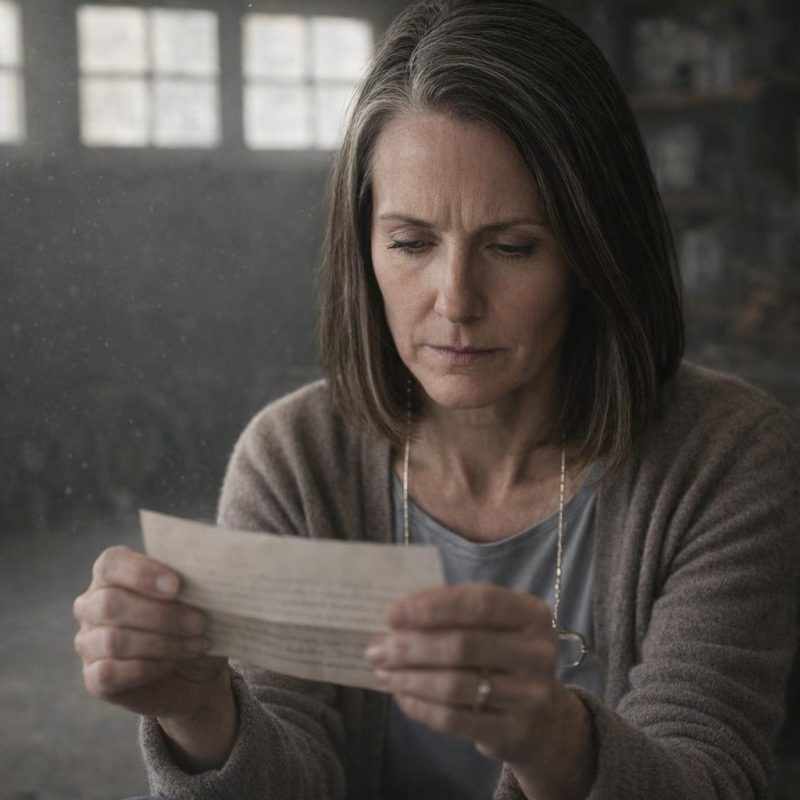 Image by RM AI
Evidence of Deception
I read letter after letter, sitting there on the garage floor until my back ached and the light through the small window had shifted. The correspondence went back at least five years, maybe more — I kept finding earlier dates the deeper I dug into the stack. The tone was warm in places, almost tender, but threaded through every page was this careful, repeated insistence on privacy. Words like 'between us' and 'no need to involve anyone else' and 'keep this quiet for now' appeared so often they stopped feeling incidental. I found bank statements, printed and folded, showing monthly transfers to an account I didn't recognize. The amounts were consistent — the same figure, month after month, like a bill being paid. There were references to birthdays, to milestones, to being present for things I had never been told about. I didn't know who had written these letters. I didn't know who had received them. But it seemed like someone in my family had been involved in something — a relationship, a financial commitment, a whole thread of life — that I had never been told about. I set a letter down on top of the pile and pressed my hands flat against my knees. The anger came up slowly, the way it does when you've been trying to hold it back, and I sat surrounded by all those papers and just let it come.
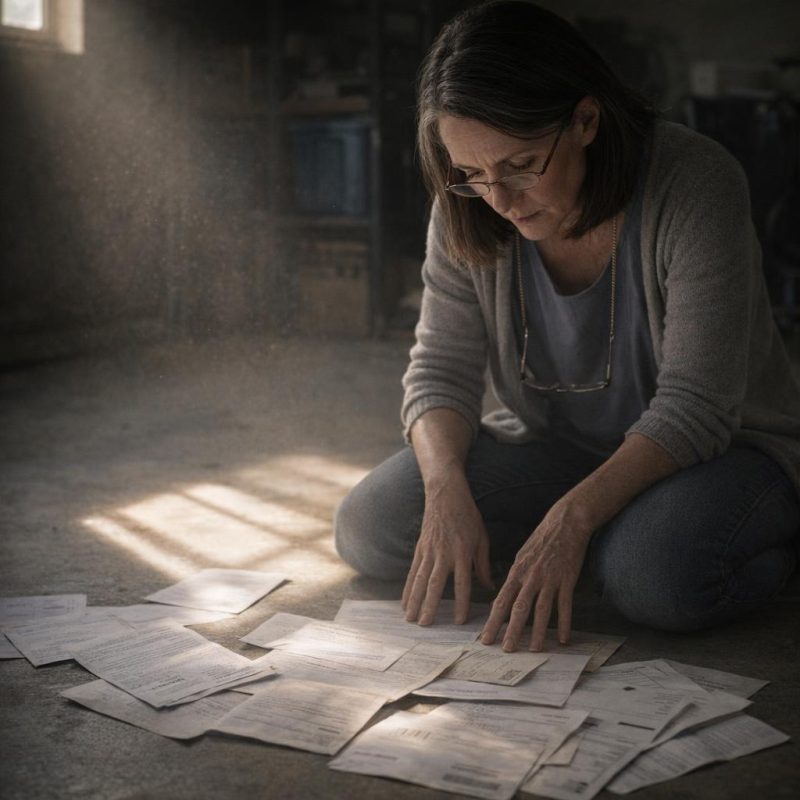 Image by RM AI
The Monthly Payments
I pulled the bank statements into a separate pile and went through them more carefully, page by page. The payments were regular — same amount, same account number, every single month without a gap. I started at the most recent and worked backward, the way you do when you're trying to find where something began. The further back I went, the more my hands slowed down. I kept expecting the transfers to stop, to find the month where they started, and every time I turned a page and found another one, the feeling in my chest got heavier. I found statements going back four years, then five, then six. I was counting now, laying pages out on the floor beside me in a rough timeline. Seven years. The earliest payment I could find was seven years ago, and I sat there doing the math without wanting to. Seven years ago, Robert was still alive. He had been sick by then, yes, but he was here. He was in our house. He was my husband. I stared at that earliest date on the page for a long time, the garage quiet around me, and I didn't know what to make of it. Someone had been sending money to this unknown account for seven years, and the trail started before I lost him.
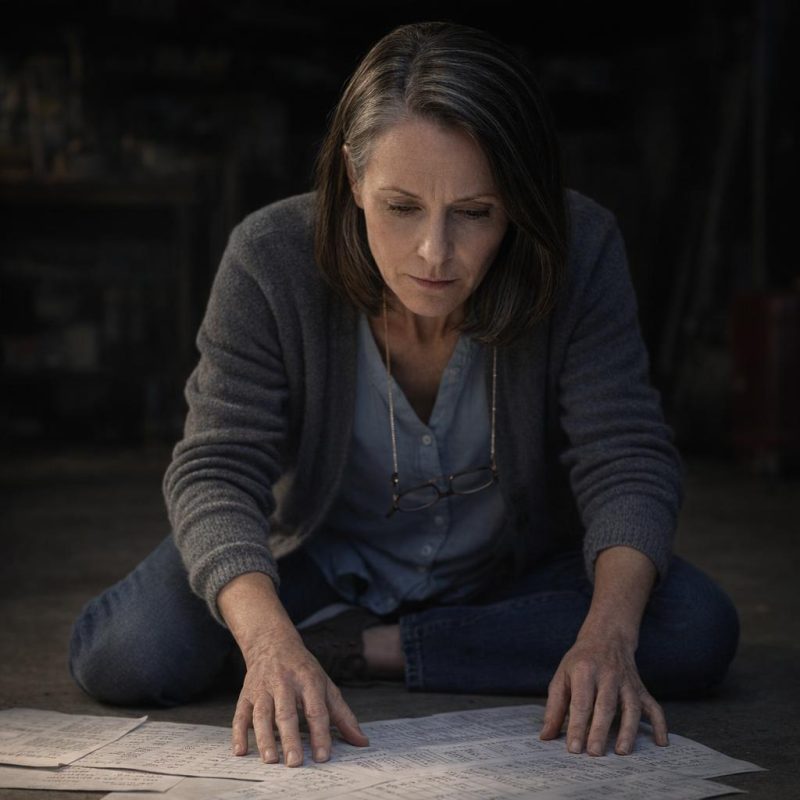 Image by RM AI
Birthday Cards and Secrets
Toward the back of the cabinet, behind the folders, I found a bundle of envelopes tied together with a thin yellow ribbon. They were birthday cards — I could tell by the size and shape before I even opened them. Each one was addressed in the same handwriting to someone named Sophie. I didn't know anyone named Sophie. I turned the envelopes over, looking for a return address, a full name, anything. There was nothing on the outside except the name. I untied the ribbon and went through them one by one. The cards spanned years — I could tell from the styles, the different designs, the way the handwriting shifted slightly over time the way handwriting does. Each one was signed the same way: just the letter M. Nothing else. No full name, no explanation. The messages inside were short but warm. One mentioned being proud. Another said she was always thinking of her. They read like something written to a child someone cared about, someone they hadn't been able to see as often as they'd wanted. I kept turning them over in my hands, trying to understand what I was looking at. M. It had to be Megan. I couldn't think of who else it would be. I opened the last card in the stack and read the message inside: 'I promise to always take care of you.'
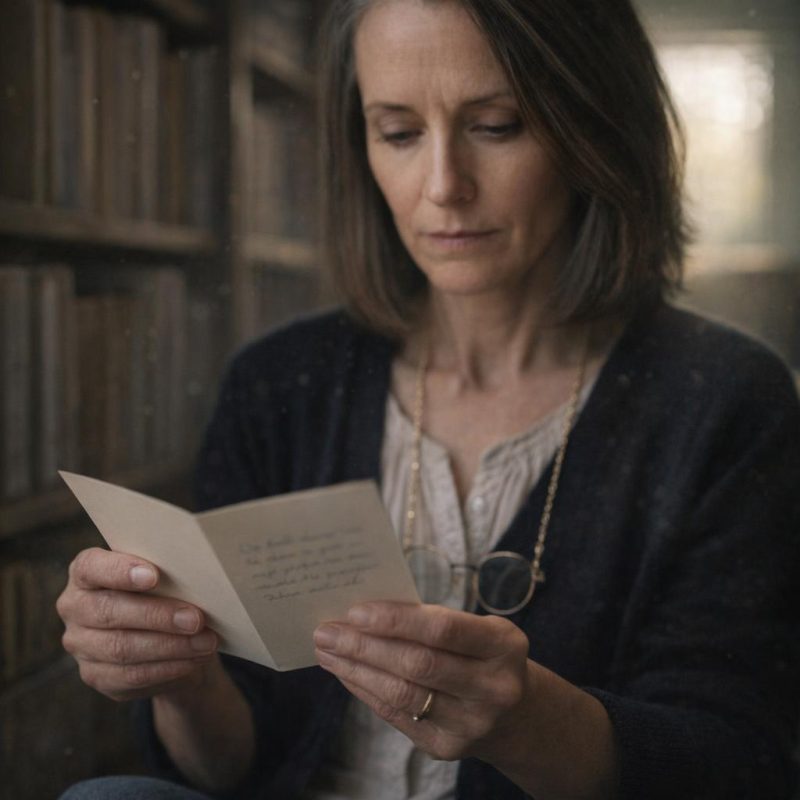 Image by RM AI
School Reports
Behind the birthday cards, tucked into a manila folder I almost missed, were school documents — report cards, progress reports, a couple of award certificates. They were for a girl named Sophie Hayes. I read the name twice, then a third time. The reports covered several years of school, and whoever Sophie Hayes was, she was a good student — comments from teachers about focus, effort, potential. Under other circumstances I might have smiled at that. But I wasn't smiling. I was staring at the surname. Hayes. I turned the folder over like there might be something written on the back that would explain it. There wasn't. I went through the papers again slowly, checking each one. Sophie Hayes. Every single document. I tried to think of relatives, distant cousins, anyone on either side of the family with that name. I couldn't place it. But the name didn't feel random. It felt like something I should know, something sitting just at the edge of my memory that I couldn't quite reach. I looked at the most recent report card, the one on top of the stack, and the surname sat there on the page — Hayes — in plain black print.
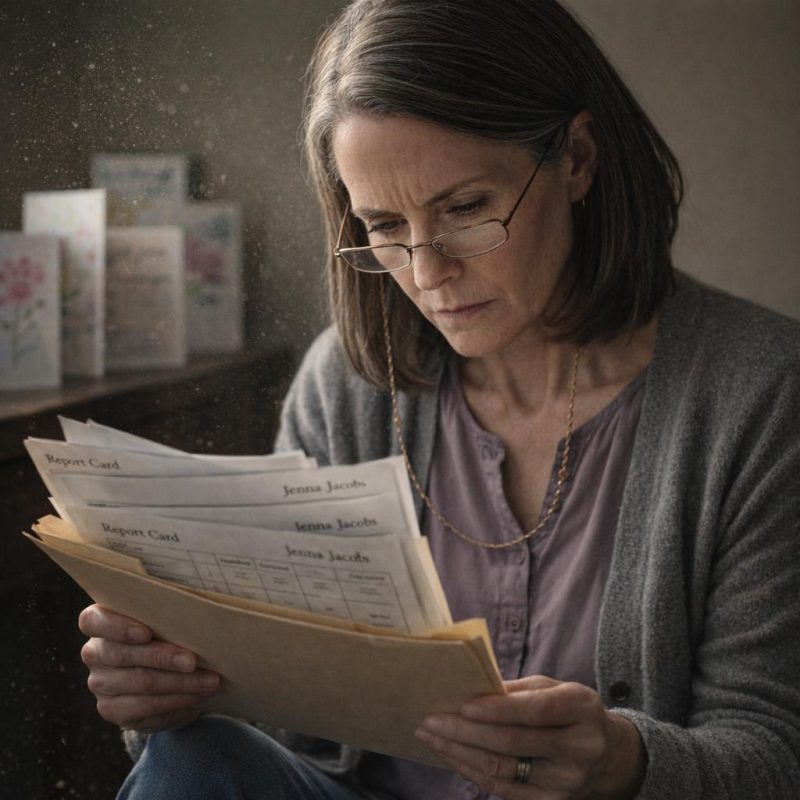 Image by RM AI
The Secret Child
I spread everything out on the garage floor — the photographs, the birthday cards, the payment records, the school documents — and just looked at it all together for the first time. Separately, each piece had felt strange but explainable. Together, they told a different story. It looked like someone in my family had been involved with a child named Sophie Hayes for years — but I couldn't say how, or why, or who. The school records went back nearly a decade. The payments were regular, consistent, the kind of thing you set up and maintain on purpose. The birthday cards were personal — not generic, not obligatory. Whoever sent them knew this girl. The photographs showed her growing up, year by year, someone tracking her life from a distance. I sat back on my heels and tried to think clearly. Megan's name appeared on some of the documents, but the payments had started before Megan would have had the means to manage something like this on her own. Robert had been alive when this began. Eric had been in the picture for years too. I kept turning the same question over: whose child was Sophie Hayes? A daughter nobody mentioned. A teenager now, based on the most recent records. I needed to be careful, needed to think before I said a word to anyone. But I couldn't stop staring at those three names — Megan, Eric, Robert — and wondering which one of them was connected to this girl.
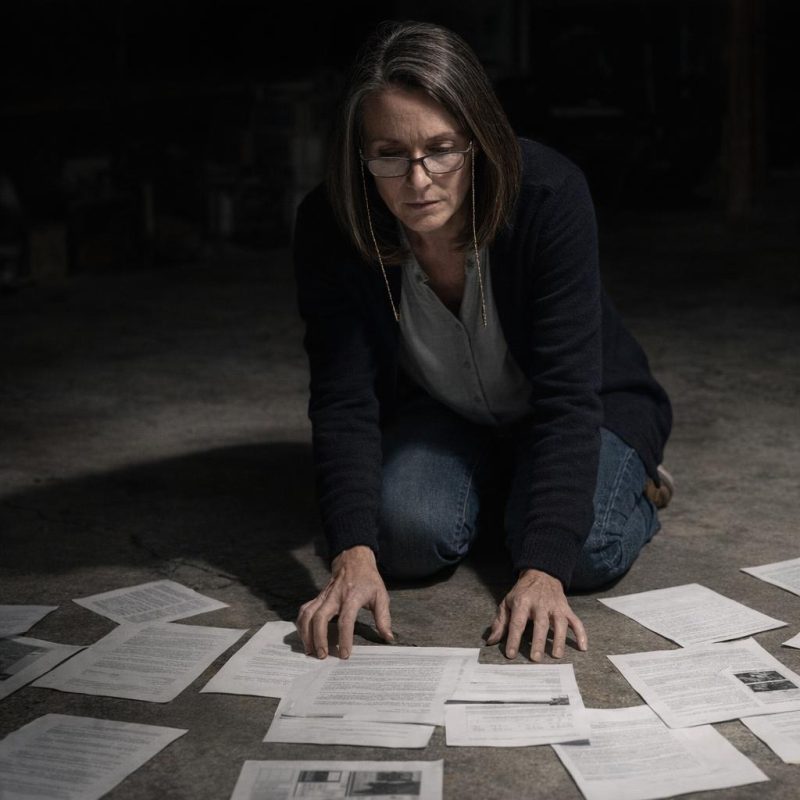 Image by RM AI
Quiet Investigation
The next morning I clipped the leash onto Megan's dog and walked the neighborhood like I had somewhere to be. I didn't. I was looking for conversation. Mrs. Chen was out front deadheading her roses, which felt like a small gift from the universe. She's the kind of neighbor who notices things — the kind who remembers what car was parked where and on which Tuesday. I kept my voice easy, asked how she'd been, mentioned I was staying at Megan's for a few weeks. She seemed genuinely pleased to chat. I steered things gently, asked if Megan and Eric seemed to be doing well, whether they had people over much. Mrs. Chen smiled and said they seemed like a lovely couple, very private, kept to themselves mostly. I asked if she'd noticed any regular visitors — anyone coming and going often. She thought about it and shook her head. Nothing that stood out, she said. I tried one more house on the way back, a man I'd seen mowing his lawn a few times. He barely knew Megan's name. Nobody had seen anything unusual. Nobody mentioned a child. Nobody mentioned a woman. I thanked them both and walked back to the house, the dog trotting ahead of me, unbothered. I sat in the car for a while after I got back, the engine off, the street quiet around me, no closer to anything than I'd been that morning.
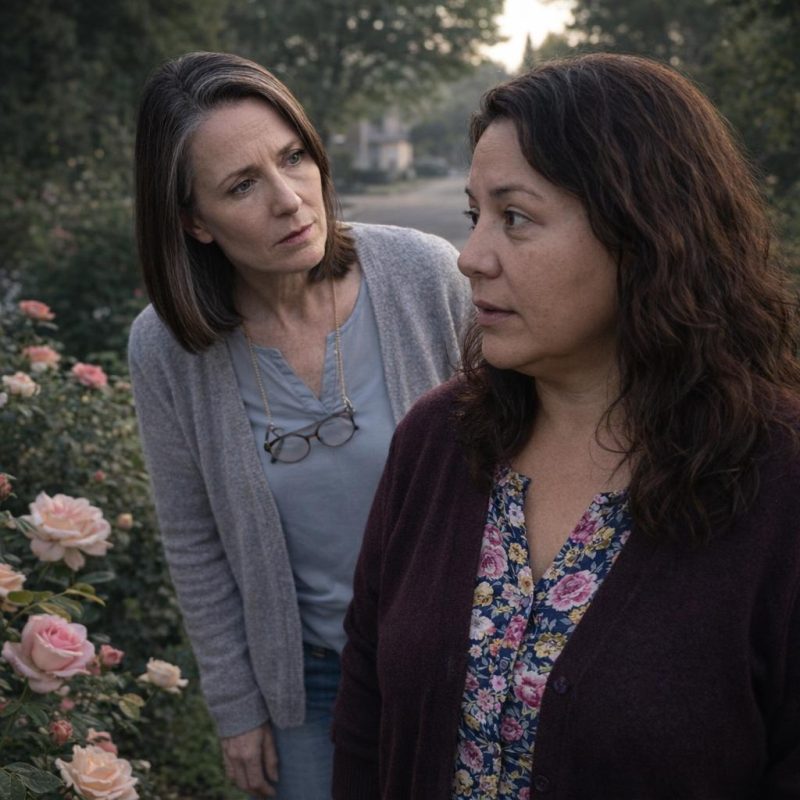 Image by RM AI
Old Family Photos
I found the photo albums on the living room shelf, three of them, the thick kind with plastic sleeves that crinkle when you turn the pages. I told myself I was just looking. I started with the oldest one — holidays, birthdays, the kind of gatherings where everyone ends up in the same kitchen. I went through every face. I was looking for the woman from the garage photographs, the one standing with Sophie in the pictures I'd found. She wasn't there. I went through the second album, then the third. Christmas dinners, a Fourth of July somewhere with a lake in the background, Megan's college graduation. I studied Robert's face in each one — that steady, familiar expression I'd known for thirty-five years. I looked at Megan at different ages, watched her grow up across the pages the way you do when you flip through old pictures. Nothing. No trace of the woman. No child I didn't recognize. I tried to think whether there had been gatherings I hadn't attended, trips I hadn't been part of, whole stretches of time I simply hadn't been present for. There were some. Of course there were some. I closed the last album and set it back on the shelf. The faces in those photographs were people I thought I knew completely, and sitting there with the albums stacked neatly in front of me, I wasn't entirely sure that was true anymore.
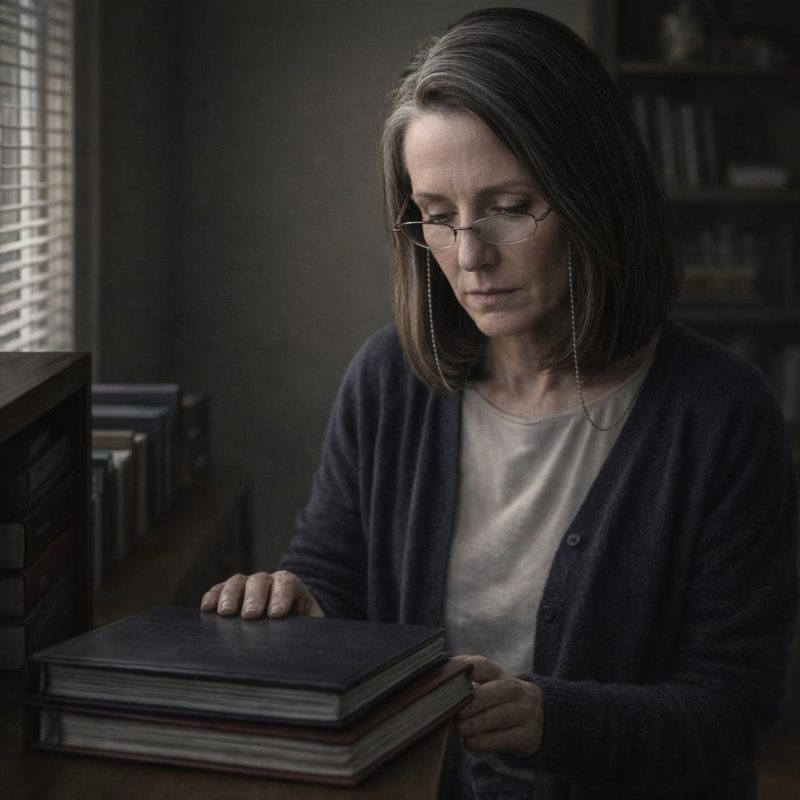 Image by RM AI
Eric's Strange Behavior
I started thinking about Eric. Not the Eric who showed up to holidays and helped carry things in from the car, but the other version — the one I'd noticed in small moments and filed away without meaning to. He was always polite, always composed, but there had been times when something else moved underneath that. I remembered a Thanksgiving, maybe four years back, when his phone buzzed twice during dinner and he excused himself both times. Megan had said something about a work project, and I'd accepted that without question. I thought about a Christmas Eve when he'd arrived nearly two hours late and seemed distracted for the rest of the night, present in body but somewhere else entirely. Megan had made excuses then too — traffic, a last-minute call from a client. I'd believed her because I had no reason not to. There were other moments, smaller ones. Times he'd drifted to the edge of a room during a conversation. Times he'd checked his phone under the table when he thought no one was looking. I'd always told myself he was just a private person, that some people carry their work home with them. But now those moments felt different when I looked at them all together. I kept coming back to one dinner in particular — the way he'd stood up mid-meal, phone pressed to his ear, and walked quickly toward the back of the house.
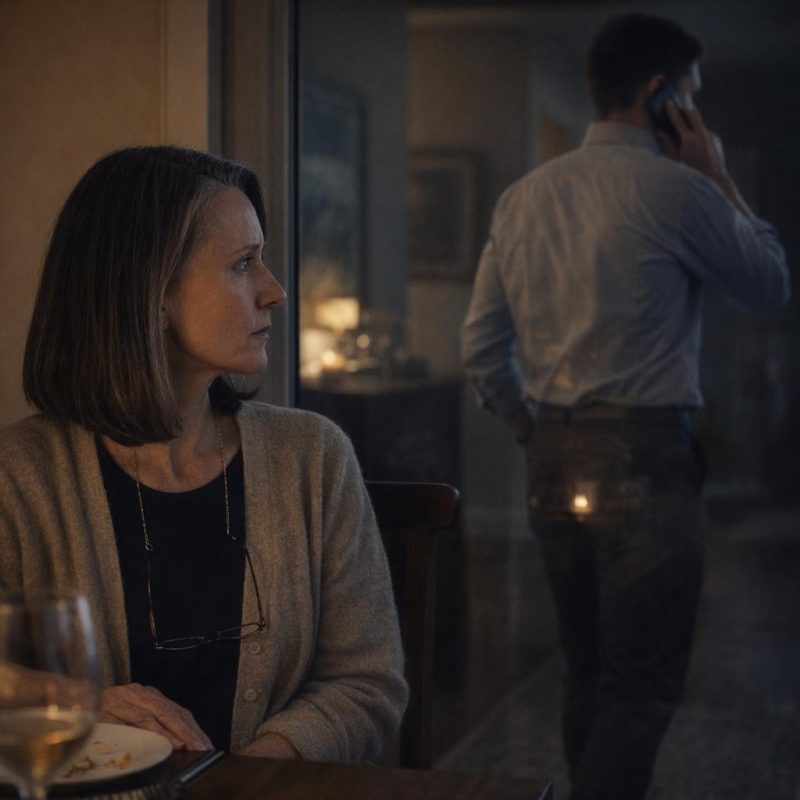 Image by RM AI
Watching Eric Closely
Megan called for a video chat two days into my second week, just to check in, she said. I propped the phone against the fruit bowl and kept my voice light. We talked about the house, the dog, whether I'd found everything I needed. About ten minutes in, Eric appeared in the background, moving through what looked like the hotel room behind her. He gave a small wave toward the camera and kept moving. I watched him. He stayed near the edge of the frame, not quite in it, not quite out of it. When Megan mentioned she was thinking about coming home a few days early — that the conference was wrapping up faster than expected — I saw Eric glance toward her. It was quick. He said something I couldn't fully hear, something about checking the flights, and then he stepped out of frame entirely. Megan didn't seem to notice anything. She kept talking about the conference schedule, asked if I'd been sleeping okay in the guest room. I said yes and smiled and asked a few more questions to keep things normal. But I kept thinking about that glance. The way his expression had shifted — just for a second, just enough — when she mentioned coming home early. I couldn't say what it meant. I just knew I'd seen it, and I couldn't unfold it back into nothing.
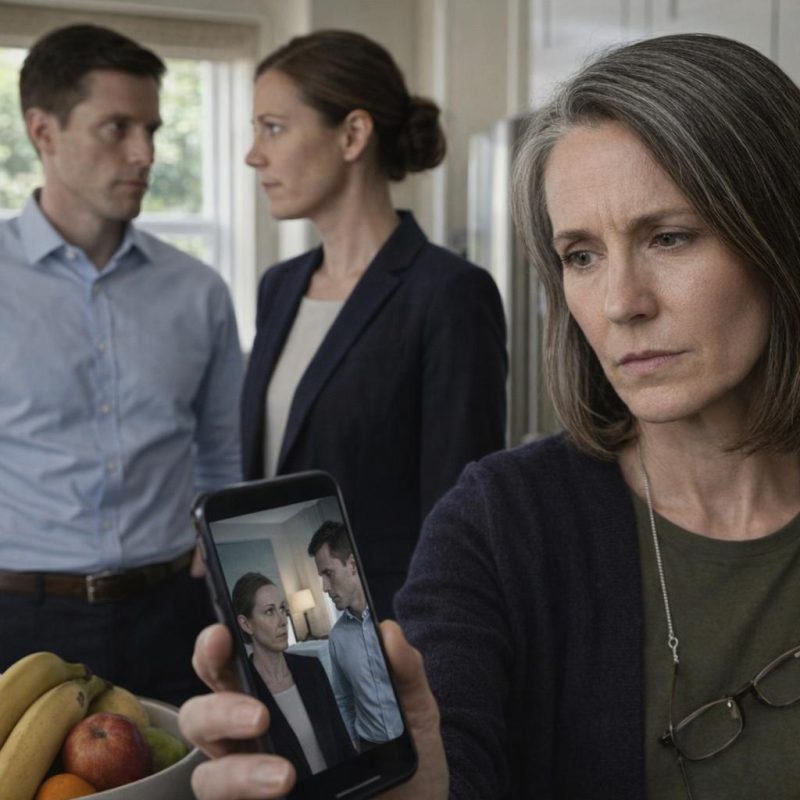 Image by RM AI
Neighbors' Hints
I ran into Mrs. Chen again two days later, this time at the end of the block while the dog investigated a patch of grass with great seriousness. She asked how the house-sitting was going, and I said fine, quiet, which was mostly true. I let the conversation find its own pace before I steered it. I mentioned that Eric traveled a lot for work, asked if she'd ever noticed him keeping odd hours. She tilted her head like she was sorting through her memory. Actually, yes, she said. She'd seen his car leaving late at night a handful of times over the past year or so. Not every week, but often enough that she'd noticed. She'd assumed it was work — early flights, late calls, that sort of thing. I asked if he'd seemed stressed on those occasions. She said he always looked preoccupied when she saw him, like he had something on his mind, but she'd never thought much of it. She didn't know where he went. She hadn't seen anyone with him. I thanked her and walked the dog back toward the house, turning everything over quietly. It wasn't proof of anything. I knew that. But it was one more piece that didn't quite fit the picture I'd always had of Eric, and I sat on the porch steps for a long time after I got back, the dog curled at my feet, the street going still around me.
 Image by RM AI
Building the Case Against Eric
That evening I went back to the garage. I spread the documents out again, but this time I was looking at them differently — I was looking at them with Eric in mind. I went through the payment records slowly, writing down every date I could find on a notepad. Then I sat with the dates and tried to match them against what I remembered of the past several years. There was a payment from a March when I thought Eric had been away for a conference in Atlanta — I wasn't sure, but the timing nagged at me. Another from a November when Megan had mentioned he was in Seattle for the better part of a week. I found a letter tucked between two of the payment records — brief, no full names, just a mention of a meeting in a city I recognized as somewhere Eric had traveled for work at least twice. I couldn't be certain. Memory isn't a calendar, and I was working from impressions and half-remembered conversations. But the overlaps kept appearing, one after another, and I couldn't dismiss all of them as coincidence. I thought about Megan — whether she had any idea, whether she was covering for him or genuinely in the dark. The thought of it made something tighten in my chest. I sat surrounded by the papers, the dates circled in my own handwriting, the overlaps staring back at me no matter how many times I looked away.
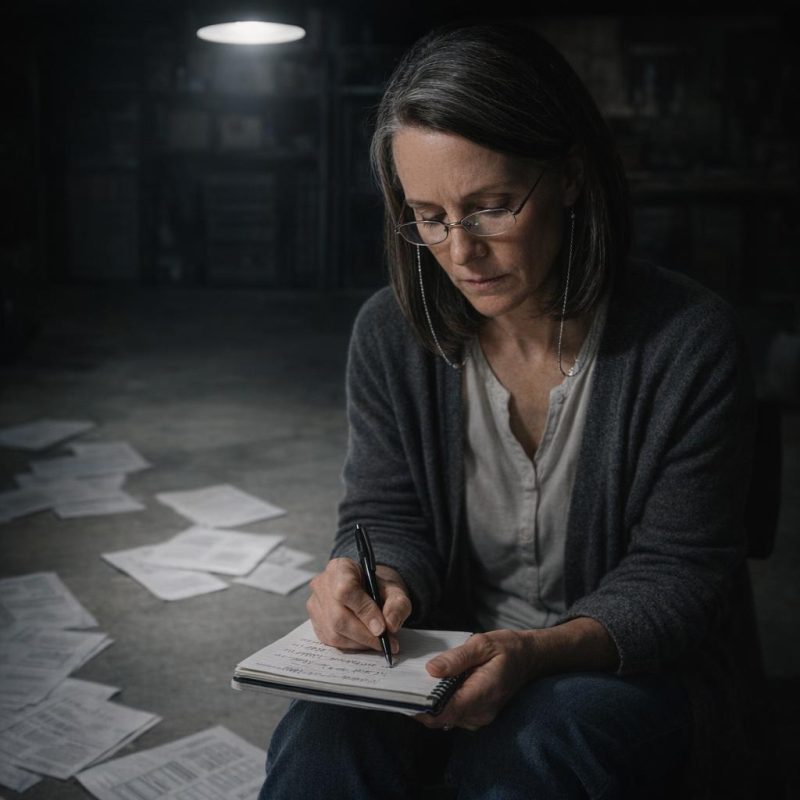 Image by RM AI
The Timeline
I found a piece of blank paper and wrote it all out properly — a real timeline, dates down the left margin, notes beside each one. Every payment I could date. Every letter with a location mentioned. Every trip of Eric's I could remember, cross-checked against what Megan had told me over the years. I worked slowly, going back through the documents each time I added a new entry. When I finished, I sat back and looked at what I'd made. Several of the payment dates fell within days of trips Eric had taken. The city mentioned in the letter matched a place I thought he'd visited twice, though I couldn't be sure. I looked at Sophie's school records again and tried to work backward from her age — the oldest records put her starting school roughly seventeen years ago, give or take. I thought about where Eric had been seventeen years ago, what he and Megan's life had looked like then, whether there had been anything I'd noticed and set aside. I couldn't land on anything solid. The dates might be coincidence. The city might mean nothing. But the questions kept circling, and I couldn't find a way to set them down. I set the pen down and looked at the page in front of me, all those dates and notes in my own handwriting, and my stomach turned over slowly and didn't stop.
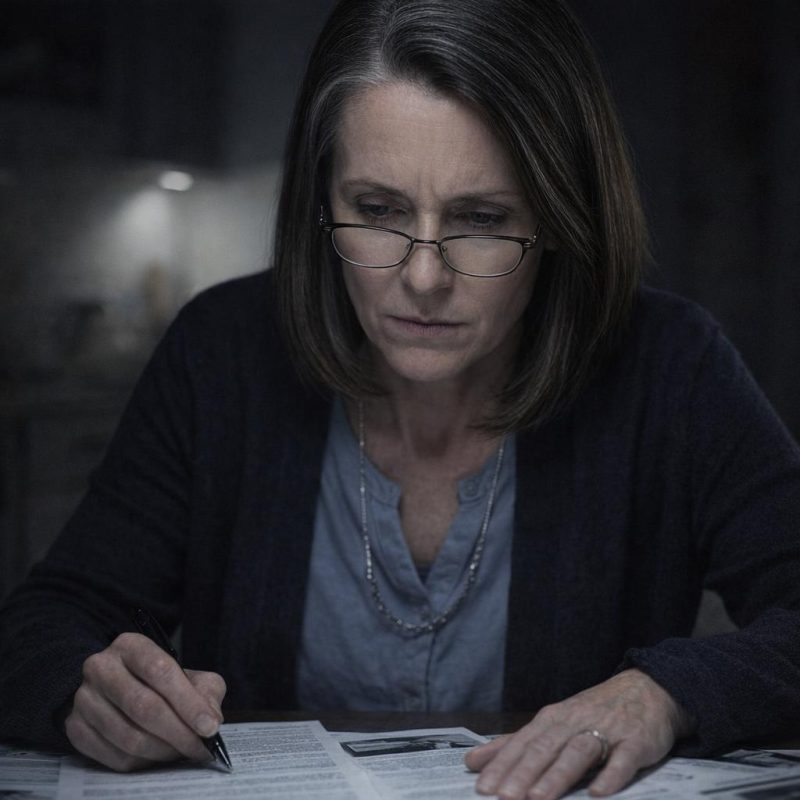 Image by RM AI
Megan's Protection
I sat at the kitchen table for a long time after I finished the timeline, just staring at it. Then I made myself go back through the folders one more time, slower this time, checking every loose paper I'd skimmed past before. That's when I found them — a small stack of notes tucked inside a manila envelope near the back of the drawer, written in handwriting I knew as well as my own. Megan's handwriting. Neat, slanted, the way she'd written since middle school. The notes were brief, just a few lines each, but they were specific. Sophie's name appeared on two of them. One referenced a tuition deadline. Another mentioned a balance that needed to be covered before the end of the semester. I read each one twice, then set them down on the table beside my timeline. My chest felt tight in a way that had nothing to do with the heat in the room. These notes had dates going back at least two years. Whatever this was, Megan had been part of it — quietly, without ever saying a word to me. I kept trying to find another explanation, some angle I was missing, but I couldn't get there. I turned the last note over in my hands, and there it was in her handwriting, plain as anything: *for Sophie's college fund*.
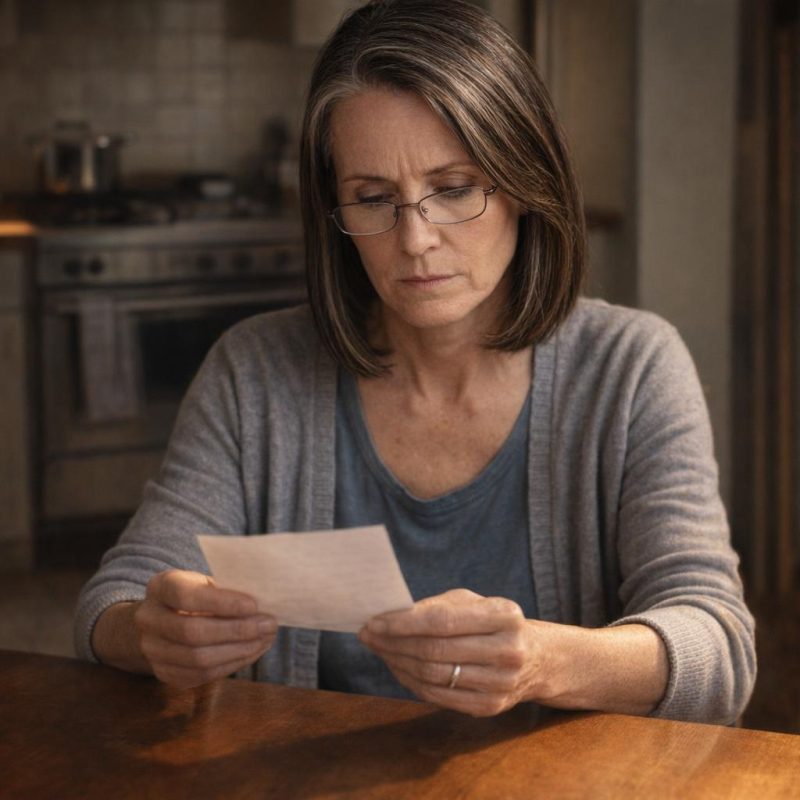 Image by RM AI
Questioning the Marriage
I put the notes down and walked into the living room because I needed to be somewhere that didn't feel like a crime scene. That was a mistake. The living room was full of them — photos on the shelves, photos on the side table, a whole row of framed pictures along the wall going back years. Megan and Eric at their wedding. Megan and Eric at some anniversary dinner, laughing at the camera. Christmas photos, vacation photos, the kind of ordinary life documentation that's supposed to make you feel warm when you look at it. I didn't feel warm. I stood in front of the wedding photo for a long time. It was a good photo — Megan looked beautiful, genuinely happy, the kind of happy you can't fake for a camera. I'd been so sure of that when I first saw it. I'd cried at that wedding. I'd thought Eric was exactly what she needed. Now I was standing here with Megan's handwriting still fresh in my mind, trying to reconcile the woman in that photo with the woman who had been quietly writing checks for someone else's child for two years without telling me. I looked at every photo on that wall and tried to find the seams, the places where the happiness might have been performance. Then I stopped at the wedding photo again, and this time I looked at Eric — really looked at him — and something about the set of his expression made me go still.
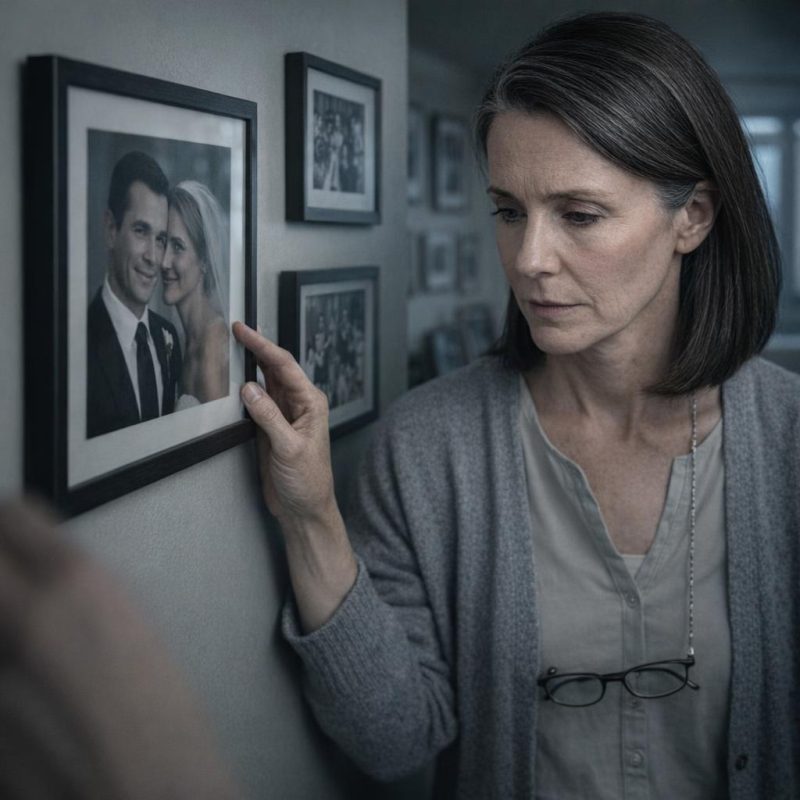 Image by RM AI
The Confrontation Debate
I went back to the kitchen and picked up my phone. I put it down. I picked it up again. I typed out a message to Megan — something like *I need to ask you about something I found* — and stared at it for a full minute before deleting it. Then I tried a different version, softer, less accusatory, and deleted that one too. I thought about calling instead, just hearing her voice, seeing if anything in her tone gave something away. But I couldn't do it. She was on vacation with Eric, and whatever was happening between them, whatever she'd been carrying around for two years, she'd chosen not to tell me. A phone call wasn't going to change that. If I called her now, she'd either deny everything or shut down completely, and I'd lose whatever chance I had at a real conversation. I needed to see her face. I needed to be in the same room with her when I asked, so she couldn't just go quiet and wait me out. I set the phone face-down on the table and left it there. Four more days until she was home. I could carry this for four more days. It wasn't a comfortable thought, but it was the only one that made sense — I would wait, and when she walked through that door, we were going to sit down together and she was going to tell me everything.
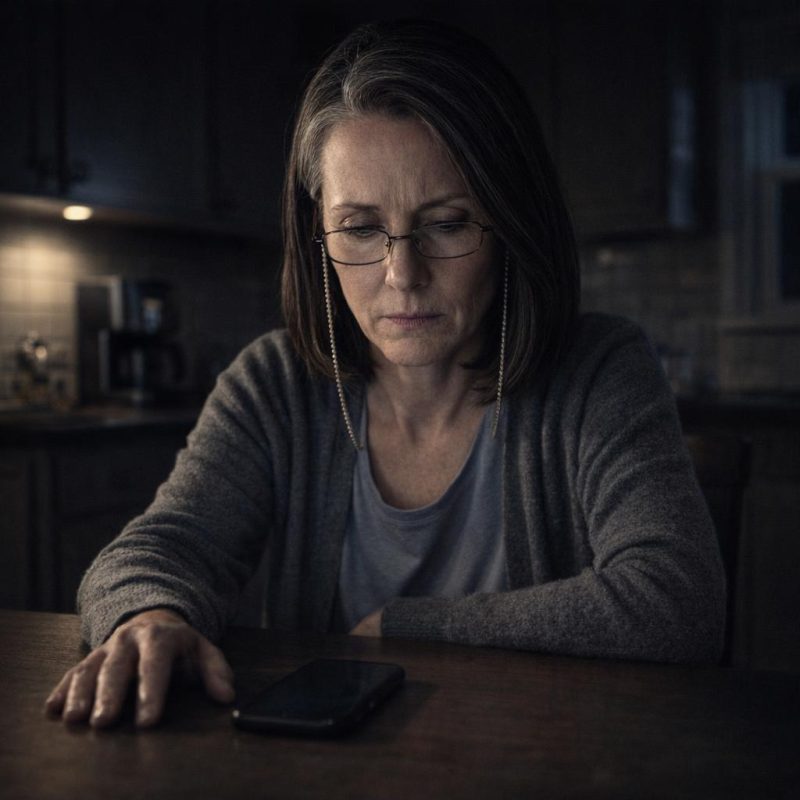 Image by RM AI
Digging Into Eric's Past
That evening I opened my laptop at the kitchen table and told myself I was being methodical. I typed Eric's full name into the search bar and worked through everything that came up — his LinkedIn profile, a few mentions in company newsletters, a photo from some industry conference two years back. Nothing unusual. I looked at his social media, what little of it was public, and scrolled back as far as it would let me. Ordinary posts. Work things. A few photos with Megan. I tried searching for the woman in the photographs using a reverse image search, uploading the clearest picture I'd found. Nothing matched. I searched for Eric's college, his hometown, the city mentioned in the letter, trying different combinations, looking for any overlap that might mean something. I found nothing that connected him to the woman, nothing that connected him to Sophie, nothing that even suggested a life before Megan that he'd kept hidden. I sat back and rubbed my eyes. The screen was full of search results that added up to exactly zero. I'd been so certain there was something to find, some thread I could pull that would make the whole picture clear. But the internet, for once, had nothing useful to offer me, and the silence of all those empty results settled over the kitchen like something I couldn't shake off.
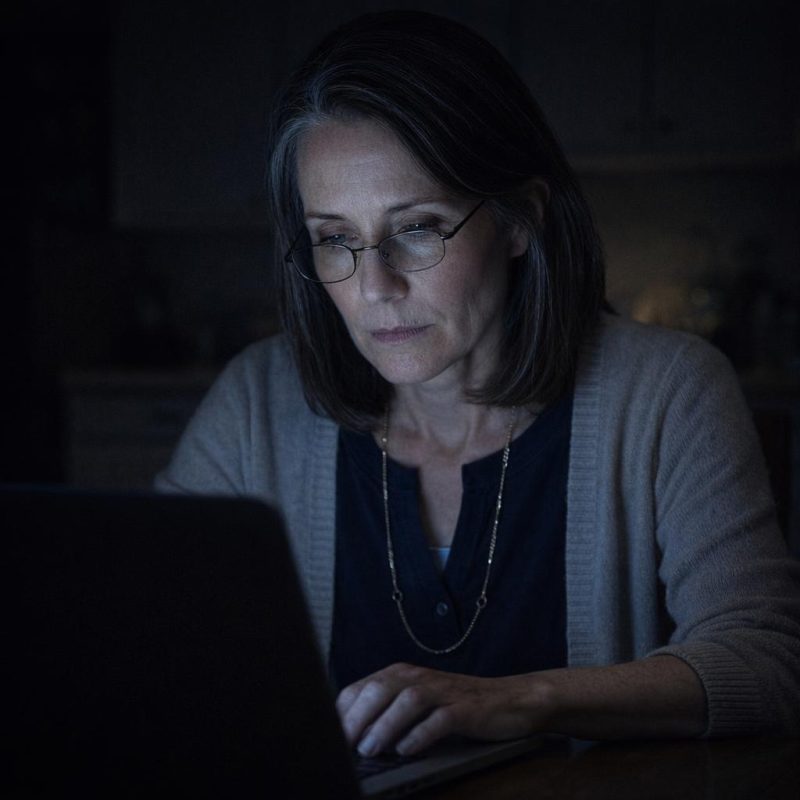 Image by RM AI
The Timeline Doesn't Fit
The next morning I went back to Sophie's school records. I'd been working from an assumption — that Sophie was roughly seventeen, maybe just turned eighteen — and I'd built my whole timeline around that. But I'd been sloppy about it. I hadn't actually looked at the birth year on the earliest document; I'd just counted backward from the school start date and assumed. So I sat down and did it properly this time, going through each record in order, looking for the oldest one. The earliest enrollment form had a birth date printed clearly at the top. I stared at it. Then I pulled out my timeline and did the math again, slowly, twice. If that date was right, Sophie wasn't seventeen. She was closer to nineteen, maybe twenty. I'd miscounted by at least two years, possibly more. I went back through my notes, checking the dates I'd matched against Eric's travel schedule, and the whole structure I'd built started to come apart. I checked the records a third time, hoping I'd made an arithmetic error. I hadn't. I kept digging, sorting through the remaining papers one by one, until near the bottom of the stack I found what looked like a birth certificate — and the year printed on it was earlier than Eric and Megan had even met.
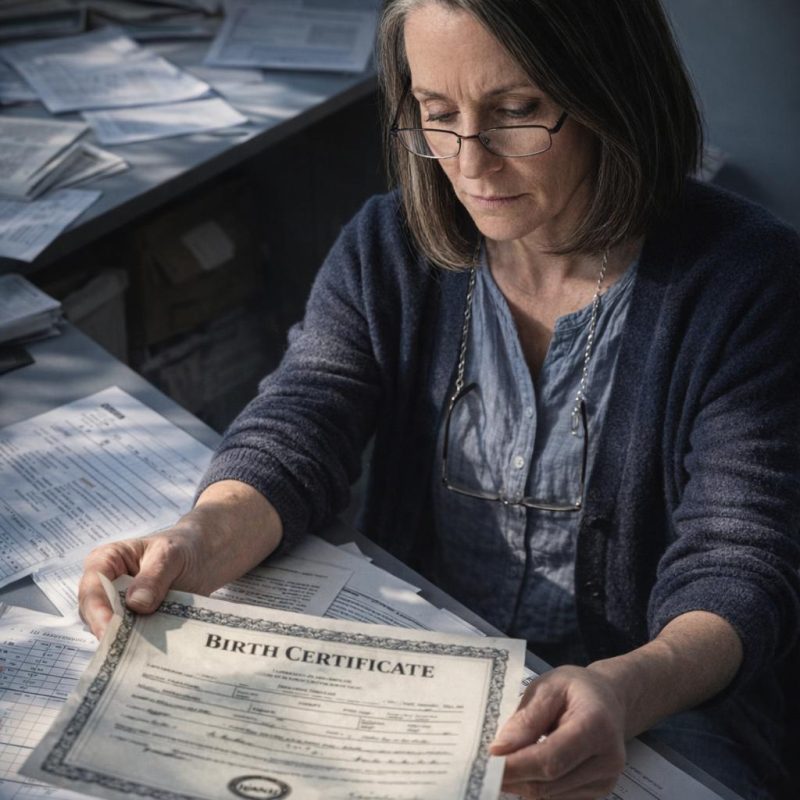 Image by RM AI
Eric's Innocence
I sat with that birth certificate for a long time. I turned it over, checked the name, checked the date again. There was no misreading it. If Sophie had been born that year, Eric couldn't have had anything to do with it — he and Megan hadn't met until years later, and I knew that timeline well enough to be certain. I'd been at the dinner where Megan first brought him home. I remembered the year clearly. The math didn't work, not even close. I thought about all the hours I'd spent building that theory — the travel dates, the city in the letter, the careful notes I'd made in the margins. I'd been so convinced I was following a real thread. Instead I'd been following my own anxiety in a circle. I felt foolish in a way that sat heavy and specific, not the quick embarrassment of a small mistake but something slower and more uncomfortable. And underneath the embarrassment was something worse: if it wasn't Eric, then I had no idea who it was. Someone had been sending money to this woman for years. Someone had signed those first authorization forms. Someone had written those careful notes about Sophie's tuition. I didn't have a name anymore, just a shape where a name should be. I got up eventually and walked out to the garage, and I stood there in the dim and the quiet, surrounded by the ordinary clutter of my daughter's life, with the birth certificate still in my hand and no theory left to hold onto.
 Image by RM AI
Robert's Name Appears
I went back inside and made myself start over. I pulled every folder out of the drawer and laid them across the kitchen table in order, oldest to newest, and went through each one page by page. I'd been moving fast before, looking for what I expected to find. This time I slowed down. Near the bottom of the pile was a folder I'd barely glanced at — it was thinner than the others, and the dates on the tab were older, going back further than anything else in the drawer. Inside were what looked like bank authorization forms, the kind you fill out to set up a recurring transfer. They were old, the paper slightly yellowed at the edges. I picked up the first one and looked at the signature line. I had to read it twice. Then I set it down and picked up the second form, and the third. The same signature on each one, the same careful, slightly formal handwriting I had known for thirty-five years. Robert's handwriting. My late husband's name, signed at the bottom of each form, on documents dated years before Eric had ever been part of this family. There were notes attached to two of the forms, brief ones, in his hand. I sat down slowly at the kitchen table, the papers spread out in front of me, and I held them the way you hold something you're not sure is real — carefully, like it might change if you pressed too hard.
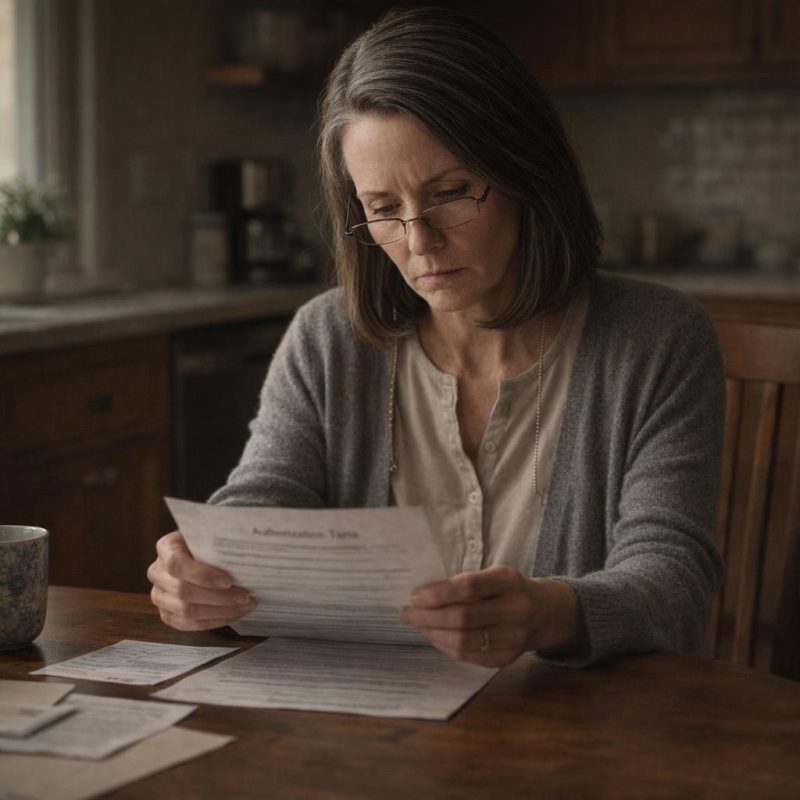 Image by RM AI
The Secret Relationship
I don't know how long I sat there before I started looking through the rest of the folder. Tucked behind the authorization forms were letters — four of them, handwritten on plain paper, folded in thirds the way Robert always folded things. His handwriting, unmistakably. I unfolded the first one slowly. It wasn't dated, but the paper had the same faint yellowing as the forms. The letter was addressed to a woman by her first name — a name I didn't recognize. The tone was warm, careful, the way Robert wrote when he was trying to say something difficult without causing pain. He wrote about meetings, about feeling pulled in two directions, about a responsibility he couldn't put into words for the people closest to him. He wrote about Sophie by name — just once, near the end of the first letter — and the tenderness in that single line made my throat close. I set that letter down and picked up the next one. More of the same: the weight of something unspoken, the sense that he was carrying something he couldn't put down. I read every word twice, looking for something that would make it make sense, some explanation I could live with. The last letter was the shortest. I got to the final paragraph and my hands went still on the page, because there it was in his handwriting, in his voice, the words sitting there like they'd been waiting for me: *I have to protect her, even if it means keeping secrets*.
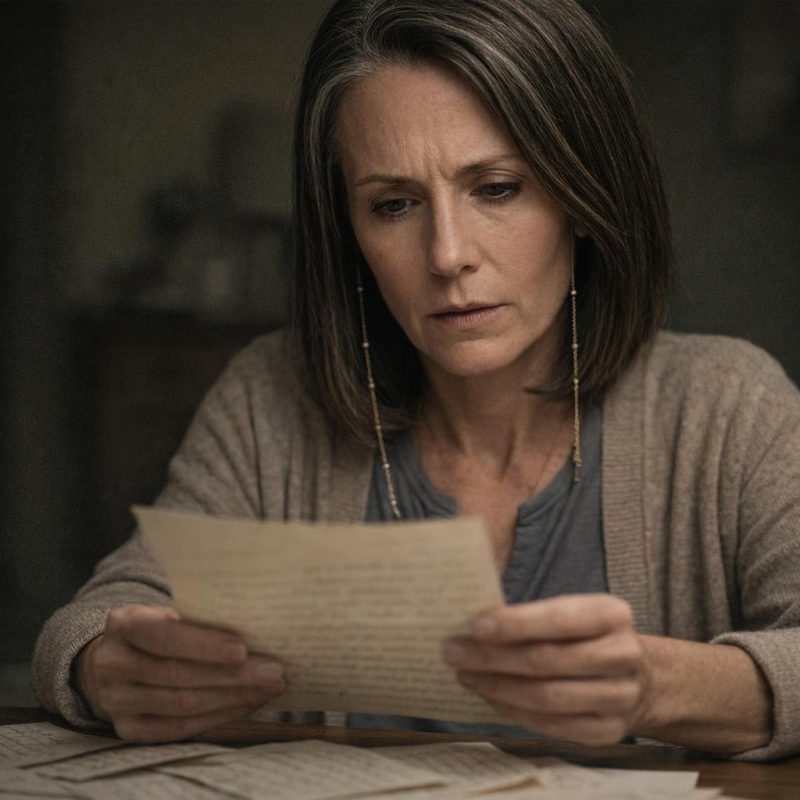 Image by RM AI
Years of Deception
I spread everything out on the kitchen table and started sorting by date. It took me a while — some of the documents had no dates at all, and I had to piece together the order from context, from references to seasons and school years and ages. But once I had them laid out, the timeline was impossible to ignore. The earliest letter I could pin down was from over ten years before Robert died. Ten years. The financial records stretched across nearly the same span — regular transfers, consistent amounts, never missing a month that I could find. There were references to birthdays. To Christmases. To a school play, a soccer tournament, a graduation ceremony I had never heard about. He had been there for those things, or close enough to them that he'd written about them with the kind of warmth you only have when something matters to you. I thought about every late night at the office. Every weekend trip he said was work. Every time he'd taken a phone call in the other room and come back looking like nothing had happened. I had believed every single explanation. I had never once questioned him. The documents sat there in their neat rows across the table, and I just stared at them, too hollowed out to cry.
 Image by RM AI
The Secret Daughter
I almost missed it. The envelope was tucked behind the last of the financial records, cream-colored and slightly thicker than the others, and it had Megan's name on the front in Robert's handwriting. Beneath her name, in smaller letters: *to be opened after my death*. My hands went cold. I sat with it for a long moment before I opened it, telling myself I had every right to, that whatever was inside had already shaped my life without my knowledge. The letter inside was two pages, front and back, dated about three months before Robert passed. He told Megan he was sorry for the weight he was about to place on her. He said there was a girl — he used the word *daughter* — that he had kept out of sight for years, and that he needed Megan to continue what he had been doing for her. He said he couldn't ask me. He said he didn't know how to explain it in a way I could forgive. He asked Megan to be kind to this girl, to make sure she had what she needed, and he apologized again at the end in a way that sounded like a man who had run out of other words. I set the letter down on the table and sat very still, the word *daughter* sitting somewhere in the middle of my chest like a stone I couldn't move.
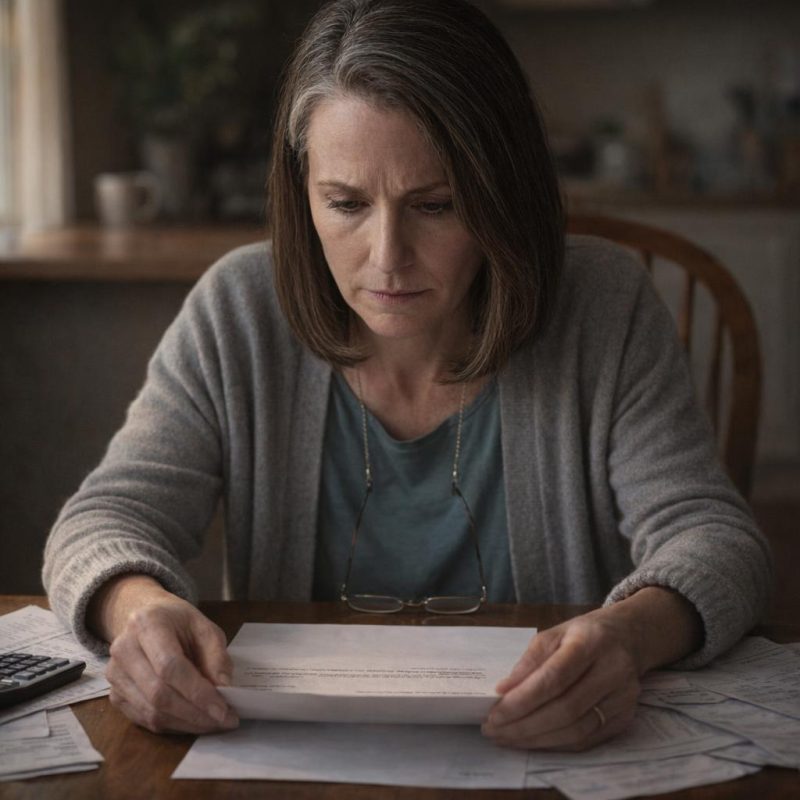 Image by RM AI
Megan Knew All Along
I kept going through the papers because I didn't know what else to do with myself. Near the bottom of the pile I found a few pages that weren't Robert's handwriting — they were Megan's, smaller and more hurried, the kind of writing you do when you're trying to get something out of your head before it disappears. Most of it was notes, practical things, amounts and dates and reminders to herself. But one page was different. It was dated about a week after Robert's funeral, and it read more like a journal entry than a list. She wrote that she had found the letter while going through his desk. She wrote that she had sat on the floor of his study for a long time before she could stand up again. She wrote that she had decided to do what he asked, because she didn't know how to refuse a dead man's last request, and because the girl hadn't done anything wrong. And then, near the end of the entry, she wrote that she couldn't tell me. That she had thought about it and thought about it and kept coming back to the same answer: she couldn't tell me. I had been sitting across from my daughter at holiday dinners and Sunday phone calls for years, and she had been carrying all of this the entire time. The page ended there — that journal entry, dated the week after Robert's funeral, the one where Megan wrote that she couldn't tell me.
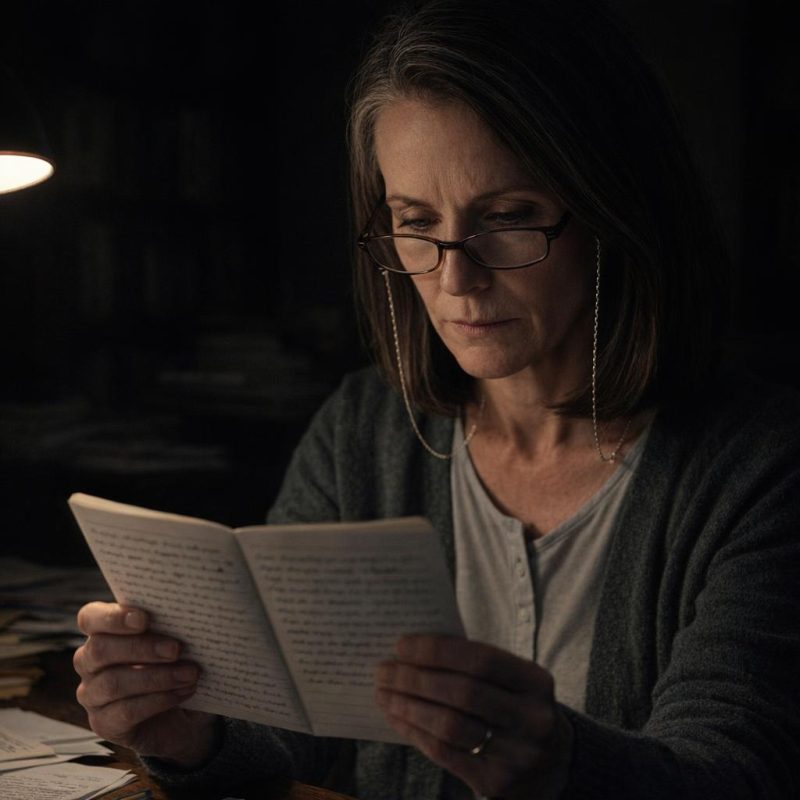 Image by RM AI
Supporting the Half-Sister
I went back through everything with Megan's involvement in mind this time, and the pattern was right there once I knew to look for it. School supplies in September. A check every month that lined up with what I now understood were tuition costs. Birthday cards — I found two of them, unsent drafts tucked into a folder, written in Megan's voice, warm and careful, the kind of thing you write to someone you've come to care about even when the circumstances are complicated. There were notes about a soccer tournament, a school trip, a college application deadline. Megan had been tracking this girl's life the way you track someone who matters to you. I thought about all the times Megan had seemed distracted, or tired, or like she was carrying something she wouldn't name. I had chalked it up to her marriage, to stress, to the ordinary weight of adult life. I had never once thought to ask the right question. And then I found the photos. A small stack of them, printed on regular paper like she'd pulled them from her phone. Sophie — I knew her name by now from the documents — looked like a normal, happy teenager. In the most recent one, she and Megan were standing together outside somewhere, both of them smiling, Megan's arm around the girl's shoulders like it was the most natural thing in the world.
 Image by RM AI
Tainted Memories
I don't know why I went looking for the photo albums. Maybe I needed to see his face the way I used to see it, before all of this. I pulled the oldest one down from the shelf in the hallway and sat with it on the couch. Every picture felt different now. There was Robert at Megan's fifth birthday, laughing with a paper crown on his head. There was Robert at our twentieth anniversary dinner, his hand over mine on the tablecloth. I used to look at those photos and feel grateful. Now I just felt the distance between what I'd believed and whatever the truth actually was. I found a picture from a beach vacation — the three of us, Megan maybe twelve or thirteen, squinting into the sun. I remembered that trip. I remembered Robert saying he needed to run an errand one afternoon and being gone for almost three hours. He came back with ice cream and a sunburn and some story about the shop being farther than he'd thought. I had laughed. I had eaten the ice cream. I had not asked a single follow-up question. I sat there holding that photograph, and the memory of that afternoon — which had lived in me for twenty years as something small and sweet and ordinary — cracked open into something I didn't have a name for yet.
 Image by RM AI
Accepting the Explanation
By the time the light outside had shifted to late afternoon, I had gone through everything twice. I sat at the kitchen table with the documents in front of me and tried to just let it be what it was. Robert had a relationship with another woman. It had lasted years. There was a daughter — Sophie — who had grown up without him in her life in any official way, but with his money and eventually with Megan's quiet presence filling in the gaps he'd left. Megan had found out after he died and had made a choice to keep going, to honor what he'd asked, to protect a girl who hadn't asked to be born into any of this. I could follow the logic of it. I could even, in some exhausted and reluctant way, understand why Megan hadn't told me. That didn't make it hurt less. It just made it feel more finished, like a door that had been closed for a long time and I was only now finding the room it led to. I thought about whether I could forgive Robert. I didn't have an answer. I thought about whether I could forgive Megan. I didn't have an answer for that either. I stacked the papers into a neat pile and set them aside, and the kitchen felt very quiet around me, and I sat in it without moving.
 Image by RM AI
Finding Grim Peace
I spent most of the next day moving through the house without any real purpose. I made coffee and let it go cold. I stood in the doorway of the guest room for a while, not sure what I was looking for. At some point in the afternoon I ended up in the living room, and I sat down in Robert's old chair — the wide one near the window that he'd had since before we were married, the one I'd tried to get rid of twice and he'd always talked me out of. I hadn't sat in it much since he died. It still felt like his. I sat there and looked at the room and tried to do what I'd been telling myself to do all day, which was to accept it. He had loved me, I thought. He had also kept something enormous from me for most of our marriage. Both of those things could be true. Megan had been trying to protect me, in her way. Sophie was just a girl who needed help and had gotten it. I told myself I understood the shape of it now. I told myself there was nothing left to find. The afternoon light came through the window and fell across the arm of the chair, and I sat with my hands in my lap and let myself believe, for a little while, that I had reached the end of it.
 Image by RM AI
The Woman in the Photographs
I almost didn't go back to the folders. I'd told myself I was done, that I'd seen enough, that whatever else was in that pile couldn't change the shape of what I already knew. But something kept pulling at me — some small, persistent feeling that I hadn't quite closed the loop. I went back to the table and picked up the last folder, the one I'd only skimmed. Most of it was more of the same: receipts, a few printed emails, another authorization form. And then, near the back, a photograph. Clearer than the others I'd found. A woman, maybe early sixties in the photo, standing outside what looked like a school building. I had glanced past the earlier photos without really looking at the faces — they'd been small, slightly blurry, and I hadn't wanted to put a face to any of it. But this one was sharp. I picked it up and looked at it properly for the first time. The woman's hair. The way she held her shoulders. The particular angle of her jaw. The recognition didn't come slowly. It hit me all at once, like stepping off a curb I hadn't seen. I dropped the photograph. It was Carol.
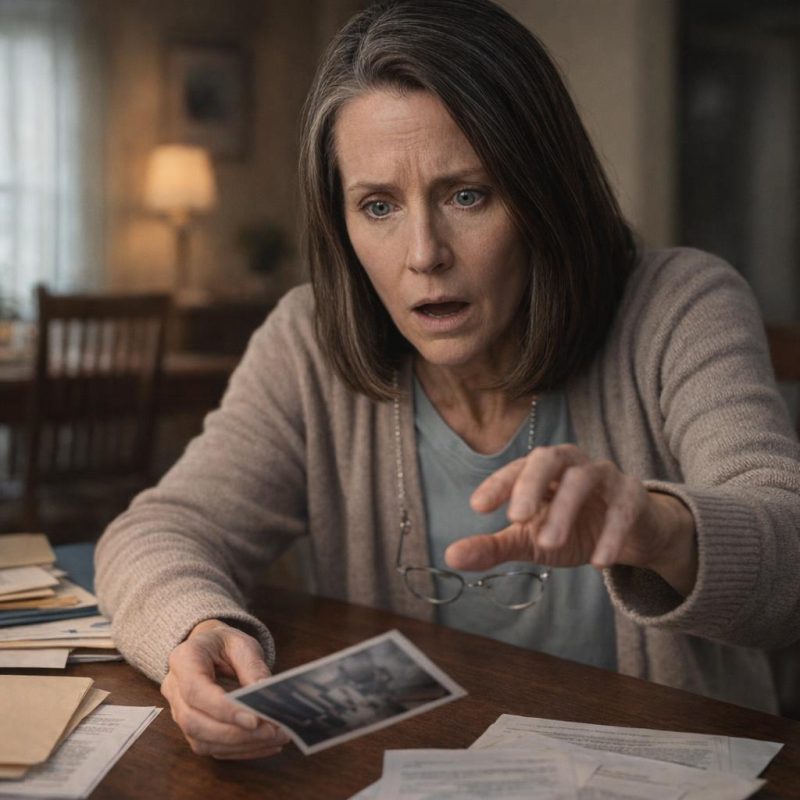 Image by RM AI
The Face of Betrayal
I picked the photograph up again with both hands, and they were shaking so badly I nearly dropped it a second time. I made myself look. Really look. The hair, the set of her shoulders, the way she tilted her chin slightly upward in photographs — I had seen that posture a thousand times across forty years of friendship. It was Carol. My best friend. The woman who had sat at my kitchen table more times than I could count, who had held my hand at Robert's graveside, who had cried with me — or what I had believed was crying with me. I thought about every holiday she had joined us for, every birthday dinner, every ordinary Sunday afternoon. I thought about the way she and Robert would sometimes drift into quiet conversation in the kitchen while I was busy elsewhere, and how I had never once questioned it because why would I? She was my best friend. He was my husband. I had trusted them both completely, without reservation, without a single shadow of doubt. And now here she was, in a photograph tucked inside a folder hidden in my daughter's garage. The sick feeling that had been sitting in my stomach spread slowly upward into my chest, and I stood there holding the image of Carol's face until the room felt very still and very far away.
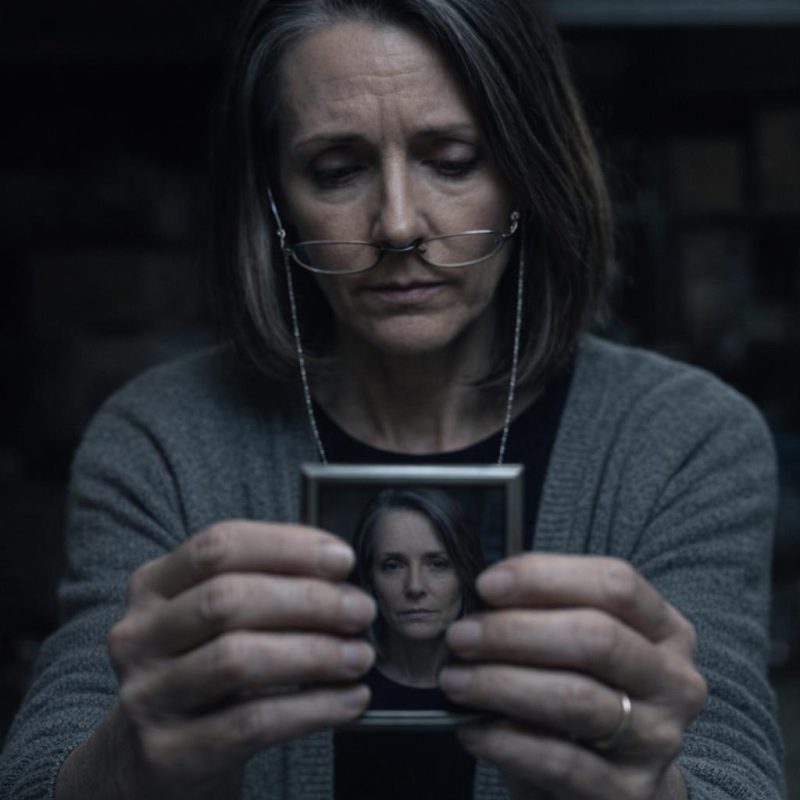 Image by RM AI
Rewriting History
I set the photograph down and sat at the workbench for a long time, and the memories came whether I wanted them to or not. Carol at our Thanksgiving table, laughing at something Robert said. Carol arriving at our Fourth of July barbecue before most of the other guests, and Robert already outside when she pulled up — I had thought nothing of it then, had been grateful he was being a good host. Carol and Robert standing together at Megan's college graduation, talking quietly off to one side while I was busy with the camera. I had a photograph of that moment somewhere. I had always thought it was sweet, the two people I loved most sharing a conversation. Now I turned it over in my mind and couldn't find the same innocence in it. I remembered Carol at the funeral — how she had wept, how I had actually leaned on her, how she had stroked my hair and told me Robert had been one of the finest men she had ever known. I had been grateful for those words. I had held onto them. And I remembered Megan and Carol's closeness over the years, how natural it had always seemed. Every memory I reached for came back changed, like photographs left too long in the light. None of them looked quite the way I remembered them, and I knew they never would again.
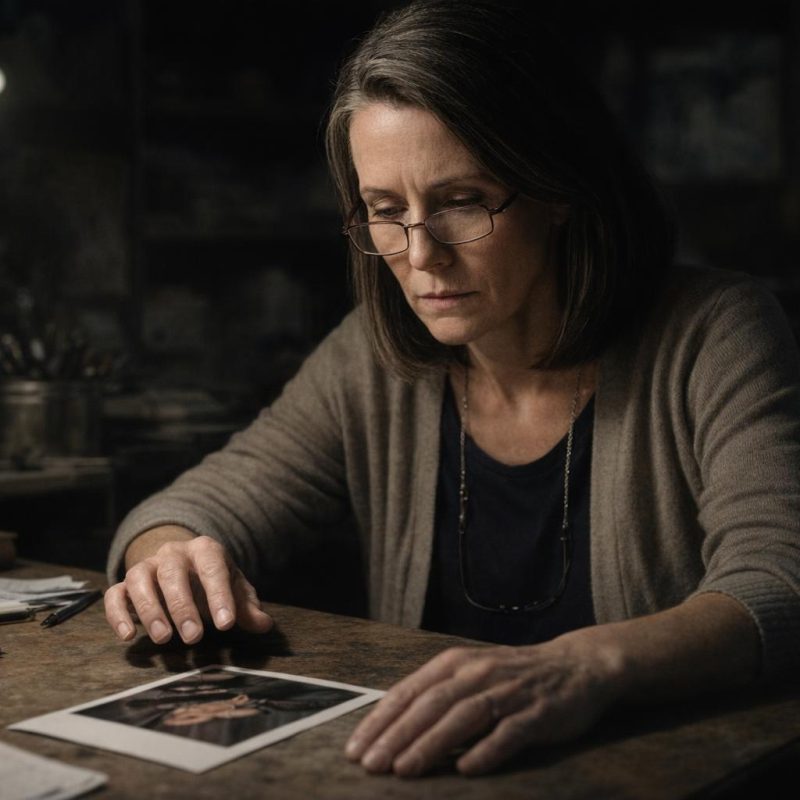 Image by RM AI
The Confrontation Plan
I couldn't sit still anymore. I pushed up from the workbench and started pacing the length of the garage, stepping around the folders I'd left spread across the floor. I kept rehearsing what I would say — starting sentences in my head and abandoning them halfway through because none of them felt like enough. How do you ask your best friend of forty years why she let you grieve alone? How do you ask her what she was to your husband? I gathered the clearest photographs and set them in a stack. I had evidence. I had dates, receipts, her face in black and white. I wasn't imagining this. Whatever Carol's explanation was, she owed me one, and she owed it to me now — not tomorrow, not after I'd had time to calm down, but right now while every nerve in my body was still raw and awake. I walked back into the house, picked up my phone from the kitchen counter, and pulled up her name in my contacts. Carol. Forty years of history sitting right there under a single name. I stood at the kitchen window for a moment, looking out at nothing, trying to steady my breathing. It didn't work. My hands were trembling as I pressed call.
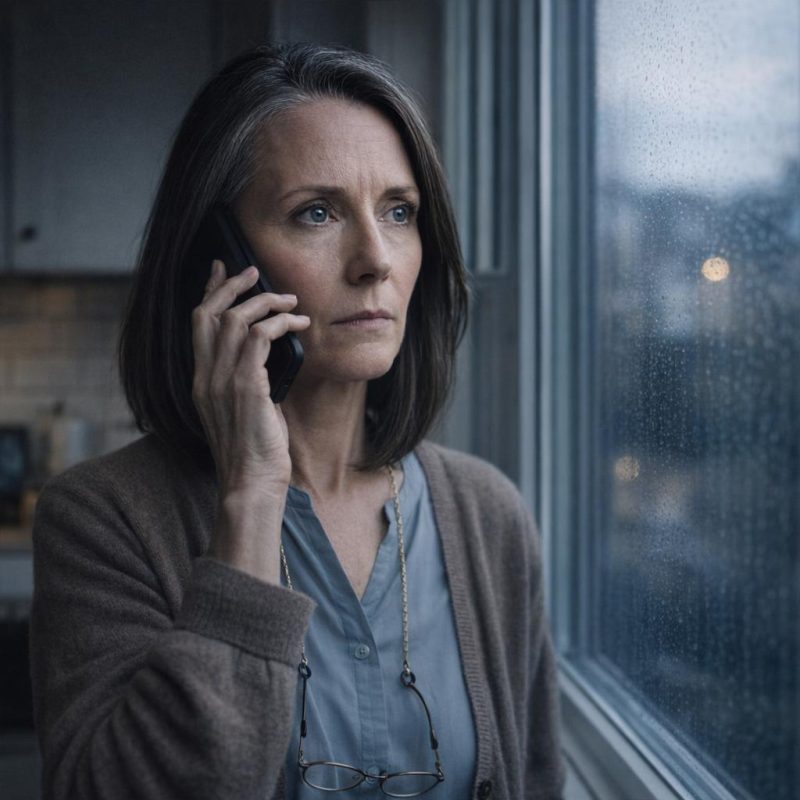 Image by RM AI
Carol's Confusion
She picked up on the third ring, sounding exactly like herself — warm, a little distracted, the way she always answered when she was in the middle of something. "Jenna, hi, I was just thinking about you —" I didn't let her finish. I told her I had found the photographs. I told her I had been through the folders in Megan's garage and I knew about Sophie and I knew she had been in Robert's life in ways she had never told me. My voice came out harder than I intended, but I didn't try to soften it. There was a long pause on her end. When she spoke again, the warmth was gone. "What are you — Jenna, what photographs? What are you talking about?" She sounded genuinely thrown, not caught. I pushed harder. I told her I had seen her face, that I recognized her, that I wasn't confused about what I was looking at. Another silence, and then she started to say something about Sophie — her voice had changed again, gone tight and careful — and then she said I had misunderstood everything, that it wasn't what I thought, that she could explain. I told her to explain it then. I heard her draw a breath. And then her voice broke apart completely, dropping into something frightened and small, and she said she didn't understand what I thought she had done.
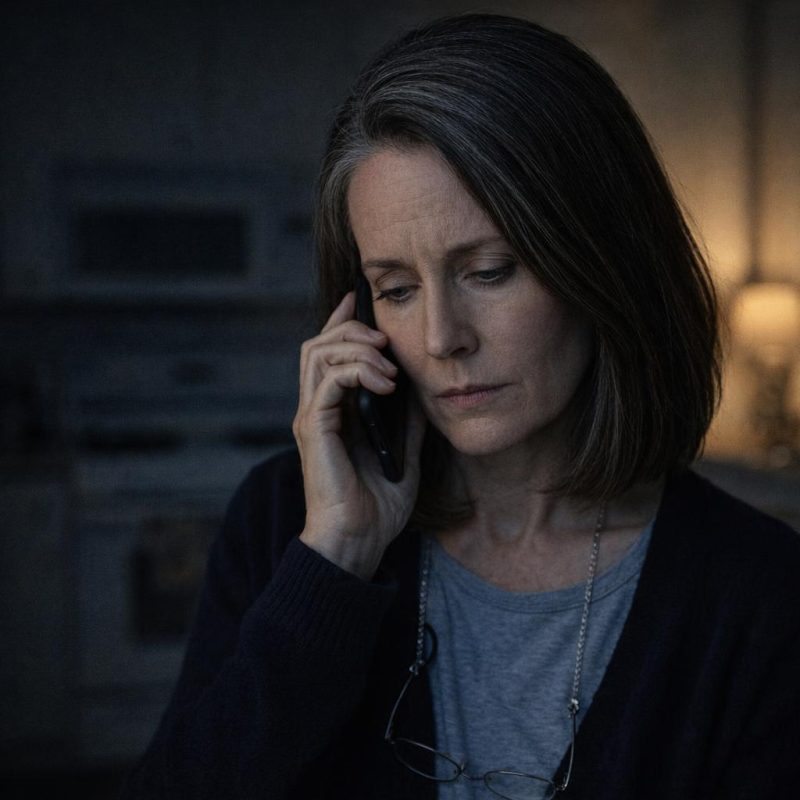 Image by RM AI
The Truth Emerges
And then I heard a sound that stopped me cold — a sharp intake of breath, and then a thud, like something heavy hitting the floor. "Carol?" Nothing. I called her name again, louder. I could hear the phone on her end still connected, picking up ambient sound — a chair scraping, a door, and then Carol's voice from a distance, thin and strained, calling for help. My stomach dropped. I kept saying her name into the phone even though I knew she couldn't hear me anymore. Then other voices came through — urgent, overlapping — and I understood that someone had reached her. I stood in Megan's kitchen gripping my phone so hard my knuckles ached, listening to sounds I couldn't fully make out. And then one voice cut through clearly, calm and professional, asking whether the patient had any medical history they should know about, and then asking — asking whoever was in the room — about Carol's granddaughter Sophie, whether she should be contacted. I went completely still. Granddaughter. The word landed like something dropped from a great height. Sophie was Carol's granddaughter. Not Robert's daughter. Not the child of an affair. Carol's granddaughter. I had built an entire story around a truth I had never actually found, and the word granddaughter had just taken the whole thing apart.
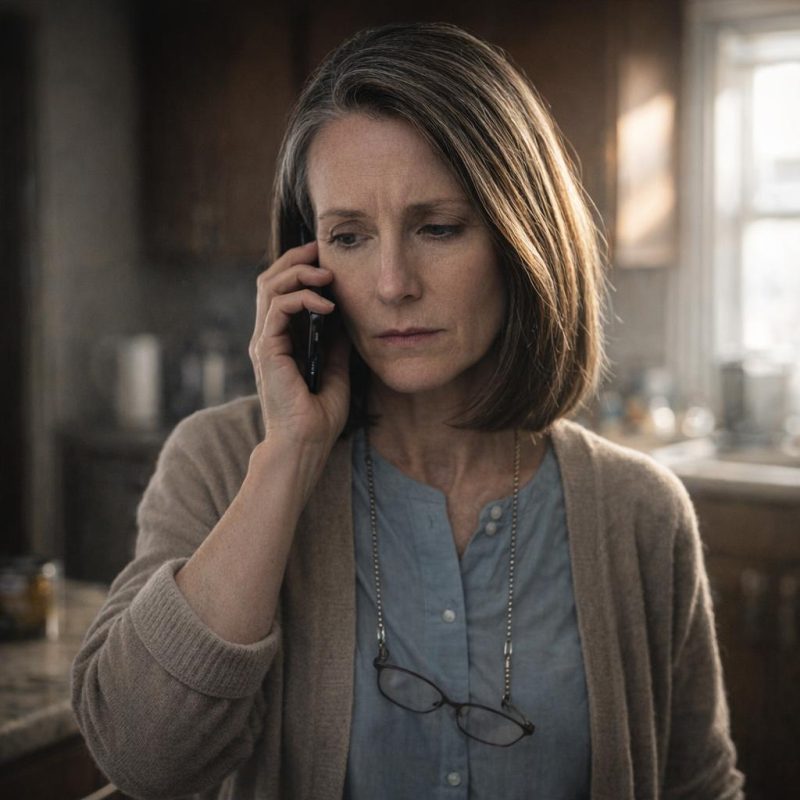 Image by RM AI
Waiting for Answers
I don't remember making the decision to drive to the hospital. I just remember being in the car, hands on the wheel, the streets moving past me in a blur. By the time I parked and walked through the emergency entrance, my legs felt like they belonged to someone else. I asked at the front desk about Carol and gave her last name, and the woman behind the counter told me Carol was being stabilized and that I should take a seat. I found a chair in the corner of the waiting room and sat down. The fluorescent lights hummed overhead. A television mounted high on the wall played a news program with the sound turned low. I stared at it without seeing it. Sophie was Carol's granddaughter. That much I now knew. But Robert had been involved — the folders, the receipts, the authorization forms, his signature on documents going back years. He had been helping Carol, helping Sophie, and he had never said a word to me about any of it. Why? What had Carol been carrying that required that kind of secrecy? What had happened to Sophie's parents? I had forty years of friendship with this woman and apparently no idea what her life had actually looked like. The questions kept arriving, one after another, and the waiting room just sat there around me, indifferent and fluorescent and full of things I still didn't know.
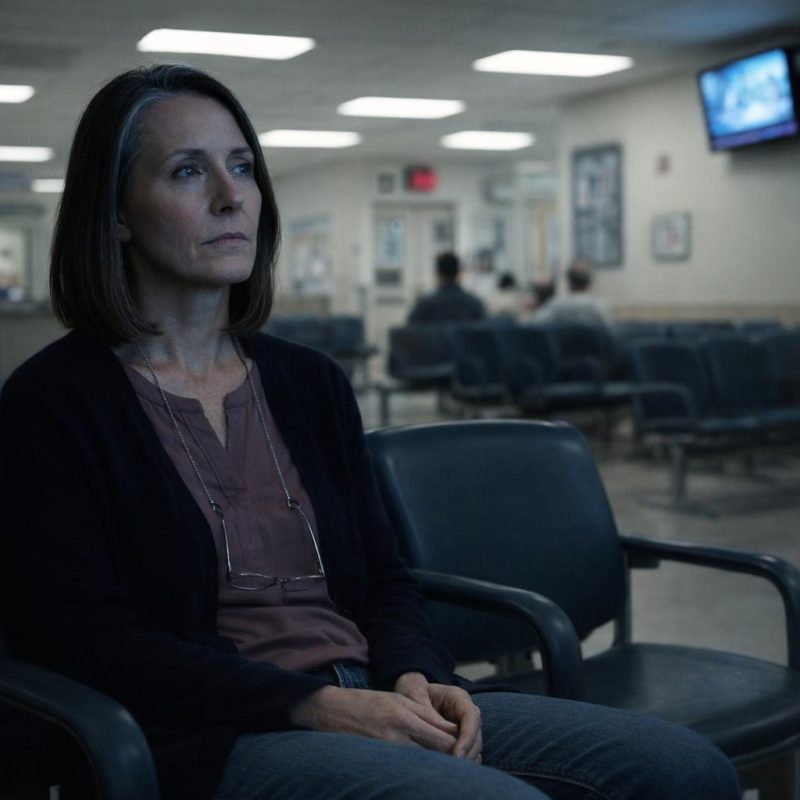 Image by RM AI
Fragments of Truth
A nurse came out about an hour later and found me still in the corner chair. She said Carol was stable, that her blood pressure had spiked and they wanted to keep her overnight for observation, but that she was resting and not in immediate danger. I exhaled something I hadn't realized I'd been holding. Then the nurse said, almost as an aside, that Carol had been under a great deal of stress — that caring for a teenage granddaughter alone, especially after everything the family had been through, took a toll that people didn't always recognize until the body forced the issue. I asked, carefully, about Carol's daughter. The nurse's expression shifted. She said she was sorry for Carol's loss, and left it at that. I sat back down. Carol's daughter was gone. That was what the nurse wasn't saying directly but had said clearly enough. Carol had lost her daughter, and she had been raising Sophie alone, and she had been doing it quietly, without asking for help from anyone who might have noticed the weight of it — except, apparently, Robert. And me, I had called her tonight and accused her of betraying me. The shame of it settled into my chest slowly, like something seeping through cloth, and I sat with it in that hard plastic chair while the hallway hummed quietly around me.
 Image by RM AI
Megan Returns
I drove back to Megan's house just after ten. I was exhausted in a way that went past tired — the kind of hollow that comes after a day that has rearranged too many things at once. I turned onto the street and saw the lights on inside, and then I saw Megan's car in the driveway, and my stomach dropped straight through the seat. She wasn't supposed to be home for another four days. I sat in my car for a moment before I made myself get out. When I walked through the front door, Megan was standing in the kitchen, still in her travel clothes, a suitcase on the floor beside her. She looked up when she heard me come in, and her expression shifted — surprise first, then something more careful when she saw my face. "Mom? Are you okay? You look —" She stopped. I didn't know what to say. I was standing in her kitchen after spending the day going through her garage, and the folders were still out there, spread across the workbench exactly as I had left them. She didn't know that yet. She was looking at me with concern, waiting for an answer I didn't have. I said I was fine, which was the most obvious lie I had told in years. The silence that followed sat between us, thick with everything I hadn't said.
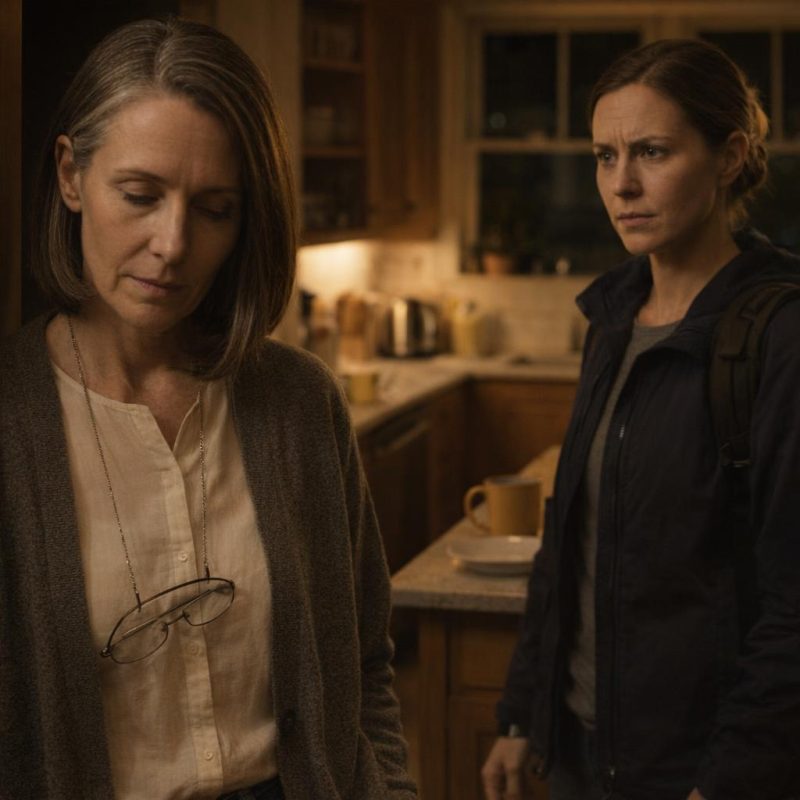 Image by RM AI
The Discovery
I should have said something right then. I should have found the words before she moved. But Megan was already reaching for her suitcase handle, saying she needed to drop something in the garage, and my heart lurched so hard I felt it in my throat. I followed her without thinking — or maybe I followed her because some part of me knew I had to be there when she saw it. She hit the garage light and stepped inside, and I watched her stop. Just stop, mid-step, like the floor had disappeared in front of her. The broken cabinet door hung at its angle. The folders were still spread across the workbench exactly where I'd left them, papers fanned out, edges overlapping. She stood there for a long moment, not moving, not speaking. Then she turned around slowly, and I saw her face — the color had drained out of it completely, and underneath the shock there was something that looked like hurt, deep and real and aimed directly at me. Her voice came out quiet, which was somehow worse than if she'd shouted. She said, 'Mom. What did you do?'
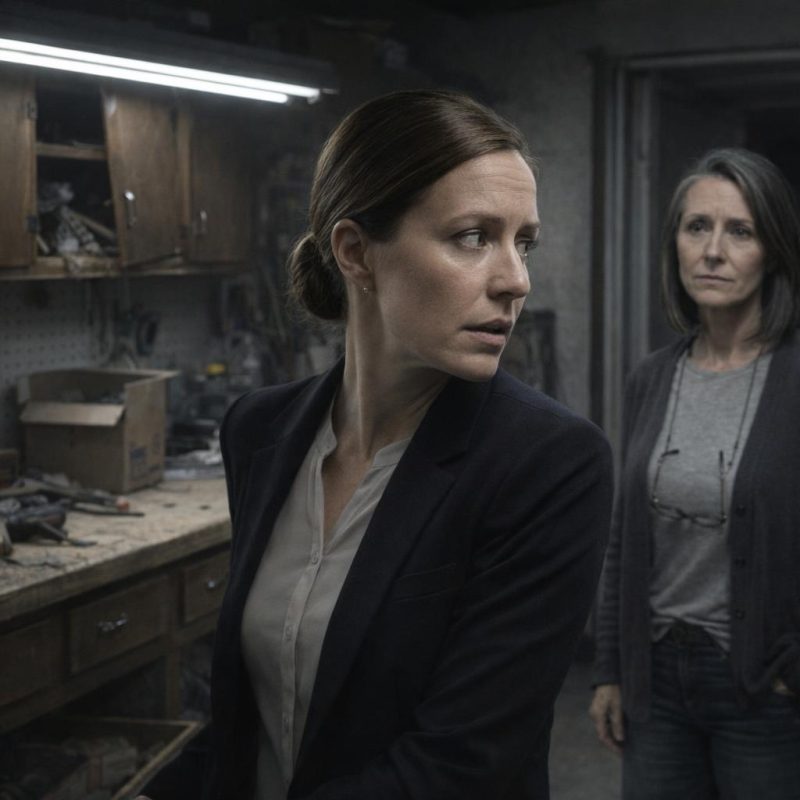 Image by RM AI
Mother and Daughter Clash
I tried to explain. I started with the photograph — the one I'd found tucked inside the book — and I told her that was what started all of it, that I hadn't gone looking for trouble, that trouble had found me first. But Megan wasn't ready to hear any of that. She wanted to know how I'd gotten into the cabinet, and when I told her about the key on the hook, her jaw tightened in a way I recognized from when she was a teenager and trying very hard not to cry. She said those were private documents. She said I had no business going through them. I told her I had every business — that this was my family, my husband, my life, and that I had spent weeks in her house not knowing what was right in front of me. My voice was shaking by then. I said she had kept things from me for years, that she had looked me in the eye and said nothing, and that if anyone had violated trust in this garage it wasn't only me. She took a step back like I'd pushed her. Then she said it, flat and final: 'You had no right.'
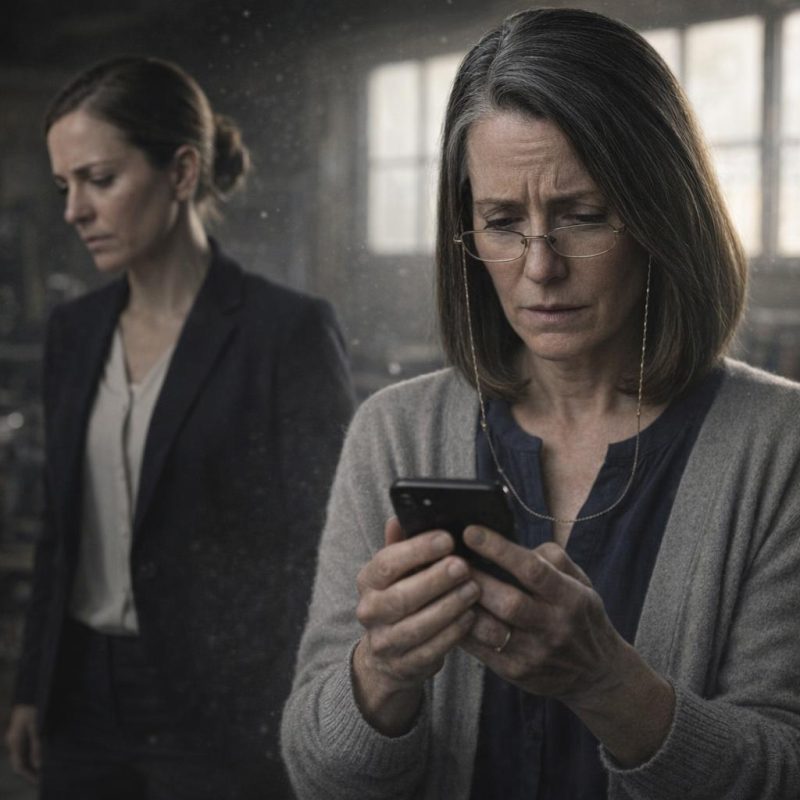 Image by RM AI
Accusations and Pain
I said it out loud then. I said I knew about Robert and Carol. I said I knew about Sophie. The words felt like dropping something heavy — there was no taking them back once they left my mouth. Megan's face changed in a way I hadn't expected. I thought she'd get defensive, or angrier, but instead she looked like something inside her had just given way. She closed her eyes and pressed her fingers against her forehead, and when she opened them again there were tears on her lashes. She said, 'Mom, you don't understand.' I told her I understood perfectly. I said I'd seen the payments, the letters, the photographs — that I wasn't guessing, that I had put it together piece by piece. I said I knew she had been protecting Robert's memory and I understood why, but that I deserved the truth about my own marriage. She shook her head slowly, and her voice broke when she said, 'It's not what you think it is.' I told her the evidence was clear. She looked at me then — really looked at me — and the pain on her face was so raw and so complicated that I couldn't find a single word to follow it with.
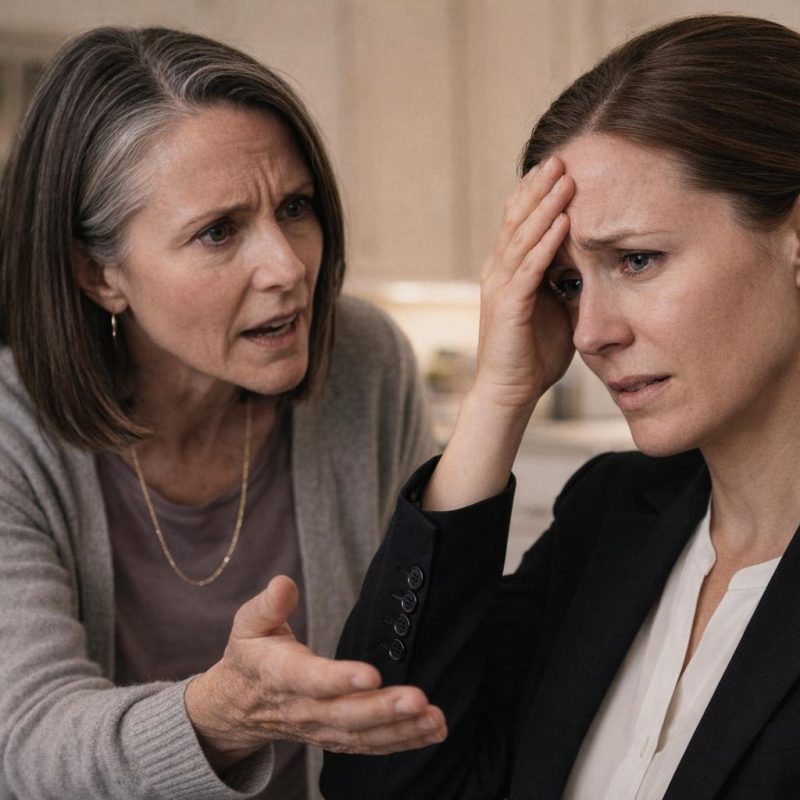 Image by RM AI
Megan's Defense
Megan said, 'Just listen to me. Please.' I told her I was done listening to things that turned out to be half-truths. She said she had been trying to protect me, and I asked her why I needed protecting from the truth about my own husband. She said the truth was complicated, and I said the truth was that everyone around me had decided I was too fragile to know what was happening in my own family. Her voice broke on the next sentence. She said I was making this harder than it needed to be. I said she had made it hard the moment she chose secrets over honesty. We were both crying by then — not the quiet kind, but the ugly, exhausted kind that comes after you've been holding something too long. She tried again, started a sentence about Carol, and I talked over her. I said I already knew about Carol. She said I didn't know everything. I said I knew enough. We stood there in the garage with the broken cabinet between us and the papers still scattered on the workbench, and the years of everything we hadn't said to each other filled the space between us like something solid.
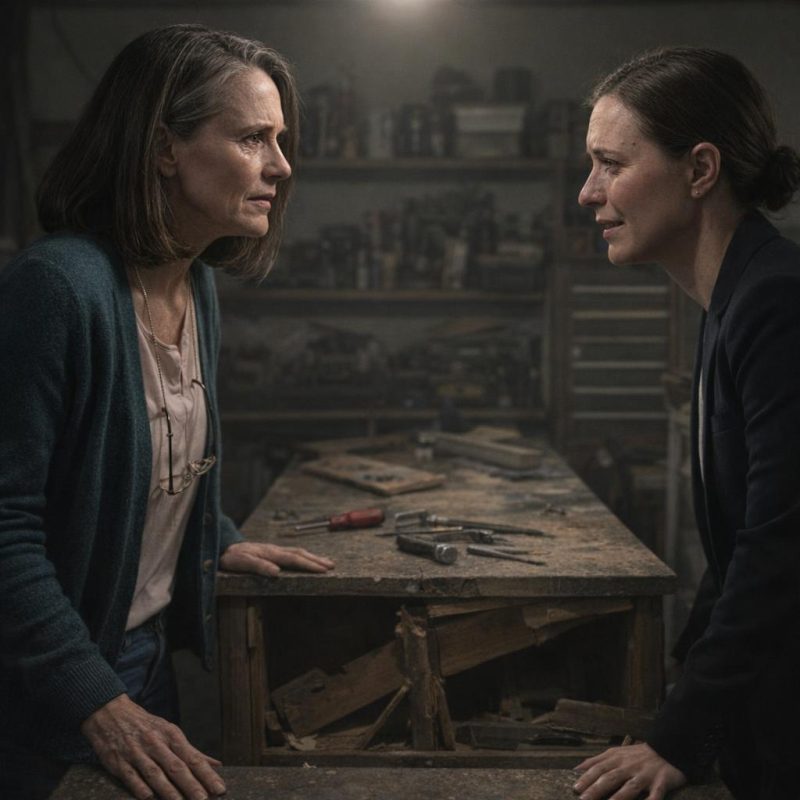 Image by RM AI
The Breaking Point
I said I didn't know if I could forgive this. I meant Robert. I meant Megan. I meant all of it at once, and I think she heard every layer of it. She was quiet for a moment, and then she said she didn't know if she could forgive me either — for breaking into the cabinet, for going through things that weren't mine, for not trusting her enough to come to her first. That landed like a slap. I told her I had been trying to protect the family. She said she had been doing exactly the same thing. I said she should have trusted me with the truth. She said I should have trusted her to tell me when the time was right. We stared at each other across that garage, both of us red-eyed and shaking, and neither of us moved. I kept thinking one of us would reach for the other — that's what we'd always done, even in the worst fights when she was young. But neither of us reached. The silence stretched out, and somewhere underneath the anger I felt something I hadn't expected: the cold, quiet fear that we might not find our way back from this.
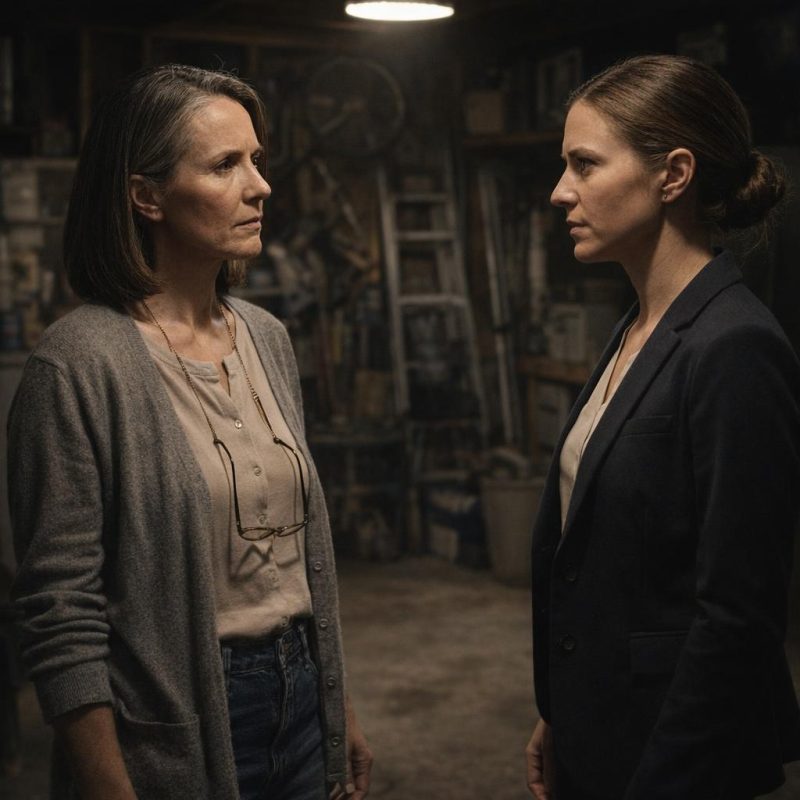 Image by RM AI
The Real Story
Megan sat down on the old step stool by the wall. She pressed her hands flat on her knees and took a breath that shook on the way in. She said, 'I'll tell you everything. All of it.' I didn't say anything. I just waited. She started slowly — said it went back further than I knew, back to when Sophie was very small. She said Carol's daughter, Sophie's mother, had died unexpectedly. An accident. Carol was left with an infant granddaughter and no real means to raise her, and she was too proud to ask anyone for help. She said Carol had been quietly falling apart for years before Robert found out. He'd noticed things — small things, the kind you only catch if you're paying attention — and eventually Carol had told him the truth. Megan said he hadn't hesitated. He'd offered to help support Sophie's care, asked Carol to keep it between them because he didn't want her to feel like a charity case, and Carol had agreed because she didn't have another option. When Robert got sick, he told Megan. He asked her to keep it going after he was gone. I sat with all of that settling over me. Then Megan looked up and said, 'Dad was helping Carol because her daughter died and she couldn't afford to raise Sophie alone.'
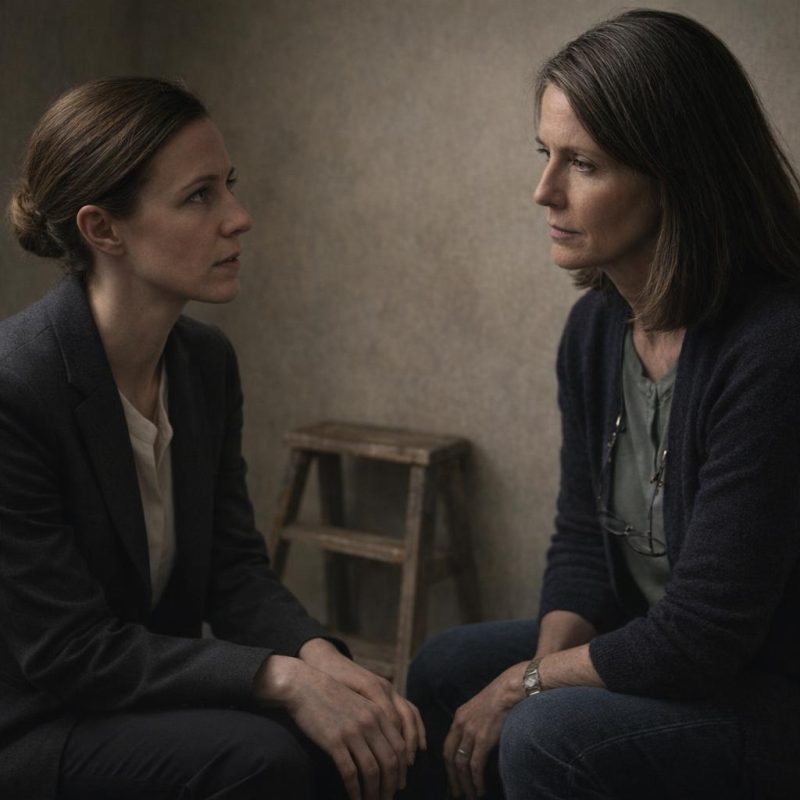 Image by RM AI
Understanding Dawns
I sat down on the concrete step just inside the garage door. My legs didn't give me much choice. Megan kept talking, and I kept listening, and with every sentence something I had been so certain about shifted underneath me. The monthly payments — Sophie's care, school fees, the things Carol couldn't cover on her own. The letters — arrangements, logistics, Robert making sure the help reached Sophie without Carol having to ask twice. The meetings I'd found referenced, the ones I'd read as something furtive — Robert checking in, making sure Sophie was all right, the way he would have done for anyone he'd taken responsibility for. The photographs Carol had sent over the years — a child growing up, milestones she wanted to share with the man who had made them possible. The birthday cards from Megan, continuing what her father had started. The school reports tucked in the folder, showing a girl who was doing well, who was going to be okay. I had looked at every single piece of it and seen betrayal. Every document, every name, every date — I had built a story out of them that was the opposite of what they were. I sat there on that cold step, and the evidence I had been so sure of looked completely different from where I was sitting now.
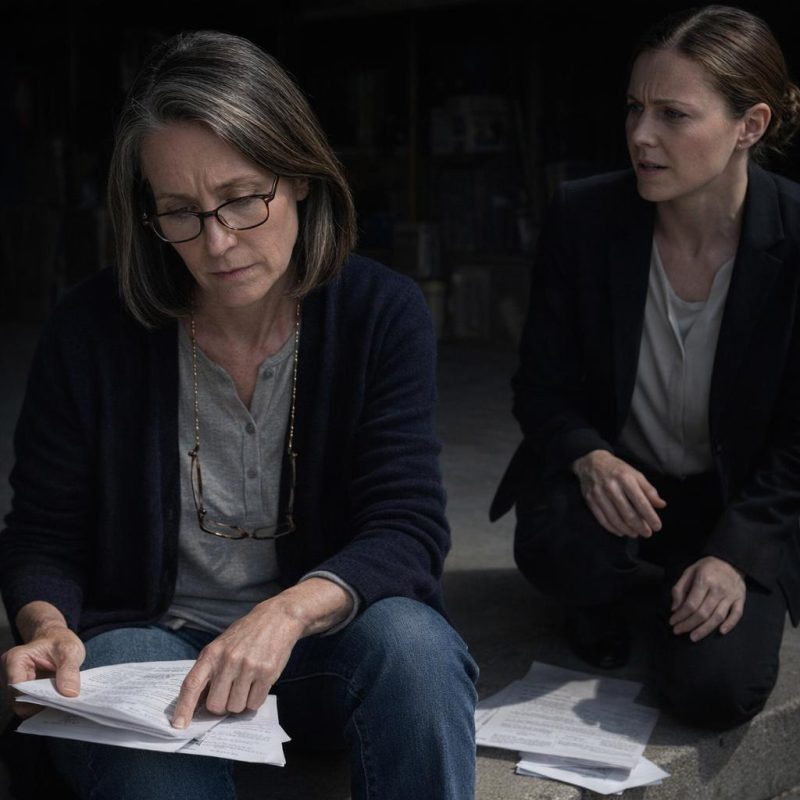 Image by RM AI
The Letter About Jenna
We sat in the garage for a long time after that, not quite ready to go back inside. The anger had gone out of both of us, replaced by something quieter and harder to name. Megan was turning her wedding ring around her finger the way she does when she's working up to something. I waited. She said there was one more thing. She said she'd found something years ago, when she was going through Robert's desk after the funeral — a letter, tucked in the back of a drawer, kept all that time. She said it was in my handwriting. I felt my stomach drop before she even finished the sentence. She said it was about leaving. About leaving Robert, about taking her with me, written during what she described as a terrible stretch — and I knew immediately, with a cold clarity, exactly which fight she meant, exactly which night I had sat at the kitchen table and written words I never sent and thought I had thrown away. I had forgotten it existed. Robert had kept it his whole life. Megan looked at me carefully, like she was watching to see if I could hold what she was about to say. Then she said, 'I found a letter you wrote to Dad, about leaving him.'
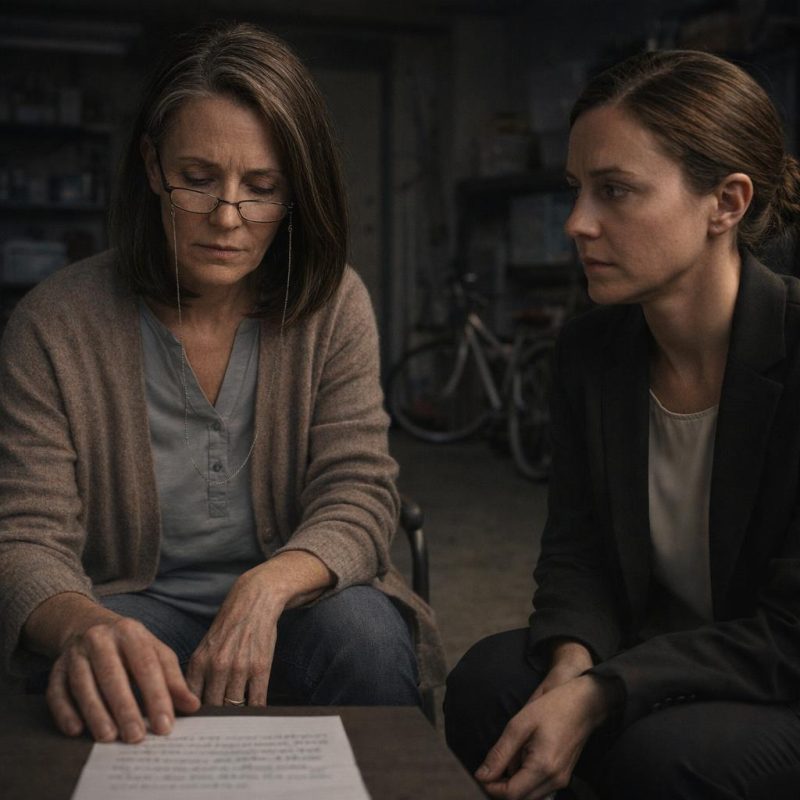 Image by RM AI
Carol Confirms the Truth
I found Carol's room on the third floor, and she was awake when I pushed the door open — propped up against the pillows, looking smaller than I'd ever seen her, the fight gone out of her face. I didn't even let her speak first. I walked straight to the side of her bed and told her I was sorry. I said I had thought terrible things, and I needed her to know that. She closed her eyes for a moment and said, 'I know. I would have thought the same.' Then she told me everything, slowly, in the way people talk when they've been carrying something too long. Her daughter — Sophie's mother — had died suddenly, no warning, no time to prepare. Carol said she was drowning. Too proud to ask anyone for help, too ashamed to admit how bad things had gotten. She didn't know how Robert found out, but he did. He came to her quietly, no fanfare, no conditions. He told her Sophie deserved a future and that nobody needed to know. Carol said she fought him on it at first. Said she didn't want charity. He told her it wasn't charity — it was what people who loved each other did. She started crying before she finished the sentence, and so did I. I reached for her hand, and she held on tight, both of us crying without saying another word.
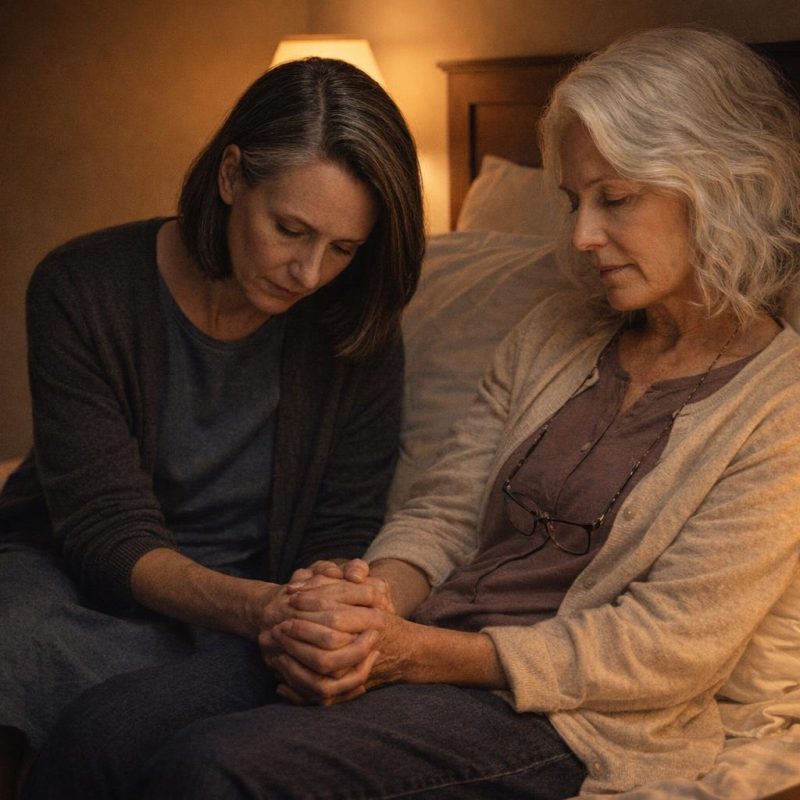 Image by RM AI
Clearing the Air
We ended up in the living room that evening, Megan and I, with the lamps on low and two cups of tea going cold on the coffee table between us. I told her I was sorry for breaking into the cabinet. I said I knew it was wrong, that I'd let fear get ahead of me, and that I should have just asked her. She shook her head and said, 'Mom, I should have told you years ago.' She said she'd been trying to protect everyone at once — me, Carol, Sophie, Robert's memory — and somewhere in all that protecting she'd forgotten that I was a person who could handle the truth. That landed hard. I told her about the letter, about that night at the kitchen table, about how ashamed I still felt that Robert had kept it all those years. She reached over and took my hand and said, 'He kept it because he loved you. Not to hold it over you. Just because it was yours.' I don't know why that broke something open in me, but it did. We talked about Robert for a long time after that — his quietness, his stubbornness, the way he showed love by doing instead of saying. We agreed to be honest with each other going forward, really honest, even when it was uncomfortable. When we finally hugged, it wasn't the careful kind. The space between us felt different — softer, like something that had been held rigid for a long time had finally been allowed to rest.
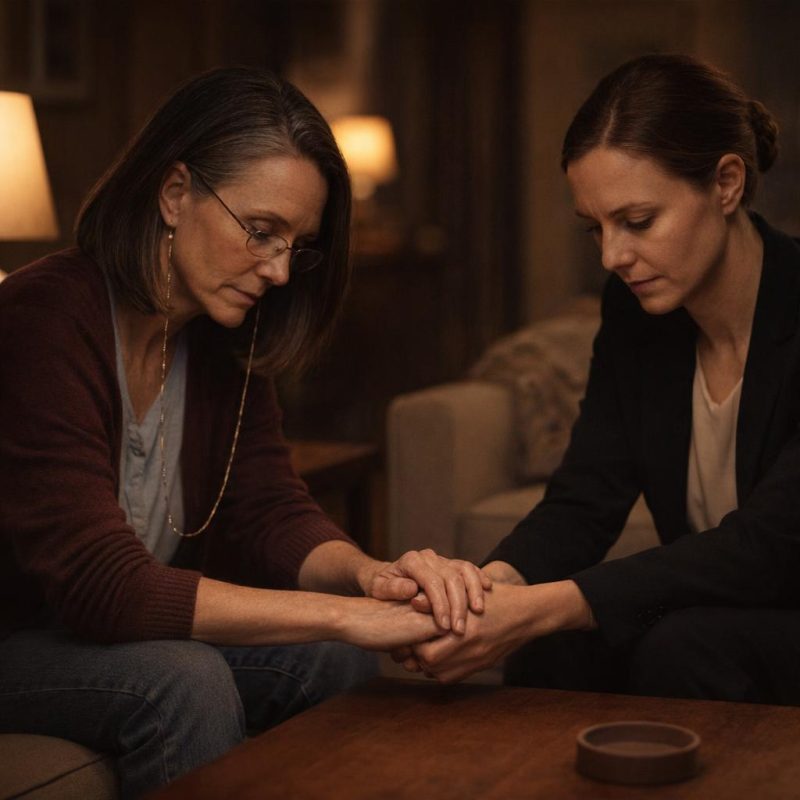 Image by RM AI
Meeting Sophie
Carol was home from the hospital by the following weekend, and Megan arranged for us all to meet at Carol's house on a Saturday afternoon. I was more nervous than I expected to be. Sophie answered the door before we even knocked, like she'd been watching for us, and the first thing I noticed was how much she looked like Carol — same cheekbones, same way of holding her chin up slightly when she smiled. She was warm right away, none of the wariness I'd half-expected from a teenager meeting a stranger. She thanked me almost immediately, quietly, said she knew what Robert and Megan had done for her and that she didn't have the right words for it. I told her she didn't need any. She showed me photos of her mother on her phone — a young woman with Carol's eyes and a laugh that came through even in still pictures. Sophie talked about her college plans with this careful, lit-up energy, like she was still getting used to the idea that it was real. At one point she called me 'Mrs. Jenna' and Carol laughed from the couch and said, 'Just Jenna, sweetheart.' I looked around that small living room — Carol on the couch, Megan beside her, Sophie cross-legged on the floor — and felt something I hadn't expected at all. I hadn't lost anything coming into this house. I'd found something I didn't know was missing.
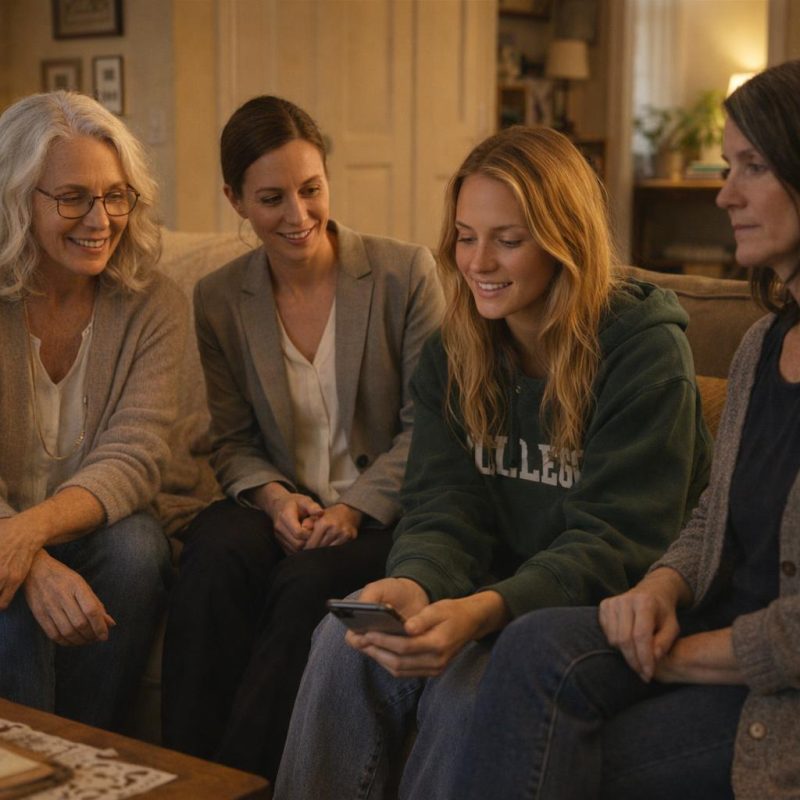 Image by RM AI
The Garage Door Closes
The morning before I drove home, I went out to the garage alone. I don't know exactly why — some need to close the loop, I suppose. The cabinet was empty now, the lock gone, the door hanging open. I stood in front of it for a while and thought about the woman who had stood in this same spot weeks ago, heart hammering, convinced she was about to uncover something shameful. I thought about Robert — how he had moved through his whole life doing quiet, unglamorous good and never once asked to be thanked for it. I thought about Carol sitting in that hospital bed, holding my hand, still apologizing for accepting help she'd desperately needed. I thought about Sophie saying 'Just Jenna' and laughing, like she'd already decided I was hers. I had come here to house-sit. I had ended up somewhere I hadn't expected — not in a scandal, not in betrayal, but in the middle of a story about what people do for each other when things fall apart. Robert had known something I was still learning: that love doesn't always announce itself. Sometimes it just shows up quietly and does the work. I pulled the garage door down, listened to it settle into the frame, and walked back toward the house where Megan, Carol, and Sophie were waiting inside.
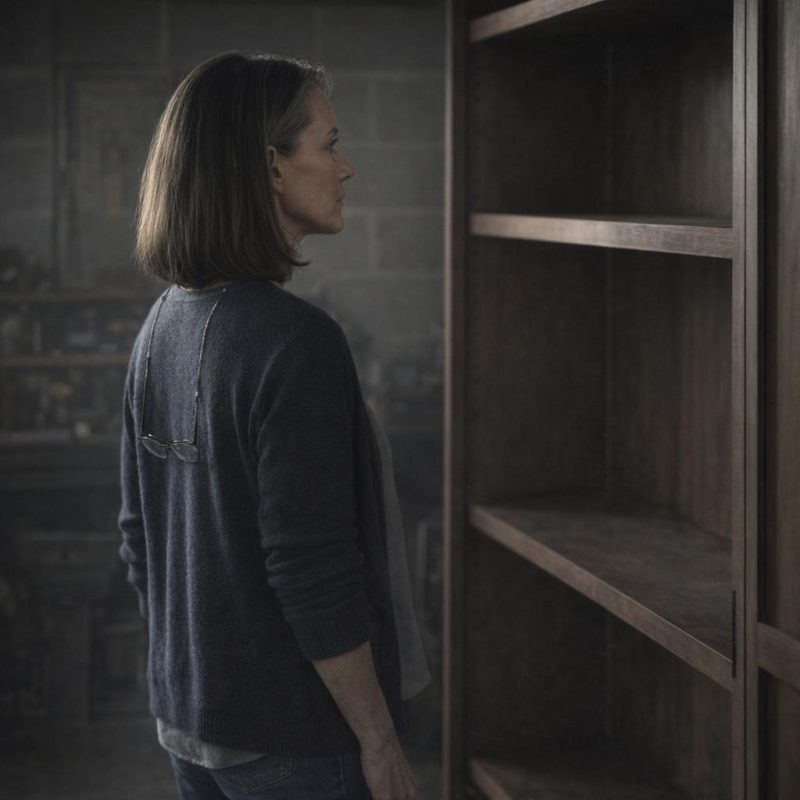 Image by RM AI
KEEP ON READING
The Origins Of 3 Common Sayings You Still Use Today
Etienne Boulanger on UnsplashMany of the phrases you use every…
By Rob Shapiro Apr 28, 2026
Was Caligula The Most Ruthless Roman Emperor?
Artur Matosyan on UnsplashRoman Emperor Caligula is one of ancient…
By Rob Shapiro Dec 18, 2025
1 Weird Fact About Every President
Washington, Lincoln, FDR. Most people know something about the lives…
By Robbie Woods Dec 3, 2024
10 Accidental Discoveries That Changed Maps & 10 That Changed…
Mistakes That Mattered. A lot of major discoveries did not…
By Cameron Dick Apr 15, 2026
10 Actors Who Perfectly Played a Historical Figure & 10…
Which Performance is Your Favorite?. Playing the role of a…
By Rob Shapiro Sep 15, 2025
10 Actors Who Perfectly Played a Historical Figure & 10…
Portraying a real person from history is one of the…
By Noone Dec 17, 2025