

The Too-Cheerful Phone Call
So Melanie called me at nine on a Thursday morning, and I remember thinking her voice was just a little too bright. You know that customer-service cheerfulness that doesn't quite match the situation? She told me she'd gone ahead and submitted our quarterly report to David early—a full three days before the deadline. 'I figured we were basically done anyway,' she said, 'and I know you've been swamped, so I just polished everything up and sent it in. One less thing for you to worry about!' I was standing in my kitchen with coffee still brewing, trying to process this. We hadn't discussed submitting early. We definitely hadn't discussed her 'polishing' anything without running it past the team first. But she sounded so helpful, so pleased with herself for being proactive. I thanked her, because what else do you say in that moment? After we hung up, I stood there staring at my phone. Something felt off, but I couldn't put my finger on what. I sat down at my laptop and pulled up the shared drive to take a look at the final version she'd submitted. The file opened, and my stomach did this weird little drop. My entire section—the market analysis I'd spent two weeks researching and writing—looked completely different.
 Image by RM AI
Six Pages to Two
I scrolled through the document twice because I honestly thought I was looking at the wrong file. My original analysis had been six pages. Detailed breakdowns of market segments, competitive positioning, three different data visualizations I'd created from scratch. What I was looking at now was less than two pages. Two paragraphs, actually. The data tables were gone. The methodology section I'd written explaining our research approach? Deleted. The competitive analysis that had taken me eight hours to compile? Reduced to three bullet points that barely scratched the surface. And there, right at the top of what remained of my section, was a neat little byline I definitely hadn't written. It said 'Market Analysis prepared by Melanie Chen.' Not 'compiled by.' Not 'edited by.' Not even 'with contributions from.' I felt this cold wave wash over me, starting at my scalp and moving down. My hands were actually shaking as I scrolled back up to double-check what I was seeing. The byline didn't say 'compiled by'—it listed her name as the author.
 Image by RM AI
The Manager's Confusion
I called David immediately, not even caring that it wasn't even nine-thirty yet. He picked up on the second ring, and I could hear him typing in the background. 'Hey, yeah, I got the report,' he said before I could even explain why I was calling. 'Melanie sent it over last night. Looks good, actually. You guys really pulled together on this one.' I started to explain that I hadn't approved any of the edits, that my entire section had been gutted, that I hadn't even known she was planning to submit early. There was this pause, and I could hear him stop typing. 'Wait, I thought you guys had coordinated on the final edits?' he said. 'Melanie mentioned she'd streamlined some sections to keep us under the page limit. She said the changes were made in coordination with the team.' I felt my face get hot. In coordination with the team. I'd been working from home Wednesday, but I'd been on Slack all day. There had been no coordination. No discussion. No 'hey, I'm thinking of cutting your section down to a quarter of its original length.' David was still talking, something about page limits and client deliverables, but I was barely listening anymore. He told me Melanie had said the changes were made 'in coordination with the team.'
 Image by RM AI
The Document History
I told David I'd call him back and immediately opened the version history. My cursor was hovering over the little clock icon, and I realized I was holding my breath. The history loaded, showing every edit made to the document over the past three weeks. I scrolled down to Wednesday night. There it was: 'Melanie Chen' at 11:47 PM. Then 11:52 PM. Then 12:08 AM. A whole series of timestamps, all from her, all made hours after our last team check-in. I clicked on the first one to see what she'd changed. The original version loaded on the left side of my screen—my complete six-page analysis. The edited version appeared on the right. Red strikethrough marks everywhere. Entire paragraphs just... deleted. I went through each timestamp methodically, watching my work disappear piece by piece. At 11:47, she'd removed my opening paragraph that established the scope of my research. At 11:52, gone was the section explaining my data sources. At 12:08, she'd deleted three paragraphs of competitive analysis. But she hadn't just reformatted for length. She had systematically deleted paragraphs and changed attribution.
 Image by RM AI
Buried Comments
I was about to screenshot the version history when I noticed something in the margin. A little comment bubble I'd missed on my first pass through the document. I clicked on it, and it expanded to show a thread of comments that hadn't been resolved—which meant they should have been deleted before submission, but Melanie had apparently forgotten. The first comment was from her, addressed to herself: 'Check this transition.' Okay, fine. Normal editing note. But the second comment, time-stamped at 12:15 AM, made my blood run cold. It said: 'Remove this graf—makes authorship too obvious.' I read it three times. Makes authorship too obvious. Not 'redundant.' Not 'too technical.' Not 'exceeds page limit.' Too obvious. As in, it was too clear who had actually done the work. I sat back in my chair, staring at that comment. There were other notes in the thread—reminders to herself about formatting, a note about checking citations. But that one phrase stood out like a neon sign. That single phrase told me this wasn't a mistake.
 Image by RM AI
Side-by-Side Comparison
I opened a new document and started building a side-by-side comparison. On the left, my original six pages. On the right, what Melanie had submitted. I highlighted every deletion in yellow, every changed attribution in red. It took me about forty-five minutes, and with each highlight, the pattern became clearer. She'd removed the paragraph where I'd explained my research methodology—the part that mentioned I'd personally interviewed twelve industry contacts. Gone was the sentence mentioning I'd built the comparative database from scratch. Deleted was the entire section where I'd outlined my analytical framework, the one I'd developed specifically for this project. She'd kept all the conclusions—the insights that made the analysis valuable—but stripped away anything that showed how I'd arrived at them. Anything that proved this was my thinking, my work, my expertise. I created a separate page listing just the removals: seven distinct references to my individual contribution, three mentions of my research process, two instances where I'd referenced previous analyses I'd done. Every cut had removed something that proved I had led the analysis.
 Image by RM AI
The Evidence Package
I compiled everything into a single email: screenshots of the version history showing her late-night edits, the comment about 'authorship being too obvious,' and my side-by-side comparison highlighting exactly what had been removed and why it mattered. I kept the message itself short. 'David—attached is documentation showing the edits made to my section of the quarterly report. As you'll see, these changes were made without my knowledge or approval, after our final team review. Happy to discuss.' I read it over twice, deleted 'happy to discuss' because I wasn't happy about any of this, then added it back because I needed to sound professional. I hit send at 10:23 AM. At 10:31, my phone rang. It was David, but he sounded completely different than he had an hour earlier. His voice was tight, formal, careful. 'Can you come to my office at eleven? I need to pull the submission and review these files.' Then he paused, and I could hear him clicking through something on his computer. 'And I'm going to need to have a conversation with Melanie. A few minutes later, he called back sounding completely different.
 Image by RM AI
Tasha's Quiet Question
I was putting together my notes for the eleven o'clock meeting when Tasha appeared at my desk. She had this weird expression on her face—not quite concerned, not quite curious. 'Hey, random question,' she said, perching on the edge of my desk. 'Do you remember the Q3 executive summary from last year? The one that went to the board?' I told her I remembered it—it had been a big deal, lots of visibility. She nodded slowly, picking at her sleeve. 'Yeah, so I was looking through some old files this morning for a different project, and I pulled up that summary. Melanie's name is on it as primary author.' She paused, and I could see her trying to work out how to phrase what she wanted to say. 'But I'm like ninety-percent sure I wrote most of that summary. The whole section on operational efficiency? That was mine. I remember because I'd stayed late three nights in a row working on the data analysis.' My meeting with David was in twenty minutes, but I stopped gathering my papers. Tasha was still talking, almost to herself now. She asked if I remembered who had written the executive summary last quarter—because she could have sworn it was her work.
 Image by RM AI
Ben's Formatting Story
I ran into Ben later that morning in the break room. He was microwaving leftovers, and I was refilling my coffee for the third time. We started talking about the usual stuff—deadlines, the new project management software nobody liked—and I mentioned almost casually that I'd had some weird issues with a collaborative document. Ben stopped mid-stir of his lunch. 'Oh man,' he said, 'that reminds me. Last month, Melanie offered to 'clean up' my proposal for the vendor assessment project. You know, just formatting and consistency stuff.' I nodded, waiting. He continued: 'She said it looked great but needed some polish before it went to the stakeholders. I sent her my draft, and she said she'd handle the final version.' There was something in his tone—not quite resentment, more like puzzlement. 'I never actually saw what she sent out. She submitted it directly and just told me it went well.' I set down my coffee mug. The breakroom suddenly felt smaller. I asked him, trying to keep my voice neutral, whether his name was still on the final version as the primary author. Ben paused, his fork halfway to his mouth. 'You know,' he said slowly, 'I'm not actually sure.'
 Image by RM AI
The Afternoon Meeting
The conference room felt too bright when I walked in at two o'clock. David was already seated at the head of the table, his laptop open, looking like he'd rather be anywhere else. Melanie arrived thirty seconds after me, and I watched her face carefully. She smiled—tight, professional—and sat down across from me. David didn't waste time on pleasantries. He said we needed to discuss the document submission and get everyone on the same page. Melanie's smile stayed fixed. I could see her fingers laced together on the table, knuckles slightly white. David asked her to walk us through what had happened with the report. She took a breath, glanced at me briefly, then back at David. 'I want to start by apologizing,' she said, her voice steady. 'I realize there was some formatting confusion, and I should have communicated better before submitting.' The word 'confusion' hung in the air. She continued: 'It was an honest mistake. I was trying to help finalize everything before the deadline, and I think some wires got crossed about what still needed review.' I didn't say anything yet. I just watched her. She called it an honest mistake, like accidentally forwarding the wrong email.
 Image by RM AI
The Formatting Excuse
Melanie kept talking, her explanation growing more elaborate. She said she'd only been trying to streamline the report for consistency—making sure the formatting matched our standard templates, ensuring the executive summary hit the right tone. 'You know how it is,' she said, looking between David and me. 'Sometimes when you're compiling input from multiple people, things get a little disjointed. I was just smoothing out the rough edges.' David was taking notes on his laptop, his expression unreadable. I still hadn't spoken. Melanie's hands had moved from the table to her lap, hidden from view. She talked about section headings and font choices, about how she'd reorganized some paragraphs for better flow. It all sounded reasonable if you didn't know what I knew. Then David stopped typing. He looked up at Melanie, his tone still calm but more pointed. 'Can you explain,' he said, 'why several comments about authorship and attribution were deleted from the document?' The conference room went very quiet. 'And why the tracked changes were turned off before those deletions?' Melanie's face shifted—just slightly, a micro-expression I wouldn't have caught if I hadn't been watching so closely.
 Image by RM AI
No Good Answer
Melanie stammered something about not remembering specific comments, about how there were so many edits and she'd been working quickly. David waited. She tried again: maybe she'd accidentally clicked something, or maybe the comments had been resolved already and she hadn't realized they'd been deleted. Her explanations kept sliding around, never quite landing on anything concrete. Then David asked the question that clearly caught her off guard. 'When we spoke yesterday morning,' he said, referring to his notes, 'you told me the edits had been reviewed and approved by the team. Is that correct?' Melanie's face went a shade paler. 'I... I thought they had been. I mean, we'd discussed the direction in our earlier meetings.' David shook his head. 'That's not the same as approval for final submission.' She couldn't explain it. She tried—something about assuming consensus, about time pressure—but none of it made sense. I watched her composure crack, piece by piece. Finally, David closed his laptop. He looked tired. 'I'm going to need to escalate this to HR,' he said quietly. 'This is beyond what I can address in a team meeting.' Melanie's face was pale, almost gray under the fluorescent lights.
 Image by RM AI
The Quiet Aftermath
I walked back to my desk feeling like I'd just finished running a marathon. Vindicated, yes—David had clearly seen through Melanie's excuses. But also drained in a way I hadn't expected. My hands were shaking slightly as I sat down. The office around me continued its normal rhythm—keyboards clicking, someone laughing in the distance, the hum of the printer near the kitchen. It all felt surreal. I pulled up my email and started typing a response to a client, but I couldn't focus. The words on the screen kept blurring. I kept replaying Melanie's face when David mentioned escalation, the way her practiced professionalism had finally cracked. Part of me felt guilty for that small surge of satisfaction, but mostly I just felt exhausted. What happened next was out of my hands. HR would investigate, there'd be meetings, probably some kind of formal process. I tried to imagine going back to normal work alongside Melanie and couldn't picture it. Then my messaging app pinged. It was Tasha. The message was short: 'Can we talk privately?'
 Image by RM AI
Tasha's Story
Tasha and I found an empty huddle room on the third floor. She closed the door and leaned against the wall, arms crossed. 'So I've been thinking about this all morning,' she said. 'About what I told you earlier, about the Q3 summary.' I nodded, waiting. She took a breath. 'There was another thing. Three months ago, Melanie compiled a client brief for the Anderson account. I'd drafted most of it—the background research, the competitive analysis, all the recommendations. She said she was going to pull everything together and format it for the client presentation.' Tasha's jaw tightened. 'The final version that went out barely mentioned me. Like, my name was in the contributors list at the end, but all the section headers and the executive summary made it look like Melanie had done the strategic thinking.' I asked if she'd said anything at the time. Tasha shrugged, looking uncomfortable. 'I brought it up to her, casually, and she said the client preferred a single point of contact for clarity. Made it sound like a client request, you know? So I let it go. I figured it was just office politics—picking your battles and all that.'
 Image by RM AI
Ben Digs Through Files
Ben found me in the hallway just before four o'clock. He had his laptop tucked under his arm and this look on his face—somewhere between angry and bewildered. 'I went looking,' he said without preamble. 'After our conversation this morning, I had to know.' We ducked into an empty meeting room. He opened his laptop and pulled up an archived folder. 'This is my original proposal for the vendor assessment project. The one Melanie said she'd polish.' He scrolled down, showing me his introduction and recommendations—clear, detailed, in his writing style. Then he opened another file: the final version that had been sent to stakeholders. I leaned in to look. The structure was similar, but the language had been completely rewritten. The introduction now sounded more formal, more polished—and at the top of the document, Melanie's name appeared as primary author with Ben listed as a contributor. His entire recommendations section, the part he'd spent two weeks researching, was now attributed to 'strategic analysis by the project team.' Ben looked at me with an expression I'd never seen on him before. 'How many times has she done this?'
 Image by RM AI
The Shared Folder Search
We ended up in Tasha's cubicle by four-thirty—me, Tasha, and Ben, hunched around her computer like we were planning a heist. Tasha pulled up the shared project folders we all had access to. 'If she did it to us,' Tasha said, fingers already flying across the keyboard, 'there might be others.' We started systematically going through folders Melanie had touched in the past year—anything where she'd been listed as a compiler or editor. Ben pulled up version histories. I cross-referenced submission dates. We worked quickly, barely talking except to call out file names. The first one we found was a quarterly report from eight months ago. Then a client proposal from last spring. Then a process improvement document from the summer. Each time we opened the revision history, the pattern was there: original content from various team members, then Melanie's 'final version' with attribution shifted or erased. By the time we stopped, we had a list of documents open across our screens. Five more instances, all from the past year alone. Five times she'd done this to different people, always with the same careful edits, the same 'helpful' offers to finalize things. We looked at each other across the cubicle divider, and nobody said anything for a long moment.
 Image by RM AI
Version Histories Tell Stories
We went through those documents methodically, and I started keeping notes on what we were seeing. Every single one had been edited late at night—like, past nine or ten PM. The sections that got simplified were always the more technical parts, the ones that showed expertise. Ben noticed that first. 'Look,' he said, pointing at a market analysis from June. 'This whole section on demographic segmentation just got... dumbed down.' And the attributions—God, the attributions. Sometimes they were subtle, like changing 'Ben researched and compiled' to 'compiled from team research.' Sometimes they just disappeared entirely. Tasha pulled up one document where her entire contribution was reduced to a footnote. 'I wrote twelve pages of that report,' she said quietly. We kept cross-referencing, kept checking timestamps, kept looking for some other explanation. Maybe there was a legitimate reason for all these similarities. Maybe we were seeing things that weren't there. But the more we looked, the harder that became to believe. It looked less like isolated incidents and more like something else—but I couldn't prove intent yet.
 Image by RM AI
HR Gets Involved
David forwarded everything to HR the next morning. I know because he copied us on the email, this long message with attachments of our findings and a request for guidance on how to proceed. Two hours later, Linda from HR responded asking for a meeting. She's the director—handles the serious stuff, not the everyday benefits questions. We met in one of the glass conference rooms that afternoon, me and David and Linda with her leather portfolio and that expression HR people get when something's actually wrong. She listened to everything without interrupting, taking notes in this precise handwriting. Asked clarifying questions about dates, about who had access to what, about whether we'd talked to anyone else. 'I appreciate you bringing this forward,' she said when we finished. 'This needs to be looked at properly.' She flipped back through her notes, underlined something. Then she looked up at us with this measured expression. Linda from HR asked the question we had all been thinking: 'Has anyone tracked how long this has been happening?'
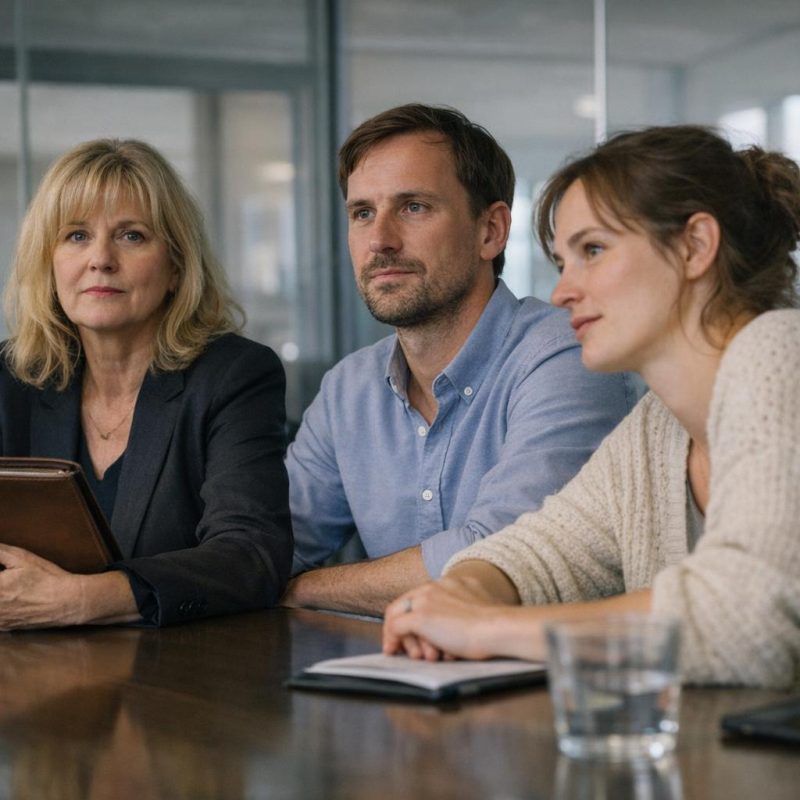 Image by RM AI
The Timeline Request
Linda asked us to document everything we'd found—create a complete timeline with dates, document names, what had been changed in each one. 'Be thorough,' she said. 'I need to understand the full scope.' So that's what we did. Tasha set up a spreadsheet. Ben and I went back through the shared drives, going further back this time, looking at anything Melanie had touched. We found more. A budget proposal from eighteen months ago. A client deliverable from the year before that. Each time we added another row to the spreadsheet, the whole thing felt heavier. My shoulders were tight by the third hour. Ben kept shaking his head. 'This is insane,' he muttered. 'How did nobody notice?' But people had noticed, I realized. They'd noticed their work looked different in the final version. They'd noticed things they wrote weren't quite the same. They just hadn't known what to do about it, or they'd trusted Melanie's explanations. When we started mapping it out, the earliest incident we found was from two years ago.
 Image by RM AI
Melanie's Absence
Melanie didn't come into the office the day after the HR meeting, and no one seemed to know where she was. I got in around eight-thirty and her desk was dark. By ten, still nothing. I asked David if he'd heard from her and he just shook his head, this tight expression on his face. 'She called in,' he said. 'Personal day.' Which, fine, people take personal days. But the timing felt deliberate. I walked past her cubicle twice that morning, I don't even know why. Everything was arranged exactly how she always kept it—pens in the holder sorted by color, stack of file folders perfectly aligned, her little succulent plant centered on the corner of her desk. There was a framed photo of her at some company event, smiling in that warm way she had. The monitor was dark. The chair was pushed in at a precise angle. It all looked so normal, so carefully maintained. Her desk looked exactly as she had left it—organized, pristine, and somehow unsettling.
 Image by RM AI
Colleagues Start Talking
People started approaching me in the break room, by the elevators, in those in-between moments when no one else was around. Quiet conversations that began with 'Hey, can I ask you something?' or 'I heard there was an issue with the project report.' Word was spreading, even though we hadn't said anything to anyone outside our immediate team. That's how offices work, though. People notice when HR gets involved, when someone's suddenly absent, when hushed meetings happen in conference rooms. A guy from the marketing team—I barely knew him—caught me by the coffee machine Wednesday afternoon. 'Is something going on with Melanie?' he asked. I gave him the vague answer I'd been giving everyone. He nodded, looked like he was deciding something. 'She helped me with a presentation last year,' he said. 'For the quarterly business review. She offered to compile all the slides, make it look cohesive.' He paused. 'I never actually saw the final version before it went to the executives.' That feeling in my chest got heavier. One of them mentioned she had helped with a presentation last year and he never saw the final slides.
 Image by RM AI
Patricia from Senior Management
Patricia from senior management called me into her office Thursday morning. I'd seen her around—she oversaw several departments including ours—but we'd never actually spoken one-on-one. Her office was on the executive floor, the kind with actual walls and a door and furniture that matched. She gestured to the chair across from her desk. 'I wanted to talk to you about the situation with Melanie,' she said. No small talk, just straight to it. 'Linda's filled me in on what you've found.' I nodded, not sure what I was supposed to say. Patricia leaned back in her chair, hands folded. 'I want you to know we're taking this very seriously. What you've documented is concerning, and we're conducting a thorough investigation.' There was something in her tone, though. Something careful. 'I appreciate you coming forward,' she continued. 'These things are never easy to raise.' She paused, choosing her words. She told me the company was taking this very seriously—and that I wasn't the first person to raise concerns about Melanie.
 Image by RM AI
The Earlier Complaint
I just stared at Patricia for a second. 'Someone else complained about her?' Patricia nodded slowly. 'About two years ago, yes. Someone raised an issue about credit on a project.' She opened a folder on her desk, glanced at whatever was inside. 'The concern was that their contribution hadn't been properly acknowledged in a final report Melanie had compiled.' My stomach dropped. Two years ago. Right around the time of that earliest document we'd found. 'What happened?' I asked. Patricia's expression was carefully neutral. 'The issue was addressed informally. Melanie apologized. The colleague felt satisfied with the resolution and didn't want to pursue it further.' I could hear what she wasn't saying—that it had been handled quietly, quickly, in a way that made it go away. 'So it was just... dropped?' Patricia shifted slightly. 'The colleague wanted to move on. Melanie seemed genuinely apologetic. There wasn't evidence at the time to suggest it was part of a larger issue.' The complaint had been about credit on a project—Melanie had apologized and it was dropped.
 Image by RM AI
Why It Wasn't Escalated
Patricia was still talking, explaining the circumstances, but all I could think was that this could have been stopped. Two years ago, someone had seen what we were seeing now, had tried to say something, and it had just been smoothed over with an apology. 'The colleague accepted Melanie's explanation,' Patricia said. 'They didn't want it to become a formal complaint. Sometimes people prefer to resolve these things quietly and move forward.' I understood that, I did. Nobody wants to be the person who causes drama, who makes things official, who gets HR involved over something that might just be a misunderstanding. But still. 'You have to understand,' Patricia continued, 'at the time, it seemed like an isolated incident. One miscommunication about attribution. Melanie appeared remorseful. The colleague wanted closure, not escalation.' I took a breath, tried to keep my voice steady. 'Can I ask who it was? The person who complained?' Maybe they'd have insights, maybe they'd seen other things. Patricia met my eyes. I asked who the colleague was—and Patricia said they no longer worked at the company.
 Image by RM AI
The Full Audit
The email from HR came the next morning. Subject line: 'Comprehensive Project Review Initiative.' They were conducting a full audit of all projects Melanie had touched in the past three years. Every document, every deliverable, every collaboration. I sat there reading it twice, feeling something shift in my chest—this was real action, not just internal discussions anymore. The company was actually doing something. They outlined the scope: financial reports, client presentations, strategic plans, internal analyses. Anything with her name on it, anything she'd contributed to, anything she'd had access to. The email was careful, professional, legal-sounding. But underneath all that corporate language, I could sense the seriousness. They were treating this like what it was: a systematic problem that needed systematic investigation. Then came the part that made my pulse quicken. They asked anyone who had worked with Melanie to review archived documents in shared drives and report any inconsistencies, attribution issues, or unexplained changes. They were crowdsourcing the investigation, essentially asking the entire company to help them understand the full scope of what had been happening.
 Image by RM AI
Flood of Reports
I heard the number from Patricia two days later, almost in passing during a status update. Eleven. Eleven different people had submitted reports to HR. Across four departments. I just stared at her for a second, trying to process that. This wasn't three or four people who'd had issues. This was eleven separate individuals who'd worked with Melanie at different times, on different projects, in different contexts—and they'd all found something wrong. Marketing had found altered attribution on campaign materials. Finance had discovered changed figures in budget forecasts. Operations had spotted modified timelines in process documentation. Even IT had flagged inconsistencies in technical specifications she'd helped draft. Each report presumably told a similar story: work that started one way and ended up another, credit that shifted, contributions that got reassigned. I thought about all those people, sitting at their desks, opening old files, seeing the same thing I'd seen. That moment of confusion, then suspicion, then certainty. The sheer volume made it clear this was bigger than any of us had imagined.
 Image by RM AI
Melanie Returns
She came back on Thursday morning. I was at my desk when I saw her walk past, and I swear my heart just stopped. Melanie looked completely composed—hair perfect, outfit professional, carrying a coffee from the place downstairs like this was any other Thursday. No visible stress, no obvious concern, nothing in her body language that suggested she knew eleven people had just reported her to HR for document manipulation. She didn't look around nervously. She didn't avoid eye contact. She just walked through the office like normal. I watched her sit down at her desk, set her coffee beside her keyboard, and open her laptop. The whole floor had gone quiet—not obviously, but that subtle kind of quiet where everyone's pretending to work while actually paying attention to something else. You could feel people watching without looking, tracking her movements in peripheral vision. And Melanie? She just started typing. Opened her email, scrolled through messages, clicked on something. Professional, focused, completely unbothered. She walked straight to her desk, opened her laptop, and started working as if the entire company wasn't watching her.
 Image by RM AI
The Lawyer Email
I saw the moment it happened. I wasn't trying to spy, but my desk had a sightline to hers, and I'd been hyperaware of her presence all morning. About an hour after she'd arrived, her posture changed slightly. She leaned toward her screen, went very still. That particular stillness of someone reading something important. I knew it was the email before I actually knew—just from watching her body language shift. Later, I found out what it said: HR requesting she attend a formal meeting with legal counsel present, scheduled for that afternoon. The kind of email that makes everything real. She sat there for maybe thirty seconds, not moving. Then she reached forward, closed her laptop with a decisive click, and stood up. Didn't log out of anything, didn't organize her desk, didn't grab her coffee. Just picked up her bag and walked toward the elevators. The whole thing took maybe twenty seconds. And she didn't say a word—not to anyone nearby, not to Patricia, not even a general 'I'll be back later' to the room. She read it at her desk, closed her laptop, and left without saying a word.
 Image by RM AI
Waiting
The rest of the day felt suspended. People kept working, but there was this weird tension underneath everything—conversations that stopped when certain people walked by, glances toward Melanie's empty desk, an unspoken question hovering over the entire floor. What happens next? I tried to focus on actual work, on tasks that had deadlines and deliverables, but my concentration kept fracturing. I'd read the same email three times without absorbing it. I'd start analyzing data and realize I'd been staring at the screen without actually seeing anything. Part of me felt guilty for being so distracted, for letting this consume so much mental energy. But another part recognized this mattered—not just for me, but for how the company handled serious issues, for whether systems actually worked when tested. I stayed late, mostly because going home felt premature somehow. Like I'd miss something important if I left. Around six-thirty, my phone rang. Patricia. She asked if I could join a confidential meeting the following morning. She didn't explain more, just said it was important and asked if nine o'clock worked.
 Image by RM AI
The Confidential Meeting
I arrived five minutes early and found Patricia already there, along with Linda from HR and someone I didn't recognize—a woman in her forties with glasses and an extremely organized-looking leather portfolio. Patricia introduced her as the company's legal advisor. We all sat down at the conference table, and I felt this weird combination of anxiety and validation. They'd asked me here specifically, which meant something. Linda opened a laptop, pulled up what looked like notes, and exchanged a glance with Patricia. The legal advisor folded her hands on the table. 'Thank you for coming,' she said. 'We know this has been a difficult few weeks.' I nodded, not sure what to say. Patricia leaned forward slightly. 'We've been reviewing the reports we received, cross-referencing the patterns across different projects and time periods.' She paused, choosing words carefully. 'What we're seeing is consistent, but it's also more complex than we initially understood.' The legal advisor opened her portfolio, pulled out printed document histories—I recognized some from my own project. They told me they needed my help understanding exactly how Melanie had altered documents—because the pattern was more sophisticated than they first thought.
 Image by RM AI
Explaining the Method
I spent the next forty minutes walking them through what I'd found. I showed them the document history from our report, explaining how the timestamps revealed the sequence of changes. How Melanie would wait until a project was nearly complete, then make her edits. How she'd delete specific attributions—always subtle things, never wholesale removal that would be obvious. How she'd add her own contributions in ways that looked collaborative but actually shifted ownership. I explained the version control tricks, the way she'd use 'suggest mode' to make changes look like they'd been discussed, the careful timing that made her alterations hard to spot unless you knew what to look for. Patricia took notes. Linda asked clarifying questions about specific examples. The legal advisor just listened, her expression growing more focused. When I finished, she leaned forward, tapping her pen against her notepad. Her eyes were sharp, analytical. 'Could she have learned this from somewhere,' she asked, 'or did she develop it herself?' The question hung there, and I realized they were trying to understand something bigger than just what Melanie had done.
 Image by RM AI
The Question of Training
Linda pulled up something on her laptop—looked like training documentation. 'Our company's document management training,' she said, turning the screen slightly so I could see. 'Does this cover any of the techniques you described?' I scanned through the materials. They covered basics: how to track changes, how to collaborate on shared documents, how to resolve version conflicts. Standard stuff. Nothing about strategic timing, nothing about subtle attribution manipulation, nothing about using legitimate tools in ways that obscured rather than clarified contributions. 'No,' I said. 'This is just normal collaboration training. What Melanie did was different—it used these tools, but in ways that aren't covered here at all.' The legal advisor and Linda exchanged a look. Patricia was watching them both carefully. 'So this wasn't something our systems taught her,' Linda said, more to the legal advisor than to me. 'She either figured it out independently, or...' She trailed off. I realized they were trying to figure out if this was something Melanie brought with her or something she developed here. And suddenly I understood why that mattered—liability, culpability, whether this was a training failure or something else entirely.
 Image by RM AI
Previous Employment
Linda had this expression on her face that I couldn't quite read at first—somewhere between embarrassment and frustration. She pulled up Melanie's hiring file on her laptop, and I could see how thin it was. 'When we hired her,' Linda said, scrolling through what looked like maybe five or six pages total, 'we did a standard reference check. One previous employer. They confirmed dates of employment and said she was eligible for rehire.' She paused, clicking to another screen. 'That was it. We didn't push for details about her actual performance or why she left.' I watched her scroll back through the file. There were notes from the hiring manager at the time—someone who'd left the company about a year ago—saying Melanie had interviewed well and had relevant experience. Nothing deeper than that. 'We're reaching out again,' Linda said. 'Asking different questions this time. More specific ones about collaboration, document management, any concerns about professional conduct.' She closed the laptop slowly, and when she looked at me, there was genuine regret in her eyes. 'We should have done this three years ago.'
 Image by RM AI
Document Analysis Continues
They asked me to help with the document analysis because I understood what to look for—the subtle changes, the timing patterns, the attribution shifts that looked innocent on the surface. Over the next week, I spent hours each day sitting in a conference room with Linda and someone from IT, going through files methodically. Twenty-three documents in total that Melanie had handled over the past year alone. Projects she'd volunteered to help finalize, reports she'd offered to format, presentations she'd said she could compile from everyone's contributions. Every single one followed a similar path. Changes made after final approval. Content moved or simplified in ways that obscured who had done what. Subtle edits to executive summaries that shifted emphasis. I started keeping a running list because it was the only way to process what we were finding. Budget proposal—attribution removed. Quarterly strategy doc—my analysis moved to appendix. Client presentation—Ben's recommendations reworded to sound generic. Process improvement report—Tasha's methodology simplified to one bullet point. The list kept growing. My handwriting got messier as the week went on because honestly, I was exhausted by it. In every single one, we found evidence of unauthorized changes to attribution or content.
 Image by RM AI
The Deleted Comment Archive
IT had been running recovery software on the shared drive, pulling back things that had been deleted from the version history. I didn't even know that was possible until they showed me. Apparently, when you delete a comment in a shared document, it's not actually gone—there's still a record somewhere in the system. They recovered dozens of comments that Melanie had left for herself and then deleted before submitting final versions. Most of them were just timestamps or quick notes. But some were different. 'Simplify to reduce ownership clarity,' she'd written in one document margin. 'Move tables to appendix,' said another, dated the day before she submitted an economics report where Tasha's data had mysteriously ended up buried. 'Combine sections 3 and 4,' appeared in at least five different files. There were phrases that kept showing up: 'streamline attribution,' 'consolidate methodology,' 'reduce technical detail.' Each note had been typed, left visible for maybe an hour or two based on the timestamps, then deleted before anyone else would have seen it. It was starting to look like she had developed a vocabulary for what she was doing.
 Image by RM AI
Colleagues Start Connecting
You know how sometimes everyone's talking about something but nobody's actually bringing it up directly? That's what started happening during lunch breaks. Small groups of people comparing notes in hushed conversations near the coffee station or in the cafeteria. I was sitting with Tasha and Ben one afternoon when the conversation finally got explicit. 'She volunteered to finalize my client presentation last quarter,' Tasha said, picking at her salad. 'Said she had time to polish the formatting. Then she sent it to the director two days before I expected, and when I opened it, half my research was gone.' Ben nodded immediately. 'Same thing happened with my process documentation. She offered to help compile everything, then submitted it early. My entire methodology section got reduced to three generic bullet points.' I told them about the quarterly report. About how Melanie had promised to send me the draft for final review, then submitted it directly instead. About the changes I'd only discovered through the document history. We sat there for a moment, and I could see other people at nearby tables having similar conversations. We realized that almost everyone had the same story: Melanie volunteered to help, then sent the final version early.
 Image by RM AI
The Timeline Visual
Ben came into work the next day with a poster-sized printout that he'd clearly spent his evening creating. He'd taken all the incidents we'd discussed—the ones from me, Tasha, himself, and at least six other colleagues who'd shared their experiences—and plotted them on a visual timeline. Color-coded by person, with descriptions of what had happened in each case. He spread it out on the conference room table during lunch, and we all just stared at it. You could see the pattern immediately once it was visualized like that. Clusters of incidents in March, June, September, and December. Four distinct groupings. 'Those are our quarterly review months,' Tasha said quietly, pointing at the dates. Ben nodded, adding sticky notes to mark other significant dates. 'And these three here,' he said, circling incidents in April, July, and October, 'those were right before departmental budget planning presentations.' I traced my finger along the timeline, seeing my own experiences marked in blue. Every single one of my incidents fell during a period when visibility mattered—when senior management was paying attention, when contributions were being evaluated, when decisions were being made about resources and recognition. The incidents clustered around quarterly reviews and budget planning cycles—moments when visibility mattered most.
 Image by RM AI
The Reference Response
Linda called me into her office about a week after they'd reached out to Melanie's previous employer. She had a printed email in front of her, and I could tell from her expression that whatever it said wasn't straightforward. 'They responded,' she said, sliding the paper across the desk so I could read it. The email was incredibly brief—maybe four sentences total. It confirmed Melanie's dates of employment, confirmed her job title, and noted that she had resigned voluntarily. Professional and completely unhelpful. But Linda had highlighted one line near the end in yellow marker. I read it twice to make sure I was understanding correctly. 'We would not be able to provide a positive reference for rehire.' That was it. No explanation, no context, just that single careful statement buried in otherwise neutral information. 'That's the kind of line HR people use when they legally can't say what they want to say,' Linda explained. 'It means something happened, something documented, but they're worried about liability if they're more specific.' She took the paper back, studying that highlighted sentence. 'But Linda noticed one line: 'We would not be able to provide a positive reference for rehire.''
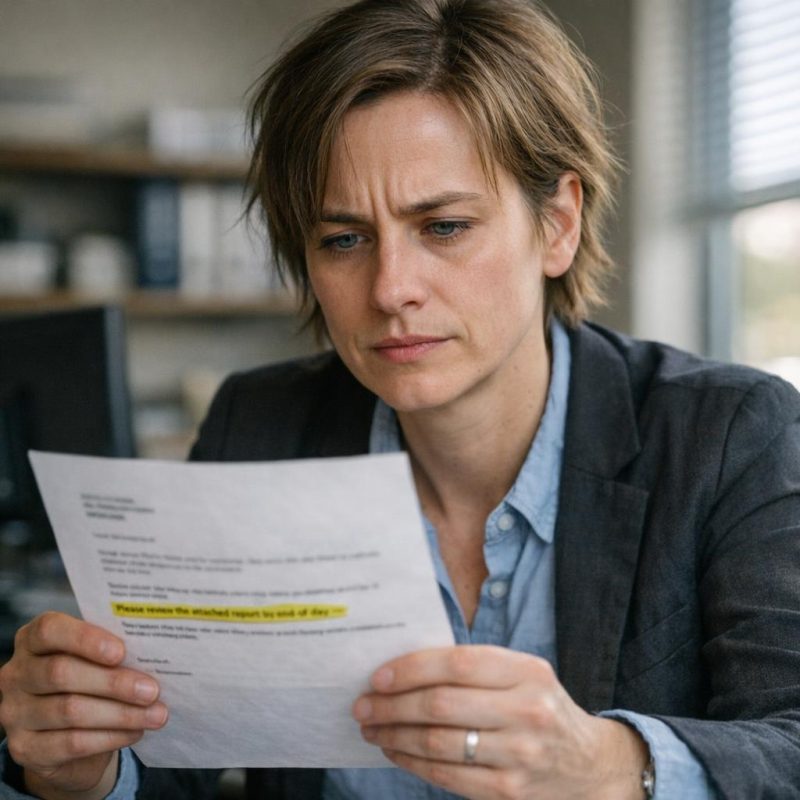 Image by RM AI
Legal Calls It a Pattern
There was a meeting I wasn't invited to—senior management, HR, and the company's legal advisor. I heard about it from Patricia later that afternoon. She stopped by my desk with this grim, determined expression that I'd come to recognize over the past few weeks. 'Legal called it a pattern,' she said quietly, glancing around to make sure no one else was in earshot. 'Not just multiple incidents, but a deliberate, repeated pattern of behavior with consistent methodology.' She explained that the legal advisor had reviewed all the documentation we'd compiled—the twenty-three documents, the deleted comments, the timeline Ben had created, the reference from the previous employer. Put together, it apparently met the legal definition of something more serious than just poor judgment or miscommunication. 'They're concerned about liability,' Patricia continued. 'If Melanie did this to misrepresent others' work and enhance her own standing, and if we don't act on it now that we know, we could be exposing the company to claims from everyone affected.' She paused, and I could see her choosing her words carefully. Patricia told me later that they were building a case for termination with cause.
 Image by RM AI
Melanie's Defense
HR gave Melanie an opportunity to respond to the findings—standard procedure, apparently, before any formal disciplinary action. She submitted a written statement about four pages long. I didn't see the whole thing, but Linda shared the general content with me since I'd been so involved in the investigation. According to Melanie's statement, she had only been trying to improve team efficiency and standardize outputs across different projects. She claimed she'd been working to make documents more consistent in format and style, to reduce redundancy, to make information more accessible to senior management. She wrote that she'd volunteered for finalization tasks because she enjoyed that kind of detail work and wanted to help colleagues who seemed overwhelmed. She said she'd sometimes made judgment calls about what level of technical detail was appropriate for executive audiences. The whole thing was framed as her being helpful—maybe overly helpful, maybe occasionally making decisions that should have been discussed first, but ultimately well-intentioned. Linda's expression when she told me this was somewhere between disbelief and frustration. She made no mention of the deleted comments, the changed attributions, or the fact that she had told management the changes were approved.
 Image by RM AI
The Anonymous Tip
Linda called me three days after Melanie submitted her statement. She said something had come through that morning—an anonymous message to the general HR inquiry email. Someone claiming to have worked with Melanie at her previous company. The message was brief, Linda said, but very specific. It mentioned Melanie by name, referenced her role on collaborative projects, and said they'd seen the patterns described in whatever internal communications had leaked. I didn't ask how word had gotten out—these things always do, somehow. The anonymous sender said they wanted HR to know what they were dealing with. Linda read me the final line verbatim: 'I'm not surprised this is happening again.' Again. That single word sat between us on the phone line like a weight. I asked if the person had left any way to follow up, and Linda said there was a burner email address—clearly someone who didn't want to be identified but felt compelled to say something anyway. My hands felt cold. I'd been angry about what Melanie had done to our team, frustrated by her manipulative statement, but this was different. This was the feeling you get when you realize the problem is bigger than you thought. That word—'again'—meant this wasn't a one-time lapse in judgment or an unfortunate series of bad decisions.
 Image by RM AI
The Follow-Up Call
Linda actually managed to reach them. I don't know how she convinced someone using an anonymous email to get on a phone call, but two days later she told me they'd spoken for nearly forty minutes. The person—Linda never told me if it was a man or woman, and I didn't push—had agreed to speak off the record, no names, no formal statement. They just wanted someone to understand what had happened at their company. Linda's voice on the phone was careful, measured in that way people get when they're trying to control their reaction to something disturbing. She said the former colleague had described a situation on a cross-departmental project about eighteen months ago. Melanie had been brought in to help coordinate inputs from different teams. She'd volunteered to do the final compilation, promised to make the process more efficient, said she'd handle the formatting and executive summary. Then she'd submitted the report early—cutting off the review period—with subtle changes to how contributions were attributed. Sound familiar? Linda asked me that directly, and I said yes, way too familiar. The person told Linda they'd only figured out what happened after the fact, when people started comparing notes about whose work had been represented and how. What they described—the volunteerism, the efficiency promises, the early submission, the changed attributions—it was disturbingly, sickeningly familiar.
 Image by RM AI
The Same Script
Linda went through the details the former colleague had provided, and I felt like I was listening to someone describe our exact situation. Melanie would position herself as the person who could streamline collaborative work. She'd emphasize how much easier it would be if one person handled the final document. She'd talk about reducing back-and-forth, making things cleaner for leadership, ensuring consistency. Then she'd take everyone's contributions and subtly reshape how authorship appeared—not completely erasing people, which would be too obvious, but blurring the lines enough that her role seemed more central than it was. She'd time the submission carefully, usually citing some urgency or executive deadline, so that by the time people saw the final version, it was already in front of management. The former colleague told Linda they'd felt that same confusion we'd felt—that disorienting moment of seeing your work presented differently than you'd expected and not being able to articulate exactly what was wrong. They'd questioned themselves first, wondered if they were being overly sensitive about credit. It was almost word for word what had happened to us. Not similar—nearly identical. The same sequence, the same language, the same timing strategy. I felt my stomach drop as Linda recounted it, because this wasn't someone making it up or exaggerating parallels. This was the same script, performed at a different company.
 Image by RM AI
Why They Didn't Document
I asked Linda what had happened after people at that company figured it out. She said the former colleague explained that their HR had started looking into it, but the process had been slow and quiet. Melanie had sensed something was coming—or maybe just decided it was time to move on—and she'd resigned before any formal disciplinary action was taken. They'd let her go without contest, relieved to avoid the messiness of a prolonged investigation. No documentation in her file. No reference that would flag the behavior for future employers. The former colleague said their HR had justified it as the cleanest solution—Melanie was leaving anyway, why create problems that might expose the company to legal risk or make the situation more complicated? They'd hoped, Linda said, that maybe Melanie had learned something, that maybe the fear of being caught would make her stop. They'd told themselves it was an isolated incident, a lapse in judgment she wouldn't repeat. Instead, she had just found a new workplace. She'd moved on to us, brought the same patterns, run the same plays. I felt this surge of anger, not just at Melanie but at that whole situation—at the people who'd chosen convenience over accountability. They'd passed the problem along rather than dealing with it, and we'd inherited the consequences.
 Image by RM AI
How Long Has This Been Happening?
Linda and I sat in her office the next morning, and she asked the question that had been growing in both our minds since the anonymous tip: how many companies had Melanie done this at? Not just the previous one—how many before that? We pulled up her resume, which was still in the hiring files. Four companies in six years. I counted them again to be sure. Each position had lasted between twelve and twenty months. Each departure was listed with the same vague phrasing: 'pursued new opportunities,' 'sought role with broader scope,' 'transitioned to focus on strategic initiatives.' Nothing that raised red flags in isolation. People change jobs. Careers evolve. But looking at it now, with what we knew, the pattern felt deliberate. Linda asked if I thought it was possible she'd done this at all of them, and I didn't know how to answer that. It seemed extreme, almost paranoid to assume. But also—how could we not check? How could we not try to find out if this was bigger than two companies? Linda pulled out a notepad and started writing down the company names. She said she was going to try to reach HR contacts at every single one. I watched her write and felt this cold certainty settling over me: we were about to find out just how long this had been going on.
 Image by RM AI
Four Companies in Six Years
Linda started making calls that same afternoon. Four companies in six years—it sounds simple when you say it quickly, but tracking down the right HR contacts, explaining the situation carefully enough to get people to talk without violating confidentiality, convincing them this mattered—that all takes time. Some HR departments wouldn't engage at all, citing policy. One company's HR director had left, and her replacement didn't have detailed knowledge of why Melanie had departed. But Linda kept trying, sending carefully worded emails, leaving voicemails, reaching out through her professional networks. I tried to stay focused on my actual work, but it was impossible not to think about what she might be learning. Each of those positions—had she done it there too? Had she left behind confused colleagues and altered documents and that same sick feeling of not being able to name what had happened? By the end of that week, Linda had confirmed conversations with HR representatives from two of the four companies. She said she'd also gotten a response from a third, and they were willing to talk the following week. Every departure had been characterized the same way in official records: 'pursuing new opportunities.' Every reference had been neutral to positive. Nothing documented. Nothing flagged. Linda's expression was grim when she told me she was going to try to reach HR contacts at every single one, no matter how long it took.
 Image by RM AI
The Night Before the Revelation
I stayed late that Thursday, long after most people had gone home. I wasn't working on anything specific—I just couldn't bring myself to leave. I kept reviewing everything we'd found so far: the document history from our report, Melanie's statement claiming she'd been helpful, the anonymous tip, the description from her former colleague, her resume with its neat progression of eighteen-month stints. I was trying to make sense of how someone could do this so consistently, so deliberately, at multiple companies. What kind of person develops this as a strategy? What's the calculus that makes it seem worth it? I didn't have answers, just this growing sense of unease about what Linda might be uncovering. My phone rang at almost eight o'clock. Linda's name on the screen. I picked up immediately, and she said she'd spent the afternoon on calls with HR at two of Melanie's former companies. Her voice sounded tired but urgent. She said I needed to hear what they'd told her. Not tomorrow, not in a meeting—now. She asked if I could come by her house on my way home, said she'd rather not do this over the phone. I grabbed my coat and keys, and the whole drive over I felt this tight anticipation in my chest, like bracing for impact.
 Image by RM AI
The Playbook
Linda opened her door before I'd even finished walking up the path. We sat at her kitchen table, and she pulled out notes from both calls. The first company—where Melanie had worked about four years ago—described a situation on a major client proposal. Melanie had volunteered to compile inputs from the project team, then submitted the document early with attribution changes that obscured individual contributions. The second company, about two and a half years ago, described the exact same sequence on an internal strategy document. Same offer to help, same efficiency promises, same early submission cutting off review, same subtle reshaping of who had done what. Linda read me her notes carefully, and what struck me wasn't just the similarity—it was the precision. This wasn't someone who acted impulsively or made bad judgment calls under pressure. This was a repeatable method. A systematic approach she'd perfected over years. Volunteer for compilation work. Gain trust by promising efficiency. Edit attributions to make your role appear more significant. Time the submission to prevent meaningful review. She'd done it at multiple companies, refined the technique, figured out exactly how much she could change without triggering immediate alarm. This wasn't opportunism or bad judgment—it was a systematic playbook for stealing credit that she had used at multiple companies to build a false reputation.
 Image by RM AI
The Scope of the Con
Over the next two days, Linda worked the phones like she was conducting a federal investigation. She called every company on Melanie's resume, spoke to HR directors, former managers, anyone who would talk. And they talked. Each conversation added another layer to the pattern. Company number three: volunteer project, altered attributions, early submission. Company number four: exact same sequence. What floored me wasn't just that she'd done this everywhere—it was the consistency. Same volunteer offer, same efficiency promises, same timing manipulation, same careful edits to make her contributions look more significant while obscuring everyone else's work. Linda had filled an entire notebook with details, and the similarities were eerie. This wasn't someone who occasionally made questionable decisions. This was a professional credit thief who had refined her technique across multiple organizations, perfecting the method until she knew exactly how much she could steal without immediate detection. She'd built her entire career on a systematic fraud, moving from company to company, leaving a trail of manipulated documents and stolen recognition behind her. The question that kept me up at night was simple: how had she gotten away with it for so long?
 Image by RM AI
The Institutional Failure
The answer was depressingly simple, and Linda explained it with the weary tone of someone who'd seen this pattern before. Every company had discovered what Melanie was doing. Every single one. But instead of formal documentation, instead of warnings or professional consequences, they'd all handled it quietly. A 'mutual separation.' A 'better fit elsewhere.' Some vague language about 'different work styles' in the exit interview. No one wanted the legal exposure of a formal accusation. No one wanted to deal with potential defamation claims. No one wanted the headache of documenting everything properly. So they'd let her resign, given her neutral references that confirmed dates of employment and nothing else, and watched her become someone else's problem. And because background checks only verify what you put on your resume—not why you left—she moved seamlessly from company to company. Each HR department thought they were handling an isolated incident. None of them realized they were enabling a systematic predator. Melanie had figured out the system's biggest weakness: corporate risk aversion. She'd learned that companies would rather quietly dispose of a problem employee than create a documented paper trail that might expose them to liability.
 Image by RM AI
The Final Meeting
The termination meeting was scheduled for Thursday afternoon in the main conference room. Linda told me I could be present as the primary affected party, along with Patricia, legal counsel, and HR. When Melanie walked in at exactly 2 PM, she looked completely calm. That same composed expression I'd seen a hundred times, the one that suggested she was the most professional person in any room. She sat down across from us with her usual confidence, hands folded on the table, posture perfect. Then she saw the stack of documents. It was easily six inches thick—printouts of document histories, deleted comments, email threads, timeline analyses, statements from people at four different companies. Linda had organized everything with colored tabs marking each incident, each company, each victim. The physical weight of the evidence was impossible to ignore. I watched Melanie's eyes move across that stack, doing the math, calculating whether her usual explanations would work this time. Her expression didn't change, but I saw her swallow once. That stack of paper represented years of systematic fraud, all compiled, all documented, all ready to destroy every defense she'd ever used.
The Evidence Presented
Linda started methodically. She walked through the quarterly report first—the document histories showing exactly when Melanie had made changes, the deleted comments revealing her thought process, the timeline proving she'd submitted it before anyone could review. Then she moved to the three previous incidents at our company that we'd dismissed as misunderstandings. Same pattern, same methods, same careful manipulation of attribution. Melanie sat perfectly still, her face professionally neutral, nodding occasionally like she was listening to a performance review. Then Linda opened the second tab. 'We also spoke with your previous employers,' she said, and I saw it—the first crack in Melanie's composure. Her eyes widened slightly, just for a second, before she controlled it. Linda continued, laying out statements from HR directors at four companies, describing identical incidents, identical methods, identical excuses. The pattern was undeniable. This wasn't a series of misunderstandings or communication breakdowns. This was a decade-long career built on systematic theft of other people's work, refined and repeated at every organization she'd joined. Melanie's expression finally changed when Linda mentioned the multi-company investigation—a flash of something that looked almost like fear before she locked it down again.
 Image by RM AI
Her Last Defense
Melanie took a breath and launched into her final defense. Her voice was steady, reasonable, the same tone she'd used in every previous explanation. She claimed she'd only been trying to improve team outputs, to standardize quality across departments, to make our work more professional and cohesive. She said she'd never intended to take credit for anyone else's contributions—she'd just been editing for consistency and clarity. It was the same explanation that had worked before, delivered with the same calm professionalism that made you want to believe her. I could see her confidence returning slightly as she spoke, like maybe she thought she could talk her way out of this too. Then Linda, without saying a word, slid a printout across the table. It was the deleted comment from the quarterly report, the one that said 'makes authorship too obvious.' Linda let it sit there for a moment, then pushed across three more—similar comments from other documents, all revealing the same calculated intent to obscure who had actually done the work. 'Could you explain these comments for us?' Linda asked quietly, her tone almost gentle. 'Specifically, why you needed to make authorship less obvious?'
 Image by RM AI
No Explanation
Melanie stared at the comments. I watched her eyes move across the words she'd typed, the evidence of her own thought process laid bare. She opened her mouth, closed it, looked down at her hands. The silence stretched out, heavy and uncomfortable. Patricia leaned forward slightly, waiting. Legal counsel had his pen ready. Linda just sat there, patient, giving Melanie all the time she needed to explain why she'd systematically obscured authorship across dozens of documents at multiple companies. But there was no explanation that would work. No story that would make those deleted comments mean something innocent. No way to claim you were just 'improving quality' when your own notes said you were deliberately hiding who did the work. The pattern was too clear, too documented, too consistent across too many years. Melanie sat in silence for what felt like forever, and I realized I was watching someone who'd finally run out of explanations. She looked up at Linda, then at legal counsel, and her voice was quiet when she finally spoke. 'I'd like to speak to a lawyer before we continue this conversation.'
 Image by RM AI
Termination for Cause
The company terminated Melanie for cause that same afternoon. The termination letter cited documented fraud, intentional misrepresentation of work product, systematic breach of professional ethics, and violation of company policy across multiple incidents. Linda had legal review every word to make sure it was airtight. This wasn't going to be another quiet resignation with vague language and neutral references. This was formal, documented, permanent. For cause meant no severance package, no negotiated exit, no carefully worded mutual separation. It meant her personnel file would show exactly why she was fired, and any future employer who called for a reference would get the facts. I wasn't in the room when they handed her the letter, but I saw her leaving. Security escorted her to her desk to collect her personal items, then walked her to the exit. She didn't look at anyone, didn't say goodbye, just carried her box to her car and drove away. And this time—finally, after four companies and countless victims—there would be documentation waiting for anyone who called to verify her employment.
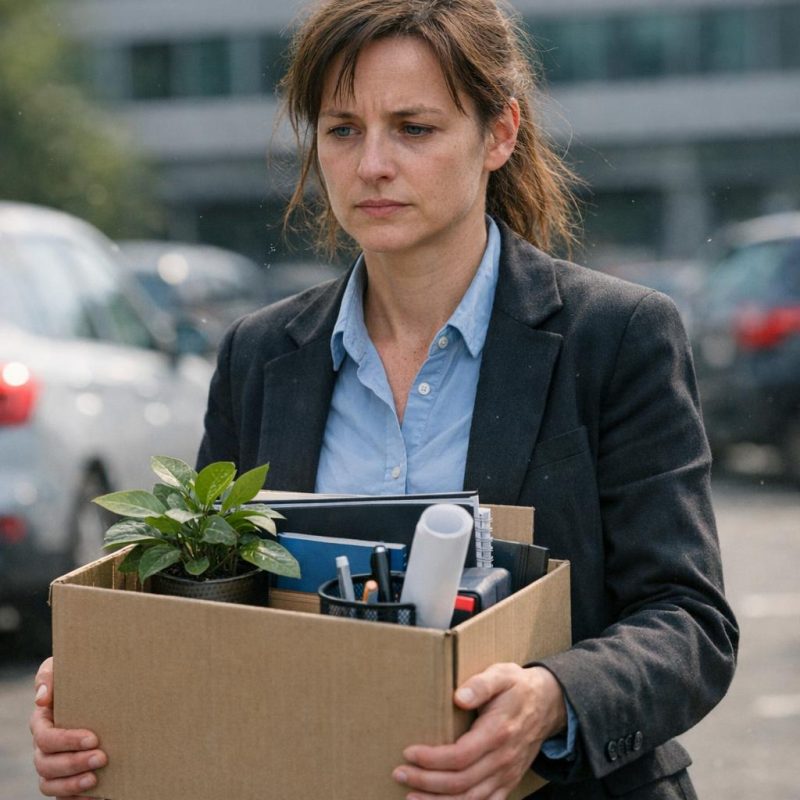 Image by RM AI
The Corrected Report
Two days after Melanie's termination, HR reissued the quarterly report. They'd restored all the original attributions, corrected every change Melanie had made, and added a brief note explaining that the previous version had contained 'attribution errors' that had been corrected. They sent the updated version to senior leadership with a memo from Patricia explaining what had happened and apologizing for the initial submission. I got a copy in my inbox Friday morning, and seeing my name back on my work—properly credited for the analysis I'd actually done, the recommendations I'd actually made—felt surreal. It had been weeks of fighting, documenting, doubting myself, wondering if I was overreacting or being petty. And now senior leadership was reading my actual work, seeing what I'd contributed, understanding the analysis and strategic thinking I'd put into that report. Management finally saw what I had actually done, not the diluted, misattributed version Melanie had submitted, and the recognition emails started coming in almost immediately.
 Image by RM AI
The Apology from Leadership
Patricia called me into her office that Monday, and her expression was more serious than I'd seen in the entire time I'd worked there. She gestured to the chair across from her desk, waited until I sat down, then looked at me directly. 'I need to apologize,' she said. 'On behalf of the company, on behalf of management—we failed you. We should have caught this weeks ago. We should have had systems in place that made it impossible for this to happen.' I honestly didn't know what to say. I'd imagined some version of this conversation, but hearing it out loud felt surreal, almost anticlimactic after everything I'd been through. She explained that they'd been reviewing all our processes, examining how someone could manipulate documentation for weeks without anyone noticing. They'd found gaps in oversight, places where the system relied too heavily on trust and not enough on verification. Patricia's voice was steady but genuinely regretful. 'This shouldn't have required the level of detective work you had to do. You shouldn't have had to fight this hard to prove what happened.' Then she leaned forward slightly, her tone shifting to something more determined. She promised they were implementing new policies to prevent this from ever happening again.
 Image by RM AI
New Policies
The new policies rolled out over the following two weeks. Management introduced mandatory dual-review for any compiled documents that included work from multiple team members—meaning two people had to sign off on attribution before submission. They created attribution verification protocols that required documentation of who contributed what, with timestamps and approval signatures. There was training on document version control, sessions on proper credit practices, even updates to our performance review system to include collaborative acknowledgment. I sat through the training sessions feeling this weird mix of vindication and exhaustion. Part of me wanted to stand up and shout, 'This is what I've been saying!' But another part just felt tired, like I'd fought a battle that should never have been necessary. The protocols were solid, actually well-designed, and management seemed genuinely committed to enforcement. They'd learned something, clearly, though it had taken Melanie's firing and a complete review of multiple projects to get there. People around me seemed receptive, maybe a little chastened by how thoroughly Melanie had gamed the old system. But watching them implement all these safeguards, all these checks and balances that could have protected me months ago—it felt like closing the barn door after the horse had escaped, but at least they were doing something.
 Image by RM AI
The Colleagues Who Were Affected
Tasha reached out to me first, then Ben, and a few others who'd worked with Melanie over the past year. They'd all received formal acknowledgment from HR and corrected documentation showing their actual contributions to various projects. Tasha had been credited for strategy work Melanie had claimed, Ben for technical analysis that had been attributed to 'team effort' under Melanie's leadership. There were four of us total, maybe five if you counted someone from the marketing team who'd dealt with similar issues. We met for coffee one Thursday afternoon, not planned exactly, just something that happened organically after Tasha suggested it in the break room. Sitting there together, sharing our stories, realizing how consistent Melanie's tactics had been across different people and projects—it was validating in a way I hadn't expected. We'd all doubted ourselves, all wondered if we were being oversensitive or misremembering our contributions. We'd all felt that specific kind of crazy-making gaslighting when you know you did the work but can't prove it. Now we had proof, documentation, official acknowledgment, and each other. 'It's weird, right?' Tasha said, stirring her coffee. 'To finally be seen?' We all nodded, and in that silence was this shared understanding of what we'd been through and what it meant to come out the other side. We talked about how strange it was to finally be seen.
 Image by RM AI
The Document History Lesson
Months later, I still think about those deleted comments and what they revealed—not just about Melanie, but about how easy it is to steal credit when systems trust the wrong things. The whole situation taught me that documentation isn't paranoia, it's protection. That version history isn't just a technical feature, it's evidence. That when something feels off in a collaborative project, that instinct is probably right, and you're not crazy for questioning it. I've changed how I work now. I keep my own records of contributions, I screenshot important conversations, I maintain parallel documentation that can't be edited by others. It sounds exhausting written out like that, but it's become second nature, just part of how I approach shared work. The new company policies help, definitely, but I don't rely on systems alone anymore. I've seen too clearly how they can fail. Tasha does the same thing now, and Ben, and probably everyone else who went through this. We've become quietly vigilant, protecting ourselves and each other. Now when I review shared documents, I always check the version history, and I teach others to do the same, because the best defense against people like Melanie is a paper trail they can't erase.
 Image by RM AI
KEEP ON READING
The 20 Most Recognized Historical Figures Of All Time
The Biggest Names In History. Although the Earth has been…
By Cathy Liu Oct 4, 2024
10 of the Shortest Wars in History & 10 of…
Wars: Longest and Shortest. Throughout history, wars have varied dramatically…
By Emilie Richardson-Dupuis Oct 7, 2024
10 Fascinating Facts About Ancient Greece You Can Appreciate &…
Once Upon A Time Lived Some Ancient Weirdos.... Greece is…
By Megan Wickens Oct 7, 2024
20 Lesser-Known Facts About Christopher Columbus You Don't Learn In…
In 1492, He Sailed The Ocean Blue. Christopher Columbus is…
By Emilie Richardson-Dupuis Oct 9, 2024
20 Historical Landmarks That Have The Craziest Conspiracy Theories
Unsolved Mysteries Of Ancient Places . When there's not enough evidence…
By Megan Wickens Oct 9, 2024
The 20 Craziest Inventions & Discoveries Made During Ancient Times
Crazy Ancient Inventions . While we're busy making big advancements in…
By Cathy Liu Oct 9, 2024