


The Day Everything Changed
I'm Linda, 35, and I'm staring at the ceiling of my hospital room, counting the tiny holes in each fluorescent panel to avoid processing what the doctor just told me. 'Spinal damage... permanent... paralysis from the waist down.' The words float around me like debris after an explosion. One moment I was driving to get those chocolate croissants Daniel loves for our Sunday brunch, and the next—screeching tires, shattering glass, then nothing until I woke up here. Daniel stands beside my bed, his hand in mine, but something feels off. His grip is there, but the warmth isn't. He's nodding at everything the doctor says with this strange, detached calmness that scares me more than my own diagnosis. 'We'll get through this,' he says, but his eyes don't meet mine when he speaks. They're fixed somewhere on the wall behind me, as if looking at the person I've become is too difficult. I squeeze his hand, desperate for him to squeeze back with the same intensity, to fall apart with me just a little. Instead, he pats my arm like I'm an acquaintance he's obligated to comfort. I want to scream, to remind him that I'm still me—still Linda—even if my legs won't move anymore. But the words stick in my throat as I realize that maybe, just maybe, the accident didn't just change my body. It might have changed us.
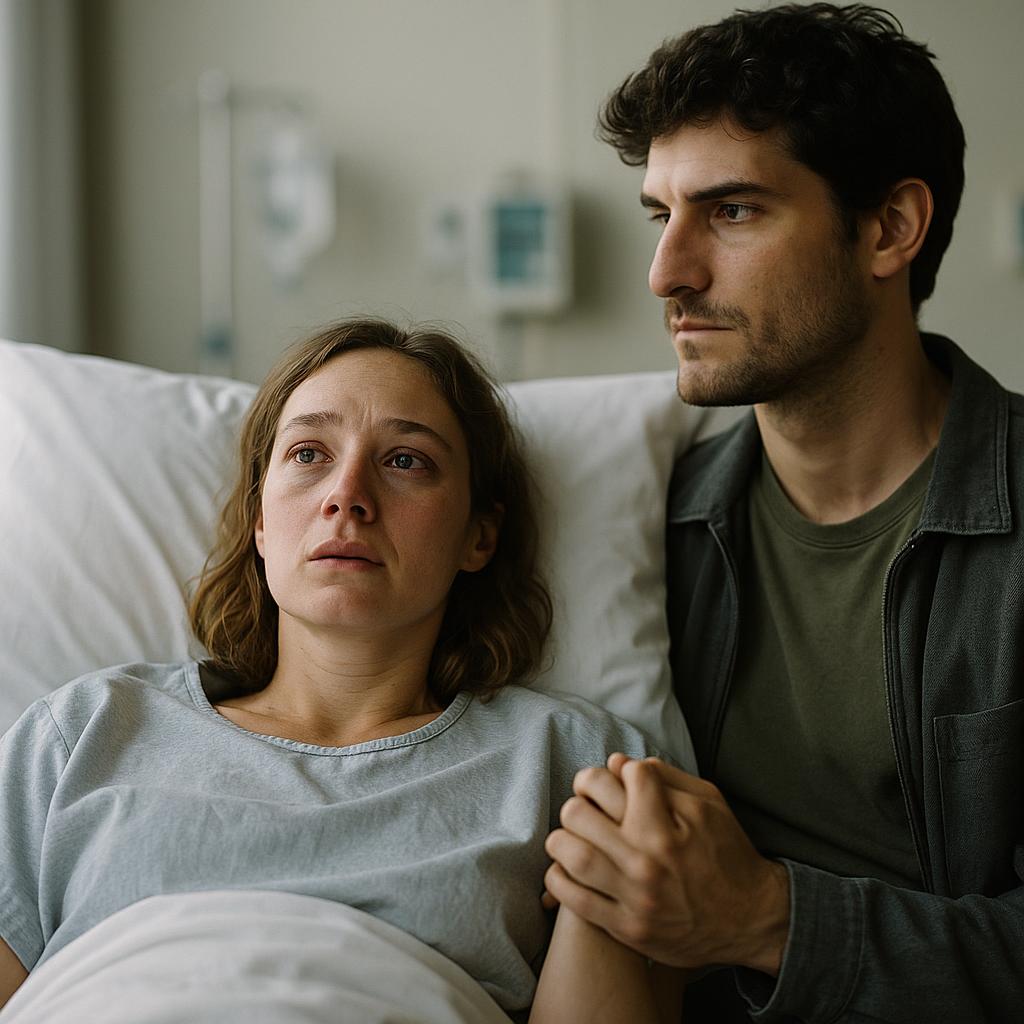 Image by RM AI
Diagnosis
Dr. Ramirez speaks in a voice that's gentle but clinical, using words like 'severed spinal cord' and 'permanent paralysis' while I lie there, trying to breathe through the panic rising in my chest. He shows us MRI images, pointing to the exact vertebrae where my life changed forever. I keep waiting for Daniel to crumble, to show some crack in his composure that matches the earthquake happening inside me. But he just nods, asking practical questions about rehabilitation options and home modifications as if we're discussing a kitchen renovation. When the doctor finally leaves, promising to send in a specialist to discuss 'adaptive strategies,' Daniel squeezes my hand. 'We'll figure this out, Linda,' he says, but his eyes drift past me to the window, focused on something in the distance. I want to grab his face, force him to look at me, to see that I'm drowning. Instead, I whisper, 'I'm scared.' He pats my arm awkwardly and says, 'I know,' but he doesn't say he's scared too. He doesn't say anything real. And that's when I first feel it—a different kind of paralysis creeping up from my heart. The way he's looking at me now, like I'm a problem to be solved rather than a wife to be comforted, makes me wonder if I've lost more than just the ability to walk.
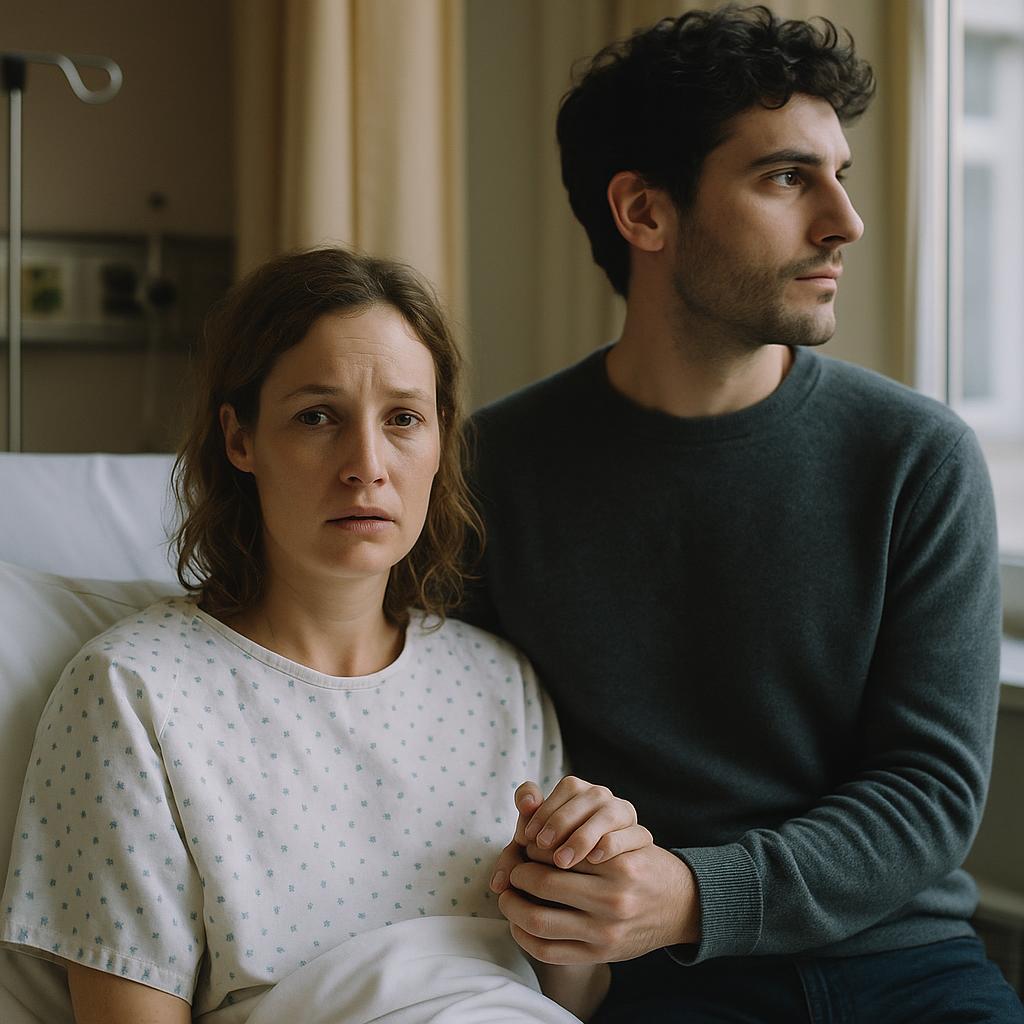 Image by RM AI
The Woman Who Ran the Red Light
Officer Ramirez visits me on my third day in the hospital, manila folder in hand. 'We've identified the driver,' he says, sliding a photo across my tray table. Meredith Calloway, 43, with shoulder-length brown hair and unremarkable features. She looks like someone I might chat with at the grocery store, not someone who'd shatter my life with a single distracted moment. 'She was texting her daughter about dinner plans,' he explains, his voice flat. 'Ran the light going 45.' I stare at her face, searching for something—malice, recklessness, anything that would explain why this ordinary woman deserved my hatred. But there's nothing. Just a mom who made a terrible mistake. Daniel handles the aftermath with robotic efficiency, disappearing into the hallway for hours with insurance adjusters and lawyers. When I catch fragments of his conversations—'catastrophic injury,' 'lifetime care costs,' 'quality of life'—his voice carries a strain I've never heard before. Once, when he returns to my room, I ask him to describe what he saw at the accident scene. His face goes blank. 'It doesn't matter now,' he says, suddenly fascinated by the heart monitor beside my bed. 'We need to focus on moving forward.' But the way his eyes dart away makes me wonder what horrors he witnessed that day—and whether he'll ever be able to look at me without seeing them again.
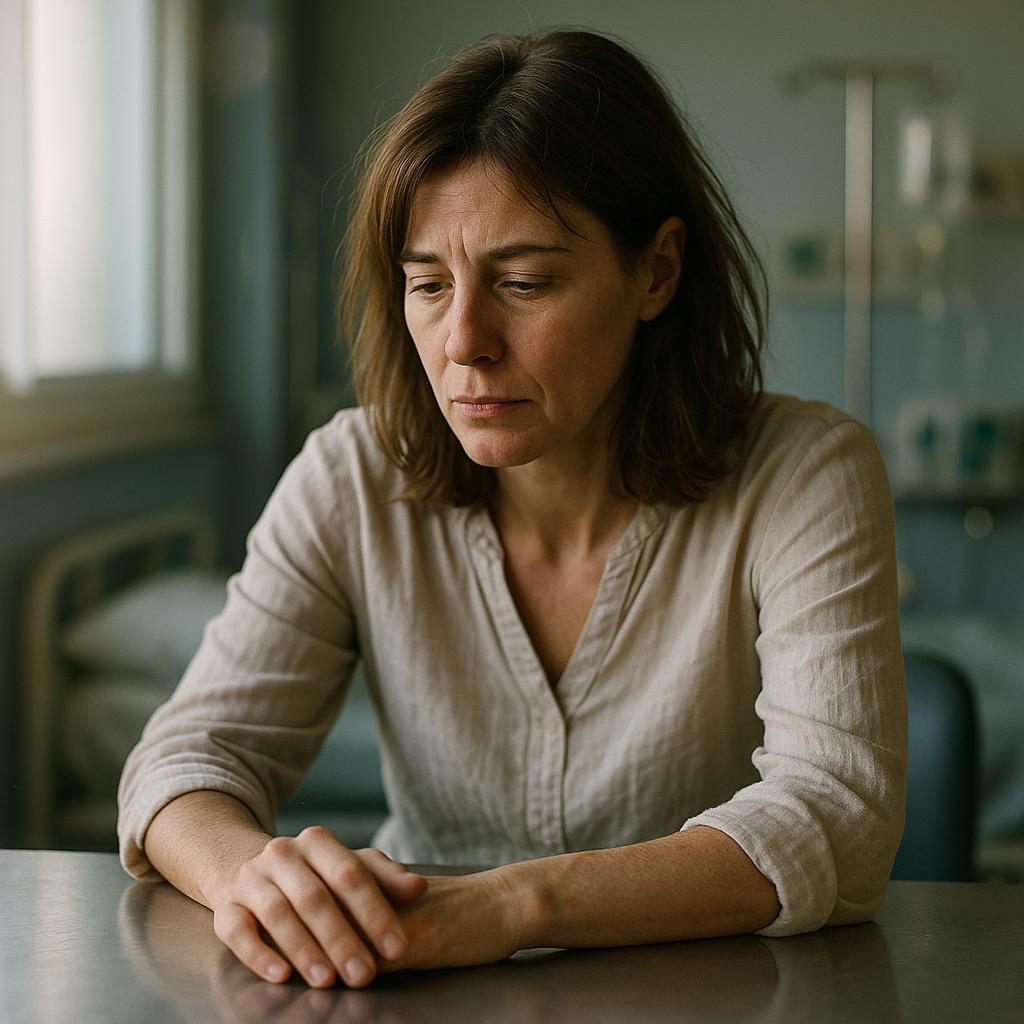 Image by RM AI
Coming Home
Our apartment feels like a museum of our former life when Daniel wheels me through the door after six weeks in rehab. Everything is technically the same but fundamentally different – countertops that once felt normal now tower over me like skyscrapers, doorways that never gave me a second thought are suddenly narrow obstacle courses, and our bathroom? It's basically enemy territory now. Daniel has made adjustments – rearranged furniture, installed a temporary plywood ramp over the front step, cleared pathways – but there's something clinical about his preparations. It's like he's setting up a hospital room rather than welcoming his wife home. He shows me the modifications with the detached efficiency of a real estate agent giving a tour, not once saying 'our bedroom' or 'our bathroom' – just 'the bedroom' and 'the bathroom,' as if I'm a temporary tenant in this space we built together. That night, he makes up the couch for himself, claiming he's afraid of hurting me in his sleep. I lie awake in our bed – my bed now, apparently – staring at the ceiling, listening to him shift and sigh in the living room. The physical distance between us feels like a preview of something more permanent, and I can't help but wonder if this arrangement is temporary or if this is just the first step in a longer goodbye.
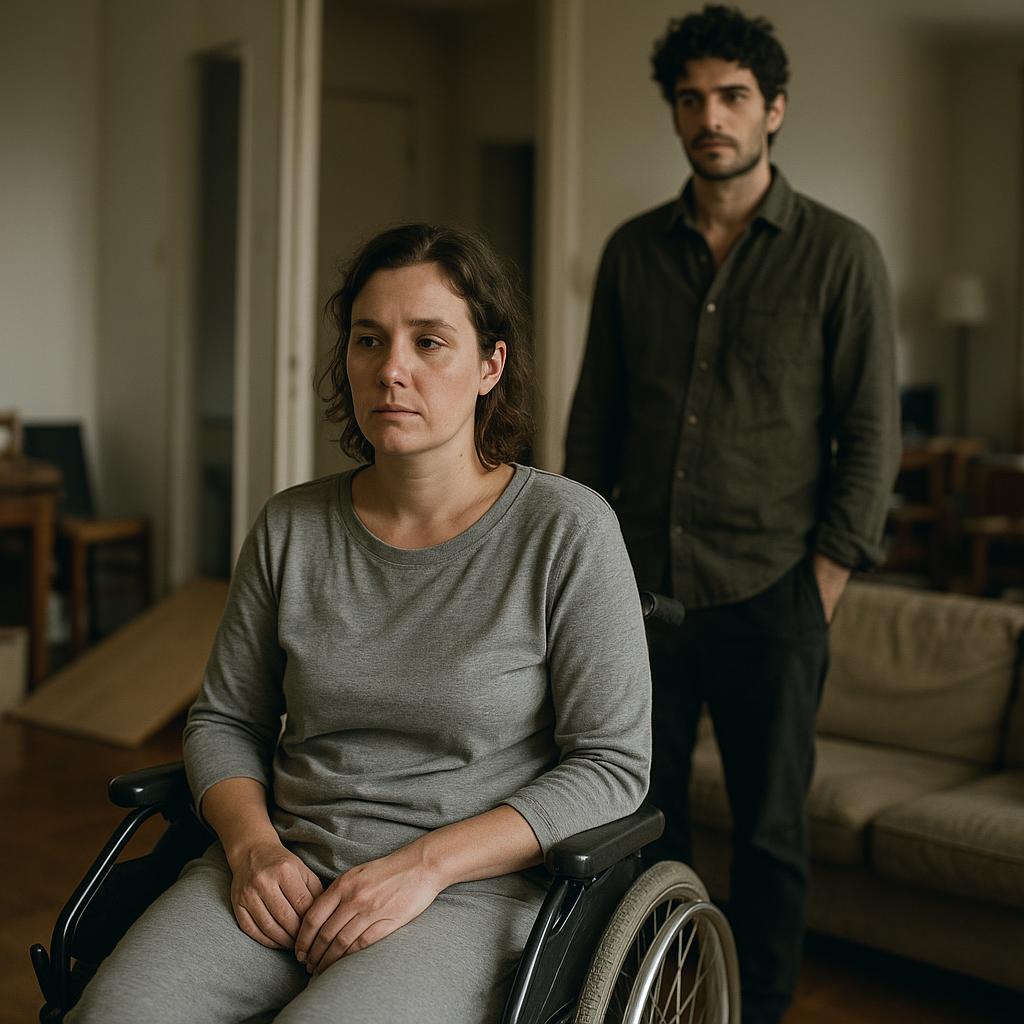 Image by RM AI
The First Physical Therapy Session
The physical therapy center hits me with a wall of antiseptic smell and determination when Daniel wheels me in. My therapist, Sophia, introduces herself with a firm handshake and eyes that say 'I won't baby you.' She's all business as she helps me onto the padded table, explaining each movement with practiced precision. 'We're going to work hard, Linda. This won't be easy, but it will be worth it.' Two hours later, my arms are trembling, and sweat soaks through my shirt as I struggle with exercises that would have been effortless in my before life. Through it all, Daniel sits in the corner chair, his attention fixed on his phone, occasionally glancing up with what looks suspiciously like impatience rather than support. When Sophia asks if he'd like to learn some assistance techniques—simple ways to help me transfer from chair to bed or car—he checks his watch with exaggerated concern. 'Sorry, I've got a meeting across town. Can we do this next time?' There's no next time mentioned, no specific plan. Just a quick kiss on my forehead before he's gone, leaving me to figure out how to get home alone. As the taxi driver awkwardly helps me into the backseat, I realize something that hurts worse than any physical therapy session could: Daniel isn't just avoiding my new body; he's avoiding the new reality of us.
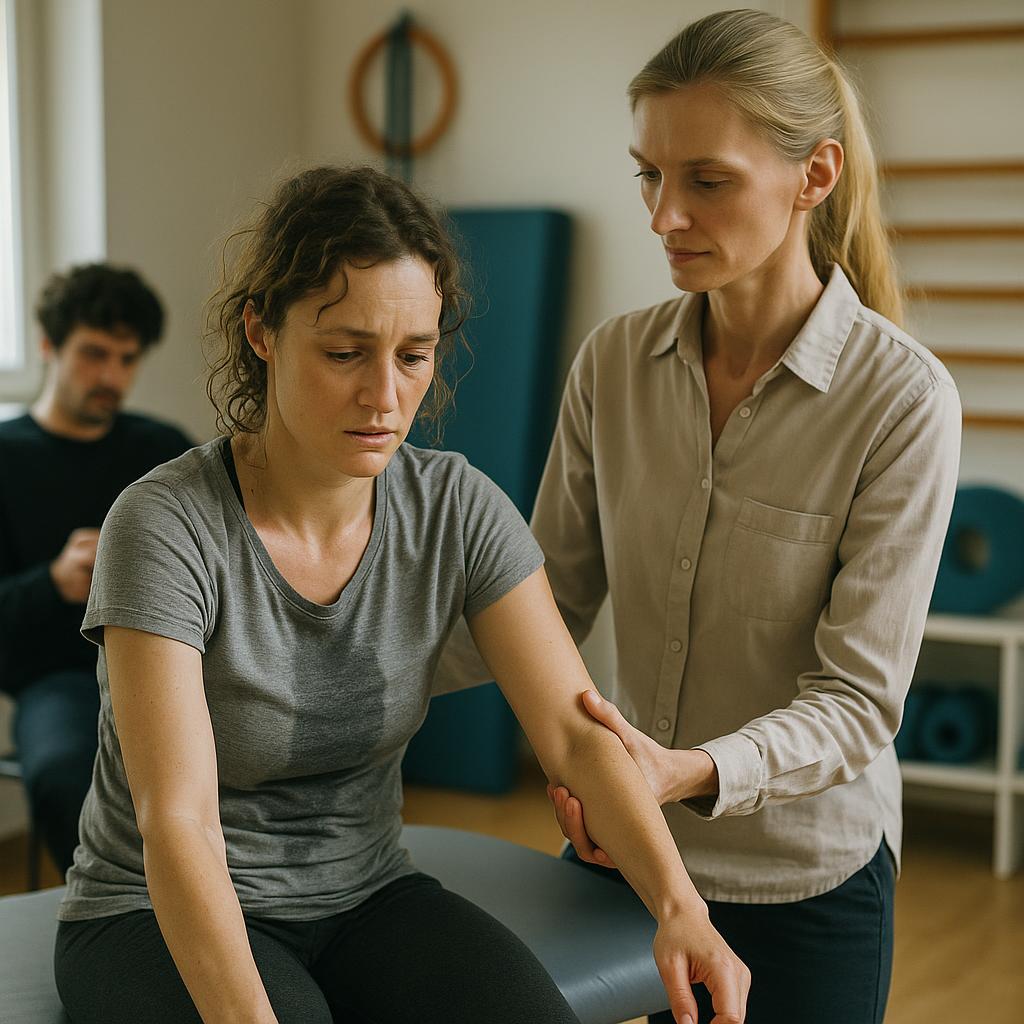 Image by RM AI
The New Normal
Days blur together in what I'm calling my 'new normal.' Every morning is a military operation – calculating how to get from bed to chair without falling, figuring out which clothes I can manage to put on myself, planning bathroom breaks like strategic missions. The humiliation of needing Daniel to help me shower is only matched by the frustration of dropping my phone and watching it slide just beyond my reach. I've become an expert at using kitchen tongs to grab things off the floor – my little life hack that no one prepares you for in rehab. Daniel works late almost every night now, mumbling something about a 'big project' when he finally comes home smelling faintly of bar smoke and something else I can't quite place. When he is home, he's like a ghost – physically present but somehow not really here. Last night, I woke up at 3 AM and wheeled myself to the kitchen for water, only to find him sitting in the dark living room, staring at nothing. When I called his name, he jumped like I'd caught him stealing something. 'Just thinking,' he said, but wouldn't meet my eyes. That's when I noticed his phone clutched in his hand, screen quickly turned face-down. Something cold settled in my stomach that had nothing to do with my paralysis.
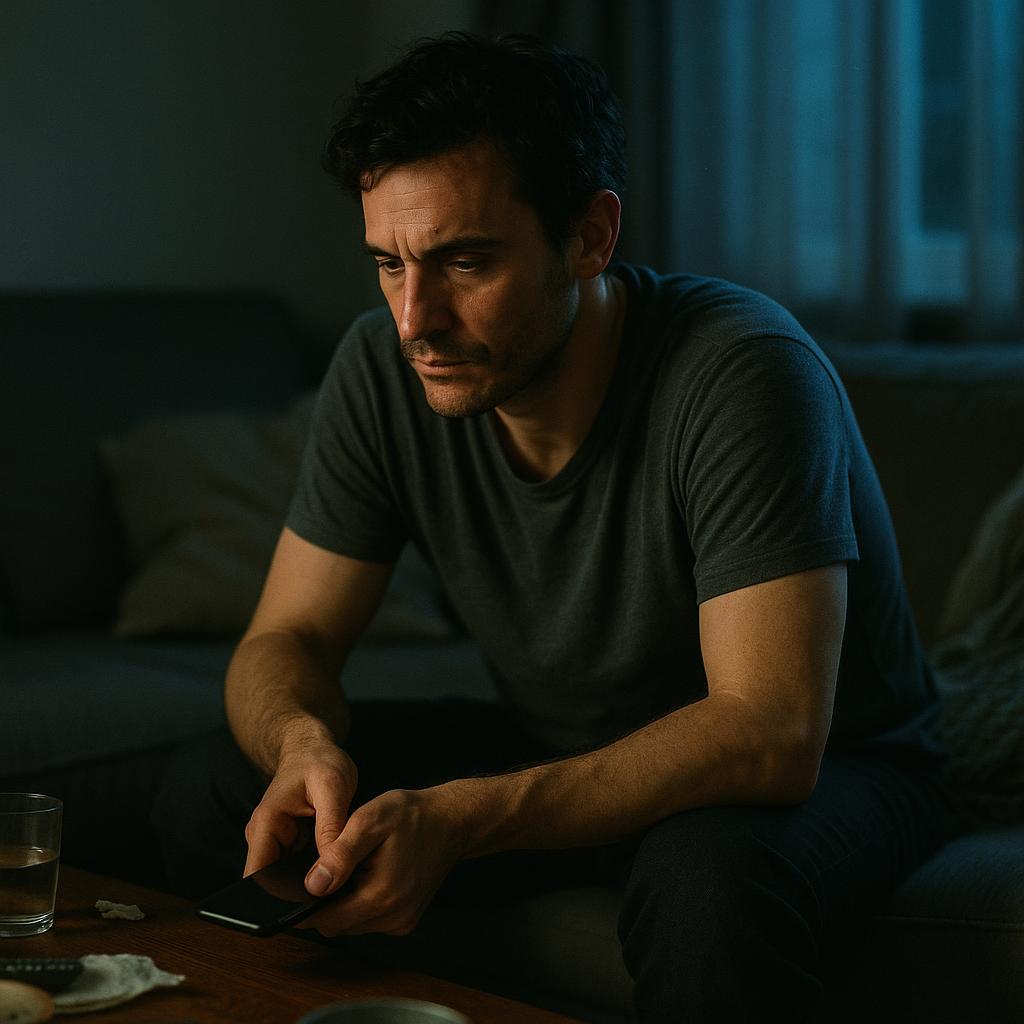 Image by RM AI
The Phone Call
It's Tuesday afternoon, and I'm alone in our apartment—again. The silence is broken only by the hum of the refrigerator and the occasional car passing outside. I'm trying to reach a mug from the bottom cabinet when I hear Daniel's phone vibrating against the kitchen counter. He forgot it this morning, rushing out with barely a goodbye. I wheel over, thinking it might be important. That's when I see her name flashing on the screen: Elise. I freeze, staring at those five letters like they're written in neon. I don't know any Elise in Daniel's life. The call ends, but seconds later, a text appears: "Did you think about what I said? I miss you." My throat tightens as I back away from the phone like it might burn me. Later, when Daniel comes home, I mention it casually—"Someone named Elise called you today"—and watch his face. There's that split-second flash of panic before his features rearrange themselves into careful neutrality. "Oh, she's just someone from work," he says, voice too even, too rehearsed. "We're on a project together." He takes his phone and disappears into the bathroom for fifteen minutes. When he emerges, Elise's text is gone, but the knot in my stomach has only grown tighter. Some things don't need medical training to diagnose.
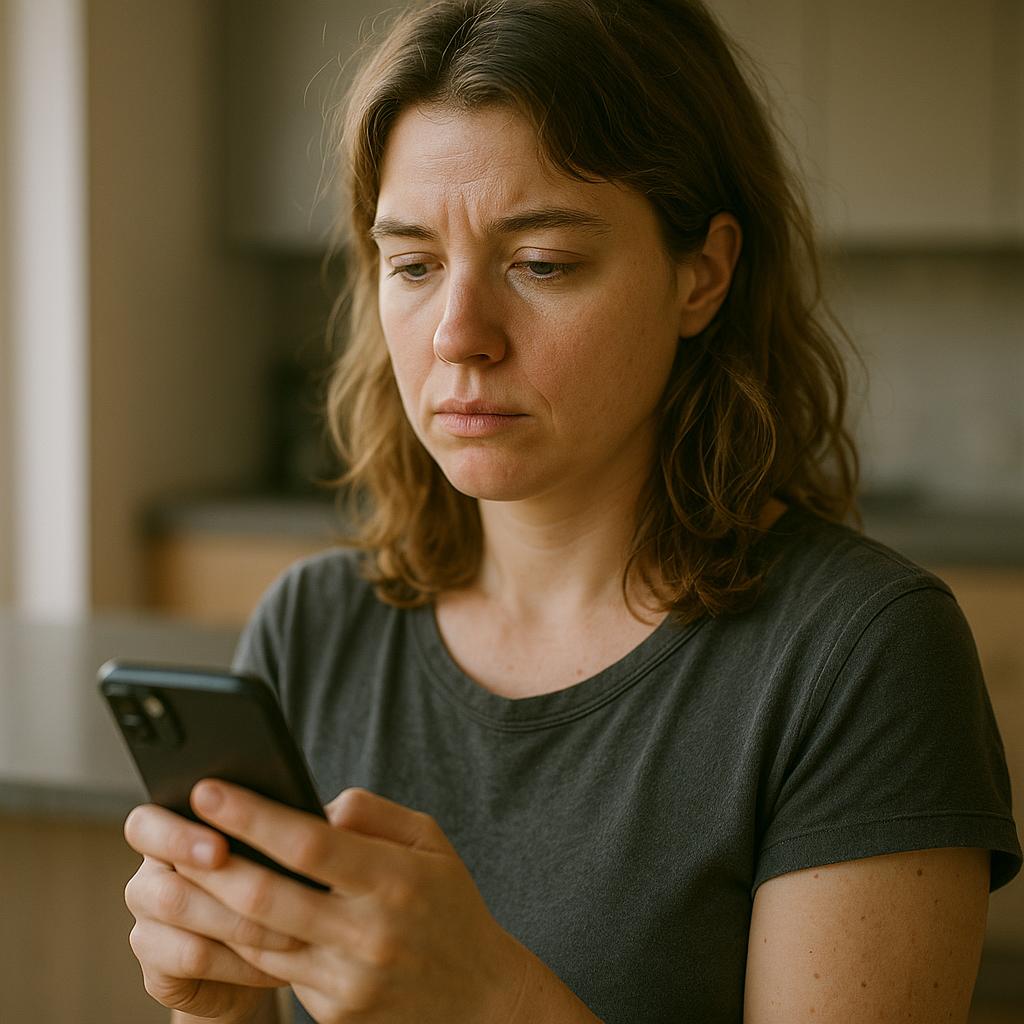 Image by RM AI
The Missed Appointment
Thursday morning, and I'm staring at my phone in disbelief. 'Something came up at work, Linda. Can't make your appointment. So sorry.' Daniel's text arrives exactly one hour before Dr. Novak is supposed to evaluate my progress. I sit there, halfway dressed, fighting back tears of frustration. After three frantic calls, I finally find a medical transport service with an opening, but they charge double for last-minute bookings. I arrive twenty minutes late, sweating and apologizing profusely. Dr. Novak's kind eyes study me as he asks about my 'support system at home.' I surprise myself with how easily the lies flow. 'My husband's been amazing—he just couldn't get away from work today.' The doctor nods approvingly while I paint a fictional portrait of Daniel helping with exercises, encouraging my independence, being my rock. Why am I protecting him? As the nurse wheels me toward the exit, I glance across the parking lot and freeze. There's Daniel, sliding into his silver Audi, checking his watch. My stomach drops as I realize his 'unavoidable meeting' is apparently in the same medical complex as my appointment. Before I can process what this means, my phone buzzes with a text from him: 'How'd it go? Sorry again I couldn't be there.' I stare at those words, wondering what other lies are hiding in plain sight.
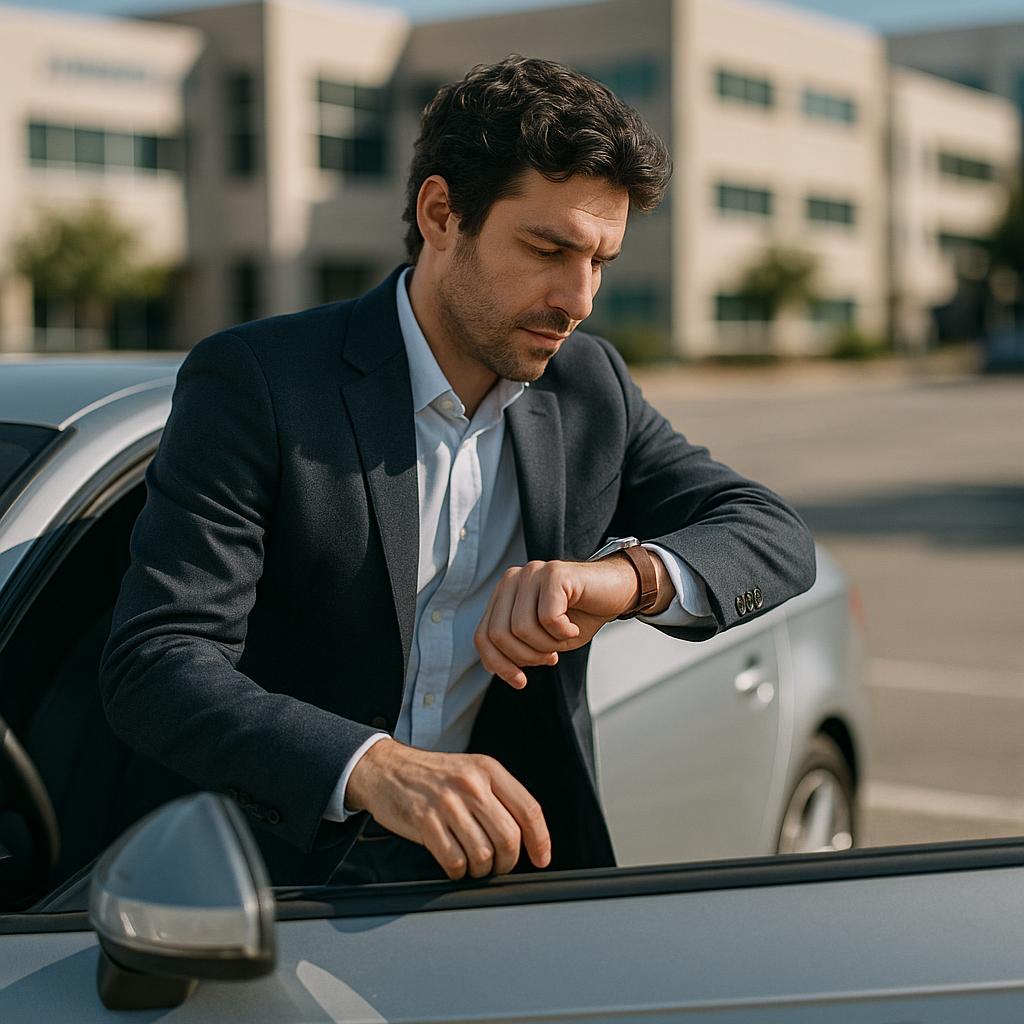 Image by RM AI
The Perfume
Daniel comes home at 11:30 PM, his excuse about 'wrapping up the Henderson project' rolling off his tongue too smoothly. When he leans down to kiss my cheek, I catch it—a whisper of floral perfume clinging to his collar. Not mine. Something expensive and deliberately subtle, like secrets. 'You smell different,' I say, keeping my voice casual while my heart pounds. He stiffens for just a millisecond before shrugging. 'Must be someone from the elevator. Place was packed.' He disappears into the bathroom, and I hear the shower running—longer than usual. I lie in bed, listening to him scrub away evidence, wondering when exactly showering became his nightly ritual. While he sleeps, I grab his phone, surprised to find it unlocked. I scroll through his texts, finding nothing from Elise, nothing obviously damning, but there are strange gaps in conversations—sentences that respond to questions never asked, replies to statements never made. Digital breadcrumbs of deleted messages. I place his phone back exactly where I found it, a new hollowness spreading through my chest. The worst part isn't even the suspicion—it's realizing how desperately I want to be wrong, how pathetically grateful I'd be if he were just lying about something small and forgivable. Because what options do I really have now? Who leaves their paralyzed wife?
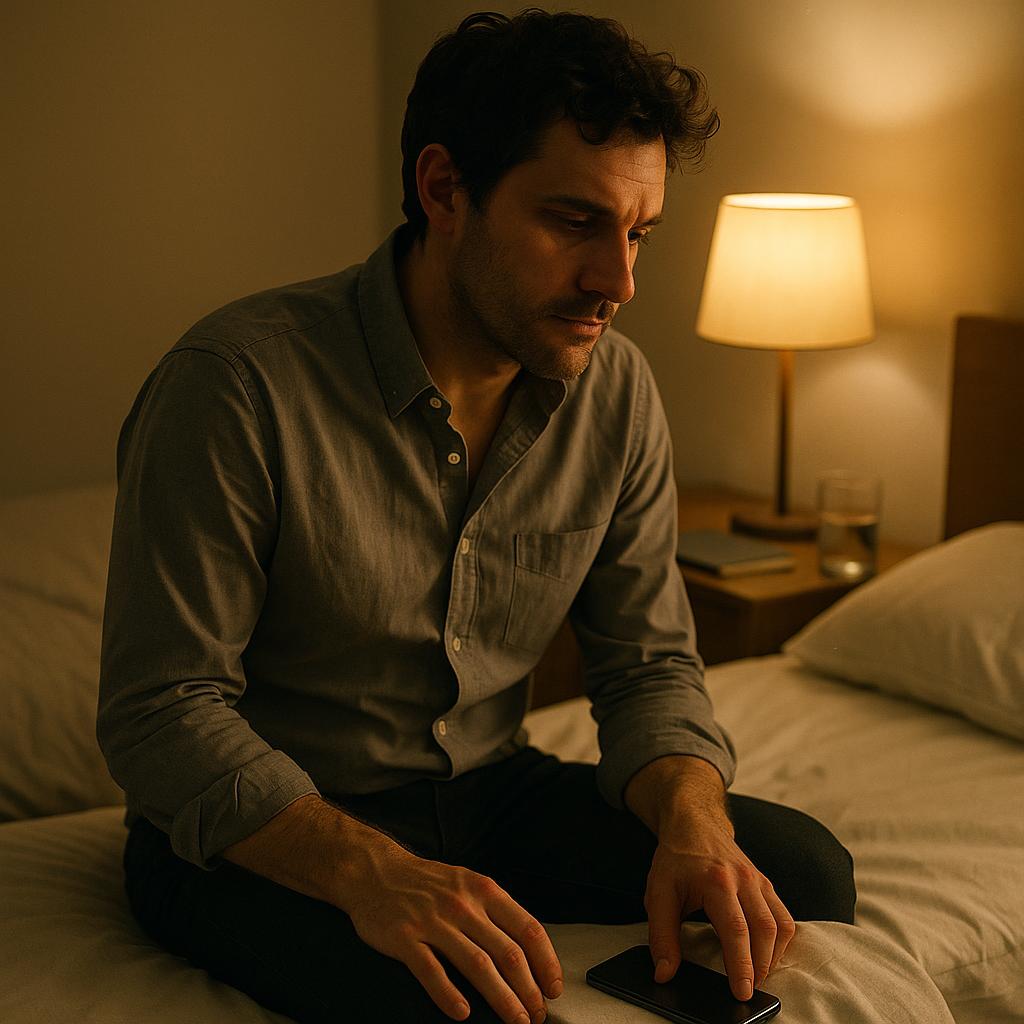 Image by RM AI
The Hallway Whispers
I jolt awake at 2 AM, that strange sixth sense you develop after trauma telling me something's wrong. The apartment is quiet except for Daniel's hushed voice drifting from the hallway. I strain to hear, catching fragments that slice through me like shards of glass. 'I don't know how to do this anymore,' he whispers, his voice cracking. There's a pause, then words that hit harder than the car that paralyzed me: 'She's not the same person anymore.' I lie perfectly still, my body betraying nothing while my mind fractures. Who is he talking to at this hour? Elise? His mother? A therapist? I close my eyes when I hear his footsteps approaching, forcing my breathing to remain deep and even. The mattress dips as he slides back into bed, careful not to 'disturb' me. If only he knew I was already disturbed to my core. Tears leak silently onto my pillow as I stare into the darkness, wondering if he's right. Am I not the same person? Of course I'm not. How could I be? But the real question keeping me awake isn't whether I've changed—it's whether loving me is conditional on me staying exactly the same. And as Daniel's breathing evens out beside me, I realize with crushing clarity that I already know the answer.
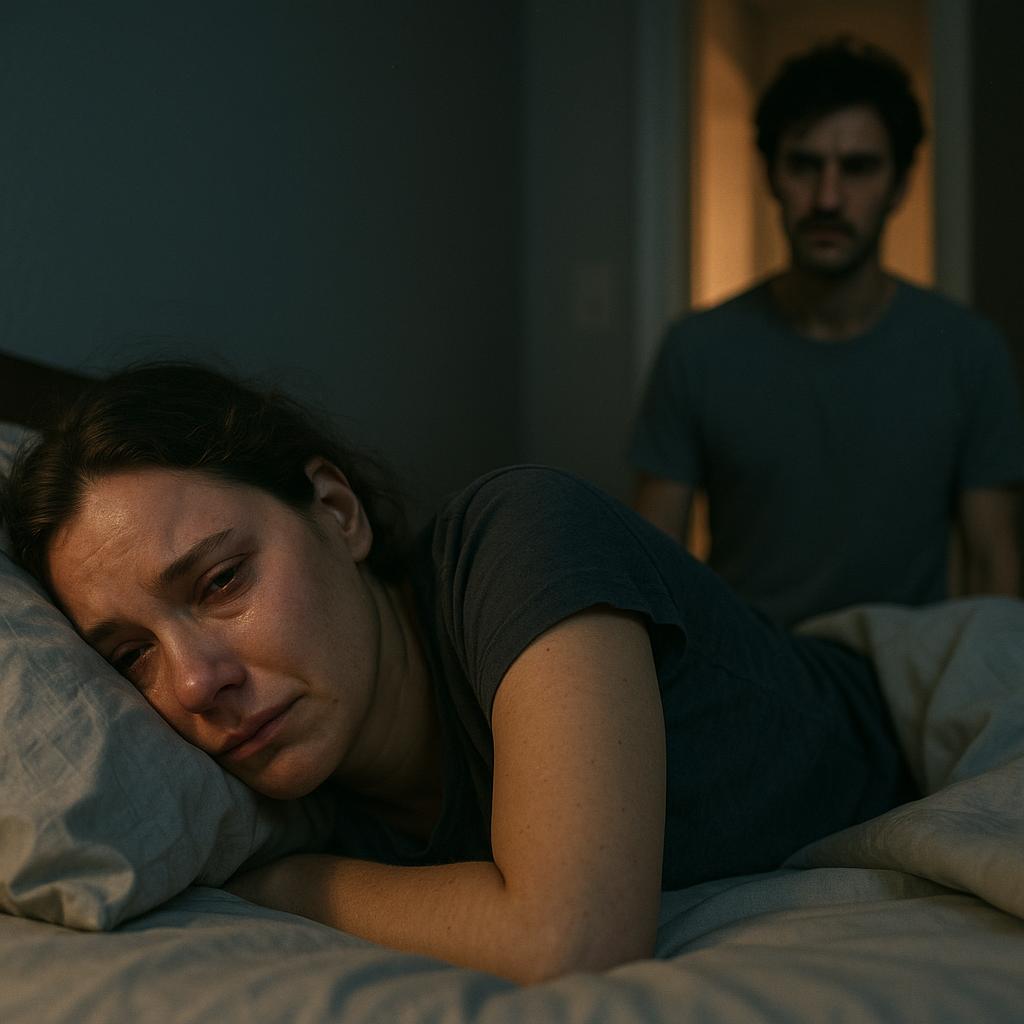 Image by RM AI
The Support Group
Sophia's suggestion to attend a support group feels like a lifeline I didn't know I needed. When Daniel drops me off at the community center, there's an unmistakable relief in his goodbye kiss—like he's escaping prison duty. 'Take your time,' he says, already backing toward the door. Inside, the circle of wheelchairs intimidates me until a woman with electric blue streaks in her dark hair wheels over. 'First timer?' Maya asks, her confidence radiating like a force field. 'I'm five years post-injury.' She navigates her chair with the casual grace I can only dream of achieving. Around the room, I see people at various stages—some with fresh scars like mine, others who move with practiced ease. When conversation turns to relationships, Maya asks about my husband. Something in my expression must give me away because her hand immediately covers mine. 'Oh honey,' she says, her eyes knowing. 'That's a whole other kind of paralysis, isn't it?' The room grows quiet as others nod in silent understanding. For the first time since the accident, I feel seen—not for what I've lost, but for what I'm enduring. When Maya mentions her ex-husband left six months after her accident, I nearly choke on my water. 'But that's not the end of my story,' she adds with a smile that hints at something I desperately need: a future I can't yet imagine.
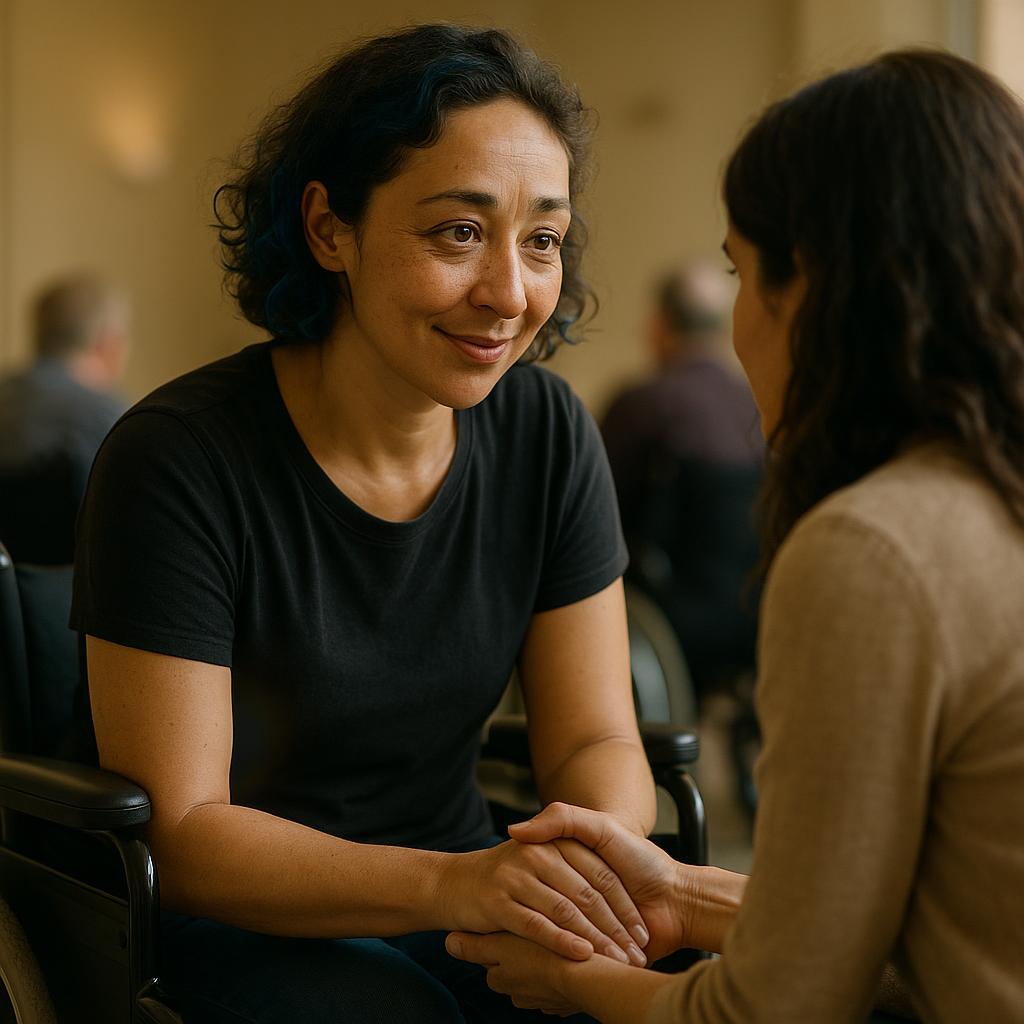 Image by RM AI
The Dropped Phone
I'm sitting in our living room when Daniel calls from the bathroom, asking me to grab his phone from the kitchen counter—he's expecting an email about a client meeting. I wheel over, stretching to reach it, but my fingers, still adjusting to their new role as my primary mobility tools, fumble. The phone slips from my grasp and clatters to the floor, screen lighting up on impact. That's when I see it. A text notification from someone named Elise: 'Did you tell her yet?' Five simple words that stop my heart. I stare at them, reading and re-reading, as if maybe they'll rearrange themselves into something innocent. They don't. With trembling hands, I pick up the phone, my mind racing through all the possible things Daniel hasn't told me yet. None of them are good. The shower stops, and I hear Daniel humming—actually humming—as he towels off. When he walks into the living room, hair still damp, I'm sitting there holding his phone, screen facing him. The transformation is instant—his relaxed expression freezes, then crumbles, color draining from his face like someone pulled a plug. 'Linda,' he starts, voice suddenly hoarse. But I already know whatever comes next will be either a lie or the truth I've been dreading for weeks.
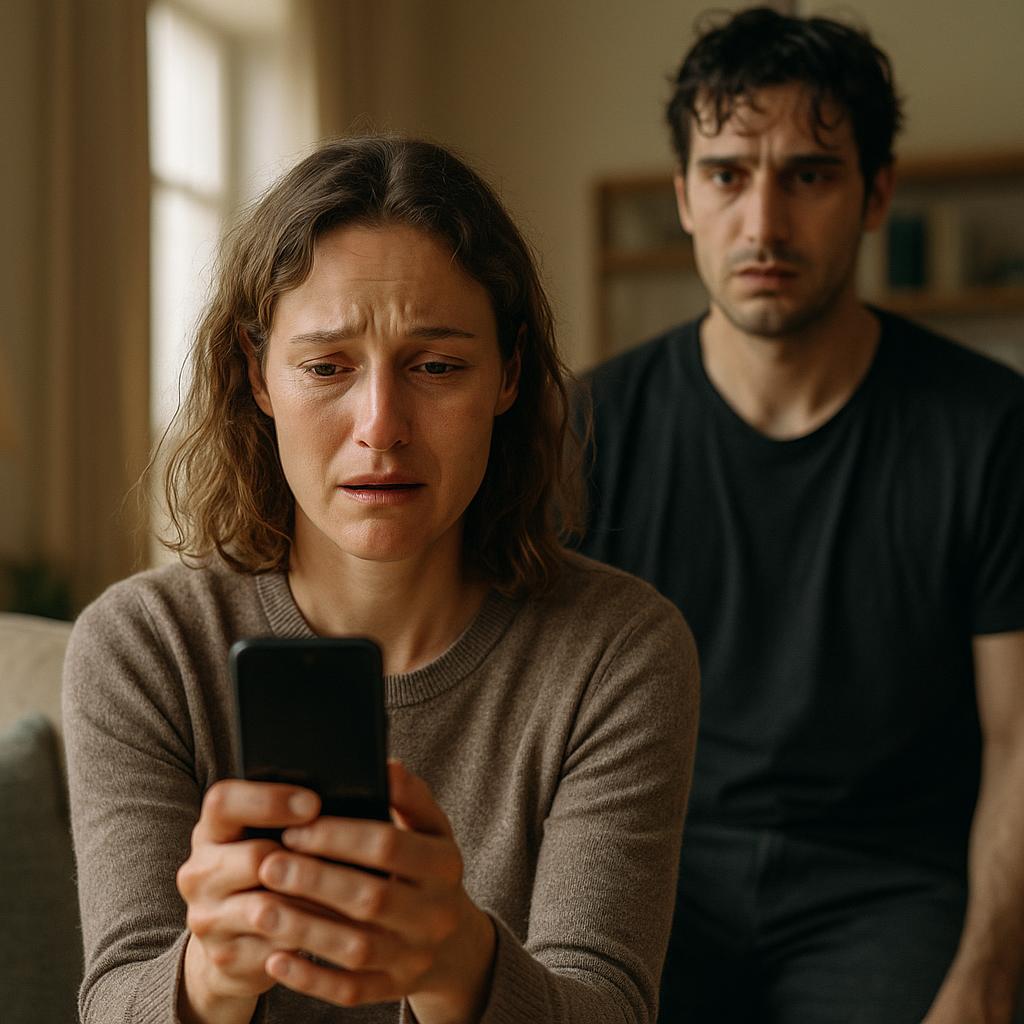 Image by RM AI
The Confrontation
"Who is Elise?" I ask, my voice steadier than I expected as I hold up his phone. The text glows between us like evidence at a crime scene. Daniel's face does that thing where it tries to look normal but fails spectacularly – I've seen better poker faces on toddlers caught stealing cookies. "She's just a colleague," he stammers, the words tumbling out too quickly, too rehearsed. "A friend who understands what I'm going through." Something inside me snaps at those three words. "Going through?" I repeat, my voice rising with each syllable. "I'M the one in the wheelchair, Daniel. I'M the one who lost everything!" His eyes shift away, unable to meet mine, and in that avoidance, I see every truth he won't admit. The silence stretches between us like a chasm neither of us knows how to cross. That night, he makes a show of grabbing his pillow, muttering something about needing the guest room, about needing "space to think." As if he's the wounded party here. As if his betrayal is somehow my burden to bear. I lie awake in our bed – my bed now – staring at the ceiling, wondering when exactly I became something he needed space from, rather than someone he wanted to be close to. The worst part isn't even the suspicion of an affair; it's the realization that he's already rehearsing his exit speech.
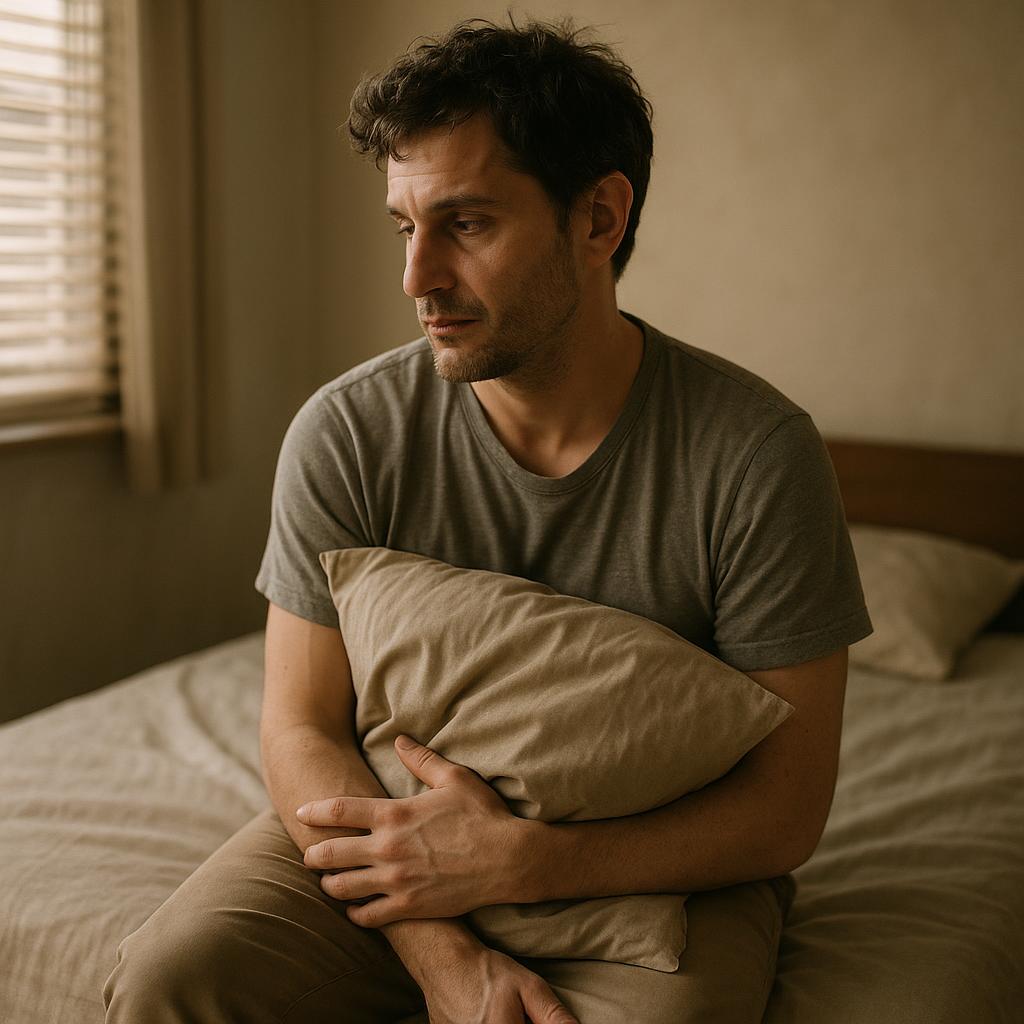 Image by RM AI
The Waiting Game
The days after the confrontation stretch into a week, then two, each hour weighted with unspoken words. Daniel and I have perfected a choreography of avoidance—he leaves for work before I'm fully awake, returns after I've pretended to fall asleep. When we do occupy the same space, conversation is limited to logistics: "We need milk" or "Your mother called." Nothing real. Nothing that matters. Every time his phone buzzes, I flinch. Every time the front door opens, I brace myself for goodbye. Sophia notices my regression during therapy, how I can barely lift the weights I managed easily last week. "Your body responds to what your mind is carrying, Linda," she says gently. "What's going on at home?" I open my mouth to tell her, but the words stick in my throat like glass. How do you admit that your husband is ghosting you while still living under the same roof? That you're trapped in this excruciating limbo, waiting for him to decide your fate? The worst part is that I've started to hope he'll just say it—just rip the bandage off—because this suspense is its own kind of paralysis. Every night, I lie awake listening to him breathe on the couch, wondering if tomorrow will be the day he finally stops pretending.
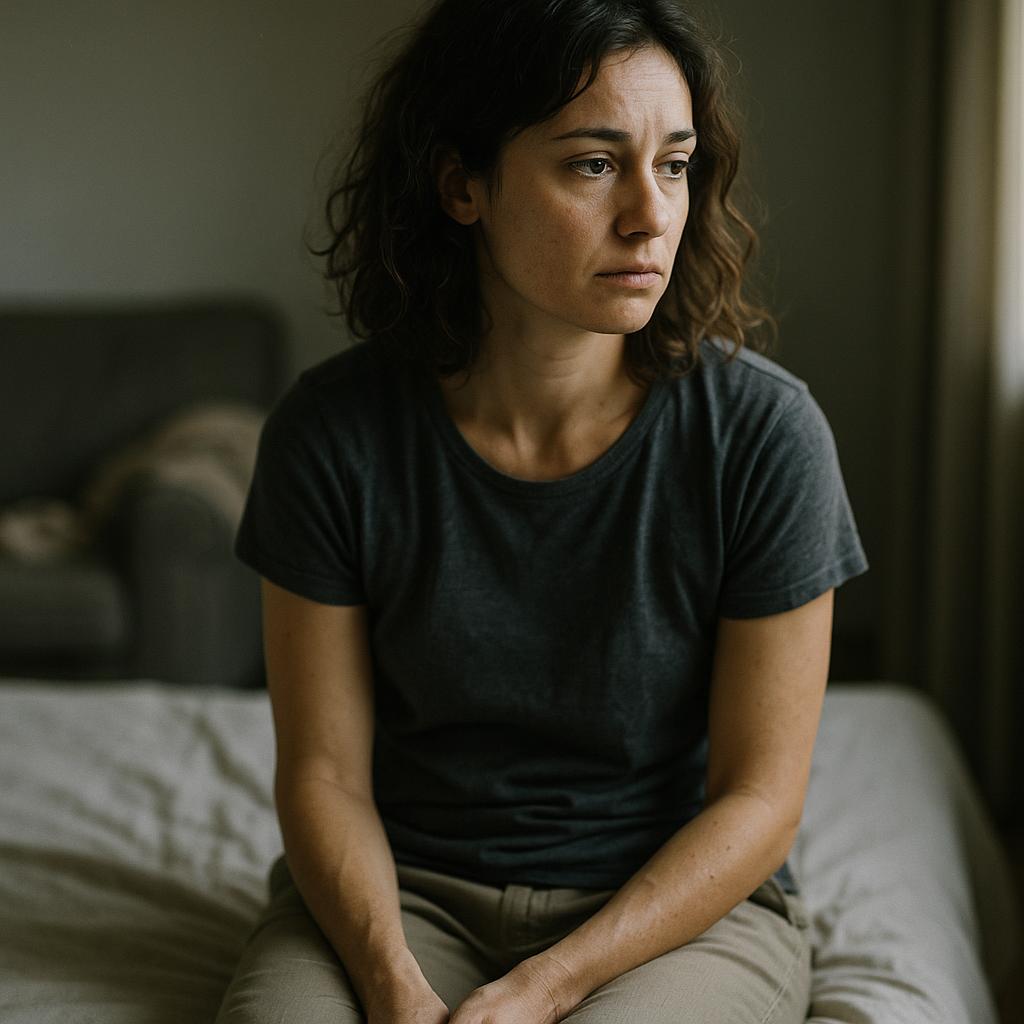 Image by RM AI
The Rainy Tuesday
The rain hammers against the windows like a soundtrack to my dread. I've been sitting in the same spot for hours, watching water streak down the glass, knowing in my bones that something is about to break. When Daniel finally walks in, he's drenched—his hair plastered to his forehead, his shoulders slumped with what looks like defeat. But it's his eyes that tell me everything. They're empty. Resolved. He drops his keys on the counter with a finality that echoes through our apartment. 'Linda, I can't do this anymore.' The words hang between us, neither a question nor an accusation—just a statement of fact. No anger. No tears. Just resignation, like he's been rehearsing this moment for weeks. Maybe he has. 'We've become different people,' he continues, his voice steady while my world collapses. 'I need space. Maybe distance will help us heal... separately.' That word—separately—cuts deeper than any scalpel ever could. I sit frozen in my chair, watching him pack a bag with mechanical efficiency. He doesn't look at me as he moves around our bedroom, collecting pieces of his life. When he walks toward the door, I try to follow, but my wheels catch on the rug's edge—a final humiliation. By the time I free myself, he's already gone, leaving nothing but the lingering scent of rain and betrayal. The door clicks shut with the quiet finality of an ending I always feared but never truly believed would come.
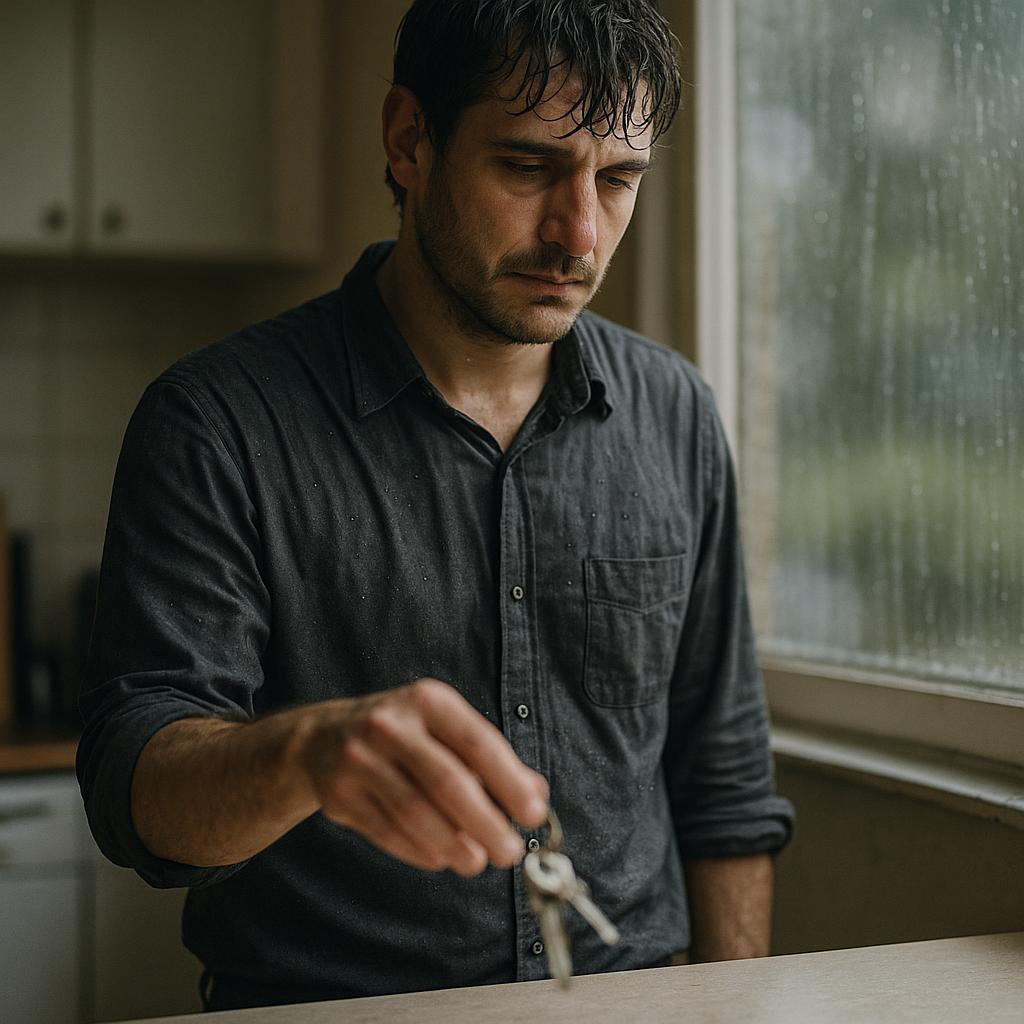 Image by RM AI
The Silence
The silence in my apartment is deafening. It's been three days since Daniel walked out, and I swear the walls are closing in on me. Every creak of the building, every distant siren outside becomes amplified in his absence. I sit in the darkness of our—my—living room, paralyzed twice over. When my phone rings, my heart practically leaps out of my chest. Daniel? But no, it's just my mother's cheerful voice asking how we're doing. 'Everything's fine, Mom,' I lie, the words tasting bitter on my tongue. How could I possibly tell her that my husband abandoned me when I needed him most? That he couldn't handle the 'in sickness' part of our vows? The conversation is mercifully short, filled with my vague reassurances and her blissful ignorance. After we hang up, the silence crashes back like a physical weight. I wheel myself to the window, watching raindrops race down the glass, making bets with myself about which one will reach the bottom first—anything to distract from the hollowness expanding in my chest. Our wedding photo still sits on the bookshelf, mocking me. I consider smashing it but realize I don't even have the energy for anger yet. That night, I don't bother turning on the lights. What's the point? The darkness feels appropriate, like the universe acknowledging that something has died here. But as I lie awake at 3 AM, staring at the ceiling, a terrifying question forms in my mind: what if this abandonment is actually my liberation?
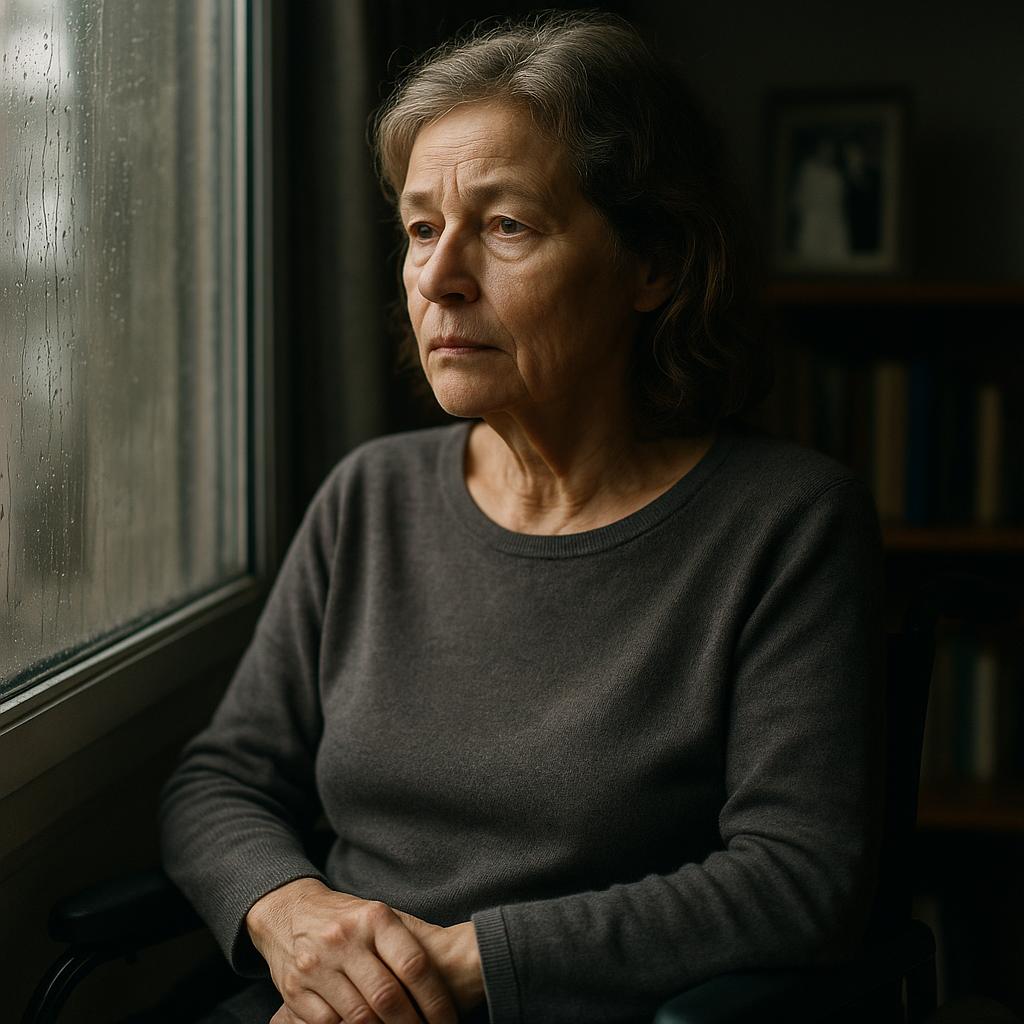 Image by RM AI
The Fog
I've lost track of the days since Daniel left. Tuesday? Friday? Does it even matter anymore? The fog of grief has settled over everything like a heavy blanket, making the simplest tasks feel impossible. I canceled my physical therapy appointments—what's the point of getting stronger when I feel so utterly broken inside? My phone buzzes with concerned messages from Maya and the support group, but I can't bear to explain that my husband confirmed their worst predictions. When Marissa, my home health aide, finds me on Thursday (or is it Friday?), I'm still wearing the same shirt from two days ago, my hair unwashed, surrounded by half-eaten microwave meals. "Linda," she says gently, kneeling beside my wheelchair, "let me help you." Something in her kindness breaks the dam I've built. "He left," I whisper, the words scraping my throat raw. She nods, her eyes soft with a lack of surprise that tells me everything. "Was I the only one who didn't see this coming?" I ask. That night, after Marissa helps me shower and change, I wheel myself to the window and look up at the stars, wondering if this emptiness is rock bottom or if there's still further to fall. The terrifying thing about fog is that you never know what's waiting on the other side.
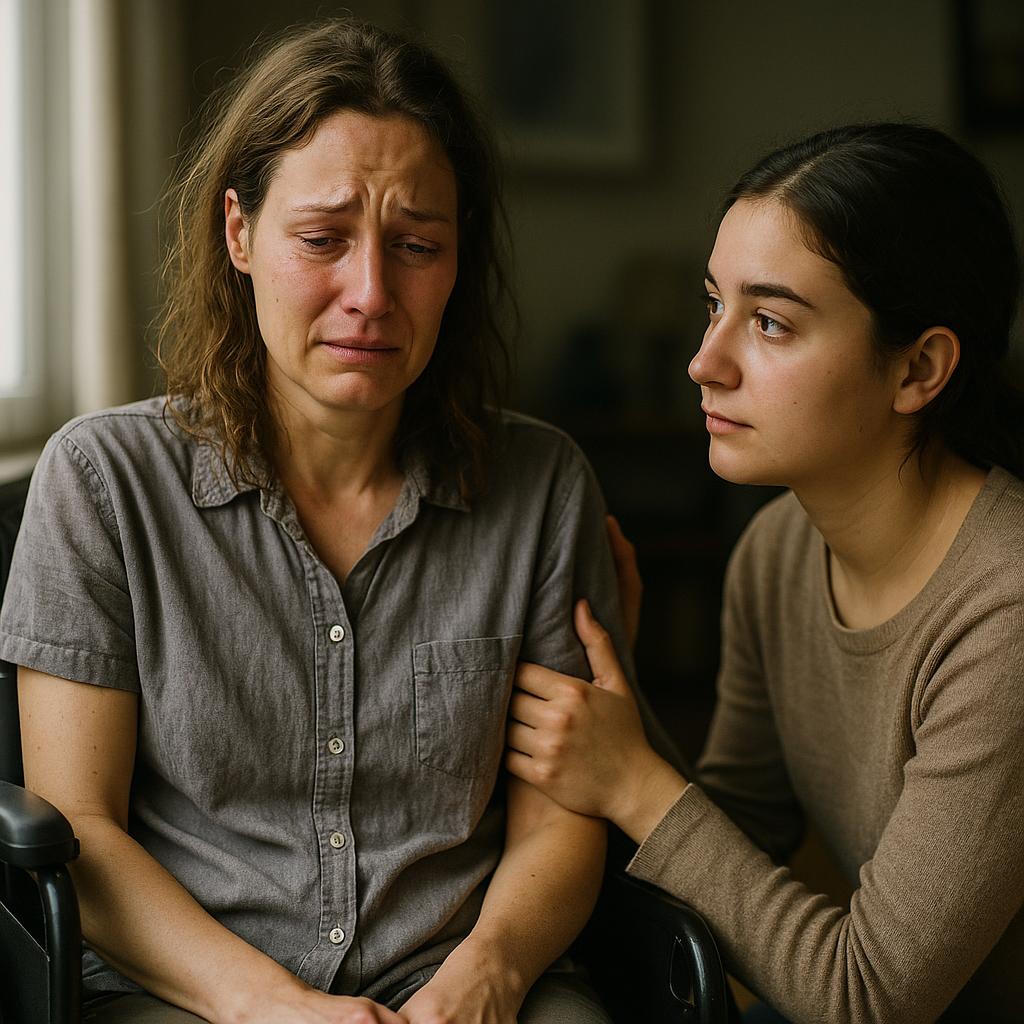 Image by RM AI
The Unexpected Visitor
The sharp knock at my door startled me out of my grief-fog. I wasn't expecting anyone, and frankly, I wasn't fit for company. When I opened it, there stood Maya from the support group, her electric blue hair streaks somehow even brighter than I remembered, holding two bags of what smelled like Thai food. "You missed two meetings," she announced, not as a question but as an indictment. Before I could stammer an excuse, she wheeled past me into my apartment like she owned the place. I watched, dumbfounded, as she unpacked containers on my kitchen counter, chattering about some guy at physical therapy who kept hitting on her. "So," she said finally, fixing me with those penetrating eyes, "where's the husband?" Something about her directness broke my carefully constructed dam. The whole ugly story poured out of me—Daniel's texts, his excuses, the rainy Tuesday exit. I expected pity. Instead, Maya's eyes flashed with a righteous fury that took my breath away. "What a coward," she spat, slamming her palm on my table. "Running when things get hard? That's not a husband, that's a child." Her anger on my behalf felt like oxygen to a flame I thought had been extinguished. For the first time since Daniel walked out, I felt something besides despair stirring in my chest—something that felt dangerously close to hope.
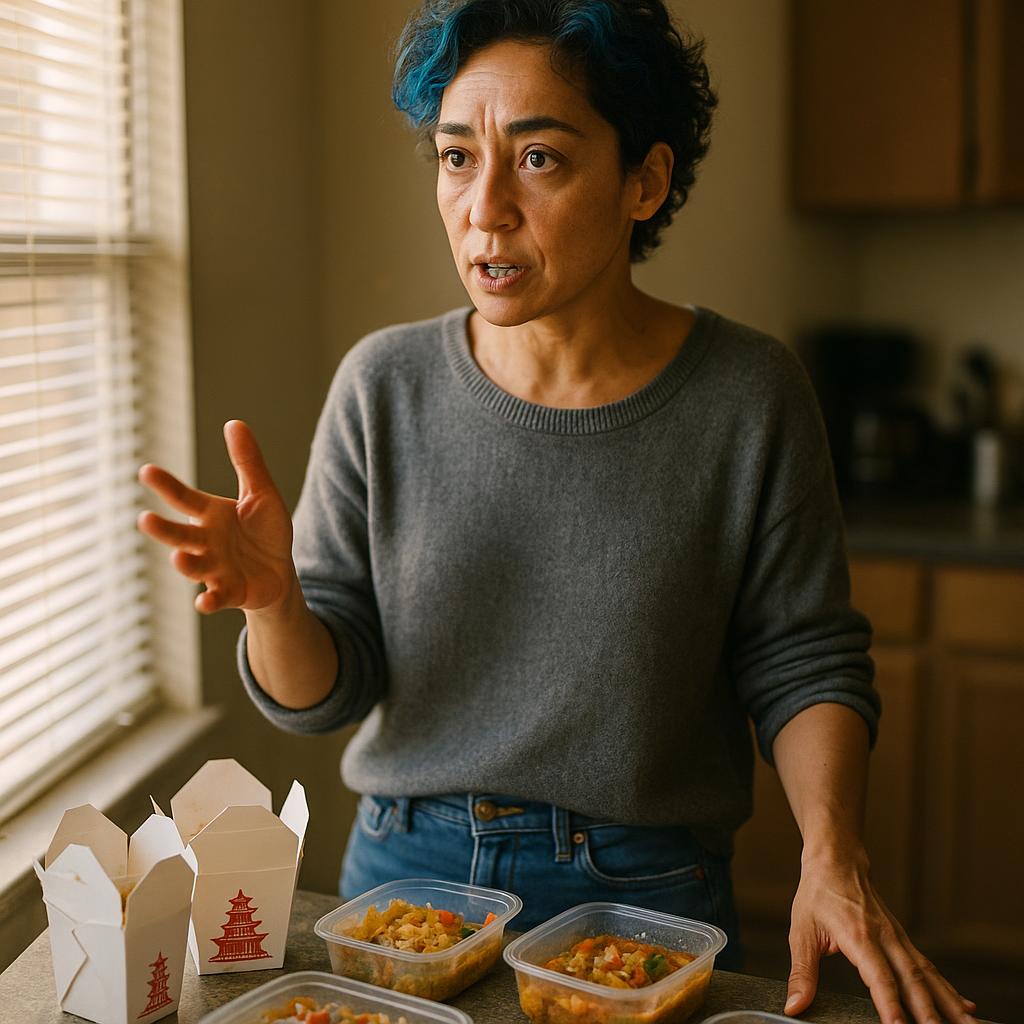 Image by RM AI
The Ember
After Maya left, I sat in the middle of my living room, suddenly aware of everything around me. The unwashed dishes piled in the sink. The plants Daniel had bought me—once vibrant—now drooping with neglect. The thin layer of dust on surfaces that hadn't been touched in days. It was like seeing my apartment through someone else's eyes, and what I saw was a reflection of the woman I'd become: abandoned and wilting. But something flickered inside me then—not quite anger, not yet, but a tiny spark of... something. Defiance, maybe? I wheeled myself to the phone and called Sophia, my fingers trembling slightly as I dialed. 'Linda?' Her surprise was evident even through the phone. 'I want to schedule a session for tomorrow,' I said, my voice stronger than I expected. 'I thought you were taking a break,' she replied carefully. I gripped the phone tighter. 'I'm not done yet,' I told her, surprising even myself with the conviction in my voice. After hanging up, I rolled into the bathroom and forced myself to look in the mirror—really look—at the woman staring back at me. Her eyes were hollow, her hair limp, but somewhere in those eyes was a small ember beginning to glow. And I realized with startling clarity: Daniel may have left, but I was still here.
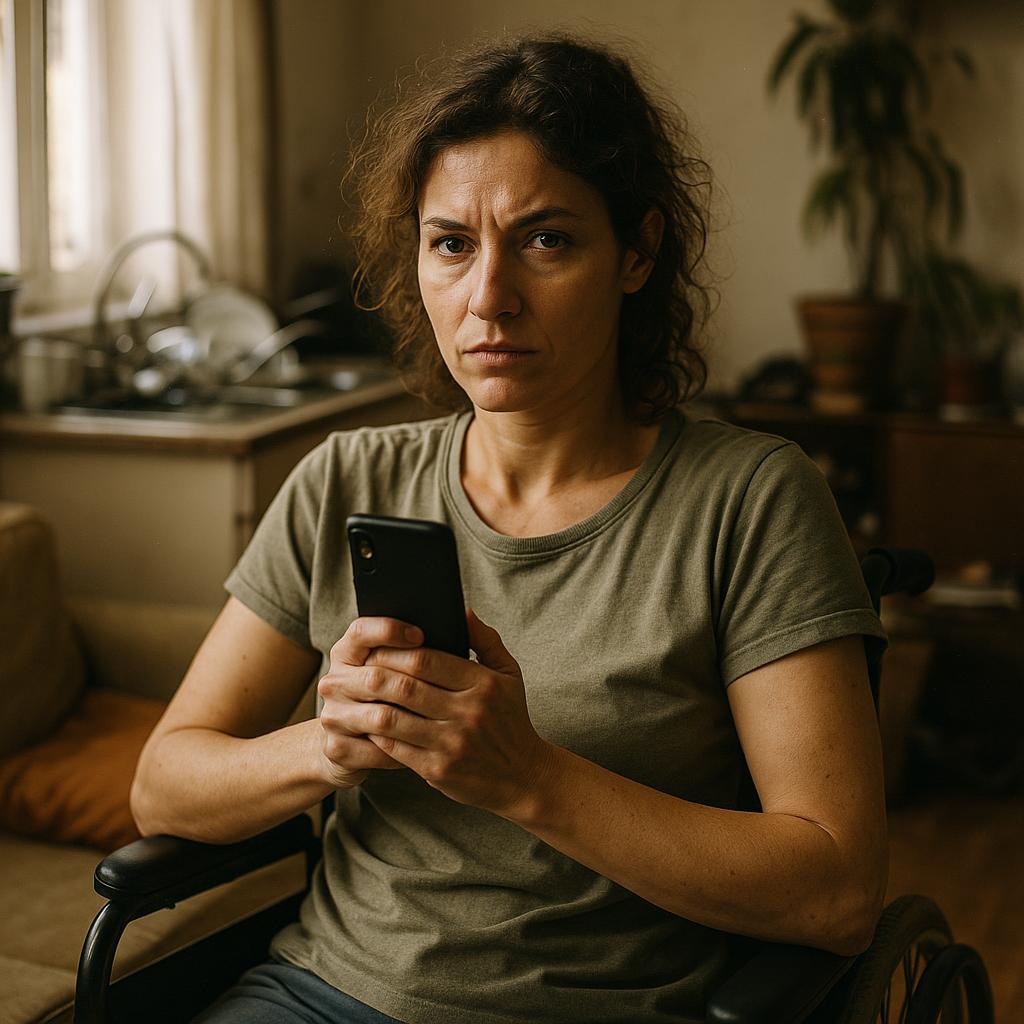 Image by RM AI
The Return
The first day back at physical therapy feels like punishment for my weeks of self-pity. Sophia doesn't sugarcoat anything when she sees me. 'You've lost ground, Linda,' she says, her eyes clinical but not unkind as she assesses what three weeks of neglect has done to my progress. I nod, accepting the truth without flinching. When she asks about Daniel, I tell her simply, 'He's gone,' and something in her expression shifts—not surprise, but a hardening, like armor clicking into place. 'Then we'll have to make you stronger than ever,' she declares, adding more weight to my resistance bands without asking if I can handle it. And somehow, I do. Every rep burns through my muscles, sweat dripping down my temples as I push past what I thought were my limits. The pain feels different now—clarifying, purposeful, like it's burning away the fog of grief rather than adding to my suffering. By the end of the session, my arms tremble and my breath comes in ragged gasps, but there's something else too—a lightness I haven't felt since before the accident, as if I've shed something heavy I didn't know I was carrying. As Sophia helps me back into my chair, she squeezes my shoulder and says something that will echo in my mind for days: 'You know, Linda, sometimes it takes losing someone to find yourself.'
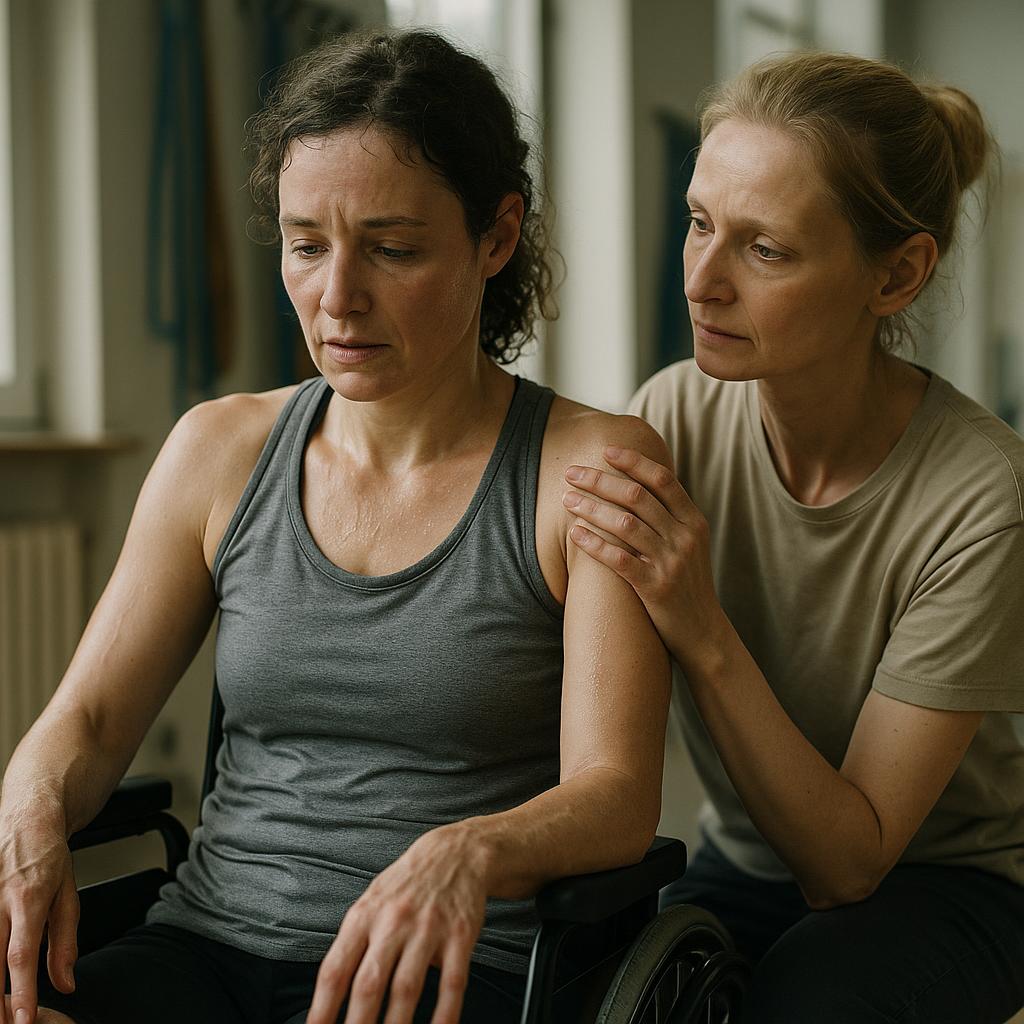 Image by RM AI
The Spark
I wheel myself into the support group meeting, my heart pounding against my ribs. 'My husband left me,' I announce, the words hanging in the air like smoke. No one gasps. No one even looks surprised. Instead, I see nods of recognition, as if I've just joined some club nobody wants membership to. After the meeting, Victor approaches me, his silver hair catching the fluorescent lights. His wheelchair is customized with stickers from national parks—evidence of a life still being lived fully. 'My wife left six months after my accident,' he tells me, his voice gentle but matter-of-fact. 'Packed her bags while I was at therapy.' When I ask how he survived it, his weathered face breaks into an unexpected smile. 'I don't just survive, Linda. I live better now.' I must look skeptical because he leans forward, eyes intense. 'Because it forced me to become someone stronger than I ever would have been with her.' He taps my wheelchair's armrest. 'This isn't what broke me. Her leaving did. But then it rebuilt me.' As he wheels away, I sit there stunned, turning his words over in my mind. Could Daniel's betrayal actually be the thing that saves me? The thought feels dangerous, like striking a match in a room full of gasoline—but for the first time since the accident, I feel something ignite inside me that feels suspiciously like power.
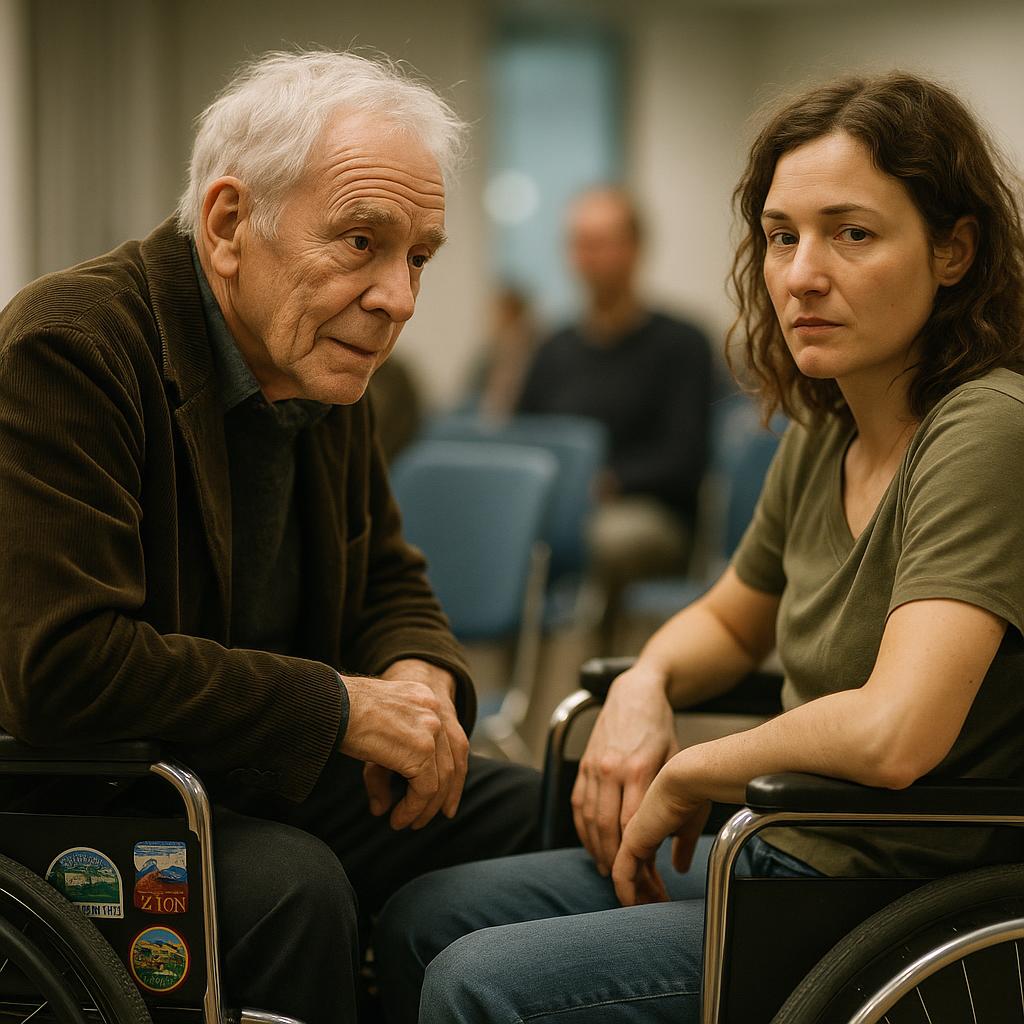 Image by RM AI
The Legal Papers
The courier arrived at 10:17 AM on a Tuesday—I remember because I was watching a rerun of Golden Girls when the doorbell rang. The manila envelope he handed me felt impossibly heavy for something made of paper. 'Sign here,' he said, avoiding my eyes like people often do now. Inside was the death certificate of my marriage, clinical language dissolving seven years together in perfect legal prose. Daniel's signature was already there, bold and final at the bottom—he couldn't even wait for me to read it first. The 'generous financial settlement' made me laugh out loud in my empty apartment. Hush money, that's what it was. I sat there for hours, the papers spread across my lap, before finally calling my mother. 'He did WHAT?' she practically screamed when I told her everything. Her outrage felt like a warm blanket—someone finally acknowledging the magnitude of his betrayal. 'I'm coming over right now,' she declared, and I could already hear her rummaging for her overnight bag. But something strange happened as I opened my mouth to agree. 'No,' I said firmly, surprising us both. 'I need to figure this out on my own.' The silence on the other end stretched until she finally whispered, 'When did you get so strong, Linda?' I stared at the divorce papers, at the wheelchair beside me, at the life I never asked for but somehow had to own now. 'I'm not sure I am yet,' I replied, 'but I think I'm about to find out.'
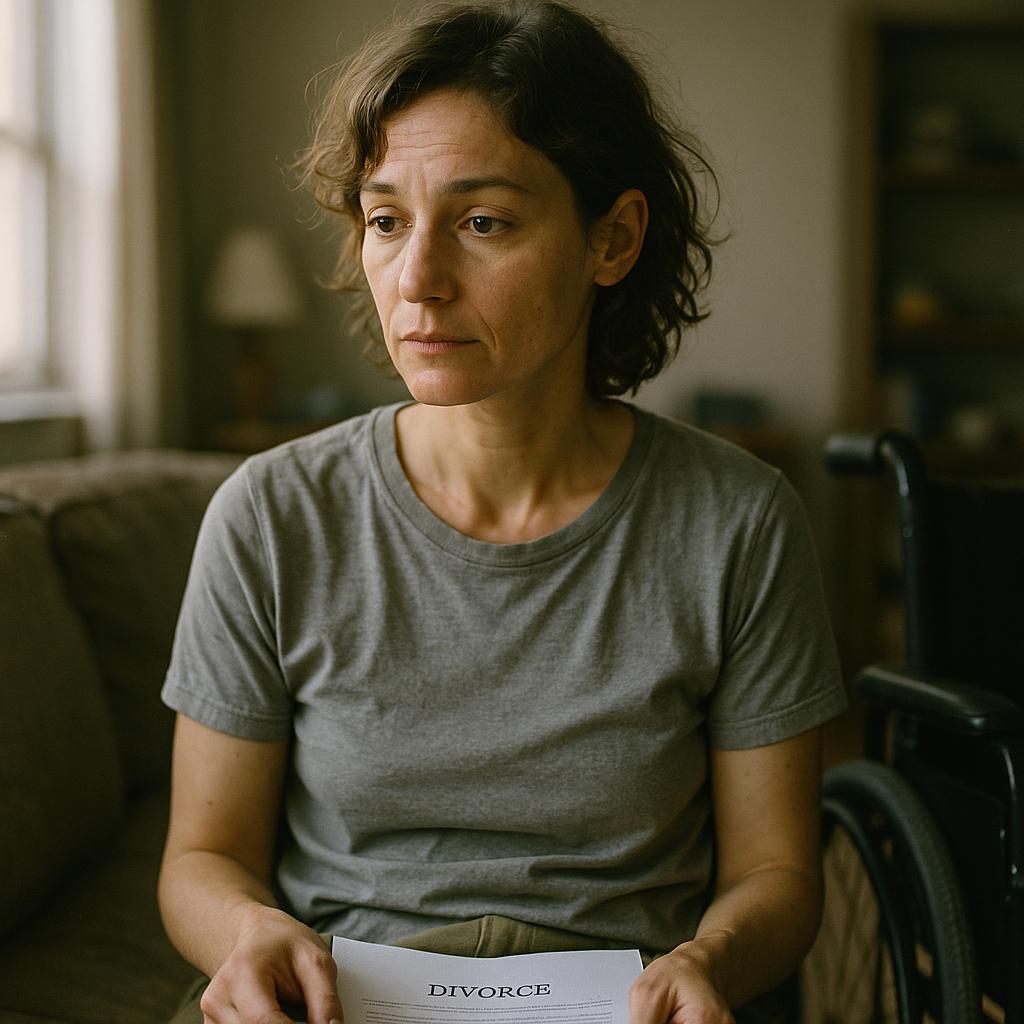 Image by RM AI
The Flame
I wheel into physical therapy the next day with fire in my veins. 'I want to do double sets today,' I tell Sophia before she can even greet me. She raises an eyebrow but doesn't argue—something in my expression must tell her I'm not in the mood for caution. I attack each exercise like I'm fighting for my life, which in a way, I am. When my arms start shaking during the third set of transfers, Sophia steps forward. 'Linda, maybe we should—' 'No,' I cut her off, sweat dripping down my temple. 'I'm not stopping.' The pain feels cleansing, like it's burning away Daniel's betrayal with each rep. When I finally collapse back in my chair, gasping for breath, Sophia hands me a towel and studies me with new eyes. 'You know, there's a difference between pushing yourself and punishing yourself,' she says quietly. I look up at her, still panting. 'What if I need both right now?' She considers this, then reaches into her desk drawer and pulls out a brochure. 'This intensive rehab program starts next month. It's brutal—six hours daily, six days a week. Most people aren't ready for it.' She hands it to me with a knowing look. 'But I think you are.' I take the glossy paper, feeling something unfamiliar flutter in my chest—not hope exactly, but possibility. The ember inside me grows brighter, threatening to become something that might actually warm me from the inside out.
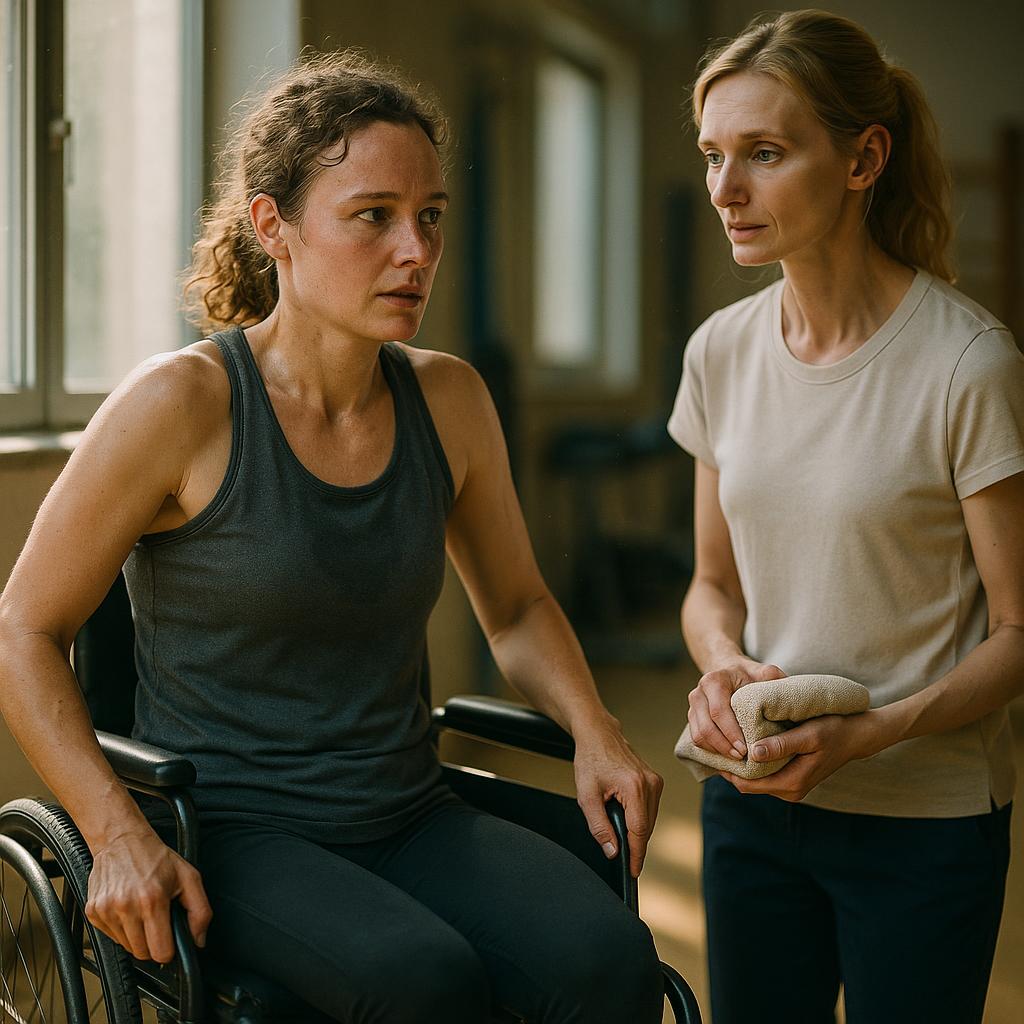 Image by RM AI
The Decision
I spread the brochures across the kitchen table like I was dealing tarot cards, each one promising a different future. The intensive rehab program would cost nearly all my savings, and I'd need to sell the apartment—Daniel's apartment, really—to move closer to the facility. I stared at the numbers until they blurred together, wondering if I was crazy to uproot what little stability I had left. When Maya stopped by with coffee and her trademark bluntness, she found me surrounded by real estate listings and accessibility requirements. 'You're actually doing this,' she said, not a question but an observation. I nodded, still uncertain. She sipped her coffee, studying my face. 'What's really holding you back, Linda? This place?' Her question hit me like a physical therapy ball to the chest. I looked around at these walls that had witnessed my marriage dissolve, the doorway Daniel had walked through without looking back, the bedroom we'd once shared that now felt like a museum to a life that no longer existed. 'Nothing here is worth preserving,' I whispered, the truth of it settling into my bones. That night, after Maya left, I called the program director with hands that didn't shake. 'I'd like to secure my spot,' I said, my voice steady as I signed away the last remnants of my old life and reached for something that felt dangerously like a future.
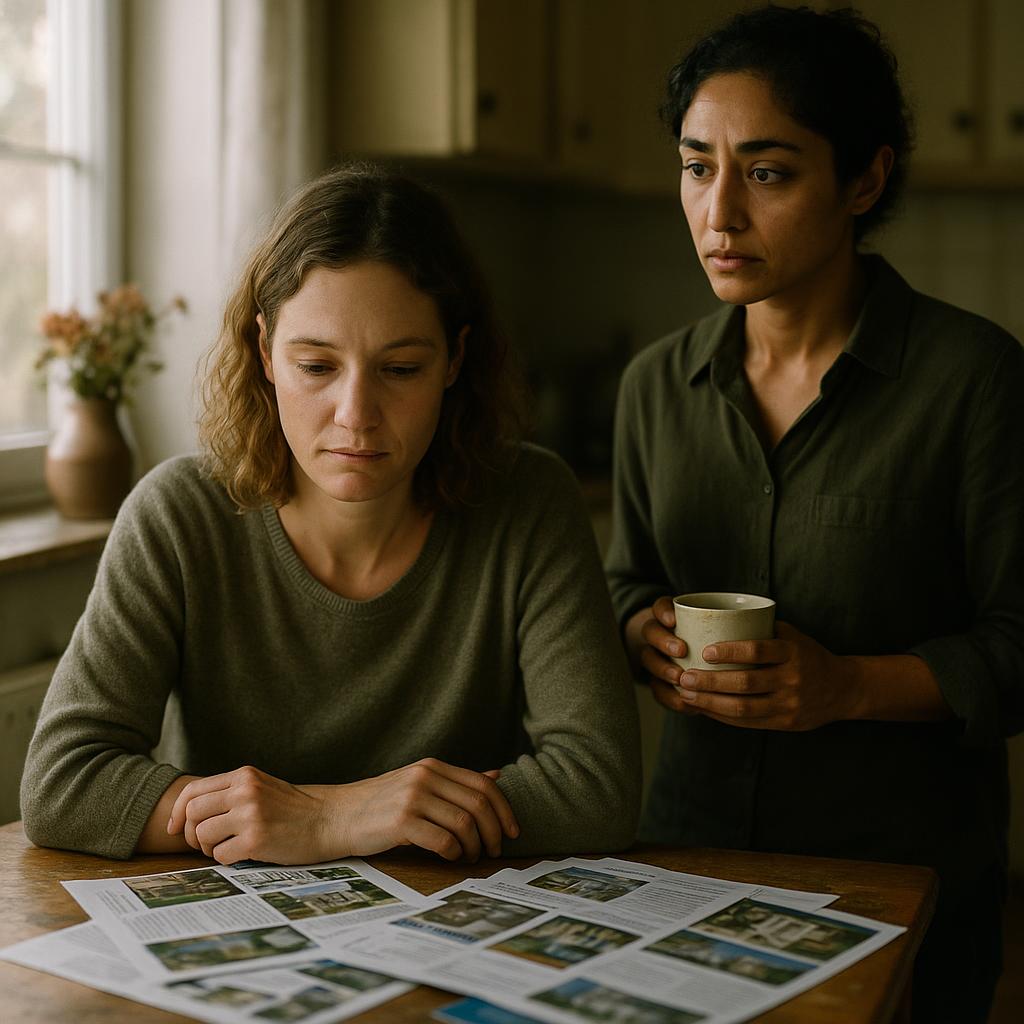 Image by RM AI
The Goodbye
The realtor I hired doesn't even blink at my wheelchair when she comes to assess the apartment. No awkward questions about why I'm selling or pitying glances—just business, which is exactly what I need right now. As I sort through our—my—belongings, deciding what deserves space in my new life, I find our wedding album tucked away on a shelf I can barely reach. The smiling woman in the white dress looks like a stranger to me now, her eyes bright with a future she couldn't possibly imagine. The man beside her—well, he turned out to be a stranger too, just in a different way. I run my fingers over the embossed cover, expecting to feel something—grief, rage, regret—but there's only a hollow recognition that these memories belong to someone I no longer am. After a moment's hesitation, I place it in the donation pile alongside Daniel's abandoned books and those ridiculous matching bathrobes his mother gave us. When my phone rings and the realtor tells me someone has offered above asking price, I accept immediately, not even bothering to negotiate. Some endings don't need to be dragged out. As I hang up, I realize I'm smiling—not because I'm happy exactly, but because for the first time since the accident, I'm the one choosing to leave something behind.
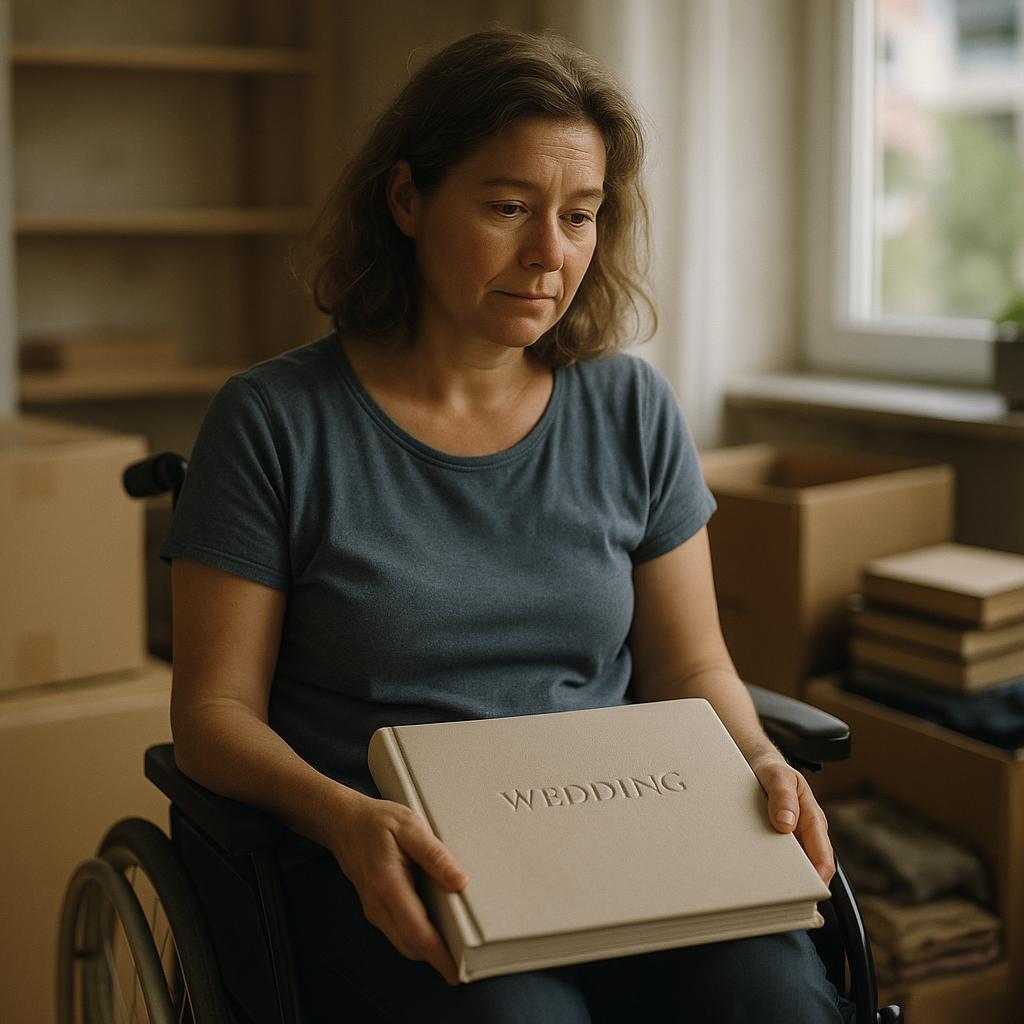 Image by RM AI
The New Beginning
The first time I wheeled into my new apartment, I felt like I could finally breathe again. No ghosts of Daniel lingering in the corners, no memories embedded in the walls. Just clean, accessible space—wide doorways that didn't make me feel like an afterthought, counters at the perfect height, and a shower I could roll right into without anyone's help. Maya spent the weekend helping me arrange furniture, constantly asking, "Can you reach this?" or "Is this path wide enough?" As we unpacked, I realized how few of my possessions had actually come from my life with Daniel. Had I really given up so much of myself to become his wife? That evening, after Maya left with promises to check in tomorrow, I wheeled myself onto my small balcony with a glass of wine. The sunset painted the unfamiliar skyline in shades of orange and pink, and something unexpected unfurled in my chest—not happiness, not yet, but possibility. Like a door opening to a room I didn't know existed. I took a deep breath of air that didn't carry the scent of his cologne or the weight of his absence. For the first time since the accident, I wasn't defined by what I'd lost but by what might still be waiting for me on the other side of all this pain.
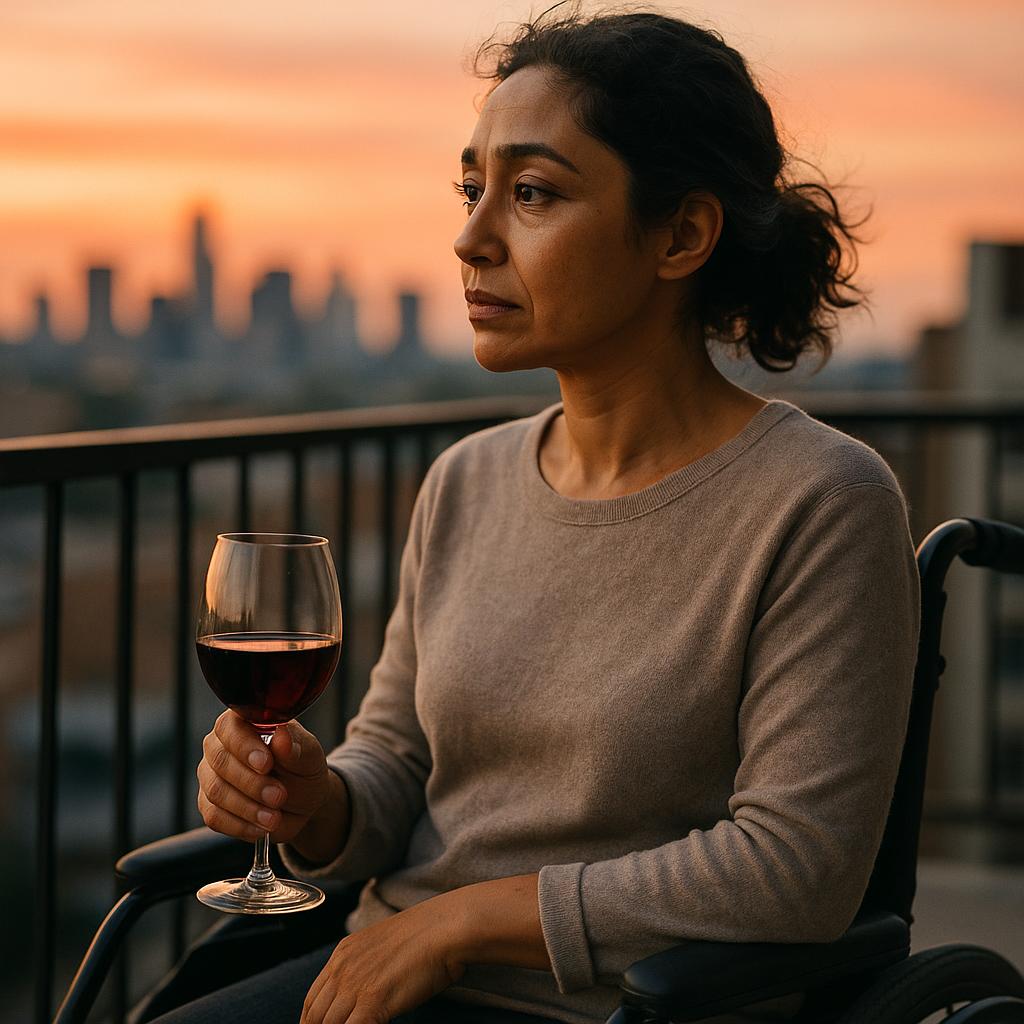 Image by RM AI
The Intensive Program
I've never been more terrified than I was on my first day at the intensive rehab program. Dr. Reeves, a man with military posture and surprisingly kind eyes, didn't sugarcoat anything as he outlined my new reality. 'This isn't like your previous therapy, Linda,' he warned, sliding a schedule across the table that made my stomach drop. 'We're going to push you to your limits, and then beyond them.' I nodded, trying to look braver than I felt. The facility itself was intimidating—all gleaming equipment and determined faces. During the orientation tour, I met the others: Darius, a former college athlete with a spinal cord injury similar to mine; Elaine, a sixty-something stroke survivor with a sailor's vocabulary; and Marcus, who'd been coming for three years and could now stand unassisted for short periods. By lunchtime, my arms were trembling from the morning assessments. By three o'clock, I was fighting tears. By five, I was certain I'd made a terrible mistake. 'Everyone feels that way on day one,' Marcus told me as we waited for our transportation home, his smile knowing but kind. 'The question is: will you show up tomorrow?' As I wheeled myself into my empty apartment that night, every muscle screaming in protest, I realized something unexpected—beneath the pain and exhaustion was a flicker of something I hadn't felt in months: pride. And maybe, just maybe, that feeling was worth showing up for.
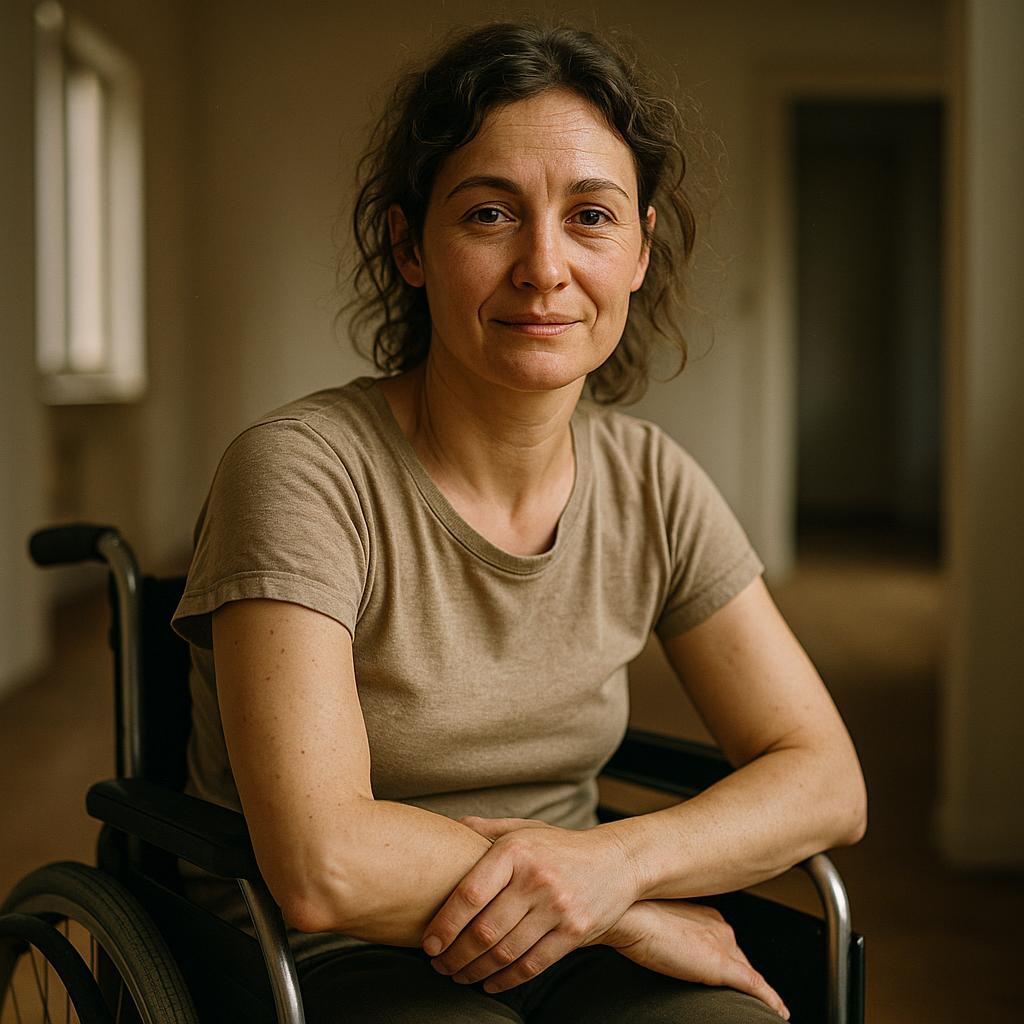 Image by RM AI
The Transfer
Marco is a drill sergeant disguised as a physical therapist. 'Again,' he says for what feels like the hundredth time today as I lie sprawled on the mat, my arms trembling from exertion. The simple act of transferring from my wheelchair to another surface without help has become my Everest. 'I can't,' I mutter, frustration burning behind my eyes. Marco just looks at me, unmoved. 'You said that eleven times already, Linda. Try number twelve.' Something in his calm certainty makes me grit my teeth and position myself again. This time, I focus less on my fear of falling and more on the mechanics—the angle of my body, the distribution of weight, the precise moment to shift. And then it happens. One fluid motion and I'm sitting on the bench, no hands supporting me but my own. The triumph I feel is so overwhelming it's almost embarrassing. Marco doesn't cheer or make a big deal of it; he just nods like he knew all along. 'That,' he says quietly, 'is what independence feels like.' I sit there, sweating and shaking, but something has shifted inside me that has nothing to do with physical movement. For the first time since Daniel walked out, I realize I don't need someone else to catch me when I fall.
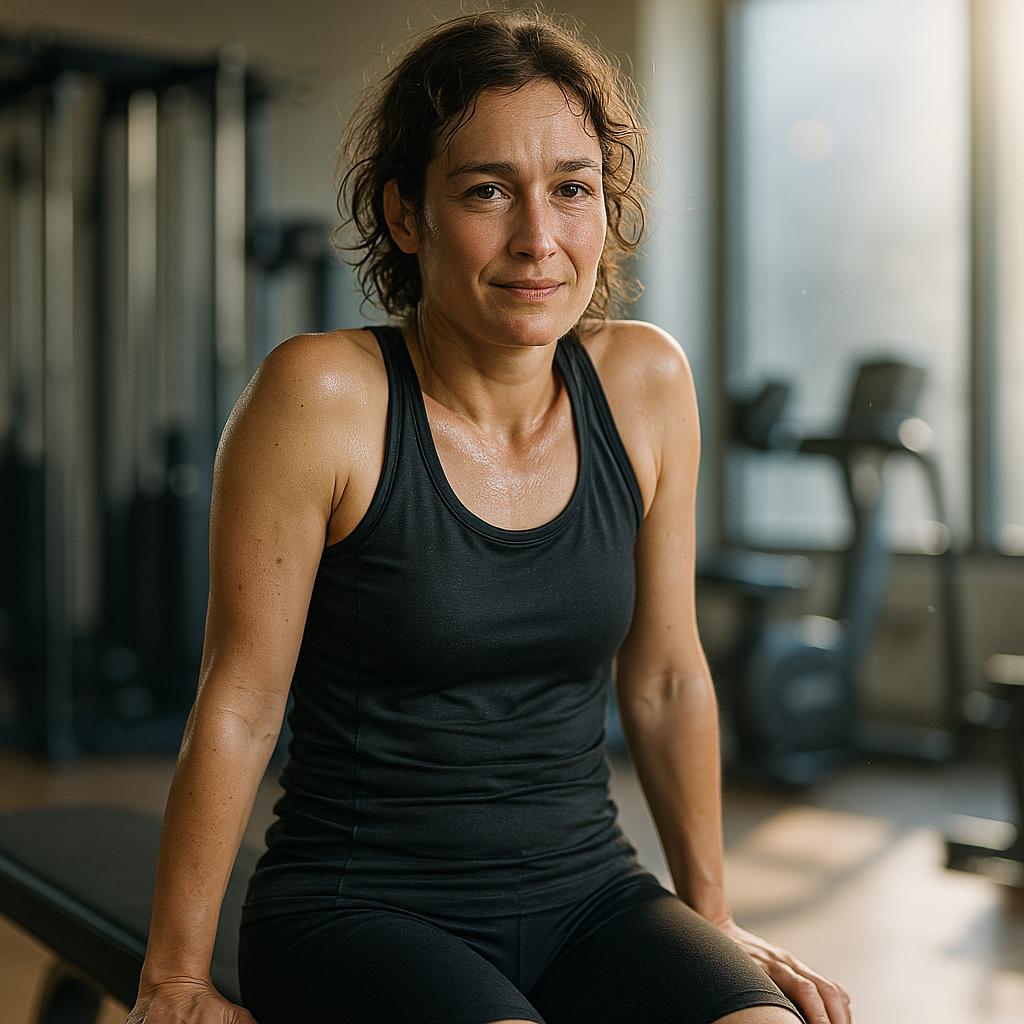 Image by RM AI
The Group Session
The psychological component of the rehab program hits differently than the physical part. While my body aches from Marco's drills, it's Dr. Novotny's Wednesday group sessions that leave me feeling truly exposed. Today, I'm sitting in the circle with five other patients, fidgeting with my wheelchair brake as my turn approaches. When Dr. Novotny's piercing gaze lands on me, I launch into my rehearsed speech about 'embracing my new normal' and 'finding strength in adversity'—the same lines I've perfected for concerned relatives. She cuts me off mid-sentence. 'That's what you think you should feel,' she says, her voice gentle but unyielding. 'Tell us what you actually feel.' The room goes so quiet I can hear the clock ticking. My throat tightens as I search for words that won't come. 'I'm angry,' I finally whisper, the admission burning like acid. 'At the woman who ran the red light, at Daniel for leaving when I needed him most.' I take a shaky breath. 'But mostly, I'm furious at myself for believing I wasn't enough without him—that I needed his validation to be whole.' Tears I didn't expect spill down my cheeks, but Dr. Novotny just nods, a small smile playing at her lips. 'Now,' she says, 'we can begin.' And something in her words makes me wonder if maybe, just maybe, I've been approaching healing all wrong.
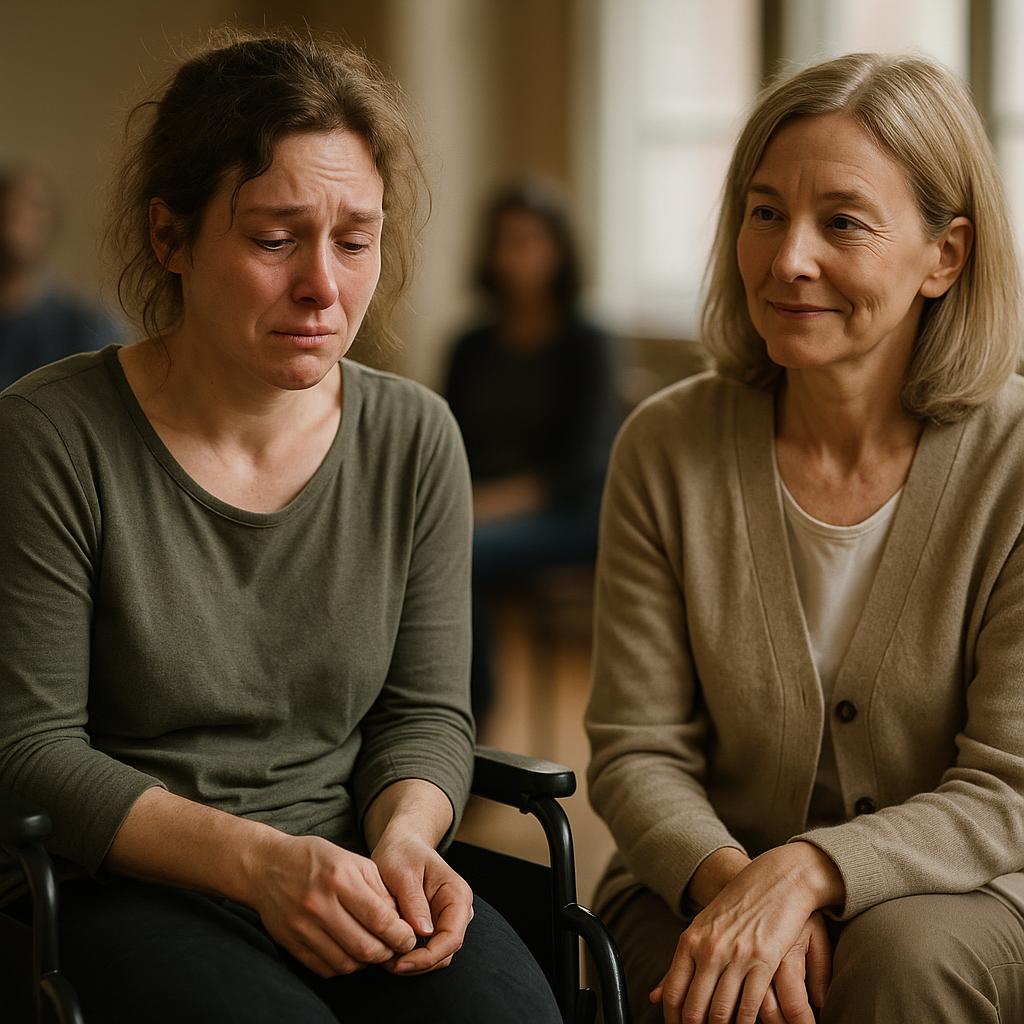 Image by RM AI
The Letter
The envelope from Daniel's lawyer arrived on a Thursday, innocuous white paper hiding emotional landmines. I recognized his law firm's logo in the corner before I even opened it—more divorce paperwork requiring my signature. But tucked between the cold legal documents was a handwritten note from Daniel himself. 'I hope you're doing well,' he wrote, as if he were inquiring about a distant acquaintance with a mild cold rather than the wife he abandoned after her spine was shattered. 'I regret how things ended between us.' My hands shook with a rage so pure it felt cleansing. That night, I wrote back—every word I'd swallowed during those silent hospital nights, every betrayal I'd witnessed but never confronted, every tear I'd shed alone. I had no intention of sending it, but when I mentioned the letter to Dr. Novotny, she suggested I read it aloud in our next group session. 'But it's so raw,' I protested. 'That's precisely why it needs witnesses,' she replied. The next day, surrounded by people who understood broken bodies and broken promises, I unfolded my response with trembling fingers. As my voice grew stronger with each paragraph, I realized I wasn't just speaking to Daniel anymore—I was reclaiming the narrative he'd tried to write for me. And for the first time since the accident, I understood that some wounds need to be opened before they can truly heal.
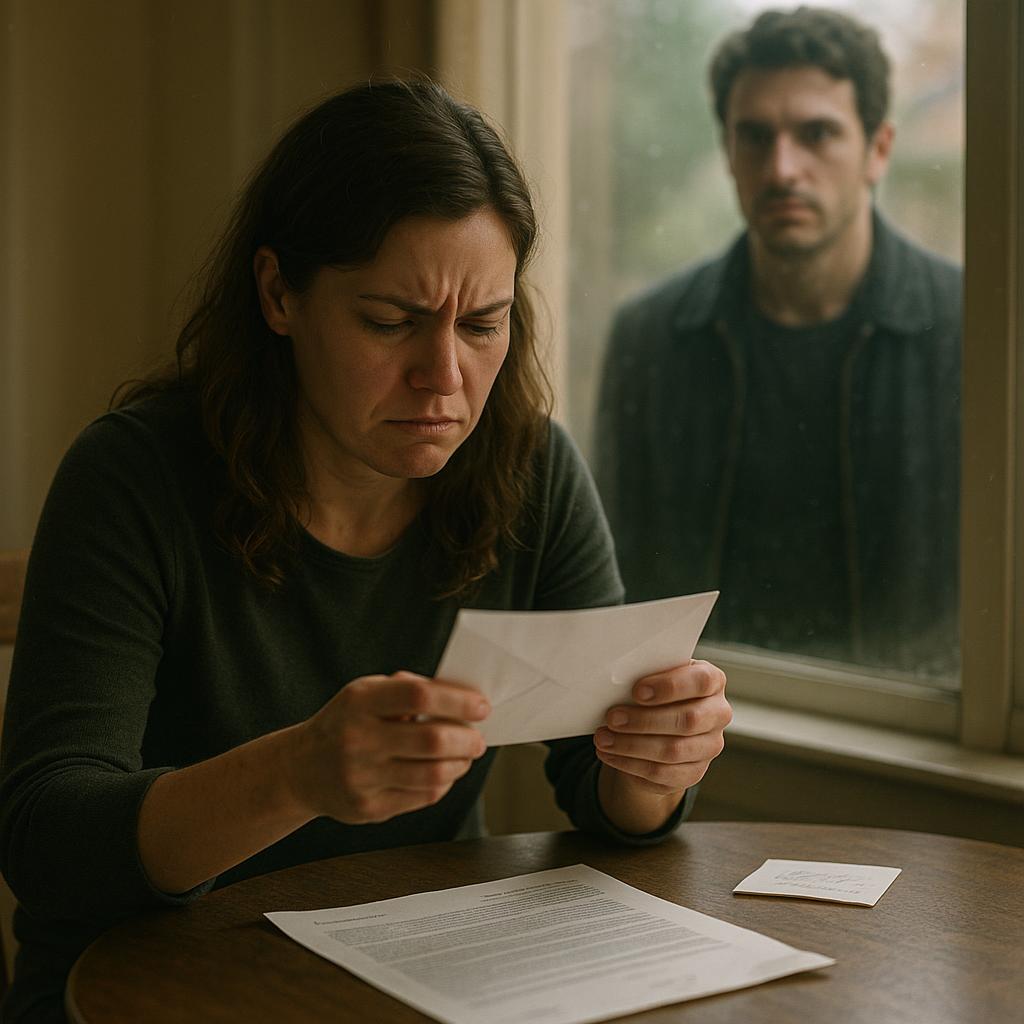 Image by RM AI
The Driving Lesson
The first time I sat behind the wheel after the accident, my heart hammered so hard I thought it might crack my ribs. 'I can't do this,' I whispered, my hands hovering over the specialized controls Javier had installed. He didn't offer empty reassurances or try to talk me out of my fear. Instead, he simply said, 'The car is just a tool, Linda. You're still in control.' Something about his matter-of-fact tone anchored me. We started in an empty parking lot, my movements as jerky as a teenager in driver's ed. When we approached a four-way stop, a flash of screeching tires and shattering glass ambushed me—my breath caught, hands frozen. Without a word, Javier calmly took over, waited until my breathing steadied, then nodded for me to try again. 'The past doesn't get to drive,' he said quietly. By the end of our two-hour session, I'd completed six laps around that lot, each turn smoother than the last. As I wheeled myself back to my adapted van, Javier handed me a schedule for our next lesson. 'You're ready for actual streets next time,' he said with a certainty I didn't share. But as I tucked the paper into my bag, I realized something that shocked me—I was actually looking forward to it.
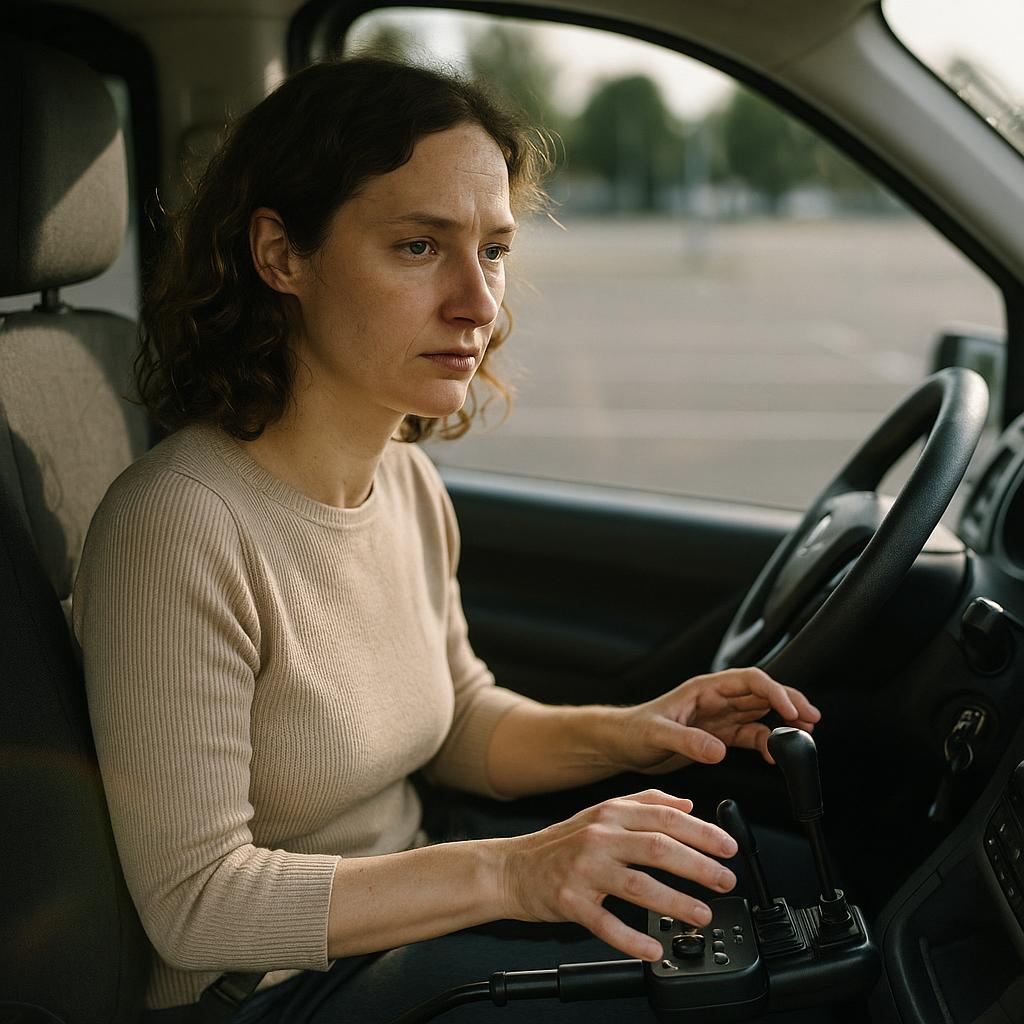 Image by RM AI
The Milestone
Dr. Reeves slides my chart across his desk with a look I've come to recognize—clinical satisfaction. 'You've exceeded our projections, Linda,' he says, tapping a graph that apparently represents my progress. 'Upper body strength has increased 37%, transfers are nearly textbook, and your wheelchair navigation skills are approaching advanced level.' I wait for the 'but'—there's always a 'but' in these assessments. Instead, he leans forward with something that looks suspiciously like excitement. 'It means we can push you harder now.' That afternoon, Marco wheels in something that makes my heart skip—a racing chair, all carbon fiber and sleek lines, nothing like my clunky everyday wheelchair. 'This is Valkyrie,' he says, patting the frame like it's a thoroughbred. 'Time to see what you're really capable of.' I run my fingers along the frame, feeling something stir inside me that I thought had died in that hospital room when Daniel walked out—ambition. Not just to survive, but to excel. As Marco helps me transfer into it, the chair feels like it was made for me, responsive to the slightest touch. 'We're entering you in the Lakeside 5K next month,' he announces casually, as if he hasn't just dropped a bomb in my lap. Before the accident, I got winded walking up a flight of stairs—now he expects me to race?
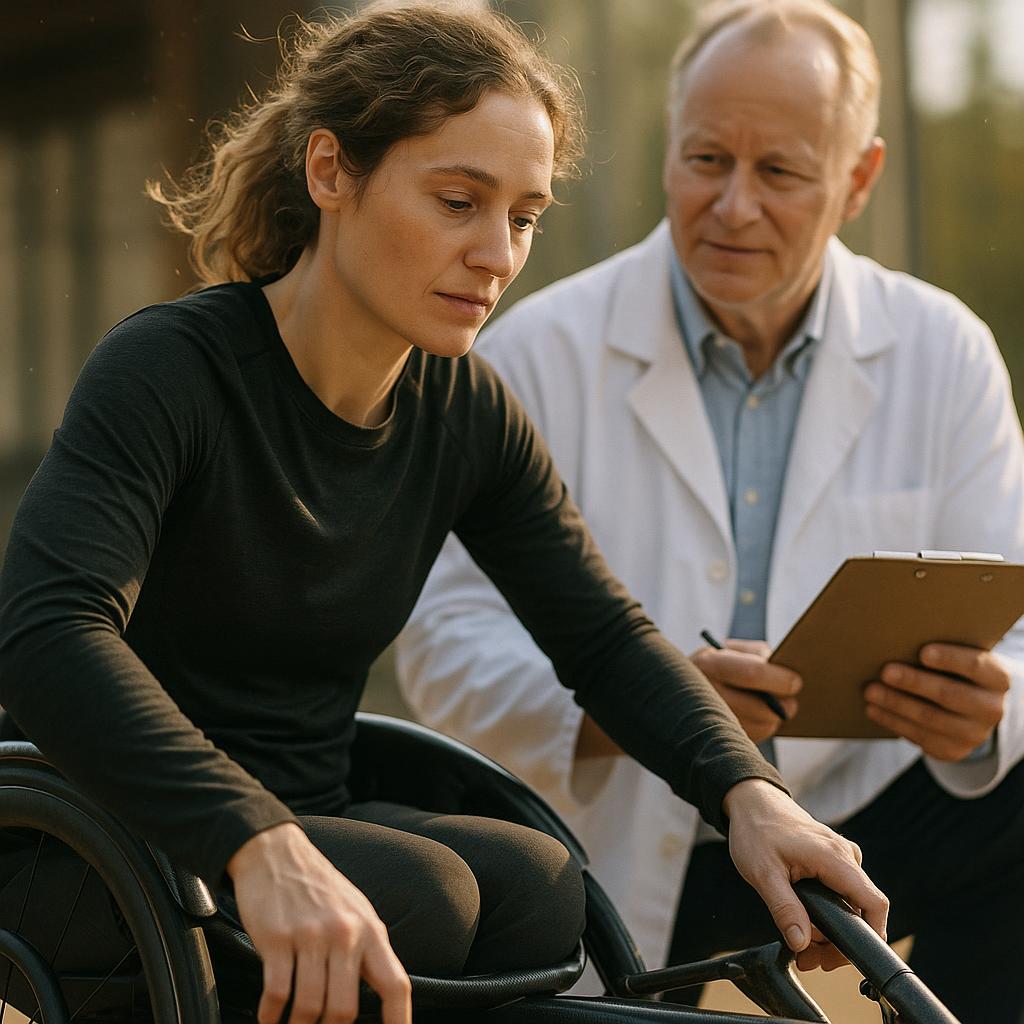 Image by RM AI
The Race
The first time I took Valkyrie to the center's track, I felt like I was learning to breathe again. Marco stood at the sidelines with a stopwatch, shouting instructions about arm positioning and wheel technique that might as well have been a foreign language. 'Push through your shoulders, not your wrists!' he'd call as I struggled around the curves. By my third lap, my arms were on fire, but something else was burning too—determination. That's when Zoe rolled up beside me, her racing chair sleek and well-worn. 'Race you to the finish,' she challenged with a grin that reminded me of who I used to be before the accident. Without waiting for my response, she shot forward, and something primal in me responded. I dug deep, finding muscles I didn't know existed, and for a brief, glorious moment, I forgot about my broken spine, about Daniel, about everything except the rhythm of my arms and the wind in my face. I lost to Zoe by half a length, but the rush of endorphins made me feel like I'd won Olympic gold. When Marco casually mentioned the Lakeside 5K, I surprised everyone—especially myself—by registering on the spot. That night, as I soaked my aching shoulders in a hot bath, I realized racing wasn't just about physical rehabilitation; it was about outrunning the ghost of who I used to be, and maybe, just maybe, catching up to who I could become.
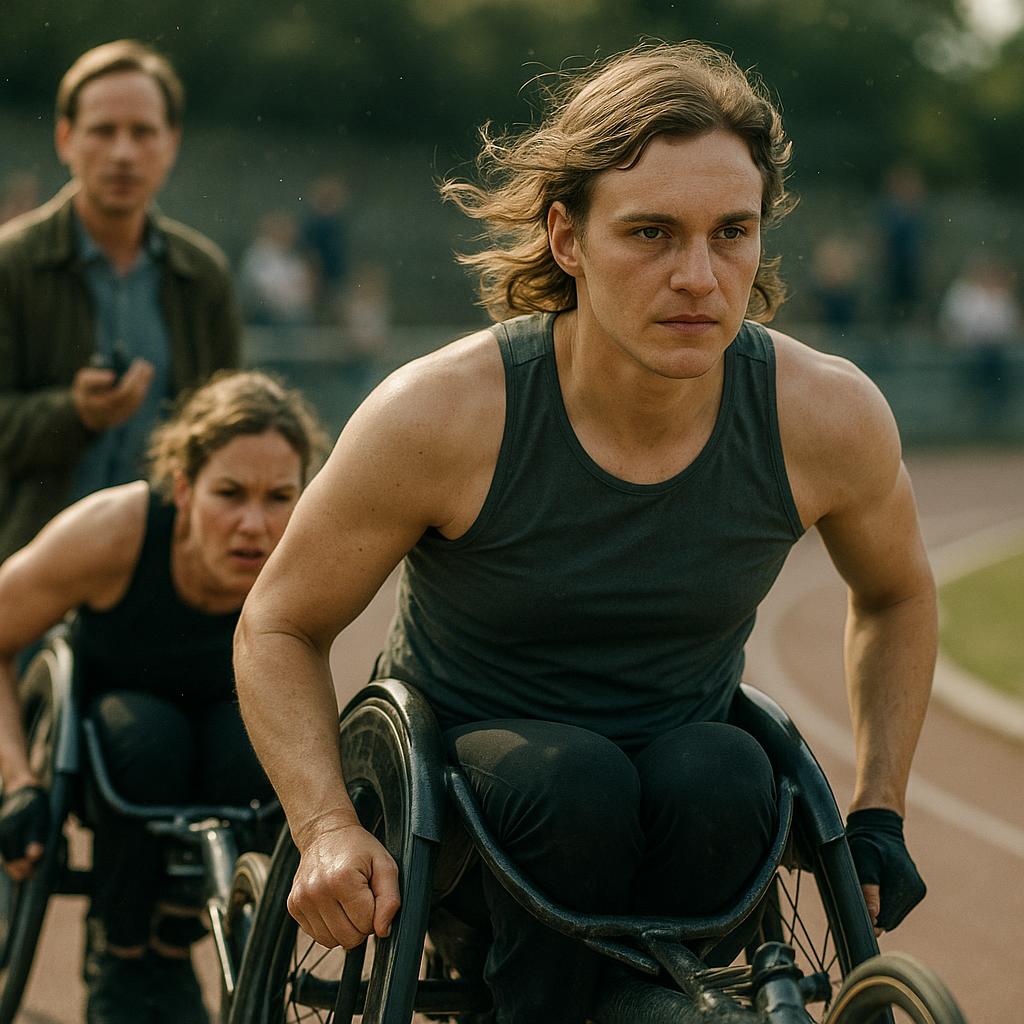 Image by RM AI
The Training
Every morning, I wake up before dawn with a purpose that wasn't there before. The Lakeside 5K has become my North Star, guiding every decision I make. Marco's training regimen is brutal—three hours daily of pushing Valkyrie around the track until my shoulders scream, navigating the center's hills until my arms feel like they might detach, and strength training that leaves me trembling. But I follow it religiously, like it's some kind of salvation. Zoe has become both my nemesis and my lifeline, always one length ahead, taunting me with that infectious laugh of hers. "Come on, Linda! My grandmother moves faster than that!" Yesterday, after our tenth lap, we collapsed in exhaustion by the water cooler, and she high-fived me with sweat-slicked palms. "You're getting good," she admitted grudgingly. It wasn't until I was soaking in a hot bath that night, nursing muscles I didn't know existed before the accident, that I realized something profound—I hadn't thought about Daniel all day. Not once. The revelation hit me like a physical thing, this strange lightness in my chest. For months, his absence had been a constant companion, heavier than any wheelchair. Now, somehow, I'd set it down without even noticing. I wondered, as I watched steam rise from the water, what else I might be capable of leaving behind.
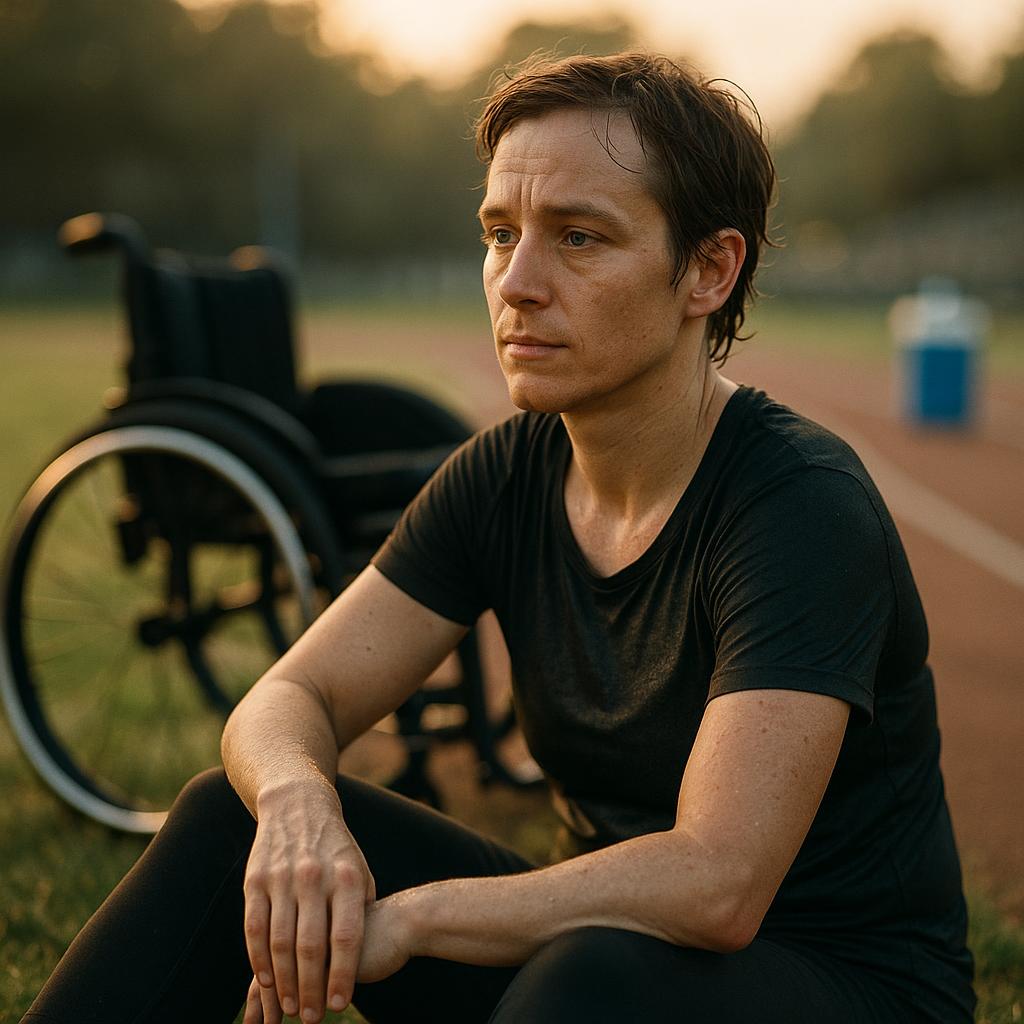 Image by RM AI
The Unexpected Call
The phone's shrill ring cut through my apartment like an alarm. Unknown number. I almost let it go to voicemail—another telemarketer, probably—but something made me answer. 'Hello?' The silence on the other end stretched for three heartbeats before a woman's voice, tentative and strained, responded. 'Is this Linda?' When she identified herself as Meredith Calloway, my body went cold. The woman who ran the red light. The woman whose distraction had split my life into before and after. My fingers tightened around the phone as she stumbled through an apology, explaining she'd gotten my contact information from the insurance company. 'I know this is probably the last thing you want,' she said, her voice cracking, 'but I've been in therapy, and... I was wondering if we could meet?' My first instinct was a hard no—what could possibly come from sitting across from the person who destroyed my life? But Dr. Novotny's voice echoed in my head: 'Avoidance only gives pain more power.' After what felt like minutes but was probably only seconds, I heard myself agreeing to coffee next week. That night, I stared at my ceiling, rehearsing all the things I might say to her—the anger, the loss, the daily struggles she'd never understand. But the question that kept me awake until dawn wasn't what I would say to Meredith—it was whether I could look into her eyes without seeing Daniel walking out the door.
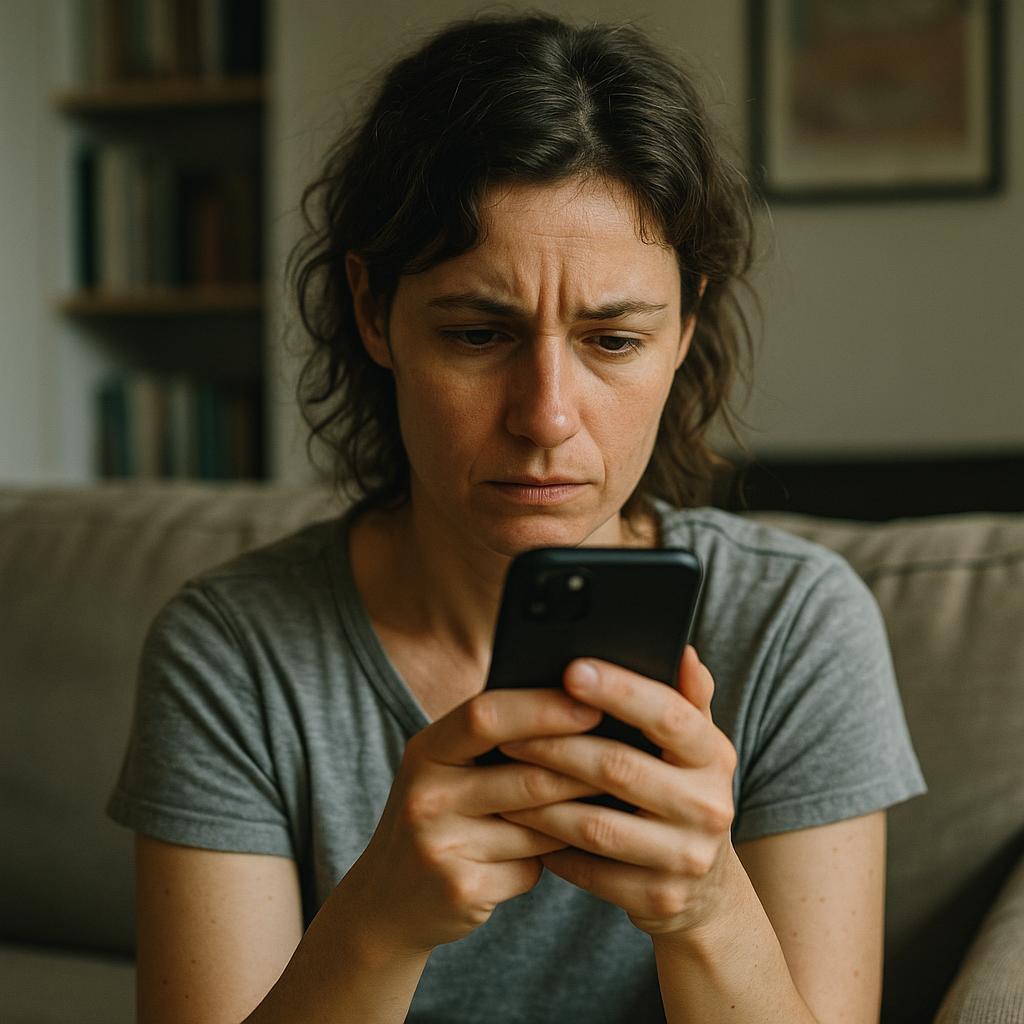 Image by RM AI
The Confrontation with Meredith
I arrived at the café twenty minutes early, a habit from my 'before' life that somehow survived the crash. The place was modern and bright, with wide aisles between tables that I navigated without the usual obstacle course of chair legs and bags. When Meredith walked in, I almost didn't recognize her. In my mind, she'd grown into this monstrous figure, but the woman who approached me was small, ordinary, with anxious eyes that couldn't quite meet mine. 'Thank you for coming,' she said, her voice barely audible over the espresso machine. For forty-five minutes, I listened to her pour out a torrent of apologies, explanations about the text message that distracted her, the therapy she'd been in, the nightmares she still had. She spoke like someone drowning, desperate for the life raft of my forgiveness. When she finally paused for breath, tears streaming down her face, I realized something profound – I felt nothing. Not anger, not satisfaction, not even pity. Just... clarity. 'I need your forgiveness,' she finally said, her hands trembling around her untouched coffee. I wheeled back slightly, creating space between us. 'My forgiveness won't fix you,' I told her, my voice steadier than I expected, 'just like your apology won't fix me. We both have to do that ourselves.' As I navigated out of the café, I realized the weight I'd been carrying wasn't just about my broken body or Daniel's betrayal – it was the belief that someone else held the key to my healing.
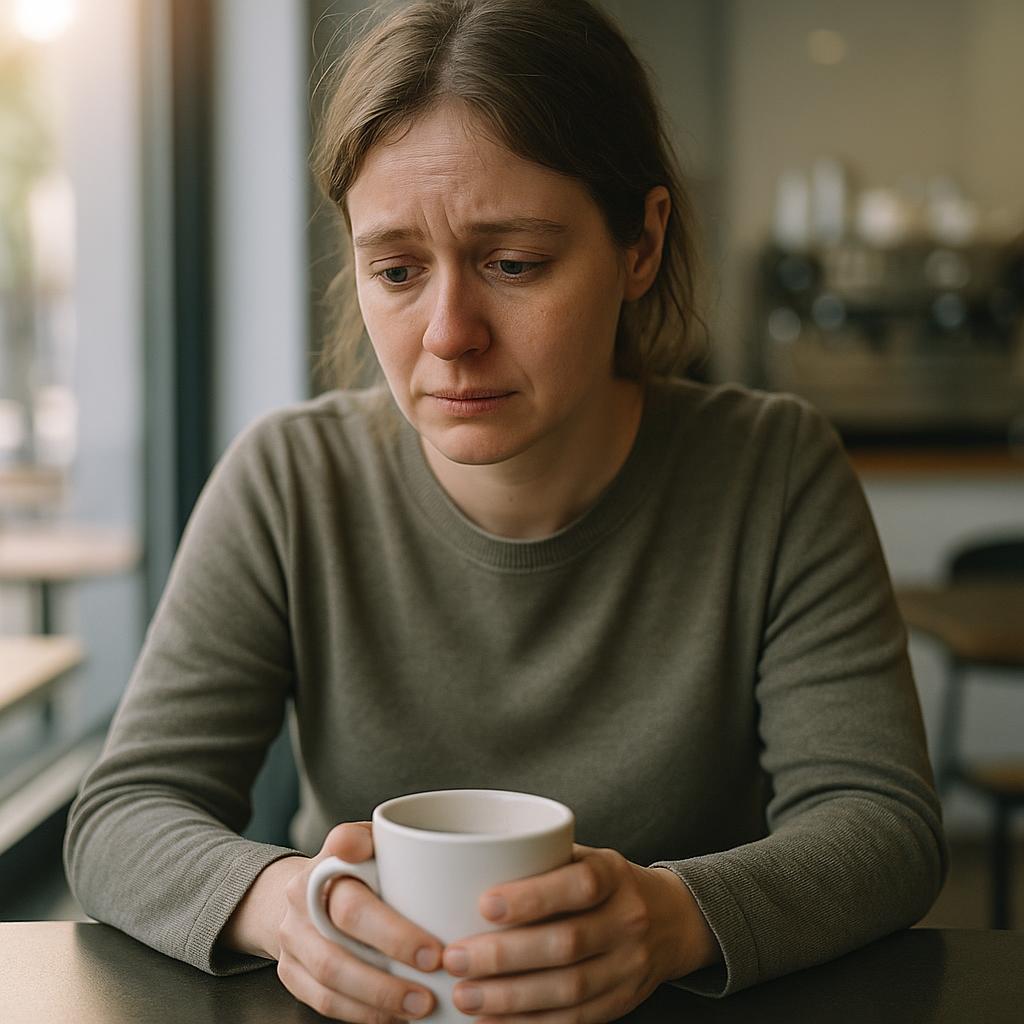 Image by RM AI
The Race Day
The morning of the Lakeside 5K arrived with a sky so perfectly blue it felt like a gift. As I wheeled Valkyrie to the starting line, my stomach was a tangle of nerves and excitement. Maya stood nearby, holding a ridiculous homemade sign with my name in glitter paint. Victor from the support group was there too, along with half the rehab center staff—my unexpected cheerleading squad. 'Remember, it's not about winning,' Marco said, adjusting my racing gloves. I nodded, but when I caught Zoe's competitive wink from two lanes over, we both knew that was a lie. The starting horn blared, and suddenly I was flying. The first mile was pure adrenaline, my arms moving in the rhythm we'd practiced countless times. The second mile brought the hills—brutal inclines that burned through my shoulders like fire. 'Dig deep!' I heard Zoe shout as she pulled slightly ahead. I focused on nothing but the next push, the next breath, the next inch of pavement. By mile three, my arms were screaming, but something else was drowning out the pain—a fierce, wild joy I hadn't felt since before the accident. As I approached the final stretch, I spotted a familiar figure standing near the finish line, his expression a mixture of surprise and something I couldn't quite name. Daniel.
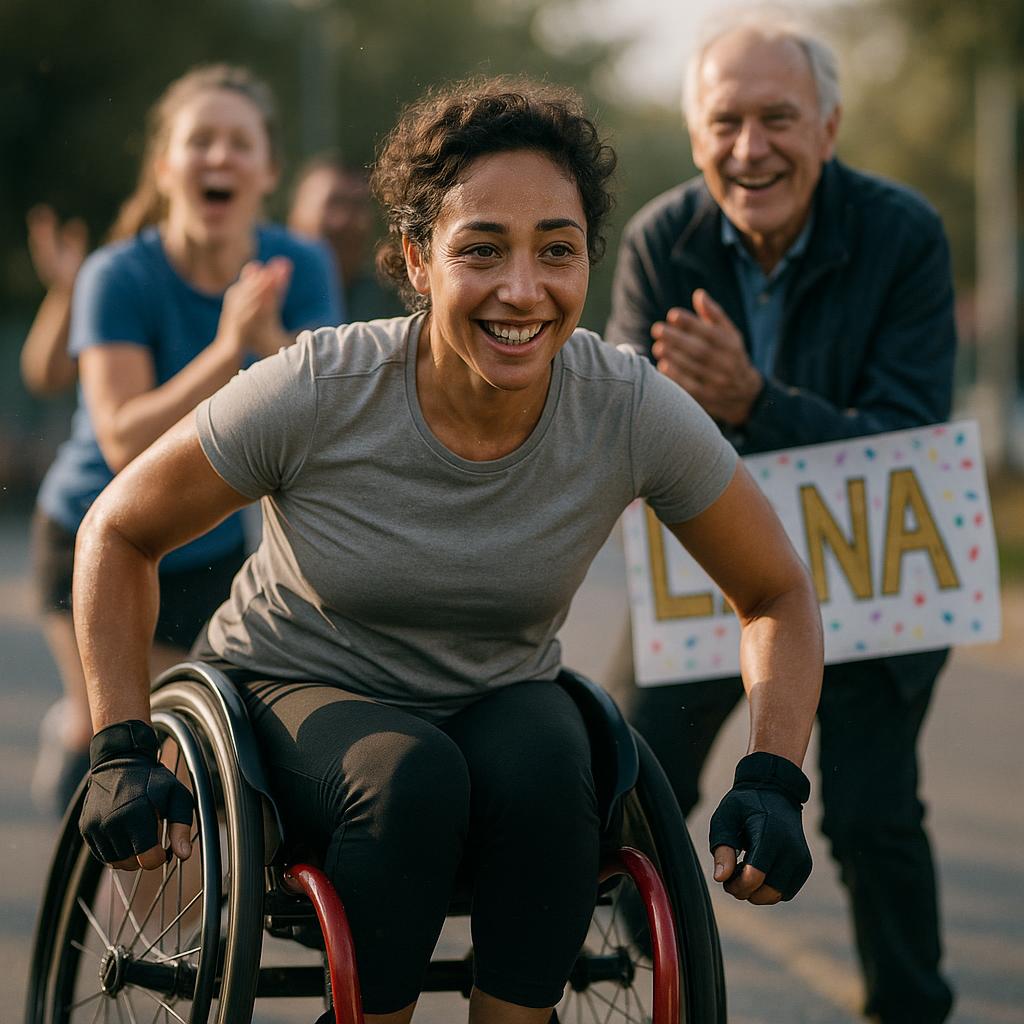 Image by RM AI
The Finish Line
The final stretch of the race looms ahead, my lungs burning with each breath, my arms screaming for relief. Zoe is just ahead, her ponytail swinging with each powerful push. I can see her glancing back, gauging my position, probably thinking I've hit my wall. But something inside me refuses to settle for second place—not today, not after everything. With a surge of effort I didn't know I possessed, I dig deeper, channeling every physical therapy session, every tear shed alone, every moment Daniel made me feel less than whole. My racing gloves grip Valkyrie's wheels as I pull alongside Zoe. Her eyes widen in surprise as I inch ahead. The crowd's roar becomes a distant buzz as I focus solely on the finish line tape stretched across the pavement. When I break through it, seconds before Zoe, the explosion of joy inside me is so pure it brings tears to my eyes. My time isn't record-breaking by any standard, but it's mine—earned through sweat and pain and a stubborn refusal to be defined by what I've lost. As Maya rushes toward me, ridiculous glitter sign flapping, and the rehab crew surrounds me with high-fives and whoops, I realize I'm smiling without effort for the first time in months. And somewhere in that crowd stands Daniel, watching the woman he left behind become someone he never knew existed.
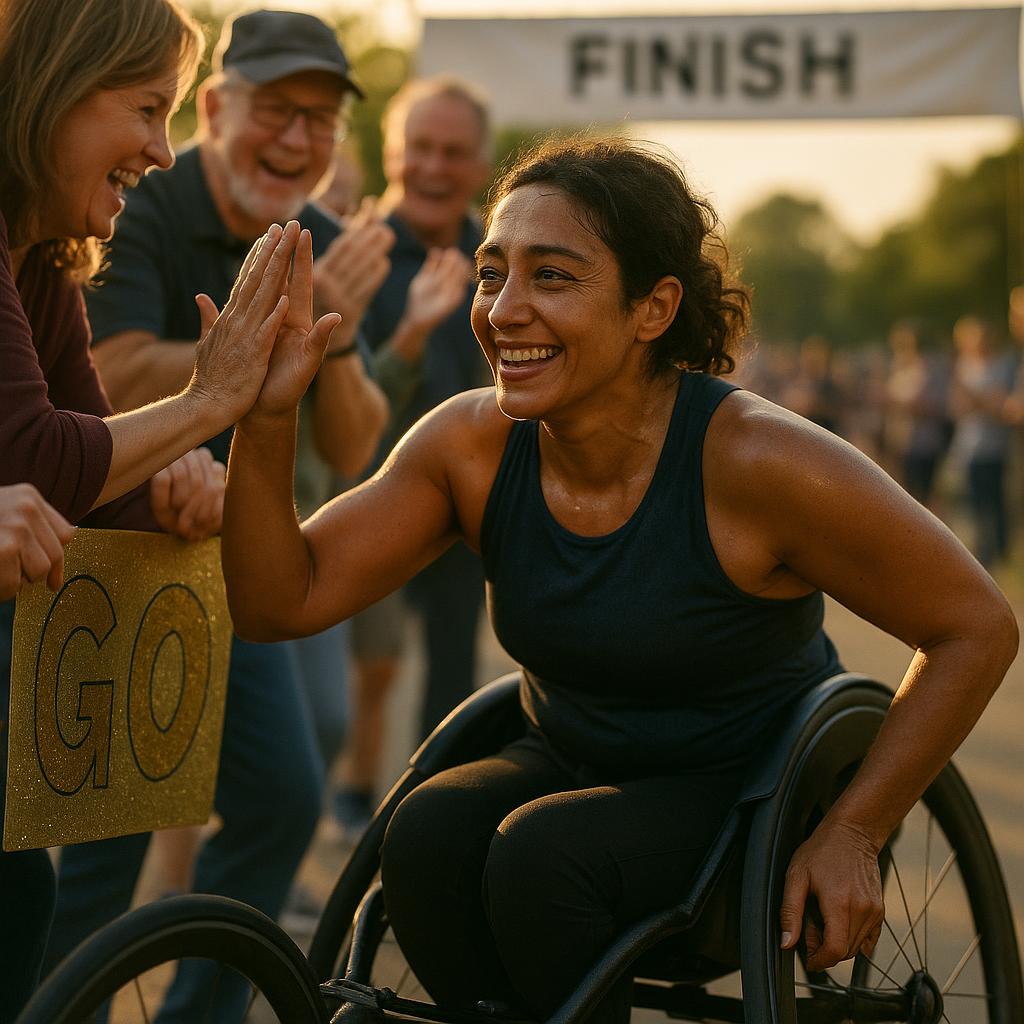 Image by RM AI
The Celebration
Maya's apartment was buzzing with celebration when I arrived. She'd transformed her living space with streamers and a hand-painted banner that read 'Linda: Racing Champion!' I couldn't help but laugh—I'd hardly broken any records. 'Get in here, speed demon!' she called, wheeling me toward a group of familiar faces from rehab and support group. The wine flowed freely, along with stories that had nothing to do with accidents or recovery milestones. When Victor raised his glass and called for silence, I felt suddenly exposed. 'To Linda,' he announced, 'who showed us all what determination looks like.' Everyone turned to me expectantly. My throat tightened. 'Six months ago,' I managed, my voice wavering, 'I thought my life was over. I measured everything by what I'd lost.' I paused, surprised by the emotion welling up. 'Now I'm just figuring out what it can be.' The room erupted in cheers that felt like a warm embrace. Later, as the party thinned out, Marco stayed behind, helping Maya collect empty glasses. We fell into conversation about favorite films, arguing playfully about whether 'The Godfather' was truly the masterpiece everyone claimed. His eyes crinkled when he laughed—something I'd never noticed during our grueling training sessions. When he mentioned a film festival coming to town next weekend, I found myself holding my breath at what might come next.
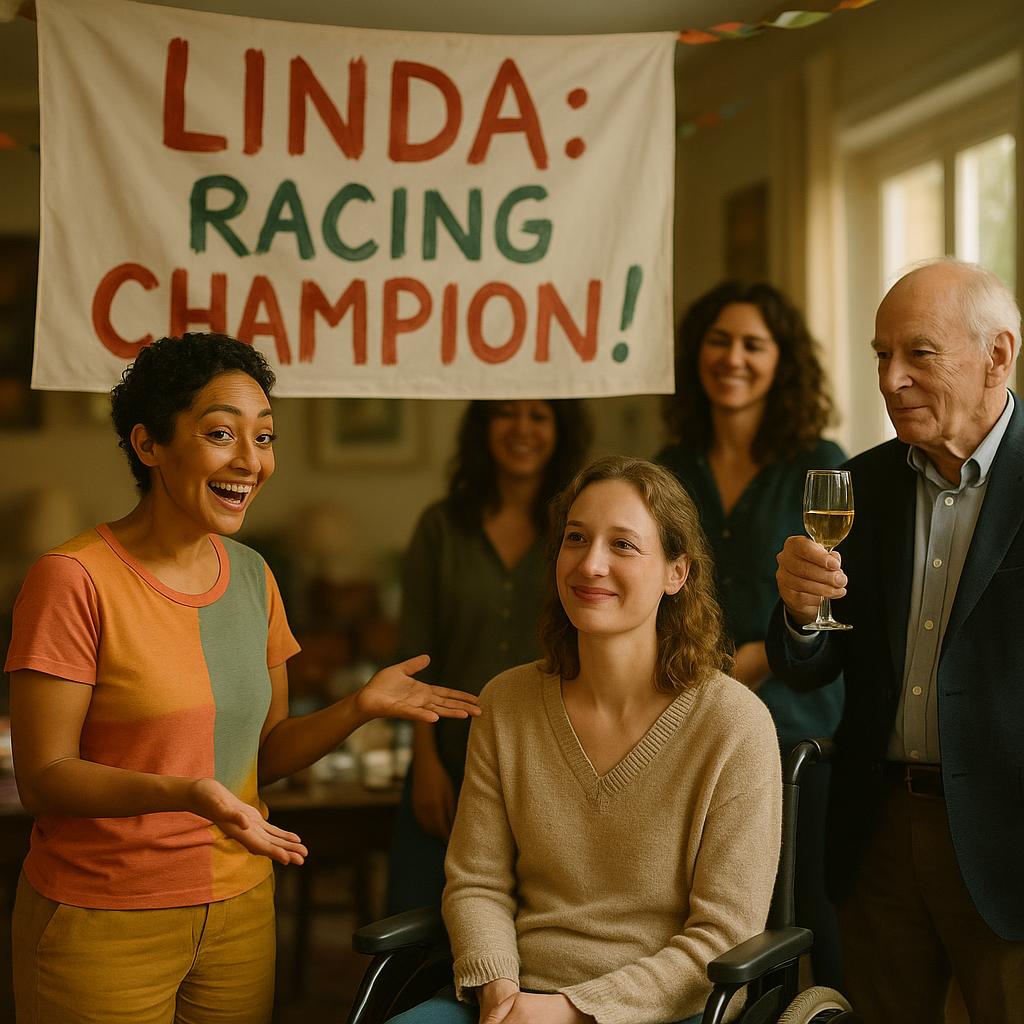 Image by RM AI
The Next Challenge
Dr. Reeves' office has become a familiar space over these months—the framed medical degrees, the anatomical spine model I once couldn't look at without flinching. Today, he slides a folder across his desk with charts tracking my progress. 'Linda, you've not just met our rehabilitation goals—you've shattered them,' he says, his usual clinical tone softened with something like pride. I study the upward-trending lines that somehow represent my broken body rebuilding itself. 'So what's next for you?' he asks, leaning back in his chair. The question catches me off guard. I've been so focused on recovery that I haven't thought beyond it. My silence must speak volumes because he continues, 'Have you considered becoming a peer mentor here? We need people who understand this journey from the inside.' The suggestion hits me like a revelation. Using my darkest experience to light the way for others just starting their 'after.' I think about how lost I felt when Daniel left, how the support group became my lifeline. 'I'd need training,' I say cautiously. Dr. Reeves smiles. 'Of course. But you already have the most important qualification—you've lived it.' As I wheel out of his office, I feel something I haven't since before the accident: a future unfolding that's entirely my own creation, not a reaction to what was taken from me. And for the first time, I wonder if that red light that changed everything might have ultimately sent me in exactly the right direction.
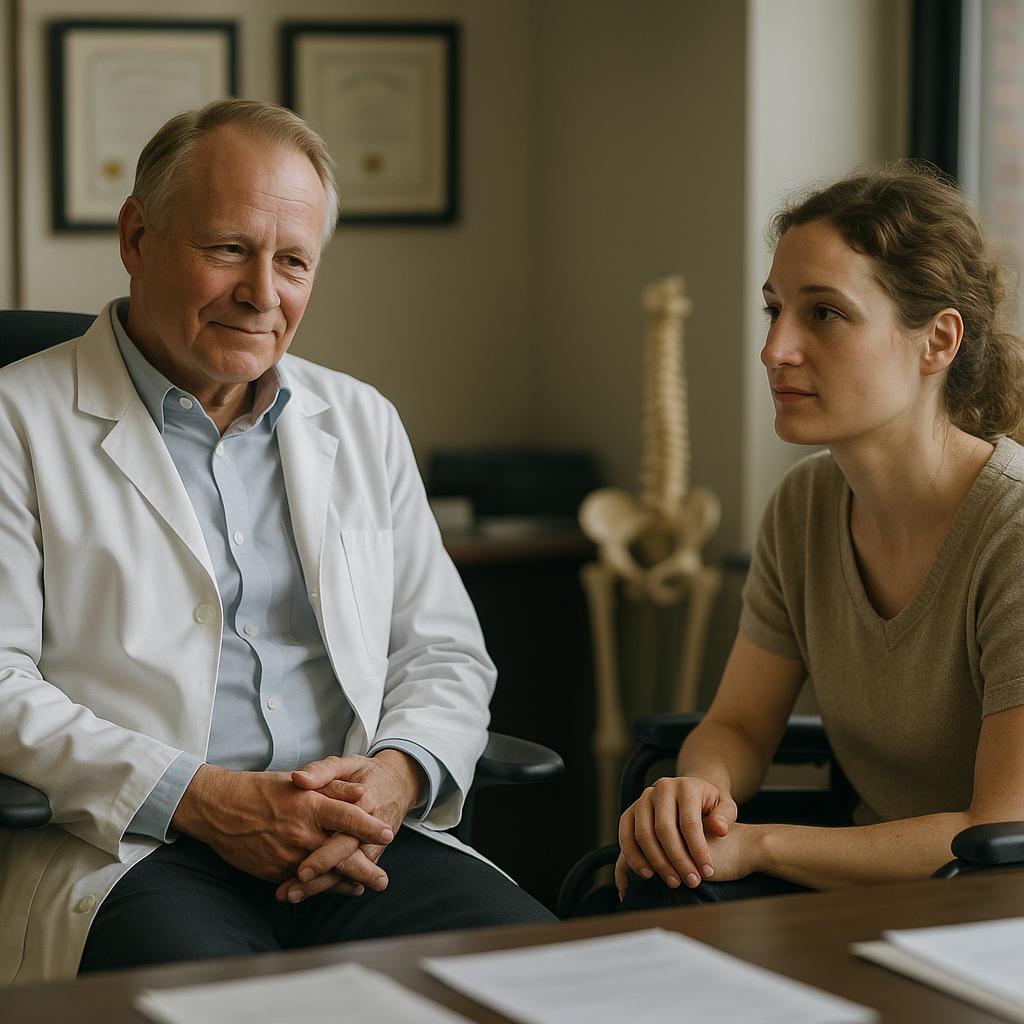 Image by RM AI
The Training Program
The peer mentor training program is nothing like I expected. Three days a week, I wheel into a conference room where six of us—all graduates of rehab with different injuries—learn how to guide others through their own personal apocalypses. We're not just covering the practical stuff like resource navigation and accessibility hacks. We're learning how to hold space for raw grief without drowning in it ourselves. During role-playing exercises, I surprise myself by calmly discussing the accident, the moment I learned I'd never walk again, even Daniel's betrayal and exit. 'Your vulnerability isn't weakness here, Linda,' Tamara, our trainer, tells me after I share particularly difficult details. 'It's your superpower. It shows others that survival isn't just possible—it's inevitable.' At night, I find myself drafting outlines for support groups I hope to lead, organizing thoughts that once felt too painful to touch. For the first time since the accident, I'm not just a patient with a tragic backstory—I'm becoming a professional with expertise born from experience. Yesterday, Marco caught me in the hallway after training. 'How's it going?' he asked, and I realized I was actually excited to tell him about it. What I didn't expect was his invitation that followed.
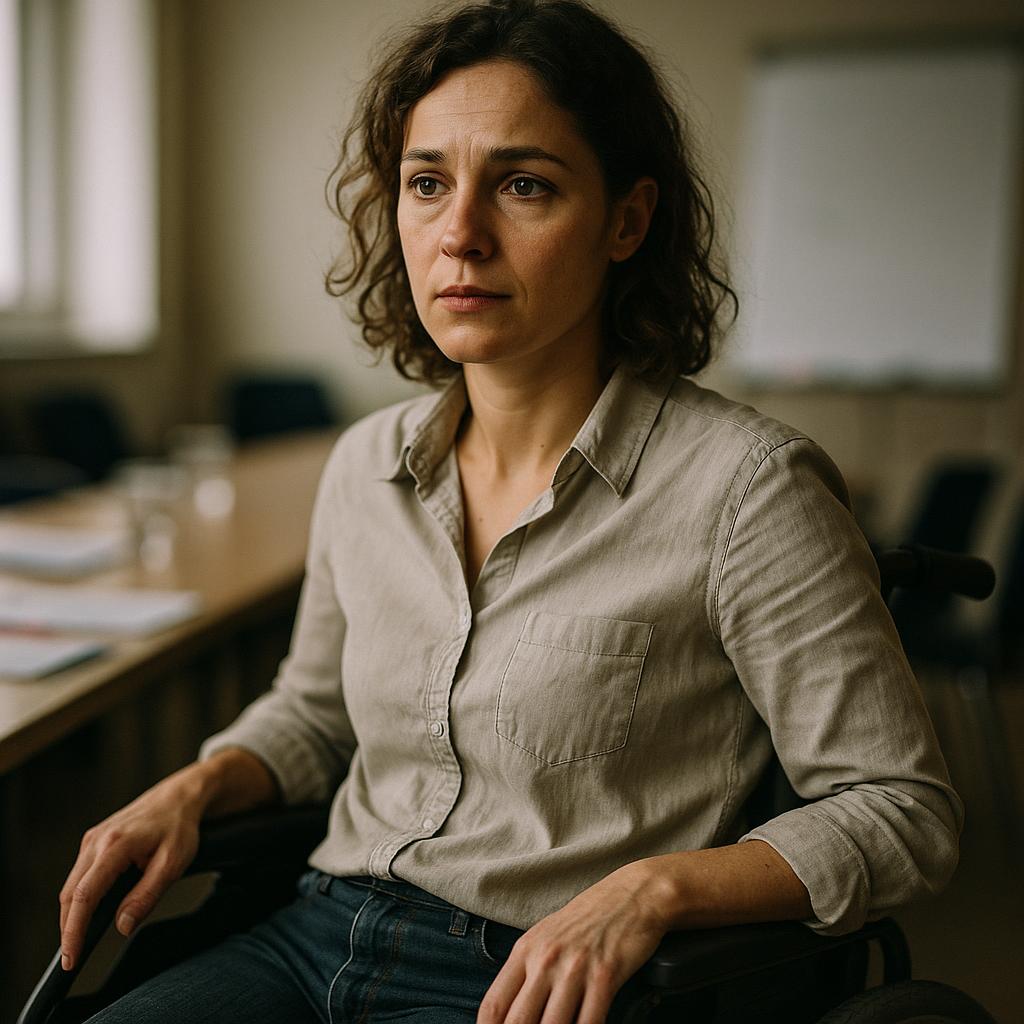 Image by RM AI
The First Mentee
Jamie sits across from me in the rehab center's garden, her knuckles white as she grips her wheelchair armrests. 'This is bullshit,' she spits out, eyes blazing with the same fire I once had. 'I was supposed to start grad school next month.' At 28, her diving accident has rewritten her entire future in an instant. I let her anger wash over me without flinching. When she finally pauses for breath, I simply say, 'I hated everyone too. Especially the ones who said they understood.' Something shifts in her expression—surprise, maybe, at not receiving the usual platitudes. 'Does it ever get better?' she asks, her voice suddenly small, vulnerable. I consider lying, giving her the comfort of false hope. Instead, I offer the truth that saved me: 'Not better. Different. And eventually, that becomes okay.' She studies my face, searching for deception. 'How long?' she demands. I remember asking the same question, desperate for a timeline to cling to. 'That's the thing about this journey,' I tell her, reaching across to adjust the blanket slipping from her legs with the casual confidence that once seemed impossible. 'It's not linear. Some days you'll feel like you're flying, and the next, you're right back at the beginning.' What I don't tell her yet is that she's already taken the hardest step—she showed up.
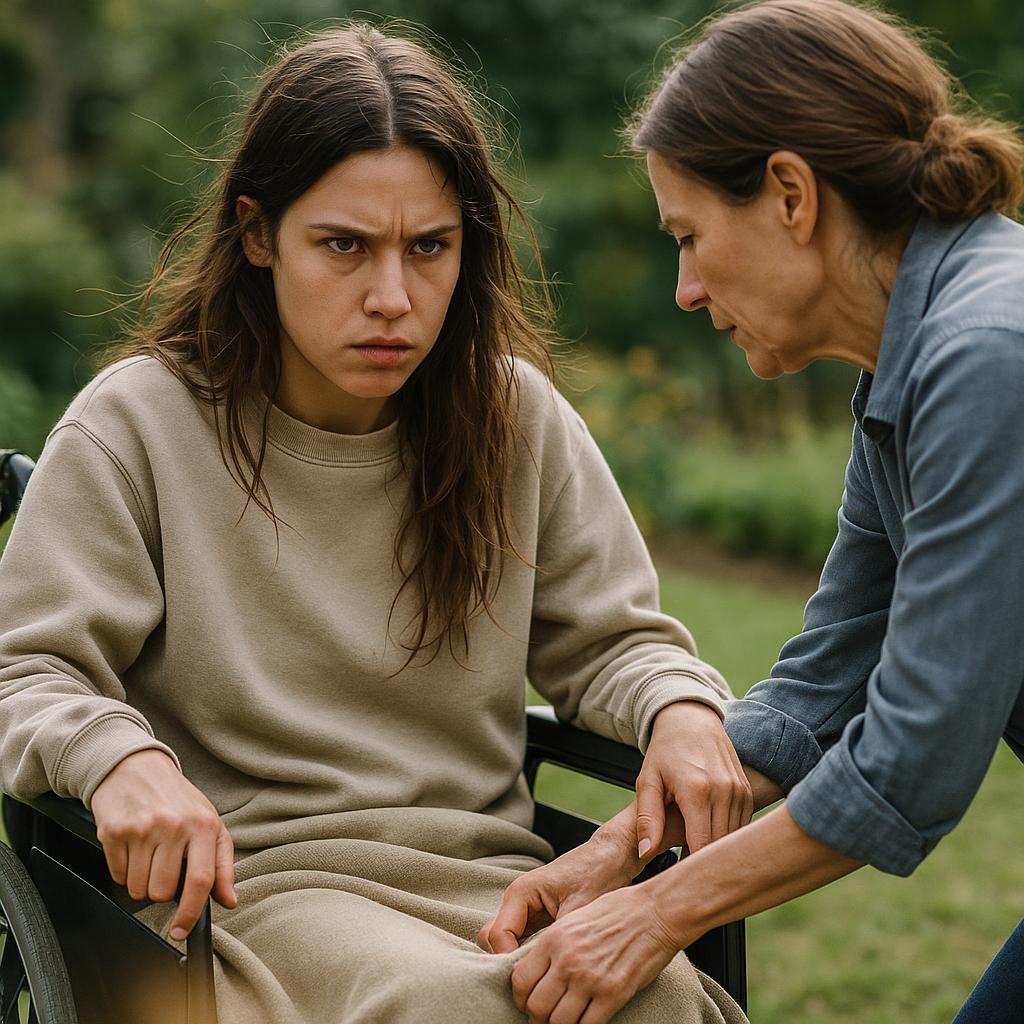 Image by RM AI
The Coffee Date
I couldn't remember the last time I'd felt butterflies in my stomach. When Marco texted asking if I wanted to grab coffee 'somewhere that isn't the rehab cafeteria,' I stared at my phone for a full five minutes before responding. Was this a date? A friendly chat? My closet suddenly seemed filled with all the wrong clothes. I settled on a blue sweater that Maya once said brought out my eyes. The café he chose was tucked in an art district I'd never explored—pre-accident Linda would have been all over this place. 'I thought you might like the photography exhibit,' Marco said as he held the door for me, his eyes crinkling at the corners. Black and white urban landscapes lined the walls, ordinary streets transformed by unusual angles. 'It's about perspective,' he explained, 'seeing familiar things in new ways.' We talked for hours—not about wheelchairs or physical therapy milestones, but about books we'd loved, places we wanted to travel, and how his grandmother's empanadas ruined all other food forever. When he walked me to my car, his fingers brushed against mine, and the electricity of that brief touch made me realize how long it had been since I'd felt anything like desire. As I drove home, I couldn't stop smiling, wondering if this was the beginning of something I'd given up hoping for.
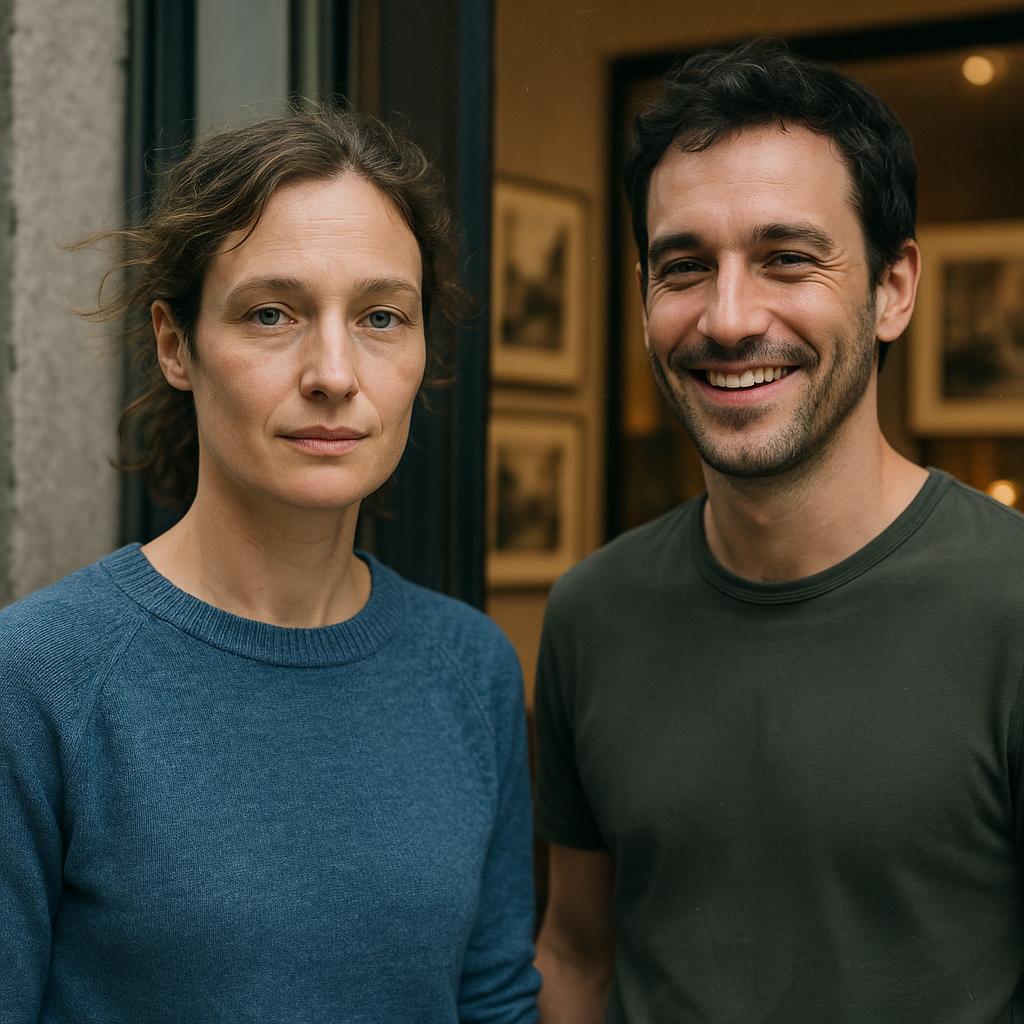 Image by RM AI
The Divorce Finalization
The envelope arrived on a Tuesday, exactly one year after Daniel walked out. I stared at it on my coffee table for nearly an hour before finding the courage to open it. My hands trembled slightly as I broke the seal—not from grief, but from the strange weightlessness of finality. The divorce decree was just paper, black ink on white, transforming something that once felt like the end of the world into a bureaucratic formality. I ran my fingers over my maiden name, reclaiming it officially after all these months. When I called Mom, her voice was cautious. 'Are you okay, honey?' The question hung between us, loaded with a year's worth of tearful late-night calls and worried visits. 'I actually am,' I answered, surprising myself with how true it felt. That evening, I wheeled to the park near my apartment, finding a quiet spot overlooking the water. The sunset painted everything in gold—the same sun that had witnessed my 'before' and now illuminated my 'after.' As darkness slowly claimed the sky, I silently said goodbye to Linda-who-was-Daniel's-wife and welcomed whoever I was becoming. The decree in my bag felt less like an ending and more like permission—to stop looking backward, to stop measuring my healing against what was lost. What I didn't expect was the text that lit up my phone as I turned to head home, a name I hadn't seen in months appearing on my screen.
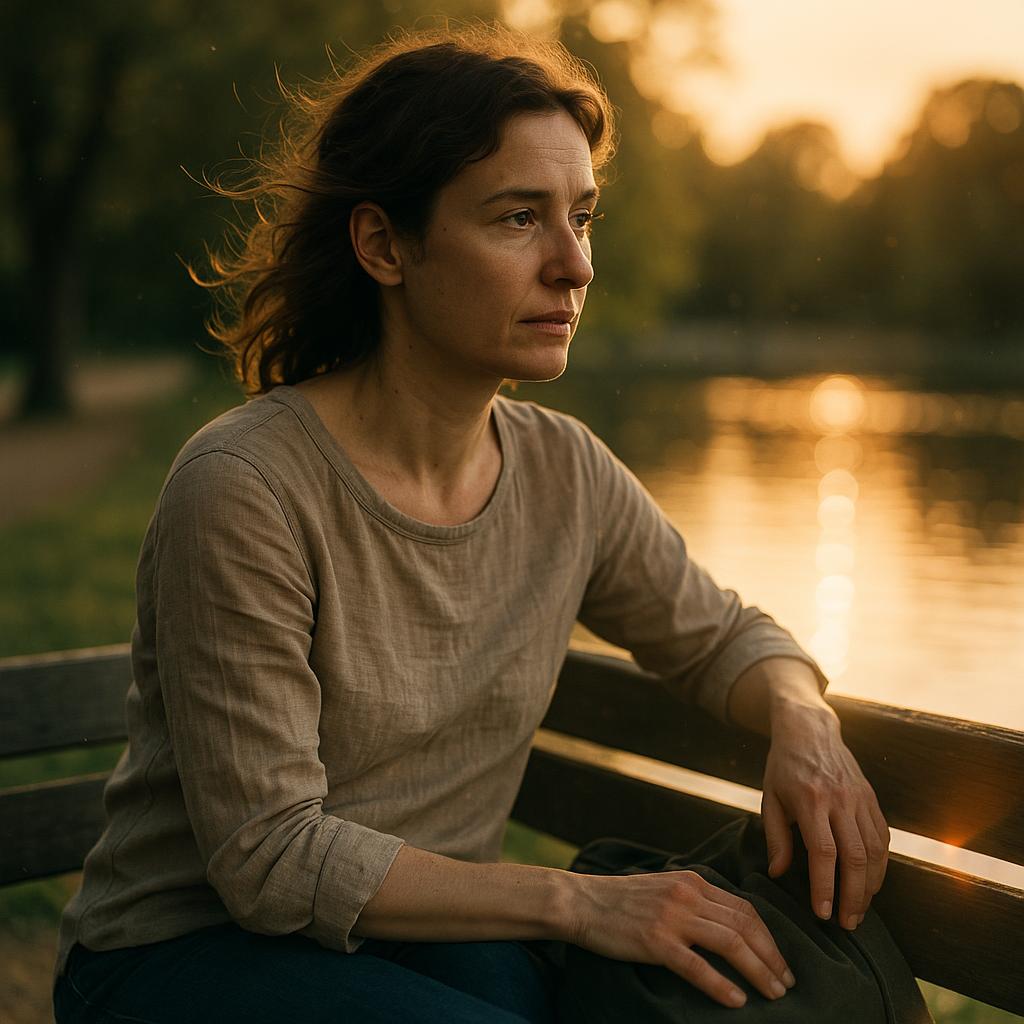 Image by RM AI
The Progress with Jamie
Jamie's transformation has been nothing short of remarkable. Three months into our mentoring relationship, I've watched her evolve from a tornado of rage to a woman with purpose. Yesterday, she called me at 11:30 PM, practically shouting into the phone. 'Linda! I did it! I transferred myself without the board!' Her voice cracked with emotion, and I found myself tearing up in response. 'I kept hearing your voice in my head saying 'lead with your stronger side' and suddenly it just... clicked.' We celebrated her victory with a virtual toast – her with chocolate milk, me with a glass of pinot noir I'd been saving for a special occasion. After we hung up, I found myself scrolling through photos from my early hospital days. The woman staring back at me looked like a stranger – hollow-eyed, devastated, waiting for Daniel to save her. I barely recognized her. It hit me then that Jamie wasn't the only one transforming. The woman who once measured her worth by what a man thought of her had become someone who helps others find their strength. 'You were right,' Jamie had said. 'It doesn't get better, but I'm getting stronger.' Her words echoed in my mind as I closed my photo album, wondering if Daniel would even recognize me now – not just my independence, but the fire in my eyes that wasn't there when he left.
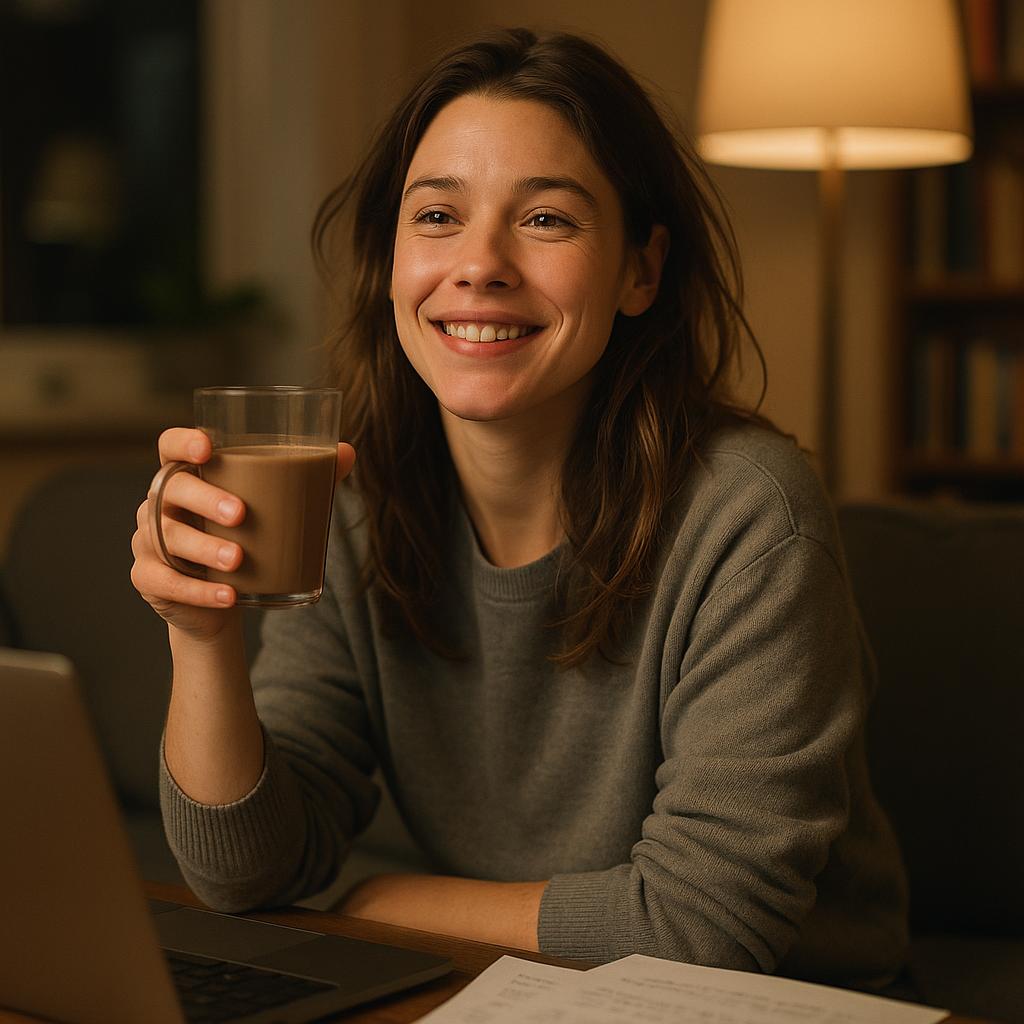 Image by RM AI
The Second Date
Marco's apartment was nothing like I expected. As I wheeled through the doorway, I was struck by how accessible everything was—wider doorframes, lower countertops, grab bars discreetly installed in strategic locations. 'I hope you like pasta,' he called from the kitchen, moving with a rhythm I hadn't noticed before. That's when I saw it—the slight hitch in his step, a limp he'd somehow concealed during our training sessions. 'Childhood accident,' he explained, catching my gaze as he stirred the sauce. 'Broke my leg in three places. Never healed quite right.' The revelation hung between us—not as a confession but as a shared understanding. As we ate, he told me stories about growing up in a small Italian village, how his nonna would chase away neighborhood kids who teased him, how he learned to find strength in movement despite the pain. 'In Italy, they called me zoppo—the limping boy,' he said, refilling my wine glass. 'Here, I'm just Marco.' When dinner ended and he walked me to the door, there was a moment of hesitation, a question in his eyes. Then he leaned down, his hand gently cupping my face, and kissed me. It wasn't a kiss of pity or curiosity—the kind I'd feared since the accident. It was a kiss between two people who understood that broken doesn't mean incomplete.
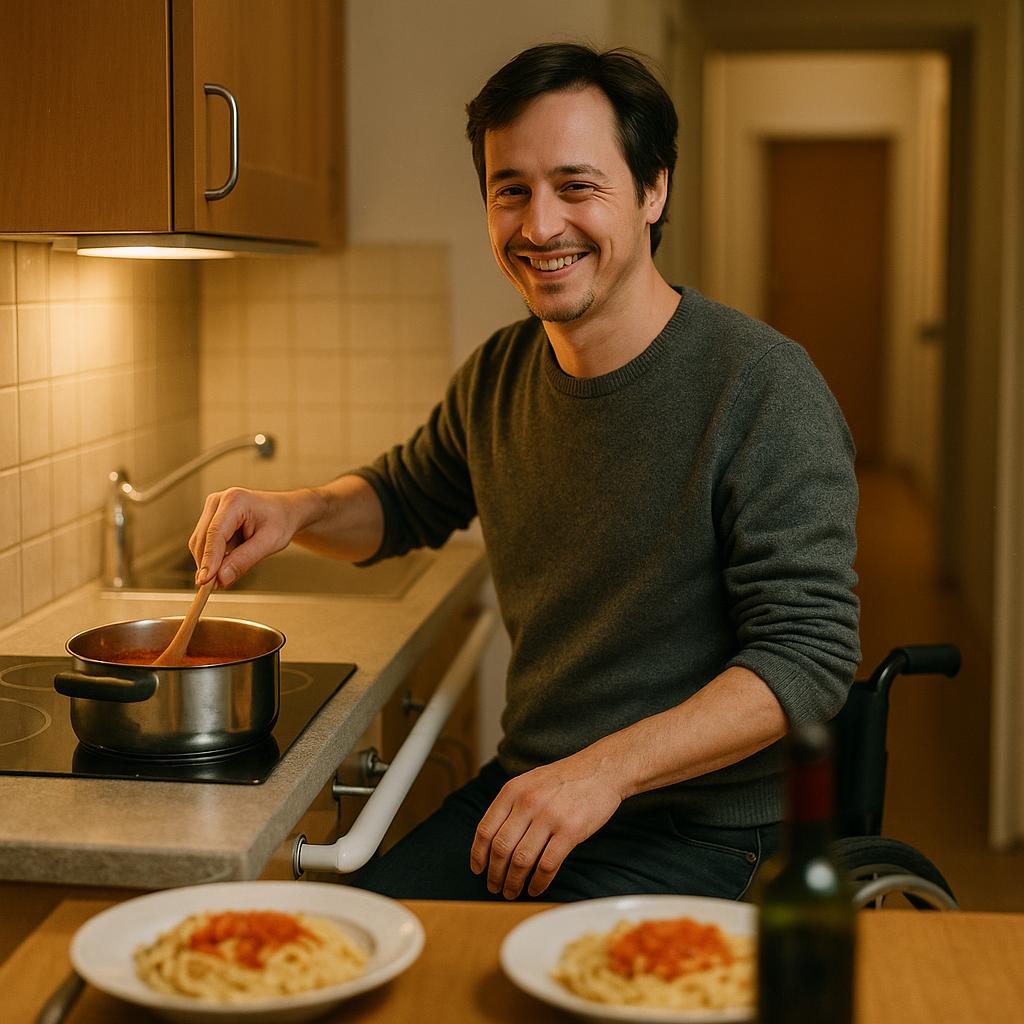 Image by RM AI
The Unexpected Encounter
I was comparing cereal prices in aisle seven when I felt it—that strange sixth sense that makes the hair on your neck stand up. I turned my wheelchair and there he was: Daniel. My ex-husband looked like he'd aged five years in just eighteen months, with new lines around his eyes and a weariness in his posture I'd never seen before. For a split second, we both froze, trapped in this fluorescent-lit time capsule of awkwardness. His eyes darted from my face to my wheelchair, then back again, widening slightly as he took in how confidently I navigated the narrow space. I saw something flicker across his expression—was it regret? Shame? Maybe even a hint of that 'wow, she's actually thriving without me' realization that I'd fantasized about during those first bitter months after he left. He shifted his weight, clutching his basket of bachelor groceries (frozen dinners and beer, naturally), and opened his mouth to speak. But suddenly, I realized I didn't need to hear whatever he was about to say. With a polite nod that would have made my grandmother proud, I wheeled past him, my back straight and my hands steady on Valkyrie's wheels. As I rounded the corner, I heard him call my name, his voice carrying that familiar note of uncertainty that once would have made me turn back.
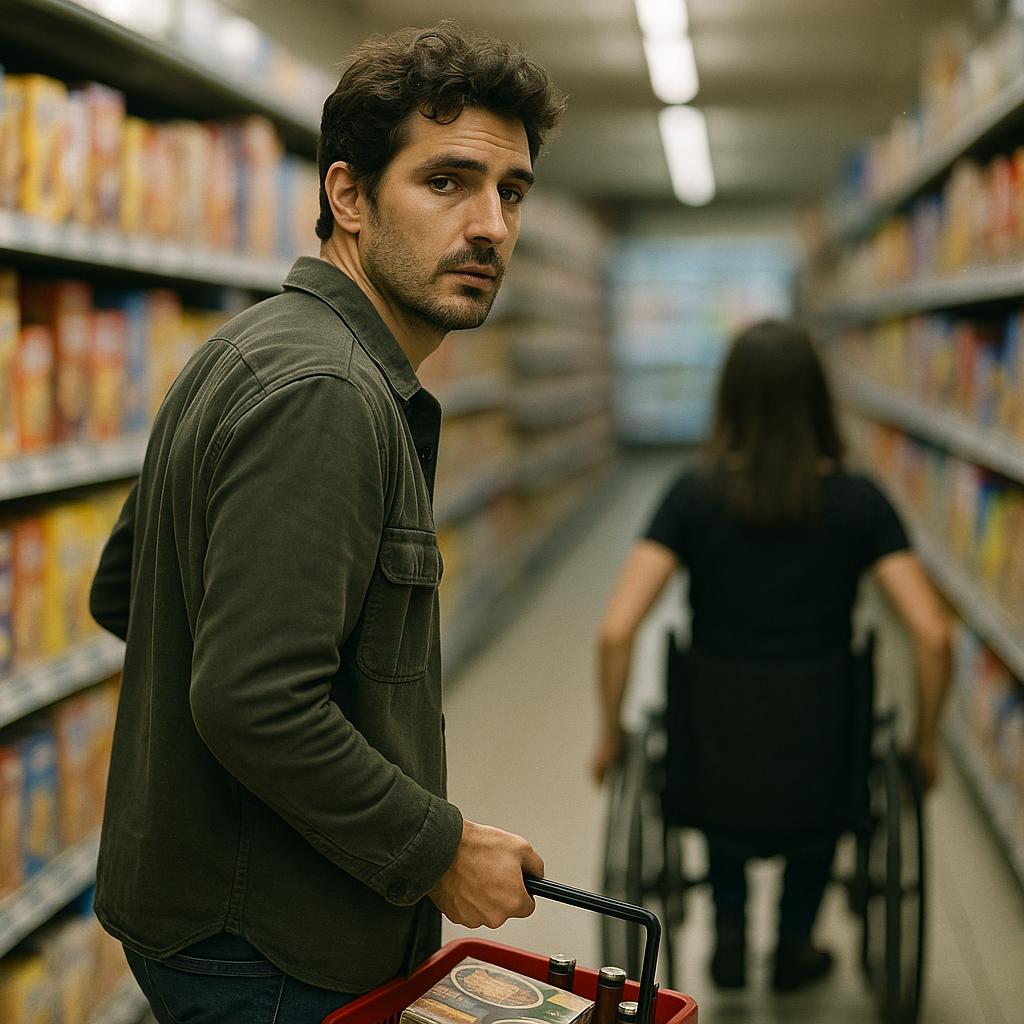 Image by RM AI
The Aftermath
I sat in my car for a full ten minutes after leaving the grocery store, my hands trembling slightly on the steering wheel. Seeing Daniel had knocked me off-center in a way I hadn't anticipated. When I finally got home, I called Maya, who arrived thirty minutes later with a bottle of red and zero judgment. 'He looked sad,' I told her as we settled on my couch, surprised by the lack of satisfaction I felt at this observation. 'And I felt... nothing. Not hatred, not love, just nothing.' Maya raised her glass, the light catching the ruby liquid. 'That's not nothing, Linda. That's freedom.' We talked until midnight, about everything and nothing, and when she left, I lay in bed staring at the ceiling fan, replaying the moment in the cereal aisle. The emotional hold Daniel once had on me had vanished, replaced not by the bitterness I'd expected but by something closer to indifference. When my phone lit up with a text from Marco confirming our weekend plans, I responded with a warmth that felt natural and unforced. For the first time since the accident, I realized I was no longer defined by what I'd lost, but by what I was finding. What I couldn't have known then was that Daniel's sudden reappearance in my life wasn't going to be a one-time thing.
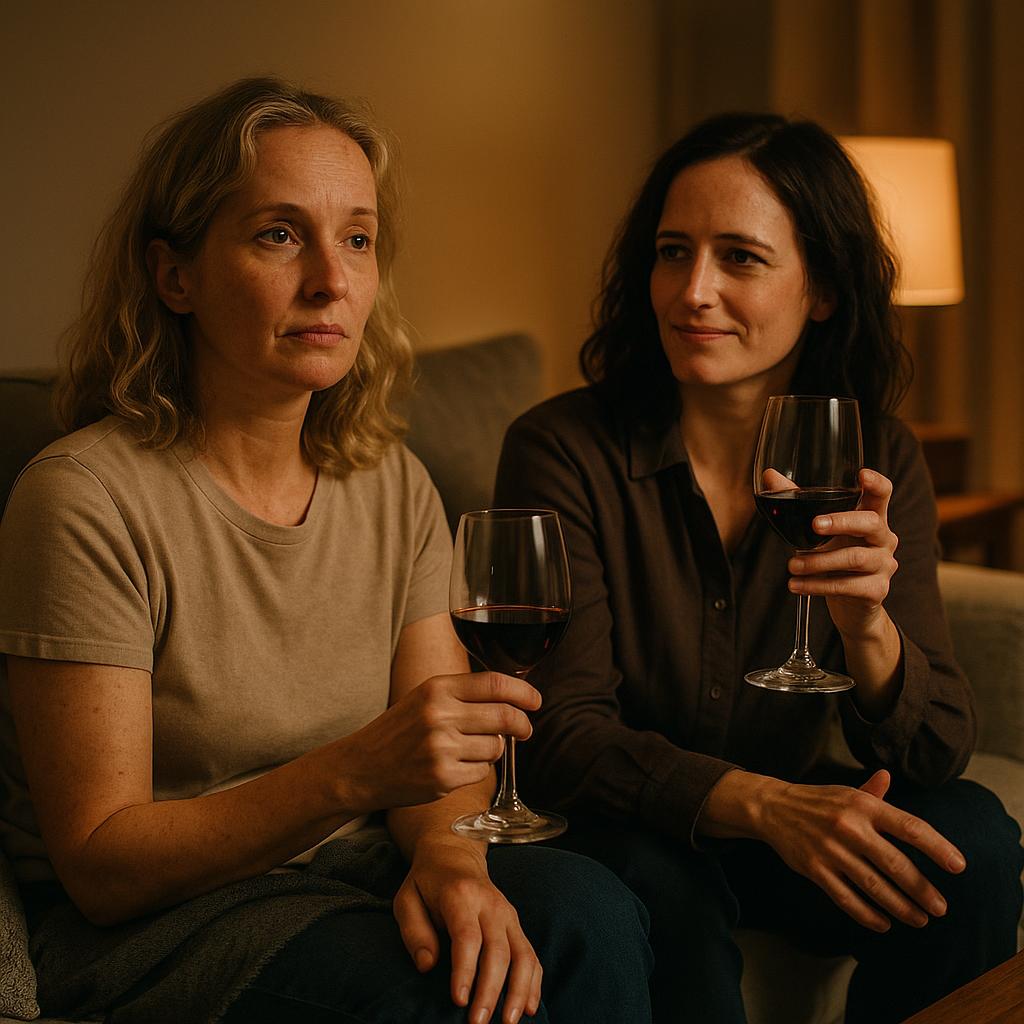 Image by RM AI
The Email
The notification popped up while I was reviewing Jamie's progress notes—an email from Daniel with the subject line 'I'm sorry.' My finger hovered over the delete button, but curiosity won out after eighteen months of silence. His message was a digital confessional: paragraphs of self-flagellation about his fear and inadequacy when faced with my injury. 'I couldn't handle seeing you like that,' he wrote, as if my paralysis had happened to him instead of me. He mentioned Elise only briefly—their relationship had ended months ago, apparently. The final paragraph asked if we could meet 'for closure,' as though we were characters in some romantic drama needing a final scene. I read it twice, then closed my laptop without responding. That night, curled against Marco on my couch, I showed him the email. 'What do you want to do?' he asked simply, his fingers tracing circles on my shoulder. The question hung in the air as I realized the answer was nothing—absolutely nothing. The closure Daniel sought was something I'd already found on my own, in the silence he left behind. What surprised me wasn't the email itself, but how little power it held over me now. What I couldn't have anticipated, however, was that Daniel wouldn't take my silence as an answer.
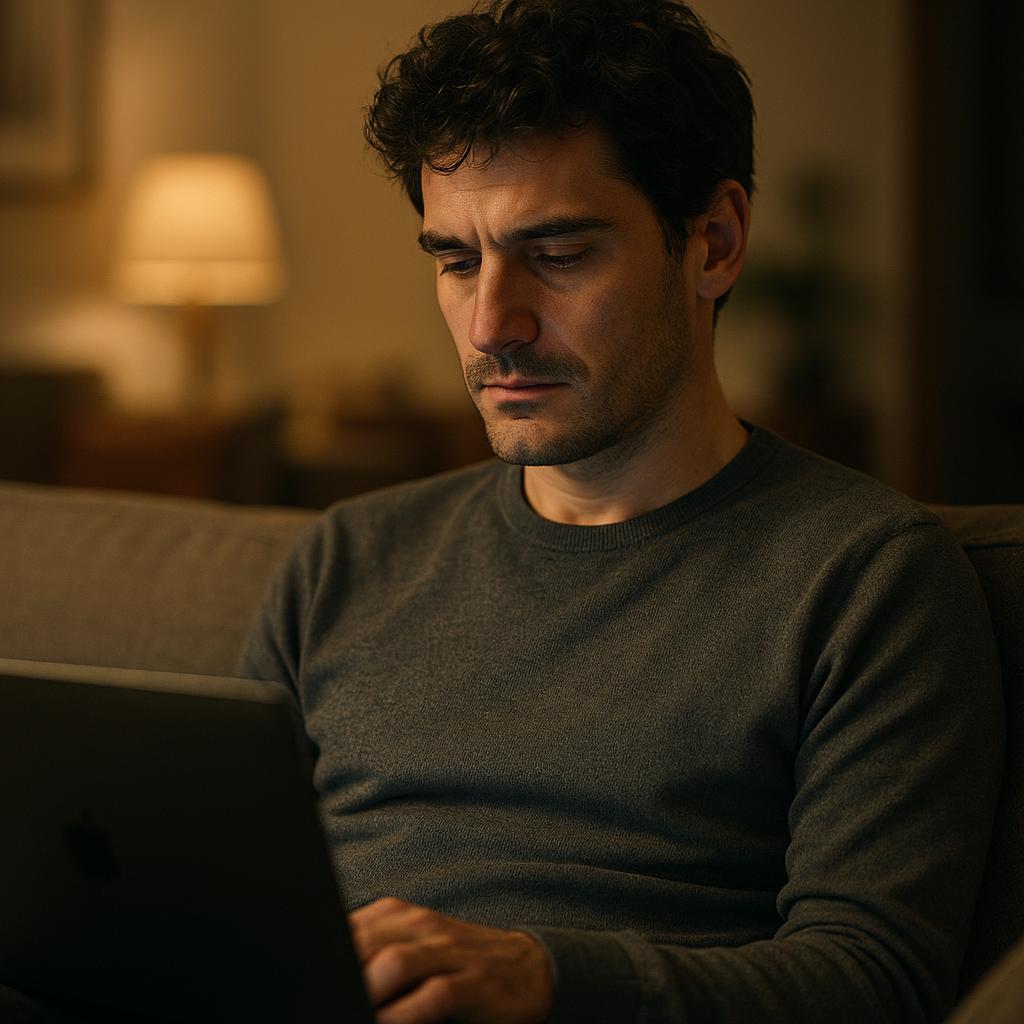 Image by RM AI
The Decision Point
After three days of Daniel's persistent texts, I finally agreed to meet him—not for his closure, but for mine. I chose a café with wide aisles and accessible bathrooms, arriving fifteen minutes early to claim the perfect corner table. When he walked in, I was struck by how ordinary he looked—this man who once held the power to shatter my world now seemed smaller somehow, less significant. 'Linda, thank you for—' he started, sliding into the seat across from me. I let him talk, watching his rehearsed speech unfold with all its predictable beats: the fear, the guilt, the self-justification thinly disguised as apology. His eyes kept darting to my wheelchair as if it were the villain in our story. When he finally ran out of words, the silence stretched between us like a test. I took a deep breath and delivered the lines I'd practiced in my mirror: 'I didn't come for your apology, Daniel. I came to tell you that losing you is what finally gave me back my life.' The shock on his face was almost worth the eighteen months of pain. As I wheeled away, leaving him stunned at the table, I felt the last thread connecting us snap clean. What I didn't expect was the text from Marco waiting on my phone when I got back to my car.
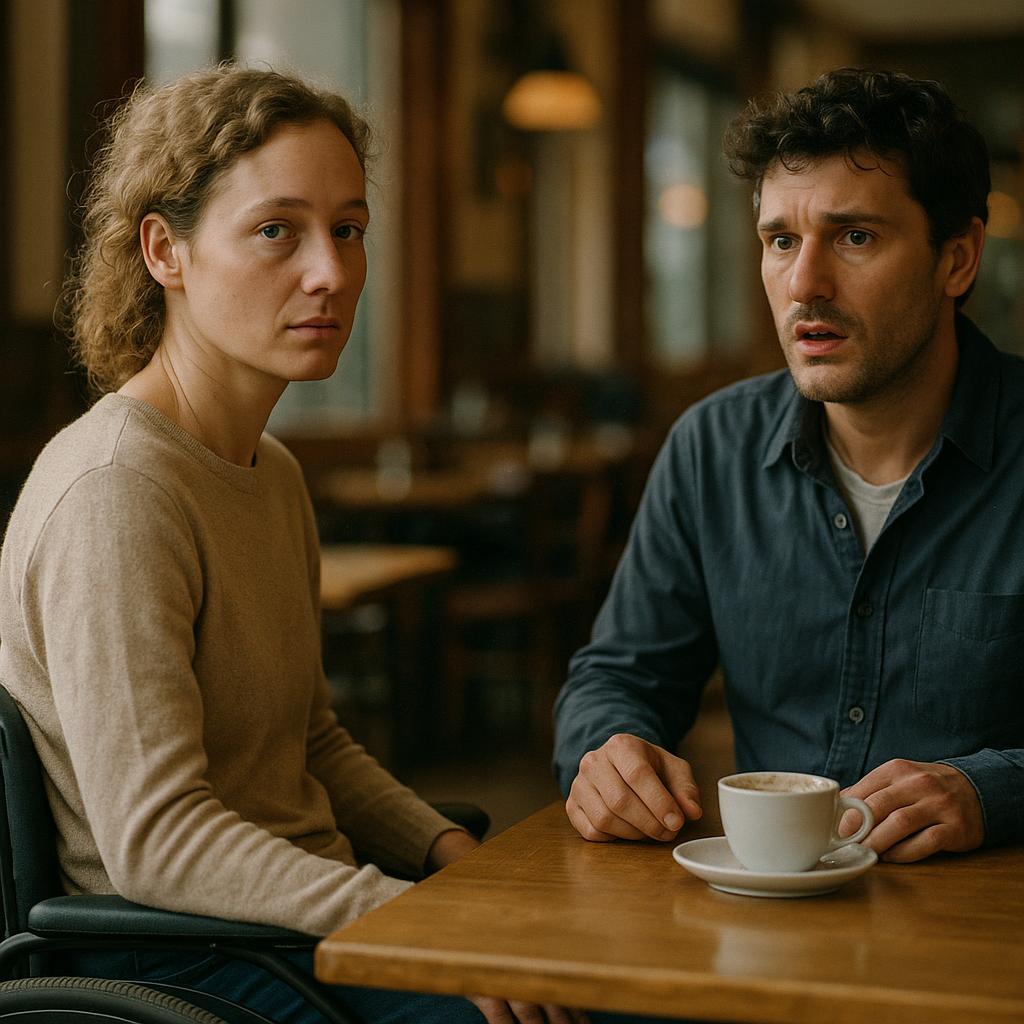 Image by RM AI
The Anniversary
One year to the day after my accident, I find myself parked at the intersection where my life split in two. The red light where that woman crashed into me glows the same crimson, indifferent to how it changed everything. I watch three cycles of traffic lights, mesmerized by how normal it all seems—people rushing through their days, unaware they're passing through the spot where I lost my legs but found myself. I hadn't told Marco where I was going this morning. This pilgrimage felt too personal, too raw to share yet. After thirty minutes, I drive to the rehabilitation center where Jamie and two newer mentees are waiting. 'Today,' I begin, wheeling into our circle, 'we're talking about anniversaries—those dates that echo in our bones.' Jamie's eyes meet mine, understanding immediately. 'My accident was exactly one year ago today,' I continue, my voice steadier than I expected. 'And I realized something sitting at that intersection—I'm not just surviving anymore.' As we share strategies for reclaiming these milestone days—planting trees, writing letters to our past selves, creating new traditions—I feel something shift inside me. The calendar in my mind is no longer divided into before-accident and after-accident pages. It's just my life now, continuing forward. What I didn't anticipate was the text that would light up my phone after our session ended.
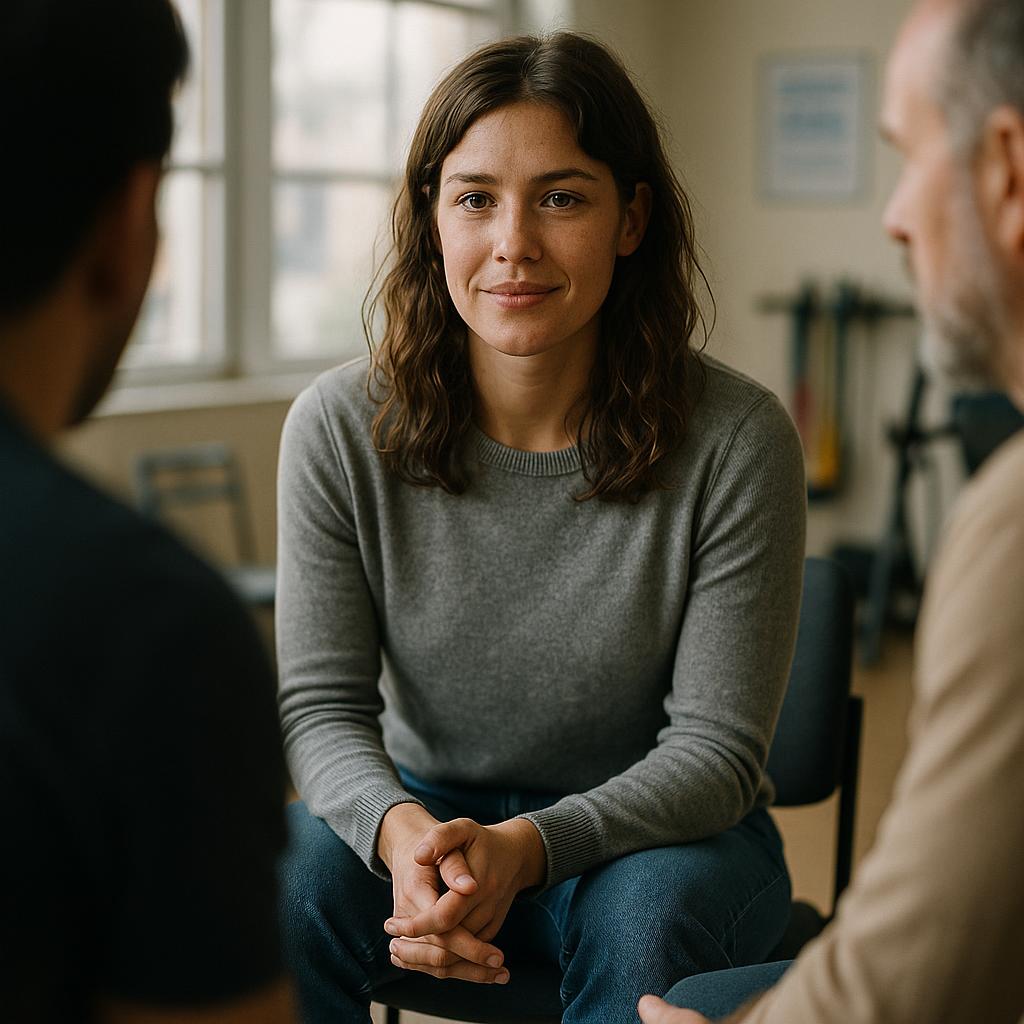 Image by RM AI
The Promotion
Dr. Reeves called me into his office yesterday, and I swear my first thought was, 'Great, what did I do wrong now?' Instead, he leaned forward with that intense look he gets when he's excited about something. 'Linda, we're creating a new position—full-time peer counselor coordinator. I want you to apply.' I nearly choked on my coffee. Me? The woman who couldn't even coordinate her own life a year ago? 'You've shown exceptional skill connecting with patients,' he continued, oblivious to my internal freakout. 'Jamie's progress alone speaks volumes.' That night, I stared at my dusty resume, the marketing career that seemed like someone else's life now. As I updated it, something strange happened—I realized my accident had given me skills no degree could: crisis management, deep empathy, the ability to talk someone off the ledge at 2 AM. When Marco read it over, his eyes got that soft look. 'You're not defining yourself by what you've lost,' he said, kissing my forehead, 'but by what you've gained.' I submitted my application this morning, my hands surprisingly steady. The woman who once measured her worth by a husband's approval was now reaching for something entirely her own. What I didn't expect was the name I'd see on the interview panel list when Dr. Reeves emailed the schedule.
 Image by RM AI
The Interview
I sat in the interview room, my heart pounding against my ribs like it was trying to escape. The fluorescent lights seemed too bright as I faced the panel: Dr. Reeves with his encouraging nod, Dr. Novotny scribbling notes, and the administrative director whose poker face gave nothing away. 'What makes you uniquely qualified for this position?' Dr. Novotny asked, peering over her glasses. I took a deep breath and let the truth flow. 'I know what it means to rebuild a life from scratch—not just physically, but emotionally. I can guide others because I'm still on that journey myself.' Something shifted in the room then; the administrative director's poker face cracked into something like recognition. They asked about difficult cases, program expansion, and metrics for success. I answered each question not as Linda-who-was-broken but as Linda-who-rebuilt-herself. When it was over, Maya whisked me away for 'preemptive celebration drinks,' insisting that putting myself forward was victory enough. 'To courage,' she toasted, clinking her glass against mine. The next morning, my phone rang while I was still in bed. Dr. Reeves' name flashed on the screen, and for one terrifying moment, I couldn't bring myself to answer. What I didn't know then was how that single call would change everything—again.
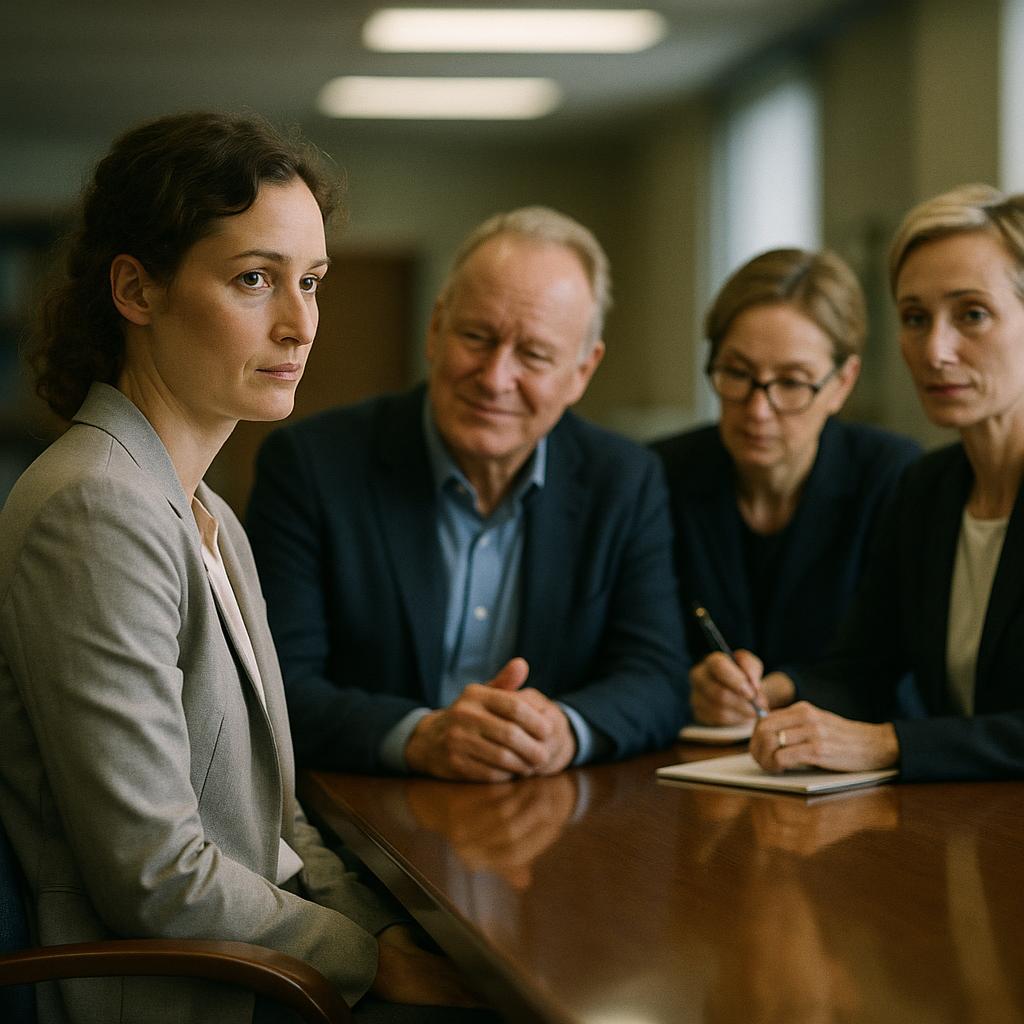 Image by RM AI
The Program Development
My first day as the peer counselor coordinator felt surreal. I wheeled into my new office—an actual office with my name on the door—and just sat there for a moment, taking it all in. A year ago, I was learning how to dress myself again; now I was developing a program that could change lives. I dove into the work with an intensity that surprised even me, interviewing patients with stories that mirrored my own. 'What would have helped you in those first weeks?' I asked them. Their answers became the foundation of my curriculum. Late nights found me surrounded by research papers and sticky notes, building something from nothing. When I presented my proposal to the board—a comprehensive program addressing everything from practical skills to the grief that no one talks about—I felt my heart hammering. 'This isn't just about coping,' I told them, my voice steady despite my nerves. 'It's about thriving in a new reality.' The unanimous vote of approval brought tears to my eyes. As I left the meeting, Dr. Reeves caught up with me. 'You've found your calling, Linda,' he said. I nodded, unable to speak past the lump in my throat. What Daniel could never understand was that sometimes, what looks like an ending is actually the beginning of something extraordinary. What I couldn't have known then was that my program would soon attract attention far beyond our rehabilitation center—and bring someone unexpected back into my life.
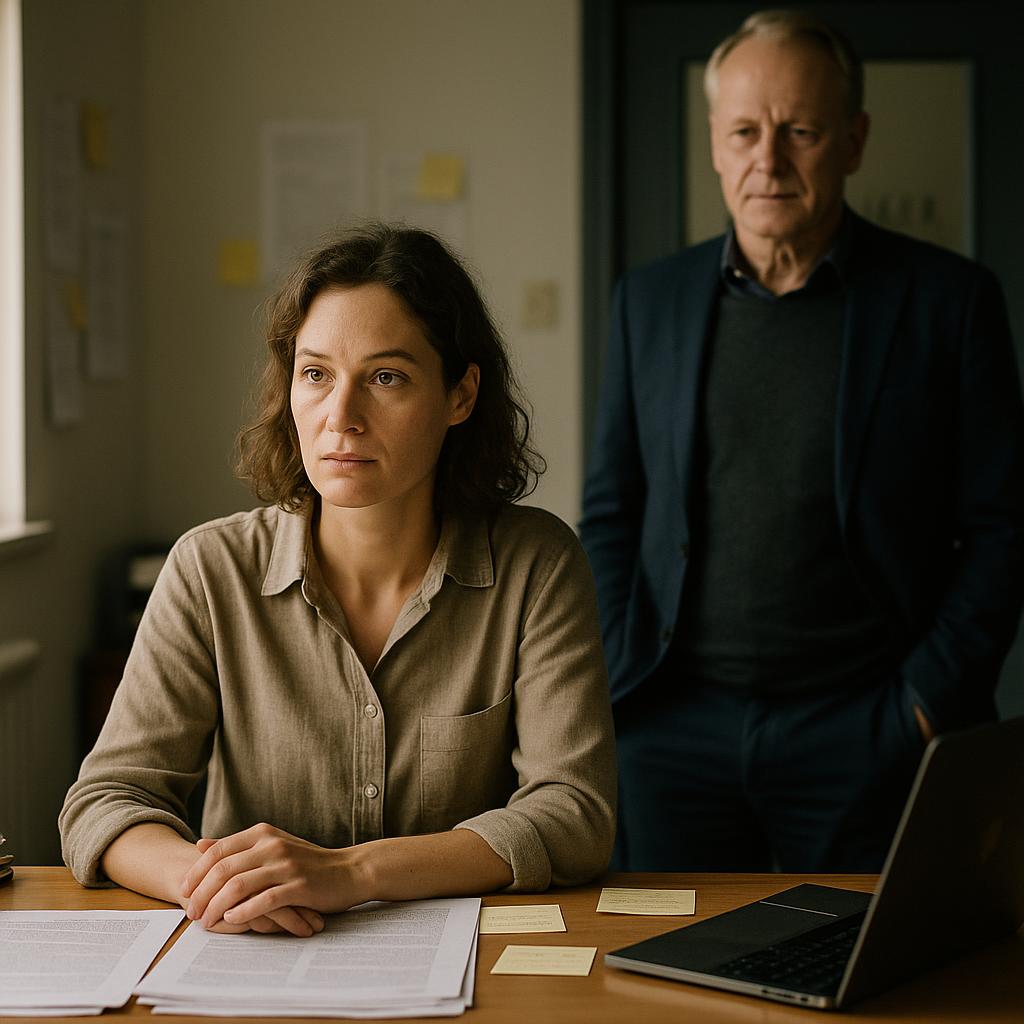 Image by RM AI
The Relationship Growth
Marco and I have fallen into this beautiful rhythm that feels both new and familiar at the same time. Last night, as we were washing dishes side by side (me scrubbing, him drying), he casually suggested a weekend trip to the coast. My stomach immediately knotted with anxiety. 'What about accessibility?' I blurted out, visions of being stranded on staircases or unable to reach the beach dancing through my mind. Marco just smiled that smile—the one that makes the corners of his eyes crinkle. 'We'll figure it out together,' he said, already pulling up his phone to research accessible accommodations. The trip became a series of small victories I never expected to celebrate again: navigating a wooden boardwalk without help, finding a restaurant with both an ocean view AND a proper ramp (hallelujah!), and—most incredibly—experiencing the beach again in a specially designed wheelchair with massive wheels. But the real breakthrough came in our hotel room, when Marco's hands moved over my body with unmistakable desire rather than the clinical assessment I'd grown accustomed to from physical therapists. In that moment, I rediscovered parts of myself I thought had died in that hospital bed eighteen months ago. As I lay in his arms afterward, watching moonlight spill across the ceiling, I realized something profound: Daniel leaving wasn't the end of my love story—it was just the end of a chapter I needed to finish before finding something real. What I couldn't have known then was that our little coastal getaway would lead to a much bigger conversation about our future.
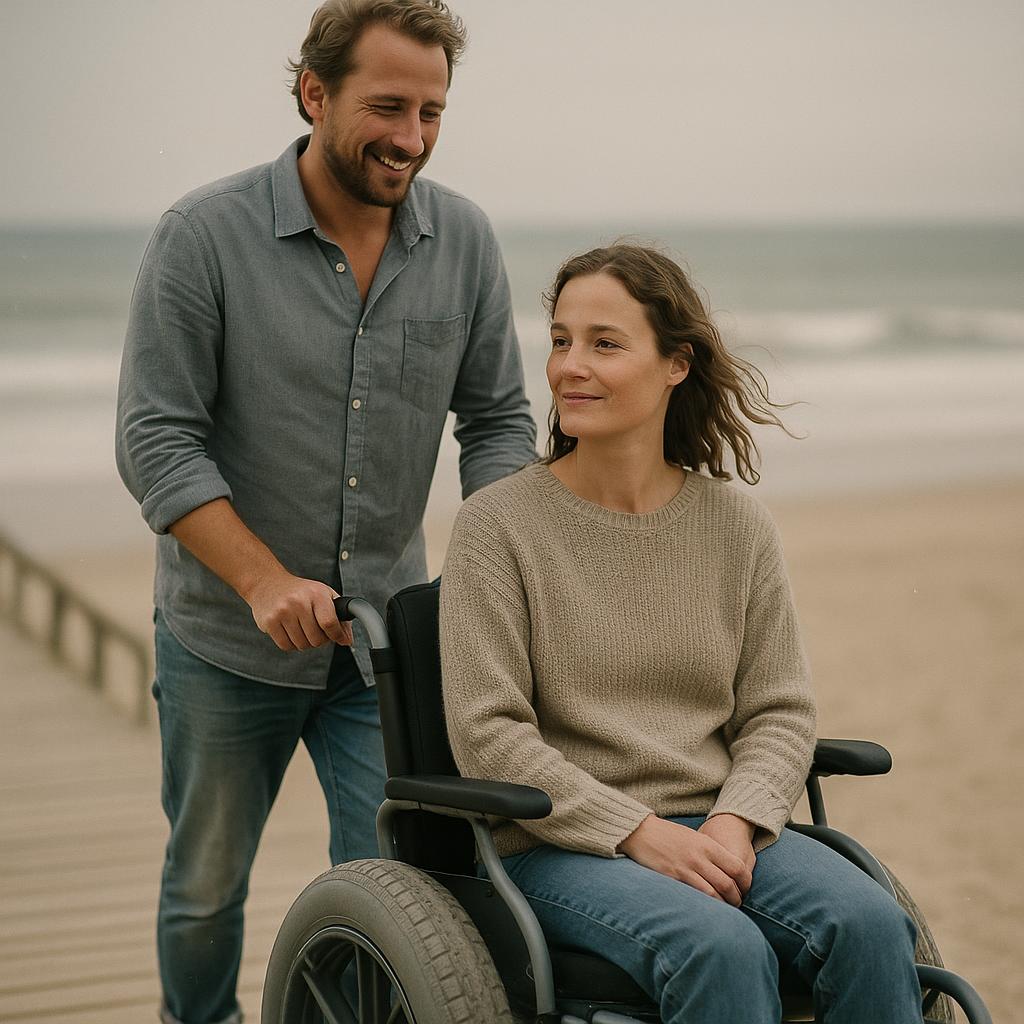 Image by RM AI
The Public Speaking
When Dr. Reeves suggested I speak at the regional rehabilitation conference, I laughed out loud. 'Me? Public speaking?' The woman who once hid in hospital bathrooms to avoid therapy sessions? But his eyes were serious as he slid the invitation across his desk. 'They need to hear from someone who's been on both sides,' he said. For weeks, I practiced my speech in front of Marco, who'd gently interrupt with suggestions like, 'Maybe slow down there' or 'That part about the catheter might be TMI, babe.' The morning of the conference, I stared at my reflection—professional blazer, hair actually styled for once—and barely recognized myself. As I wheeled onto the stage, the spotlight felt like an interrogation lamp, and my hands trembled so badly I worried I might accidentally zoom off into the audience. But then I started speaking, and something shifted. My voice found its strength as I wove together the clinical language I'd learned as a coordinator with the raw truth of what it means to rebuild a life from scratch. 'We are not just cases,' I told the sea of white coats and scrubs. 'We are whole people learning to live in bodies that betrayed us.' When I finished, the silence terrified me—until it erupted into applause that rose like a wave. As tears blurred my vision, I spotted a familiar figure slipping into the back of the auditorium, and my heart stopped. Daniel was watching.
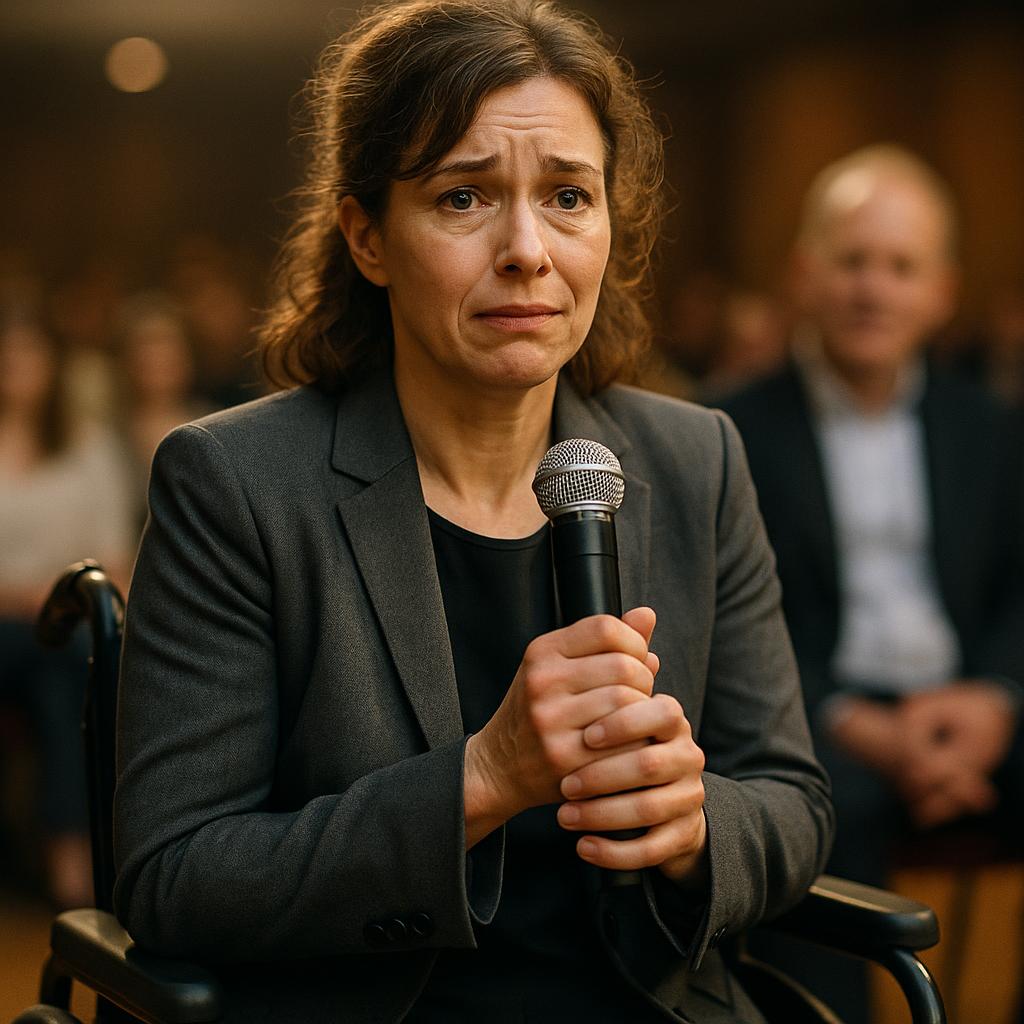 Image by RM AI
The Proposal
Marco suggested a picnic at the park where we'd had our first coffee date—a simple outing that somehow felt weighted with significance. The day couldn't have been more perfect: sunshine warming my shoulders, a gentle breeze carrying the scent of blooming trees, children laughing in the distance. I watched him meticulously arrange our picnic blanket, smoothing wrinkles with unusual care, his hands betraying a nervousness I'd never seen in him before. He kept rearranging the food containers, avoiding my eyes in a way that made my heart flutter with anticipation rather than dread. When he finally looked up at me, the tenderness in his expression took my breath away. 'I never expected you,' he said softly, taking my hands in his. 'But now I can't imagine my life without you.' The ring he pulled from his pocket caught the sunlight—simple, elegant, perfect. Not flashy like the one Daniel had given me in what felt like another lifetime. My 'yes' came immediately, tears spilling down my cheeks as Marco slipped the ring onto my finger. This wasn't a choice made from fear of being alone or gratitude that someone would love a woman in a wheelchair. This was a decision made with absolute certainty about who I wanted beside me as I continued building my new life. What I couldn't have known then was how Daniel would react when the engagement announcement hit social media the next day.
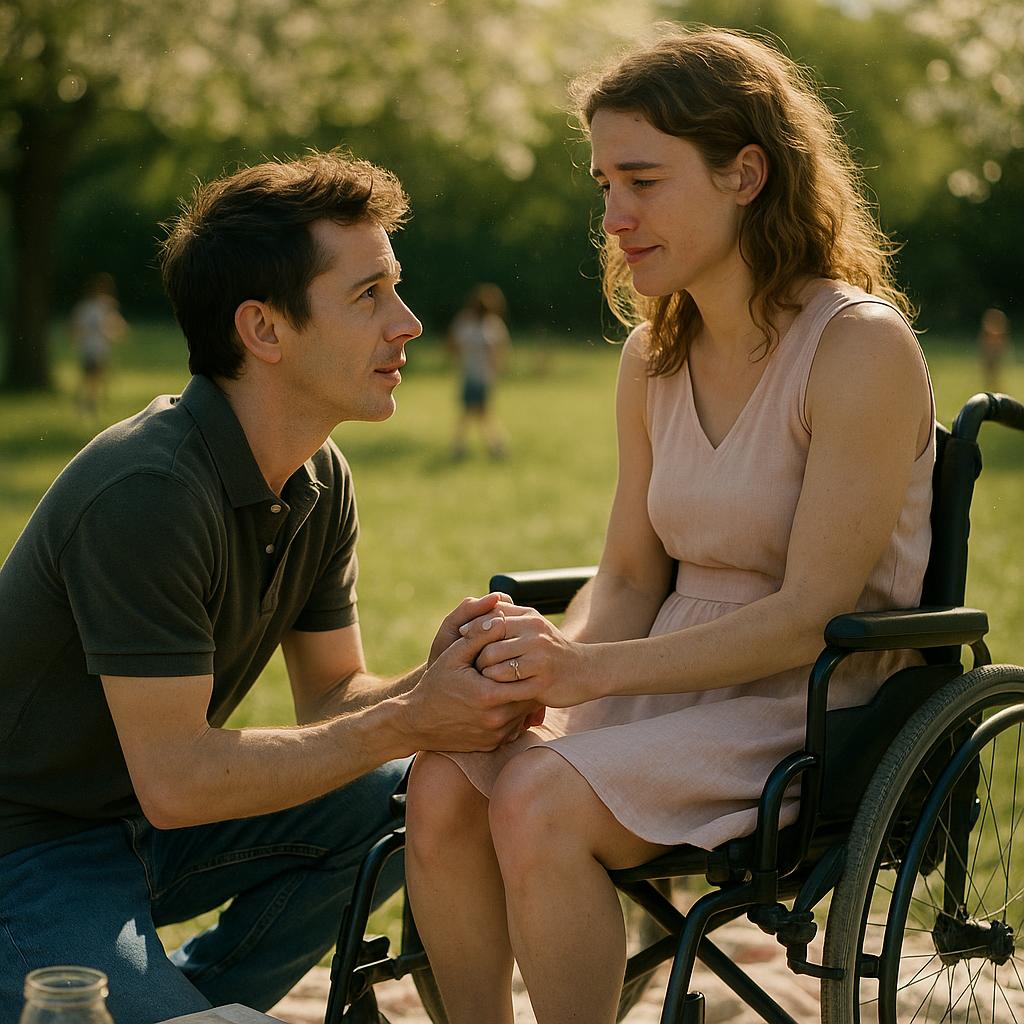 Image by RM AI
The Wedding Plans
The wedding planner's eyes widened when I rolled into her office with my binder of accessibility requirements. 'I've never planned a wheelchair wedding before,' she admitted. I smiled. 'Then we'll figure it out together.' Planning our wedding became an unexpected journey of advocacy and creativity. We rejected three venues before finding one with universal design that didn't make me feel like an afterthought. 'We're not having separate seating areas,' I insisted to Marco one night. 'My friends in chairs should be integrated throughout, not corralled into some designated section.' When Mom called, fretting about how I'd navigate the aisle, I FaceTimed her and played videos of wheelchair ballroom dancers gliding across floors with breathtaking grace. Her silence spoke volumes. 'It's not about walking down the aisle, Mom,' I explained gently. 'It's about moving forward together.' Our guest list grew to include Jamie, Dr. Reeves, and others from my support group—people who'd witnessed my transformation from broken to whole. As I addressed invitations, I realized how many of these relationships had been born from my darkest days. What I never expected was the RSVP that arrived yesterday, with handwriting I recognized immediately, and the note that came with it.
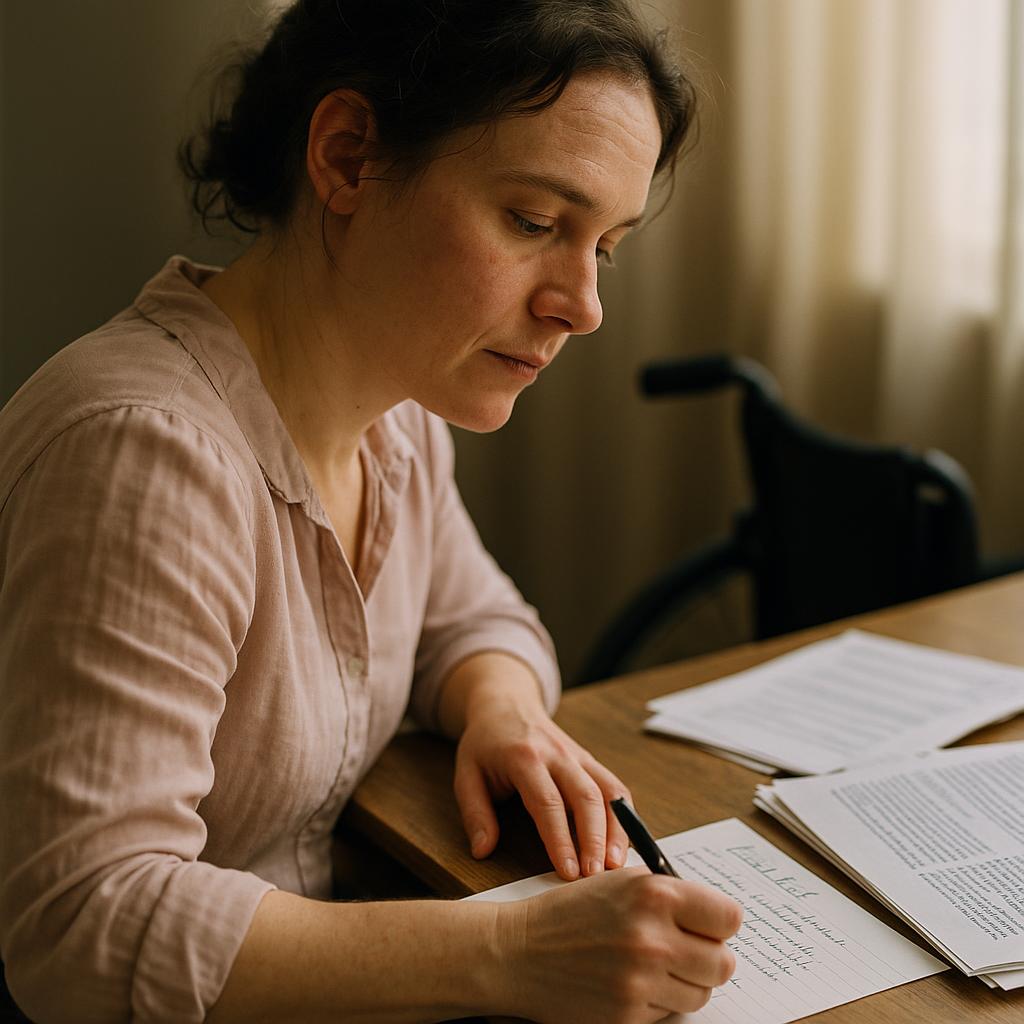 Image by RM AI
The Unexpected Guest
Daniel's card arrived on a Tuesday, nestled between wedding RSVPs and a utility bill. I stared at his handwriting on the envelope—once so familiar, now almost foreign. Inside was a simple congratulations on my engagement, his words careful and measured, like someone walking across thin ice. No requests to meet, no subtle digs about my new life, just genuine well-wishes that left me surprisingly empty of emotion. After reading it twice, I did something that shocked even me—I added his name to our guest list. When Marco found me at the kitchen table that night, the invitation addressed to Daniel sitting ready for mailing, his eyebrows shot up. 'Are you sure about this?' he asked gently. I nodded, surprising myself with how certain I felt. 'It's not about forgiveness,' I explained, wheeling closer to him. 'It's about showing myself that he's just a person now, not this... power that can hurt me.' Marco's smile was slow and understanding as he knelt beside my chair. 'Besides,' I added with a mischievous grin, 'I want him to see exactly what he missed out on.' We sealed the envelope together, laughing, neither of us realizing that this simple invitation would lead to one of the most unexpected moments of our wedding day.
 Image by RM AI
The New Beginning
Our wedding day arrived with the kind of perfect weather that makes you believe in signs. As Maya helped me into my dress—specially designed to flow beautifully whether standing or sitting—I caught my reflection and barely recognized the woman staring back. Not because I looked different physically, but because the eyes looking back at me held a confidence I'd lost in that hospital bed two years ago. The ceremony was everything we'd fought for—ramps disguised as elegant walkways, seating arranged so everyone could see without awkward craning, and not a single moment where my wheelchair felt like an obstacle rather than just part of me. I noticed Daniel slip in just before we began, taking a seat in the back row. The sight of him caused nothing but a fleeting acknowledgment—like spotting a road sign for a town you once lived in but no longer miss. When Marco and I exchanged vows, promising to face whatever comes together, tears streamed down my face. Not from sadness for what I'd lost, but from profound gratitude for what breaking apart had given me: the chance to rebuild myself stronger. Later, as Marco and I moved across the dance floor—him walking, me wheeling in perfect synchrony—Dr. Reeves raised his glass in a silent toast that said everything words couldn't. What none of us could have known then was how this day would set in motion events that would bring my story full circle in ways I never imagined.
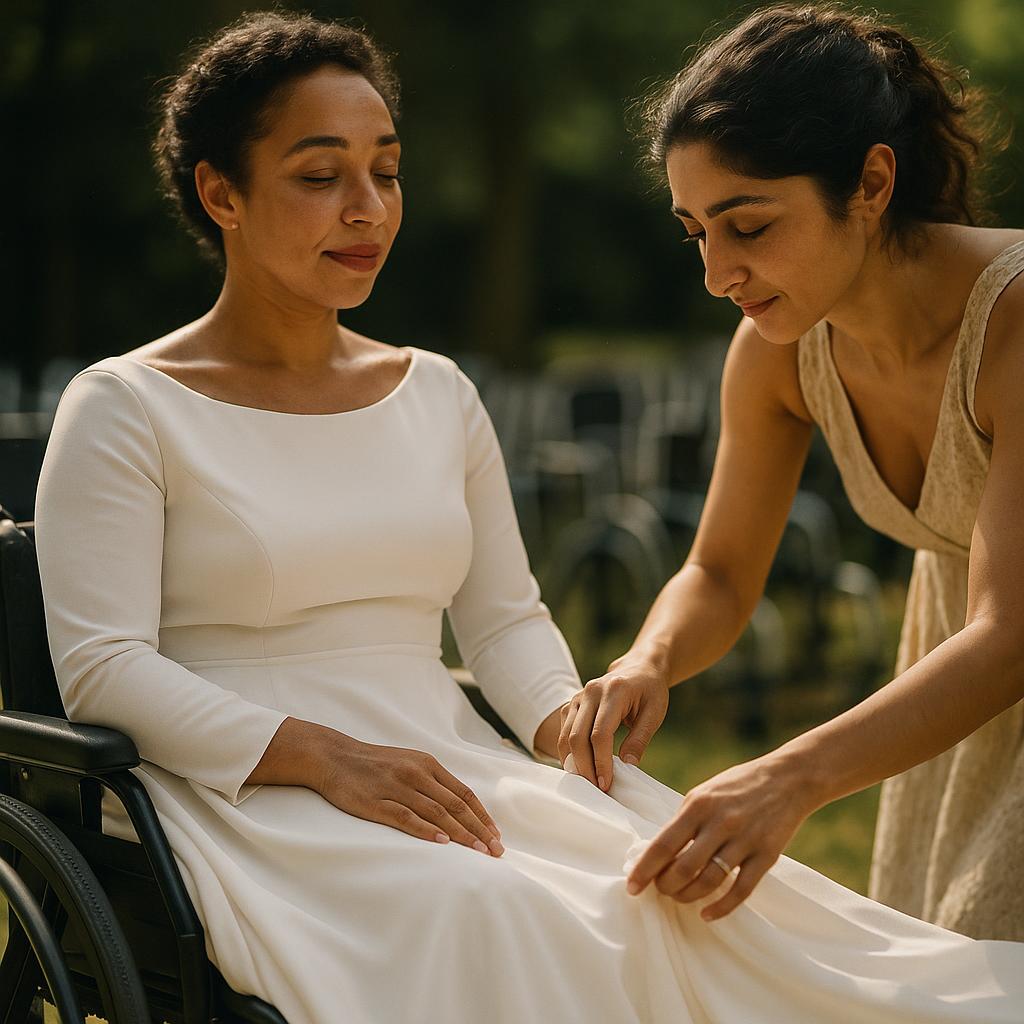 Image by RM AI
KEEP ON READING
The Sailor Who Survived a Doomed Expedition
Jewitt, John Rodgers, 1783-1821 Alsop, Richard, 1761-1815 on WikimediaMost survival…
By Cameron Dick Dec 4, 2025
Meet The Woman Who Caused A King to Become A…
Wallis Simpson is one of the most debated figures in…
By Rob Shapiro Dec 4, 2025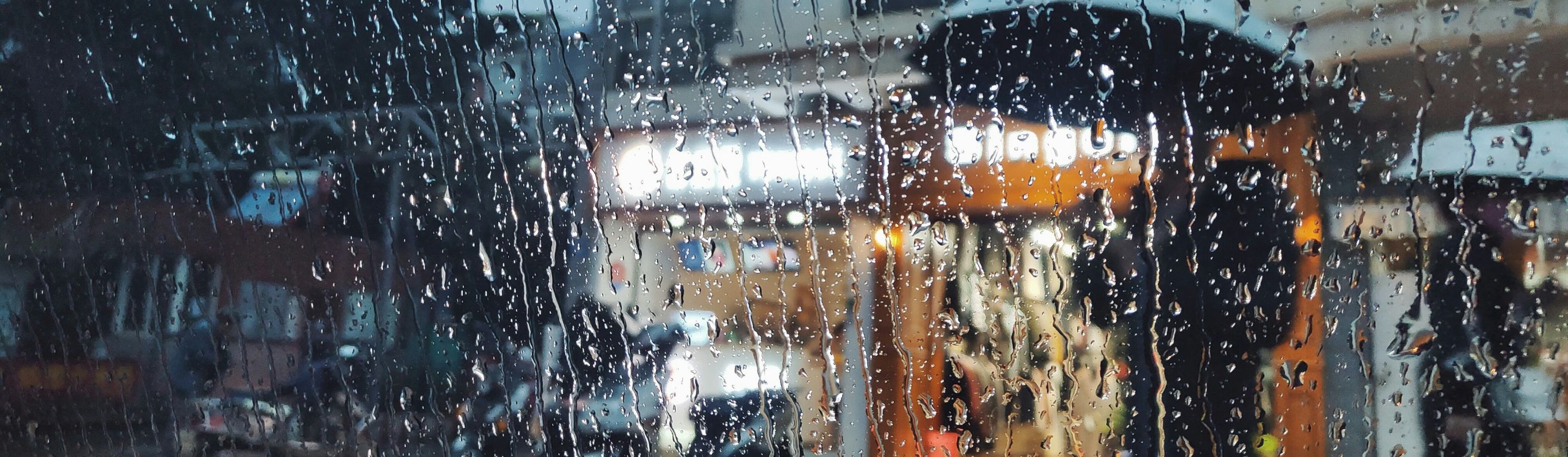
Pulling Your Leg: Popular Idioms with Strange—and Often Dark—Origins
Yaroslav Shuraev on PexelsHave you ever wondered why we say…
By Christy Chan Dec 3, 2025
How Artificial Intelligence Is Revolutionizing Archaeology
Santabiblia on WikimediaFor most people, the image that comes to…
By Emilie Richardson-Dupuis Dec 3, 2025
20 Trailblazing Women Of The Renaissance
Move Over, Ninja Turtles!. When most people think of the…
By Ashley Bast Dec 3, 2025
20 Unluckiest People in History
When Luck Took an Indefinite Holiday. Some people get dealt…
By Cameron Dick Dec 3, 2025