

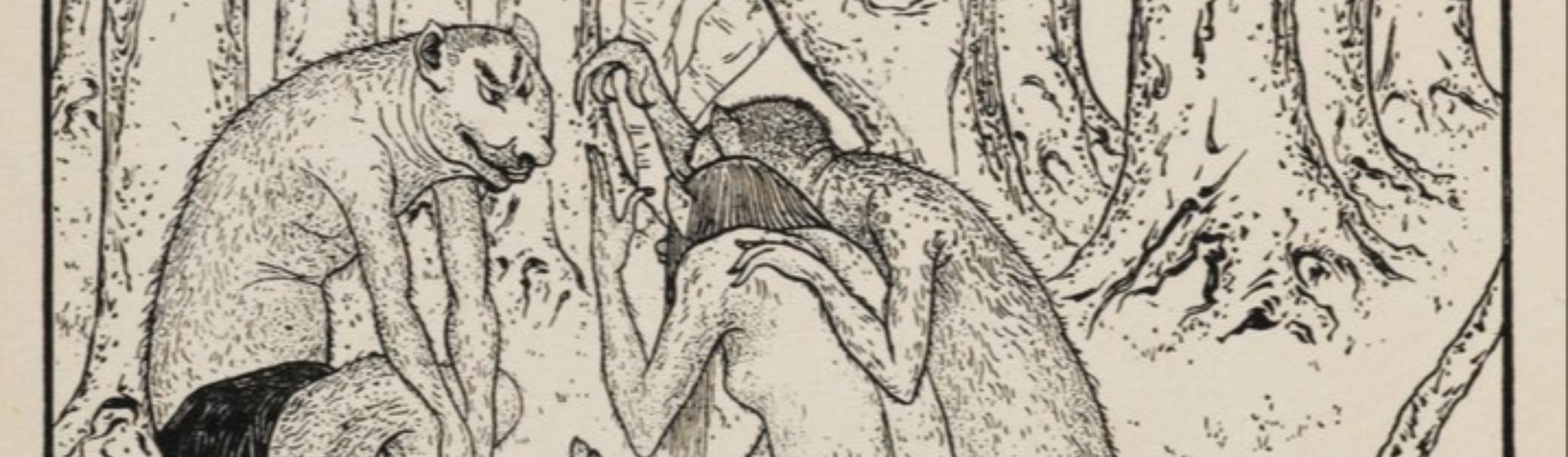
Why The Island Of Dr. Moreau Is Actually A Really Good Novel
 Unknown authorUnknown author on Wikimedia
If you’re a sci-fi fan or a university English student, you’ve probably come across this book once or twice in your life. The Island of Dr. Moreau is a 1896 novel that was written by H.G. Wells. Often considered one of his best-known books, The Island of Dr. Moreau is the earliest example of the “uplift” motif found in the science fiction genre.
Wikipedia defines the uplift motif as “the intervention in the evolution of species of low-intelligence or even non-sapient species to increase their intelligence.” The term was popularized by author David Brin, who created a series called Uplift in the 1980s.
This motif has been used throughout the decades. The Planet of the Apes, 2001: A Space Odyssey, Trancendence, and Mass Effect are all examples of how this motif can be used in media.
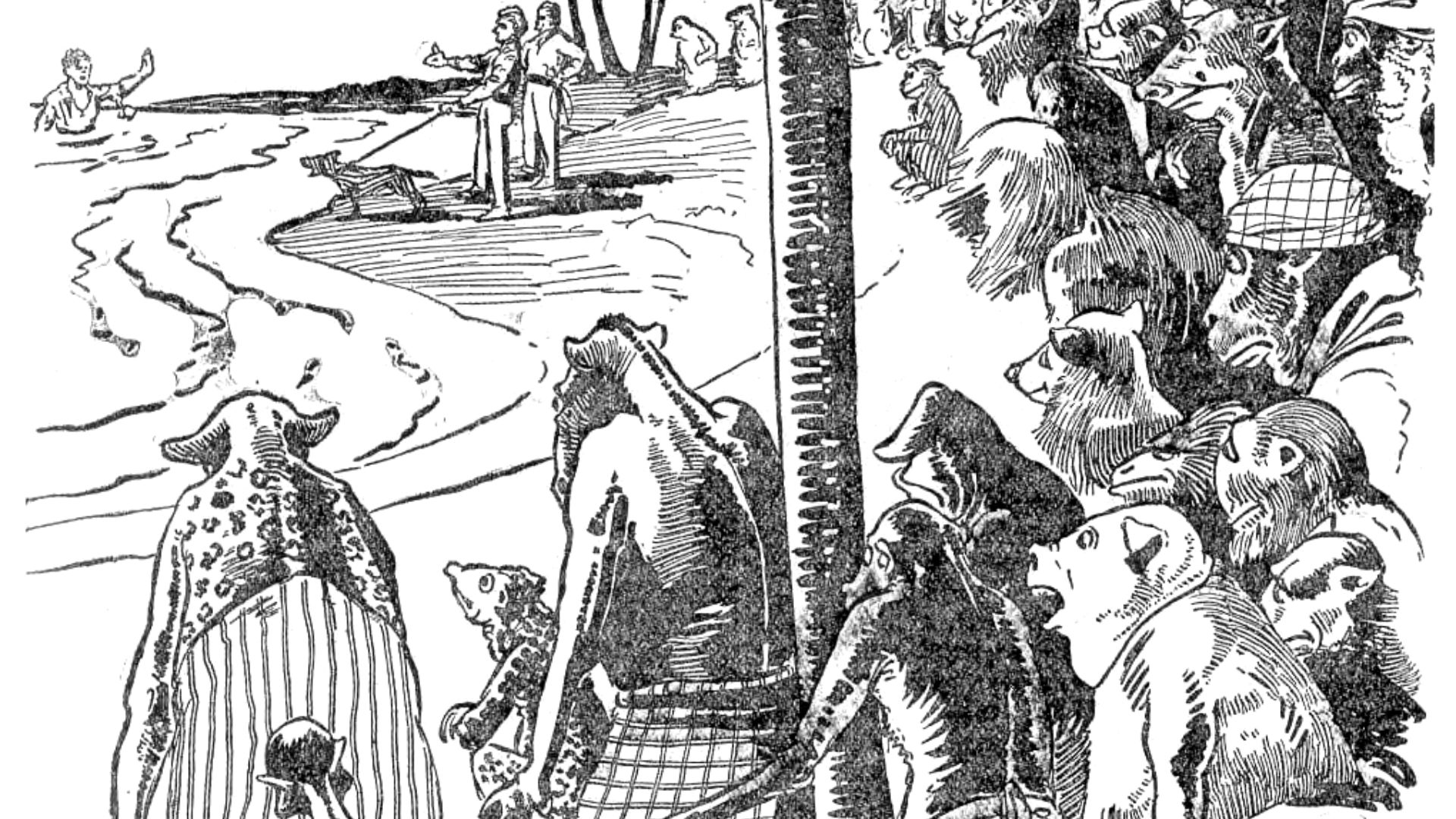
The Island of Dr. Moreau follows a scientist named Edward Prendick, who finds himself on a boat full of animals after he is shipwrecked in the Pacific Ocean. This mysterious boat eventually docks on a lone island owned by one Dr. Moreau, a physiologist who was ousted from the English medical sphere due to his gruesome experiments in vivisection.
Prendick comes across several animal-human hybrids during his time on the island. Believing that Dr. Moreau is turning humans into animals, he attempts to flee as he thinks himself to be the next victim.
However, the story soon reveals that Moreau is actually attempting to turn animals into humans through his vivisection experiments. Believing that while he is getting closer, Moreau explains that the subjects keep reverting to their natural ways, despite Moreau instating “laws” against this behavior in an attempt to make them more human.
We won’t share the ending of the book, in case you do want to give it a read, but what we can do is talk about why this particular novel is so fascinating.
Despite it being almost 130 years old, The Island of Dr. Moreau is one of the few examples of a gritty, thought-provoking novel that involves “humanizing” animals through scientific means. Sure, we have plenty of media involving humans that turn into animals, or more satirical or fantasy-based media about animals turning into humans, but there are very few novels that replicate what this novel achieved.
Aside from creating a well-used sect of the sci-fi genre, the book has scientific, literary, and cultural significance. For one, it’s clearly a commentary on Darwin’s theory of evolution. Wells pulls from Darwin’s ideas of how thin the line is between humanity and animality, and how fragile the concept of civilization and social hierarchy truly is.
Furthermore, the novel has widely been perceived as a thought experiment on the moral and ethical conundrums of unrestrained educational pursuits in the name of scientific progress—something also explored in the theory of evolution. Today, we can pull parallels from this work of fiction to modern biotechnology and how human arrogance has shifted our minds to believe that what we’re doing is just and necessary, even if we’re negatively impacting other species.
From a literary standpoint, the novel explores themes of human nature, identity, civilization, isolation, trauma, sanity, and the harmful effects of pushing groups to engage in unnatural mannerisms or ideals.
While not the sole idea of this novel, The Island of Dr. Moreau begs the question: at what point are we, as humans, considered the “savages” or of “low intelligence” for perpetrating these ideals?
KEEP ON READING

20 Weirdest Historical Objects in Museums
Check Out the Pickled Heart of a Saint. Museums carry…
By Rob Shapiro Oct 1, 2025
20 Scariest Missing Persons Cases in History
Eerie Disappearances. There's something uniquely unsettling about a person who…
By Christy Chan May 1, 2026
20 Greatest Ancient Athletes In History
Ancient Olympics. Long before modern stadiums and multimillion-dollar endorsements, athletes…
By Sara Springsteen May 1, 2026
10 Phenomenal Mythical Creatures & 10 That Are Just Plain…
Legends Both Majestic And Peculiar. Do you ever wonder why…
By Chase Wexler Oct 1, 2025
10 Presidents Who Never Served In The Military & 10…
Commanders And Civilians In Office. Power can rise from very…
By David Davidovic Sep 1, 2025
20 Wars That Could Have Ended Much Sooner Than They…
Wars That Lasted Far Too Long. Wars are often remembered…
By David Davidovic Sep 1, 2025