

My Brother's Tuesday Morning 'Errands' Were Hiding Something Far Worse Than I Imagined
My Brother's Tuesday Morning 'Errands' Were Hiding Something Far Worse Than I Imagined
The Tuesday Morning Routine
It's the fourth Tuesday in a row now, and I'm standing at my parents' kitchen window with a cup of coffee going cold in my hand, watching Mark's car ease into the driveway at exactly nine-fifteen. Same silver sedan. Same unhurried pull to the curb. He doesn't rush. He never rushes on Tuesdays. I notice things like that — the consistency of it, the way it has quietly become a fixture in the week without anyone announcing it. I'm not sure when I started tracking it, honestly. At some point it just registered: Tuesday, nine-fifteen, Mark. He steps out looking relaxed, checks his phone once, and heads toward the front door like a man who knows exactly where he's going and why. There's nothing alarming about any of it. A younger brother showing up to help his aging parents — that's a good thing. I know it's a good thing. I set my coffee down on the counter and watch him knock twice before letting himself in with his key, and I think about how a routine, once you notice it, has a weight to it that's hard to shake.
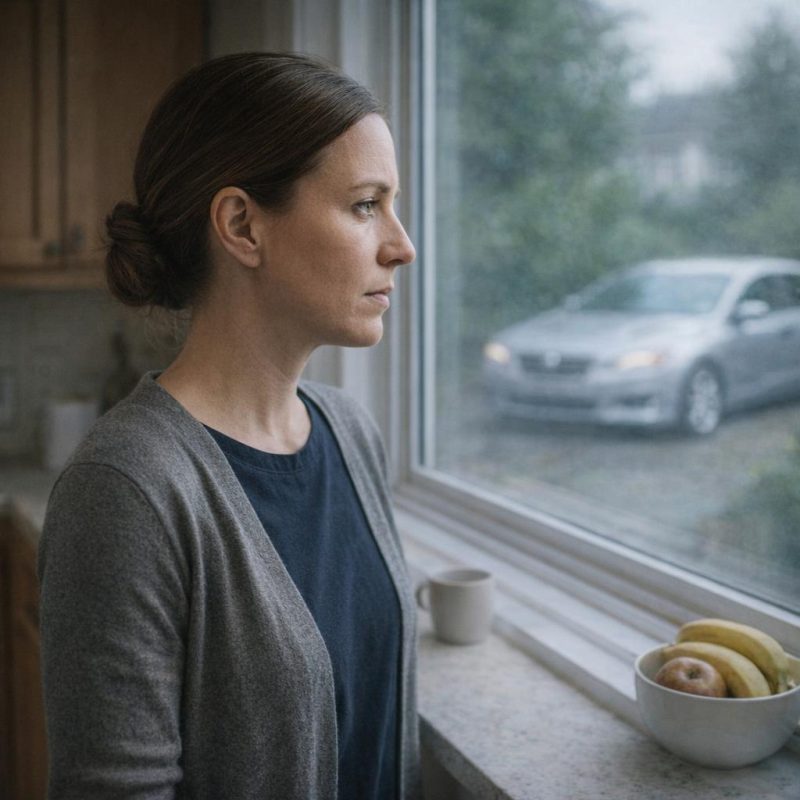 Image by RM AI
The Helpful Son
I call Mark on a Wednesday evening, keeping my voice easy and casual, and tell him I've been thinking I should pitch in more with Mom and Dad. He thanks me right away — warm, genuine-sounding — and says he appreciates it, but he's really got it handled. I tell him I could take every other Tuesday, give him a break. There's a small pause before he answers. He says he actually enjoys it, that it gets him out of the apartment and gives him a reason to structure his week. That makes sense. I tell him it makes sense. I say maybe I could just come along one week, ride along, see how it all works. His voice shifts — not dramatically, nothing I could point to and say that's it, that's the thing — but the warmth pulls back just slightly, like a door closing an inch. He says their parents have a system now and adding someone new to the mix tends to throw them off. He says it kindly. He says it like he's protecting them. I say okay and we talk for another minute about nothing in particular, but I'm still thinking about that small shift in his voice when I hang up.
 Image by RM AI
Pickup at the House
I stop by on a Tuesday morning without calling ahead, telling myself I just want to see them. Mom answers the door in her good cardigan, the blue one she saves for outings, and she smiles at me with that warm, slightly unfocused look she gets when she's not quite sure what day it is. Mark is already inside, moving through the living room with easy familiarity, picking up Dad's jacket from the armchair and holding it open. Dad stands and lets Mark help him into it, nodding along to something Mark is saying in a low, cheerful voice. I ask where they're headed and Mark says errands, maybe the pharmacy, some paperwork. Mom nods agreeably. I look at Dad and ask if he's looking forward to getting out, and he says yes, sure, with the kind of automatic agreement that doesn't quite reach his eyes. I ask what kind of paperwork and Mark says just the usual stuff, nothing complicated, and steers them both gently toward the door. Neither of them adds anything. Mom pats my arm on the way out and says they won't be long. I watch them go from the doorway, and what stays with me is the blankness that moved across Dad's face the moment Mark said the word paperwork.
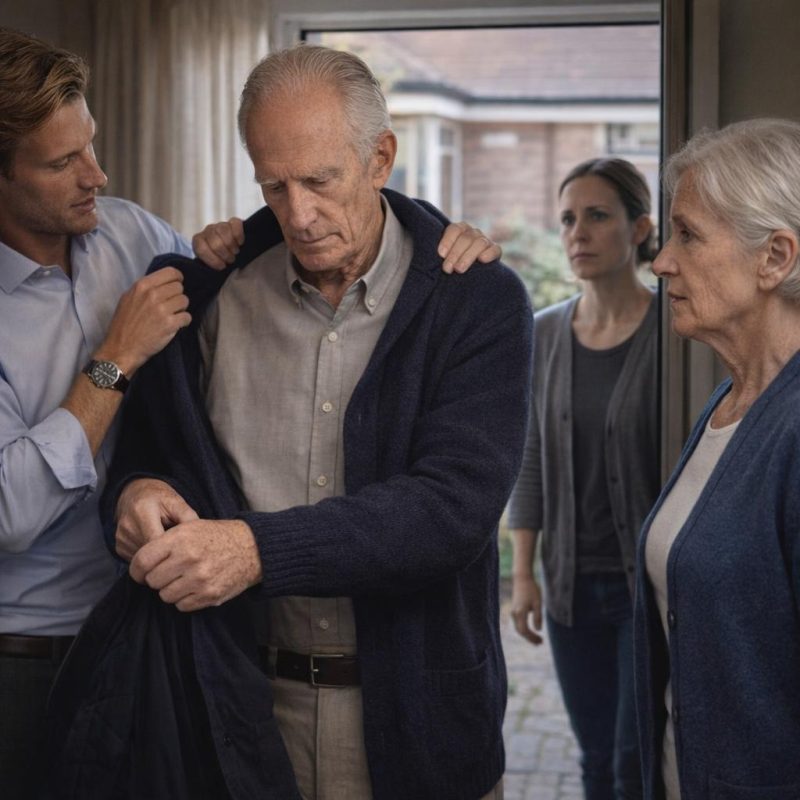 Image by RM AI
The Bankruptcy Year
Two years ago, Mark filed for bankruptcy. I remember sitting at my own kitchen table reading his text about it, that flat, matter-of-fact message that somehow made it worse. It wasn't the first time he'd been in serious financial trouble, but it was the most formal version of it — the one with court dates and paperwork and a lawyer he couldn't really afford. Before that, there had been the loans. Small ones at first, fifty here, a hundred there, always with a specific reason attached. Then larger ones, from our parents, always framed as temporary. Mom and Dad never said no to him. They never really knew how to. I remember the conversation I had with Mark after everything settled — he sat across from me at a diner and told me he'd learned his lesson, that he understood now what mattered, that he was going to be different. He looked tired and sincere and I wanted to believe him. He seemed more stable these past several months, steadier than I'd seen him in years. I told myself the Tuesday visits were proof of that — a son showing up, being present, doing the unglamorous work of helping aging parents navigate their week. I still want that to be the whole story. I hold onto the memory of his voice in that diner, telling me he had finally turned things around.
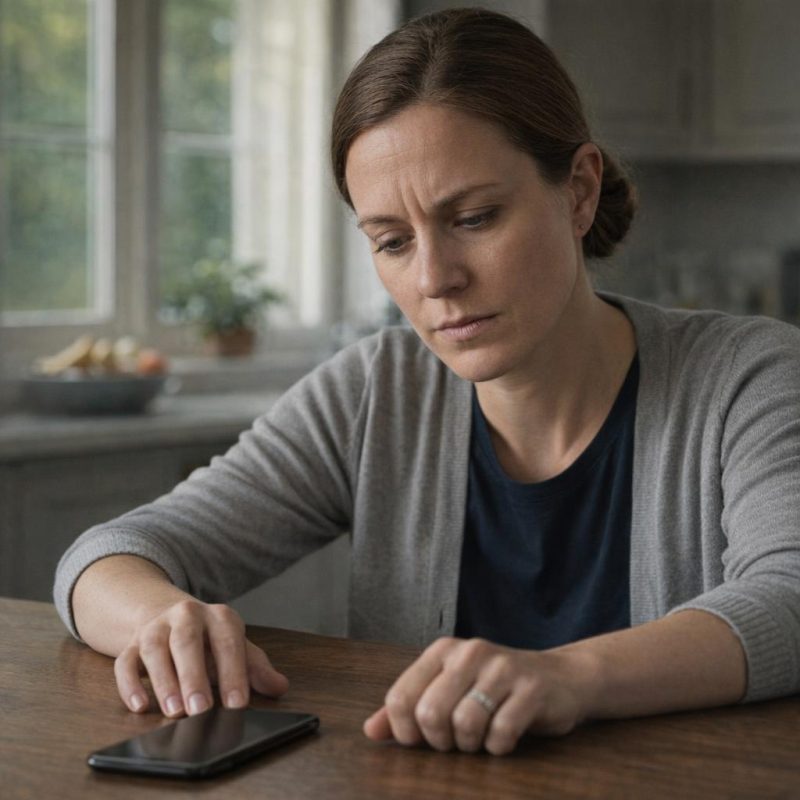 Image by RM AI
The Deflection
I call Mark on a Thursday afternoon and ask him directly — what exactly do they do on those Tuesday mornings? He doesn't miss a beat. He says it varies: groceries sometimes, the pharmacy when they need refills, occasionally the bank to handle whatever comes up. I ask why it's always Tuesday and always him, and he laughs a little, easy and unhurried, and says he has Tuesdays off and he likes spending that time with them. It's a good answer. It sounds like a good answer. I ask if there's anything specific they've been dealing with lately, any paperwork or accounts he's been helping them manage, and he says nothing out of the ordinary, just the usual stuff older people accumulate. I'm about to ask a follow-up when I hear a faint buzz on his end. There's a half-second pause — small enough that I almost miss it — and then his whole rhythm changes. He says he has to go, something just came up, he'll talk to me later. The call ends before I can respond.
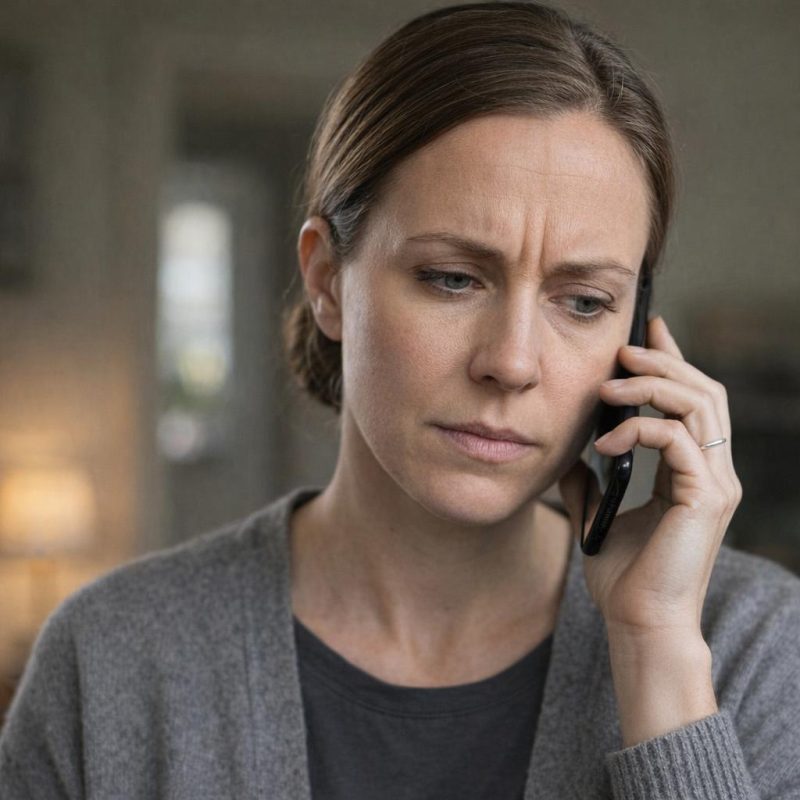 Image by RM AI
Paperwork They Cannot Explain
I visit my parents on a Thursday afternoon, just the three of us, and I keep the conversation light at first — how they're sleeping, whether they need anything from the store. Then I ask, gently, what they usually do on Tuesdays with Mark. Mom brightens a little and says they go out, that it's nice to get out of the house. I ask if they do anything in particular and she thinks for a moment and says sometimes they sign paperwork. I ask what kind of paperwork and she looks at Dad, and Dad starts to say something about the bank, then trails off mid-sentence, his eyes going to the middle distance. I ask if they know what they're signing when they go, and Mom nods and says Mark explains it to them. I ask if they understand it before they sign and she pauses, her brow creasing slightly, and says Mark says it's fine. I look at Dad and he's nodding along without adding anything. I ask Mom if she can remember what the last thing she signed was, and she reaches for it — I can see her reaching for it — and her hand, resting on the arm of the chair, begins to tremble faintly as the memory refuses to come.
 Image by RM AI
The Paranoia Question
I sit at my kitchen table after dinner with a notepad I haven't written anything on and go through what I actually know. Mark comes every Tuesday. My parents mention paperwork. Mom can't remember what she signed. Mark deflected when I asked to come along. That's it. That's the full list. I write it out and then I sit back and look at it and think about how easily it could all be nothing. Mark has always been better with our parents in some ways — more patient, more present in the day-to-day. Maybe the paperwork is exactly what it sounds like: insurance forms, prescription management, the ordinary bureaucratic weight of getting older. Maybe I'm the one with the problem here, the older sister who has spent so many years bracing for Mark to fail that I can't recognize it when he's actually doing something right. I think about the bankruptcy, the loans, the diner conversation, and I wonder if I'm just dragging old evidence into a situation that doesn't need it. I have no proof of anything. I know that. But I also know that the feeling sitting in my chest right now isn't nothing, and I've learned — slowly, over years — that I owe it to myself to look before I decide I was wrong. I pick up the notepad and write one line at the bottom: see it yourself.
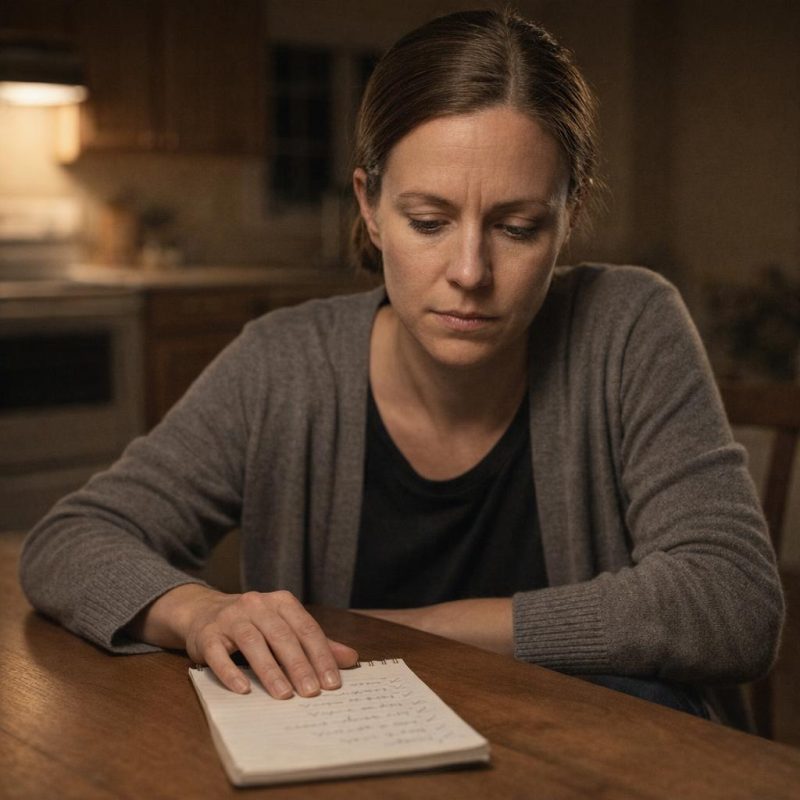 Image by RM AI
The Refused Offer
I call Mark on Sunday evening and keep my voice warm and easy, the way you do when you're trying not to sound like you're asking what you're actually asking. I tell him I'd love to come along on Tuesday, that I miss spending time with Mom and Dad and it would be good to be there. He says that's really not necessary, that he has everything covered. I tell him I know he does, that I'm not trying to take over, I just want to be present. He's quiet for a moment and then he says our parents get confused when the routine changes, that it unsettles them, that consistency is important at their stage. I ask if he's sure and he says he's sure. I ask if maybe just this once would be okay and he says he'll let me know if he ever needs backup, but right now the system is working and he doesn't want to disrupt it. The call ends politely, the way his calls always end — no raised voices, no obvious friction, just a door closing quietly in my face. I set the phone down on the counter. The silence that followed his last sentence — our parents prefer the routine they have — sits in the room with me long after the call is over.
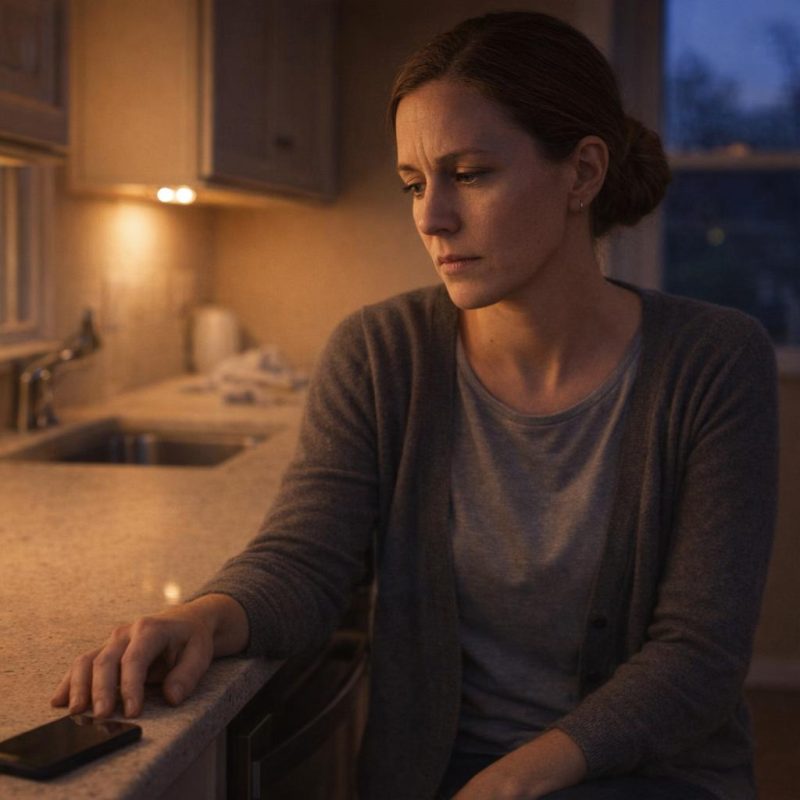 Image by RM AI
Dad's Confusion
I stop by my parents' house on Monday afternoon, telling myself it's just a regular visit. Mom is napping, so it's just Dad and me at the kitchen table with two cups of tea he insists on making himself, moving slowly between the counter and the stove with that careful dignity he's held onto. I ask him how his week has been, and he smiles and says fine, just fine. I ask if he's been getting out much. He nods and says Mark takes him places, that it's good to get out of the house. I keep my voice easy and ask where they've been going. He thinks for a moment, his eyes drifting toward the window. He mentions the pharmacy once, maybe the hardware store. I ask, as gently as I can, whether they've been to the bank at all. He looks at me and something shifts in his expression — not alarm, just the particular blankness that comes when he's reaching for something he can't quite find. He says he thinks Mark helped him with something there. I ask what kind of thing, and he shakes his head slowly, turning his mug in both hands. He says he thinks they went to the bank last week, but he isn't sure.
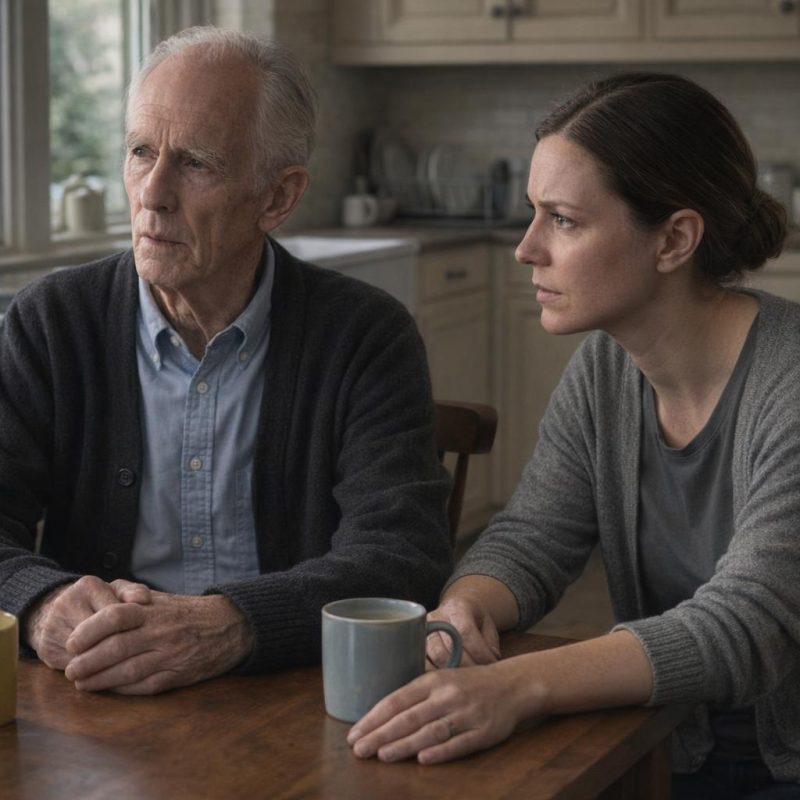 Image by RM AI
The Decision to Follow
I drive home and sit at my kitchen table for a long time without turning on any lights. The Tuesday pattern has been going on for months — I know that much. Mark deflecting my questions. Dad unable to remember what they did or where they went. The pharmacy, the hardware store, maybe the bank. Maybe. That word keeps snagging on something. I go over the reasonable explanations one more time: Mark is helping with errands, Dad forgets the details because that's what happens now, there's nothing unusual about a son taking his aging parents to run errands. I want that to be enough. It almost is. But there's the way Mark's voice went careful on the phone when I asked to come along. There's the way Dad turned his mug in his hands and couldn't finish the sentence. I'm not certain of anything. I know that. I could be reading too much into the ordinary friction of a family trying to manage something hard. But I can't keep sitting with the unease and doing nothing with it. Next Tuesday, I decide, I'll follow them. I won't confront anyone. I'll just watch. The decision settles into the room around me, quiet and a little heavy.
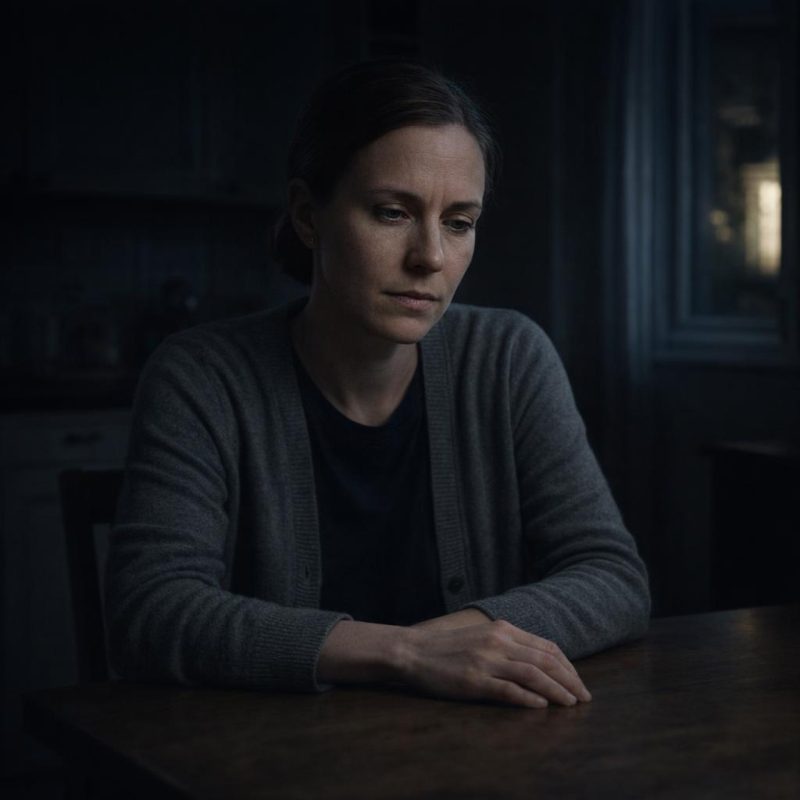 Image by RM AI
Preparation
I set my alarm for six-fifteen on Tuesday, which is earlier than I need to be anywhere, but I want time to think clearly before I move. I drive to my parents' street and park half a block down, angled so I can see their driveway in my side mirror without being obvious about it. I've chosen a spot between two other parked cars, which helps. I check the time on my phone: seven forty-eight. Mark usually arrives around eight-thirty, based on what Dad has mentioned. I have forty minutes to sit here and second-guess myself, which I do thoroughly. I rehearse what I'll say if Mark spots me — I was just in the neighborhood, I was going to stop in and say hello. It sounds thin even in my head. I think about calling the whole thing off. I think about how I'll feel if I follow them and find nothing unusual, just my brother running errands with our parents like he's always said. I think about how I'll feel if I don't follow them and keep wondering. I check the time again: seven fifty-three. The street is quiet. A neighbor walks a dog past my car without glancing in. Then Mark's car turns onto the street, and my hands tighten on the steering wheel.
 Image by RM AI
The Bank
I give Mark's car a full block before I pull out and follow. He drives carefully, no sudden turns, and it's easy enough to stay back without losing him. My parents' neighborhood gives way to the main road, and after about eight minutes he pulls into the parking lot of the branch bank on Clement Street — the one closest to their house. I find a spot across the street and watch through my windshield. Mark gets out first, then walks around to help Mom, then Dad, one at a time, steady and patient. From this distance he looks like exactly what he says he is: a good son helping his parents with their errands. They cross the parking lot together, Mark slightly ahead, holding the door. I wait two minutes, then get out of my car and cross the street. Inside, the bank is quiet — mid-morning on a Tuesday, only a few other customers. I move toward the brochure rack near the entrance and pick something up without reading it. I scan the teller windows along the right wall. Mark has his hand lightly on Dad's shoulder, guiding them both toward the far right window, and they walk directly to it without pausing at the line queue or waiting to be called.
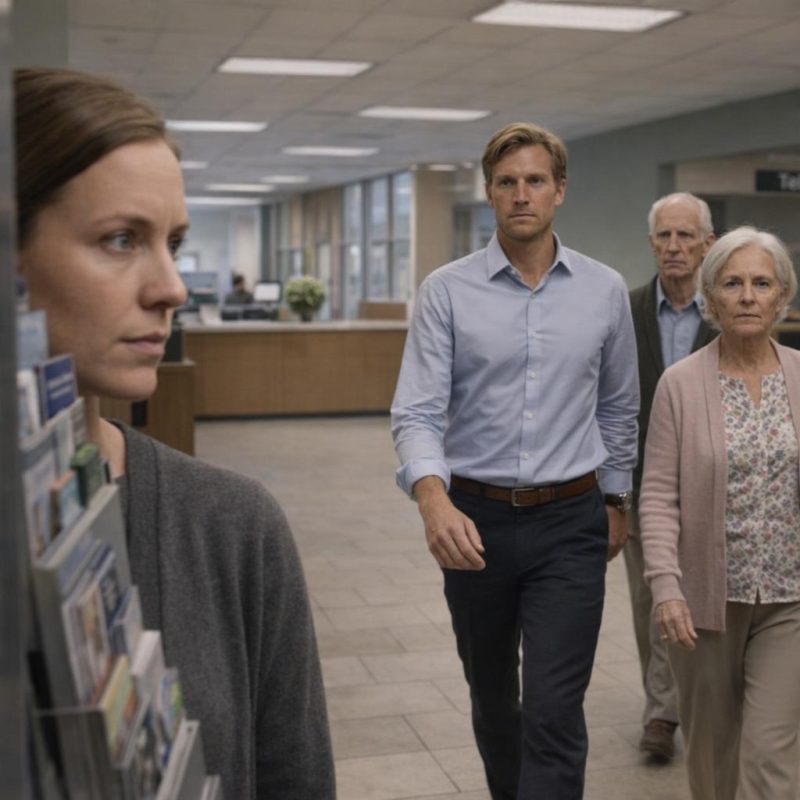 Image by RM AI
The Teller Window
I stay near the brochure rack and keep my eyes moving so I don't look like I'm staring at one spot. The bank is calm — soft keyboard sounds, a phone ringing somewhere in the back, the low murmur of other transactions. At the far right window, a young woman with neat blonde hair pulled into a low bun leans forward slightly as Mark approaches. She's put-together — pressed blouse, careful posture, a steady smile that doesn't waver. I watch her greet them. She doesn't look past Mark toward the other customers or check the queue. She just focuses on the three of them, and something about that focused attention makes my stomach tighten. Mark leans close to Mom and says something near her ear, then straightens. Dad stands slightly behind them both, his hands at his sides, looking around the lobby the way he does when he's in an unfamiliar place even if he's been there before. I pretend to read the brochure in my hand. I'm close enough to see the general shape of the interaction but too far to hear anything clearly. I stay where I am, watching from across the lobby, the distance between us feeling both necessary and unbearable.
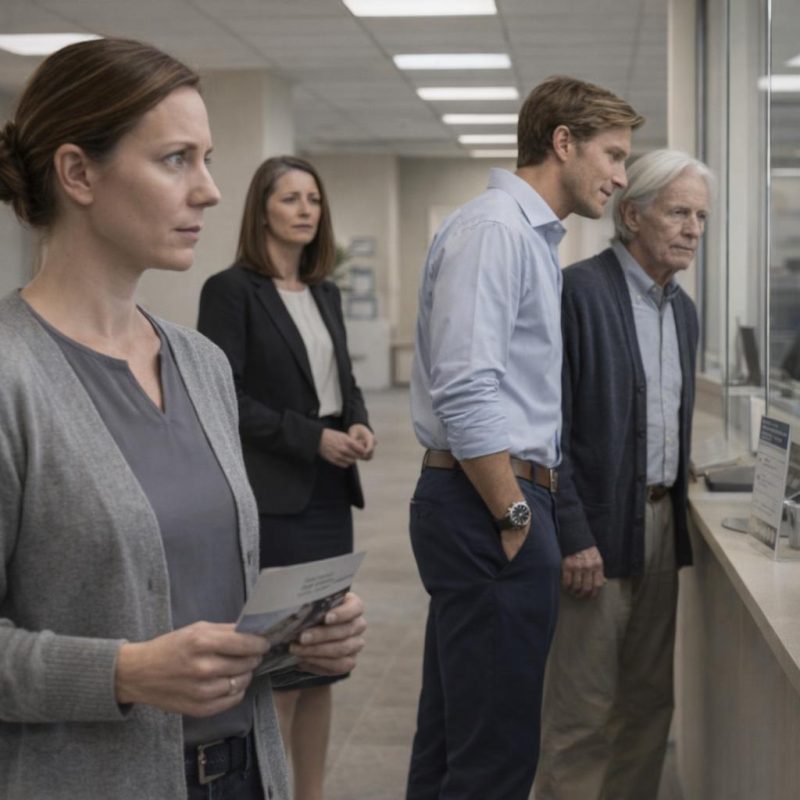 Image by RM AI
The Transaction
The teller smiles at something Mark says and nods, then slides a small stack of papers across the counter. The movement is smooth and unhurried. Mark turns to Mom first, positioning himself slightly between her and the counter, and I watch him guide her hand toward the papers. Mom looks down at them and then up at Mark, and he says something to her — I can't hear it, but she nods and looks back at the papers. Then the same with Dad, the same patient guiding gesture, the same brief exchange. The teller watches this without intervening, her expression pleasant and still. She doesn't lean forward to address my parents directly. She doesn't turn the papers to face them or point to specific lines. She types something on her keyboard, glances at the screen, types again. The whole thing takes maybe four minutes. I've been in banks with elderly relatives before — I've watched tellers slow down, repeat themselves, make sure the person in front of them understands what they're signing. This doesn't look like that. It looks efficient. It moves quickly. I stand at the brochure rack with a pamphlet about home equity loans in my hand, and the smooth efficiency of what I'm watching settles over me like something cold.
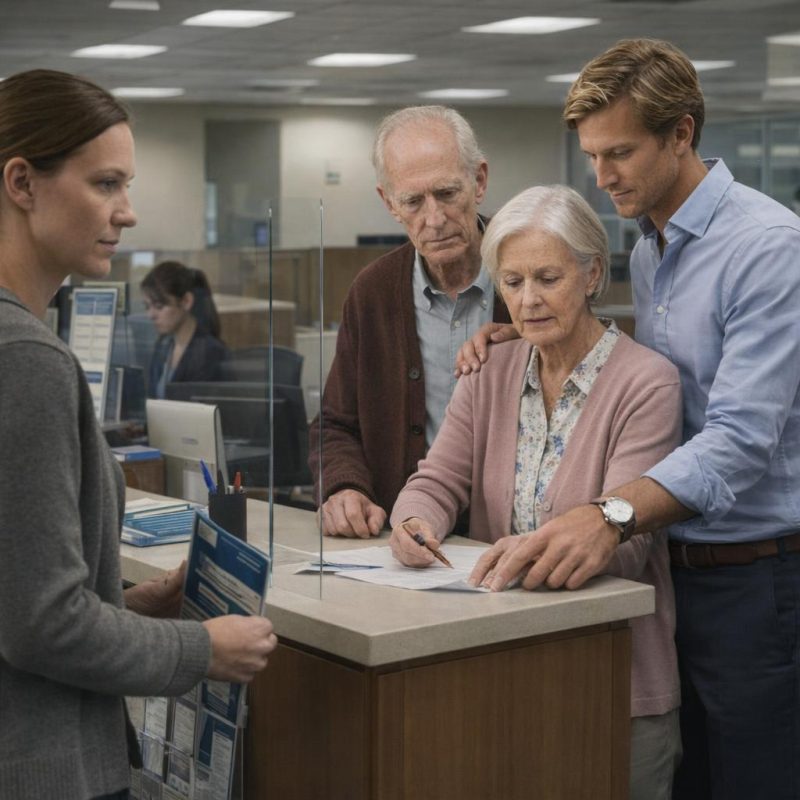 Image by RM AI
The Missing Verification
I've been in this branch twice before with my parents, back when I still handled some of their banking myself. Both times, the teller — different people, different windows — asked my parents questions directly. Not just pleasantries. Specific questions: do you understand what this transaction is for, is anyone pressuring you to make this withdrawal, can you confirm this is your decision. Standard language, the kind that gets recited because it's policy. I remember thinking it was a little formal, a little scripted, but I understood why it existed. I watch the teller at the far right window and I don't see any of that. She makes eye contact with Mark more than with either of my parents. She doesn't address Dad directly at any point that I can observe. Mom says something once and the teller smiles and responds, but briefly, and then her attention goes back to the screen. When the transaction wraps up, the teller gathers the processed paperwork into a neat stack. She doesn't hand it to Mom. She doesn't hand it to Dad. She slides it across the counter directly to Mark.
 Image by RM AI
Family Loyalty
I leave the bank before they do and sit in my car with the engine off. The street outside is ordinary — a woman pushing a stroller, a delivery truck idling at the corner. I think about Mark at eleven years old, the time he covered for me when I broke Mom's favorite lamp and didn't want to admit it. I think about the year he lost his job and called me crying at two in the morning, and I stayed on the phone with him until he calmed down. He is my younger brother. I know him. I've known him his whole life. I go through the innocent explanations again, the way you press on a bruise to see if it still hurts. Maybe the teller was new to elderly client protocols. Maybe Mark handles the paperwork because our parents ask him to. Maybe I'm reading intention into efficiency. I sit with each possibility and wait to feel reassured. I don't. What I watched in that bank didn't feel like a son helping his parents manage their finances. The paperwork went to Mark. My parents signed things they couldn't explain to me yesterday. I look at my hands on the steering wheel. Something was wrong in there.
 Image by RM AI
The Need for More Evidence
I give myself two days before I go back. Not to do anything — just to watch. I tell myself I need a baseline, something to measure Tuesday against. I pick a Thursday afternoon, late enough that the lunch rush has cleared, and I take a seat in the small waiting area near the door with a deposit slip I don't need and my phone open to nothing. The branch is quiet. A ceiling fan turns slowly overhead. I watch the tellers work through their line, and I pay attention the way I used to pay attention in meetings when I knew something was wrong but couldn't name it yet. An older woman at the second window counts out bills while the teller waits, unhurried. A man in a cardigan asks something I can't hear and the teller leans forward, nods, types something, then asks him to confirm it back. I watch the line move through two more customers, each exchange following the same careful rhythm. Then the teller two windows down calls the next person forward — an elderly man with a cane — and I hear her ask him to state his full name, his address, and confirm the amount he's requesting before she touches a single form.
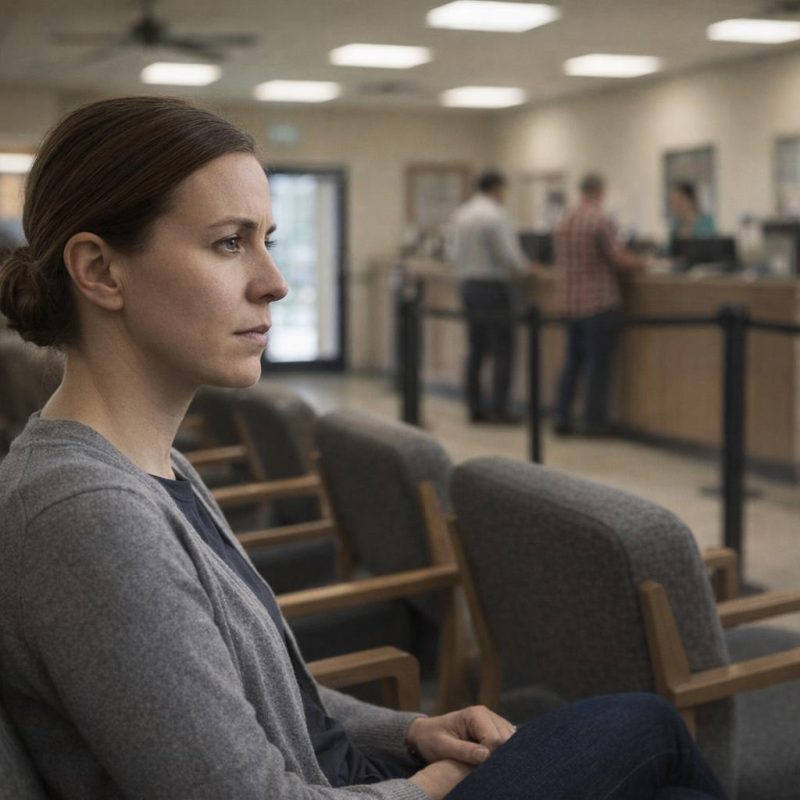 Image by RM AI
The Standard Procedures
I stay for just over an hour. I watch four separate tellers handle elderly clients, and the pattern holds every single time. They ask questions. They wait for answers. They speak directly to the client, not to whoever came with them. One teller asks a woman to repeat back the withdrawal amount twice before processing it. Another pauses mid-transaction to check a second form of ID even though the first one looked fine. The pace is slow in a way that feels intentional — not inefficient, just careful. Like the procedure exists for a reason and everyone in the building knows it. I write nothing down. I don't need to. I sit there with my unused deposit slip folded in my lap and I let the hour accumulate. By the time I stand up to leave, I'm not angry exactly. I'm something quieter than that. Because what I watched on Tuesday didn't look like any of this. There were no repeated questions, no direct address to my parents, no pause to confirm understanding. The papers moved fast and my parents' hands moved with them. I walk out into the afternoon and the contrast sits in my chest like something I can't put down.
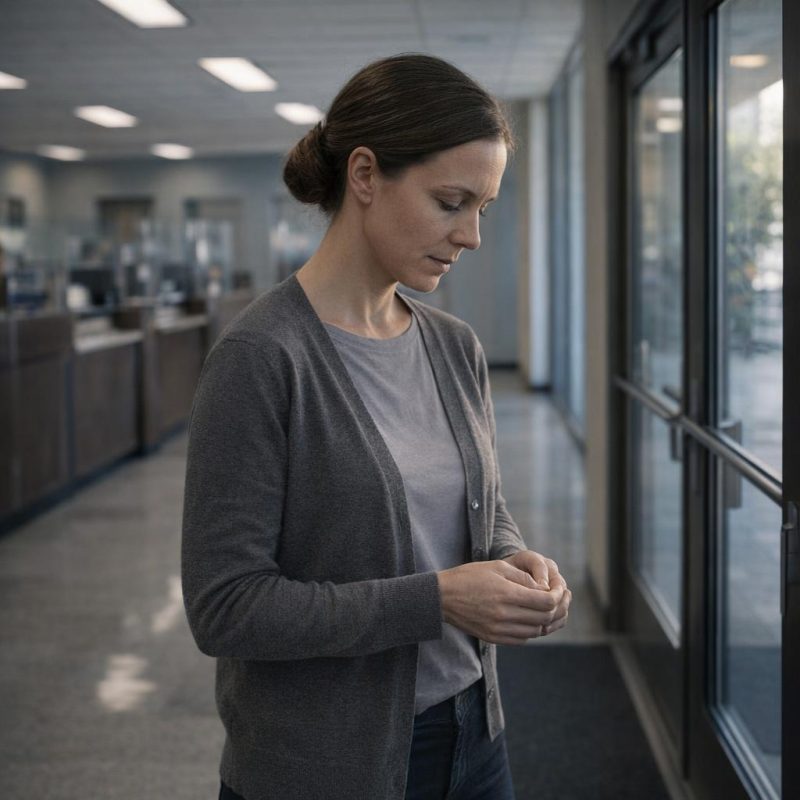 Image by RM AI
The Second Tuesday
The following Tuesday I'm in the parking lot twenty minutes before Mark usually arrives. I sit low in my seat with my sunglasses on and the radio off. His car pulls in at 10:14. I watch him get out first, then open the back door for Mom, then walk around to help Dad. He's patient with them, unhurried, one hand at Dad's elbow as they cross the lot. From a distance it looks like exactly what he says it is. I wait until they're through the door before I follow. Inside, I take a position near the brochure rack by the far wall, close enough to see the counter clearly. Mark steers them through the small crowd without hesitating, and I watch where he's heading before they get there. He already knows which window he wants. The blonde teller is at the same station as last week, third from the left. She looks up when they approach and something in her posture shifts — a small adjustment, a slight straightening — and then she smiles. My parents settle at the counter. Mark steps in close beside them. I stand near the wall and feel the same sick weight I carried out of here seven days ago settle back into place.
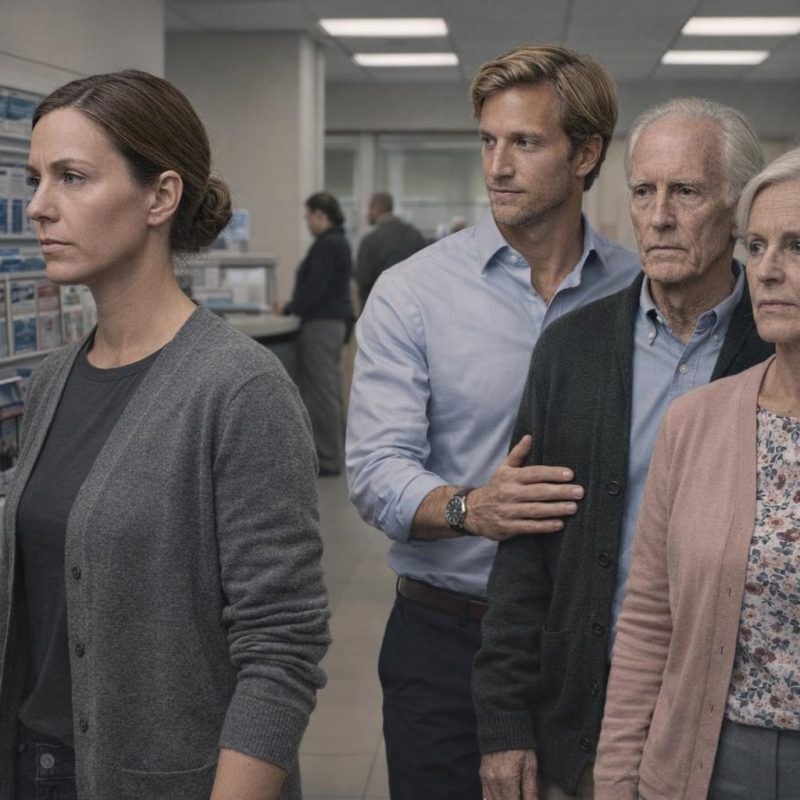 Image by RM AI
Guiding Their Hands
I move a few steps closer, keeping a display stand between me and the counter. Mark is talking, low and easy, and the teller is nodding. My parents stand slightly behind him, Mom with her purse held in both hands, Dad looking at the counter with the mild, patient expression he gets when he's waiting for someone to tell him what comes next. A form slides across the counter. Mark picks up the pen, says something to Mom, and then — I watch him close his hand over hers around the pen. Not a quick steadying touch. His hand wraps around hers and moves with it, guiding it across the paper in a slow arc. Mom doesn't pull back. She doesn't look down at what she's signing. She looks at Mark's face the whole time, the way she looks at him when she trusts him to handle something. Dad signs next, and Mark's hand is there again, fingers curling over Dad's, moving the pen for him in the same careful, practiced motion. The teller watches this happen and does not pause, does not ask a question, does not look up at the room. She processes the form the moment it comes back to her. I am standing ten feet away watching my younger brother guide my mother's hand across a document she cannot read.
 Image by RM AI
The Same Rushed Process
The transaction takes less than four minutes. I know because I check the time when it starts and again when the teller hands the papers back. There are no questions about what my parents understand. There is no moment where the teller speaks directly to Mom or Dad — her attention stays on Mark, following his lead, matching his pace. The papers come out, get signed, go back. A receipt prints. Mark folds it and tucks it into his jacket pocket rather than handing it to my parents. Mom says something and laughs softly at whatever Mark says in return. Dad nods. They look comfortable. They look like they're being taken care of. That's the part that stays with me as I watch them turn to leave — not the speed of it, not the missing questions, but how settled my parents seem, how much they trust the person standing next to them. I press back against the wall as they move toward the exit. Mark doesn't look around the room. He keeps one hand at Dad's back and walks them out. I stay where I am until the door closes behind them. The pattern has repeated, exact and unhurried, and the weight of that sits in me like something that has stopped moving.
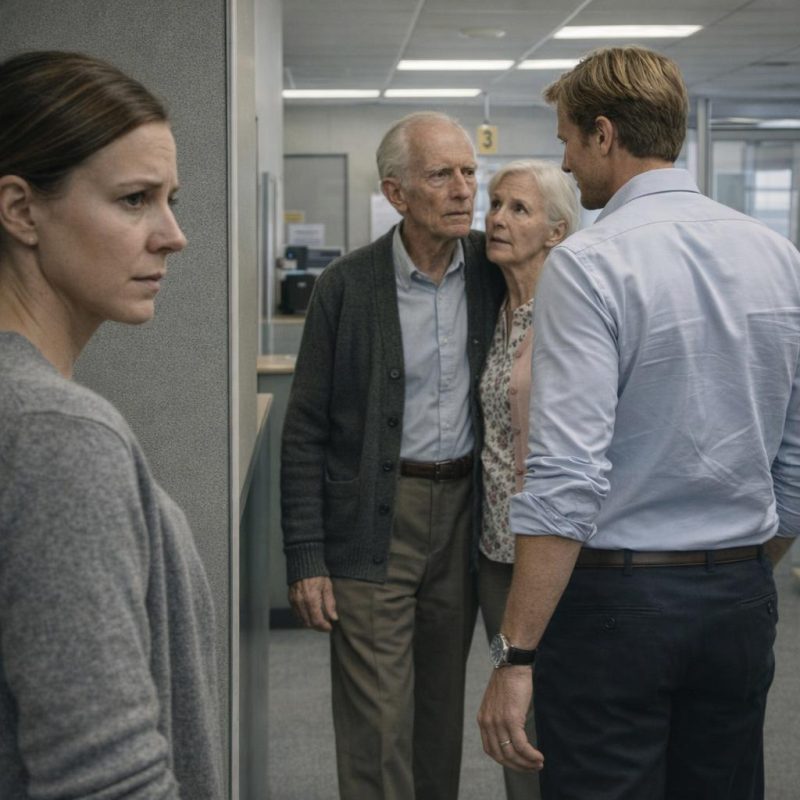 Image by RM AI
The Physical Manipulation
I think about leaving after the first signature. I don't. I stand near the display stand and I watch the whole thing. Mark positions himself between my parents at the counter, one shoulder angled toward the teller, and he works through the documents methodically. Dad goes first this time. Mark leans in, says something close to his ear, and then his hand comes down over Dad's on the pen — the same slow, guiding motion, the same arc across the page. Dad's eyes stay forward. He doesn't look at what he's signing. Then Mark shifts to Mom. Another form, another pen, another hand closing over hers. I count three documents total. Three separate signatures, each one guided, each one completed while my parents look at Mark's face instead of the paper in front of them. The teller moves through her side of the transaction without breaking rhythm. She doesn't ask my parents to confirm anything. She doesn't look at them the way the other tellers looked at their clients on Thursday. When the last form goes back across the counter, I feel something in me go very still. I have watched my younger brother move my parents' hands across three documents, and neither of them has looked down once.
 Image by RM AI
The Research Begins
That night I sit at my kitchen table with my laptop open and I search for elder financial abuse warning signs. I'm not sure what I expect to find — maybe something vague, maybe something that doesn't quite fit. What I find instead is specific. There are lists. Detailed ones, put together by adult protective services agencies and elder law organizations, and they read like someone has been watching the same Tuesday mornings I have. Family member accompanies elderly person to all financial transactions. Elderly person defers to companion rather than answering questions directly. Transactions completed quickly without standard verification. I read each item slowly. I go back and read them again. There's a section on physical manipulation tactics, and it describes a companion physically moving an elderly person's hand through a signature rather than allowing them to sign independently. The article notes this can indicate the signer does not understand or has not consented to the transaction. I sit back in my chair. I have watched this happen. I have watched it happen twice, across multiple documents, while a bank employee processed the forms without comment. I scroll down to the next section and the heading stops me cold: 'Indicators of possible bank employee involvement in elder financial exploitation.'
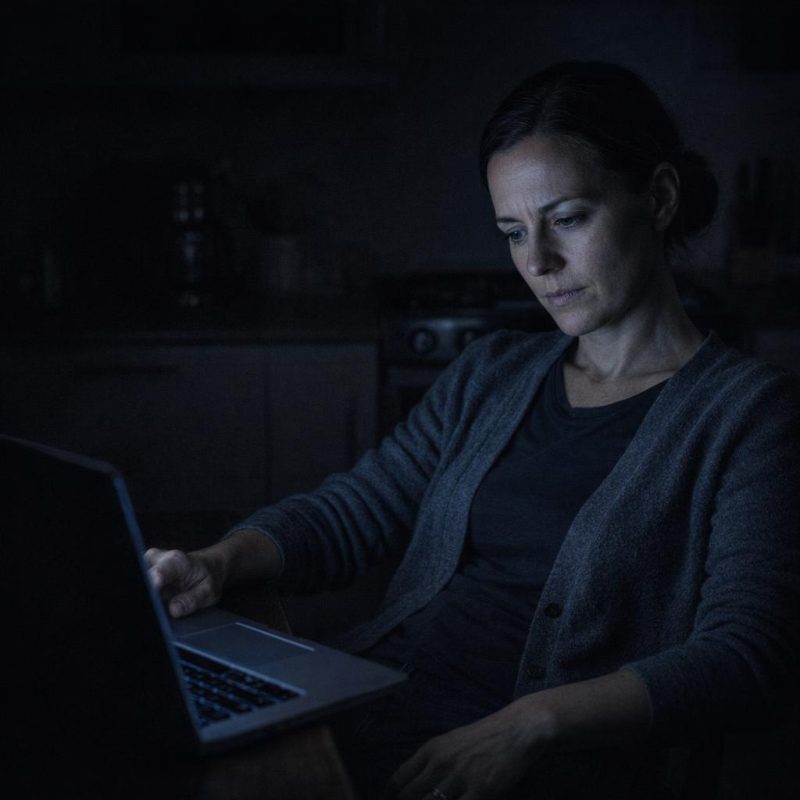 Image by RM AI
The Bank Statements
The next afternoon I drive to my parents' house and ask Mom where they keep their bank statements. She thinks about it for a moment, head tilted, genuinely trying. 'We keep them somewhere,' she says. 'In the office, I think. Or maybe the kitchen drawer.' The kitchen drawer has takeout menus and a broken flashlight. Dad shuffles in from the hallway and says there's a filing cabinet in the office, the gray one, he's pretty sure that's where they keep the important papers. I find it against the wall behind the desk — a two-drawer metal cabinet, gray, exactly where he said. I try the top drawer first. It doesn't open. I try the bottom. Same. I crouch down and look at the lock mechanism, a small keyhole centered between the two drawers, and I ask my parents if they know where the key is. Mom looks at Dad. Dad looks at the cabinet. 'Mark might know,' Dad says after a moment. 'He reorganized things in here a while back.' Mom nods like this is helpful. I stay crouched in front of the cabinet with my hand still on the drawer handle, and the lock sits there, small and certain, between me and whatever is inside.
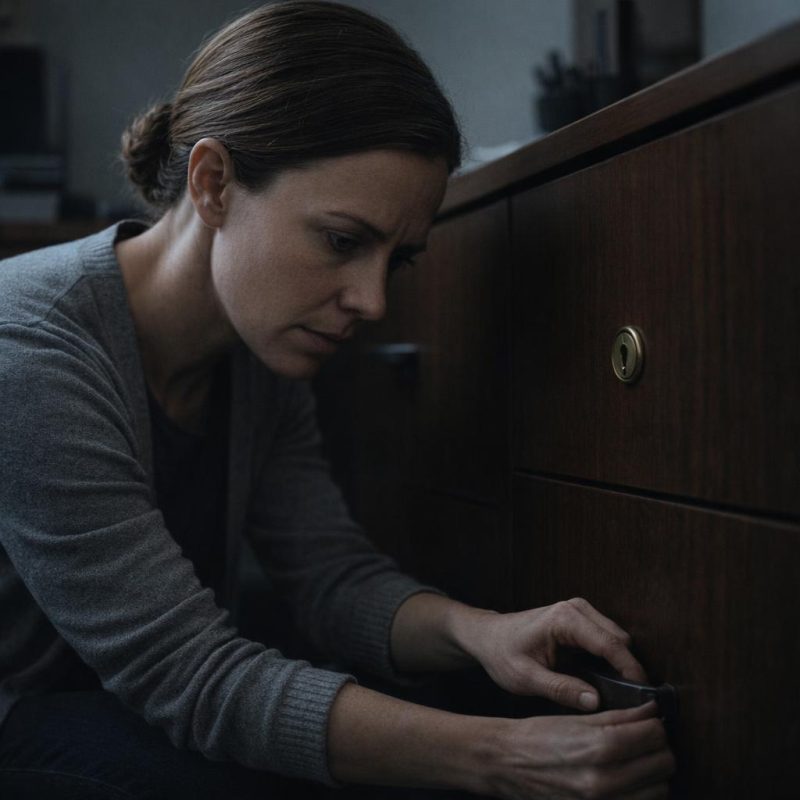 Image by RM AI
The Pattern of Withdrawals
I sit at my parents' kitchen table with Mom's phone and walk her through resetting the online banking password. She watches patiently, not entirely sure what we're doing, and Dad hovers in the doorway for a moment before shuffling back to his chair. Once I'm in, I navigate to the transaction history and set the filter back five months. The withdrawals start almost immediately — Tuesday mornings, almost every week, each one between two and four thousand dollars. I scroll slowly, counting. The amounts vary just enough that they don't look like a pattern at first glance, but they are. Same day of the week, same general range, same steady rhythm going back to early spring. I pull up the notes app on my own phone and start writing down each date and amount, my hand moving faster as the list grows. Some weeks there are two. A few months back there's a gap of three weeks, then it resumes like nothing happened. I add the column of numbers twice to make sure I haven't made an error. I haven't. The total sits there on my screen: over forty thousand dollars, gone.
 Image by RM AI
The Confrontation Considered
I sit with that number for a long time. Part of me wants to call Mark right now — just dial his number and ask him, flat out, where forty thousand dollars went. I can almost hear how it would go. He'd be calm. He'd have an explanation ready, something about helping with bills, something about Dad asking him to handle things. He'd mention how much time he's been putting in, how often he comes over, how I'm never around. And I wouldn't have anything solid enough to push back with. My word against his, and he's the one who's been showing up every Tuesday. I think about what it would actually take to stop this. Not a phone call. Not an argument at the kitchen table. Something with weight behind it, something that couldn't be talked around or dismissed. I need standing. Legal standing. Something that puts me in a position where my name means something on a document, not just in a family argument. I close the banking app and set the phone down. The anger is still there, but I let it settle underneath something quieter and more useful.
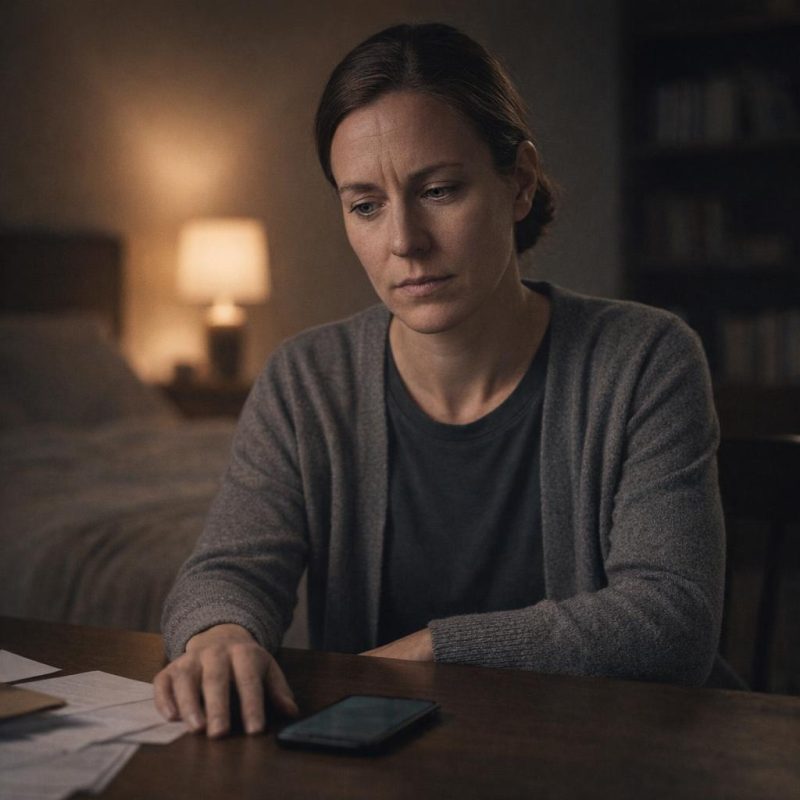 Image by RM AI
Power of Attorney
I spend the next evening going down a research rabbit hole I didn't expect to need. I start with guardianship, which turns out to be a court process — slow, expensive, and adversarial in ways that feel wrong for this situation. Conservatorship is similar. Then I find my way to durable power of attorney, and something shifts. A POA can grant a named agent full authority to manage financial accounts, halt transactions, and act on behalf of someone who can no longer fully manage their own affairs. It doesn't require a court order if the document is already in place. It just requires the document. I read through several legal resource pages, cross-referencing the language, making sure I understand what it actually allows. The more I read, the more one thought keeps surfacing: my parents are exactly the kind of people who would have done this properly, years ago, when they were still sharp enough to plan ahead. Dad was meticulous about paperwork. Mom always said they didn't want to be a burden. And then it comes back to me — a conversation at the dinner table, maybe eight or nine years ago, something about meeting with an attorney and getting their affairs in order.
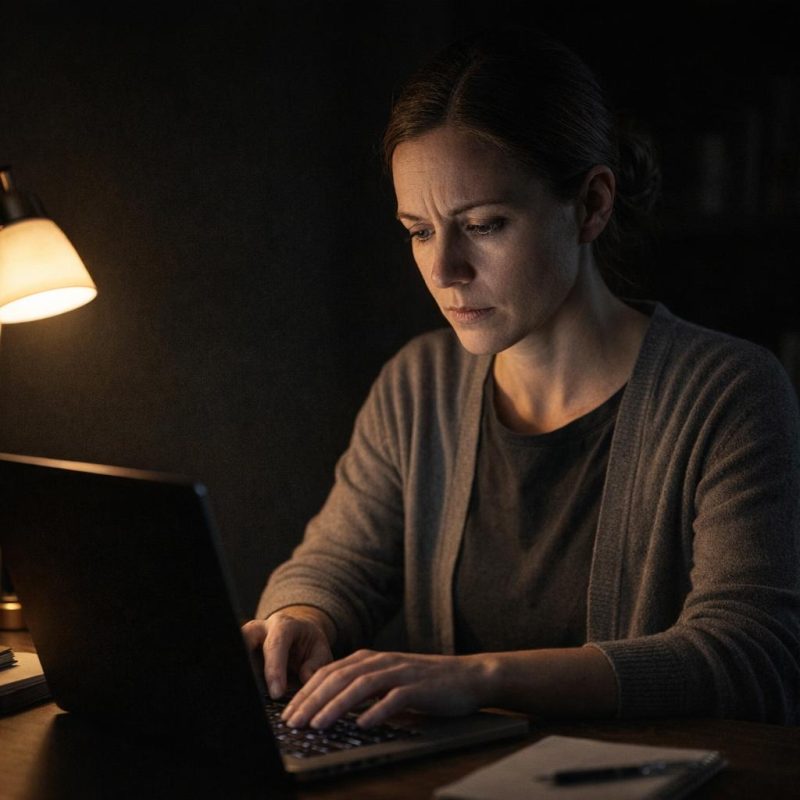 Image by RM AI
The Search
I drive over the next afternoon and tell my parents I want to tidy up the office a little. Mom seems pleased. Dad says that would be nice, that it's gotten a bit cluttered. I get them settled in the living room with the television on low — a nature documentary, something with birds — and I go to work. I start with the desk, pulling open each drawer carefully and going through the contents without disturbing the order too much. Old checkbooks. A stapler with no staples. A folder of appliance manuals for things they probably don't own anymore. I move to the cardboard file boxes stacked in the corner and work through those next, lifting folders and reading the tabs. Tax returns going back fifteen years. Insurance policies. A folder labeled 'Medical' with nothing recent in it. I find a manila envelope that makes my pulse jump, but it's just the deed to the house. I keep going, methodical, checking each label twice. From the living room I can hear the soft narration of the documentary and the occasional sound of my parents shifting in their chairs. The house holds its quiet around me while I search.
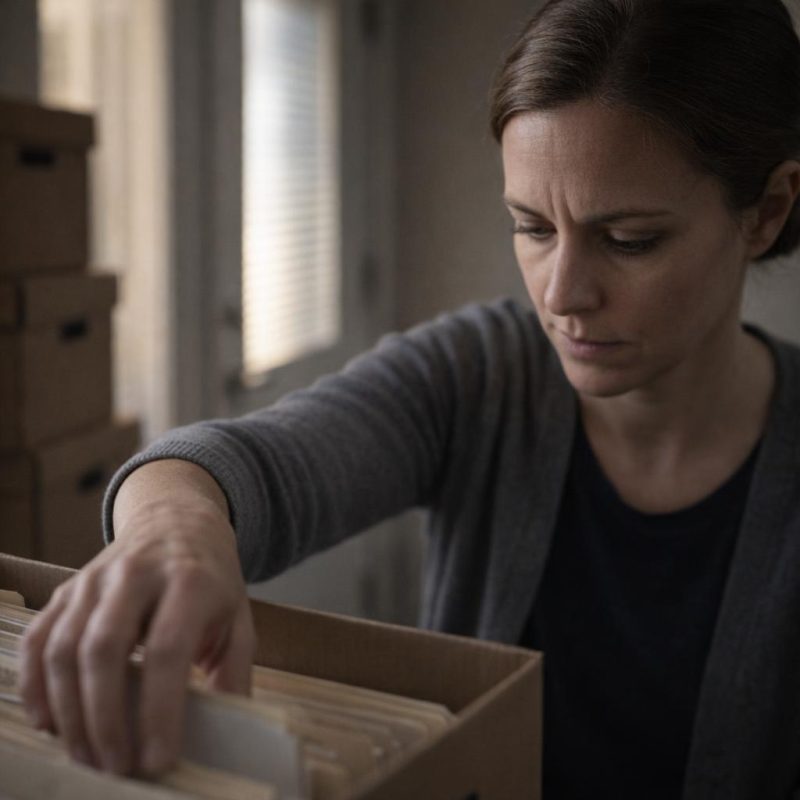 Image by RM AI
The Attorney's Name
I don't find the document itself, but tucked inside the back cover of an old address book on the desk shelf, I find a business card. The name on it is a local attorney, and below his name it says estate planning and elder law. The card is worn at the corners, the kind of worn that means it's been handled more than once. I take a photo of it on my phone, then carry it to the kitchen and dial the number. A receptionist answers, and I explain who I am and why I'm calling — that my parents are clients, that I'm trying to locate estate planning documents they had prepared some years ago. She puts me on hold. When she comes back, she asks me to hold again. The attorney himself gets on the line a few minutes later. He remembers my parents. He asks a few questions to confirm my identity and my relationship to them, and I answer carefully. Then he tells me they do have documents on file — a will, a healthcare directive, and a durable power of attorney. He can have a certified copy ready for me to pick up the following morning. I sit down at the kitchen table and let out a breath I didn't know I'd been holding.
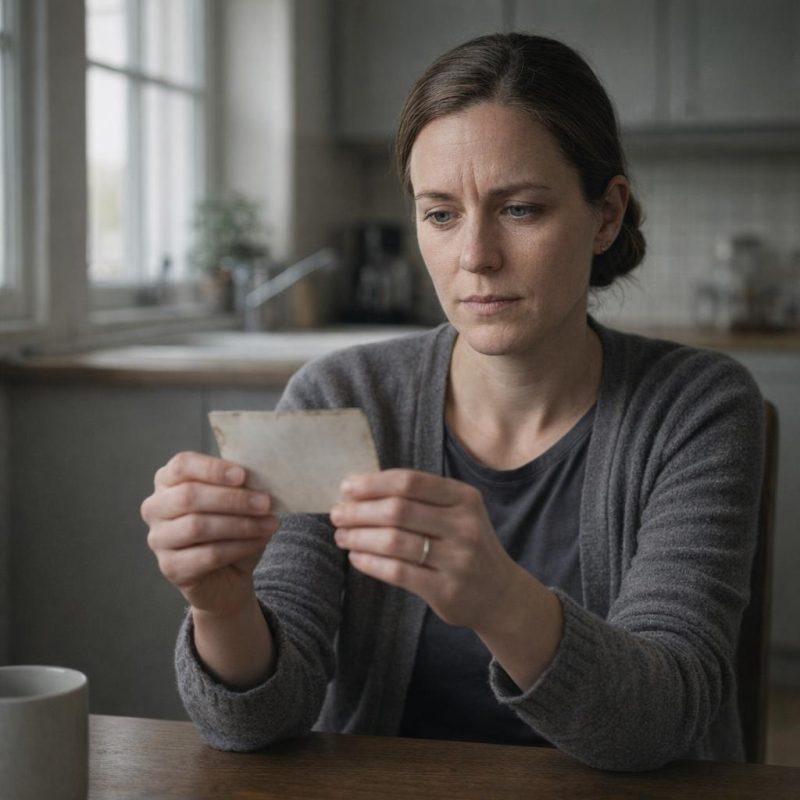 Image by RM AI
The Document in Hand
The attorney's office is quiet when I arrive — a small suite on the second floor of a building downtown, the kind of place that smells like old paper and carpet cleaner. The receptionist has the envelope ready. I sit in one of the waiting area chairs and open it before I even stand up to leave. The document is several pages, formal and dense, but I find what I need quickly. My name is listed as primary agent. The language is broad and explicit: authority to manage, access, and direct financial accounts; authority to halt, reverse, or restrict transactions on behalf of the principals. I read that section three times. When the attorney comes out to check on me, I ask him directly — if I bring this to a bank, can I use it to stop withdrawals that I believe are unauthorized? He looks at the document, then at me, and says yes. As primary agent under a durable POA, I have full legal authority to intervene in any financial transaction conducted in my parents' names. He says it plainly, without hesitation. I fold the document back into the envelope and hold it in both hands.
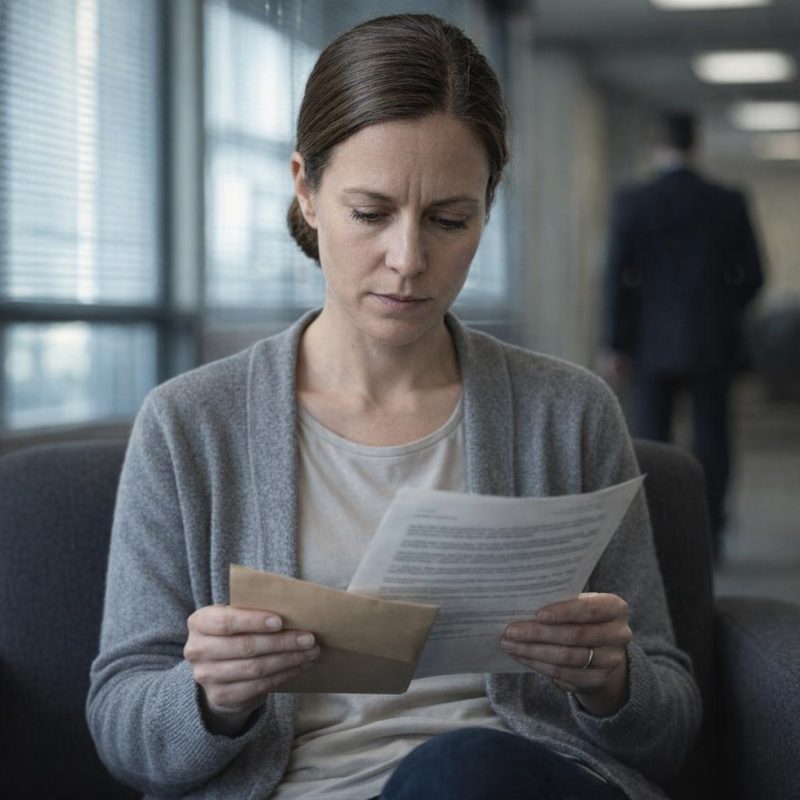 Image by RM AI
The Weight of Betrayal
I sit in my car in the parking lot outside the attorney's office for a long time. The envelope rests on the passenger seat. I don't start the engine. I think about Mark at ten years old, the way he used to follow me around the neighborhood on his bike, always a little behind, always trying to catch up. I think about the times I covered for him — the fender bender he didn't want to tell Dad about, the job he lost and didn't mention for two months, the loan I gave him six years ago that he paid back in pieces over three years without ever once saying thank you directly, just showing up with cash and leaving it on my counter. I defended him to people who wrote him off. I told myself he was trying, that he just needed more time, more patience, more room to find his footing. I look at the envelope on the seat beside me. Forty thousand dollars. Tuesday mornings. A locked filing cabinet and a father who says Mark reorganized things. Whatever I thought I understood about my younger brother, I'm sitting with the distance between that and this, and it doesn't close.
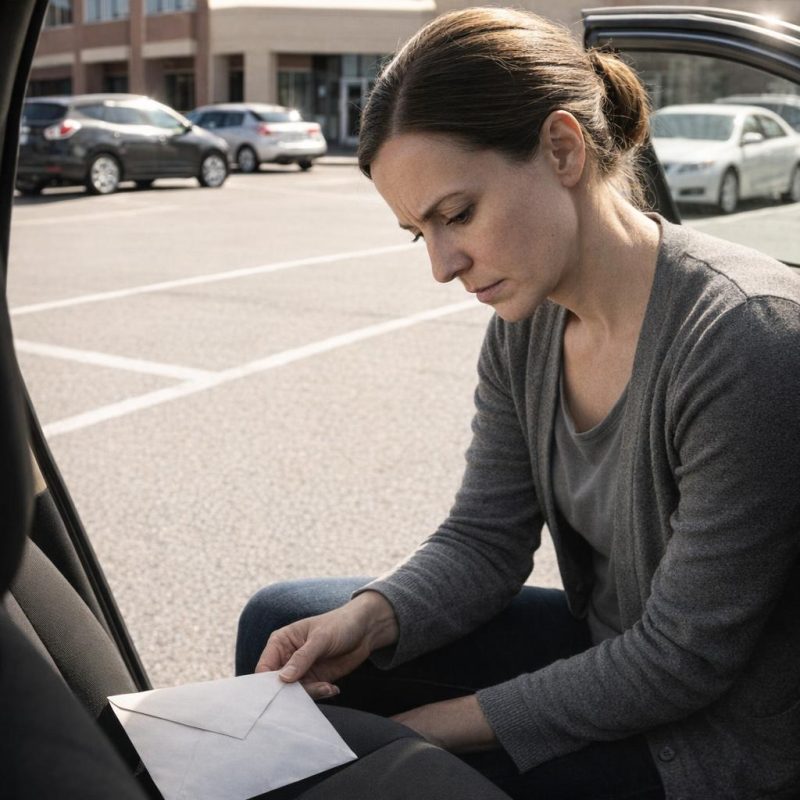 Image by RM AI
The Intervention Plan
By the time I drive home, I know what I'm going to do. I sit at my kitchen table with a notepad and work through it step by step. Tuesday mornings, usually between nine and eleven based on the transaction timestamps. I'll arrive at the bank before nine-thirty and ask to speak with the branch manager directly — not a teller, the manager. I'll have the POA document with me, along with printed copies of the transaction history I photographed from my parents' account. I'll explain the situation clearly and ask them to flag the account. I rehearse the words in my head, adjusting them, making them more precise. I think about what happens if Mark is already there when I arrive, and I work through that scenario too. I won't approach him in the lobby. I won't give him the chance to redirect the conversation or make a scene that puts me on the defensive. The manager's office, the document, the numbers — that's the sequence. I go over it until it feels solid. The only variable I can't fully control is timing, which is why I decide I won't move until the transaction is already in progress.
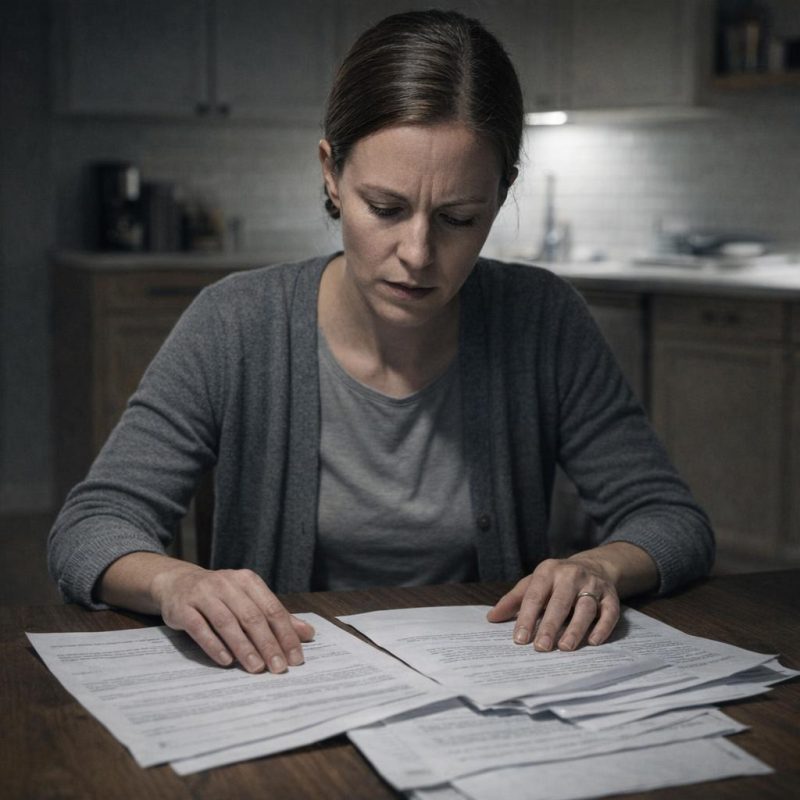 Image by RM AI
The Night Before
I spread the POA document flat on the kitchen table and read through it again, slowly, the way I did the first time Mr. Morrison handed it to me. The language is dense but the authority is clear — I have the legal standing to act on my parents' behalf. I write down three key points on a notepad: the transaction dates, the dollar amounts, and the specific language from the POA that covers financial decisions. I underline the third one twice. I set my alarm for six-fifteen, which gives me enough time to get to the bank before nine. I check it twice before I put my phone down. I turn off the kitchen light and lie down, but sleep doesn't come easily. I run through the sequence again in the dark — the manager's office, the documents, the numbers. I think about my dad's face when he talks about Mark helping out, how proud he sounds, how much he trusts him. I think about my mom nodding along, agreeing to things she probably doesn't fully follow anymore. I stare at the ceiling for a long time, and the house is very quiet around me.
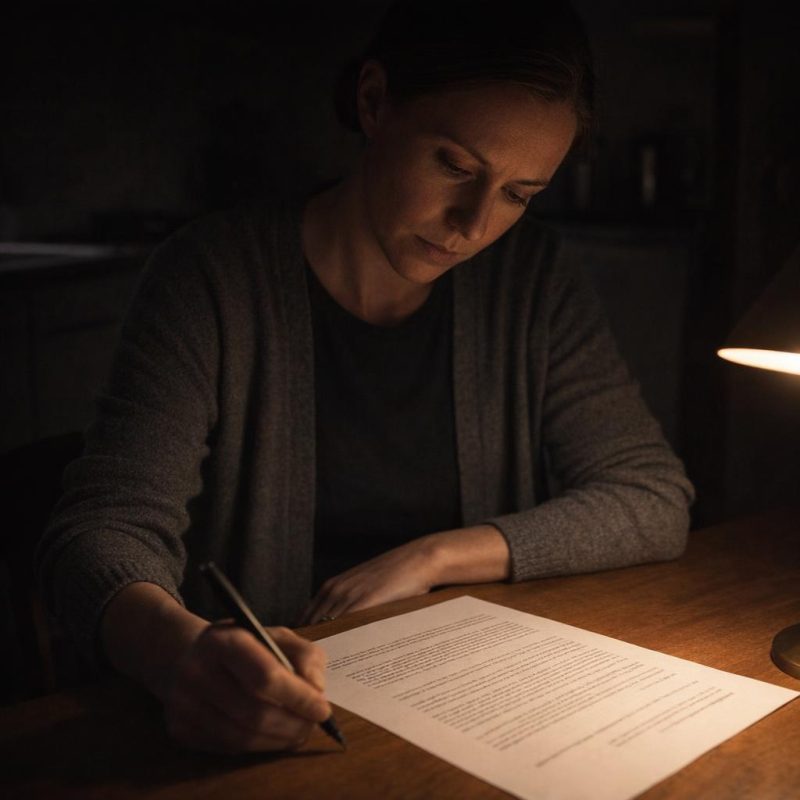 Image by RM AI
Watching the Teller
I get to the bank at eight fifty-five and take a seat near the far wall, angled so I have a clear view of the teller windows without being directly in anyone's line of sight. I have my folder with me — POA, printed statements, my notes — but I don't open it. Not yet. There are three tellers working the morning shift, and I watch the one closest to the entrance. Her name tag reads Sarah. She's in her late twenties, blonde hair pulled back in a low bun, corporate blazer, the kind of practiced smile that goes on and off like a light switch. She processes a deposit for an older man without looking up from her screen. She counts back change to a woman with a stroller, makes brief eye contact, says something that makes the woman nod. Every movement is efficient. Every interaction is brief and correct. She doesn't linger, doesn't chat beyond what's necessary, doesn't let anything slow the line. I watch her work through four customers in the time it takes me to finish my coffee. There's nothing unusual about her. She's just doing her job, and doing it well.
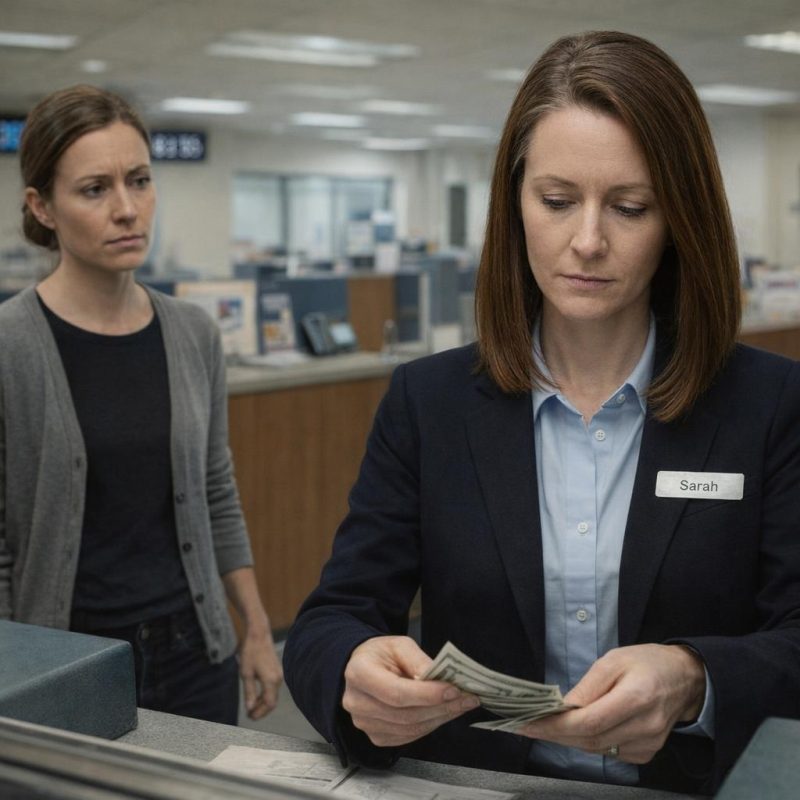 Image by RM AI
The Coordination
They come in just after nine-thirty — Mark first, holding the door, then my dad moving slowly with his cane, then my mom close behind him. I stay where I am, folder in my lap, and watch. Mark guides them toward Sarah's window with a hand at my dad's elbow, steering them like he's done it before. Sarah looks up before they reach the counter. Not at my dad, not at my mom. At Mark. It's a quick look, maybe half a second, but it's there — a flicker of recognition before her expression settles back into the professional smile she uses for everyone else. She greets my parents warmly, asks how they're doing, and my mom says fine, fine, the way she always does. Mark leans against the counter and says something low, and Sarah nods. I watch her pull up the account on her screen. She doesn't ask for ID. She doesn't ask my dad to confirm anything. She just starts typing. Mark glances toward the door, then back at the counter, and Sarah glances at him — just for a moment — before she turns to speak to my parents.
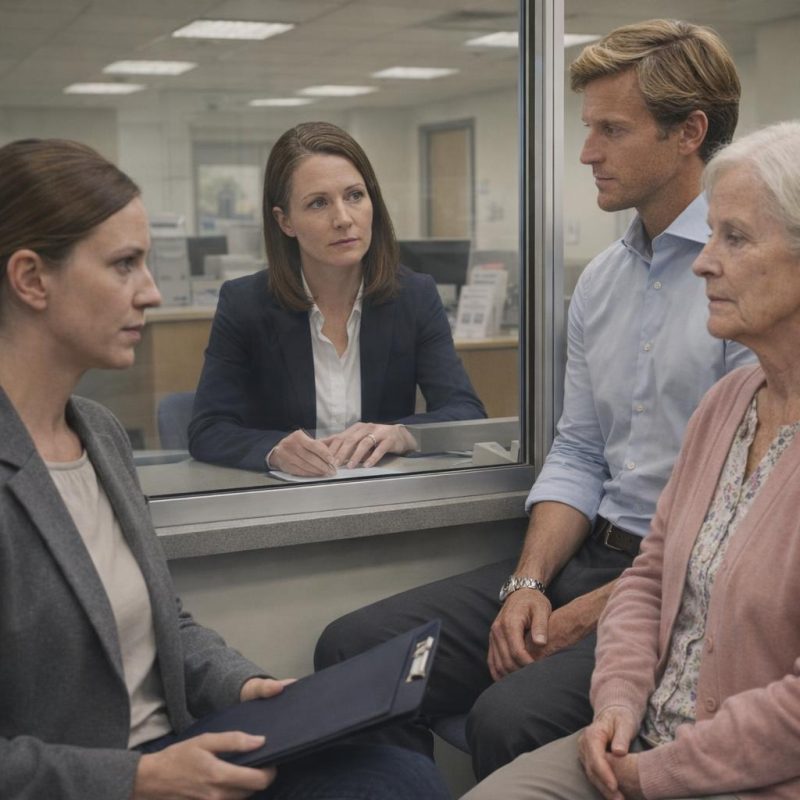 Image by RM AI
The Comfortable Familiarity
I keep watching. My dad is saying something to my mom, pointing at a brochure on the counter, and neither of them is paying much attention to what Mark and Sarah are doing. Mark says something I can't hear from where I'm sitting, and Sarah laughs — not the brief, neutral sound I heard her use with the woman and the stroller earlier. This one is softer, more relaxed. She slides a form across the counter and Mark takes it without looking at it first, like he already knows what it is. She leans forward slightly when she talks to him, her posture looser than it was with the customers before. I think about the four people I watched her help this morning — the measured distance, the efficient exchanges, the smile that switched off the moment they stepped away. This is different. The ease between them is different. I can't say exactly what it means, but I sit with the difference, and it doesn't settle.
 Image by RM AI
The Body Language
My dad signs something and hands the pen back to Sarah, and she thanks him in that warm, practiced way. Then Mark leans across the counter to point at something on the form, and I notice Sarah doesn't shift back. She stays where she is, close enough that their hands are nearly touching on the counter surface. I watch her fingers move near his as she slides the paper back, not quite contact but close enough that I notice it. I compare it to the way she stood with the older man this morning, the careful professional gap she kept. This is not that. Mark says something and she tilts her head toward him, and the gap between them is smaller than it has any reason to be. I tell myself I might be reading too much into it. I tell myself bank tellers are trained to be warm and personable. But then Mark straightens up and they're still standing closer than they need to be.
 Image by RM AI
The Social Media Search
I'm back home by eleven. I open my laptop before I even take my coat off. I saw her name tag clearly — Sarah — and I caught the branch name on the signage above the teller windows. I type both into the search bar and start working through the results. There are a few profiles that could be her: a Sarah with the right general age range, a couple with profile photos that are too small to confirm. I click on the most likely one — the profile picture matches the hair, the approximate age. The account is set to private. No posts visible, no tagged photos, no listed workplace, no friends list I can scroll. Just a name and a locked door. I try two other platforms and get the same result — either no account at all or privacy settings that show me nothing useful. I sit back in my chair and look at the screen. I have a name, a face, a branch location, and a feeling I can't shake. What I don't have is anything that connects her to Mark beyond what I watched this morning, and a locked profile isn't evidence of anything.
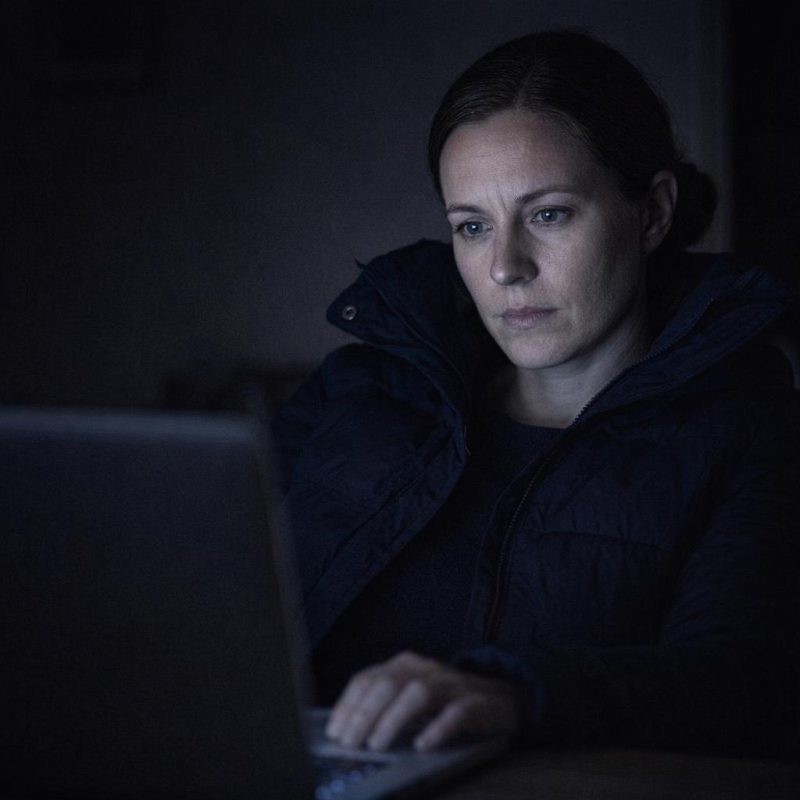 Image by RM AI
The Calculation
I pull the bank statements out again that evening and spread them across the table in order. I've been through them before, but this time I go further back, past the five months I initially focused on. The pattern is there earlier than I thought. The first irregular withdrawal I can find is dated seven months ago — smaller than the ones that followed, but the same structure: Tuesday morning, same teller window based on the branch code, round numbers. I get out a notepad and add them up carefully, column by column. When I reach the total I stop and look at it for a moment. Sixty-two thousand dollars. That's what the numbers say. Sixty-two thousand dollars moved out of my parents' accounts over seven months, in increments small enough that no single transaction would trigger an automatic review. My parents have no idea. My dad thinks Mark is helping him manage things. My mom trusts whatever my dad trusts. I sit at the table with the notepad in front of me, and the number just sits there on the page, and the weight of seven months presses down on everything.
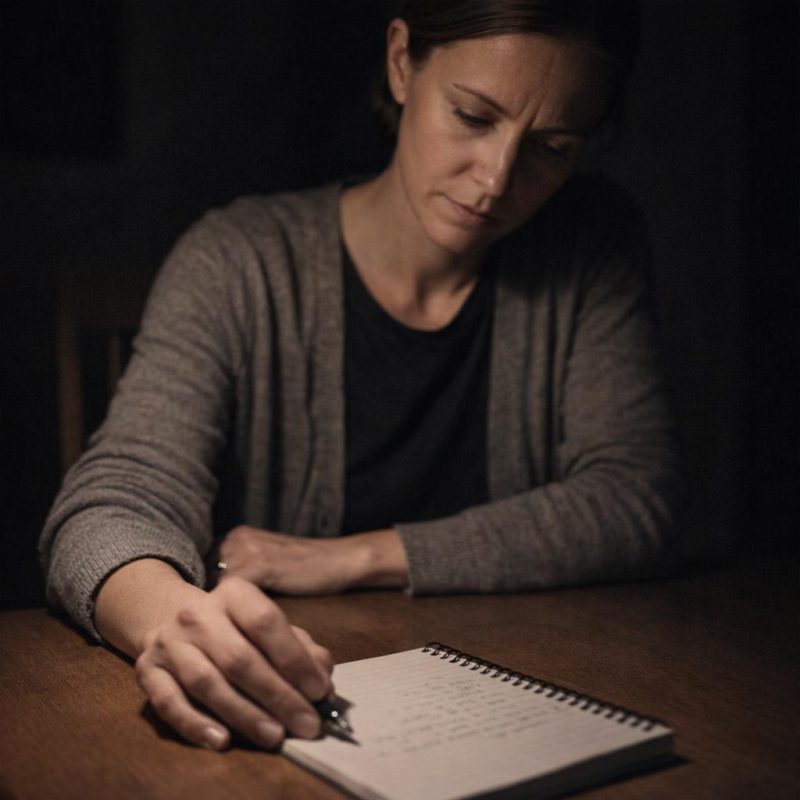 Image by RM AI
The Stakeout
I drive to Mark's apartment building on Thursday evening and park across the street with a clear view of the entrance. His window is on the third floor — I can see the light on behind the blinds. I've been sitting here for just over an hour. A couple of residents have come and gone, a delivery driver, a man walking a dog. Nothing that means anything. I watch the light in Mark's window and think about the number on my notepad. Sixty-two thousand dollars. Seven months. I think about my dad signing that form this morning without reading it, trusting the pen in his hand because his son handed it to him. The street is quiet. A car passes. I shift in my seat and check the entrance again. Then I see her — a woman coming down the sidewalk toward the building, moving with purpose, a bag over one shoulder.
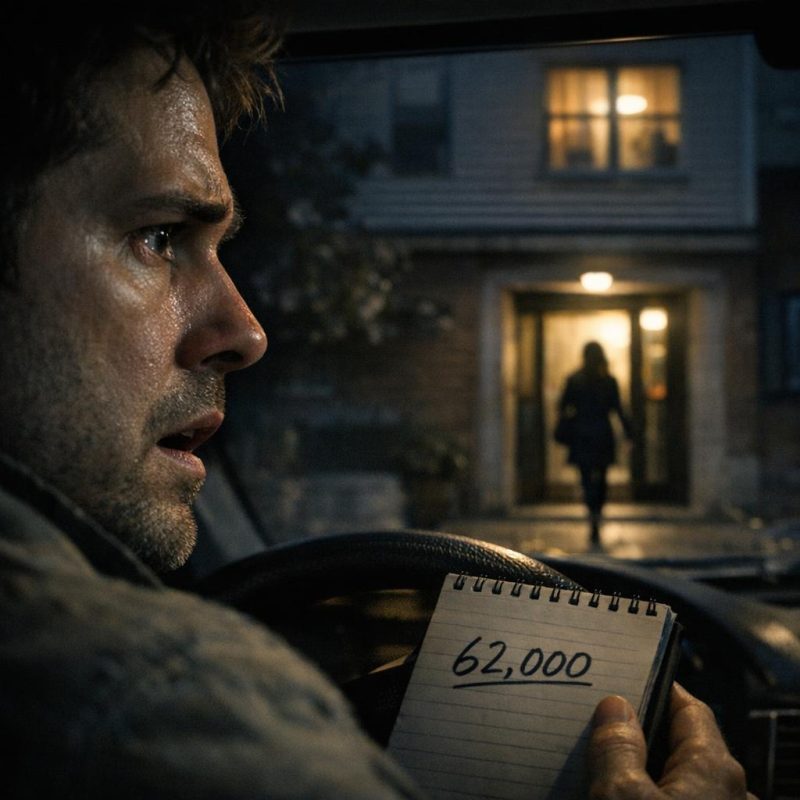 Image by RM AI
The Woman at the Door
She's maybe late twenties, blonde hair pulled back neat, a bag over one shoulder and a purposeful stride that doesn't belong to someone just stopping by. I watch her push through the front door of Mark's building without buzzing — she either has a key fob or someone lets her in immediately. I note the blazer, the low heels, the way she carries herself. Something about her build and the set of her shoulders pulls at the edge of my memory, but I can't place it, not from here, not in the dark. I write down the time: 8:47 p.m. Then I settle back and watch the entrance. Nine o'clock comes. Nine-thirty. A couple of residents leave with a dog, a pizza delivery guy goes in and comes back out in four minutes. The light behind Mark's third-floor blinds stays on. Ten-fifteen. I eat the granola bar I found in my glove compartment and keep my eyes on the door. Eleven o'clock. The street quiets down to almost nothing. The light in Mark's window is still on, and the woman has not come back out, and the night settles around my car like something I can't quite name.
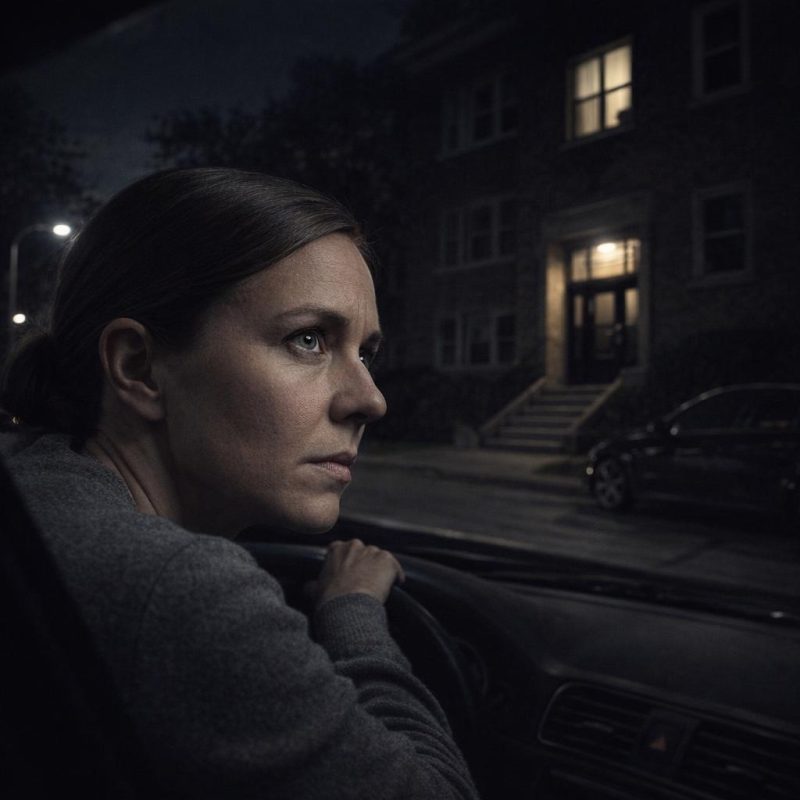 Image by RM AI
The Morning After
I'm back before six in the morning, parked in the same spot, a travel mug of coffee going cold in the cupholder. The street looks different in the early dark — emptier, the storefronts still shuttered, the sidewalk wet from overnight rain. I pulled up here at five-forty and I've been watching the entrance ever since. A man in scrubs comes out at six-ten, walks fast toward the corner. A woman with a stroller at six-thirty-five. A teenager with a backpack at six-fifty, earbuds in, not looking up. Each time the door opens I sit forward, and each time it's someone else I settle back and take another sip of coffee. The morning light is coming up slowly, gray and flat, turning the brick face of the building from black to dull orange. I keep my notepad on my knee. I've written down every person who's come out, the time, a brief description. None of them are her. My pulse ticks up a little every time the door moves. The coffee is cold now, and the morning air presses against the windows, and I sit with my hands wrapped around the mug and wait.
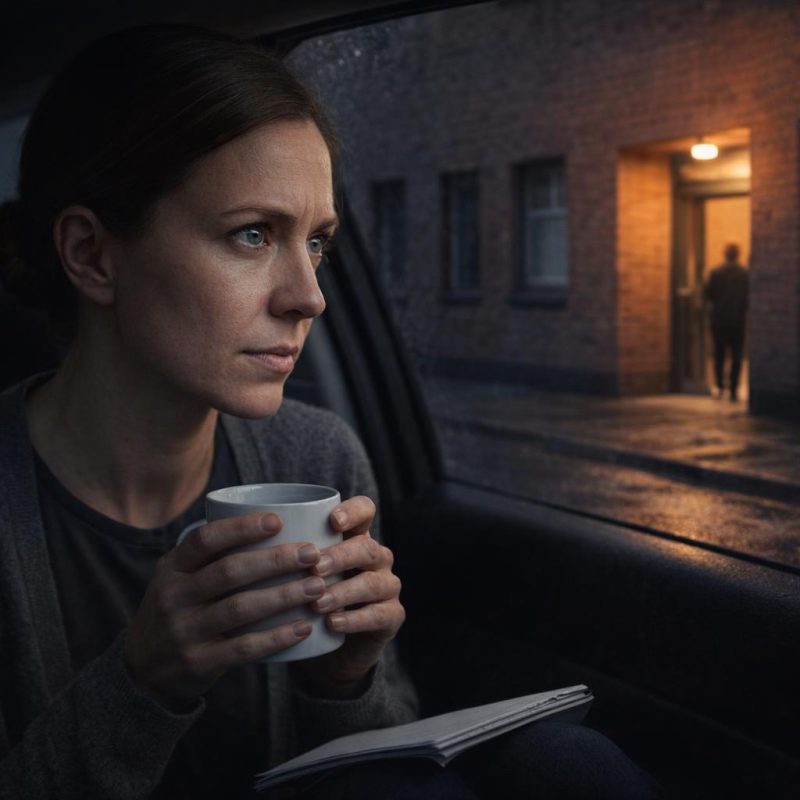 Image by RM AI
The Confirmation
At seven-eighteen the front door opens again and I sit forward before I even consciously decide to. She comes out alone, bag over the same shoulder as last night, blazer exchanged for a longer coat. She pauses on the top step and adjusts the strap, and in that pause the morning light catches her face full-on — the neat features, the fair complexion, the precise way she holds herself. My breath stops somewhere in my chest. I know that face. I've been standing three feet from that face across a bank counter. The low bun, the careful posture, the practiced composure — it's the same woman who processed every one of those Tuesday withdrawals without asking a single question, who smiled at my parents like she was doing them a favor, who handed back the receipt with both hands. She steps down onto the sidewalk and turns toward the street, and I don't move, I don't breathe, I just watch her walk away from my younger brother's building in the early morning light.
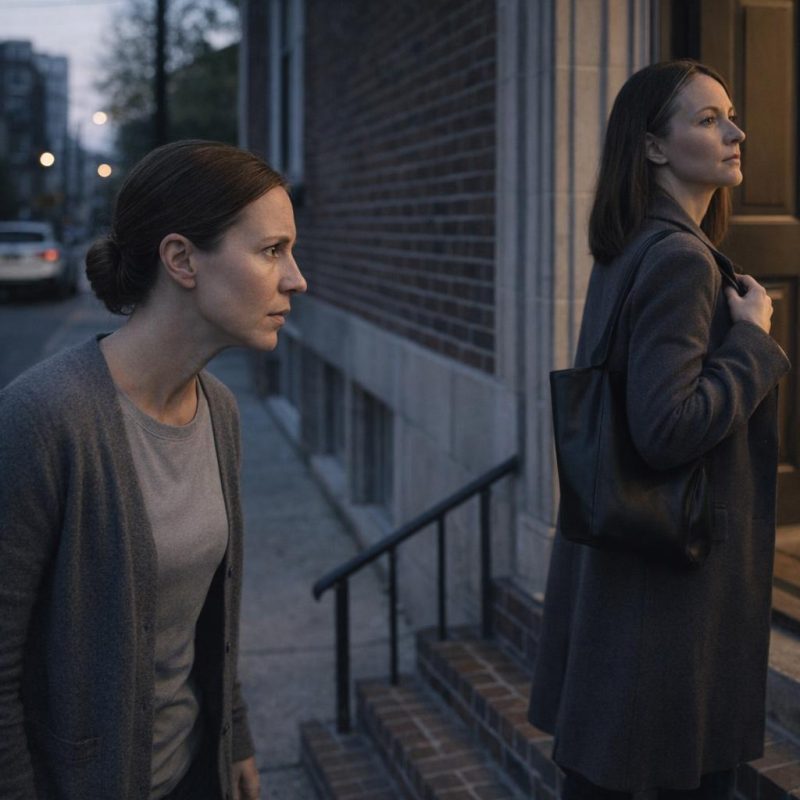 Image by RM AI
The Pieces Fall Together
I sit in the car after she rounds the corner and disappears. My hands are in my lap. I don't start the engine. I think about the first Tuesday I followed them to the bank — the way she greeted my parents, warm and unhurried, no hesitation, no pause to check anything. I think about the counter, the forms slid across without comment, the withdrawals processed like routine. I think about the way Mark stood at that window, relaxed, familiar, like he'd done it a dozen times. Because he had. I pull out my notepad and look at the dates. Seven months of Tuesdays. The same window, I'm almost certain — I'd have to go back through my notes to confirm each visit, but the pattern is there. A woman who spent the night at my brother's apartment is the same woman who handled every one of those transactions. I can't prove yet what that means. But the shape of it is sitting right in front of me, and my notepad is open on my knee, and the numbers on the page look different than they did an hour ago.
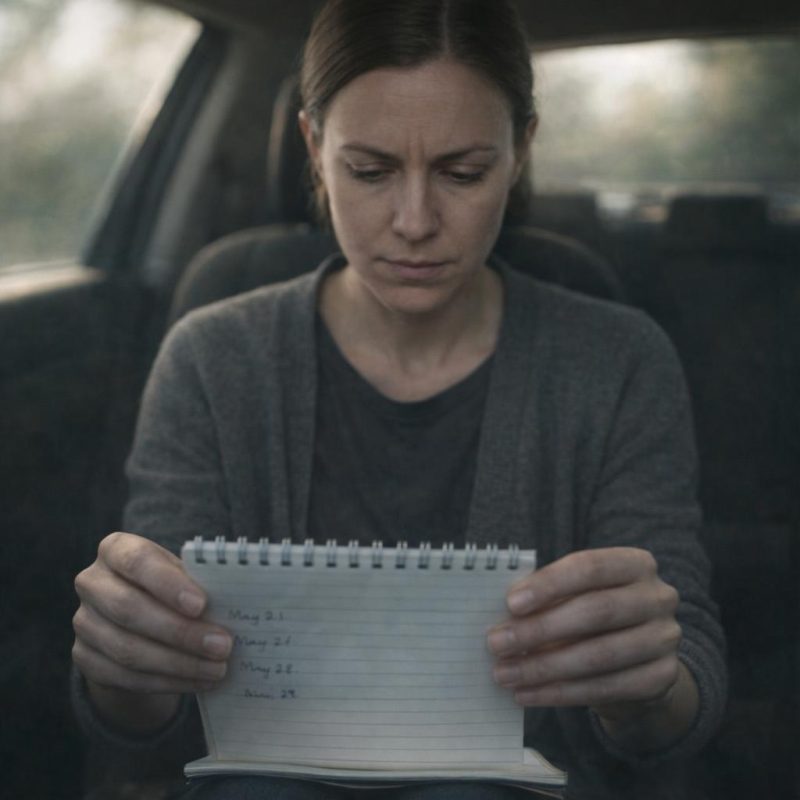 Image by RM AI
The Girlfriend
And then it lands. Not gradually — all at once, like a door swinging open. She's not just the teller who happened to be at the window. She's Mark's girlfriend. She works at that bank, and Mark has been bringing our parents to her window, specifically, every single Tuesday for seven months. That's why there were never any questions. That's why the forms went through without a second look. That's why my dad could sign something without his glasses and nobody flagged it. I sit in the car with my hands on the steering wheel and I feel something go very cold and very still inside me. Mark would bring Mom and Dad in. Sarah would be waiting at her window. Sixty-two thousand dollars moved out of my parents' account one Tuesday at a time, and not one person in that bank had any reason to look twice. My younger brother and his girlfriend have been stealing from our parents — together, deliberately, for months. That is what all of it was.
 Image by RM AI
The Scope of Betrayal
I start counting backward through the Tuesdays. Seven months. Roughly thirty weeks, though not every week — my notes show some gaps, a holiday, one Tuesday where I couldn't follow them. But the withdrawals on the bank statements don't have gaps. I think about every time Mark called to say he was taking Mom and Dad to run errands. Every time I felt relieved that he was helping. Every time I told myself I was being unfair to him, that I was projecting, that maybe he really had changed. He was bringing them to Sarah's window. He knew which window to go to. She knew they were coming. My parents would walk up and smile at the nice young woman who always remembered them, and Sarah would process whatever Mark needed processed, and not one person in that bank would have any reason to look twice because it looked exactly like a dutiful son helping his elderly parents with their finances. I think about my mom's careful white hair and my dad's slow, dignified walk, and I think about the two of them being used like that, week after week, and I want to know exactly how many times it happened.
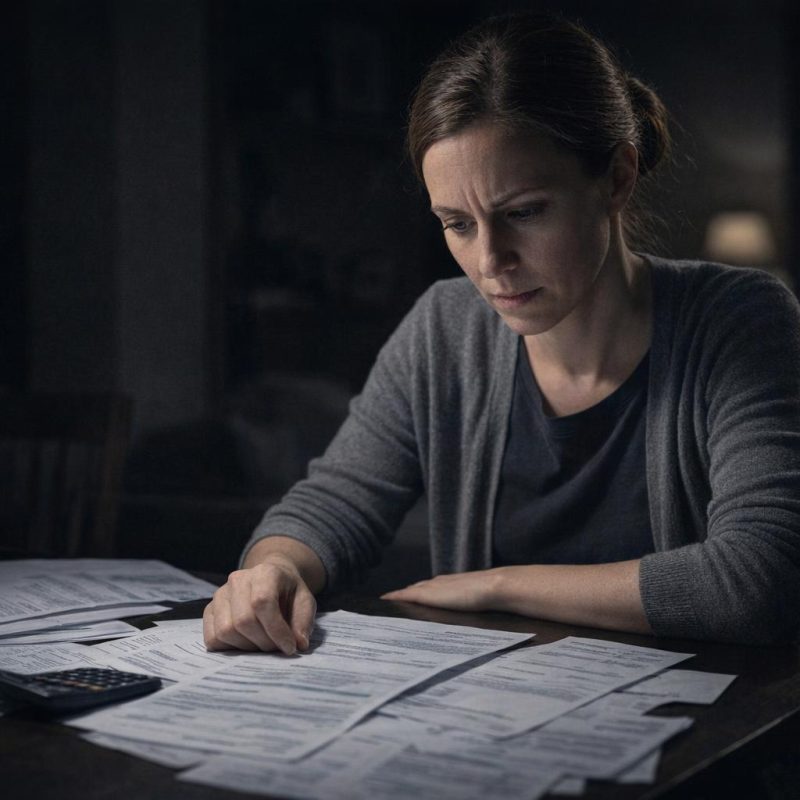 Image by RM AI
The Evidence Compiled
I open my laptop at the kitchen table and I start a new document. At the top I type the date range — the first Tuesday withdrawal I can confirm, through last week. Then I go line by line. Every date from the bank statements. Every amount. The running total, which I've already calculated but write out again anyway, because I need it in one place. Below that I start a second section: observations. The Tuesday pattern. The consistent window. The absence of any verification I witnessed across multiple visits. The overnight stay — date, time of arrival, time of departure, physical description. I cross-reference my notepad against the statements and find eleven Tuesdays where I have both a confirmed bank visit and a corresponding withdrawal. I save the document. Then I copy it to my email drafts and to a USB drive I keep in my desk drawer. I print two copies and put one in a folder and one in an envelope I seal and address to myself. When I'm done I sit back and look at what's on the table in front of me — the printed pages, the folder, the sealed envelope — and the weight of it is something I can actually feel.
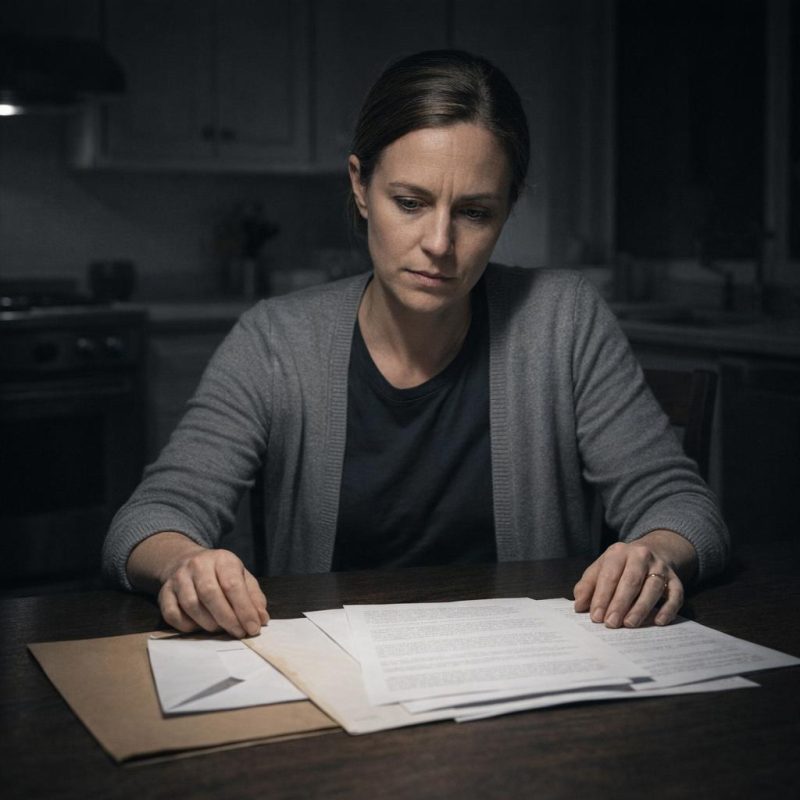 Image by RM AI
The Power of Attorney Reviewed
I spread the power of attorney document on the table beside the folder. I've read it before, but I read it again now, slowly, every section. The language is clear. As the designated agent, I have authority over my parents' financial accounts — the ability to manage, restrict, and direct transactions on their behalf. I find the section on financial institutions and read it twice. I can walk into that bank and present this document and instruct them to halt any further withdrawals initiated by anyone other than me. I can request a full account review. I can freeze access. I have been sitting on this document for weeks, waiting until I had enough to be certain, and now I am certain. I think about Sarah behind that counter with her practiced smile, and I think about Mark calling on a Tuesday morning to say he's taking Mom and Dad for errands, and I think about my dad's slow, trusting signature on a form he didn't read. I straighten the pages of the power of attorney and set them back on the table, and the authority they carry sits there quietly, solid and ready.
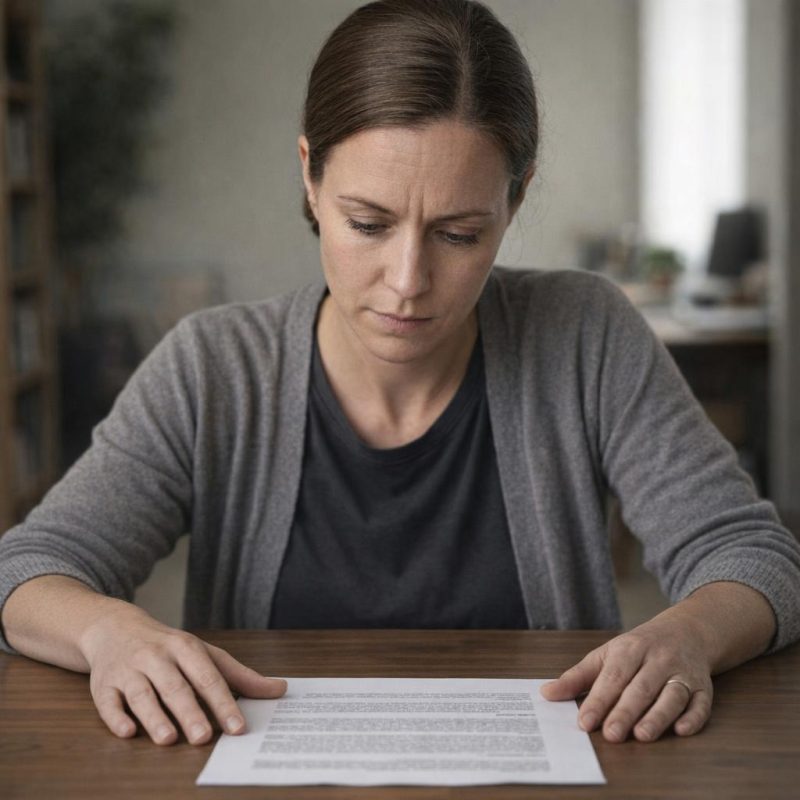 Image by RM AI
The Final Tuesday
I'm up before six. I don't set an alarm — I just wake, the way you do when something important is waiting. I shower and dress carefully, nothing rushed, nothing careless. Dark slacks, a plain blouse, the kind of clothes that say I mean business without announcing it. The power of attorney document is already in a manila folder on the kitchen table, the pages crisp and ordered. I've read it so many times I could recite the relevant sections from memory, but I read them one more time anyway, standing at the table with my coffee going cold beside me. I rehearse what I'll say to the branch manager. Not a speech — just the facts, delivered clearly. I am the designated agent under this power of attorney. I am here to halt any further transactions on these accounts. I have documentation. I know what has been happening here. I say it out loud in the quiet kitchen, and my voice is steady. I slide the folder into my bag, check that my phone is charged, and pick up my keys. Then I back out of the driveway and point the car toward the bank.
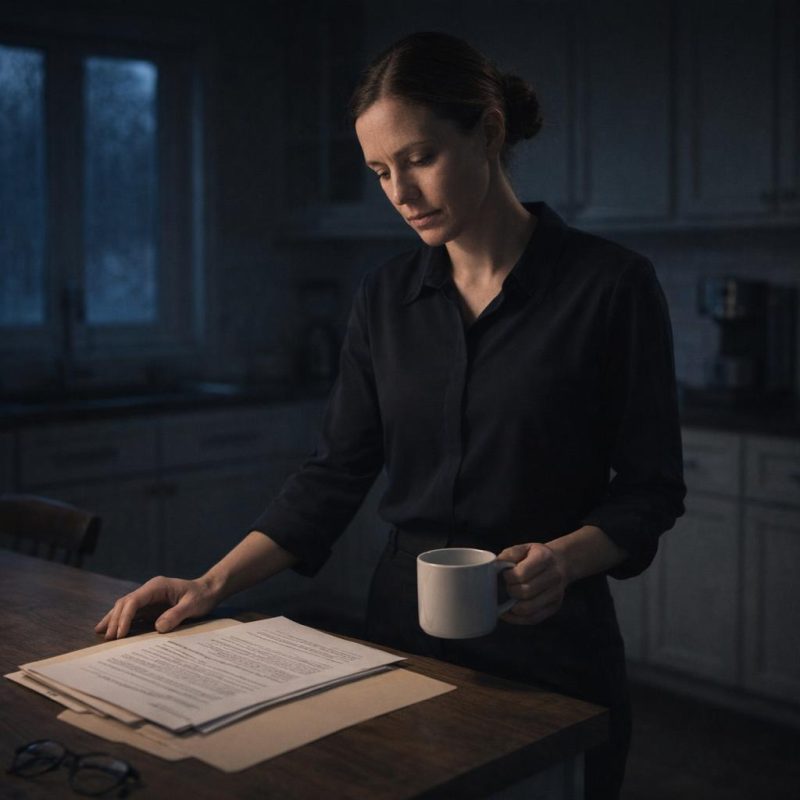 Image by RM AI
Positioning
I get to the bank twenty minutes before it opens and wait in the parking lot until the doors unlock. Inside, the morning is quiet — a teller counting her drawer, a security guard near the door, the low hum of the HVAC system. I position myself near the entrance, off to one side, where I have a clear line of sight to the teller windows and to the glass doors facing the parking lot. The folder is in my bag. I don't take it out. I just stand there, watching. A few customers come in and conduct their business and leave. I check the time. I check it again. My heart is doing something steady and fast at the same time, the way it does before something you've been building toward for weeks finally arrives. I think about my dad's slow signature. I think about my mom nodding along to whatever Mark tells her. I think about Sarah's practiced smile and the forms sliding across the counter. Then, through the glass doors, I see Mark's car pull into the parking lot.
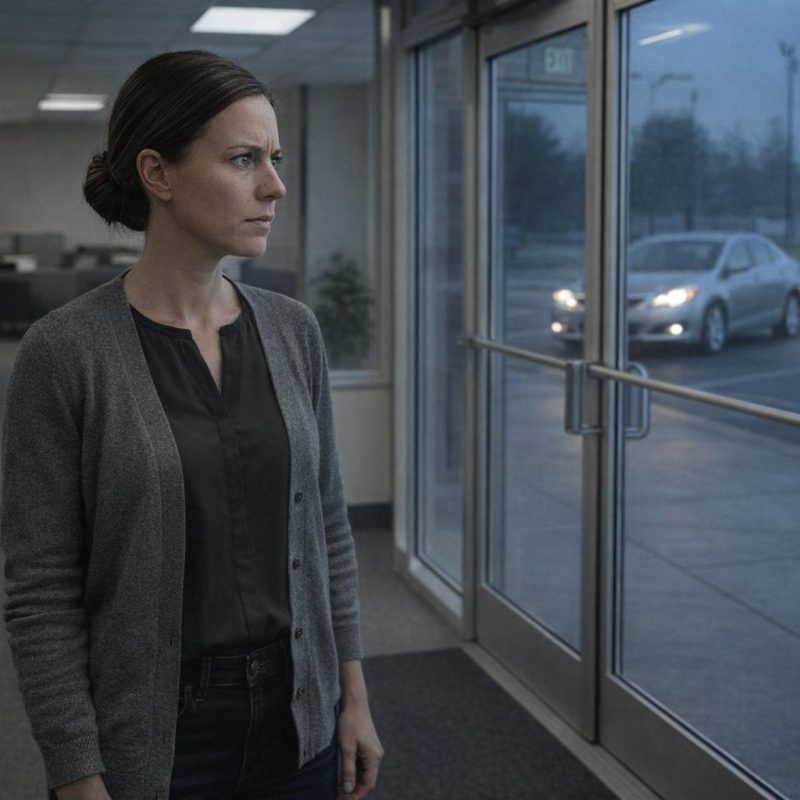 Image by RM AI
The Transaction Begins
I don't move. Not yet. I watch Mark get out of the driver's side and walk around to open the passenger door for my dad. My mom climbs out from the back, smoothing her coat the way she always does, looking around the parking lot with that mild, pleasant expression she wears when she's following someone else's lead. Mark says something to them and my dad nods. They walk toward the entrance together, Mark's hand light on my dad's shoulder. I step back slightly, angling myself behind a standing display near the wall. They come through the doors and Mark steers them directly toward Sarah's window, no hesitation, no browsing, no pause — the path of people who have done this before. Sarah looks up and her smile arrives right on cue. She says something I can't hear from where I'm standing. Papers come out from beneath the counter. Mark leans in close to my dad and points to something on the page. My mom stands slightly behind them, her hands folded in front of her, patient and trusting. I watch the whole familiar routine settle into place around them like a groove worn smooth by repetition.
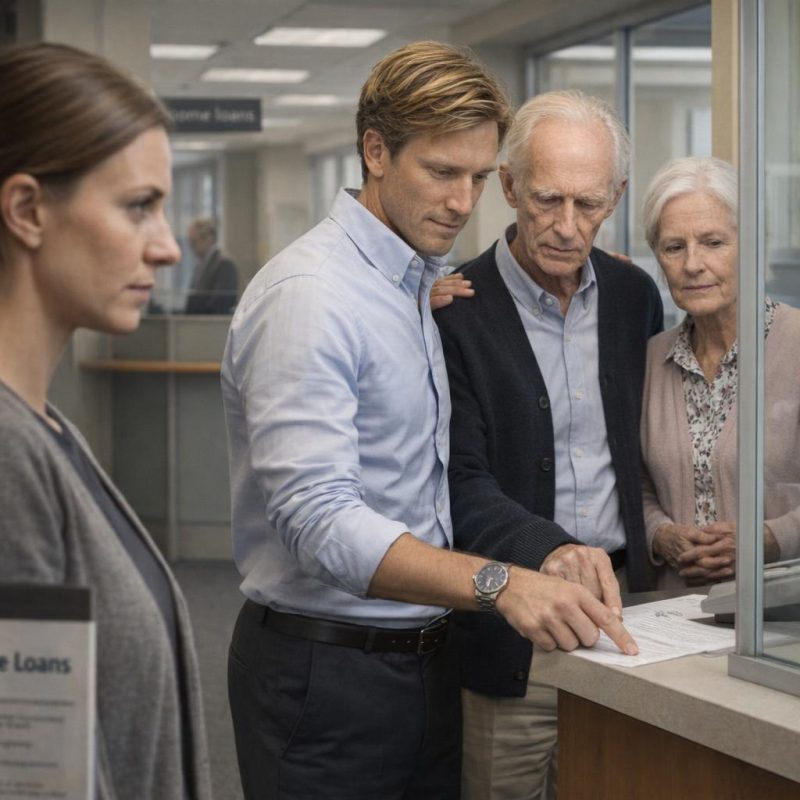 Image by RM AI
The Approach
Mark places his hand over my mom's hand, guiding it toward the pen on the counter. I see the pen touch the signature line. That's when I push off from the wall. I don't run. I walk — measured, deliberate, straight toward the counter. Sarah glances up first, her eyes catching movement before her brain registers who I am. I watch her expression shift, just slightly, the customer-service smile faltering for half a second before she pulls it back into place. Mark is still leaning over the counter, still talking quietly to my dad, and I keep walking until I'm close enough that he has no choice but to see me. He turns. His face goes through something complicated in the space of a second — surprise, confusion, the beginning of something harder. I stop at the counter's edge, my bag on my shoulder, the folder inside it, and I stand there in the space I've been moving toward for weeks. The pen is still in my mom's hand. The signature line is still unsigned. I am exactly where I need to be, and the steadiness in my chest feels like something that has been waiting a long time to arrive.
 Image by RM AI
The Intervention
I reach into my bag and set the folder on the counter. I open it and lay the power of attorney document flat, facing Sarah. "I need you to stop this transaction," I say. My voice comes out even. "My name is Emma. I am the designated agent under this power of attorney for both account holders. I am instructing you, right now, not to process any further paperwork on these accounts." Sarah's face goes pale beneath her professional composure. Her eyes drop to the document, then come back up to me, and the practiced smile is completely gone. Mark straightens up from the counter. I don't look at him yet. I keep my eyes on Sarah. "Do not process this withdrawal," I say again. "The transaction is stopped, effective immediately." I hear my mom say my name softly, confused, and I reach over and gently take the pen from her hand. The document sits on the counter between us — all those pages I've read a dozen times, all that authority I've been carrying in a folder for weeks — and the weight of it, finally used, finally real, settles into the room like something solid.
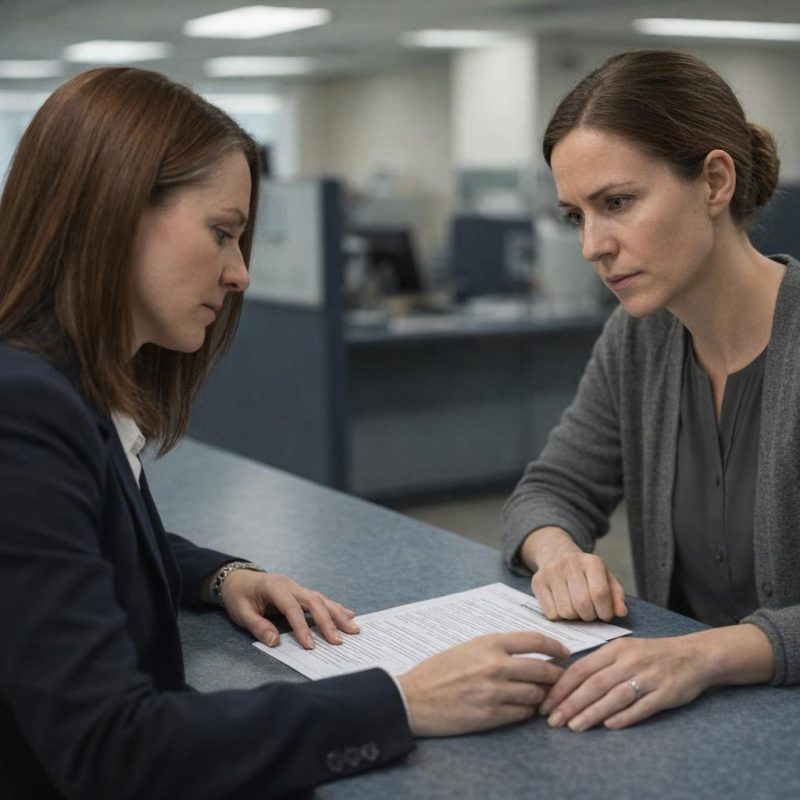 Image by RM AI
Mark's Reaction
Mark finds his voice first. "What are you doing?" He steps away from the counter, putting himself between me and my parents, and his tone has that familiar edge — the one he uses when he's been caught at something and needs to reframe it fast. "You can't just walk in here and —" "I can," I say. "I just did." "Emma, this is none of your business. Mom and Dad asked me to help them with their finances. I've been helping them for months." "I know exactly what you've been doing for months," I say. I keep my voice low and level. I don't raise it. I don't need to. My dad is looking between us with that lost, pained expression he gets when he can't follow what's happening, and my mom has her hand pressed to her collarbone. Mark's jaw tightens. He glances at Sarah, who is standing very still behind the counter, her hands flat on the surface, not touching the paperwork. He looks back at me and I can see him recalculating, trying to find the angle that gets him out of this. "You have no idea what you're interfering with," he says. Then, louder: "What exactly do you think you're doing here?"
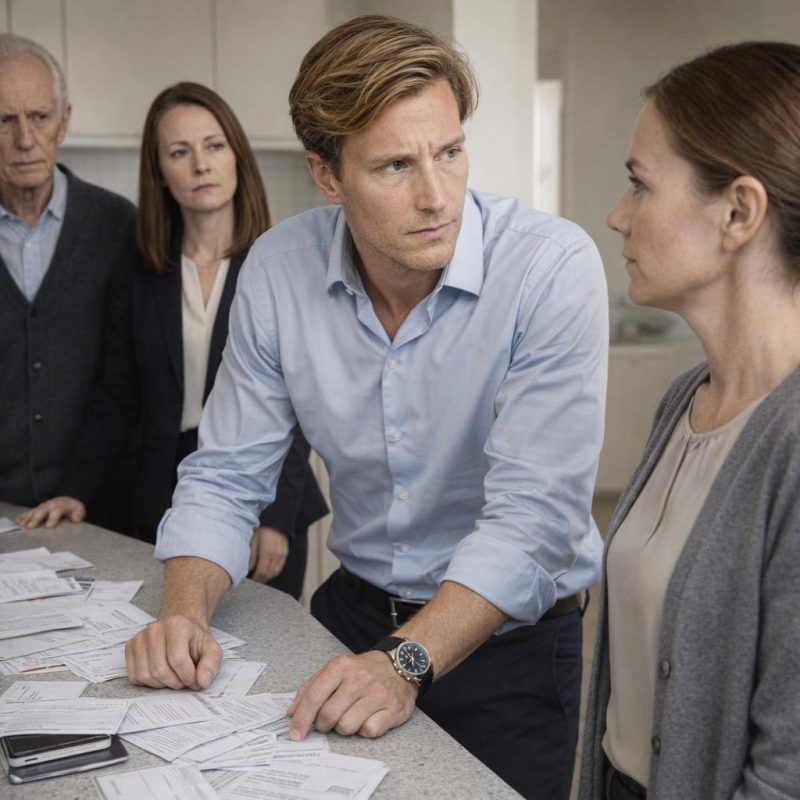 Image by RM AI
The Manager
"I need to speak with the branch manager," I say to Sarah. "Right now." Sarah doesn't move. Her eyes go to Mark, just for a second, and that second tells me everything I already know. "Now, please," I say, louder this time, and a few heads turn in the lobby. A man in a dark suit steps out of a glass-walled office near the back — early fifties, graying temples, wire-rimmed glasses, the kind of bearing that comes from years of managing other people's problems. He walks toward the counter with a measured pace. "I'm Mr. Morrison, the branch manager," he says. "Can I help you?" "Yes," I say. I slide the power of attorney document across to him. "I am the designated agent for these account holders. I have reason to believe that unauthorized transactions have been conducted on their accounts with the assistance of your staff. I need you to review the account history and I need this transaction halted immediately." Mr. Morrison picks up the document. He reads it — not a skim, an actual read, moving through each section with his glasses slightly lowered. His expression doesn't change, but his eyes move carefully across every line.
 Image by RM AI
The Investigation Begins
Mr. Morrison sets the document down and looks at me. "Walk me through what you've observed," he says. His voice is measured, professional, giving nothing away. I tell him about the Tuesday pattern — the same day, every week, the same teller window, the same routine. I tell him about the withdrawal amounts, the progression, the lack of any verification I could identify. I tell him about my parents' cognitive decline and their inability to independently initiate or understand transactions of this scale. Mr. Morrison turns to a computer terminal at the side of the counter and pulls up the account. He scrolls. He doesn't speak for a long moment. I watch his jaw set. I watch him scroll back further, then stop, then scroll again. Mark has gone very quiet behind me. Sarah hasn't moved from her position behind the counter, her hands still flat on the surface, her face carefully blank. Mr. Morrison straightens up, removes his glasses, and looks first at Sarah, then at the screen, then back at me. "I'm freezing these accounts immediately," he says. "And as of this moment, Sarah, you are suspended pending an internal investigation."
 Image by RM AI
Accounts Frozen
Mr. Morrison types something into the terminal, and I watch the screen reflect in his glasses as he works. He doesn't rush. When he's done, he turns back to me and says that as the designated POA agent, I now have full authority over both accounts — and that Mark is no longer authorized on any of them, effective immediately. Mark makes a sound behind me, something between a protest and a breath knocked loose, but he doesn't finish whatever he was going to say. Mr. Morrison tells him directly, without raising his voice, that he is not to attempt any further transactions and that the bank will be cooperating fully with law enforcement as the investigation proceeds. I turn to my parents. Mom is holding her purse with both hands, looking at me like she's waiting for someone to explain the weather. Dad's eyes are moving between Mark and Mr. Morrison, slow and uncertain. I put my hand on Mom's arm and tell them we're leaving now, that everything is being taken care of. As I guide them toward the door, I glance back. Two staff members are walking Sarah toward the rear of the branch. Mark is standing at the counter, alone, his hands at his sides. On the terminal screen behind Mr. Morrison, both account balances sit locked behind a status I can't read from here, but the cursor has stopped blinking.
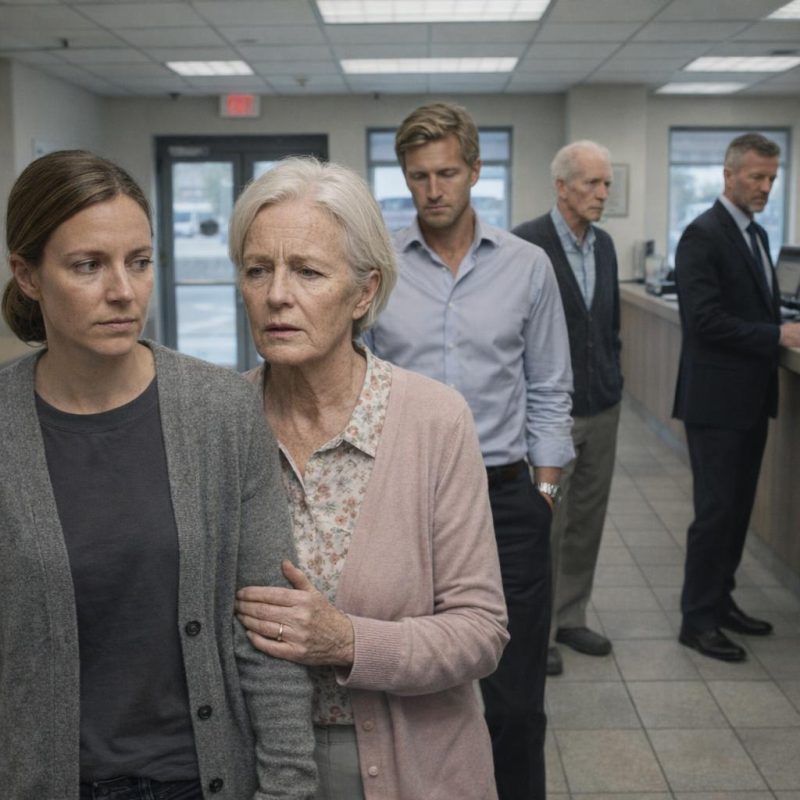 Image by RM AI
Taking Them Home
I drive them home with the radio off. Mom asks twice where we're going, and both times I tell her we're going to her house, and both times she settles back into her seat like that's the first she's heard it. Dad doesn't say much. He watches the streets go by with his hands folded in his lap, and there's something in his posture that looks less like confusion and more like tiredness — the kind that comes from carrying something you didn't know you were carrying. I get them inside and settled on the sofa, and I put the kettle on because I don't know what else to do with my hands. When I bring the tea out, Dad looks up at me and asks what happened at the bank. I sit down across from them and I tell him, as gently as I can, that there were some problems with the accounts and that I'm taking care of everything now. He nods slowly. Mom wraps both hands around her mug and says, "It's good you're here." She doesn't say it like a question or a comfort — she says it like a fact she's been waiting to state out loud. I stay until the light through the front window goes soft and orange, and the house settles into the kind of quiet that doesn't ask anything of anyone.
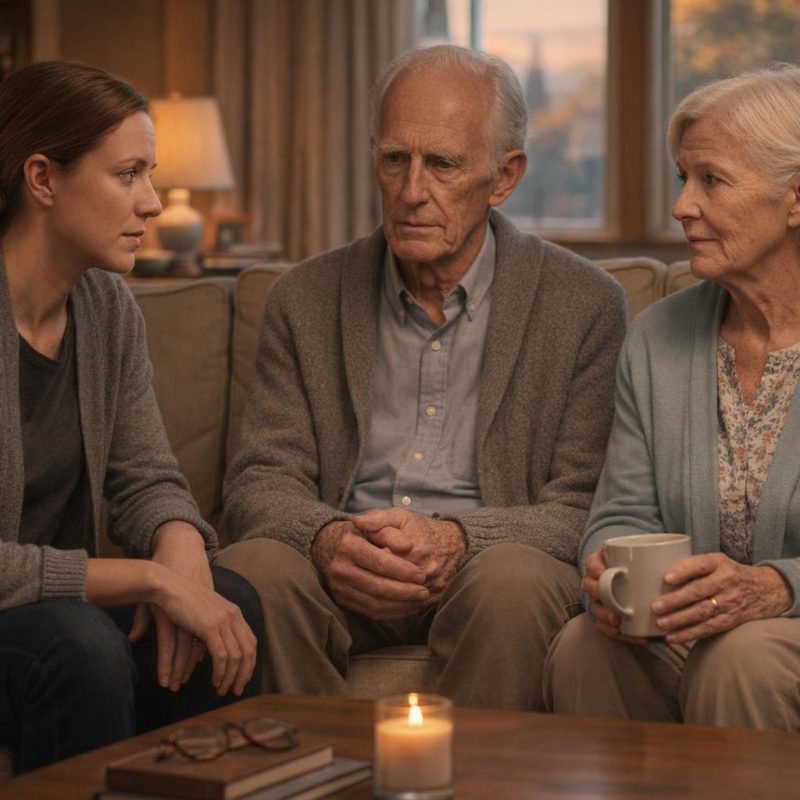 Image by RM AI
The Aftermath
Mr. Morrison calls me four days later. I'm sitting at my kitchen table with a cup of coffee I haven't touched, and when I see the bank's number on my screen I pick up before the second ring. He tells me Sarah's employment has been terminated and that the bank has filed a formal report with law enforcement. He tells me Mark is now under investigation for elder financial abuse. He uses that phrase — elder financial abuse — and I hear it land in the room like something physical. I already knew what it was. I'd known for weeks, maybe longer if I'm honest with myself. But hearing it named out loud, in that measured professional voice, makes it real in a way my own certainty never quite did. I thank Mr. Morrison and I sit there after the call ends, phone face-down on the table. I think about Mark at twelve, showing me a magic trick with a deck of cards, laughing when I couldn't figure out how he'd done it. I think about the easy smile and the way he always knew what to say. I think about my parents on that sofa, hands around their mugs, not fully understanding what had been taken from them. I did what I had to do. I know that. But knowing it doesn't make the grief any lighter.
 Image by RM AI
Moving Forward
It's been three weeks since the bank visit, and I'm at my parents' house most mornings now. I've set up new account access with Mr. Morrison's guidance — dual verification, no third-party authorization, monthly statements sent directly to me. I've arranged for a care coordinator to check in twice a week, and I've put a whiteboard in the kitchen with the day, the date, and a short list of what's happening that afternoon. Small things. Practical things. Dad noticed the whiteboard on the second day and stood in front of it for a long moment before he said, "That's a good idea." He said it quietly, like he was talking to himself, and I had to look away. Mom has started asking me to stay for lunch when I visit, and I do. We sit at the kitchen table and she tells me the same story about a neighbor from forty years ago, and I listen every time like it's new, because for her it is. There's still a lot I can't fix. I can't give them back what was taken, and I can't undo the months before I walked into that bank. But this morning Dad came into the kitchen while I was making tea, looked out the window at the garden, and said, "It's a good day." He meant the weather. I think he also meant something else.
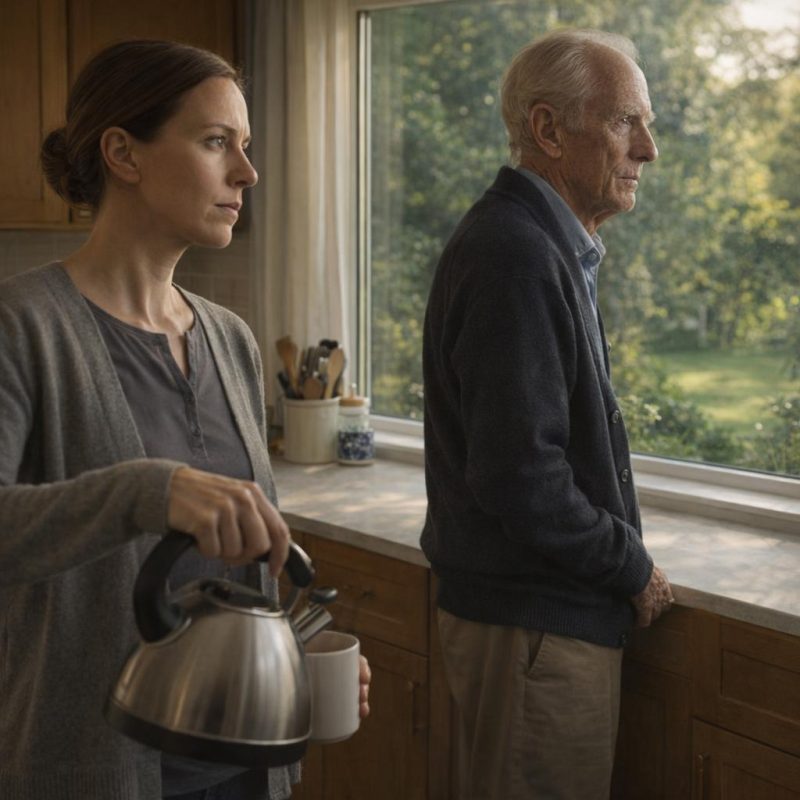 Image by RM AI
KEEP ON READING

The 10 Youngest Monarchs In History & The 10 Oldest
Age Is Just A Number. Imagine being crowned king or…
By Chase Wexler Mar 11, 2025
You Think You Have Problems? These Royal Families Were Cursed
Boasson and Eggler St. Petersburg Nevsky 24. on WikimediaHeavy is…
By Ashley Bast Dec 5, 2025
You Can Thank This Greek-Canadian For Creating Pineapple On Pizza…
Love it or hate it, pineapple on pizza sparks debate…
By David Davidovic Dec 1, 2025
Yes, Female Gladiators Existed, And Here's Everything You Need To…
History of Women in Combat. Most people picture gladiators as…
By David Davidovic Jan 17, 2026
Yes, Australians Once Lost A Battle Against Flightless Birds
David Clode on UnsplashIn 1932, the Australian military went to…
By David Davidovic Nov 24, 2025
The Y2K Bug: Why Did Everyone Think Year 2000 Was…
Alan W on UnsplashOn December 31, 1999, people all over…
By Christy Chan Dec 22, 2025