

A Woman That Looked Familiar Showed Up at the Food Bank Where I Volunteer and Destroyed Everything I Thought I Knew About My Marriage
A Woman That Looked Familiar Showed Up at the Food Bank Where I Volunteer and Destroyed Everything I Thought I Knew About My Marriage
Thursday Morning Routine
Thursday mornings have their own particular rhythm, and I'd come to love every beat of it. I'd pull into the parking lot of the Riverside Community Food Bank just before eight, the same spot near the side entrance, and by the time I pushed through the glass doors the coffee was already going and Margaret was already complaining that someone had stacked the pasta boxes wrong again. I'd laugh, tie on my apron, and get to work. There's something deeply satisfying about organizing a donation table — lining up the canned tomatoes, sorting the cereals by size, making sure the baby food was always front and center where the young mothers could reach it easily. The families who came through that door weren't looking for pity. They were just trying to get through the week, same as everyone. I understood that. After thirty years working the front desk of a medical practice, I'd learned that people in need still carry their dignity with them, and the least you can do is treat them accordingly. By nine o'clock I'd usually found my groove — chatting with the other volunteers, keeping the line moving, making sure nobody left empty-handed. It wasn't glamorous work. But walking out at noon with tired feet and a full heart, I never once questioned why I was there. That feeling, that quiet sense of being exactly where I was supposed to be, had wrapped itself around my Thursday mornings like a familiar coat.
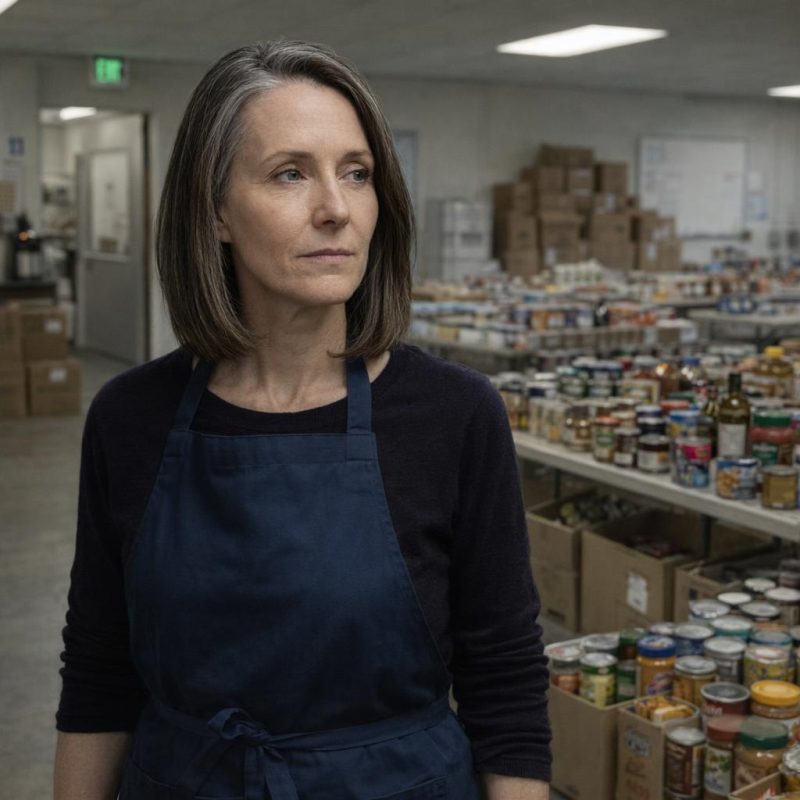 Image by RM AI
The Decision to Volunteer
I didn't always have Thursdays free. For most of my adult life, Thursday was just another workday — phones ringing, appointment books to manage, patients to check in and check out. I spent thirty years as a medical receptionist, and I was good at it. I liked the pace, liked knowing the regulars by name, liked being the calm voice when someone called in a panic. But retirement has a way of arriving before you're ready for it, and those first few months at home felt strange in a way I hadn't anticipated. The house was quiet. Daniel was still working part-time consulting, so it was mostly just me and the television and a stack of library books I couldn't quite focus on. I remember telling Daniel one evening that I felt like I was waiting for something without knowing what. He put down his newspaper and said, 'Then go find it.' Simple as that. He was always good at cutting through my overthinking. I started looking around for volunteer opportunities and came across a listing for the food bank almost by accident. Something about it clicked immediately — the practical work, the direct impact, the sense of community. I filled out the application that same night. I'd nearly forgotten about any of that until last spring, when I was clearing out an old planner from the hall closet and found the original application form, still folded in thirds, tucked between the pages of March.
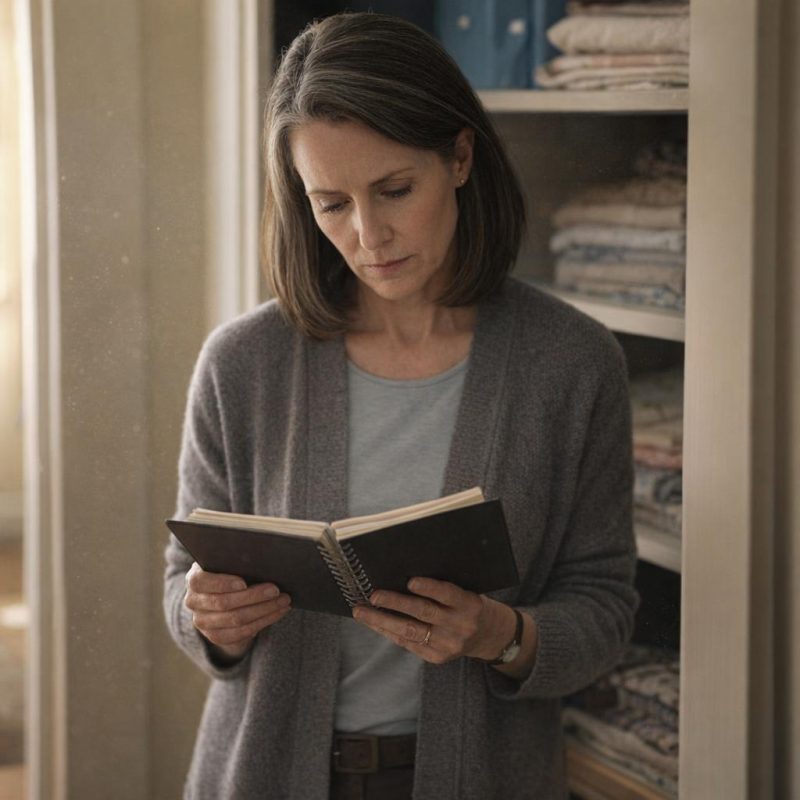 Image by RM AI
Twenty-Eight Years
Twenty-eight years is a long time to share a life with someone. Long enough that you stop noticing the small kindnesses because they've become the air you breathe. Daniel made the coffee every morning without being asked. He remembered which of my friends I'd had a falling-out with and never invited them to dinner without checking first. When my mother was sick, he drove me to her appointments without complaint and sat in those waiting rooms reading outdated magazines for hours, just so I wouldn't have to sit alone. We weren't a perfect couple — nobody is. We had our arguments about money and about whose turn it was to call the plumber and about the way he left cabinet doors open. But underneath all of it was something I trusted completely: the sense that we were honest with each other. Not in a dramatic, confessional way. Just in the ordinary, daily way that matters most. I knew his moods. I knew when he was stressed about work and when he was genuinely happy and when he was just pretending to be fine. Or at least I believed I did. We'd built something together — a home, a routine, a shared understanding of the world — and I never had reason to question the foundation of it. Standing in our kitchen on any given morning, watching him pour his second cup of coffee and squint at the crossword, I felt the full, quiet weight of twenty-eight years of shared history, and it felt like solid ground.
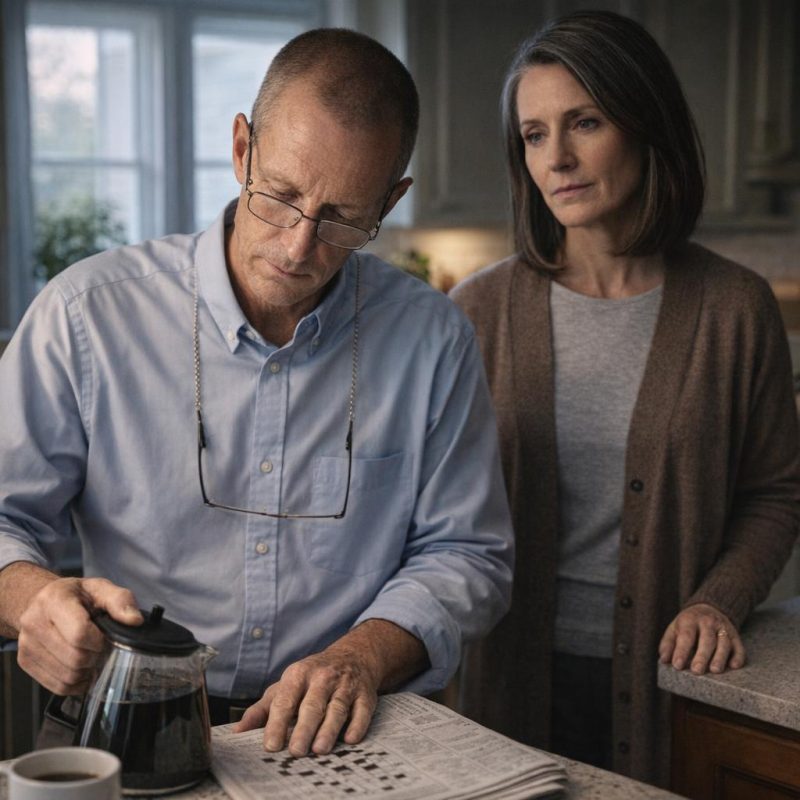 Image by RM AI
The Past He Never Shared
Early in our relationship, I learned that Daniel's family was a subject best approached carefully, if at all. He mentioned once, not long after we started dating, that his childhood had been complicated — his words, not mine — and that he preferred not to dwell on it. I didn't push. I'd grown up in a family that talked about everything, sometimes too much, so his quietness on the subject felt foreign to me at first. But I respected it. I asked a few times over the years, gently, whether he wanted to talk about his parents or his upbringing, and each time he'd give me a small, tight smile and change the subject. His mother had passed before I met him. His father he described only as absent. He had a sister, Patricia, who we saw occasionally at holidays — polished, composed, the kind of woman who always seemed to be performing for an invisible audience. Daniel never seemed entirely comfortable around her either, though he never said why. I stopped asking eventually. Everyone carries old wounds, and not everyone heals the same way. I told myself that his past was his to keep, and that loving someone didn't mean demanding access to every room in their history. It seemed like the right thing to do. It seemed like respect. I'd sit with him in the evenings, the television murmuring in the background, and the silence he kept about his past would settle into the room between us, soft and unexamined.
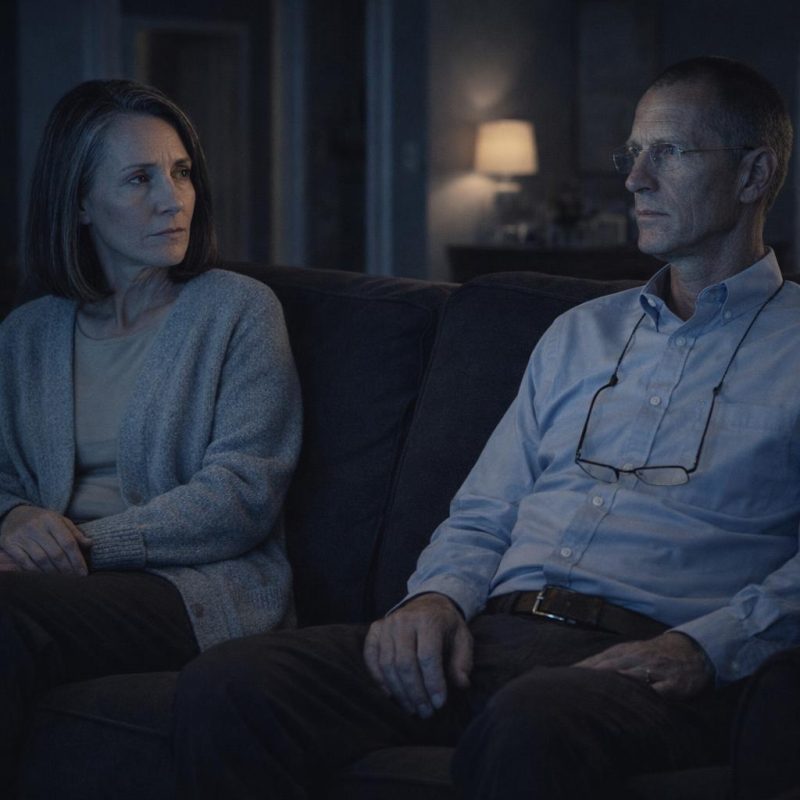 Image by RM AI
Rain on the Windows
It was raining that Thursday — a steady, grey drizzle that fogged the food bank windows and made the parking lot shine. I remember thinking it would be a busy morning. Rain always brought more people in, families who might otherwise have walked or taken the bus deciding it wasn't worth getting soaked. I was stationed near the canned goods table, which suited me fine. There's a meditative quality to stacking tins — the weight of them, the satisfying click when they line up just right. The line had formed early, snaking back toward the entrance, and I kept one eye on it while I worked, the way you do when you've been doing this long enough to read the room. Most of the faces were familiar. The older gentleman who always wore the same green jacket. The young mother with the twin girls who never stopped moving. The usual Thursday crowd, shuffling forward in the quiet, dignified way that people do when they're trying not to draw attention to their need. I was reaching for a box of crackers when something made me look up. Near the middle of the line, a woman stood slightly apart from the others, her arms crossed, her eyes fixed on the floor. There was nothing obviously unusual about her. But something about the shape of her face, the way she held herself, snagged at the edge of my attention in a way I couldn't immediately explain.
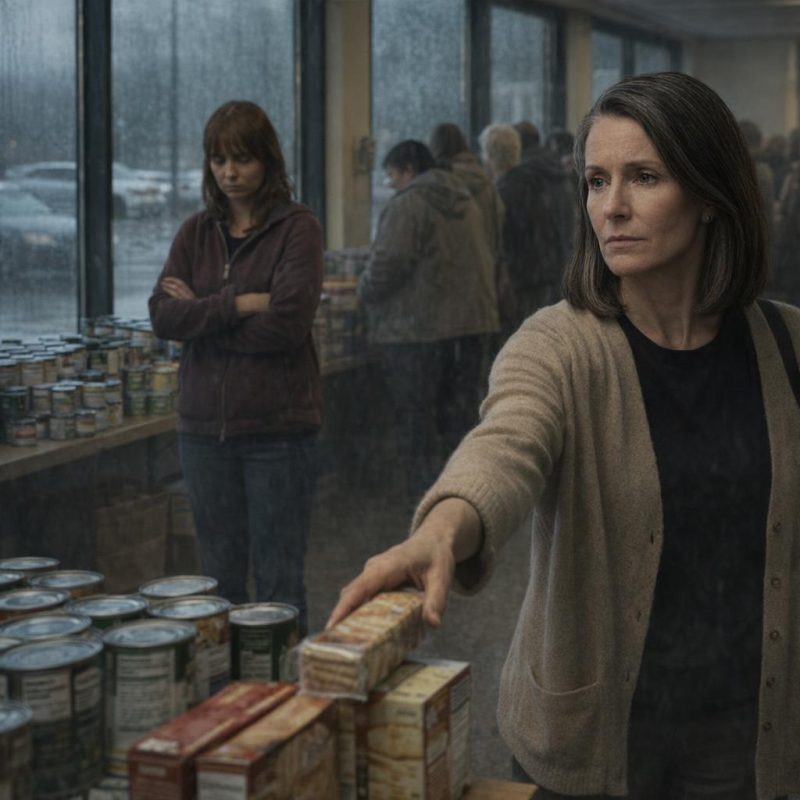 Image by RM AI
The Woman Who Froze
I don't know what made me keep looking. It wasn't polite, and I knew it — I'd been volunteering long enough to understand that people in that line deserved their privacy, not to be studied. But something about her face wouldn't let me look away. She was in her late thirties, I guessed, with dark circles under her eyes and a careful, closed-off posture that suggested she wasn't entirely comfortable being there. Then she glanced up, just briefly, the way people do when they sense they're being watched. Our eyes met across the room. What happened next was so immediate and so disproportionate that it stopped me cold. Her expression didn't just shift — it collapsed. The neutral, guarded look she'd been wearing vanished in an instant, replaced by something I can only describe as panic. Pure, unmistakable panic. She looked away so fast it was almost like a flinch, and then she stepped sideways, putting another person between herself and my line of sight, moving toward a different section of the line. I stood there holding a can of chickpeas, completely baffled. People got nervous at the food bank sometimes — it was an emotionally charged place — but this was different. This wasn't embarrassment. I watched her from the corner of my eye as I went back to sorting, and every few seconds she'd steal a glance in my direction, quick and anxious, like someone checking whether a threat had passed. I couldn't shake the fear I'd seen in her eyes when she turned away.
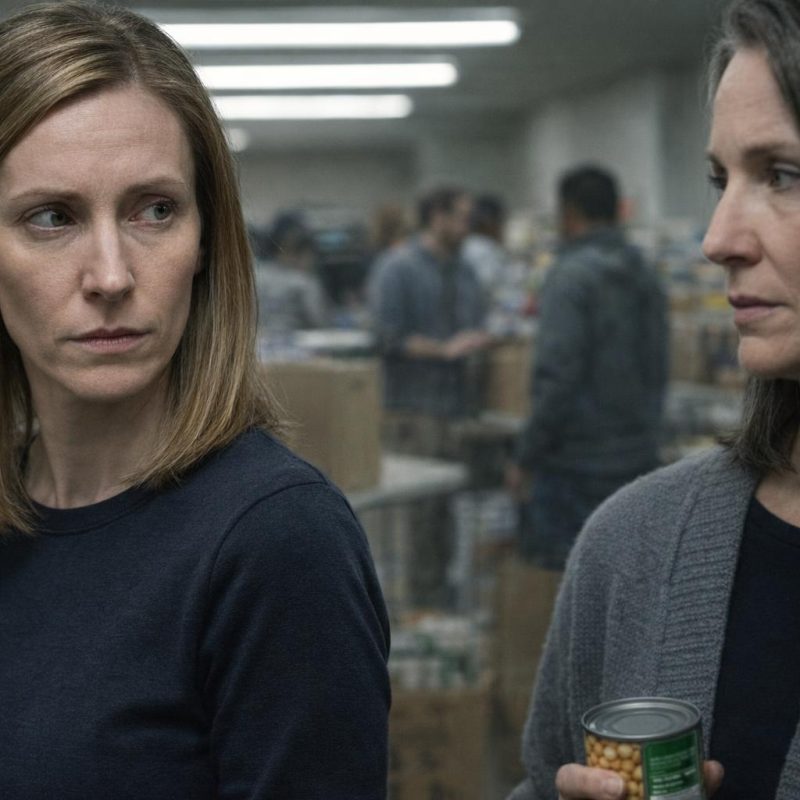 Image by RM AI
Following Her Outside
I tried to talk myself out of it. I told myself she'd probably mistaken me for someone else, that I was reading too much into a stranger's expression, that it wasn't my business. I went back to the canned goods table and tried to focus. But I kept finding my eyes drifting back to where she'd been standing, and then I noticed she wasn't there anymore. I scanned the room quickly. She was moving toward the exit doors, her head down, her pace faster than it needed to be for someone who'd been waiting in line for twenty minutes. Something in my chest pulled tight. I don't know how to explain the feeling except to say that it wasn't alarm exactly — it was more like the sensation you get when you've left the house and can't remember whether you turned off the stove. A low, insistent wrongness. I set down the box I was holding, grabbed my cardigan from the back of a chair, and went after her. I told myself I just wanted to make sure she was all right. The rain hit me the moment I pushed through the exit doors, cold and immediate, soaking my cardigan before I'd taken three steps. She was already halfway across the parking lot, moving fast, her shoulders hunched against the weather. I raised my voice over the sound of the rain and called out, asking if we knew each other.
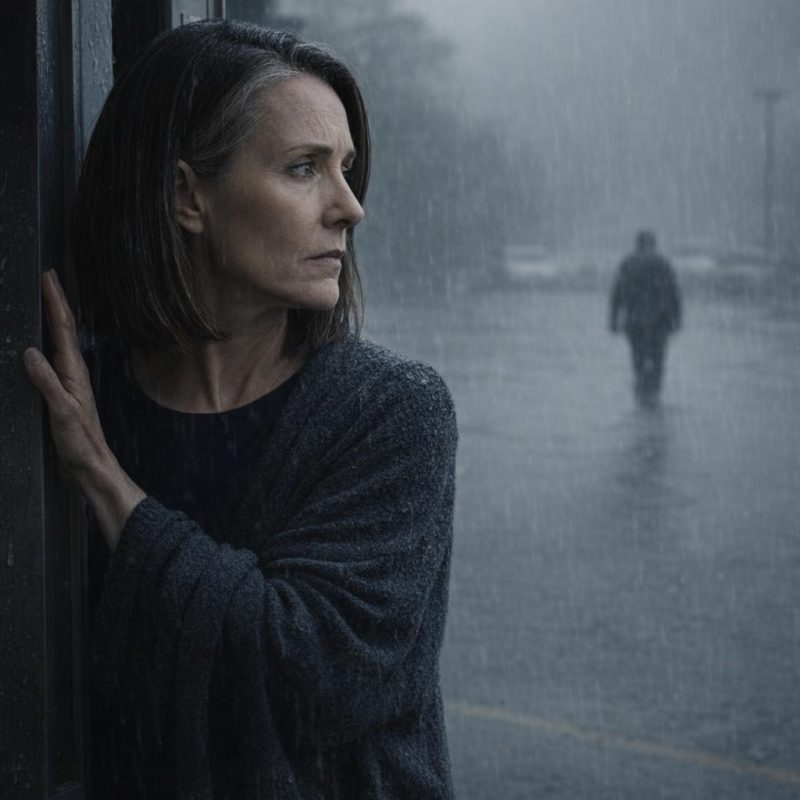 Image by RM AI
I'm Daniel's Daughter
She stopped walking. For a moment she just stood there with her back to me, rain darkening her jacket, and I thought she was going to keep going. Then she turned around. Her eyes were wet — from the rain, maybe, or maybe not. She looked at me for a long moment without speaking, and I could see her working up to something, the way you can always tell when someone is trying to find the right words for something that doesn't have any. I waited. The rain came down steadily between us. 'My name is Emily,' she finally said. Her voice was quiet, almost swallowed by the weather. She paused again, and I watched her jaw tighten, watched her take a breath that seemed to cost her something. 'I'm Daniel's daughter.' I heard the words. I understood them individually. But they didn't assemble into meaning the way words usually do. Daniel didn't have a daughter. I would have known. Twenty-eight years, and I would have known. She said she was sorry, that she'd never meant for me to find out this way. Then she turned and walked quickly to a car I hadn't noticed at the edge of the lot, got in, and drove away. I stood in the rain and didn't move. The words were still sitting in the air where she'd left them.
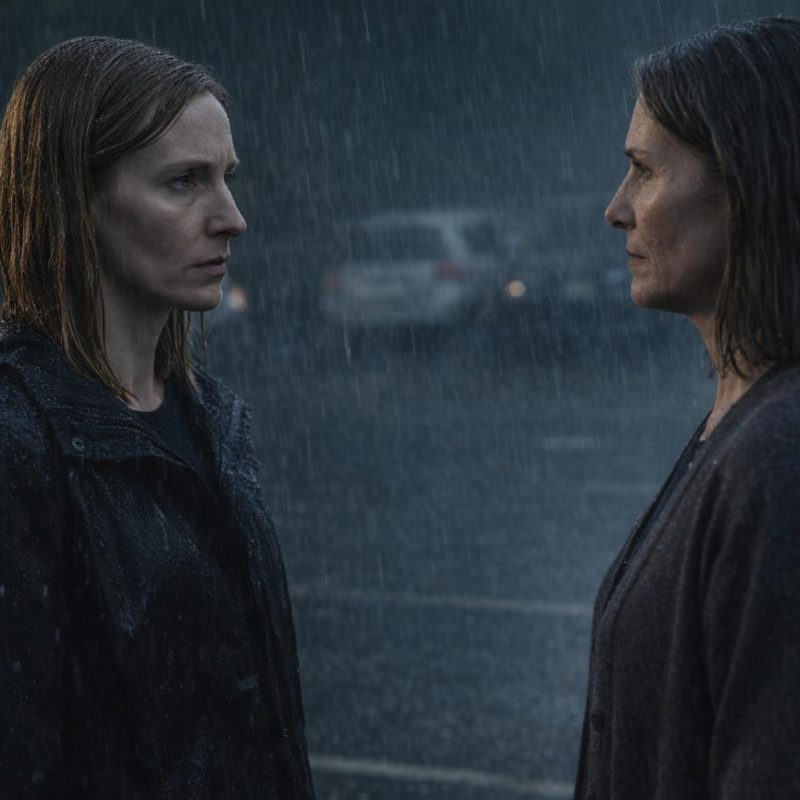 Image by RM AI
The Confrontation
I drove home in a fog. The rain hadn't let up, and I kept the wipers on high the whole way, watching them sweep back and forth like they were trying to clear something that wasn't on the glass. I didn't turn on the radio. I just drove and let the words sit in my chest — I'm Daniel's daughter — and tried to figure out what to do with them. By the time I pulled into the driveway, I'd made up my mind that I wasn't going to wait. I wasn't going to sit on this until I'd worked myself into a quiet panic. I was going to ask him directly, and I was going to watch his face when I did. Daniel got home around six-thirty, same as always, shaking the rain off his jacket in the entryway. I let him get through the door. I let him set down his bag. Then I said, as evenly as I could manage, that I needed to ask him something and I needed him to be honest with me. He looked up, and I could see him reading my expression, trying to figure out what this was about. I asked him if he had a daughter named Emily, and I watched his face as I said her name.
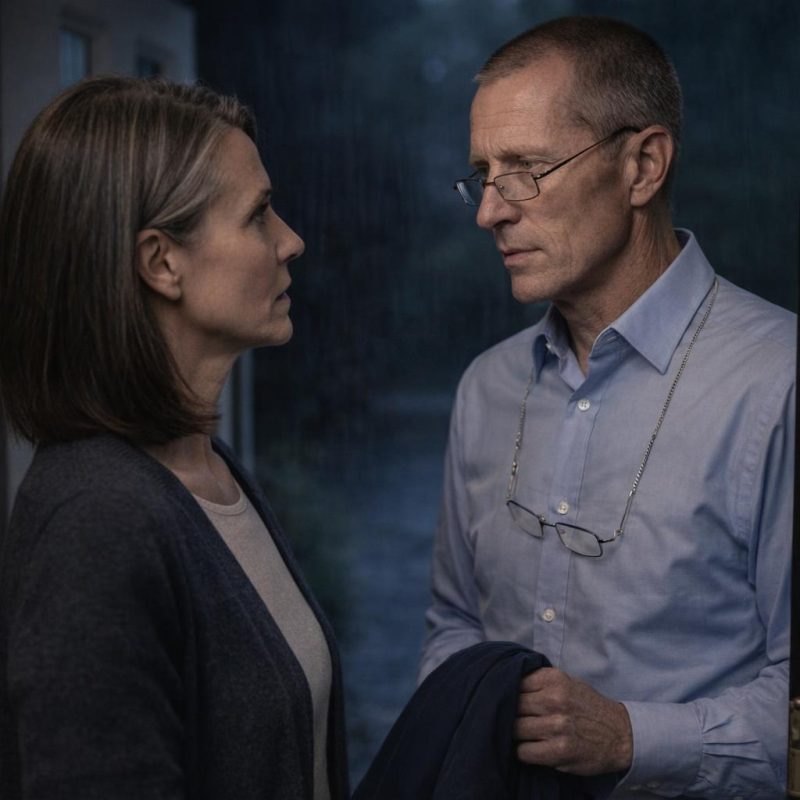 Image by RM AI
His Version of the Story
He talked for a long time. He said he'd been twenty-three when he met Linda, that she was older and he'd been in over his head from the start. He said she was controlling, that the relationship had been a mess, and that by the time he found out she was pregnant, things had already fallen apart between them. He said he'd tried to be involved — he wanted me to understand that — but that Linda had made it impossible. She'd moved, changed her number, and eventually he'd stopped being able to reach her at all. He said he'd tried again years later, when Emily was older, but by then Emily didn't want anything to do with him. He spread his hands on the table like he was offering me something. He said he was sorry he hadn't told me. He said he'd convinced himself it was in the past, that it didn't affect our life together. I sat across from him and listened to all of it. The words were reasonable. The sequence made a kind of sense. But something about the way he told it — the way the sentences came out smooth and complete, the way he had an answer ready each time I opened my mouth — sat in my stomach like a stone. I couldn't point to a single thing he'd said that was obviously wrong. I just felt the distance between what he was telling me and what I was actually feeling keep getting wider.
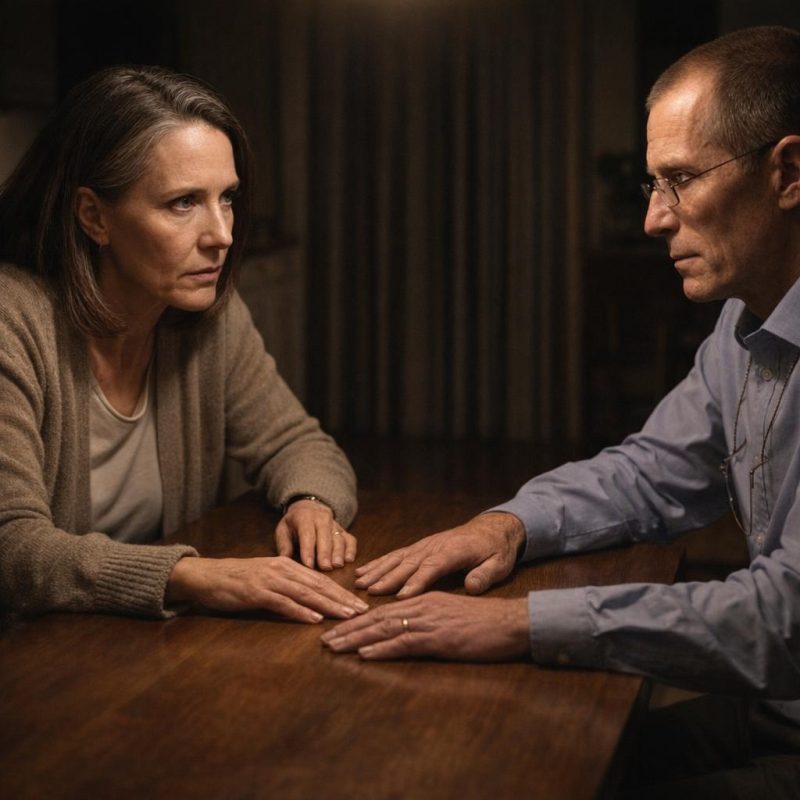 Image by RM AI
The Rehearsed Explanation
I lay there in the dark for hours. Daniel had fallen asleep beside me without much trouble, his breathing slow and even, and I kept watching the ceiling and replaying the conversation in my head. Not the content of it — the texture of it. The way he'd said Linda was controlling before I'd even asked what went wrong. The way he'd mentioned trying to reconnect with Emily years later, like he'd anticipated I'd wonder about that. The way he'd paused in exactly the right places, like someone hitting marks on a stage. I've spent thirty years in medicine. I've sat across from patients who were scared and patients who were lying and patients who were both at once, and something in me recognized the quality of his delivery — the way the sentences arrived without hesitation, without the stumbling that comes when someone is finding words for the first time. I couldn't prove anything. Maybe I was overthinking it. Maybe the smoothness was just what grief looked like on a man who'd had decades to make peace with something painful. But I kept coming back to the same small thing: he hadn't once asked me how I was feeling. He'd explained, and he'd apologized, and he'd waited to see if I'd accepted it. And lying there in the dark with his breathing steady beside me, I couldn't stop hearing the way his answers had come — polished and complete, each one landing without a single rough edge.
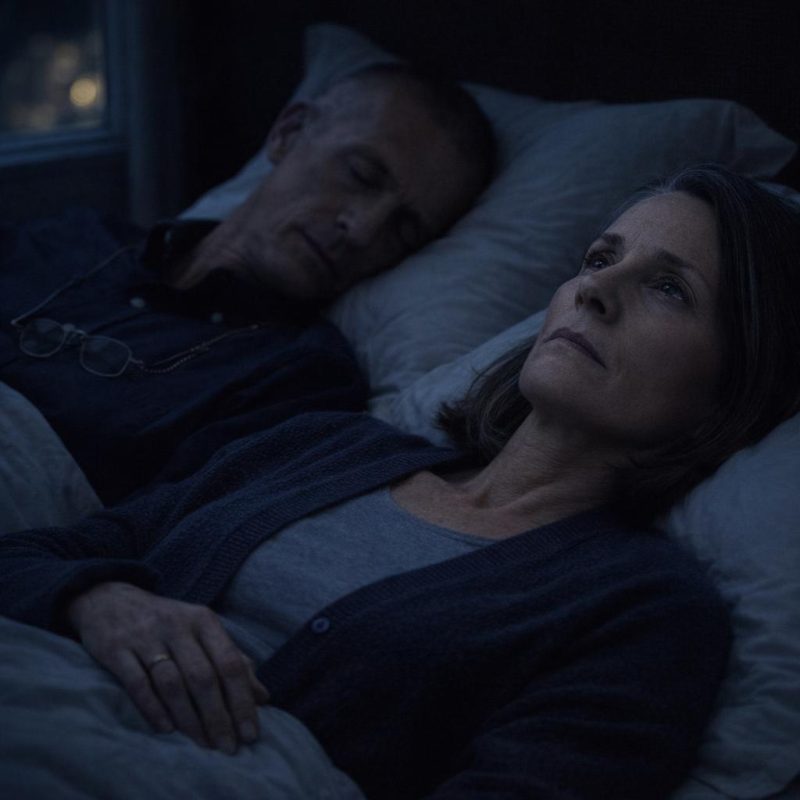 Image by RM AI
Twenty-Eight Years of Lies
I woke up the next morning feeling like I hadn't slept at all, which I mostly hadn't. Daniel was already up, moving through the bathroom with his usual routine — the shower, the electric razor, the particular way he hummed something tuneless while he knotted his tie. I lay in bed and listened to all of it and tried to figure out when it had started to sound foreign to me. Twenty-eight years. I kept turning that number over. Twenty-eight years of dinners and vacations and arguments about nothing and making up after them, and somewhere underneath all of it there had been this — a daughter he'd never mentioned, a whole chapter of his life that had existed before I ever arrived. I watched him come out of the bathroom, straighten his collar in the mirror, check his phone. He looked exactly like himself. That was the part I couldn't get past. He looked completely, ordinarily like the man I'd married, and I didn't know what to make of that anymore. He came over and kissed me on the forehead before he left, the same way he had ten thousand mornings before this one, and I let him. I heard the front door close. I heard his car back out of the driveway. I got up slowly and walked to the bathroom, and I stood in front of the mirror and looked at the woman looking back at me, and I barely knew her face.
 Image by RM AI
The Decision to Investigate
I sat at the kitchen table for a long time after he left. The coffee went cold in front of me and I didn't touch it. I kept thinking about what Daniel had said — Linda was controlling, Emily didn't want contact, it was all in the past — and I kept thinking about Emily's face in the parking lot, the way her jaw had tightened before she spoke, the way she'd said she was sorry like she meant it. Those two things didn't fit together the way they should have. A woman who didn't want contact doesn't drive to a food bank and wait in the rain to introduce herself to her father's wife. Something about that didn't add up, and I couldn't let it go. I didn't know what the truth was. I didn't know who to trust or what I was walking into. But I knew I couldn't just sit in this kitchen and accept one side of a story that clearly had more than one side. I needed to hear from Emily. I needed to go back to the food bank, on a Thursday when the lines were longest, and I needed to look for her. It felt frightening in a way I hadn't expected — not dangerous, just the particular fear of a door you can't un-open. But I'd spent enough years in medicine to know that not looking at something doesn't make it go away. The decision settled into me quietly, the way the right ones sometimes do, and I sat with it until I was ready to move.
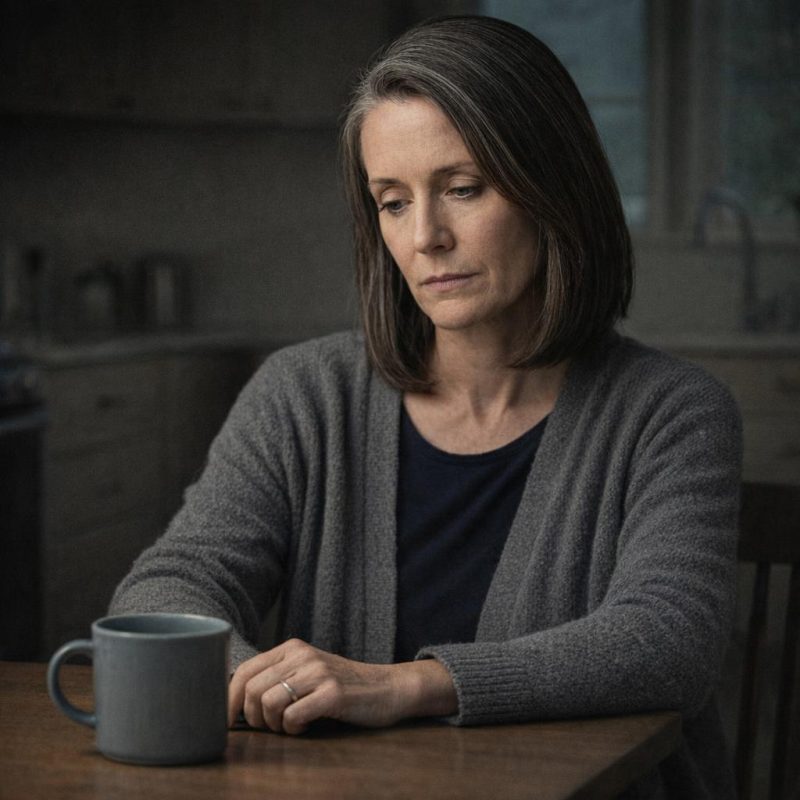 Image by RM AI
Searching the Food Bank
I went back the following Thursday. I got there early, before the line had fully formed, and I tied on my apron and took my usual spot behind the produce table like nothing was different. But everything was different. I kept watching the door. Every time it opened I looked up, and every time it wasn't her I had to remind myself to keep moving, keep handing things across the table, keep smiling at the families coming through. One of the other volunteers, a woman named Bev who'd been there longer than anyone, asked me twice if I was all right. I told her I hadn't slept well. That was true enough. The morning stretched out long and slow. Families came and went. Children ran between the tables while their parents filled bags. I watched every face that came through the door and Emily wasn't any of them. By noon the crowd had thinned and I was still watching, and by the time we started breaking down the tables I had to accept that she wasn't coming. I didn't know if she'd moved on to a different location, or if she'd gotten what she came for and didn't need to return, or if something else entirely had kept her away. I just knew the doorway kept opening onto strangers, and the space where she might have been stayed empty all morning.
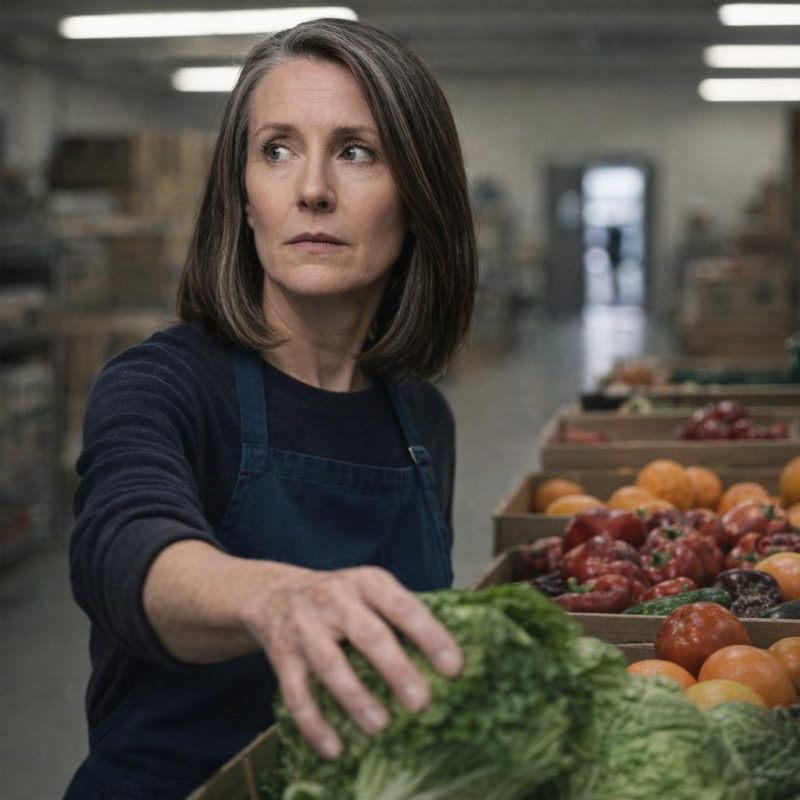 Image by RM AI
The Phone Number
I waited until most of the other volunteers had gone before I approached the coordinator. Her name was Diane, and she'd run the Thursday shift for years — organized, no-nonsense, the kind of person who kept paper records in a binder when everyone else had gone digital. I told her I was looking for someone named Emily who'd come through recently, that it was a personal matter and not anything to do with the food bank. Diane looked at me over her reading glasses for a moment, and I could see her weighing it. She said she had a policy about sharing client information, that it wasn't something she did lightly. I told her I understood completely, that I wasn't asking her to do anything she wasn't comfortable with, but that it was important — genuinely important — and that I wouldn't misuse it. She was quiet for a moment. Then she opened her binder, ran her finger down a page, and said she had a volunteer application with that name on it. Not a client — a volunteer. She wrote something on a slip of paper, folded it once, and held it out to me with a look that said she trusted me to be careful with it. I took it with both hands, and when I unfolded it in the parking lot, there was a phone number written in small, careful handwriting, and my hands wouldn't stop shaking.
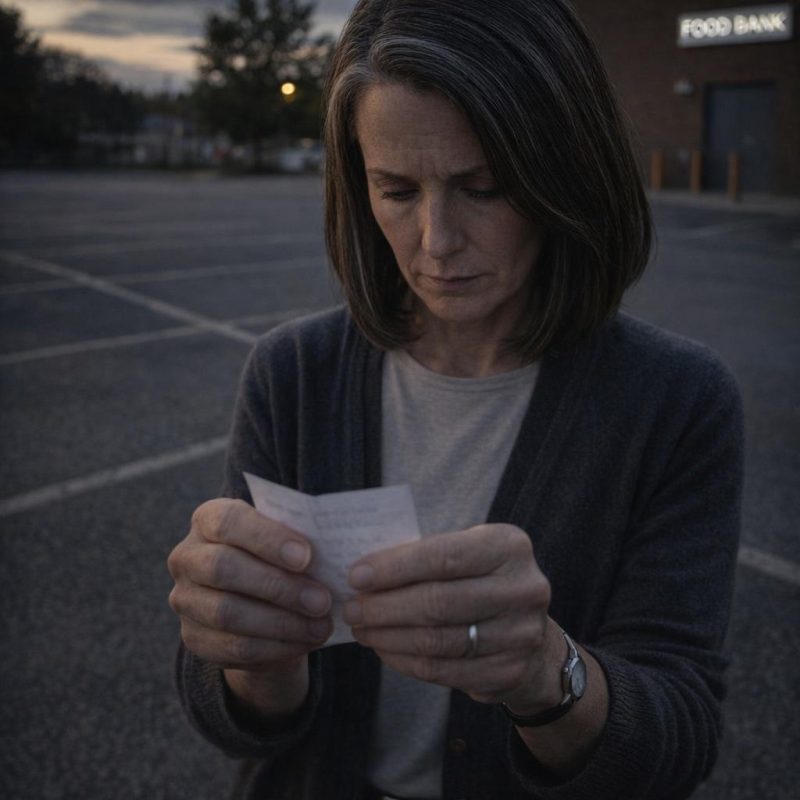 Image by RM AI
The First Call
I waited until Daniel left for his Thursday evening golf league before I sat down at the kitchen table with the slip of paper. I'd been carrying it in my cardigan pocket for three days, and I'd taken it out and put it back more times than I could count. I smoothed it flat on the table in front of me. I picked up my phone. I put it down again. Then I picked it up and dialed before I could talk myself out of it. It rang four times — I counted — and then it went to voicemail. The recorded message was short. Just her name and a request to leave a message. But her voice on that recording was quiet and careful, with a slight catch underneath it, the sound of someone who had learned to be guarded about who might be on the other end of a call. I left a message. I told her my name. I said I'd been thinking about what she'd told me in the parking lot and that I needed to understand more, and that I hoped she'd be willing to meet with me somewhere she felt safe. I said I wasn't calling to cause trouble. I said I just needed to know the truth. My voice shook on that last part and I didn't try to hide it. When I hung up, I sat there with the slip of paper still open on the table, and Emily's voice on that recording — careful, guarded, young-sounding — stayed with me in the quiet kitchen.
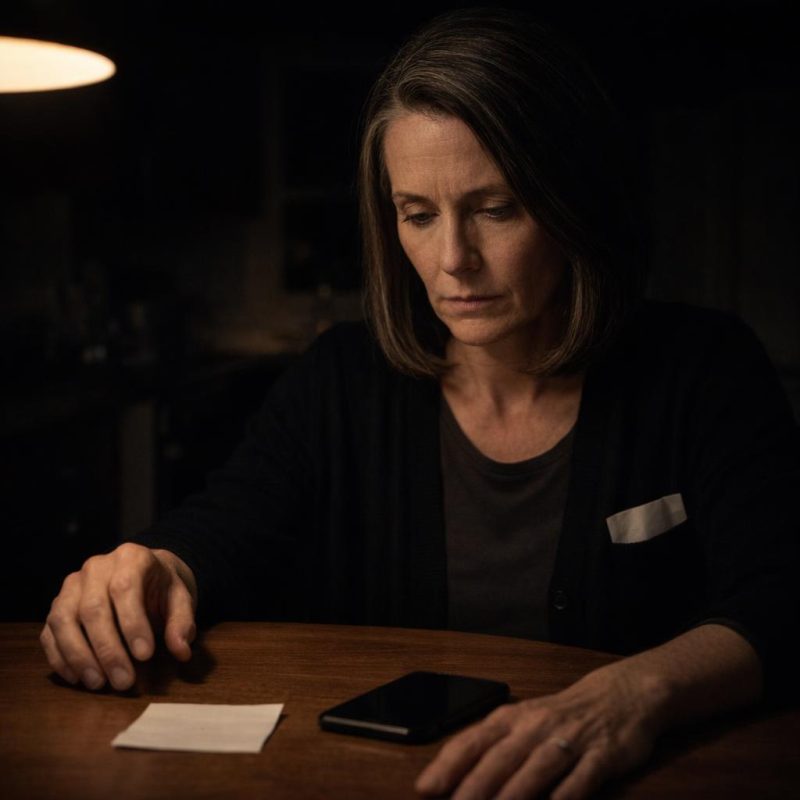 Image by RM AI
The Coffee Shop
She called back the next afternoon, while I was standing at the kitchen counter pretending to sort through mail I'd already sorted twice. Her voice was the same as the recording — careful, measured, like she was choosing each word before she let it out. She said she'd meet me. A coffee shop downtown, neutral ground, her suggestion. I said yes before she finished the sentence. I got there fifteen minutes early, which I told myself was just good habit, though I knew it was nerves. I ordered a cup of tea I had no intention of drinking and took a table near the window where I could see the door. I wrapped both hands around the mug and watched the street outside. I'd been a nurse for thirty years — I'd sat with frightened people in difficult rooms and I knew how to hold myself steady. But sitting there, waiting, I felt none of that steadiness. I kept rehearsing opening lines and discarding them. I kept checking the time. I thought about Daniel at home, not knowing where I was or who I was about to sit across from. And then the door opened, and Emily walked in — and the look on her face was the same thing I felt in my chest: pure, undisguised fear.
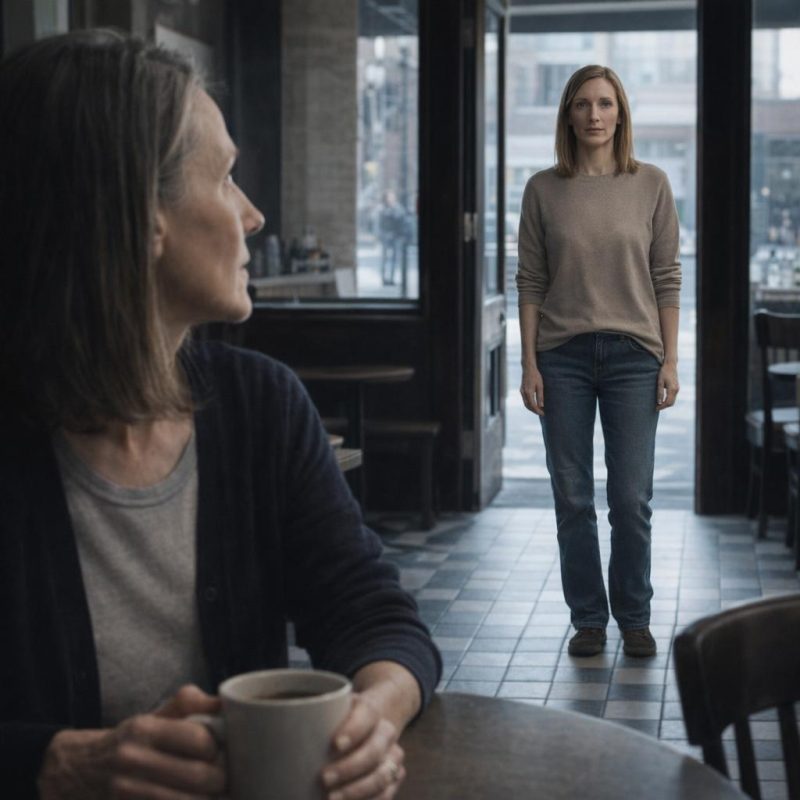 Image by RM AI
Emily's Story
We sat across from each other for a long moment before either of us spoke. She thanked me for calling. I told her I was glad she'd come. Then she folded her hands on the table and started talking, quietly, like she'd rehearsed this too but wasn't sure she'd get through it. She told me her mother's name was Linda. She said Daniel had been with Linda before I ever came into the picture, that Emily was born when he was still young, and that he left not long after. She said he just stopped coming around. No goodbye, no explanation, no forwarding address. Her mother had worked two jobs most of Emily's childhood, she said, and Emily had grown up with a space where a father was supposed to be, wondering what she'd done wrong. She said she used to watch other kids get picked up from school and she'd count the days since she'd last heard his name. She said she stopped counting eventually. I listened to all of it without interrupting. I believed her pain — that part was unmistakable, sitting right there in the set of her jaw and the way her voice went thin when she talked about being young and waiting. The waiting was the part that stayed with me long after she'd gone quiet.
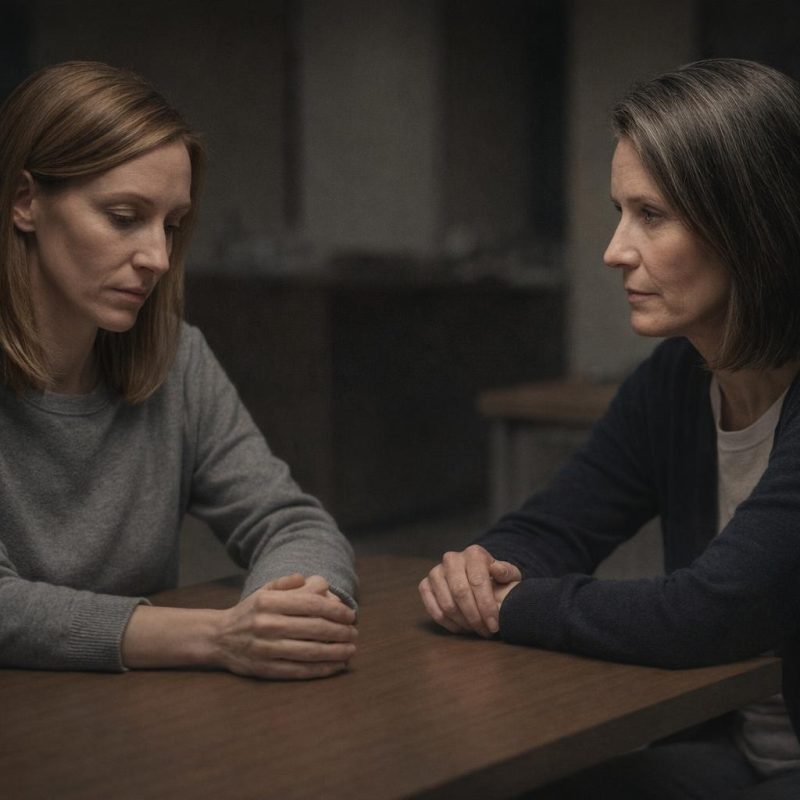 Image by RM AI
The Inconsistencies
After a while I started asking questions, gently, the way I used to take a patient's history — not to catch anyone out, just to understand the shape of things. I asked her how old she was when Daniel left. She said she was very young, maybe two or three, she wasn't sure. I asked what year that would have been. She paused, looked at the table, gave me a range of a few years. I wrote nothing down but I noted it. The range she gave me overlapped with something Daniel had mentioned once, years ago, about where he'd been living in his late twenties — a city two states away. I didn't say that. I asked about her mother's letters, whether Linda had ever tried to reach him. Emily said she thought so, but she didn't know the details, her mother hadn't talked about it much. Some of her answers had that quality — not evasive exactly, more like she was working from memory that had gaps in it, which was understandable. But a few things didn't quite line up with each other, and I couldn't tell if that was because she was uncertain or because she was being careful. I drove home with more questions than I'd arrived with, and the ones I couldn't answer sat quietly in the passenger seat beside me.
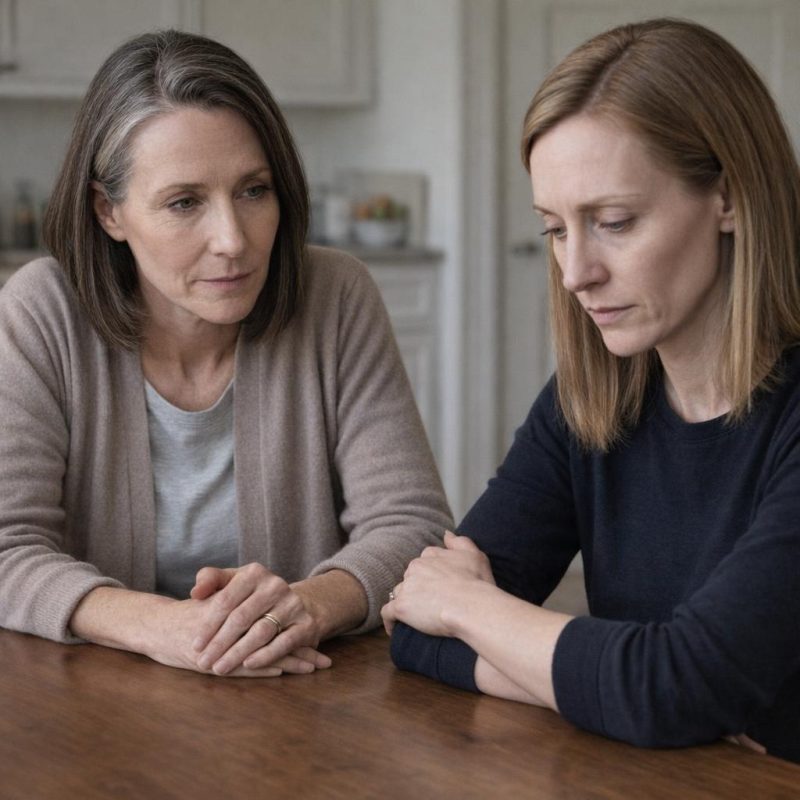 Image by RM AI
The First Warning
I pulled into the driveway just after four and stopped at the mailbox out of habit. There were two bills, a catalog I hadn't asked for, and a plain white envelope with no return address. My name was typed on the front — not handwritten, typed — in a plain font, no stamps that stood out, nothing to mark it as anything other than ordinary. I stood at the end of the driveway and turned it over twice before I opened it. Inside was a single sheet of white paper, also typed. No greeting, no signature. Just a short paragraph telling me that asking questions about Daniel's past was a mistake. That there were people who would be hurt if old things were dug up. That I should think carefully about what I was doing and who I was doing it to. My hands had gone very still by the time I reached the bottom of the page. I read it twice. I looked up and down the street, which was empty and quiet and completely ordinary. I didn't know who had sent it or how they knew what I'd been doing. I didn't know if I was supposed to feel warned or watched or both. I looked back down at the page. The last line read: *Some secrets are buried for a reason.*
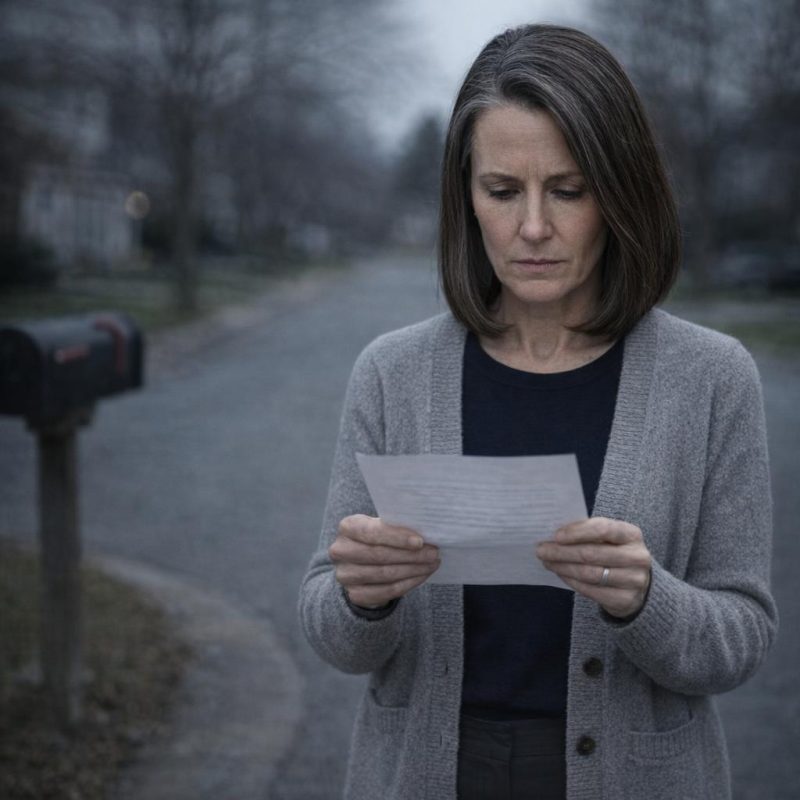 Image by RM AI
The Hidden Box
I waited until Daniel's car had been gone for twenty minutes before I pulled down the attic stairs. I told myself I was just looking for the old tax files, which was a lie I didn't bother to believe. I took a flashlight because the single bulb up there had been unreliable for years, and I moved slowly through the low space, stepping around boxes of Christmas ornaments and old textbooks and the suitcase with the broken wheel we'd never thrown away. I wasn't sure what I was looking for. I just had the feeling — the same feeling I'd had as a nurse when a chart didn't add up — that there was something I hadn't been shown. It was behind the Christmas boxes, pushed back against the far wall where the roof sloped down. A cardboard box, the kind that copy paper comes in, sealed with tape that had yellowed and gone brittle at the edges. It was covered in a fine layer of dust that told me it hadn't been touched in a very long time. I crouched down and put both hands on it. It was heavier than I expected. I carried it carefully to the attic stairs, then down, then to the kitchen table, where the afternoon light was better. I set it down and stood there with my hands resting on the lid, not yet ready to open it.
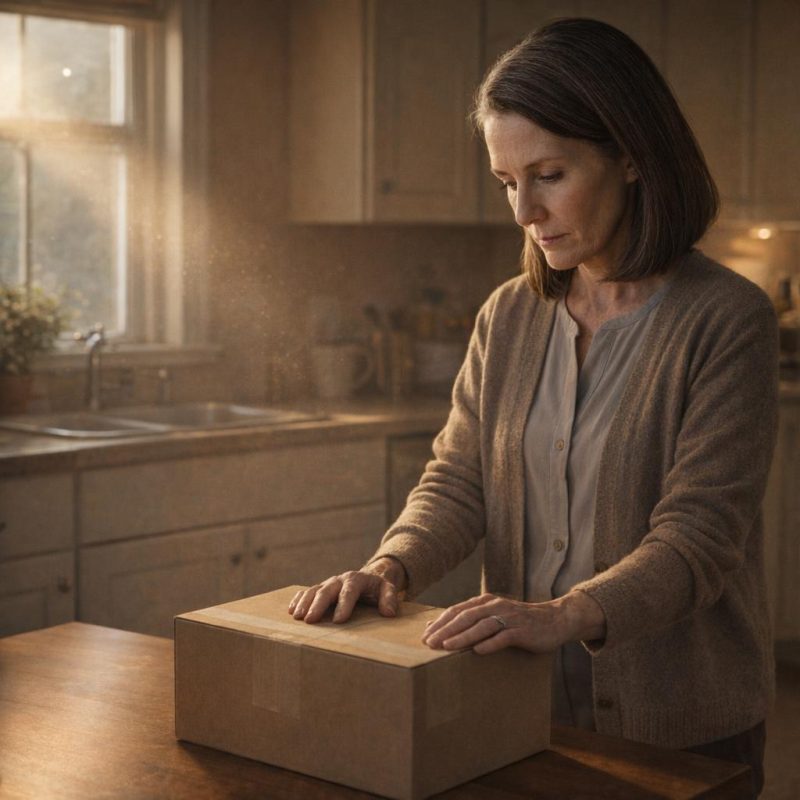 Image by RM AI
Photographs and Documents
I found a box cutter in the junk drawer and cut the tape along the seam. The cardboard flaps lifted stiffly, like they'd been sealed so long they'd forgotten how to open. On top was a layer of photographs, loose, not in any album. I picked up the first one and my breath caught. It was Daniel — young, maybe late twenties, with more hair and a thinner face, but unmistakably him. He was standing beside a woman I didn't recognize, dark-haired and slight, and she was holding a baby wrapped in a yellow blanket. They were standing in front of a house I'd never seen. There were more photographs underneath, some of just the woman, some of the baby at different ages, a few of Daniel holding the child. Beneath the photographs were documents, folded and refolded until the creases had gone soft. I opened the first one carefully. It was a birth certificate. The name on it was Emily Henderson. I set it down on the table beside the photographs and kept going. At the bottom of the box was a thick stack of envelopes, bound with a rubber band that had gone stiff and cracked when I tried to remove it. All of them were addressed to Daniel. None of them had been opened. I sat there with the photographs spread out in front of me and the birth certificate beside them, and the unopened letters in my hands.
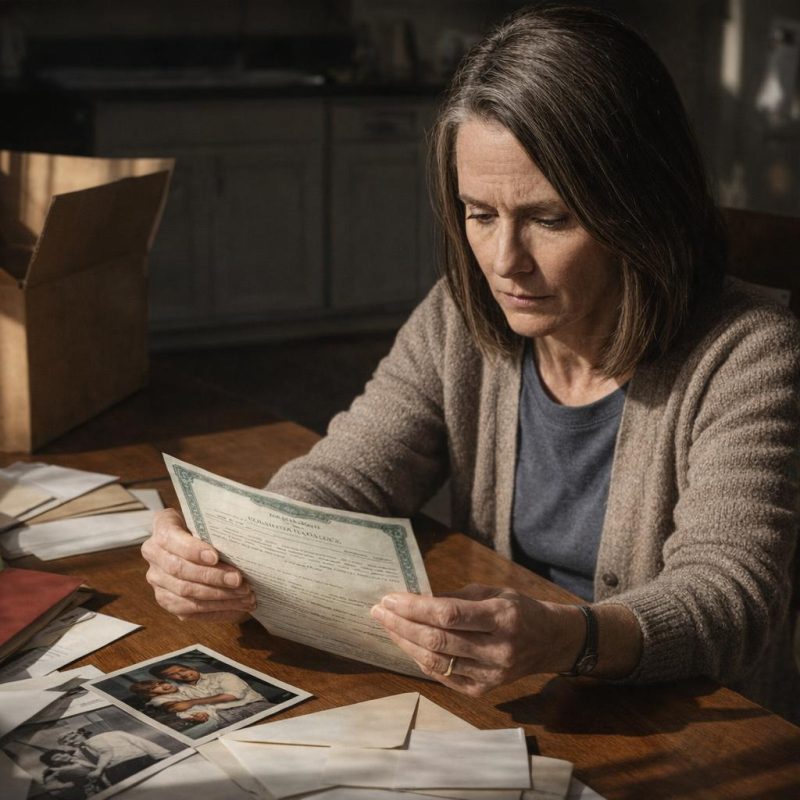 Image by RM AI
Letters from Linda
I set the stack of envelopes on the table and looked at them properly. They were all addressed to Daniel, at an address I didn't recognize — somewhere he must have lived before we met. The return address on every single one was the same: Linda Henderson, with a street in a city I'd never heard him mention. I counted them. Fourteen envelopes. I fanned them out and checked the postmarks, which were faded but still legible on most of them. The earliest ones were from thirty-five years ago. The most recent I could make out was from about twenty years back — which meant they'd been arriving for fifteen years, and then they'd stopped. Every one of them was sealed. I turned them over, looking for any sign that they'd been opened and resealed, but the flaps were all intact, the paper undisturbed. He had kept them. That was the part I kept coming back to — he had kept every one of them, carried them through at least one move that I knew of, sealed them into this box, and taped it shut. I didn't understand that. If you wanted to forget something, you didn't keep it. And if you kept it, why never open it. I sat with that question for a long time. Then I picked up the earliest envelope — postmarked thirty-five years ago, Linda Henderson's name in the upper left corner — and held it in both hands.
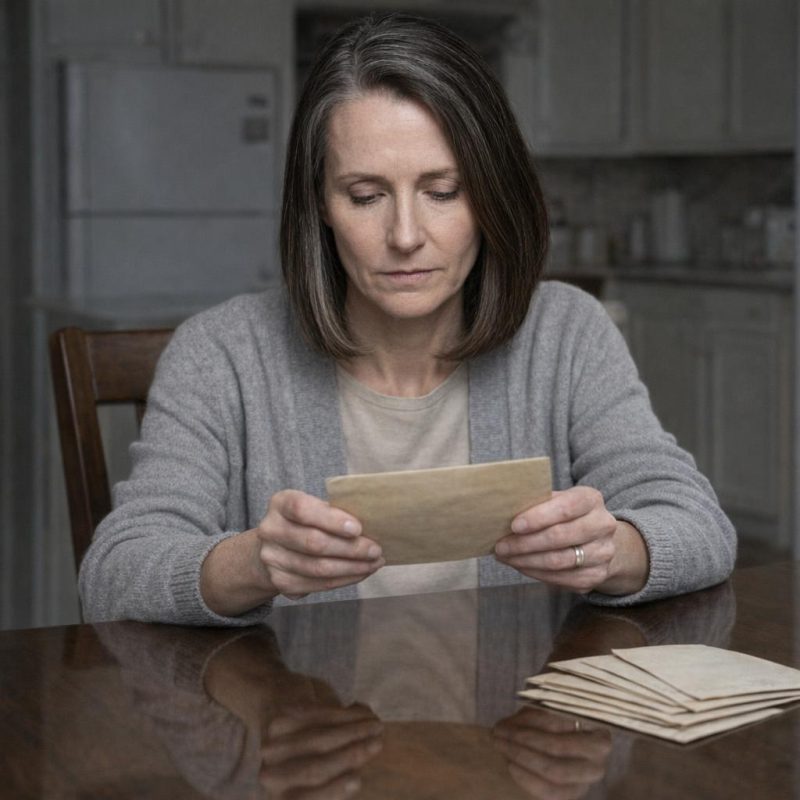 Image by RM AI
The Confrontation About the Box
I left everything on the kitchen table. The photographs, the birth certificate, the stack of envelopes fanned out so they were impossible to miss. I sat in the chair closest to the window and waited. I heard Daniel's key in the lock just after six. He came through the front hall the way he always did, setting his bag down, calling my name. I didn't answer. I heard his footsteps cross the hardwood and then stop in the kitchen doorway. The silence that followed was different from ordinary silence. I looked up. He was standing very still, one hand still on the doorframe, his eyes moving across the table — the photographs, the birth certificate, the letters — and then his face went the color of old chalk. His bag slipped from his shoulder and he caught it without looking at it, his eyes still fixed on the box. I asked him why he'd kept it all hidden. He said he didn't know how to explain. I asked him about the letters — fourteen of them, all from Linda, all unopened. He said he couldn't bring himself to read them. I asked him what that meant. He said some things were too hard to face. His answers came out slow and thin, like he was building them as he went. I watched him and said nothing. He was still standing in the doorway, both hands gripping the frame now, staring at the box on the table as though it had spoken his name.
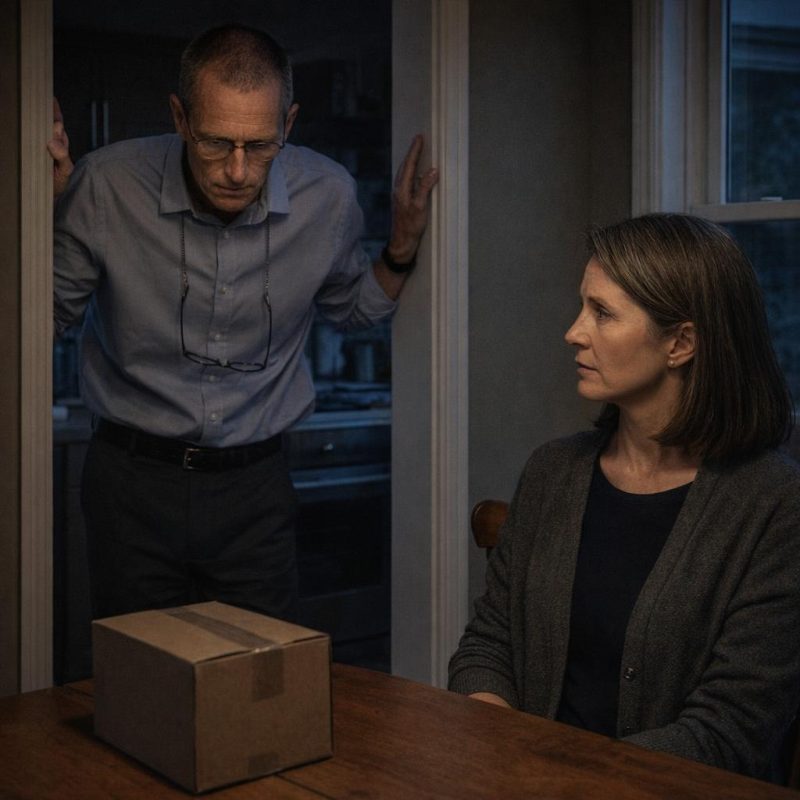 Image by RM AI
Weak Excuses
He stood there for a long moment, not moving, just staring at the table. Then he said he'd kept the letters because throwing them away felt wrong, but reading them felt worse. He said Linda had hurt him — that she'd made things impossible, that she'd pushed him out. I asked him, as calmly as I could manage, why a woman who was pushing him away would write fourteen letters asking him to stay. He didn't have an answer for that. He said it was complicated. He said I didn't understand the full picture. I told him I was trying to understand it, that's why I was sitting there, that's why I'd waited for him. He rubbed the back of his neck and said I was making more of this than it deserved, that it was old history, that it had nothing to do with us. Something tightened in my chest when he said that. Nothing to do with us. A child. Fourteen letters. A box hidden in a closet for decades. Then he moved toward the table, reaching for the photographs, stacking them, sliding the letters back toward the box — his hands gathering up everything I'd spent two days trying to understand.
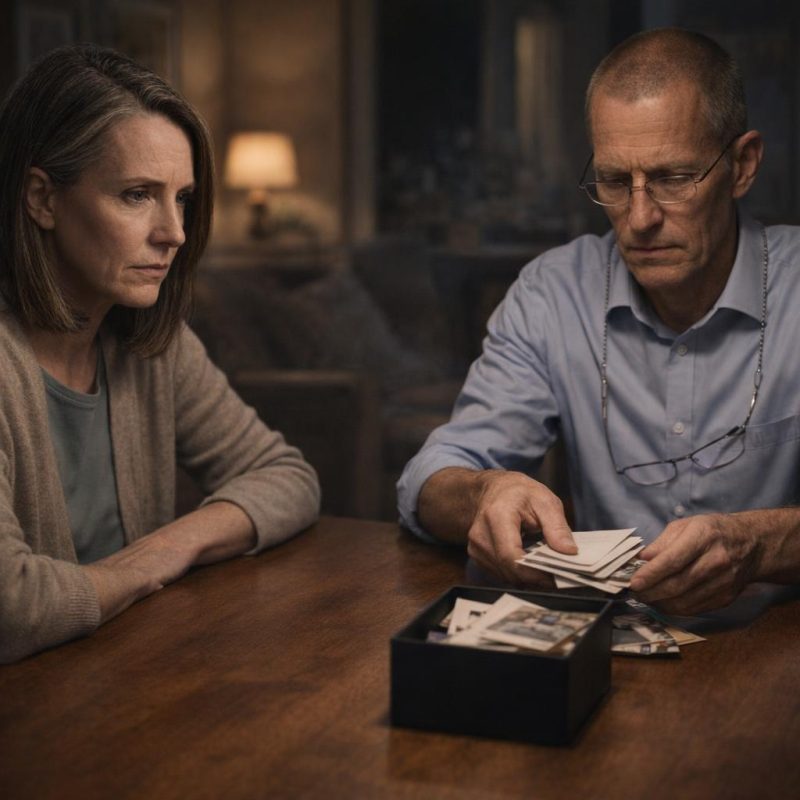 Image by RM AI
Sharing the Discovery
I called Emily the next morning, before Daniel was even out of the shower. I didn't plan what I was going to say — I just dialed the number she'd given me and waited. She picked up on the third ring, and I told her I'd found something. I told her about the box in the closet, the photographs, the birth certificate, the fourteen letters from her mother that had never been opened. There was a long silence on her end. Then she said she wanted to see them. We agreed to meet that afternoon at the same coffee shop. After I hung up, I sat at the kitchen table for a while, looking at the box. Taking it felt like a line I couldn't uncross. Sharing Daniel's private things with a woman he'd never acknowledged — there was something that felt both necessary and wrong about it at the same time. But I kept coming back to those letters. Fourteen of them. Unopened. Whatever Daniel's reasons were, Emily deserved to know her mother had tried. I packed everything carefully, the way I used to pack patient files — methodically, nothing out of order. I drove to meet her with the box on the passenger seat beside me, and somewhere on the highway I stopped feeling like I was betraying my spouse and started feeling like I was finally doing something honest.
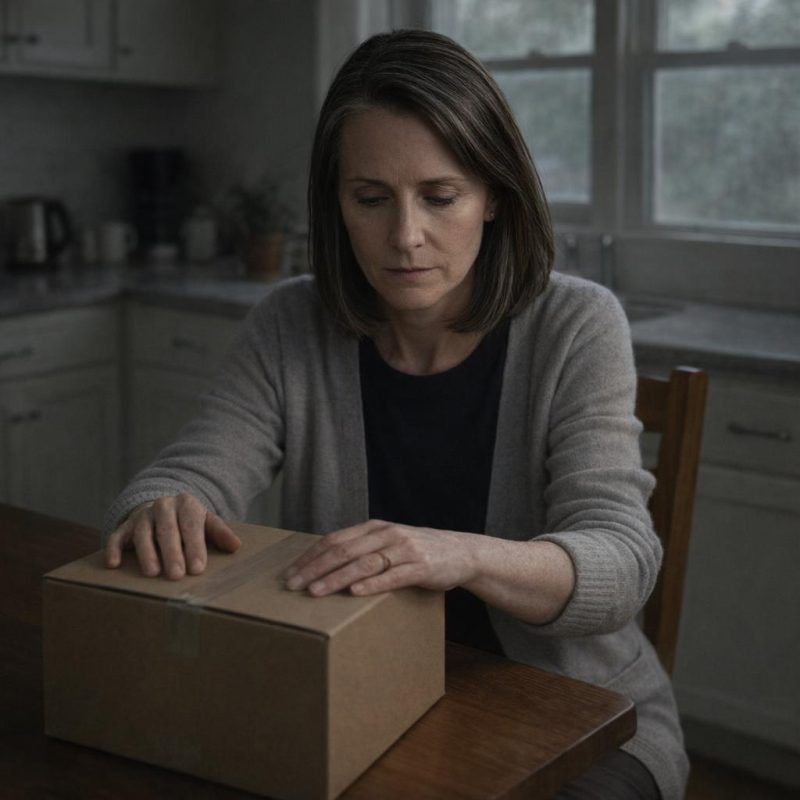 Image by RM AI
Emily Sees the Evidence
I spread everything out on the table between us, the same way I had at home — photographs first, then the documents, then the letters in their stack. Emily sat across from me and didn't say anything for a moment. She just looked. Then she reached out and picked up one of the photographs — a young woman holding a baby, standing in front of a car I didn't recognize, squinting into the sun. Emily's hand went very still. She said, quietly, that was her mother. She said she hadn't seen a photograph of Linda that young in years. She set it down and picked up another one, this one of the same woman sitting on a porch step, laughing at something off-camera. Emily touched the edge of it with her fingertip, not quite holding it, just touching it. I showed her the unopened letters then, all fourteen of them, still sealed. She stared at them for a long time. She said she hadn't known her mother had written to him at all — Linda had never mentioned letters, only that he was gone and wasn't coming back. I didn't say anything. I just watched Emily sit with that, the photograph of her young mother still resting under her fingertips, a tear sliding down the side of her face that she didn't bother to wipe away.
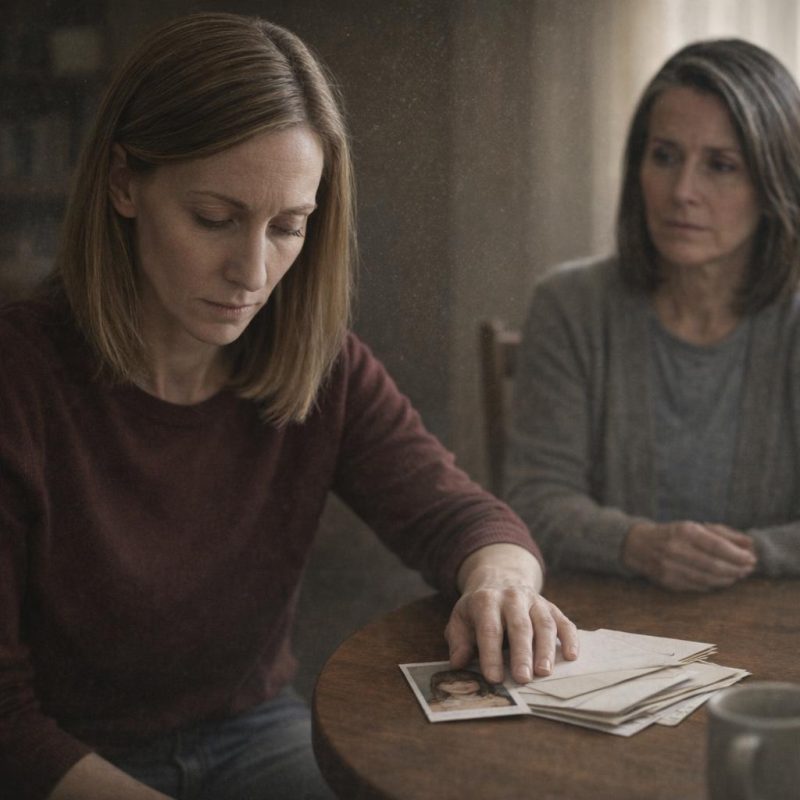 Image by RM AI
Reading Linda's Letters
Emily was the one who suggested we open them. I'd been hesitant — they weren't mine to open, and some part of me still felt that — but Emily said they were her mother's words, and she had a right to hear them. We started with the oldest one, postmarked nearly thirty-five years ago. The envelope was thin and the paper inside had gone soft at the folds. Linda's handwriting was careful and even, the kind of handwriting you practice. She wrote that she wasn't angry, that she understood things had ended badly between them, but that Emily was growing so fast and asking questions she didn't know how to answer. She wrote that she wasn't trying to make things hard for him. She said she just wanted him to know the door was open, that he could call, that he could visit, that she would never use Emily against him. The tone of it was so measured, so careful — like someone trying very hard not to say the wrong thing. Emily read it twice. Her hands were shaking by the second pass. I read it over her shoulder and felt something cold settle in my stomach, because nothing in that letter matched what Daniel had told me about being pushed away and shut out. Then Emily turned to the next page, and her voice broke when she read the last line aloud: 'Emily asks about you every day.'
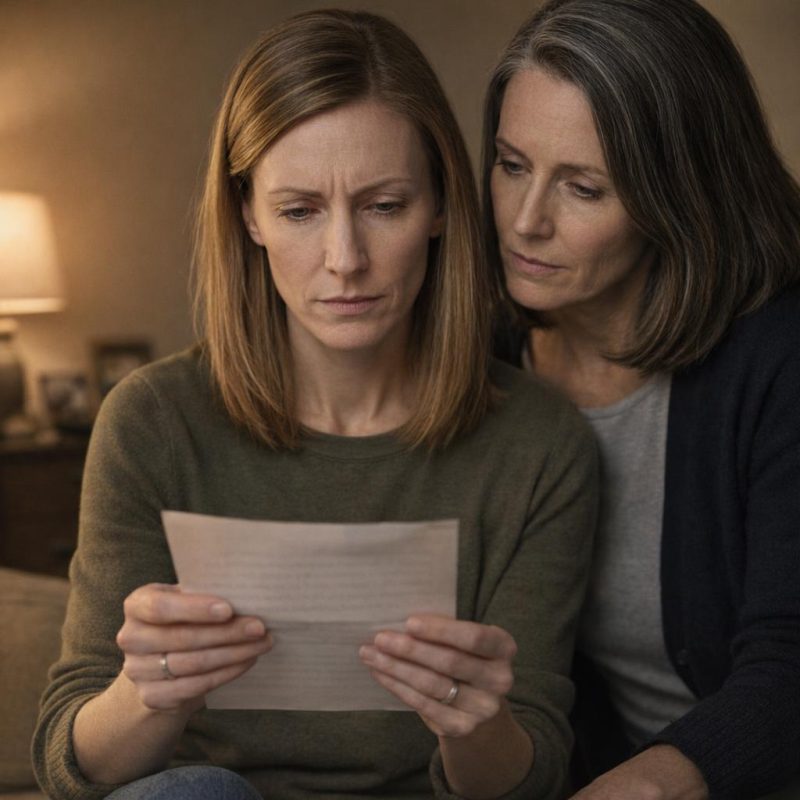 Image by RM AI
Contradictions in the Timeline
We laid all fourteen letters out in order after that, oldest to newest, and went through them one by one. I had a notepad and wrote down the dates. Daniel had told me he'd tried to reconnect when Emily was a teenager — that he'd reached out and been turned away. But the letters covered exactly those years, and every one of them said the same thing in different words: the door was open, please call, Emily needs to know you. Emily sat across from me frowning at the dates. She said her mother had told her Daniel never tried, not once, that he'd simply disappeared. But then she paused and said she also remembered her mother being vague about certain years, not wanting to talk about a particular stretch of time when Emily was around twelve or thirteen. I wrote that down too. The dates on the letters didn't line up cleanly with what either of us had been told. There were gaps — a year here, eighteen months there — where no letters existed, and neither of us could account for them. I didn't know what had happened in those gaps. Emily didn't either. We sat there with the letters spread between us, two people holding pieces of a story that didn't quite fit together, and the silence that settled over the table felt less like an ending and more like the edge of something we hadn't reached yet.
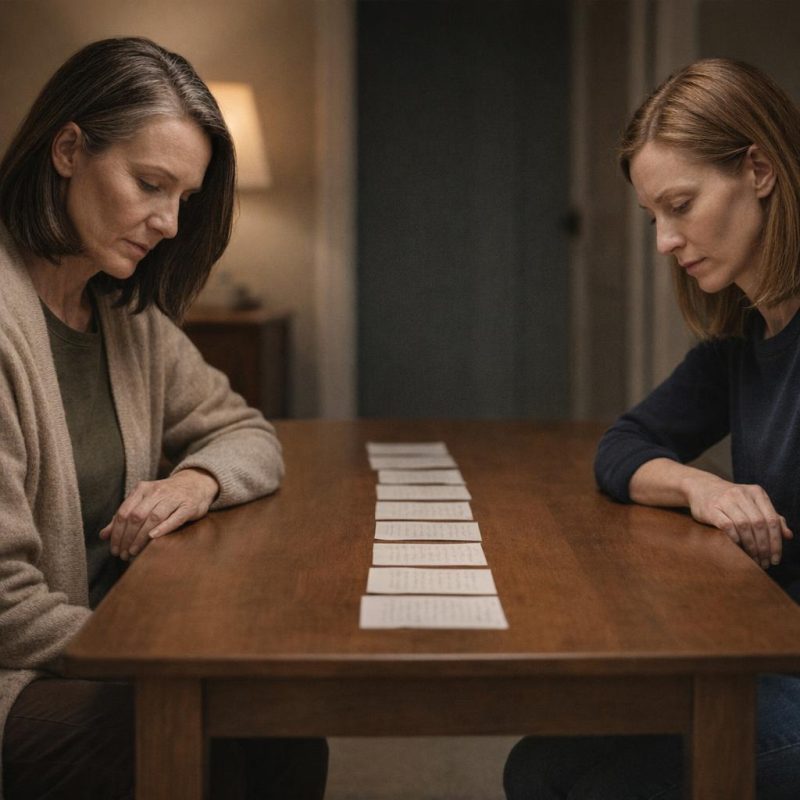 Image by RM AI
The Second Warning
I got home just after five. The drive back had been quiet — Emily and I had said everything we could say for one afternoon, and I'd left feeling wrung out but steadier than I'd expected. I pulled into the driveway, grabbed my bag from the back seat, and checked the mailbox the way I always do before going inside. There were two pieces of mail. A utility bill. And a plain white envelope with no return address, just like the first one. My name typed on the front. I stood at the end of the driveway and opened it right there. The message was longer this time — four lines instead of two. It said that I was digging into things that were better left alone. It said that some people had worked hard to keep their lives stable and that I was threatening that. It said I didn't understand the full consequences of what I was doing. And then, at the bottom, one final line, typed in the same plain font as everything else: 'You're hurting people who don't deserve it.'
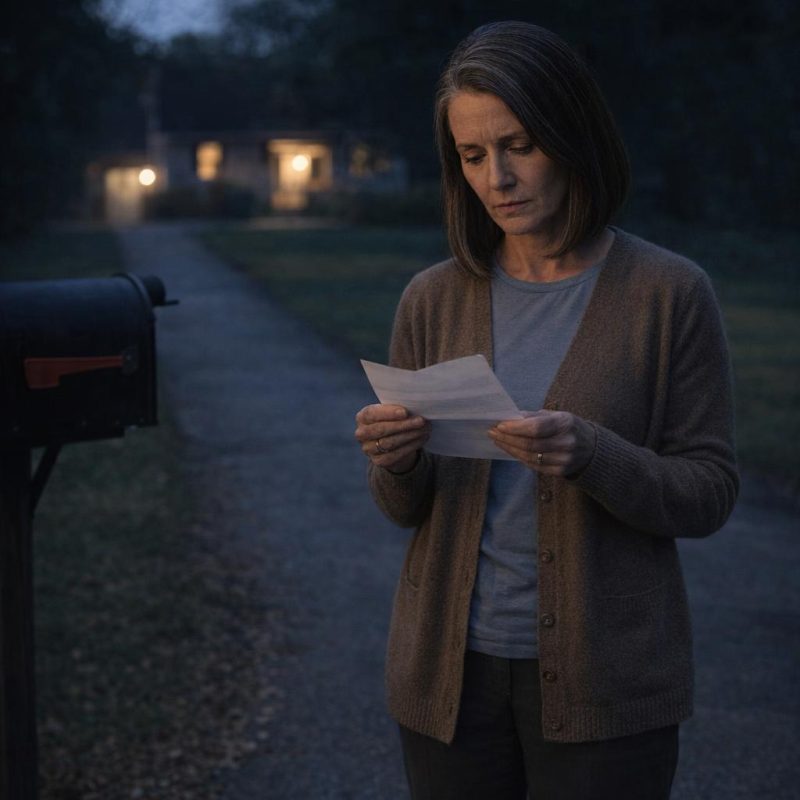 Image by RM AI
Emily's Confession
I called Emily that evening and read her the letter over the phone. She went quiet in a way that felt different from her usual pauses. I asked if she was all right. She said she needed to tell me something, and that she'd been trying to figure out how to say it for a while. We agreed to meet the next morning. When I sat down across from her at the coffee shop, she looked like she hadn't slept. She wrapped both hands around her mug and said she hadn't been entirely honest with me about how we met. I waited. She said she hadn't come to the food bank that day looking for assistance. She said she'd been volunteering there for months — under a different schedule than mine, a different coordinator, a name she'd given that wasn't quite her full name. She said she'd wanted to see me before she decided whether to say anything at all. She said she'd watched me work with families, watched how I talked to people, watched whether I seemed like someone who could be trusted. I sat with that for a moment. All those weeks she'd been there, and I hadn't known. I'd thought our meeting was chance. The weight of what she'd just told me settled over the table between us, slow and heavy, like something that had been waiting a long time to land.
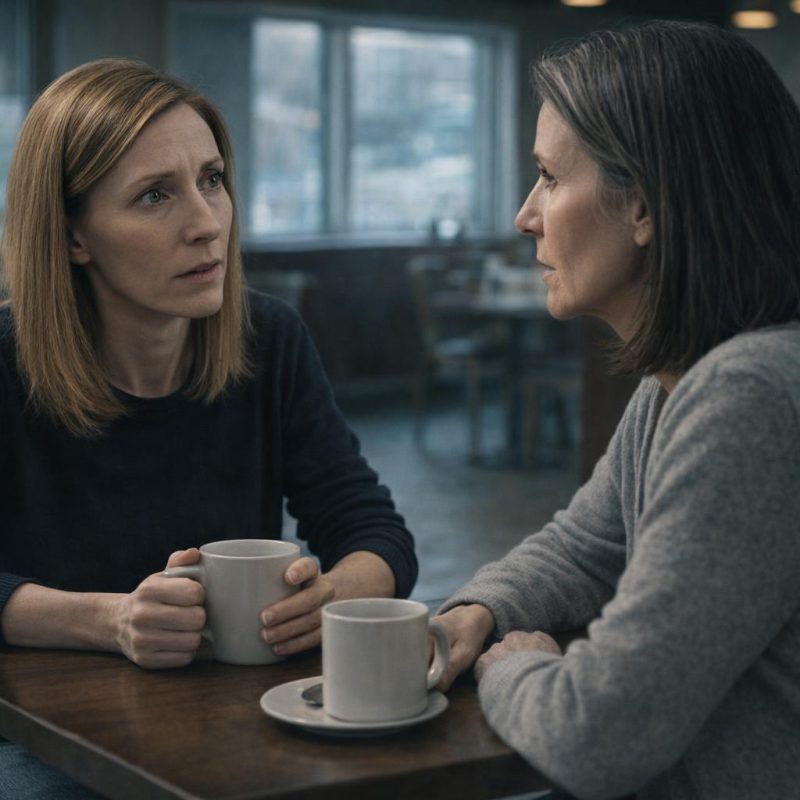 Image by RM AI
Why Emily Watched
She didn't rush to explain herself, and I didn't push her. I just waited, and after a moment she started talking. She said she'd found my name through public records — Daniel's marriage announcement, an old neighborhood newsletter, a mention of the food bank in a local article about volunteers. She said she'd spent weeks reading whatever she could find before she ever set foot in the building. She said that when she finally walked in and saw me sorting donations and joking with the other volunteers, she almost left. She said she'd spent so long assuming that anyone connected to Daniel must have known about her, must have been part of the reason he stayed away. She'd needed to see for herself whether I was someone who had chosen not to know, or someone who genuinely didn't. She said watching me with the families — the patience, the way I remembered people's names, the way I never made anyone feel small — was what finally made her decide to say something. I didn't know whether to feel touched or unsettled, and I think she could see that. She looked down at her mug and said she was sorry, that she knew it wasn't fair, but that she hadn't trusted anyone in a very long time. And sitting there across from her, I understood something about the kind of loneliness that makes a person spend months watching a stranger just to feel safe enough to speak.
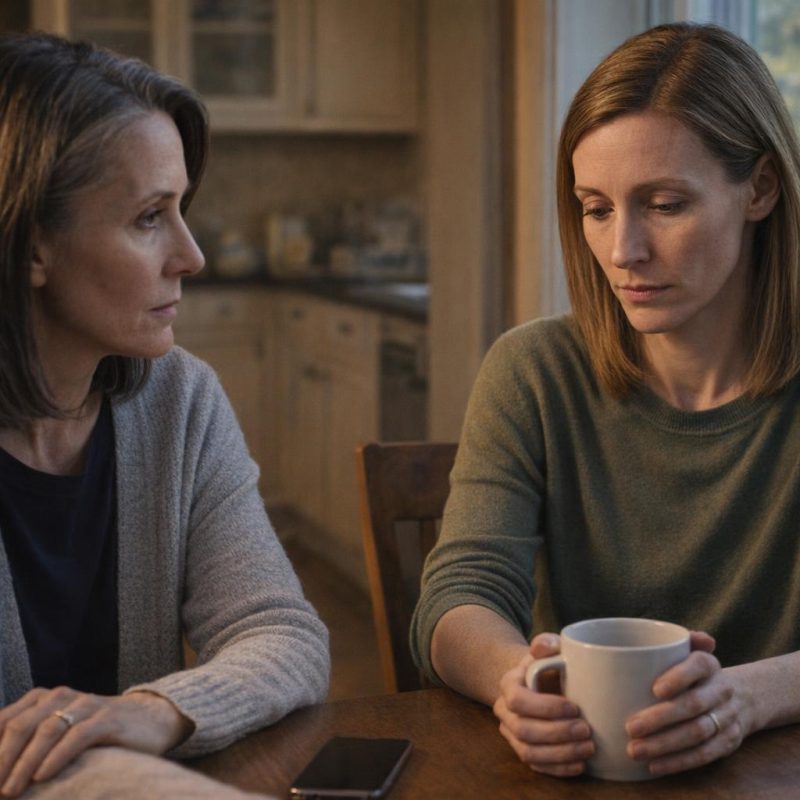 Image by RM AI
An Uneasy Alliance
I sat with that for a moment — the image of her spending weeks watching me from a distance, trying to decide if I was safe. It should have felt invasive. Part of me thought it did. But mostly what I felt was something closer to recognition, because I'd spent the last several days doing my own version of the same thing — circling the edges of a truth I wasn't sure I was ready to touch. I told her I understood why she'd done it. I told her I wasn't angry. And then, because it felt only fair, I admitted that I hadn't told Daniel any of this either. That I'd been sitting on what she'd shared with me, turning it over in private, not sure what to do with it. She looked up when I said that, and something in her expression shifted — like she'd been bracing for a door to close and it had opened instead. She said we were both trying to find the same thing, and that neither of us was going to get there alone. I knew she was right. I didn't love it, but I knew she was right. We talked for another half hour about what we each knew, what we suspected, what still didn't add up. And when we finally ran out of words, I reached across the table and shook her hand.
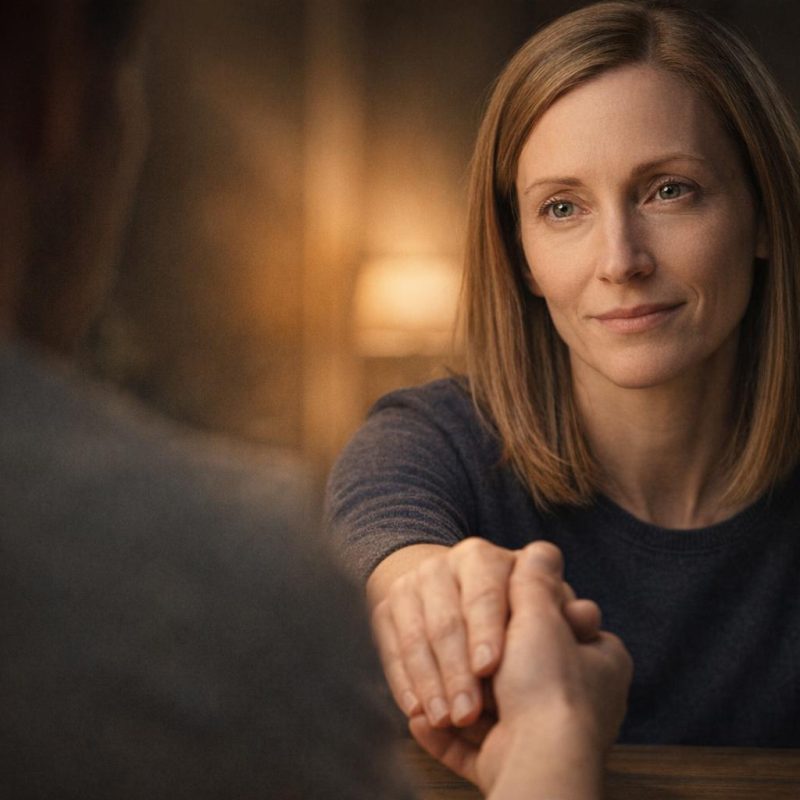 Image by RM AI
Ruth's Name
We ordered a second round of coffee and spread what we had across the table — not much, honestly. A handful of dates, a few names, a lot of gaps. Emily had her mother's old letters and some photographs. I had questions and a growing sense that the story I'd been told about Daniel's past had been edited down to almost nothing. We kept circling back to the same problem: everyone who might know something either wouldn't talk or wasn't around anymore. And then Emily went quiet for a moment, the way people do when something surfaces from a long way back. She said her mother used to mention a neighbor. An older woman who'd lived next door when Emily was very small — someone Linda had trusted, someone who'd been kind to them both during what sounded like a hard stretch of years. Emily said her mother called her Ruth. Said Ruth was the kind of person who noticed things, who paid attention, who remembered. She said Linda had told her once that Ruth knew what things had really been like back then — not the version people told later, but what she'd actually seen with her own eyes. I asked if Emily had any idea how to find her. Emily shook her head slowly, but then said she thought Ruth had stayed in the area. That was enough. We agreed right there that finding Ruth was the next step.
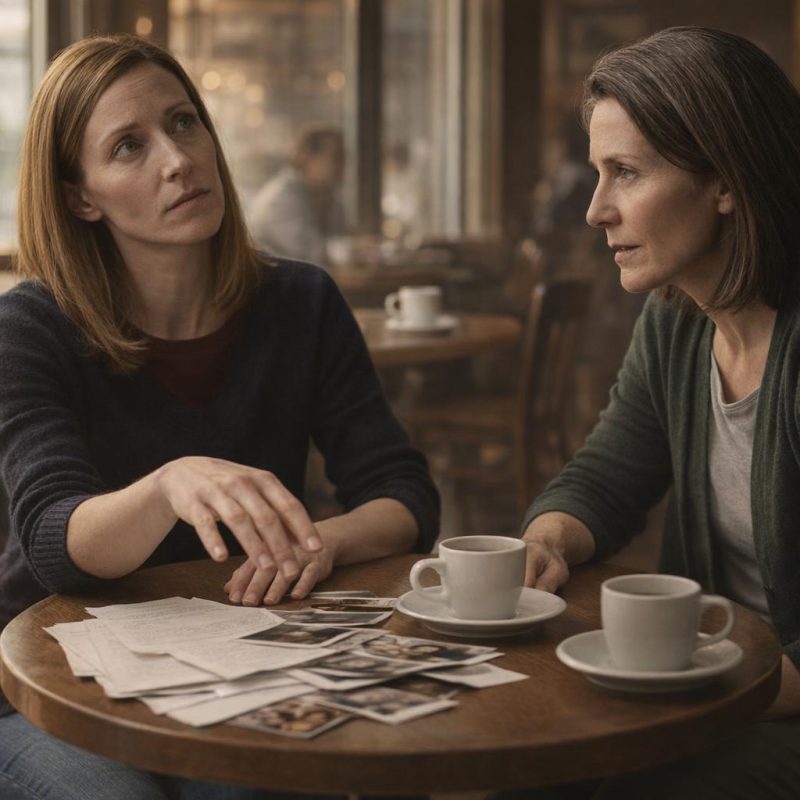 Image by RM AI
Searching for Ruth
Finding someone named Ruth who would now be in her eighties turned out to be harder than either of us expected. We started online, the way you do — public records, white pages, old address databases. There were more Ruth Callahans in the county than I would have guessed. Emily remembered a few details: the street name, the general neighborhood, the fact that Ruth had lived alone even back then. That helped narrow things down, but not enough. We spent two evenings on the phone, calling assisted living facilities and senior communities, asking carefully worded questions without giving too much away. Most of the staff were polite but guarded, which I understood — they're protecting their residents, as they should be. A few said they couldn't confirm or deny. One said they'd pass along a message. I was starting to think we'd hit a wall when I tried a smaller facility on the east side of town, one I'd almost skipped because it was farther out than I expected. The woman who answered was friendly and unhurried. I gave Ruth's name and approximate age, mentioned the old neighborhood. There was a pause, and then she said yes, they did have a resident by that name. She gave me the address without my even having to ask twice.
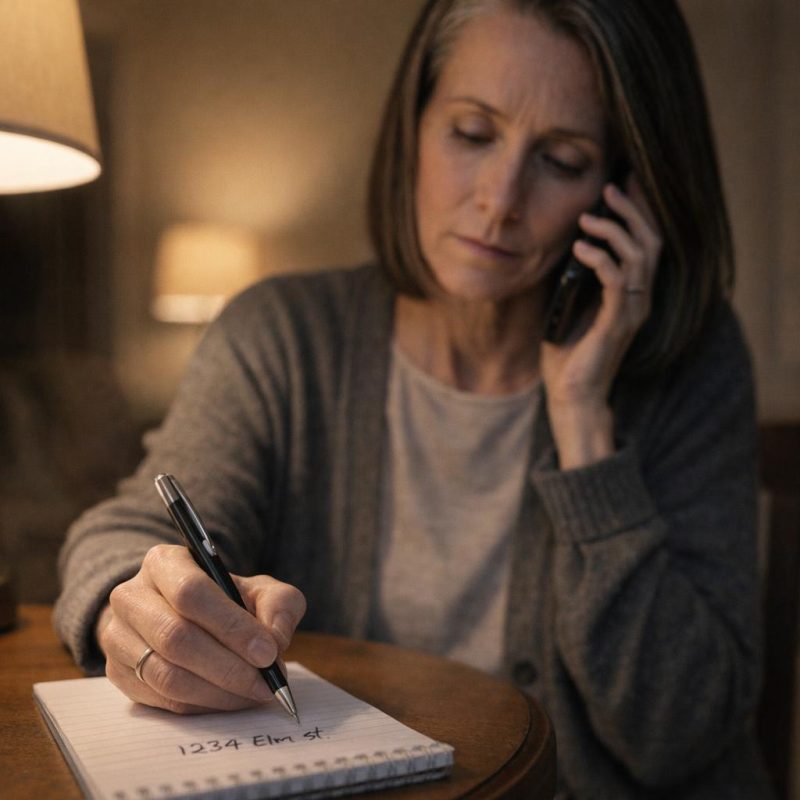 Image by RM AI
The Drive to Meet Ruth
I picked Emily up on a Tuesday morning, and neither of us said much for the first few miles. The facility was across town — about forty minutes in light traffic — and the drive felt longer than that. Emily sat with her hands folded in her lap, looking out the passenger window at nothing in particular. I kept my eyes on the road and tried to organize my thoughts, which wasn't going especially well. We'd talked through our questions the night before on the phone, made a loose list of what we wanted to ask, but sitting in the car now, all of that felt thin and inadequate. Ruth was in her eighties. She might not remember. She might not want to talk. She might remember everything perfectly and still decide it wasn't her place to say. Emily voiced that last one out loud somewhere around the halfway point, and I told her I'd been thinking the same thing. We talked a little about how to approach it — gently, without pressure, letting Ruth lead. When I pulled into the parking lot, I turned off the engine and we both just sat there for a moment. The building looked quiet and well-kept, morning light coming through the front windows. Neither of us moved to open our doors right away. The silence between us felt like the last breath before something you can't take back.
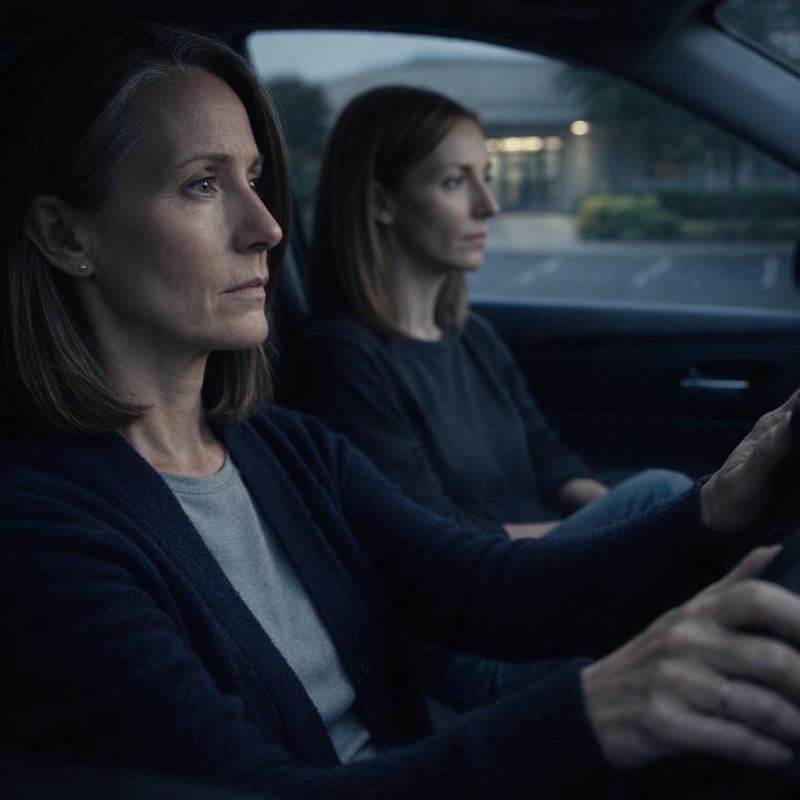 Image by RM AI
Meeting Ruth
A staff member walked us down a carpeted hallway that smelled faintly of lemon and something floral, and knocked on a door near the end of the corridor. A voice from inside said to come in, clear and unhesitating. Ruth was sitting in an armchair by the window, a paperback open in her lap and afternoon light catching the white of her hair. She looked up when we came in, and her eyes — sharp and very blue — moved from me to Emily and stayed there. Emily introduced herself, her voice a little unsteady, and said her mother's name. I watched Ruth's face carefully. There was no confusion, no polite blankness. Something in her expression opened up, like a door swinging wide after years of being shut. She set her book aside without looking at it. She said she'd wondered, over the years, whether anyone would ever come. She gestured toward the two chairs across from her and told us to sit down, that she wasn't going anywhere. Emily sat on the edge of her seat, hands pressed together, and I could see her trying to hold herself steady. Ruth looked at her for a long moment, and then said, in a voice that was quiet and certain, 'You look just like your mother.'
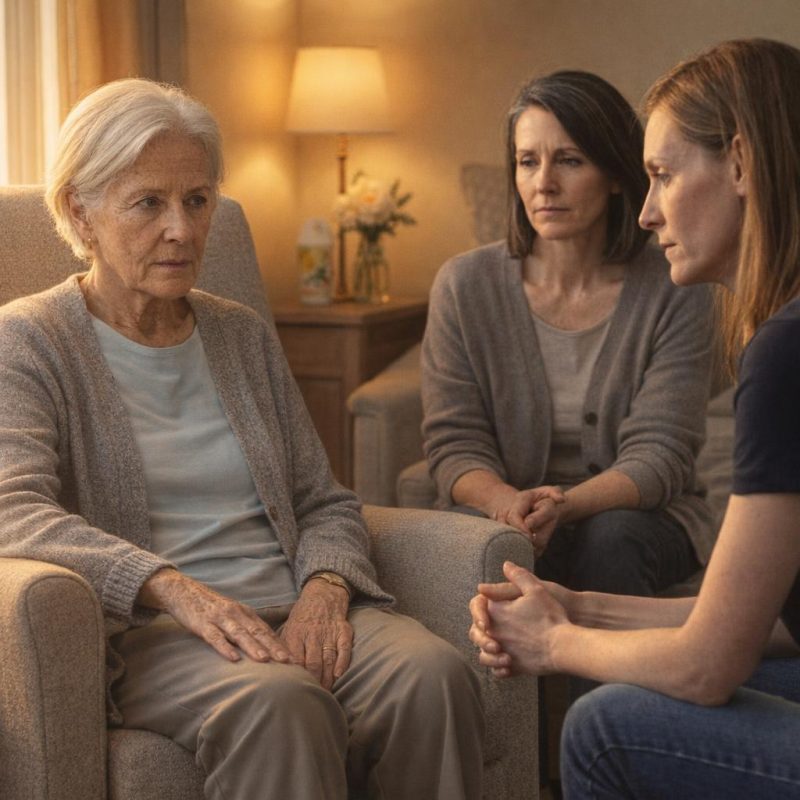 Image by RM AI
Ruth Remembers
Ruth didn't need prompting. She folded her hands in her lap and began the way people do when they've been carrying a story for a long time and finally have somewhere to put it. She described the neighborhood as it had been — a block of small apartments, close together, the kind of place where you knew your neighbors whether you meant to or not. She said Daniel and Linda had moved in next door when Emily was just a few months old. Young, she said. Very young. She remembered Linda as someone who worked hard and didn't complain, who kept the apartment neat even when things were tight. She said Daniel had been around in those early months — she wanted to be clear about that. He'd come by regularly, helped with Emily, seemed like he was trying to figure out how to be present even when things between him and Linda were complicated. She'd watched Emily as a baby a handful of times when Linda needed to run errands. She remembered the weight of her, she said, and smiled a little at that. Emily had gone very still beside me. I wasn't moving much either. Ruth's memory was precise in a way I hadn't expected — specific streets, specific seasons, the color of the curtains in Linda's front window. Decades had passed, and she held it all like it had happened last year.
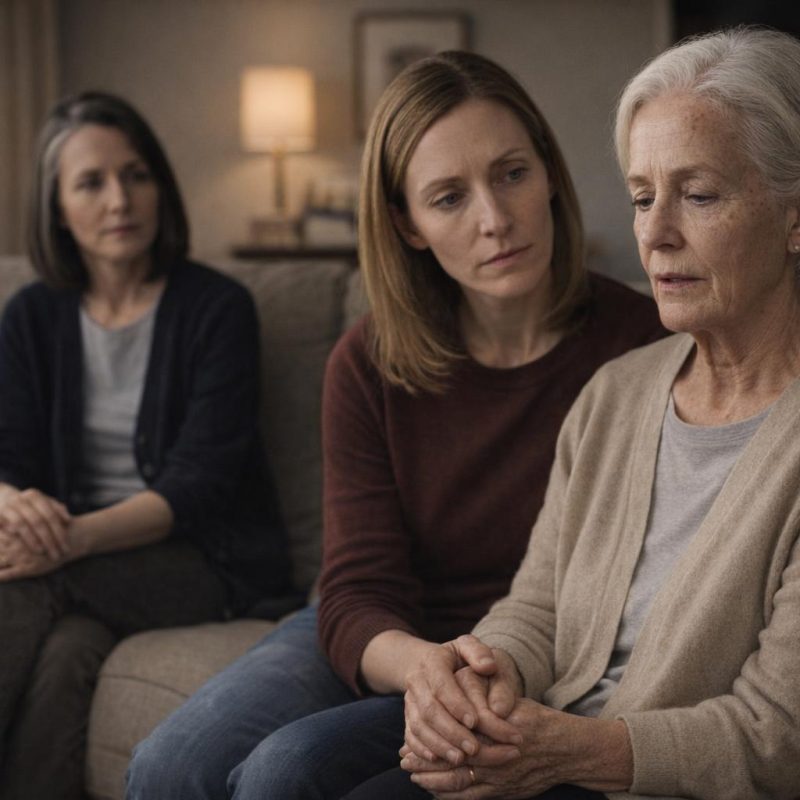 Image by RM AI
Something Changed
Ruth's voice stayed even as she moved forward in time, but something in the room shifted as she did. She said there came a point — Emily would have been maybe eighteen months old, she thought — when Daniel's visits started thinning out. Not all at once. Gradually, the way a light dims before it goes out. Linda noticed first, of course. Ruth said Linda would mention it in passing, the way you do when you're trying not to sound as worried as you are. She'd say Daniel was supposed to come by and hadn't. That she'd left a message and hadn't heard back. At first Linda seemed to think it was just the stress of his situation, that he'd come around. But then it kept happening. Ruth said Linda told her once that she didn't understand it — that Daniel had seemed committed, and then something had changed, and she couldn't figure out what. Ruth had watched from next door as Linda waited. She'd seen the light on late in Linda's apartment, seen her at the window. She said Linda mentioned that messages didn't seem to be getting through, that she wasn't sure her calls were reaching him at all. Ruth had sensed something was wrong, she said, but she hadn't known what to call it then. She paused, and the quiet that followed settled over all three of us like something with weight.
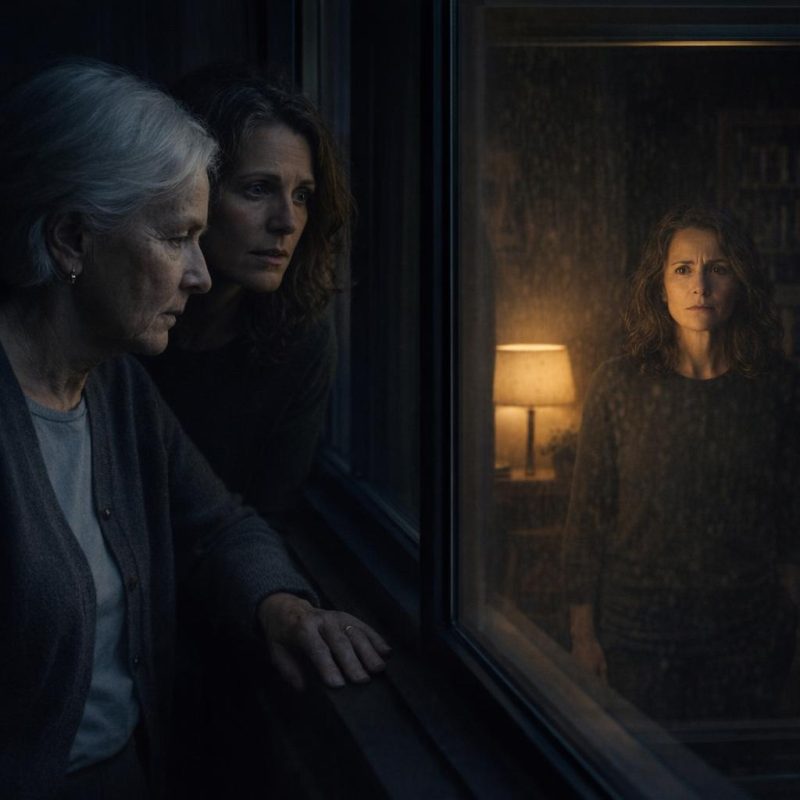 Image by RM AI
The Interference
Ruth was quiet for a moment, and I didn't rush her. Emily sat perfectly still beside me. Then Ruth said she'd started paying closer attention, the way neighbors do when something feels off but you can't quite name it. She said Linda would tell her she'd left messages for Daniel — specific messages, with specific details — and then Daniel would come by days later saying he'd never received them. At first Ruth had thought it was just the chaos of two young people in a difficult situation. But it happened too many times, and the pattern was too consistent. She said Daniel would show up saying he'd tried to visit and been told Linda didn't want to see him. Linda would say she'd never said any such thing. Ruth had stood in that hallway more than once, listening to both of them try to make sense of something that didn't make sense. She said she'd watched it happen over months — the confusion, the hurt, the growing distance — and eventually she'd stopped being able to explain it away as simple miscommunication. She leaned forward slightly in her chair, her blue eyes steady on mine, and said, 'Someone was making sure they couldn't reach each other.'
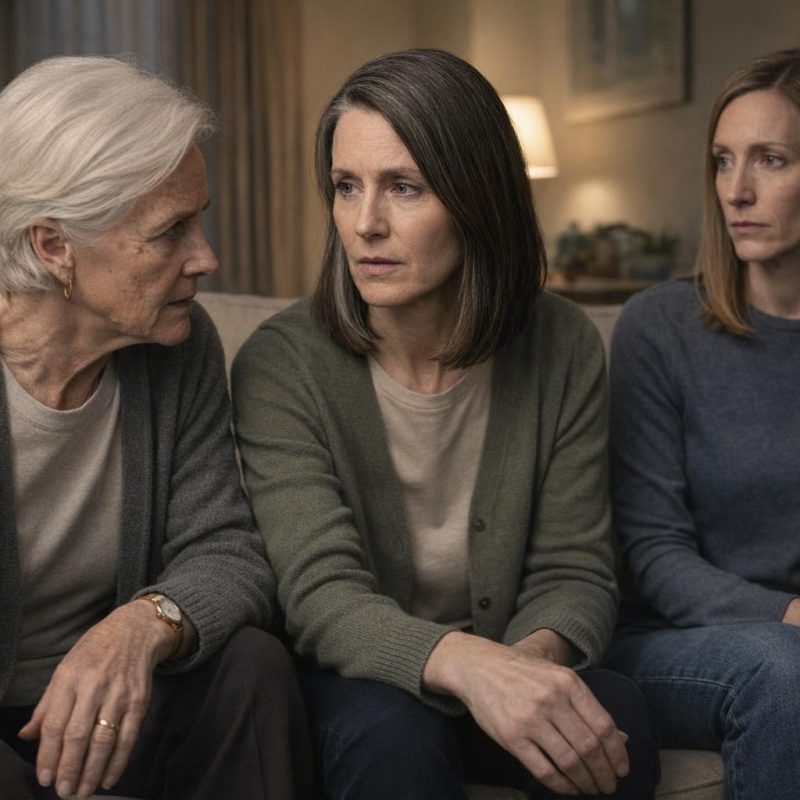 Image by RM AI
Patricia's Name
I asked Ruth if she ever figured out who was doing it — who was making sure Daniel and Linda couldn't reach each other. She nodded slowly, like she'd been waiting for that question for a long time. She said it took her a while, but eventually she started noticing the same woman coming and going from Linda's building. Well-dressed, always composed, the kind of person who looked like she belonged everywhere she went. Ruth said she saw her answer the phone once when she was visiting Linda — just picked it up like she lived there, spoke quietly, and hung up before Linda came back into the room. Another time, Ruth said she was in the hallway and overheard this woman telling Linda that Daniel had asked not to be contacted anymore, that he needed space to move on. Linda had gone very quiet after that. Ruth said the woman's name was Patricia. The moment she said it, something shifted in my chest. I knew a Patricia — Daniel's older sister, the one he'd always described as fiercely protective of the family. Emily turned to look at me, and I could see she'd never heard the name before, not in any context that mattered. I sat there with Patricia's name settling into me like something that had always been true, finally finding the place where it belonged.
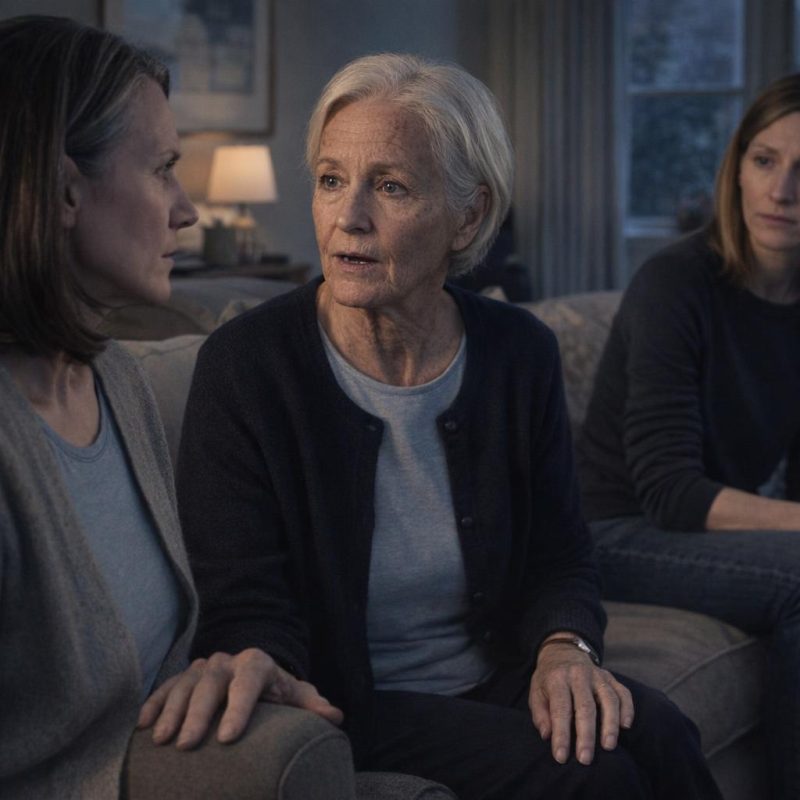 Image by RM AI
Confronting Patricia
We didn't linger at Ruth's after that. I thanked her, held her hand for a moment, and Emily and I walked back to my car without saying much. I'd met Patricia maybe four or five times over the years — Daniel's older sister, always impeccably put together, always a little distant with me in a way I'd chalked up to family dynamics. I had her address from an old Christmas card list I kept in my phone contacts, and I typed it into the GPS before I'd even fully decided we were going. Emily sat in the passenger seat with her hands folded in her lap, very still. She said she didn't know what to say to someone like that. I told her she didn't have to say anything — I'd do the talking. Patricia lived across town in one of those neighborhoods where the lawns look like they're trimmed with scissors. The house was large and well-maintained, cream-colored with black shutters. I rang the bell and we waited. When the door opened, Patricia stood there in pressed slacks and a silk blouse, her hair done, her expression arranged into something that looked like polite surprise. She looked at me, then at Emily, and something moved behind her eyes — just for a second — before her face settled back into that careful, practiced composure.
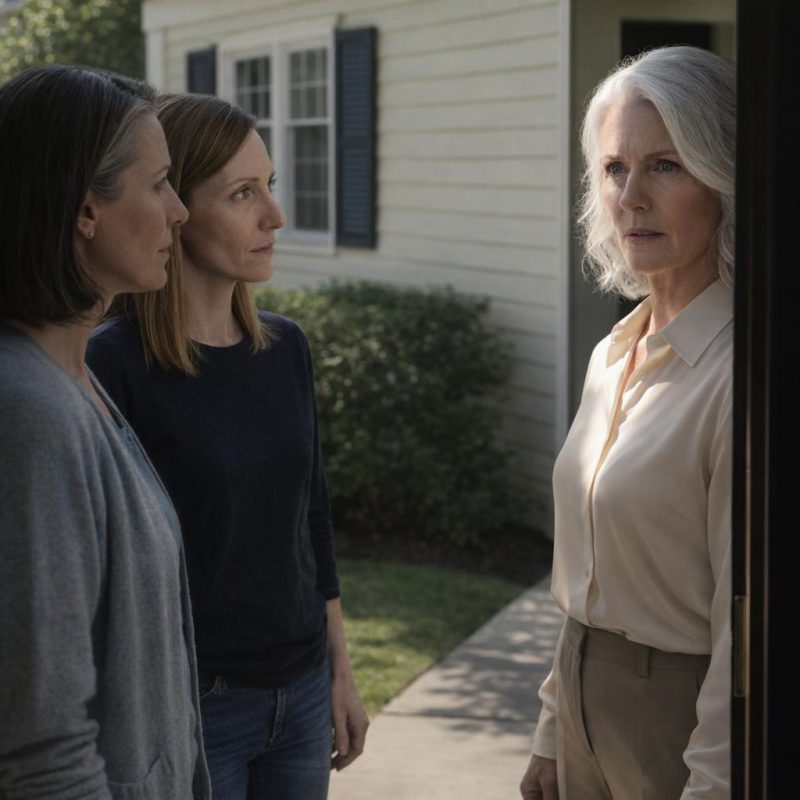 Image by RM AI
Patricia's Admission
Patricia invited us in without making a scene about it, which somehow felt worse than if she'd argued at the door. She offered us tea. I said no. We sat in her living room, which was the kind of room that didn't invite you to relax, and I told her what Ruth had told us. I laid it out plainly — the intercepted calls, the messages that never arrived, the things she'd said to Linda about Daniel not wanting contact. Patricia listened with her hands folded in her lap, and when I finished, she didn't deny a word of it. She said Linda had been unstable, that she'd been pulling Daniel into something that would have derailed his entire future. She said she'd done what any older sister would do. Emily's jaw was tight and her eyes were bright, and I could see her working to hold herself together. I asked Patricia if Daniel had known what she was doing. She paused — just a beat too long — and then said Daniel had made his own choices. I pressed her: had he been pushed away, or had he chosen to stay away? She looked at me with an expression I couldn't quite read, smoothed her slacks with one hand, and said she had no regrets — the words landing flat and certain, with no room left in them for doubt.
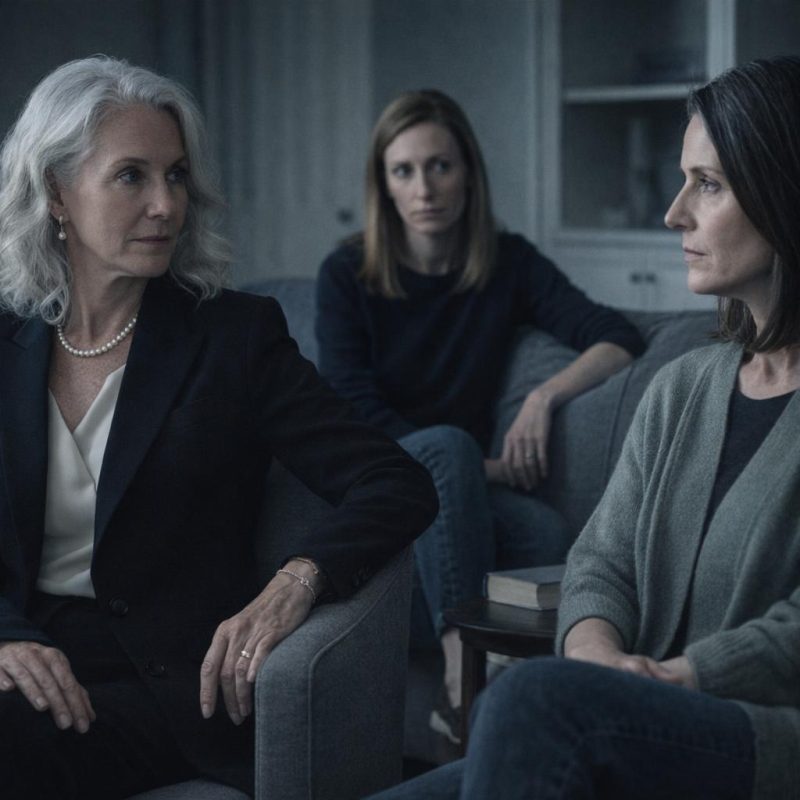 Image by RM AI
The Safety Deposit Box
I told Patricia that wasn't good enough. I asked her what else she knew — what else she was sitting on while the rest of us were trying to piece together thirty years of damage. She said she'd told us everything she'd done, and I believed her on that narrow point, but something in her posture told me she wasn't finished. She was quiet for a moment, and then she said Daniel had always been careful about keeping his own records. She said it almost carefully, like she was choosing the words. She mentioned a safety deposit box at the family bank — one she'd been co-signer on years ago when Daniel had first set it up. She said whatever was in that box was Daniel's business, not hers, and she said it in a way that made me think she had a very good idea what we'd find there. Emily leaned forward in her chair. Patricia stood, left the room, and came back holding a small key on a plain ring. She held it out to me. I took it. Patricia's face was hard to read — not quite relief, not quite guilt, somewhere in between — and she said nothing else as Emily and I walked back out to the car.
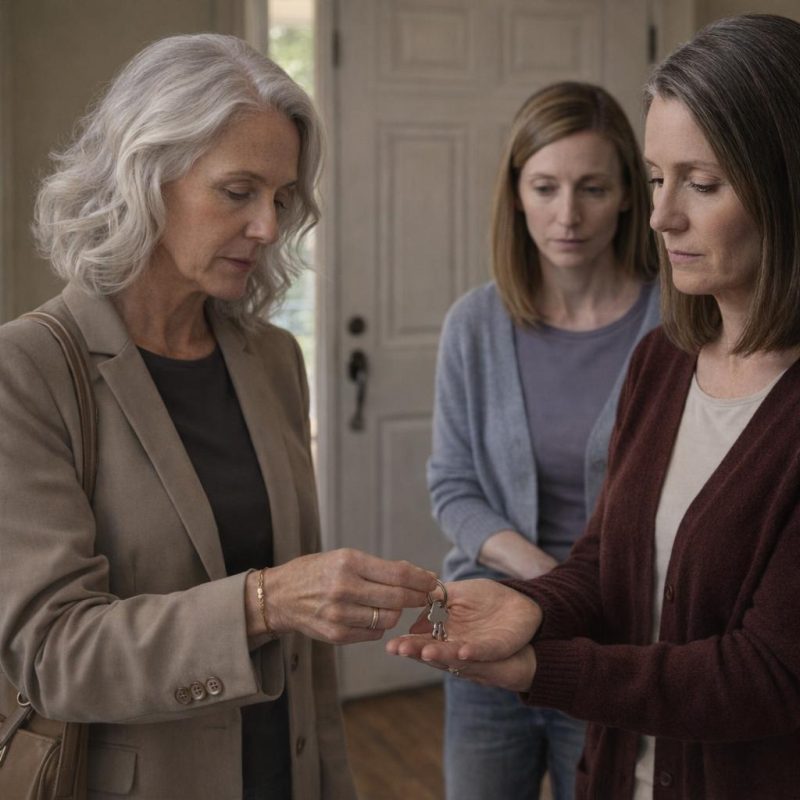 Image by RM AI
The Truth in the Records
The bank was a twenty-minute drive and neither of us talked much on the way. A manager walked us back to the vault after I explained I was Daniel's spouse and showed my ID, and Emily stood close beside me as the box slid open on the table. Inside were folders, rubber-banded stacks of receipts, and photocopied records going back decades. My hands weren't steady as I started going through them. The payments were regular — monthly, sometimes more — sent to a Linda Henderson at an address I recognized from what Emily had told me about her childhood home. They went on for years. After Linda died, the recipient address shifted to Emily's name. Emily picked up one of the receipts and stared at it. She said her mother had always called it the anonymous money — a deposit that showed up every month from someone she could never trace, that had kept them from losing the apartment more than once. I kept turning pages. The payments had started not long after Daniel stopped visiting, and they had never stopped. Thirty years of envelopes, thirty years of records, all of it filed and kept like a ledger of a conscience that couldn't quite go quiet. And then I found the name printed on the sending account — the name Daniel had used for every single one of those transfers for thirty years: David Morrison.
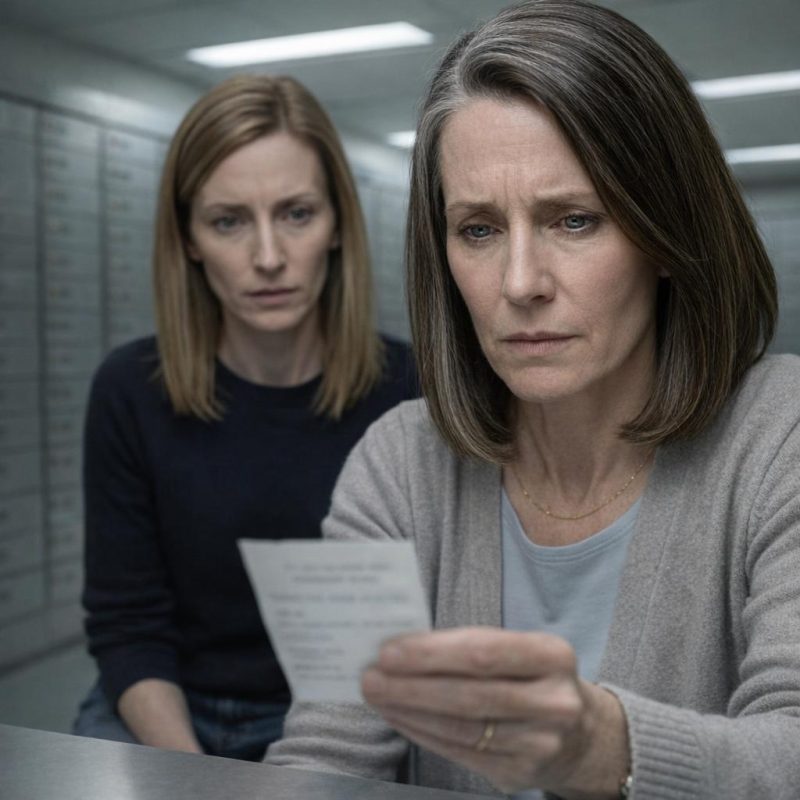 Image by RM AI
The Coward's Choice
We sat in the bank parking lot for a long time before either of us could speak. Emily had the receipts in her lap and she kept looking at them like she was waiting for them to say something different. She said her mother had cried once — just once, that she'd seen — when the anonymous deposit didn't come one month and she thought it had stopped for good. It came the next week. She'd never known who sent it. I'd been going through the folder while we sat there, and near the back, tucked between two older statements, I found a piece of paper folded in thirds. Daniel's handwriting. I recognized it immediately — the slightly cramped letters, the way he pressed too hard with the pen. It wasn't addressed to anyone. It read more like something a person writes to get the words out of their head. He'd written that staying away was the kindest thing he could do, that showing up would only cause more pain, that making sure they were provided for was the responsible choice. He'd written it like he believed it. Like he'd talked himself all the way into it and locked the door behind him. Emily read it over my shoulder and didn't say anything for a while. Then she said, quietly, that her mother would have traded every one of those deposits for one phone call. I didn't have anything to add to that.
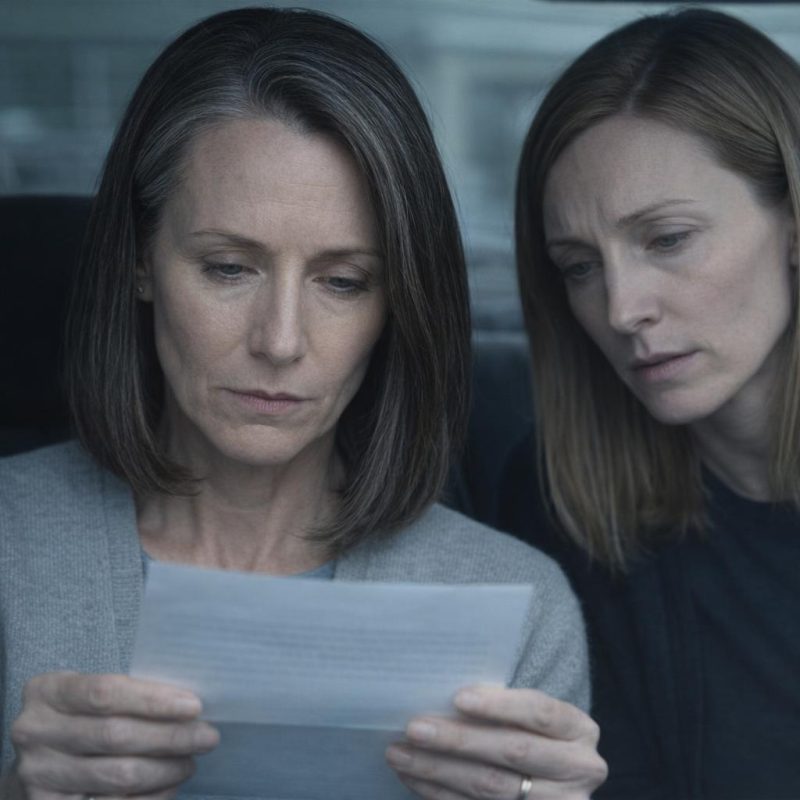 Image by RM AI
The Weight of Knowing
I dropped Emily off at her apartment just before dark. We agreed to talk soon, to figure out what came next, but neither of us had the energy to plan anything right then. I drove home on autopilot, taking the long way without meaning to, and I spent most of it thinking about twenty-eight years. Not the big moments — the wedding, the anniversaries, the trips we'd taken — but the small ones. The way Daniel would deflect when conversations got uncomfortable. The way he'd always had a version of himself that was just slightly out of reach. I'd thought that was just how some people were. I'd thought I understood him. The house was dark when I pulled into the driveway. Daniel's car wasn't there. I let myself in and didn't turn on many lights — just the one in the kitchen, which barely reached the hallway. I set my bag down and sat at the kitchen table and didn't move for a long time. The quiet of the house pressed in around me, the kind of quiet that feels different when you're carrying something heavy, and I sat inside it.
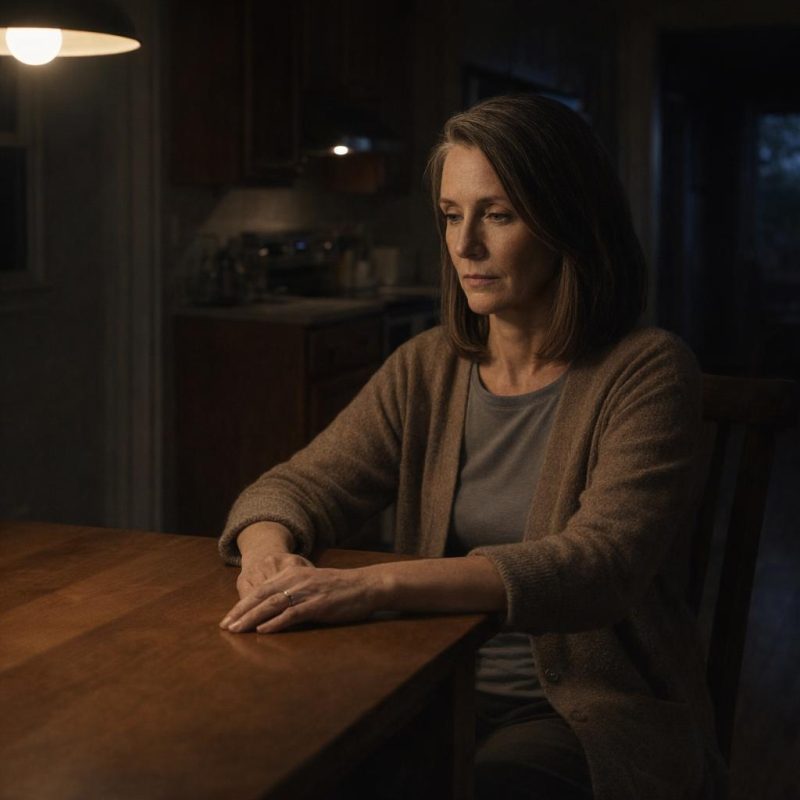 Image by RM AI
Emily's Call
My phone rang while I was still sitting at that table in the dark. It was Emily. She sounded steadier than I expected, but there was something careful in her voice. She said she'd gotten a message — a direct message through the genealogy site she'd been using to search for information about Daniel. The woman who sent it had given her name as Jessica Morgan. Emily said Jessica claimed she'd learned that Emily was looking into Daniel's past, and that she had information that would, in her words, explain things that hadn't made sense yet. Emily said she didn't know who this woman was or how she'd found her. I turned the name over in my mind — Jessica Morgan — and came up with nothing. I'd never heard Daniel mention anyone by that name. We agreed to meet her the next day, at a coffee shop Emily suggested, somewhere public. After we hung up, I sat back down and looked at the dark window across from me. I didn't know what Jessica Morgan knew, or how she fit into any of this, but the fact of her — another person out there who knew things about my husband that I didn't — settled over me like a second weight on top of the first.
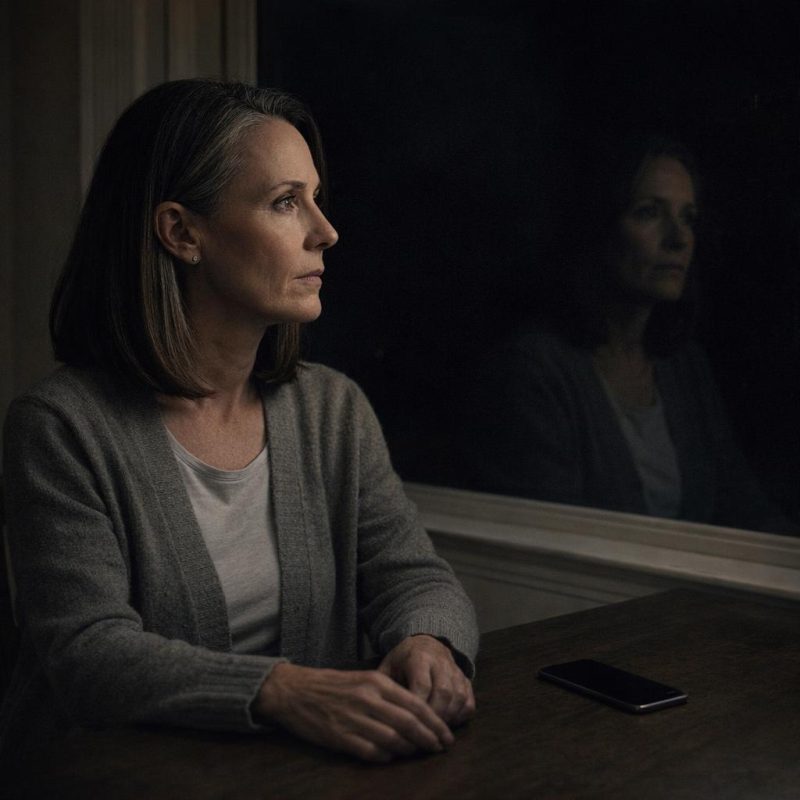 Image by RM AI
Jessica Arrives
She was already there when we arrived — sitting at a corner table with her hands folded on top of a leather portfolio, posture straight, expression composed in a way that looked practiced. I noticed it immediately: the height, the jaw line, the way she held herself. Emily noticed it too, because I felt her slow down beside me. The woman stood as we approached and introduced herself as Jessica Morgan, and her voice was steady and unhurried, each word placed with care. She said she was sorry for the unusual circumstances. She said she knew this was a lot to take in. She ordered coffee and let us settle before she said anything else, and I remember thinking that she was being very careful, very deliberate, in a way that made me more nervous, not less. Then she said it plainly, without softening it: she was Daniel's daughter. Born before he met me, to a woman he had known briefly in his mid-twenties. She looked at Emily when she said it, and Emily's hand went flat on the table. I watched Emily's face go still. Jessica said she had known about Emily for years — and then she said the words that took the floor out from under me entirely: she said Emily had never known about her.
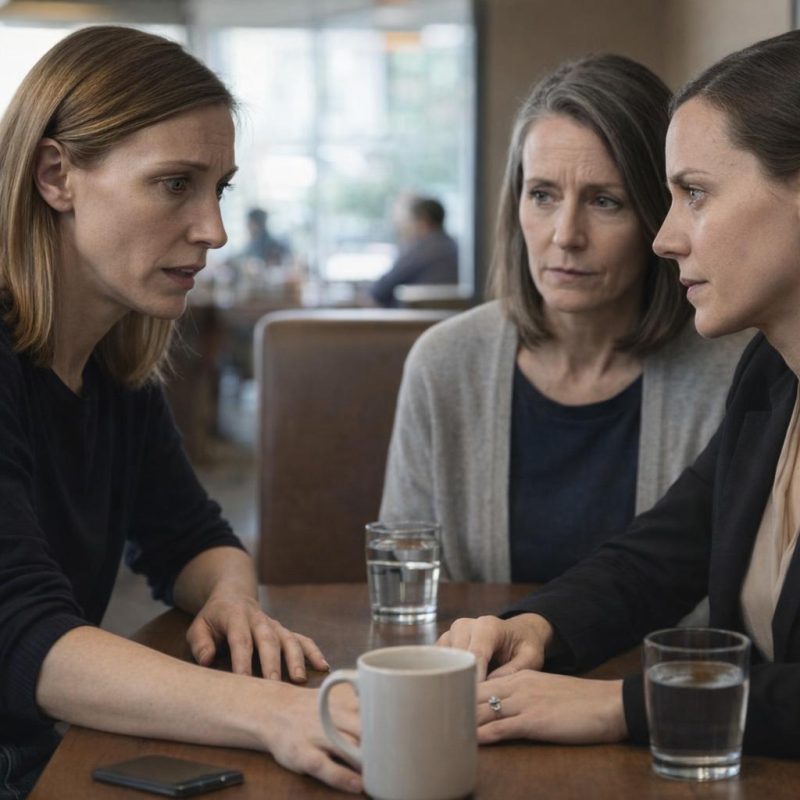 Image by RM AI
Jessica's Story
Jessica didn't rush. She opened the portfolio and talked the way someone talks when they've been carrying something heavy for a very long time and have finally decided to set it down. She said her mother had been practical about the whole thing — no court battles, no demands — but Daniel had known about her from the beginning and had chosen to stay involved in a quiet, hidden way. He sent money. He visited a handful of times a year, always without announcement, always without anyone else knowing. She said she grew up understanding that she was a secret, and that she had made a kind of peace with it, until she got older and started asking harder questions. She pulled out letters — actual handwritten letters from Daniel, dated across decades — and laid them on the table between us. She had bank records too, and a photograph of herself as a child standing next to a man I recognized immediately as my husband, maybe fifteen years younger, smiling at the camera like nothing in the world was wrong. Emily picked up one of the letters and read the first line and put it back down without finishing it. Jessica said Patricia had known about her too — had known from nearly the beginning. Then she slid a manila folder across the table toward me.
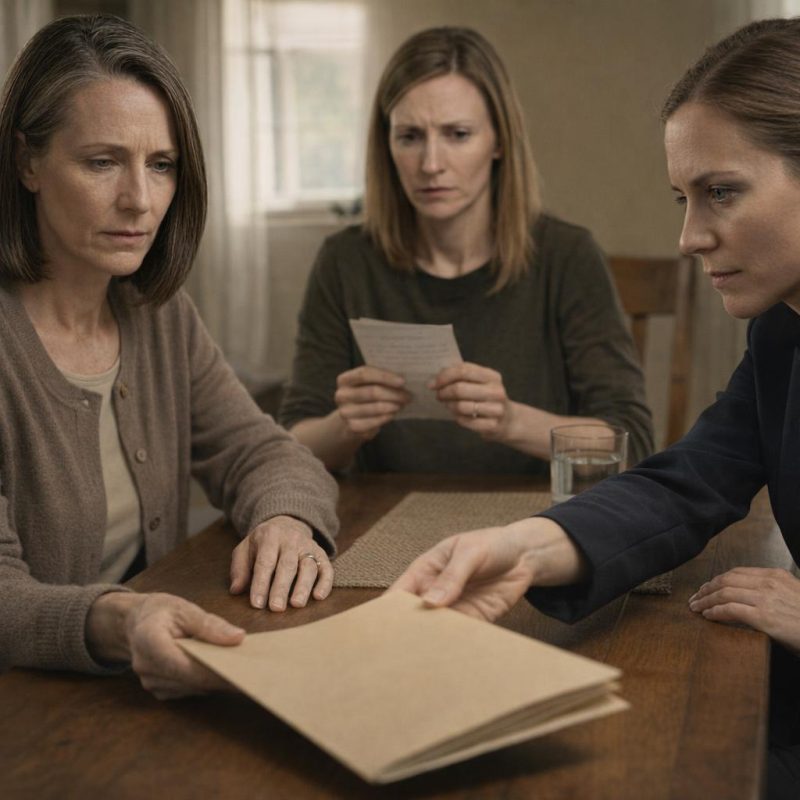 Image by RM AI
The Chain of Lies
We sat there for almost two hours while Jessica walked us through it, piece by piece. It wasn't a single conspiracy with one person pulling all the strings. That was the part that was hardest to absorb. Patricia had pushed Daniel away from Linda early on — that much was clear from the letters and from what Ruth had already told me — but Daniel hadn't needed much pushing. He'd been young and scared and more concerned with keeping his life uncomplicated than with doing right by anyone. He'd told Patricia about Jessica's mother to explain a financial arrangement, and Patricia had filed that information away and never spoken of it again. He'd told Linda he wasn't ready, which was true, but he'd never told her the whole truth either. He'd told me nothing at all. Each lie had been told to a different person, in a different direction, and none of them had ever been in the same room long enough to compare notes. Emily said quietly that her mother had never known about Jessica, and Jessica nodded and said she hadn't known about Emily until two years ago. I thought about Linda raising Emily alone, believing she'd simply been left, not knowing there had been another woman, another child, another whole hidden life running parallel to hers. The weight of it didn't belong to any one person sitting at that table. It had been built by all of them, over decades, and it had landed on the people who deserved it least.
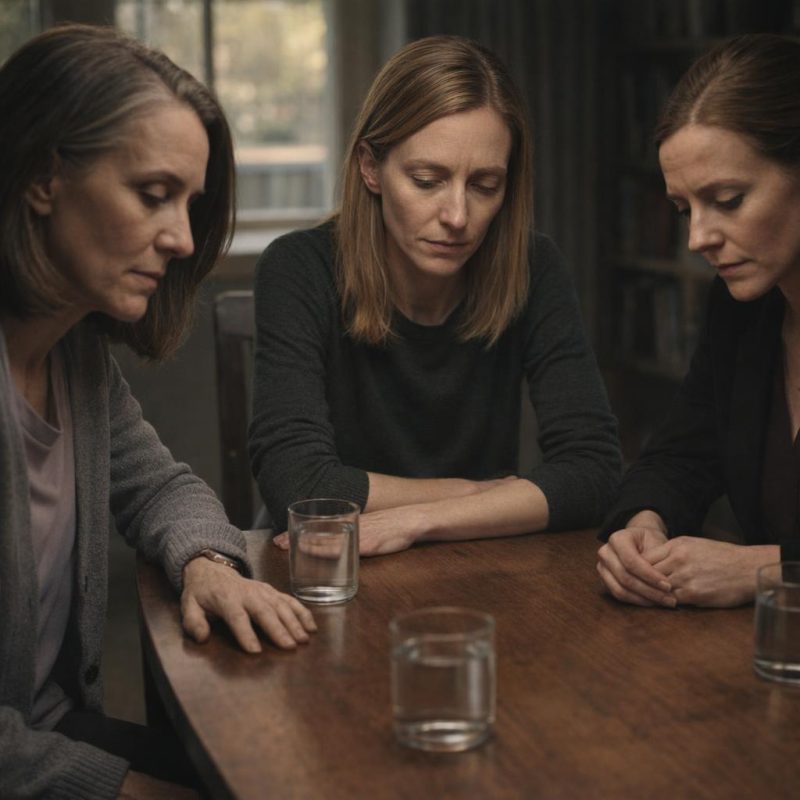 Image by RM AI
Gathering the Evidence
We moved to Emily's apartment that afternoon, the three of us, and spread everything across her kitchen table. Jessica had her folder. Emily had Linda's letters and the notes from Ruth's testimony. I had the bank records and the photographs and the things Patricia had let slip. We organized it all chronologically, starting from the earliest letter Jessica had — dated more than thirty years ago — and working forward to the present. Seeing it laid out like that, in order, was different from knowing it in pieces. It became a timeline of choices, each one building on the last, each one closing off another door. Emily wrote dates on sticky notes and placed them along the edge of the table. Jessica cross-referenced her records against mine without being asked. At some point one of us made tea and nobody touched it. We each talked about what we needed to say to Daniel — not what we wanted to say, but what we needed him to hear. Emily said she needed him to understand what growing up without a father had actually cost her. Jessica said she needed him to say out loud, just once, that she had existed. I said I needed him to look me in the eye and tell me why. I called Daniel from the kitchen doorway while the other two sat quietly at the table, and I told him to come home, that we needed to talk, and that it could not wait. The whole of it — every letter, every record, every photograph — lay spread across the table behind me.
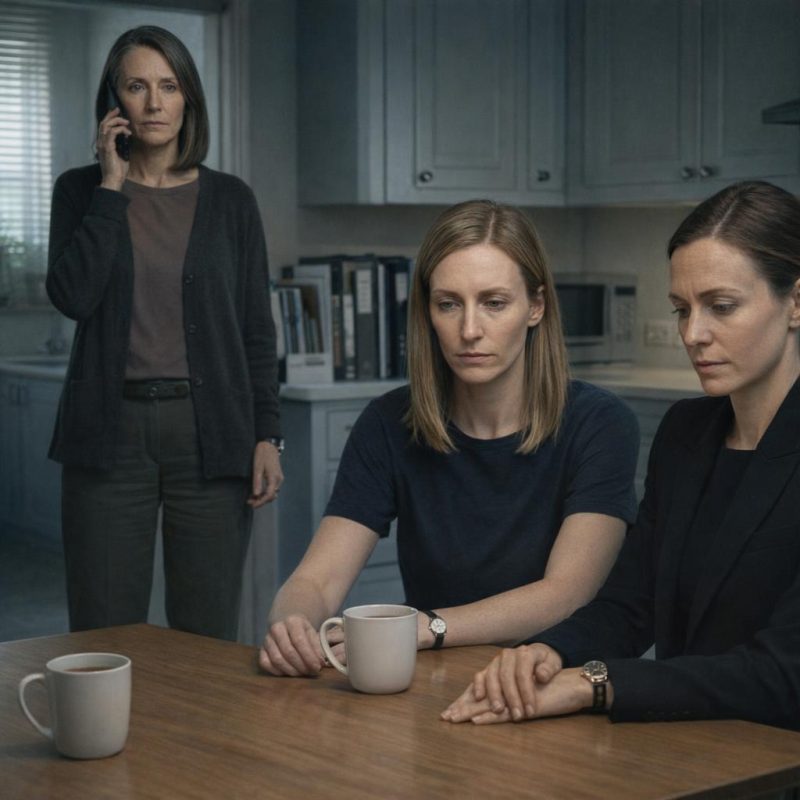 Image by RM AI
Daniel Faces the Truth
He came through the front door the way he always did, keys in hand, calling my name before he'd even cleared the entryway. I didn't answer. I stood in the dining room doorway and waited. He followed the silence into the room and stopped. Emily was sitting on the left side of the table, hands folded, watching him. Jessica was on the right, her portfolio closed in front of her, her posture the same careful stillness she'd had at the restaurant. The documents were spread between them — letters, bank records, photographs, Ruth's written account, all of it visible and organized and impossible to misread. Daniel's keys dropped to his side. He looked at Emily first, then at Jessica, and something moved across his face that I hadn't seen there before — not guilt exactly, more like a man watching a wall he'd spent decades building come down all at once. I told him to sit down. He sat. Emily said her name to him slowly, formally, as if he needed to hear it said out loud in this room. Jessica did the same. He looked at each of them and then he looked at me, and whatever he'd been planning to say — whatever he'd taken away from the drive over — it was gone. The room held all of it: every year, every silence, every letter he'd never opened. I had nothing left to brace for. Neither did he.
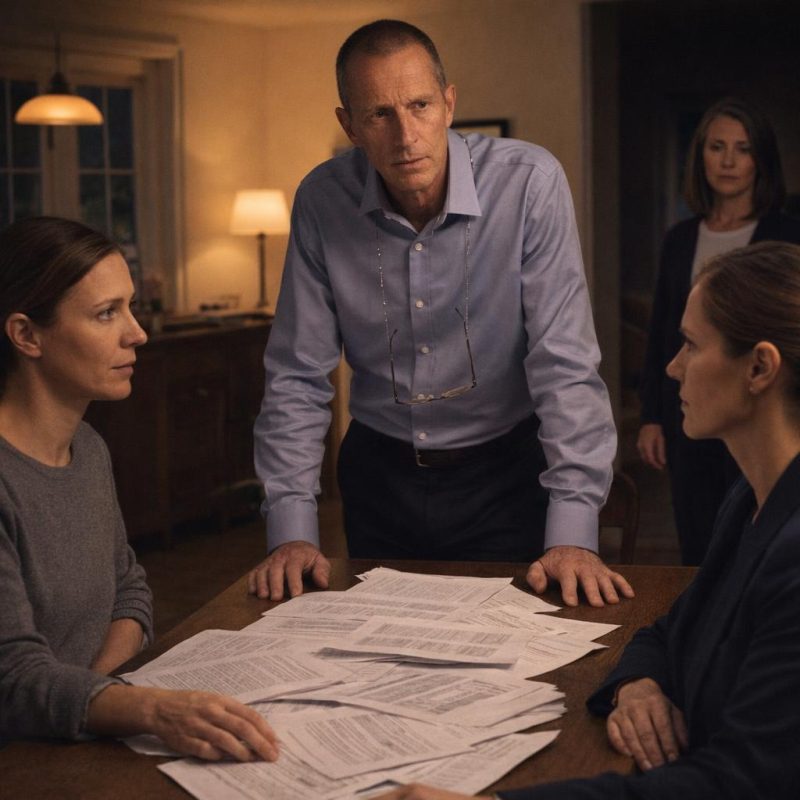 Image by RM AI
The Confrontation
I started with the bank records because they were the most concrete thing I had. I slid them across to him and asked him to explain the name on the account — the one he'd used to send money to Emily's mother for years without ever attaching his real name to it. He looked at the paper for a long time without speaking. Emily picked up one of Linda's unopened letters — still sealed, still addressed to him at an old address — and set it in front of him and asked him why he'd never read it. He didn't have an answer for that either. Jessica told him what it had been like to introduce herself to people her whole life knowing there was a father out there who knew she existed and had chosen to stay invisible. She didn't raise her voice. None of us did. We didn't need to. Daniel sat with his hands flat on the table and his eyes moving from one face to the next, and I could see him trying to find the version of this where he came out looking like something other than what he was. He couldn't find it. His shoulders dropped first, then his voice, and he said he had told himself that staying away was easier for everyone, that showing up would only make things worse, that he wasn't built for the kind of confrontation it would have taken to do things right. Then he said, in a voice that came out smaller than I'd ever heard from him: he'd been afraid.
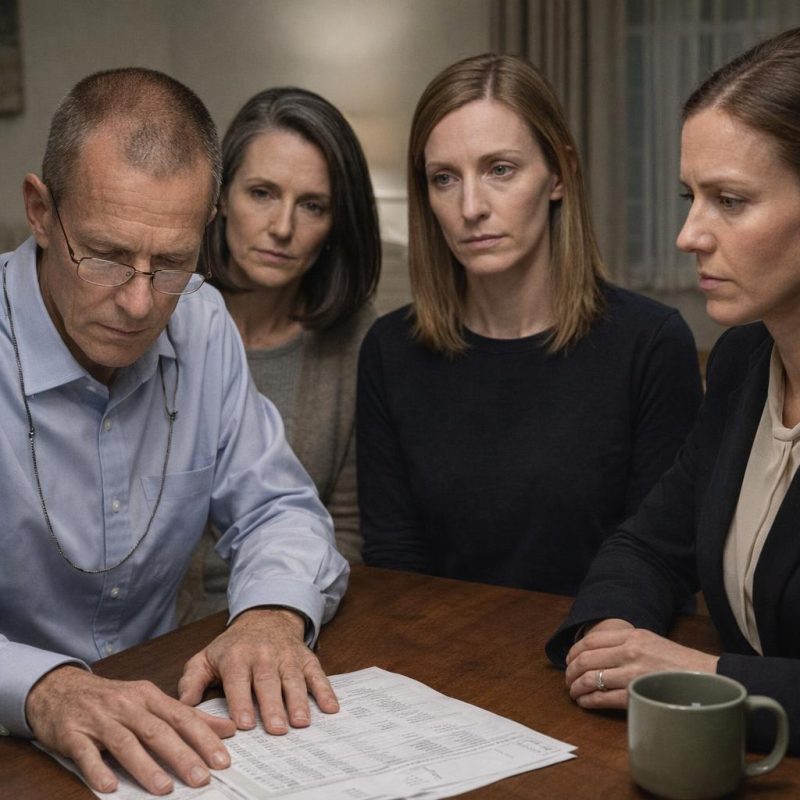 Image by RM AI
Sharon's Decision
Nobody said anything for a moment after that. Then I stood up. I told Daniel that twenty-eight years was not something I could sort through in one evening, and that I wasn't going to try. I told him I wasn't ready to say what our marriage was or wasn't — I didn't have that answer yet and I wasn't going to pretend I did. But I also couldn't stay in that house and act like the ground under me was solid, because it wasn't. I told him I needed time away from him, real time, not a night in the guest room. He asked me what that meant. I told him I didn't know yet. Emily and Jessica were both watching from across the table, quiet, not intervening. I reached down and worked my wedding ring off my finger — it took a moment, it always did — and I set it on the table between us. I told him I'd be staying with a friend for a while, and that I would reach out when I was ready to talk. He looked at the ring on the table and didn't touch it. I picked up my bag from the chair beside me. I didn't look back at him when I walked out of the room, but I heard the silence he left behind me, and it said everything neither of us could.
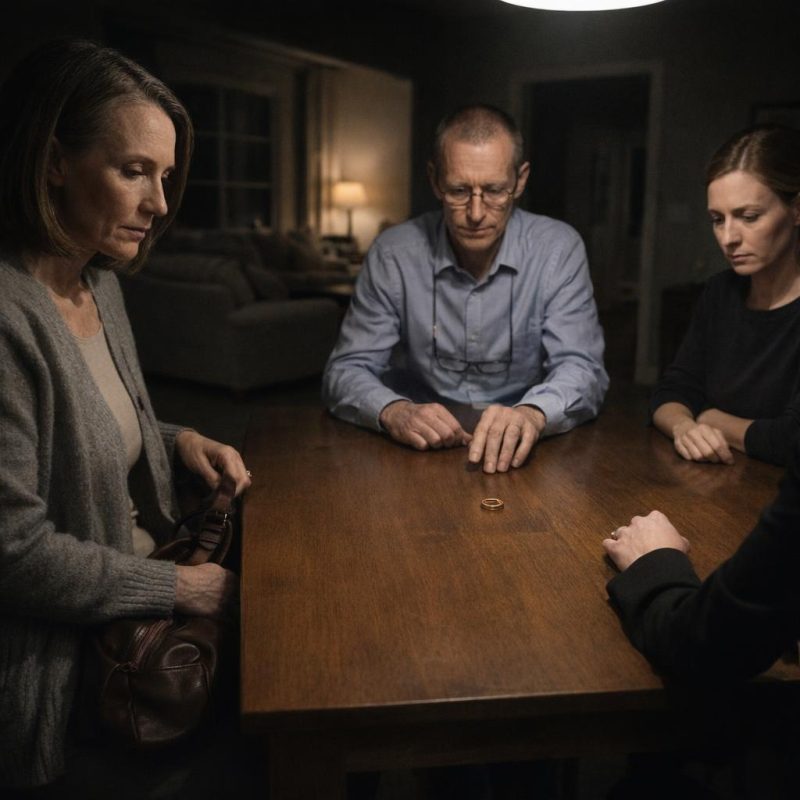 Image by RM AI
Emily's Choice
I stopped in the hallway and waited, because I wasn't ready to leave the house entirely, not yet. Through the open doorway I could hear Emily's voice, low and careful, and I stayed where I was. She told Daniel she had spent her whole life building a picture of who he might be — filling in the outline with whatever she could find — and that the man sitting in front of her was smaller than that picture in some ways and more real in others. She said she didn't know if she could forgive him. She said she wasn't sure forgiveness was even the right word for what she was working toward. But she said she was willing to try to build something, if he was finally ready to show up honestly and stay. She gave him conditions: he had to acknowledge what he'd done, not in a general way but specifically, to her, to Jessica, to Linda's memory. He had to be present going forward, not convenient. Jessica said her own relationship with him had always existed in the shadows, and that she was done with shadows. Daniel said yes to all of it, his voice unsteady, and I heard it crack on the last word. I stood in the hallway with my bag over my shoulder and my ring still on that table, and I listened to my husband's daughter offer him a chance I wasn't sure he'd earned.
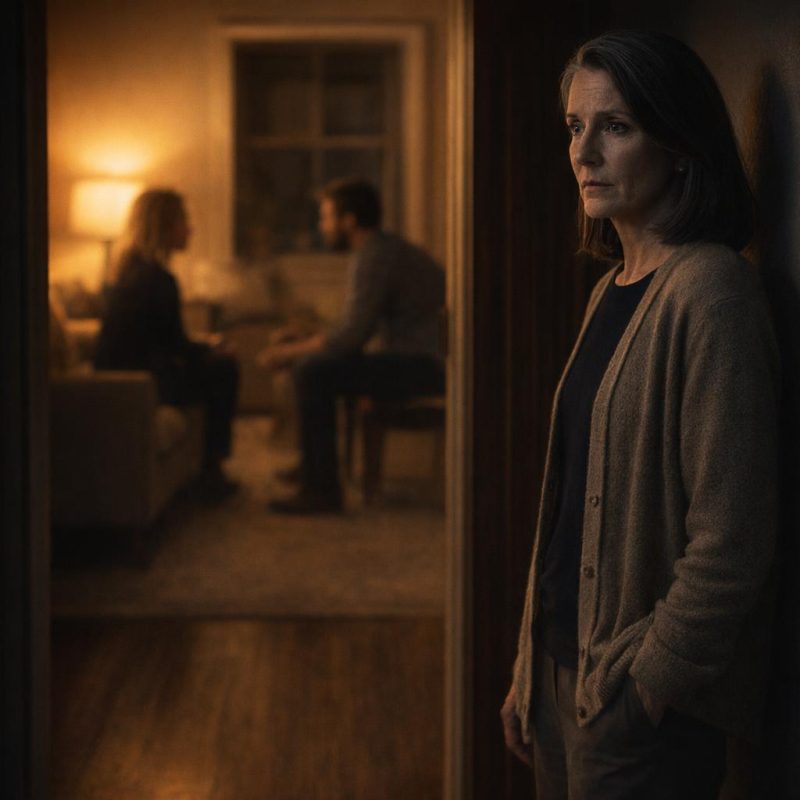 Image by RM AI
Moving Forward
We walked out together, the three of us, into the cool evening air, and nobody said anything for a moment. The porch light clicked on behind us and I didn't look back. Emily pulled her jacket tighter and Jessica stood at the edge of the steps with her keys in her hand, and I thought about how strange it was that we were all standing here — three women who should have known each other years ago, bound together by the same man's silence. I told them I was glad to know them. It came out simpler than I expected, but I meant every word of it. Emily looked at me for a second like she wasn't sure she'd heard right, and then she said she never expected to find a sister in any of this. Jessica said she was just glad the secrets were finally over — that she was tired of living in the margins of a story she'd never been allowed to tell. We exchanged numbers in the driveway, the three of us huddled around our phones like it was the most ordinary thing in the world. I told them we were family now, whatever happened with Daniel, and neither of them argued. We each got into our own cars and drove away in different directions, and Daniel stayed behind in that house with everything he'd hidden, finally alone with it. The connection between us felt more real than anything else that had happened that night.
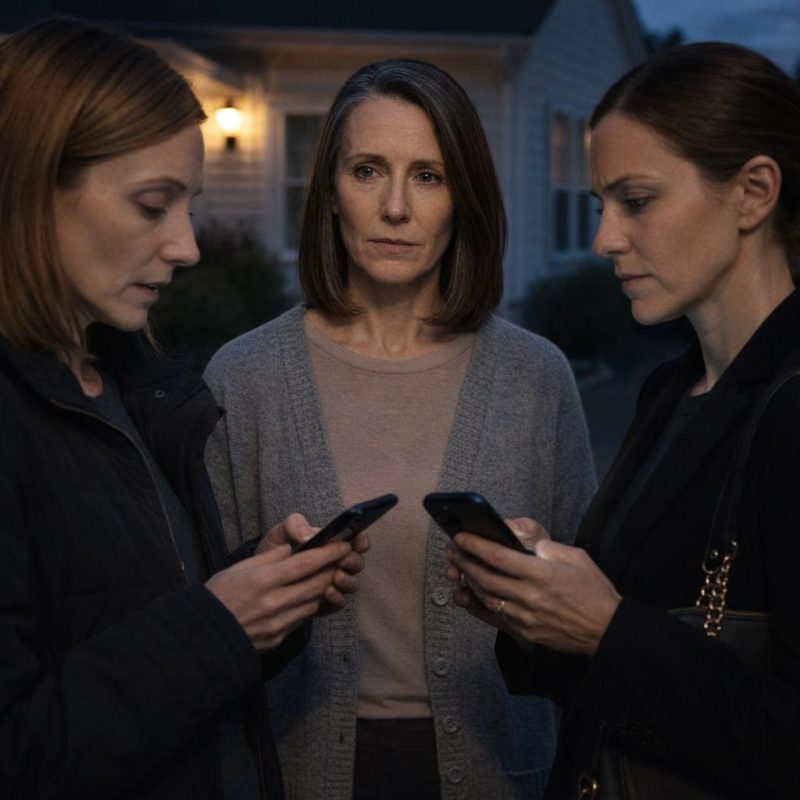 Image by RM AI
Six Months Later
Six months later I was sitting at the small kitchen table in my apartment, drinking coffee I'd made myself, in a space that was entirely mine. The apartment wasn't much — two bedrooms, a narrow galley kitchen, a window that looked out over a parking lot — but I had arranged it exactly the way I wanted, and that mattered more than I'd expected it to. I was still volunteering at the food bank on Tuesday and Thursday mornings. Emily and I had coffee most weeks, sometimes at her place, sometimes at a little café near the library. Jessica came through town every month or so and we'd have dinner, the three of us when schedules allowed. Daniel had been going to therapy. He sent letters — handwritten, which surprised me — and he didn't push for answers I wasn't ready to give. I read every one of them. I hadn't decided anything yet about the marriage, and I'd stopped apologizing to myself for that. Some decisions don't come on a schedule, and I was done pretending otherwise. What I knew for certain was that I was not the woman who had walked into that food bank not knowing her own life. I was someone who had looked at the truth straight on and was still standing. The apartment was quiet around me, and the quiet felt like something I had earned.
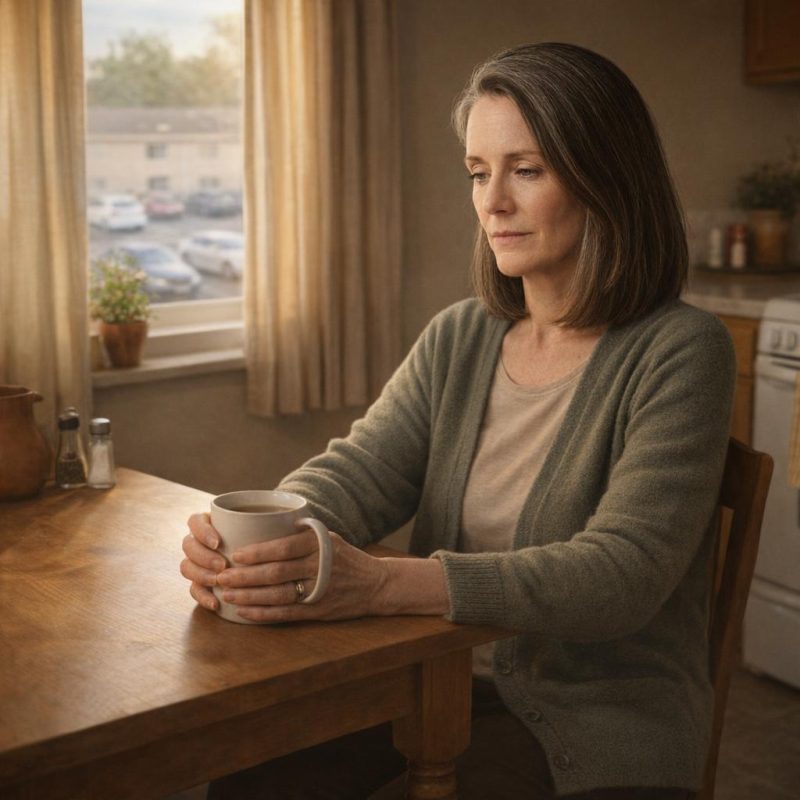 Image by RM AI
The Sisters
Emily and Jessica had been meeting for lunch every few weeks at a Thai place near Jessica's office — their spot, Emily called it when she mentioned it to me later, which made me smile. They talked about their work, their lives, the ordinary things that sisters talk about when they're still learning each other. Jessica had started sending Emily articles about things she thought Emily would find interesting, and Emily had started texting back with commentary that made Jessica laugh out loud at her desk. They talked about how strange the whole thing still was — finding each other this way, through a secret that should never have been kept — but also how grateful they were that it had finally come out. They talked about me too, and both of them wanted to make sure I was doing all right. They were planning a weekend trip, just the two of them, somewhere with a beach and no agenda. Emily said it felt like having a sister who had always existed but had just been in another room — she said that out loud at the table and then laughed at herself for how sentimental it sounded. But it was the right way to put it. What they were building between them had nothing to do with Daniel's failures, and everything to do with who they were choosing to be.
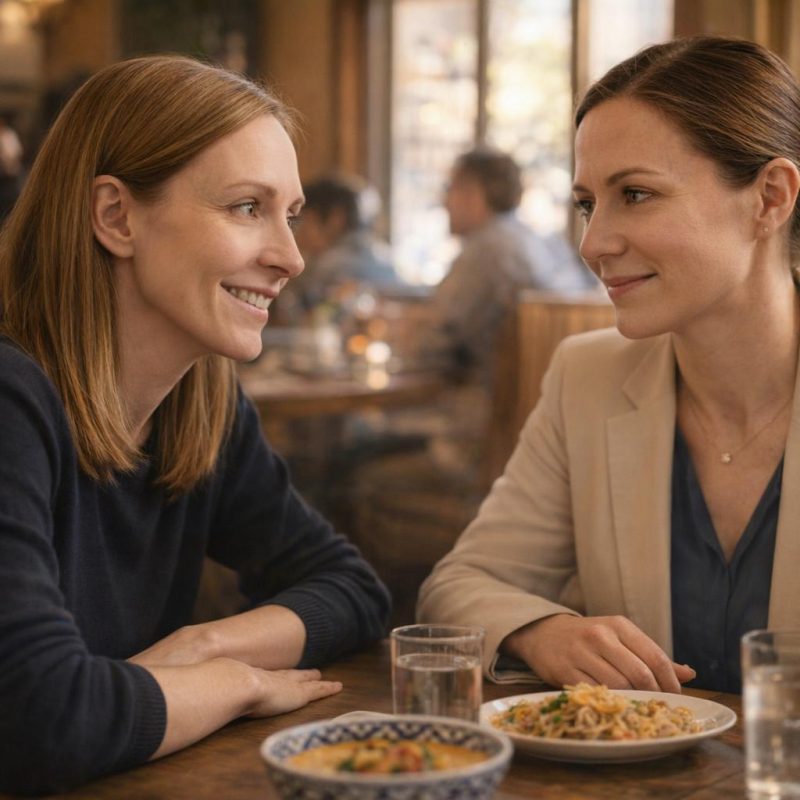 Image by RM AI
The Photograph
I had been meaning to sort through the last of the documents for weeks, and I finally sat down with them on a Sunday afternoon. My plan was simple: organize everything into a folder, label it, put it on the high shelf in the closet, and stop carrying it around in my head. Most of it I'd already been through — the letters, the receipts, the photographs I'd looked at so many times I could have described them from memory. I was nearly done when I found one I'd missed, tucked behind two others and slightly bent at the corner. It was older than the rest, the color faded to that particular yellow that photographs get when they've been stored too long. Daniel was young in it, younger than I'd ever known him, standing outside somewhere I didn't recognize. He had his arm around a woman I had never seen before. She was smiling at the camera, dark-haired, her face turned slightly toward his. She wasn't Linda. She wasn't anyone from the stories I'd pieced together over these months. I sat with it for a long time, turning it over once to check the back, but there was nothing written there. I thought about calling Emily. I thought about calling Jessica. In the end I set it on the table and left it there, because I wasn't ready to open another door just yet. The woman in the photograph looked back at me, unnamed, standing close to a version of Daniel I had never known.
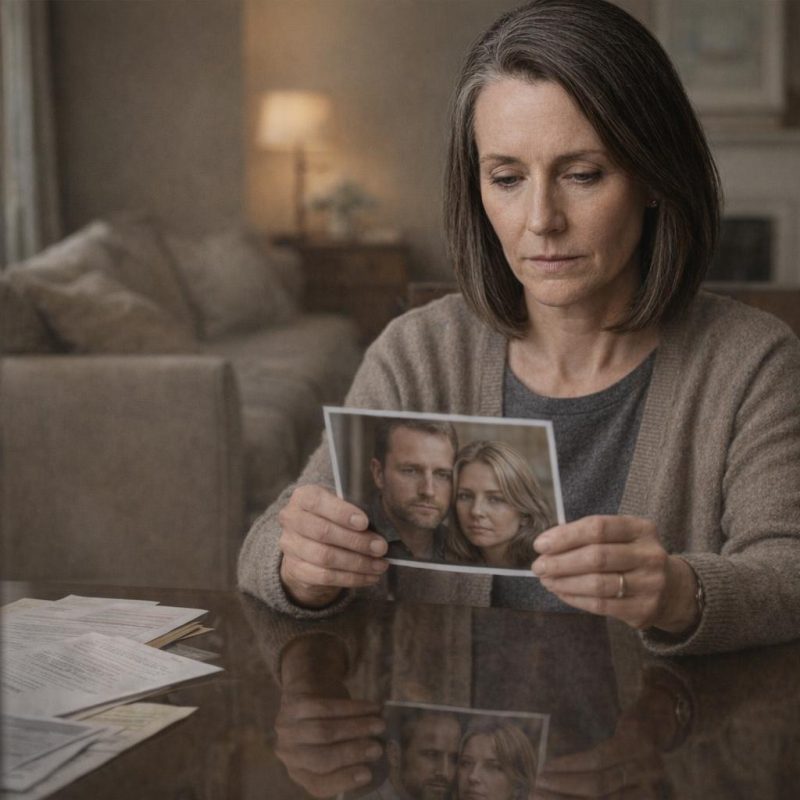 Image by RM AI
KEEP ON READING

The Origins Of 3 Common Sayings You Still Use Today
Etienne Boulanger on UnsplashMany of the phrases you use every…
By Rob Shapiro Apr 28, 2026
Was Caligula The Most Ruthless Roman Emperor?
Artur Matosyan on UnsplashRoman Emperor Caligula is one of ancient…
By Rob Shapiro Dec 18, 2025
1 Weird Fact About Every President
Washington, Lincoln, FDR. Most people know something about the lives…
By Robbie Woods Dec 3, 2024
10 Accidental Discoveries That Changed Maps & 10 That Changed…
Mistakes That Mattered. A lot of major discoveries did not…
By Cameron Dick Apr 15, 2026
10 Actors Who Perfectly Played a Historical Figure & 10…
Which Performance is Your Favorite?. Playing the role of a…
By Rob Shapiro Sep 15, 2025
10 Actors Who Perfectly Played a Historical Figure & 10…
Portraying a real person from history is one of the…
By Noone Dec 17, 2025