 Henrique Alvim Corrêa on Wikimedia
The War Of The Worlds was a series written by H.G. Wells that was published in 1898. The book follows an unnamed protagonist as he and his brother try to survive an alien invasion from the planet Mars.
These two books are of the earliest examples of the “alien invasion” genre, setting up one of the most well-loved angles within science-fiction media.
The Synopsis
If you haven’t read it, the plot of this story follows thus.
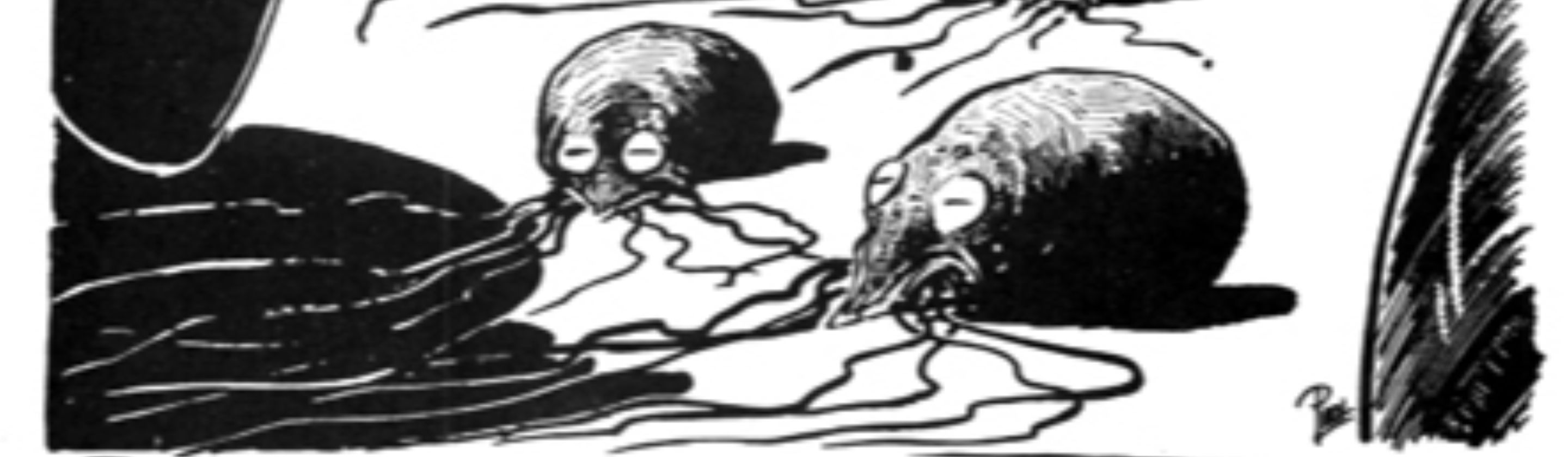
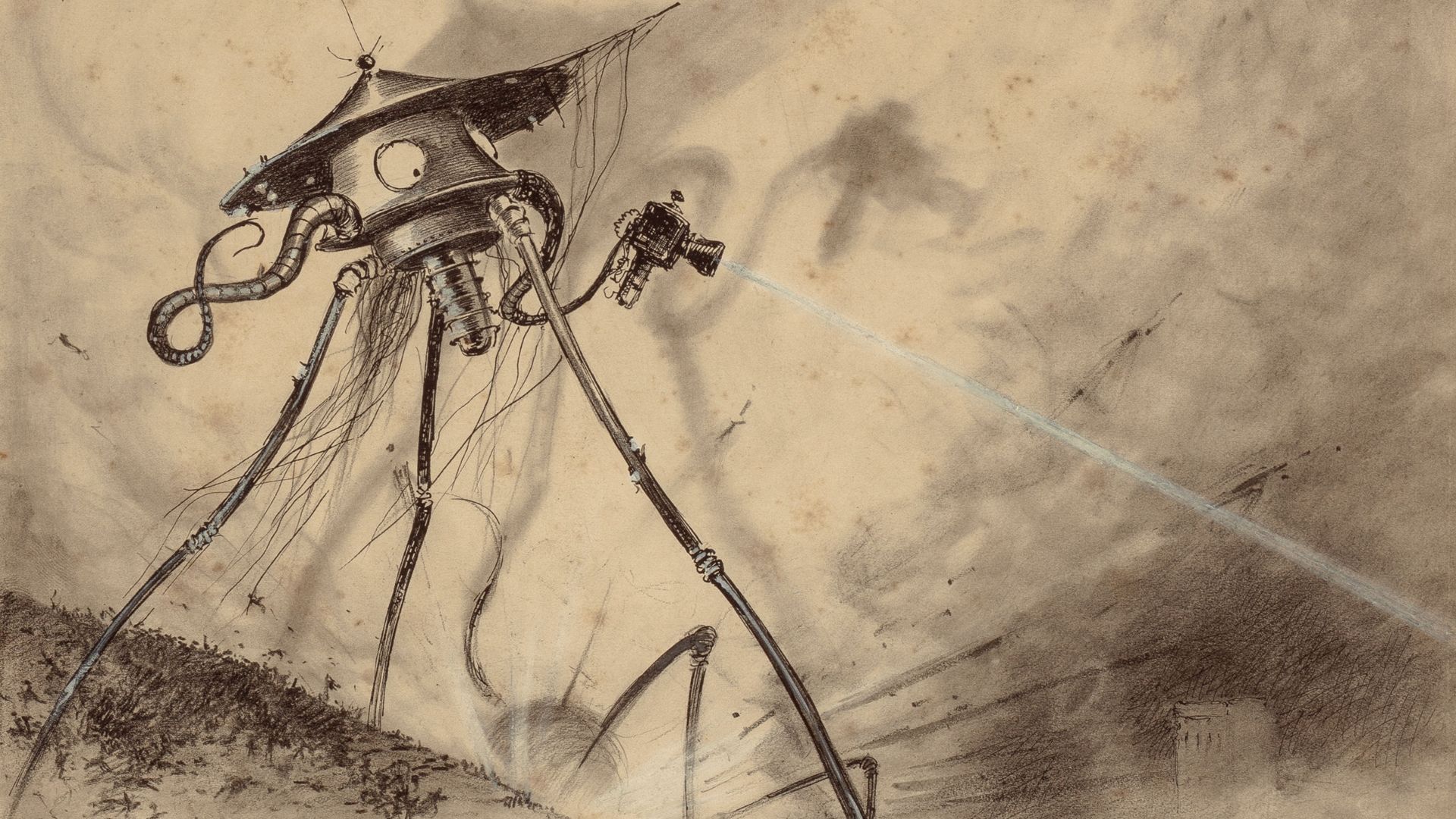
Mars is quickly becoming uninhabitable, so the highly advanced alien race that exists on our neighboring red planet decides they should eliminate mankind and take Earth for themselves. After successfully overthrowing the human race with their iconic tripod fighting machines, our narrator discovers that these beings feed on human blood. The aliens are successfully overthrown after they all succumb to pathogens, of which none of them were immune to.
Now that we have the basics, it’s important to discuss what Wells could’ve possibly meant to convey with this novel.
What Wells Meant
To look at what Wells is talking about, we first need to understand some historical context. Wells came from Victorian-era England, meaning he lived in a time when the British Empire was the only major power in existence.
At the same time, Wells was witnessing the industrial revolution and likely had concerns about how technology would affect the well-established social hierarchies that were in existence.
His messaging behind his novel is threefold. For one, he’s certainly trying to comment on British imperialism and colonialism through this fictional role-reversal invasion. As the protagonist is situated within London, readers bear witness to a “stronger” and more technologically advanced race successfully eradicating the European power.
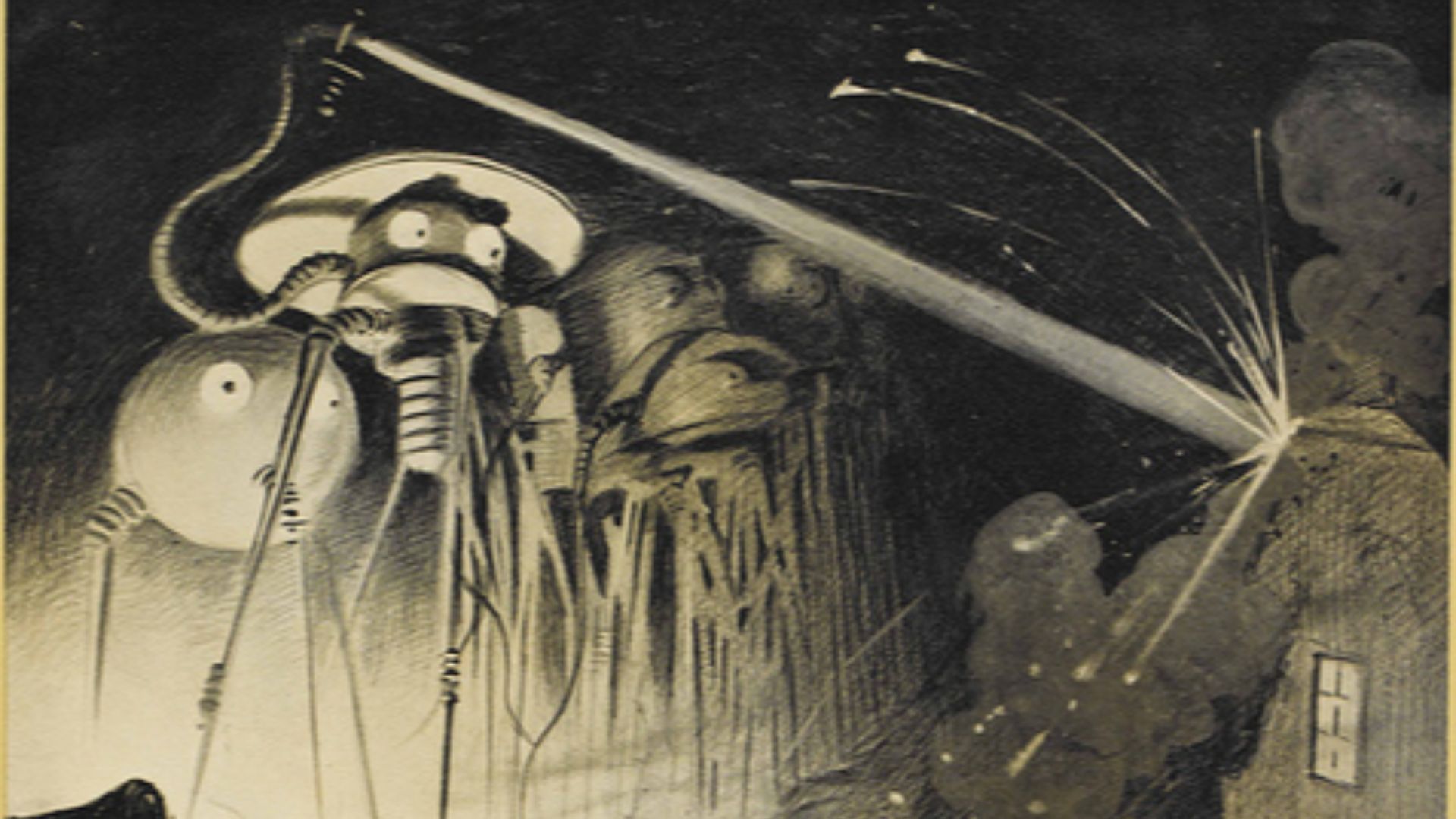 Henrique Alvim Corrêa (1876 - 1910) on Wikimedia
Furthermore, Wells is also trying to communicate ideas of social order and hierarchy. While townsfolk continue on with their daily lives after the Martians land, the delicate framework in which we organize ourselves starts to fall apart the moment they begin attacking. Wells was not only trying to showcase how ingrained social hierarchy was, but also how fragile and irrelevant it is when humans should be working together.
Last but not least, Wells tries to draw parallels between the other type of hierarchy humans find themselves in—the natural order. As the Martians throw the humans into cages, commenting that they will live fat and happy as domesticated animals, Wells is strongly urging the reader to think about their own relationship with animals and nature as a whole.
What is one of the more culturally interesting parts of The War of the Worlds is that even at the earliest occurrences of fictional alien invasion, we are using the aliens as a means of self-reflection—something that continues in the media to this day. It's very rare that we simply use the idea of a stronger, more advanced cosmic power for pure fear, instead choosing to use the idea of this external threat as a way to discuss humanity’s nature, struggles, and resilience.
KEEP ON READING