

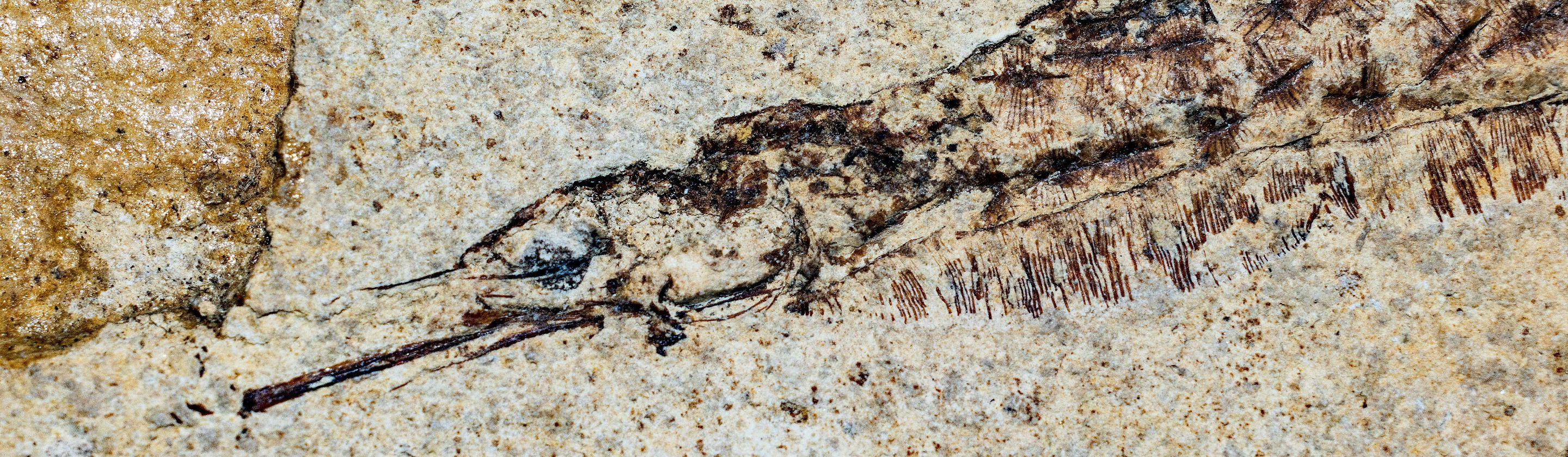
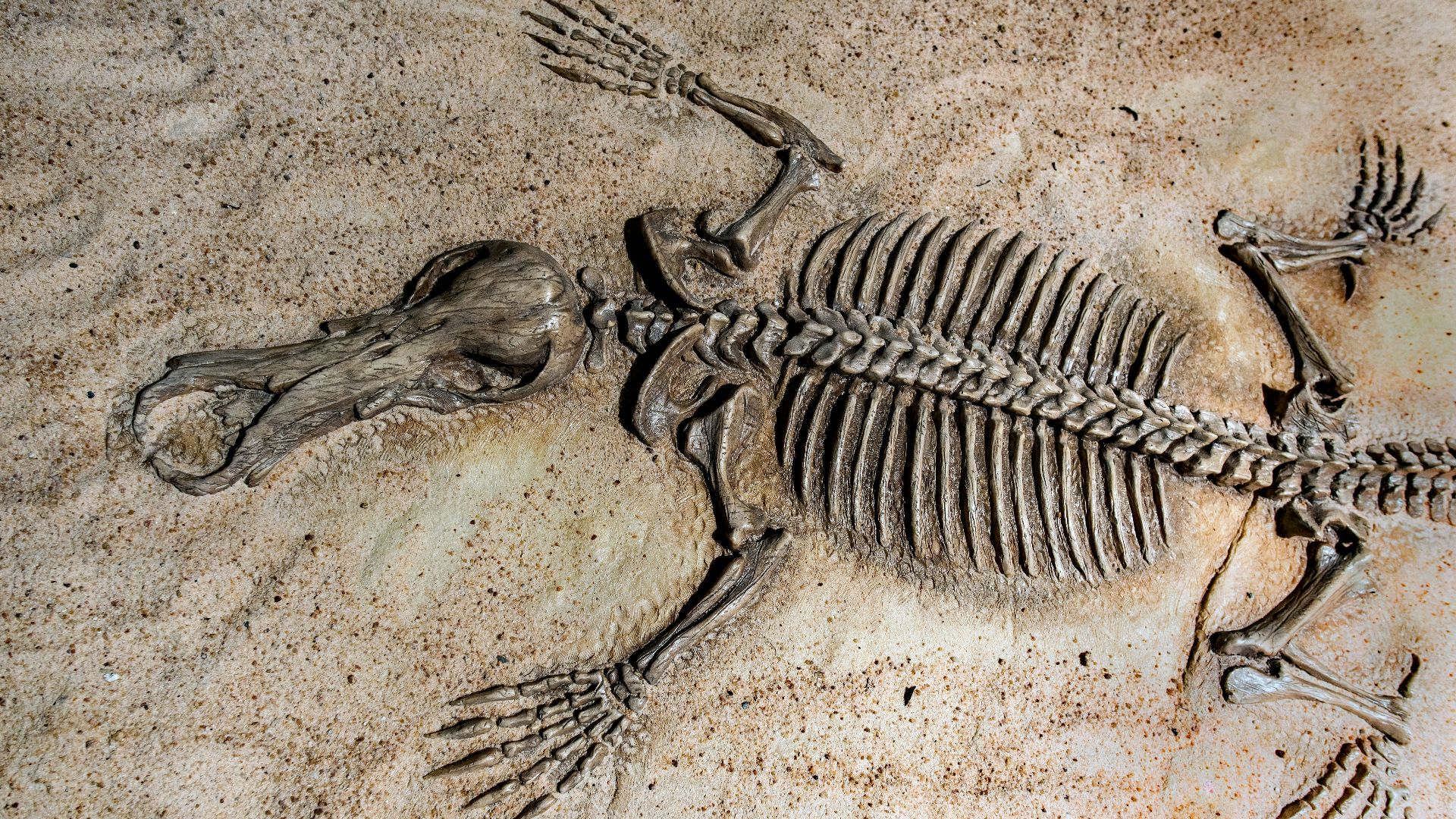
Today, fossils feel almost self-explanatory. You see a tooth, a shell, or a skeleton in a museum case and instinctively treat it as evidence of ancient life, preserved over immense spans of time. That confidence is a modern luxury. For most of human history, fossils looked less like strange shapes lodged in stone, with no obvious place in the living world.
A coiled shell found far from the sea, a jagged shark tooth inside a rock, an enormous skull in a cave; all of these demanded some kind of story. People did what people always do when faced with something baffling: they reached for religion, folklore, and local legend. Before paleontology existed as a discipline, fossil hunters often got the details wrong. Those wrong turns still tell us something useful about how earlier cultures tried to make sense of the past.
Strange Stones Needed A Story
For centuries, many naturalists didn't think fossils were the remains of once-living organisms. Some believed they were "sports of nature," odd forms generated inside rock. Others treated them as objects that had fallen from the sky or somehow grown within the Earth. Berkeley's history of Nicholas Steno notes that in 1666, the idea that a stone "tongue" could be a fossil shark tooth was still a major intellectual leap. It seems self-explanatory today, but it made sense in a world without any concept of extinction or sedimentary geology.
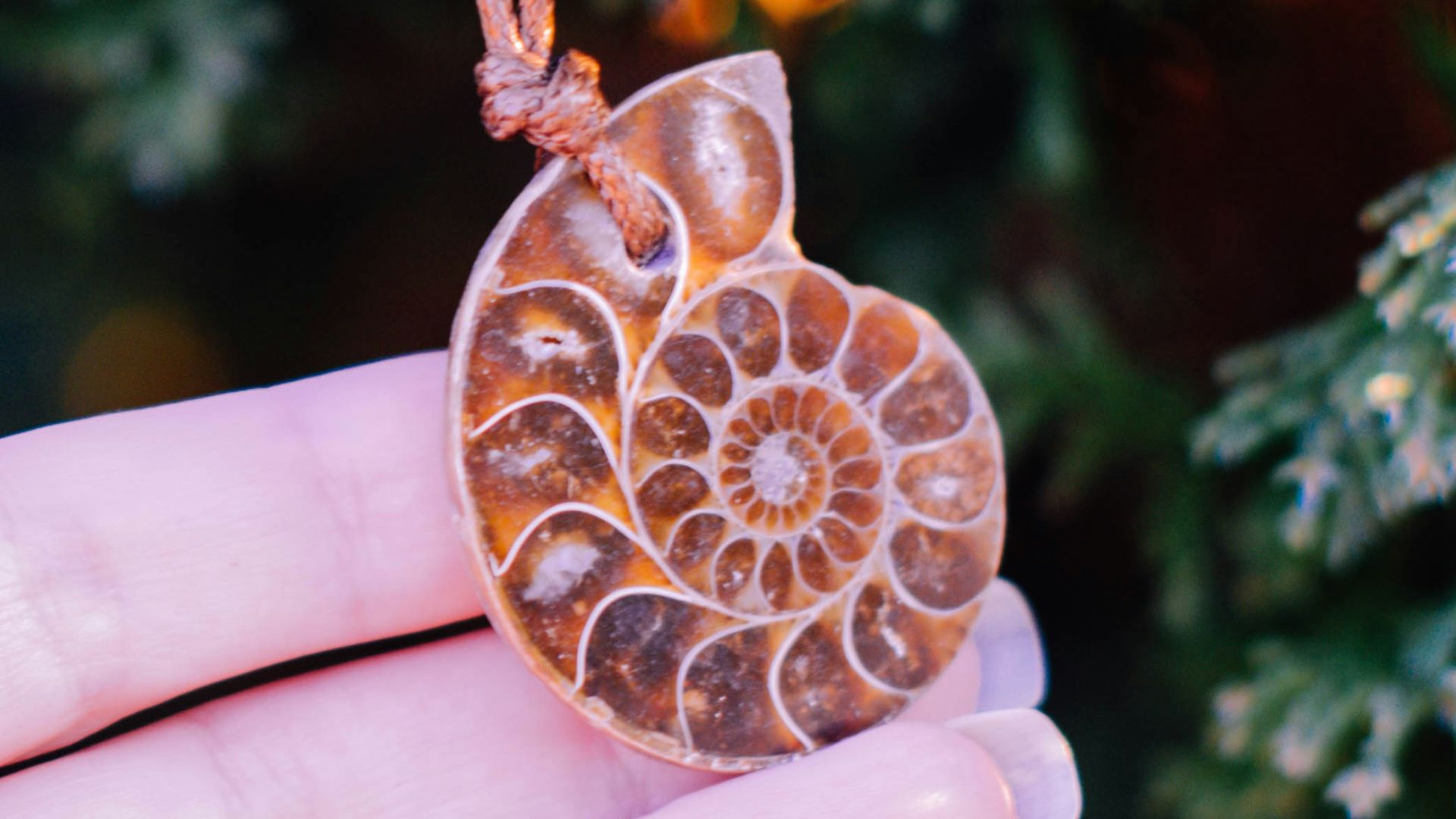
Smaller fossils were especially easy to absorb into local folklore. The Natural History Museum notes that ammonites, coiled-shell cephalopods that lived during the Mesozoic era, "snakestones" in England. This is because they looked like coiled snakes turned to stone. Some Victorian sellers even carved snake heads onto them to make the story more convincing. In Lyme Regis, ammonites were also known as "Ammon's horn". Belemnites, a squid-like cephalopod that lived during the Triassic and Cretaceous periods, picked up the considerably more dramatic nickname "devil's fingers".
In China, fossils took on another kind of afterlife. History reports that Chinese scholars used "dragon bone" as a general term for various fossils. Modern research describes long gu, the name for fossilized remains of ancient mammals like mastodons or rhinoceroses, as a medicinal material.
“Dragon bone” was used to calm the spirit, soothe the liver, and prevent the leakage of fluids long before we figured out what they actually were. These remains circulated through apothecaries for centuries, long before modern paleontologists classified them. The interpretation was wrong by modern standards, but it did preserve a long record of human engagement with fossils.
When Bones Turned Into Monsters
Large fossils caused larger imaginative problems. History notes that mammoth and elephant skulls, especially when found in caves, looked deeply confusing. At first glance, the large nasal opening on the front of the skull can be mistaken for a single giant eye socket. National Geographic has also described giant elephant relatives like Deinotherium as plausible contributors to Cyclops stories for exactly that reason. No one can draw a straight line from fossil to myth, but as a cautious historical possibility, it holds up well enough to mention.
Even educated fossil hunters could go badly off course. Monticello's account of the Megalonyx jeffersonii fossils explains that Thomas Jefferson initially concluded that the bones belonged to an animal "of the lion kind," only on an exaggerated scale. He wasn't being sloppy so much as reasoning within the limits of his time. Extinction was still a disruptive idea, and North America's prehistoric fauna wasn't even an idea at the time.
Mary Anning's first ichthyosaur tells a similar story. The Natural History Museum notes that when she uncovered the famous aquatic specimen at Lyme Regis, people in town thought she had found a monster, while scientists first treated it as a crocodile. Only later was it recognized as an extinct marine reptile. It was at this point that humans had to accept the very new and still controversial idea that species could disappear forever.
The Slow Birth Of Paleontology
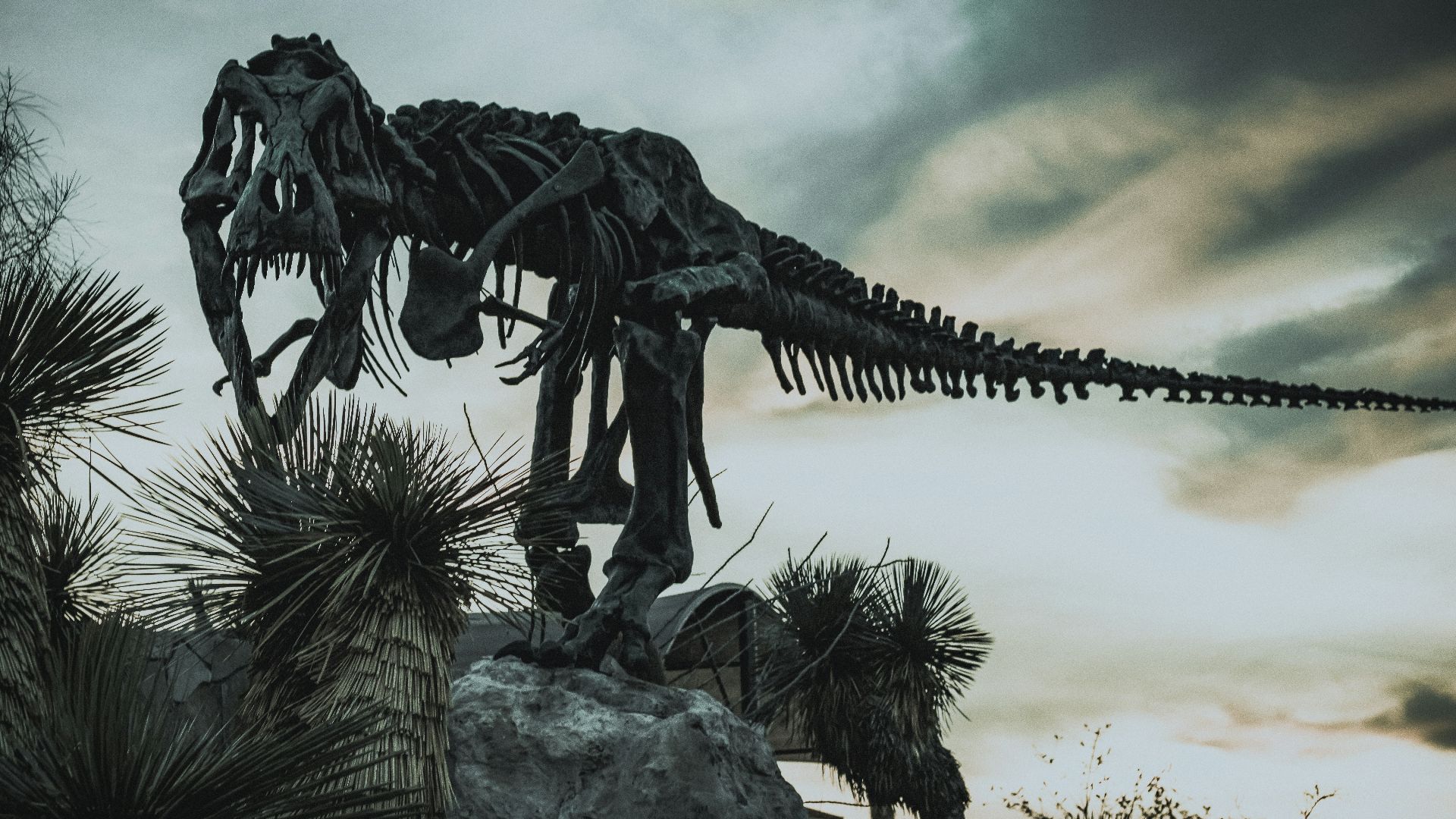
One of the clearest turning points of this practice came with Nicholas Steno. After dissecting a shark in 1666, he noticed that its teeth closely matched the so-called "tongue stones" long were, in fact, fossil shark teeth. Berkeley's history of Steno notes that he helped explain how once-living material could become stone while preserving its form. It didn't solve every mystery at once, but it shifted fossils out of the realm of mythical marvels and into the realm of testable natural history.
The next big shift wasn't just identifying a fossil correctly, but placing it in time. The same Natural History Museum account of Mary Anning points out that her ichthyosaur was debated for years before it was recognized as an extinct marine reptile, and that Georges Cuvier had only recently introduced the theory of extinction. Early fossil hunters weren't just misnaming bones.
They were wrestling with the much larger possibility that the Earth had hosted entire worlds that no longer existed.
That's why the story of pre-paleontology fossil hunting is more interesting than a simple list of old mistakes. People were wrong about saints, dragons, snakes, giants, and sea monsters, but those mistakes were part of a long effort to explain discoveries with the tools available at the time. Modern paleontology won because it gave fossils a method instead of a myth: compare, classify, test, revise, and keep going. The real breakthrough wasn't that humans stopped telling stories. It was then that they finally learned how to let the stones answer back.
KEEP ON READING

The story of Ching Shih, the Woman Who Became the…
Unknown author on WikimediaFew figures in history are as feared…
By Emilie Richardson-Dupuis Dec 29, 2025
Einstein's Violin Just Sold At An Auction—And It Earned More…
A Visionary's Violin. Wanda von Debschitz-Kunowski on WikimediaWhen you hear…
By Ashley Bast Nov 3, 2025
This Infamous Ancient Greek Burned Down An Ancient Wonder Just…
History remembers kings and conquerors, but sometimes, it also remembers…
By David Davidovic Nov 12, 2025
The Mysterious "Sea People" Who Collapsed Civilization
3,200 years ago, Bronze Age civilization in the Mediterranean suddenly…
By Robbie Woods Mar 18, 2025
What Gladiators Were Actually Fed Tells a Different Story Than…
Maria Dolores Vazquez on UnsplashWhen people picture "gladiator food," they…
By Emilie Richardson-Dupuis Apr 16, 2026
20 Soldiers Who Defied Expectations
Changing the Rules of the Battlefield. You’ve probably heard plenty…
By Annie Byrd Feb 10, 2026