


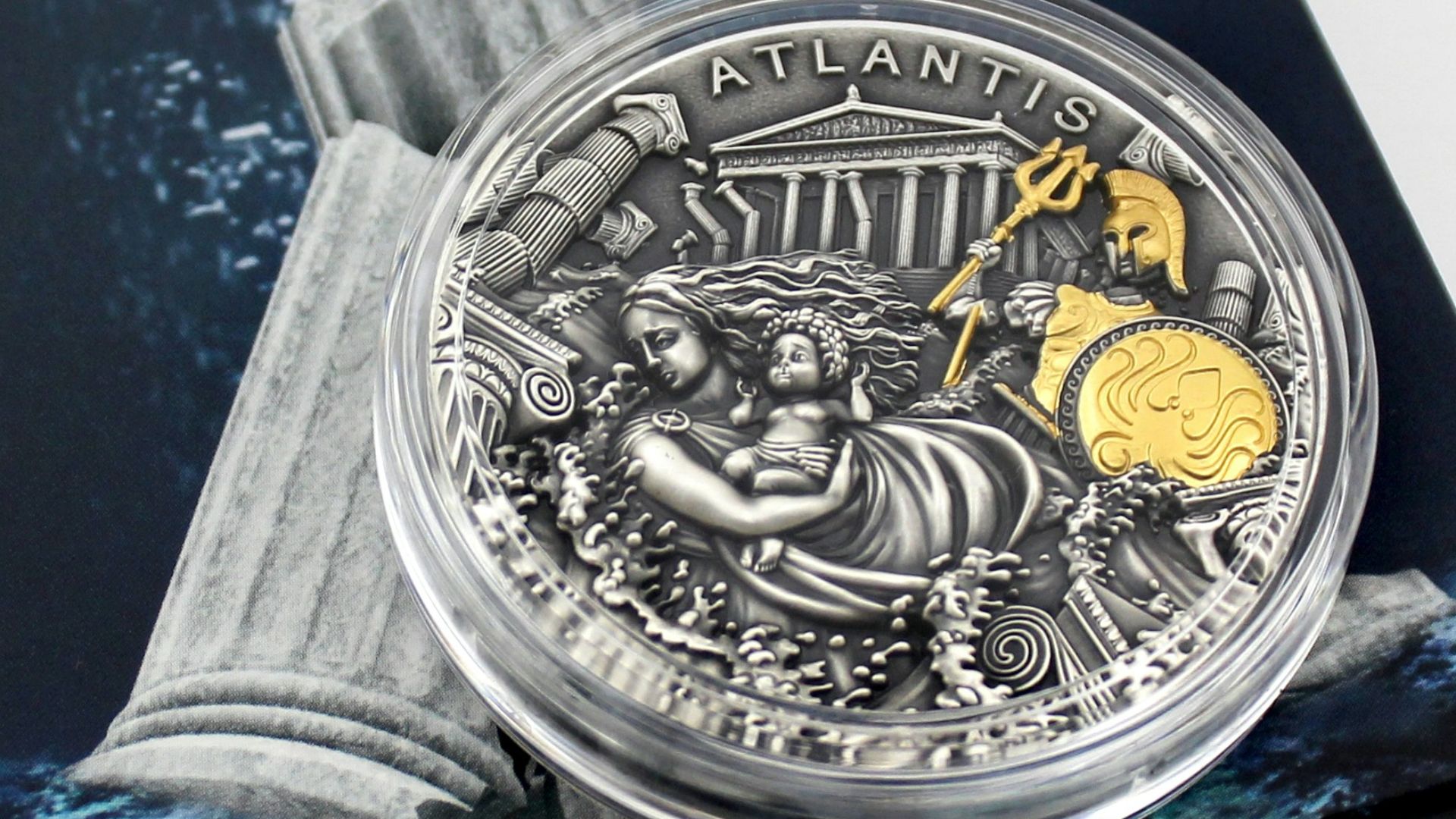
The story of Atlantis starts not with archaeologists or ancient ruins, but with a philosopher sitting in Athens around 360 BCE. Plato, one of history's most influential thinkers, introduced this legendary island in two of his dialogues: "Timaeus" and "Critias."
But here's the twist that many people miss—Plato never intended Atlantis to be real. He created it as a philosophical device, a fictional civilization designed to illustrate a moral point about hubris and the dangers of unchecked power.
Plato's Cautionary Tale
According to Plato's account, Atlantis was a naval superpower located beyond the Pillars of Hercules, which we now call the Strait of Gibraltar. The island was supposedly larger than Libya and Asia combined, ruled by descendants of Poseidon himself. The Atlanteans possessed advanced technology, impressive architecture, and enormous wealth.
Their capital featured concentric rings of water and land, golden statues, and a magnificent temple to Poseidon. For generations, they were noble and virtuous, but eventually, their prosperity corrupted them. They became greedy, aggressive, and morally bankrupt, eventually attempting to conquer Athens and the Mediterranean world.
In response to their corruption, the gods punished them, and in a single catastrophic day and night, Atlantis sank into the ocean, disappearing forever.
The Moral Lesson That Got Lost
What's fascinating is that somewhere between ancient Athens and modern times, people forgot that Plato was telling a story with a purpose. His real message was crystal clear: even the mightiest civilization will fall if it abandons virtue in favor of material excess and imperial ambition.
Plato used Atlantis as a foil to praise ancient Athens, showing that moral integrity trumps military might and wealth. The story was essentially a thought experiment about political philosophy and ethics. Plato's contemporaries would have recognized this narrative technique.
Greek philosophers regularly created fictional scenarios to explore abstract concepts. The problem is that as centuries passed, people began treating Atlantis as if it were a historical account rather than a philosophical allegory. This disconnect between Plato's intent and how his story was received would spawn thousands of years of speculation, treasure hunts, and pseudohistorical theories.
Why We're Still Searching
 Joe Mastroianni, National Science Foundation on Wikimedia
Despite zero archaeological evidence and explicit scholarly consensus that Atlantis was Plato's invention, the legend refuses to die. People have claimed to find Atlantis everywhere from the Caribbean to Antarctica, from the Mediterranean to Southeast Asia. The story taps into something deeply human: our fascination with lost civilizations, our desire for mystery, and perhaps our need to believe that advanced societies existed in the distant past.
The real irony? In our obsession with finding a literal Atlantis, we've ignored the actual lesson Plato wanted to teach. We're so focused on whether the city existed that we've forgotten why Plato created it in the first place.
The moral behind Atlantis isn't hidden in some underwater ruin. It's sitting right there in his text, warning every generation that power without wisdom leads to destruction.
KEEP ON READING

The 10 Youngest Monarchs In History & The 10 Oldest
Age Is Just A Number. Imagine being crowned king or…
By Chase Wexler Mar 11, 2025
You Think You Have Problems? These Royal Families Were Cursed
Boasson and Eggler St. Petersburg Nevsky 24. on WikimediaHeavy is…
By Ashley Bast Dec 5, 2025
You Can Thank This Greek-Canadian For Creating Pineapple On Pizza…
Love it or hate it, pineapple on pizza sparks debate…
By David Davidovic Dec 1, 2025
Yes, Female Gladiators Existed, And Here's Everything You Need To…
History of Women in Combat. Most people picture gladiators as…
By David Davidovic Jan 17, 2026
Yes, Australians Once Lost A Battle Against Flightless Birds
David Clode on UnsplashIn 1932, the Australian military went to…
By David Davidovic Nov 24, 2025
The Y2K Bug: Why Did Everyone Think Year 2000 Was…
Alan W on UnsplashOn December 31, 1999, people all over…
By Christy Chan Dec 22, 2025