Outside Civilization: History's Most Famous Feral Children
Feral children occupy a strange space in our collective imagination. They represent both our deepest fears about what we might become without society and our romantic fantasies about nature uncorrupted by civilization. These are children raised without human contact, growing up among animals or in complete isolation. Their stories ask uncomfortable questions about what makes us human and whether language, culture, and social connection are learned or innate.
Victor of Aveyron
A boy emerged from the woods of southern France in 1797. He was around twelve years old, and he was naked, scarred, and unable to speak. Local farmers spotted him digging for roots and acorns, moving on all fours like an animal. He became known as Victor of Aveyron, and his case would fascinate scientists for decades.
Jean Marc Gaspard Itard, a young physician, took responsibility for Victor's education and spent five years attempting to civilize him. Itard documented everything meticulously in reports that still exist. Victor learned to recognize objects, follow simple commands, and even showed affection for his caretakers but he never learned to speak beyond a few words.
Itard considered his experiment a failure, though later psychologists saw it differently. Victor demonstrated that critical periods for language acquisition are real and unforgiving. Miss that window in early childhood, and full language may be forever out of reach.
Genie

In 1970, authorities in Los Angeles discovered a thirteen-year-old girl who had been locked in a bedroom for most of her life. Her father had decided she was mentally disabled and kept her strapped to a potty chair during the day and confined to a sleeping bag at night. Genie, as researchers called her, had virtually no language skills when she was found.
Unlike Victor, Genie hadn't been raised in the wild. She had been raised in extreme isolation in a suburb. Her case attracted linguists, psychologists, and neuroscientists eager to study whether language could be acquired after the critical period.
Genie made some progress. She learned vocabulary and could eventually form short phrases, yet she never mastered grammar or syntax. Brain scans showed that her right hemisphere appeared to process language rather than her left, suggesting her brain had reorganized itself around her trauma and deprivation.
The Wolf Girls of Midnapore
Two girls, Amala and Kamala, were reportedly found in a wolf den in India in 1920. They walked on all fours, ate raw meat, howled at night, and showed no interest in human contact. The Reverend J.A.L. Singh, who ran an orphanage, took them in and documented their slow, painful adjustment to human society.
Amala, the younger one, died within a year. Kamala lived for nine more years, gradually learning to walk upright, wear clothes, and communicate with basic words. Singh's diaries describe her preference for darkness, her keen sense of smell, and her tendency to lick her food from a plate rather than using utensils.
Modern scholars have questioned whether the wolf story was real or embellished. Some suggest the girls may have simply been abandoned children with severe developmental disabilities. Singh's motivations for promoting their story remain murky and his orphanage certainly gained fame from the sensational tale. The truth, whatever it was, got buried under layers of storytelling and scientific speculation.
Oxana Malaya
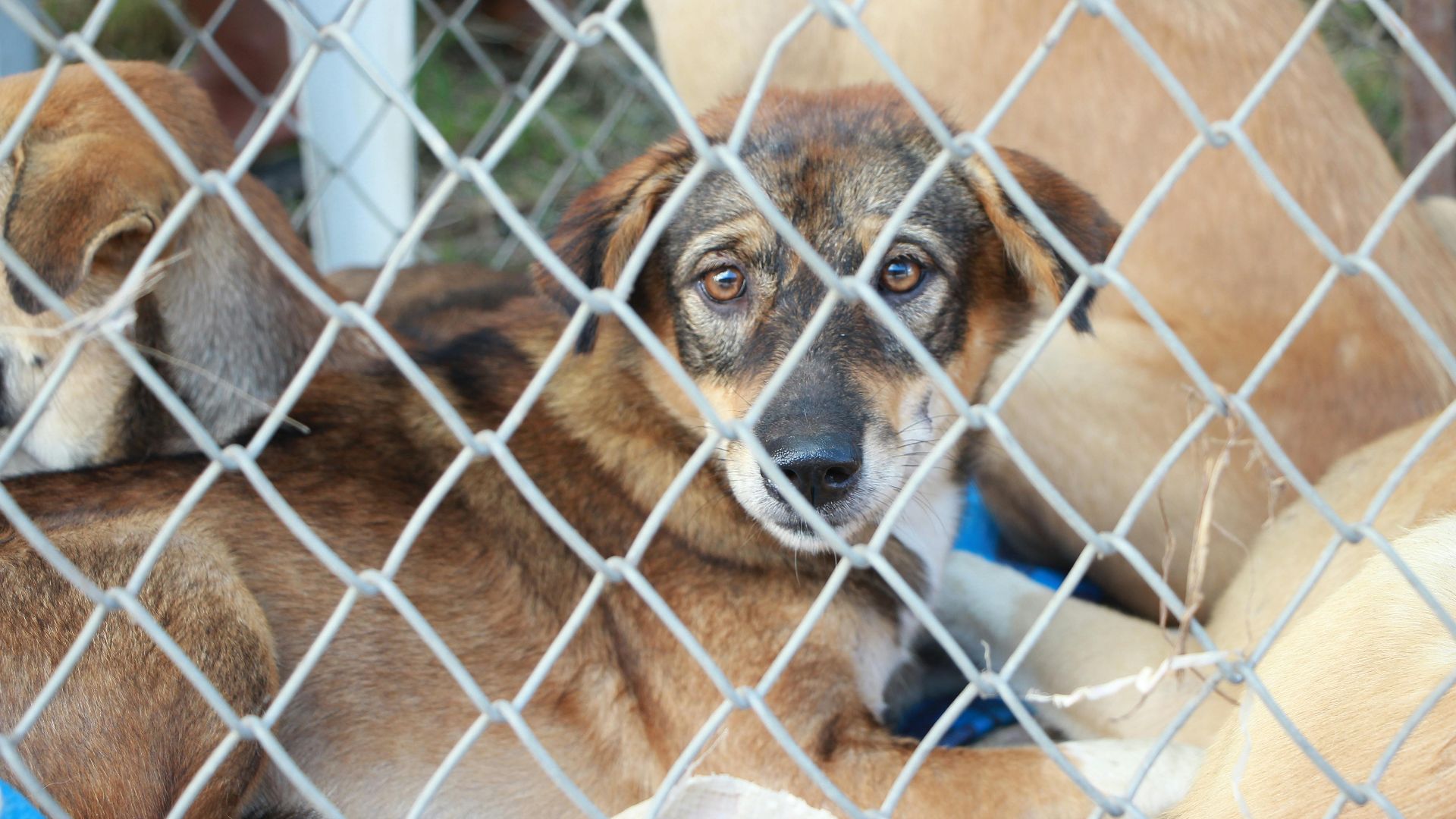 Pranidchakan Boonrom on Pexels
In 1991, an eight-year-old girl was found living in a kennel with dogs in Ukraine. Her parents were alcoholics who’d left her outside, and she'd crawled in with the dogs for warmth. Oxana had lived there from age three to eight, essentially raised by the family's dogs during her critical developmental years.
When discovered, she barked, ran on all fours, panted with her tongue out, and bared her teeth when approached. Although her language skills were minimal, her case was somewhat more hopeful because she had some human contact before age three and was younger when rescued.
She learned to speak, though her language remained simple. As an adult, she worked on a farm caring for animals, having found a life that bridged her unusual past with human society.
KEEP ON READING