

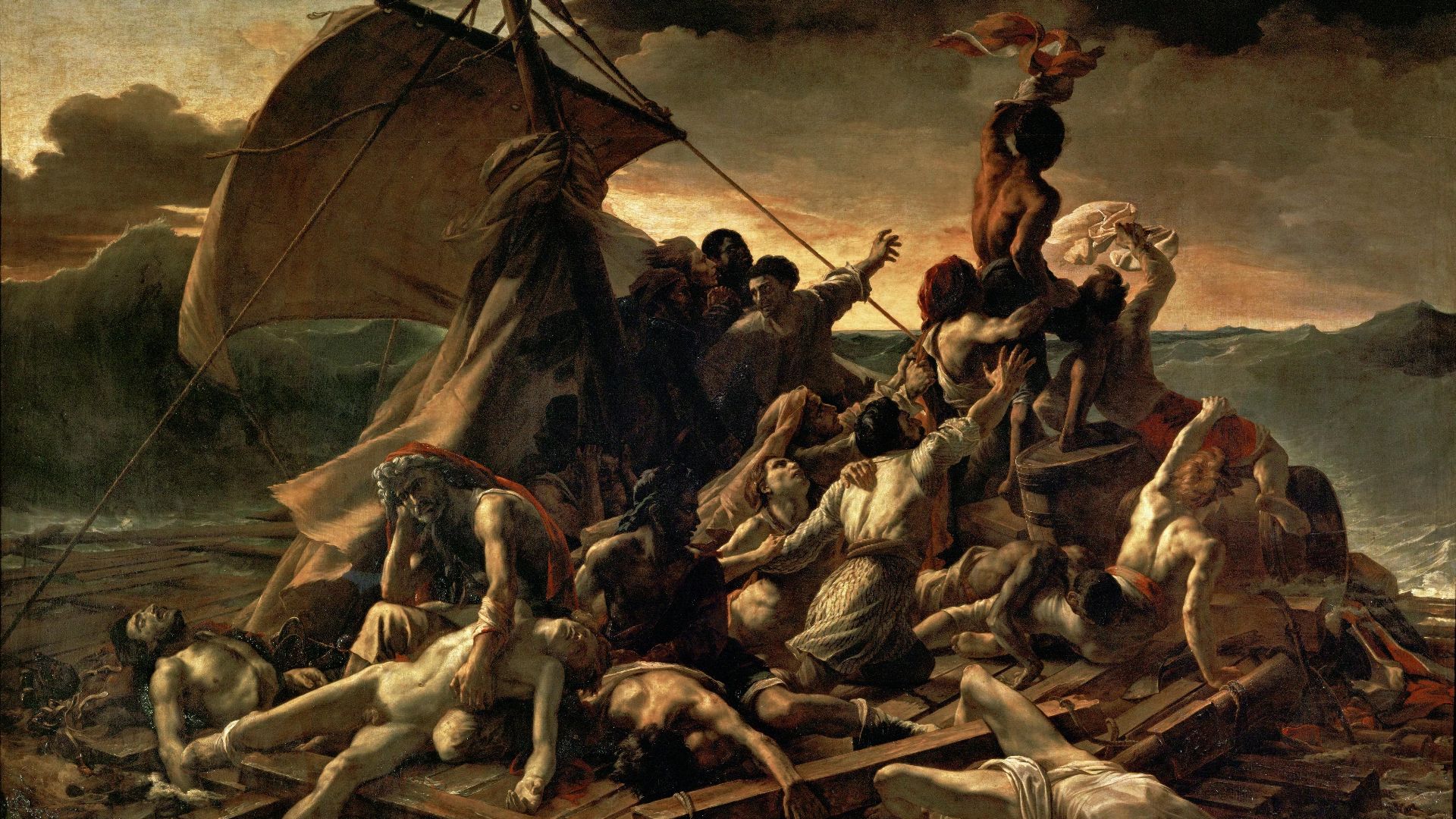
The Raft of the Medusa might not be the Louvre's most famous painting, but it might be the most graphic.
 Théodore Géricault on Wikimedia
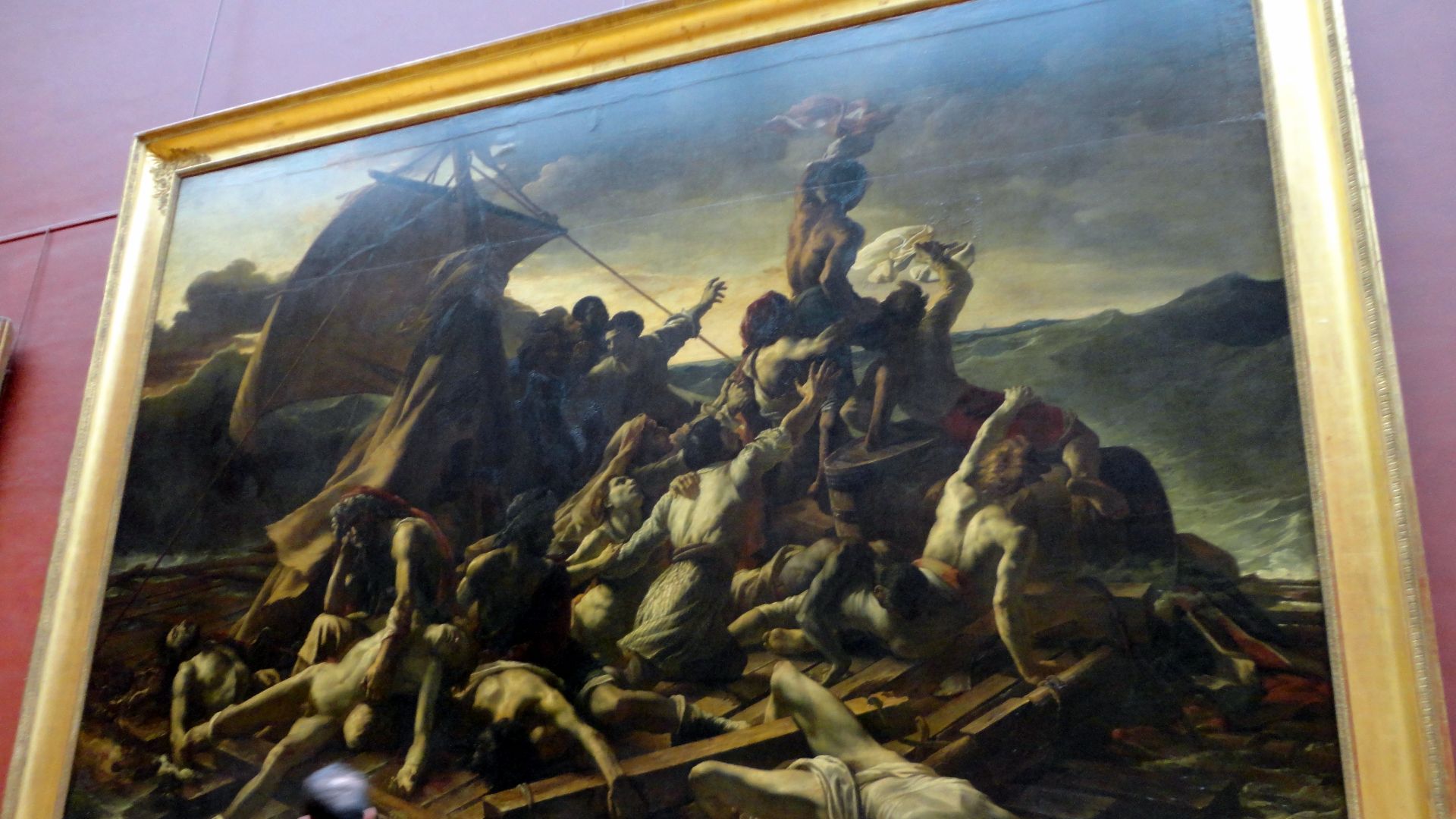
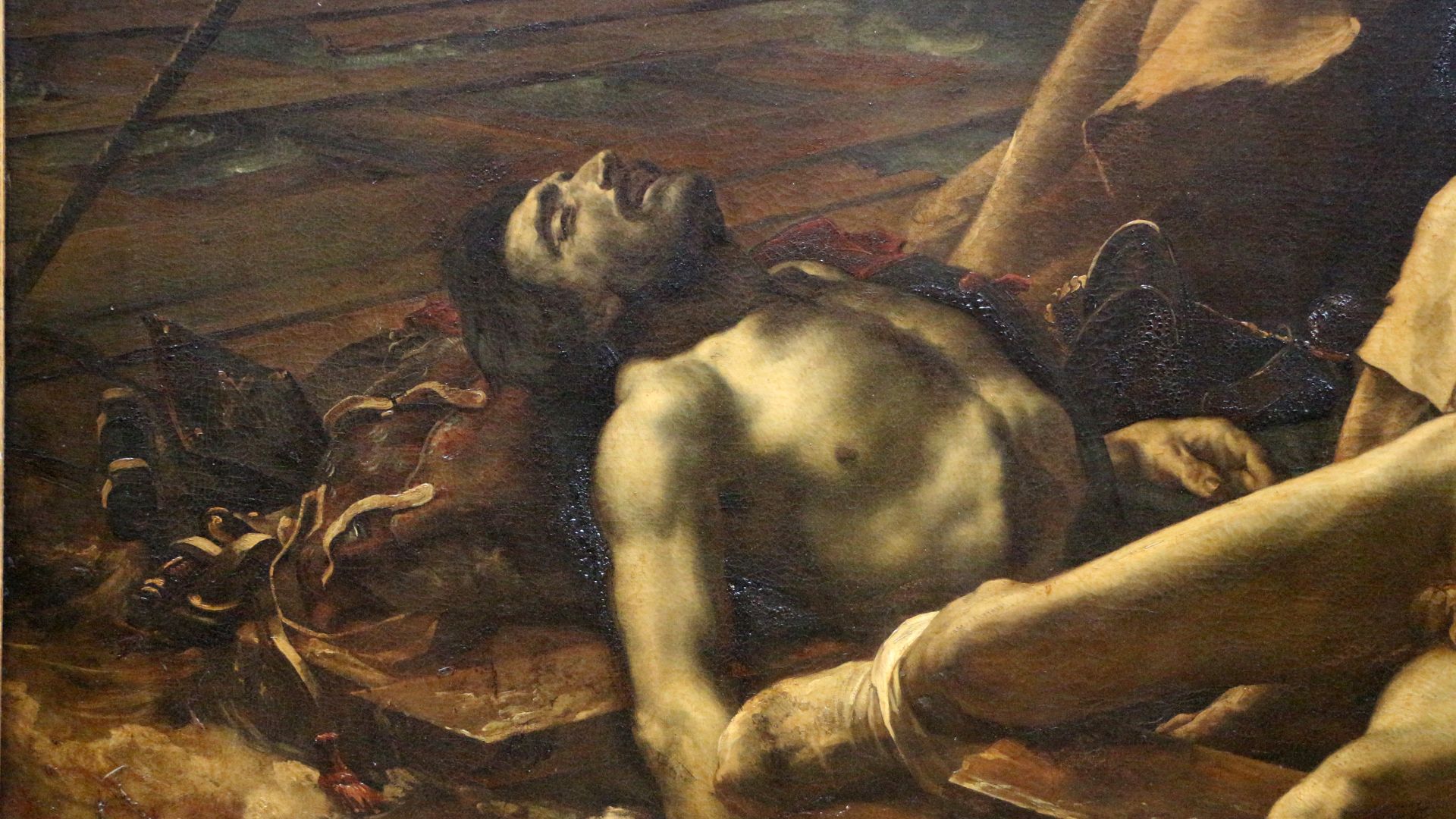
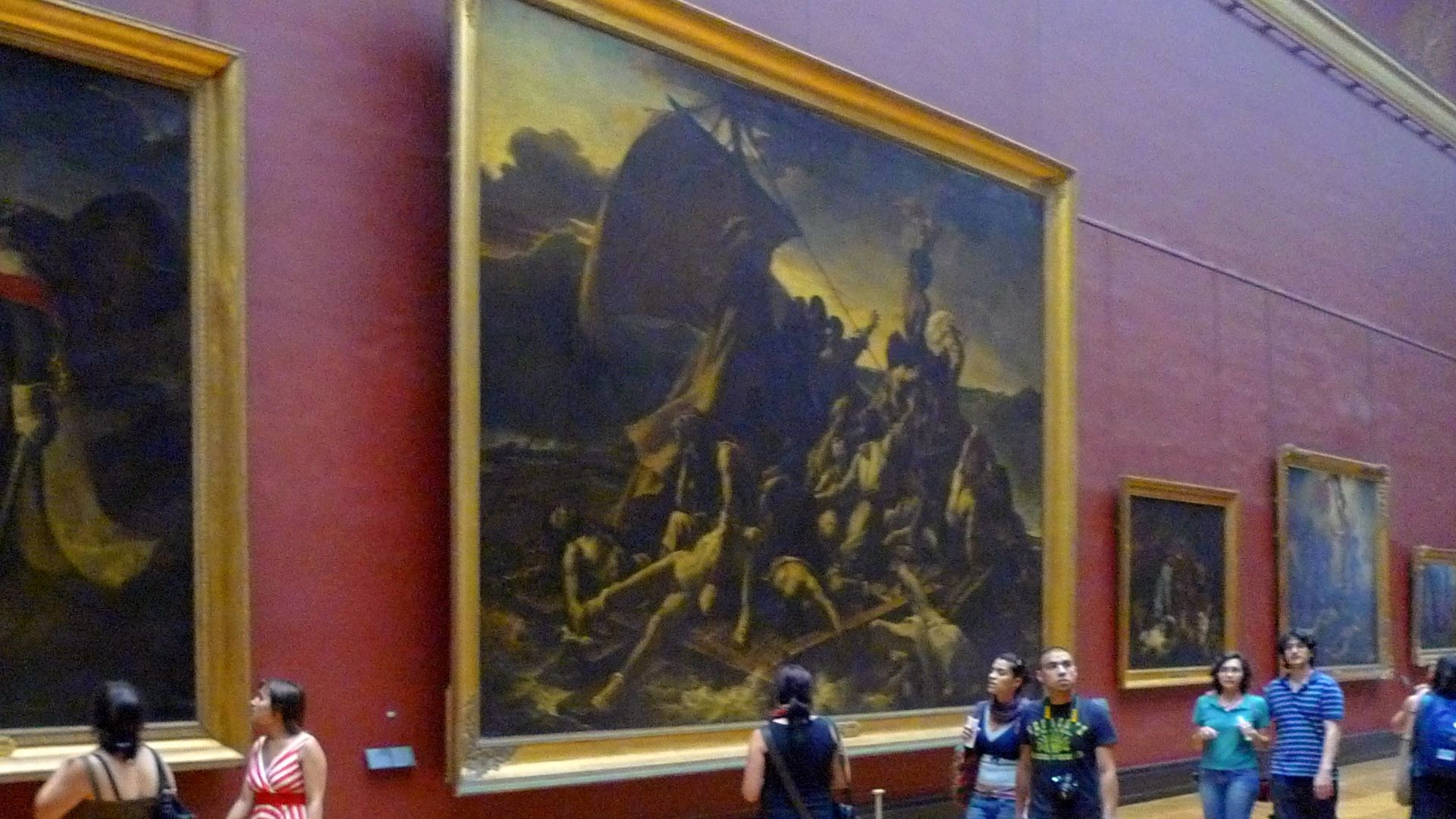
Painted by Théodore Géricault in 1818, this larger than life canvas stops visitors in its tracks. Emaciated bodies form a gruesome pyramid, each one suffering their own torments. The scene is bathed in an unforgiving light, making the viewer unable to determine which bodies are alive and which are not.
It's one of the most viscerally upsetting paintings in history—and one of the most divisive. Critics found it repulsive and confrontational. However, the most disturbing part is that the painting was not Géricault's invention; it was history.
Historical Background
The Medusa was a 40-gun frigate launched in 1810. During the Napoleonic Wars, she faced off against the British in the Caribbean and off the east coast of Africa. Miraculously, she survived battle intact; she would not be so lucky later.
In 1816, the final chapter of her story began.
Following Napoleon's final exile, the French monarchy was eager to reassert its colonial power. While the slave trade had been abolished and reinstated several times, it was legal in French colonies until 1847. This made colonial holdings all the more valuable if France wanted to stay a world power.
Among these holdings, Senegal was one of the most valuable. It was captured by the British during wartime, but was formally returned to France with the fall of Napoleon. All they had to do was reclaim it.
An Unlucky Voyage
Medusa led a convoy of four ships to Senegal. On board was the colony's new governor, along with a contingent of abolitionist. In total, she carried 400 souls, both passengers and crew.
Almost immediately after leaving port, things began to go wrong. The captain, who got the post because he was the king's friend, hadn't manned a ship in 20 years. Together with a governor desperate to reach Senegal as quickly as possible, this was a match made in hell.
Rather than sailing out to sea, the Medusa hugged the shore. It would get them there faster, but they'd have to dodge sandbars, rocks, and reefs. In her desperate quest for speed, the other ships quickly lost sight of the Medusa.
Thanks to an inexperienced navigator, Medusa floundered in the mud off the coast of Mauritania—more than 300 miles north of their destination. Unable to dislodge the ship, and without enough lifeboats to hold everyone, a raft was hastily constructed.
The raft was intended to be towed by the officers in the lifeboats. However, it slowed their progress down considerably. A few miles after they set sail, the lifeboats severed the lines connecting them to the raft.
Set Adrift
 Théodore Géricault on Wikimedia
147 passengers were crammed on that raft. They were now totally adrift without a way to navigate unfamiliar seas. The only supplies they had were casks of wine and minimal food stores.
The raft was never intended to sail on its own, and never for an extended period of time. Within hours, people began to succumb either to the elements or the brutality of others. Drunk, desperate, and delirious, fights broke out in what little space there was.
By the first night, they'd lost 20 passengers. Then, a storm hit. The castaways struggled to stay afloat; trampling each other in their panic.
By the fourth day, there were 67 survivors. With dwindling rations and increasing desperation, they cut into the only fresh meat at their disposal. Such was the custom of the sea.
By the eighth day, the weakest of the survivors were sacrificed to the sea to preserve the remaining wine. Weakened by sun, dehydration, and hunger, it took all their strength to push them overboard. Eventually, they let bodies lie where they fell.
When rescue arrived after 13 days of horror, only 15 of the original 147 survived.
Memory Of The Medusa
 jean-louis zimmermann on Wikimedia
The wreck caused a political firestorm once news reached France. The captain was found guilty of incompetence and neglect, but avoided the death penalty. Instead, he served three years in prison.
One of the most horrifying moments in maritime history may have quietly sunk if not for this painting. It was, after all, an embarrassment to the newly-restored monarchy. However, Théodore Géricault refused to let the public forget about the Medusa and her survivors.
It took Géricault eight months to paint The Raft of the Medusa. In the process, he visited hospitals, morgues, and survivors of the wreck. He constructed a scale model of the raft down to the gaps between the planks.
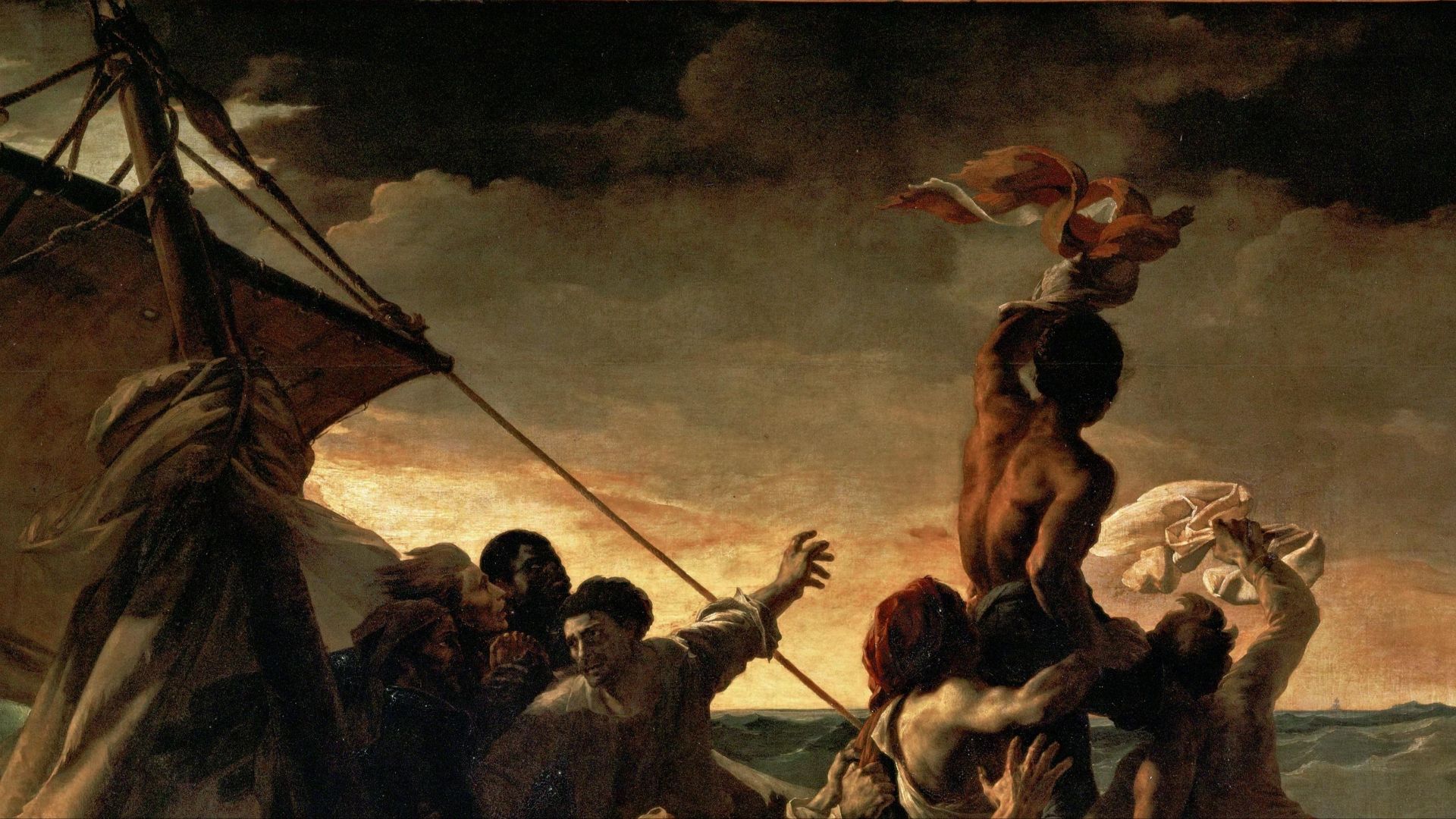
Nonetheless, there is a beacon of hope in the painting. Look at the top of the pyramid, and you will see a Black man waving a flag. In the distance, little more than a speck on the horizon, is a ship.
KEEP ON READING
The 20 Most Recognized Historical Figures Of All Time
The Biggest Names In History. Although the Earth has been…
By Cathy Liu Oct 4, 2024
10 of the Shortest Wars in History & 10 of…
Wars: Longest and Shortest. Throughout history, wars have varied dramatically…
By Emilie Richardson-Dupuis Oct 7, 2024
10 Fascinating Facts About Ancient Greece You Can Appreciate &…
Once Upon A Time Lived Some Ancient Weirdos.... Greece is…
By Megan Wickens Oct 7, 2024
20 Lesser-Known Facts About Christopher Columbus You Don't Learn In…
In 1492, He Sailed The Ocean Blue. Christopher Columbus is…
By Emilie Richardson-Dupuis Oct 9, 2024
20 Historical Landmarks That Have The Craziest Conspiracy Theories
Unsolved Mysteries Of Ancient Places . When there's not enough evidence…
By Megan Wickens Oct 9, 2024
The 20 Craziest Inventions & Discoveries Made During Ancient Times
Crazy Ancient Inventions . While we're busy making big advancements in…
By Cathy Liu Oct 9, 2024