

My Perfect Lawn Was Destroyed by a Mysterious Bill—Then I Found Out What My Grandfather Buried in 1983
My Perfect Lawn Was Destroyed by a Mysterious Bill—Then I Found Out What My Grandfather Buried in 1983
The Sanctuary of Three Inches
I got home from work around six-thirty, same as always, and the first thing I did was change out of my work clothes. Not because anyone told me to — just because the lawn doesn't get the good version of me in a button-down. I pulled on my old jeans and the faded green t-shirt I keep on the hook by the garage door, and something in my shoulders finally let go. Data analysis is fine work. I'm good at it. But eight hours of staring at spreadsheets leaves a particular kind of tension behind your eyes that only one thing reliably fixes. I started at the far edge of the property, the way I always do, walking the perimeter first to check for anything the week had thrown at the fescue. The stone walkway was clean, the hydrangeas were full and heavy-headed, and the grass was holding its color well for late summer. I set the mower to exactly three inches — not two and a half, not three and a quarter — and worked in overlapping rows, the way a careful person does. The ancient oak at the back of the yard threw long shadows across the last few passes, and I stood under it for a moment when I was done, looking out at the quarter-acre I'd spent years getting right. The weight of the mower handle was still in my palms, and the smell of cut grass hung in the warm air around me.
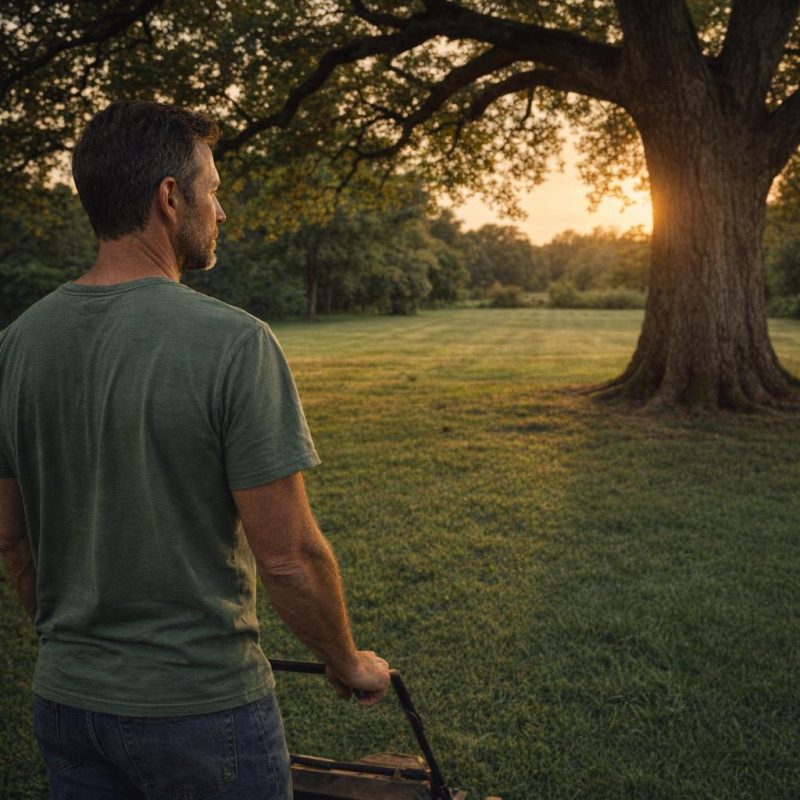 Image by RM AI
The War Zone in My Driveway
Tuesday evening I turned onto my street and knew something was wrong before I even reached my driveway. There were tire tracks pressed into the grass verge along the curb — deep ones, the kind heavy equipment leaves. I pulled in slowly and sat there with the engine running, staring at what used to be my yard. Deep muddy gashes ran across the fescue in every direction, like something enormous had dragged its fingers through the ground. The hydrangeas I'd spent three seasons cultivating were snapped off at the base, stems crushed flat into the mud. The stone walkway I'd laid by hand, one paver at a time over a long weekend four years ago, had been excavated and stacked in a pile near the fence like rubble. I sat in the idling car for a full minute. Maybe longer. My brain kept trying to find an explanation that made sense and kept coming up empty. When I finally stepped out, my shoe sank into the soft ruined earth and I just stood there, hands at my sides. That's when I saw the yellow paper fluttering against my storm door. I peeled it off carefully, like it might explain everything. It was an invoice on Groundworks & Recovery LLC letterhead, and someone had written the total in thick black marker at the bottom: $6,800.
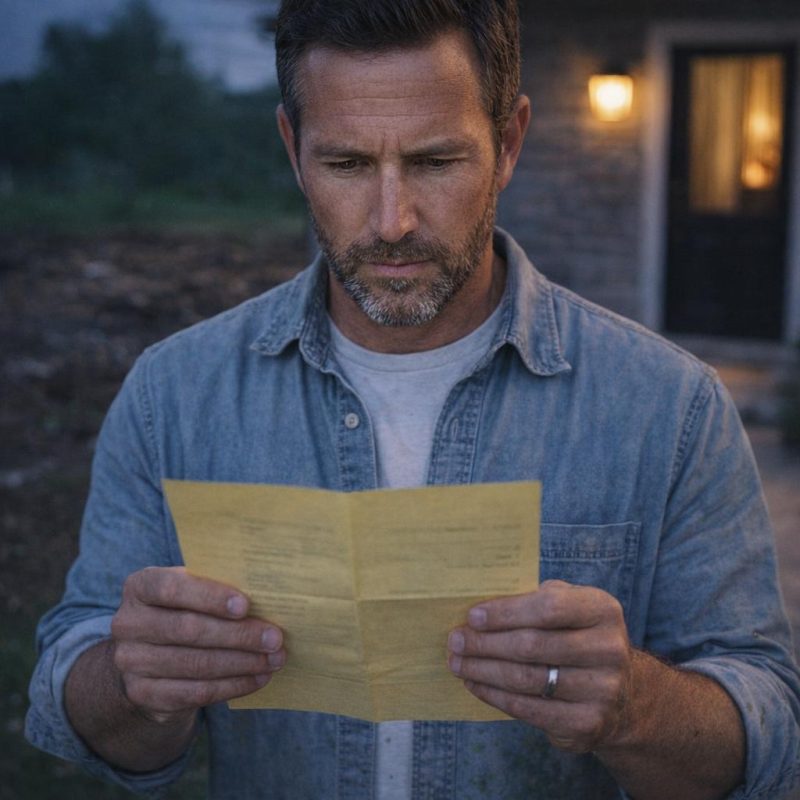 Image by RM AI
Emergency Order
I called the number on the invoice the second I got inside. The automated menu had seven options, none of which were 'you destroyed my yard without my permission,' so I pressed zero until something gave. I was transferred twice, put on hold three times, and spent the better part of an hour listening to the same forty-five seconds of hold music loop back on itself. By the time a human voice finally picked up, my hand was shaking around the phone. I told her what I'd come home to. I told her about the hydrangeas and the stone walkway and the three-inch fescue, and I was not calm about any of it. The woman on the other end — she said her name was Sarah — sounded like someone who had already worked a twelve-hour day and was now working a thirteenth. She didn't argue with me. She just let me finish, and then she explained, in a flat and careful voice, that her company had been dispatched on an emergency order tied to my property's historical deed. I told her I'd lived in that house for ten years and there was nothing historical about a 1980s ranch house in a subdivision. She said she understood why I felt that way. She said she was emailing me the digital invoice right now, and that there was a photo attached I should look at. The exhaustion in her voice when she said it made me stop arguing.
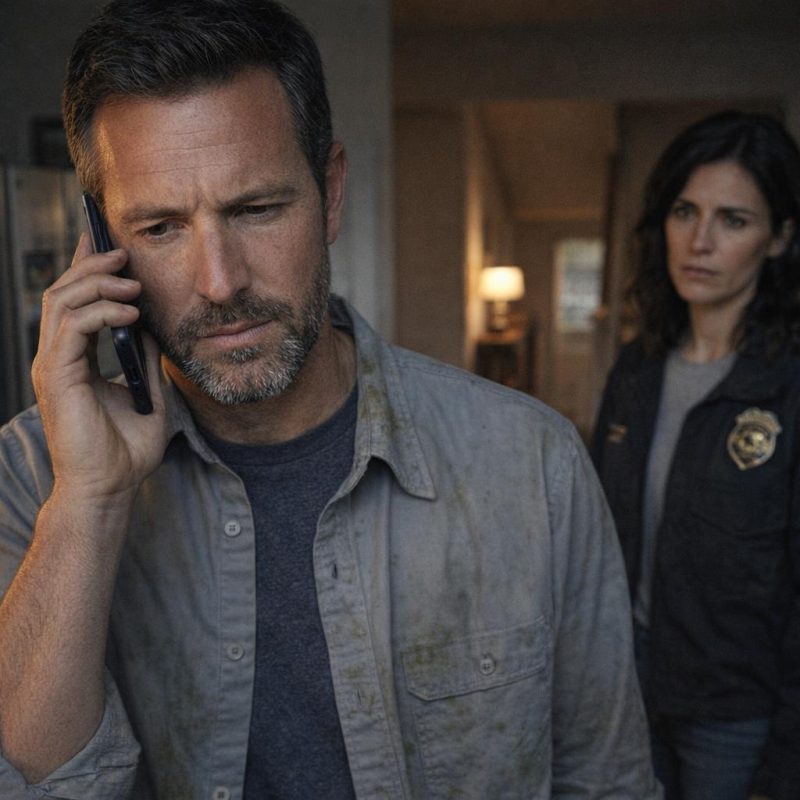 Image by RM AI
The Iron Chest
The email loaded slowly on my phone, the way things do when you're desperate for them to hurry. I opened the attachment and had to zoom in twice before I understood what I was looking at. It was a photograph of a deep trench cut into the earth at the back of my property, right where the oak tree stands. At the bottom of the trench sat a heavy iron chest, old and rusted, its side caved in where a backhoe bucket had struck it. From the broken edge, hundreds of small glass jars had spilled out into the dirt — each one sealed with dark wax, packed so tightly they must have been arranged deliberately. Below the photo, a foreman's note read: 'Work halted per state mandate. Site secured. Contents identified as Civil War-era medical supplies and personal journals.' I read that line three times. Civil War-era. Under my oak tree. Under the yard I'd mowed six hundred times without a second thought. I walked out through the back door and stood at the edge of the muddy pit, holding my phone up to compare the photo to the actual site. The trench was real. The broken chest was real. The scattered jars, still visible under the tarp the crew had partially pulled across the opening, were real. I stood there in the cooling evening air, and a slow cold tingling spread down my spine that had nothing to do with the temperature.
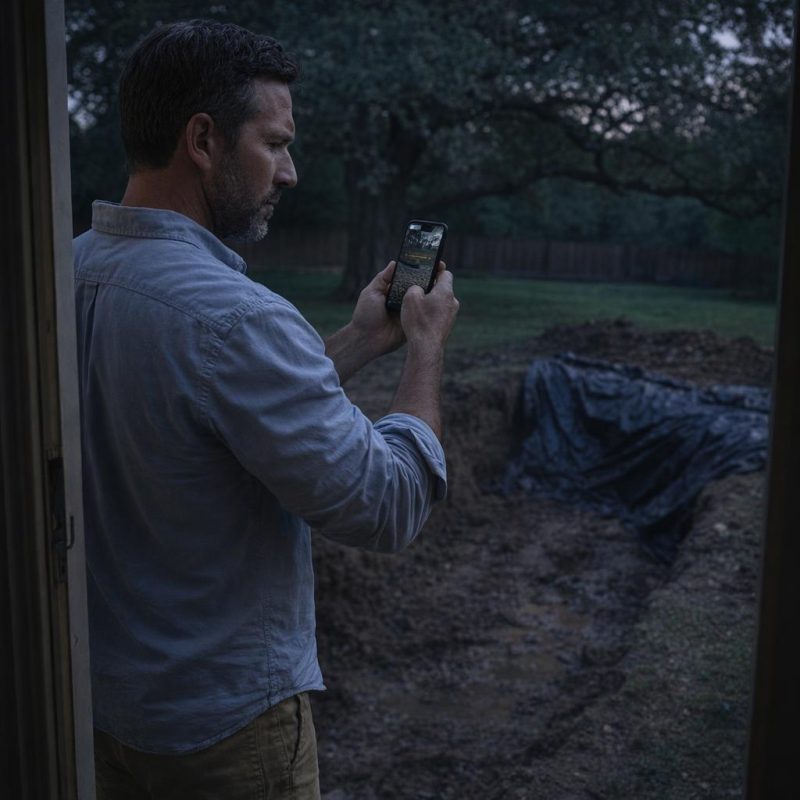 Image by RM AI
The Lost Cache
Mike showed up the next morning in a pickup truck, still in his work gear, with the kind of permanent tan you get from decades outdoors. He was gruff in the way that reads as honest rather than rude — short sentences, no small talk, eyes that kept moving to the site like he was still responsible for it. Richard arrived a few minutes later in a dark sedan, salt-and-pepper hair neatly trimmed, carrying a folder and moving with the careful authority of someone used to navigating institutions. They stood at the edge of the fencing together and walked me through it. A museum three towns over had a diary in its collection — a surveyor's diary from the Civil War period — that mentioned a cache buried on a lot matching this property's coordinates. When a city survey cross-referenced the diary entry against current parcels, my address flagged automatically. Mike said his backhoe hit the chest about four feet down and he shut everything off immediately. Richard explained that the state archaeological preservation mandate triggered the moment the chest was confirmed as pre-1900. I asked about the $6,800 invoice, and Richard opened his folder and showed me a payment confirmation. The state historical society had already cleared the balance. I exhaled for what felt like the first time in two days. Then Richard said there was also a settlement offer for a temporary easement on the property, and that I should look through the full folder before signing anything.
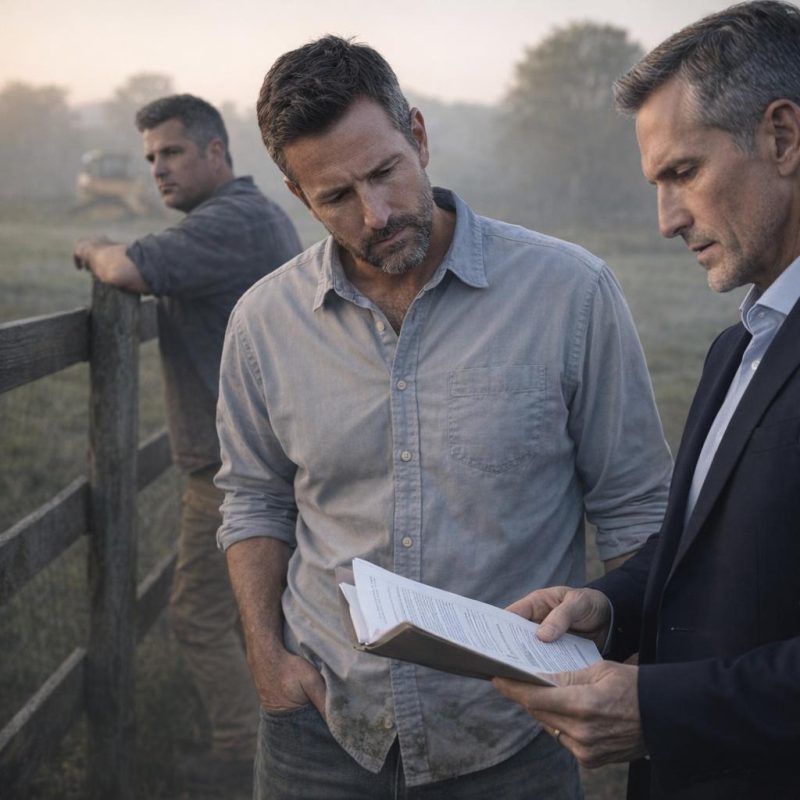 Image by RM AI
The Fence Goes Up
The fencing crew arrived before eight the next morning and had the chain-link up around the excavation site by noon. I watched from the kitchen window as my neighbors gathered on the sidewalk in ones and twos, pointing at the yellow caution tape and the tarps and the grid markers the archaeological team had left behind. By mid-afternoon there were six or seven people out there, and I could see them looking toward my house. I went outside twice to answer questions and gave up after the second time because I didn't have answers that satisfied anyone, including myself. Back inside, I sat at the kitchen table and opened the settlement folder Richard had left with me. It was thicker than I expected — a cover letter, a legal description of the easement terms, a payment schedule for the settlement offer, and at the back, a copy of my property deed with several sections highlighted in yellow. I flipped to the deed out of habit, the way you check the fine print when something feels slightly off. The chain of title went back further than I'd ever looked when I bought the house. Previous owners, transfer dates, recorded easements. I started reading the highlighted sections and then stopped, overwhelmed by the day and the neighbors still visible through the window. I set the folder on the corner of the table, the property deed tucked inside the settlement folder, and told myself I'd get to it tomorrow.
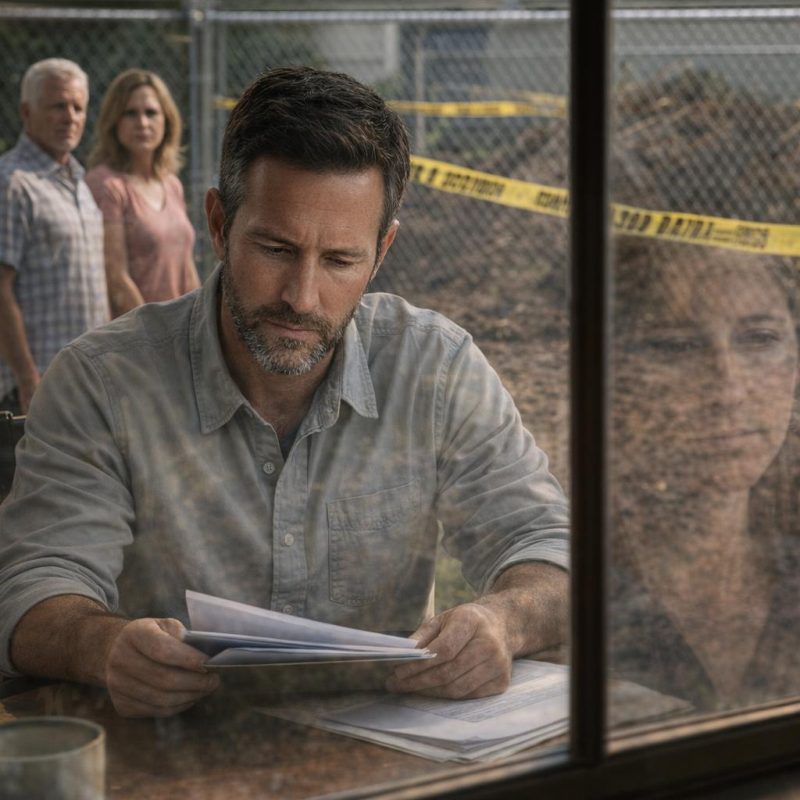 Image by RM AI
Denied
I filed the homeowner's insurance claim the morning after the fencing went up, because that's what you do — you document everything and you follow the process and you trust that the system works. I spent two hours on hold and another forty minutes on the phone with an adjuster who asked me to repeat the phrase 'archaeological excavation' three separate times, each time with a longer pause afterward. Three days later, a letter arrived in a plain white envelope with my insurance company's logo in the corner. I stood at the mailbox and opened it right there on the sidewalk. The denial was one page. It cited Section 14, Subsection C of my homeowner's policy — an archaeological exemption clause that excluded coverage for any damage resulting from legally mandated preservation activity on the property. I had owned that policy for ten years. I had never read Section 14. I went inside and pulled up the full policy document on my laptop and found the clause in about four minutes, buried between a paragraph about sinkholes and one about government seizure. The language was unambiguous. I ran the numbers on what full lawn restoration would cost — new sod, replacement hydrangeas, rebuilding the stone walkway — and the figure I kept landing on was somewhere between four and six thousand dollars. The settlement offer from the historical society suddenly felt less like a courtesy and more like a lifeline. I kept trying to focus on my spreadsheets at work, but every time my screen dimmed I'd reach for my phone, and then the final notice would be sitting there again: CLAIM DENIED, stamped in red across the top of the letter.
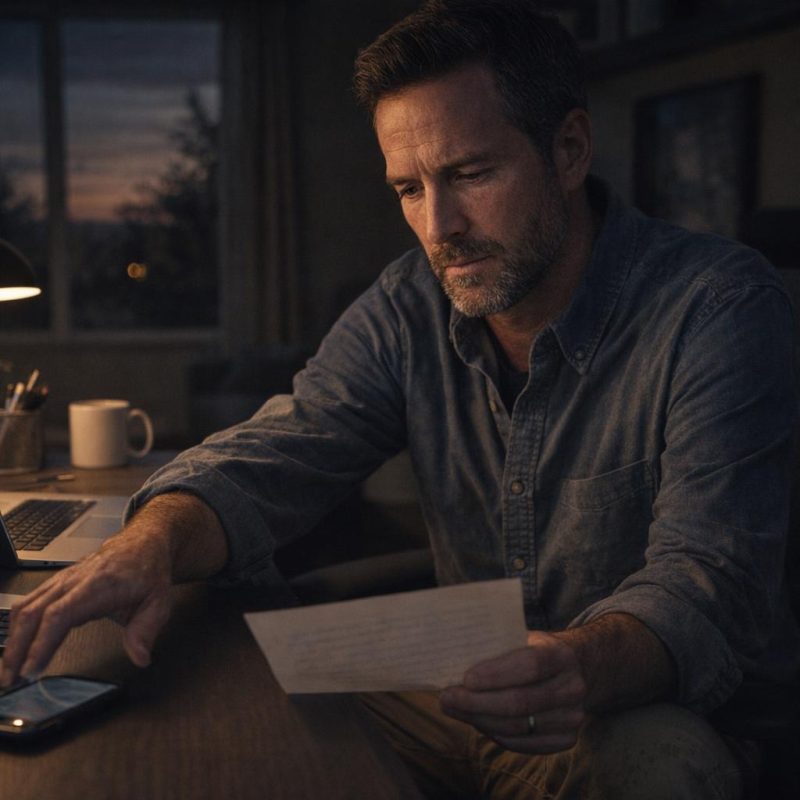 Image by RM AI
Standing at the Edge
I'd been walking around the fencing for five days without actually going through the gate. I told myself it was because the site was secured and I didn't want to interfere, but honestly I just wasn't ready to look at it straight on. After work on Friday I finally unlatched the gate and walked in. The pit was deeper than the photograph had suggested — maybe six feet at its lowest point, excavated in careful horizontal layers I could see in the cross-section of the walls. Grid lines had been marked with string and small orange flags, and the whole thing had a precision to it that I recognized, the way you recognize a methodology even when it's not your own. The tarps were staked down over the most sensitive sections. Where my stone walkway used to run, the pavers were stacked in a neat pile off to the side, which was somehow worse than if they'd been scattered. I stood at the edge of the pit for a long time. The oak tree rose behind me, its canopy unchanged, indifferent to everything below it. And then I looked down at the base of the trunk, where the roots fanned out into the earth, and I could see it clearly in the excavated wall — the exact spot where the oak tree's roots had grown over and through the burial site, threading between the jars like fingers closing around something kept.
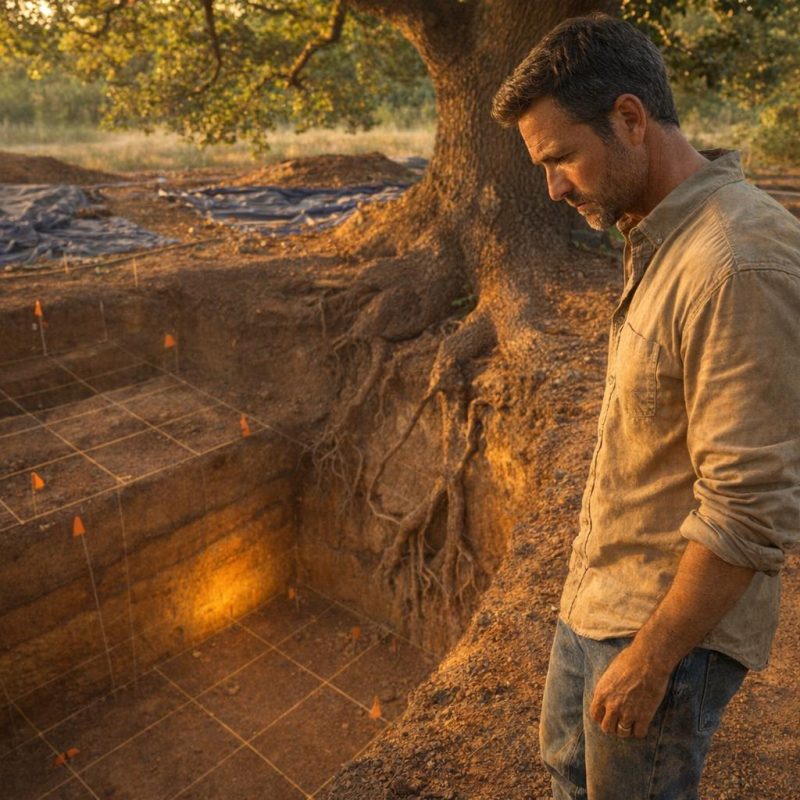 Image by RM AI
Dr. Marsh Explains
Dr. Marsh showed up on a Tuesday morning while I was standing at the gate with a coffee I'd stopped tasting twenty minutes earlier. She came through the side yard in dirt-stained khakis and wire-rimmed glasses, a canvas bag over one shoulder, moving like someone who knew exactly where she was going. She introduced herself as the lead archaeologist from the state preservation team, shook my hand firmly, and got straight to it. The cache, she said, appeared to originate from a Civil War field hospital that had operated in this area — she pulled out a folder of photographs and spread them across my patio table without asking. Wax-sealed jars. Surgical instruments wrapped in oilcloth. Rolled bandages that had somehow held their shape for a hundred and sixty years. And journals — small, dense, written in multiple hands. She explained that most caches like this had been recovered or looted within decades of burial. Finding one intact was, in her words, extraordinarily rare. I asked why someone would bury medical supplies instead of using them. She said the hospital was likely evacuated quickly — the supplies hidden for retrieval that never came. I watched her handle a photograph of one of the jars, turning it slightly in her fingers, and there was something in the way she held it — careful and unhurried, like the contents were still fragile, still somehow present.
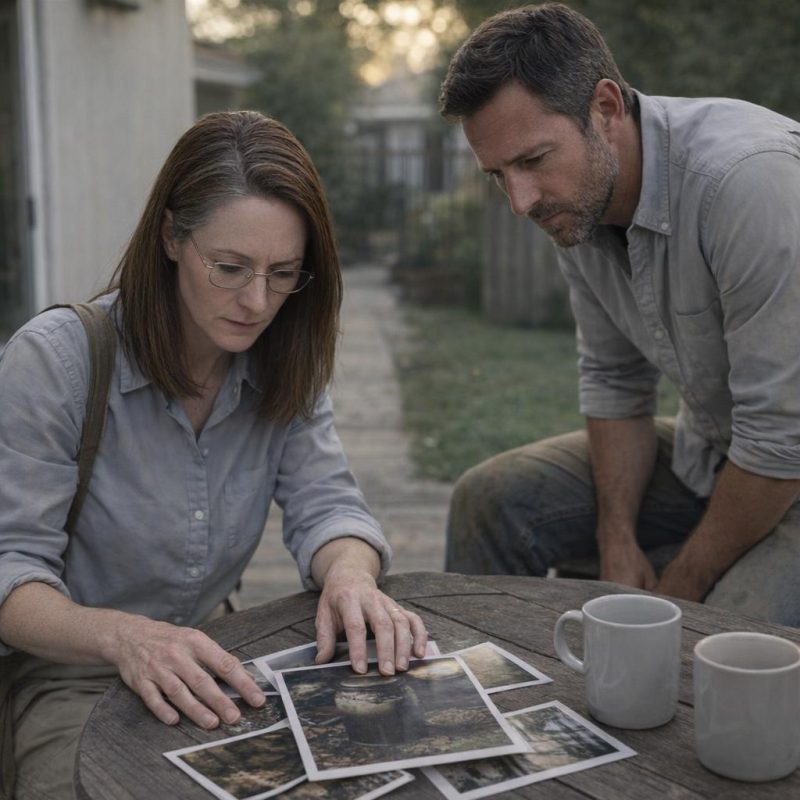 Image by RM AI
Field Hospital
We sat at the patio table for another hour after that, and Dr. Marsh walked me through what she knew about the field hospital itself. The area had been a strategic crossroads in 1863, she said — troop movements, supply lines, at least two documented skirmishes within a few miles. Field hospitals weren't permanent structures. They went up in barns, in open fields, sometimes in someone's front yard. Surgeons worked with whatever they had, which was rarely enough. Chloroform ran out. Instruments got reused between patients. She described the wax sealing on the jars as deliberate and careful — someone had taken real time with it, which suggested they expected to come back. The journals were written in multiple hands, she said, meaning several surgeons had contributed. The handwriting was clear enough to transcribe, though it would take weeks. I asked whether the hospital had treated Union or Confederate soldiers. She said the journals would tell us once they were fully worked through — she didn't want to speculate. I nodded and looked out at the excavation pit, at the grid lines and the orange flags, and tried to picture it — men working by lamplight in the dark, doing what they could with what they had, in the same patch of ground where I'd spent last summer arguing with myself about the right grade of limestone for a walkway. Something in my chest went very quiet.
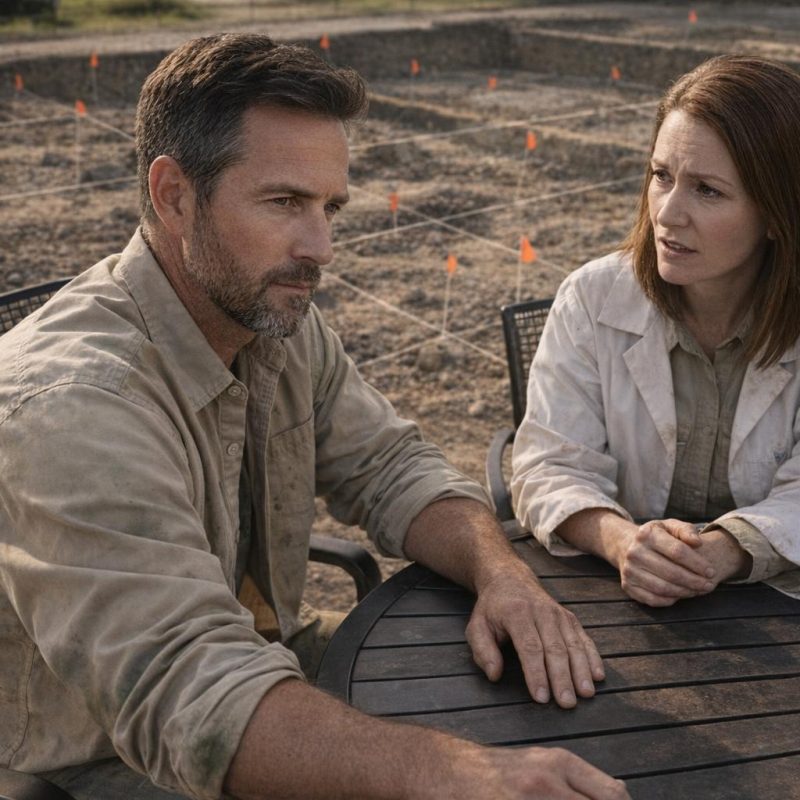 Image by RM AI
The Reporter Arrives
James Brooks arrived on a Thursday afternoon with his phone already raised and a notepad tucked under his arm, and I knew immediately I was going to hate this. He was maybe late twenties, sharp-eyed, with the kind of eager energy that doesn't read a room before it enters one. He introduced himself as a reporter for the local paper, said the discovery had come across the wire and he wanted to do a feature. I told him I had maybe ten minutes. He took twenty-five. He asked how I felt when I first saw the destruction — his word, destruction — and I said I'd been surprised. He asked what it was like to have Civil War history literally in my backyard, and I said it was significant. He kept pushing for something more personal, something quotable, and I kept giving him the flattest version of the truth I could manage. Dr. Marsh stepped in at one point and redirected him toward the technical details, which I was grateful for. He photographed the fencing, the pit, the stacked pavers. Then he turned back to me and asked, almost casually, whether I was proud of the discovery or angry about the lawn. I stood there for a second, genuinely unsure how to answer, aware that whatever I said would be the sentence that ran under my name. I didn't have a clean answer. I still don't.
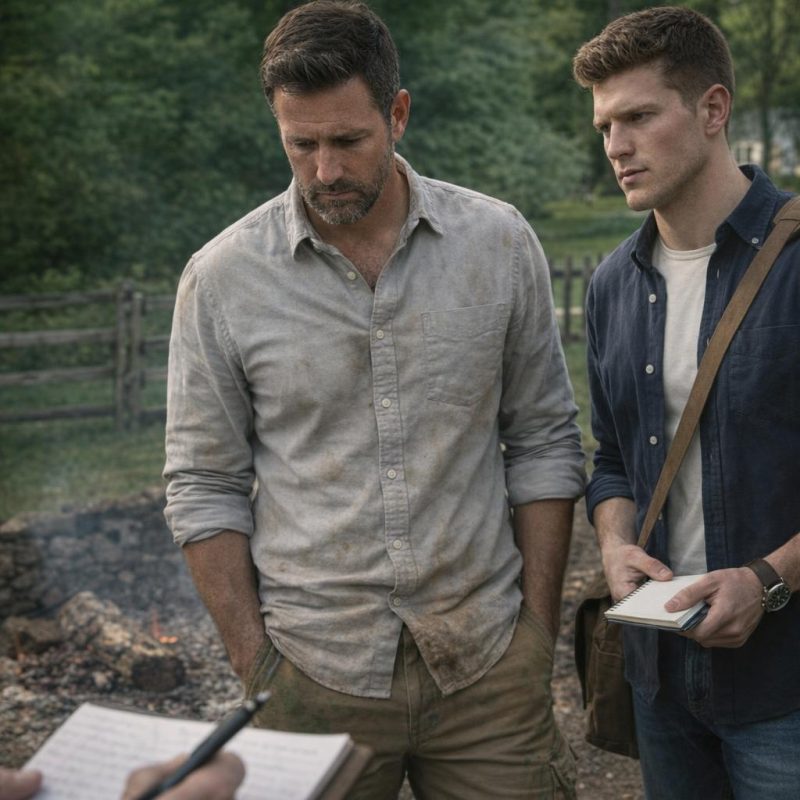 Image by RM AI
Spreadsheets and Surgeons
I sat at my desk for three days that week and produced almost nothing. The spreadsheets were open, the numbers were there, but my eyes kept sliding off the screen. My coworkers asked if I was okay and I said yes, just some stuff going on at home, which was technically true. My boss sent an email on Wednesday — measured, professional, but the subtext was clear. I'd missed two deadlines and flagged errors in a report I'd normally have caught in the first pass. I tried to care about that. I sat up straighter, opened the right files, told myself to focus. It lasted about eleven minutes before I was reading about surgical amputation techniques in 1863 on a tab I'd opened during lunch and never closed. I read about the shortage of anesthesia, about the field triage systems, about how surgeons marked patients with chalk to indicate treatment priority. I read about burial practices for medical supplies during rapid evacuations. I kept thinking about the journals — what else was in them, what Dr. Hartley or whoever had written them had been trying to preserve. By the end of Friday I'd done maybe two hours of actual work. I closed the spreadsheet and opened a browser tab to search for Civil War field hospitals in the county.
 Image by RM AI
First Words from 1863
The email from Dr. Marsh came on a Sunday evening with three PDF attachments and a subject line that just said 'First transcriptions — take your time.' I opened them immediately. My hands weren't entirely steady. The scans showed pages of handwriting — small, precise, slightly compressed, the kind of script that suggested someone who wrote a great deal and had learned to be economical about it. The entries were dated July 1863, and the author identified himself in the first line: Dr. William Hartley, Union surgeon, attached to the 14th Infantry. He described treating men after a skirmish two miles east. He wrote about the shortage of chloroform in plain, exhausted language — not complaining, just noting it the way you'd note a weather condition you couldn't change. He mentioned reusing bandages after boiling them when they had fuel enough to do it. Near the end of one entry he wrote that he had buried the remaining supplies 'for safekeeping should we return,' and that he hoped whoever found them would understand the necessity. I read that line four times. Dr. Marsh called while I was still on the second PDF and I let it go to voicemail, because I wasn't ready to talk about it yet. I just sat there with the pages open on my screen, and Dr. Hartley's words settled into me the way cold does — slowly, and all the way through.
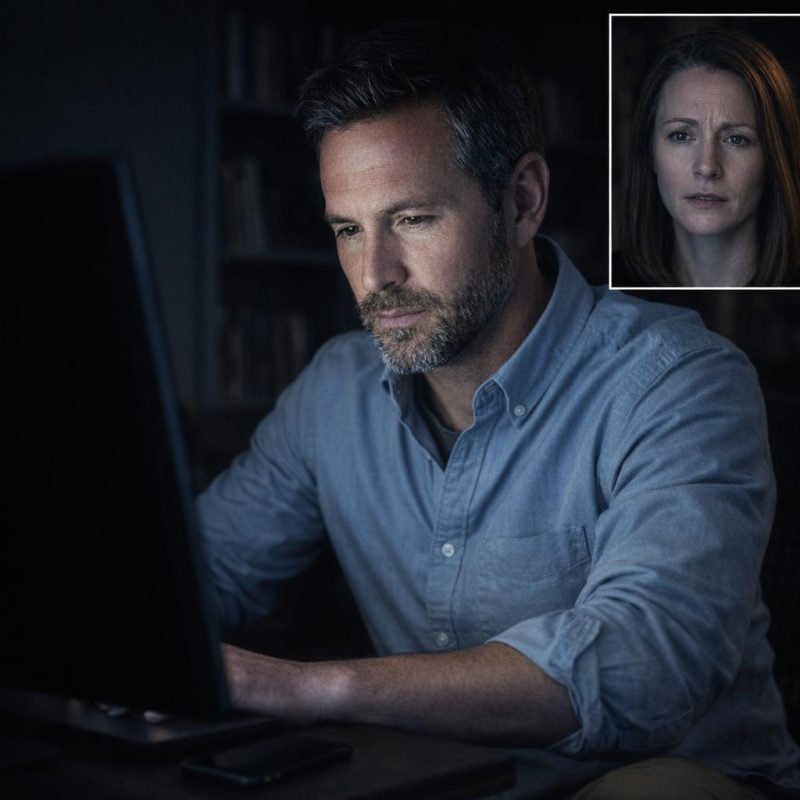 Image by RM AI
Significant Findings
The historical society held the press conference on a Thursday morning at their headquarters downtown — a converted Victorian building with good bones and bad parking. Richard spoke first, standing at a podium with the society's seal behind him, and he was exactly as measured and precise as I'd expected. He called the cache one of the most significant Civil War discoveries in the region in decades. He talked about the journals, the medical supplies, the rarity of finding a sealed cache intact. Dr. Marsh followed with photographs projected on a screen behind her — the jars, the instruments, a scan of one of Dr. Hartley's journal pages — and she walked the room through the preliminary findings with the same patient precision she'd used with me. There were television cameras. James was in the front row with his notepad. At some point he caught my eye and gave me a small nod, like we were colleagues. I was sitting in the back row, which was where I'd chosen to be. He found me afterward and asked for a comment, and I said something about the importance of preserving the past, which was true enough and bland enough that I didn't mind seeing it in print. That evening I watched the segment on the local news from my couch, and I felt something I couldn't quite name — not pride exactly, not grief exactly, just a strange mixture of both, watching Richard speak about my yard like it was already history.
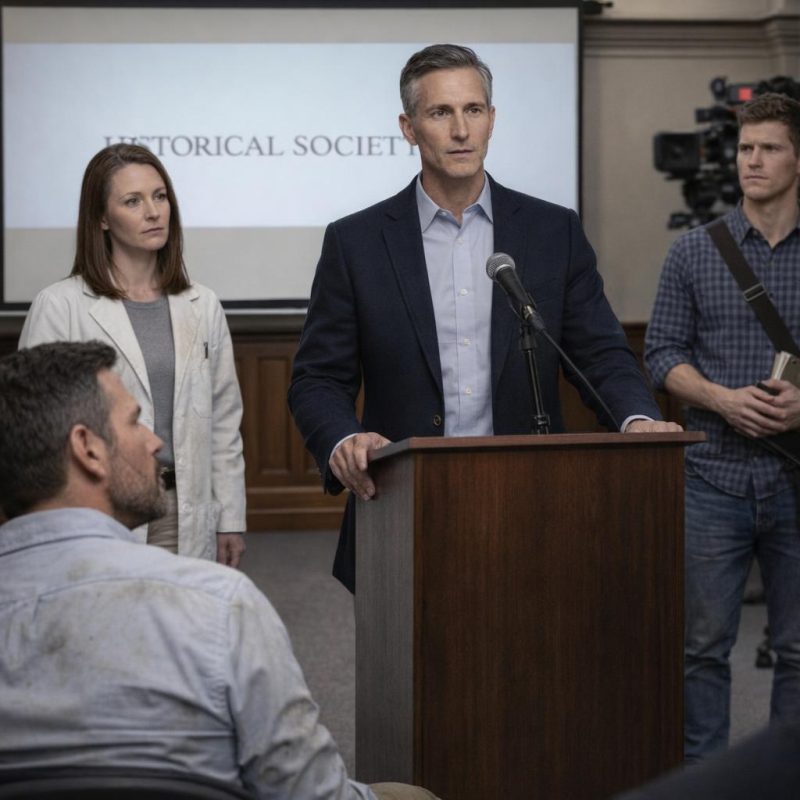 Image by RM AI
State Inspection
The state preservation officials arrived on a Monday in a white government sedan, both of them in khakis with laminated badges and clipboards that looked like they'd been designed to make people nervous. Dr. Marsh met them at the gate and walked them through the grid system while I stayed on the patio and tried to look like I belonged there. They were thorough. They measured things I wouldn't have thought to measure, photographed angles I didn't understand the significance of, and spoke to each other in the clipped shorthand of people who do this often enough that full sentences feel wasteful. I refilled my coffee twice just to have something to do with my hands. At one point the taller of the two crouched near the depth markers at the far edge of the pit and frowned — not dramatically, just a small tightening around the eyes. He said something to his colleague, low enough that I caught only pieces of it from the patio. I heard the word depth. I heard something about pattern. Dr. Marsh responded, but she'd moved to the other side of the pit and I couldn't make out her words. The officials finished their inspection, shook her hand, and left without speaking to me directly. I stood at the edge of the patio after they'd gone, turning over the fragments I'd caught, and one phrase kept surfacing, clear enough that I was certain I hadn't misheard it: the depth doesn't match what we'd expect for this period.
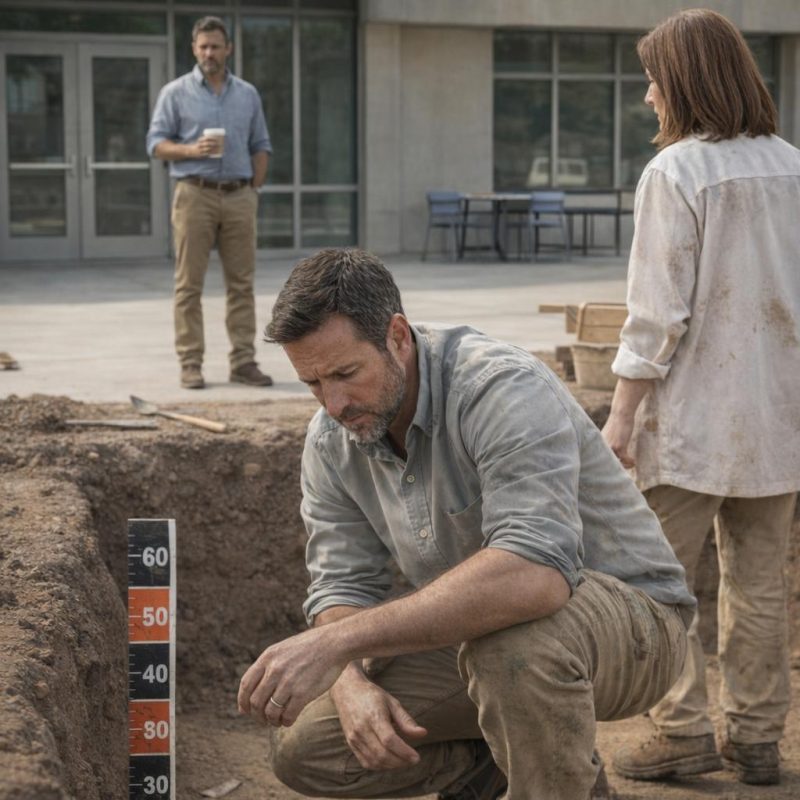 Image by RM AI
Unusual History
I'd been putting off reading the deed carefully since Richard had included it in the settlement folder weeks ago. I finally sat down with it on a Tuesday night, a highlighter in one hand and a glass of water I kept forgetting to drink. The document itself was dense and dry, the kind of legal language that makes your eyes want to skip ahead, but Richard had flagged several sections with sticky notes and I followed his markers. The first thing I noticed was the ownership history on the final pages. Three separate transfers in 1983, all within a six-month window. The first moved the property from the original subdivision developer to a holding company with a name I didn't recognize. The second transferred it from that holding company to a second entity, also unfamiliar. The third transferred it to my parents, who had bought the house in late 1983. I sat back and looked at that sequence for a while. Three transfers in six months wasn't impossible, but it was unusual — the kind of pattern that shows up when something needs to move quickly, or when someone needs distance between a starting point and a destination. I searched both holding company names online and found nothing useful, no filings, no addresses, no registered agents I could trace. I wrote the names down in my notebook anyway, and circled the dates. Three transfers. Six months. 1983.
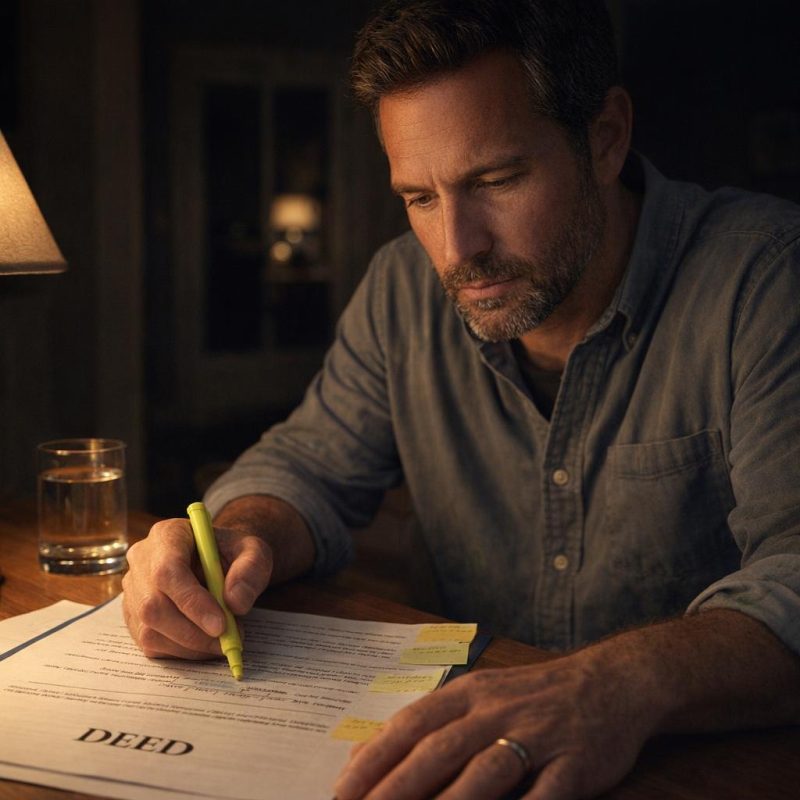 Image by RM AI
Second Layer
Dr. Marsh called me mid-morning and asked me to come to the site as soon as I could. She didn't say why, just that they'd found something she wanted me to see in person. I drove over still in my work clothes, half-expecting another artifact catalog update or a question about the property boundary. Instead, she walked me past the main excavation area to a section they'd been working on carefully for the past two days — a deeper cut, maybe four feet down, with the walls shored up with wooden planks. She crouched at the edge and pointed to a distinct band of soil running horizontally through the profile. The color was wrong. The layer above it was dark and dense, the kind of earth that takes a long time to compact. But this band was lighter, looser, almost sandy in texture. She explained that the composition didn't match what you'd expect at that depth — the particle structure was inconsistent with undisturbed soil that had been sitting since the 1860s. I asked what could cause something like that. She listed a few possibilities — utility work, construction grading, intentional excavation — and then she said the part that stopped me cold: they'd found modern soil mixed directly into the original burial earth.
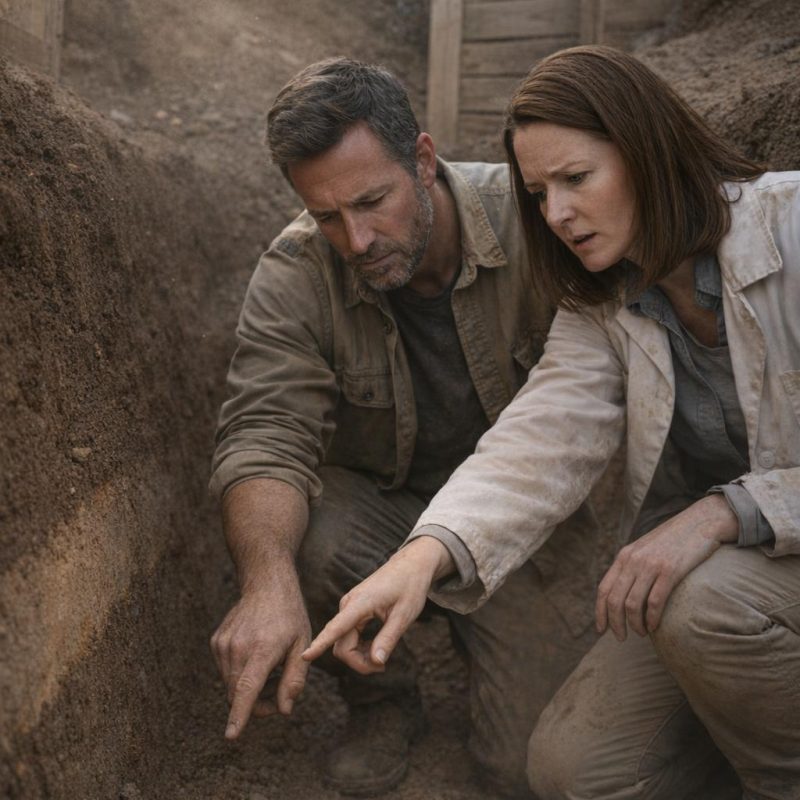 Image by RM AI
Timeline Inconsistencies
I asked Dr. Marsh if I could get a copy of all the depth measurements they'd recorded so far. She looked at me a little sideways, but she printed them out without asking why. That evening I spread the pages across my kitchen table and started building a spreadsheet, the way I would with any dataset at work. I mapped each artifact layer against its recorded depth, then plotted what the expected depth should be given 160 years of normal soil accumulation. The Civil War artifacts tracked roughly where they should — deep enough, consistent with the timeline. But the modern soil layer Dr. Marsh had identified sat at a depth that didn't fit either end of the story. It was too shallow to be original burial fill and too deep to be recent surface disturbance. I ran the numbers three different ways, thinking I'd made an error somewhere. I hadn't. I called Dr. Marsh and walked her through what I was seeing. She was quiet for a moment, then said the stratigraphy was unusual — her word, unusual — and that she didn't have a clean explanation yet. I thanked her and hung up. I sat at the table for a long time after that, the charts spread out in front of me, the numbers refusing to resolve into anything that made sense.
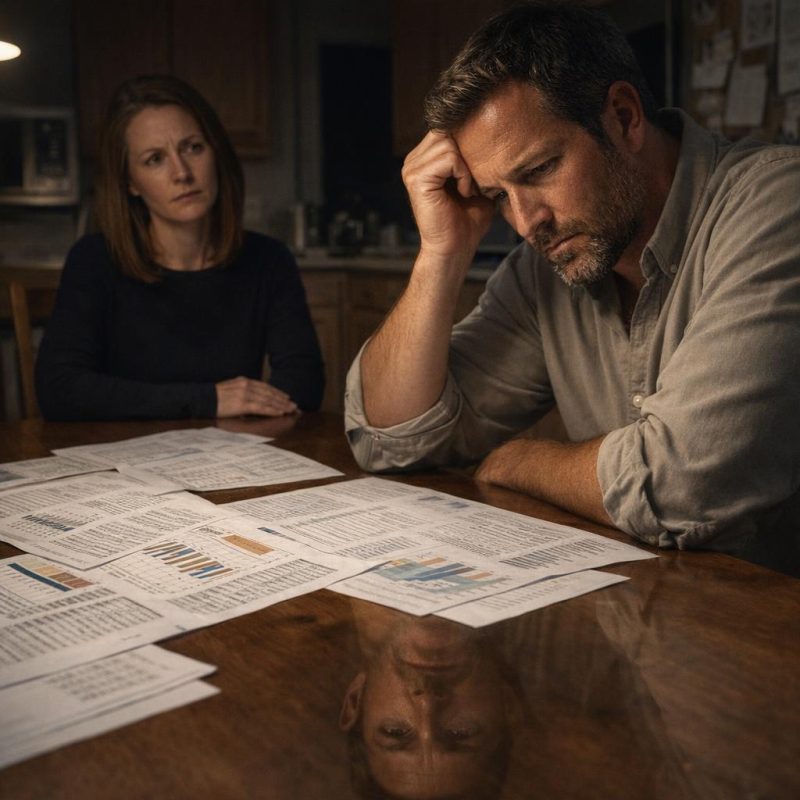 Image by RM AI
Subdivision Stories
I'd been meaning to introduce myself properly to a few of the longer-tenured neighbors since the excavation started, partly out of courtesy and partly because I kept wondering what they remembered about the lot. I caught a few of them near the mailboxes on a Saturday morning and the conversation came easily enough. One woman, who said she'd lived two doors down since before the subdivision was finished, remembered the construction running longer than anyone expected. She said some of the lots took extra time and nobody really explained why. An older man across the street mentioned the machinery — he remembered it specifically because some of it ran at odd hours, early morning sometimes, occasionally after dark. He'd assumed it was the developer trying to make up for schedule delays. Someone else mentioned that the developer himself had been on-site more than you'd expect, walking the lots personally, which had struck people as unusual for someone at that level. When I asked if anyone remembered which lots had the extra work, there was some head-shaking and vague gesturing in the general direction of my end of the street. I thanked them and walked back to my house slowly. The image that stayed with me wasn't anything they'd said exactly — it was the sound of it, the way one of them described the low rumble of heavy equipment running somewhere in the dark, long after the rest of the neighborhood had gone quiet.
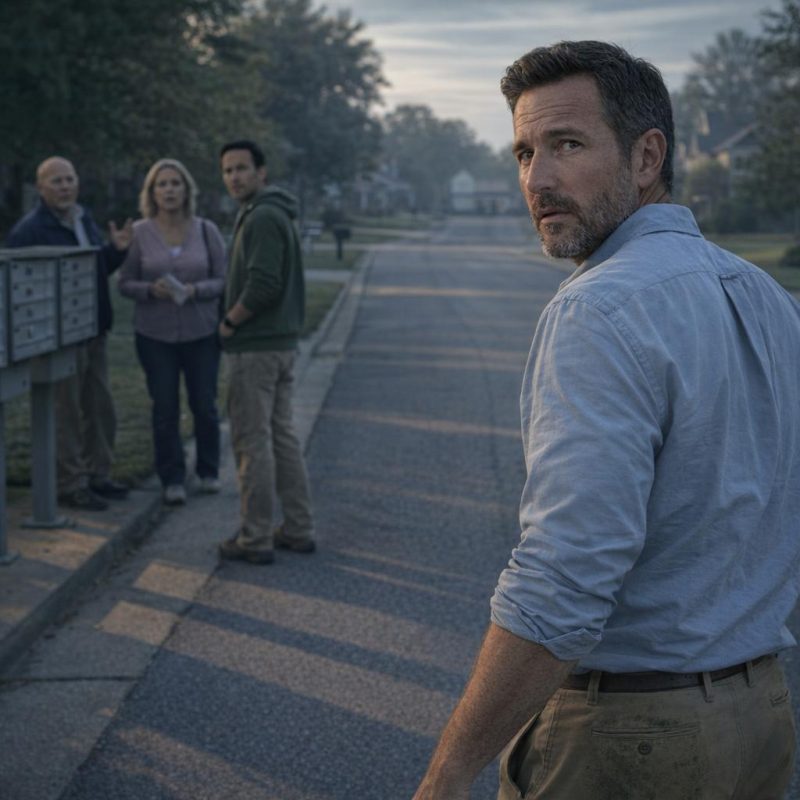 Image by RM AI
Family Connection
I started with the subdivision name and worked outward from there, the way I'd approach any research problem — broad search first, then narrow. Most of what came up was recent: property listings, tax records, the usual noise. But buried in a local newspaper archive I found a digitized article from 1982, a brief piece about new residential development coming to the area. It named the developer. I read the name twice before it landed. Henry Brenner. I sat back from my laptop and just stared at the ceiling for a moment. Henry Brenner was my grandfather. I'd known him only as a quiet, stern man who died when I was young — I had maybe a handful of clear memories of him, none of them involving business or construction or real estate. My parents had never mentioned any of this. Not once, in all the years we'd lived in that house, had anyone said that my grandfather built the subdivision, that the lot we lived on had passed through his company before it passed to us. I searched further and found records for Henry Brenner Construction and Development, active from 1980 to 1985. The three ownership transfers I'd flagged in the deed — the holding companies, the six-month window, the chain that ended with my parents — all of it suddenly looked different. I pulled up the deed again and found my grandfather's name listed as the principal of the original development entity.
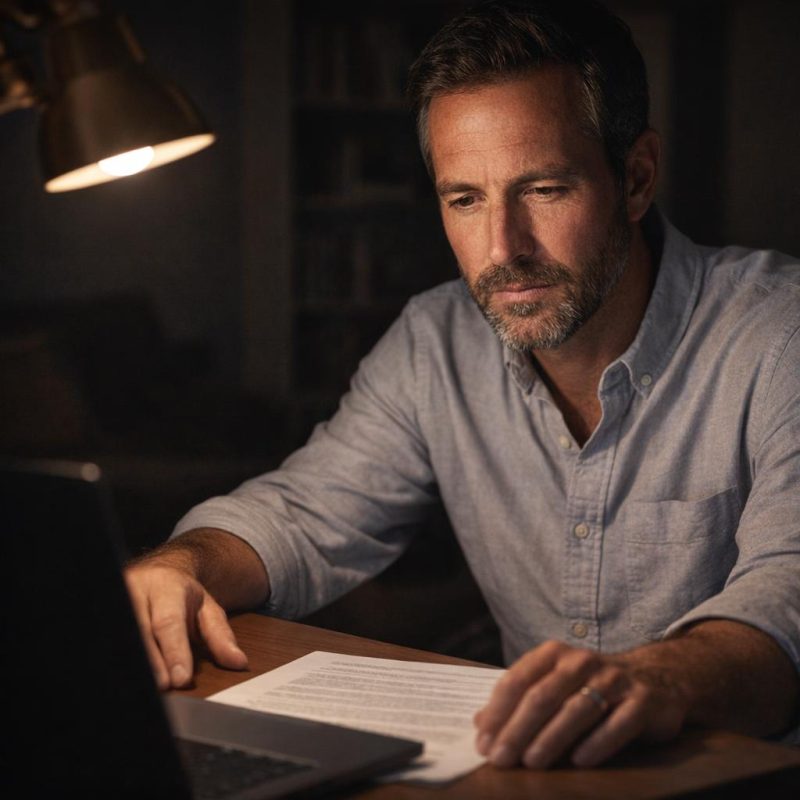 Image by RM AI
Modern Materials
Dr. Marsh's message said to come as soon as possible and to bring nothing — just myself. That phrasing was unusual enough that I left within ten minutes. When I got to the site she was standing at the edge of the deeper excavation trench, and she didn't say anything at first, just handed me a pair of nitrile gloves and pointed down. The team had cleared a new section overnight, working carefully around a cluster of the wax-sealed glass jars. Between two of them, pressed flat and partially degraded but unmistakably there, was a fragment of plastic. Not a modern intrusion from above — it was embedded at the same level as the jars, in direct contact with them. Dr. Marsh explained it quietly, like she was still working through it herself. Plastic didn't exist in the 1860s. The fragment appeared to be from a bag of some kind, the kind of thin polyethylene that became common in the latter half of the twentieth century. She showed me the photographs her team had taken before anything was moved, documenting the exact position. I asked how it could have gotten there. She said the only explanation that fit the physical evidence was that someone had opened the cache after the original burial and then closed it again. She didn't speculate further. I stood there looking at the photographs for a long time — the two sealed jars, dark with age, and between them the unmistakable edge of something that had no business being there.
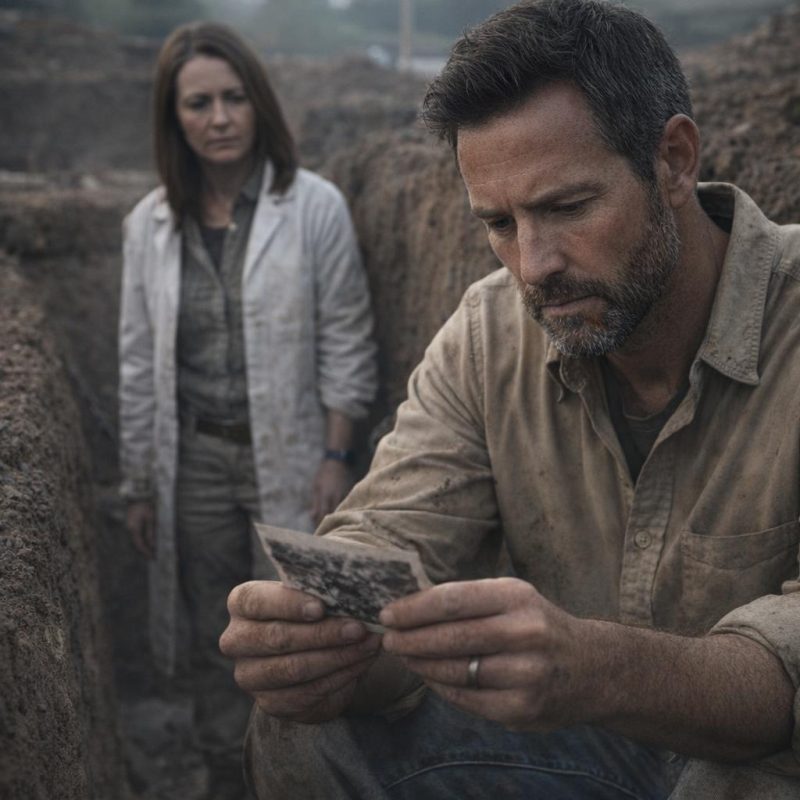 Image by RM AI
Disturbed Ground
The preliminary soil analysis came back on a Thursday. Dr. Marsh called me that afternoon and walked me through it methodically, the way she did everything — careful, precise, no editorializing. The lab had identified pollen markers and soil composition signatures in the disturbed layer that pointed to a disturbance window in the early 1980s. She explained that certain industrial compounds present in the fill soil were consistent with construction-era grading material commonly used in residential development during that period. The reburial, if that's what it was, had happened roughly forty years ago, not a hundred and sixty. I stood in my kitchen holding the phone and doing the math without meaning to. The subdivision was built in the early 1980s. My grandfather's company was active from 1980 to 1985. The soil disturbance dated to the same window. Dr. Marsh said the findings were unusual enough that she was going to need to document everything formally and loop in Richard at the historical society. She said that disturbing a site like this without reporting it would have been a serious violation of preservation law, even then. She wasn't accusing anyone of anything — she was just laying out what the evidence showed. I told her I understood and thanked her and set the phone down on the counter. I stood there in the quiet kitchen, the afternoon light coming through the window at a low angle, and let the weight of what she'd said settle into me without trying to push it anywhere.
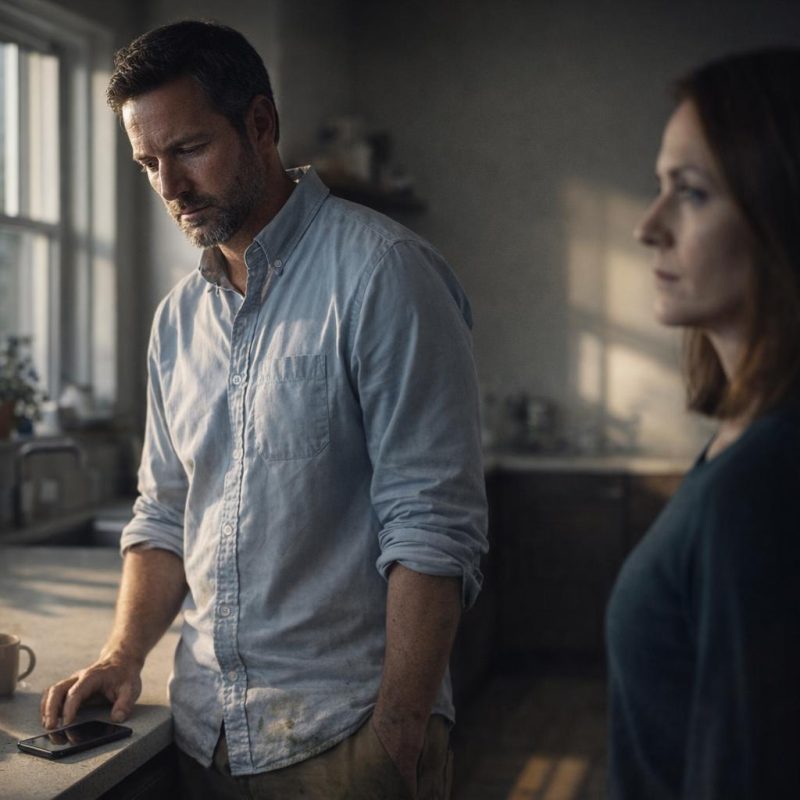 Image by RM AI
Construction Photos
I found the library's digital archive through a link buried in a county historical society newsletter. The collection had been scanned from physical prints donated years ago — construction documentation from several residential developments in the area, including Oak Ridge. I went through the folders methodically. Most of the photos were unremarkable: foundation forms, lumber deliveries, crews in hard hats. Then I found a sequence from my lot. I recognized the oak tree immediately, younger and thinner but unmistakably the same tree, standing at the edge of the frame. In the foreground, a crew was working an excavation that looked deeper than any foundation work I'd ever seen — the walls of the cut were steep, the equipment positioned at an angle that made no sense for a house foundation. I downloaded the full-resolution versions and zoomed in on each one. In the third photo, standing back from the edge of the excavation, partially obscured by a piece of equipment but visible from the shoulders up, was a man in a hard hat and a dark jacket. I pulled up a family photo on my phone — one of the few I had of my grandfather — and held it next to the screen. The jaw, the posture, the way he stood with his arms crossed and his weight slightly forward. It was him. My grandfather was standing at the edge of that excavation, watching.
 Image by RM AI
Strange Reactions
I drove to my parents' house on a Sunday, which was normal enough that I didn't call ahead. My mother answered the door and her face did something complicated when she saw the folder under my arm — not alarm exactly, but a tightening around the eyes that I noticed and filed away. My father was in the living room in his usual chair, and when I came in he looked up and then looked back at the television in a way that felt deliberate, though I couldn't have said why. I sat down and kept it casual at first, asking how they were, letting the conversation find its own level. Then I mentioned my grandfather's name and said I'd found out he'd developed Oak Ridge. My mother said she didn't see why that was relevant and asked if I wanted coffee. My father said nothing. I set the construction photos on the coffee table and slid the one with the excavation toward them. My mother glanced at it and looked away. My father picked it up. He held it for maybe ten seconds, and then he set it back down on the table, face-up, and his hands were trembling.
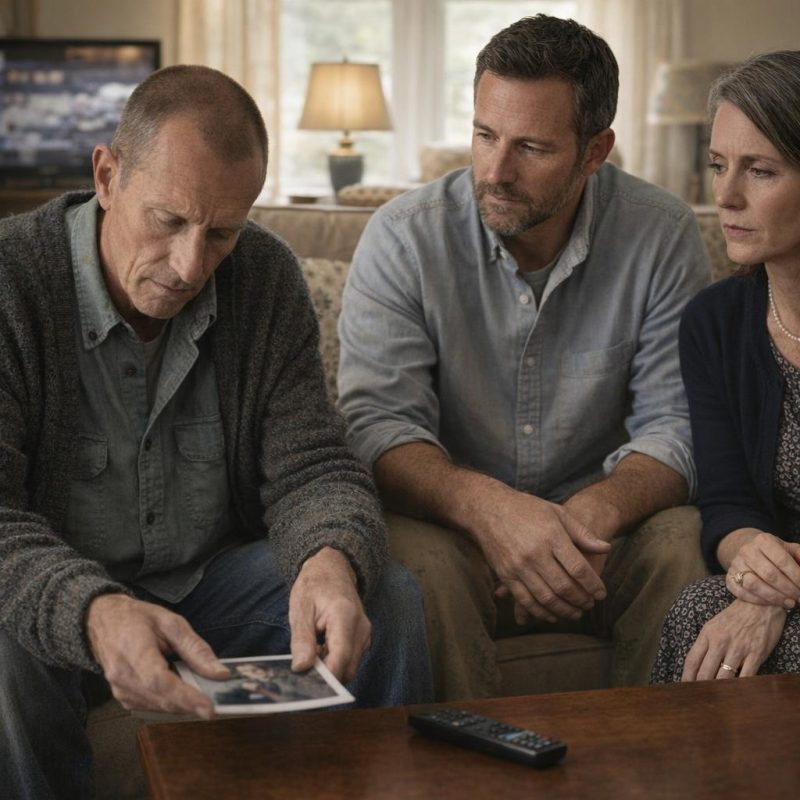 Image by RM AI
Henry's Belongings
I went back to my parents' house on a Tuesday morning, when I knew they'd both be out. My mother had mentioned a doctor's appointment and my father had his weekly coffee with the guys from his old job. I let myself in with the spare key I'd had since college and went straight to the basement. There were maybe a dozen boxes stacked along the far wall with my grandfather's name written on the sides in black marker — my mother's handwriting, neat and labeled the way she labeled everything. I started with the ones marked 'Office' and worked my way through. Rolled blueprints, rubber-banded into tubes. A transit level in a worn leather case. Surveying stakes bundled with twine. The kind of equipment that belonged to someone who worked with his hands and trusted his instruments. The construction documents were in a manila accordion folder, and when I spread them out on the concrete floor I could see Oak Ridge printed across the top of every page. Lot numbers, soil reports, excavation depths. My lot number appeared three times in the first folder alone, with notes in the margins I had to squint to read. Then I found the leather-bound notebook at the bottom of the box, and I opened it to the first page — Henry's handwriting, precise and slanted, with my lot number written at the top.
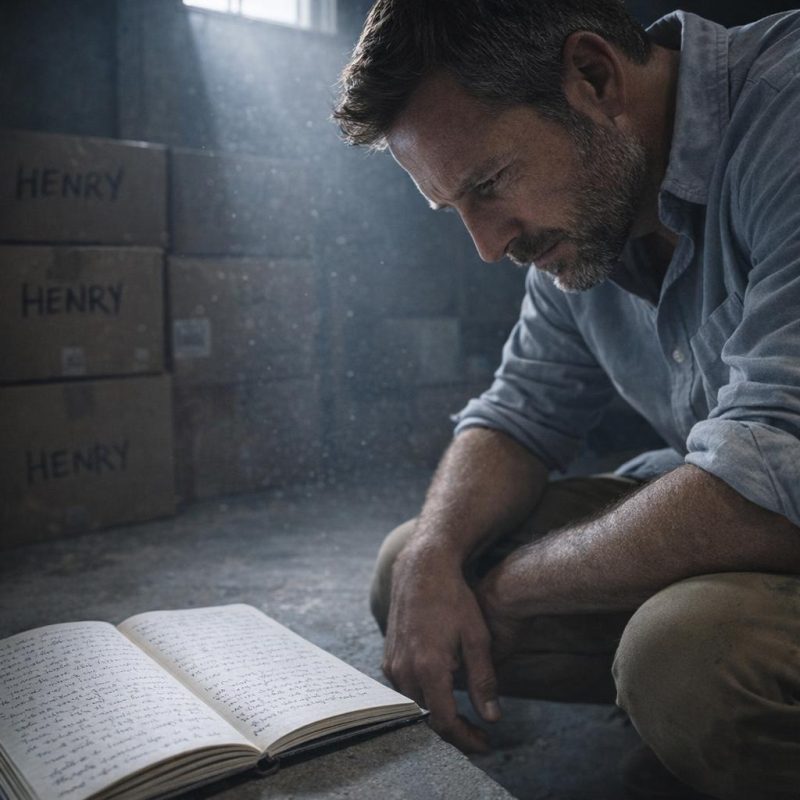 Image by RM AI
Matching Handwriting
I spread my phone photos of Henry's notebook across the dining table and opened my laptop beside them. Dr. Marsh had emailed the journal pages that morning — her team had finished transcribing the first section overnight. I pulled up the attachment and set my phone next to the screen so I could look at both at once. The handwriting in the journal photos was older, the ink faded to brown at the edges, but the letterforms were the same. I got out a magnifying glass from the junk drawer — the one I used for reading fine print on contracts — and held it over my phone screen. The capital H. The way the crossbar on the letter t dropped slightly below center. The particular slant, maybe fifteen degrees off vertical, consistent across every line. I went back and forth between the images a dozen times, telling myself I was being thorough, that I needed to be sure. I photographed both sets of images side by side and zoomed in on matching words. There was no reasonable explanation that didn't lead to the same place. My grandfather had written in both. The notebook from his basement and the journal found sealed inside an iron chest buried four meters under my lawn — the same hand had written in both of them, and the weight of that sat in my chest like something I couldn't put down.
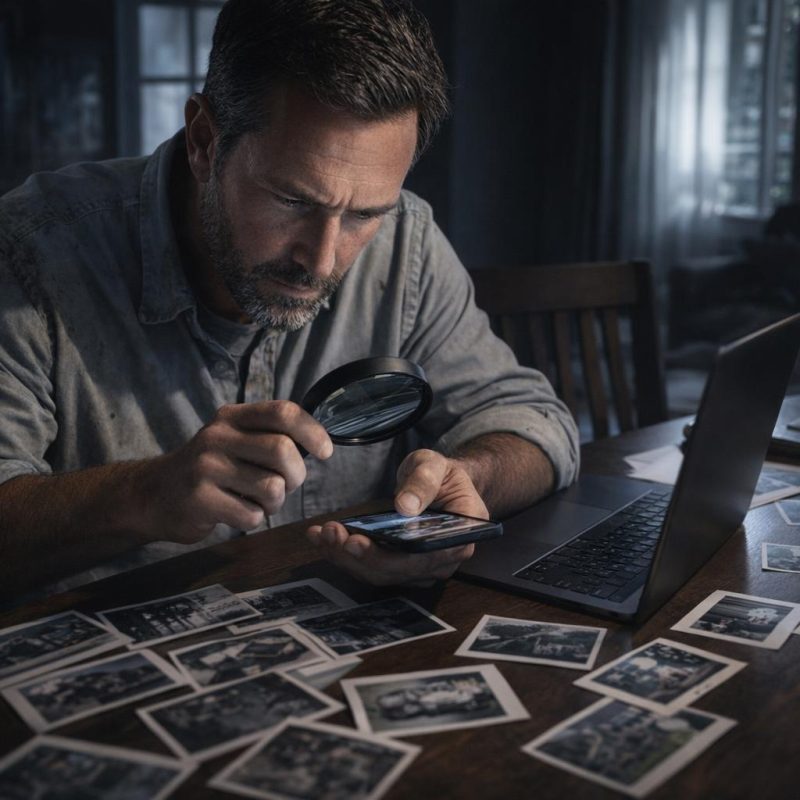 Image by RM AI
Confronting Father
I called my father from the driveway of my own house and told him I needed to see him that afternoon. He started to say something about dinner plans and I said it wasn't a question. He was alone when I got there — my mother was at her sister's, which was either luck or something he'd arranged, and I didn't ask. I showed him the side-by-side photos on my phone. I told him I knew Henry had found something during the Oak Ridge excavation, and that whatever he found, he'd written about it. My father's face went the color of old paper. He sat down on the arm of the couch like his legs had made a decision without him. I told him my yard was torn up, that archaeologists were working on my property, that a reporter had already knocked on my door, and that I deserved to know what was underneath all of it. He said it was complicated. I said I had time. He said I didn't understand the full situation. I told him I was trying to. He looked at the floor for a long time, and when he finally spoke his voice was flat and careful, like he'd been holding the words in reserve for years. He said he'd made a promise to Henry — that he would never tell anyone about the excavation — and that he intended to keep it.
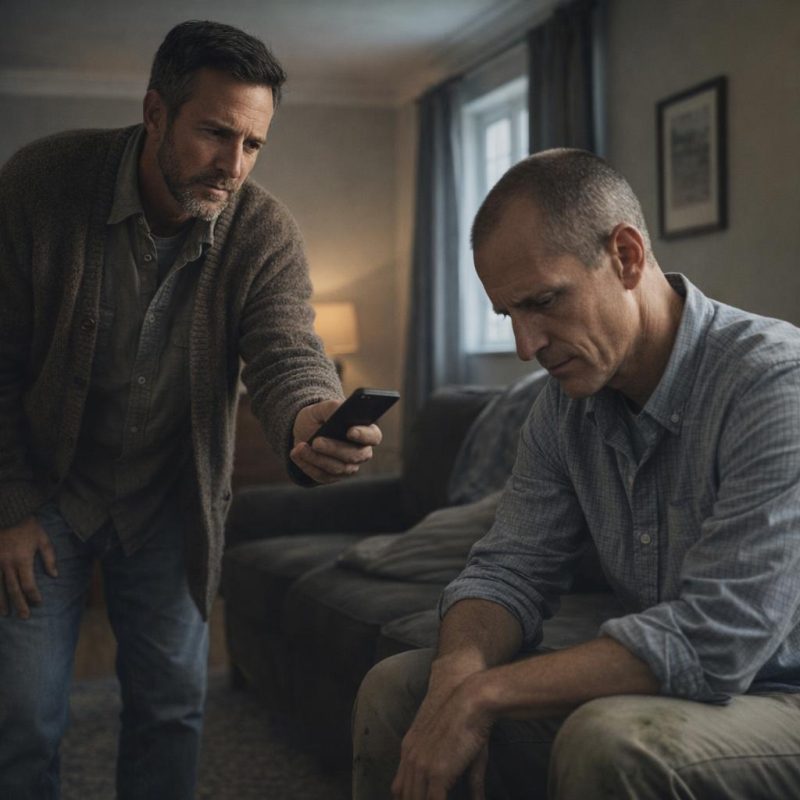 Image by RM AI
Developer's Legacy
I spent the next two days in the county records office and the local library's newspaper archive, pulling everything I could find on Henry Brenner Construction and Development. There was more than I expected. Henry had a reputation — articles from the late seventies and early eighties described him as a hands-on developer, the kind who showed up at job sites in a suit and still knew how to read a transit level. Oak Ridge was his largest project, a forty-lot subdivision on what had been farmland on the edge of town. The plat maps showed the lots developed in phases, most of them sold by mid-1983. But a handful in the northeast corner — including mine — were held back. The records showed Henry retained ownership of those lots months longer than the others. My lot was the last to transfer. The house on it was built in late 1983, and Henry sold it directly to my parents at a price the comparable sales made look generous. I pulled the original site plan and laid it next to the excavation map Dr. Marsh had sent me. The foundation of my house sat directly over the coordinates where the cache had been found. The oak tree in my backyard — the one the crew had worked so carefully around — was marked on the original site plan as a preservation point, flagged before construction began. I sat with that for a long time, the two maps side by side on the table in front of me.
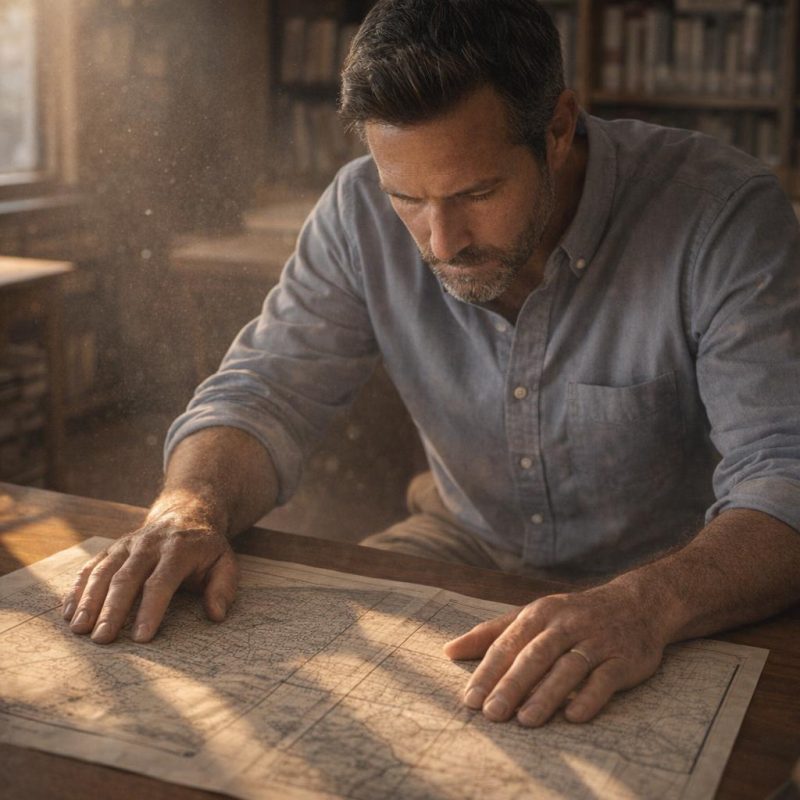 Image by RM AI
Project Irregularities
The 1984 newspaper articles were harder to find but they were there, buried in the microfilm rolls the library kept in flat gray boxes behind the reference desk. A piece from the local paper, March of that year, mentioned cost overruns on the Oak Ridge project — investors had raised concerns about excavation expenses running significantly above the original estimates. The article was short, maybe four paragraphs, the kind of story that gets filed and forgotten. But when I searched the county records for the same period I found the supporting documents: liens filed against Henry Brenner Construction by two subcontractors, a formal audit request submitted by one of the project investors, and a series of payment disputes that stretched from early 1983 into the summer. The paper trail was messy and incomplete, the way financial disputes usually are. But what caught my attention was how it ended. By late 1983, every lien had been released. The audit request was withdrawn. The subcontractor disputes were marked resolved, with no settlement amounts recorded. I couldn't find any documentation explaining how the problems had cleared. The timing sat with me — the disputes dissolving in the same months Henry was holding back those northeast lots, the same months the house above the cache site was being built. I didn't know what it meant yet, but I kept coming back to that 1984 article, the mention of cost overruns and investor complaints sitting quietly in the margins of everything else I'd found.
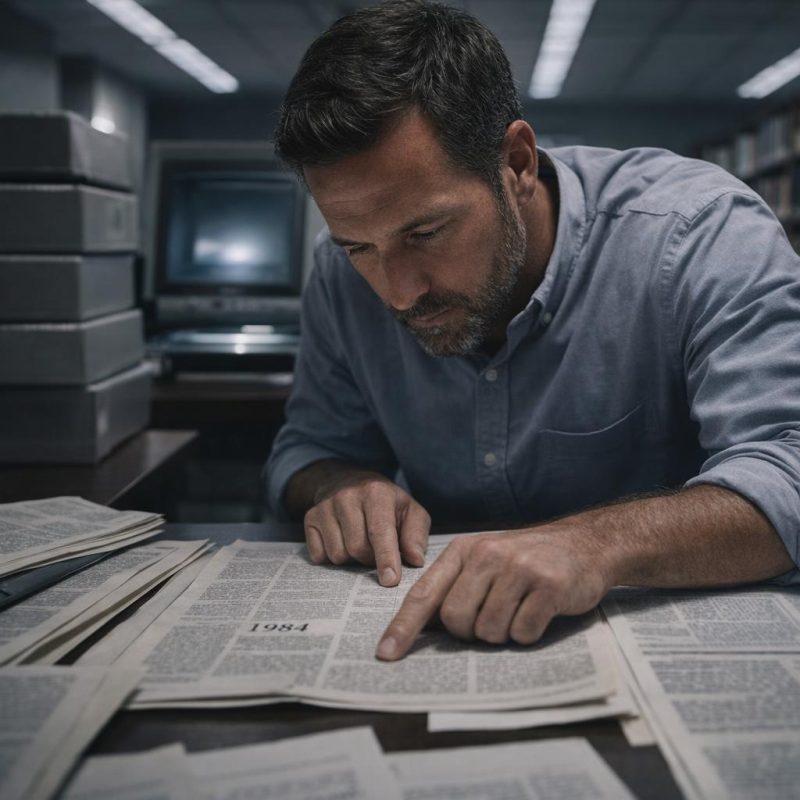 Image by RM AI
Private Investigation
I cleared off the desk in my home office and set up what I started thinking of as the investigation workspace. It felt a little dramatic, but it also helped me think. I'm a data analyst by trade — I spend my days finding patterns in numbers that other people can't see — and I needed to treat this the same way I'd treat any project with incomplete data. I built a timeline in a spreadsheet, one row per event, columns for date, source, category, and notes. Construction milestones from the plat maps. Financial disputes from the county records. Property transfers. Dates from Henry's surveying notebook. The library articles. I cross-referenced everything I had and mapped the relationships between Henry, the investors named in the lien filings, and the subcontractors. When I stepped back and looked at the full picture, one thing stood out immediately. Everything changed in a two-week window in August 1983. Before that window: active disputes, unpaid liens, an audit request sitting open. After it: everything resolved, the northeast lots moving, the last house going up. I went back through every source I had looking for something that explained what happened in those two weeks. There was nothing. No settlement records, no court filings, no news coverage, no correspondence in anything I could access. Just a gap in the timeline where the whole story seemed to turn, and nothing on either side of it that told me why.
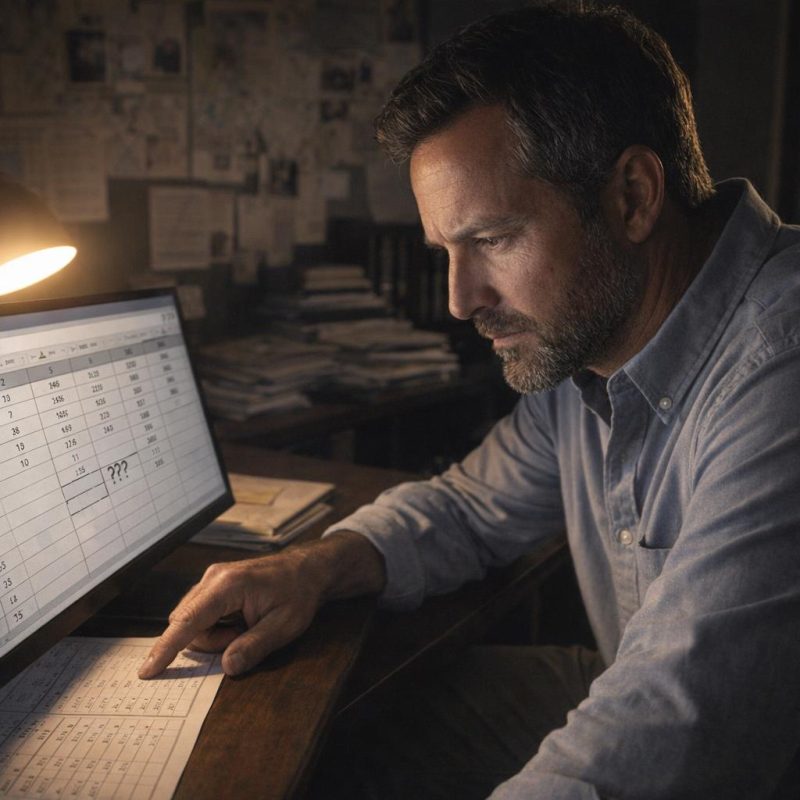 Image by RM AI
Surveying Notes
I went back to my parents' basement the following Saturday, this time with a flashlight and more patience. I'd been thorough the first time, or thought I had. But I'd been moving quickly, looking for the obvious boxes. This time I pulled everything away from the far wall and found a second set of boxes stacked behind the first, pushed back far enough that they'd been invisible unless you were looking. These were older, the cardboard soft at the corners, the tape yellowed and lifting. Inside were surveying notes of a different kind — not the summary records from the accordion folder but the working documents, the field notes Henry had made in real time. Technical drawings with soil composition data. Excavation depth measurements for each lot, recorded to the centimeter. My lot had more pages than any other, the documentation dense and careful. Henry had noted soil layers, water table readings, the composition of what he'd pulled up at each depth. At 4.2 meters, the notes changed. The handwriting stayed the same — that precise, slightly right-leaning script — but the entries became more deliberate, more measured. He described an iron chest, its dimensions, its condition, the state of the lock. He listed the contents methodically, the way you'd inventory a storage room. The final entry on that section read: 'site secured and preserved per family decision.' I sat on the basement floor with the pages in my lap, struck by how careful he'd been — how much trouble he'd taken to document something that, as far as I could tell, no one else had ever read.
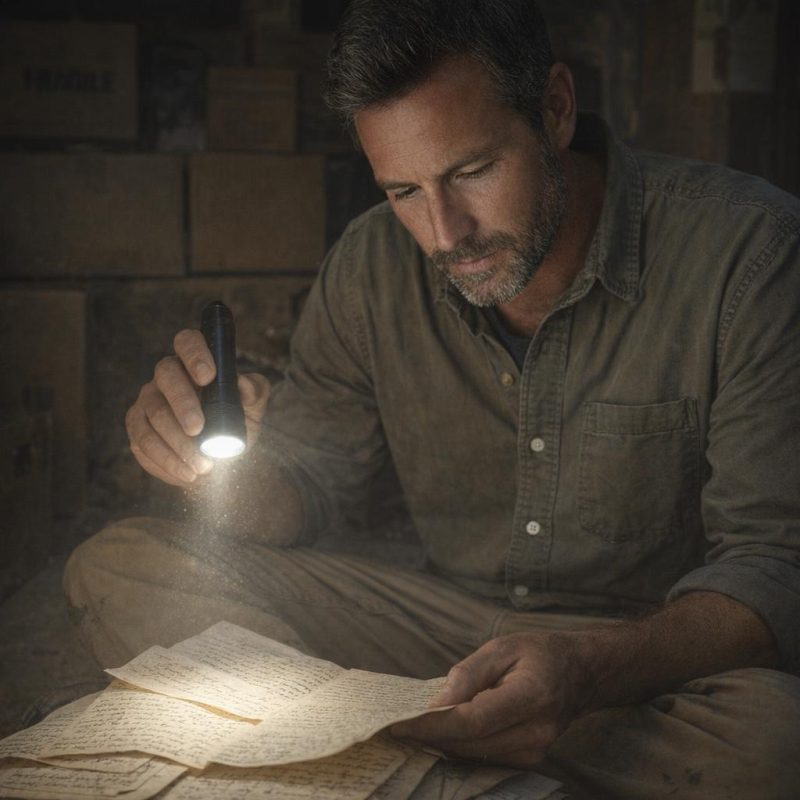 Image by RM AI
Evidence of Knowledge
I'd been thinking about the library checkout records for a week before I actually called. It felt like a long shot — digitized records from 1983, if they existed at all, would be a minor miracle. But the reference librarian I spoke to was methodical and unhurried, and she called me back two days later to say they'd found something in their archived card catalog system. She emailed me a scanned document: Henry Brenner's library card application from 1979, his signature at the bottom in the same hand I'd been staring at for weeks. Attached to it were the checkout records associated with his card number. In August of 1983, he had borrowed six books. Two were general Civil War histories. Two were specifically about field medicine and military supply caches from the conflict period. The last two were about archaeological preservation law and the legal framework around historical artifact discovery on private property. The checkout dates started in the first week of August. He'd kept every book for the maximum loan period before returning them. I sat at my desk and read through the list twice, then a third time. The dates lined up exactly with the gap in my timeline — the two weeks in August when everything in the Oak Ridge records went quiet. Those library checkout records were sitting on my screen, and I didn't know what to do with what they suggested.
 Image by RM AI
Journals from 1983
Dr. Marsh called on a Tuesday morning while I was at my desk trying to focus on actual work — the kind that paid my bills. I almost let it go to voicemail. When I picked up, her tone was different from our previous conversations. More careful. She said the excavation team had made an additional discovery during the cataloguing process: journals, plural, buried with the Civil War artifacts. Not period journals. Modern ones. Dated 1983. She told me the handwriting matched the samples I'd provided of my grandfather Henry's writing — she'd had two team members confirm it independently before calling me. I asked how many. She said three separate notebooks, each one filled. She was professional about it, measured, but I could hear something underneath the precision — a kind of caution she was choosing her words around. She said the content appeared to be a detailed account of the excavation work, and that there were legal considerations she needed to work through before sharing the contents with me. I asked if I could see them. She said yes, but she needed a few days to determine the right protocol. After we hung up, I sat at my desk for a long time without moving. My grandfather had written it all down and buried it in the ground beneath the house he built, and I didn't know yet whether that was a confession or something else entirely.
 Image by RM AI
Disturbing News
Three days felt like three weeks. I kept checking my phone, kept refreshing my email, kept finding reasons to walk past the dining table where I'd spread out my notes. When Dr. Marsh finally called, it was late afternoon, and the quality of the light through my windows had gone flat and gray. She said the team had transcribed portions of the journals. Her voice was measured in a way that felt deliberate — not cold, but careful, like someone choosing each word before releasing it. She said the content raised concerns that went beyond the archaeological findings. I asked what kind of concerns. She said it was better discussed in person, with the documents in front of us. I asked if it was serious. There was a pause — not long, maybe two seconds — before she said yes, and that she'd consulted with Richard and they both agreed I should see the materials directly rather than hear about them secondhand. She mentioned that law enforcement might eventually need to be involved, and I felt something drop in my chest when she said it. We scheduled a meeting for the next morning at the historical society offices. I didn't sleep that night. I lay in the dark running through every possibility I could construct, and none of them felt small enough to be manageable. The silence in the house felt heavier than it had any right to.
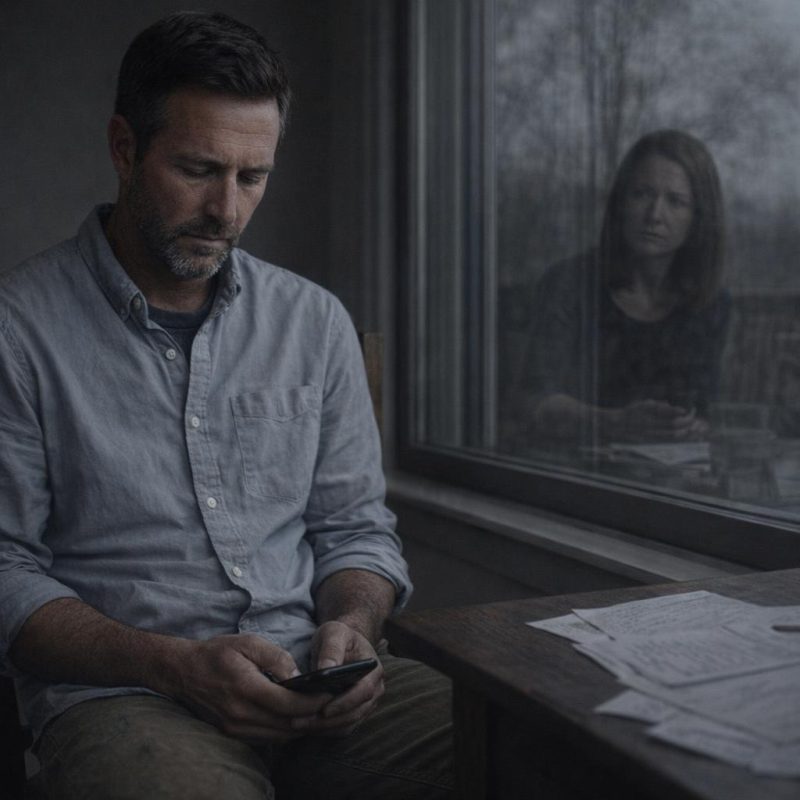 Image by RM AI
Modern Ledgers
The historical society's conference room was small and smelled like old paper and coffee. Dr. Marsh and Richard were already seated when I arrived, and there were documents laid out across the table in careful rows — some in plastic sleeves, some photocopied onto plain paper. Richard shook my hand and said he was sorry to be meeting under these circumstances. Dr. Marsh got straight to it. She said the team had found modern financial documents buried alongside the Civil War artifacts and the journals — ledgers, receipts, what appeared to be bank records, all of it dated to 1983 and all of it connected to the Oak Ridge subdivision project. She slid a photocopy across the table toward me. The handwriting on the ledger pages was my grandfather's. I recognized it immediately — the same tight, angular script from the library card, from the notes I'd been studying for weeks. Richard explained that the documents appeared to represent a second set of financial records, separate from whatever was filed officially with the project investors. I looked at the columns of figures. The numbers were precise, organized, methodical. Whatever Henry had been tracking, he'd tracked it carefully. Dr. Marsh said his journals referenced these documents specifically, by date and by page. I turned to the next photocopied sheet, and the line of cash transfers running down the right margin of the ledger page stopped me cold.
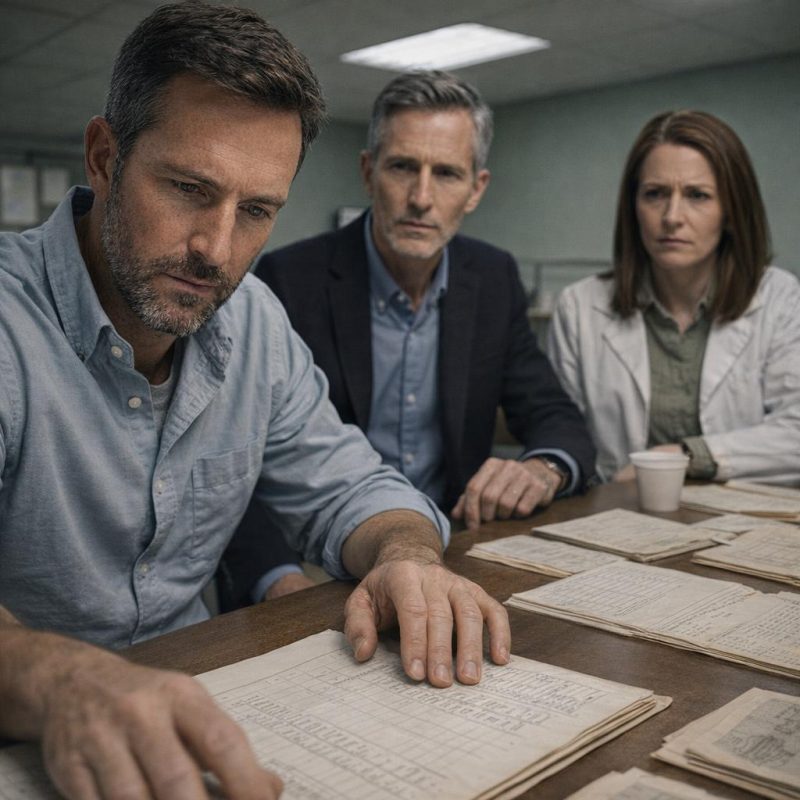 Image by RM AI
Financial Irregularities
I asked if I could work through the documents myself for a few minutes, and Dr. Marsh slid the full set of photocopies toward me without hesitation. I'd spent years as a data analyst. I knew how to read financial records, how to find where numbers stopped agreeing with each other. I went column by column. The buried ledgers showed actual construction costs — materials, labor, equipment rental — and they were significantly lower than what I'd later find in the official project filings Richard pulled up on his laptop for comparison. The gap wasn't rounding errors or accounting differences. It was consistent, systematic, and it ran across every major cost category. Subcontractor payments appeared in the official records that had no corresponding entries in the buried ledgers — companies listed by name that I couldn't cross-reference to anything real. Cash withdrawals appeared in the buried records that never showed up anywhere in the official accounting. Richard said quietly that the pattern was consistent with what investigators typically called a double-set scheme. Dr. Marsh showed me a passage from Henry's journal — she'd flagged it with a small yellow tab — where he used the phrase 'correcting the accounts,' though she didn't read the surrounding context aloud. I added up the discrepancy column by hand on the notepad I'd brought. When I reached the bottom, the total difference between the official records and the buried ledgers came to two hundred and fourteen thousand dollars.
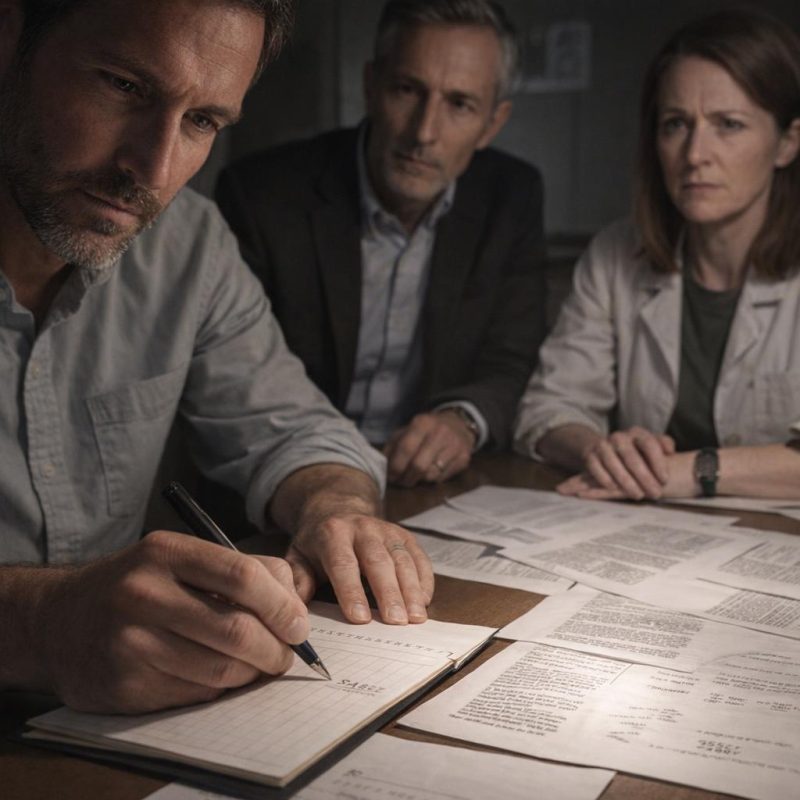 Image by RM AI
Cost Overruns
I drove home from the historical society and went straight to my laptop. I'd been meaning to search the newspaper archives more thoroughly for weeks, and now I had specific dates to work with. I searched the local paper's digitized archive for Oak Ridge subdivision and filtered by 1983. Most of the results were routine — groundbreaking announcements, real estate listings, a photo of a model home. Then I found it, buried in the September 12th edition: a piece about investor complaints regarding the Oak Ridge development. Three investors had pooled their capital to fund the project. The article said costs had exceeded original estimates by more than two hundred thousand dollars, and the investors were demanding a full accounting of where the money had gone. Henry Brennan was named as the developer who had controlled all financial decisions from the start. A follow-up piece from October said the dispute had been resolved privately, with no further details. I sat back and looked at the ceiling for a moment. Then I looked at the article again, at the paragraph near the bottom where one of the investors was quoted directly. He said he'd trusted Henry with everything, that they'd been business associates for years, and he wanted to know — his exact words — where every single dollar had gone.
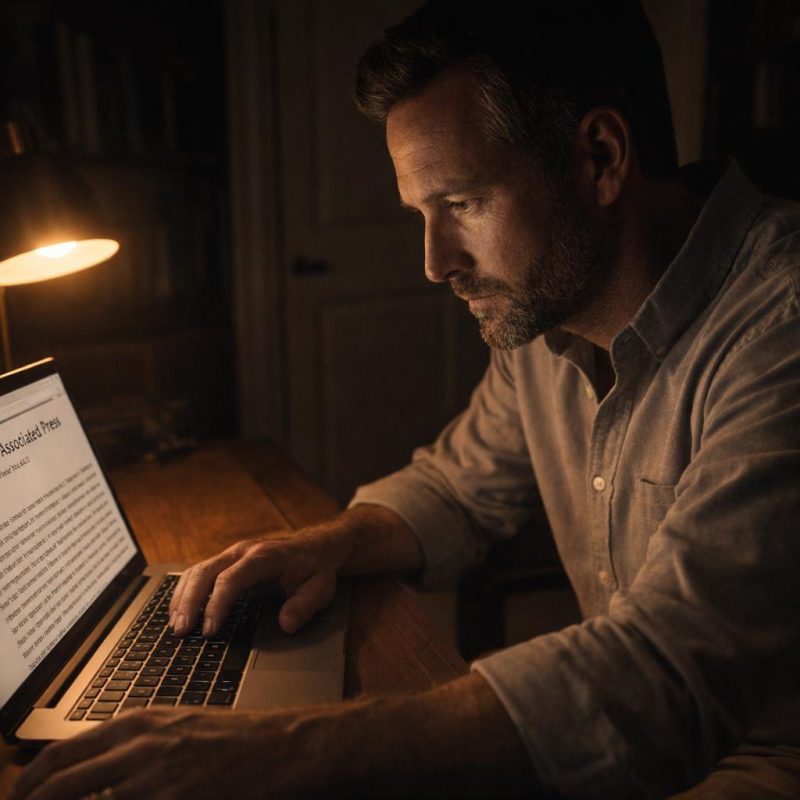 Image by RM AI
Patricia Remembers
Patricia Donnelly had lived in the third house from the corner since Oak Ridge opened, and her front garden was immaculate in a way that told me she paid attention to things. I knocked on her door on a Saturday morning and explained I was researching the construction history of my lot. She looked at me for a moment with those sharp, clear eyes, then stepped back and invited me in. She remembered 1983 without any prompting. She said my lot had always stood out to her that summer because the work on it took so much longer than the others. She described excavation equipment running later into the evenings than seemed normal, and she remembered thinking there must be foundation trouble. She said Henry was on site almost every day during that stretch — she knew who he was because he'd introduced himself to the neighbors early on, the way developers sometimes did. I asked if she remembered anything specific about the timeline, and she nodded and said she could place it clearly because her youngest had started school that fall and she'd been home all summer watching the neighborhood take shape. She described the sequence of events — the long excavation, the pause, more digging, then the concrete trucks arriving in a rush. The clarity in her voice when she talked about that August was something I hadn't expected, and it settled over me like a weight I hadn't known I was waiting to feel.
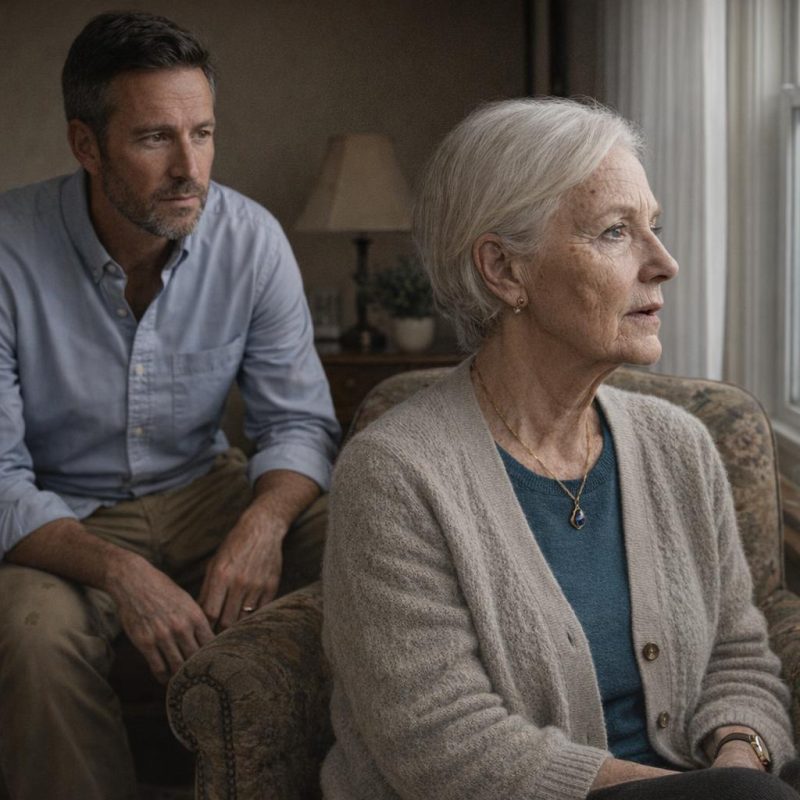 Image by RM AI
Rushed Excavation
I asked Patricia if she could describe the excavation work in more detail, and she didn't hesitate. She said Henry sent the regular crew home early on several occasions — she'd noticed because the equipment noise would stop earlier than usual and she'd look out and see the workers leaving, but Henry's truck would still be there. She saw him out there alone, moving around the site with what she thought was surveying equipment, taking measurements. She remembered seeing him carry things — boxes, she thought, or containers of some kind — between the site and his truck on more than one evening. She said he looked tired during that period, not his usual self. He didn't stop to talk to anyone the way he had earlier in the summer. She remembered one evening in particular when she'd let her dog out late and could see the beam of headlights from Henry's truck illuminating the lot, and he was still working out there in the dark. The next morning, she said, the concrete trucks came early and the foundation was poured fast. After that, the house went up quickly and Henry seemed different — lighter, she said, like something had been lifted. She'd never thought much of it at the time. She just assumed it had been a difficult build. The image of him out there alone under those truck headlights, working after everyone else had gone, stayed with me long after I left her house.
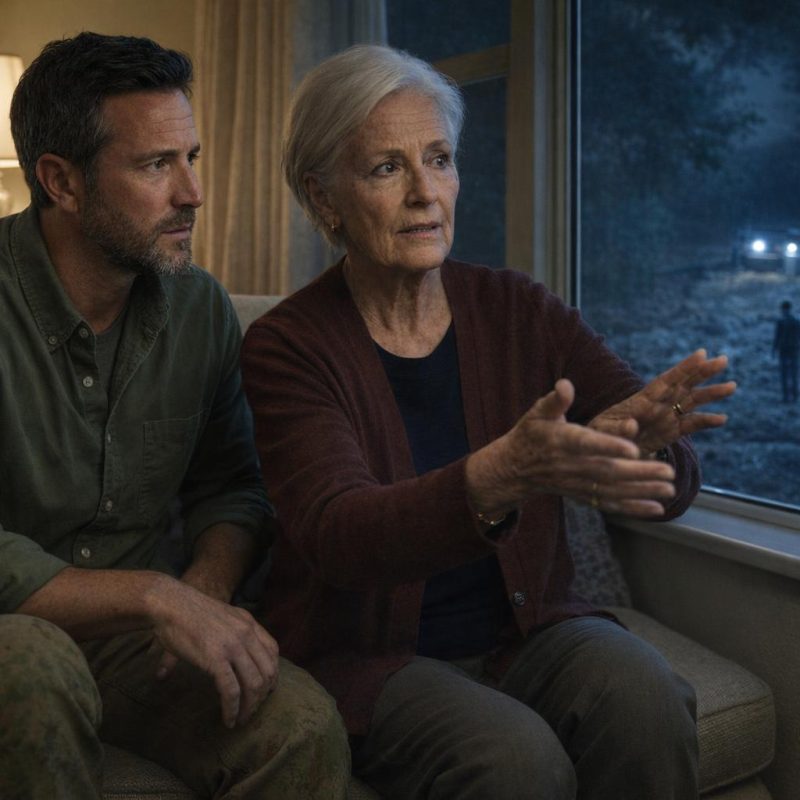 Image by RM AI
Deliberate Concealment
That evening I cleared the dining table and spread everything out: the photocopied ledgers, the newspaper clippings, my handwritten timeline, the library checkout records, my notes from Patricia's account. I'd done this kind of work before — assembling data points into a coherent picture — but I'd never done it with my own family at the center of it. I went through everything slowly, placing each piece in chronological order. Henry had been running the subdivision project. The buried ledgers suggested money had moved in ways that didn't match the official records. The investor complaints had surfaced in September. The library records showed him researching preservation law in August, right in the middle of the excavation work on my lot. Patricia had watched him working alone on that site after dark, carrying things, taking measurements. The concrete had been poured fast, and then the house had gone up, and then Henry had sold the property to my father. I sat with all of it laid out in front of me, and the shape it made wasn't something I could look away from. The cache, the ledgers, the placement of the house, the sale to family — every piece connected to every other piece, each one fitted to the next with a precision that left no room for coincidence.
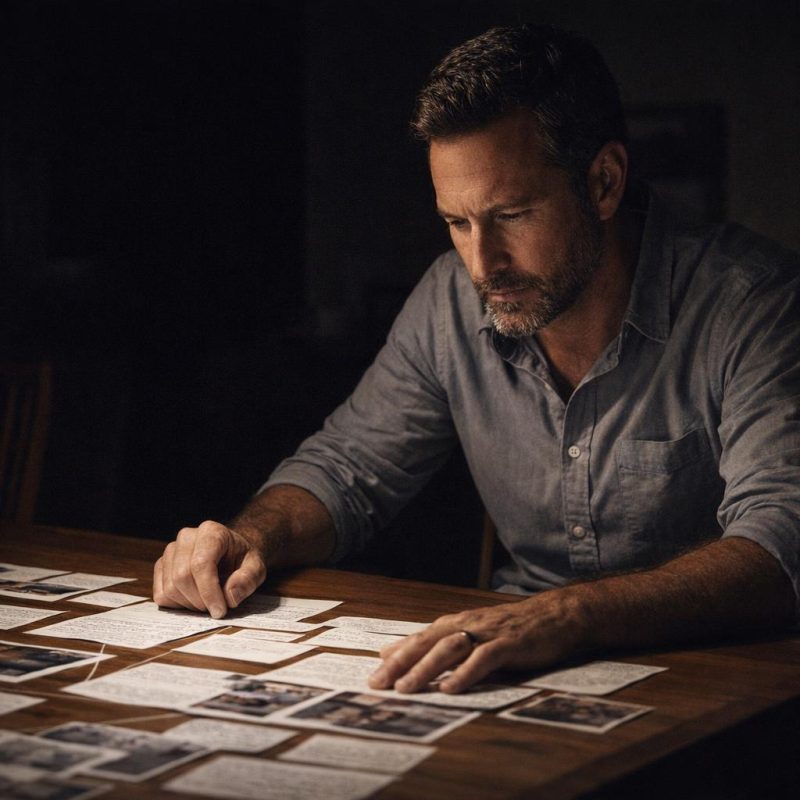 Image by RM AI
The Letter to Tom
I went back to my parents' basement the next morning, before either of them were awake. I'd been through Henry's boxes twice already, but I hadn't gone through everything — not the surveying notebooks, not the ones stacked flat at the very back of the metal shelf. I pulled them out one by one, setting each aside, until I found it: a manila envelope tucked inside the back cover of a worn green notebook, held in place by a rubber band that had gone brittle with age. The wax seal on the flap was still intact. The handwriting on the front was my grandfather's — I recognized it from the ledgers — and it was addressed to Tom Brenner. Below the name, in the same careful hand, were the words: 'To be opened only if the site is ever discovered.' I stood there in the low light of the basement, not moving. This wasn't a document he'd forgotten. This was something he'd left on purpose, for a specific moment, for a specific person. I photographed both sides of the envelope, then slid it carefully into my jacket's inner pocket. My father deserved to see it the way Henry had intended. I walked back upstairs slowly, the envelope pressed against my chest, its weight far heavier than paper had any right to be.
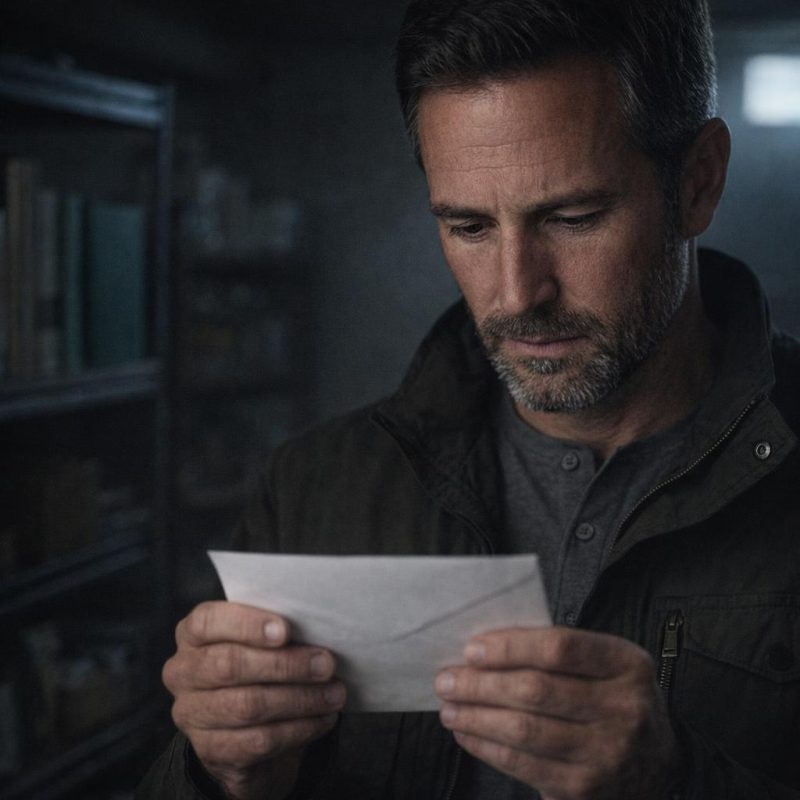 Image by RM AI
Demanding the Full Truth
I didn't call ahead. I drove straight to my parents' house and let myself in with my key, and by the time my mother came out of the kitchen I was already spreading documents across their dining table. She started to say something about breakfast, and I cut her off — not unkindly, but firmly. I told her to sit down. My father appeared in the doorway a moment later, still in his robe, and I watched the color leave his face as he took in what was laid out in front of him: the photocopied ledgers, the newspaper clippings, Patricia's written account, my annotated timeline. My mother reached for her necklace and started working the clasp back and forth. I let them look. Then I set the sealed envelope on the table between them and asked if they knew what was inside it. My mother asked where I'd found it, her voice careful and quiet. I told her exactly where — tucked inside Henry's surveying notebook, in their own basement. My father reached for it, and his hand was shaking. I put my hand over his and said I needed them to tell me what they knew before anyone opened anything. They looked at each other across the table for a long time. Neither of them spoke. The room held that silence like it had been waiting years to hold it.
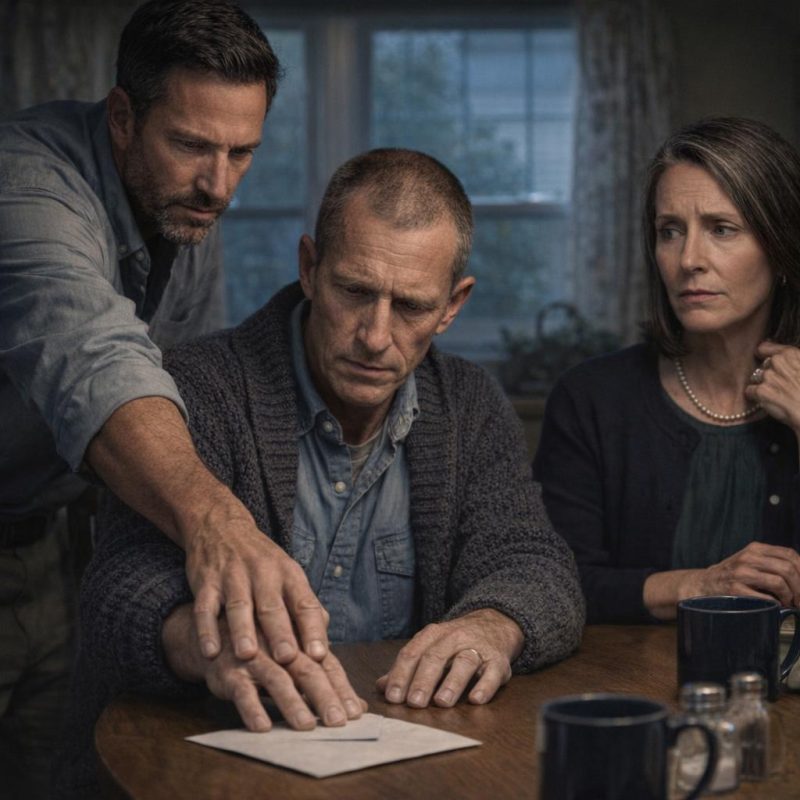 Image by RM AI
What Henry Hid
Dr. Marsh had laid everything out on a long folding table in the historical society's back room — the buried ledgers sorted by date, the loose invoices grouped by vendor name, the handwritten cash withdrawal records in their own stack. She walked me through it methodically, the way you'd explain a patient's chart. The ledgers showed construction costs climbing steadily across eighteen months, line items inflated in small increments that would have been easy to miss in isolation. The vendor names on the invoices didn't match any licensed subcontractors she or Richard could find in the county records from that period. Henry had been pulling cash withdrawals that never appeared in the official project accounts — amounts ranging from a few hundred dollars to several thousand, logged in a separate column in his own handwriting. Dr. Marsh estimated the total at just under two hundred and fifty thousand dollars across the full run of the project. Some of the entries showed payments toward what looked like legitimate debts. Others showed personal expenses — property tax, a vehicle purchase, a notation that just read 'land, personal.' Near the back of the final ledger, in Henry's hand, was a single line: 'The cache will protect what needs protecting.' I turned to the last page of that ledger, and my stomach dropped when I saw where every dollar had finally gone.
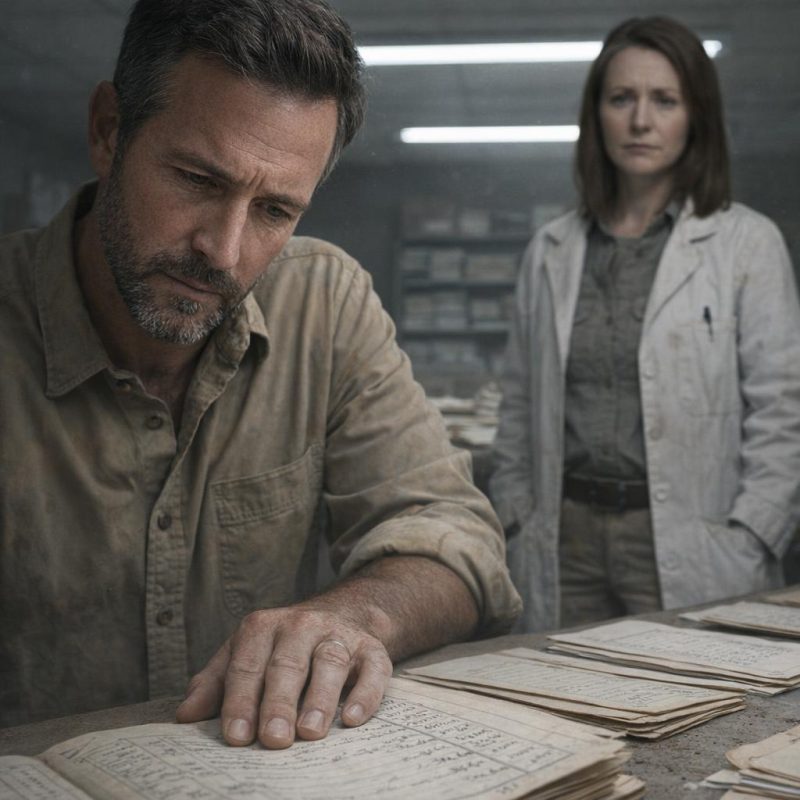 Image by RM AI
Embezzlement from Subdivision
Richard came to my house with a folder I hadn't seen before — original investment contracts, partnership agreements, notarized signatures. He set them on the kitchen table and sat across from me, and his manner was careful in a way that told me he'd been thinking about how to do this for a while. Three men had pooled their savings to fund the Oak Ridge development, he said. They'd trusted Henry to manage construction and finances entirely. He slid the first page toward me and I read the names at the bottom: Robert Chen, Michael Torres Sr., James Donnelly. I looked up at Richard. He nodded slowly. Robert Chen was his uncle. Michael Torres Sr. was Mike's father. James Donnelly had been Patricia's husband. Richard said his uncle had put in his entire retirement savings. The 'private resolution' in 1983 — the one referenced in the newspaper clippings — had returned only a fraction of what was taken. His uncle had spent the rest of his life believing he'd simply made a bad investment, that the project had genuinely failed. He'd died without knowing otherwise. I sat with that for a moment, the contracts spread in front of me, the three signatures at the bottom of the page — men who had trusted my grandfather completely, men whose families I now knew by name.
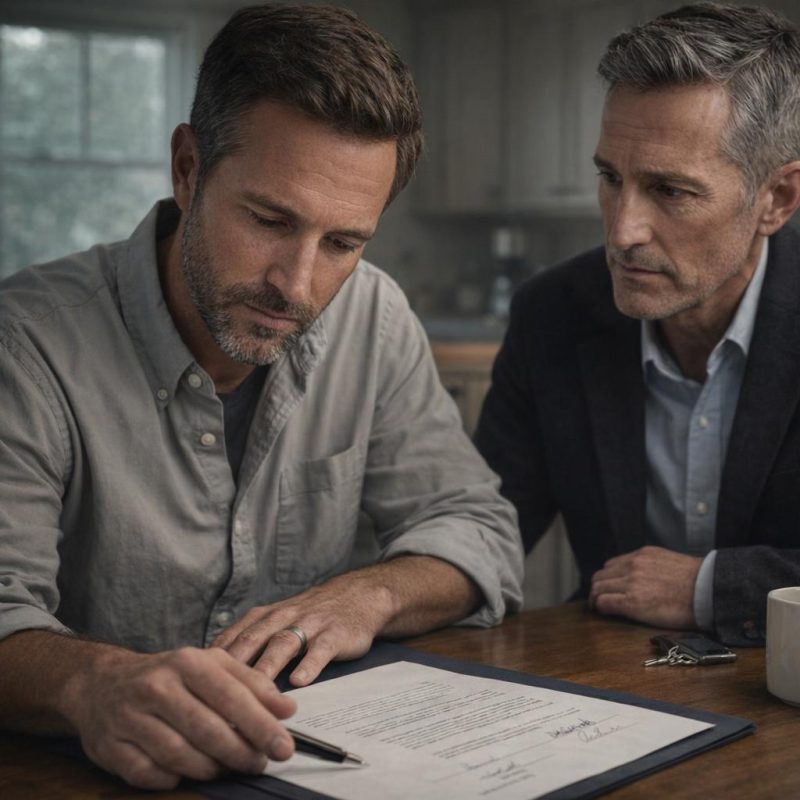 Image by RM AI
Media Discovers Family Connection
I was making coffee when the first text came in, from a neighbor two streets over: 'Have you seen the news?' I didn't think much of it. Then another came, from a coworker. Then three more in quick succession. I picked up my phone and opened the local news app, and there it was — a story by James Brooks, timestamped forty minutes earlier. The headline read: 'Civil War Discovery Unearths Family's Financial Scandal.' He'd connected everything: Henry Brenner, the Oak Ridge subdivision, the buried ledgers, the investor losses. He quoted Richard about his uncle's retirement savings. He named the investors. He explained the preservation law angle. And my name was in there too — multiple times — as Henry's grandson and the current property owner of the excavation site, with a line near the end questioning whether I had prior knowledge of the buried materials. My phone buzzed again. James was calling. I let it go to voicemail. Within the hour, two regional outlets had picked up the story. A coworker sent a screenshot with a message that just said 'Is this real?' I set the phone face-down on the counter and stood there, but it kept buzzing against the laminate. When I finally turned it back over, I saw the regional headline that had gone up while I wasn't looking — and this one had my full name in it.
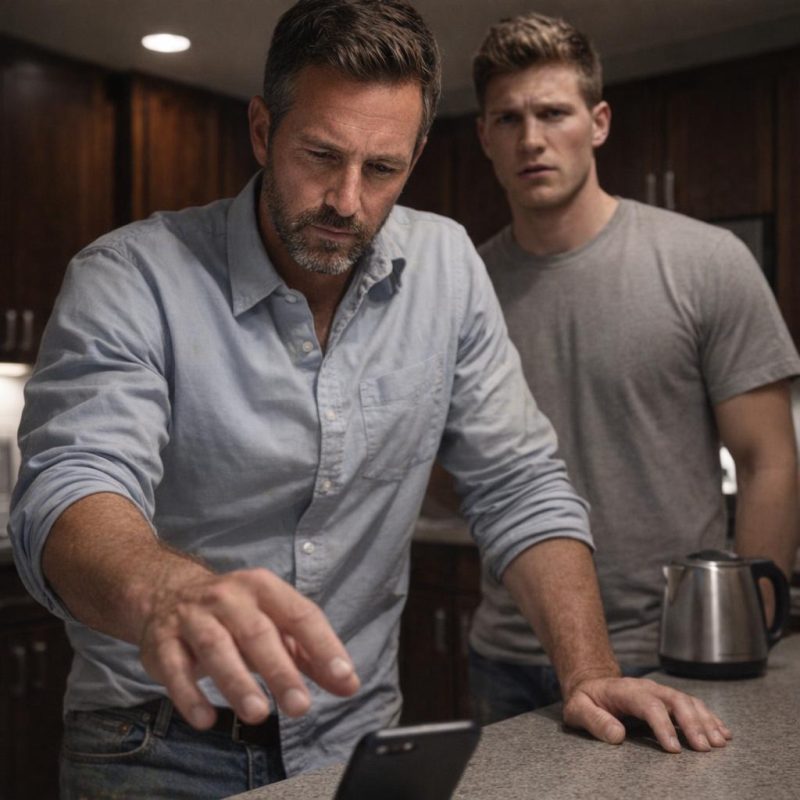 Image by RM AI
The Forty-Year Secret
Dr. Marsh and Richard had requested the meeting, which told me before I even sat down that what they'd found was significant. They'd finished translating and cataloging Henry's 1983 journals — the ones recovered from the cache — and Dr. Marsh set the transcription in front of me without preamble. Henry had found the Civil War cache during excavation in August of 1983. His journal described it in precise detail: the depth, the contents, the condition of the artifacts. He'd understood immediately what a formal discovery would mean — preservation law, site designation, mandatory halting of construction. And he was already in trouble with the investors by then, the ledgers showing it clearly. His journal entry from August 14th read: 'The historical site designation will protect what I bury with it.' He'd reburied the cache himself, added his financial records to it, and then designed the house — my parents' house, the house I grew up in — to sit directly over that location. He sold the property to my father at below market value to keep it inside the family. The final journal entry, dated November 1983, read: 'My grandson will inherit a home built on history. The truth stays buried.' I sat back in my chair. The house, the inheritance, the comfortable life my family had lived — all of it traced back to a calculation my grandfather had made in a field forty years ago, and I was only now reading the line where he'd written it down.
 Image by RM AI
Consulting the Lawyer
Daniel Goldman had been the family's attorney for over a decade, but I'd never needed him for anything like this. He reviewed everything I brought — the ledgers, the journal transcriptions, the investor contracts, the news coverage — without rushing, reading each page fully before setting it aside. When he finished, he took off his reading glasses and set them on the table and told me to ask my questions. I asked the one I'd been carrying since I left Richard's house: could I be held responsible for what Henry did? He was measured about it, the way he was measured about everything. Criminal liability, he said, had died with Henry. But civil liability was a different matter. As an heir, I'd potentially inherited assets that could be traced to the embezzled funds — and the house itself, purchased below market value from a man who'd used stolen money to stay solvent, was the most obvious example. The investors' heirs might have grounds for civil recovery claims against the estate. He recommended I cooperate fully with any investigation and document everything I'd done independently. He said the fact that I'd surfaced the evidence myself would matter. Then he paused, and in the careful, even tone he used when he wanted something to land without alarm, he explained that my inheritance and the property itself could be at risk — and that I should be prepared for that possibility.
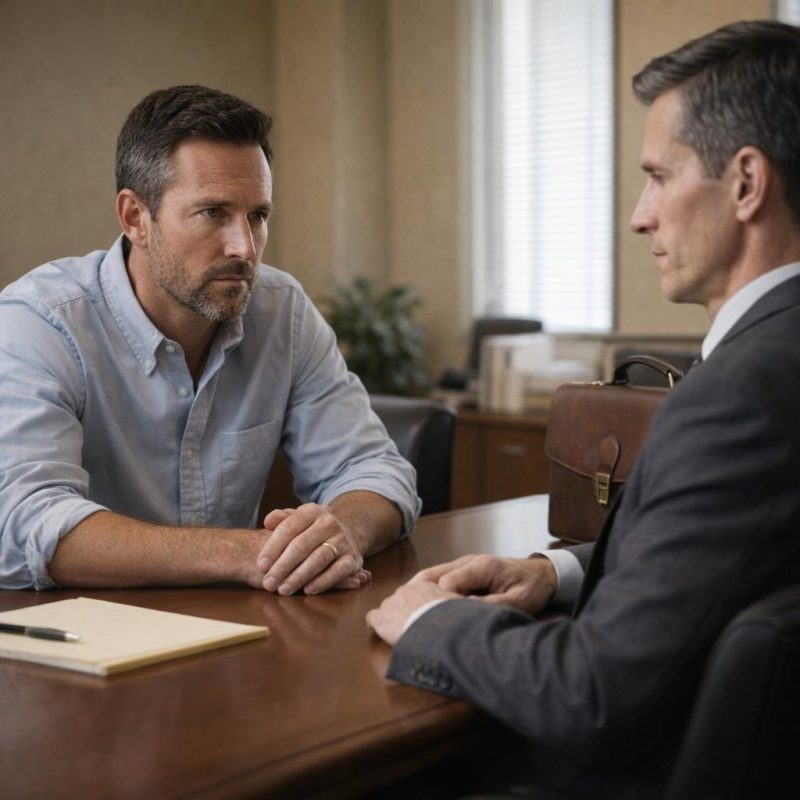 Image by RM AI
Detective Harding Arrives
Detective Harding arrived at nine in the morning, badge visible on her belt, a leather portfolio under one arm. She introduced herself at the door — state investigator's office, looking into the buried materials and their legal implications — and I stepped back and let her in without hesitation. I'd already decided, after talking to Daniel, that full cooperation was the only thing that made sense. She sat at the kitchen table and I sat across from her, and I walked her through everything from the beginning: the excavation notice, the first documents, Patricia, the library records, the ledgers, the journals, the investor names. I showed her my research materials, my annotated timeline, the photographs I'd taken of the envelope before I brought it to my parents. She asked whether I'd had any prior knowledge of what was buried on the property. I told her no, and I told her exactly how I'd found out. She asked about my parents — what they'd said, how they'd behaved when I confronted them. I told her what I'd observed and was careful to say I had no proof of what they'd known or when. She didn't push. She just wrote, steadily and without comment, filling page after page of her notepad while I talked, and there was something almost settling about the scratch of her pen moving across the paper as I finally laid it all out to someone with the authority to do something about it.
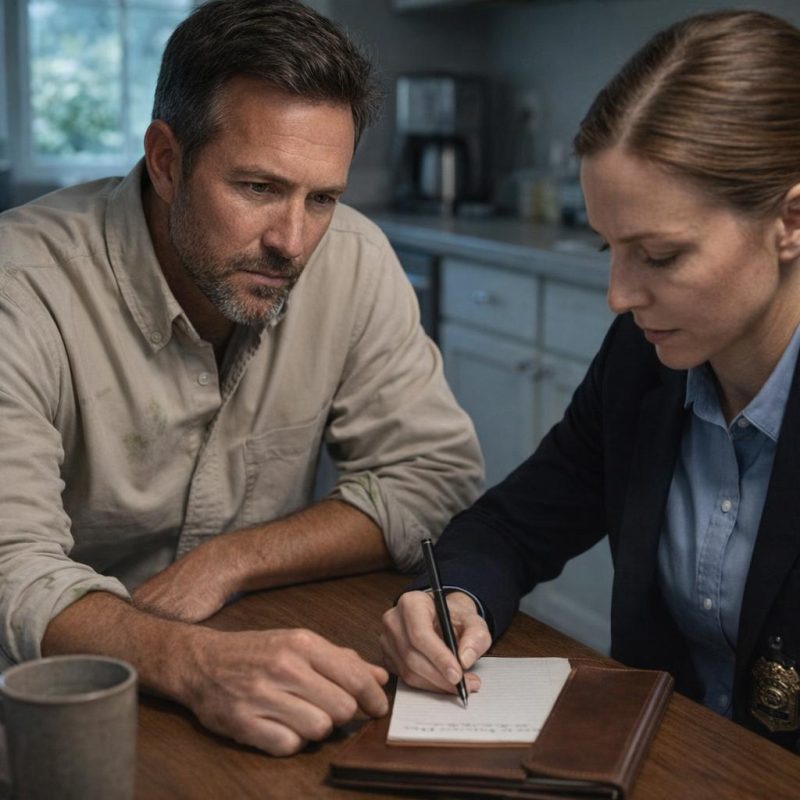 Image by RM AI
Historical Society Confirmation
Richard called me into the historical society offices on a Tuesday morning, and I went in expecting a procedural update. Dr. Marsh was already there, sitting across from Richard's desk with a folder open in front of her, and the two of them had the settled look of people who had already made a decision. Richard walked me through the board's recommendation methodically — the Civil War cache was undeniably significant, he said, one of the most intact mid-nineteenth-century material deposits found in the county. But then he kept going. The 1983 reburial, the ledgers, the journals, the evidence of what my grandfather had done — the board had voted to preserve all of it. Richard called it a dual-era archaeological site, said it was a rare opportunity to show how people interact with history, how they use it and hide behind it. Dr. Marsh nodded along, explaining the educational value with the kind of careful enthusiasm she brought to everything. I sat there trying to follow the logic, and I could follow it — I just hadn't expected it to land the way it did. I asked Richard directly whether that meant my grandfather's crimes would be part of the permanent exhibition. He looked at me steadily and said yes — my grandfather's crimes, the ledgers, the journals, all of it, preserved as part of the historical record, exactly as it was found.
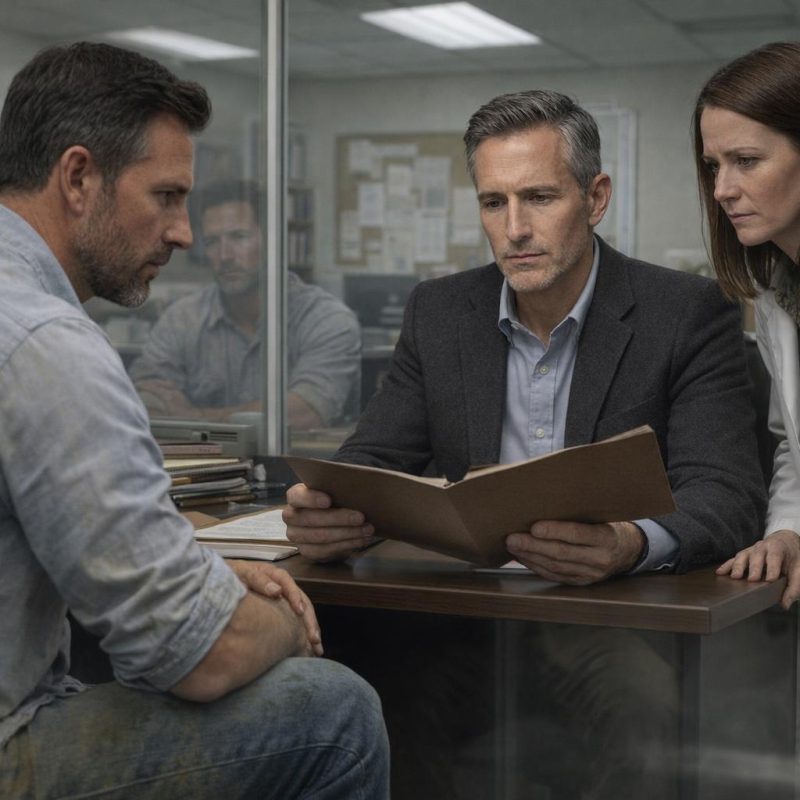 Image by RM AI
Media Firestorm
I didn't know what a media firestorm actually felt like until I was standing inside one. James's investigative piece ran on a Thursday, and by Friday morning there were two television vans parked at the edge of my property. By Saturday there were four. My phone stopped being a phone and became a list of numbers I didn't recognize, each one a different outlet wanting a statement, a sit-down, five minutes of my time. I stopped answering it. Neighbors I'd waved to for years were being interviewed on camera in their driveways, and I watched from behind my curtains like someone who had lost the right to their own front yard. My employer called to let me know they'd received media inquiries about my employment, and I took a leave of absence that afternoon because I couldn't think of what else to do. The story was trending online, and the comments were exactly what you'd expect — half the people convinced I had to have known, the other half debating whether I was a victim or a beneficiary. James knocked on my door twice. He wasn't cruel about it, just persistent, the way he always was. I didn't answer. I sat in my kitchen with the blinds down, and then a reporter I didn't recognize stepped onto my lawn and looked directly at my window and asked, loudly enough that I could hear it through the glass, whether I had profited from my grandfather's crimes.
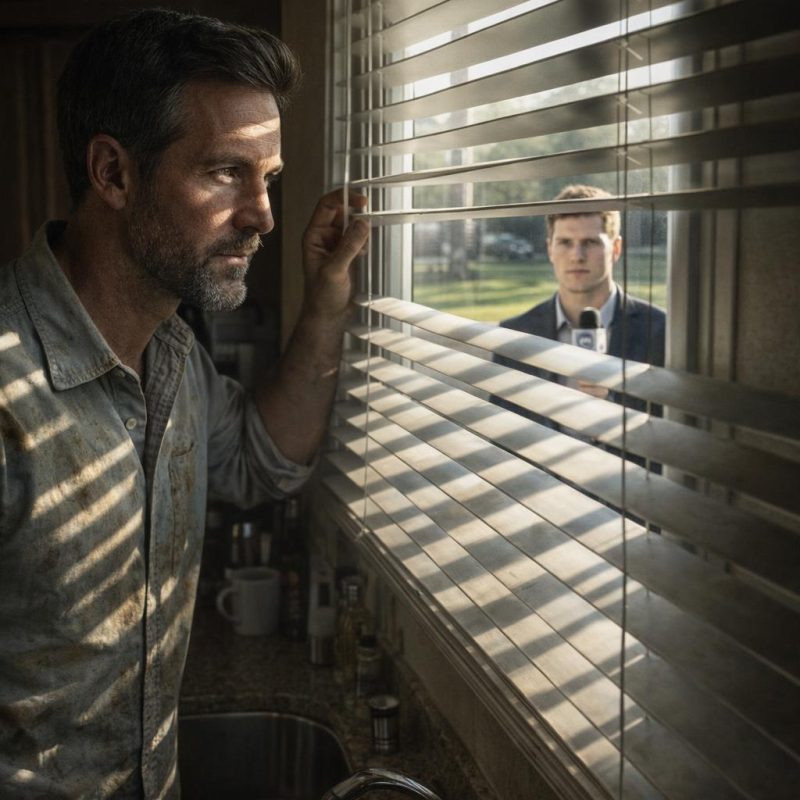 Image by RM AI
Testimony
The formal testimony session at the state investigator's office lasted four hours and twenty minutes. I know because I checked my watch when Detective Harding finally set her pen down. There were two other investigators in the room, both of them recording, both of them taking notes in addition to the recording, and I walked them through everything from the beginning — the excavation notice, the first documents, Patricia, the library records, the ledgers, the journals, the sealed letter, my parents' evasions. I had brought copies of everything, organized chronologically in a binder I'd put together the night before, and I handed it across the table without being asked. They questioned me about my parents — what I'd observed, what they'd said, how they'd behaved when I confronted them. I told them what I knew and was careful about the line between what I'd seen and what I'd concluded. They asked the same questions from different angles, and I answered each one the same way, because the truth doesn't change depending on how you ask it. When it was over, I signed my statement and gave them contact information for every witness I'd spoken to. Detective Harding thanked me and said my cooperation had been thorough. I drove home and sat in the driveway for a while before going inside, and my voice, when I tried to say something out loud just to hear it, came out rough and thin from hours of use.
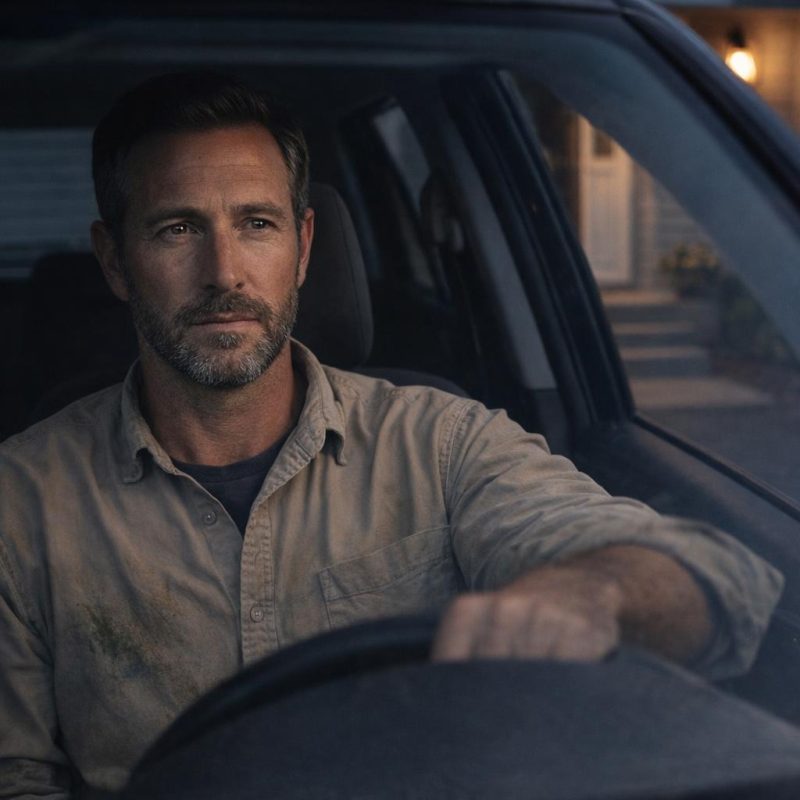 Image by RM AI
Family Reputation
I drove to my parents' house on a Sunday afternoon, and the neighborhood felt different before I even got out of the car — quieter, the way a place gets when people are being careful around it. My mother answered the door in clothes she would normally only wear inside, and that told me something before she said a word. She'd stopped going to her church group, she said. Stopped going to book club. The phone calls from people who had known the investors had been bad enough, but it was the silence from people she'd considered friends that was wearing her down. My father sat at the kitchen table and admitted, in a voice I hadn't heard from him before, that he was ashamed — not of what had come out, but of how long he'd kept it in. He said Henry had made him promise, and that he'd told himself the promise was protection, and that he understood now it had been neither. I tried to say something useful and couldn't find it. My mother apologized for not telling me sooner, said she'd been trying to protect me from the shame of it, and I sat with that for a moment because I understood the impulse even if I didn't think it had been the right call. Before I left, I asked her if she was okay. She looked at me for a long moment, and then she didn't say anything at all.
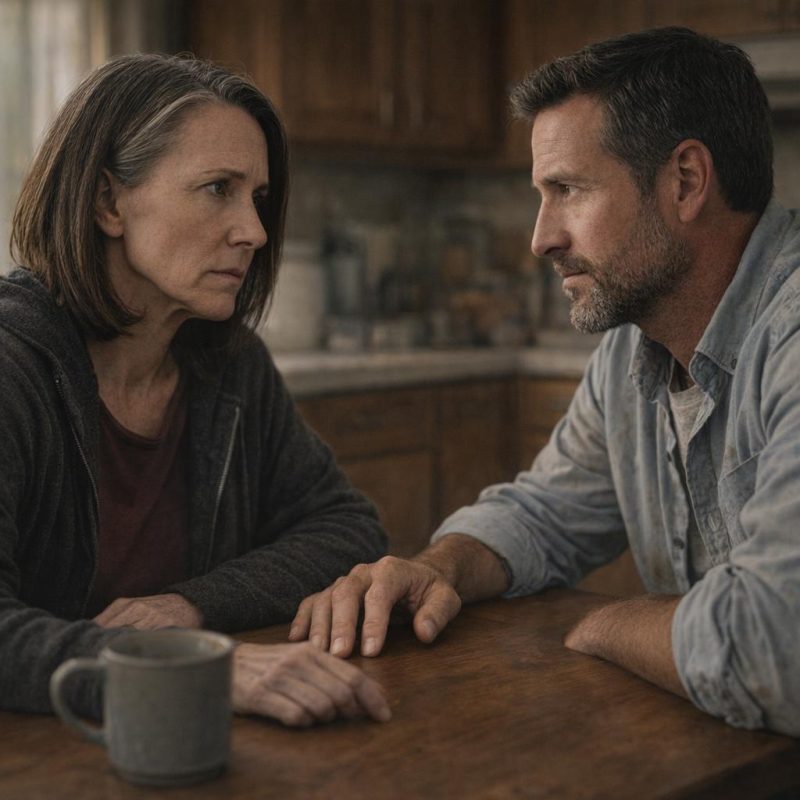 Image by RM AI
Extended Questioning
After the formal testimony with Detective Harding, I assumed the questioning was mostly behind me. It wasn't. The state historical preservation office needed its own interview. The county prosecutor's office wanted to review the case for possible civil actions and had its own set of questions. Federal archaeologists investigating the Civil War site disturbance required a separate session entirely. Each agency came at the same material from a different legal angle, and each one needed me to start from the beginning. I told the story of the excavation notice, the first documents, Patricia, the ledgers, the journals — I told it so many times that the words started to feel like something I was reciting rather than something that had happened to me. Detective Harding coordinated between the agencies where she could, and I was grateful for that, because without her the overlap would have been worse. I took more time off work. I kept a folder in my bag with copies of everything so I could hand them across a table without having to explain what each document was. By the third week of it, I'd stopped feeling frustrated and started feeling something flatter and harder to name — not resentment exactly, more like the particular exhaustion of carrying the same weight up the same hill, over and over, for people who each needed to see it for the first time.
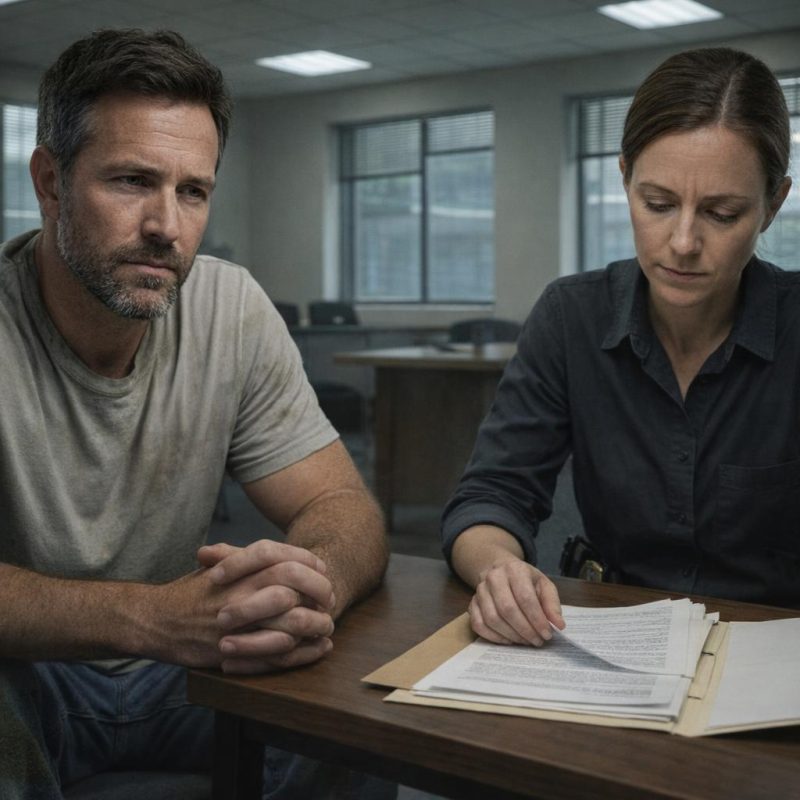 Image by RM AI
Understanding Henry
Dr. Marsh sent me the complete transcriptions of my grandfather's 1983 journals in a single email with a short note that said to take my time with them. I read them over three days, alone in my home office with the door closed. Henry's handwriting, even in transcription, had a quality I recognized — precise, controlled, the handwriting of someone who believed in the importance of keeping records. The early entries described financial pressure in terms that were almost clinical: failed projections, borrowed capital, a personal bankruptcy he described as 'not yet inevitable but approaching.' He wrote about Oak Ridge the way someone writes about a lifeline. The rationalizations came in slowly, one entry at a time, each one building on the last — a small diversion here, a shifted figure there, always with a reason attached that he seemed to genuinely believe. When he found the Civil War cache during excavation, his entry for that day was three times longer than any other. He wrote about it with something close to awe, and then, within the same entry, with something close to relief. He knew what he was going to do almost immediately. He wrote about the guilt. He wrote about it often, actually, more than I expected. But he kept going anyway. And then, near the end of the final journal, I found the entry where he wrote that he only ever wanted to leave his family something better than what he'd had.
 Image by RM AI
Who Was Harmed
Richard asked if he could meet with me and Patricia together, and I said yes without asking why. We sat in Richard's office at the historical society, and he set a photograph on the desk between us — a man in his early sixties, smiling at a backyard barbecue, holding a paper plate. Richard said that was his uncle Robert Chen. Robert had invested his retirement savings in Oak Ridge, trusting my grandfather completely. He lost over eighty thousand dollars and never recovered financially. He worked until he was seventy-eight years old because he couldn't afford to stop. He died five years ago, Richard said, still believing he had simply made a poor business decision. She said it quietly, without anger, which was almost harder to sit with than anger would have been. There was a third photograph too, a younger man Richard identified as Michael Torres Sr. , father of the excavation contractor Mike — ninety-two thousand dollars gone, a personality that changed after the loss in ways his family never fully recovered from. I looked at the three photographs for a long time. Young men, all of them, in the pictures — full of the particular confidence of people who believed they were building something. Then Richard slid the last photograph across the desk: Robert Chen again, older this time, alone at a kitchen table, and on the back someone had written his name and the year he died.
 Image by RM AI
Making Peace with Truth
I asked Richard and Dr. Marsh to meet me at the historical society one more time, and I went in without notes, without a binder, without anything prepared. I told them I wasn't going to fight the board's decision. I told them I understood why the complete record needed to be preserved, and that I wasn't there to ask them to soften anything or leave anything out. Dr. Marsh started to say something reassuring and I shook my head gently, because I didn't need reassurance — I needed to say the next part out loud. I wanted the victims' stories told alongside my grandfather's crimes, I said. Not as a footnote. Robert Chen, James Donnelly, Michael Torres Sr. — their names needed to be in the exhibition the same way Henry's name was. Richard said the truth itself was a form of justice after forty years of silence, and I believed him, but I also knew that wasn't enough on its own. Dr. Marsh talked about the site becoming an educational resource, and I told her I'd participate — documentation, public talks, whatever they needed from me. I meant it. I sat with the weight of the three photographs I'd seen in Richard's office, the young men with their paper plates and their confidence, and I knew I couldn't give them back what they'd lost. Then I looked at Richard and told him I wanted to help make this right, whatever that means.
 Image by RM AI
Final Hearing
The hearing room was smaller than I expected — a state preservation board chamber with fluorescent lighting and folding chairs that squeaked every time someone shifted. Daniel sat beside me at the respondent's table, his leather briefcase open, his reading glasses on. Richard presented the historical society's recommendation first, measured and thorough, laying out forty years of silence and what the site represented on both sides of the timeline. Dr. Marsh followed with the archaeological findings, and she didn't soften a single detail. Detective Harding read from the investigation summary — the names, the dates, the financial records — and the room went very quiet. Representatives from the victims' families sat in the gallery, and I made myself look at them when they spoke. When it was my turn, I told the board that the truth mattered more than my family's name, that I wanted Robert Chen, James Donnelly, and Michael Torres Sr. remembered in full, not as a footnote. Daniel told the board I would accept whatever decision served justice and history. The board deliberated for two hours. When they returned, the chair announced the site would be designated a dual-era historical landmark, and my property would be acquired by the state.
 Image by RM AI
Memorial and Educational Site
Richard spread the architectural renderings across the conference table and I leaned in close, studying them the way I used to study drainage maps of my lawn. The Civil War artifacts would be housed in a climate-controlled building near the oak tree. Henry's journals and ledgers would be exhibited alongside them — not hidden in an archive, but displayed with full context, the crimes named plainly. Dr. Marsh pointed to the memorial wall on the rendering, a long pale stone surface where three names would be carved: Robert Chen, James Donnelly, Michael Torres Sr. Educational programs would run through the school year, she said, teaching students about how history gets used and misused. My house would be carefully documented before demolition — every room photographed, measured, recorded. I looked at the rendering for a long time. The oak tree stood at the center of everything, the same tree that had cracked the pipe, the same tree that had started all of this. Richard said the site would be one of the most distinctive in the region, and I believed him. My grandfather had wanted his name to mean something. It would. Just not the way he'd imagined it, and I sat with that knowledge quietly, the way you sit with something that is both true and irreversible.
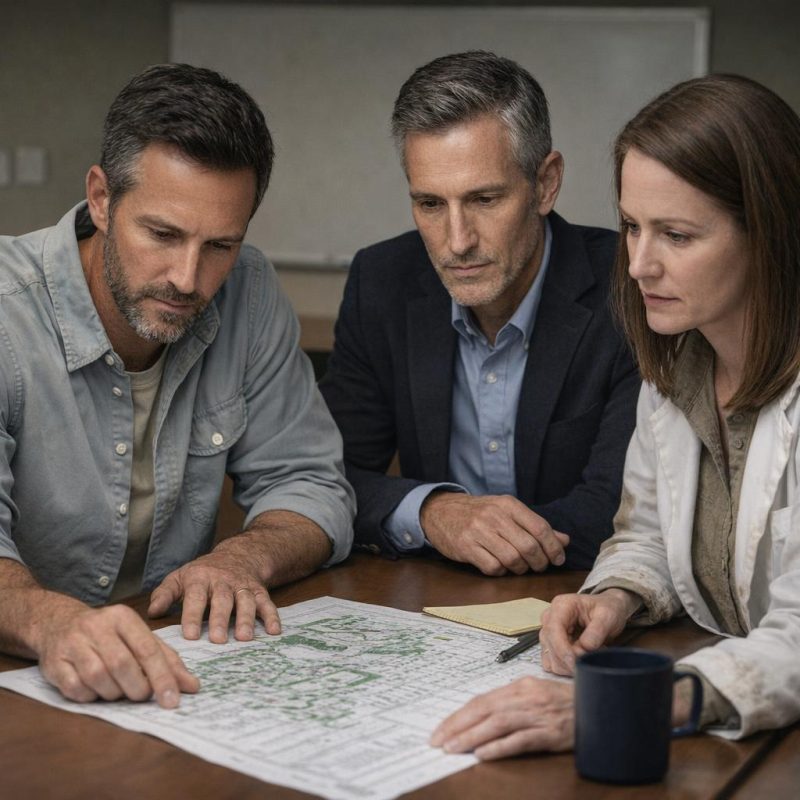 Image by RM AI
Choosing to Stay
I had two job offers in other cities — one in Portland, one in Denver — and for about a week I kept the emails open in separate tabs, reading them the way you read something you're trying to talk yourself into. Patricia came by while I was packing boxes and asked me straight out what I was planning to do. I told her I wasn't sure yet. She said that what I'd done took a particular kind of courage, and that the community had noticed, and I didn't know what to say to that so I just kept wrapping dishes. Richard called the next day and asked if I'd consider staying on part-time with the historical society, helping develop the educational programming, maybe speaking to school groups. I thought about my grandfather, who had buried everything rather than face it, who had spent decades maintaining a surface while the ground underneath rotted. I found an apartment two miles from the site, signed the lease on a Tuesday, and told Richard yes. Patricia stopped by again when she heard, and she smiled in a way that didn't need any words attached to it. I didn't have a lawn anymore, or a house, or a family name that meant what I'd always assumed it meant. What I had instead was something I couldn't have named six months ago — a quiet, grounded feeling that came from standing still instead of running.
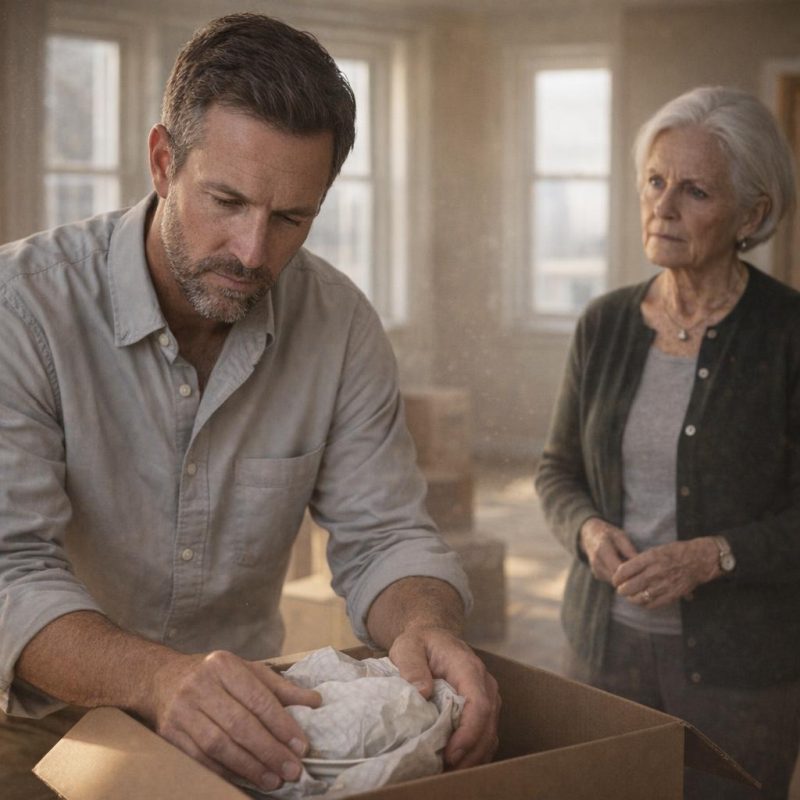 Image by RM AI
Sanctuary in Truth
The dedication was on a clear Saturday in October, the kind of morning where the light comes in low and everything looks like it's been outlined in pencil. I stood near the back of the small crowd at first, watching visitors move along the interpretive paths that curved around the oak tree. Tom and Linda arrived together, my father's shoulders still carrying that familiar hunch, my mother's hands working at the clasp of her purse. We didn't say much. We stood near each other, and that felt like enough. Richard gave his speech about confronting uncomfortable history, and Dr. Marsh walked a group of students through the Civil War display with the same intensity she'd brought to the excavation. When it was my turn to speak, I kept it short — I told them I'd started this whole thing angry about a water bill, and that I'd ended up somewhere I never expected. People laughed a little, and then they went quiet. Afterward I walked to the place where my front porch used to be. The grass was gone, replaced by gravel paths and native plantings. The oak tree stood exactly where it always had, its roots still deep and undisturbed beneath everything. I put my hands in my pockets and looked at the memorial wall, the three names carved clean into the stone, and felt the ground solid under my feet.
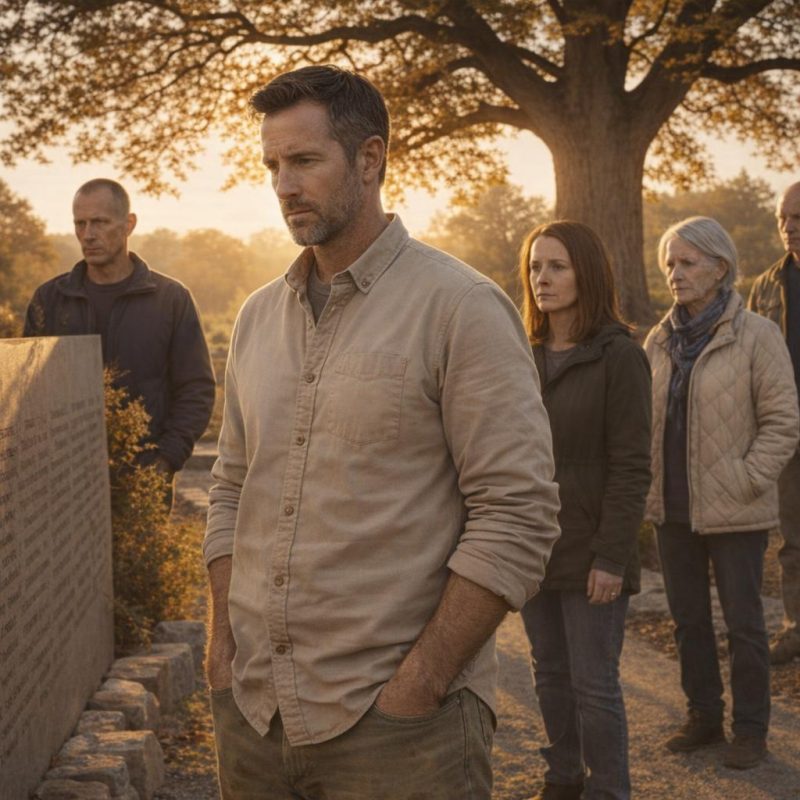 Image by RM AI
KEEP ON READING
The 20 Most Recognized Historical Figures Of All Time
The Biggest Names In History. Although the Earth has been…
By Cathy Liu Oct 4, 2024
10 of the Shortest Wars in History & 10 of…
Wars: Longest and Shortest. Throughout history, wars have varied dramatically…
By Emilie Richardson-Dupuis Oct 7, 2024
10 Fascinating Facts About Ancient Greece You Can Appreciate &…
Once Upon A Time Lived Some Ancient Weirdos.... Greece is…
By Megan Wickens Oct 7, 2024
20 Lesser-Known Facts About Christopher Columbus You Don't Learn In…
In 1492, He Sailed The Ocean Blue. Christopher Columbus is…
By Emilie Richardson-Dupuis Oct 9, 2024
20 Historical Landmarks That Have The Craziest Conspiracy Theories
Unsolved Mysteries Of Ancient Places . When there's not enough evidence…
By Megan Wickens Oct 9, 2024
The 20 Craziest Inventions & Discoveries Made During Ancient Times
Crazy Ancient Inventions . While we're busy making big advancements in…
By Cathy Liu Oct 9, 2024