

I Paid $4,860 for Emergency Plumbing Work I Never Authorized—Then I Noticed Something Terrifying in the Photo They Sent
I Paid $4,860 for Emergency Plumbing Work I Never Authorized—Then I Noticed Something Terrifying in the Photo They Sent
The Envelope That Changed Everything
Tuesday afternoons have a rhythm to them — at least mine do. I pulled into the driveway at 5:17, same as always, grabbed the mail from the box without really looking at it, and headed inside. There was a grocery circular, a postcard reminder from my dentist about a cleaning I'd already rescheduled twice, and then something heavier at the bottom of the stack. A proper envelope, the kind with a clear address window and a company logo printed in dark blue across the top. Blue Torrent Plumbing. I didn't recognize the name, but I figured it was probably a coupon mailer or one of those neighborhood service flyers. I set my keys on the hook, dropped the other mail on the counter, and opened it standing right there in the entryway. The paper inside was thick, the kind businesses use when they want to look serious. I unfolded it and saw my name — my full name — printed in bold at the top, followed by my address, followed by a number that made me read the page again from the beginning. Four thousand, eight hundred and sixty dollars. I stood there in the entryway holding that invoice, the paper heavier in my hand than paper has any right to be.
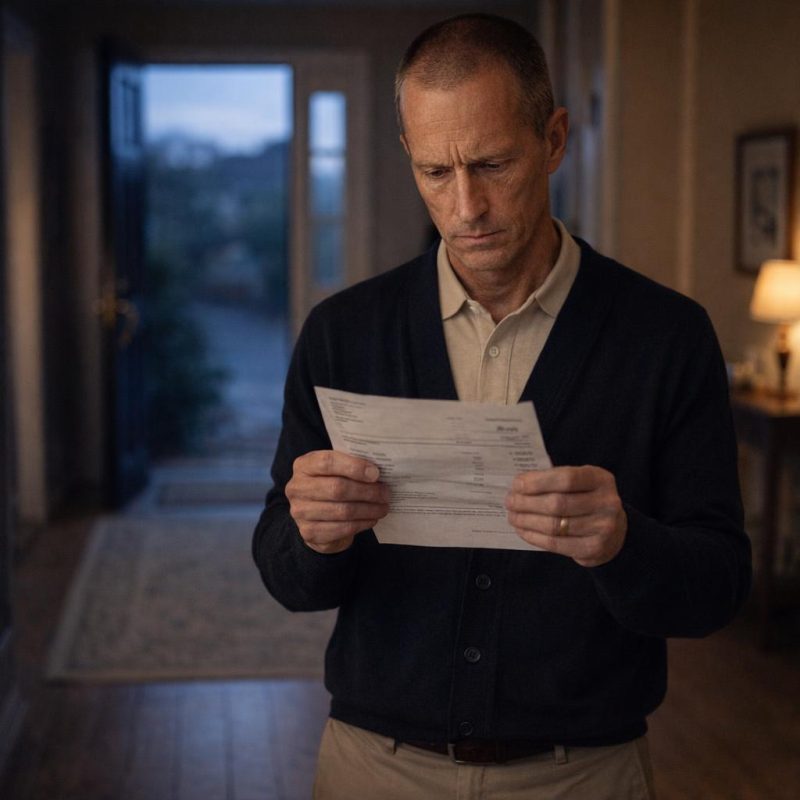 Image by RM AI
The Invoice That Made No Sense
I carried the invoice to the kitchen and spread it flat on the table under the overhead light, the way I'd smooth out a map. My name and street number were right there in bold — no typo, no transposed digit, no clerical mix-up I could point to. The line items below read like a foreign language: heavy-duty PVC sleeves, high-pressure sealant application, lateral junction bypass, main line reinforcement. I read each term twice and understood none of them. There was a permit number printed in a small box near the bottom, and a technician's signature that looked like a seismograph reading — all jagged peaks and no legible letters. The invoice claimed the work had been completed forty-eight hours earlier, which would have been Sunday, while I was at my brother-in-law's birthday lunch forty minutes away. Emergency pipe restoration, it said. Completed on-site. I hadn't called a plumber in over three years, not since the slow drain in the guest bathroom. I hadn't called anyone. I pressed my palms flat on the table and made myself breathe slowly. Then I noticed the corner of a second page tucked behind the first — and when I pulled it free, I found a grainy photograph stapled to the back.
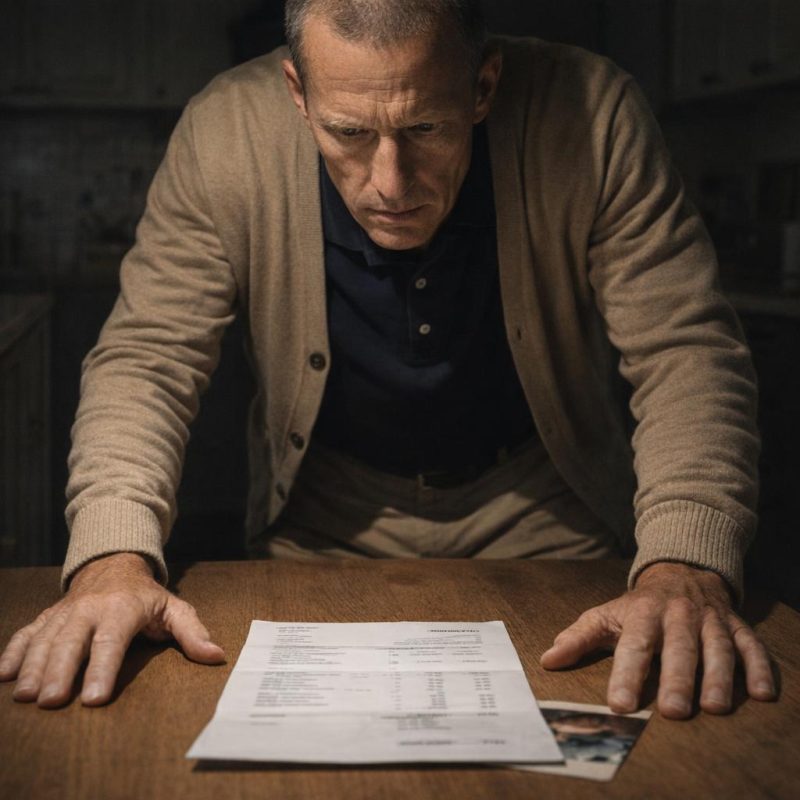 Image by RM AI
The Search for Evidence
I went outside. I don't know what I expected to find — caution tape, maybe, or a patch of raw dirt, or at least some smell of chemicals in the air. I started at the front of the house and walked the full perimeter, moving slowly, checking every foot of ground. The lawn was exactly as I'd left it when I mowed on Saturday morning: uniformly trimmed, two inches, no ruts, no tire tracks pressed into the grass along the side yard. I crouched near the foundation and ran my hand along the soil at the base of the concrete. Packed hard. No fresh adhesive smell, no wet patches, nothing that suggested anyone had been digging or sealing or bypassing anything. I checked the basement window wells, both of them, and found nothing but the same dry leaves I'd been meaning to clear out since October. I walked the perimeter a second time, slower. Then a third time, stopping at each corner of the property and looking back across the yard. The grass lay flat and undisturbed in the late afternoon light, the earth beneath it solid and unchanged, as though the ground itself had no memory of anyone ever being there.
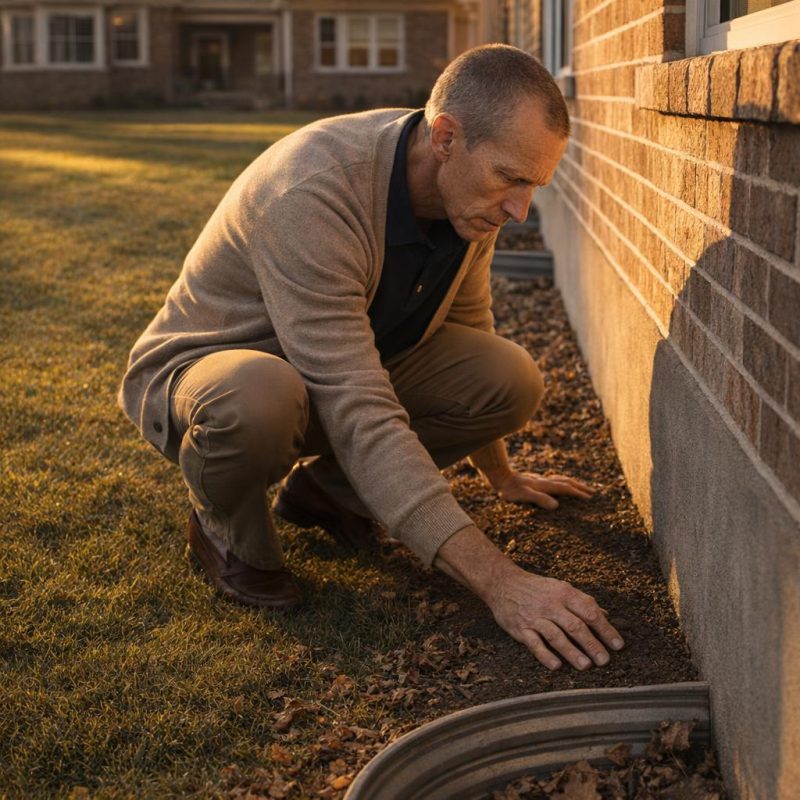 Image by RM AI
The Automated Maze
Back inside, I found the phone number printed at the bottom of the invoice and dialed it. An automated voice answered on the second ring, cheerful and unhurried, thanking me for calling Blue Torrent Plumbing. I pressed one for English. Then two for existing customers. Then four for billing inquiries. The next menu offered me options for payment arrangements, invoice copies, or to hear my account balance read aloud. I pressed zero. The system told me that wasn't a valid selection and repeated the menu. I pressed zero again. Same response. I tried pressing nothing and waiting — the system eventually transferred me to what it called the customer care queue, where hold music started playing, something vaguely classical and slightly too quiet to make out. I held for eleven minutes before the music stopped and a new automated voice told me my estimated wait time was greater than thirty minutes and offered to transfer me back to the main menu. I pressed two again. Then four again. Then I pressed zero four times in a row. The line clicked once, went silent for a moment, and then disconnected. I set the phone down on the counter and stood there in the kitchen, and the silence that followed felt complete in a way that made the whole situation feel more real, not less.
 Image by RM AI
The Scam Hypothesis
I sat back down at the kitchen table with the invoice and my reading glasses and went through it line by line, slowly this time. Lateral junction bypass. I typed it into my phone. It was a real thing — a method for rerouting pipe sections without full excavation. High-pressure sealant application. Also real. Heavy-duty PVC sleeves. Real. Every term I looked up existed, which was either reassuring or the opposite, and I wasn't sure which. I started thinking about the kind of person who might receive a bill like this and just pay it — someone elderly, maybe, or someone who didn't know enough about plumbing to push back, someone who worried about liens or credit damage or contractors showing up angry at their door. The invoice was formatted exactly the way a real invoice should be formatted. The logo looked professional. The language was specific without being incomprehensible. The technician's signature was illegible, but so was every doctor's signature I'd ever seen. I turned to the permit number printed in the small box near the bottom of the page, the one I'd glossed over before, and I looked at it carefully this time — because it was formatted exactly like the permit numbers I'd seen on the city's public works notices, right down to the prefix.
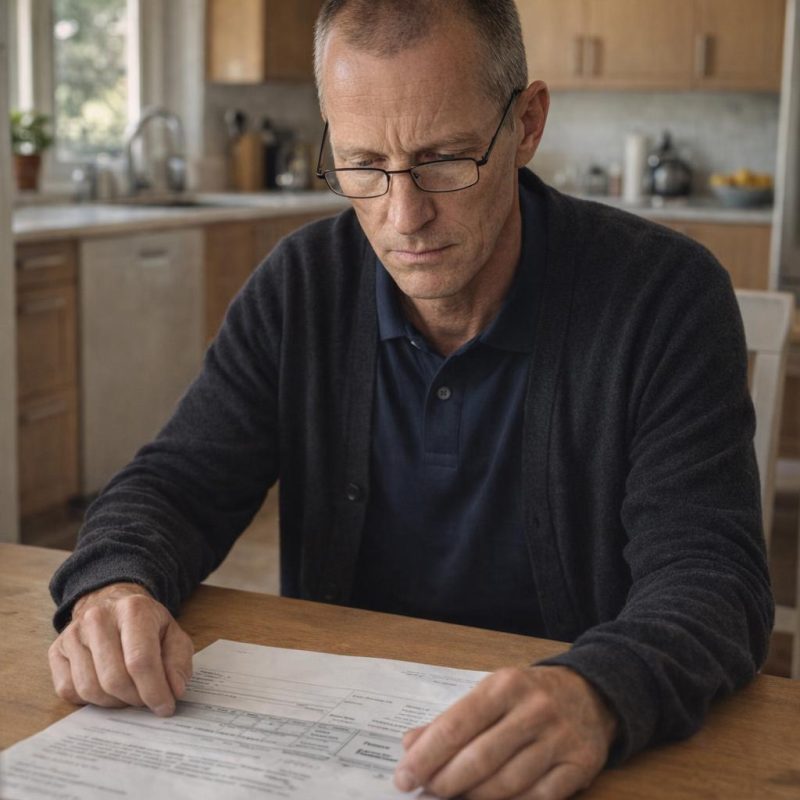 Image by RM AI
The Third Inspection
I went back outside when the sun was already dropping toward the roofline, casting long shadows across the front yard. This time I worked systematically, section by section, starting at the northeast corner of the foundation and moving clockwise. I pressed my fingers into the soil at the base of each wall. I leaned close and breathed in, checking for any chemical smell — sealant, adhesive, anything synthetic. Nothing. I checked the window wells again, more carefully than before, running my hand along the concrete lip of each one. I stopped at the ceramic gnome Emma had given me for my birthday, half-hidden in the pachysandra near the front steps, and crouched to check the soil around its base. Undisturbed. I stood and walked slowly toward the curb, scanning the strip of grass between the sidewalk and the street. That was when I noticed it — a round utility access cover set flush into the ground near the curb, maybe eight feet from my property line. Cast iron, maybe twelve inches across. I'd walked past it a thousand times without thinking about it, always assuming it was city infrastructure, a water shutoff or a gas access point that had nothing to do with me.
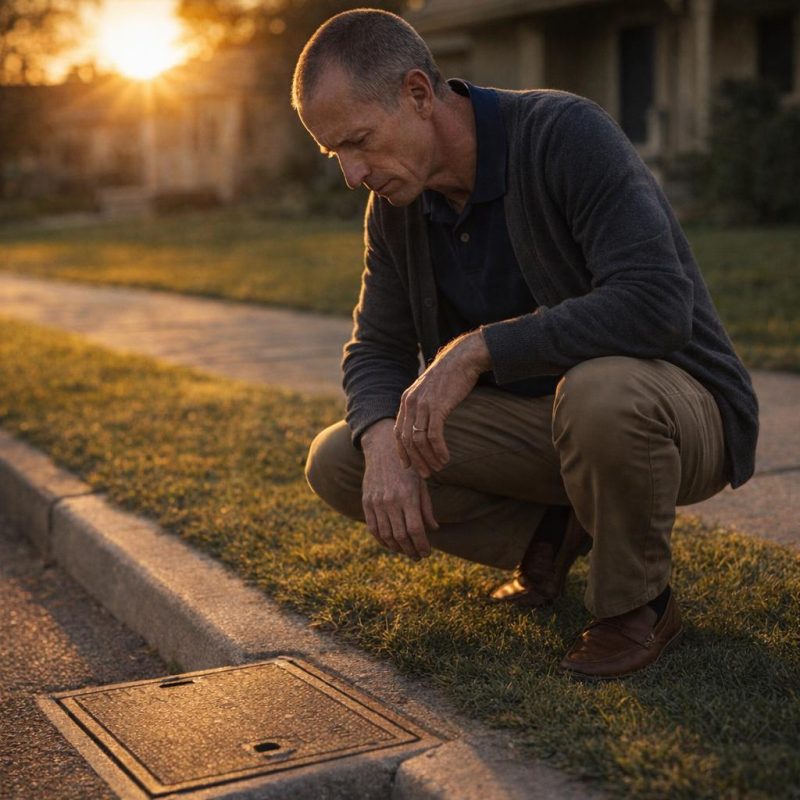 Image by RM AI
The Professional Facade
I went back inside and opened my laptop. I typed Blue Torrent Plumbing into the search bar and hit enter, half-expecting to find nothing — a dead link, a placeholder page, something that would confirm my fraud theory and let me feel certain about what I was dealing with. Instead I found a full website: service area map, photo gallery, an About Us page claiming twenty years in the business, a licensing number, and a contact form. The design was clean and professional, the kind of site a legitimate company pays someone real money to build. I clicked over to the reviews. Dozens of them, mostly five stars, spread across what looked like the past several years. People praising the response time, the technicians, the cleanup afterward. I scrolled slowly, reading the locations attached to each review. Several listed zip codes I recognized — two streets over, the next neighborhood, a cross street I drove through every week. One review mentioned trenchless repair specifically, describing an emergency call on a Sunday morning. I sat back in my chair and felt the certainty I'd been carrying start to loosen at the edges. Maybe I'd been wrong. Maybe there was some explanation I hadn't thought of yet. Then I stopped scrolling at a review from an address three streets over, describing emergency pipe work completed without any visible disruption to the yard.
 Image by RM AI
Emma's Visit
Emma showed up around seven, still in her work clothes, because that's what she does when I call her sounding like I'm trying too hard to sound calm. I had the invoice spread on the kitchen table and the laptop open beside it, and she stood in the doorway for a second just looking at the setup before she came in and sat down across from me. I walked her through the whole thing — the envelope, the line items, the phone system, the three laps around the yard. She picked up the invoice and read it the way she reads everything, carefully and without interrupting. She asked to see the photograph. She looked at the website on the laptop. Then she set everything down and said it could be a clerical error, a wrong address, a billing system that misfired. She said it calmly, the way she says things when she's trying to keep me from spiraling, and I appreciated it even though I wasn't sure I believed it. She offered to call the company herself during business hours tomorrow, said two voices were harder to ignore than one. Before she left she noticed the ceramic gnome on the front step and smiled and said she was glad I'd kept it out this late in the season. After she was gone, I sat at the kitchen table with the invoice still spread in front of me, and the house settled into a quiet that felt like it was waiting for something.
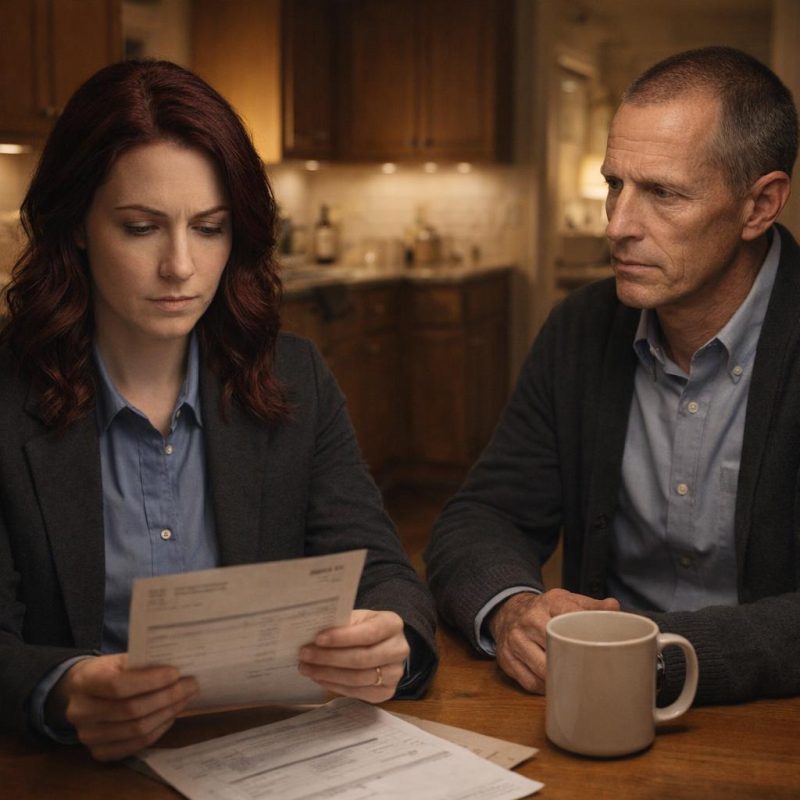 Image by RM AI
The Photograph
After Emma left I sat there for a few minutes just listening to the house, and then I picked up the invoice again. I'd been so rattled when it first arrived that I'd barely registered there was a second page. I unfolded it carefully — heavy stock paper, the kind that costs money to print — and there it was, stapled to the back: a full-color photograph, maybe four by six, printed sharp enough that I could make out individual clods of dirt. The image was taken from a low angle, close to the ground, and it showed a chaotic scene of mud and broken ceramic and what looked like exposed pipe. I couldn't immediately make sense of the composition. The angle was strange, almost like the camera had been set on the ground and pointed upward slightly, and the whole frame was crowded with debris. There was a date and time stamp in the lower right corner — the kind digital cameras embed automatically — and the numbers corresponded to a Tuesday afternoon three weeks ago. I would have been at work. I turned on the overhead light and pulled the photograph closer to the kitchen lamp, and the details began to sharpen into something I could actually read.
 Image by RM AI
The Work Boots and Window Well
Under the brighter light the photograph gave up more than I expected. In the foreground, a pair of heavy work boots stood at the edge of what was clearly a deep trench — the kind of trench you'd need to reach a main sewer line. The boots were caked with dark clay, the same reddish-brown clay I'd hit every time I tried to plant anything along the north side of the house. Beyond the boots, I could see exposed pipe, old and dark, and scattered around it were broken pieces of ceramic in a pale cream color. And then, past all of that, at the upper right edge of the frame — I recognized something. A rectangular metal frame, maybe eight inches tall, with a corner that had gone a particular shade of rust. I knew that rust pattern. I'd looked at it every spring when I cleared the leaves out of the window well. I'd meant to repaint it for three years running and never gotten around to it. The window well on the north side of my basement, the one closest to the utility easement, with the rust spreading from the lower right corner in a shape that looked almost like a handprint. It was right there in the photograph, unmistakable, and I sat with that for a long moment — the rust I'd been meaning to fix, staring back at me from a photograph I hadn't known existed.
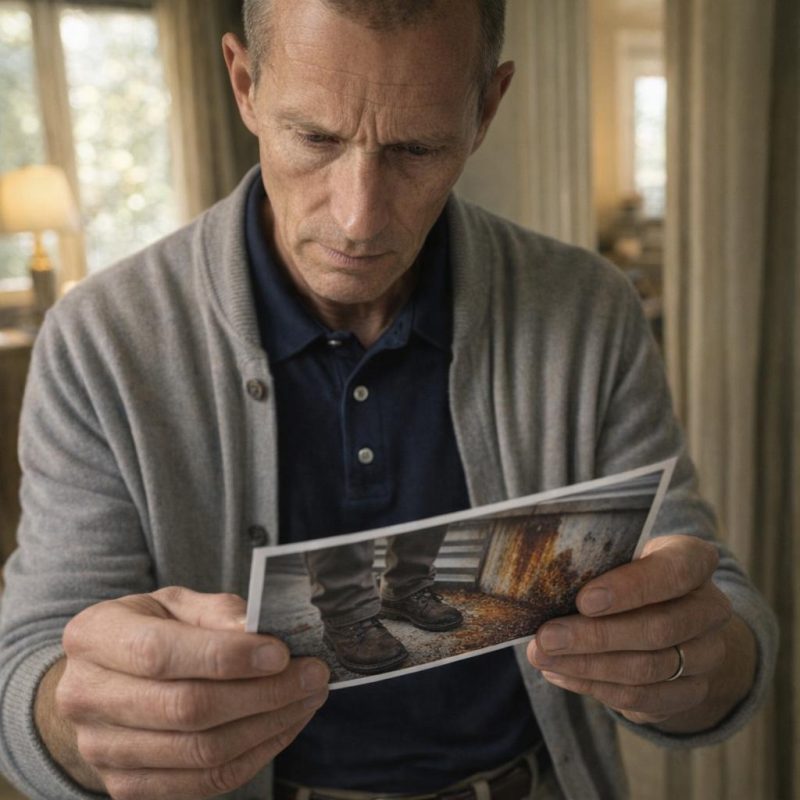 Image by RM AI
The Ceramic Gnome
I kept looking. The photograph had more in it than I'd first taken in, and the longer I studied it the more the details sorted themselves out from the mud and the chaos. That's when I saw the ceramic object lying face down in the dirt near the broken pipe. It was small, maybe eight inches tall, and even face down in the excavated trench I could see the hand-painted detail on the base — a ring of tiny red and yellow flowers around the bottom edge, the kind of careful brushwork you don't find on anything mass-produced. My stomach dropped. Emma had given me that gnome for my birthday two springs ago. She'd found it at a craft fair, she said, from a woman who painted each one individually. I'd kept it near the basement window well on the north side because the shade kept the paint from fading. There it was in the photograph, lying face down in the dirt next to a shattered section of old pipe, the flower ring still visible even through the grime. Whatever I'd been telling myself about wrong addresses and billing errors, the gnome made that harder to hold onto. That gnome had been sitting at my property, and the photograph had been taken there, and I sat with the weight of that — the little painted flowers pressed into the mud of my own yard.
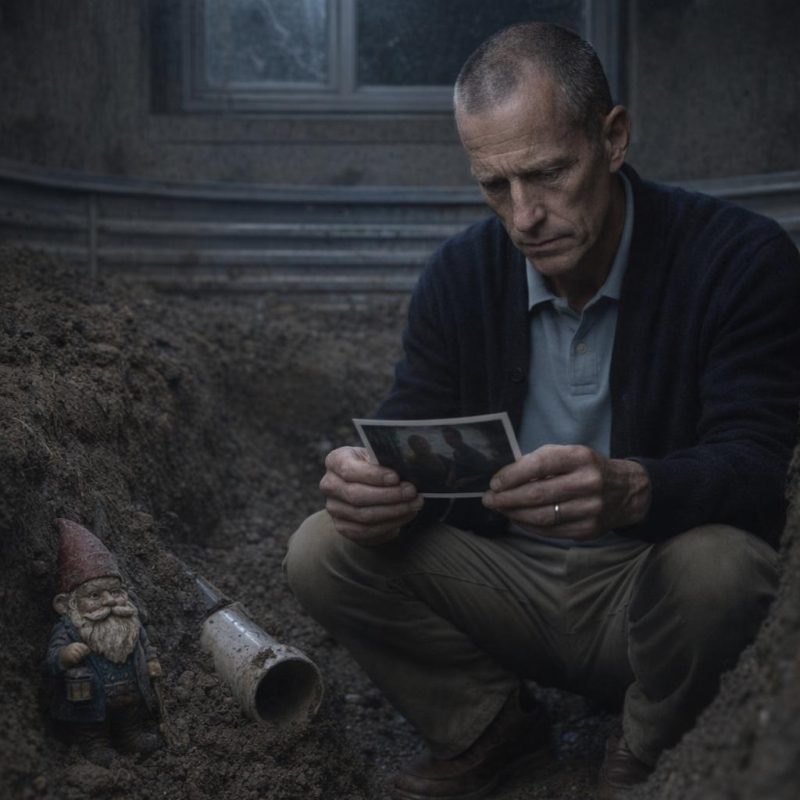 Image by RM AI
The Trenchless Method
I opened the laptop and started searching. I typed in the line items from the invoice — pipe relining, trenchless lateral repair — and within a few minutes I was reading about a method I'd never heard of before. Trenchless pipe replacement. The basic idea was that instead of digging a long trench across your entire yard to reach a damaged sewer line, a crew could access the pipe from a single small entry point, usually near the curb, and pull a flexible sleeve of new pipe material through the old damaged one from the inside. The old pipe essentially became the mold for the new one. No excavation across the lawn. No torn-up grass. Just one access point, a few hours of work, and a yard that looked exactly the same as when they arrived. I read three different contractor sites and a county extension article that all described the same process. And then I remembered something. There was a utility access cover near my curb, a round cast-iron plate I'd always assumed was a water shutoff or a gas marker. I'd mowed around it for eleven years without thinking much about it. I pulled up a new search tab and read about single access point repair that requires no digging across the lawn.
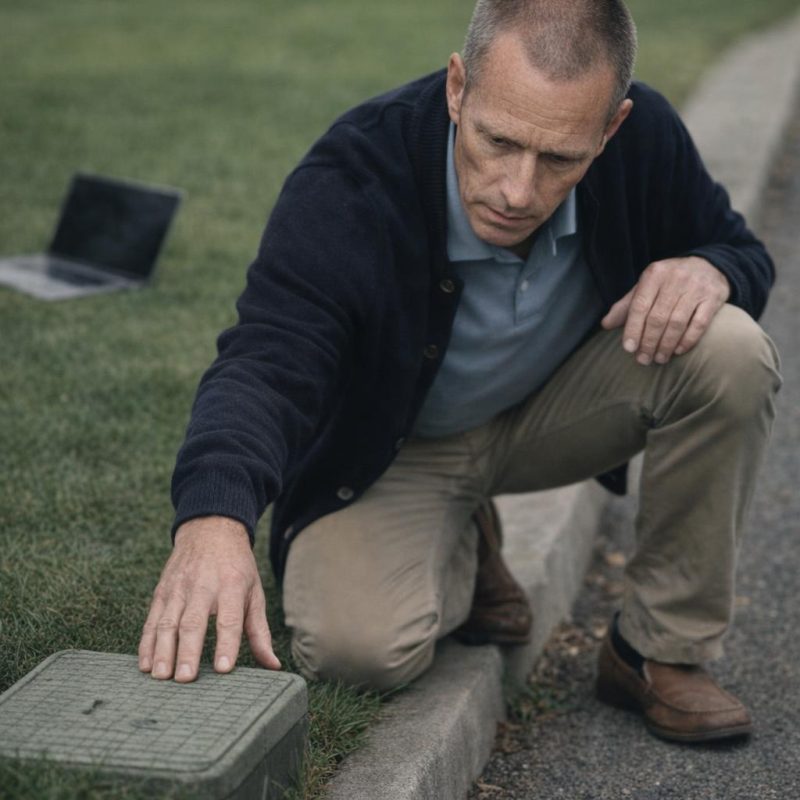 Image by RM AI
The Relief
I went back to the photograph with the laptop open beside it and looked at everything again, this time with the trenchless method in mind. What I'd taken for random chaos in the image started to make a different kind of sense. The thick dark mass tangled around the old pipe — I'd thought it was roots at first glance and dismissed it, but looking more carefully it was roots, a dense black nest of them that had worked their way through the old clay pipe over what must have been years. The pipe itself was cracked along its length, not just at one point but in several places. And running through the center of the old damaged section, clearly visible in the photograph, was a length of bright white pipe sleeve — the new liner, already in place. I sat back and did the math I hadn't wanted to do. A sewage backup into a finished basement could run thirty, forty thousand dollars in remediation. New flooring, drywall, HVAC if it reached the ducts. I'd seen it happen to a neighbor two streets over. The $4,860 on the invoice started to look less like a theft and more like a bill for a disaster that hadn't happened. The anger I'd been carrying since the envelope arrived began to drain away, and I reached for my checkbook with something that felt, cautiously, like relief.
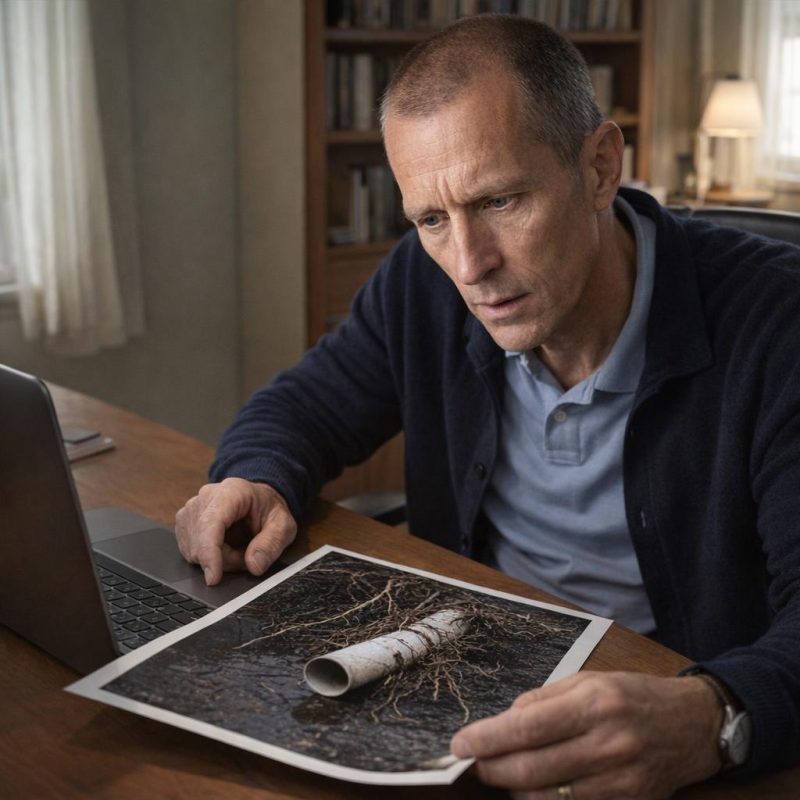 Image by RM AI
The Nagging Detail
I filled out the check carefully — $4,860.00, Blue Torrent Plumbing in the payee line, my signature at the bottom. I addressed the envelope to the remittance address printed on the invoice and folded the flap down but didn't seal it. I'm not sure why I hesitated. I sat there with the envelope in my hand and looked at the photograph one more time, the way you look at something when you're trying to convince yourself you've already settled it. The image was the same as it had been for the last hour. Work boots, trench, broken pipe, rust on the window well frame. The gnome lying face down with the flower ring visible at the base. I looked at the gnome for a while. Something about its position in the frame nagged at me in a way I couldn't quite name. I knew where I kept that gnome. I'd kept it in the same spot for two years. And the position in the photograph — the angle, the relationship to the window well — felt slightly off from the picture I carried in my head. I couldn't say exactly what was wrong. Maybe nothing was wrong. Maybe I was misremembering. I set the unsealed envelope on the corner of the table and left it there, and the photograph sat beside it with the gnome's painted flowers pressed into the dirt of my yard.
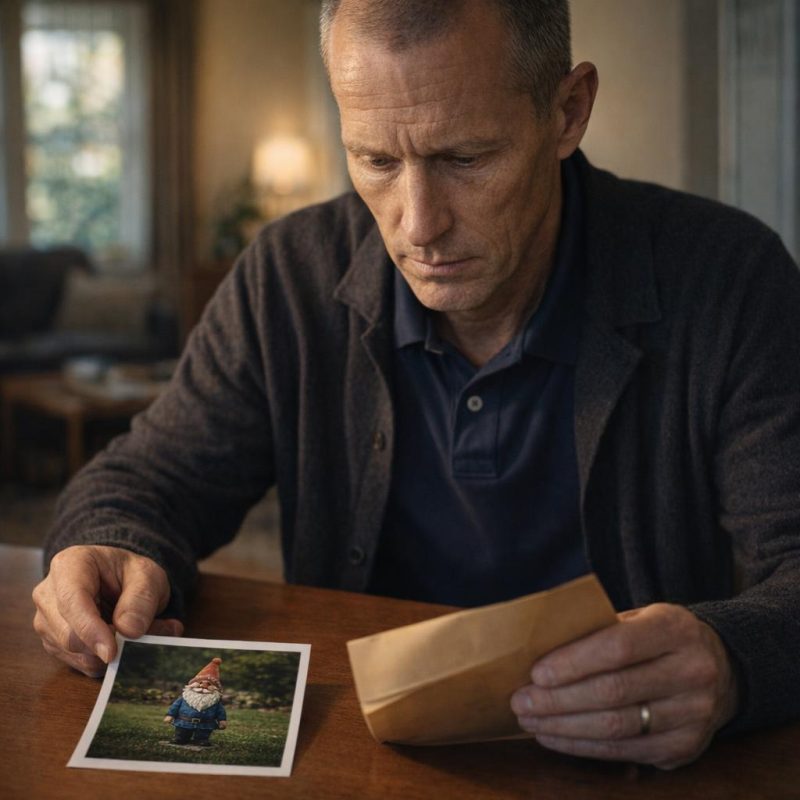 Image by RM AI
The Payment
I slept badly and woke up still thinking about the photograph. By seven in the morning I'd already made coffee and stood at the kitchen window looking out at the north side of the yard, trying to match what I saw against what was in the image. The yard looked the same as it always did. No disturbance, no patched soil, nothing to suggest a crew had been out there three weeks ago. I told myself that was the whole point of the trenchless method. I told myself the gnome's position was a memory problem, not a photograph problem. I told myself I'd done the research, I'd seen the evidence, and the $4,860 was a fair price for what had been done. I picked up the sealed envelope — I must have sealed it at some point the night before without fully registering it — and walked to the end of the driveway. The morning was cold and still. I opened the blue mailbox door, slid the envelope in, and heard it land with a soft thud on the other mail already inside.
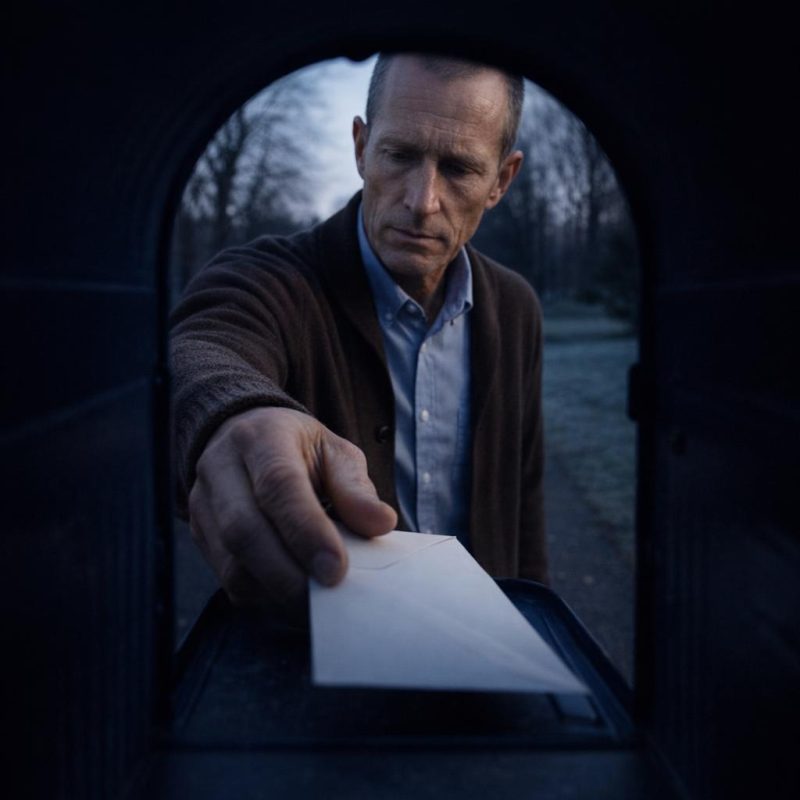 Image by RM AI
The Wrong Position
I couldn't stop thinking about the gnome. By mid-afternoon I was back outside, standing on the front walk, looking at where it actually sat. It was right there near the front porch steps, on the flat stone I'd always used as a base for it — maybe four feet from the porch, in the partial shade of the overhang. I walked the length of the house to the north side and stood at the basement window well. I paced it off. Fifteen feet, give or take. The gnome near the porch and the window well on the north side were not close to each other. They were not in the same corner of the yard. I went back inside and picked up the photograph. In the image, the gnome was lying face down in the dirt directly adjacent to the window well frame — the rusted corner I'd recognized was maybe eighteen inches from the gnome's base. I went back outside. I looked at the porch. I looked at the window well. I looked at the gnome sitting exactly where it had always sat, in its spot near the porch steps, nowhere near the window well.
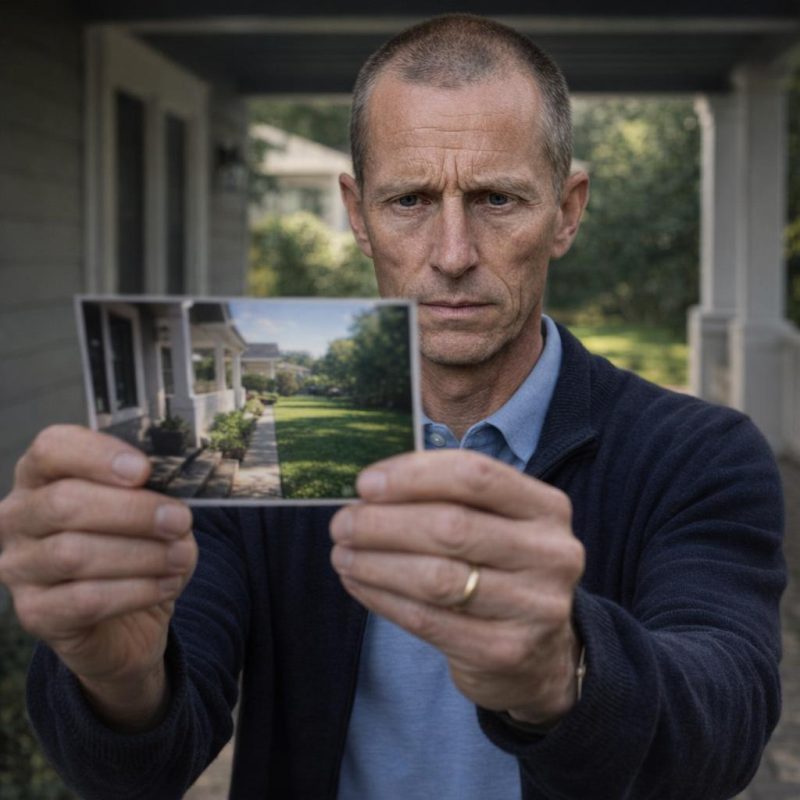 Image by RM AI
The Paint Pattern
I went back inside and got my magnifying glass — the one I keep in the desk drawer for reading fine print on contracts. I brought it outside along with the photograph and crouched down next to the gnome. I started at the hat. My gnome's hat is solid blue. Not navy, not patterned — just a flat, even coat of blue paint that Emma had pointed out when she gave it to me, saying she'd picked it because it matched the shutters. I held the photograph up and looked through the magnifying glass at the gnome in the image. The hat in the photograph was blue, yes, but it had white polka dots scattered across it. Small ones, evenly spaced. I pulled the glass away and looked at my actual gnome. No dots. I looked again at the photograph. Dots, clear as anything. I moved to the jacket next. My gnome has a red jacket with small black buttons down the front — I'd noticed them the first time I set it out. In the photograph, the buttons were yellow. Not dark, not shadowed — yellow. I set the magnifying glass down on the porch step and just stared at the two images side by side: the photograph in my hand, and the gnome sitting three feet in front of me, and they were not the same gnome.
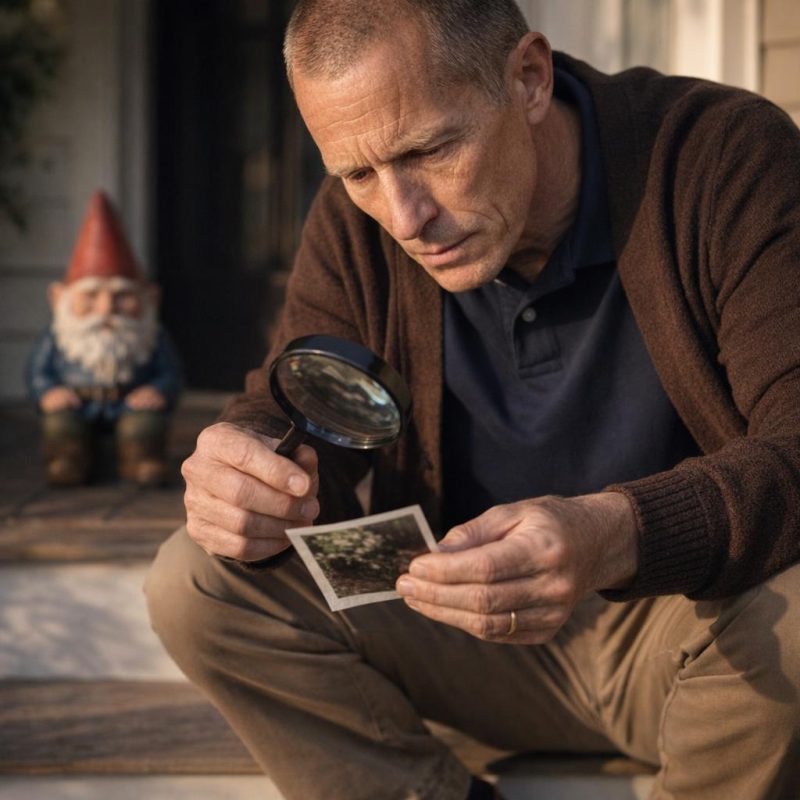 Image by RM AI
The Access Point
I needed to check one more thing. I walked out to the curb and crouched down in front of the utility access cover — the cast iron one set into the ground near the property line, the one the invoice claimed had been used as the access point for the trenchless repair. I'd walked past it a thousand times without thinking about it. Now I was looking at it the way I should have looked at everything from the start. The edges of the cover were packed with dirt — not loose, not recently disturbed, but the kind of hard-packed grime that builds up over years of rain and settling. There were rust streaks running from the bolt heads down into the surrounding soil, thin orange lines that would have broken or smeared if anyone had put a wrench to them recently. I pressed my thumbnail into the dirt along one edge. It didn't give. I tried to lift a corner of the cover with my fingers and it didn't budge — not because it was heavy, but because the seal of compacted earth around it held it like it had been poured in place. No tool marks. No scrape lines in the rust. No fresh soil anywhere around the perimeter. I sat back on my heels and looked at the unbroken rust and the hard, undisturbed dirt packed tight around every edge of that cover.
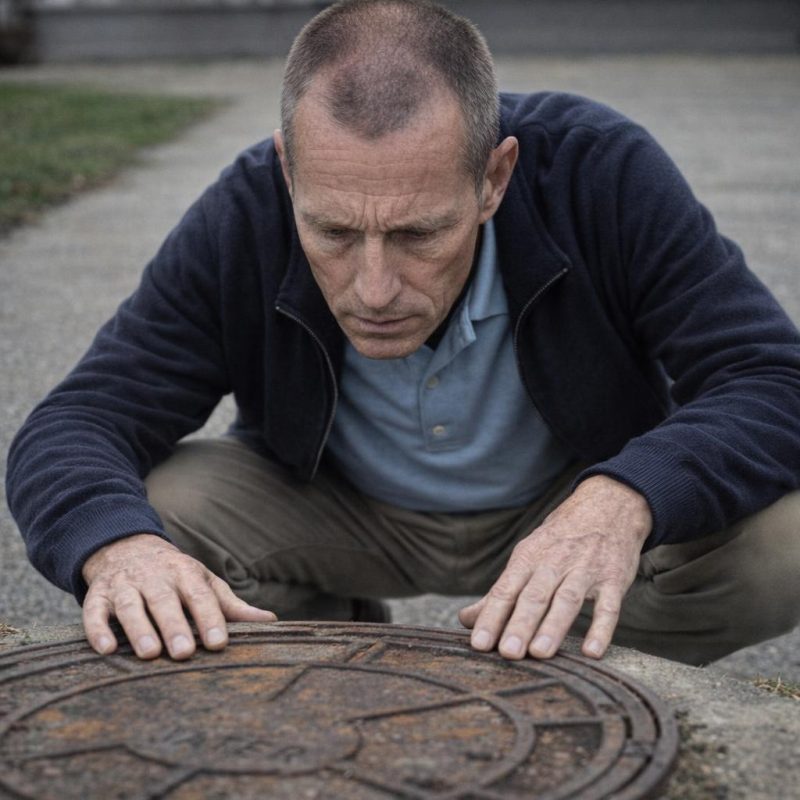 Image by RM AI
Margaret's Invoice
I was coming back from the mailbox the next morning when Margaret called out from her driveway. She was holding an envelope and frowning at it the way people frown at something they've read three times and still don't like. I asked if everything was okay. She said she wasn't sure, and held the envelope out toward me. It was an invoice — Blue Torrent Plumbing, same logo I'd been staring at for days. She said it had arrived yesterday, billing her for emergency sewer line repair while she was visiting her sister two weekends ago. She'd been gone four days. When she got home, she hadn't noticed anything — no tire tracks in the yard, no disturbed soil near the foundation, nothing. She'd assumed it was a mistake and planned to call them that afternoon to dispute it. Her total was $3,200. I stood there for a moment before I told her about mine. I watched her expression shift when I said $4,860. I told her I'd already mailed the check. She shook her head slowly. I told her about the gnome in the photograph, about the utility cover with the undisturbed rust, about the paint pattern that didn't match. She was quiet for a moment, then she said she had a photograph too — included with her invoice, showing work near her foundation. We stood in the driveway, both holding our envelopes, and the number $3,200 sat between us like something neither of us wanted to pick up.
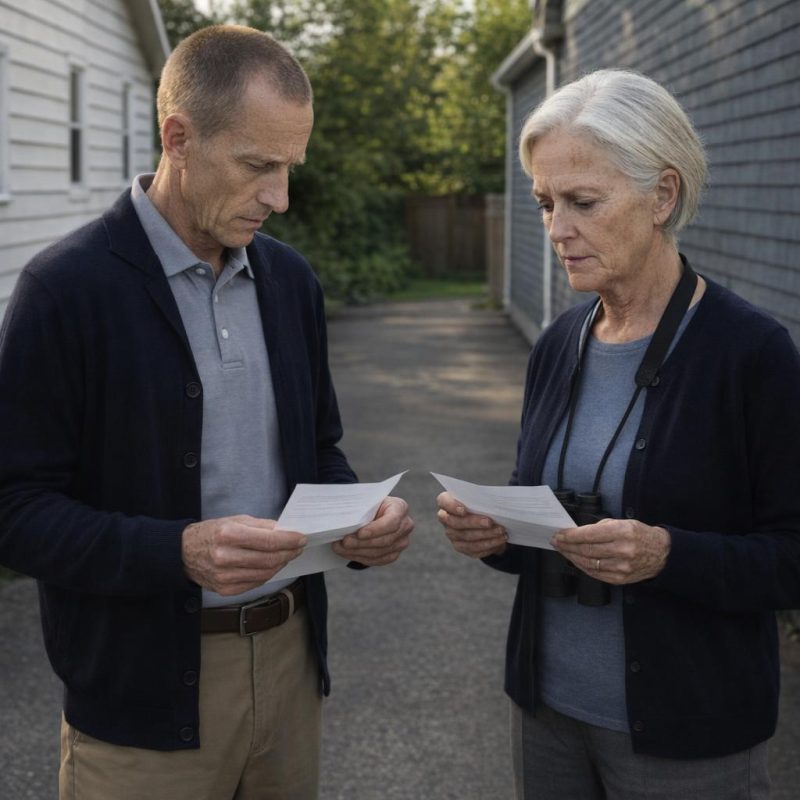 Image by RM AI
The Pattern Emerges
I invited Margaret inside and we spread both invoices across the kitchen table. The formatting was identical — same column layout, same font, same way the permit number was positioned in the upper right corner. The technical language matched almost word for word: 'trenchless lateral rehabilitation,' 'hydrostatic pressure verification,' 'post-repair camera inspection.' I'd assumed that was just industry terminology, but seeing it duplicated line for line across two separate invoices for two separate properties made something tighten in my chest. Margaret's photograph showed her concrete garden statue — a small rabbit she keeps near the back corner of her foundation. In the image, the rabbit was positioned right next to a pipe access point. I asked her where the statue actually sat. She said the far side of the yard, near the fence, nowhere close to the foundation. Then she looked more carefully at the photograph and pointed at the base of the statue. In the image it was gray. She told me hers had always had a terracotta-colored base — she'd painted it herself three summers ago. We looked at each other across the table. I pulled out my gnome photograph and set it next to hers, and we both looked at the two images: two personal items, both in the wrong locations, both with the wrong paint details, both included as proof of work at our homes — and then Margaret turned her photograph over and pointed to the garden statue sitting in the wrong corner of her yard.
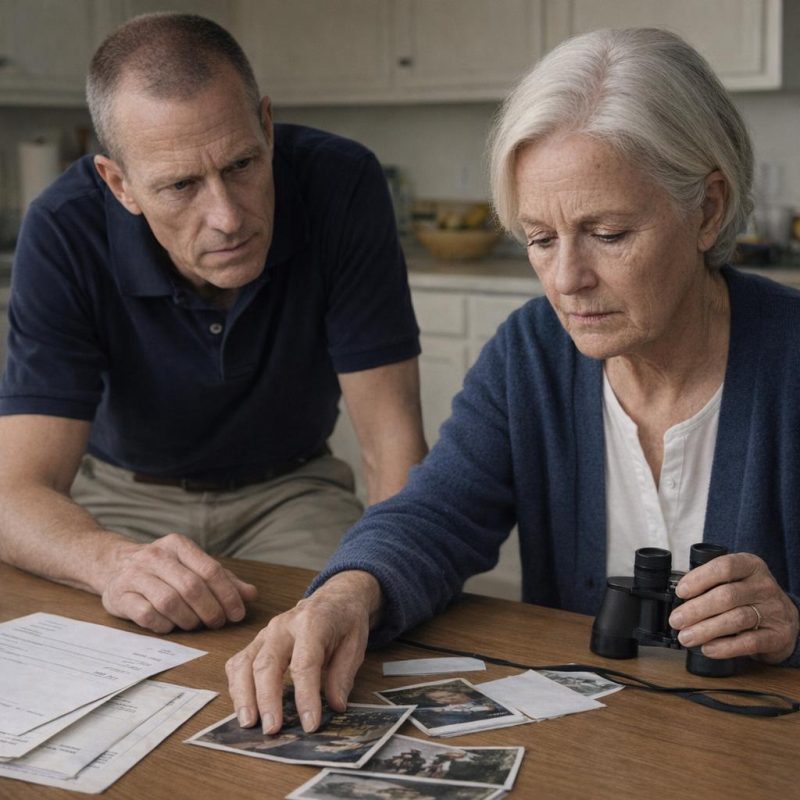 Image by RM AI
The Spreadsheet
After Margaret left I opened my laptop and started a new spreadsheet. I needed everything in one place where I could see it clearly. I labeled the columns: Property, Invoice Amount, Invoice Date, Permit Number, Technician Name, Photo Item, Photo Item Location, Actual Item Location, Paint Discrepancy, Utility Cover Condition. I filled in my row first — $4,860, the date, the permit number from the upper right corner, the technician signature I couldn't fully read, the gnome, the wrong location, the wrong location, white dots and yellow buttons versus solid blue and black, undisturbed rust and packed dirt. Then I filled in Margaret's row — $3,200, her date, her permit number, her technician name, the rabbit statue, wrong location, wrong location, gray base versus terracotta. The permit numbers were different, which I'd half-expected, but the format of them was identical — same number of digits, same hyphen placement. I added a third row and left it blank with a header that just said 'Others?' I created a notes column and started typing questions: Who reported the emergency? Which neighbor supposedly called dispatch? How did they know which properties to target? I saved the file, then copied it to a USB drive, then emailed it to myself. I sat back and looked at the two filled rows and the one empty row beneath them, and the weight of what I'd put into those cells settled over me like something I couldn't quite name yet.
 Image by RM AI
The Blue Torrent Office
The address on the invoice led me to a commercial strip mall about four miles from my house — the kind with a tax preparation office on one end and a sandwich shop on the other. Blue Torrent Plumbing occupied the middle unit. There was a proper sign above the door, the same logo from the invoice, blue lettering on white with a stylized water drop. Through the glass I could see a reception area: padded chairs, a low table with magazines fanned out, a potted plant in the corner that looked recently watered. I stood outside for a moment longer than I needed to, then went in. The receptionist was a young woman who smiled and asked if I had an appointment. I said I didn't, that I had questions about a recent invoice. She picked up the phone and made a brief call, and a minute later a man came down the hallway. He was broad-shouldered, work clothes, the kind of calloused hands that suggested he'd actually done physical labor at some point. He introduced himself as Rick, said he was a senior technician, and asked how he could help. He was polite. The office looked real. The magazines on the table were current issues. The plant was alive. I'd driven over here with a folder full of inconsistencies and a head full of certainty, and standing in that reception area, I felt my certainty go quiet in a way I hadn't expected.
 Image by RM AI
Rick's Explanations
Rick led me to a small conference room off the hallway and pulled up something on a laptop. I asked him to walk me through the emergency call that had supposedly brought his crew to my property. He said dispatch had received a report of a visible depression forming near a residential foundation — a sinkhole indicator — and that a neighbor had phoned it in. I asked which neighbor. He said he'd need to pull the dispatch record and could get that to me within a few days. I asked about the trenchless method and why there was no visible evidence of any work. He explained that trenchless rehabilitation was specifically designed to leave minimal surface disruption, that the whole point was avoiding excavation. His answers came smoothly, one after another, and I kept waiting for one of them to snag on something. I told him I'd examined the utility access cover at the curb and found no sign it had been opened. He said access points varied by property and that his crew may have used a secondary entry. I told him I'd looked at the photograph included with my invoice and noticed the gnome in the image didn't match the one I actually owned — different paint pattern, different button color. I watched his face. Something shifted there — a tightening around the eyes, a half-second where his expression went somewhere else before he pulled it back.
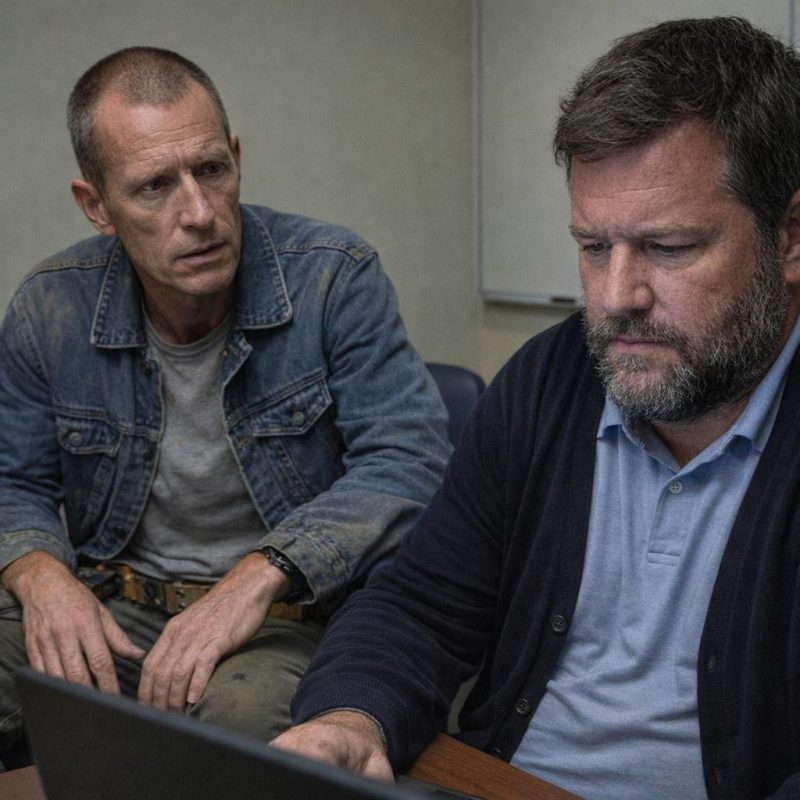 Image by RM AI
Josh's Story
Josh was sitting on my porch steps when I pulled into the driveway. I recognized him from three houses down — young guy, always looked like he hadn't slept enough, usually had a kid on his hip. He stood up when he saw me and said Margaret had told him I was looking into Blue Torrent Plumbing. He said he'd gotten an invoice from them about five weeks ago. I unlocked the front door and we went inside. He said the invoice claimed emergency sewer work had been done while he was at the office — a full workday, no one home. He hadn't seen any workers, hadn't noticed any vehicles, hadn't found any evidence of work when he got home. But the invoice looked official and he'd been slammed with a new baby and a work deadline, so he'd just paid it. He looked embarrassed saying that. I told him not to be — I'd paid mine too. He pulled a folded paper from his jacket pocket and smoothed it on the kitchen table next to my copies. The formatting matched exactly: same columns, same font, same permit number placement. His photograph showed his garden hose coiled near the back fence — except he said the hose was always kept on the side of the house, never near the fence. Then he set down a second piece of paper beside the invoice: a bank receipt, the transaction date printed clearly across the top, showing a payment of $3,800 to Blue Torrent Plumbing.
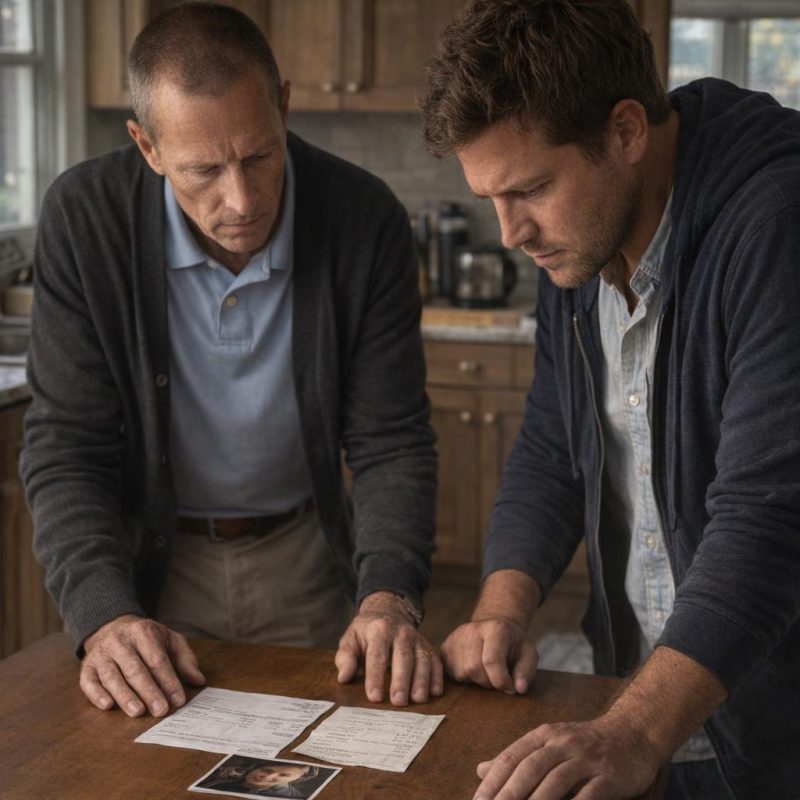 Image by RM AI
The Block Canvas
Margaret was waiting on her front porch when Josh and I came down the block. She had a yellow legal pad tucked under her arm and her reading glasses pushed up on her forehead, and she fell into step with us like she'd been expecting this all morning. She'd already made a list — seven addresses she thought were worth checking, based on conversations she'd had over the back fence in the past few weeks. The first house we knocked on, a couple in their sixties, answered the door holding an unopened Blue Torrent envelope. They hadn't paid yet, but they'd been about to. The second house, a single mother two streets over, had paid $4,100 three weeks ago and looked sick when she saw our invoices matched hers line for line. A retired teacher on Maple showed us an invoice that had arrived just yesterday. A widow near the corner had hers sitting on her kitchen counter and said something about it had felt wrong from the start, though she couldn't say exactly what. By the time we'd covered three blocks, we had five households. Five. Same format, same technical language, same photographs with something just slightly out of place. Margaret was writing everything down in her careful block letters, and Josh had gone quiet in a way that felt heavier than anything he'd said all morning. Then Margaret flipped back a page and read us the amount the elderly couple on Oak Street had paid last week — $5,200.
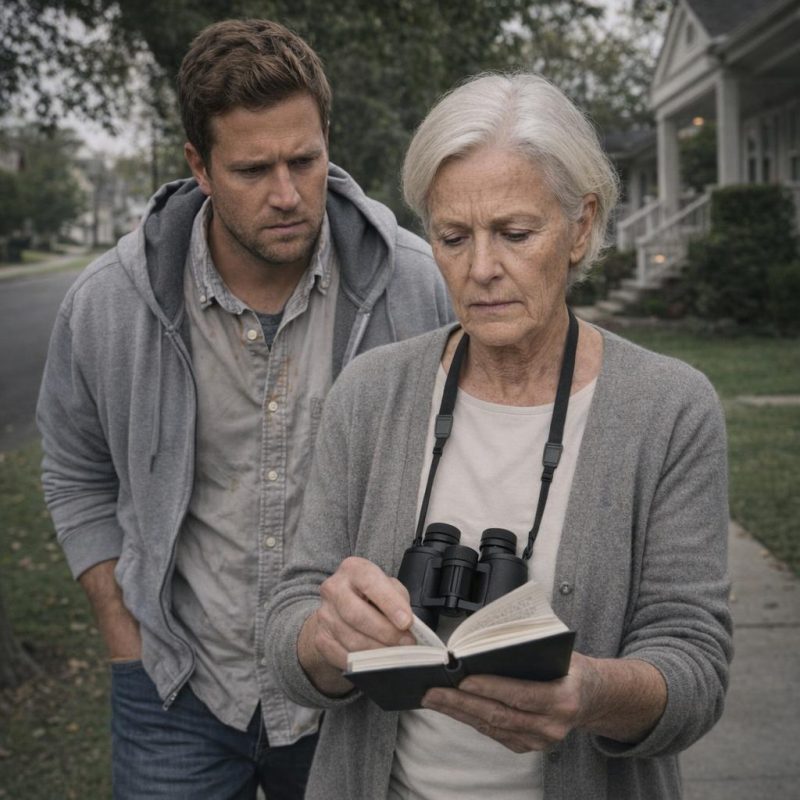 Image by RM AI
The Public Records Request
I drove to city hall the next morning with a folder containing all five permit numbers, one from each invoice. The building permits office was on the second floor, past a row of plastic chairs and a bulletin board covered in zoning notices. I explained to the clerk at the counter — a woman in her fifties with reading glasses on a beaded chain not unlike mine — that I needed to verify whether these permit numbers corresponded to any work actually authorized in the city. She took my list and typed each number into her terminal, one at a time, her expression staying professionally neutral throughout. After the fifth one, she said she'd need to pull physical files to be thorough, and that I should fill out a formal public records request. I asked how long that would take. Three business days, she said, and slid a form across the counter. I filled it out carefully, printed my name and contact information in the designated fields, and handed it back. She stapled it to my permit list without ceremony and told me I'd receive an email when the records were ready. I thanked her and walked back to my car. Three days felt like a long time. But I had the folder, I had the form number she'd written at the top, and for the first time in weeks I felt like I was building something solid rather than just worrying in circles. I drove home and waited.
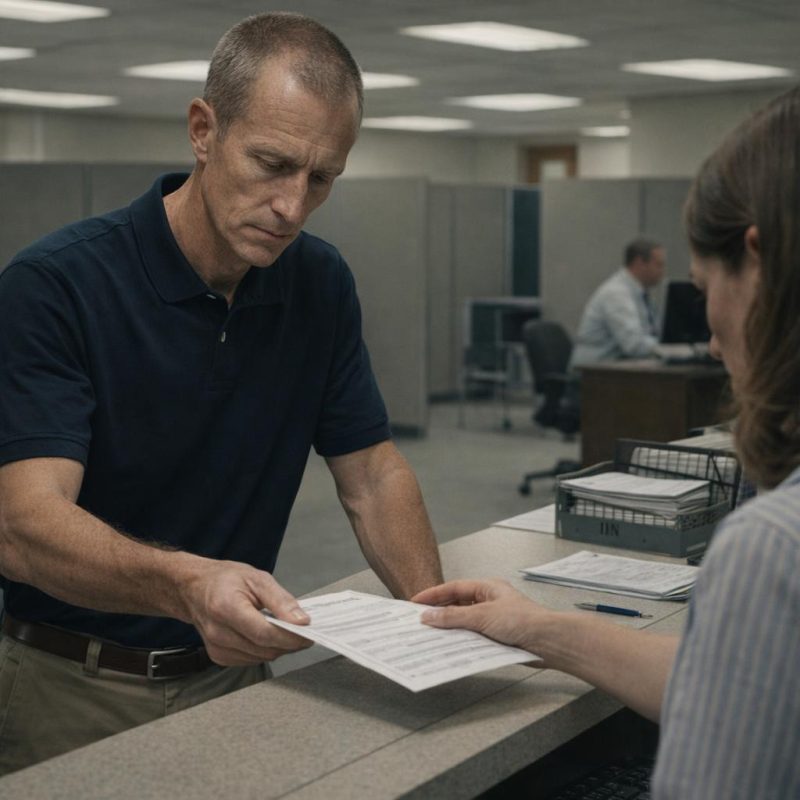 Image by RM AI
The Permit Numbers
The email arrived on the third morning, just after seven. I opened it at the kitchen table with my coffee still steaming beside me. It was a scanned document — two pages — with a cover note from the clerk. I read the note first. She had searched the city's permit database for all five numbers I'd submitted. None of them appeared in the system. Not a single one. The city had no record of Blue Torrent Plumbing pulling permits at any address in the past year, or the year before that. I read that sentence twice. Then I scrolled to the second page, where she had added a handwritten annotation at the bottom of the search results. The permit format used on the invoices — the prefix, the hyphenation, the numbering sequence — had been retired five years ago when the city updated its permitting system. No permit issued in the past five years would carry that format.
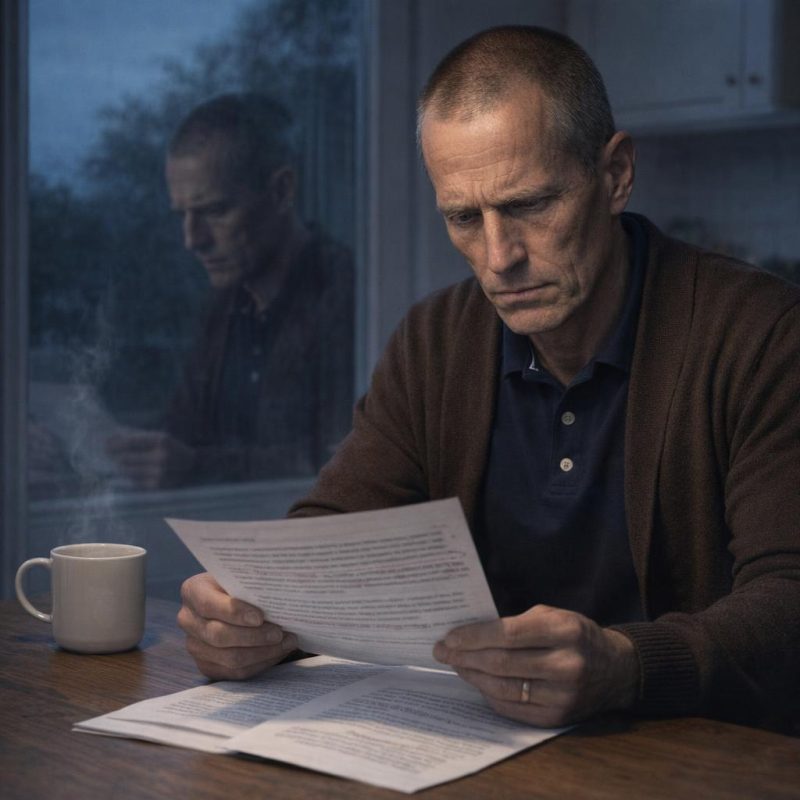 Image by RM AI
The Hard Truth
I sat at the kitchen table for a long time after I printed the email. The evidence folder was open in front of me — the invoice, the city's response, the photographs, the notes from our canvass — and I just looked at it. No work had been done at my house. I'd known that intellectually for days, but sitting there with the printed confirmation in my hand, it landed differently. Someone had sent me a professional-looking document, included a photograph of my own property with my own ceramic gnome sitting in the wrong spot, and I had written a check for $4,860 and mailed it without a second thought. I thought about the single mother two streets over. The retired teacher. The elderly couple on Oak Street. I added the numbers in my head — somewhere north of $22,000 across five households, and that was only the ones we'd found so far. The gnome was still sitting on the porch railing where I'd moved it back to after all this started. I'd barely looked at it since. I thought about how relieved I'd felt when I first got that invoice — relieved that the problem had been caught, that someone had handled it, that my house was safe. That relief had been the whole point, I thought. And then I stopped myself, because I couldn't actually know that. What I knew was the check had been mailed, the work had never happened, and the hollow feeling of having sent that money somewhere it would never come back from settled into my chest and stayed there.
 Image by RM AI
The Neighborhood Meeting
I set up the dining room table with folding chairs borrowed from the garage and made two pots of coffee. Margaret arrived first, twenty minutes early, with her legal pad and a manila folder of her own. Josh came next with the young family — a husband and wife, their toddler asleep in a carrier on his chest — who had paid the $5,200 invoice without questioning it because they'd assumed the other parent had authorized the work. The retired teacher came alone, invoice in hand, still unpaid. The widow from the corner brought hers in a plastic sleeve, which made me feel a kind of kinship with her I hadn't expected. We spread everything across the table. Seven invoices in total — some households had received two. The photographs went up in a row along the edge of the table, and even just lined up like that, the pattern was visible. Same framing. Same lighting. Personal items in the wrong places at every single property. I walked them through the city's response — the permit numbers that didn't exist, the outdated format — and the room went very quiet. We agreed to file a collective police report. I said I'd be the primary contact with the authorities and keep everyone updated. Margaret suggested we document everything with an eye toward a potential civil case as well. Nobody argued. By the time people started gathering their folders to leave, the coffee was cold and the table was covered in paper, and the quiet in the room felt less like defeat than like something that had been decided.
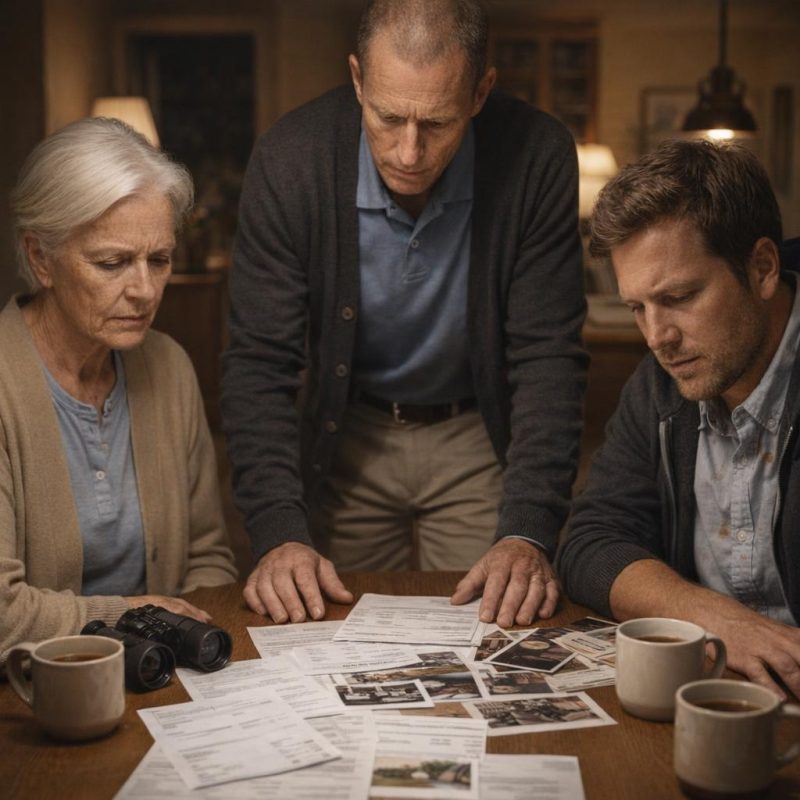 Image by RM AI
The Evidence Photos
After everyone left I cleared the table down to just the photographs — all seven of them, plus my original — and laid them out in a grid. I got my camera and photographed each invoice individually under the kitchen light, then turned back to the evidence photos. I'd been looking at them for weeks, but I'd always been looking at my own. Seeing them side by side was different. I started with the lighting angles and worked my way through the framing, making notes on a legal pad. The mud patterns near the foundation lines looked similar across three of the photos, though I couldn't be certain — mud is mud. The positioning of the equipment in the background followed a consistent logic that I kept circling back to without being able to articulate exactly why it bothered me. Then I got to the boots. In my photo, in the lower left corner, there was a partial shot of a work boot — I'd noticed it before but dismissed it as incidental. I found the same boot in the photo from the young family's house. Same scuff mark on the left toe, same worn tread pattern along the outer edge. I pulled the third photo — the one from the widow's property — and set it beside the other two. The identical work boot appeared in all three, same scuff, same angle of wear, unmistakably the same.
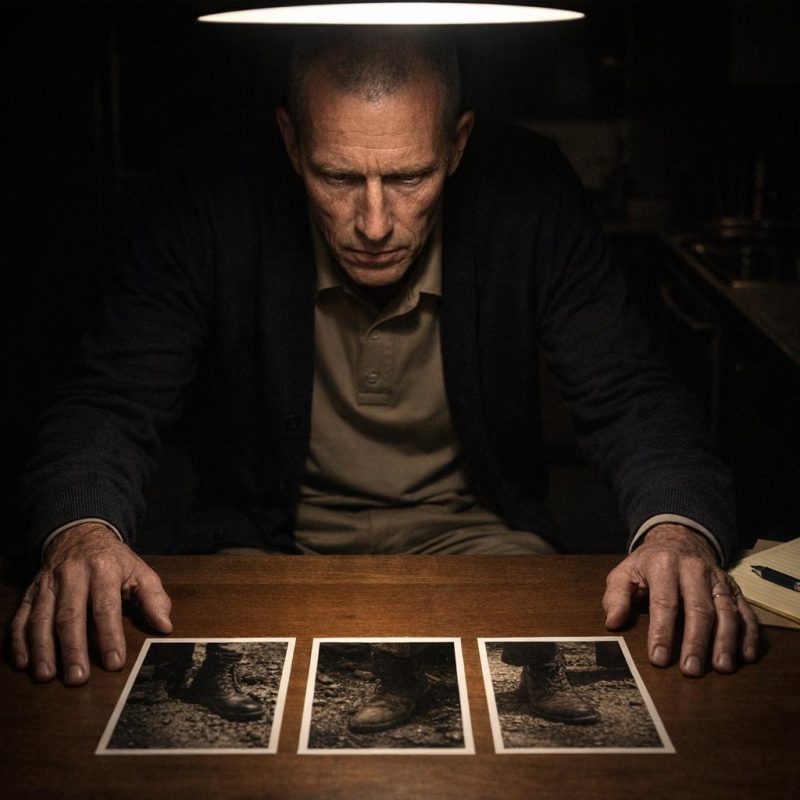 Image by RM AI
The Photo Analysis
I stayed at the table well past midnight going through the photographs again, this time looking at what was in each frame beyond the boots. Every single photo included something personal to the property — something specific enough to be convincing, but not so specific that it couldn't have been observed from the street or a public sidewalk. My ceramic gnome was visible from the road. Margaret had mentioned her garden statue sat near the front gate. Josh's garden hose, even coiled near the wrong fence, was the kind of detail you'd notice walking past. The house features were right too — the correct window trim, the right foundation color, the actual slope of each yard. Whoever had put these photos together had spent time looking at each property before any invoice was sent. I wrote that down and underlined it. The items in the wrong locations, the correct architectural details — it all pointed to someone who had done their homework on each address individually. I thought about how many times I'd walked to my mailbox or worked in the front yard without paying attention to who might be passing by. I thought about the other neighbors, going about their mornings the same way. I added a note to the evidence folder: properties surveilled prior to contact. I didn't know how many addresses had been looked at before the invoices went out. I only knew ours hadn't been chosen at random, and that thought sat with me in a way I couldn't quite set down.
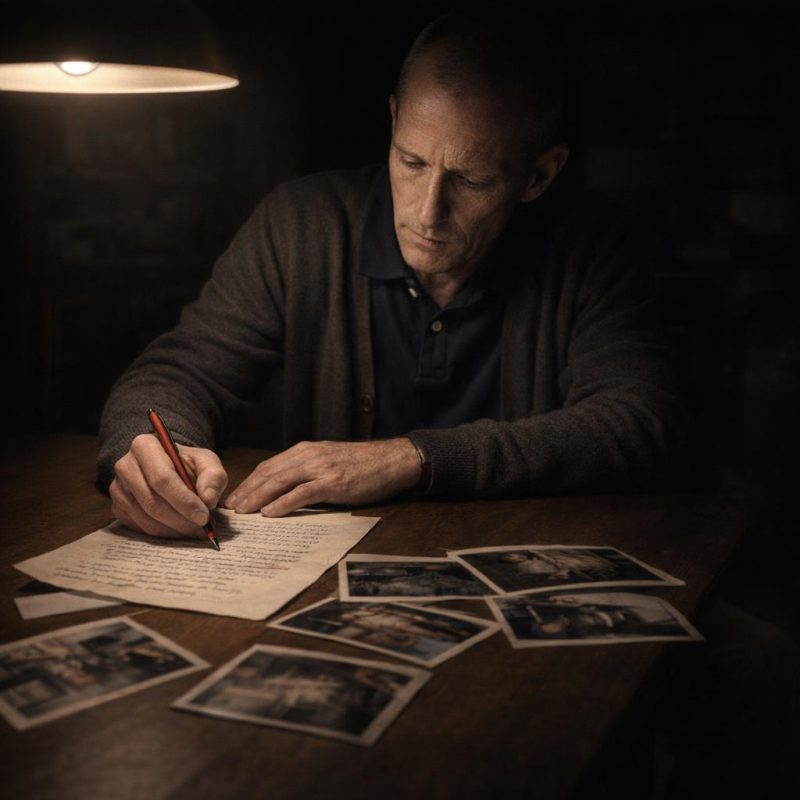 Image by RM AI
The Police Report
I drove to the police station on a Tuesday morning with the evidence folder on the passenger seat and a second copy in a manila envelope in my bag. The desk officer was a younger guy, maybe early thirties, who listened to my opening explanation with the particular patience of someone who has heard a lot of things that turned out to be nothing. I laid it out as clearly as I could: the invoice, the photograph, the city's confirmation that the permit numbers didn't exist and the format itself was five years out of date, the six other households, the repeated work boot across three separate property photos. He asked if I had paid the invoice. I said yes, before I'd discovered any of this. He nodded slowly and said that depending on the circumstances, something like this might be handled as a civil matter rather than a criminal one. I told him about the permit fraud, the fabricated documentation, the pattern across multiple addresses. I slid the city clerk's email across the counter. He looked at it for a moment, then looked at the photographs I'd arranged showing the repeated boot. He took my contact information and made copies of everything I'd brought. He said a detective would review the materials and reach out if follow-up was needed. I thanked him and picked up my folder. As I turned toward the door, I glanced back. He was looking at the photograph comparison, brow drawn down, mouth flat — skeptical, and not trying to hide it.
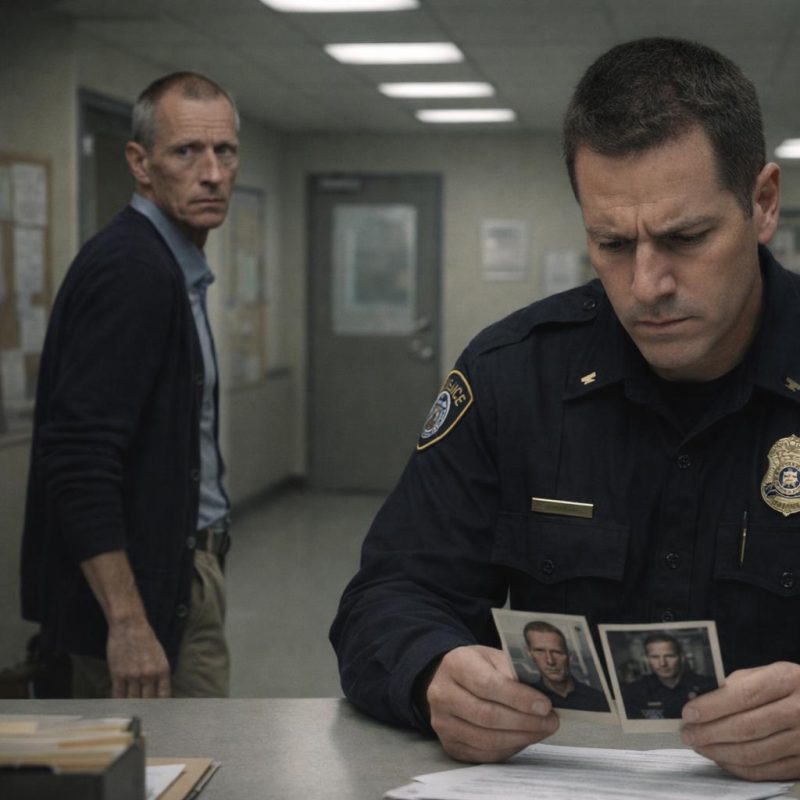 Image by RM AI
The Civil Matter
The call came two days after I'd filed the report. A man identified himself as being from the department's administrative review office — not the detective division, not fraud, just administrative review — and he explained, in a tone that was professionally apologetic, that cases like mine often fell into a gray area between criminal and civil jurisdiction. He said Blue Torrent could argue the charges reflected a legitimate billing dispute rather than deliberate fraud, and that without clearer evidence of criminal intent, the department's resources were better directed elsewhere. He mentioned the consumer protection bureau. He mentioned the Better Business Bureau. He said civil court was designed for exactly this kind of situation. I told him about the fabricated permit numbers, the format that was five years out of date, the same work boot appearing across three separate property photos. He said he understood my frustration and that the case file would remain open if new evidence emerged. I thanked him and set the phone down on the kitchen counter. Outside, a neighbor's sprinkler was running in slow arcs across the lawn, and the sound of it filled the kitchen for a long time after the call ended — ordinary and indifferent to everything I'd just been told.
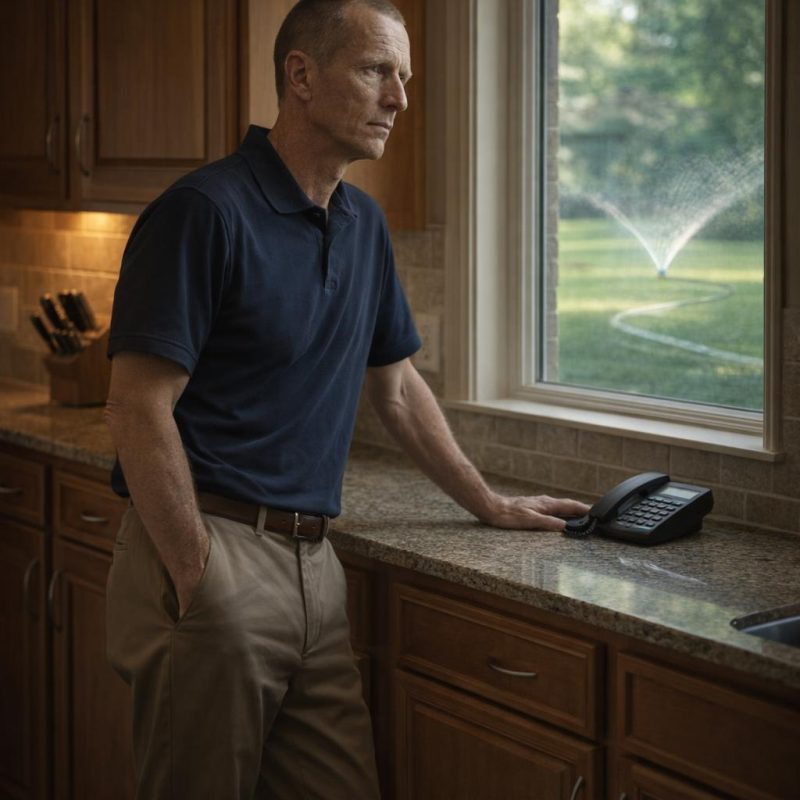 Image by RM AI
The Dismissal
I spent the afternoon at the kitchen table with a legal pad, a pen, and my phone, working through every agency I could find. The state consumer protection bureau intake specialist was polite and thorough. She said they could open an investigation file. She also said the review process typically took six to eight months. The Better Business Bureau representative was sympathetic and explained they could post my complaint publicly, but they had no enforcement authority — none at all. I left a detailed voicemail with the state attorney general's consumer fraud division, reading from my notes so I wouldn't miss anything. Nobody called back. By mid-afternoon I was on my third agency, and the representative there suggested, gently, that given the complexity of the documentation I was describing, I might want to consult a private attorney. I did the math in my head while she was still talking. Even a modest retainer would exceed what I'd lost to Blue Torrent in the first place. I thanked her and ended the call. The legal pad in front of me was covered in notes that led nowhere, and the hollow feeling that settled in my chest after I set the phone down didn't lift.
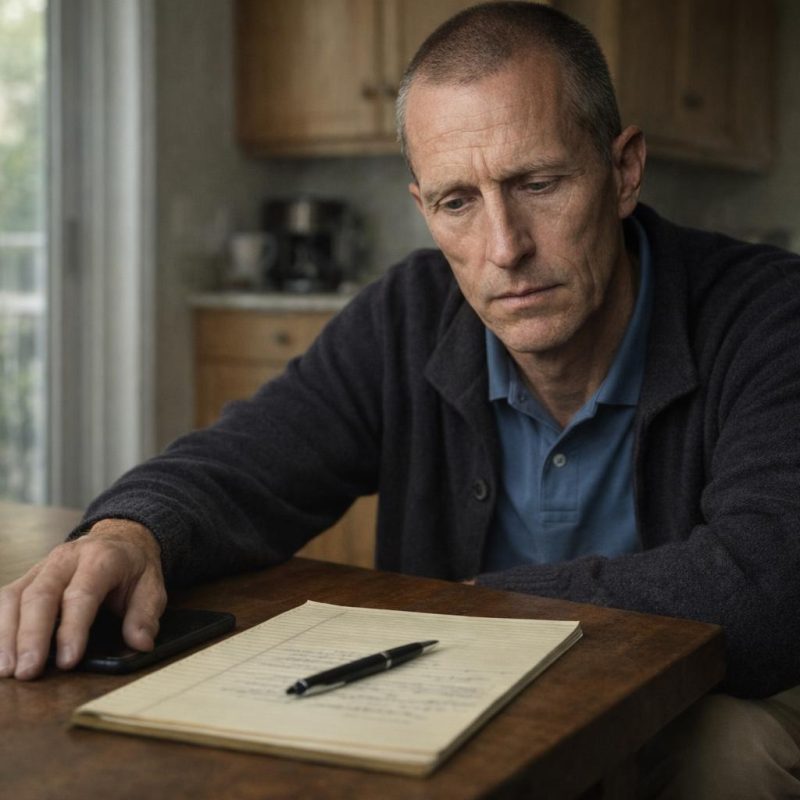 Image by RM AI
Detective Brennan
I wasn't expecting anyone to call back. I'd filed the report, made the agency calls, left the voicemails, and was starting to accept that this was going to be a long, slow process with no guarantees. So when my phone rang the following morning and the woman on the other end introduced herself as Detective Brennan from the fraud division, I had to ask her to repeat herself. She said she'd reviewed the case file the desk officer had submitted and that something in the documentation had caught her attention. She asked me to walk her through the photograph analysis — specifically the repeated staging element I'd noted across multiple properties. I described the work boot, the angle, the three separate addresses. She was quiet for a moment, then asked how many households I'd identified with similar invoices. I said six, possibly more. She asked if I had a spreadsheet. I said yes, cross-referenced by date, invoice amount, and permit number format. Another pause. She said the pattern I was describing was consistent with what her division looked for in organized operations, and that she'd like to sit down and go through everything in detail. She asked if I could come into the station the following morning and bring every invoice, photograph, and piece of documentation I had.
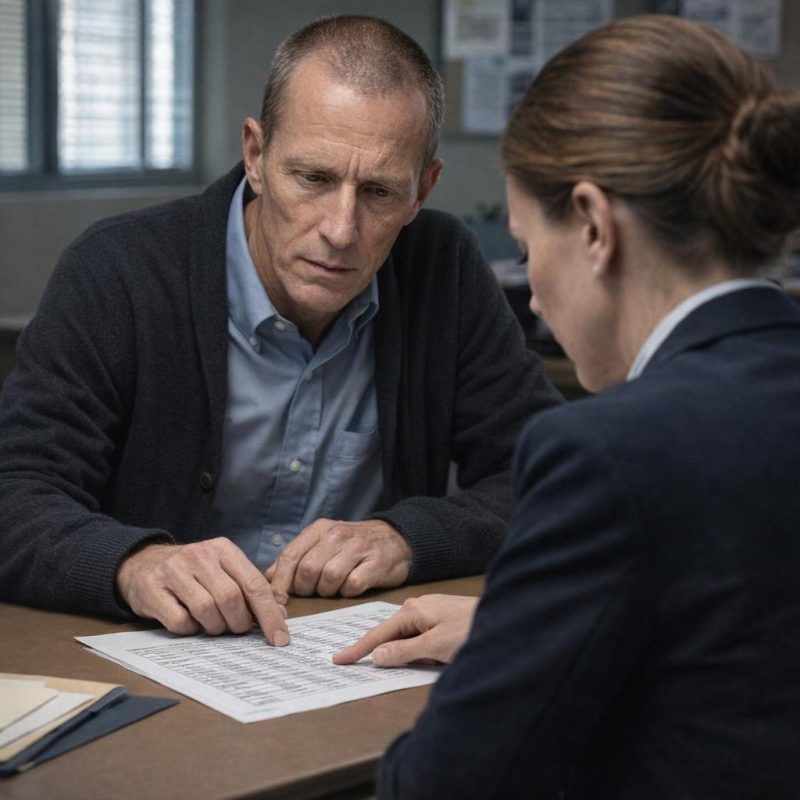 Image by RM AI
Victor's Call
The call came that same evening, from a number I didn't recognize. The man on the other end introduced himself as Victor Strand, owner of Blue Torrent Plumbing. His voice was smooth and unhurried, the kind of voice that's used to being listened to. He said he'd heard I had some concerns about an invoice and that he wanted to personally make sure any misunderstanding was resolved. I asked him directly about the permit numbers on my invoice — the ones the city clerk had confirmed didn't exist. He said there may have been an administrative error in the documentation, that his office handled a high volume of emergency calls and paperwork sometimes got processed incorrectly. I told him I wasn't the only one. I said I'd identified five other households with similar invoices and similar permit irregularities. The warmth in his voice pulled back, just slightly. He said he hoped I wasn't causing unnecessary alarm among my neighbors over what might be a clerical issue. He mentioned that disputes like this had a way of becoming expensive and time-consuming for everyone involved. I told him I had a meeting with a detective in the morning. There was a pause — long enough to notice. Then his voice came back, flatter than before, and he said I should think carefully about what I was hoping to accomplish.
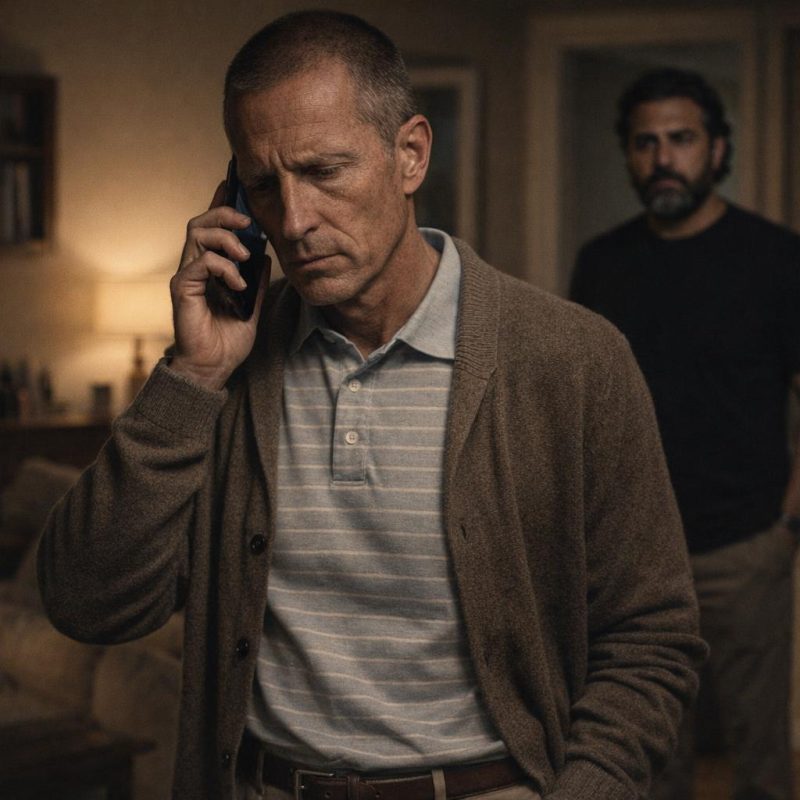 Image by RM AI
The Refusal
I called Margaret the moment I hung up. I told her about Victor's call, the smooth opener, the pivot when I mentioned the other households, the comment about things becoming expensive. She listened without interrupting, which wasn't like her. When I finished, she said, quietly, that she needed to tell me something. I called Josh next and walked him through both conversations. He hadn't heard from Victor yet, but his voice tightened as I talked. I told them both about the detective meeting in the morning and said Margaret was welcome to come with her documentation. Josh said he'd pull together everything he had and send it with us. We stayed on the call for a few minutes after the practical details were settled, and I could feel the group steadying itself — the way people do when they've decided something together. I told them the intimidation was a sign we were asking the right questions. I believed it when I said it. Then Margaret said, almost as an afterthought, that Victor had called her the day before — and that he'd offered her a full refund if she stopped discussing the invoices with her neighbors.
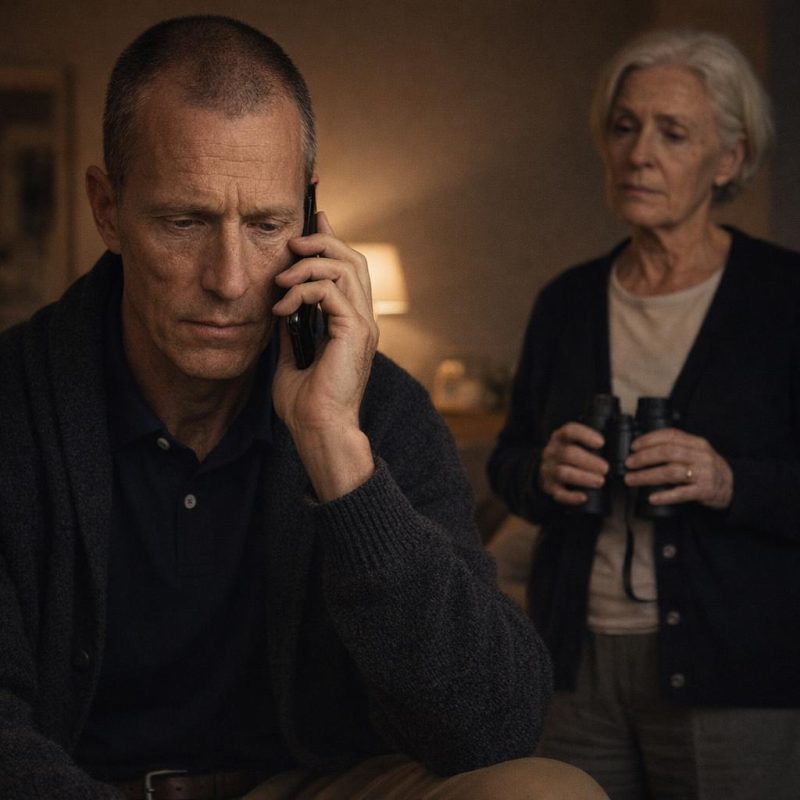 Image by RM AI
The Sudden Silence
Margaret and I walked the neighborhood the morning before the detective meeting, knocking on doors we'd already knocked on before. We weren't looking for new victims this time — we were checking for new invoices. The pattern over the previous three weeks had been consistent: two, sometimes three Blue Torrent envelopes appearing in the neighborhood per week. In the three days since I'd filed the police report, there had been zero. Every neighbor we spoke to said the same thing — nothing in the mail, nothing on the door. Margaret pointed it out before I did. She said the timing was hard to ignore. I agreed, but I wasn't sure whether to feel relieved or more unsettled. On the way back, I drove past the Blue Torrent office on Meridian. The lights were on and the door was unlocked — I could see that much from the parking lot — but there were only two vehicles where there had previously been five or six. I sat in the car for a moment, watching the front entrance. The operation hadn't disappeared. But something had shifted, and the quiet that had settled over the neighborhood in the past three days felt less like a pause and more like a held breath.
 Image by RM AI
The Slashed Tire
I went out to the car at seven-fifteen, folder under my arm, ready for the detective meeting. The driver's side tire was flat — not slowly losing air, but completely down to the rim. I crouched and ran my hand along the sidewall and found the cut almost immediately, a clean straight line that didn't happen by accident. Then I saw the note under the windshield wiper, folded once. Block letters, pressed hard into the paper, the kind of handwriting that comes from someone gripping the pen too tight: STOP ASKING QUESTIONS OR YOU'LL REGRET IT. I photographed the tire from three angles and the note front and back before I touched anything else. I called the non-emergency line and an officer came out, took the report, photographed everything himself, and told me honestly that without witnesses or camera footage, there wasn't much to go on. I called Detective Brennan next and she told me to document everything and get to the station as soon as I could arrange a ride — that this kind of escalation was actually useful information for her. I called a neighbor for the ride and stood on the driveway waiting, the folder still under my arm. The note was in an evidence bag by then, but I could still see those block letters clearly in my head, pressed so hard into the paper that the words had left grooves on the back side.
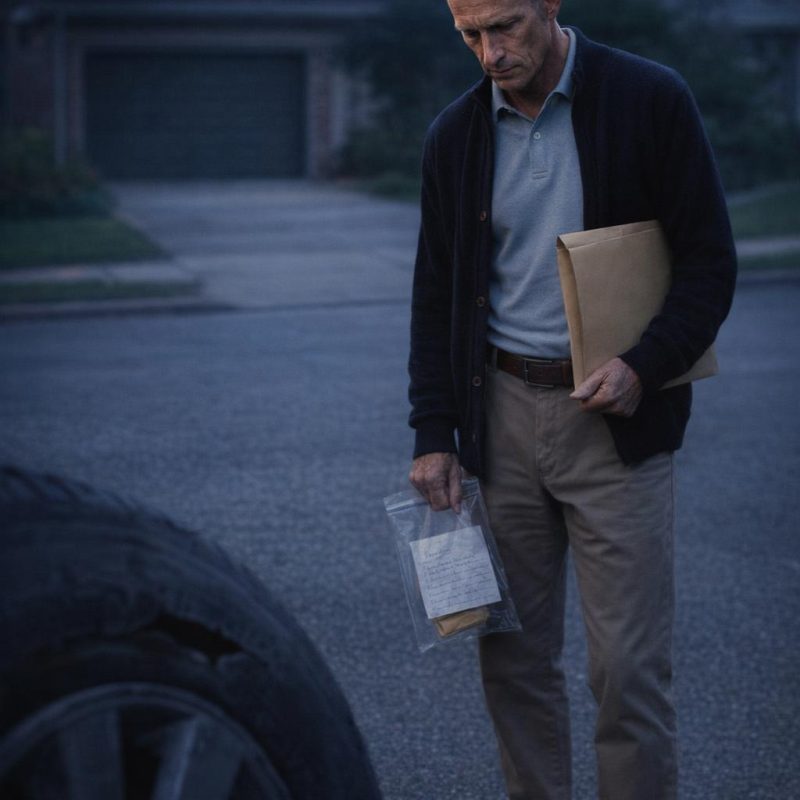 Image by RM AI
Emma's Plea
Emma showed up forty minutes after I called her, which meant she'd driven faster than she should have. She stood at the end of the driveway looking at the tire, then at the evidence bag with the note inside, and I watched her face go through several things in quick succession. She didn't say anything for a moment. Then she turned to me and said she needed me to stop. Not slow down, not be careful — stop. She said no amount of money was worth what was happening, that she'd rather I lose the $4,860 and every dollar after it than have something happen to me. I told her I understood why she felt that way and that I was being careful. She said careful wasn't the point. She said the people doing this had already come to my house, in the dark, while I was sleeping, and that the next thing they did might not be a tire. I didn't have a good answer for that. She started crying then, and she said she'd given me that ceramic gnome because she wanted me to enjoy the garden, not because she wanted me chasing criminals across the neighborhood. I held her for a while on the driveway. I told her I loved her and that I had to see this through. She pulled back, wiped her face, and looked at me — and then she got in her car and left without another word.
 Image by RM AI
Rick at the Door
I heard the knock at seven forty-five in the morning, which was already wrong. Nobody knocks at seven forty-five unless they're trying to catch you off guard. I opened the door and Rick was standing on my porch — work clothes, that same hard expression, a manila folder held flat against his side. He said he was there to offer me a chance to resolve things before they got complicated. He said it the way someone says it when they already know what complicated looks like. I told him I wasn't interested. He said Victor wanted me to have the documentation, that there were some corrections that would clear everything up, and he held the folder out toward me. I kept my hands at my sides. He mentioned, almost as an aside, that investigations had a way of pulling in people who didn't expect to be pulled in — neighbors, bystanders. He said it quietly, like he was doing me a favor. I told him to get off my property. He didn't argue. He just set the folder on the porch railing, took one step back, and said Victor hoped I'd reconsider. Then he walked to his truck and sat there for four minutes before he drove away. I stood at the window watching the empty street long after the truck was gone, and the folder sat on the railing where he'd left it, untouched in the morning air.
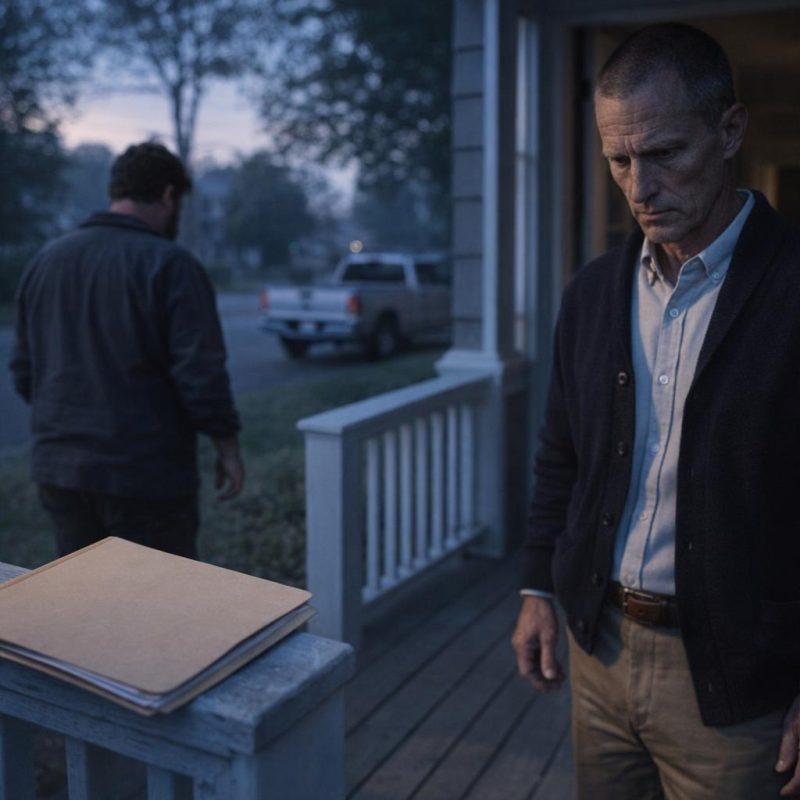 Image by RM AI
The Expert's Name
After Rick's truck disappeared, I sat at the kitchen table and stared at the Blue Torrent photograph for a long time. I'd been staring at it for weeks, but something about that morning made me feel like pattern-spotting wasn't going to be enough anymore. I needed something I could hand to Detective Brennan that she couldn't argue with. I remembered a colleague mentioning a digital forensics consultant at a conference two years back — someone who authenticated photographs for legal cases. I dug through the old business cards I kept in the desk drawer, the ones I'd never thrown away because I always thought I might need them someday. It took me ten minutes of sorting, but I found it: a card from a forensics consultant whose specialty was listed as image authentication and metadata analysis. I called the number and explained the situation as clearly as I could. He said he could see me that afternoon. I gathered every photograph, every invoice copy, and the spreadsheet I'd built over the past several weeks, and I put them in the evidence folder I'd been keeping in the filing cabinet. I had the detective meeting later that day. If I went to the consultant first, I might walk into that meeting with something real. I locked the front door, picked up the folder, and drove toward his office across town, the folder on the passenger seat beside me, the consultant's card tucked into my wallet where I'd know exactly where it was.
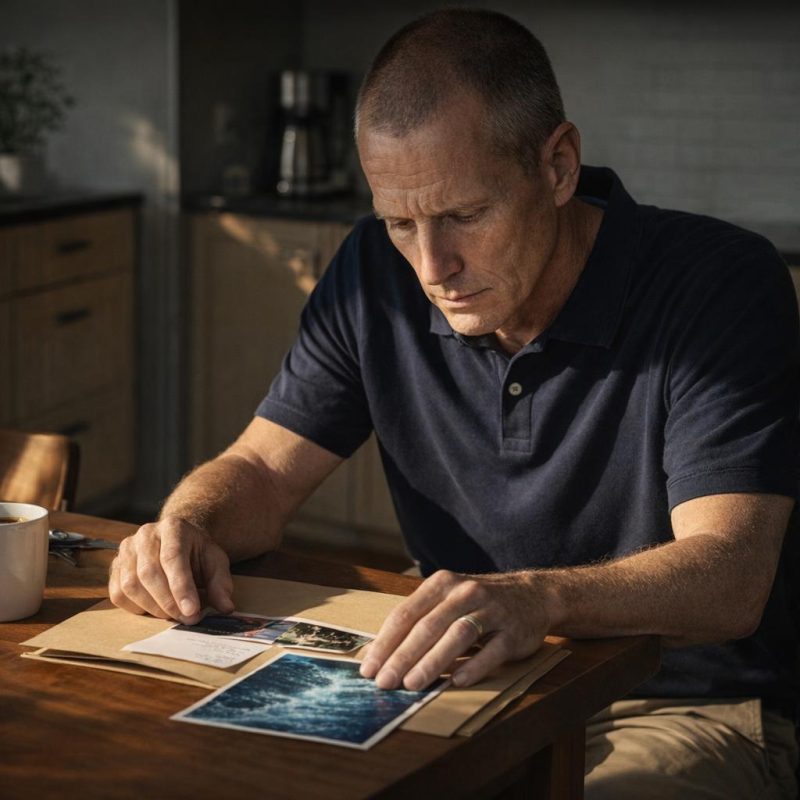 Image by RM AI
The Consultant's Office
The consultant's office was on the fourth floor of a professional building downtown — the kind of place with frosted glass doors and framed certifications on every wall. He reviewed my explanation without interrupting, which I appreciated. Then I laid out all five photographs on his desk and walked him through what I'd noticed: the repeated boot, the identical trench angle, the gnome. He listened, nodded, and didn't tell me I was imagining things. He placed the Blue Torrent photograph under a high-resolution scanner first and pulled it up on a monitor that took up most of one wall. He opened a piece of software I didn't recognize and started working through the image in sections. He pointed to the area around the basement window well and said the shadows weren't behaving the way they should. He said the light source on the gnome appeared to come from a different angle than the light source on the surrounding soil. He said he'd need several hours to check the metadata and look for what he called layer artifacts, but that what he was seeing warranted a full examination. I agreed to leave the photographs with him. He said he'd have preliminary findings by end of day. I thanked him, picked up my evidence folder, and walked back to my car. As I pulled out of the parking garage and headed toward the police station, his words stayed with me: the lighting angles looked inconsistent.
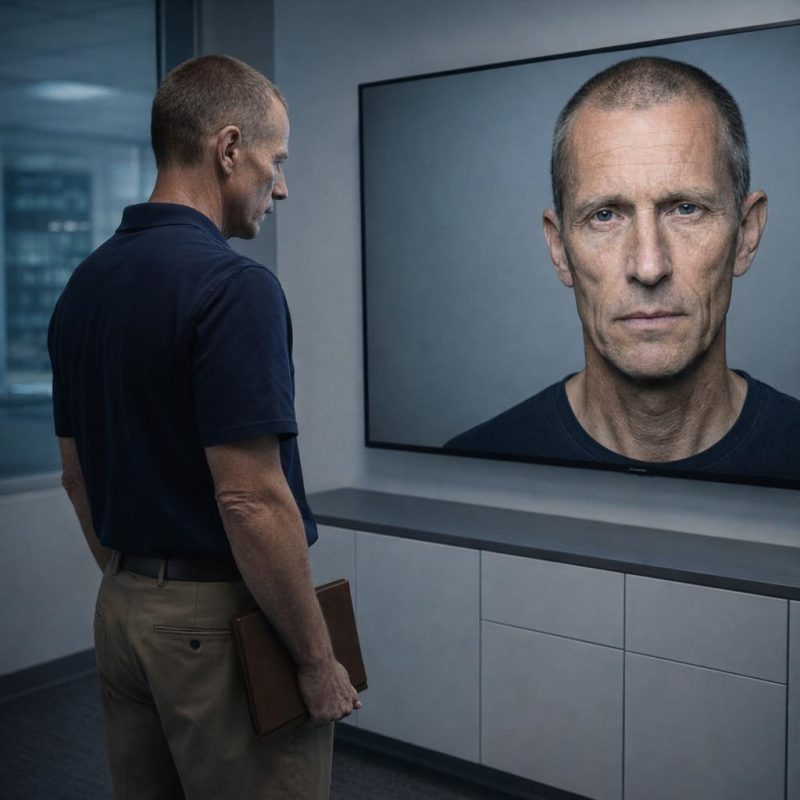 Image by RM AI
The Analysis Begins
Detective Brennan was already in the interview room when I arrived, and Margaret was there too, sitting straight-backed with her own folder on the table in front of her. I spread out everything I had: the spreadsheet with all five invoices, the city's written confirmation that the permit numbers didn't exist, the photographs with the repeated staging elements circled in red marker. I walked Detective Brennan through each piece in order. She didn't rush me. She asked about the timeline between each invoice, how I'd obtained the permit verification, and whether any of the victims had been contacted by the company after they'd raised questions. Margaret added her own account without being asked, steady and precise. Detective Brennan examined the photograph of my property for a long time without speaking. When I mentioned I'd left the photographs with a forensics consultant that morning, she looked up. She asked for his contact information, picked up her phone, and called him directly while we were still sitting there. I heard her identify herself, explain the case in two sentences, and ask him to prioritize the analysis for an active investigation. He agreed. She set the phone down and told me she was opening a formal fraud investigation, but that she wanted the forensics results before the next steps. She asked us to come back tomorrow. Detective Brennan's call to the consultant — her voice flat and official on the other end of the line — was the first moment the whole thing felt like it had moved out of my hands and into something larger.
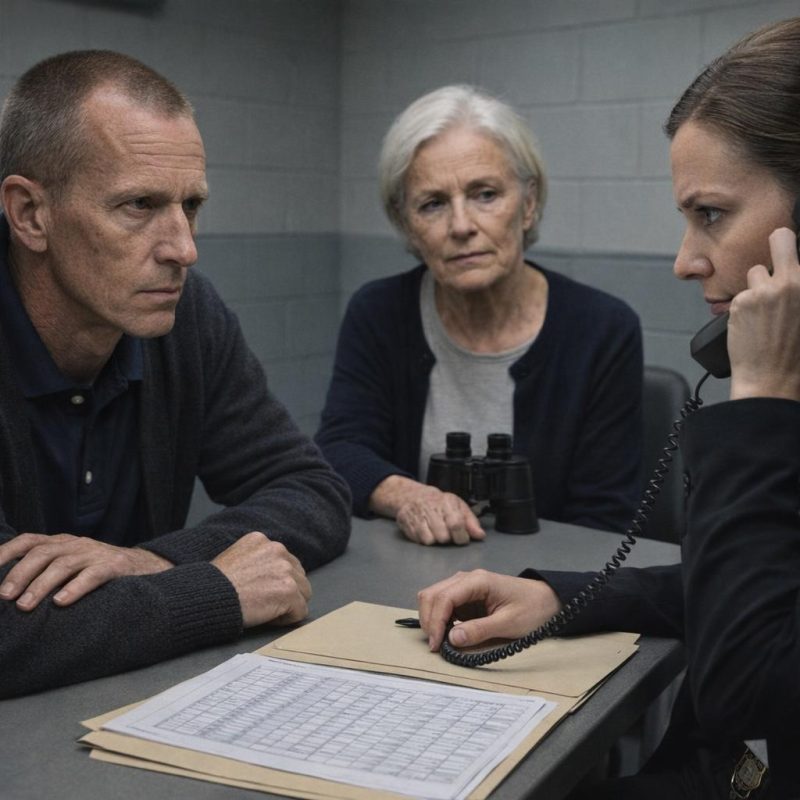 Image by RM AI
The Fabricated Truth
The consultant called at four fifty-eight in the afternoon. I was sitting at the kitchen table with a cup of coffee I hadn't touched. He said he'd completed the full analysis and asked if I was somewhere I could talk. I said yes. He told me the photograph was a composite — multiple images layered together using editing software, with distinct digital artifacts at every seam. The metadata showed the file had been created two days before the invoice date, not on the day of any alleged work. He said the ceramic gnome had been inserted from a separate source image entirely, and that he'd traced it: it matched a photo posted publicly on a social media profile connected to my address. He said the work boots and the trench were pulled from what appeared to be stock image sources. He said there was no evidence of actual excavation in any layer of the original file — not a single pixel of disturbed earth that hadn't been placed there digitally. I sat very still while he talked. He kept going, walking me through each layer, each artifact, each timestamp. I wrote down every word. When he finished, he said he'd send the full written report within the hour, and that it would hold up in court. I thanked him and set the phone down on the table. I picked up the report when it arrived and read to the last page, where his conclusion stated plainly that no excavation work appeared anywhere in the original photograph.
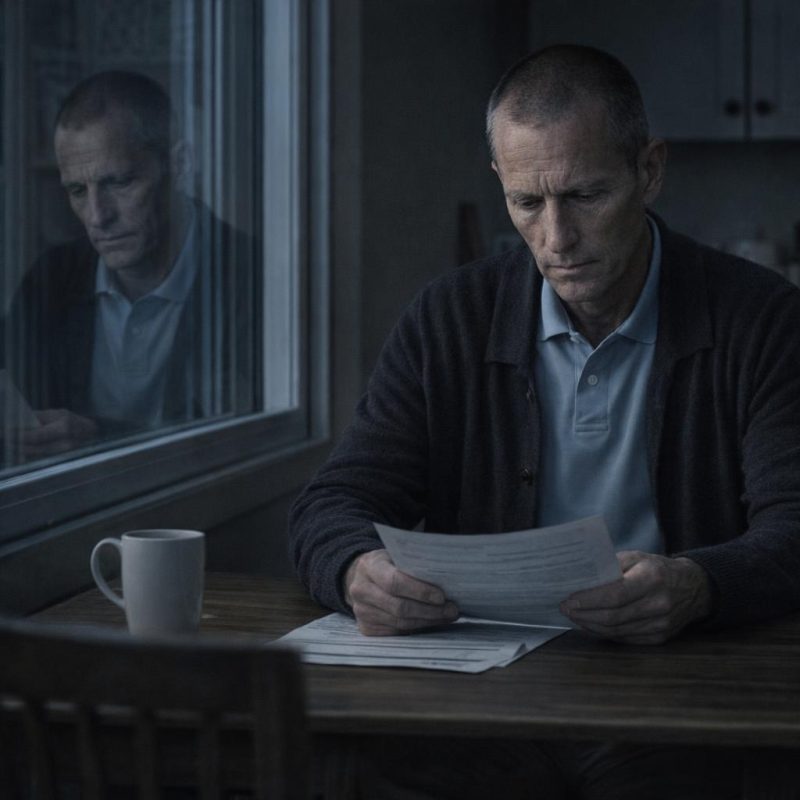 Image by RM AI
The Social Media Trail
I opened my Facebook profile that evening with the consultant's report sitting open beside my laptop. I found Emma's birthday post in under a minute — the one where she'd photographed the ceramic gnome on my kitchen counter before I'd even put it in the garden. The post was public. The gnome's paint pattern was perfectly visible: the red hat, the chipped blue base, the small crack along the left side that made it look like it was smiling slightly. I sat there looking at it for a long time. Then I pulled up Google Street View and typed in my address. The image that loaded showed my house from the street at an angle I recognized immediately — the same angle as the basement window well in the Blue Torrent photograph. The framing was nearly identical. Someone had used that image as a foundation and built everything else on top of it. I checked Margaret's profile next, then Josh's. Margaret had a garden statue visible in the background of a post from two summers ago. Josh had a garden hose coiled near his back fence in a family photo, the same hose that appeared in the invoice photograph for his property. Each profile was public. Each one had exactly the kind of detail you'd need if you were building a fake photograph from scratch. I kept clicking through the Street View images, neighborhood by neighborhood, and then I found it: the exact Google Street View frame that matched the foundation angle of my fabricated photograph, down to the shadow line along the fence.
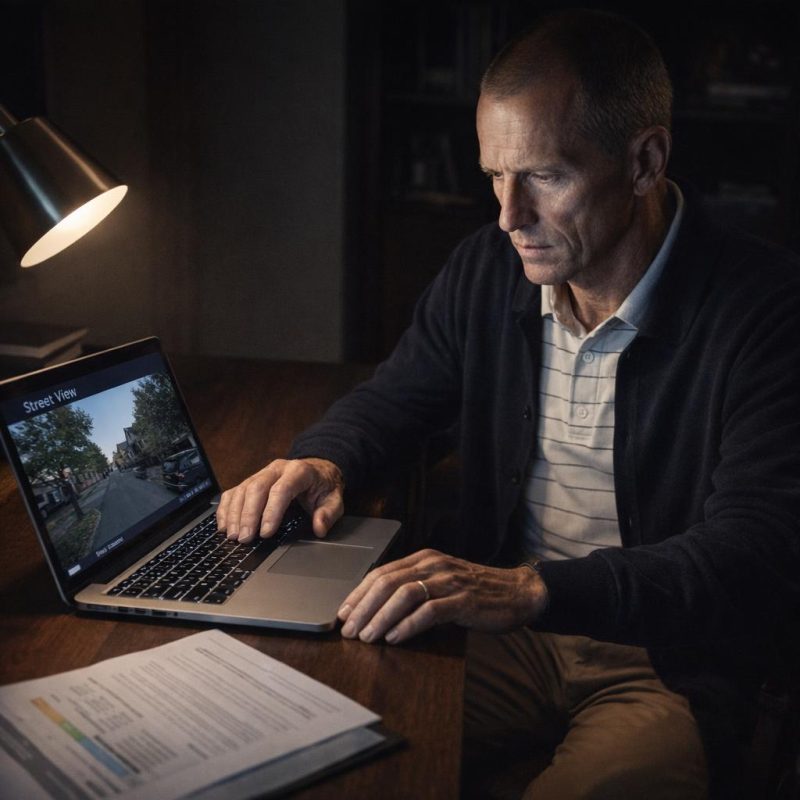 Image by RM AI
The Criminal Case
I drove to the police station the next morning with the forensics report in a manila envelope and a second copy in my email, just in case. Detective Brennan read through the full report at the table while I sat across from her. She didn't skim it. She went page by page, pausing at the metadata section and again at the layer analysis. When she finished, she set it down and said the composite evidence combined with the fabricated permit numbers and the pattern across multiple victims gave her what she needed to move forward. She said the charges would likely include wire fraud and identity theft, and that she'd be requesting a warrant for Blue Torrent's business records. She said she planned to bring in Victor Strand and Rick Callahan for formal interviews. She asked me to compile a complete list of every victim I'd identified, with contact information, so her team could begin taking statements. She also mentioned the case might draw federal attention if the pattern extended beyond the city. I handed her the list I'd already prepared — twelve names, addresses, invoice amounts, dates. She looked at it and said my documentation had made the case possible. I didn't know what to say to that, so I just nodded. I walked out of the station into the afternoon and sat in my car for a few minutes before starting the engine, and the quiet that settled over me felt less like relief than like the first real breath I'd taken in weeks.
 Image by RM AI
The Investigation Opens
Detective Brennan called me two days later, just after nine in the morning. She said the search warrant had been executed at Blue Torrent's office that morning and that officers had seized computers, external drives, and business records. She paused, and then she said they'd found a database. It contained over sixty homeowner entries. Each one had a name, an address, social media profile links, property photographs pulled from public posts, and notes on the best angle for the basement or crawl space. Five neighborhoods across the city. Eighteen months of documented activity. The total estimated theft, she said, was somewhere above two hundred thousand dollars. Victor Strand and Rick Callahan hadn't been at the office during the raid, but warrants had been issued for both of them. She asked if I could help her team reach out to victims in my neighborhood who might not yet know they were on the list. I said yes. After I hung up, I sat at the kitchen table with my spreadsheet open in front of me — twelve names, the ones I'd found myself, the ones I'd spent weeks tracking down one invoice at a time. Sixty entries. Five neighborhoods. I'd thought I was close to the whole picture. I hadn't been anywhere near it.
 Image by RM AI
The Arrest Plan
Detective Brennan called again two days after the raid, and this time her voice had a different quality to it — measured, careful, like she was choosing each word before she let it out. She told me Victor Strand had contacted the department through his attorney, claiming he wanted to resolve the matter directly and had requested a meeting with me specifically. She said she didn't think it was about resolution. She thought he wanted to see how much I knew, maybe offer me money to go away quietly. Then she asked if I'd be willing to wear a wire. I sat very still at my kitchen table while she explained it. Officers would be in a surveillance van outside. I'd have a code phrase if anything felt wrong and they'd come in immediately. She said the goal was to get Victor talking — about the photographs, about the other homeowners, about how the operation worked. I told her I needed a minute. I stood up, walked to the window, looked at my front yard for about thirty seconds, and then I walked back and said yes. She told me to be at the station by seven the next morning, and that she'd walk me through exactly what to say and where to go.
 Image by RM AI
The Wire
I was at the station by six fifty-five. Detective Brennan introduced me to a technician named — well, she just called him her tech guy — and he was quiet and efficient, all business. He had me lift my shirt and he taped a small wireless microphone to my sternum, just below the center of my chest. It was smaller than I expected, about the size of a shirt button, and he smoothed the tape down carefully and told me to breathe normally. I did. He had me say a few sentences out loud and then checked something on a receiver unit and nodded. Detective Brennan went through the list again — keep Victor talking, ask open questions, don't accept anything he offers, don't make threats. She reminded me of the code phrase: I'd say I needed to check on my car. That was it. Simple. She said her team would be in a white panel van on the east side of the parking lot and that they'd hear everything in real time. I thanked her, though I wasn't entirely sure what I was thanking her for. I drove to Blue Torrent's office alone, and with every breath I could feel the small hard edge of the microphone pressed flat against my chest.
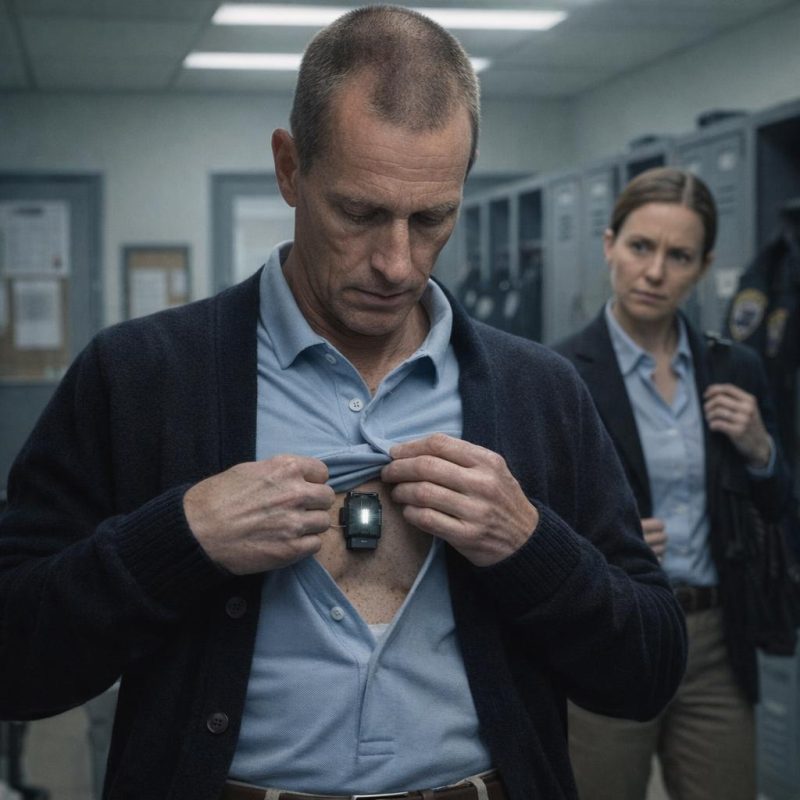 Image by RM AI
Victor's Office
The receptionist barely looked up before waving me toward a hallway at the back. Victor's office was at the end of it — heavy door, frosted glass panel, his name in clean sans-serif lettering. He was standing when I came in, jacket on, hand extended, smile in place. He offered coffee. I said no and sat down across from his desk. He sat too, and for a moment he just looked at me the way someone looks at a problem they've already solved. Then he slid a check across the desk. Full refund, he said, plus three thousand dollars as a goodwill gesture. There was a document beside it — non-disclosure agreement, two pages, signature line at the bottom. He said he wanted to resolve this without litigation, that sometimes it was simply easier. I picked up the check, looked at it, set it back down. I asked him why he'd pay that amount if the work had been legitimate. He said companies settle disputes all the time, that it didn't imply wrongdoing. I mentioned the forensic analysis of the photograph. Something moved behind his eyes, though his expression held. He said photo analysis was a matter of interpretation. I asked how many other homeowners had received invoices like mine. He pushed the settlement paperwork toward me again. I left the check on the desk between us, and neither of us touched it.
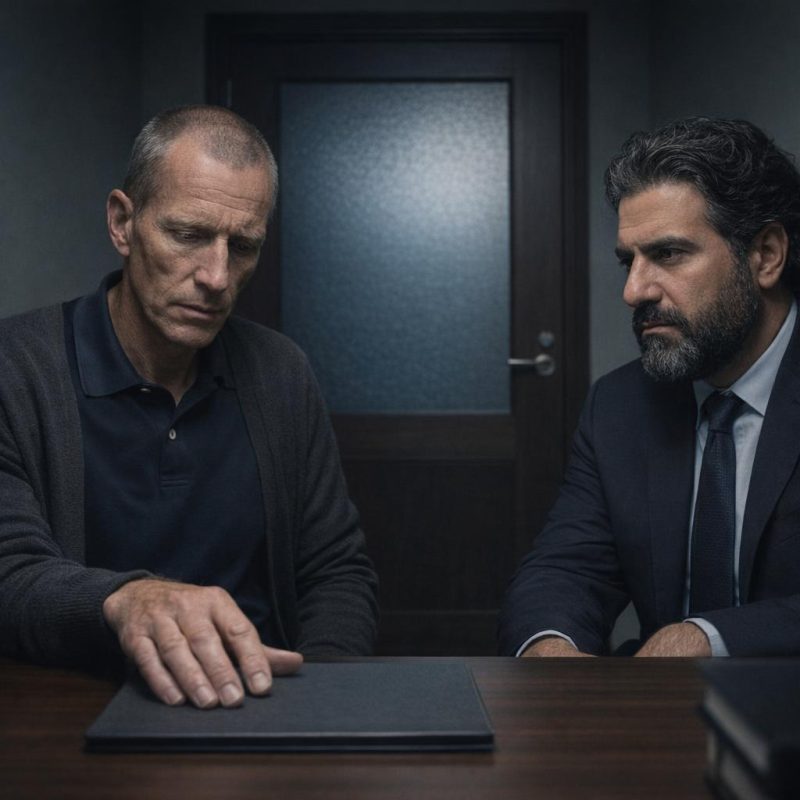 Image by RM AI
The Confrontation
I asked him directly about the ceramic gnome. I described it — the one Emma had given me for my birthday, the one sitting in my front garden in a Facebook photo I'd posted two summers ago. I watched his face. The color came up fast, starting at his collar. He stood from his chair and said I was making serious accusations, that I had no idea what I was talking about. I told him I knew about the database. I said sixty-three names, five neighborhoods, eighteen months. He went very still and asked how I knew that number. I told him police had executed a search warrant the previous morning. Something shifted in his posture then — a kind of settling, like air going out. He said I had destroyed a legitimate business, that he had provided a genuine service, that homeowners got peace of mind knowing their foundations had been inspected. I said no work had ever been performed at my property. He said most people understood the value of what he offered. He said most people paid without making it into something it wasn't. And then, voice tight and flat, he said I should have just paid like everyone else. The room went quiet after that, and I sat with the weight of those words settling into the recording beneath my shirt.
 Image by RM AI
Rick Arrives
The office door opened without a knock. Rick filled the frame — work clothes, that same hard expression I remembered from my driveway. He looked at Victor first and asked if everything was okay. Victor said I was refusing the settlement. Rick turned to me then, and his eyes moved over me slowly, the way someone reads a room when something doesn't add up. He asked why I'd really come in today. I said I wanted to hear Victor's explanation in person. Rick stepped closer. He said something felt off about this meeting. Victor told him to calm down, that this was a business conversation. Rick didn't calm down. He moved around behind my chair and asked, quietly, whether I was recording the conversation. I said no. My voice came out steadier than I felt. He put his hand on my shoulder — not a friendly gesture, nothing close to it — and said maybe they should make sure. Victor looked uncertain for the first time since I'd walked in. Rick's grip tightened, and I could feel the microphone against my sternum with every breath, and the room felt very small, and I understood that the next few seconds were going to determine how this ended.
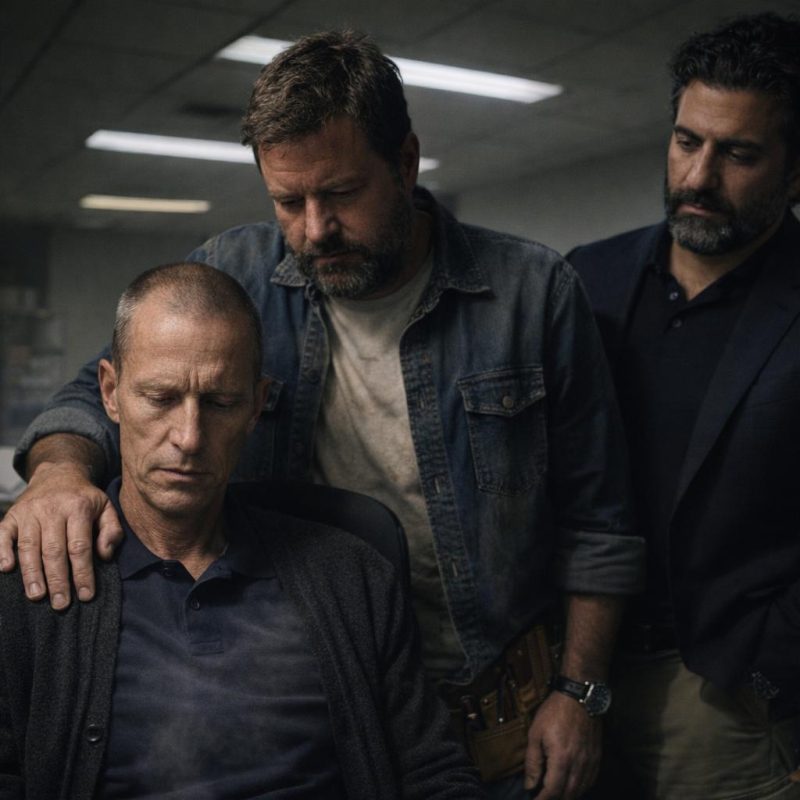 Image by RM AI
The Raid
Rick's hand moved toward my collar and I said it clearly: I needed to check on my car. For half a second nothing happened and I thought I'd said it wrong, said it too quietly, that the signal hadn't carried. Then the office door came off its frame. It didn't open — it came in, hard, and Detective Brennan was through it with four uniformed officers behind her, badges out, voices loud and immediate. An officer stepped between me and Rick and told him to move back. Rick let go and backed toward the wall, and I stood up fast and moved away from the desk. Detective Brennan announced the warrants — fraud, conspiracy, wire fraud — and held them up for Victor to see. Victor stayed in his chair, hands flat on the desk, looking at the paperwork like he was reading something in a foreign language. Officers moved to Rick first. He cursed and pulled against the cuffs and said something at me that I won't repeat. Victor stood when they came to him, slowly, and held his wrists out without being asked. Detective Brennan crossed the room to me and asked if I was all right. I told her I was fine. She nodded once and turned back to the room, and I watched Detective Brennan step through the door with Victor Strand in handcuffs behind her.
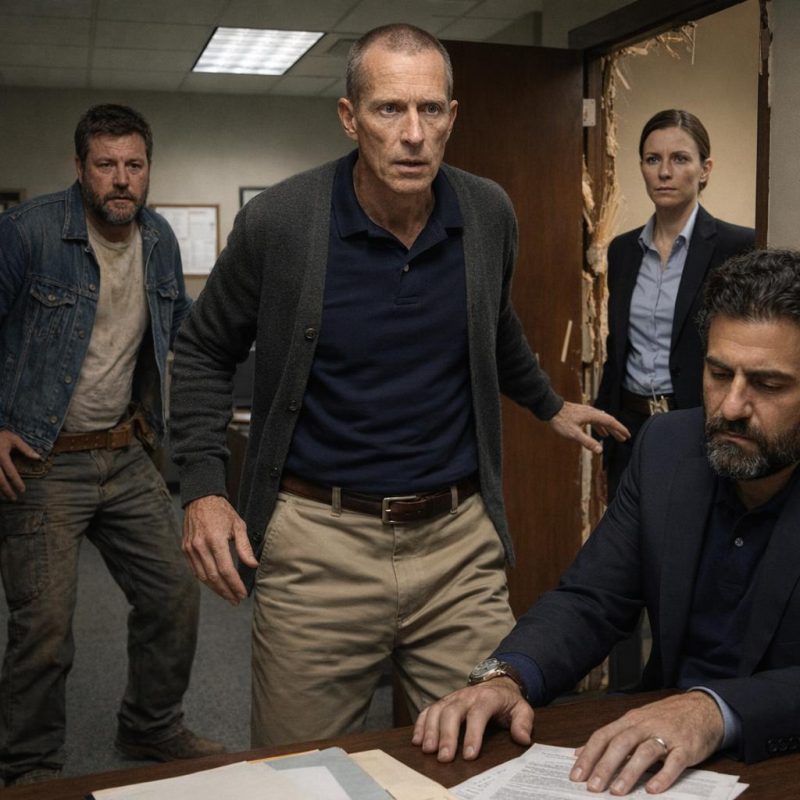 Image by RM AI
The Evidence Seized
They put me in an interview room with a paper cup of coffee that went cold while I talked. I went through everything — the office, the check, the NDA, Victor's exact words about peace of mind and most people paying without complaint. A detective I hadn't met before typed while I spoke. At some point Detective Brennan came in and set a small recorder on the table and played back a section of the wire audio. Victor's voice came through clearly, that flat tight tone when he said I should have just paid like everyone else. She let it run for another few seconds and then stopped it. She told me the computers from the office contained photo editing project files for every victim in the database — source images pulled from social media, composite files showing the fabricated damage, export logs with timestamps. Systematic, she said, going back eighteen months. She slid a printout across the table — the database, formatted into rows, each one a name and address and a dollar amount. She pointed to a row about two-thirds of the way down the page. Victim forty-seven. My name, my address, four thousand eight hundred and sixty dollars. Sixty-three entries total, and I was number forty-seven on the list.
 Image by RM AI
The Victim Network
Detective Brennan asked if I'd be willing to help make calls to the other victims on the list. She said a familiar voice — someone who'd been through it — might land differently than a detective's. I said yes. We worked through the afternoon from a conference room at the station. The first man I called had paid six thousand dollars and thought he'd narrowly avoided a catastrophic foundation failure. He went quiet when I explained the arrests, and then he said, very slowly, that he'd been having nightmares about it. The second victim had taken out a personal loan to cover the invoice. The third had been skipping sleep, convinced the problem would come back. I spoke with a retired teacher who'd pulled money from savings she'd been building for fifteen years. I spoke with a young couple who'd delayed a medical appointment to cover the bill. Each call followed the same shape — disbelief, then a long pause, then something releasing. And then I reached a woman near the end of the list, elderly, living alone, and when I told her the emergency had never been real, that no damage had ever existed, she began to cry — not quietly, but the kind of crying that comes from weeks of carrying something alone, and I sat there holding the phone, unable to say anything at all.
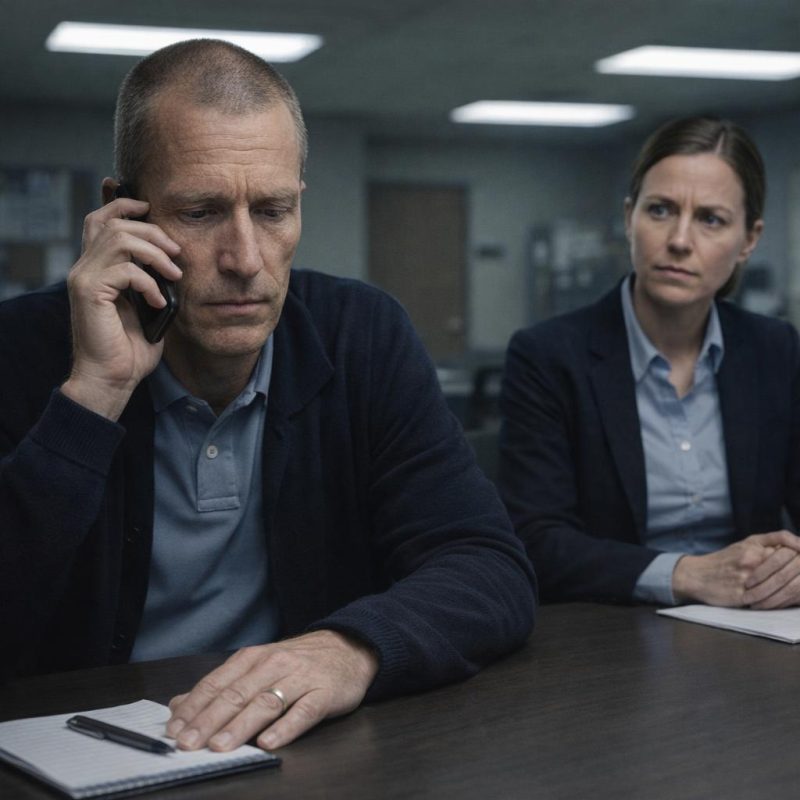 Image by RM AI
The Charges
Detective Brennan drove me to the federal courthouse the morning of the arraignment. I'd expected to feel something dramatic — relief, maybe, or anger finally finding a clean exit. What I actually felt was tired in a way that sat deep in my bones. The courtroom was smaller than I'd imagined, fluorescent-lit and bureaucratic, and when they brought Victor and Rick in wearing orange jumpsuits, the practiced confidence I remembered from Victor's tailored blazer and expensive watch was completely gone. He looked smaller. Rick stared at the floor. The prosecutor read the charges in a flat, methodical voice — wire fraud across state lines, identity theft from social media harvesting, conspiracy to commit fraud, computer fraud for the manipulated photographs. Each count landed in the room like something solid. The judge set bail at five hundred thousand dollars each, citing flight risk. Neither of them could post it. I watched them led back out in handcuffs, and afterward the prosecutor found me in the hallway and said the case was strong. She said if convicted, they were looking at fifteen to twenty years in federal prison.
 Image by RM AI
The Refund
The registered mail envelope arrived on a Tuesday, and I almost didn't open it right away — I'd gotten so used to paperwork connected to this case meaning more work, more waiting. But I recognized the court's return address and sat down at the kitchen table before I even got the flap fully open. The letter explained that seized assets from Victor's operation were being distributed to all sixty-three identified victims. Full restitution. My check was inside — four thousand eight hundred and sixty dollars, made out in my name. I called Emma before I'd even set it down. She was at my door within the hour. She held the check and read the amount twice, and then she looked up and said she was sorry she'd asked me to stop investigating. I told her I understood — I'd scared her, and that was real. She said she was proud of me for not letting it go. We talked about the forty-seven people who'd paid before me without questioning anything, and what would have happened if I'd done the same. She suggested framing the ceramic gnome as a reminder. I laughed and said it was staying in the garden where it belonged. I set the check on the table between us, and for a long time neither of us said anything at all.
 Image by RM AI
The Neighborhood Gathering
I set up folding tables in the backyard on a Saturday afternoon in early October, and by two o'clock the yard was fuller than it had been in years. Margaret arrived first, carrying a tin of shortbread cookies and wearing an expression that said she'd been looking forward to this for weeks. Josh came with his family — both toddlers immediately made for the garden beds, and he looked more rested than I'd seen him in months. The retired teacher brought flowers, which I didn't know what to do with and ended up putting in a mason jar on the main table. The young couple who'd delayed their medical appointment came and stayed longer than anyone. Emma had helped me set out lemonade and sandwich trays, and she moved through the group with an ease I was grateful for. People told their stories — the invoice amounts, the panic, the nights they'd lain awake convinced something was wrong beneath their foundations. Margaret raised her glass of lemonade and said something short and direct about refusing to be made a fool of. Josh said I'd saved all of them from carrying that particular weight forever. I didn't have a speech ready. I just looked around at the faces of people I'd lived near for years and felt, for the first time in months, that the neighborhood had closed back around itself like something healed.
 Image by RM AI
The Ceramic Gnome
I walked the property perimeter early the next morning, the way I'd done most mornings for the fifteen years I'd lived in that house — checking the gutters, the fence line, the condition of the beds along the front walk. I stopped when I reached the ceramic gnome near the porch steps. Emma had given it to me for my birthday, and it had been sitting in that same spot long enough that the soil around its base had settled into a small, permanent ring. I stood there looking at it for a while. It was the photograph of that gnome — the paint pattern on its hat, the angle of the shadow — that had first told me something was wrong. I'd almost let it go. I'd felt the relief of believing the emergency was real and the work was done, and I'd nearly let that relief be enough. That was the part that stayed with me: the relief had been the trap. The whole operation had run on people wanting the problem to be solved, wanting to move on, wanting to believe. Forty-six families had paid before I asked a single question. I thought about all of them, and about the ones who'd come to my backyard the day before, and about the woman on the phone who'd cried. I looked back down at the gnome, sitting exactly where it had always been, patient and unchanged in the morning light.
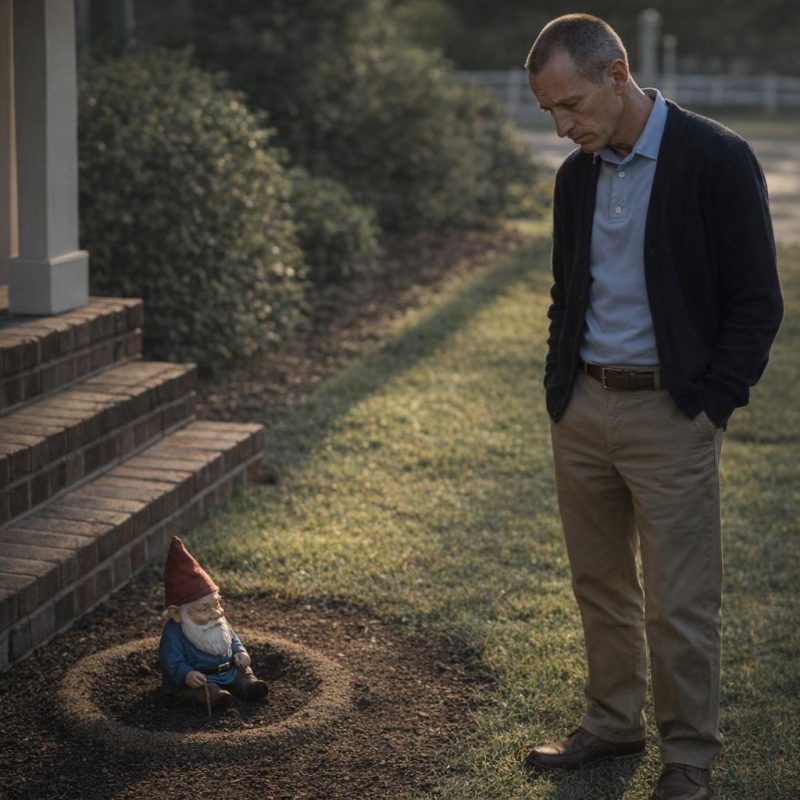 Image by RM AI
KEEP ON READING

The Origins Of 3 Common Sayings You Still Use Today
Etienne Boulanger on UnsplashMany of the phrases you use every…
By Rob Shapiro Apr 28, 2026
Was Caligula The Most Ruthless Roman Emperor?
Artur Matosyan on UnsplashRoman Emperor Caligula is one of ancient…
By Rob Shapiro Dec 18, 2025
1 Weird Fact About Every President
Washington, Lincoln, FDR. Most people know something about the lives…
By Robbie Woods Dec 3, 2024
10 Accidental Discoveries That Changed Maps & 10 That Changed…
Mistakes That Mattered. A lot of major discoveries did not…
By Cameron Dick Apr 15, 2026
10 Actors Who Perfectly Played a Historical Figure & 10…
Which Performance is Your Favorite?. Playing the role of a…
By Rob Shapiro Sep 15, 2025
10 Actors Who Perfectly Played a Historical Figure & 10…
Portraying a real person from history is one of the…
By Noone Dec 17, 2025